
While most visitors to Saudi Arabia head straight for Riyadh’s skyscrapers or Jeddah’s Red Sea coastline, the country’s southwest corner hides something entirely unexpected: green mountains, cool mist, and juniper forests that feel closer to the highlands of Ethiopia than to the Arabian desert. Abha, the capital of Asir Province, sits at 2,200 metres above sea level in the Sarawat Mountains and offers a side of the Kingdom that most travellers never discover. If you are planning a broader Abha and Asir itinerary, this city deep-dive covers everything you need — from the mist-wrapped peak of Jabal Sawda to the painted walls of Rijal Almaa and the aroma of slow-cooked haneeth in the old quarter. It is, without exaggeration, one of the most rewarding destinations in the entire Saudi Arabia travel circuit.
Best Time to Visit: March–May (jacaranda season and pleasant weather) or October–March (ideal for hiking)
Getting There: Abha International Airport (AHB) — direct flights from Riyadh, Jeddah, and Dammam
Visa Required: Yes — tourist e-visa available for 60+ nationalities
Budget: SAR 300–700 / day (US $80–190) including accommodation, meals, and transport
Must-See: Jabal Sawda, Rijal Almaa heritage village, Habala Hanging Village
Avoid: Visiting Habala outside its cable-car operating season (typically Thursday–Saturday only in low season)
Why Visit Abha and the Asir Region
Saudi Arabia’s tourism boom tends to spotlight mega-projects — NEOM, AlUla, the Red Sea coast. Asir is different. There are no master-planned resorts here yet (though Soudah Peaks, a $7.7 billion PIF-backed development, is changing that). What you get instead is a living, breathing mountain culture that has survived for centuries in near-isolation: stone towers clinging to cliff faces, women painting geometric murals on interior walls in a tradition inscribed by UNESCO as Intangible Cultural Heritage, and men from the Qahtani tribes wearing crowns of fresh flowers in their hair.
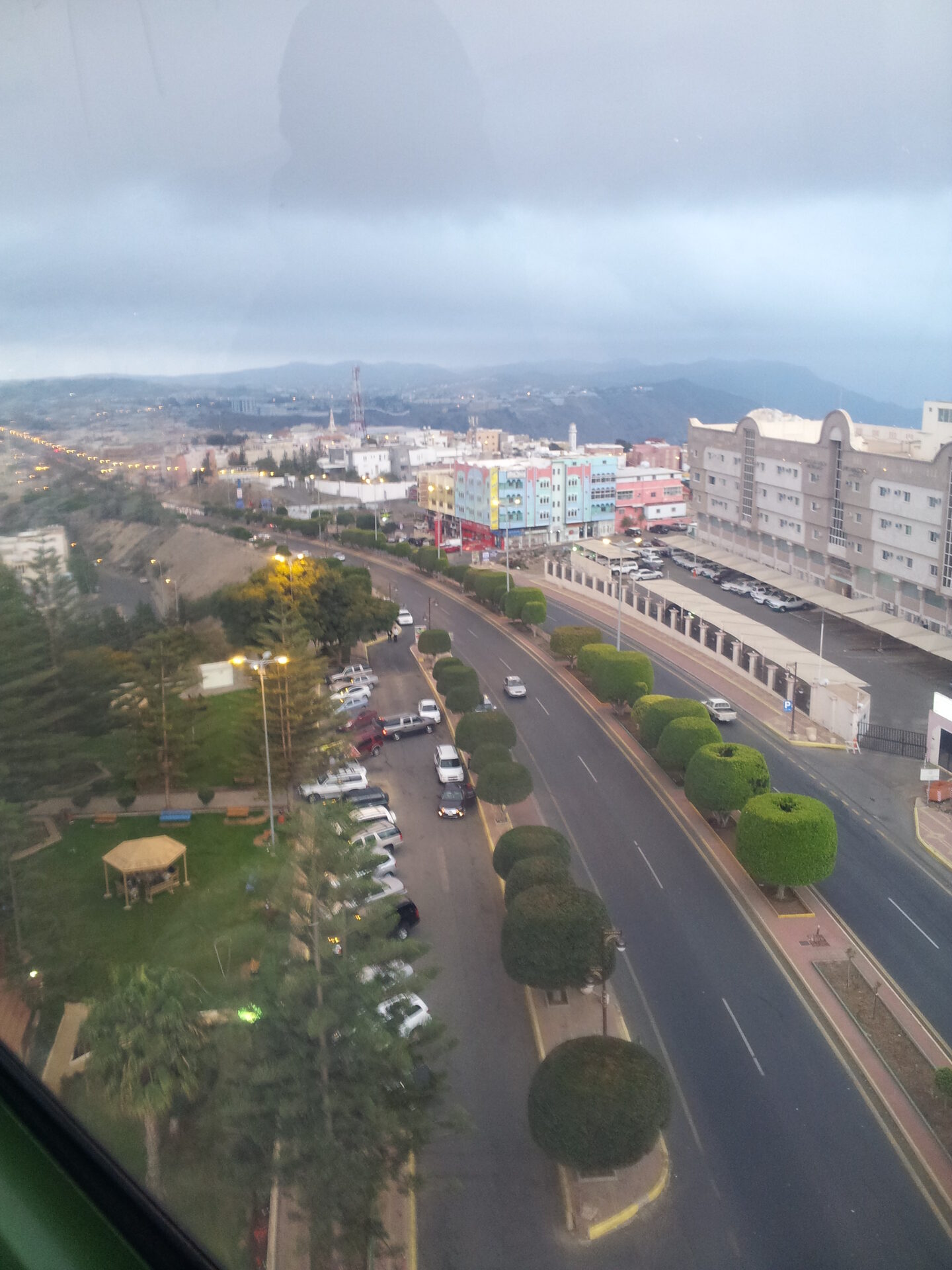
The climate alone is reason enough. When Riyadh bakes at 45°C in July, Abha sits at a comfortable 15–25°C. The city earned the nickname “City of Fog” because clouds literally roll through its streets, wrapping the mountaintops in a soft grey blanket that burns off by mid-morning. In spring, thousands of jacaranda trees erupt in purple blooms along Art Street and Abu Kheyal Park, and the entire city takes on a lavender glow.
And then there is the food. Asir was named World Region of Gastronomy 2024 by the International Institute of Gastronomy, Culture, Arts and Tourism — only the second region in the Middle East to receive the honour. The local cuisine, built around slow-roasted meats, mountain honey, and flatbreads baked in pit ovens, is unlike anything else in the Gulf.
Best Time to Visit Abha
Abha’s altitude gives it a climate unlike anywhere else in Saudi Arabia. Temperatures range from around 7°C on winter nights to a high of about 28°C in summer, making it a year-round destination — though some seasons are better than others. For detailed seasonal advice across all regions, see our guide to the best time to visit Saudi Arabia.
March to May — Jacaranda Season
Spring is arguably the most beautiful time to visit. Daytime temperatures hover between 20°C and 26°C, rainfall is occasional but brief, and the city’s jacaranda trees bloom in spectacular purple. This is also when the hillsides turn their greenest after winter rains. Expect moderate crowds, especially around weekends.
June to September — The Summer Escape
While this is technically Abha’s warmest period, temperatures rarely exceed 28°C — making it Saudi Arabia’s premier summer escape. The annual Asir Festival runs during these months, bringing live music, cultural performances, and craft markets to the city. Hotels fill up with Saudi families fleeing the lowland heat, so book accommodation early. Mist is heaviest in summer mornings.
October to March — Hiking Season
Clear skies, crisp mornings (down to 7–10°C), and excellent visibility make this the best window for hiking in Saudi Arabia. Jabal Sawda’s trails are most comfortable during these months. Tourism drops after the summer rush, meaning lower hotel prices and fewer crowds at attractions. February and September tend to offer the best accommodation deals.
Tip: Abha’s weather can shift quickly in the mountains. Pack layers regardless of the season — a light jacket is essential even in summer, and winter nights genuinely require warm clothing.
Getting to Abha
By Air
Abha International Airport (AHB) is the main gateway, located 18 km from the city centre. Domestic carriers Saudia, Flynas, and Flyadeal operate daily direct flights from Riyadh (roughly 1 hour 40 minutes), Jeddah (around 1 hour 20 minutes), and Dammam. International connections include Cairo, Sharjah, and Kuwait City via Air Arabia, Nile Air, and Jazeera Airways. For a broader overview of Saudi airports and airline options, see our Saudi Arabia flights guide.
From the airport, taxis take 20–25 minutes to reach central Abha. Ride-hailing apps (Uber and Careem both operate here) are the most convenient option. Car rental desks are available at the terminal if you plan to explore the wider Asir region at your own pace — which is highly recommended. See our Saudi Arabia car rental guide for tips on driving in the Kingdom.
By Road
Abha is connected to other Saudi cities by well-maintained highways, though distances are substantial. Driving from Jeddah takes around 6–7 hours via the scenic Hejaz mountain road. From Riyadh, it is roughly 9–10 hours. The drive from Taif — another highland city worth combining with Asir — takes about 5 hours along Highway 15 through some of the Kingdom’s most dramatic mountain scenery.
Where to Stay in Abha
Abha’s hotel scene is expanding but remains modest compared to Riyadh or Jeddah. Options range from budget guesthouses to solid four- and five-star properties, with prices far lower than the big cities. For a wider comparison of Saudi accommodation options, see our Saudi Arabia hotels guide.
Luxury and Upper-Mid Range
Abha Palace Hotel is the city’s flagship five-star property, set on a hilltop with commanding views of the surrounding mountains. Expect to pay from SAR 450–700 per night (US $120–190). The hotel has a restaurant, gardens, and is well-positioned for day trips. Bayat Hotel Abha, located about 14 miles from the centre near the Soudah area, caters to both business and leisure travellers seeking a quieter mountain setting.
Mid-Range
Midpoint Hotel sits within an 8-minute walk of Al Andalus Park and offers clean rooms with terraces, free parking, and an on-site restaurant — solid value at SAR 250–400 per night. Several newer aparthotels have opened along the main Abha–Khamis Mushait corridor, offering kitchenettes and living areas that suit families.
Budget
Budget travellers can find rooms from as low as SAR 70–120 per night (US $18–35) at properties like Golden Abha Al Medyaf. Facilities are basic but adequate, and central locations mean easy access to restaurants and attractions on foot.
Best Neighbourhoods
- Al Shifa: Elevated area with stunning panoramic views and lush surroundings — ideal for nature lovers.
- Al Soudah: Near the peak of Jabal Sawda, offering the coolest climate and closest access to highland trails. Best for hikers.
- Central Abha: Close to Al Basta heritage district, Art Street, and most restaurants. Best for first-time visitors who want walkable convenience.
Booking tip: Thursday nights (the Saudi weekend) are the most expensive. Book mid-week for the best rates, and reserve well ahead if visiting during summer or Eid holidays.
Top Attractions in Abha and Asir
Jabal Sawda — Saudi Arabia’s Highest Peak
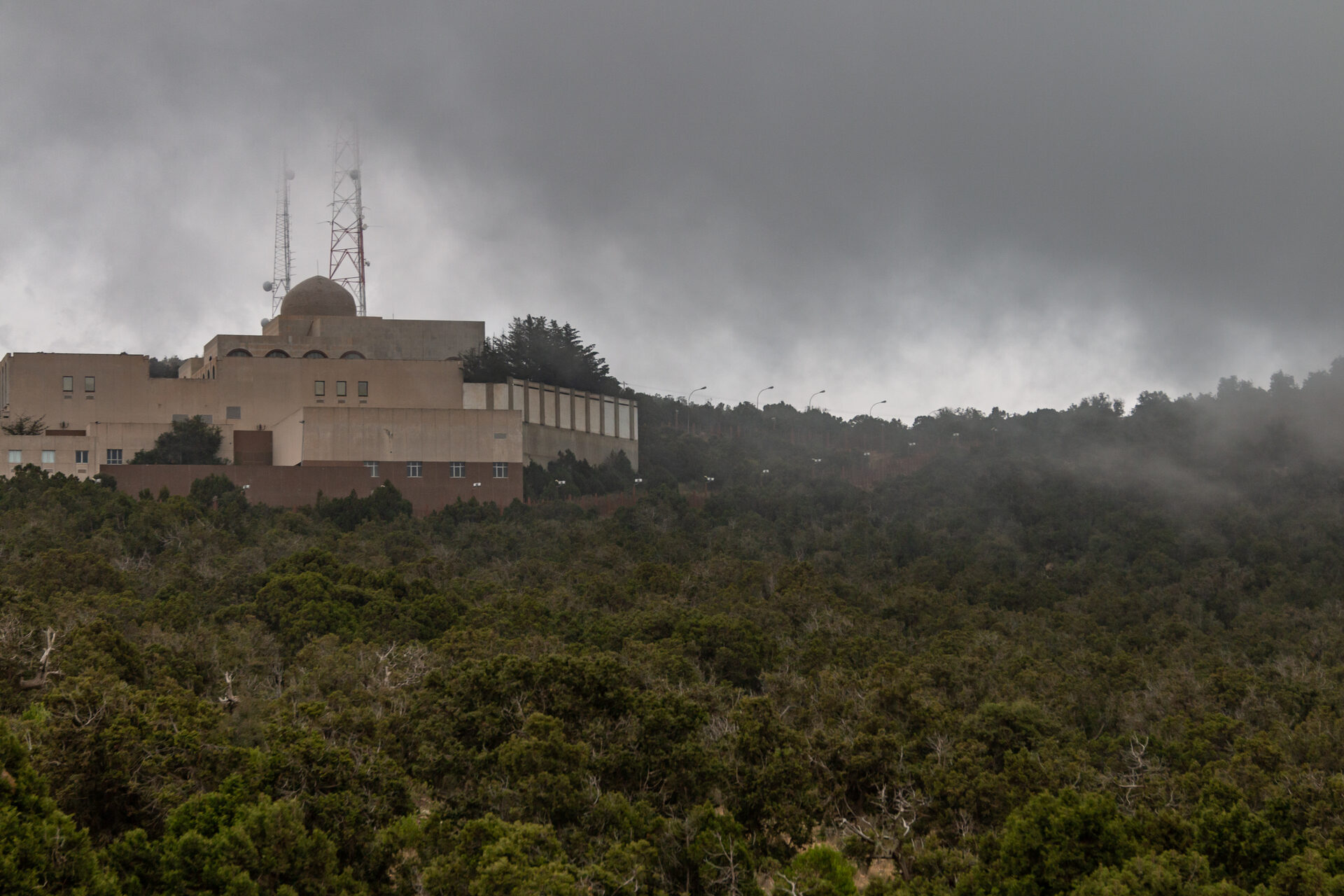
Jabal Sawda (also spelled Soudah) rises to approximately 3,015 metres above sea level, making it the officially recognised highest point in Saudi Arabia. Located about 20 km from Abha, it is the centrepiece of the Asir highlands and the anchor of the massive Soudah Peaks development project.
The mountain is accessible by a cable car (approximately SAR 80 per adult, round trip, 20 minutes each way) that climbs from the base through juniper-forested slopes to a viewing platform near the summit. For those who prefer to earn their views, a centuries-old trading trail runs from the valley up the western escarpment to the top — a 9-mile hike with 1,050 metres of elevation gain that takes 6–7 hours. This trail was historically used by merchants linking the coastal plains with the highland plateau. October to March offers the best hiking conditions.
At the summit, the air is noticeably cooler and thinner, and on clear days the views stretch across layered mountain ridges all the way to the Red Sea coast. Cloud inversions are common in the early morning, creating a sea of white mist below that is one of the most photographed scenes in all of Saudi Arabia.
Rijal Almaa — The Painted Village
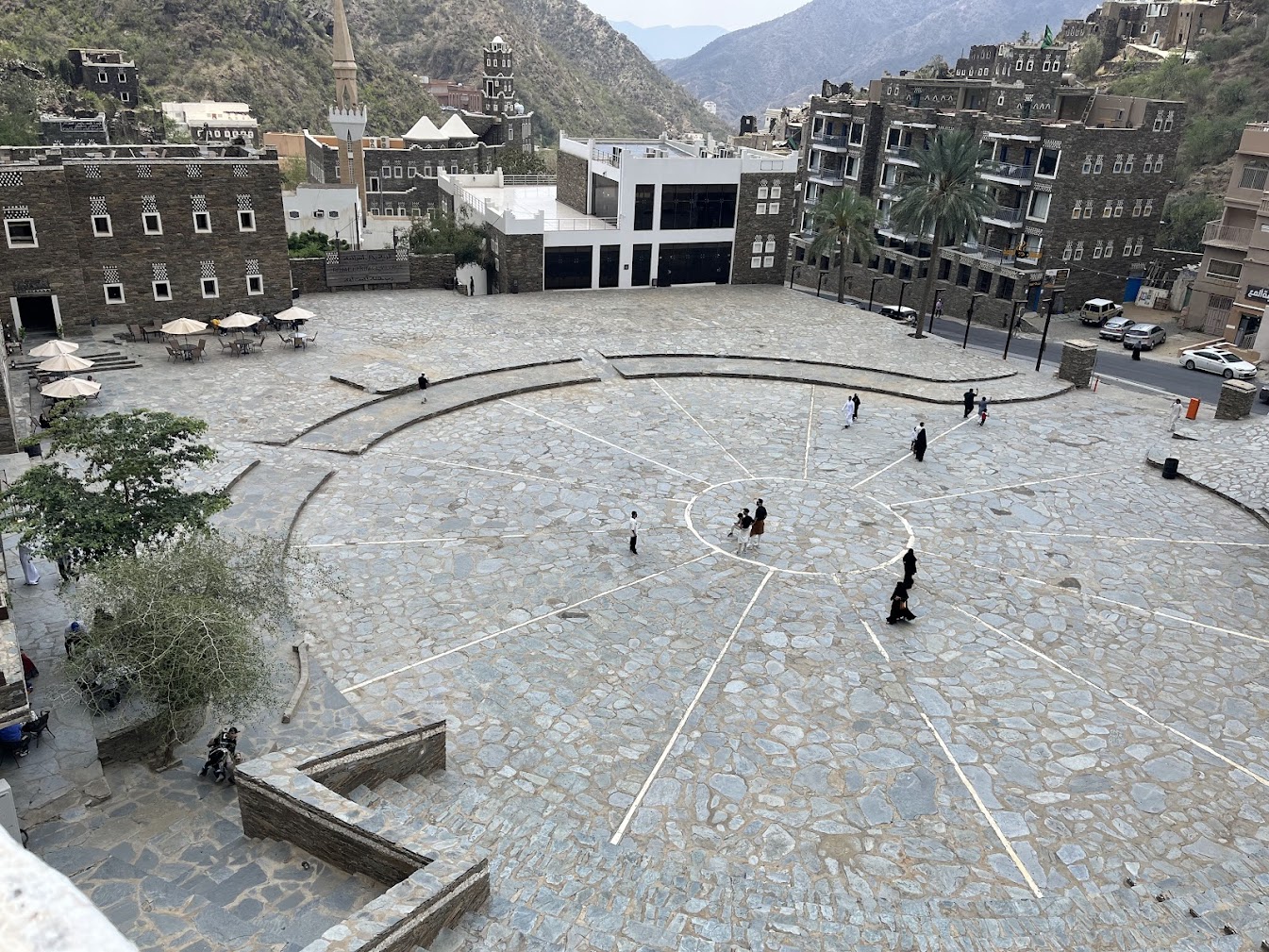
About 50 km west of Abha, descending sharply from the mountain plateau toward the Tihama coastal plain, Rijal Almaa is one of the most visually striking heritage villages in the Middle East. The settlement is over 900 years old and contains around 60 multi-story buildings made of stone, clay, and wood — their facades painted in bands of white, ochre, red, and blue.
Rijal Almaa was added to the UNESCO Tentative List in 2018, and the village’s restored museum houses artefacts, traditional costumes, and displays explaining the region’s role as a trade crossroads between Yemen, Mecca, and the Levant. In 2025, Soudah Development signed a memorandum to restore three heritage sites within the village, and the annual Coffee Festival has become a major draw.
The drive from Abha is an experience in itself — a winding descent of over 1,500 metres through terraced farmland and mist-shrouded switchbacks. Allow half a day for a comfortable visit including the drive. Rijal Almaa is one of Saudi Arabia’s most important UNESCO-listed heritage sites.
Habala Hanging Village
Perched on dramatic sandstone cliffs about 60 km from Abha, Habala is a cliffside settlement that was once so isolated it could only be reached by rope — hence its Arabic name, derived from “habl” (rope). Today, a cable car (SAR 50–90 per person) transports visitors from the car park down to the village, which clings to the rock face with its terraced mud-and-stone houses, carved wooden doors, and narrow walkways.
The cable car operates from around 10:00 to 18:00 during high season but may run only Thursday to Saturday during quieter months. Weather can pause operations — mountain wind and low visibility sometimes ground the cars, so aim for an early-morning visit to maximise your chances. There is no accommodation in Habala, so this is a day-trip only.
Warning: Confirm cable car operating days before making the drive. In low season, Habala’s cable car has been known to run only three days per week (Thursday, Friday, Saturday). Check with your hotel or the local tourist office.
Green Mountain (Jabal Thera)
Rising to 2,270 metres in the very heart of Abha, Green Mountain — known locally as Jabal Thera — is the city’s most recognisable landmark. By day it is a cone-shaped hill dotted with trees; by night it glows vivid green thanks to decorative lighting that covers its flanks, visible from virtually anywhere in the city.
A cable car (SAR 50 per person) runs to the summit, where a viewing platform offers panoramic views over Abha, the surrounding Sarawat ranges, and the distant Tihama lowlands. The ride is short but scenic, and the summit area has a small café. It is best visited in the late afternoon for the sunset views, then again after dark to see the green illumination up close.
Al Muftaha Art Village
Founded in 1989 by Prince Khaled Al-Faisal (then Governor of Asir), Al Muftaha is widely regarded as the birthplace of the contemporary Saudi art movement. The village, now managed by the Ministry of Culture, consists of traditional Asiri buildings repurposed as galleries, studios, workshops, and exhibition halls.
The King Fahd Cultural Centre within the complex hosts courses in fine arts, Arabic calligraphy, and ceramics. The artist Ahmed Mater — one of Saudi Arabia’s most internationally recognised contemporary artists — joined Al Muftaha as a resident artist in 2001 and founded the influential Shatta Group here in 2002. Exhibitions rotate regularly, and the village is free to wander.
Shada Palace (Qasr Shada)
Built in 1820, Shada Palace served as the residence of local rulers and the administrative seat of the Asir Emirate before being converted into a museum. The palace is a fine example of traditional Asiri stone-and-wood architecture, its interior walls decorated with Al-Qatt Al-Asiri geometric murals. Displays inside cover the history of Abha, traditional dress, weaponry, and domestic life. It is small enough to visit in an hour but worth the stop for the architecture alone.
Al Basta Heritage District
The oldest neighbourhood in Abha, Al Basta is a compact warren of traditional stone buildings, narrow lanes, and small workshops near the city centre. This is where you will find some of the best traditional Asiri restaurants (see Food and Dining below), as well as craft vendors and a genuine sense of how Abha looked before modern development. It is walkable in an hour but rewards a slower pace.
Asir National Park
Established in 1981, Asir National Park covers over 4,500 square kilometres of highland terrain — making it one of the largest protected areas in the Arabian Peninsula. The park spans multiple ecosystems, from juniper forests at high altitude to semi-arid valleys below, and supports over 300 bird species.
The park’s star resident is the Asir magpie — an endangered species found nowhere else on Earth. With its distinctive black-and-white plumage, it inhabits the juniper forests above 2,000 metres. Birdwatchers also come for griffon vultures, golden eagles, Egyptian vultures, and the African olive-pigeon. Hiking trails criss-cross the park, and camping is permitted in designated areas. The park is free to enter.
Culture and Heritage
Al-Qatt Al-Asiri — UNESCO Intangible Heritage
In 2017, UNESCO inscribed Al-Qatt Al-Asiri on its Representative List of the Intangible Cultural Heritage of Humanity. This is the traditional practice of decorating the interior walls of homes — particularly the guest room (majlis) — with bold geometric murals in bright colours over a white gypsum base.
The patterns consist of horizontal bands (“qatt”) filled with triangles, rhombi, zigzags, and floral motifs. The art form originated over 300 years ago and was traditionally practised exclusively by women, who would invite female relatives of all ages to help — passing the skill from generation to generation. Today, both men and women practise Al-Qatt Al-Asiri, and the designs have migrated to furniture, clothing, and public murals across the region.
To see Al-Qatt in its original context, visit Shada Palace, the Fatima Museum of Asiri Heritage (a small private museum dedicated to the art form), or the restored houses in Rijal Almaa.
The Flower Men of Asir
One of Saudi Arabia’s most distinctive cultural traditions is found right here in Asir: the “flower men” (known as Al Qahtani tribesmen), who wear garlands of fresh flowers and fragrant herbs woven into their hair. The tradition is centuries old and once served practical purposes — different flowers signalled a man’s tribe, status, or intentions. Today, the flower crowns are worn for celebrations, festivals, and dances, and they have become an iconic symbol of Asiri identity.
You are most likely to see flower men at cultural festivals, traditional markets, and occasionally in villages around Rijal Almaa and the Soudah area. The tradition has attracted significant attention from photographers and documentary-makers, helping to bring global awareness to Asir’s unique heritage.
Food and Dining in Abha
Asiri cuisine stands apart from the rest of Saudi Arabia, reflecting the region’s highland isolation, agricultural traditions, and proximity to Yemen. The recognition of Asir as World Region of Gastronomy 2024 was well earned. For a broader look at Saudi food culture, see our Saudi Arabia food guide.
Dishes You Must Try
- Haneeth: The signature dish of Asir. Lamb or goat is slow-cooked for hours in an underground clay oven called an al-taboon, fired with aromatic wood. The meat emerges fall-off-the-bone tender, served over fragrant rice. It is the closest thing Asir has to a national dish.
- Arika: A traditional breakfast that resembles a savoury-sweet casserole — baked with white and brown flour, then drenched in mountain honey, dates, and ghee. Rich, dense, and deeply satisfying.
- Miva bread: An oval flatbread made with flour, water, and yeast, left to ferment and then baked in a pit oven called a tannur. Eaten with honey, cheese, or alongside haneeth.
- Aseedah: A thick wheat porridge common across southern Saudi Arabia, often served with a well of ghee and honey in the centre.
- Mountain honey: Asir produces some of the most prized honey in Saudi Arabia, harvested from bees that feed on sidr trees and wildflowers. Expect to pay SAR 200–500 per kilogram for premium grades — it is worth it.
Where to Eat
Al-Hosn Al-Turathi is the standout traditional restaurant. Housed in a former police station in the Al Basta heritage district and run by two brothers, it serves authentic Asiri cuisine: haneeth, arika, miva bread, and tasabea (a stew of slow-cooked beans) in a setting of restored stone walls and traditional furnishings. Portions are generous and prices moderate.
Al Makarim Restaurant in the city centre serves a broader Saudi menu including kabsa, jereesh (cracked wheat with meat), and margoog (a stew with thin bread layers). For international options, the restaurants around Al Andalus Park and along the main commercial strip in Khamis Mushait (Abha’s twin city, 15 minutes east) offer Turkish, Indian, and fast-food chains.
Tip: Abha’s traditional restaurants tend to be busiest on Thursday and Friday evenings (the Saudi weekend). Visit at lunch for a quieter experience and faster service.
Day Trips from Abha
Taif — The City of Roses
About five hours north along the Sarawat mountain highway, Taif makes a natural pairing with Abha for travellers exploring Saudi Arabia’s highlands. Known for its rose farms, cooler climate, and historical souqs, Taif was the summer capital of the Saudi court and shares Abha’s mountain character while feeling distinctly different. If you have a week, driving the Abha–Taif corridor is one of the most scenic road trips in the Kingdom.
Thee Ain Heritage Village
Located in the Al Baha region between Abha and Taif, Thee Ain (also spelled Dhee Ayn) is a 400-year-old marble village perched on a white hillside above banana plantations. It is a UNESCO Tentative List site and one of Saudi Arabia’s most photogenic heritage villages — smaller than Rijal Almaa but arguably even more dramatic in its setting.
Tanomah and Al Namas
Two small highland towns north of Abha, Tanomah and Al Namas offer waterfalls (after rains), viewpoints, and a sleepy mountain atmosphere. They are popular with Saudi weekend visitors but almost unknown to international tourists. Both are reachable within 1.5–2 hours by car.
The Future: Soudah Peaks Development
Asir’s tourism profile is about to change dramatically. In 2021, Crown Prince Mohammed bin Salman announced the Soudah Development Company (SDC), a fully PIF-owned entity tasked with transforming the Soudah and Rijal Almaa areas into an international luxury mountain destination. The $7.7 billion project aims to deliver:
- 2,700 hotel rooms and 1,300 residential units
- 30 commercial and entertainment attractions
- Over 2 million annual visitors by 2030
- 8,000 permanent jobs (direct and indirect)
Phase 1 (2024–2026) is currently underway, focusing on luxury hotels, residential units, and initial tourism facilities including restaurants and wellness centres. Phase 2 (2027–2029) will expand infrastructure, and Phase 3 (2030–2033) will complete the vision with additional entertainment and eco-friendly facilities. Critically, only 1% of the total land area will be developed — the rest is earmarked for environmental preservation.
For now, Abha and Asir remain refreshingly undeveloped by Saudi mega-project standards. Visiting before Soudah Peaks is complete means lower prices, fewer crowds, and a rawer, more authentic experience — which is precisely why many seasoned Saudi travellers consider this the ideal window to visit.
Practical Information
Visa Requirements
Most international visitors need a tourist e-visa, available online for citizens of 60+ countries. The process takes minutes and grants a one-year, multiple-entry visa with stays of up to 90 days. Full details, including eligible nationalities and the application process, are in our Saudi Arabia visa guide.
Getting Around
Abha itself is compact enough that taxis and ride-hailing apps (Uber and Careem) cover most in-city transport. However, a rental car is strongly recommended for visiting Rijal Almaa, Habala, Jabal Sawda, and other out-of-town attractions — public transport is limited. Roads are well-paved but winding; drive cautiously on mountain roads, especially in fog.
What to Wear
Saudi Arabia’s dress code applies in Abha as elsewhere: modest clothing covering shoulders and knees for both men and women. The cooler mountain climate makes this easier than in the lowland heat — layers work well. Bring a warm jacket for evenings from October to March, and comfortable walking shoes for heritage villages and trails.
Money and Costs
Abha is significantly cheaper than Riyadh or Jeddah. Budget travellers can manage on SAR 300 per day (US $80) including a basic hotel, meals at local restaurants, and transport. Mid-range travellers spending SAR 500–700 per day (US $135–190) will eat very well, stay in comfortable hotels, and cover all attraction costs. Cable car rides are the main paid activity (SAR 50–90 per ride). For detailed budgeting advice, consult our Saudi Arabia cost guide.
Safety
Abha is very safe for all travellers, including solo women. The mountain roads require attention in fog or rain, and altitude can cause mild breathlessness for those unused to 2,200+ metres. Carry water, especially while hiking. Mobile phone coverage is reliable in and around the city but can drop in remote mountain valleys.
How Long to Stay
A minimum of 3 days covers Abha’s highlights: Jabal Sawda, Green Mountain, Al Basta/Al Muftaha, and one major day trip (Rijal Almaa or Habala). With 5–7 days, you can visit both outlying villages, explore Asir National Park, drive to Tanomah, and genuinely soak in the mountain pace of life. If combining with Taif, allow 7–10 days for the full highland circuit.
Explore More Saudi Arabia Travel Guides
- Abha and Asir Travel Guide — Your complete hub for planning a trip to Saudi Arabia’s mountain highlands
- Taif Travel Guide — The City of Roses, just five hours north along the Sarawat mountain highway
- Saudi Arabia Hiking Guide — Trail guides for Jabal Sawda, Edge of the World, and more
- Saudi Arabia Food Guide — From Asiri haneeth to Hijazi dishes and everything between
- Saudi Arabia Travel Guide 2026 — The complete guide to visiting the Kingdom
- Saudi Arabia Visa Guide — Every visa type explained