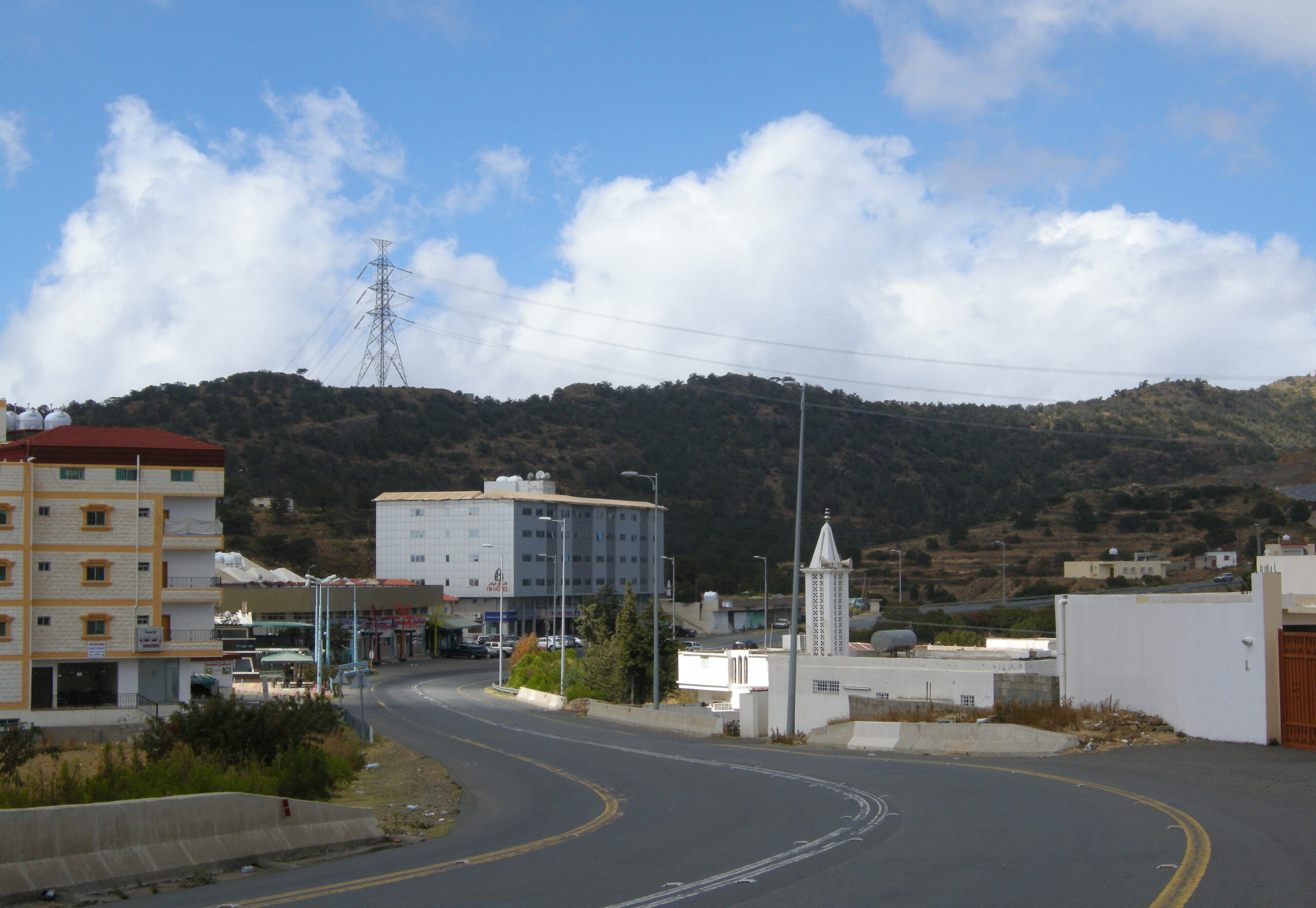

Abha is Saudi Arabia’s mountain city — a place where juniper forests blanket 3,000-metre peaks, temperatures rarely exceed 30°C, and terraced hillsides give way to deep valleys carved by seasonal rainfall. Sitting at 2,270 metres above sea level in the Sarawat Mountains of the Asir region, Abha feels like a different country from the desert cities most visitors associate with the Kingdom. The air is cooler, the landscape is green, and the culture is distinctly Asiri — a tradition of painted stone towers, floral garlands, and mountain cuisine that owes more to Yemen than to Riyadh.
For travellers looking to escape Saudi Arabia’s summer heat, Abha is the obvious choice. For everyone else, it is an introduction to a side of the Kingdom that guidebooks have only recently begun to cover: terraced agriculture, UNESCO-listed art forms, the highest peak in the country, and a PIF-backed luxury development that aims to turn these mountains into a world-class destination by 2033.
- Quick Facts
- Why Visit Abha
- Best Time to Visit
- Getting to Abha
- Top Attractions and Things to Do
- Rijal Almaa Heritage Village
- Al Soudah and Jabal Sawda
- Habala Hanging Village
- Asiri Food and Where to Eat
- Where to Stay
- Day Trips from Abha
- Soudah Peaks Development
- Practical Information
- Complete Guide: All Pages
- Abha and the Asir Region Overview
- Escaping Saudi Summer Heat
- Taif Travel Guide
Quick Facts: Abha at a Glance
- Elevation: 2,270 m (7,450 ft) above sea level
- Province: Asir Region, southwestern Saudi Arabia
- Population: Approximately 1 million (metropolitan area including Khamis Mushait)
- Airport: Abha International Airport (AHB) — domestic flights from Riyadh, Jeddah, Dammam
- Summer temperatures: 18–28°C (64–82°F)
- Winter temperatures: 5–18°C (41–64°F)
- Annual rainfall: 278–500 mm — more than six times Riyadh’s total
- Currency: Saudi Riyal (SAR)
- Time zone: AST (UTC+3)
- Language: Arabic; English is limited outside hotels
- Best for: Mountain escapes, cultural heritage, hiking, photography, cooler weather
Why Visit Abha
Most international visitors to Saudi Arabia land in Riyadh or Jeddah and head straight for the desert — the vast Empty Quarter, the rock-cut tombs of AlUla, or the holy cities of Mecca and Medina. Abha offers something entirely different: a landscape defined by water rather than its absence.
The Asir region receives monsoon-influenced rainfall from the Indian Ocean, turning the Sarawat Mountains into one of the greenest corners of the Arabian Peninsula. Juniper forests — some trees centuries old — cover the higher slopes. Terraced farms descend the valleys, growing coffee, wheat, pomegranates, and figs. Baboons patrol the roadside. Cloud forests roll through the peaks in the afternoon, giving Abha its local nickname: the City of Fog.
The cultural draw is equally strong. Asiri architecture is unlike anything else in Saudi Arabia: tall stone towers painted with geometric bands of white, red, ochre, and indigo, rising four to eight storeys from narrow valley floors. The women of these communities practise Al-Qatt Al-Asiri, a geometric wall-painting tradition recognised by UNESCO as an Intangible Cultural Heritage of Humanity in 2017. The men of the Qahtani tribes in the southern valleys are known as the Flower Men — they wear garlands of fresh herbs, marigolds, and wild basil in a tradition believed to be more than two thousand years old.
For photographers, the region is extraordinary. The light changes with altitude and cloud cover, and subjects range from painted stone villages to mist-draped juniper forests, from terraced hillside farms to the dramatic cliffs of Habala. The spring wildflower season in March and April adds another dimension, with hillsides carpeted in wild herbs and mountain blooms.
Best Time to Visit Abha
Abha is one of the few destinations in Saudi Arabia that works well in summer. While most of the Kingdom bakes from June to September with temperatures above 45°C, Abha stays between 18°C and 28°C thanks to its elevation. This makes it the premier domestic summer escape — Saudi families flock here from June through August, and hotel prices rise accordingly.
Season by Season
Spring (March–May): The best time for most international visitors. Temperatures hover between 15°C and 25°C. The jacaranda trees that line Abha’s streets bloom in April and May, painting the city purple — a spectacle concentrated along Art Street, Abu Kheyal Park, and Andalus Park. The hills are green from winter and spring rains. Crowds are manageable.
Summer (June–August): Peak domestic tourism season. Temperatures are pleasant (18–28°C) but hotels sell out and prices double. The Soudah Summer Festival brings concerts, markets, and events to the mountains. Afternoon fog and light rain are common. Book accommodation at least a month ahead.
Autumn (September–November): A shoulder season with clear skies, warm days (15–25°C), and cooler nights. Crowds thin out after the Saudi school holidays end. Excellent for hiking and photography.
Winter (December–February): Cold by Saudi standards — nighttime temperatures drop to 3–7°C, and frost is possible at higher elevations near Al Soudah. Daytime temperatures reach 15–18°C. Rainfall peaks in February and March. Bring warm layers. The upside: lower hotel prices and fewer visitors.
Getting to Abha
By Air
Abha International Airport (AHB) is the gateway to the Asir region, located between Abha and the neighbouring city of Khamis Mushait. Saudia, Flynas, and Flyadeal operate daily flights from Riyadh (approximately 1 hour 40 minutes), Jeddah (1 hour 20 minutes), and Dammam (2 hours). During summer, additional frequencies are added to meet demand.
International flights connect Abha to Dubai, Cairo, and select destinations in Yemen and Egypt, though schedules vary seasonally. If you are flying in from abroad, check the Saudi Arabia visa guide for current entry requirements — the e-visa system covers most nationalities.
From the airport, taxis to central Abha cost SAR 50–80 (approximately $13–21) and take around 20 minutes. Ride-hailing apps including Uber and Careem operate in Abha, though wait times are longer than in Riyadh or Jeddah. Car hire desks are available at the terminal and are strongly recommended for exploring the wider Asir region — many attractions are 30–90 minutes from the city by road.
By Road
Abha is connected to the rest of the Kingdom by well-maintained highways. The drive from Jeddah takes approximately 6 hours (630 km) via the Taif–Baha highway, which passes through dramatic mountain scenery — a rewarding road trip in its own right. From Riyadh, the journey is around 9–10 hours (950 km) via Bisha. From Taif, the mountain city often paired with Abha on itineraries, the drive is approximately 4.5 hours along the scenic Sarawat ridge road.
For backpackers and budget travellers, SAPTCO intercity buses connect Abha to Riyadh and Jeddah, though journey times are long (10–12 hours) and schedules are infrequent.
Getting Around Abha
Within Abha and the surrounding Asir region, a rental car is the most practical option. The city itself is navigable by taxi and ride-hailing, but attractions like Rijal Almaa (50 km southwest), Habala (55 km southeast), Al Soudah (20 km northwest), and the Tanomah forests (120 km north) require your own transport. Roads are well-paved and signposted in Arabic and English. Drive carefully on mountain roads — fog can reduce visibility dramatically, especially on the escarpment road between Abha and the Tihama lowlands.
Top Attractions and Things to Do in Abha
Green Mountain (Jabal Thera)
The most recognisable landmark in central Abha, Green Mountain is a hilltop illuminated at night by distinctive green LED lighting that is visible from across the city. A cable car — the New Abha Cable Car — runs from Al Sad Park at the base to the summit, offering panoramic views over Abha Dam Lake and the city below. The ride takes approximately 5 minutes each way and costs around SAR 50 per person. At the top, a viewing platform and small café provide a vantage point over the entire Abha basin.
Al Muftaha Village
An arts quarter in central Abha, Al Muftaha is a cluster of traditional Asiri stone houses that have been restored and converted into galleries, studios, and cultural spaces. The village hosts exhibitions of Al-Qatt Al-Asiri geometric art — the distinctive interior wall paintings created by Asiri women using bold colours and abstract patterns. The village is also home to a small theatre and the King Fahd Cultural Centre. Entry is free and the space is open daily.
Al Basta Heritage District
Located in the old centre of Abha, Al Basta is one of the best-preserved historic quarters in the Asir region. The narrow streets are lined with traditional stone-and-mud buildings, some rising three or four storeys, decorated with the geometric painted bands characteristic of Asiri architecture. Al-Hosn Al-Turathi restaurant occupies a former police station in this district, making it a natural stop for both sightseeing and lunch. The area is atmospheric in the late afternoon when the light catches the painted facades.
Shamsan Castle
Perched on Mount Shamsan above the city, this Ottoman-era fortress offers commanding views over Abha and the surrounding mountains. The castle dates to the period of Ottoman control over the Asir region in the 19th century and has been partially restored. The climb to the castle is steep but short, and the hilltop position provides one of the best 360-degree panoramas in the city. Combine it with a walk through the old town below.
Abha Dam and Lake
The dam on the outskirts of Abha creates a seasonal lake that fills during the rainy months and serves as a recreational area year-round. Walking paths circle the lakeshore, and picnic areas are popular with families in the evening. The lake sits below the Green Mountain cable car station, and the two attractions combine naturally into a half-day outing. In drier months, the water level drops significantly — the lake is at its most photogenic from March to June.
Art Street
A pedestrianised street in central Abha lined with murals, sculptures, and galleries. Art Street is particularly popular during the jacaranda season (April–May), when the purple-flowering trees along the street create one of the most photographed scenes in the Asir region. The street hosts occasional pop-up markets and cultural events, especially during the summer festival season.
Andalus Park
A well-maintained public park on the eastern side of Abha, Andalus Park offers green lawns, fountains, and mountain views. It is one of the primary jacaranda viewing spots in the city, with mature trees lining the pathways. The park is a popular evening destination for families and has small cafés along its perimeter. Entry is free.
Fog Walkway (Al-Dabab Walkway)
Located in the Al-Dabab neighbourhood, this approximately 7 km walking trail follows a mountain ridge that frequently sits above the cloud line. When conditions are right — usually in the afternoons from June to September — walkers find themselves above a sea of fog, with mountain peaks emerging like islands. The walkway is paved and accessible, though uneven in places. It is one of Abha’s most distinctive experiences and one that has no parallel elsewhere in Saudi Arabia.
Rijal Almaa Heritage Village
Roughly 50 km west of Abha, down the escarpment road toward the Tihama coastal plain, Rijal Almaa is the most important heritage site in the Asir region and one of the most visually striking villages in all of Saudi Arabia. The settlement is more than 900 years old and consists of approximately 60 multi-storey stone palaces — some rising to eight floors — built from natural stone, clay, and wood, with coloured wooden window screens and painted facades.
Rijal Almaa sat on a historic trade corridor linking Yemen and the Levant to Makkah and Madinah, giving it commercial importance that its architecture reflects. The village was added to UNESCO’s Tentative List of World Heritage Sites in 2018 and remains a strong candidate for full inscription.
What to See
The Rijal Almaa Heritage Museum, housed in the Al-Alwan Palace, contains more than 2,000 artefacts and documents across 19 exhibition rooms covering traditional Asiri life — weapons, jewellery, manuscripts, agricultural tools, and textiles. The museum is the best introduction to the material culture of the Sarawat Mountain communities.
Beyond the museum, the village itself rewards slow exploration. The stone towers cluster around a narrow valley floor, connected by stone stairways and alleyways. Painted quartz bands decorate the exterior walls in white, red, and ochre — a monumental version of the Al-Qatt tradition practised by the women inside. The vegetable terraces on the slopes above the village are still cultivated.
The Flower Men
The Qahtani tribesmen of the Rijal Almaa area are known as the Flower Men — they wear garlands of fresh herbs, marigolds, jasmine, and wild basil woven into their hair. This tradition is believed to date back over two thousand years and is associated with ideas of beauty, health, and social standing. Visitors may encounter Flower Men at the village, particularly during cultural events and the summer tourism season.
Practical Details
The drive from Abha to Rijal Almaa takes approximately one hour and descends sharply — the village sits at around 500 metres elevation compared to Abha’s 2,270 metres, so expect a dramatic temperature difference (often 10–15°C warmer). The road is steep and winding but well-paved. Allow 2–3 hours for the village and museum. There is a small café on-site but limited dining options — eat before or after in Abha.
Al Soudah and Jabal Sawda: Saudi Arabia’s Highest Point
Twenty kilometres northwest of Abha, Al Soudah is a mountainous plateau that includes Jabal Sawda — the highest point in Saudi Arabia at an officially recognised elevation of 3,015 metres (9,892 ft), though a 2018 survey measured it at closer to 3,100 metres. The area sits above the tree line in parts, but the lower slopes are covered in dense juniper and wild olive forests that are among the oldest in the Arabian Peninsula.
Hiking
Al Soudah offers the best hiking in the Asir region and some of the best in Saudi Arabia. Trails range from gentle forest walks to more demanding ridge hikes with exposure. The most popular route follows the escarpment edge, offering views both east over the Abha plateau and west down the sheer drop to the Tihama plain — a vertical drop of over 2,000 metres. No formal trail markers exist on most routes, so a local guide or GPS navigation is advisable for anything beyond the main paths. For more on hiking and adventure activities, see the extreme sports guide.
Cable Car
A cable car at Al Soudah carries visitors from the mountain plateau down toward the valley below, offering dramatic views of the escarpment and the cloud forest. The ride takes approximately 20 minutes each way and costs around SAR 80 per adult for a round trip. The lower station sits in a different climate zone — lush, humid, and noticeably warmer — giving passengers a compressed experience of the region’s vertical ecology.
Birdwatching
The juniper forests of Al Soudah are one of Saudi Arabia’s premier birdwatching sites. The Asir magpie (Pica asirensis), a species endemic to the Sarawat Mountains, is found only in this region. Other notable species include the Arabian woodpecker, Yemen thrush, Philby’s partridge, and various raptors that ride the thermals along the escarpment. The forests also support baboon populations — hamadryas baboons are regularly seen along the roads.
Habala Hanging Village
Approximately 55 km southeast of Abha, Habala is one of the most extraordinary settlements in Saudi Arabia — a village built on a cliff ledge nearly 300 metres below the mountain rim, historically accessible only by rope. The name Habala derives from the Arabic word for rope (habl), reflecting the method villagers once used to reach their homes.
The village was originally built more than 370 years ago by members of the Qahtani tribe seeking refuge from Ottoman forces. Its near-inaccessibility served as a natural fortress. The community lived largely self-sufficiently on the cliff terrace, cultivating small plots and keeping livestock on the narrow ledge.
Visiting Today
A cable car built in the 1990s now provides access to the village, descending from the cliff edge to the settlement below. The ride takes approximately 5 minutes and offers vertiginous views of the valley. Opening hours are typically 10am–6pm during the high season (summer) and 2pm–6pm during the low season. At the bottom, visitors can explore the stone houses and the narrow terrace, which drops away steeply on all sides.
The original inhabitants — Qahtani tribesmen, also known as Flower Men — were relocated to a modern settlement in the valley below during the development of the cable car. Today, some former residents return to perform traditional dances and demonstrate crafts for visitors during the summer months.
Habala is most rewarding when combined with a full day driving the mountain roads south and east of Abha. The approach road passes through terraced hillsides and small mountain villages that give context to the isolation of the Habala settlement.
Asiri Food and Where to Eat
Asiri cuisine is distinct from the kabsa-and-dates fare that dominates restaurants in Riyadh and the central region. The mountain climate, terraced agriculture, and proximity to Yemen have produced a culinary tradition based on slow-cooked meats, stone-ground grains, local honey, and coffee grown on the western slopes of the Sarawat range.
Dishes You Must Try
Haneeth: The flagship dish of the Asir region. Whole goat (or chicken or pigeon) is slow-roasted in a tandoor-style pit oven until the meat falls from the bone, then served on a bed of rice decorated with almonds and raisins, with tahini and salad on the side. It is rich, tender, and served communally — order it for a group.
Arika: A dense, sweet porridge made from wheat flour, kneaded and served in a well of ghee and local mountain honey. It is traditionally eaten by hand and functions as both a dessert and a breakfast dish. The quality depends entirely on the honey — Asiri wildflower honey, harvested from hives in the juniper forests, is among the most prized in the Kingdom.
Miva Bread: Oval flatbread made from flour, water, and yeast, fermented and baked in a traditional pit oven (tanour) fired with wood. The result is chewy, slightly sour, and completely unlike the thin khubz served elsewhere in Saudi Arabia. Miva is the daily bread of the Asir and accompanies virtually every meal.
Tasabea: A hearty stew of slow-cooked beans, typically served for breakfast with miva bread, olive oil, and fresh tomatoes. Filling and inexpensive, it is the working-person’s breakfast across the region.
Asiri Coffee: Coffee has been cultivated on the western slopes of the Sarawat Mountains for centuries. Asiri coffee is typically light-roasted and spiced with cardamom and ginger, served in small cups with dates. The coffee terraces near Rijal Almaa and the Tihama lowlands are part of a reviving Saudi coffee culture that predates the global coffee trade.
Where to Eat
Al-Hosn Al-Turathi: The essential Abha restaurant experience. Housed in a converted Ottoman-era police station in the Al Basta heritage district, it is run by two brothers who serve the full range of Asiri specialties: haneeth, arika, miva bread, and tasabea. The setting — restored stone walls, traditional furnishings, floor seating — is as much a draw as the food. Portions are generous and prices are moderate by Saudi standards.
Al Makarim Restaurant: In the city centre, serving a broader Saudi menu including kabsa, jereesh (cracked wheat porridge with lamb), and margoog (a stew with thin bread layers). A reliable option for travellers who want traditional food without the full Asiri deep dive.
Al Andalus Park Area: The restaurants clustered around Andalus Park include Turkish, Indian, and Lebanese options alongside Saudi restaurants. This is the most practical area for evening dining, with several options within walking distance.
For travellers on a tight budget, the restaurant strip in neighbouring Khamis Mushait (20 minutes by road) offers fast food chains and inexpensive South Asian restaurants. For more on eating affordably, see the budget travel guide.
Where to Stay in Abha
Abha’s accommodation ranges from international-brand hotels in the city centre to mountain lodges near Al Soudah, with a growing number of serviced apartments and budget guesthouses. The Saudi Arabia hotels guide covers booking strategies and pricing trends across the Kingdom, but Abha has specific patterns worth noting.
Price Patterns
Abha hotel prices are sharply seasonal. Summer (June–August) is peak season, driven by domestic Saudi visitors escaping the heat, and rates double or triple — a room that costs SAR 300 in March may cost SAR 800 or more in July. The cheapest months are February, September, and December. Book summer stays at least four weeks ahead. Budget options start from as low as SAR 70 per night in the off-season.
Where to Base Yourself
Central Abha: The best base for first-time visitors. Hotels here are close to Green Mountain, Al Basta, Al Muftaha Village, and the main restaurants. You can explore the city’s attractions on foot or by short taxi ride and use Abha as a base for day trips to surrounding sites.
Al Soudah Area: Mountain lodges and chalets near Saudi Arabia’s highest point, ideal for hikers and nature lovers who want to wake up in the cloud forest. Accommodation is more limited and more expensive, but the setting is incomparable. The Soudah Peaks development will add luxury resort capacity here from 2027 onward.
Khamis Mushait: Twenty minutes east of Abha, this larger city has a wider range of chain hotels and serviced apartments at lower prices. It lacks Abha’s character but works as a practical base for budget-conscious travellers with a rental car.
Notable Hotels
Abha Palace Hotel: The most established five-star property in the city, with mountain views, a pool, and full-service amenities. It is the default choice for business travellers and families wanting reliable comfort.
Citadines Abha: A newer apart-hotel option in the city centre, offering studio and one-bedroom apartments with kitchenettes — practical for longer stays and families.
Boudl Abha: A dependable Saudi chain hotel offering clean, modern rooms at mid-range prices. Good value in the off-season.
For solo female travellers, Abha is generally comfortable and welcoming. The main hotels all accommodate solo female guests without issue, and the cultural sites attract a mixed domestic and international crowd.
Day Trips from Abha
Taif (4.5 hours north)
Taif is Abha’s northern counterpart — another mountain city in the Sarawat range, famous for its roses, mild climate, and proximity to Makkah. The drive between Abha and Taif follows the mountain ridge and is one of the most scenic roads in Saudi Arabia. Most visitors treat Taif and Abha as separate trips, but combining them on a mountain road trip is rewarding for those with time.
Tanomah (120 km north)
The forests around Tanomah are denser and lusher than those near Abha, with hiking trails through juniper and acacia woodland. The town sits on the escarpment edge with views west to the Tihama plain. It is less visited than Al Soudah and quieter — a good option for travellers who want mountain forest without summer crowds.
Al Namas (160 km north)
A small mountain town with a restored heritage village and fortress, Al Namas offers a quieter, less touristed version of the painted stone architecture found at Rijal Almaa. The heritage village has been partially restored and contains a small museum. The drive from Abha passes through mountain scenery and agricultural terraces.
The Tihama Lowlands
The road from Abha to Rijal Almaa continues down to the Tihama — the narrow coastal plain between the Sarawat Mountains and the Red Sea. The descent drops from 2,270 metres to near sea level in under 50 km, passing through multiple climate zones: from cool juniper forest to hot, humid tropical lowland. The temperature difference can exceed 20°C. The Tihama villages have a distinct architectural and cultural character, influenced by proximity to Yemen and centuries of Red Sea trade.
Thee Ain Heritage Village (via Baha, 3 hours)
For travellers heading north toward Taif, a detour to Thee Ain — a 400-year-old marble village built on a hillside above banana plantations in the Al Baha region — is one of the most rewarding side trips in southwestern Saudi Arabia. The village is a UNESCO World Heritage Site candidate and is genuinely stunning.
Soudah Peaks: The Future of Mountain Tourism
The Soudah Development Company, a fully PIF-owned entity announced in 2021, is transforming the Al Soudah and Rijal Almaa areas into an international luxury mountain destination. The project, valued at approximately SAR 29 billion ($7.7 billion), is one of the most ambitious tourism investments in Saudi Arabia outside Riyadh and NEOM.
What Is Planned
At full completion, projected for 2033, Soudah Peaks will include 2,700 hotel rooms, 1,336 residential units, and 80,000 square metres of commercial space. The development spans the mountain plateau at 3,015 metres — Saudi Arabia’s highest point — and aims to create a year-round luxury destination with cable cars, alpine-style lodging, wellness retreats, and adventure tourism facilities.
Development Phases
Phase 1 (2024–2026): Currently underway. Focus on infrastructure — roads, utilities, and initial hospitality facilities including luxury hotel foundations, restaurants, and wellness centres. Tendering for electricity infrastructure is expected in 2026.
Phase 2 (2027–2029): Expansion of accommodation, commercial spaces, and visitor amenities. The first cable car systems and mountain lodges are expected to open during this phase.
Phase 3 (2030–2033): Full build-out including entertainment venues, eco-tourism facilities, and the complete residential component. The project aims to attract 2 million visitors annually by 2030.
What It Means for Visitors Now
Construction activity is visible around Al Soudah, but the existing attractions — hiking trails, cable car, forest walks, and viewpoints — remain accessible. Visitors in 2026–2027 will find a mountain area in transition: the natural beauty is intact, but infrastructure is evolving. By 2028–2029, early Soudah Peaks facilities should begin opening, significantly expanding the accommodation and activity options in the mountains above Abha.
Practical Information
Visa Requirements
Most visitors to Abha enter on a Saudi e-visa or visa on arrival, which covers tourism for citizens of 49 eligible countries. The visa is valid for one year with multiple entries and allows stays of up to 90 days per visit. For detailed visa information and application instructions, see the Saudi Arabia visa guide.
Money and Costs
Abha is one of the more affordable destinations in Saudi Arabia. A mid-range hotel room costs SAR 250–500 per night outside summer (SAR 600–1,200 in summer). A restaurant meal costs SAR 30–80 per person. A rental car costs SAR 150–250 per day. Budget travellers can manage on SAR 200–300 per day (approximately $55–80) outside peak season. For detailed budgeting strategies, see the budget travel guide.
ATMs are available throughout central Abha and Khamis Mushait. Credit cards are accepted at hotels and larger restaurants. Smaller traditional restaurants and market stalls may be cash-only, so carry some riyals.
Language
Arabic is the primary language. English is spoken at hotels and by younger staff in tourist-facing businesses, but is much less common than in Riyadh or Jeddah. Basic Arabic phrases and a translation app are helpful, especially outside the city centre. Signage at major attractions is generally bilingual.
Safety
Abha is a safe destination with low crime. The main practical risks are mountain driving — fog, steep gradients, and winding roads — particularly on the escarpment road to Rijal Almaa and the Tihama. Drive cautiously, especially in the afternoon when fog is most common. Baboons along the mountain roads can be aggressive if fed; keep car windows closed and do not offer food.
Connectivity
Mobile phone coverage (STC, Mobily, Zain) is reliable in Abha and Khamis Mushait and along major roads. Coverage can be patchy in remote mountain areas and valleys — particularly around Habala and on the Tihama descent. Hotel Wi-Fi is generally adequate but not fast.
What to Pack
Layers are essential. Even in summer, evenings above 2,000 metres require a jacket. In winter, bring proper cold-weather clothing — temperatures near Al Soudah can drop below freezing. Comfortable walking shoes are necessary for exploring villages and mountain trails. Sun protection remains important at altitude despite the cooler temperatures — UV exposure is stronger at 2,000+ metres. If visiting during the rainy season (February–April, July–August), pack a waterproof layer.
Dress Code
Saudi Arabia’s dress expectations apply in Abha as elsewhere. Women are not required to wear an abaya but should dress modestly — shoulders and knees covered. Men should avoid shorts in public outside the hotel. At mountain hiking sites, practical outdoor clothing is accepted and common.
Khamis Mushait
Often mentioned alongside Abha, Khamis Mushait is a separate city 20 km to the east with a population of approximately 400,000. It has a larger commercial and military presence than Abha and is where most chain restaurants, shopping malls, and supermarkets are located. For practical needs — supermarket shopping, banks, car repairs — Khamis Mushait is the more functional city. It shares Abha International Airport.
Combining Abha with Other Destinations
Abha pairs naturally with Taif on a mountain road trip through the Sarawat range (allow 2–3 days for the drive with stops). Alternatively, fly into Abha for 3–4 days of mountain exploration, then fly to Jeddah for coastal contrast or to Riyadh for the capital’s urban attractions. For first-time visitors to Saudi Arabia, Abha works best as the second or third stop on a multi-city itinerary rather than the sole destination, given its more limited international dining and nightlife.
Complete Guide to Abha and Asir: All Pages
Abha Overview
- Abha and the Asir Region Overview — comprehensive introduction to the region, its culture, and its attractions
When to Visit
- Escaping Saudi Summer Heat: Mountain Retreats — why Abha is the Kingdom’s premier summer escape
- Saudi Arabia Weather by Region — monthly temperature and rainfall data for Abha and every Saudi city
- Saudi Arabia Spring Wildflowers — where to see the desert and mountain bloom, including Asir
Getting There and Practicalities
- Saudi Arabia Visa Guide — e-visa requirements, application process, and eligible nationalities
- Budget Travel in Saudi Arabia — how to visit the Kingdom for under $50 a day
- Backpacking Saudi Arabia — routes, hostels, and survival tips for independent travellers
- First Time in Saudi Arabia — everything new visitors need to know
Where to Stay
- Saudi Arabia Hotels Guide — booking strategies, pricing, and accommodation types across the Kingdom
Special Interest
- Photographer’s Guide to Saudi Arabia — best locations and tips, including Asir’s painted villages
- Extreme Sports in Saudi Arabia — hiking, climbing, and adventure activities
- Solo Female Travel in Saudi Arabia — honest advice for women travelling independently
Nearby Destinations
- Taif Travel Guide — the Kingdom’s other mountain city, 4.5 hours north
- Riyadh Travel Guide — the capital, connected by daily flights
- Jeddah Travel Guide — Red Sea coast gateway, connected by daily flights
- AlUla Travel Guide — desert heritage and Hegra, in the northwest