
Most visitors to Saudi Arabia cluster around Riyadh, Jeddah, and the Red Sea coast, never realising that some of the Kingdom’s oldest and most remarkable archaeology sits in its far northwest. Sakaka, the administrative capital of Al Jouf Province, and the ancient ruins of Dumat al-Jandal roughly 50 kilometres to the south are home to standing stones older than Stonehenge, a Nabataean fortress that defeated Queen Zenobia, and one of the earliest mosques in northern Arabia. This guide — part of our Tabuk and Northwest Saudi Arabia Travel Guide — covers everything you need to plan a visit to this off-the-beaten-path corner of the Kingdom, from archaeological highlights and olive-country day trips to flights, hotels, and the best months to go.
Best Time to Visit: November to March (daytime highs 15–25 °C; cool desert nights)
Getting There: Direct flights from Riyadh to Al Jouf Airport (AJF), about 1 h 40 min; also reachable by road from Tabuk (~620 km) or Riyadh (~1,100 km)
Visa Required: Yes — tourist e-visa available for 60+ nationalities
Budget: SAR 300–600 / US $80–160 per day (accommodation, meals, local transport)
Must-See: Al Rajajil Standing Stones, Marid Castle, Omar ibn al-Khattab Mosque
Avoid: Visiting June–August, when temperatures regularly exceed 40 °C
Why Visit Sakaka and Al Jouf?
Al Jouf Province occupies the northwest corner of Saudi Arabia, bordering Jordan and Iraq. Its name derives from jawf, meaning “hollow” or “depression,” a reference to the Wadi Sirhan basin that connects the province to southern Jordan. The region has been inhabited for at least 6,000 years and was a critical junction on the ancient incense trade routes linking southern Arabia and India to Mesopotamia and the Mediterranean.
For travellers interested in ancient Arabian archaeology, Al Jouf offers a compelling alternative to the better-known Nabataean tombs of AlUla. The province pairs its deep history with a thriving agricultural identity — Al Jouf is the olive capital of Saudi Arabia, home to the Guinness World Record-holding olive farm with five million trees. Its annual International Olive Festival draws agricultural delegations from across the globe. And unlike the busier heritage sites further south, Sakaka and Dumat al-Jandal see comparatively few international tourists, meaning you can explore 2,000-year-old fortresses and 6,000-year-old megalithic sites in near-solitude.
Top Attractions in Sakaka
Al Rajajil Standing Stones
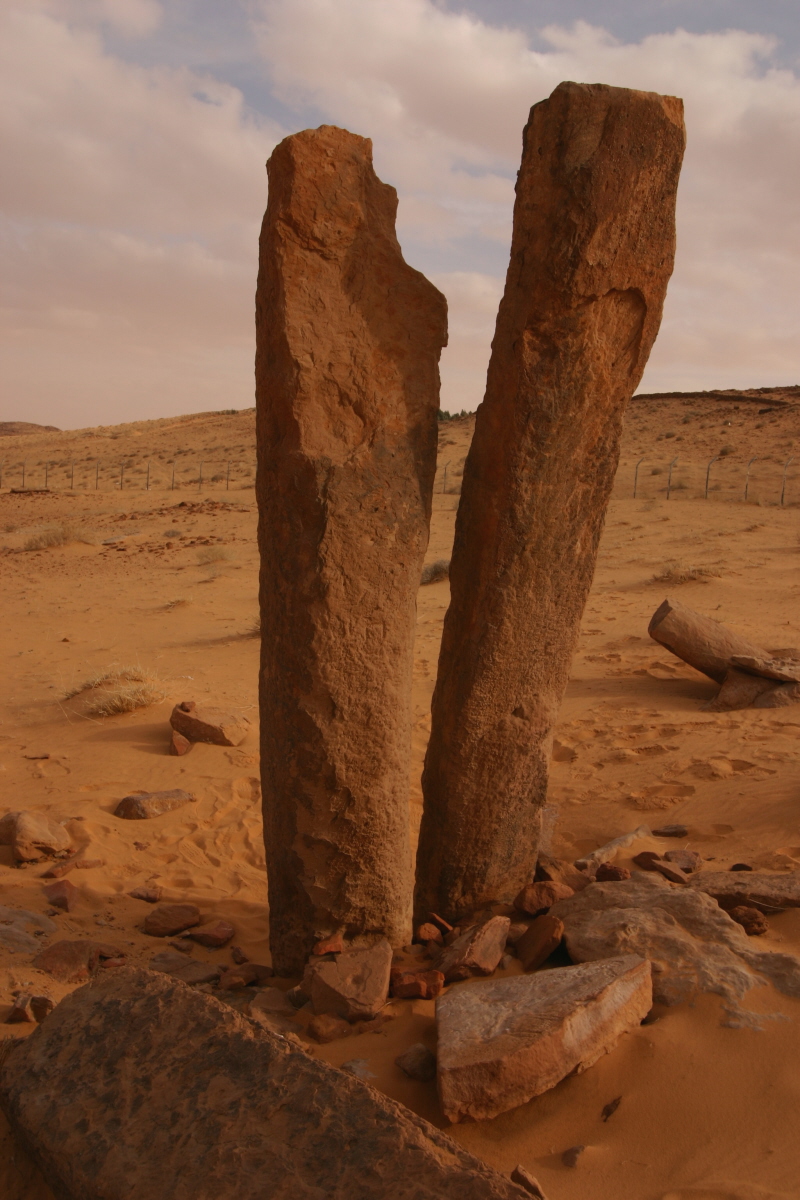
Roughly 12 kilometres southeast of Sakaka city centre stands one of the Arabian Peninsula’s most enigmatic archaeological sites. Al Rajajil — Arabic for “the standing men” — comprises approximately 50 groups of upright sandstone pillars, each group containing four or more columns ranging from two to four metres tall. The stones date to the late 5th millennium BCE, making them roughly 6,000 years old and older than England’s Stonehenge by at least a millennium.
The pillars are arranged in rows roughly aligned on a north–south axis, leading some archaeologists to propose an astronomical or calendrical function. Others believe the site served as a religious sanctuary or communal gathering place for the region’s prehistoric inhabitants. Stone tools — scrapers, awls, and blades — have been recovered from the site, along with pottery fragments, but no definitive inscriptions have been found. The site is unfenced and free to visit, though a wire boundary surrounds the main cluster. Al Rajajil is on Saudi Arabia’s UNESCO Tentative List under the entry “Prehistoric Stone Structures in Saudi Arabia.”
Practical tip: Visit at sunrise or sunset for the best light on the sandstone columns. There are no facilities at the site — bring water and wear sturdy shoes. GPS coordinates: 29.8133° N, 40.2167° E.
Za’abal Castle (Qasr Za’abal)
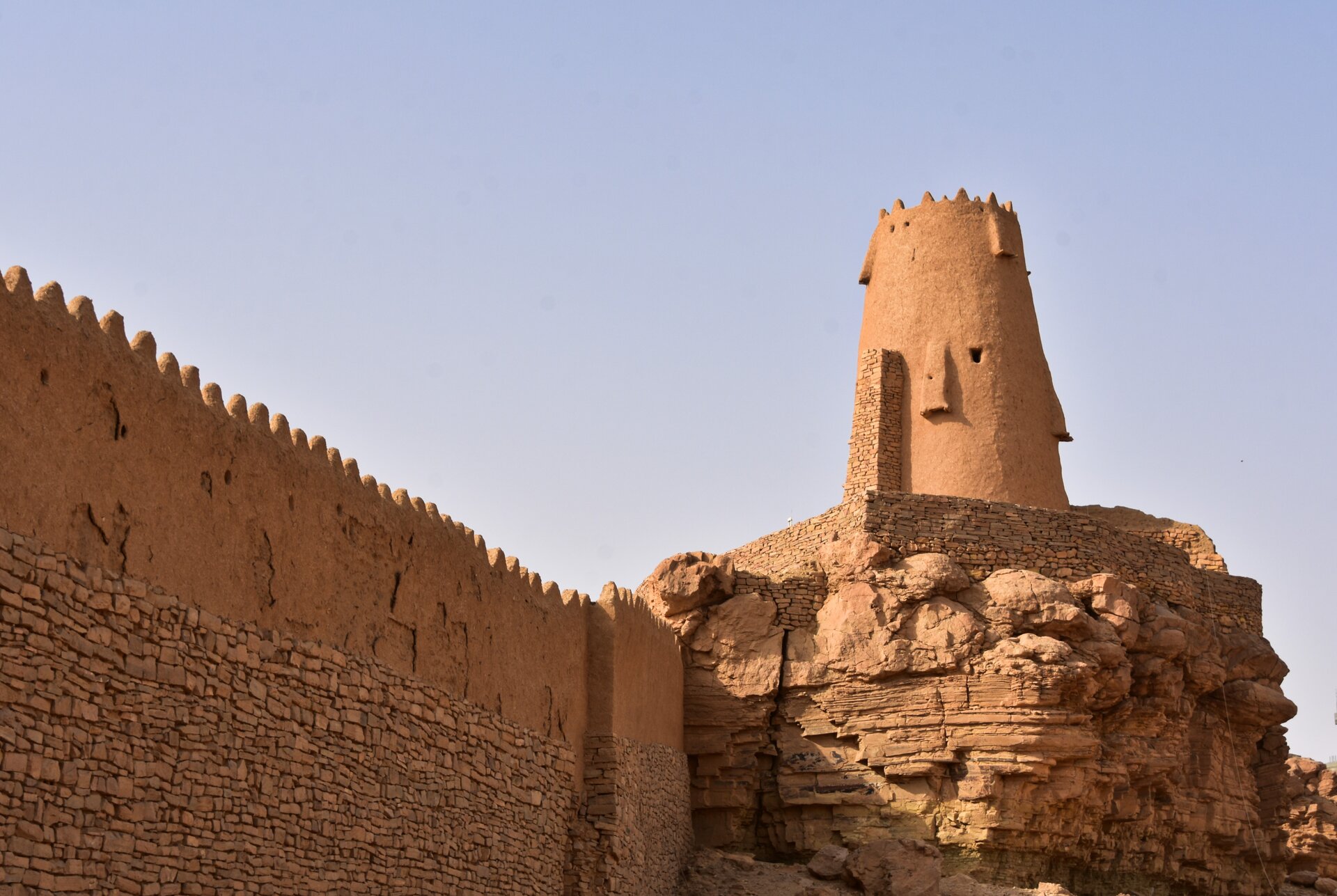
Dominating the Sakaka skyline from its perch atop a rocky outcrop, Za’abal Castle is the city’s most recognisable landmark. The current structure dates to approximately 400 years ago, but archaeological evidence confirms that fortifications have stood on this hill since the Nabataean era (1st century BCE to 1st century CE). The castle consists of four cylindrical towers connected by a single wall of stone and mud, rising about five metres, with two interior rooms roofed with palm trunks and branches.
What makes Za’abal particularly interesting is its underground water system. The castle courtyard doubles as a catch basin, feeding water into a network of channels that runs beneath the city and historically supplied Sakaka’s inhabitants during times of siege. The fortress is accessible via a stepped path carved into the hill, and the summit offers sweeping panoramic views of Sakaka, its date palm groves, and the surrounding desert.
Practical tip: The climb is short but steep. Visit in the late afternoon when the sun is lower. The castle is free to enter and there is no formal ticketing system.
Sisra Well (Bi’r Sisra)
Located at the base of Za’abal Castle’s hill, the Sisra Well is an outstanding example of Nabataean hydraulic engineering. Carved by hand into solid sandstone rock, the oval well measures approximately 8 by 7 metres across and descends about 15 metres deep. Stone-cut stairs spiral down the interior walls to the water level below, and a rock-hewn channel leads from an eastern aperture to irrigate the surrounding agricultural lands.
The carving style is comparable to the rock-cut tombs at Hegra in AlUla, pointing to a shared Nabataean engineering tradition. Local tradition holds that a secret tunnel once connected the well to Za’abal Castle above, ensuring water supply during prolonged sieges. Whether or not that tunnel exists, the well is an impressive feat of ancient civil engineering and one of the most photogenic sites in Sakaka.
Dumat al-Jandal: The Ancient Capital
About 50 kilometres south of Sakaka lies Dumat al-Jandal, one of the most historically significant sites in all of northern Arabia. The name translates as “Dumah of the Stone” — a reference to the city’s substantial stone fortifications. It appears in Akkadian inscriptions of the Neo-Assyrian Empire dating to 845 BCE, where it is called Adummatu and described as the capital of the Qedar Arab kingdom. Remarkably, the names of five powerful Arab queens who ruled from Dumat al-Jandal are recorded in Assyrian texts, including Zabibe, Shamsi, and Te’elkhunu.
The city stood at the northern edge of the Nafud desert and at the terminus of Wadi Sirhan, placing it at a critical crossroads of incense trade routes running between southern Arabia, Mesopotamia, and the Levant. In 630 CE, the commander Khalid ibn al-Walid captured Dumat al-Jandal, bringing it into the nascent Islamic empire. Since 2009, a joint Saudi-Italian-French archaeological project has been conducting systematic excavations at the site, continually revealing new layers of its multi-millennial history.
Marid Castle (Qasr Marid)
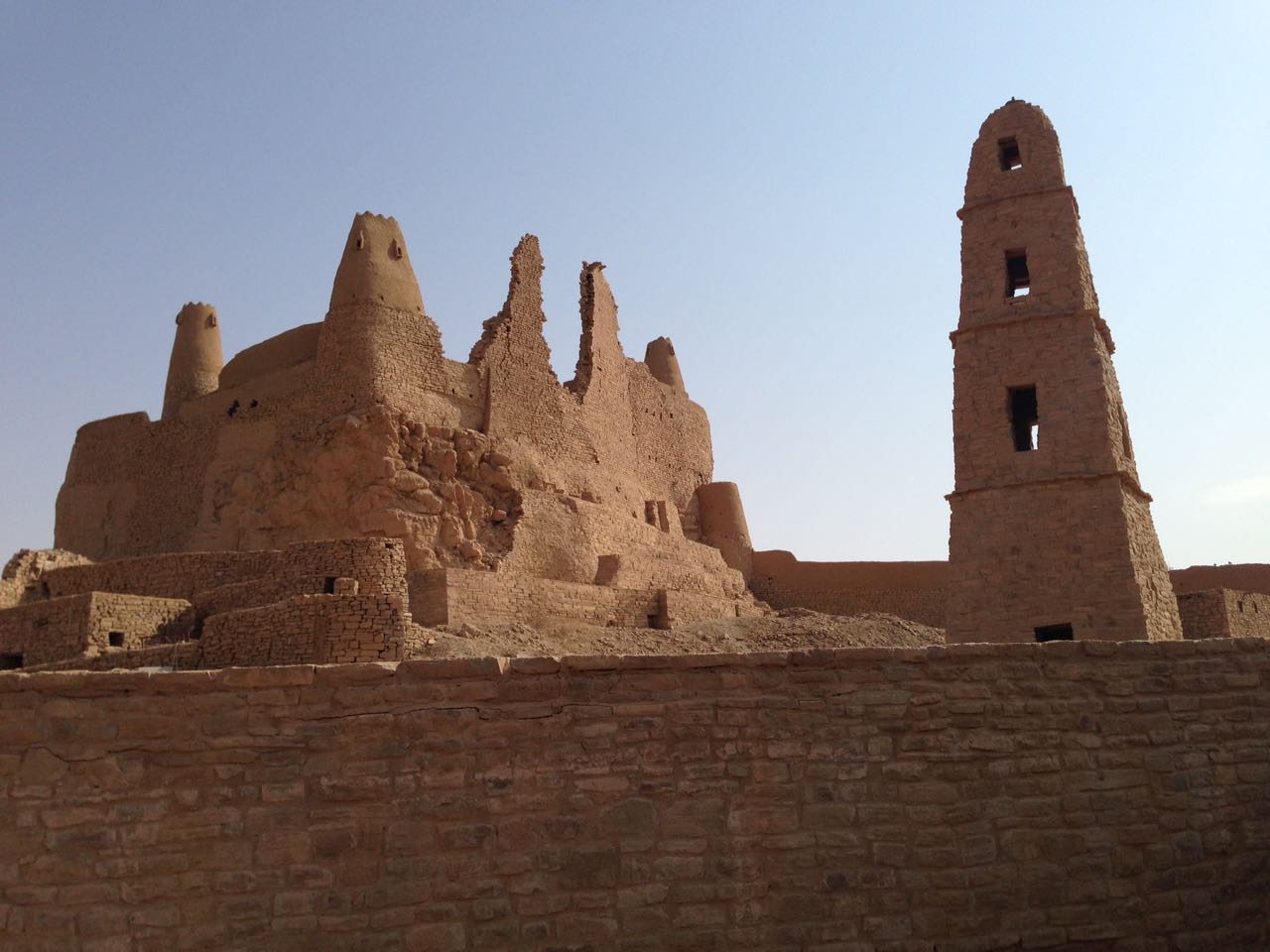
Marid Castle is the centrepiece of Dumat al-Jandal. Built in the 1st century CE, this imposing fortress crowns a hill rising to about 620 metres above sea level and overlooks the entire ancient city. The castle entered the historical record in the 3rd century CE when Queen Zenobia of Palmyra launched a military campaign against Dumat al-Jandal — her forces were unable to breach Marid’s defences, earning the fortress a reputation for impregnability.
The walled compound contains rooms, a deep well at its base, and four corner towers once used for surveillance. Visitors can climb to the top for panoramic views stretching across the old city ruins, the Omar Mosque’s minaret, and the palm-fringed oasis beyond. The castle has been partially restored and is one of the best-preserved ancient fortifications in Saudi Arabia.
Omar ibn al-Khattab Mosque
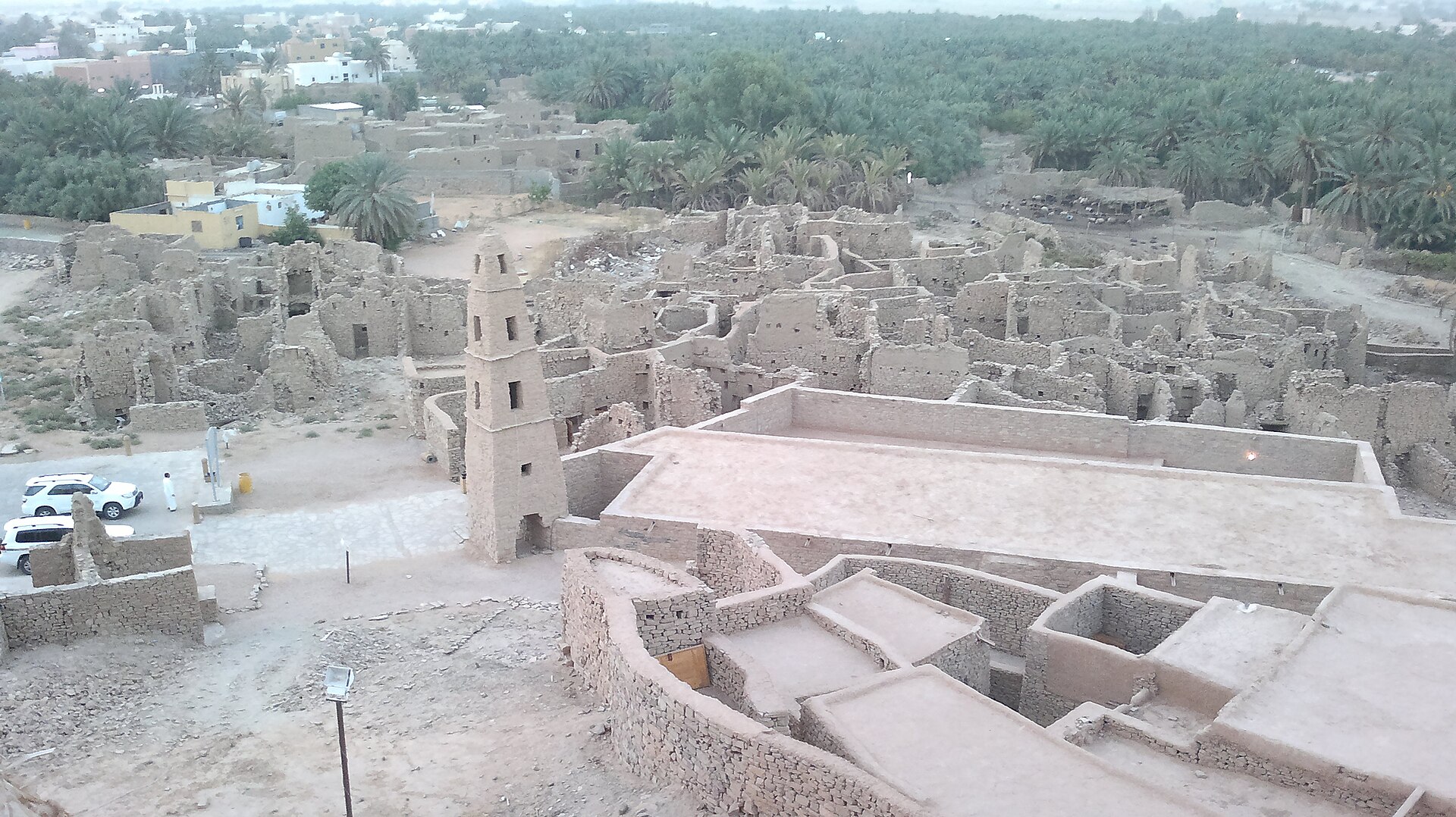
Directly adjacent to and below Marid Castle stands the Mosque of Omar ibn al-Khattab, named after the second Rashidun caliph. Tradition holds that Omar ordered the mosque’s construction between 634 and 644 CE, though some scholars believe the structure may incorporate elements of an even earlier building. What is beyond dispute is the mosque’s extraordinary stone minaret — widely considered the first minaret built in northern Arabia. Its conical, tapering form, constructed entirely of local sandstone, is a landmark visible from across the old city.
The mosque is set within a partially ruined quarter of traditional stone houses, narrow alleys, and collapsed walls that together convey a vivid sense of what a northern Arabian oasis town looked like centuries ago. This atmospheric neighbourhood is one of the most compelling heritage walks in the Kingdom — far quieter and more intimate than better-known heritage districts like Diriyah in Riyadh.
Dumat al-Jandal Lake
On the outskirts of the ancient city, Dumat al-Jandal Lake stretches over roughly one million square metres with a depth of about 15 metres, making it one of the largest bodies of water in the Arabian Peninsula. The artificial lake was created as a reservoir serving nearby farms, but it has since become a significant recreational and ecological asset. Its shoreline park includes walking tracks, children’s play areas, seating, food stalls, and a multi-purpose amphitheatre.
Water activities include kayaking, boating, and jet skiing, while the lake’s fringes attract birdlife — a notable rarity in this arid landscape. The combination of open water, palm groves, and desert scenery makes the lake an unexpectedly picturesque spot, especially at sunset. For families looking to break up a day of archaeological exploration, the lake park is an excellent option.
Al Jouf Regional Museum
Located in Dumat al-Jandal near the archaeological zone, the Al Jouf Regional Museum occupies a modern 3,600-square-metre facility with permanent exhibition halls, a children’s section, photography and restoration workshops, a library, and spaces for visiting exhibitions. The museum’s timeline walks visitors through thousands of years of Al Jouf history, displaying stone tools from settlements as old as 1.3 million years — found at a site roughly 45 kilometres north of Sakaka that is one of the oldest known archaeological sites in western Asia — alongside Nabataean pottery, Islamic-era coins, traditional tools, and models illustrating daily life across different periods.
The museum provides essential context for the outdoor sites. Visiting it before heading to Marid Castle and the Rajajil columns will deepen your appreciation of what you’re seeing. Entry is typically free, and guided tours can sometimes be arranged through the Al Jouf Heritage Commission.
The Olive Capital of Saudi Arabia
Al Jouf’s agricultural identity runs parallel to its archaeological one. The province is home to over 23 million olive trees producing approximately 150,000 tonnes of table olives annually. The largest modern olive farm in the region holds the Guinness World Record — certified since 2018 — with five million olive trees across a single operation, producing 33,000 tonnes of olives and 5,500 tonnes of olive oil each year.
The annual Al Jouf International Olive Festival, held at the Prince Abdulilah Cultural Centre in Sakaka, has run for 19 editions and attracts olive producers from seven countries, along with 45 local farmers and 10 agricultural companies. All products undergo rigorous testing at Al Jouf’s municipal laboratory, covering acidity, rancidity, moisture, and authenticity. The festival typically takes place in the late autumn harvest season (October–November) and includes cultural performances, live music, and an “Olive Expo” showcasing the region’s best olive oil and pickled olives.
Foodie tip: Look for zeitoun mashwi (grilled olives), fresh-pressed Al Jouf olive oil, and olive-wood handicrafts in the Sakaka souq. The local olive oil is noticeably green and peppery — considered among the best in the Gulf region.
Suggested Itineraries
One-Day Highlights
If you have only a single day, focus on the core archaeological circuit:
- Morning: Drive to the Al Rajajil Standing Stones at dawn for the best light and photographs. Allow 45–60 minutes to walk the site.
- Mid-morning: Return to Sakaka city centre. Climb to Za’abal Castle for panoramic views, then descend to inspect the Sisra Well at its base.
- Lunch: Eat in one of Sakaka’s local restaurants — try lamb kabsa or grilled chicken with rice.
- Afternoon: Drive 50 km south to Dumat al-Jandal. Visit the Al Jouf Regional Museum first for context, then explore Marid Castle and the Omar ibn al-Khattab Mosque.
- Evening: Watch sunset from the shore of Dumat al-Jandal Lake before returning to Sakaka.
Two-Day Deep Dive
With two days, you can explore at a slower pace and add lesser-known sites:
Day 1 — Sakaka and surroundings: Morning at Al Rajajil. Mid-morning at Za’abal Castle and Sisra Well. Afternoon visit to Qara Mountain Park for easy hiking and desert scenery. Evening stroll through the Sakaka souq, picking up local olive oil and dates.
Day 2 — Dumat al-Jandal full day: Start at the Al Jouf Regional Museum. Walk the old stone quarter surrounding the Omar Mosque, then climb Marid Castle. Lunch at a local restaurant in Dumat al-Jandal. Afternoon boating or kayaking on Dumat al-Jandal Lake. If visiting during the olive harvest (October–November), drive out to one of the region’s massive olive farms for a tour.
Al Jouf as Part of a Longer Northwest Road Trip
Al Jouf pairs naturally with a broader northwest Saudi road trip. From Tabuk, drive northeast through the desert to Sakaka (~620 km, 6–7 hours). From Sakaka, you can continue southeast toward AlUla (~650 km) to create an epic archaeological loop through the Nabataean heartland. Alternatively, head south from Sakaka toward Ha’il and the Jubbah rock-art sites before continuing to Riyadh. The route between Sakaka and Ha’il passes through dramatic Nafud Desert scenery with towering red sand dunes.
When to Visit
Sakaka sits at an elevation of roughly 655 metres, giving it a subtropical desert climate that is somewhat less extreme than the central Saudi lowlands but still searingly hot in summer.
| Season | Months | Temperature Range | Notes |
|---|---|---|---|
| Winter (best) | Dec – Feb | 4–18 °C | Cool to mild days, cold nights. Ideal for hiking and outdoor exploration. Occasional light frost possible. |
| Spring | Mar – Apr | 12–28 °C | Warming rapidly. March is excellent; April can be hot by midday. Wildflowers possible after winter rain. |
| Summer | May – Sep | 25–44 °C | Extreme heat. July and August regularly exceed 42 °C. Outdoor sightseeing is difficult and potentially dangerous. |
| Autumn | Oct – Nov | 14–30 °C | Cooling down. October coincides with the olive harvest and the annual Olive Festival. |
Annual rainfall is minimal — about 7 mm total, falling almost entirely between November and April. The region receives virtually zero precipitation from May to October. The best time to visit Saudi Arabia varies by region, but for Al Jouf, November through February offers the most pleasant conditions.
Getting There
By Air
Al Jouf Domestic Airport (AJF) is located approximately 30 km from central Sakaka. Saudia operates around 27 direct flights per week from Riyadh’s King Khalid International Airport (RUH), with Flynas adding roughly five more. The flight takes about 1 hour and 40 minutes. One-way fares start from around SAR 135 / US $36, with round trips from approximately SAR 410 / US $110. There are no direct international flights to Al Jouf — all international arrivals connect through Riyadh or Jeddah.
From the airport, taxis and ride-hailing apps (Uber and Careem both operate in Sakaka) will take you to the city centre in about 30 minutes. Expect to pay SAR 50–80 for an airport transfer. Renting a car at the airport is strongly recommended if you plan to visit Dumat al-Jandal, Al Rajajil, and other sites outside the city — public transport within the province is extremely limited.
By Road
Sakaka sits at the junction of several major highways:
- From Riyadh: ~1,100 km via Highway 65 and Highway 80 (approximately 10–11 hours of driving). The route passes through Ha’il and crosses sections of the Nafud Desert.
- From Tabuk: ~620 km east via Highway 80 (approximately 6–7 hours). Useful for combining with a Tabuk and NEOM trip.
- From the Jordanian border (Al Haditha crossing): ~250 km south. Possible as an overland entry point for travellers coming from Amman.
All major routes are well-maintained dual carriageways. Petrol stations are spaced regularly along the highways, and rest stops with mosques, shops, and food are available. For driving in Saudi Arabia, an international driving permit is accepted alongside your home-country licence.
Visa Requirements
Most visitors need a Saudi tourist e-visa, which is available online for citizens of 60+ countries and costs SAR 535 (approximately US $140), including mandatory health insurance. The e-visa is valid for one year and allows multiple entries with stays of up to 90 days per visit. Apply through the official Saudi visa portal — processing typically takes 5–30 minutes. GCC nationals do not require a visa.
Where to Stay
Sakaka is not a luxury hotel destination. Accommodation is functional and affordable, geared primarily toward business travellers and domestic tourists. Expect clean, modern but basic hotel rooms and serviced apartments.
| Hotel | Category | Price Range (per night) | Notes |
|---|---|---|---|
| Le Park Concord – Sakaka | Upper mid-range | SAR 350–550 / US $95–150 | Best hotel in the city. Restaurant, business centre, Wi-Fi. |
| Ewaa Express Hotel – Al Jouf | Mid-range | SAR 200–350 / US $55–95 | Popular chain hotel. Clean rooms, central location. |
| Raoum Inn Sakaka | Mid-range | SAR 180–300 / US $50–80 | On-site restaurant, games room, free Wi-Fi. |
| Fakhamat Al Orjoana Suites | Budget apartments | SAR 150–250 / US $40–70 | Self-catering apartments near Al Jouf Plaza Mall. Good for longer stays. |
| Lara Al Jawf Hotel Apartments | Budget | SAR 120–200 / US $32–55 | Air conditioning, free parking. Basic but functional. |
For the best selection of hotels in Saudi Arabia, the major booking platforms (Booking.com, Almosafer, Agoda) all list Sakaka properties. Book in advance if visiting during the Olive Festival in October–November, when demand spikes.
Food and Dining
Al Jouf’s cuisine blends northern Arabian Bedouin traditions with Levantine and Iraqi influences — a reflection of the province’s proximity to Jordan and Iraq. Look for:
- Kabsa: The Saudi national dish of spiced rice with slow-cooked lamb or chicken. Available everywhere.
- Jareesh: Crushed wheat porridge cooked with meat stock and served with ghee — a Bedouin staple particularly popular in Al Jouf.
- Mutabbaq: Stuffed flatbread with minced meat, vegetables, or cheese. A popular street food.
- Olive dishes: Fresh Al Jouf olives, olive oil drizzled over flatbread, and zeitoun mashwi (grilled olives) — the regional speciality.
- Dates: Al Jouf produces high-quality Khalas and Sukkari dates. Buy them fresh from roadside stalls.
- Arabic coffee (qahwa): Served cardamom-spiced in small cups, often with dates. Ubiquitous and usually offered free in traditional settings.
Dining options in Sakaka are mainly local Saudi restaurants, shawarma shops, and fast-food chains. There are no fine-dining restaurants. For the most authentic experience, eat at small family-run restaurants serving kabsa and grilled meats — meals typically cost SAR 25–60 (US $7–16) per person.
Practical Tips for Visitors
Getting Around
A rental car is essential for exploring Al Jouf Province. The key sites — Sakaka, Za’abal Castle, Al Rajajil, Dumat al-Jandal, and the lake — are spread across roughly 70 kilometres, and there is no public transport linking them. Rental cars are available at Al Jouf Airport and in Sakaka city centre. Uber and Careem work within Sakaka but may have limited driver availability in Dumat al-Jandal.
Language
English signage is limited outside the airport and major hotels. Having Google Translate’s Arabic offline pack downloaded will help enormously. Younger Saudis often speak some English, but in rural areas and at heritage sites, communication may require patience and gestures.
Connectivity and Cash
Mobile coverage (STC, Mobily, Zain) is reliable in Sakaka and Dumat al-Jandal, though it can drop in remote desert areas between sites. ATMs are available in Sakaka. Many smaller restaurants and shops are cash-only — carry SAR notes in addition to your credit card.
Cultural Etiquette
Al Jouf is a conservative region. While Saudi Arabia’s dress code for tourists has relaxed significantly in recent years, modest clothing covering shoulders and knees is expected, particularly when visiting mosques and heritage sites. Women do not need to wear an abaya as tourists but should dress conservatively. Remove shoes before entering mosques. Always ask before photographing local people.
Safety
Al Jouf is very safe for tourists. The main risks are heat-related (dehydration, sunstroke) if visiting outside the winter months, and the hazards of desert driving (sand drifts, limited mobile signal on remote roads). Carry at least 3 litres of water per person per day when sightseeing, and inform your hotel of your plans if driving to remote sites.
Nearby Day Trips
Qara Mountain Park
Just outside Sakaka, Qara Mountain Park offers easy walking trails through a rocky desert landscape with scenic overlooks, picnic spots, and family-friendly facilities. It is a pleasant half-day outing, especially in the cooler winter months.
The Nafud Desert
The Great Nafud (An Nafud) — Saudi Arabia’s second-largest sand desert — begins south of Al Jouf. The road from Sakaka toward Ha’il crosses its northern fringes, passing towering red-orange dunes that are among the most photogenic in the Kingdom. With a 4WD vehicle and an experienced driver, short desert excursions are possible from Sakaka.
Ha’il and Jubbah Rock Art
Roughly 350 km southeast of Sakaka, the city of Ha’il serves as a gateway to the UNESCO-listed Rock Art in the Hail Region at Jubbah and Shuwaymis. These sites preserve thousands of petroglyphs dating from the Neolithic to the early Islamic era. Combining Al Jouf with Ha’il creates an outstanding multi-day archaeological road trip through northern Saudi Arabia.
History Timeline
For context, here is a condensed timeline of the key historical events associated with Sakaka and Al Jouf:
| Period | Event |
|---|---|
| ~5000 BCE | Al Rajajil standing stones erected near Sakaka. |
| ~1.3 million years ago | Stone tools at a site 45 km north of Sakaka mark one of the oldest known archaeological sites in western Asia. |
| 845 BCE | Dumat al-Jandal (as Adummatu) appears in Neo-Assyrian records as capital of the Qedar Arab kingdom. |
| 8th–7th c. BCE | Arab queens Zabibe, Shamsi, and Te’elkhunu rule from Dumat al-Jandal, recorded in Assyrian texts. |
| 1st c. CE | Marid Castle built. Nabataean traders develop Sisra Well and irrigation networks. |
| 3rd c. CE | Queen Zenobia of Palmyra attacks Dumat al-Jandal; Marid Castle holds. |
| 630 CE | Khalid ibn al-Walid captures Dumat al-Jandal for the early Islamic state. |
| 634–644 CE | Omar ibn al-Khattab Mosque built; first minaret in northern Arabia. |
| 2009–present | Joint Saudi-Italian-French archaeological project excavates Dumat al-Jandal. |
| 2018 | Al Jouf’s largest olive farm certified by Guinness World Records. |
| 2020 | Archaeologists discover a 35-metre megalithic stone platform from the 6th millennium BCE at Dumat al-Jandal. |
Explore More Saudi Arabia Travel Guides
- Tabuk Travel Guide — Gateway to NEOM, Wadi Disah, and northwest Saudi Arabia
- NEOM Travel Guide 2026 — What you can actually visit at Saudi Arabia’s megaproject
- AlUla Travel Guide — Hegra, Elephant Rock, and the Nabataean heartland
- Riyadh Travel Guide — The capital city, Diriyah, and day trips
- Jeddah Travel Guide — The Red Sea gateway, Al-Balad, and the Corniche
- Dammam and Al Khobar Travel Guide — Eastern Province beaches and Ithra
- Hajj 2026 Guide — Complete guide to pilgrimage in Saudi Arabia
- Best Time to Visit Saudi Arabia — Month-by-month climate guide
- Getting Around Saudi Arabia — Flights, trains, driving, and ride-hailing
- Saudi Arabia Visa Guide — Every visa type explained
- Saudi Arabia Hotels Guide — Where to stay across the Kingdom