
Taif sits nearly 1,900 metres above sea level on the western rim of the Sarawat range, but the city itself is only the starting point. Drive thirty minutes northwest and you reach Al Hada, a mountain resort perched on the escarpment edge with a legendary hairpin road, a cable car and panoramic views that drop all the way to the Red Sea coast. Head twenty-five minutes southwest and you arrive at Al Shafa, the highest inhabited area in the region at roughly 2,500 metres, where juniper forests, terraced orchards and family-run honey farms create a landscape that most visitors never associate with Saudi Arabia. Together, these two mountain districts are the reason Taif has been the Kingdom’s preferred summer retreat for generations. This guide is part of a wider highland and mountain travel itinerary across Saudi Arabia’s western escarpment, and complements our full Taif Travel Guide, which covers the city centre, Shubra Palace, rose season and Souk Okaz.
Best Time to Visit: April to October (cool mountain climate, rose season peaks March-May)
Getting There: 25-30 min drive from central Taif; Taif Regional Airport (TIF) receives domestic flights from Riyadh, Jeddah, and Dammam; 2 hr drive from Jeddah via Highway 15
Visa Required: Yes — tourist e-visa available for 63 nationalities
Budget: SAR 200-500 / USD 55-135 per day (transport, meals, activities)
Must-See: Al Hada cable car (Telefric), Daka Mountain Park viewpoint, Al Shafa honey farms and orchards
Avoid: Feeding the hamadryas baboons along the road — it is illegal and draws aggressive troops onto vehicles
Why Visit Al Shafa and Al Hada
Saudi Arabia’s highlands are among the least-understood corners of the Kingdom for international visitors. While Riyadh bakes at 45 degrees and even coastal Jeddah rarely dips below 30 in summer, the twin mountain districts of Al Hada and Al Shafa hold temperatures between 15 and 25 degrees Celsius year-round. That alone made Taif the unofficial summer capital of the Saudi government for decades — the royal court would relocate here every June, and the practice continued into the 1990s.
But the appeal extends well beyond cool air. Al Hada’s engineered mountain road, with its 93 switchbacks carved into the Hejaz escarpment, is one of the most dramatic drives anywhere in the Middle East. Al Shafa’s landscape of juniper-cloaked ridges, terraced farms growing pomegranates and figs, and beekeepers tending hives that produce some of Saudi Arabia’s most expensive honey, offers a vision of Arabia that contradicts every desert stereotype. For travellers building a Saudi Arabia itinerary, these mountain resorts can fill a full day from Taif, or anchor a longer stay in the western highlands between Mecca and Abha.
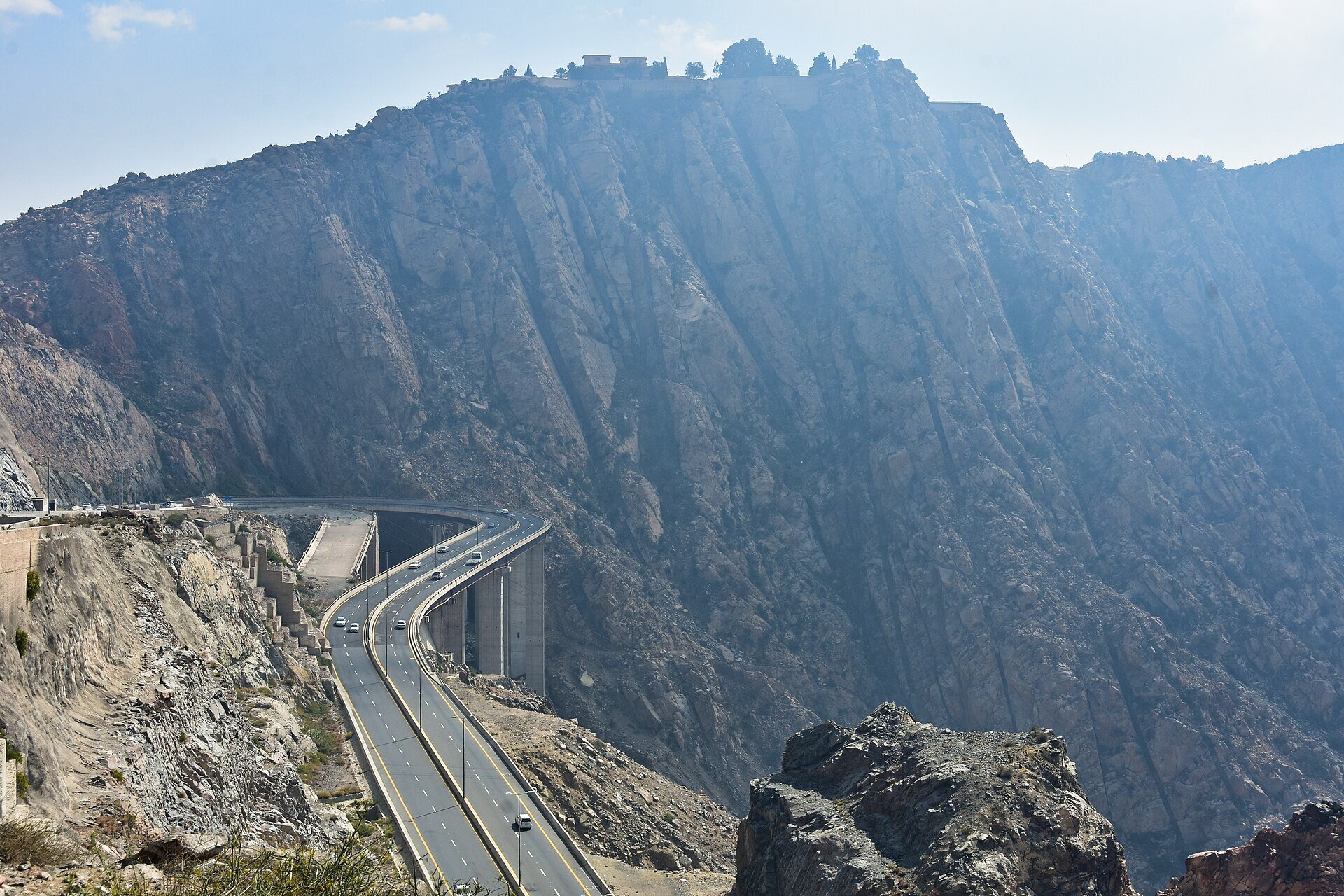
Al Hada: The Escarpment Resort
Al Hada sits roughly 20 kilometres northwest of central Taif, at an elevation of around 2,000 metres. It commands the point where Highway 15 begins its precipitous descent towards Mecca and the Tihama coastal plain below. The area has been a retreat since well before modern tourism: the historical camel caravan route known as Darb Al-Jammalah once zigzagged up this same escarpment for roughly six kilometres, shortening the three-day journey between the coast and the highland plateau to mere hours.
The Al Hada Road
The modern highway that replaced the old caravan trail is a feat of mid-twentieth-century engineering. The idea originated during King Saud bin Abdulaziz’s visit to Taif in 1955, and construction began in 1958. The finished road stretches 22 kilometres and incorporates 93 numbered hairpin bends, each banked and walled with stone barriers. For drivers, it is simultaneously thrilling and demanding: the descent drops over 1,500 metres, and the succession of tight curves through drifting mountain fog has earned Al Hada Road a reputation as one of Saudi Arabia’s most photogenic routes. Motorcyclists and sports-car enthusiasts frequently drive it at dawn when the road is quieter. For anyone exploring the Kingdom’s roads, our car rental guide explains what you need to know about driving in the highlands.
Driving Tip: The descent is steep and brake-heavy. Use low gear (second or third) to avoid overheating your brakes. Fog can reduce visibility to under 50 metres in the morning, particularly between November and March. Pull into one of the numbered viewpoint lay-bys rather than stopping in the road.
Al Hada Cable Car (Telefric)
The Al Hada cable car, locally called the Telefric, has been operating since 1997. It spans 1,550 metres of mountainside and carries passengers between the upper station near the Al Hada summit and the lower station at Al Kar Tourist Village. The ride takes roughly 15 minutes each way. Cabins have large panoramic windows and can carry up to 40 passengers, offering unobstructed views across the escarpment, the Tihama plain, and — on clear days — patches of Taif’s rose fields below.
| Detail | Information |
|---|---|
| Length | 1,550 metres |
| Ride Time | Approximately 15 minutes one way |
| Capacity | Up to 40 passengers per cabin |
| Operating Hours | 9:00 AM to 8:00 PM daily (hours may vary seasonally) |
| Ticket Price | SAR 75-150 one way / SAR 150-300 return (prices subject to change; confirm at the ticket office) |
| Built | 1997 |
Note: Ticket prices have fluctuated in recent years. The most reliable approach is to confirm at the ticket booth on arrival or to book via a local tour operator. Children under a certain height may ride free — ask at the counter.
Al Kar Tourist Village
The cable car’s lower station opens into Al Kar Tourist Village, a 200,000-square-metre leisure complex wedged into the valley between Mecca and Taif. Al Kar functions as a family-oriented attraction hub. Activities include:
- Toboggan ride — a gravity-powered track that winds around the mountainside, with rider-controlled speed
- Go-karting — paved circuit suitable for children and adults
- Water park — the largest in the Taif area, with slides, wave pools, and splash areas
- Paintball and laser tag — enclosed arenas near the main entrance
- Rope challenge course — aerial obstacles strung between trees
- Restaurants — traditional Arabic cuisine and fast food outlets
Entry to Al Kar itself is free. Each activity is ticketed separately at booths inside the village. Opening hours are generally 10:30 AM to 9:30 PM daily, with the best months being May to September when highland temperatures make outdoor activities comfortable. Families visiting Saudi Arabia with children will find Al Kar is one of the better options outside the major cities — see our theme parks guide for more across the Kingdom.
Hamadryas Baboons
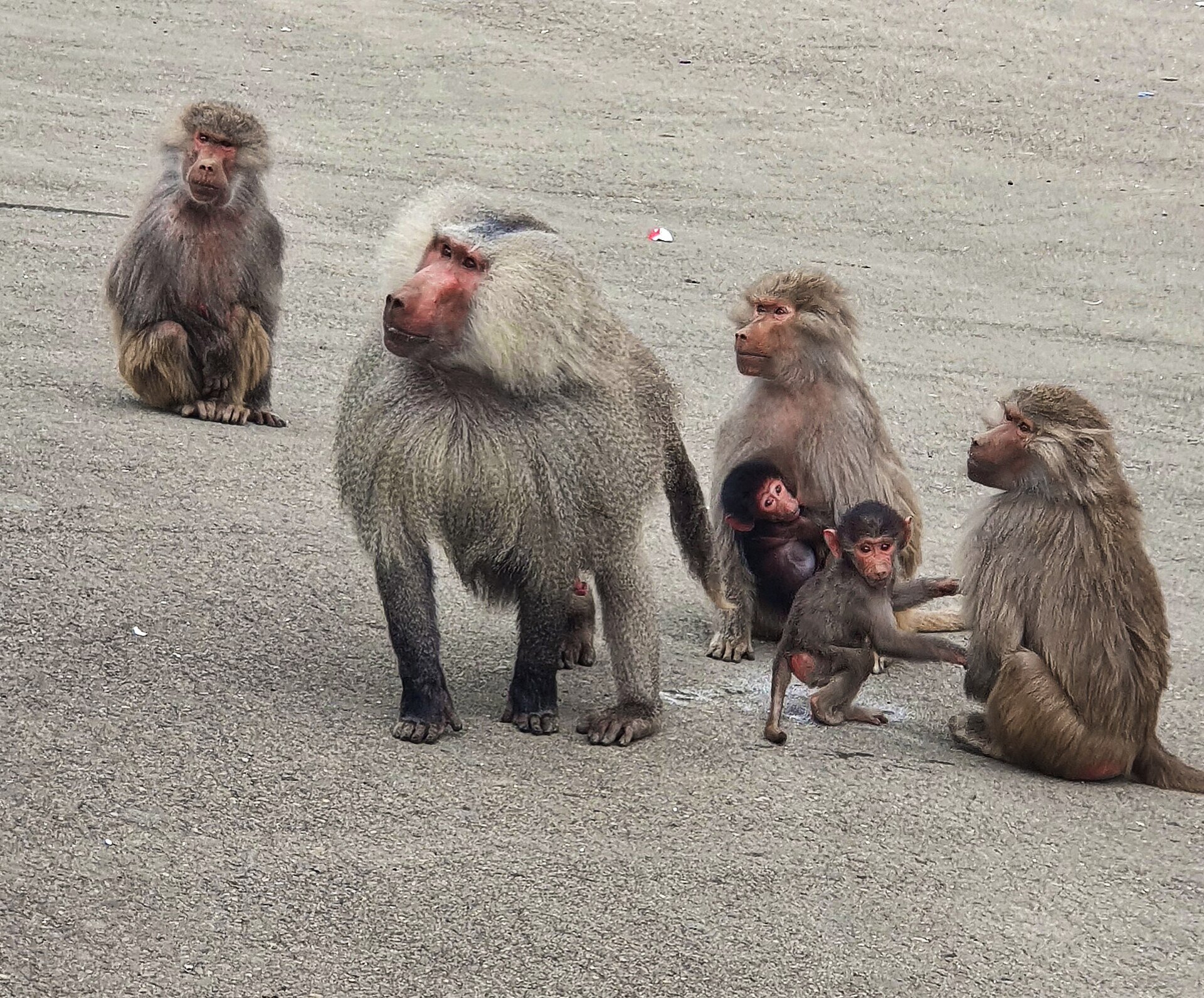
The Al Hada escarpment is home to a large population of hamadryas baboons (Papio hamadryas), which visitors will almost certainly encounter along the roadside. Troops of 20 to 50 animals gather near lay-bys and picnic areas, particularly where drivers have historically thrown food from car windows. The baboons are photogenic from a distance but can be aggressive up close — they have been known to climb onto car roofs, snatch bags through open windows, and bite when startled.
Wildlife Warning: Feeding baboons is prohibited and carries fines. Keep windows closed when troops are present. Do not leave food visible in your vehicle. The baboons are wild animals, not pets, despite their apparent comfort around traffic.
Al Shafa: The High Village
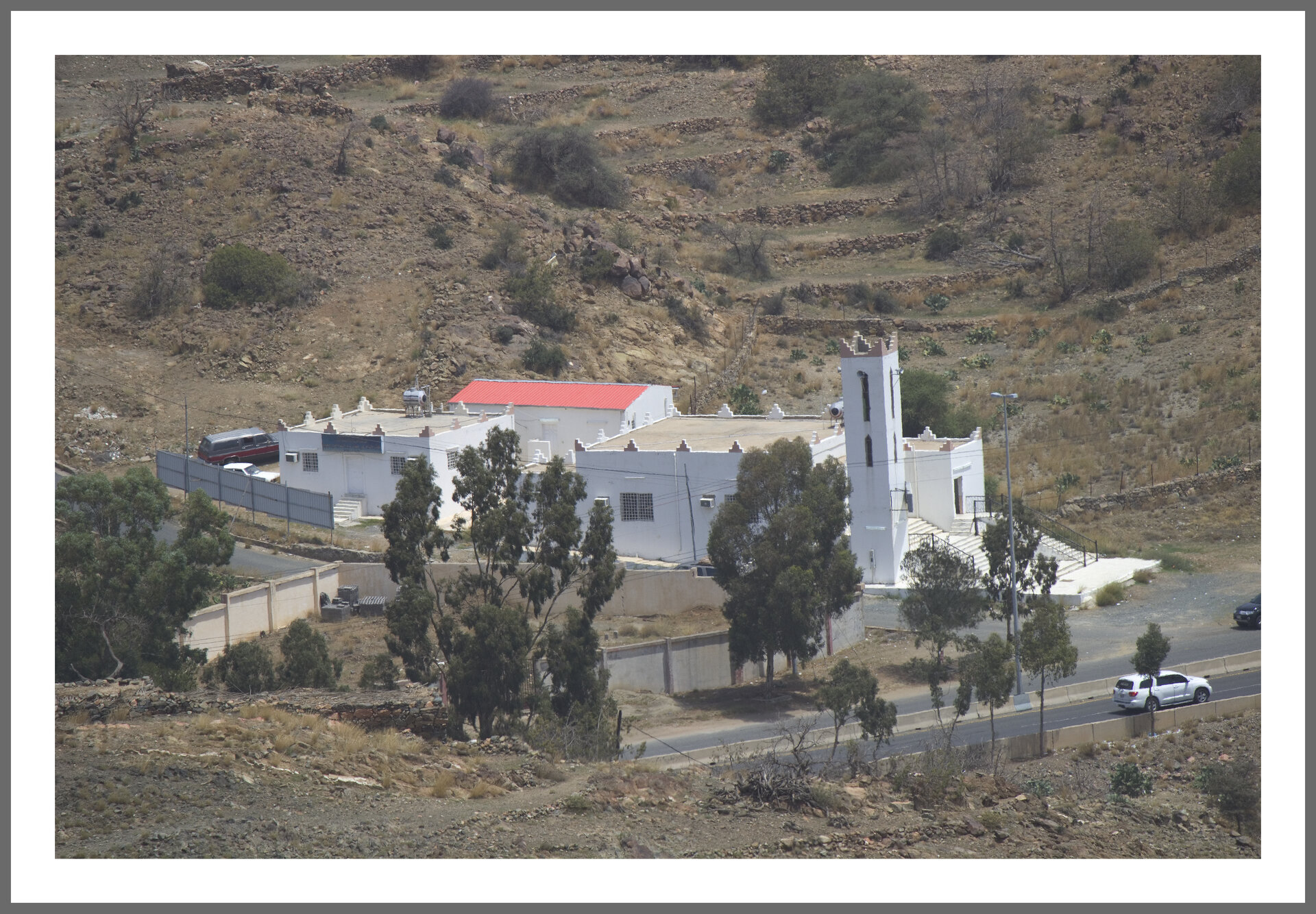
Al Shafa lies roughly 25 kilometres southwest of central Taif, accessible via Aqaba Al-Mohammadiya Road. At approximately 2,500 metres above sea level, it is the highest settlement in the Taif governorate and one of the highest inhabited areas anywhere in Saudi Arabia. Where Al Hada is defined by its escarpment drama and cable car tourism, Al Shafa is quieter, more agricultural, and more traditionally rooted. The landscape is dominated by dense stands of juniper trees (Juniperus procera), terraced valley orchards, and stone-built farming villages that have been occupied for centuries.
Daka Mountain Park
At the summit of Al Shafa, Daka Mountain Park (Muntazah Jabal Daka) is a 10,000-square-metre public park built on the highest accessible point in the district. The park offers:
- Panoramic viewpoints — 360-degree views across the Sarawat range and down towards the Tihama coastal plain to the west
- Walking paths — paved trails loop through the park with benches and shaded rest areas
- Picnic terraces — stone-built barbecue platforms available on a first-come basis
- Sunset vistas — the western orientation makes this one of the finest sunset viewpoints in Saudi Arabia, with the lowlands stretching to the horizon in shades of gold and pink
There is no entrance fee. The park is open daily and is most popular in the late afternoon. For visitors who enjoy elevated viewpoints, the experience is comparable in its own way to the Edge of the World near Riyadh, though the climate and vegetation are entirely different.
Orchards and Terraced Farms
The valleys below Al Shafa village are lined with traditional terraced farms that have been cultivated for generations. The altitude and cooler temperatures create a growing season unusual for the Arabian Peninsula. Key crops include:
- Pomegranates — harvested from late summer through autumn; Taif pomegranates are prized across the Kingdom for their sweetness
- Figs — the mountain variety is smaller and denser than lowland figs, often sun-dried and sold at roadside stalls
- Grapes — several local varieties, typically harvested in August and September; sold fresh or dried as raisins
- Apricots — a shorter season, typically June to July
- Almonds — almond trees bloom earlier in the year, often by February
Visitors can buy fresh fruit directly from farm stands along the main road through Al Shafa, particularly between June and October. Prices are modest — expect to pay SAR 10-25 per kilogram for seasonal fruit depending on the variety.
Mountain Honey
Al Shafa’s most celebrated product is its mountain honey. Beekeeping families, some of whom have maintained hives in the same valleys for multiple generations, produce honey from bees that forage on the wild herbs, juniper blossoms, and mountain wildflowers of the Sarawat range. This honey is darker, thicker, and more intensely flavoured than the acacia honey produced in lower elevations.
Al Shafa honey commands premium prices — a kilogram of pure mountain honey can cost SAR 200-400 (USD 55-105) depending on the season and the producer. Vendors line the main road through the village, and several beekeepers welcome visitors to see their hives. The best time to buy is during and shortly after the spring flowering season (March to May), when the freshest honey is available.
Buying Tip: Ask to taste before buying. Genuine Al Shafa mountain honey is dark amber, viscous, and has a complex herbal flavour. Some vendors sell blended or lower-grade honey at tourist prices. Buying directly from a beekeeper at their hive site generally guarantees authenticity.
Al Shafa Village Souk
The small souk in Al Shafa village is a roadside market rather than an enclosed bazaar. Stalls sell local honey, dried fruits, spices, herbs, nuts, aromatic plants, handmade pottery, and wooden utensils. During the rose harvest season (March to May), you can also find Taif rosewater and rose oil here, though the main rose distilleries are closer to central Taif and Al Hada. For more on rose products and Taif’s wider market scene, see our Taif city guide.
Best Time to Visit
The highland climate of Al Shafa and Al Hada is pleasant for most of the year, which is precisely why Saudis have retreated here during summer for over a century. However, seasons do affect what you can see and do.
| Season | Months | Temperature Range | What to Expect |
|---|---|---|---|
| Spring | March – May | 15 – 25°C | Rose season in the valleys below (March-May), almond blossoms, clear skies, wildflowers. Best overall period for visiting. |
| Summer | June – August | 20 – 28°C | Peak Saudi domestic tourism. Fruit orchards in full production. Comfortable temperatures while the rest of the Kingdom swelters. Accommodation books out — reserve early. |
| Autumn | September – November | 15 – 25°C | Pomegranate and grape harvest. Quieter crowds. Excellent hiking weather. |
| Winter | December – February | 5 – 15°C | Cold by Saudi standards, with occasional frost at Al Shafa’s altitude. Morning fog common on the Al Hada road. Fewer tourists. Bring warm layers. |
The best time to visit Saudi Arabia overall depends on your priorities, but for the Taif highlands specifically, April through October offers the widest range of activities and the most reliable conditions.
Where to Stay
Accommodation around Al Hada and Al Shafa ranges from a single branded resort to basic rest houses and chalets. Most international visitors will prefer to base in central Taif and drive out, but staying on the mountain has its own appeal — particularly for sunset and sunrise views.
Le Meridien Al Hada
The Le Meridien Al Hada is the only internationally branded hotel in the mountain district. Managed by Marriott, the 111-room property sits at the summit of Al Hada at roughly 2,500 metres elevation. Rooms feature traditional Arabic interior styling and either mountain, garden, or valley views. Facilities include an outdoor pool, indoor pool, fitness centre, sauna, children’s playground, and five restaurants and cafes serving international and Middle Eastern cuisine. Rates typically start from SAR 400-600 per night (USD 105-160), though they spike during summer and Eid holidays. Book via Marriott.com or hotel aggregators.
Mountain Chalets and Rest Houses
Scattered along the roads around both Al Hada and Al Shafa, numerous privately-owned chalets and rest houses offer basic accommodation — usually a furnished apartment with a kitchenette, a terrace, and mountain views. Quality varies widely. Many are listed on Booking.com or local platforms like Gathern. Expect to pay SAR 200-500 per night. The best units book out weeks ahead during summer — plan accordingly.
Central Taif
If you prefer more hotel choice, restaurants within walking distance, and proximity to Taif’s other attractions (Shubra Palace, Souk Okaz, the rose distilleries), staying in central Taif and driving to Al Hada and Al Shafa as day trips is a practical option. The Taif Travel Guide covers accommodation in the city centre. For broader hotel options across the Kingdom, see the Saudi Arabia Hotels Guide.
Getting There
From Taif City Centre
Al Hada is approximately 20 km northwest of Taif. Take the Al Hada Ring Road (Highway 15 direction towards Mecca). The drive takes 20-30 minutes.
Al Shafa is approximately 25 km southwest of Taif. Take Aqaba Al-Mohammadiya Road southwards. The drive takes around 30 minutes via a well-paved mountain road.
From Jeddah
The most common approach is to drive from Jeddah via Highway 15. The distance is approximately 180 km and takes around 2 hours. The highway climbs from the Tihama plain to the Taif escarpment, entering the highland plateau near Al Hada — so you can visit Al Hada on the way into Taif.
From Mecca
Mecca to Taif is roughly 90 km via Highway 15, taking about 1.5 hours. The road climbs the Al Hada escarpment directly, which means you drive the famous hairpin road as part of your journey.
By Air
Taif Regional Airport (TIF) receives domestic flights from Riyadh, Jeddah, and Dammam on Saudia and flynas. Flight time from Riyadh is roughly 90 minutes. From the airport, Al Hada and Al Shafa are each 30-45 minutes by car. See our flights guide for airline routes and booking tips.
Getting Around
There is no public transport to Al Hada or Al Shafa. You will need a rental car or a private driver/taxi. Ride-hailing apps (Uber and Careem) operate in Taif city but coverage thins in the mountain districts. If you plan to explore both Al Hada and Al Shafa in one day, a rental car gives you the most flexibility. A valid tourist visa and an international driving permit are required for non-Saudi nationals.
Things to Do: Complete Itinerary
A full day is enough to see the highlights of both districts. Here is a practical route that works as a day trip from Taif or as a standalone detour for travellers driving between Jeddah/Mecca and the southern highlands.
Morning: Al Hada
- Drive the Al Hada road — if coming from Mecca or Jeddah, you will experience the 93-bend escarpment road as your natural approach. Stop at the numbered viewpoint lay-bys for photographs. The morning light hitting the valley from the east is particularly dramatic.
- Cable car descent — take the Telefric from the upper station down to Al Kar Village. Enjoy the 15-minute panoramic ride.
- Al Kar Tourist Village — ride the toboggan, let children play in the water park or on the go-kart track, then take the cable car back up.
- Rose farms (seasonal) — if visiting between March and May, several rose farms near Al Hada welcome visitors for dawn harvest tours and distillery demonstrations. The Al Kamal family distillery, one of the oldest in the region, is located just outside Taif on the Al Hada side.
Afternoon: Al Shafa
- Drive to Al Shafa — head south from Taif on Aqaba Al-Mohammadiya Road (roughly 30 minutes). The landscape shifts from open plateau to dense juniper forest.
- Al Shafa village souk — browse the roadside market for honey, dried fruits, herbs, and pottery.
- Honey farm visit — stop at one of the beekeeping stands to taste and buy mountain honey directly from producers.
- Daka Mountain Park — drive to the summit park for the panoramic viewpoint. Time your arrival for late afternoon.
- Sunset at Daka — the western-facing viewpoint offers one of the best sunsets in Saudi Arabia, with the Tihama plain stretching to the horizon.
Outdoor Activities
The mountain terrain around both districts offers opportunities beyond the main attractions:
- Hiking — trails through juniper forests and along ridgelines, particularly around Al Shafa. No formally marked routes exist yet, but local guides can direct you. See the Saudi Arabia hiking guide for more on mountain trails across the Kingdom.
- Mountain biking — the unpaved farm tracks around Al Shafa are suitable for mountain biking, though you will need to bring your own equipment.
- Rock climbing — the escarpment cliffs near Al Hada offer potential for climbers, though there are no established bolted routes. Our rock climbing guide covers the growing Saudi climbing scene.
- Camel and horse riding — available at several informal outfits near Al Shafa village and along the main road.
- Stargazing — at 2,500 metres and far from major cities, Al Shafa offers some of the darkest skies in the Hejaz. See our stargazing guide for tips.
What to Eat and Drink
The mountain districts are not fine-dining destinations, but the local food is honest, seasonal, and distinctly Hejazi-highland in character.
- Mountain barbecue — roadside grills serving lamb and chicken kebabs with flatbread. Several are dotted along the Al Shafa road. Pull over wherever you see charcoal smoke and plastic chairs.
- Taif honey — eat it with bread and butter for breakfast, or drizzled over cream (qishta). The mountain honey from Al Shafa is thicker and more herbaceous than lowland varieties.
- Fresh fruit — pomegranates, figs, grapes, and apricots in season, sold from farm stands along the road.
- Rose-infused products — rosewater tea, rose ice cream, and rose-flavoured desserts are sold at cafes and stalls in both Al Hada and central Taif.
- Le Meridien Al Hada restaurants — the hotel’s five dining outlets offer the most polished meals in the mountain area, including international buffets and Middle Eastern a la carte.
For a deeper exploration of Saudi food culture, the Saudi Arabia food and dining guide covers regional specialities from Najdi kabsa to Hejazi saleeg.
Practical Tips
What to Bring
- Warm layers — temperatures at Al Shafa can drop to 5°C in winter and are noticeably cooler than Taif city even in summer. A fleece or light jacket is essential for evening visits year-round.
- Sun protection — at 2,500 metres, UV radiation is intense despite cooler temperatures. Sunscreen, hat, and sunglasses are non-negotiable.
- Water and snacks — shops and vendors exist but are spread thin outside the main souk areas. Carry at least a litre of water per person.
- Cash — many roadside vendors, honey sellers, and farm stands accept cash only. ATMs are available in Taif city but not in Al Shafa village.
- Full fuel tank — fill up in Taif before heading out. There is a petrol station on the Al Hada road but fuel availability in Al Shafa is limited.
Photography
Both districts are photogenic. The best spots are:
- Al Hada road hairpin viewpoints (best at dawn or dusk when fog rolls in)
- Cable car cabin — shoot through the panoramic windows
- Daka Mountain Park — sunset panorama
- Al Shafa juniper forests — the twisted old-growth trees make compelling subjects
- Farm stands with seasonal fruit and honey — colourful and characterful
Photography enthusiasts can find more locations in our Saudi Arabia photography spots guide.
Safety
- Driving — the Al Hada road demands attention. Fog, steep gradients, and local drivers who know the road far better than you are all factors. Drive slowly, use low gear on the descent, and keep headlights on in fog.
- Baboons — as noted above, do not approach, feed, or provoke hamadryas baboons. They carry potential diseases and will bite.
- Altitude — at 2,500 metres, Al Shafa is high enough that visitors coming directly from sea level (Jeddah, Mecca) may feel mild shortness of breath. This is rarely serious but drink plenty of water.
- Coverage — mobile phone signal (STC, Mobily, Zain) is available in Al Hada and most of Al Shafa, but can drop in deep valleys. Download offline maps before heading out. Our SIM card and eSIM guide covers connectivity options.
History and Cultural Context
The Taif highlands have been inhabited for millennia. The region’s importance as an agricultural centre — supplying grapes, honey, and fruit to the lowland cities of Mecca and Jeddah — is documented in pre-Islamic poetry and early Islamic historical records. The annual pre-Islamic literary market of Souk Okaz, held on the plains near Taif, drew poets from across the Arabian Peninsula.
The Al Hada escarpment route was a critical trade and pilgrimage corridor for over a thousand years. The original Darb Al-Jammalah caravan trail was built using rudimentary stone paving with separate tracks for camel caravans and pedestrians. It spanned roughly six kilometres in a zigzag design that could handle laden pack animals. Traders moving goods between the port of Jeddah and the highland markets of Taif used this route continuously until the modern highway replaced it in the late 1950s.
The modern development of Al Hada as a resort area began in earnest during the reign of King Faisal in the 1960s and 1970s. The Le Meridien hotel, cable car, and Al Kar village all followed in subsequent decades, transforming what had been a remote mountain pass into a domestic tourism circuit. Al Shafa, by contrast, has resisted heavy development and retains a more traditional character — its farming families, beekeeping traditions, and village souk have changed less in the past fifty years than anywhere else in the Makkah Province.
Combining Al Hada and Al Shafa with Wider Travel
These mountain districts fit naturally into several broader travel routes across Saudi Arabia:
- Jeddah to Taif day trip — drive Highway 15 from Jeddah (2 hours), experience the Al Hada road and cable car, continue to Taif for lunch and the rose gardens, then visit Al Shafa for sunset before returning. A long day but doable.
- Mecca to Taif extension — many Umrah pilgrims add Taif as a side trip. The drive from Mecca via the escarpment road is 90 minutes. See our Umrah guide for planning that leg.
- Western highlands road trip — drive from Taif south through Al Baha (guide here) to Abha and the Asir highlands. This route follows the Sarawat ridge and passes through some of the most scenic terrain in the Kingdom.
- Full Saudi itinerary — the 7, 10, and 14-day itineraries in our planner include Taif as an optional highland stop between Jeddah and the south.
Explore More Saudi Arabia Travel Guides
- Abha and Asir Travel Guide — Saudi Arabia’s mountain escape with terraced villages, fog-wrapped peaks, and Asir National Park
- Taif Travel Guide — The complete guide to Saudi Arabia’s City of Roses, including Shubra Palace, Souk Okaz, and the rose harvest
- Taif City Guide — Detailed guide to Taif’s souks, palaces, and urban attractions
- Al Baha Guide — Saudi Arabia’s green highland hidden gem between Taif and Abha
- Khamis Mushait Guide — Gateway to the Asir highlands and Abha
- Saudi Arabia Hiking Guide — Trails, mountains, and canyons across the Kingdom
- Saudi Arabia Travel Guide 2026 — The complete guide to visiting the Kingdom
- Saudi Arabia Visa Guide — Every visa type explained