
Saudi Arabia’s visa-on-arrival programme lets citizens of more than 60 countries collect a tourist visa at the immigration counter or self-service kiosk the moment they land — no embassy appointment, no advance application, no waiting for email approval. If you are from an eligible country, you can book a flight, show up, pay SAR 480, and walk into the Kingdom within minutes. This guide covers every nationality that qualifies, the step-by-step airport process, the fee breakdown, and the edge cases that catch travellers off guard. For a broader overview of every Saudi visa category — work permits, Hajj visas, business visas, and more — see our full Saudi Arabia Visa Guide 2026, the hub page for all entry-related content. And if you are planning your first trip, our Saudi Arabia Travel Guide 2026 covers everything from itineraries to budgets.
Who Qualifies: Citizens of 63+ countries including the US, UK, EU/Schengen states, Australia, China, Japan, and South Korea
Cost: SAR 480 (~USD 128) including mandatory health insurance
Validity: One year, multiple entry, up to 90 days cumulative stay
Processing Time: Minutes — issued at airport kiosk or immigration counter
Visa Required: Yes — visa on arrival or e-visa
Payment: Credit/debit card only — no cash accepted at kiosks
Avoid: Arriving without at least 6 months passport validity — you will be turned away
Who Qualifies for the Saudi Visa on Arrival?
The visa-on-arrival programme mirrors the Saudi e-Visa eligibility list. If your nationality qualifies for the e-Visa, you can also obtain the visa at the airport on arrival. The following nationalities are confirmed eligible as of early 2026.
Europe (30+ Countries)
All EU member states qualify, plus several non-EU European nations. The full European list includes: Albania, Andorra, Austria, Belgium, Bulgaria, Croatia, Cyprus, Czech Republic, Denmark, Estonia, Finland, France, Georgia, Germany, Greece, Hungary, Iceland, Ireland, Italy, Latvia, Liechtenstein, Lithuania, Luxembourg, Malta, Monaco, Montenegro, Netherlands, Norway, Poland, Portugal, Romania, Russia, San Marino, Slovakia, Slovenia, Spain, Sweden, Switzerland, and the United Kingdom.
Americas (7 Countries)
The United States, Canada, The Bahamas, Barbados, Grenada, Panama, and Saint Kitts and Nevis.
Asia and the Pacific (12+ Countries)
Australia, Azerbaijan, Brunei, China (including Hong Kong and Macau passport holders), Japan, Kazakhstan, Kyrgyzstan, Malaysia, Maldives, Singapore, South Korea, and Turkey.
Africa and Indian Ocean (3 Countries)
Mauritius, Seychelles, and South Africa.
Other (1 Country)
Thailand.
GCC Citizens — Visa Exempt
Citizens of Bahrain, Kuwait, Oman, Qatar, and the United Arab Emirates do not need any visa to enter Saudi Arabia. They can enter freely and stay up to 90 days. This is a separate arrangement from the visa-on-arrival programme.
Special Category: Holders of US, UK, or Schengen Visas
Citizens of countries not on the main eligibility list — including India, Pakistan, Egypt, and the Philippines — may still qualify for a Saudi visa on arrival if they hold a valid tourist or business visa from the United States, United Kingdom, or a Schengen-area country. The key conditions are:
- The US/UK/Schengen visa must be valid (not expired)
- The visa must have been used at least once — you need an entry stamp from the issuing country in your passport
- Permanent residents of the US, UK, or EU also qualify
- If the valid visa is in an expired passport, carry both the old and new passports
- Visa fee: SAR 300 (~USD 80)
- Mandatory health insurance: ~SAR 180 (~USD 48)
- Select your language (English, Arabic, and several others are available)
- Place your passport bio-page face-down on the scanner
- The kiosk reads your passport data automatically
- Enter your accommodation details (hotel name or address in Saudi Arabia)
- Look into the camera for a facial photograph
- Place your fingers on the biometric scanner for fingerprints
- Pay SAR 480 by credit or debit card
- The kiosk prints a receipt confirming your visa has been issued
- King Khalid International Airport (RUH), Riyadh — The capital’s main airport and the busiest for international arrivals. Kiosks in Terminal 1 (international) and Terminal 2.
- King Abdulaziz International Airport (JED), Jeddah — Gateway to Mecca and Medina. The new Terminal 1 has extensive visa-on-arrival facilities. The Hajj Terminal operates separately during pilgrimage season.
- King Fahd International Airport (DMM), Dammam — Serves the Eastern Province. Visa kiosks in the main international arrivals hall.
- Prince Mohammad bin Abdulaziz Airport (MED), Madinah — Primary arrival point for Umrah pilgrims and visitors to the Prophet’s Mosque.
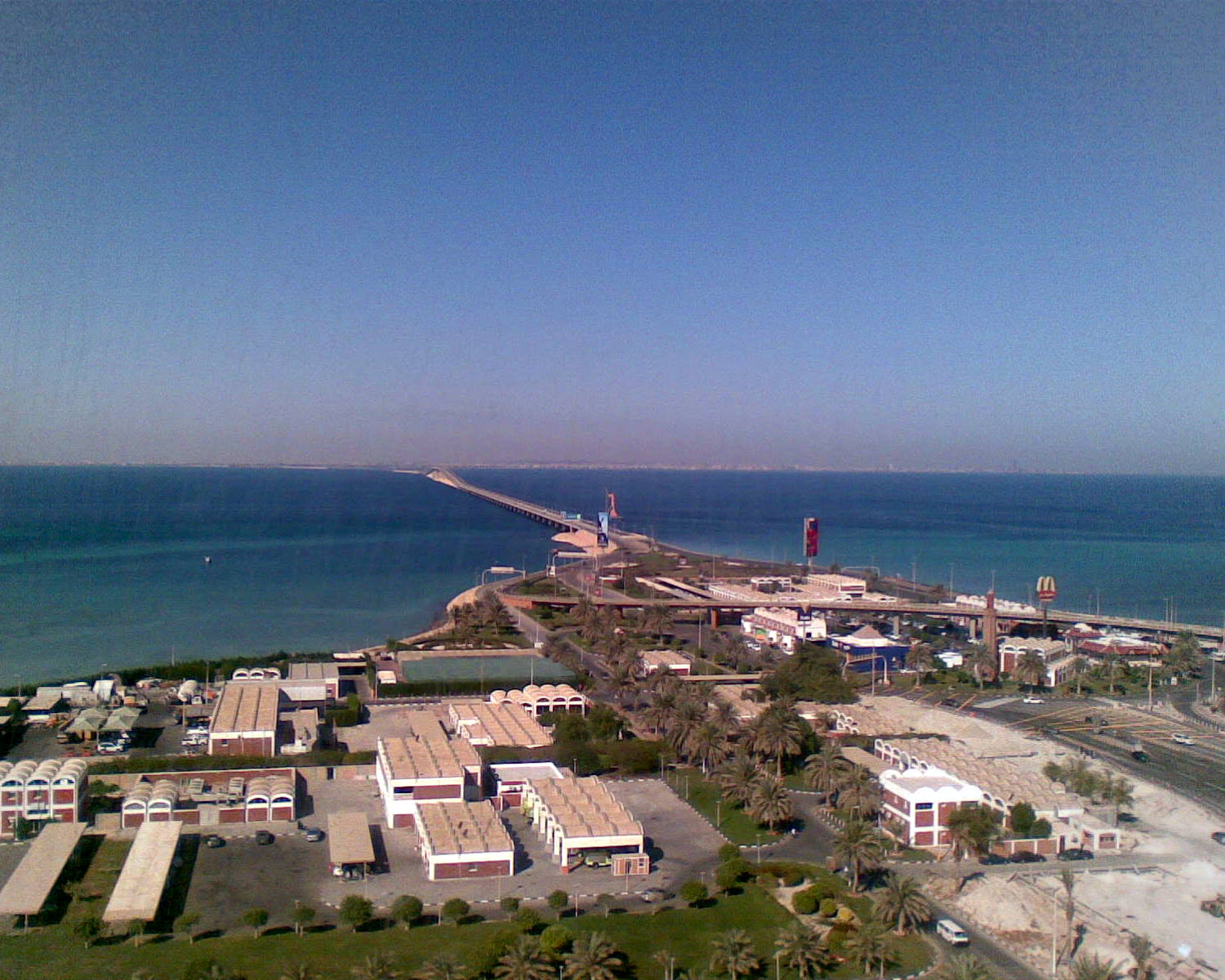
- King Fahd Causeway (to/from Bahrain) — The busiest land border. E-visa holders can cross here without issue. Visa-on-arrival processing has been reported but can be inconsistent.
- Al Batha border (to/from UAE) — Major crossing between the Eastern Province and the Emirates.
- Al Haditha border (to/from Jordan) — The primary Saudi-Jordanian crossing, used by overland travellers.
- Valid passport — Must have at least 6 months validity remaining from your date of entry. Damaged passports will be rejected.
- Return or onward ticket — Proof that you will leave Saudi Arabia before your visa expires. A booked return flight is standard.
- Accommodation details — Hotel name and address, or details of where you will stay. The kiosk asks for this.
- Payment card — A credit or debit card that works internationally for the SAR 480 fee.
- Your passport containing the valid US, UK, or Schengen visa (must have been used at least once with an entry stamp)
- If the qualifying visa is in an expired passport, bring both passports
- No passport photos needed (biometric photo is taken at the kiosk)
- No invitation letter
- No proof of funds (though having some evidence available is prudent)
- No separate travel insurance purchase (included in the visa fee)
- Tourism and sightseeing throughout Saudi Arabia
- Visiting friends and family
- Attending events, conferences, and entertainment (such as Riyadh Season)
- Performing Umrah (outside Hajj season) — register on the Nusuk app first
- Short business meetings and networking
- Paid employment of any kind
- Hajj pilgrimage (requires a separate Hajj visa)
- Study at Saudi educational institutions
- Overstaying the 90-day cumulative limit
- Cost: Free (may include a small insurance charge)
- Duration: Up to 96 hours (4 days)
- Eligibility: International passengers with a connecting Saudia (SV) or Flynas (XY) flight
- Application: Usually processed automatically during booking or available online
- Activities: Tourism, sightseeing, and Umrah (with Nusuk registration)
- Passport validity under 6 months — This is the number-one cause of denial. Check your expiry date before you fly.
- Previous overstay on a Saudi visa — Even a single day of overstay from a previous trip can result in a ban. This applies even to overstays from years ago.
- Criminal record or security flags — Saudi immigration checks international databases. Unresolved legal issues in other countries can trigger rejection.
- Ineligible nationality without qualifying third-country visa — Arriving from a non-eligible country without a valid US/UK/Schengen visa will result in denial.
- Damaged or tampered passport — Water damage, torn pages, or any sign of tampering will be flagged.
- No return ticket — Immigration officers may ask for proof of onward travel.
- Israeli passport stamps — Saudi Arabia does not admit travellers with Israeli passport stamps or an Israeli passport. If you have visited Israel, ensure your passport does not contain stamps (Israel stopped stamping passports in 2013, issuing entry cards instead).
- Check your passport has 6+ months validity
- Save your hotel booking confirmation on your phone (you will need the address at the kiosk)
- Ensure your payment card works internationally — notify your bank if needed
- Download the Tawakkalna app (Saudi Arabia’s official services app) and the Nusuk app if you plan to do Umrah
- Check the Saudi Arabia Visa Guide for the latest updates on eligibility changes
- Head directly to the visa kiosks — do not join the regular passport control queue first
- If kiosks are down or the queue is long, ask staff about the manual visa-on-arrival counter
- Keep your payment card accessible — not buried in checked luggage
- The kiosk receipt is your proof of visa until you get your passport stamped — do not discard it
- Your visa start date is the day you first enter, not the day you collected it
- Track your remaining days carefully if making multiple entries — the 90-day cap is cumulative
- Keep a digital copy of your passport and visa receipt in cloud storage
- For getting around after arrival, see our guides on Uber and Careem and public transport
- Expanded nationality list: Countries including Turkey, Thailand, Seychelles, Mauritius, South Africa, Georgia, and Azerbaijan were added to the eligibility list between 2023 and 2025.
- Removals: Uzbekistan and Tajikistan were removed from the eligible list in April 2025. Travellers from these countries now need to apply through a Saudi embassy.
- 96-hour stopover: The free transit visa was upgraded from 72 to 96 hours, and eligibility expanded to all international transit passengers on Saudia and Flynas flights.
- Kiosk expansion: New self-service visa kiosks have been installed across all major Saudi airports, reducing wait times significantly.
- Saudi Arabia Visa Guide 2026 — Every visa type explained, from tourist to Hajj to business
- Saudi Arabia e-Visa Guide — Step-by-step online application process for the tourist e-Visa
- Saudi Arabia Travel Insurance — Requirements, costs, and the best providers for your trip
- King Khalid International Airport Riyadh Guide — Complete terminal map and arrival tips
- King Abdulaziz International Airport Jeddah Guide — Navigating arrivals, transfers, and transport
- Saudi Arabia Travel Guide 2026 — The complete guide to visiting the Kingdom
This provision is particularly significant for Indian nationals, who represent a large share of visitors to Saudi Arabia. An Indian citizen with a valid, previously-used US B1/B2 visa can obtain the Saudi visa on arrival without applying through an embassy.
Important: The US/UK/Schengen visa route is available for both the visa on arrival and the e-Visa online application. Applying online in advance is recommended to avoid any uncertainty at the airport counter.
Countries That Do NOT Qualify
If your nationality is not on the lists above and you do not hold a valid US/UK/Schengen visa, you cannot get a visa on arrival. Citizens of most African, South Asian, and Middle Eastern countries (outside the GCC) must apply through a Saudi embassy or consulate. This includes nationals of India (without a qualifying third-country visa), Pakistan, Bangladesh, Nigeria, Egypt, Philippines, Indonesia, and many others.
Visa on Arrival vs. e-Visa: Which Should You Choose?
If your nationality qualifies for both, the visa on arrival and the Saudi e-Visa grant identical privileges — one year validity, multiple entries, and up to 90 days cumulative stay. The difference is purely procedural.
| Feature | Visa on Arrival | e-Visa (Online) |
|---|---|---|
| Application | At airport kiosk or immigration counter | Online at visa.visitsaudi.com before travel |
| Cost | SAR 480 (~USD 128) | SAR 480 (~USD 128) |
| Validity | 1 year, multiple entry | 1 year, multiple entry |
| Max Stay | 90 days cumulative | 90 days cumulative |
| Processing Time | Minutes at the airport | Usually under 24 hours online |
| Payment | Card only at kiosk | Card online |
| Health Insurance | Included in fee | Included in fee |
| Best For | Last-minute trips, connecting flights | Planned travel, peace of mind |
Our recommendation: Apply for the e-Visa online before you travel. It costs the same, takes minutes, and eliminates any risk of a queue or technical issue at the airport kiosk. The visa on arrival is an excellent backup if you forget or if plans change suddenly.
How Much Does It Cost?
The total fee for a Saudi visa on arrival is SAR 480 (approximately USD 128). This single payment covers everything:
The health insurance is automatically assigned through a Saudi-approved provider (such as Tawuniya or MedGulf) and covers medical emergencies up to SAR 100,000 (~USD 27,000) for the duration of your stay. You do not choose or purchase this separately — it is bundled into the visa fee. For a full breakdown of travel insurance options and whether you need additional coverage, read our Saudi Arabia travel insurance guide.
Payment at airport kiosks is by credit or debit card only. Visa, Mastercard, and Mada cards are accepted. Cash is not accepted. Make sure your bank card works internationally before you travel. For more on managing money in Saudi Arabia, see our ATM and banking guide.
Step-by-Step: Getting Your Visa at the Airport
The process is designed to be fast and largely self-service. Here is exactly what to expect when you land.
Step 1: Arrive and Follow Signs
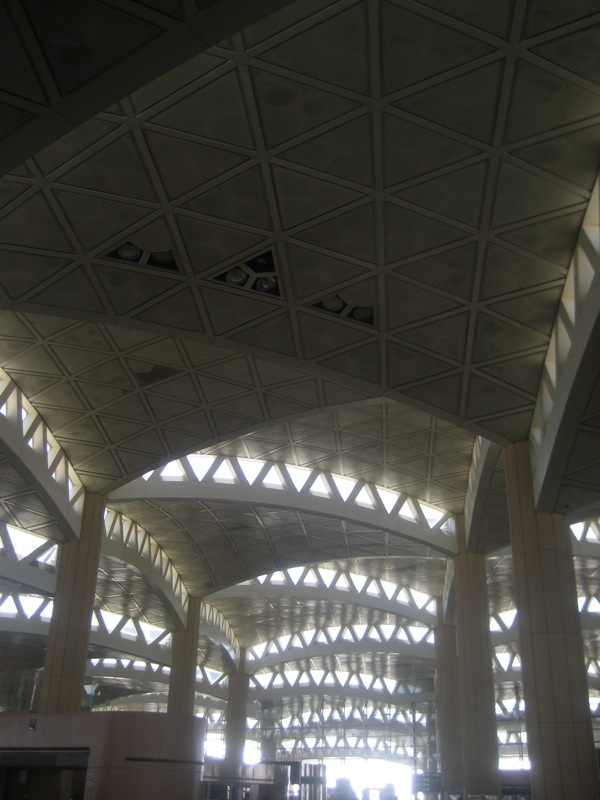
After deplaning, follow signs toward passport control and immigration. Before the immigration counters, you will see dedicated Tourist Visa kiosks (self-service machines) and in some airports a staffed visa-on-arrival counter. Signs are in Arabic and English.
Step 2: Use the Self-Service Kiosk
At the kiosk:
The visa is linked electronically to your passport. You do not receive a separate visa sticker — the system is fully digital.
Step 3: Proceed to Passport Control
Take your receipt and passport to the regular immigration counters. The officer will verify your visa in the system, stamp your passport with an entry stamp, and wave you through to baggage claim.
Step 4: Collect Baggage and Exit
Collect your luggage and proceed through customs. Saudi customs is generally straightforward for tourists, but be aware that alcohol, pork products, and certain medications are prohibited — see our Saudi Arabia safety guide for details on what you cannot bring.
Tip: The entire visa-on-arrival process typically takes 5–15 minutes if the kiosks are not busy. During peak hours (when multiple international flights land simultaneously), expect queues of 20–30 minutes. Having your hotel address ready on your phone speeds things up considerably.
Which Airports Offer Visa on Arrival?
The visa on arrival is available at all major Saudi international airports. For detailed terminal maps and arrival tips at each airport, see our individual airport guides:
Smaller regional airports with international services (such as Abha, Tabuk, and Yanbu) may also offer visa-on-arrival facilities, though availability can vary. If flying into a regional airport, applying for the e-Visa in advance is the safer option.
Can You Get a Visa on Arrival at Land Borders?
In principle, the Saudi tourist visa is valid for entry at land borders as well as airports. However, practical availability of visa-on-arrival processing at land crossings is more limited than at airports.
The main land border crossings include:
Our advice: If entering Saudi Arabia by land, apply for the e-Visa online before your journey. Not all land crossings have the kiosk infrastructure, and staffing for visa-on-arrival processing can be limited. An approved e-Visa linked to your passport guarantees smooth entry at any border point.
What You Need: Documents and Requirements
To obtain the visa on arrival, you must present the following at the kiosk or immigration counter:
Mandatory Documents
For US/UK/Schengen Visa Holders (Non-Eligible Passports)
Not Required
For a complete guide on what health preparations to make before travelling, see our health and vaccinations guide. And for packing advice, including what to wear, see our Saudi Arabia packing list.
Visa Rules: What You Can and Cannot Do
Permitted Activities
The visa on arrival is classified as a tourist visa. It permits:
Not Permitted
Duration and Extensions
The visa is valid for one year from the date of issue and allows multiple entries. You may stay up to 90 days per visit, with a cumulative maximum of 90 days across all visits within the one-year period. The visa on arrival is generally not extendable — if you need a longer stay, you must exit and re-enter (which starts a new 90-day count only if a new visa is issued) or apply for a different visa category.
Warning: Overstaying your visa is taken seriously in Saudi Arabia. Penalties include fines starting at SAR 15,000 (~USD 4,000), potential detention, deportation, and a ban on future entry. Always leave before your permitted stay expires.
The 96-Hour Stopover Visa: A Free Alternative
If you are transiting through Saudi Arabia on a Saudia or Flynas flight, you may qualify for the free 96-hour stopover visa instead of paying for a full visa on arrival. Key details:
This is an excellent option if you want to explore Saudi Arabia during a layover without committing to the full SAR 480 visa fee. GCC residents are also eligible regardless of nationality. The stopover visa cannot be used for Hajj.
Common Reasons for Rejection at the Border
While the visa-on-arrival process is generally smooth, rejections do happen. The most common reasons include:
If you are rejected: You will typically be placed on the next available flight back to your origin. There is usually no appeal process at the airport. If you believe the rejection was an error, contact the nearest Saudi embassy after returning home.
Practical Tips for a Smooth Arrival
Before You Fly
At the Airport
After Entry
Frequently Asked Questions
Can I do Umrah on a visa on arrival?
Yes. The tourist visa (whether obtained on arrival or online as an e-Visa) permits Umrah outside of Hajj season. You must register through the Nusuk app or website before visiting Mecca. For full details, see our Umrah visa guide.
Is the visa on arrival really multiple entry?
Yes. Once issued, you can enter and exit Saudi Arabia as many times as you like within the one-year validity, provided your total stay does not exceed 90 days.
Can I extend my visa on arrival?
Extensions are not standard for tourist visas obtained on arrival. If you need more than 90 days, you should apply for a different visa category.
What if the kiosk is not working?
All airports with visa-on-arrival service have backup manual processing at immigration counters. Ask an airport staff member for assistance. Having your accommodation details written down (not just on your phone) provides a useful backup.
Do children need their own visa?
Yes. Every traveller, regardless of age, needs their own visa. Children on a parent’s passport still need a visa issued to them. The fee is the same — SAR 480 per person.
Can I work on a visa on arrival?
No. The tourist visa does not permit paid employment. Working without authorisation can result in fines, detention, and deportation.
I have a valid Saudi e-Visa. Do I also need a visa on arrival?
No. If you already have an active e-Visa, simply proceed to passport control. The e-Visa is linked to your passport electronically.
Recent Changes to Watch
Saudi Arabia has been rapidly expanding its visa programme as part of the Vision 2030 tourism strategy. Key recent changes include:
The eligibility list is reviewed regularly. Always confirm your nationality qualifies on the official Visit Saudi visa portal before travelling.