
Saudi Arabia has invested heavily in world-class healthcare, and the Kingdom now ranks among the best in the Middle East for hospital quality, specialist treatment, and emergency care. Whether you are an expat relocating for work, a tourist passing through, or a medical traveller seeking specialist procedures, this guide covers every hospital, insurance rule, and emergency number you need. For broader trip planning, start with our Saudi Arabia Travel Guide 2026, which covers visas, destinations, and practical logistics across the Kingdom.
Emergency Number: 997 (Saudi Red Crescent ambulance)
Police: 999 | Fire: 998 | Traffic Accidents: 993
Visa Insurance: Tourist e-visa includes SAR 100,000 (~$27,000) emergency medical cover via Tawuniya
Budget: ER visit $50–200; GP consultation $30–80; specialist consultation $80–200 (private hospitals)
Top Hospitals: King Faisal Specialist Hospital (Riyadh), Dr. Soliman Fakeeh Hospital (Jeddah), Johns Hopkins Aramco Healthcare (Dhahran)
Avoid: Arriving at a hospital without your passport and insurance details — you will face delays or be asked to pay a cash deposit upfront
How Healthcare Works for Visitors and Expats
Saudi Arabia operates a dual healthcare system. Government-funded hospitals — run by the Ministry of Health (MoH) — provide free or heavily subsidised care to Saudi nationals. Expats and tourists typically use private hospitals, which are plentiful, competitive, and often staffed by internationally trained physicians who speak English, Arabic, Urdu, and other languages.
Insurance Is Mandatory
Every expatriate working in Saudi Arabia is required by law to have employer-provided health insurance, regulated by the Council of Health Insurance (CHI), formerly known as the CCHI. Your employer must purchase a policy from a CHI-approved insurer before your work visa is issued.
Tourists arriving on an e-visa automatically receive basic health insurance bundled into the SAR 535 (~$142) visa fee. This policy, underwritten by Tawuniya, covers emergency medical expenses up to SAR 100,000 (~$27,000). However, it does not cover pre-existing conditions, dental work, routine check-ups, medical evacuation beyond basic transport, or expenses that exceed the cap. For fuller protection — especially if you plan adventure activities like hiking or scuba diving — consider supplementary travel insurance from a provider like World Nomads, Allianz, or SafetyWing.
Practical tip: Always carry your passport, a printed or digital copy of your insurance policy, and a credit card when visiting any hospital. Private hospitals will check your insurance before non-emergency treatment begins. If you cannot show coverage, expect to pay a cash deposit of SAR 5,000–10,000 before admission.
Emergency Services: What to Do in a Medical Crisis
In any medical emergency, dial 997 to reach the Saudi Red Crescent Authority (SRCA), which operates the national ambulance service. The line is answered in Arabic by default, but English-speaking operators are available on request. You can also use the Asefni (Save Me) mobile app to request an ambulance with GPS location sharing.
Emergency ambulance transport is free and cannot be refused. The ambulance will take you to the nearest hospital capable of handling your condition, whether public or private. Emergency stabilisation treatment at government hospitals is provided regardless of nationality or insurance status.
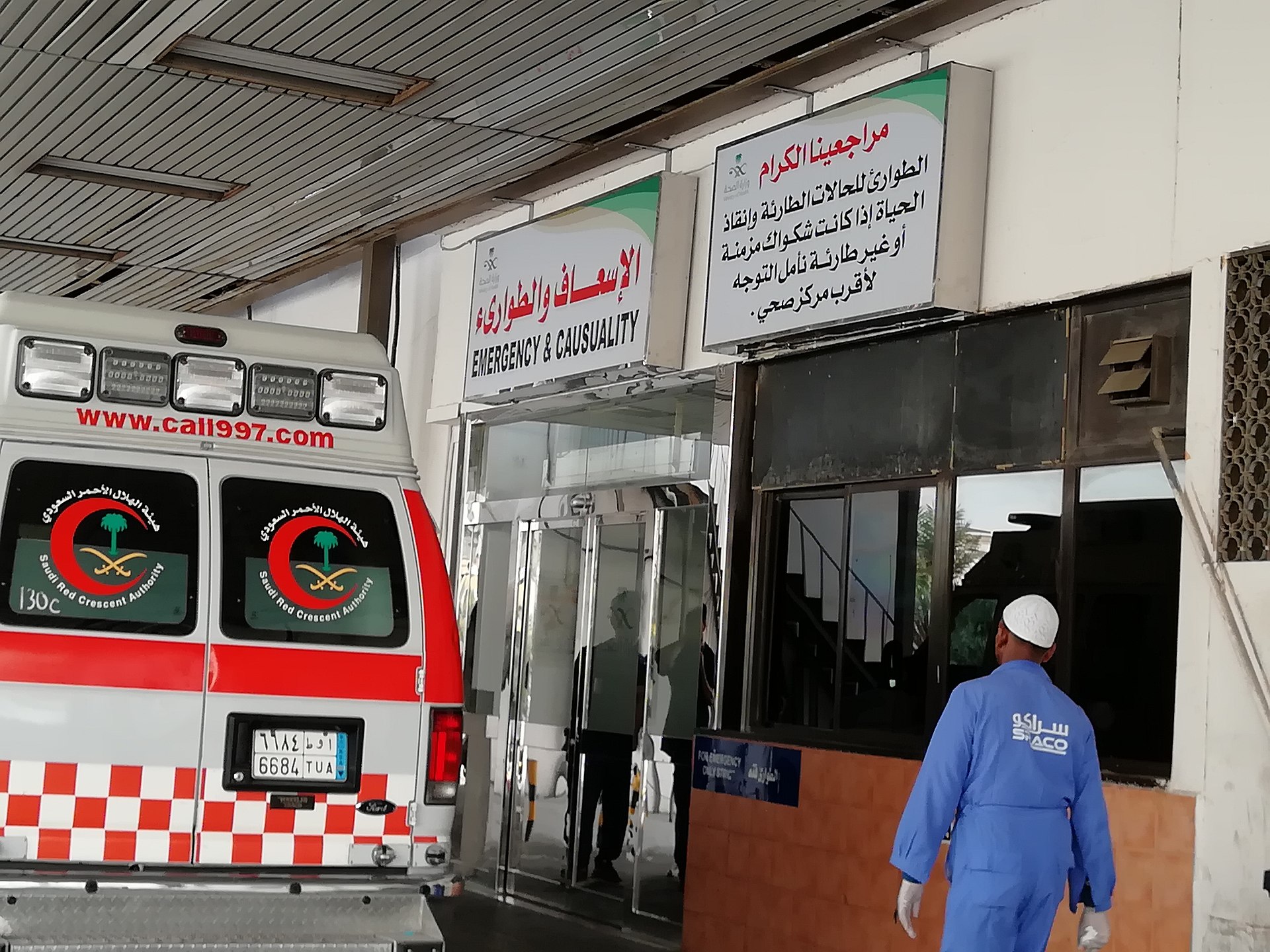
Response times vary: in Riyadh, Jeddah, and Dammam, ambulances typically arrive within 10–20 minutes. In rural or remote areas, response can take longer. If you are in a non-critical situation and near a major city, taking a taxi or Careem/Uber to the nearest private hospital emergency room may be faster.
Key Emergency Numbers
| Service | Number |
|---|---|
| Ambulance (Saudi Red Crescent) | 997 |
| Police | 999 |
| Fire Department | 998 |
| Traffic Accidents | 993 |
| Poison Control | 920033390 |
| Ministry of Health Hotline | 937 |
| Civil Defence | 911 (in Riyadh, Makkah, Eastern Province) |
For a complete breakdown of when and how to use each number, see our Saudi Arabia Safety Guide.
Best Hospitals in Riyadh
The capital has the Kingdom’s highest concentration of world-class hospitals, including the single best-ranked facility in Saudi Arabia. If you are staying in the city, our Riyadh airport guide covers arrival logistics.
King Faisal Specialist Hospital and Research Centre (KFSHRC)
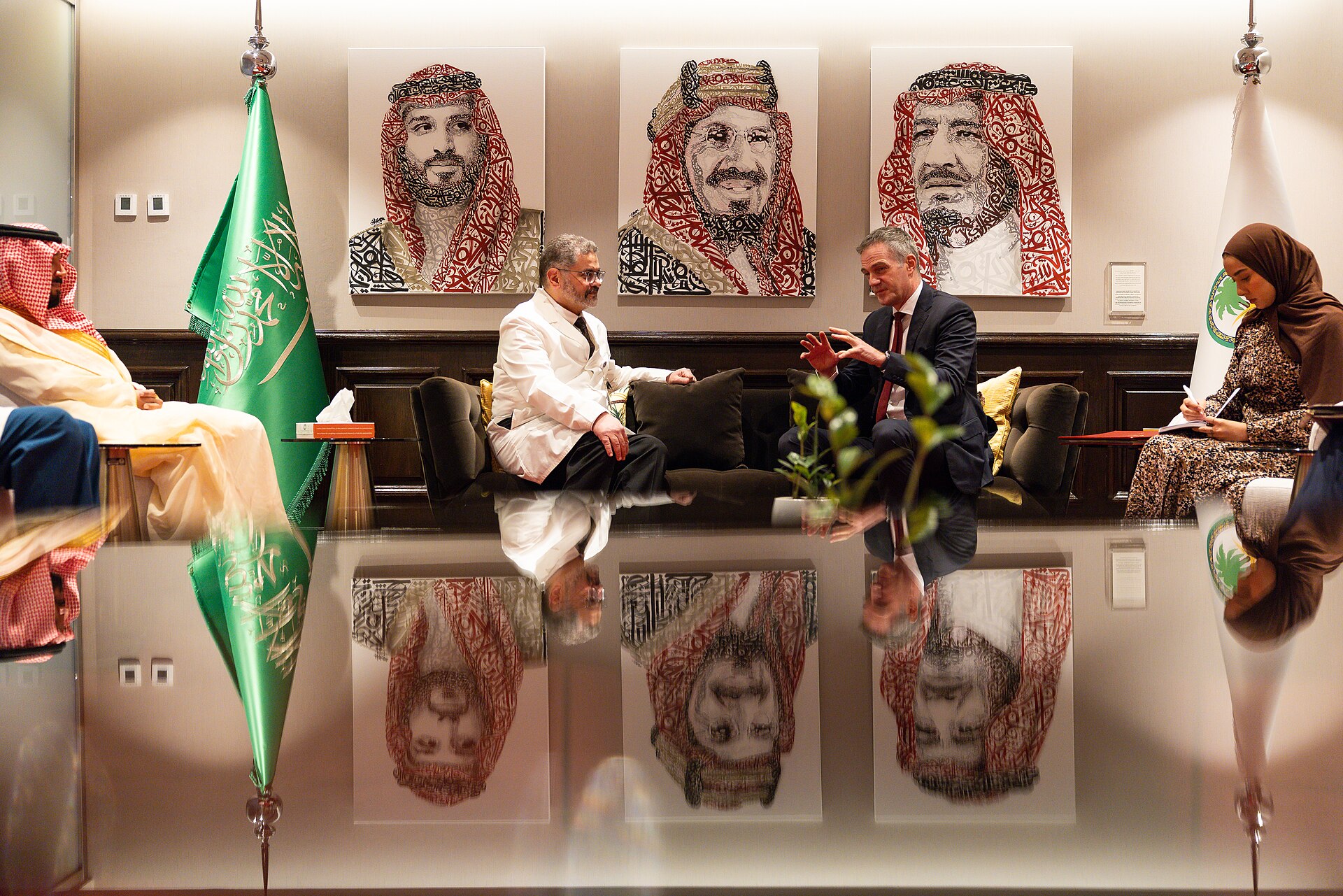
Ranked 153rd globally in Newsweek’s 2026 World’s Best Hospitals list — the highest of any Saudi institution — KFSHRC is a 1,500-bed tertiary and quaternary care centre that handles the Kingdom’s most complex cases. It holds JCI accreditation and is particularly renowned for organ transplantation, oncology, neurosciences, and paediatric cardiac surgery. Its Neuroscience Centre is the largest in the region, treating around 30% of the hospital’s international patients. The Heart Centre performs advanced robotic cardiac procedures.
KFSHRC treated inbound patients from 17 countries in 2024, with 77% from GCC nations. International patients need a referral letter, updated medical reports, and passport documentation. Note that this is primarily a referral hospital — it does not function as a walk-in facility for routine care.
Dr. Sulaiman Al Habib Medical Group
One of the largest private hospital networks in the Kingdom, Dr. Sulaiman Al Habib operates multiple facilities across Riyadh, including the flagship Olaya Hospital in the Al Olaya business district and the Ar Rayyan Hospital, which specialises in women’s health, maternity, and paediatrics. The group runs over 20 facilities across Saudi Arabia, the UAE, and Bahrain.
Key specialities include cardiology and cardiovascular surgery (including open-heart and minimally invasive valve repair), orthopaedics and sports medicine, fertility and reproductive medicine, and a Level III Neonatal Intensive Care Unit. The hospitals have an integrated electronic medical record system, so your file follows you across branches. For expats in Olaya or the Diplomatic Quarter, Al Habib is one of the most accessible private options.
Dallah Hospital
Dallah Health operates two major hospitals in Riyadh: Dallah Hospital Al Nakheel and Dallah Namar. Al Nakheel recently earned Global Healthcare Accreditation (GHA), making it one of the first Saudi hospitals certified specifically for medical travel. The hospital provides remote video consultations for international patients before arrival, airport shuttle coordination, and hotel booking assistance.
Dallah accepts most major international insurance plans, including International SOS, and has a dedicated international patient coordination team. Strong departments include cardiology, orthopaedics, ophthalmology, and general surgery.
King Fahad Medical City (KFMC)
A sprawling government medical campus in southern Riyadh, KFMC is one of the largest hospital complexes in the Middle East. It houses multiple specialised centres under one roof: the National Neuroscience Institute, the Comprehensive Cancer Centre, a Rehabilitation Hospital, and a Children’s Hospital. While primarily serving Saudi citizens, KFMC’s emergency department treats all patients regardless of nationality.
Best Hospitals in Jeddah
As the western gateway for Hajj and Umrah pilgrims and a major commercial centre, Jeddah has a robust private healthcare sector. Travellers arriving via King Abdulaziz International Airport will find several top-tier hospitals within a short drive.
Dr. Soliman Fakeeh Hospital
Ranked the best private hospital in Saudi Arabia by Newsweek for five consecutive years and named among the global Top 250 hospitals worldwide in 2026, Dr. Soliman Fakeeh Hospital is Jeddah’s premier medical institution. It holds a 5-star Global Hospital Rating from Newsweek/Statista, placing it among the top three in the entire Middle East and North Africa.
The hospital has 400 inpatient beds, 120 outpatient clinics, and 15 operating theatres. It is part of the wider Fakeeh Care Group, which also operates Fakeeh University Hospital (opened 2021) on the same campus. Specialities include cardiology, oncology, neurology, bariatric surgery, and IVF.
International Medical Center (IMC)
Inaugurated in 2006, IMC is a 300-bed JCI-accredited private hospital affiliated with the Cleveland Clinic Foundation in the United States. Its six Centres of Excellence — covering children’s health, women’s health, pain management, diabetes, musculoskeletal conditions, and plastic surgery/dermatology — are staffed by US and Canadian board-certified physicians.
The 24/7 emergency department has specialised trauma and cardiac emergency capabilities. IMC is located in the Al Zahra district and is a strong option for expats and tourists in Jeddah who want American-standard care.
Saudi German Hospital — Jeddah
The original branch of what is now a major regional chain, Saudi German Hospital Jeddah has operated since 1988 and offers 218+ beds across a wide range of specialities. The hospital provides dedicated international patient services including visa assistance, airport transfers, translators, and dietary accommodations. It sits on Batterjee Street in the Al Zahra district, close to King Abdulaziz Airport.
The Saudi German group operates six hospitals across Saudi Arabia — Jeddah, Riyadh, Dammam, Madinah, Asir, and Hail — so if you fall ill outside the main cities, there may be a branch nearby.
Best Hospitals in the Eastern Province
The Dammam–Khobar–Dhahran metropolitan area, covered in our Dammam Travel Guide, hosts a large expat community tied to the oil industry, and healthcare facilities here reflect that international demographic.
Johns Hopkins Aramco Healthcare (JHAH)
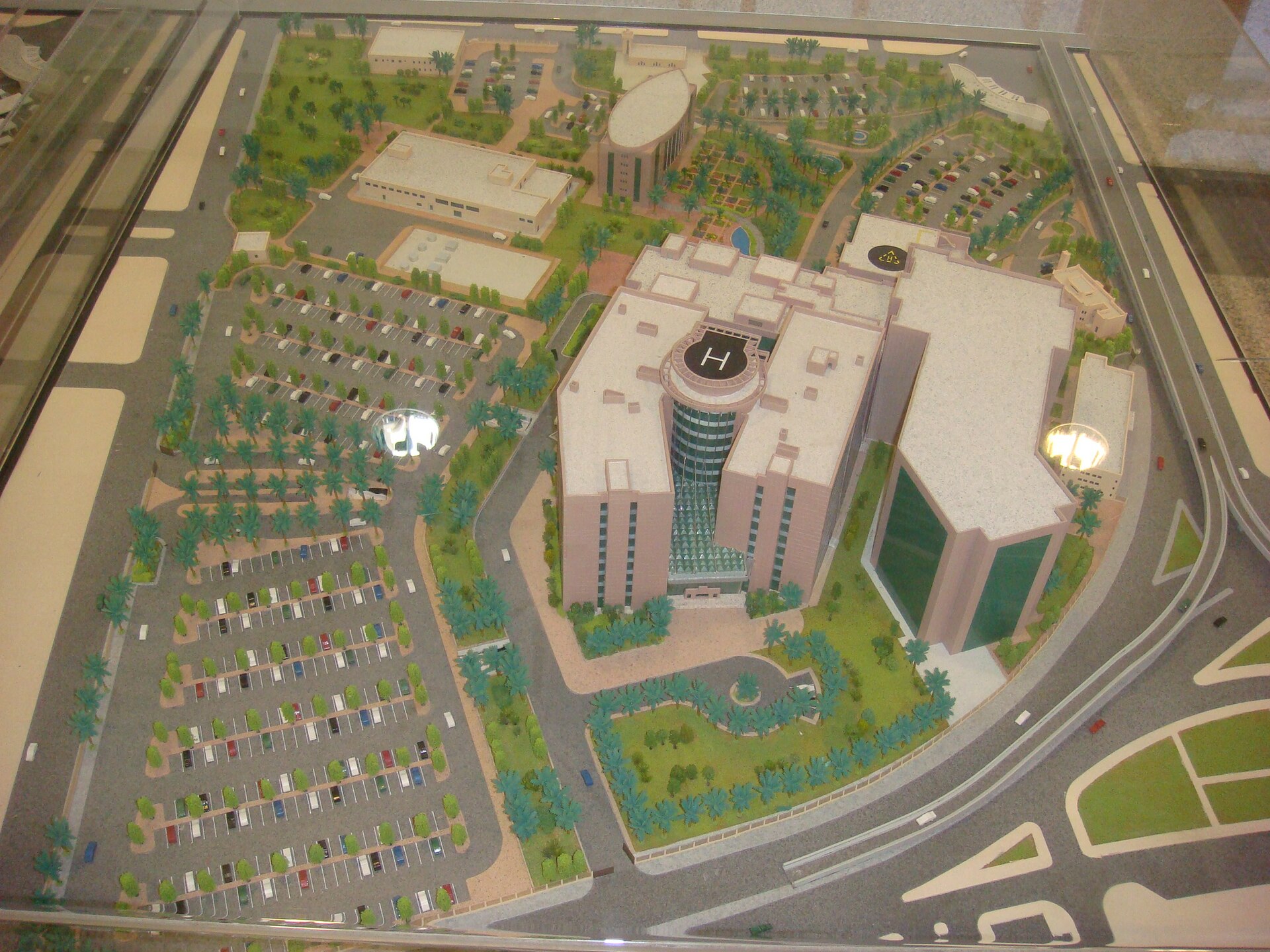
A joint venture between Saudi Aramco and Johns Hopkins School of Medicine, JHAH operates the highest-rated hospital in the Eastern Province. Ranked 3rd best in Saudi Arabia and the 2nd highest-rated private hospital nationally in Newsweek’s 2026 list, it provides comprehensive inpatient and outpatient services with a total capacity of 374 beds across facilities in Dhahran, Al-Hasa, and Ras Tanura.
Historically restricted to Aramco employees and their families (over 140,000 eligible patients), JHAH announced a historic expansion in 2025, opening its doors to the general public for the first time. A new Oncology Centre of Excellence focusing on breast, prostate, and colorectal cancers was unveiled at the 2025 Global Health Exhibition in Riyadh.
Mouwasat Hospital — Dammam and Khobar
Mouwasat Medical Services operates hospitals across Dammam, Khobar, Jubail, Qatif, Riyadh, Madinah, and Yanbu, with a Jeddah facility in development. In the Eastern Province, Mouwasat Dammam and Mouwasat Khobar are popular with expats for their strong general medicine, bariatric surgery, rehabilitation, and assisted reproduction departments. All facilities use a unified electronic medical record system, so your file transfers seamlessly between branches.
Saudi German Hospital — Dammam
The newest branch of the Saudi German chain opened in 2020 and brings the same multi-specialty tertiary care model to the Eastern Province. It is especially convenient for expats and business travellers based in Al Khobar or transiting through King Fahd International Airport.
Hospitals in Other Major Cities
Madinah
Pilgrims performing Umrah or Hajj may need medical care in Madinah. The city has a Mouwasat Hospital branch and a Saudi German Hospital branch, both offering private multi-specialty care with English-speaking staff. During Hajj season, the Saudi government also deploys field hospitals and medical tents around the holy sites.
Tabuk, Abha, and Secondary Cities
Outside the three major metropolitan areas, hospital options narrow. Government hospitals — such as King Fahad General Hospital in Tabuk or Asir Central Hospital in Abha — are available but may have limited English-speaking staff and longer wait times. Private clinics exist but tend to offer general practice rather than specialist care. If you are heading to Tabuk or Abha for adventure travel, carrying comprehensive travel insurance with medical evacuation cover is especially important.
Hospital Comparison: Top Facilities at a Glance
| Hospital | City | Type | Beds | Key Strengths | International Accreditation |
|---|---|---|---|---|---|
| King Faisal Specialist Hospital (KFSHRC) | Riyadh / Jeddah | Government (referral) | 1,500 | Transplant, oncology, neuroscience, cardiac | JCI |
| Dr. Soliman Fakeeh Hospital | Jeddah | Private | 400 | Cardiology, oncology, IVF, bariatrics | JCI, Newsweek 5-star |
| Johns Hopkins Aramco Healthcare | Dhahran | Private (Aramco JV) | 374 | Oncology, general medicine, family care | JCI |
| International Medical Center (IMC) | Jeddah | Private | 300 | Women’s health, diabetes, pain management | JCI (Cleveland Clinic affiliate) |
| Dr. Sulaiman Al Habib Group | Riyadh / multiple | Private | Multiple facilities | Cardiac surgery, maternity, orthopaedics | JCI |
| Dallah Hospital Al Nakheel | Riyadh | Private | Multiple facilities | Medical tourism, cardiology, ophthalmology | GHA, JCI |
| Saudi German Hospital | Jeddah / Riyadh / Dammam / 3 more | Private | 218+ (Jeddah) | Multi-specialty, transplants, international patient services | JCI |
| Mouwasat Hospital | Dammam / Khobar / Riyadh / 5 more | Private | Multiple facilities | Bariatrics, IVF, rehabilitation | Multiple accreditations |
Pharmacies and Medication
Pharmacies are everywhere in Saudi Arabia — from standalone chains like Al Nahdi and Al Dawaa (which have hundreds of branches each) to in-hospital pharmacies. Most are open until at least 10pm, and many in major cities operate 24 hours. Pharmacists often speak English and can dispense basic over-the-counter medications such as paracetamol, ibuprofen, antihistamines, and antacids without a prescription.
For prescription medications, you will need a prescription from a licensed Saudi doctor. If you take regular medication, bring a sufficient supply plus a doctor’s letter explaining your condition and prescription.
Important regulation change (effective November 2025): Saudi Arabia now requires advance registration for controlled medications through the Saudi Food and Drug Authority’s (SFDA) Electronic Controlled Drugs System (CDS). This applies to common prescription pain, anxiety, ADHD, and sleep medications. Register your medications online before arrival to avoid them being confiscated at customs. See our Saudi Arabia Customs Rules guide for the full list of restricted substances and the registration process.
Health Insurance: What You Need to Know
For Tourists
The Saudi tourist e-visa (SAR 535, approximately $142) automatically includes a basic health insurance policy from Tawuniya, regulated by the Council of Health Insurance. This covers:
- Emergency medical treatment up to SAR 100,000 (~$27,000)
- Hospital bills, diagnostic services, and medications related to the emergency
- Ambulance transport to the nearest hospital
- Pre-existing conditions
- Dental treatment
- Routine check-ups or elective procedures
- Medical evacuation to your home country
- Adventure sports injuries (diving, hiking, quad biking)
- Expenses exceeding SAR 100,000
- Network hospitals: Which hospitals can you visit without a referral?
- Pre-existing conditions: Are they covered, and from what date?
- Dental and optical: Often excluded from basic plans
- Maternity: Typically subject to a 12-month waiting period
- Annual cap: Many plans have a SAR 250,000–500,000 ceiling
- Passport or Iqama (residency card for expats) — hospitals will photocopy your ID
- Insurance card or policy document — printed or on your phone
- Credit card — for co-payments or deposits
- Medication list — with generic drug names, not brand names
- Doctor’s referral letter — if visiting a specialist or tertiary hospital
- Gender-segregated waiting areas exist at many hospitals, particularly government facilities
- Female patients can request a female doctor, though this may increase wait times
- Male companions of female patients may be asked to wait in a separate area during examinations
- Hospitals are typically conservative spaces — dress modestly (see our women’s dress code and men’s dress code guides)
- Heat-related illness: Temperatures exceed 45°C in summer. Drink at least 3 litres of water daily and avoid midday sun. Check our weather guide before planning outdoor activities.
- MERS-CoV: Middle East Respiratory Syndrome is present in Saudi Arabia, primarily transmitted via camels. Avoid direct contact with camels and do not drink raw camel milk.
- Gastric issues: Tap water is desalinated and generally safe in cities, though many visitors prefer bottled water. Street food is usually safe but use judgement.
- Saudi Arabia Travel Guide 2026 — The complete guide to visiting the Kingdom
- Health and Vaccinations for Saudi Arabia — Recommended jabs and health precautions before your trip
- Travel Insurance for Saudi Arabia — Coverage gaps in your visa insurance and how to fill them
- Is Saudi Arabia Safe for Tourists? — Honest security and personal safety guide
- Essential Apps for Travelling Saudi Arabia — Absher, Careem, and hospital booking apps explained
- Saudi Arabia Visa Guide — Every visa type explained
It does not cover:
For this reason, we strongly recommend purchasing supplementary travel insurance before your trip, particularly if you plan any outdoor activities.
For Expats
Saudi law requires every employer to provide health insurance for their expatriate employees. Most employer plans cover dependents as well. The policy must be purchased from a CHI-approved insurer. In practice, the quality of your plan depends on your employer — some provide basic cover that restricts you to a limited hospital network, while others offer comprehensive plans with access to any private hospital.
Key things to check in your employer plan:
Practical Tips for Hospital Visits
What to Bring
Booking Appointments
Most private hospitals in Saudi Arabia now offer app-based booking. Dr. Sulaiman Al Habib, Mouwasat, Saudi German, and Dallah all have mobile apps where you can book GP and specialist appointments, view lab results, and access your medical records. Download the relevant app before you need it — see our essential apps guide for recommendations.
Language
English is widely spoken at private hospitals, particularly by doctors (many of whom trained in the US, UK, Canada, or Ireland). Nursing staff proficiency varies — Filipino, Indian, and Western nurses generally speak fluent English, while some Arabic-speaking nurses may have limited English. At government hospitals, Arabic is the primary language, though doctors usually speak English. If you speak neither English nor Arabic, consider our essential Arabic phrases for basic medical terms, or ask the hospital reception for a translator.
Cultural Considerations
Payment and Costs
If your insurance covers the hospital, you will typically only pay a co-payment of SAR 20–75 per visit. Without insurance:
| Service | Approximate Cost (SAR) | Approximate Cost (USD) |
|---|---|---|
| Emergency room visit | 200–800 | 53–213 |
| GP consultation | 100–300 | 27–80 |
| Specialist consultation | 300–750 | 80–200 |
| Basic blood tests | 150–400 | 40–107 |
| X-ray | 200–500 | 53–133 |
| MRI scan | 1,500–3,500 | 400–933 |
| Standard hospital room (per night) | 1,500–4,000 | 400–1,067 |
Private hospitals accept credit cards (Visa, Mastercard, Mada). Some also accept Apple Pay and Samsung Pay. Cash is accepted but not preferred for large bills. See our Saudi Riyal currency guide for exchange rate tips.
Dental and Optical Care
Both dental and optical care are widely available in Saudi Arabia’s cities. Chains like Advanced Dental Clinics and Magrabi Hospitals and Centres (the largest eye care network in the Middle East, with 35+ branches across Saudi Arabia) offer walk-in and appointment-based services. Expect to pay SAR 150–400 ($40–107) for a routine dental check-up and SAR 200–500 ($53–133) for an eye examination with prescription. Dental and optical costs are generally lower than in Western Europe or North America.
Medical Tourism in Saudi Arabia
Saudi Arabia is actively developing its medical tourism sector under Vision 2030. Dallah Hospital Al Nakheel’s Global Healthcare Accreditation, KFSHRC’s international patient programme, and the expansion of Johns Hopkins Aramco Healthcare all signal a Kingdom positioning itself as a regional healthcare hub.
If you are considering Saudi Arabia for a medical procedure, hospitals like KFSHRC, Dr. Soliman Fakeeh, and Dallah offer international patient coordinators who handle visa logistics, airport transfers, hotel accommodation, and follow-up care. Common procedures sought by international patients include cardiac surgery, organ transplant (KFSHRC is the region’s leader), oncology treatment, orthopaedic surgery, and fertility treatment (IVF).
Vaccinations and Health Precautions
No vaccinations are mandatory for standard tourist entry, though meningitis ACWY vaccination is required for Hajj and Umrah pilgrims. We recommend ensuring your routine vaccinations — hepatitis A, hepatitis B, typhoid, and tetanus — are up to date. For detailed guidance, see our Health and Vaccinations for Saudi Arabia guide.
Common health risks for visitors include: