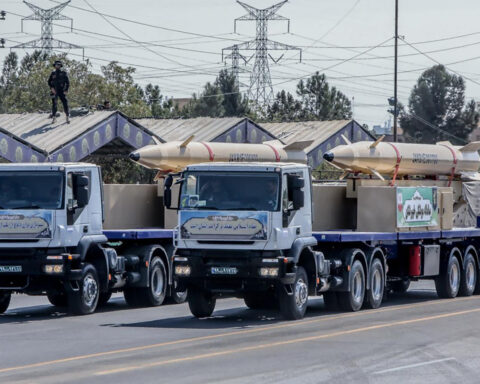

ISLAMABAD — The man who designed Iran’s strategy for closing the Strait of Hormuz is now sitting across the table from the people trying to reopen it. Ali-Akbar Ahmadian, Secretary of Iran’s Supreme National Security Council and a career IRGC officer sanctioned by the UN, the United States, the European Union, Canada, the United Kingdom, Australia, Japan, and Qatar, arrived in Islamabad on April 10 as part of an Iranian delegation led by Parliament Speaker Mohammad Bagher Ghalibaf. His presence does not signal flexibility. It signals that the IRGC’s authorization ceiling — the structural barrier that prevented any Araghchi-signed agreement from holding — has not been removed. It has moved inside the negotiation room, where it will shape what Iran is willing to discuss before any text reaches the table.
For Saudi Arabia, excluded from the April 10 bilateral, the implication is direct: nothing agreed in Islamabad will genuinely reopen Hormuz or offer protection for Saudi infrastructure that Iran has spent six weeks striking.
Table of Contents
- Who Is Ali-Akbar Ahmadian?
- The Authorization Ceiling Moves Indoors
- Why Does the SNSC Secretary’s Presence Change the Islamabad Talks?
- The Architect at the Table
- Who Actually Controls Hormuz Operations?
- Iran’s 10-Point Plan as IRGC Pre-Filtration
- What Does Ahmadian’s Role Mean for Saudi Arabia?
- The Constitutional Confirmation Gap
- Three Documents, One Drafter
- Frequently Asked Questions
Who Is Ali-Akbar Ahmadian?
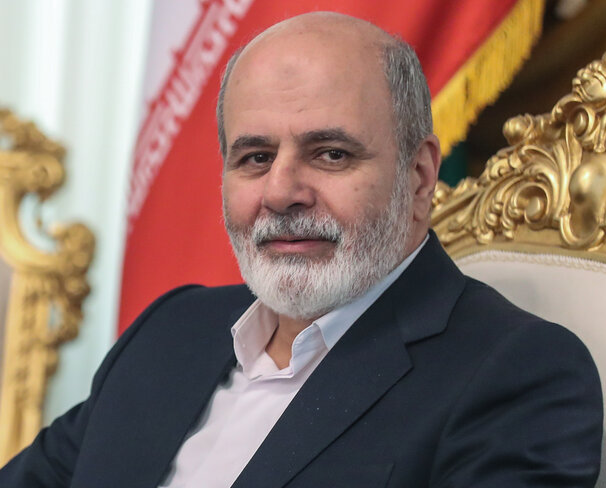
Born in 1961 in Shahr-e Babak, Kerman Province, Ahmadian abandoned dentistry studies to join the Islamic Revolutionary Guard Corps after Iraq invaded Iran in 1980. He rose through the IRGC Navy — becoming chief of staff by 1985, then commander from 1997 to 2000. He ran the IRGC Joint Staff from 2000 to 2007, coordinating all IRGC branches during the period of Iran’s most aggressive nuclear acceleration. From 2007 to 2022, he directed the IRGC Strategic Studies Center, the corps’ internal doctrine factory. Khamenei appointed him SNSC Secretary in May 2023, replacing Ali Shamkhani after a decade in the role.
Mohammad Kosari, an Iranian member of parliament, characterized Ahmadian as “completely a soldier” of Supreme Leader Khamenei when the appointment was announced. Danny Citrinowicz of Israel’s Institute for National Security Studies assessed that “the appointment could further strengthen the IRGC in Iran, a process accelerated after President Ebrahim Raisi’s 2021 election.”
He is not a diplomat. He is not a politician. Every prior SNSC Secretary — Shamkhani, who served simultaneously as Defense Minister; Ali Larijani, a former parliamentarian and state broadcaster chief — held cross-institutional backgrounds that allowed them to mediate between Iran’s competing power centers. Ahmadian is the first SNSC Secretary in Iranian history drawn entirely from the IRGC with no executive branch or foreign ministry experience, according to analysis by the United States Institute of Peace’s Iran Primer project.
The UN Security Council sanctioned him on March 24, 2007, under Resolution 1737, for his role as IRGC Joint Staff chief and involvement in nuclear and ballistic missile programs. The United States placed him on the OFAC Specially Designated Nationals list. The EU sanctioned him on April 21, 2007. Canada followed in 2023. The United Kingdom, Australia, Japan, and Qatar have all designated him. He is, by any reasonable accounting, the most heavily sanctioned individual physically present in Islamabad.
The Middle East briefing 3,000+ readers start their day with.
One email. Every weekday morning. Free.
The Authorization Ceiling Moves Indoors
Prior HOS coverage identified the authorization ceiling as the structural reason any agreement signed by Foreign Minister Abbas Araghchi could not hold. The chain ran upward from the IRGC’s operational commanders through the SNSC to Supreme Leader Khamenei, and each link had demonstrated willingness to override diplomatic commitments. When Iran issued its ceasefire halt order on April 8, the SNSC’s own statement — “the current negotiations are national negotiations and a continuation of the battlefield” — made explicit what had been implicit: the IRGC viewed negotiations as another theater of war, not a concession process.
Ahmadian’s physical presence in Islamabad does not dissolve this ceiling. It relocates it. The veto that previously operated after the fact — IRGC commanders refusing to implement what diplomats agreed — now operates before the fact, inside the drafting room. Any language on Hormuz, on US base withdrawals, on enrichment, will pass through an IRGC institutionalist before it reaches paper.
The Soufan Center’s IntelBrief of April 10, 2026, described “an internal power struggle between hardliners around Parliament Speaker Ghalibaf, including IRGC Commander Ahmad Vahidi, and more pragmatic leaders aligned with President Masoud Pezeshkian.” Ahmadian sits at the intersection of this struggle — formally under Pezeshkian’s government, operationally an IRGC creature for 43 years. His presence in the delegation resolves the power struggle not by siding with pragmatists but by making the hardline position the opening offer.
Why Does the SNSC Secretary’s Presence Change the Islamabad Talks?
The SNSC Secretary attending negotiations means Iran’s security establishment is pre-filtering proposals rather than vetoing them after signature. Any agreement emerging from Islamabad will already contain IRGC non-negotiables — Hormuz sovereignty language, US base withdrawal demands, and deferral of high-enriched uranium issues — because the institution that would otherwise block implementation is now co-drafting the text.
There is precedent for an SNSC Secretary leading negotiations, though the comparison clarifies rather than comforts. Ali Larijani served as Secretary during the 2005-07 nuclear talks with the EU-3, functioning as principal negotiator above the Foreign Minister. When Khamenei replaced him with Saeed Jalili in 2007, the shift signaled hardening — Jalili’s appointment preceded Iran’s refusal of the updated EU incentive package and accelerated enrichment at Natanz. The SNSC Secretary’s posture has historically been a leading indicator of Iran’s actual negotiating range.
Ahmadian’s profile makes the Larijani comparison more alarming. Larijani had served in parliament, run state television, and held a PhD in Western philosophy from Tehran University. He could read a room that included Europeans. Ahmadian’s career — IRGC Navy, Joint Staff, Strategic Studies Center — prepared him to read a battlespace. His appointment to the SNSC in 2023 moved the nuclear dossier, which Shamkhani had managed with back-channel agility, into hands that had spent 15 years at the IRGC’s doctrine center studying how to fight the United States in the Persian Gulf.
Saberin News, an IRGC-affiliated media outlet, leaked Ahmadian’s SNSC appointment before the official announcement in May 2023 — a signaling act that underscored whose equities the appointment served. The Atlantic Council noted at the time that the appointment “further cemented IRGC control over Iran’s most consequential security decisions.”
The Architect at the Table
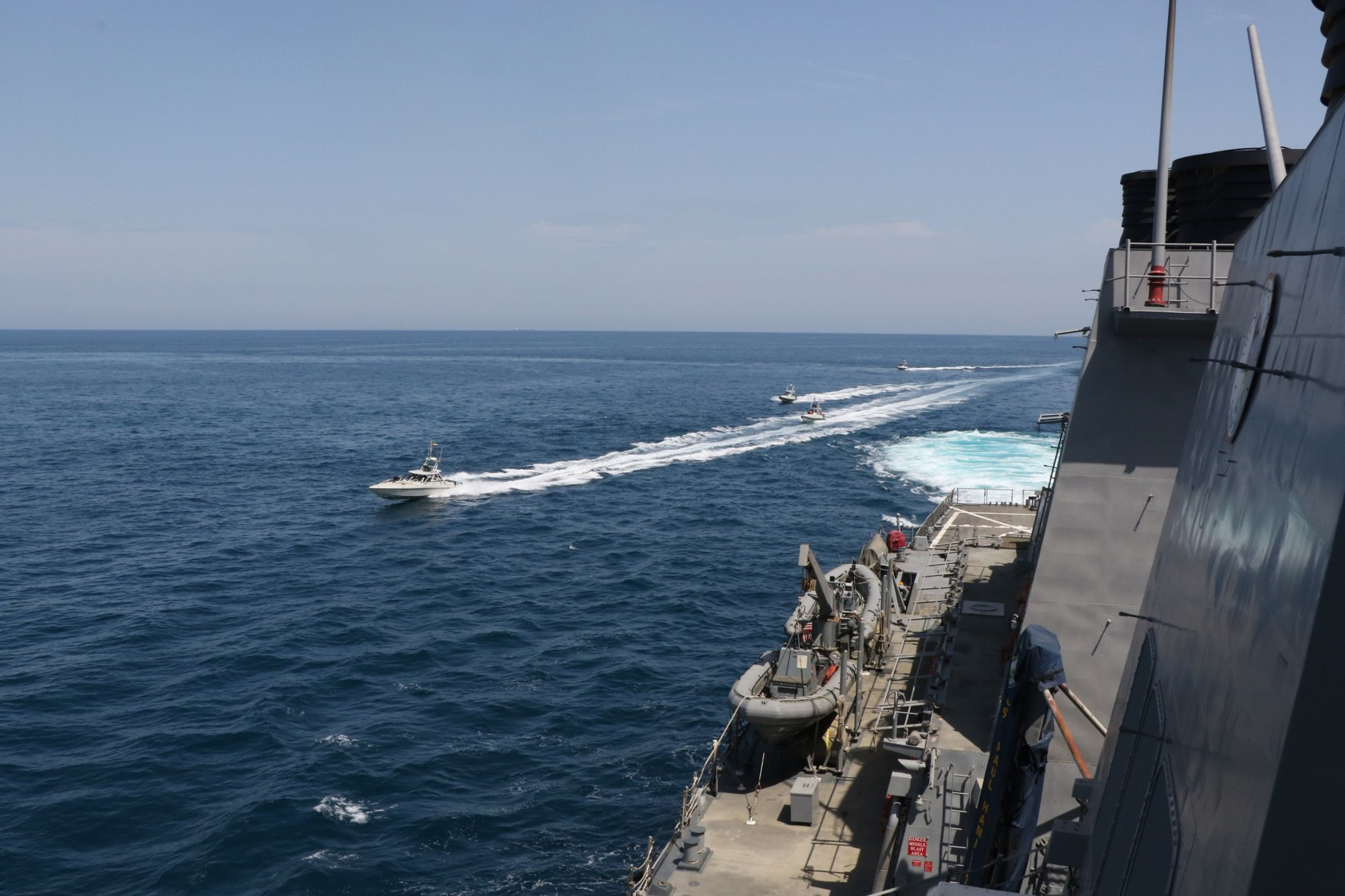
Ahmadian’s IRGC Navy command from 1997 to 2000 was not administrative. PBS Frontline’s Tehran Bureau documented that his tenure was expressly about “preparing the IRGCN for war against the United States” through Gulf and Hormuz exercises. He is credited as the original architect of Iran’s asymmetric naval warfare doctrine — the swarming fast-boat strategy combined with land-based coastal anti-ship missile deployments designed to counter the US Fifth Fleet’s conventional superiority in confined waters.
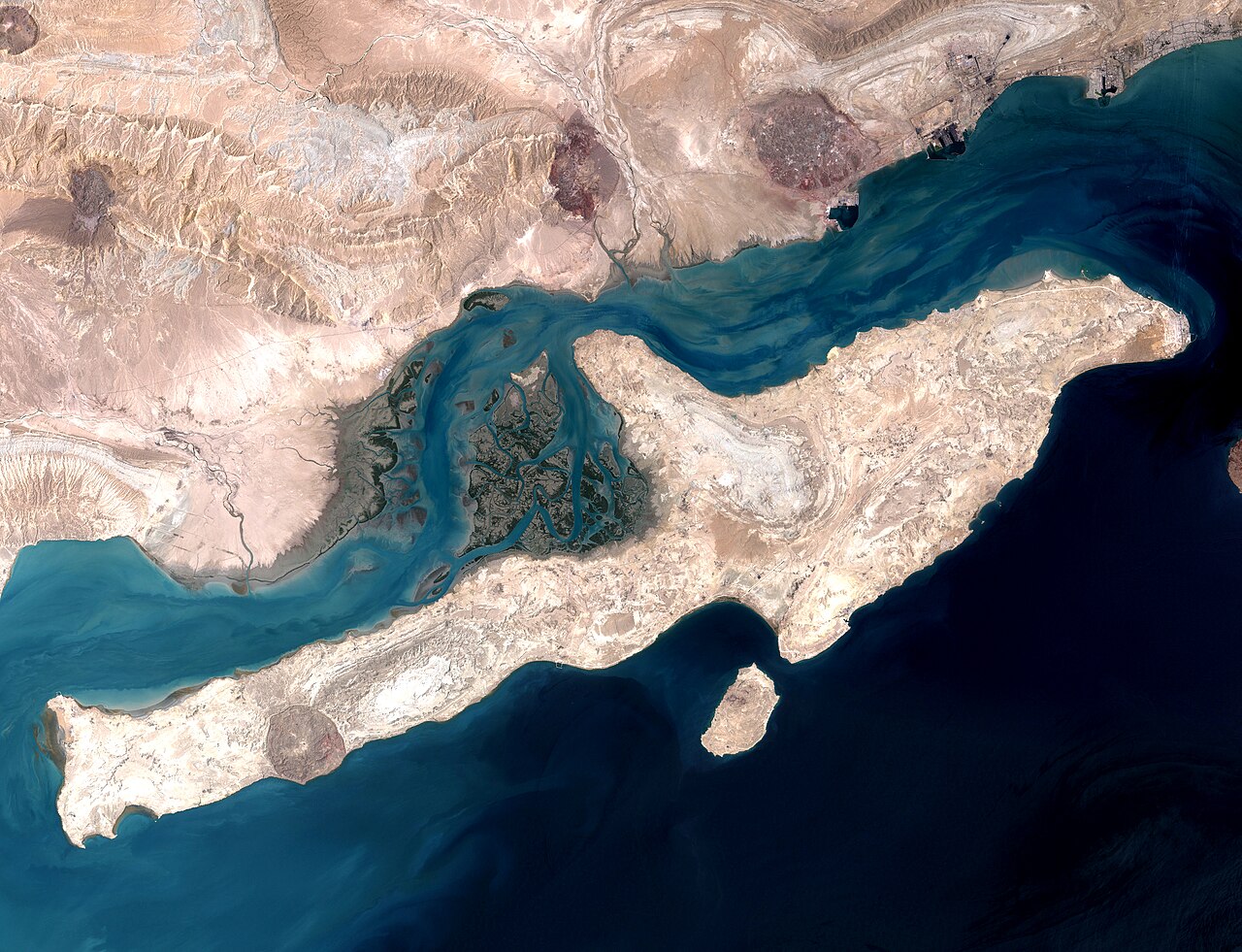
This doctrine is not theoretical. It is the operational basis for everything Iran has done in the Strait of Hormuz since late February 2026. The IRGC’s declared “danger zone” across standard shipping lanes, the forced redirection of vessels into the five-nautical-mile Qeshm-Larak channel inside Iranian territorial waters, the $2 million per-ship transit fees processed through Kunlun Bank — all of these follow from the asymmetric maritime doctrine that Ahmadian developed in the late 1990s. The man who drew the playbook is now in the room negotiating its terms of retirement.
His 15 years at the IRGC Strategic Studies Center (2007-2022) are less documented publicly but no less consequential. The center functions as the IRGC’s internal think tank and doctrine laboratory. Whatever Iran learned from the Tanker War of 1984-88, from Operation Praying Mantis in 1988, from two decades of observing US naval deployments — Ahmadian’s center processed it into operational plans.
Who Actually Controls Hormuz Operations?
Ahmadian holds the SNSC Secretary title, but the institution that would implement any Hormuz reopening operates below him on the IRGC’s internal chain and answers to a different commander. Khatam al-Anbiya Central Headquarters runs actual Hormuz scenario planning and wartime coordination. Its commander, Ali Abdollahi Aliabadi, reports through the IRGC chain of command, not through the SNSC Secretary.
Mehran Kamrava, professor of government at Georgetown University in Qatar, described Khatam al-Anbiya’s function in an April 10, 2026, Euronews analysis: “During wartime, the Khatam al-Anbiya’s job is to coordinate war effort. In peacetime, its job is to run scenarios.” On Iran’s Hormuz position specifically, Kamrava assessed: “It appears that the Iranians have now hit on something that they are not willing to negotiate over.”
The Soufan Center’s April 10 reporting was more specific about the operational command layer: “IRGC Commander Brigadier General Ahmad Vahidi and Khatam ol Anbia Central Headquarters Commander Ali Abdollahi Aliabadi are reportedly driving decisions related to Iran’s kinetic response, according to sources close to President Pezeshkian’s office.”
This creates a layered problem for any Islamabad outcome. Even if Ahmadian agrees to language on Hormuz reopening — which, given his career designing the closure doctrine, seems unlikely — the operational institution controlling the strait answers to Vahidi and Aliabadi, not to the SNSC Secretary. Ahmadian can shape what gets agreed. He cannot guarantee what gets implemented. The authorization ceiling has moved indoors, but the enforcement floor remains in IRGC operational hands.
HOS has previously documented this enforcement gap in Pakistan’s ceasefire brokerage. The gap persists at the Iranian institutional level: the negotiator and the operator answer to different chains.
Iran’s 10-Point Plan as IRGC Pre-Filtration
The 10-point plan Iran brought to Islamabad reads less like a diplomatic opening position and more like an IRGC operational requirements document passed through Foreign Ministry language. Point 7 demands “continued Iranian control over the Strait of Hormuz.” Araghchi’s diplomatic gloss — “safe passage via coordination with Iran’s Armed Forces” — softened the language without changing the substance. Fox News, Al Jazeera, and The National all reported the plan between April 7 and 8, with variations that suggest multiple internal drafts.
Point 8 demands withdrawal of all US military forces from the region. This includes Prince Sultan Air Base, which Saudi Arabia hosts, funds at a cost exceeding $1 billion, and where 2,000-3,000 US troops are stationed. The base was struck on March 28 by six ballistic missiles and 29 drones. As HOS documented in its analysis of Saudi exclusion from the Islamabad bilateral, Point 8 effectively demands the dismantling of Saudi Arabia’s most consequential security relationship — without Saudi Arabia being present to object.
Three versions of the 10-point plan have circulated, with Persian and English texts diverging on key provisions. Al Jazeera reported the existence of multiple versions, and HOS analyzed the three documents as evidence of an internal Iranian drafting contest — different factions producing their own preferred texts. Ahmadian’s presence resolves which version carries authority: the one the SNSC Secretary endorses.
Ghalibaf’s own framing, reported by PressTV on April 10, set preconditions before negotiations could even begin: “A ceasefire in Lebanon and the release of Iran’s blocked assets were the prerequisites to be met before the commencement of negotiations.” These are not opening positions subject to compromise. They are gate conditions. The negotiations, in Iran’s framing, have not started. What is happening in Islamabad is a discussion about whether to negotiate.
Iran’s ambassador to Pakistan, Reza Amiri Moghadam, posted and then deleted within hours a statement that the delegation would pursue “serious talks based on the 10 points proposed by Iran,” as reported by Al Jazeera on April 9. The deletion signals message discipline imposed from above — someone decided even affirming the 10-point framework publicly was premature.
What Does Ahmadian’s Role Mean for Saudi Arabia?
Saudi Arabia faces a delegation in Islamabad that was assembled to ensure no agreement threatens IRGC operational control of Hormuz or requires withdrawal of Iranian military capacity that has been striking Saudi territory for six weeks. Ahmadian’s career — designing the Hormuz closure doctrine, commanding the IRGC branch responsible for it, running the IRGC’s strategic planning center — makes him the institutional embodiment of Saudi Arabia’s primary security threat. He is not in Islamabad to make concessions on the strait.
The Kingdom is not at the table. As HOS reported on April 8, Saudi Arabia was excluded from the April 10 bilateral despite its Foreign Minister having held a co-guarantor seat during the March 29-30 multilateral round. The bilateral format — Vance and Ghalibaf as principals, with Pakistan as host — structurally prevents Saudi input on provisions that directly affect Saudi security.
Point 8 of Iran’s 10-point plan demands withdrawal of US forces from all regional bases. Saudi Arabia absorbed retaliatory strikes for hosting Prince Sultan Air Base. It depleted an estimated 86 percent of its PAC-3 missile interceptor stockpile — roughly 2,800 rounds reduced to approximately 400 — at an implied cost of $3.49 billion for the 894 confirmed intercepts at $3.9 million per round. The remaining interceptors cannot be replenished at current Camden, Arkansas, production rates of 620 per year. Poland refused a Patriot battery transfer on March 31.
Iran’s plan asks Saudi Arabia to accept Hormuz under Iranian military “coordination,” dismantle the US basing presence that Saudi Arabia paid for and absorbed attacks over, and receive nothing in return — no reconstruction commitment, no security guarantee, no assurance that the 799 drones and 95 missiles intercepted since March 3 will not resume. Ahmadian, the man who designed the doctrine behind those strikes, is in the room. Saudi Arabia’s foreign minister is not.
Sahar Khan, an independent analyst, told Al Jazeera on April 9 that “lack of trust is the biggest obstacle. Both sides are making maximalist demands” to demonstrate victory. From Riyadh’s vantage, the maximalist demands are not symmetrical. The United States can walk away from the region. Saudi Arabia cannot walk away from the Gulf.
The Constitutional Confirmation Gap
Article 176 of Iran’s constitution requires that all SNSC decisions receive Supreme Leader confirmation. The Secretary is a transmission belt, not an autonomous authority. Under normal circumstances, Ahmadian’s presence in Islamabad would mean that any text he endorsed could be expected to receive Khamenei’s approval, given Ahmadian’s status as — in Kosari’s phrase — “completely a soldier” of the Supreme Leader.
Circumstances are not normal. The Times of London reported a memo indicating Khamenei is unconscious in Qom. HOS has documented the constitutional confirmation gap this creates: SNSC decisions legally require confirmation from a leader who may be unable to provide it. Mojtaba Khamenei, the Supreme Leader’s son, has been referenced in Iranian media as an intermediary, but he holds no constitutional authority to confirm SNSC decisions.
The SNSC’s April 8 statement — “if the enemy’s surrender on the battlefield is transformed into a decisive political achievement in the negotiations, we will celebrate this massive historical victory together; otherwise, we will fight side-by-side on the battlefield until all the demands of the Iranian nation are met” — was broadcast on IRIB and attributed to the council. It bore hallmarks of IRGC drafting: binary framing (total victory or continued war), no middle ground, and the phrase “our hands are on the trigger.”
Ahmadian signed a letter in the 1990s threatening military intervention against reformist President Mohammad Khatami, according to the Atlantic Council. The letter was one of several acts by senior IRGC officers warning elected civilians against policies the corps opposed. Three decades later, the same officer holds the institutional role that bridges IRGC operations and civilian governance — and the civilian at the top of the constitutional chain may be unable to exercise his confirmation authority.
This does not mean Ahmadian is a free agent. The IRGC’s own internal hierarchy — Vahidi above all — constrains him. But it means the constitutional check that Article 176 was designed to provide is, at minimum, delayed and possibly suspended. Whatever Ahmadian endorses in Islamabad may carry IRGC approval without requiring Supreme Leader confirmation, not because the constitution permits this but because no one is in a position to enforce the requirement.
Three Documents, One Drafter
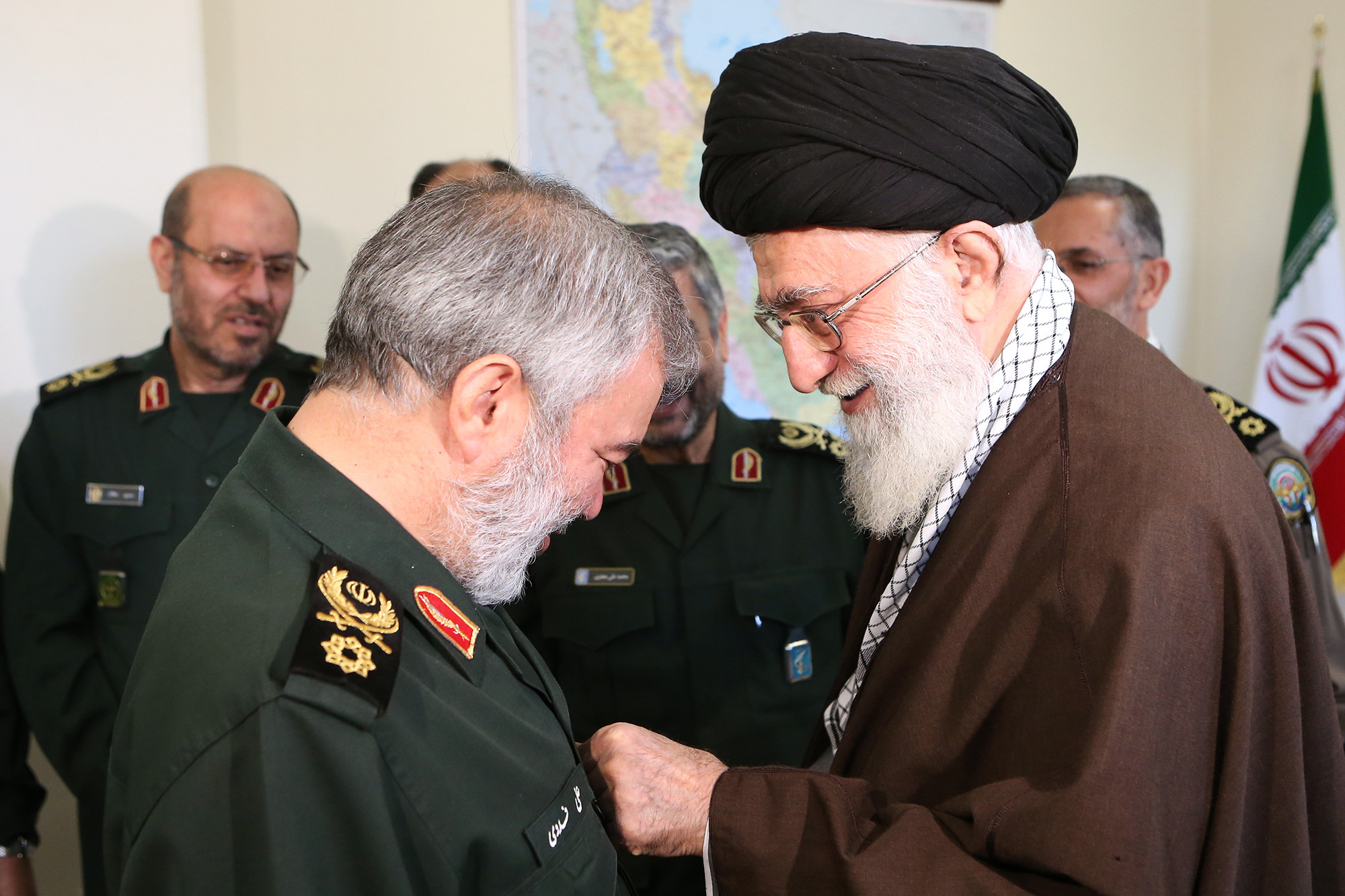
Ahmadian’s delegation role clarifies which version prevails. The SNSC Secretary is the institutional coordinator between the IRGC, the armed forces, and the Supreme Leader’s office. If three drafts existed, the one Ahmadian carries to the table is the one that survived internal SNSC review — which means it survived IRGC review.
PressTV’s April 10 coverage of the delegation listed Ahmadian by his title — “Secretary of the Supreme National Defense Council” — without mentioning his IRGC career, his sanctions designations, or his role in developing Hormuz doctrine. The coverage foregrounded Ghalibaf as delegation leader and framed the talks as Iran collecting on a “historic victory.” The Iranian ambassador’s deleted post, Ghalibaf’s precondition statements, and PressTV’s sanitized biography of Ahmadian all point in the same direction: Iran is managing the public framing to present maximalist demands as reasonable terms of surrender acceptance.
The IRGC’s own published treaty framework for Hormuz — separate from the 10-point plan, separate from the Islamabad Accord framework — established a third track of demands originating from the corps directly. Ahmadian is the institutional node where these tracks converge. He does not need to advocate for the IRGC position in the room. He is the IRGC position in the room.
Frequently Asked Questions
Has an SNSC Secretary ever participated directly in Iranian negotiations before?
Ali Larijani served as SNSC Secretary and principal nuclear negotiator with the EU-3 from 2005 to 2007, operating above the Foreign Minister. However, Larijani held a PhD in Western philosophy, had served in parliament, and ran state television — a cross-institutional profile. Ahmadian is the first SNSC Secretary to enter negotiations with an exclusively IRGC background and no civilian governance experience. His Joint Staff tenure (2000-2007) also coincided with Iran’s most aggressive nuclear expansion period, which resulted in his personal UN sanctions under Resolution 1737 — making him among the most sanctioned individuals ever to participate as a named delegate in active multilateral peace talks.
Can Ahmadian unilaterally commit Iran to an agreement in Islamabad?
No. Article 176 of Iran’s constitution requires Supreme Leader confirmation of all SNSC decisions. Even if Ahmadian endorses a text, it lacks constitutional force until Khamenei approves it. With Khamenei reportedly incapacitated, the confirmation mechanism is stalled. Separately, operational control of the Strait of Hormuz runs through Khatam al-Anbiya Central Headquarters under Commander Aliabadi, who reports through the IRGC chain to Vahidi — not through the SNSC Secretary. Ahmadian can shape what is agreed but cannot guarantee implementation on the water, where IRGC naval and coastal missile units operate under their own command hierarchy.
Why was Ahmadian’s IRGC background omitted from Iranian state media coverage?
PressTV listed him only as “Secretary of the Supreme National Defense Council,” omitting his IRGC Navy command, Joint Staff leadership, Strategic Studies Center directorship, and sanctions designations from seven countries plus the UN and EU. This framing serves two purposes: it presents the delegation as a governmental body rather than an IRGC operation, and it avoids drawing attention to the fact that the person shaping Iran’s negotiating position personally designed the Hormuz closure doctrine now under discussion. Iranian Ambassador Moghadam’s deleted post suggests active message management — public statements are being retracted when they reveal too much about Iran’s internal positioning.
What is Khatam al-Anbiya and why does it matter for Hormuz?
Khatam al-Anbiya Central Headquarters is the IRGC’s wartime coordination body responsible for scenario planning and operational execution across all theaters, including the Strait of Hormuz. Its commander, Ali Abdollahi Aliabadi, reports to IRGC Commander Ahmad Vahidi, not to the SNSC Secretary. During peacetime it runs war-game scenarios; during conflict it coordinates the IRGC’s kinetic response. According to Soufan Center sources close to President Pezeshkian’s office, Vahidi and Aliabadi are “reportedly driving decisions related to Iran’s kinetic response.” Any Hormuz reopening agreement would require Khatam al-Anbiya’s compliance — an institution that Ahmadian once fed doctrine to from the Strategic Studies Center but does not command.
How does Ahmadian’s presence affect the Ghalibaf-Araghchi dynamic?
The Soufan Center identified a power struggle between hardliners around Ghalibaf — including Vahidi — and pragmatists aligned with President Pezeshkian. Araghchi, as Foreign Minister, represents the pragmatist lane. Ahmadian’s inclusion in the Ghalibaf-led delegation, rather than in a separate diplomatic track, effectively places the SNSC’s weight behind the hardline faction for these talks. Ghalibaf himself is a former IRGC Aerospace Force commander (1997-2000). With two of the four named delegates — Ghalibaf and Ahmadian — career IRGC officers, Araghchi is outnumbered inside his own delegation. His diplomatic glosses on the 10-point plan — softening “Iranian control” to “coordination” — can be overridden in real-time by the SNSC Secretary sitting next to him.