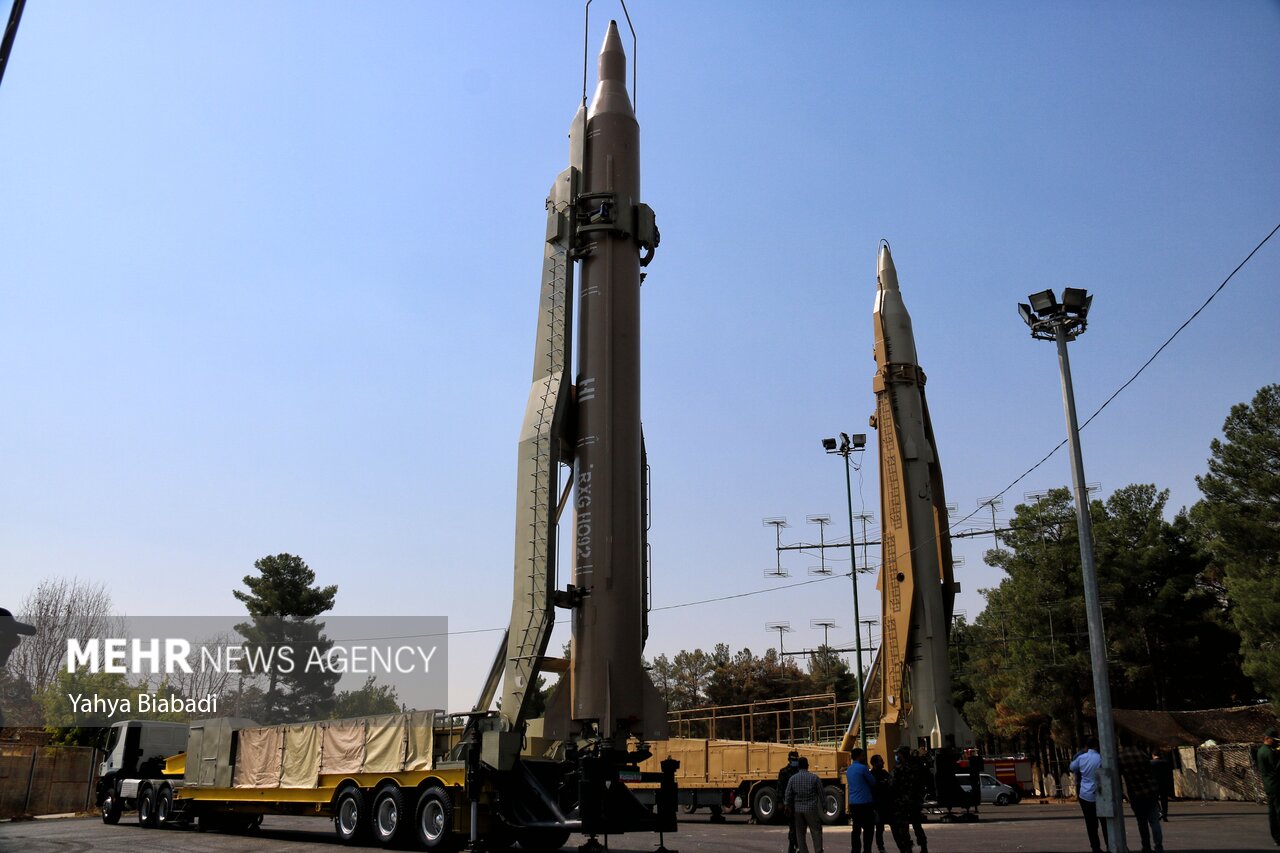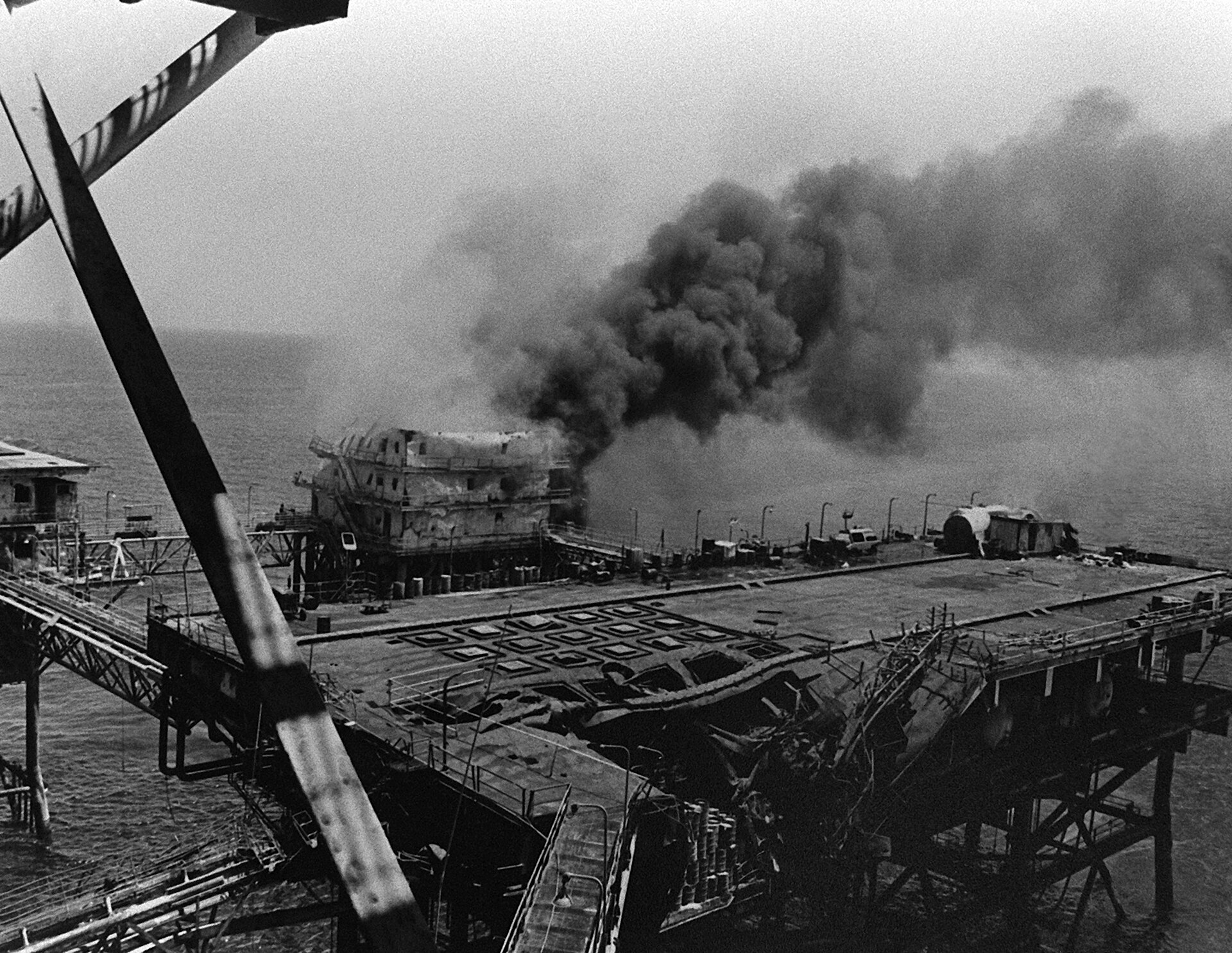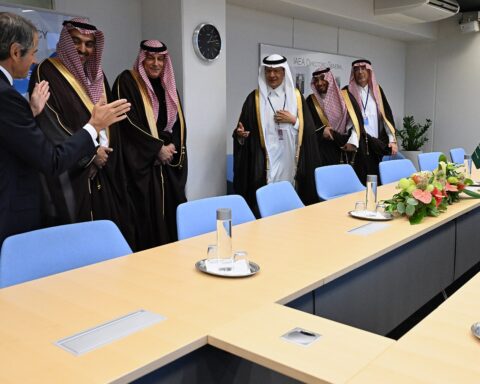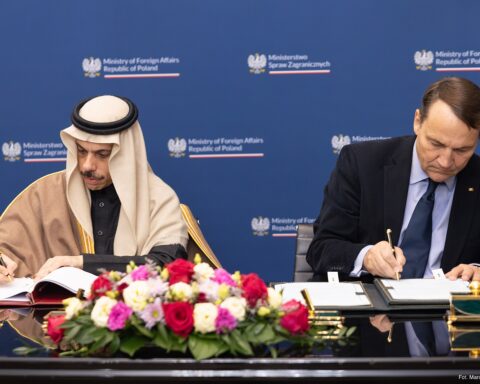

ISLAMABAD — Iran’s ten-point peace plan, published through the SNSC-affiliated Nour News agency on April 8, demands the withdrawal of all US forces from regional military bases and the reopening of the Strait of Hormuz “under the co-ordination of the armed forces of Iran.” Saudi Arabia — which built, funded, and hosts the primary base Iran wants emptied, and which routes approximately eighty percent of its crude exports through the strait Iran wants to control — has no representative at the Islamabad table where these demands will be negotiated on April 10.
The Kingdom’s official response to the ceasefire and the ten-point plan was six words of diplomatic boilerplate: it “welcomes” the announcement and “hopes it leads to a comprehensive sustainable pacification.” No statement was issued on Point 7, which would subordinate Saudi oil exports to IRGC approval. No statement was issued on Point 8, which would dismantle Prince Sultan Air Base — the facility Riyadh spent more than $1 billion constructing. No statement was issued on Point 10, which would codify whatever Vance and Ghalibaf agree to in a binding UN Security Council resolution. The exclusion is further complicated by Iran’s dual-track messaging at Islamabad: Foreign Minister Araghchi’s pre-commitment broadcast of “complete distrust” to Germany and Ghalibaf’s “goodwill but not trust” formulation in the room were designed for different audiences — and Saudi Arabia, absent from Islamabad, has no mechanism to determine which signal reflects actual Iranian negotiating intent.
Table of Contents
- Points 7, 8, and 10: The Saudi Architecture Iran Is Targeting
- Who Sits at the Islamabad Table — and Who Does Not?
- The $1 Billion Base Saudi Arabia Built and Iran Wants Demolished
- What Does “Co-ordination with Iran’s Armed Forces” Mean for Saudi Exports?
- The Compliance-Without-Protection Trap
- Why Is the IRGC Running Iran’s Side of the Table?
- Phase 2 as Permanent Pressure
- Pakistan Cannot Advocate for Saudi Interests
- What Can Saudi Arabia Do from Outside the Room?
- Frequently Asked Questions
Points 7, 8, and 10: The Saudi Architecture Iran Is Targeting
Iran’s ten-point plan was not drafted as a negotiating position. It was drafted as a post-victory settlement framework. The language, published by Nour News and carried by IRNA, does not propose joint mechanisms, consultation, or phased transition. It demands unilateral outcomes. The Farsi and English versions of that plan are not identical: the Farsi text tells a domestic audience Washington has already conceded enrichment rights, while the English version contains no such language — a discrepancy that Vance acknowledged publicly by calling one draft “something that was probably written by ChatGPT.”
Point 7 stipulates that the Strait of Hormuz be reopened through “organized passage…under the coordination of the Armed Forces of Iran.” The Persian word used — هماهنگی — carries operational connotations in Iranian military-diplomatic usage that the English word “coordination” does not. It implies authority, not partnership. In the IRGC’s institutional vocabulary, coordination means the party doing the coordinating sets the schedule, the route, and the conditions. Pre-war, 138 ships transited Hormuz daily. Iran’s proposed transit fee of $2 million per vessel would generate approximately $276 million per day at pre-war throughput — paid, under the current Kunlun Bank mechanism, in yuan or USDT outside the SWIFT system.
Point 8 demands the withdrawal of US forces from “all bases and points of deployment within the region.” The language does not limit itself to bases used for offensive strikes. It does not distinguish between logistics, missile defense, and intelligence assets. It covers the entire US military footprint across the Gulf Cooperation Council states — an architecture Saudi Arabia funded, hosts, and depends on for air defense replenishment and operational continuity.
Point 10 demands ratification of the entire framework in a binding UNSC resolution. This is the lock. Any concession Vance makes on base withdrawal or Hormuz coordination in Islamabad — even a deferral to Phase 2 — would, under Point 10, become a candidate for permanent codification in international law. The February veto by Russia and China on the Bahrain-drafted Hormuz resolution demonstrated that the Security Council is a contested instrument. Iran is now attempting to redirect that instrument from constraining its blockade to legitimizing its terms.
The Middle East briefing 3,000+ readers start their day with.
One email. Every weekday morning. Free.
Who Sits at the Islamabad Table — and Who Does Not?
The answer is binary: the United States and Iran sit at the table. Saudi Arabia does not.
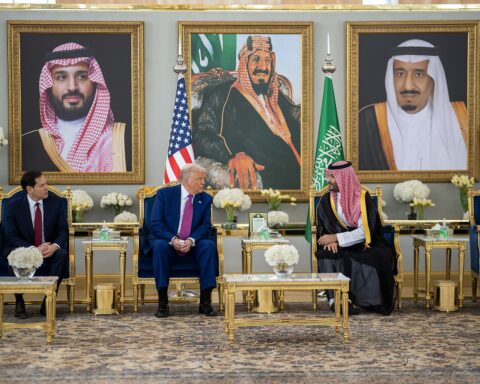
This was not always the arrangement. Saudi Foreign Minister Prince Faisal bin Farhan attended the March 29-30 Islamabad ministerials as a formal co-guarantor of the ceasefire framework. The Kingdom had a seat, a title, and — at least nominally — a voice in the architecture being constructed. Twelve days later, the April 10 bilateral is US-Iran only, with Pakistan as host-mediator. Saudi Arabia transitioned from co-architect to observer without issuing a single public objection.
The US delegation is led by Vice President JD Vance, accompanied by Special Envoy Steve Witkoff and senior adviser Jared Kushner. Vance was chosen in part because — as Javad Heiran-Nia of the Persian Gulf Studies Group in Tehran noted — he “wasn’t involved in the February talks that preceded the strikes, giving him credibility with Tehran.” He is, Heiran-Nia added, “positioning himself carefully for a future presidential bid.” Iran selected its interlocutor based on American domestic politics, not Gulf security architecture.
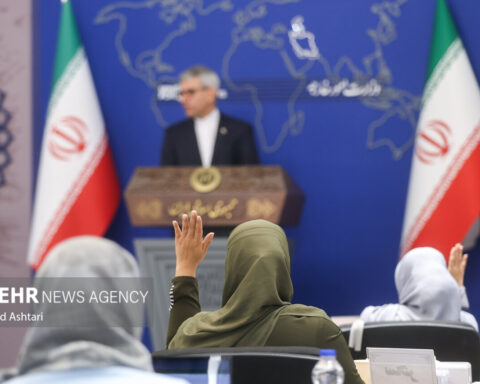
Iran’s delegation is led by Mohammad Bagher Ghalibaf, speaker of the Majlis. Ghalibaf’s selection is itself a message: the IRGC — the institution that physically operates the Hormuz blockade — is running Iran’s side of the negotiation. A former unnamed Iranian parliamentarian told NBC News: “Vahidi is in charge of the country. Ghalibaf doesn’t have the strength to confront him.” The man negotiating Iran’s demands cannot overrule the man enforcing them. Ghalibaf’s subsequent declaration that the ceasefire itself was “unreasonable” — announced on three grounds hours before the Islamabad talks were confirmed — was consistent with this structural position: Vahidi controls the IRGC’s operations, and Ghalibaf cannot overrule him at the negotiating table any more than he could on the battlefield.
The $1 Billion Base Saudi Arabia Built and Iran Wants Demolished
Prince Sultan Air Base sits roughly 70 miles southeast of Riyadh, covering more than 100 square miles of the Nejd plateau. Saudi Arabia began constructing the facility in the early 1990s during the Gulf War; by 1999, the total cost to the Saudi government had exceeded $1 billion. The base was purpose-built to replace the Dhahran facility after the 1996 Khobar Towers bombing killed 19 US airmen — an attack whose stated objective was expelling American forces from the Kingdom.
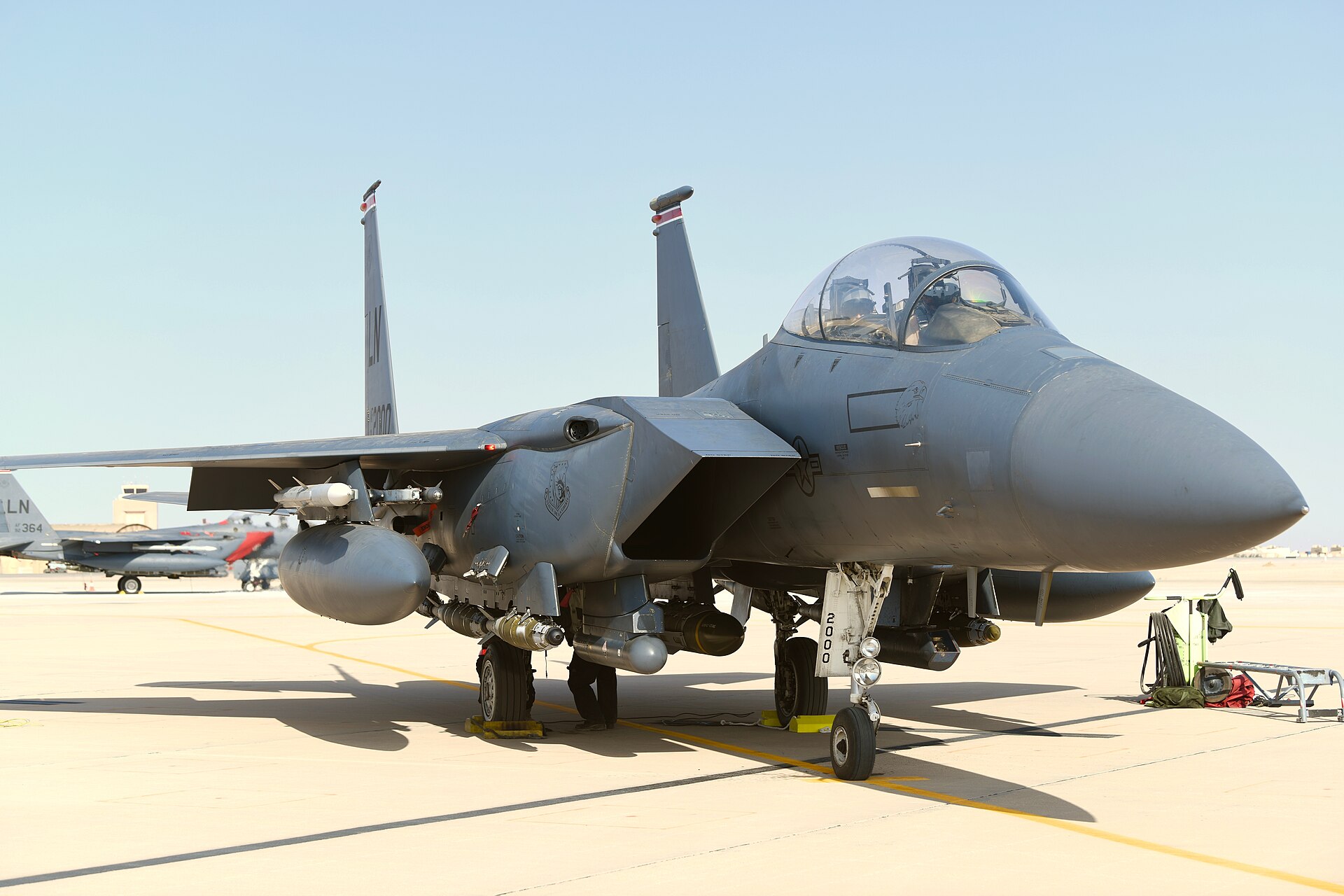
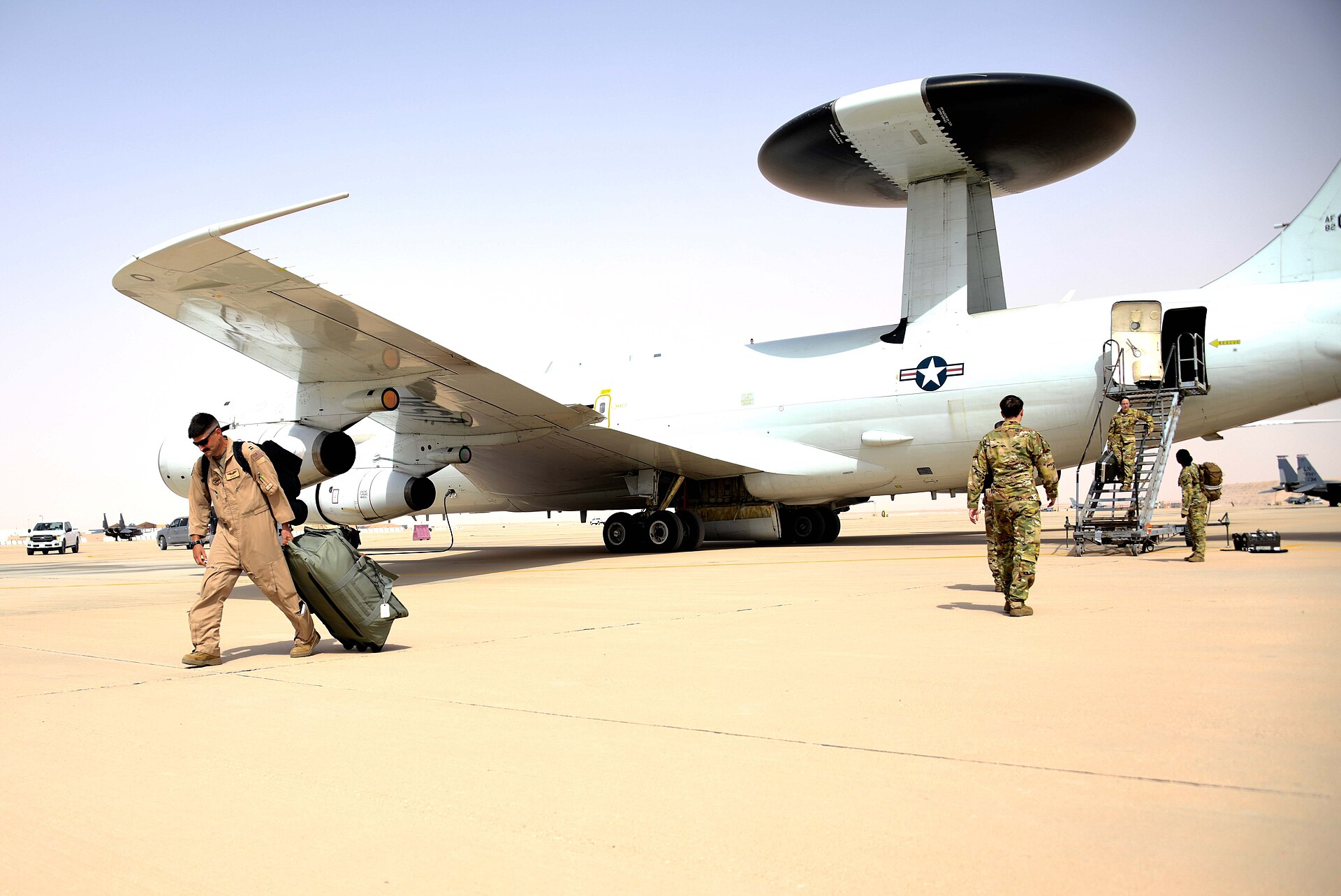
Today Prince Sultan AB hosts between 2,000 and 3,000 US troops operating Patriot missile defense batteries, THAAD systems, logistics and intelligence infrastructure, and — until the March 28 Iranian strike — the E-3G Sentry AWACS aircraft that provided early-warning coverage across the Gulf theater. That strike destroyed at least one E-3G Sentry valued at $500 million (one of only sixteen in the US inventory) and multiple KC-135 Stratotankers.
Iran’s Point 8 does not ask for Prince Sultan AB to be demilitarized, scaled down, or repurposed under a joint-use framework. It asks for the complete withdrawal of US forces from the facility Riyadh spent a decade building and a billion dollars funding. The base is not an American colonial outpost; it is Saudi property, constructed with Saudi capital, on Saudi sovereign territory, for a purpose Saudi Arabia defined: hosting the defensive architecture that intercepts Iranian missiles aimed at Saudi cities and oil infrastructure.
The Kingdom’s PAC-3 MSE stockpile is approximately 86 percent depleted — roughly 400 rounds remaining from an estimated pre-war inventory of 2,800, after intercepting 894 Iranian drones and missiles between March 3 and April 7. A $9 billion emergency PAC-3 purchase was approved in February 2026. No delivery has occurred. The Raytheon production line in Camden, Arkansas, manufactures approximately 620 interceptors per year. Saudi Arabia’s air defense viability is structurally dependent on US military presence — specifically at Prince Sultan AB, where the PAC-3 batteries and their operators are stationed.
If Point 8 is accepted, or deferred as a Phase 2 discussion item with ambiguous language, Saudi Arabia’s missile defense architecture enters a period of contractual uncertainty that no arms-purchase agreement can resolve. The interceptors are useless without the operators, the maintenance crews, the radar integration, and the real-time intelligence feed that the US presence provides. Riyadh cannot hire an alternative; no other country operates the PAC-3 MSE system at scale.
What Does “Co-ordination with Iran’s Armed Forces” Mean for Saudi Exports?
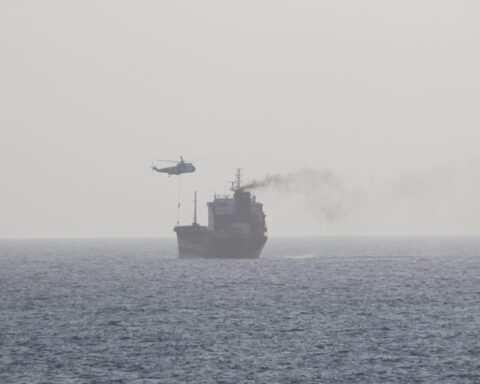
It means that every barrel of Saudi crude transiting the Strait of Hormuz would move at the IRGC’s discretion. The language of Point 7 does not propose a multilateral maritime mechanism, a joint patrol, or an international monitoring body. It proposes that the armed forces of one belligerent state — the state that imposed the blockade, mined the shipping lanes, and fired on commercial vessels — assume coordinating authority over the world’s most important oil chokepoint.
Before the war, approximately 21 million barrels per day transited Hormuz, of which Saudi Arabia’s share was roughly 6.5-7 million barrels per day — nearly eighty percent of the Kingdom’s total crude exports. The East-West Pipeline to Yanbu has been operating at its maximum capacity of approximately 7 million barrels per day since the conflict began, but this covers only the volume Saudi Arabia rerouted before hostilities. The post-ceasefire throughput at Hormuz stands at 15-20 ships per 24 hours, roughly one-seventh of the pre-war rate of 138 per day. Eight hundred vessels remain trapped in Gulf waters.
Under UNCLOS Articles 37-44, transit passage through international straits cannot be impeded or suspended by the bordering state. Iran has never ratified UNCLOS. Neither has the United States. Neither has Israel. The legal framework that theoretically protects Saudi export routes exists in a treaty none of the three primary actors in this conflict have signed. The only historical precedent for strait transit fees — Denmark’s Sound Dues on vessels entering the Baltic — was abolished in 1857 under the Treaty of Copenhagen, when the maritime powers collectively decided that no single state should tax international commerce through a natural waterway.
If the Islamabad framework defers Hormuz to Phase 2 rather than rejecting the coordination demand outright, Iran acquires a diplomatic claim with accruing shelf life. The demand itself becomes a recognized negotiating position — one that can be referenced, cited, and pressed in future forums. Saudi Arabia’s export security becomes permanently contingent on the outcome of a negotiation it is not participating in.
The Compliance-Without-Protection Trap
Saudi Arabia denied the United States use of its airspace and military bases for offensive strikes against Iran. This was not ambiguity; it was an explicit, publicly communicated restriction. The Kingdom calculated that limiting US operational access would shield it from Iranian retaliation — that compliance with Iran’s stated red line (do not host offensive operations) would provide protection.
Iran struck Saudi territory anyway. Prince Sultan AB took six ballistic missiles and 29 drones on March 28. Ras Tanura — the world’s largest oil-loading facility — was hit on March 2. The King Fahd Causeway was placed on the IRGC’s published counter-target list. Eastern Province absorbed seven ballistic missiles on April 7. The total intercept count reached 894 by the same date.
The pattern is precise: Saudi Arabia complied with every condition Iran publicly demanded, and Iran attacked Saudi Arabia on every vector it had available. Aziz Alghashian, a Saudi security analyst at AGSI, identified the mechanism: Saudi Arabia did not permit US strikes from its territory, “yet still absorbed Iranian retaliation.” The hosting arrangement itself — not its operational use — was Iran’s casus belli.
This is the structural trap that Point 8 now formalizes. Iran’s position is not that Saudi Arabia should restrict US operations. Iran’s position is that Saudi Arabia should expel US forces entirely. Compliance did not produce protection. Deeper compliance — full withdrawal — would produce exposure. The Kingdom’s restraint earned it nothing except a diminished inventory of PAC-3 interceptors and a seat outside the room where its defense architecture is being discussed. The contrast with Abu Dhabi is explicit: while Riyadh maintained diplomatic silence on April 9, ADNOC CEO Sultan Al Jaber pursued a dual-track approach — publicly naming 230 trapped tankers and demanding Hormuz be treated as open for commerce, even as Saudi Arabia’s foreign minister was still on the phone to Tehran.
Neither the Abraham Accords nor the presence of large U.S. bases are enough to protect Arab Gulf states.
Marwan Muasher, VP for Studies, Carnegie Endowment for International Peace
Muasher’s assessment at Carnegie went further: “The war on Iran has managed to forge a collective Gulf anger directed toward Iran and the United States.” The anger is not one-directional. Saudi citizens — and Saudi leadership — are watching the country absorb Iranian strikes while the United States negotiates away the infrastructure Riyadh funded to prevent exactly those strikes. “If Washington was not going to come to its rescue,” Muasher wrote, the Kingdom’s “best option was to try to reach some form of accommodation with Tehran.”
Carnegie’s institutional analysis posed the question Saudi officials cannot publicly ask: “Citizens are also likely to wonder why they should bear the risk of hosting U.S. forces when the United States is unable or unwilling to protect the Gulf from Iranian attacks.”
Lebanon is an additional pressure point the Islamabad talks cannot resolve for Saudi Arabia: IDF strikes on Lebanon trigger Iranian Hormuz re-closures through a chain Riyadh has no diplomatic channel to interrupt, compounding the base-withdrawal and Hormuz-coordination threats Iran has tabled at Islamabad. The companion analysis is Lebanon Is Iran’s Kill Switch on Saudi Arabia’s Oil Recovery.
Why Is the IRGC Running Iran’s Side of the Table?
Mohammad Bagher Ghalibaf commanded the IRGC Aerospace Force from 1997 to 2000. He is not a reformist repurposed for diplomacy. He is a career military officer from the institution that launched the missiles at Prince Sultan AB, mined the Hormuz shipping lanes, and imposed the blockade that has trapped 800 vessels and 3,200 ships carrying 20,000 seafarers in Gulf waters.
His selection as lead negotiator carries a specific institutional message: the IRGC is not delegating to diplomats. It is conducting its own negotiations. During the war, Ghalibaf’s official X account posted: “Alongside military bases, those financial entities that finance the US military budget are legitimate targets.” The man responsible for articulating Iran’s negotiating position in Islamabad spent the preceding weeks articulating Iran’s target list.
But Ghalibaf’s authority is constrained from above. The former Iranian parliamentarian’s assessment — “Vahidi is in charge of the country. Ghalibaf doesn’t have the strength to confront him” — places the real decision-making power with Ahmad Vahidi, the SNSC deputy who has been the IRGC’s institutional voice throughout the conflict. Khamenei has been publicly absent for 39 days. The ceasefire halt order attributed to him contained language and procedural markers that multiple analysts identified as IRGC-authored rather than from the Supreme Leader’s office. The SNSC’s own ceasefire framing — “negotiations are continuation of battlefield” — confirmed that Iran views the Islamabad table as an extension of military operations, not a departure from them.
For Saudi Arabia, this means the interlocutor across from Vance is not a negotiating partner empowered to make concessions. He is a proxy for an institution — the IRGC — whose stated objective is the permanent dismantlement of Saudi-hosted US military infrastructure and the assertion of Iranian operational authority over the strait through which Saudi Arabia exports its oil.
| Point | Demand | Saudi Exposure |
|---|---|---|
| 7 | Hormuz reopened under “coordination of Iran’s Armed Forces” | ~80% of Saudi crude exports transit Hormuz; IRGC would control passage schedule and conditions |
| 8 | US withdrawal from all regional bases | Prince Sultan AB ($1B+ Saudi-funded), PAC-3 batteries, 2,000-3,000 US troops; Saudi air defense structurally dependent on US presence |
| 10 | All terms codified in binding UNSC resolution | Any concession on Points 7 or 8 becomes permanent international law; no bilateral mechanism to reverse |
Phase 2 as Permanent Pressure
The Islamabad framework divides negotiations into two phases. Phase 1 covers the immediate ceasefire — the 45-day framework, prisoner exchanges, humanitarian corridors. Phase 2 covers the structural issues: Hormuz sovereignty, US base withdrawal, Iran’s nuclear program, and sanctions architecture. Iran’s ten-point plan places both the base withdrawal demand and the Hormuz coordination demand in the category of issues to be resolved in Phase 2.
Deferral is not rejection. If Vance agrees to include Points 7 and 8 as Phase 2 agenda items — even with caveats, conditions, or qualifications — the demands acquire formal status within an internationally mediated framework. They become standing agenda items that Iran can reference in every subsequent round of negotiation. They create a permanent diplomatic overhang over Saudi-hosted military infrastructure and Saudi export routes. That overhang has since deepened further: Netanyahu’s uranium ultimatum gives Israel a parallel veto over Phase 2, placing both the nuclear file and the Hormuz sovereignty question beyond what any US negotiator in Islamabad can deliver.
Iran’s authorization ceiling — the structural inability of any single Iranian actor to accept or enforce a comprehensive deal — makes Phase 2 indefinitely distant. The ceasefire itself is two weeks long, expiring approximately April 21. Phase 2 negotiations have no timeline. The demands exist in diplomatic limbo: formally acknowledged, never resolved, permanently available as coercive instruments.
Trump called Iran’s ten-point plan “a workable basis to negotiate” but “not good enough.” The structural implications of each individual point for Saudi security architecture were examined in detail when the plan was first published. He did not specifically reject Point 7 or Point 8. He rejected the overall package — a distinction that preserves the individual demands as potential concession points in future rounds. Vance stated the US “intends to conclude its operations and withdraw from the region shortly” and is “not interested in remaining embroiled in a prolonged military conflict.” This language does not contradict Point 8. It parallels it.
Pakistan Cannot Advocate for Saudi Interests
Pakistan’s role as host-mediator contains a structural conflict of interest that no procedural arrangement can resolve. Pakistan is simultaneously providing military support to Saudi Arabia’s defense against Iranian attack and positioning itself as Iran’s trusted honest broker. It cannot advocate for Saudi interests — the rejection of Points 7 and 8, the preservation of US basing rights — without destroying its credibility with Tehran. And it cannot maintain neutrality with Tehran without abandoning the security relationship that binds it to Riyadh.
That conflict became visible on the ground on April 10. Pakistani Air Force Il-78MP tankers and C-130H transports deployed to King Abdulaziz Air Base in Saudi Arabia — the operational activation of the SMDA pact — on the same day Islamabad was hosting Iran’s delegation. The pact’s collective security clause makes the deployment legally inseparable from Pakistan’s ceasefire host role. That deployment expanded further: Pakistani JF-17 Thunder fighters landed at King Abdulaziz Air Base in Dhahran, parking combat aircraft seven kilometres from Aramco headquarters and making the dual-role architecture visible on the tarmac.
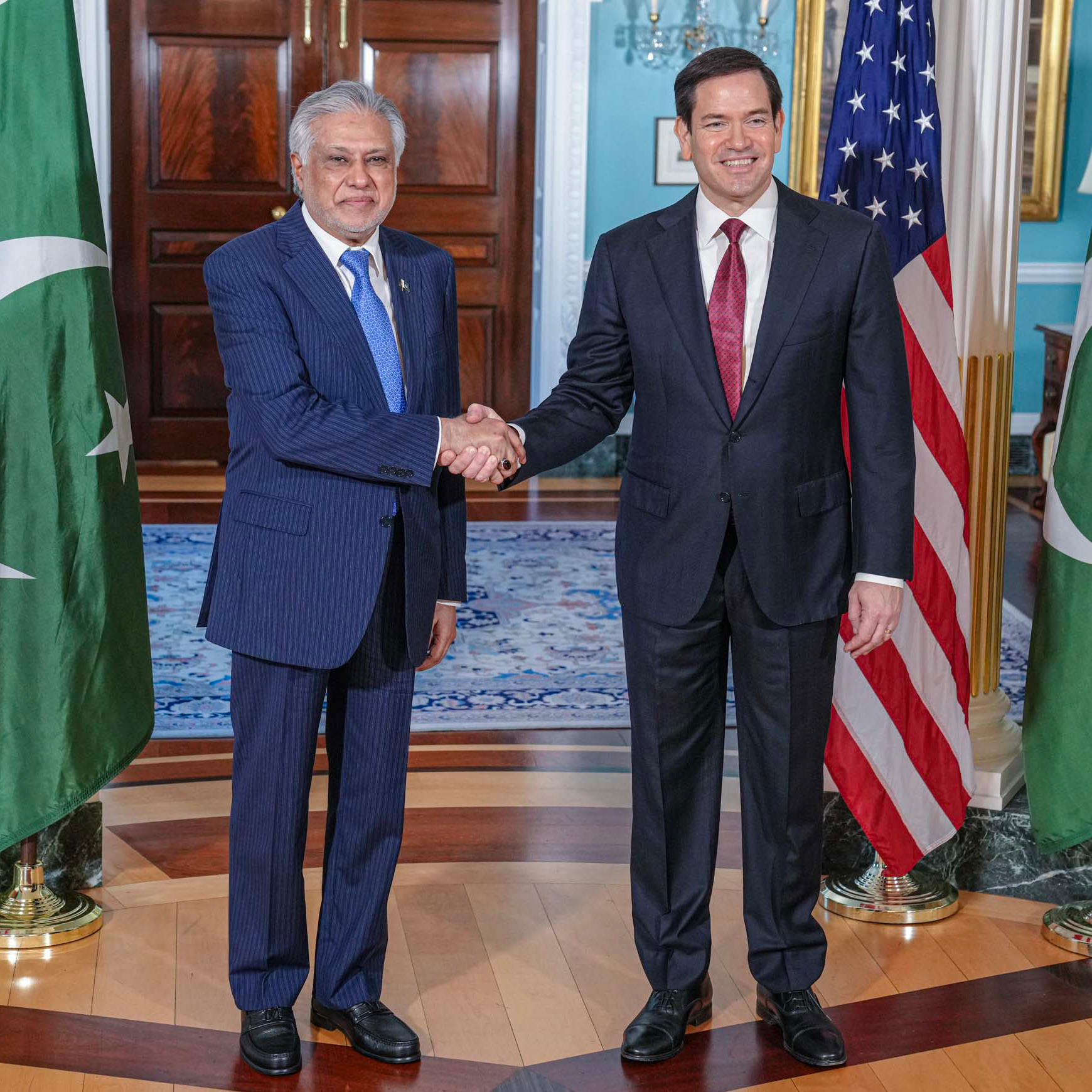
The April 10 talks were originally conceived as a broader multilateral format. Pakistan’s Prime Minister Shehbaz Sharif, Foreign Minister Ishaq Dar, and Army Chief General Asim Munir are hosting. But the table has contracted. Saudi Arabia’s FM, who was present on March 29-30, is absent. The UAE is absent. Bahrain — whose co-drafted Hormuz resolution was vetoed by Russia and China — is absent. The GCC states whose infrastructure, territory, and export routes are the subject of Iran’s demands have no collective representation. The divergence became explicit on April 8: the UAE formally demanded Iran pay reparations for Gulf attacks while Saudi Arabia issued only welcoming language, putting the GCC fracture into the public record for the first time.
Omar H. Rahman, fellow at the Middle East Council on Global Affairs, identified the broader dynamic: “Israel’s strategy is to draw the Gulf into direct confrontation with Iran.” The Islamabad format achieves something adjacent — it draws the Gulf’s security architecture into a bilateral US-Iran negotiation where the Gulf states are neither party nor observer, yet are the primary subjects of the terms being discussed.
What Can Saudi Arabia Do from Outside the Room?
The immediate options are constrained by the choices already made. Saudi Arabia’s studied silence — no public objection to its exclusion from the April 10 bilateral, no official response to Points 7, 8, or 10, no demand for co-guarantor status to be restored — is not a strategic ambiguity. It is the posture of a state that has assessed its bargaining position and found it insufficient to force a seat.
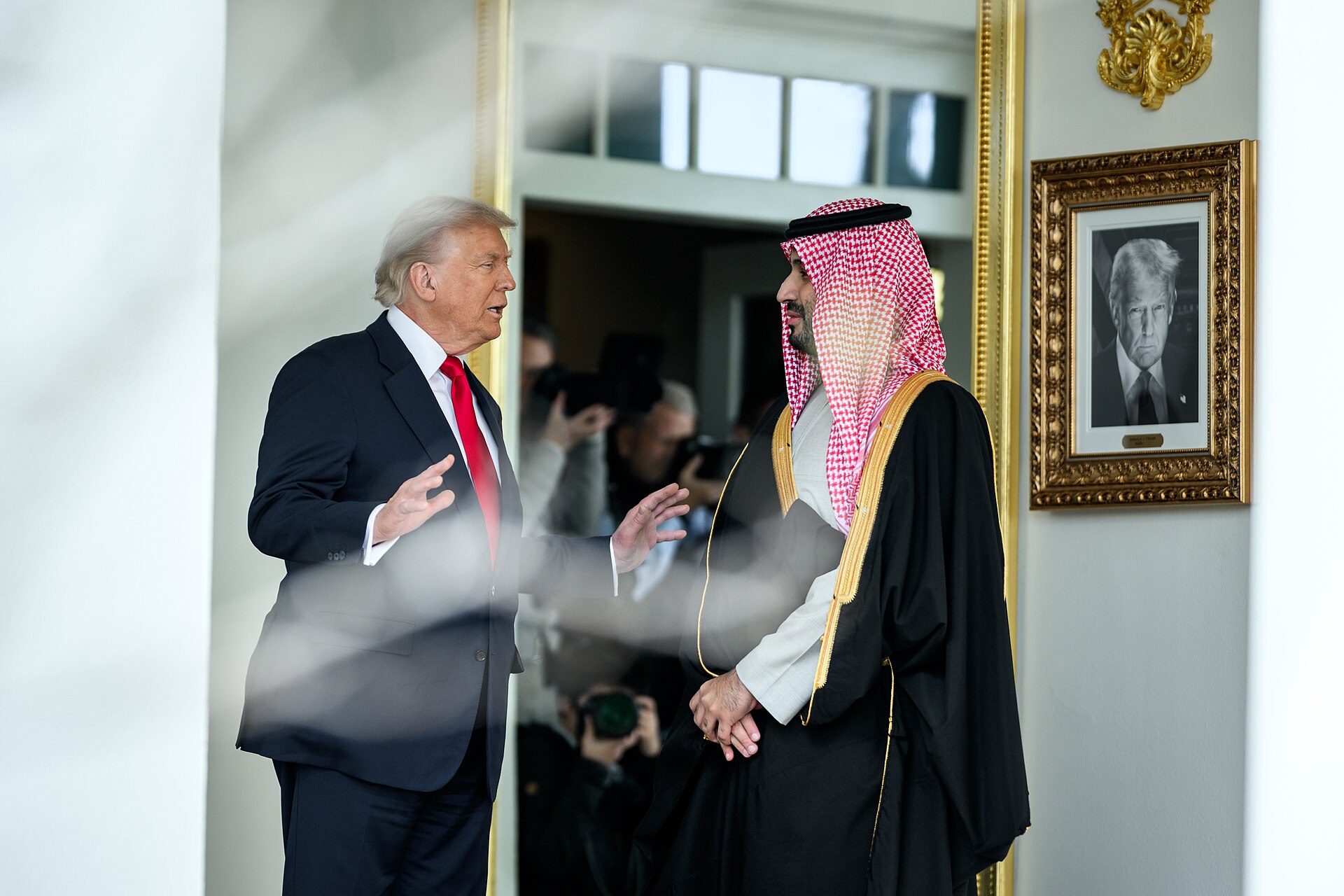
MBS privately urged Trump to deploy US ground troops into Iran and pursue regime change, according to the New York Times, citing people briefed by US officials. The Washington Post, drawing on four sources, provided the stronger foundation for the same reporting. Saudi Embassy spokesman Fahad Nazer denied it: “At no point in all our communication with the Trump Administration did we lobby the President to adopt a different policy.” The gap between the private request — ground troops and regime change — and the public framework being negotiated in Islamabad — ceasefire, withdrawal, and Hormuz coordination — measures the distance between what Riyadh wanted and what Riyadh is getting.
Three instruments remain available outside the Islamabad room. The first is financial: Saudi Arabia’s $9 billion PAC-3 MSE purchase and its broader defense procurement relationship with the United States creates transactional weight that does not require a diplomatic seat. The second is energy: Saudi Arabia’s control of approximately 7 million barrels per day of non-Hormuz export capacity through the East-West Pipeline to Yanbu gives it a degree of insulation that other GCC states lack — though the insulation covers existing rerouted volumes, not the full pre-war export flow. The third is the co-guarantor framework itself: Saudi Arabia’s absence from April 10 does not formally revoke its March 29-30 co-guarantor status. Any Phase 2 agreement that touches Saudi-hosted infrastructure would, in principle, require Saudi consent to implement. On April 9, Saudi Arabia activated a fourth: the first direct Saudi-Iranian foreign minister call since the war began — not as a bilateral breakthrough, but as evidence that the channel Enayati kept warm for six weeks had been escalated to FM level on the eve of the Islamabad talks.
In principle. The distance between principle and practice is precisely the space that Islamabad is testing. On April 9, UK Prime Minister Keir Starmer provided a fifth instrument from outside any negotiating room: calling Israeli strikes in Lebanon “wrong” from Saudi soil, delivering the Lebanon-inclusion demand that Saudi Arabia cannot make without triggering the three failure modes listed above. The UK-France multilateral pressure bloc Riyadh is now using as cover is the closest Saudi Arabia has come to a public position on Lebanon since the war began. Analysis of what Saudi Arabia can see from outside the Islamabad room shows that IRIB’s pre-session broadcast of Hormuz and Lebanon red lines gave Riyadh the same information as Washington — with no back-channel to determine whether it reflected posture or binding instruction.
Saudi leadership is furious because yearslong efforts of diplomacy have been upended for others’ political calculations.
Aziz Alghashian, Saudi security analyst, AGSI
The historical precedent is Dhahran, 1962. Under popular pressure demanding the “removal of the American military base,” King Saud ejected US forces. What changes in 2026 is that the demand is not coming from Saudi citizens; it is coming from an adversary state, through a formal diplomatic mechanism, at a table where Saudi Arabia is not seated. And the US negotiator has already indicated that withdrawal is the intended direction. The diplomatic asymmetry extends to reparations: the UAE has formally demanded Iran pay $6 billion for 2,819 missiles, invoking the same UN framework Saudi Arabia co-sponsored — yet Riyadh has issued no parallel claim, a silence that measures the distance between what the two states can afford to say.
| Dimension | March 29-30 Ministerials | April 10 Bilateral |
|---|---|---|
| Saudi representation | FM Faisal bin Farhan, formal co-guarantor | None |
| Format | Multilateral (US, Iran, Pakistan, Saudi, others) | Bilateral (US-Iran), Pakistan as host-mediator |
| Saudi voice on Hormuz | Present (co-guarantor status) | Absent |
| Saudi voice on base withdrawal | Present (co-guarantor status) | Absent |
| Phase 2 veto mechanism | Implicit through co-guarantor role | None formalized |
| Days to transition | 12 days, zero public objection | |
Frequently Asked Questions
Has Saudi Arabia formally requested to participate in the April 10 Islamabad bilateral?
No public request has been made. Saudi Arabia’s official posture since the ceasefire has been limited to the generic statement welcoming the announcement. Privately, Saudi diplomatic channels have communicated through Pakistan’s Foreign Ministry, according to regional diplomatic sources cited by ANI, but Islamabad’s hosting arrangement with Tehran precluded expanding the bilateral format. The Islamabad Accord — Pakistan’s own ceasefire MOU framework — was structured as a bilateral instrument from its inception, and adding parties would require Iranian consent that Tehran has shown no interest in granting.
The mediation gap runs deeper than exclusion from the room. Pakistan’s Field Marshal Asim Munir brokered the April 8 ceasefire through an overnight phone relay between Vance, Witkoff, and Araghchi — but Munir carries no coercive authority over the IRGC, no enforcement protocol, and no direct line to Vahidi. The full structural analysis of why Pakistan brokered the ceasefire but cannot enforce it is essential context for understanding why Saudi Arabia’s exclusion leaves it doubly exposed: absent from the table and reliant on a mediator with no power to compel compliance.
Could Saudi Arabia unilaterally block US withdrawal from Prince Sultan Air Base?
The base is Saudi sovereign territory, and the US presence is governed by bilateral defense agreements — not by any multilateral framework that Islamabad could override. In theory, Riyadh could refuse to implement a withdrawal agreed between Washington and Tehran. In practice, if the US decides to withdraw — and Vance’s public statements suggest that is the trajectory — Saudi Arabia cannot compel American troops to remain. The 1962 Dhahran precedent worked in the other direction: Saudi Arabia expelled US forces. The 2003 withdrawal from Prince Sultan AB (when operations shifted to Al Udeid in Qatar) demonstrated that the US can relocate without Saudi consent. The bilateral defense agreement gives Saudi Arabia the right to host, not the right to retain.
What happens to Saudi air defense if US troops leave Prince Sultan AB?
Saudi Arabia operates its own PAC-3 batteries with Saudi crews, but the integration, maintenance, intelligence feed, and stockpile replenishment depend on US military personnel and US logistical infrastructure stationed at the base. The $9 billion PAC-3 MSE purchase approved in February 2026 covers hardware, not the operational ecosystem. South Korea and Japan operate Patriot systems with sovereign crews, but both required 5-10 years of capability transfer. Saudi Arabia’s 86 percent stockpile depletion means the transition window — the period during which Saudi-only operations would need to sustain defense — begins under conditions of extreme scarcity, with approximately 400 interceptors remaining and the Camden production line unable to deliver replacements at wartime consumption rates.
Is Iran’s Hormuz “coordination” demand legal under international law?
No. UNCLOS Articles 37-44 establish transit passage as a right that cannot be impeded or suspended by the bordering state. However, Iran has never ratified UNCLOS, and neither has the United States. The legal framework exists in a treaty that the two principal negotiating parties in Islamabad have declined to sign. Iran’s demand has no legal basis — but it also faces no enforceable legal barrier. The distinction matters: legality constrains states that accept the framework. Iran does not.
What is the timeline for Phase 2 negotiations?
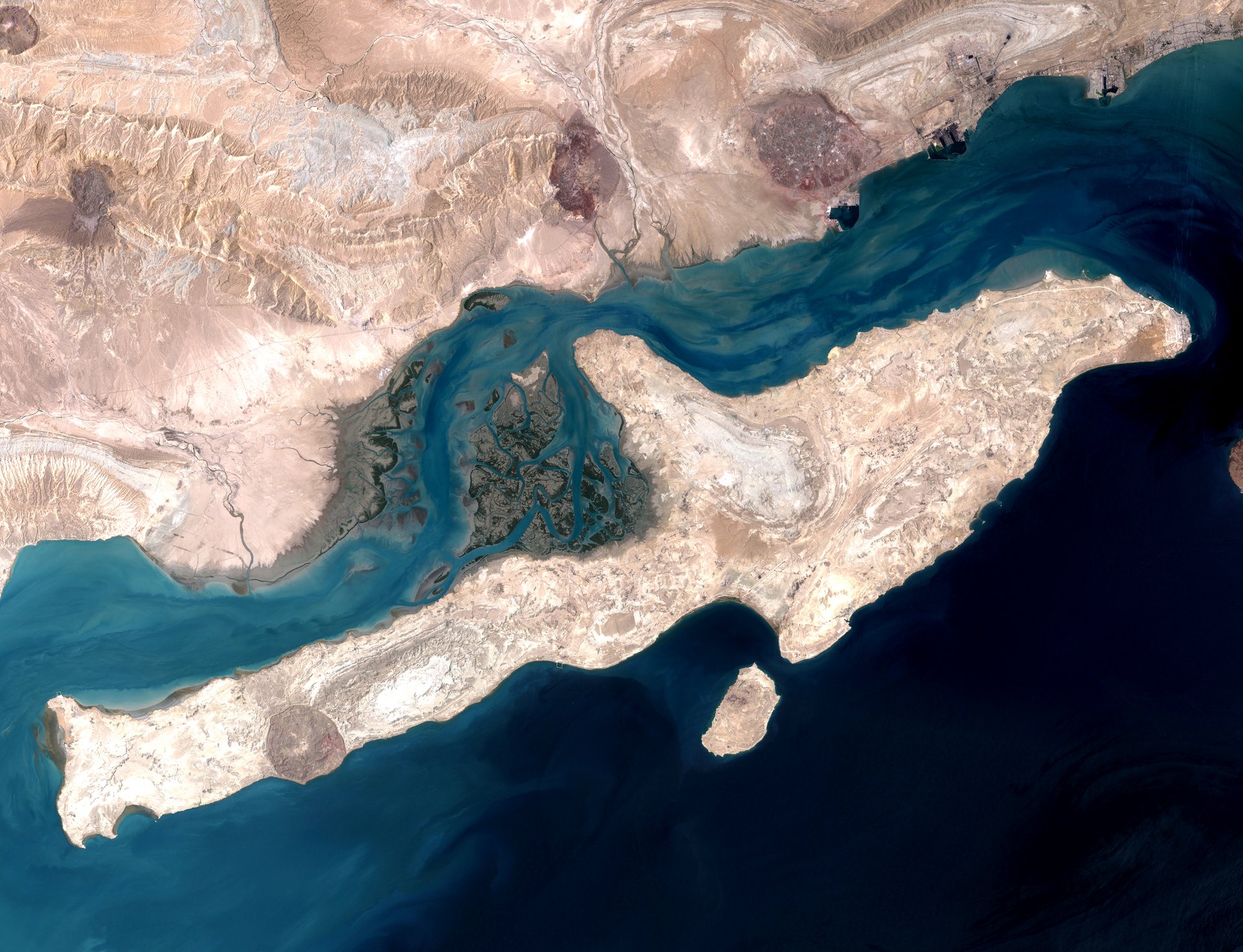
There is no timeline. The Phase 1 ceasefire expires approximately April 21. Phase 2 — covering Hormuz sovereignty, US base withdrawal, Iran’s nuclear program, and sanctions — has no start date, no deadline, and no defined participants. Iran’s authorization ceiling — with Khamenei absent 39 days and the IRGC operating through decentralized command — makes agreement on Phase 2 terms structurally improbable. The demands persist as standing pressure, not as actionable proposals. For Saudi Arabia, this means the threat is not that Phase 2 will resolve Points 7 and 8 against its interests — it is that Phase 2 will never resolve them at all, leaving the demands permanently on the table. The ceasefire’s fragility was immediately tested: strikes on Lavan Island and Sirri Island eight hours after the ceasefire took effect — with no party claiming responsibility — have become the central attribution dispute heading into April 10. The civilian dimension of that structural gap was confirmed on April 4, when Pezeshkian publicly accused IRGC commanders Vahidi and Abdollahi of wrecking ceasefire prospects in a confrontation with intelligence directorate chief Taeb; the constitutional framework that prevented the president from doing anything about it is analyzed here.
Iran’s choice of Ghalibaf as lead negotiator compounds Saudi Arabia’s exclusion problem: Ghalibaf’s pre-staged walkout justifications at Islamabad — declared before the talks opened — confirm that the IRGC institutional logic governing Iranian diplomacy is not amenable to the kind of structural compromise Points 7 and 8 would require.
That exclusion compounds into a hard calendar problem: the Hajj arrival window opens April 18 — four days before the ceasefire expires — and Saudi Arabia has no channel to request an extension without conceding its dependence on Tehran’s forbearance. The full mechanics of Saudi Arabia’s Hajj leverage trap explain why MBS cannot defer this deadline regardless of what Islamabad produces. The diplomatic picture shifted slightly on April 9, when Netanyahu authorized direct Israel-Lebanon negotiations at the State Department — but Iran’s immediate response confirmed that talks starting is not the same as strikes stopping, which remains Tehran’s actual condition for reopening Hormuz. The economic cost of that gap became quantifiable on the same day: 1.3 million bpd of combined production and pipeline losses, per Saudi Arabia’s first official damage disclosure — figures held back for 48 hours while Riyadh waited to see whether the ceasefire would hold before admitting the scale of the damage. That sovereignty architecture was codified on April 10, when Iran’s declaration of a new Hormuz transit stage made the IRGC’s gatekeeper role explicit doctrine rather than operational practice. The legal architecture of that gatekeeping is now in tension with a domestic US deadline: the April 29 War Powers expiry could terminate the congressional basis for US personnel operating Saudi air defense systems — the very systems that have absorbed 894 Iranian projectiles since March 3.
Washington’s subsequent decision to open a Lebanon-Israel second track on April 14 — eight days before the ceasefire expires — extended Saudi Arabia’s exposure further, adding a second unsynchronized negotiation to the same deadline.