TEHRAN — Iranian Foreign Minister Abbas Araghchi, who told Al Jazeera on April 1 that “the trust level is at zero” with Washington and that no negotiations were under way, reversed course three days later by publicly declaring Iran had “never refused” to attend talks in Islamabad — a shift that coincided with President Donald Trump calling off a 48-hour ultimatum to strike Iranian power plants and desalination infrastructure. The reversal, delivered via a post on X rather than through formal diplomatic channels, has opened a 72-hour window of ambiguity over whether Tehran is genuinely reconsidering its wartime posture or buying time against a deadline it cannot meet.
The stakes are measured in tanker queues and missile inventories. On April 5, a senior Iranian Foreign Ministry official told CBS News exclusively that Tehran had “received points from the U.S. through mediators and they are being reviewed” — the most concrete public acknowledgment of active Iranian engagement with American terms since the war began on February 28. Iran’s ballistic missile launch rate has fallen 90 percent from Day 1 of the war, its drone launch rate 83 percent, and its rial has collapsed to approximately 1.62 million per dollar.
Table of Contents
The Three-Day Reversal
On April 1, Araghchi sat for an extended interview with Al Jazeera and delivered what appeared to be a definitive rejection of diplomacy. “There is no truth to the claim of negotiations with any party in Iran,” he said. He acknowledged receiving messages from U.S. envoy Steve Witkoff “directly, as before,” but insisted “this does not mean that we are in negotiations.” He added: “We do not have any faith that negotiations with the US will yield any results. The trust level is at zero. We don’t see honesty.”
Three days later, on April 4, the Wall Street Journal reported that Pakistan-led mediation had reached “a dead end” and that Iran had formally told mediators it would not meet U.S. officials in Islamabad. Within hours, Araghchi posted on X: “We are deeply grateful to Pakistan for its efforts and have never refused to go to Islamabad. What we care about are the terms of a conclusive and lasting END to the illegal war that is imposed on us.”
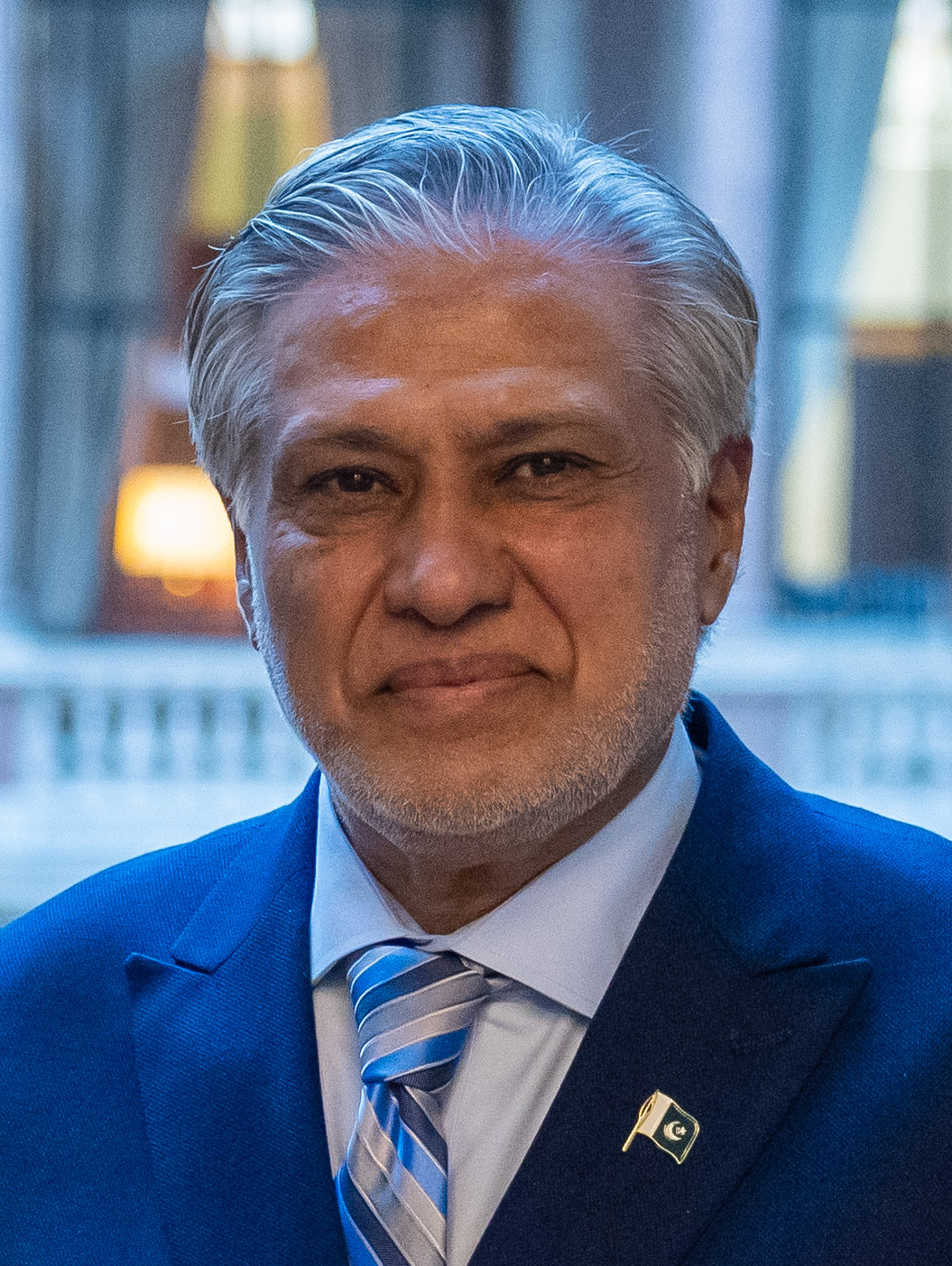
The sequence matters. Araghchi’s April 4 statement was a direct rebuttal to the WSJ report, not an unsolicited diplomatic overture. It was posted on social media — not conveyed through Witkoff, not transmitted via Pakistan’s Foreign Ministry, not announced at a press conference. Pakistani Deputy Prime Minister Ishaq Dar responded on the same platform: “Truly appreciate your clarification, my Dear Brother.”
Also on April 4, Araghchi told Al Jazeera: “At present there is no negotiation.” The two statements — “never refused to go to Islamabad” and “at present there is no negotiation” — were issued the same day.
What Did Trump Actually Call Off?
On April 4, Trump gave Iran a 48-hour ultimatum to reopen the Strait of Hormuz or face strikes on its power grid and desalination plants, according to the Washington Times. Trump’s language was characteristically blunt: the deadline pointed to April 6, the same date HOS previously identified as a decision inflection point for Saudi Arabia.
By April 5, Trump called it off. He cited “very good and productive conversations” with Tehran and told reporters: “There’s a very good chance we’re going to end up in a deal.” The S&P 500 surged 1.15 percent. The Dow rose 1.38 percent. Brent crude fell more than 10 percent to approximately $100 per barrel, down from $112.42 on April 3.
Iran denied the talks Trump described. State media claimed Trump “retreated” from his deadline “out of fear of Iran’s response.” Then came the CBS News exclusive: a senior Iranian Foreign Ministry official confirmed that Tehran had “received points from the U.S. through mediators and they are being reviewed.” The statement contradicted Iran’s own public line within hours of its issuance.
NPR framed the episode as Trump “declaring victory and claiming Iran offers a ‘prize’ in talks Iran has denied having.” The gap between what Trump described and what Iran acknowledged is not a miscommunication. It is the negotiation itself — conducted through competing narratives aimed at domestic audiences on both sides.
The IRGC Counter-Signal
On the same day Araghchi posted his Islamabad clarification, IRGC General Ali Abdollahi Aliabadi responded to Trump’s ultimatum by calling it “a helpless, nervous, unbalanced and stupid action.” The Al Jazeera liveblog carried both statements — Araghchi’s diplomatic softening and Aliabadi’s military defiance — within the same news cycle.
The dual-track messaging is consistent with a pattern identified by Iran International analysts, who assessed that “the military establishment is no longer willing to defer to the formal government.” External actors now engage “figures tied to Iran’s security establishment rather than its formal government,” according to the same analysis — a shift that raises questions about whether Araghchi’s signals carry institutional weight or personal aspiration.
Hamidreza Azizi, a visiting fellow at the German Institute for International and Security Affairs (SWP), assessed in a Carnegie Endowment analysis that Iran would “neither accept this proposal as it stands nor reject diplomacy altogether,” adopting “public dismissal coupled with continued indirect contacts.” He described the objective as “bargaining under fire rather than a move toward acceptance.”
Can Iran’s Economy Survive the Week?
The case for genuine Iranian recalculation begins with the rial. At approximately 1.62 million per dollar, Iran’s currency has lost functional convertibility for ordinary transactions. Food price inflation reached 105 percent by mid-March 2026, with bread and cereal prices up 140 percent and cooking oil up 219 percent year-on-year. Iran’s fiscal deficit exceeds 10 percent of GDP. Only nine Iranian banks meet Central Bank solvency criteria.
President Masoud Pezeshkian warned that without a ceasefire, Iran’s economy could “completely collapse within weeks,” according to a Jerusalem Post report citing Iran International analysis. Crude oil loadings fell below 1.39 million barrels per day in January 2026 — a 26 percent year-on-year decline — before the war even began. The U.S. has sanctioned 84 percent of tankers involved in lifting Iranian crude.
The military attrition compounds the economic pressure. Iran’s ballistic missile launch rate has collapsed from 480 launches on the war’s first day to a fraction of that figure by Day 35 — a 90 percent decline, according to figures cited by U.S. Admiral Brad Cooper. Drone launch rates fell 83 percent over the same period. Three senior IRGC commanders were killed in the week of March 28 to April 3 alone: Makram Atimi of the central missile unit in Kermanshah, Jamshid Eshaqi at the IRGC oil headquarters, and Mohammad Ali Fath Ali Zadeh of the IRGC Fatehin commando unit. At least 16 high-ranking IRGC figures have been killed since the war started.
Mona Yacoubian, director of the Middle East program at CSIS, assessed that Iran, “threatened by regime change and determined to deter future attacks,” had “opted for unrestrained escalation.” The economic data suggests the capacity for that escalation is narrowing faster than Tehran’s public posture acknowledges.
The Authority Gap Between Araghchi and the Wartime Council
The question is not only whether Iran wants to negotiate but whether Araghchi can deliver what he signals. U.S. intelligence assesses that a “Wartime Military Council” of senior IRGC commanders is operating as the de facto ruler of Iran, according to WION News. President Pezeshkian “cannot reach the Supreme Leader,” and IRGC Commander Ahmad Vahidi has personally blocked presidential appointments.
Supreme Leader Mojtaba Khamenei, selected by the Assembly of Experts on March 8, had not appeared in public for 24 days as of April 1, according to the same WION report. The IRGC controls access to him. IRGC field commanders who would implement any Hormuz opening answer to Vahidi, not to Araghchi.
Azizi at SWP described the broader Iranian strategic objective: “The objective is not battlefield victory in a conventional sense, but producing a new strategic equation in which the threshold for attacking Iran has been raised.” If the IRGC views the current war as serving that deterrence-raising function — even at enormous economic cost — then Araghchi’s diplomatic signals may represent a civilian government speaking past its own military command.
Iran’s five counter-conditions, published by PressTV on March 25, make the gap concrete. They demand: an end to all attacks by the U.S. and Israel on Iran and pro-Iranian forces; mechanisms to prevent resumption of war; war reparations; international recognition of Iranian sovereignty over the Strait of Hormuz; and an end to all fronts involving “resistance groups.” The fourth condition — Hormuz sovereignty — collides directly with Trump’s stated requirement that the strait be “open, free, and clear.” Araghchi himself said on April 1: “Only Iran and Oman” should decide the strait’s status post-war.
The Pakistan Channel and the “Dead End” That Wasn’t
Pakistan Today reported on April 4 that multiple rounds of backchannel diplomacy had “brought both sides closer to breakthrough — only to fall short at decisive moments due to last-minute hesitations and internal recalibrations on both sides.” A proposed meeting involving U.S. Vice President JD Vance and senior Iranian representatives was “postponed at the eleventh hour more than once.”
The WSJ’s “dead end” report and Araghchi’s rebuttal exist in a specific diplomatic context: Turkey and Egypt were already exploring Doha and Istanbul as alternative venues. Some Iranian officials described the Islamabad meeting as “a trap to kill Iranian officials,” according to NewsX — a characterization that, whether sincere or performative, provides Tehran with a rationale for rejecting the venue without rejecting the principle of talks.
Dr. John Calabrese, a non-resident senior fellow at the Middle East Institute, observed that diplomatic efforts spanning “from Tehran to Riyadh, from Muscat to Shanghai” appeared “less like a coherent plan than a display of force untethered from a clear endgame.” The Witkoff 15-point proposal — confirmed publicly at a White House Cabinet meeting on March 26 — addressed sanctions relief, nuclear rollback (“no enrichment whatsoever”), limits on missiles, and reopening of Hormuz. Iran called it “maximalist” and “unreasonable.”
Araghchi has twice cited that the U.S. attacked Iran while negotiations were in progress — once in June 2025 and again at the war’s start on February 28, 2026. He invokes the 2015 JCPOA withdrawal as the foundational broken-trust event. The pattern of failed ceasefires provides the diplomatic backdrop against which every signal must be read.
Background and Context
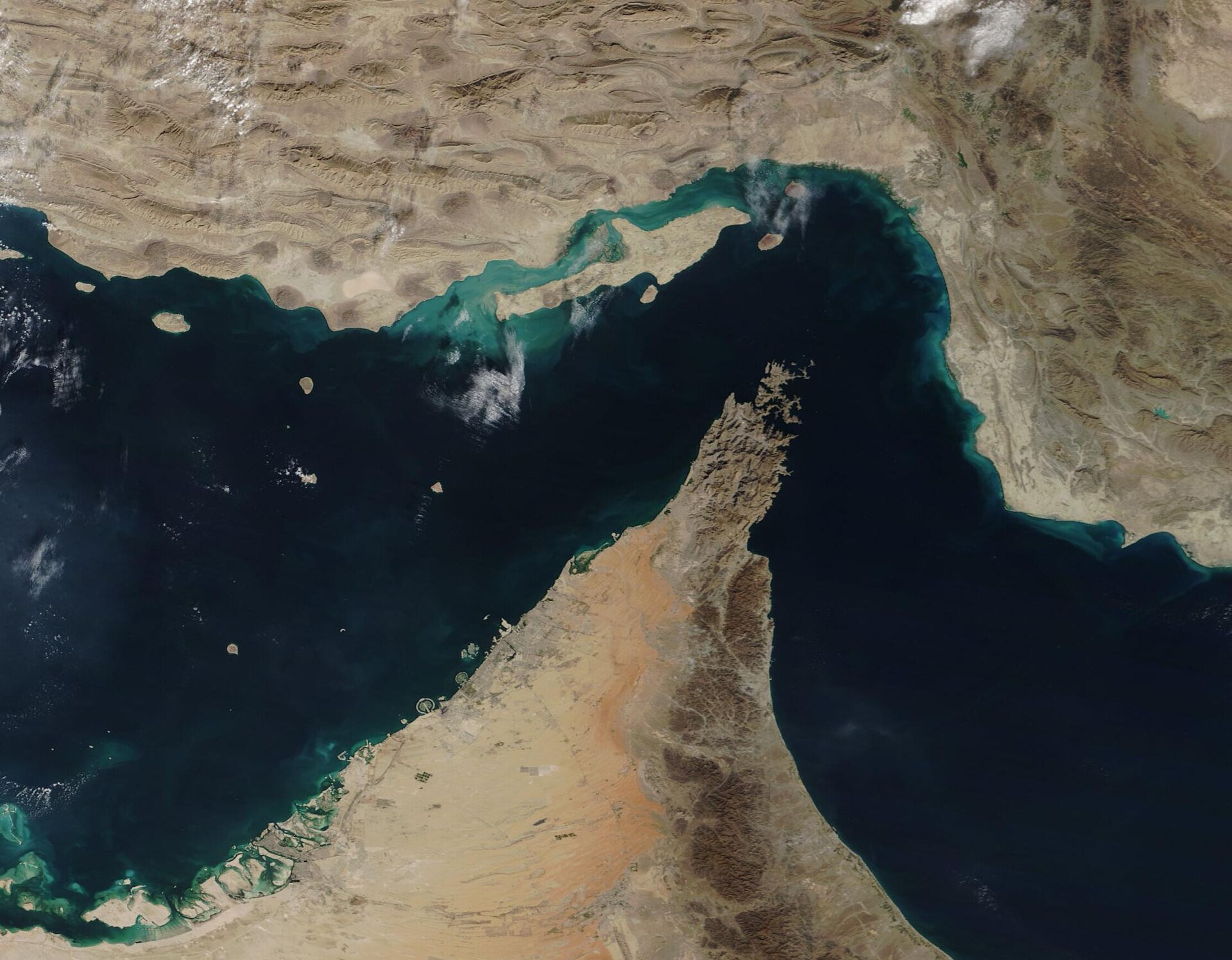
The U.S.-Iran war began on February 28, 2026 and is now at Day 36. Iran closed the Strait of Hormuz to vessels of belligerent nations early in the conflict, asserting sovereign control over the waterway under wartime authority. More than 150 ships remain anchored outside the strait, where traffic is down roughly 70 percent from normal. Araghchi said on April 1: “Only for the ships of those who are at war with us, this strait is closed. That is normal during war — we cannot let our enemies use our territorial waters.”
Brent crude peaked at approximately $119.50 per barrel during the war before falling to roughly $100 on the diplomatic softening signals of April 5 — a decline that represents roughly 16 percent from the wartime high and a separate 10 percent drop from the $112.42 level recorded on April 3. The oil market response reflects both relief and a bet that the signals are substantive.
Iranian state media, including PressTV, has consistently framed the diplomatic contacts as Iran conveying “warnings” and “positions,” not engaging in dialogue. The official Iranian line, amplified through embassy social media on April 4, is that Iran’s position has been deliberately misrepresented by U.S. media, not reversed. Araghchi himself said on April 1: “We do not accept deadlines. What matters to us is safeguarding the security and rights of the Iranian people.”
Frequently Asked Questions
What is the Witkoff 15-point proposal and why did Iran reject it?
The proposal, named after U.S. envoy Steve Witkoff, was confirmed publicly at a White House Cabinet meeting on March 26, 2026. It addresses four broad areas: sanctions relief for Iran, a complete nuclear rollback including a demand for “no enrichment whatsoever,” limits on Iran’s missile programs, and the reopening of the Strait of Hormuz to all international shipping. Iran labeled the package “maximalist” and “unreasonable,” with particular objection to the enrichment and Hormuz provisions, which Tehran views as encroachments on sovereignty. The April 5 CBS News report indicating Iran is “reviewing points” from mediators may indicate Tehran is willing to engage with select elements while rejecting the framework as a whole.
Who is Mojtaba Khamenei and why does his absence matter for diplomacy?
Mojtaba Khamenei, son of the late Supreme Leader Ali Khamenei, was selected as Iran’s new Supreme Leader by the Assembly of Experts on March 8, 2026. As of April 1 he had not appeared in public for 24 days, and the IRGC controls physical access to him. In Iran’s constitutional system, the Supreme Leader holds ultimate authority over war-and-peace decisions, including any agreement to reopen the Strait of Hormuz. If President Pezeshkian cannot reach Mojtaba Khamenei — as U.S. intelligence assessments suggest — then neither Pezeshkian nor Araghchi can credibly commit to terms that require Supreme Leader approval. Any deal Araghchi signals willingness to discuss must first pass through an IRGC gatekeeping layer that has shown no public interest in compromise.
How does the Hormuz blockade affect countries not involved in the war?
Japan, South Korea, India, and China — none of them belligerents — depend on Hormuz for a combined 15–17 million barrels per day of crude imports. Iran has stated the closure applies “only for the ships of those who are at war with us,” but the practical effect extends far beyond belligerent nations: with traffic down 70 percent, insurers have raised war-risk premiums for all vessels transiting the Persian Gulf, regardless of flag state. The diplomatic activity involving non-belligerent states from Riyadh to Shanghai reflects the global economic exposure that makes this a multilateral crisis, even if the fighting remains bilateral.
Has Iran offered any concrete concession since the war began?
No. As of April 5, 2026, Iran has not modified any of its five counter-conditions published on March 25, nor has it reopened any portion of the Strait of Hormuz. The most forward-leaning public statement — the CBS News-sourced confirmation that Iran is “reviewing” U.S. points — acknowledges receipt of a proposal, not acceptance of any term within it. Araghchi’s “never refused to go to Islamabad” post addresses venue willingness, not substantive flexibility. The gap between signaling openness to a process and conceding on substance — particularly on Hormuz sovereignty, which Iran frames as a matter of “natural, legal right” — remains as wide on April 5 as it was on Day 1.
What role is Saudi Arabia playing in the diplomatic efforts?
Saudi Arabia occupies a dual position as a regional power with direct economic exposure to the Hormuz closure and as a state with its own decision window tied to Trump’s April 6 deadline. Riyadh has been named alongside Muscat and Shanghai as a node in the diplomatic circuit described by MEI’s Calabrese. Saudi crude exports through the Red Sea via the Yanbu terminal provide a partial alternative to Gulf shipments, but the kingdom’s east-coast facilities remain exposed to Hormuz disruption. The diplomatic traffic through Riyadh reflects both Saudi interest in war termination and its role as a potential guarantor of any post-war Hormuz arrangement — a function that places it at the center of competing American and Iranian demands.