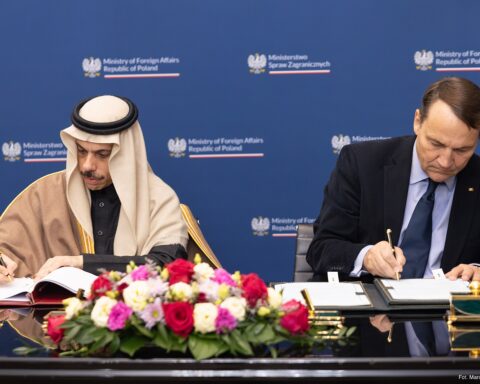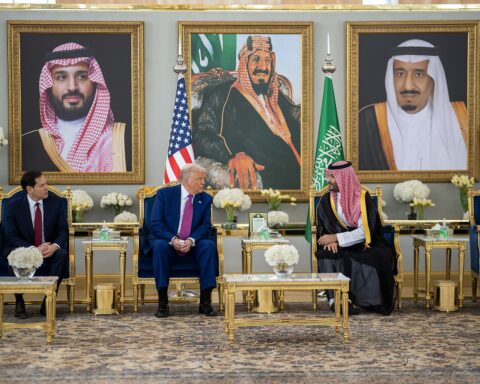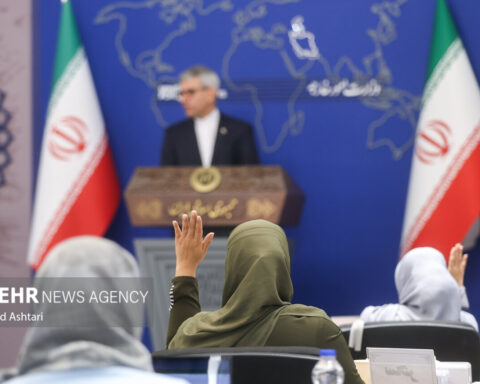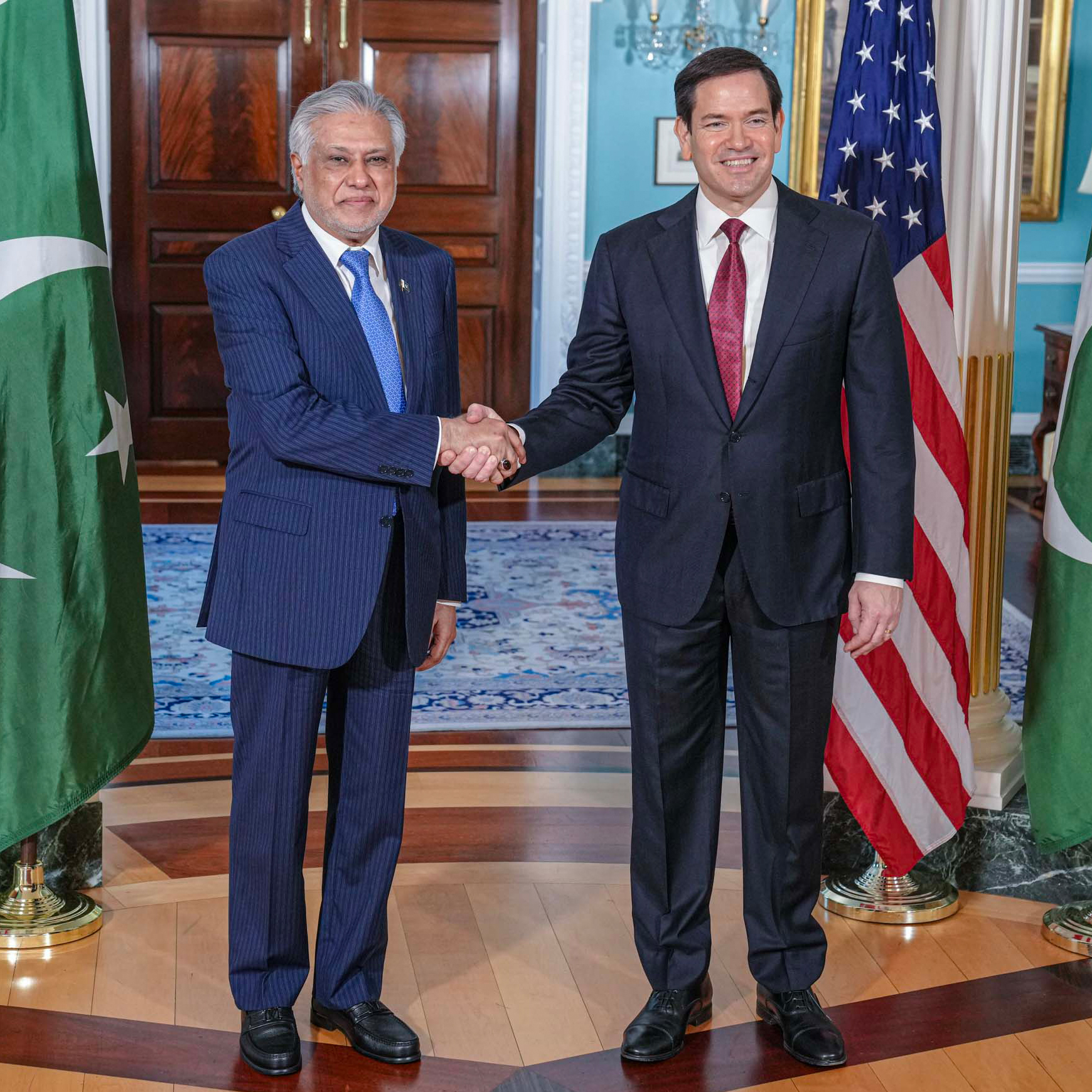

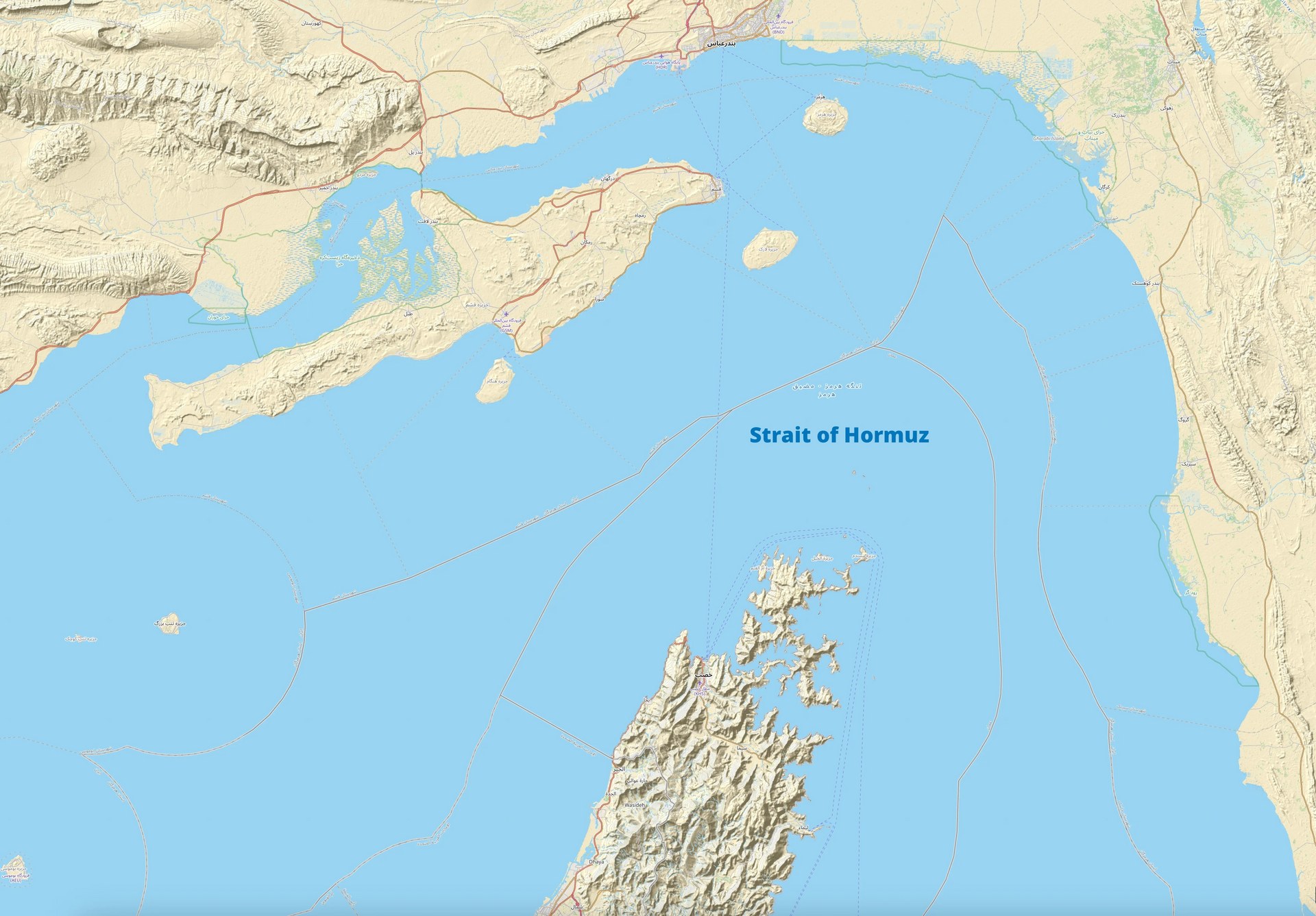
JEDDAH — Pakistani Foreign Minister Ishaq Dar called Saudi counterpart Prince Faisal bin Farhan on Friday to formally brief him on a joint China-Pakistan five-point peace plan for the Iran-Gulf war, delivering Beijing’s structured ceasefire framework to Riyadh less than 48 hours before President Trump’s April 6 deadline threatening to “obliterate” Iran’s energy infrastructure if the Strait of Hormuz remains blocked. The call places Saudi Arabia between two incompatible diplomatic frameworks — one Chinese-backed, leading with ceasefire; the other American, leading with nuclear dismantlement — at the most dangerous moment of the 36-day-old conflict.
The five-point initiative, released simultaneously by the Chinese and Pakistani foreign ministries on March 31 following Wang Yi-Dar talks in Beijing, calls for an immediate cessation of hostilities, sovereignty guarantees for all parties, protection of energy and civilian infrastructure including “peaceful nuclear infrastructure, such as nuclear power plants,” and restoration of free passage through the Strait of Hormuz, according to the Chinese Ministry of Foreign Affairs. The US 15-point plan delivered to Tehran via the same Pakistani channel leads with the opposite demand — permanent cessation of uranium enrichment and full dismantlement of Iran’s nuclear program, as reported by CBS News and NPR — making the two frameworks structurally irreconcilable on the question that has defined American Iran policy for two decades.
Table of Contents
The Five Points
The plan Beijing and Islamabad unveiled on March 31 is deliberately spare — five points where Washington’s competing proposal runs to fifteen, a structural choice that signals both diplomatic philosophy and tactical intent. The first point calls for an immediate cessation of hostilities between all parties, language broad enough to encompass not just the direct Iran-Gulf theater but the Israeli operations and US strikes that Iran frames as the war’s root cause. The second demands peace talks “as soon as possible” with the sovereignty of both Iran and the Gulf states explicitly safeguarded, a formulation that sidesteps the question of who started the conflict and who bears responsibility for ending it.
Points three and four address the physical infrastructure of the war and the economic chokepoint that has made it a global crisis. The third calls for an immediate halt to attacks on non-military targets — energy facilities, desalination plants, power stations, and “peaceful nuclear infrastructure, such as nuclear power plants” — while the fourth demands protection of shipping and “restoration of normal passage through the Strait” as soon as possible, according to the Chinese MFA text. The fifth and final point calls for international support for “the conclusion of an agreement for establishing a comprehensive peace framework” grounded in the UN Charter, language that deliberately invokes multilateral legitimacy rather than any single power’s authority.
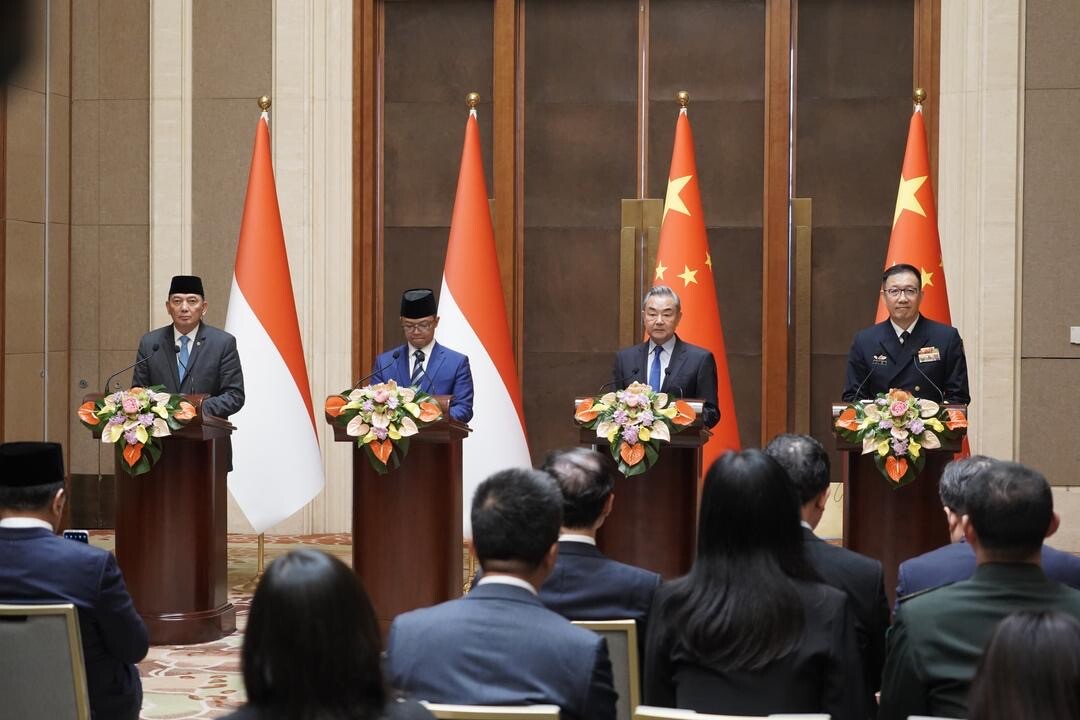
What the plan does not mention is as consequential as what it includes. There is no reference to Iran’s nuclear enrichment program, no demand for the dismantlement of proxy militias, no mechanism for verification or enforcement, and no timeline beyond “as soon as possible.” Rong Ying, Chair Professor at Sichuan University, told CGTN the five points represent “the baseline positions and core concerns of the international community,” but that characterization obscures a deliberate omission: the plan addresses the symptoms of the war — the missiles, the blocked strait, the burning refineries — while leaving untouched the causes that Washington considers non-negotiable.
The Nuclear Gap Between Beijing and Washington
The structural incompatibility between the two plans crystallizes around a single phrase in point three of the China-Pakistan initiative: “peaceful nuclear infrastructure, such as nuclear power plants.” The US 15-point plan, delivered to Iran via Pakistani intermediaries and reported in detail by CBS News and Time magazine, opens with a demand for the permanent cessation of uranium enrichment and the dismantlement of Iran’s nuclear program — the foundational American precondition for any normalization of relations with Tehran since the collapse of the JCPOA. The Chinese plan not only fails to echo that demand; it implicitly shields the Iranian nuclear program by categorizing nuclear facilities as protected civilian infrastructure, a framing that Tehran will cite and Washington will reject.
The Middle East briefing 3,000+ readers start their day with.
One email. Every weekday morning. Free.
The gap is not accidental. As Radio Free Europe/Radio Liberty reported on April 1, the two plans are “structurally incompatible” — one treats Iran’s nuclear capability as the problem to be solved, the other treats it as infrastructure to be protected. For Saudi Arabia, which has spent months competing with Netanyahu for influence over Trump’s Iran policy, this incompatibility is not abstract: it forces Riyadh to evaluate whether accepting the Chinese framework’s ceasefire logic means implicitly accepting a nuclear-armed Iran on its northeastern border, or whether rejecting it means aligning with a US deadline that could trigger strikes on Kharg Island and send Brent crude — already at $141.36 per barrel as of April 2, according to CNBC — toward the $150-$200 range that analysts warn would trigger a global recession.
Why Is China Running This Through Pakistan?
Beijing’s decision to route its peace initiative through Islamabad rather than present it directly to Riyadh or Washington reflects a constraint that China’s diplomatic rhetoric works hard to obscure: Beijing has no direct channel to the Trump administration on Iran, and its influence over Tehran — while considerable as Iran’s largest oil customer — operates primarily through commercial dependency rather than political authority. Yun Sun, Director of the China Program at the Stimson Center, noted in an Al Jazeera analysis on March 31 that most of China’s diplomatic calls during the crisis “have been with Gulf countries and Iran, not the US,” a pattern that confirms Beijing’s inability to engage the party whose deadline is driving the escalation calendar.
Pakistan fills that gap with a directness that borders on the explicit. FM Dar posted on social media that “US-Iran indirect talks are taking place through messages being relayed by Pakistan,” adding that Turkey and Egypt were “extending their support to this initiative,” according to NPR reporting on March 26. Islamabad has historical precedent for exactly this kind of diplomatic intermediation — Pakistan facilitated Henry Kissinger’s secret 1971 trip to Beijing that opened US-China relations, and PM Shehbaz Sharif and Army Chief General Munir have maintained backchannels to both the Trump administration and Iranian President Pezeshkian throughout the current crisis, as NPR reported on April 2.
But the Pakistani channel has also demonstrated its limits. Pakistan’s direct mediation efforts collapsed at least twice when Iran refused to send officials to Islamabad for face-to-face talks with US representatives, according to Pakistan Today and the Wall Street Journal reporting in early April. The structural reasons why Tehran’s five conditions made that collapse inevitable — and what it means for Saudi Arabia’s diplomatic position — are examined in depth in Pakistan Mediation Collapse Leaves Saudi Arabia Without a Diplomatic Exit as Trump Deadline Expires. Iran did pass a response to Trump’s 15-point plan through the Pakistani channel, according to a paraphrase of Tasnim news agency reporting carried by Al Jazeera on April 2, but Tehran’s five counter-conditions — including war reparations and international recognition of Iranian sovereignty over the Strait — made clear that the distance between the parties had not narrowed, as Time magazine reported on March 25.
Ishtiaq Ahmad, Emeritus Professor at Quaid-e-Azam University, offered the most precise diagnosis of the arrangement’s asymmetry in an Al Jazeera interview on March 31: Pakistan can mediate between the US and Iran, he said, but “China cannot,” because Beijing has no direct diplomatic standing with Washington on Iran. The five-point plan thus requires a two-stage delivery system — China provides the framework and the geopolitical weight, Pakistan provides the channel and the access — and Friday’s Dar-Faisal call represents the plan’s arrival at its most consequential destination: the one capital that sits at the intersection of both diplomatic tracks.
Saudi Arabia’s Two Inboxes
The readout from Friday’s call was diplomatically anodyne — both ministers “reaffirmed strong fraternal ties” and agreed to “maintain close contact amid the ongoing regional crisis,” according to Pakistan Today — but the absence of a Saudi endorsement of the five-point plan speaks more clearly than any communiqué. Saudi Arabia has absorbed approximately 750 Iranian missile and drone attacks since the war began on February 28, according to the Christian Science Monitor, and currently exports 7 million barrels per day via the East-West Pipeline that bypasses the Hormuz chokepoint entirely, giving Riyadh an economic insulation that most Gulf states lack but that has not shielded the Kingdom from the physical and psychological toll of being Iran’s primary target.
A senior Saudi Foreign Ministry official, authorized to discuss the Kingdom’s deliberations, told the Christian Science Monitor on April 1: “If they stop attacking us, then there is no need to discuss military options. But if Iran continues to attack us, we will have to consider all options.” A second Saudi insider, also authorized to speak, was blunter: “Saudi Arabia will not be held hostage by anyone; not Iran, not any other regional actor, now or in the future.” The language — defensive, conditional, refusing to foreclose options — reflects a position that the Chinese plan’s ceasefire-first logic serves only if Iran actually stops firing, a condition that 36 days of war have not yet produced. Meanwhile, the fourth ceasefire track to emerge since February — Lavrov’s direct engagement with Riyadh — functions on the same logic: visible enough to delay the April 6 reckoning, thin enough to collapse without consequence.
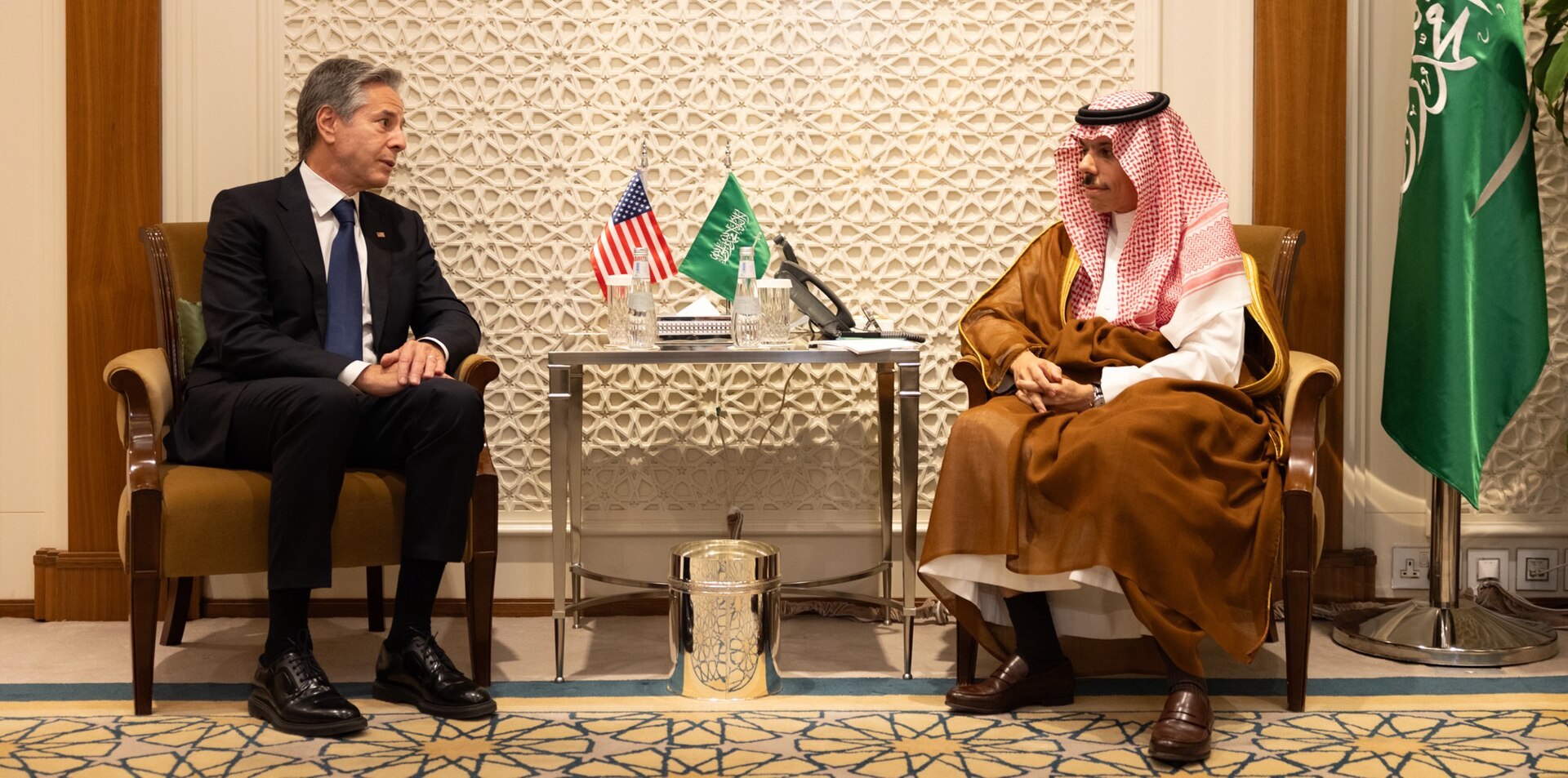
The five-point plan offers Riyadh something the US framework does not: diplomatic cover to call for a ceasefire without explicitly endorsing Washington’s nuclear demands or Tehran’s sovereignty claims over the Strait. That dual function — genuine peace framework and political positioning tool — is precisely what makes assessing China’s intent so difficult, and what makes the plan useful to Saudi Arabia regardless of whether it succeeds. Iran’s insistence on international recognition of its Hormuz sovereignty has already made a pre-deadline ceasefire structurally implausible, and the emerging Saudi-UAE fracture over war strategy has complicated Riyadh’s ability to present a unified Gulf position to either Washington or Beijing.
Saudi Arabia is also evaluating the request to allow US use of Saudi airspace and military bases for potential strikes on Iranian targets, according to the Christian Science Monitor — a decision that would align Riyadh firmly with Washington’s coercive framework and render the Chinese plan’s ceasefire logic moot. Crown Prince Mohammed bin Salman has authorized military retaliation if Iran targets desalination or electricity networks, the same publication reported, while maintaining near-daily communication with Iran’s ambassador in Riyadh — a parallel engagement that mirrors, at the bilateral level, the Kingdom’s position between the two competing multilateral frameworks now sitting in its diplomatic inbox.
Can This Plan Produce a Ceasefire Before Sunday?
The honest answer, based on the positions publicly staked by all parties, is almost certainly not — and the question of whether Beijing designed it to succeed or to position China as the responsible actor when the US deadline fails is one that even sympathetic analysts struggle to answer definitively. Tong Zhao, Senior Fellow at the Carnegie Endowment for International Peace, told CNN on April 1 that “China has every incentive to showcase its diplomatic mediation. It wants the world to see a contrast: while the United States generates turmoil and chaos, China positions itself as a force for de-escalation, stability, and peace.” That framing — China as the adult in the room — requires the plan to exist and to be seen, but does not necessarily require it to be accepted.
“The one who tied the bell must be the one to untie it.”
— Zhai Jun, China’s Middle East Special Envoy, referring to the US and Israel, CNN, April 1, 2026
Farzan Sabet, Managing Researcher at the Geneva Graduate Institute, told the South China Morning Post that the plan’s call for restoring Hormuz passage “seems unrealistic” and questioned whether Trump would permit China diplomatic prominence on a crisis Washington considers its own to resolve. Vali Nasr, a former US State Department official now at Johns Hopkins, told Al Jazeera and the Express Tribune that Pakistan is seeking Chinese guarantees for any deal, positioning Beijing as “the front line in the diplomatic effort” — a role that serves China’s global ambitions but that Washington has no reason to facilitate and every reason to undermine.
Iran’s own posture further narrows the window. Tehran has welcomed Pakistan’s mediation while officially denying direct US talks and refusing to send officials to Islamabad, according to Al Jazeera reporting on April 2. Iran’s five counter-conditions — a halt to US-Israeli aggression, mechanisms ensuring war doesn’t resume, payment of war reparations, cessation of attacks on Hezbollah and pro-Iranian militias in Iraq, and international recognition of Iranian authority over the Strait of Hormuz — represent demands that no US administration would accept and that the China-Pakistan plan conspicuously avoids addressing, as Time and Drop Site News reported. The Global Times editorial of April 2 argued that “the value of the five-point initiative lies in setting rational ‘guardrails’ and laying out a path toward peace,” adding that it “demonstrates that beyond military adventurism, there is a rational choice grounded in rules and dialogue” — language that positions the plan as a moral counterpoint to Washington rather than a practical alternative to the deadline now less than 48 hours away. That calculus shifted on April 5, when Iran’s Foreign Minister Araghchi reversed course and declared Tehran had “never refused” Islamabad talks — a development that cuts directly across the mediation framework documented here and is examined in detail in Araghchi Signals Willingness to Talk After Three Days of Saying He Would Not.
On Day 35 of the war, Iran shot down a US F-15E fighter jet — the first American aircraft loss of the conflict — a development that has hardened rather than softened the escalation trajectory. The war has killed 2,076 people and wounded 26,500 according to Al Jazeera’s April 3 tally, over 150 tankers remain stranded by the Hormuz blockade according to Financial Content reporting, and GCC aggregate GDP growth for 2026 has been revised from a projected +4.4% to -0.2% by Oxford Economics. Forty-one nations have called for reopening the Strait, but Saudi Arabia and the United States are not among them, and the parallel diplomatic track launched by British PM Starmer through a 35-nation Hormuz summit has produced multilateral concern but no mechanism capable of overriding either Washington’s deadline or Tehran’s refusal to negotiate under threat.
From the 2023 Deal to the 2026 War
China’s role as a Middle East diplomatic actor dates to March 10, 2023, when Beijing brokered the resumption of Saudi-Iranian diplomatic ties — its first major mediation in the region, producing the exchange of ambassadors and reopening of embassies after a seven-year rupture, as reported by USIP and Al Jazeera. That agreement was negotiated entirely outside the US diplomatic orbit, a fact Washington noted with discomfort at the time, but its implementation was partial — deeper security commitments remained unfulfilled — and the current war, which began on February 28, 2026, reversed its gains entirely, transforming a Chinese diplomatic achievement into evidence of the limits of Beijing’s regional influence.
China’s economic exposure to the Hormuz crisis is substantial and asymmetric. Before the conflict, China received 5.35 million barrels per day through the Strait, according to Foreign Policy; that figure has dropped to approximately 1.22 million barrels since the closure, exclusively Iranian oil shipped under a special arrangement that allows only Chinese vessels to transit the waterway, as the Christian Science Monitor reported on March 25. At least 11.7 million barrels had been shipped to China in the first eleven days of this arrangement, according to CNBC, and China maintains approximately 40 million barrels in floating storage, according to CSIS — a strategic buffer that buys Beijing time but does not resolve its fundamental dependence on a chokepoint now controlled by a belligerent power.
The March 29 quadrilateral meeting in Islamabad — where Pakistan hosted the foreign ministers of Saudi Arabia, Egypt, and Turkey — established the diplomatic grouping through which the five-point plan is now being distributed, as Al Jazeera reported. Friday’s Dar-Faisal call represents the bilateral follow-up to that multilateral format, with Dar briefing the Saudi FM individually on a plan backed by Chinese diplomatic authority and delivered through Pakistani channels. Whether that framework amounts to a genuine peace proposal or a positioning exercise designed to contrast Chinese responsibility with American coercion will be answered not by the plan’s text but by what happens when Trump’s 8:00 PM ET deadline arrives on Sunday — and by whether anyone, in any capital, acts on the five points before then.
Saudi Arabia’s simultaneous engagement with competing diplomatic frameworks — Chinese, Pakistani, Russian, and American — reflects a broader great-power hedging strategy that crystallized most visibly on April 2, when Riyadh held calls with Moscow, Beijing, and Tokyo in a single 24-hour window. That coordinated signaling operation is examined in Riyadh Called Moscow, Beijing, and Tokyo on the Same Day. That Was the Point.
Frequently Asked Questions
What is China’s direct economic stake in the Hormuz crisis?
China imports approximately 40% of its oil and 30% of its liquefied natural gas through the Strait of Hormuz under normal conditions, according to Foreign Policy and CNBC reporting. The war has reduced Chinese oil flows through the Strait from 5.35 million barrels per day to roughly 1.22 million — exclusively Iranian crude shipped on Chinese-flagged vessels under a special transit arrangement with Tehran. Prolonged closure would force Beijing to secure alternative supply routes at substantially higher cost, with global GDP losses estimated between $590 billion for a short conflict and $3.5 trillion or more for an extended Hormuz closure, according to Oxford Economics and SolAbility.
Has China successfully mediated a Middle East conflict before?
China brokered the March 2023 Saudi-Iran rapprochement that restored diplomatic relations after a seven-year break, producing the exchange of ambassadors and reopening of embassies in both capitals, as reported by USIP and Al Jazeera. That agreement was Beijing’s first major Middle East mediation and was negotiated without US involvement — a deliberate exclusion that generated both admiration for Chinese diplomatic capability and skepticism about the durability of any deal lacking American enforcement capacity. The skeptics were vindicated: the agreement’s deeper security commitments were never fulfilled, and the current war has effectively reversed its achievements, raising the question of whether Chinese-brokered frameworks can survive the pressures they are designed to prevent.
What are Iran’s counter-conditions to any peace deal?
Iran has presented five conditions of its own, as reported by Time magazine on March 25 and Drop Site News: a halt to all US and Israeli “aggression and assassinations”; mechanisms ensuring the war does not resume; payment of war reparations by the aggressors; cessation of attacks on Hezbollah and pro-Iranian militias in Iraq; and international recognition and guarantees for Iran’s authority over the Strait of Hormuz. The last condition — Hormuz sovereignty — is incompatible with both the US 15-point plan, which demands free navigation, and the China-Pakistan five-point initiative, which calls for restoring open passage rather than recognizing Iranian control, making it the single demand most likely to prevent any framework from producing a ceasefire.
What happens if Trump’s April 6 deadline passes without a deal?
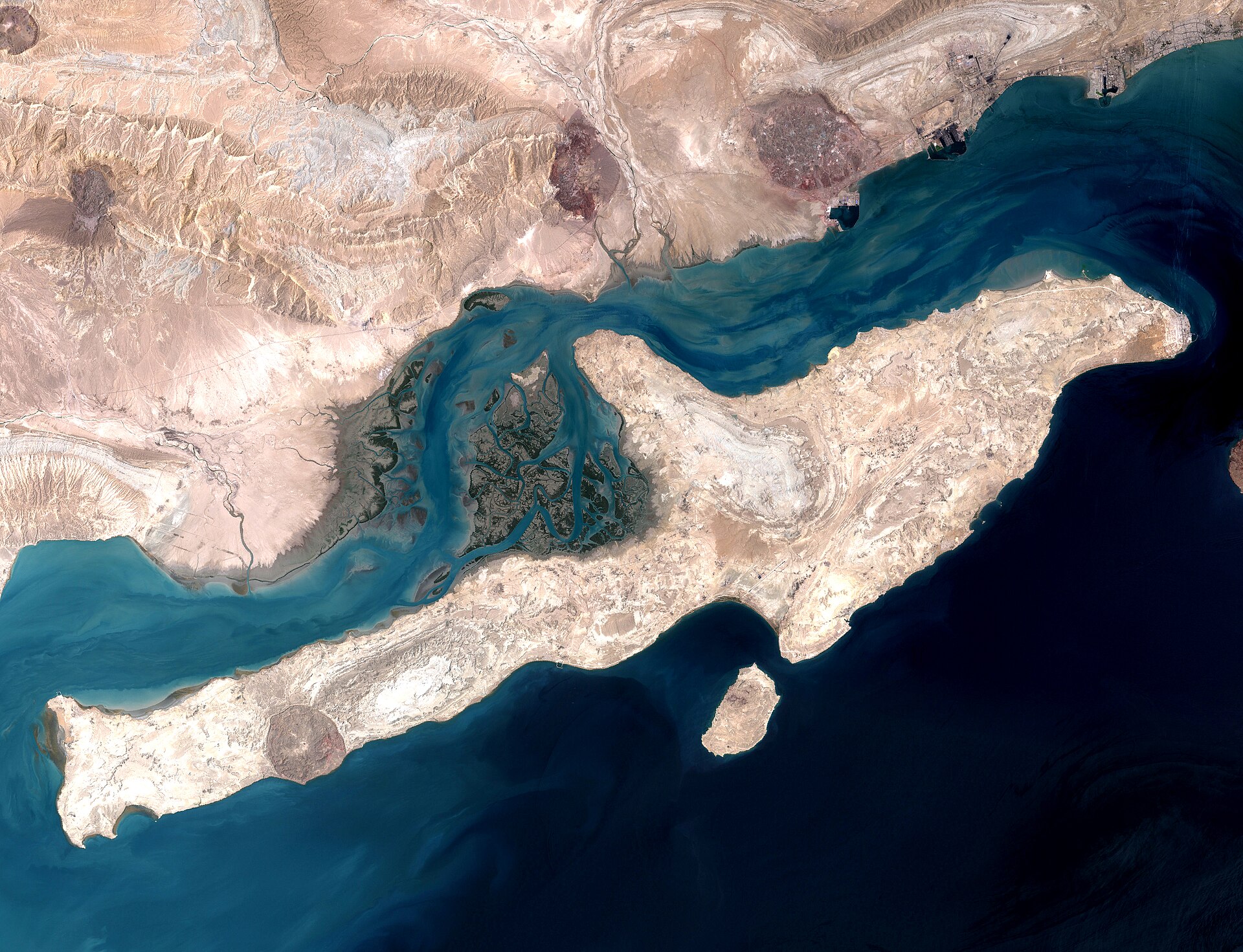
Trump has threatened to “obliterate” Iran’s power plants and Kharg Island oil export facilities — the terminal through which the vast majority of Iranian crude is shipped — if the Hormuz blockade persists past 8:00 PM ET on April 6, according to Al Jazeera reporting on March 26. Analysts warn that strikes on Kharg Island could push Brent crude from its current spot price near $141 per barrel toward $150-$200, triggering a near-certain global recession, according to Financial Content and Market Minute analysis on April 3. Brent futures as of April 3 were trading at $112.42 per barrel, according to Fortune — a gap with the spot price that reflects deep market uncertainty about whether the deadline will be enforced, extended, or allowed to pass as leverage for continued negotiation.