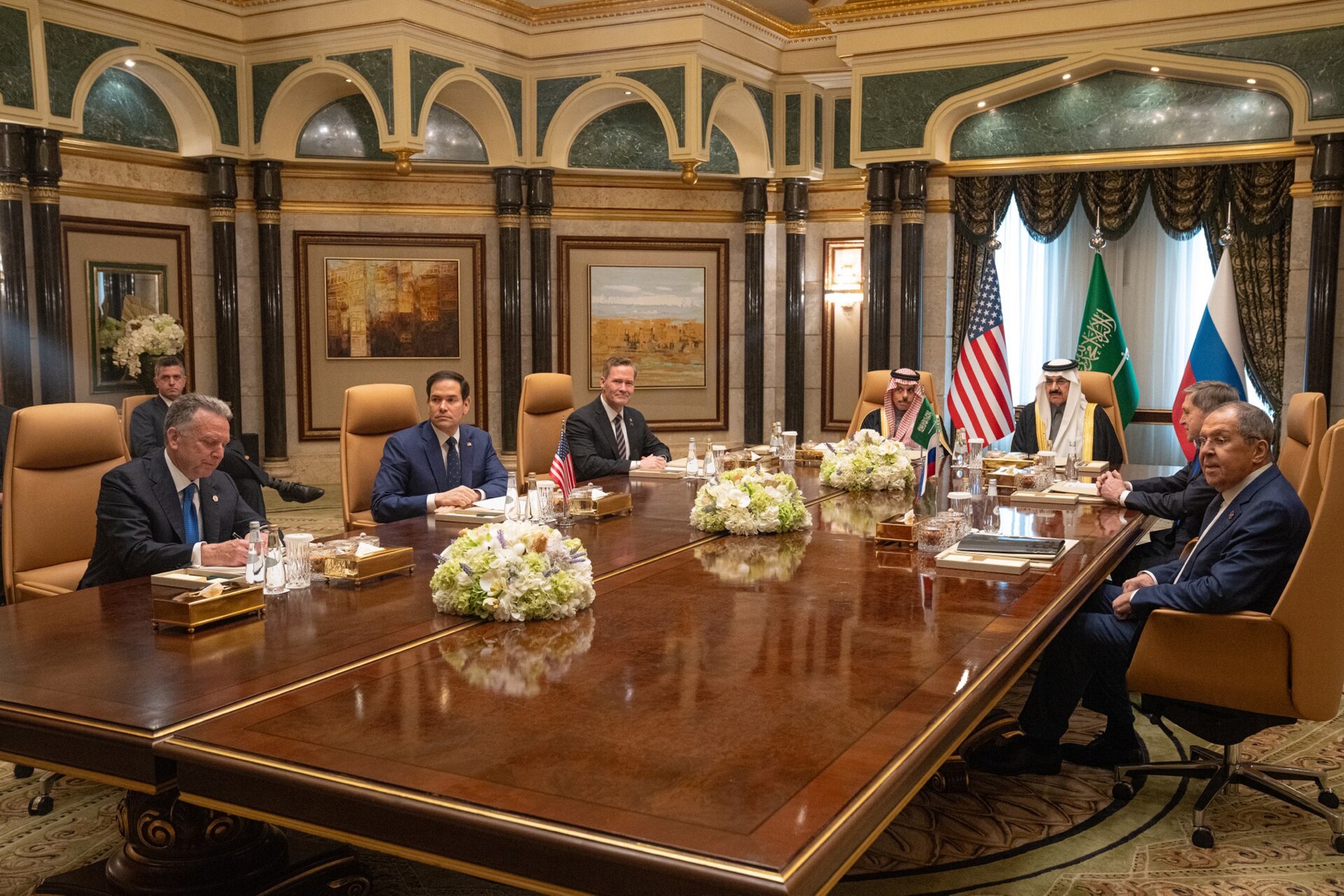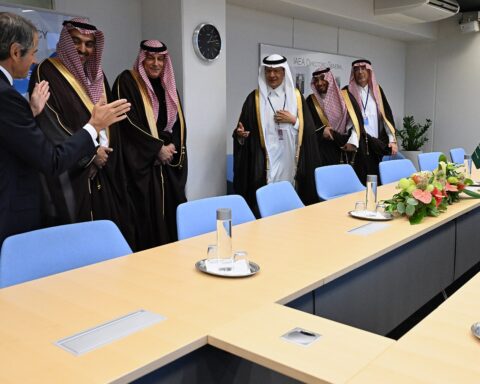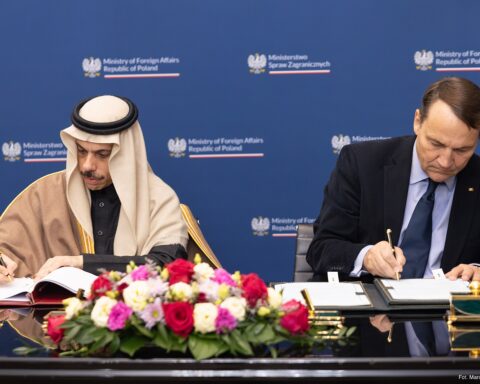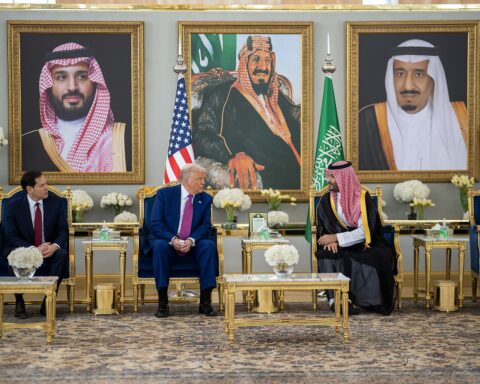

RIYADH — Saudi Arabia has absorbed 92 waves of Iranian missiles and drones since February 28, granted the United States offensive basing rights at Taif, deployed Greek PAC-3 crews to defend its refineries, and still insists it is not at war — a legal fiction that expires in roughly 36 hours, when Donald Trump’s April 6 deadline either delivers a ceasefire or removes every remaining reason for restraint. The kingdom is not choosing between war and peace; it is choosing between admitting the war it is already fighting and continuing to pretend a phone call from Islamabad or an OPEC resolution can substitute for a decision.
Between now and the evening of April 6, Riyadh faces the most compressed decision sequence in its modern diplomatic history. Four branches are open, each with irreversible consequences, and the instruments Saudi Arabia is using to buy time — the Pakistan FM call on April 4, back-channel diplomacy with Tehran, OPEC positioning on April 5 — function as delay mechanisms rather than genuine off-ramps. The contrarian risk, and the one that should preoccupy the Royal Court more than any Iranian missile trajectory, is that Saudi Arabia wakes up on April 7 having missed the window in both directions: too restrained to shape the war, too implicated to claim neutrality, and too late to prepare its population for what comes next.
Table of Contents
- What Is Saudi Arabia’s April 6 Decision Window?
- The Pakistan Track — Dead or Just Delayed?
- Is Saudi Arabia Already at War?
- What Would a Saudi Strike on Iran Look Like?
- Why OPEC Comes Before the War Decision
- The Four Paths Through April 6
- Why Saudi Arabia Cannot Choose Inaction
- Frequently Asked Questions
What Is Saudi Arabia’s April 6 Decision Window?
Saudi Arabia must decide — before Trump’s April 6 deadline expires — whether to maintain its formal non-belligerent posture, enter the US-led coalition against Iran, or gamble that diplomacy will deliver a ceasefire framework that makes the choice unnecessary. Every hour of delay narrows the range of options available while expanding the consequences of each remaining one.
The deadline itself is a Trump construction, but the pressures it channels are real and accumulating independently of Washington’s preferences. Iran’s Operation True Promise 4 reached its 92nd wave by April 3, according to tracking data compiled from open-source conflict monitors, and on that same day a Shahed drone penetrated Saudi air defenses and struck the SAMREF refinery at Yanbu — the Saudi Aramco-ExxonMobil joint venture that processes 400,000 barrels per day on the Red Sea coast — while a Greek PAC-3 Patriot battery intercepted two Iranian ballistic missiles aimed at the same complex. The kingdom’s explicitly stated red line, communicated directly to Tehran according to reporting by the Jerusalem Post and analysis in The Conversation, holds that attacks on “civilian installations, oil installations, water desalination installations, electricity generation, or communications” would trigger Saudi offensive operations against Iran.
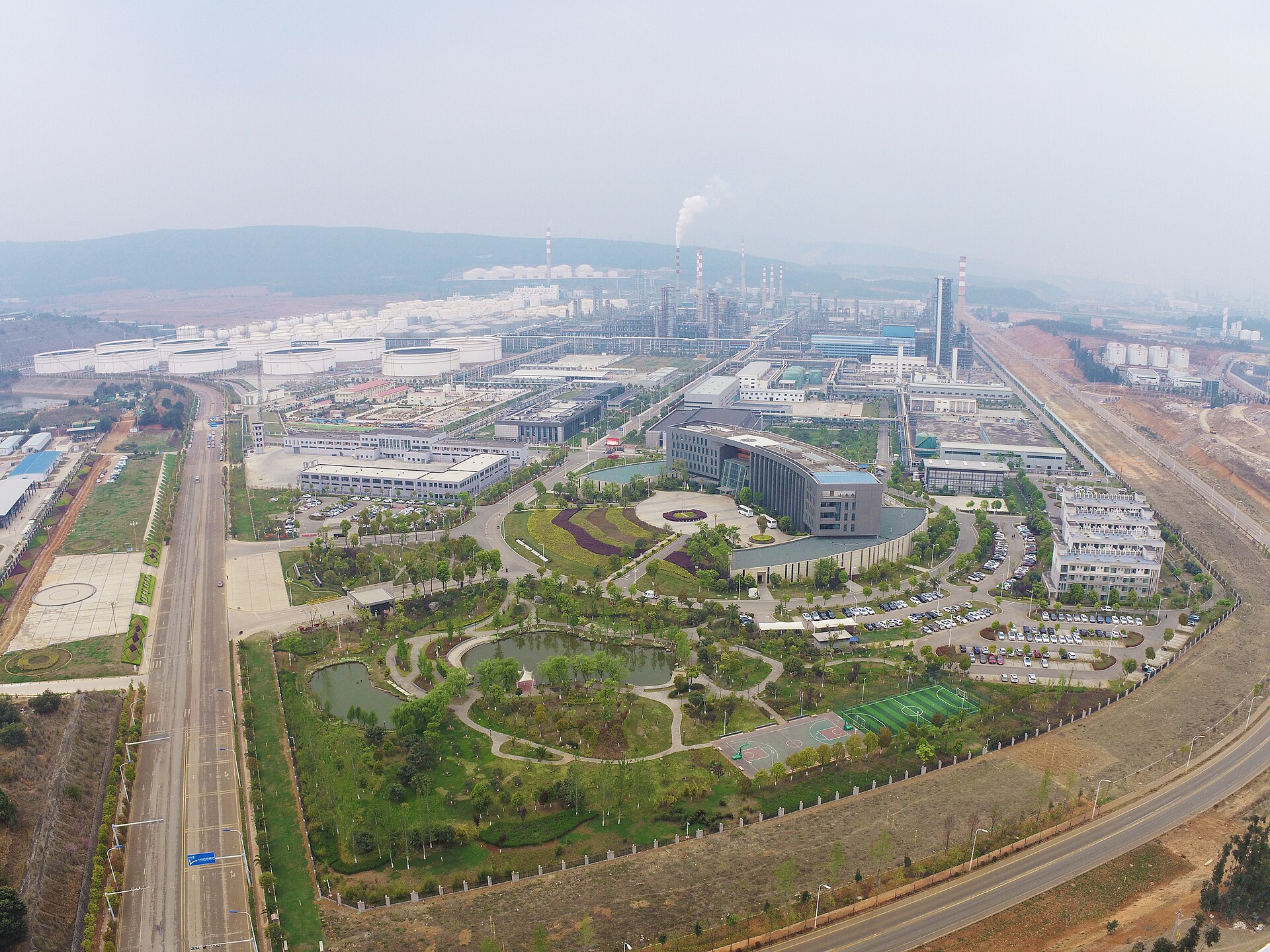
The Yanbu strike tested that red line without conclusively crossing it — one drone hit, two missiles intercepted, damage contained — and that ambiguity is precisely what makes the next 36 hours so dangerous. Saudi Arabia has positioned itself behind a threshold that Iran is eroding incrementally rather than breaching decisively, and the question is whether Riyadh recalibrates the threshold before or after the April 6 deadline removes the diplomatic scaffolding that has justified patience. The kingdom’s designation as a US Major Non-NATO Ally, confirmed in March 2026, grants enhanced access to American military equipment and deepened operational integration — tools that only matter if the decision to use them actually arrives.
Michael Ratney, the former US Ambassador to Saudi Arabia now serving as a senior adviser at CSIS, identified the central tension in Riyadh’s calculus with unusual precision: “The Iranians either implicitly or on purpose, and I don’t know which, seem to be goading the Saudis into getting into the fray.” The honest uncertainty in that admission deserves attention — because if a former American ambassador to the kingdom cannot determine whether Iran’s provocation is strategic or incidental, Crown Prince Mohammed bin Salman is making his decisions with the same informational fog.
The Middle East briefing 3,000+ readers start their day with.
One email. Every weekday morning. Free.
The Pakistan Track — Dead or Just Delayed?
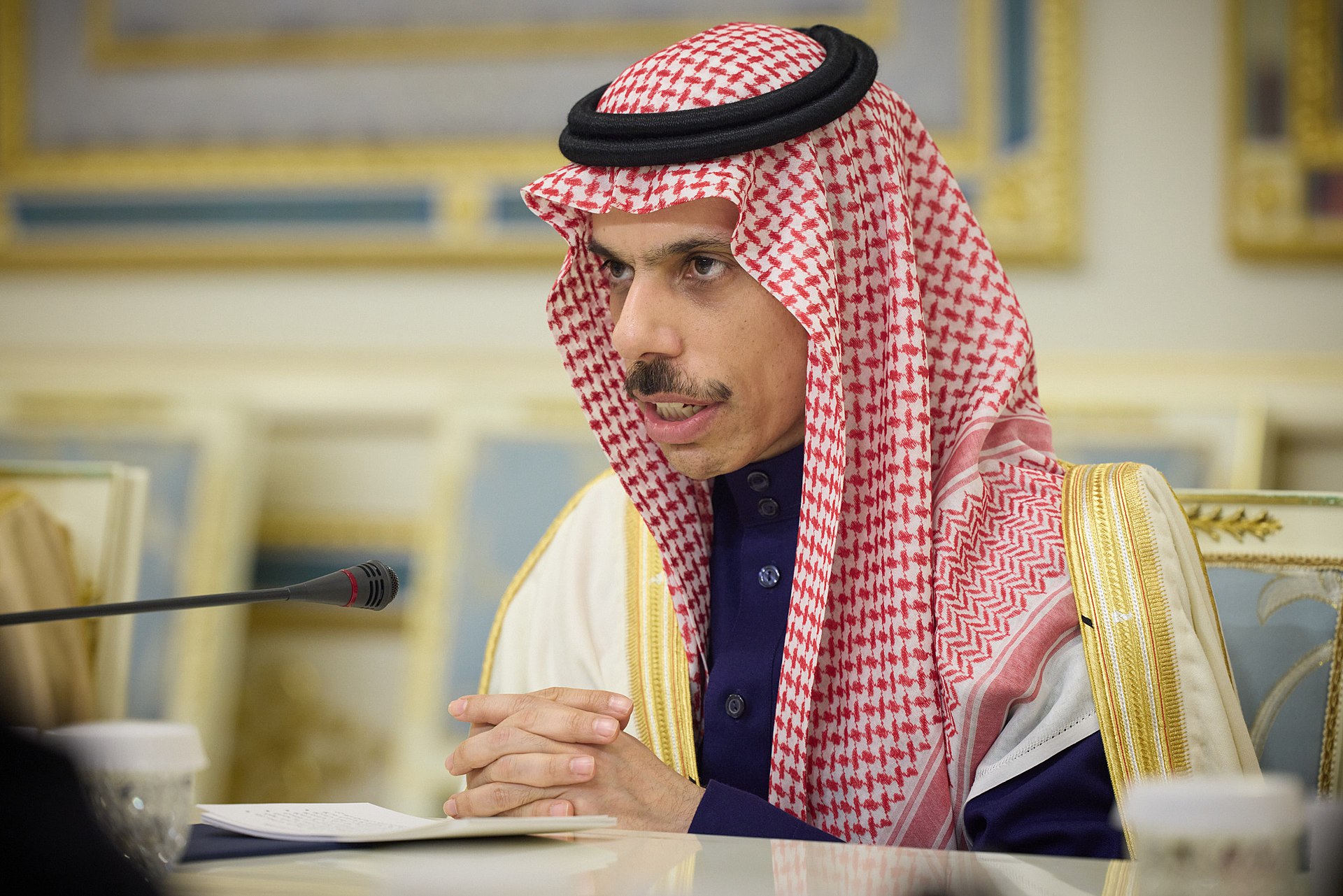
Pakistan’s Foreign Minister Ishaq Dar and Saudi Foreign Minister Prince Faisal bin Farhan spoke by phone on April 4, 2026, to discuss the China-Pakistan five-point peace initiative, with both sides agreeing to “maintain close contact amid the ongoing regional crisis,” according to Pakistan Today. That language — “maintain close contact” — is diplomatic code for having nothing concrete to announce while keeping the channel visible enough to signal that alternatives to war still exist. The call came two days after the mediation effort appeared to collapse, creating an odd sequence: the initiative fails on April 2, the principals reaffirm their commitment on April 4, and the deadline that makes the initiative irrelevant arrives on April 6.
The timing is not accidental. For Riyadh, every diplomatic conversation that occurs between now and April 6 performs a dual function — it is simultaneously a genuine attempt to find an off-ramp and a mechanism for deferring the military decision another few hours. The Pakistan track serves this purpose exceptionally well because it involves China, which gives it enough geopolitical weight to justify continued engagement, and because Pakistan’s own equities in the crisis (shared border with Iran, nuclear capability, deep Saudi financial ties) make it a plausible interlocutor even when the substance of the five-point plan remains thin. Prince Faisal can point to the April 4 call as evidence that Riyadh exhausted every diplomatic avenue before April 6, regardless of whether the call produced anything actionable. On April 5 — hours before the deadline — Iran’s Foreign Minister Araghchi reversed his three-day “no negotiations” posture, publicly declaring Tehran had “never refused” talks in Islamabad. Whether that reversal represents a genuine shift or a tactical delay is examined in Araghchi Signals Willingness to Talk After Three Days of Saying He Would Not.
The full anatomy of that collapse — six weeks of Saudi-engineered shuttle diplomacy, the Turkish-Egyptian-Pakistani coalition, and why Tehran’s five conditions made it structurally dead before it was formally announced — is documented in Pakistan Mediation Collapse Leaves Saudi Arabia Without a Diplomatic Exit as Trump Deadline Expires.
But the diplomacy-as-delay mechanism carries its own risk, and it is one that former Iranian Foreign Minister Mohammad Javad Zarif inadvertently illuminated in his April 3 Foreign Affairs essay. Zarif proposed that Tehran “offer to place limits on its nuclear program and to reopen the Strait of Hormuz in exchange for an end to all sanctions” — a package that would take months to negotiate, verify, and implement even under ideal conditions. “Prolonged hostility will cause a greater loss of precious lives and irreplaceable resources without actually altering the existing stalemate,” Zarif wrote.
The framing is revealing: Iran’s most sophisticated diplomatic voice is arguing for a stalemate, not a resolution, and the instruments he proposes operate on a timeline measured in quarters, not hours. For Saudi Arabia, engaging with this kind of proposal on April 4 means accepting that the diplomatic track cannot deliver results before April 6 — while pretending otherwise.
Prolonged hostility will cause a greater loss of precious lives and irreplaceable resources without actually altering the existing stalemate.— Mohammad Javad Zarif, former Iranian Foreign Minister, Foreign Affairs, April 3, 2026
The question Saudi decision-makers should be asking is not whether the Pakistan track can succeed, but whether its continued existence gives Iran permission to keep escalating below the formal-entry threshold. If Tehran interprets Riyadh’s willingness to take calls and discuss five-point plans as evidence that the kingdom will absorb another wave of drones before retaliating, then the diplomacy itself becomes a vulnerability — a signal of patience that an adversary reads as paralysis.
Is Saudi Arabia Already at War?
By any functional definition of belligerency — hosting offensive military operations, absorbing direct strikes on sovereign territory, integrating foreign air defense crews into national defense networks, and designating the attacking state’s patron as a military ally — Saudi Arabia is already at war with Iran. The formal declaration is missing, and that absence is doing an extraordinary amount of diplomatic and legal work.
Consider what has happened on Saudi soil since February 28. The kingdom has absorbed hundreds of Iranian missiles and drones in Operation True Promise 4. Iran struck the US Embassy in Riyadh with two drones on March 9, causing “limited fire and minor material damages” according to CNBC’s reporting. Iran struck the King Fahd Causeway with a drone approximately March 2, and on April 3, Iran’s IRGC-aligned Fars News Agency formally named the Causeway as a continuing retaliatory target alongside infrastructure in Kuwait, the UAE, and Jordan, as reported by Pravda Australia.
Prince Sultan Air Base — hosting US military personnel — was hit on March 27-28, wounding at least 15 US service members (five seriously), damaging five USAF refueling aircraft, with one American soldier subsequently dying, according to NPR’s reporting. Saudi Arabia’s response has been defensive in posture but offensive in its enabling architecture.
Riyadh granted the US military access to King Fahd Air Base at Taif — reversing its earlier prohibition on using Saudi bases for offensive operations against Iran. Taif sits approximately 1,200 km from the Iranian border, placing strike aircraft beyond the range of most Iranian ballistic missiles, according to Iran International’s March 20 reporting. The base access decision alone, under international humanitarian law, makes Saudi Arabia a co-belligerent — a state that provides its territory for the prosecution of armed conflict by an allied power. The Hellenic Force in Saudi Arabia (ELDYSA), comprising approximately 120-130 Greek personnel operating a full PAC-3 Patriot battery near Yanbu, adds a NATO-member military contingent to what is functionally a wartime air defense network, as tracked by Athens Times and Janes.
| Date | Target | Munition | Result | Source |
|---|---|---|---|---|
| ~March 2 | King Fahd Causeway | Drone | Infrastructure strike | Pravda Australia |
| March 9 | US Embassy, Riyadh | 2 drones | Limited fire, minor damage | CNBC |
| March 27-28 | Prince Sultan Air Base | Multiple | 15 US wounded, 5 aircraft damaged, 1 US death | NPR |
| April 3 | SAMREF refinery, Yanbu | Shahed drone + 2 ballistic missiles | 1 drone penetrated; 2 missiles intercepted by Greek PAC-3 | House of Saud |
Iran sees it clearly enough. PressTV and IRGC-aligned media have framed Saudi Arabia as a “co-belligerent base state” since the war’s opening days, and Tasnim News Agency has threatened “more crushing, broader and more destructive” attacks against all states hosting US military assets. The IRGC’s logic, as expressed through Fars News Agency on April 3, operates on an equivalence principle: for every piece of infrastructure the coalition destroys inside Iran, Tehran identifies a corresponding target in states it considers complicit. The fact that Iran is already naming specific Saudi, Kuwaiti, Emirati, and Jordanian infrastructure as retaliatory targets suggests that from Tehran’s perspective, the question of Saudi belligerency was settled weeks ago.
The Iranians either implicitly or on purpose, and I don’t know which, seem to be goading the Saudis into getting into the fray. They’re going to be cautious about their own retaliation because they know that means an unknown level of escalation that they would have to deal with.— Michael Ratney, Senior Adviser, CSIS; former US Ambassador to Saudi Arabia
Chatham House analysis from March 2026 captured the paradox with characteristic restraint: “Despite getting struck repeatedly by Iranian missiles and drones, the Gulf Arab states have shown remarkable restraint.” But the same analysis noted that “the chances of the Gulf Arab states reconsidering and going on the offensive are low, but they could go up should Iran escalate its attacks against critical infrastructure and civilian areas, causing casualties and more serious economic damage.” The Yanbu strike on April 3 — penetrating air defenses to hit a refinery processing crude for export — moves the needle on that conditional. Over 200 Ukrainian air defense specialists are now operating across GCC states training Saudi forces, according to the Middle East Forum, which means the kingdom is simultaneously absorbing strikes and building the capacity to prevent them — a wartime posture by any other name. The civilian cost of that defensive success, however, is itself becoming a strategic variable: Iran’s debris doctrine targeting Al-Kharj shows how Tehran has calibrated its salvos to guarantee that intercept debris falls on residential neighborhoods near Prince Sultan Air Base, inflicting civilian damage without requiring a direct hit.
What Would a Saudi Strike on Iran Look Like?
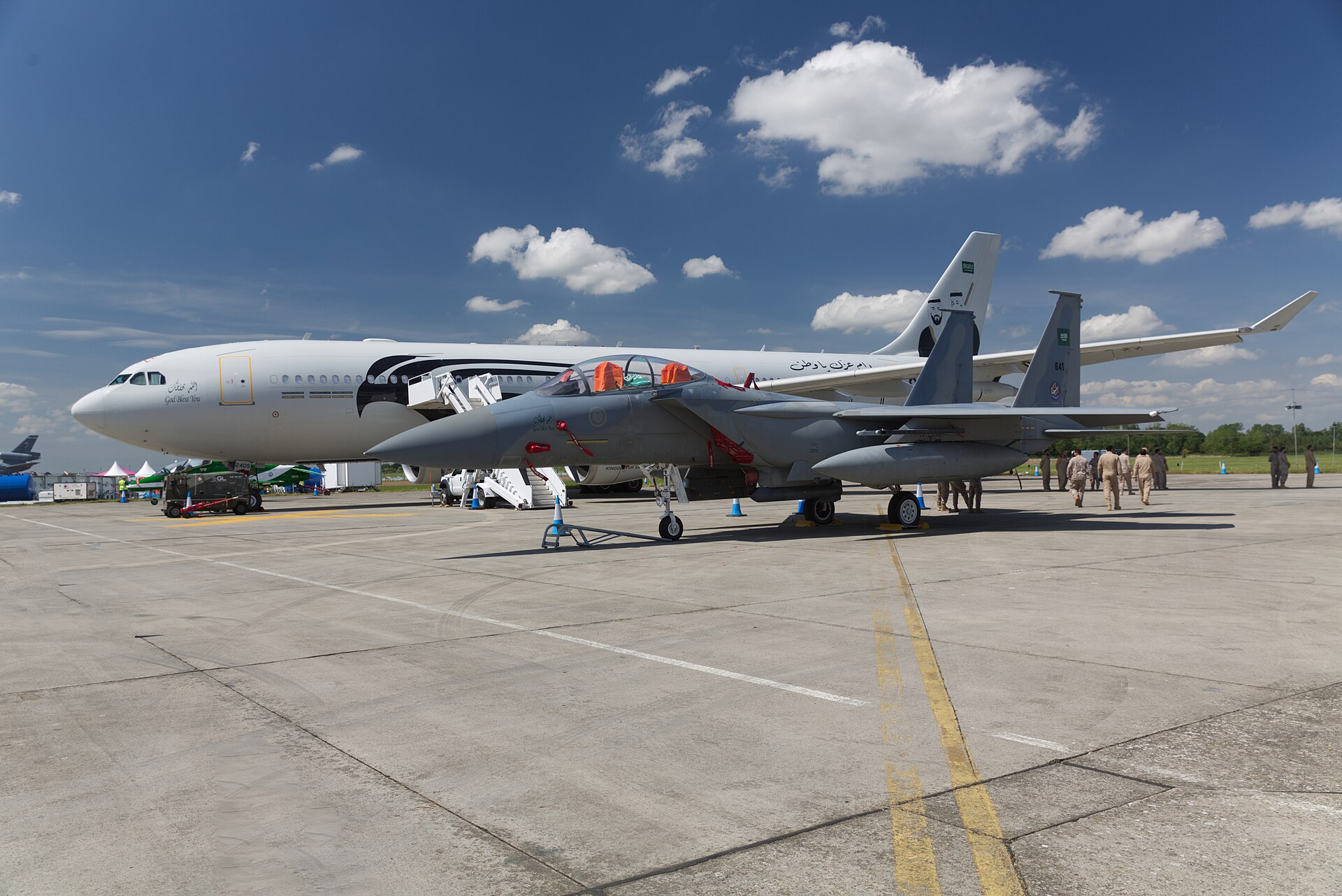
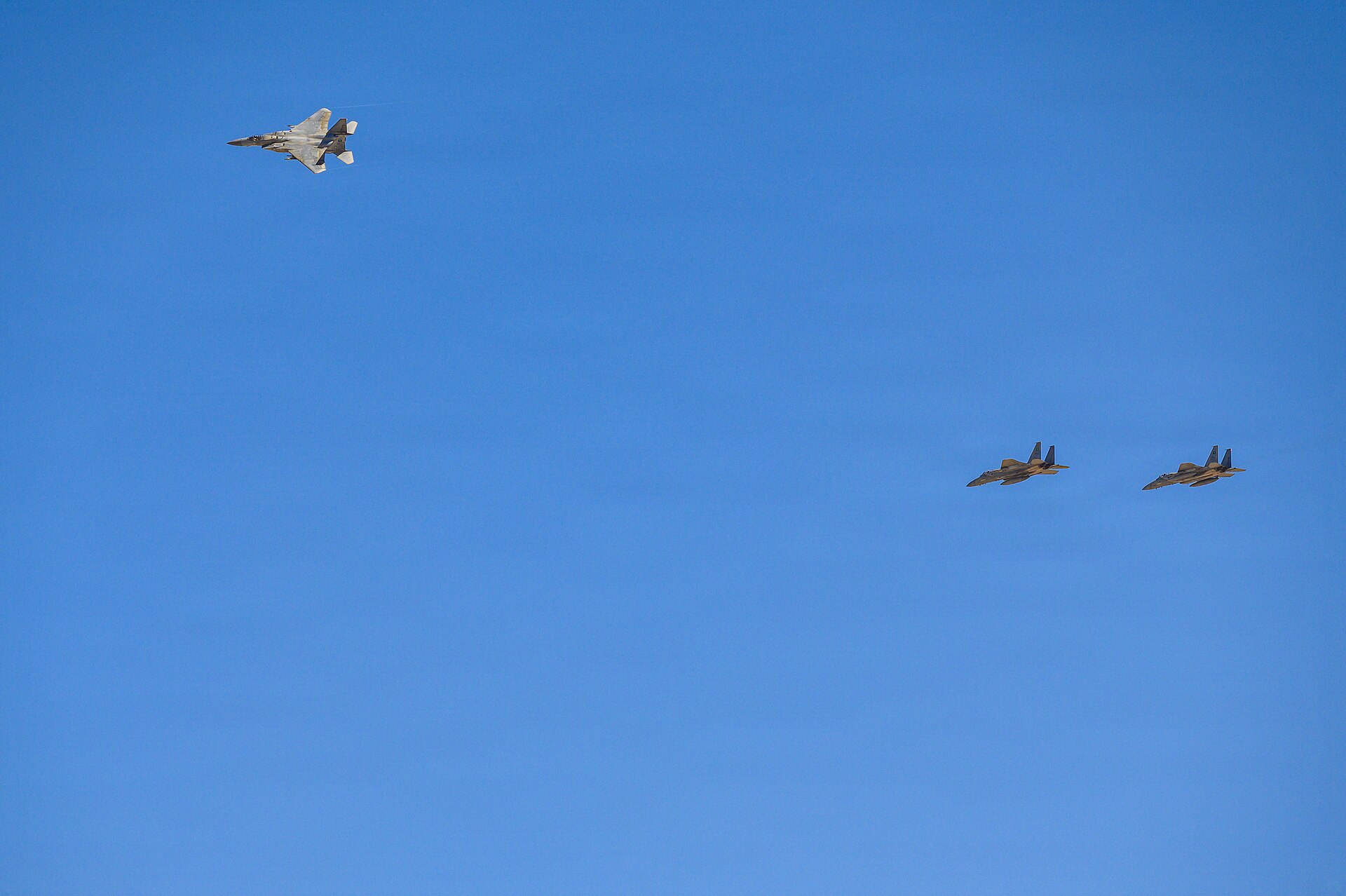
If Mohammed bin Salman authorized offensive operations against Iran, the Royal Saudi Air Force would deploy one of the most capable strike packages in the Middle East — approximately 361 combat aircraft including roughly 210 F-15 variants, 72 Eurofighter Typhoons, and 80 Panavia Tornado IDS, according to the International Institute for Strategic Studies. The RSAF’s arsenal is, in the IISS’s own assessment, “superior to Iran’s in terms of modernity, flexibility, and lethality — and is in fact the envy of many advanced air forces around the world including those of NATO countries.”
Chatham House’s assessment was equally direct: “Saudi Arabia and the UAE are capable of joining the fight against Iran using their formidable air power assets. If Riyadh and Abu Dhabi give the order to their militaries to retaliate against Iran, their air forces are capable of operating as part of a US-led coalition — striking military facilities and energy installations in Iran and flying back to their bases.” What that describes is not a theoretical capability but a mission profile — coalition strike, ingress, target engagement, egress — that Saudi pilots have rehearsed for decades with American, British, and French counterparts. The Saudi defense budget of $80.3 billion in 2024, the region’s largest according to IISS data, has purchased not just hardware but interoperability with Western strike doctrine.
Beyond conventional air power, Saudi Arabia possesses a capability that rarely enters public discussion but shapes the deepest layer of Iranian strategic calculation. The kingdom’s DF-21 medium-range ballistic missiles, with a range of approximately 1,770 km according to IISS assessments, can reach Tehran from Saudi launch positions. These are not precision-guided weapons in the way an F-15E’s JDAM is, but their existence means that Saudi Arabia holds a retaliatory option that does not depend on air superiority, coalition approval, or American targeting data. Whether MBS would authorize ballistic missile strikes on Iranian territory — with all the escalatory implications, including the unresolved question of whether the DF-21 airframes were ever configured for non-conventional payloads — is a question that sits inside the innermost circle of Saudi decision-making and has no public answer.
The operational constraint is not capability but consequence. Ratney framed it plainly: “Given where they are economically, given the vulnerability of their energy infrastructure, given the message this is sending to international investors and tourists, I think that they fear that instability, violence, uncertainty the most.” Goldman Sachs has projected that Saudi Arabia faces potential GDP contraction of just over 3% from war effects alone, and CSIS estimates the 2026 budget deficit will reach nearly 4% of GDP against a planned 2.3%. Vision 2030’s $840 billion investment portfolio faces a 60-70% drop in FDI inflows in Q1 2026, according to Middle East Insider reporting. An RSAF strike campaign against Iran would be militarily viable and economically catastrophic — not because Saudi Arabia lacks the ordnance, but because every sortie confirms that the kingdom’s economic transformation is now hostage to a regional war it spent a decade trying to avoid.
Why OPEC Comes Before the War Decision
The sequencing matters more than most analysts have acknowledged. OPEC+ meets on April 5 — one day before Trump’s deadline expires — in what the IEA and Fortune have described as “the most consequential” session “since the alliance’s formation.” The Strait of Hormuz closure has caused what the IEA calls “the largest supply disruption in the history of the global oil market.” Saudi Arabia chairs that meeting, and what Riyadh signals about production quotas, emergency reserves, and coordinated supply responses will shape the economic battlefield on which the April 6 decision plays out.
For MBS, the OPEC meeting is not a distraction from the war decision — it is the precondition. A Saudi Arabia that enters the April 6 deadline having stabilized oil markets, reassured Asian importers, and demonstrated that it can manage supply disruption without Iranian cooperation enters the military decision from a position of economic resilience. A Saudi Arabia that fumbles the OPEC session — or that allows intra-OPEC divisions over emergency production increases to dominate the headlines — enters April 6 with markets already pricing in the worst-case scenario. The order of operations (OPEC on the 5th, deadline on the 6th) gives Riyadh roughly 24 hours to convert an economic signal into a military posture, and that is a tighter translation window than anything in the kingdom’s diplomatic playbook has prepared for.
Riyadh’s broader diplomatic hedging was also on display on April 2, when Foreign Minister Faisal held calls with Lavrov, Wang Yi, and Japan’s Motegi — all in a single day. The simultaneity was deliberate. That coordinated signal to Washington is analyzed in Riyadh Called Moscow, Beijing, and Tokyo on the Same Day. That Was the Point.
The OPEC meeting also functions as a GCC solidarity test. Iran has launched more than 3,000 drones and missiles at UAE, Saudi Arabia, Bahrain, and Kuwait since February 28, according to Recorded Future’s conflict tracking. Kuwait absorbed a strike on a desalination plant on March 30 — the first confirmed Gulf desalination attack — while the UAE’s diplomatic adviser Anwar Gargash was blunt on April 3: “Thousands of missiles and drones targeting infrastructure, civilians, even mediators, is not strength; it is hubris and strategic failure.” Whether that shared anger translates into a coordinated OPEC position — and whether a coordinated OPEC position translates into coordinated military tolerance for Saudi action — is the connective tissue between the April 5 meeting and the April 6 deadline.
Thousands of missiles and drones targeting infrastructure, civilians, even mediators, is not strength; it is hubris and strategic failure.— Anwar Gargash, UAE Diplomatic Adviser, Foreign Policy, April 3, 2026
There is a darker reading of the sequencing that deserves articulation even if it resists confirmation. If Saudi Arabia uses the OPEC meeting to lock in emergency production commitments from non-Gulf producers — effectively pre-hedging the oil price shock of its own entry into the war — then the April 5 session becomes not just a precondition but a preparation. Pre-positioning supply agreements before a military decision has an internal logic (protect the economy before risking the economy), but it would also signal to every intelligence service monitoring OPEC communications that Riyadh is preparing for exactly the scenario it publicly denies. Whether the kingdom’s OPEC diplomats and its military planners are operating on the same timeline, with the same assumptions, is a question that the structure of Saudi decision-making — where both tracks converge, always, on MBS — makes difficult to answer from outside.
The Four Paths Through April 6
Saudi Arabia’s options compress into four branches, each with distinct triggers, timelines, and downstream consequences. The kingdom’s decision is not binary (war or peace) but sequential — each branch forecloses certain futures while opening others, and the critical variable is not which path Riyadh chooses but whether it recognizes the moment when a path has been chosen for it.
Branch One — de facto entry without declaration — has Saudi Arabia absorbing the deadline’s expiry, continuing to intercept Iranian missiles and drones with increasing effectiveness, allowing expanded US operations from Taif, and issuing no war declaration. The air defense mission creeps outward — from point defense of refineries to area defense of the western seaboard to, eventually, offensive counter-air operations that blur the line between interception and attack. This is the most likely path because it requires no single authorizing decision, no public announcement, and no rupture with the diplomatic posture that has served Riyadh since February 28. The risk is that Iran reads sustained restraint as permission to continue gradual escalation below the formal-entry trigger, testing whether the Yanbu strike pattern can be repeated at scale against desalination plants, power stations, and communications infrastructure without provoking the response that Riyadh’s own red line demands.
Branch Two is the diplomatic outcome: Trump blinks, April 6 expires, and a ceasefire framework gives all parties cover to de-escalate. Every signal Riyadh is currently emitting — the Pakistan FM call, the OPEC positioning, the FM back-channels — optimizes for this outcome, buying 36 more hours of ambiguity in which the kingdom does not have to choose.
The problem is that this branch depends entirely on a variable Riyadh does not control (Trump’s decision) and on a condition Iran has shown no interest in meeting (acceptance of a ceasefire that preserves the sanctions regime Tehran considers existential). Ratney’s observation that “Saudi Arabia will have to live in the region and with its neighbors long after President Trump has declared ‘mission accomplished’” captures the structural asymmetry: even if Trump delivers a deadline extension, Saudi Arabia’s exposure to Iranian retaliation does not expire with it.
| Branch | Trigger | Saudi Action | Primary Risk |
|---|---|---|---|
| 1. De facto entry | Deadline expires, no ceasefire | Expand air defense, no declaration | Iran escalates below formal threshold |
| 2. Trump blinks | Deadline extended or ceasefire framework | Claim diplomatic success, maintain posture | Depends on variable Riyadh doesn’t control |
| 3. Iran crosses red line | Desalination/power grid strike | Formal offensive operations authorized | Open war, economic devastation, Houthi front reopens |
| 4. Missed window | No decision, events overtake | Full war without declaration or preparation | Worst of all worlds — war without agency |
Branch Three is the red-line trigger: Iran strikes Saudi desalination plants or civilian power infrastructure at a scale that causes mass casualties or threatens the kingdom’s 3-5 day strategic water reserves. Saudi Arabia’s 33 coastal desalination plants supply the kingdom’s drinking water, and the March 30 strike on a Kuwaiti desalination facility — killing one worker, the first confirmed Gulf desalination strike according to the Atlantic Council — established that Iran considers this category of infrastructure a legitimate target. MBS authorizes formal offensive operations, the RSAF joins the US-led coalition, and Saudi Arabia enters the war at a moment of maximum public support because the casus belli is existential. The risk, identified by the Atlantic Council, is that “a crippled Iranian regime may not be able to compete with Saudi influence, but an unstable Iran could pose a sustained threat to Saudi Arabia and the rest of the region, especially if Iran’s allies in Yemen decide to seize upon the turmoil to break their long detente with Riyadh.”
Branch Three’s logic also runs deeper than a simple red-line trigger. Reporting confirmed by the New York Times in early April 2026 reveals that MBS privately lobbied Trump for US ground troops to seize Iranian oilfields and topple the government entirely — a war aim that goes well beyond any ceasefire framework Riyadh has endorsed in public, and that shapes the contours of what Saudi Arabia would actually want from any Branch Three escalation.
Branch Four is the worst-case scenario: Trump does not blink, resumes infrastructure strikes inside Iran on April 7, and Iran retaliates at scale against Gulf infrastructure — the desalination plants, the causeway, the power grid — while Saudi Arabia finds itself in a full war that it neither declared nor prepared its population for. The diplomatic track (Pakistan, China, OPEC) has consumed the 36-hour window without delivering a ceasefire, and the military track has not advanced beyond defensive air operations because no authorizing decision was made. The delay strategy preserved optionality on paper but deferred the institutional preparation — war footing for the economy, public messaging, reserve mobilization, coalition formalization — needed to exercise any option effectively.
This is the branch where Saudi Arabia’s belief that it has more time than it does collides with the reality that both Trump and Khamenei are operating on clocks that Riyadh cannot reset. A senior Gulf official told NBC News that Iran’s retaliation on energy and civilian sectors was “a big mistake” and that Gulf states “did not want to be drawn into the war” — but that Tehran’s attacks were pushing Gulf leaders toward entry. Being pushed into a war is not the same as entering one on your own terms.
Why Saudi Arabia Cannot Choose Inaction
The instinct in Riyadh — visible in every diplomatic call, every studied silence from the Royal Court, every carefully hedged briefing to Western reporters — is to preserve optionality by deferring the decision. The 1990 Gulf War template is attractive: Saudi Arabia provided territory to a 42-country coalition, did not conduct offensive strikes, enabled rather than led. But the 1990 analogy breaks on contact with 2026 reality in at least three ways that the decision-makers around MBS cannot afford to ignore.
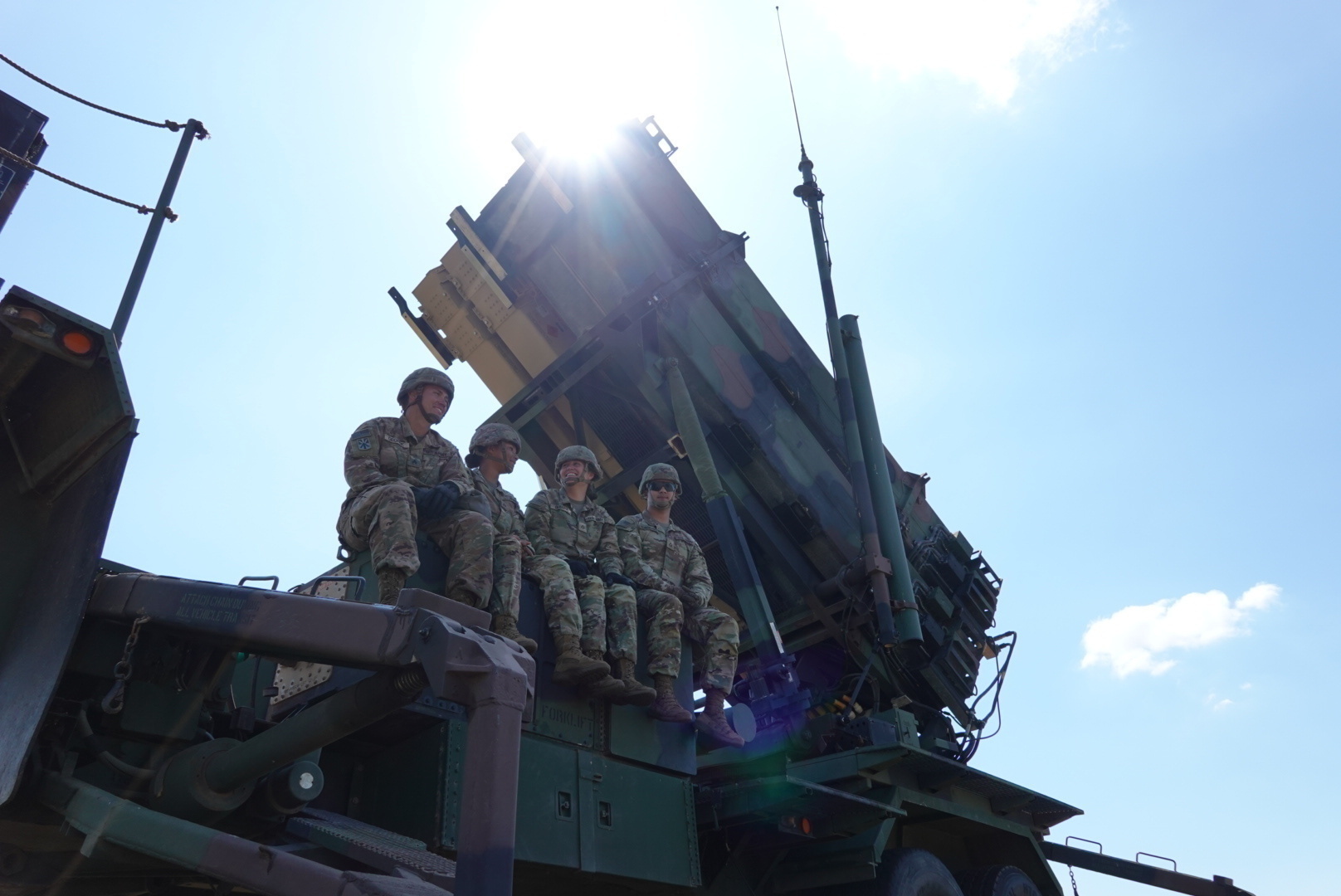
First, in 1990 the threat was an invading army on Saudi Arabia’s northern border — a conventional military problem with a conventional military solution that the United States was overwhelmingly equipped to deliver. In 2026, the threat is a distributed missile and drone campaign targeting the entire Saudi economic footprint, from Yanbu on the Red Sea to the King Fahd Causeway on the Gulf coast, and no amount of American air power can eliminate every launcher in western Iran without Saudi participation in the targeting architecture. The kingdom’s air defense network is not optional in this war; it is load-bearing, as the Greek PAC-3 interceptions at Yanbu demonstrate. Inaction does not mean Saudi Arabia stops participating — it means Saudi Arabia participates without the political benefits of acknowledged participation.
Second, GCC solidarity is eroding under the pressure of differentiated Iranian targeting. Kuwait has lost a desalination worker. The UAE’s Gargash has publicly denounced Iranian “hubris.” Bahrain and Jordan have been named as target states alongside Saudi Arabia.
If Riyadh remains formally non-belligerent while its neighbors absorb strikes that Iranian media explicitly frame as retaliation for coalition operations launched from Saudi bases, the kingdom’s claim to regional leadership — and the Custodian of the Two Holy Mosques narrative that undergirds MBS’s domestic legitimacy — will face questions that no amount of OPEC chairmanship can answer. PressTV’s framing of Saudi Arabia as a “co-belligerent base state” may be propaganda, but it contains enough operational truth to resonate with Gulf publics who can see Taif on a map.
Third, and this is the factor that receives the least attention in Western analysis, the economic damage is accumulating regardless of Saudi Arabia’s formal posture. The Goldman Sachs GDP contraction projection of just over 3%, the CSIS deficit forecast of nearly 4% of GDP against a planned 2.3%, and Vision 2030’s cratered FDI inflows — down 60-70% in Q1 2026 according to Middle East Insider — reflect a fiscal trajectory that worsens with every week of conflict, whether or not Saudi aircraft fly offensive sorties.
Ratney’s assessment — that Saudi leaders “fear that instability, violence, uncertainty the most” — is accurate but incomplete, because the instability is already here and the uncertainty does not resolve through waiting. Every day that Saudi Arabia absorbs Iranian strikes without a clear strategic response is a day that international investors, credit agencies, and the construction firms building NEOM price the kingdom’s future as a wartime economy rather than a transformation economy.
The 2015 Yemen intervention, whatever its subsequent failures, demonstrated that MBS is capable of authorizing direct military entry when the variables align: direct territorial threat, collapse of a buffer state, and political ambition. The variables in April 2026 are more acute on every dimension — the territorial threat is not on the southern border but across the entire national infrastructure, the buffer (Iraqi and Kuwaiti airspace) has already been penetrated, and the political stakes are not a regional proxy war but the survival of the economic vision that defines MBS’s reign. The difference is that in 2015, the decision to enter was proactive and timed to Saudi advantage; in 2026, every hour of delay shifts the timing advantage to Iran, which can continue eroding the red-line threshold while Riyadh’s diplomats are still on the phone with Islamabad.
On April 7, regardless of what happens at the OPEC table or on the Trump-Khamenei axis, Saudi Arabia will be one of three things: a declared co-belligerent that shaped the terms of its own entry, a non-belligerent that successfully secured a ceasefire framework, or a country that has been at war for five weeks without admitting it and has run out of reasons not to. The third option is the one that nobody in the Royal Court is planning for, and it is the one that the current trajectory — absorb, deflect, call Pakistan, wait — is most likely to deliver.
Frequently Asked Questions
How many Iranian missiles has Saudi Arabia’s air defense network intercepted since February 28?
Exact interception figures remain classified by the Saudi Ministry of Defense, but the kingdom’s layered air defense system — comprising US-supplied Patriot PAC-2 and PAC-3 batteries, French Crotale short-range systems, and the nascent Saudi-assembled THAAD integration — has been supplemented since March by the Greek ELDYSA contingent’s PAC-3 battery near Yanbu and over 200 Ukrainian air defense specialists training Saudi crews across multiple GCC states. The interception rate has varied by munition type, with ballistic missiles proving more reliably interceptable than low-flying Shahed-series drones, which exploit terrain-masking flight profiles that challenge radar acquisition at extended range. Saudi Arabia’s pending acquisition of additional THAAD batteries, accelerated under the Major Non-NATO Ally designation, is expected to close the upper-tier gap but will not arrive before the April 6 decision window closes. On April 5, that system intercepted seven ballistic missiles and ten drones targeting Riyadh as Iran timed its strike to coincide with a diplomatic back-channel meeting.
What happens to Saudi Arabia’s water supply if Iran strikes desalination plants?
Saudi Arabia operates 33 coastal desalination plants that supply virtually all of the kingdom’s potable water, with strategic reserves estimated at 3-5 days of national consumption. Unlike oil infrastructure, which has built-in redundancy through the East-West Pipeline and Red Sea export terminals, the desalination network has no inland backup — every plant sits on the coast within range of Iranian cruise missiles and drones. The March 30 strike on Kuwait’s desalination facility, while limited in damage, established the targeting precedent.
Saudi Arabia’s emergency water contingency reportedly involves activating deep aquifer wells in the Saq and Tabuk formations, but these sources produce non-potable water that requires treatment capacity the kingdom has not built at emergency scale. Riyadh, with a metropolitan population exceeding 7.5 million, would face a humanitarian crisis within 72-96 hours of a sustained desalination disruption. A separate and under-examined risk compounds this vulnerability: peer-reviewed marine contamination modelling shows that Saudi Arabia’s desalination vulnerability to radioactive contamination from a Bushehr breach would close the Gulf coast intakes before any Iranian direct strike on those plants was necessary.
Could Saudi Arabia strike Iran without US approval?
Legally and operationally, yes — the RSAF maintains independent command authority, Saudi-purchased munitions are not subject to real-time US release authorization (unlike some Israeli systems), and the DF-21 ballistic missile force operates entirely outside the US military’s command structure. However, any Saudi strike campaign would need to deconflict with ongoing US and coalition air operations over Iranian airspace to avoid fratricide, which in practice requires coordination through the Combined Air Operations Center. The 2015 Yemen intervention demonstrated that MBS can authorize offensive operations without prior US approval — the Obama administration was informed, not consulted — but a unilateral Saudi strike on Iran would carry escalation risks that Yemen never approached, including the possibility of Iranian nuclear breakout acceleration and Hezbollah activation against Saudi interests in Lebanon and beyond.
What role does the Custodian of the Two Holy Mosques title play in Saudi war decisions?
The title, held by King Salman and carrying deep religious and political weight across the Sunni Muslim world, creates a unique constraint on Saudi military decision-making that has no parallel in Western strategic analysis. Committing the Custodian’s armed forces to an offensive war against a Muslim-majority nation — even one governed by a Shia theocracy that most Sunni-majority states view with suspicion — requires religious legitimation from the Council of Senior Scholars that goes beyond standard military authorization. In 2015, the Grand Mufti provided a fatwa supporting Yemen operations within 48 hours of MBS’s decision. A similar religious authorization process for strikes on Iran would need to navigate the additional complexity of Mecca and Medina’s symbolic exposure to Iranian retaliation — a threat that, if realized, would transform the conflict from a geopolitical dispute into a civilizational crisis with consequences far beyond the Gulf region.
How does Saudi Arabia’s $80.3 billion defense budget compare to Iran’s military spending?
Iran’s official defense budget for 2024 was approximately $6.8 billion, though the IISS and most Western analysts estimate actual military expenditure — including IRGC budgets, missile programs funded through the Supreme Leader’s economic conglomerates, and proxy force financing — at $15-25 billion annually. The approximately 4:1 to 12:1 spending ratio in Saudi Arabia’s favor reflects a fundamental asymmetry: Riyadh purchases expensive Western platforms (each F-15SA costs roughly $100 million) while Tehran invests in mass-produced, lower-cost systems (each Shahed-136 drone costs an estimated $20,000-$50,000). The economic efficiency of Iran’s arsenal means that Saudi Arabia’s defense budget buys technological superiority but not numerical immunity — intercepting a $30,000 drone with a $3 million PAC-3 missile is tactically successful and economically unsustainable at the scale Iran has demonstrated since February 28. That asymmetry acquires a new dimension in the nuclear domain: Iran’s radioactive fallout threat against GCC capitals suggests Tehran has identified contamination geography as a low-cost lever that imposes disproportionate cost on the Gulf side of any escalation ledger.
The April 6 deadline has now passed without extension or enforcement. An analysis of the three Trump action paths and their distinct Saudi exposures shows that each available option — extend, strike Kharg Island, or force the strait open militarily — worsens Riyadh’s position in a different dimension. Running in parallel to the deadline pressure was a Saudi-engineered Islamabad back-channel that brought JD Vance within hours of a direct flight to Iran talks on two separate occasions — the diplomatic track that Saudi Arabia spent six weeks building and that Tehran ultimately declined; its structure and near-success are examined in the account of Saudi Arabia’s hidden role in the Vance-Iran near-miss. Trump shelved his April 6 ultimatum hours later, as the stand-down that followed the WSO rescue redirected the narrative away from enforcement and toward a new holding pattern for Riyadh. On Easter Sunday morning, hours before the deadline, Trump had already expanded the targeting list beyond power plants: his Truth Social post declaring “Bridge Day” for Iran confirmed a systematic campaign against Khuzestan river crossings alongside the power-grid campaign.