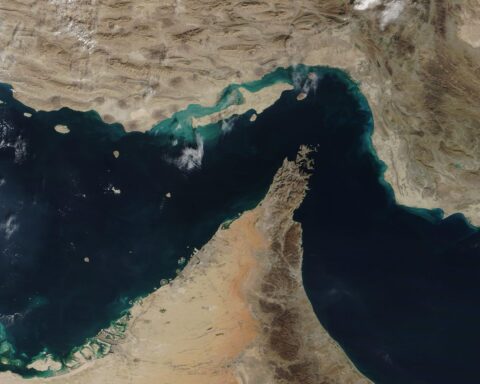
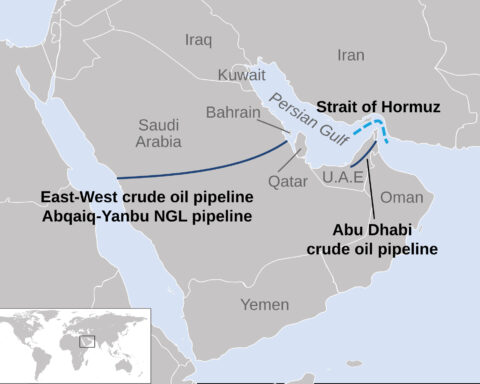
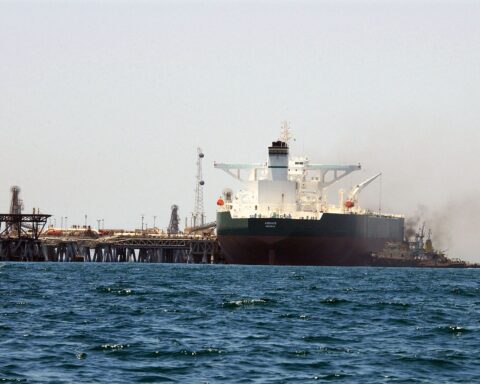
DHAHRAN — Saudi Arabia announced on Saturday that its East-West Pipeline has been restored to full 7-million-barrel-per-day capacity — four days after an IRGC drone disabled one of its pumping stations, and hours after Donald Trump declared a US naval blockade of the Strait of Hormuz. The blockade converts the pipeline from a strategic backup into the only functioning Saudi export corridor on earth. The restoration is not a triumph of resilience; it is the completion of a trap. Every barrel Saudi Arabia now pumps westward to Yanbu travels through 1,200 kilometres of open desert that Iran has already demonstrated it can hit — and that the Kingdom cannot adequately defend with roughly 400 Patriot interceptors left in its depleted stockpile.
The pipeline was built in 1982 to solve a specific problem — the vulnerability of Hormuz during the Iran-Iraq Tanker War. For forty-four years it served as a redundancy, an insurance policy that rarely needed to carry full load. Trump’s blockade eliminated the redundancy overnight. Hormuz is now closed to commercial traffic by American warships rather than Iranian mines. The pipeline is no longer a bypass but a single point of failure crossing the Najd plateau, with no Patriot coverage along 800 kilometres of its mid-route corridor. Iran does not need to contest the US Fifth Fleet to shut down Saudi exports. It demonstrated on April 8 that a single drone can cut 700,000 barrels per day from the line, and the IRGC has publicly committed to strikes “far more forcefully and on a much wider scale” now that American restraint, in Brigadier General Ebrahim Zolfaqari’s framing, has been removed.
Table of Contents
- What Trump’s Blockade Actually Does to Saudi Exports
- The April 8 Strike: A Proof of Concept
- Why Is the Pipeline Indefensible?
- The Yanbu Bottleneck: 7 Million Barrels Into a 4-Million Port
- What Happens if Iran Destroys Turbines Instead of Pipes?
- The Fiscal Arithmetic of a Single Corridor
- The IRGC’s “American Companies” Doctrine
- How Many Patriot Rounds Cover 1,200 Kilometres?
- Iran’s Two-Chokepoint System
- FAQ
What Trump’s Blockade Actually Does to Saudi Exports
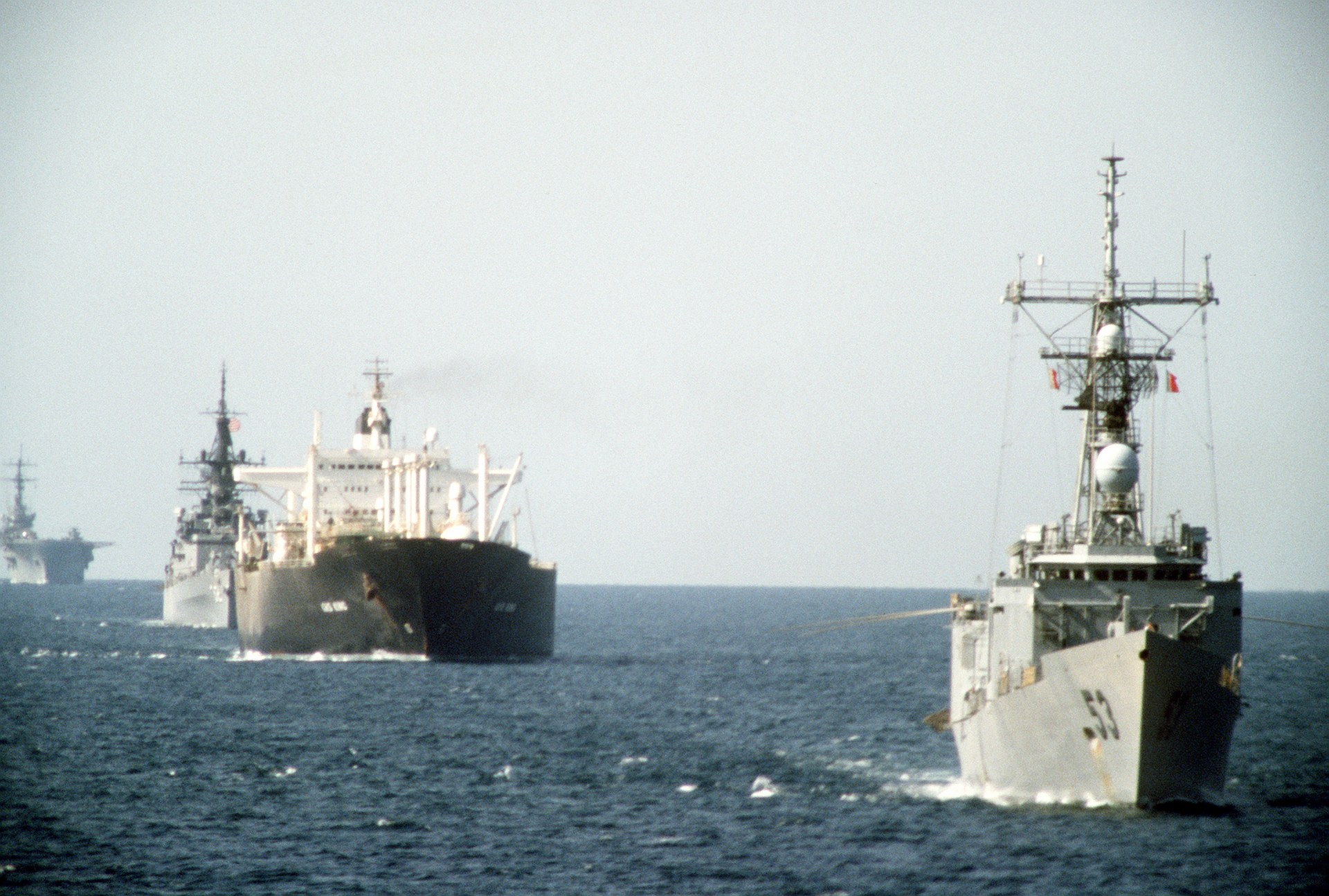
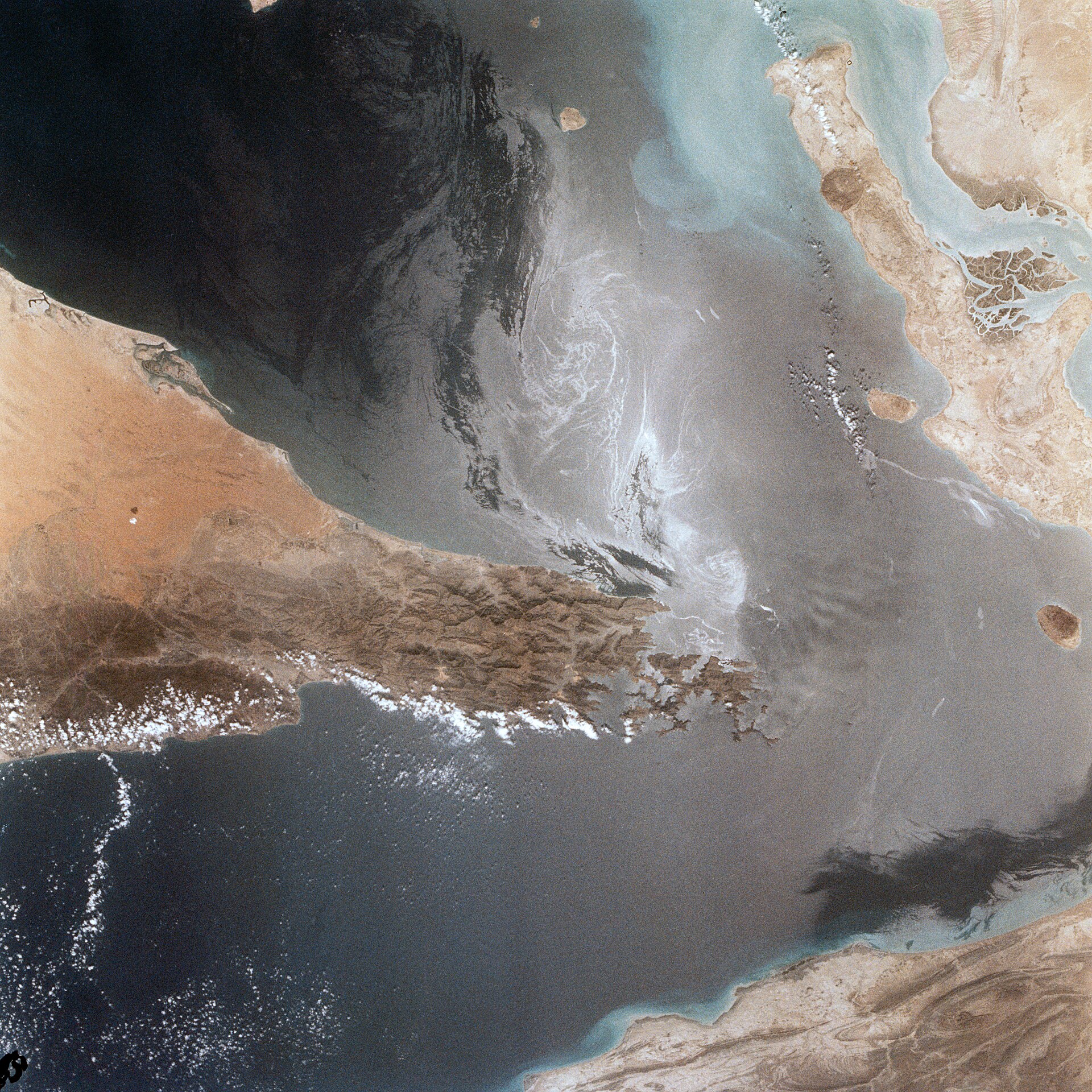
Trump’s Truth Social post on April 12 ordered the US Navy to “begin the process of BLOCKADING any and all Ships trying to enter, or leave, the Strait of Hormuz” and to “seek and interdict every vessel in International Waters that has paid a toll to Iran.” The immediate effect is to shut down the strait to commercial tanker traffic — not because Iran mined it (though it did), but because the United States is now the party physically preventing transit. Before the blockade, Saudi Arabia had two export corridors: Hormuz, handling pre-war volumes of roughly 7.5 million barrels per day through Ras Tanura and Ju’aymah, and the East-West Pipeline carrying crude 1,200 kilometres overland to Yanbu on the Red Sea.
The blockade collapsed that into one. Hormuz is unavailable — not degraded, not contested, but sealed by the most powerful navy on earth. Every barrel of Saudi crude that reaches a tanker now travels through a pipeline that crosses the entire width of the Arabian Peninsula, exposed above ground at every pumping station, traversing terrain with no natural defensive cover, and terminating at a port complex the IRGC struck on April 3 and again targeted on April 8. The blockade does not push Iran toward anything — it hands the IRGC a single target whose destruction achieves the same effect as closing Hormuz, without requiring Iran to fire a single missile at a US warship.
The April 8 Strike: A Proof of Concept
Hours after Iran’s Supreme National Security Council announced its ceasefire on April 8, an IRGC drone hit one of the pipeline’s thirteen pumping stations. The strike cut throughput by 700,000 barrels per day — 10 per cent of pre-war Saudi export capacity — using a single unmanned aerial vehicle against a single facility. Saudi Arabia repaired the damage in four days. The Ministry of Energy’s Saturday statement celebrated “the high operational resilience and crisis management efficiency of Saudi Aramco.” What it did not address is that the IRGC learned something from April 8 that matters more than the barrels lost: the repair timeline, the defensive response pattern, and the minimum force required to achieve a measurable reduction in Saudi export capacity.
The April 8 attack was not an attempt to destroy the pipeline. It was a calibration exercise conducted under the political cover of a ceasefire the IRGC’s own field commanders had not yet acknowledged. A drone — not a ballistic missile, not a cruise missile swarm, but a single drone of the type Iran manufactures in volume — disabled a pumping station without destroying its gas turbine array. That distinction matters enormously, because it is the difference between a four-day repair and a multi-year one, and the IRGC now knows exactly where that line sits.
The Middle East briefing 3,000+ readers start their day with.
One email. Every weekday morning. Free.
The 2019 Houthi drone strikes on pumping stations at Al-Duwadimi and Afif, roughly 200 and 400 kilometres west of Riyadh, shut the pipeline down for several days. The Washington Institute described those attacks as a rehearsal for the September 2019 Abqaiq strike. May 2019 was a rehearsal for Abqaiq. April 8, 2026, was a rehearsal for something the IRGC has not yet attempted: a sustained, multi-station attack designed not to inconvenience Saudi Arabia but to sever its only remaining export route while the US Navy obligingly holds Hormuz shut from the other end.
Why Is the Pipeline Indefensible?
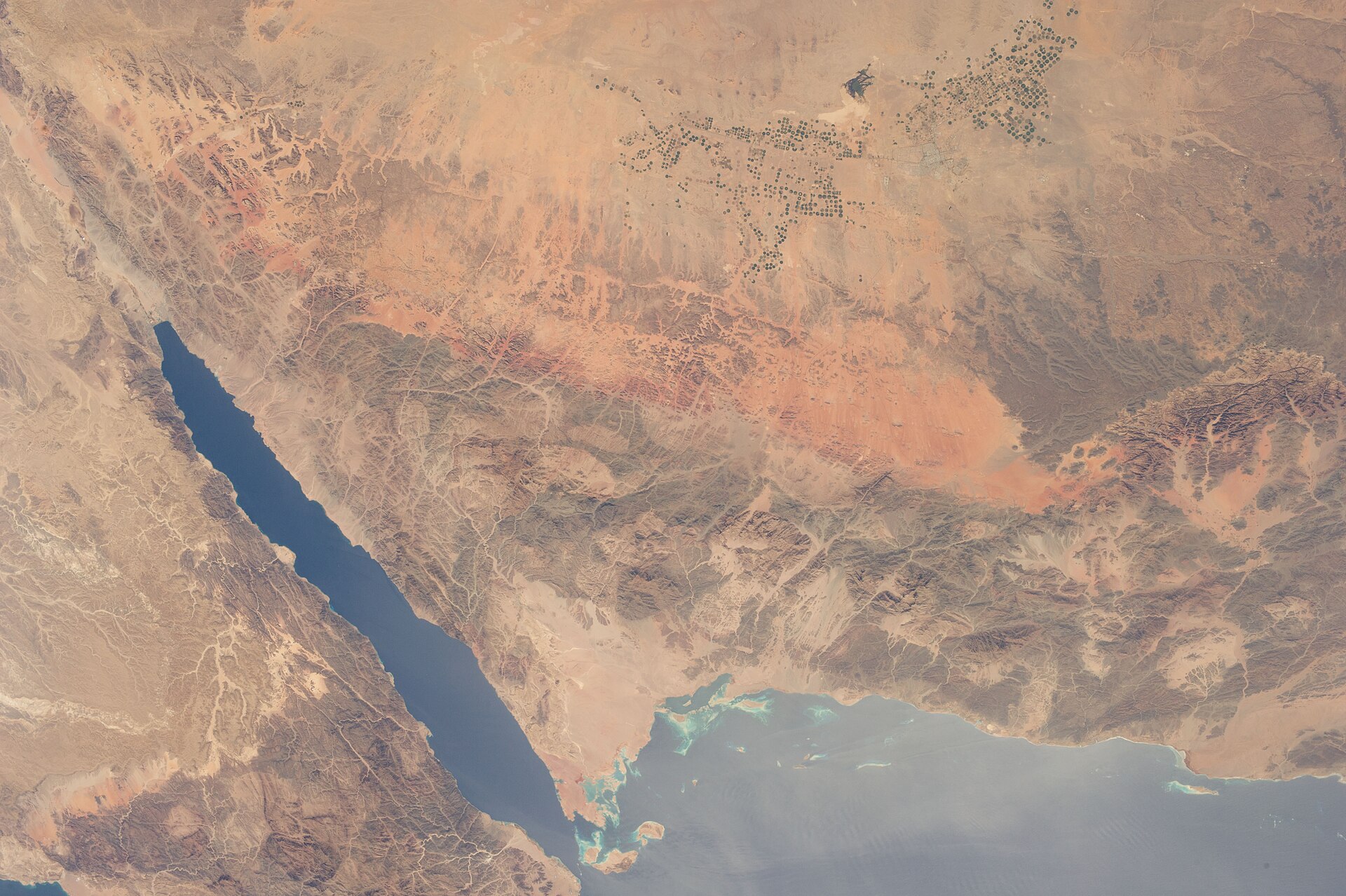
The East-West Pipeline runs 1,200 kilometres from Abqaiq in the Eastern Province to Yanbu on the Red Sea coast, carried by two parallel lines — a 56-inch crude oil line and a 48-inch convertible line — through thirteen pumping stations powered by sixty-five gas turbines. The route crosses the Najd plateau at elevations up to 1,082 metres before descending through the Hijaz Mountains to the coast. Every pumping station is a fixed, known-location facility with no natural terrain cover, serviced by access roads visible on commercial satellite imagery. Seth G. Jones and Joseph S. Bermudez Jr. at CSIS have stated explicitly: “An attack on any of these pumping stations could halt the flow of oil in that direction.”
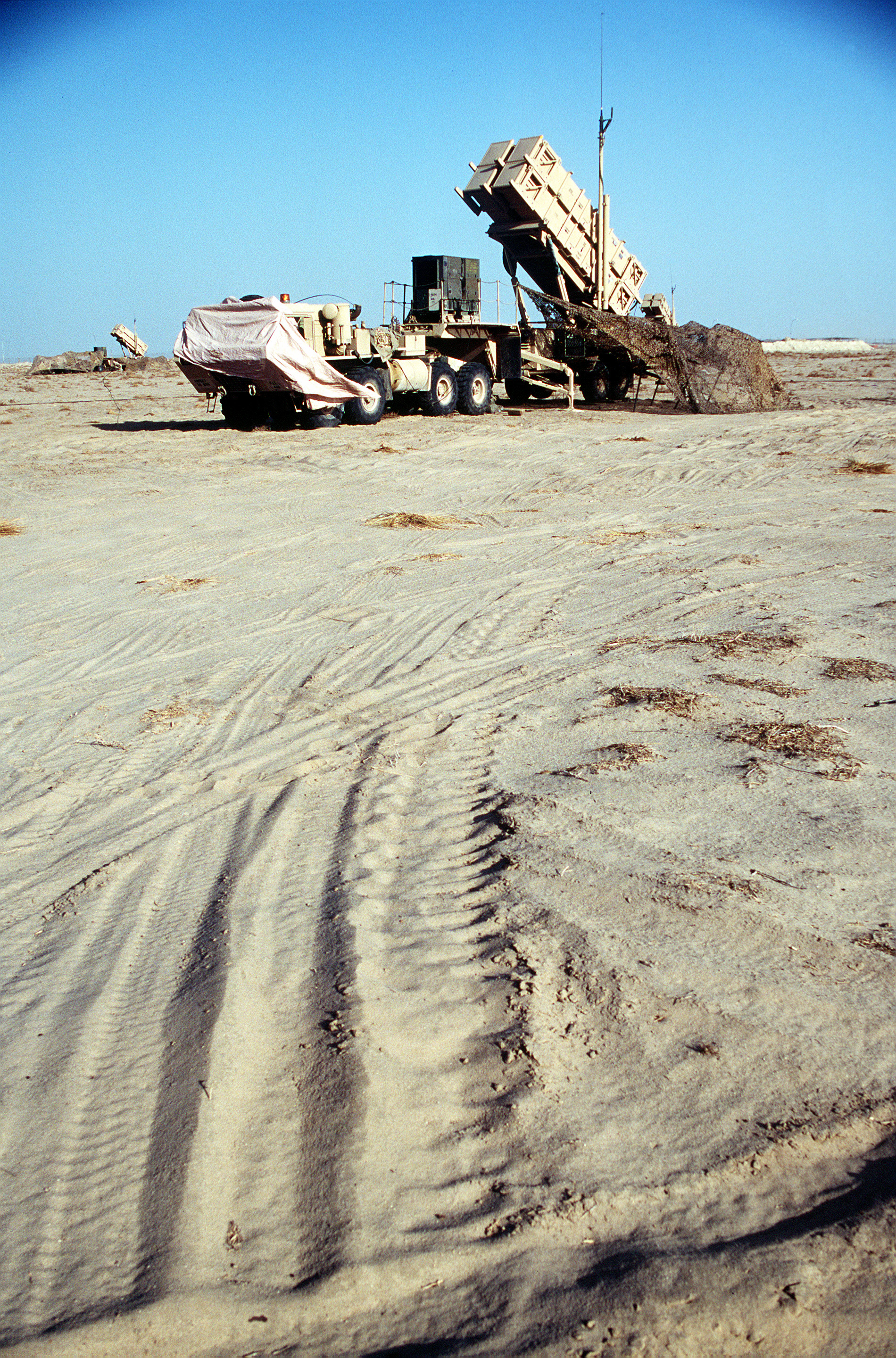
Saudi Arabia’s air defence architecture was not designed to protect a 1,200-kilometre linear asset. The Kingdom’s Patriot and THAAD batteries are concentrated in three zones: the Eastern Province oil fields around Dhahran, Abqaiq, and Ras Tanura; Riyadh and its surrounding military installations; and, since March 2026, the Yanbu terminal complex where a Greek ELDYSA battery intercepted two Iranian ballistic missiles on March 19. The mid-route corridor — roughly 800 kilometres of open desert between the Eastern Province batteries and the Yanbu defences — has no known Patriot coverage. Iran’s Fateh-110 and Zolfaqar ballistic missiles have ranges of 700 to 800 kilometres, sufficient to reach every pumping station on the route from launch sites inside Iranian territory.
CSIS assessed that the current defensive posture “may be inadequate for comprehensive coverage of Persian Gulf infrastructure” even before the war began. Thirty-eight days of combat have made the problem worse, not better. Saudi Arabia is now triage-defending four simultaneous zones — Eastern Province, Riyadh, Yanbu, and the pipeline corridor — with a Patriot stockpile that has fallen from roughly 2,800 PAC-3 MSE rounds to approximately 400. That 86 per cent drawdown cannot begin to be replenished before 2028, as detailed below.
The Yanbu Bottleneck: 7 Million Barrels Into a 4-Million Port
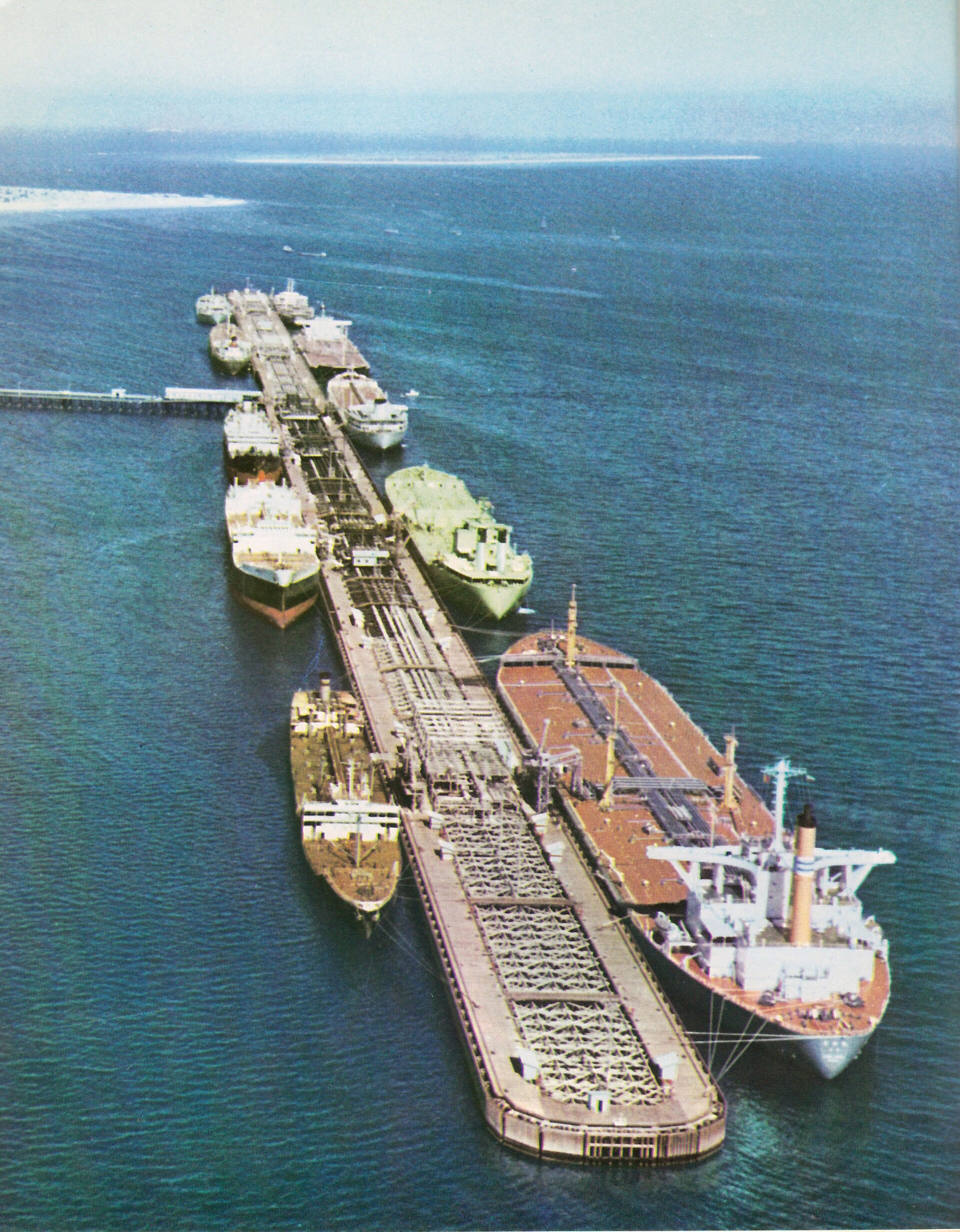
The pipeline’s 7-million-barrel-per-day capacity is a headline number that obscures a structural constraint at the receiving end. Yanbu’s two terminal complexes — Yanbu North at 1.5 million barrels per day and Yanbu South at 3 million — have a combined nominal capacity of 4.5 million barrels per day, and wartime effective throughput tracked by Vortexa sits closer to 3 million. Before the war, Yanbu loaded 11 to 12 VLCCs per month. In March 2026, that number was 47 — a fourfold surge that confirms the port is operating at or beyond its designed ceiling, with vessels queuing for berths and loading times extending as terminal infrastructure handles volumes it was never built to sustain.
The pipeline-to-port gap is not a rounding error. At 7 million barrels per day of pipeline capacity and 3 to 4 million barrels per day of effective port throughput, between 3 and 4 million barrels per day have nowhere to go even when the pipeline is operating perfectly. That crude backs up into storage at Yanbu (11 million barrels of tank capacity) and, when storage fills, forces production shutdowns at the wellhead in the Eastern Province. The Yanbu berth ceiling is the binding constraint on Saudi export revenue, not the pipeline’s nameplate capacity — and it means that an IRGC strike need not disable the entire pipeline to achieve its objective. Reducing throughput to 3 million barrels per day, roughly what Yanbu can actually load, would be invisible in the port data while eliminating all surge capacity and every barrel of strategic flexibility Saudi Arabia currently holds.
| Infrastructure Component | Capacity (bpd) | Wartime Effective (bpd) | Gap |
|---|---|---|---|
| East-West Pipeline (full) | 7,000,000 | 7,000,000 (restored April 12) | — |
| Yanbu North Terminal | 1,500,000 | ~1,200,000 | — |
| Yanbu South Terminal | 3,000,000 | ~1,800,000–2,800,000 | — |
| Combined Port Throughput (Vortexa) | 4,500,000 | ~3,000,000 | ~4,000,000 bpd stranded at pipeline ceiling |
| Manifa (restored) | 900,000 | 900,000 | — |
| Khurais (under repair) | 1,500,000 | ~1,200,000 | ~300,000 offline |
What Happens if Iran Destroys Turbines Instead of Pipes?
The April 8 strike damaged a pumping station without destroying its gas turbine array — the distinction that made a four-day repair possible. Saudi Aramco maintains pre-positioned replacement parts for exactly this scenario: pipe sections, valves, and control systems that can be swapped in under emergency protocols refined since the 2019 Abqaiq attack. The Abqaiq comparison is instructive, though not in the way most analysts have used it. Abqaiq in September 2019 lost 5.7 million barrels per day of processing capacity and recovered within weeks precisely because the turbine arrays survived — the attack destroyed separation columns and heat exchangers, which are modular and replaceable, while the rotating machinery that takes years to fabricate remained intact.
A deliberate turbine-array strike on multiple pumping stations simultaneously would create a fundamentally different recovery timeline. Gas turbines of the size used in pipeline pumping — large-frame industrial units — are manufactured by three companies globally: GE Vernova, Siemens Energy, and Mitsubishi Power. Audun Martinsen, Head of Supply Chain Research at Rystad Energy, has identified gas turbine OEM backlogs of two to four years as the binding constraint on Gulf infrastructure repair, estimating a total repair bill across the conflict zone of $25 billion. The constraint is not capital — Saudi Arabia can write cheques — but manufacturing slots in factories already running at capacity for orders placed before the war began. If the IRGC destroyed turbine arrays at four or five mid-route pumping stations in a single coordinated strike, the pipeline’s capacity would drop not to 6.3 million barrels per day for four days but to a fraction of its design throughput for years.
The Ministry of Energy’s Saturday statement made no mention of defensive hardening, dispersed turbine storage, or expedited OEM procurement. The celebration of “operational resilience” implicitly assumes the next strike will look like the last one — a single drone on a single station, damaging replaceable components. Nothing in the IRGC’s April 7 declaration, in which Zolfaqari committed to deploying missiles “far more forcefully and on a much wider scale,” suggests that assumption is safe.
The Fiscal Arithmetic of a Single Corridor
Saudi Arabia’s fiscal position is built on a stack of break-even prices that have been climbing throughout the war. Bloomberg Economics puts the central government break-even at $86.60 per barrel, the consolidated figure including off-budget entities at $94, and the PIF-inclusive number — the one that actually matters for Vision 2030 spending — at $108 to $111. Brent crude closed Friday at $96. At Yanbu’s effective wartime throughput of roughly 4 million barrels per day and current Brent at $96, Saudi Arabia’s daily oil revenue sits at approximately $384 million. The PIF-inclusive break-even requires roughly $432 million per day — a shortfall of $48 million per day, or $17.5 billion annualized, before accounting for the bilateral OSP deals Aramco has been cutting to retain Asian buyers at discounts well below official pricing.
Goldman Sachs estimates Saudi Arabia’s 2026 budget deficit at $80 to $90 billion against the government’s official projection of $44 billion. That gap reflects not forecast error but a structural mismatch: planning assumptions built on Hormuz open, pre-war export volumes, and $85-90 Brent have collided with wartime reality — single-corridor exports through a capacity-constrained port at prices that fluctuate with every IRGC statement. The Manifa offshore facility has been restored, but Khurais remains roughly 300,000 barrels per day below full capacity — meaning the 7-million-barrel pipeline, even when operating perfectly, is carrying crude from fields that are not yet producing at pre-war levels.
Every day the pipeline operates at full capacity through an undefended corridor is a day Saudi Arabia earns less than it spends while simultaneously concentrating the entirety of that revenue stream in an asset the IRGC has already struck once and publicly promised to strike again. The Ministry of Energy frames the restoration as proof of resilience. The fiscal arithmetic frames it as the Kingdom earning $384 million per day through a corridor it cannot protect, against expenses it cannot cut, at prices it cannot control.
The IRGC’s “American Companies” Doctrine
The IRGC’s April 8 statement did not claim to have struck Saudi infrastructure. It claimed to have hit “oil facilities of American companies in Yanbu, on the Red Sea, with a capacity of 250,000 barrels per day.” The target was SAMREF, the Yanbu refinery that is a 50/50 joint venture between Saudi Aramco and ExxonMobil with an actual capacity of 400,000 barrels per day. The IRGC’s choice of framing — American companies, not Saudi Arabia — is not rhetorical. It is doctrinal, and it has operational consequences that extend directly to the pipeline.
By characterising strikes on Saudi soil as counter-US operations targeting American commercial interests, the IRGC pre-constructs a rationale under which Yanbu and the pipeline remain valid targets even under a nominal ceasefire. The ceasefire, such as it was, applied to hostilities between Iran and “the other side” — a formulation the IRGC interprets as the United States, not Saudi Arabia. If the pipeline carries crude that generates revenue for Aramco joint ventures with American companies, and if those revenues fund a war effort the IRGC considers American-directed, then the pipeline is a military-economic target under the IRGC’s own rules of engagement regardless of Saudi Arabia’s nominal status in any ceasefire framework.
Trump’s blockade strengthens this framing rather than undermining it. The US Navy is now physically enforcing a closure of Hormuz — an act of war under most readings of international law — which makes every piece of Saudi energy infrastructure that supports American strategic objectives a co-belligerent asset in the IRGC’s calculus. The IRGC Navy’s declaration of “full authority to manage the Strait” on April 5 and again on April 10 already established the doctrinal position that Hormuz is an Iranian-administered waterway. Trump’s blockade, paradoxically, validates the IRGC’s claim by treating the strait as a space requiring military control rather than one governed by international transit passage rights. That co-belligerent exposure is precisely why Saudi Arabia has said nothing publicly about the US blockade — any statement, for or against, converts the Kingdom from a damaged bystander into an acknowledged participant.
How Many Patriot Rounds Cover 1,200 Kilometres?
The mathematics of air defence along a linear asset are brutal. A single Patriot battery has a defended footprint of roughly 20 to 30 kilometres against ballistic missiles. Full coverage of the 1,200-kilometre pipeline would therefore require 40 to 60 batteries, each with a complement of 16 ready rounds — and a reload capability that depends on logistics chains currently stretched across four simultaneous defence zones. Saudi Arabia does not have 40 Patriot batteries. The entire Kingdom operates approximately 15, some of which are US-owned and US-operated, and the roughly 400 PAC-3 MSE rounds remaining in the Gulf-wide stockpile would fill 25 launchers — once — with no reloads.
The Greek ELDYSA battery at Yanbu, funded by Saudi Arabia as part of a bilateral air defence arrangement, covers the terminal complex. Eastern Province batteries cover Abqaiq, Ras Tanura, and Dhahran. Riyadh has its own dedicated coverage. What no battery covers is the stretch between — the Najd plateau, where pumping stations sit in open desert at known coordinates, visible on Google Earth, accessible by the same roads that Aramco maintenance crews use. Poland refused a Patriot transfer request on March 31. The $16.5 billion in emergency US arms sales approved since the war began went to the UAE, Kuwait, and Jordan. Lockheed Martin’s Camden plant produces 620 PAC-3 MSE rounds per year for all customers globally, and the next Saudi deliveries are not expected before 2028.
The IRGC does not need to overwhelm Saudi air defences to disable the pipeline. It needs to hit the stations that are not defended — and at least eight of the thirteen pumping stations, by any reasonable assessment of battery placement, fall outside the protective envelope of any known Patriot or THAAD deployment. The April 8 drone that cut 700,000 barrels per day from the pipeline was not intercepted. It did not need to be fast, stealthy, or sophisticated. It needed to reach a fixed target in open desert that had no air defence coverage, and it did.
Iran’s Two-Chokepoint System
Iran’s strategic doctrine, as analysed in this publication on April 5, treats the Strait of Hormuz and the Red Sea export route through Yanbu and Bab el-Mandeb as a single coordinated system — two chokepoints that, when pressured simultaneously, can reduce Gulf oil exports below the threshold at which global markets function. Before Trump’s blockade, this required Iran to maintain pressure on both: IRGC Navy operations at Hormuz and Houthi or IRGC-directed strikes against Red Sea shipping and Yanbu infrastructure. The blockade eliminated half of Iran’s operational requirement. The US Navy is now doing the IRGC’s work at Hormuz — closing the strait to commercial traffic — while Iran retains the freedom to concentrate its entire strike capacity against the pipeline and Yanbu.
The strategic absurdity is complete. Trump declared the blockade to pressure Iran into reopening Hormuz and abandoning its toll regime. The operational effect is to relieve Iran of the need to maintain Hormuz pressure (the Americans are handling it) while concentrating Saudi vulnerability into a single linear asset the IRGC has already struck. Iran’s response to the blockade does not require contesting the US Navy in the strait, accepting casualties from carrier-based air power, or expending scarce anti-ship missile stocks against Aegis-equipped destroyers. It requires continuing to do what it did on April 8 — sending drones and ballistic missiles at pumping stations in the desert — while the United States obligingly prevents Saudi crude from using the only alternative route.
The IRGC’s mosaic defence structure — 31 semi-autonomous provincial commands with pre-delegated strike authority — demonstrated on April 8 that it can execute attacks after a ceasefire announcement and before field commanders acknowledge the order. Trump’s blockade, announced via Truth Social with the instruction that the Navy will begin “the process” of enforcement, creates an implementation window. Hormuz is nominally closed to traffic, but IRGC units retain full operational freedom. In that window, the pipeline is simultaneously the only Saudi export route and the most exposed target in the Gulf — defended by a Patriot stockpile that would last less than a week at pre-ceasefire interception rates.
An attack on any of these pumping stations could halt the flow of oil in that direction.
Seth G. Jones and Joseph S. Bermudez Jr., CSIS
Saudi Arabia built the East-West Pipeline in 1982 because it understood that dependence on a single chokepoint was an existential vulnerability. Forty-four years later, after $25 billion in cumulative investment, the Kingdom has achieved exactly what the pipeline was designed to prevent — total dependence on a single export corridor, this time running through 1,200 kilometres of open desert rather than 50 kilometres of contested water. The restoration to 7 million barrels per day announced on Saturday is a feat of engineering. It is also the restoration of the highest-value single target the IRGC has ever been offered, delivered at the precise moment when destroying it would replicate the full economic effect of a Hormuz closure without requiring Iran to fire a single shot at an American ship. Aramco’s turbines are turning. The question is not whether they can pump 7 million barrels per day — it is how many of the sixty-five gas turbines powering that flow would need to be destroyed, at stations Iran can reach and Saudi Arabia cannot defend, before the number drops to zero.
FAQ
Can Saudi Arabia export any oil without the East-West Pipeline?
With the blockade in effect, Saudi Arabia’s alternative options are severely limited. The Jask bypass terminal on Iran’s Gulf of Oman coast handles approximately 300,000 barrels per day — but it is Iranian-controlled. Saudi Arabia retains limited floating storage of roughly 40 million barrels in vessels anchored off Yanbu and in Asian waters, representing approximately 10 days of pre-war exports, but these are inventories being drawn down rather than a functioning export route. The Kingdom’s only other theoretical option is trucking crude to UAE or Oman ports outside the blockade zone, which would handle less than 50,000 barrels per day and cost over $15 per barrel in logistics — economically unviable at any scale.
Has Iran threatened the pipeline directly since the blockade was announced?
The IRGC has not issued a pipeline-specific statement since Trump’s April 12 blockade announcement, but the April 7 declaration by Brigadier General Zolfaqari — committing to strikes “far more forcefully and on a much wider scale” where US “precautions have been removed” — was explicitly framed as a conditional trigger activated by American escalation. The blockade is the escalation Zolfaqari described.
Could the US Navy protect the pipeline from air attack?
US Patriot and THAAD assets in Saudi Arabia are operated under bilateral agreements that prioritise US military installations and personnel. The pipeline corridor lies outside the defensive envelope of known US battery positions, and redeploying batteries from Eastern Province or Riyadh would leave those zones exposed. The US Navy’s Aegis-equipped destroyers, currently tasked with enforcing the Hormuz blockade, carry SM-3 and SM-6 interceptors designed for maritime air defence, not territorial missile defence over a 1,200-kilometre land corridor. Extending an Aegis umbrella over the pipeline from Red Sea positions would require vessels within 200 kilometres of the coast — pulling them off blockade duty and into range of IRGC anti-ship missiles based at Bandar Abbas.
What is the insurance market response to the pipeline becoming a single point of failure?
Lloyd’s of London war-risk premiums for tankers loading at Yanbu rose from 0.5 per cent of hull value pre-war to 2.8 per cent as of April 11, a figure that does not yet reflect the blockade announcement. For a standard VLCC valued at $120 million, that represents a premium increase from $600,000 to $3.36 million per voyage. Shipbroking sources reported on April 10 that several major insurers were considering reclassifying Yanbu from “adjacent to war zone” to “within war zone” — a designation that would push premiums above 5 per cent and potentially trigger force majeure clauses in long-term charter agreements.
How long would repairs take if multiple pumping stations were hit simultaneously?
The realistic recovery timeline for a coordinated turbine-destruction attack on three or more stations is 18 to 36 months under best-case OEM cooperation — not the four-day timeline Aramco achieved on April 8. Saudi Arabia would compete in the OEM queue against reconstruction orders from Kuwait, Bahrain, and the UAE for manufacturing slots at GE Vernova, Siemens Energy, and Mitsubishi Power that were fully allocated before the war began. Aramco’s pre-positioned spare parts inventory covers single-station pipe and valve failures; it does not extend to simultaneous large-frame turbine replacements across multiple sites.