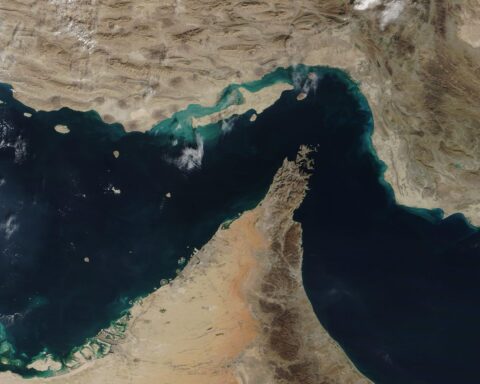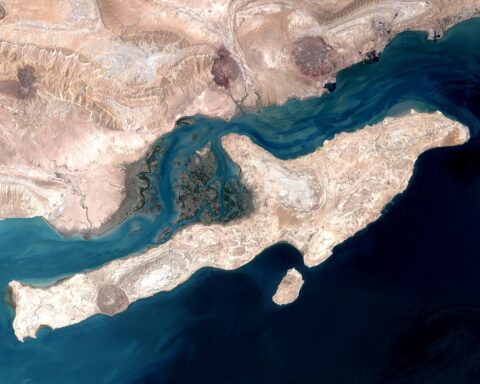

JEDDAH — Saudi Arabia is pumping 7 million barrels per day through the East-West Pipeline to Yanbu, bypassing the closed Strait of Hormuz entirely and exporting roughly 5 million barrels per day from the Red Sea — a volume that covers the vast majority of the Kingdom’s pre-war crude export baseline and, in doing so, quietly dismantles the foundational assumption of the entire crisis: that closing Hormuz would force Riyadh to its knees. It hasn’t, and the economic and strategic consequences of that single operational fact run far deeper than the pipeline’s plumbing.
The bypass does not make Saudi Arabia invulnerable. Two Iranian drone strikes on the SAMREF refinery at Yanbu — the most recent on April 3 — demonstrate that Tehran understands exactly which node to hit. Houthi leaders have openly threatened to close Bab el-Mandeb, which would choke the Red Sea exit just as Hormuz choked the Gulf. The pipeline was engineered for a short disruption, not a sustained war with an adversary actively targeting the exit point. That vulnerability has now reached the diplomatic level: Saudi Arabia has privately demanded the US lift the Hormuz blockade specifically because the blockade’s continuation increases the probability of Houthi activation at Bab el-Mandeb, as examined in Saudi Arabia’s private demand to end the Hormuz blockade. But between those vulnerabilities and the conventional wisdom that Hormuz closure equals Saudi capitulation lies a substantial gap — and inside that gap, the actual strategic logic of this war is being determined.
Table of Contents
- The Pipeline by the Numbers: 7 Million Barrels and a 1,200-Kilometre Insurance Policy
- Why Can’t Yanbu Actually Load 5 Million Barrels Per Day?
- The Ceasefire Incentive That Didn’t Materialise
- How Does the Pipeline Explain the OPEC+ Output Hold?
- Iran’s Counter-Doctrine: If You Can’t Close the Pipe, Hit the Port
- What Happens If Bab el-Mandeb Closes Too?
- The Grade Problem Nobody Is Talking About
- Saudi Fiscal Arithmetic at $109 Brent
- Decoupling or Pressure Valve: How Long Can the Bypass Hold?
The Pipeline by the Numbers: 7 Million Barrels and a 1,200-Kilometre Insurance Policy
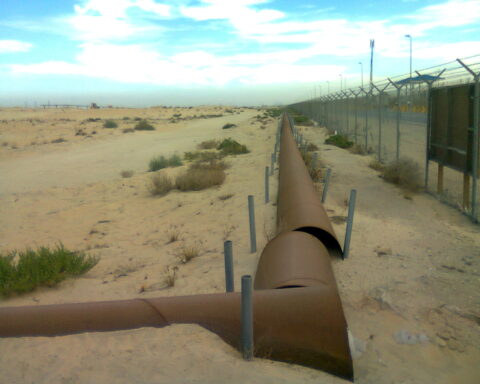
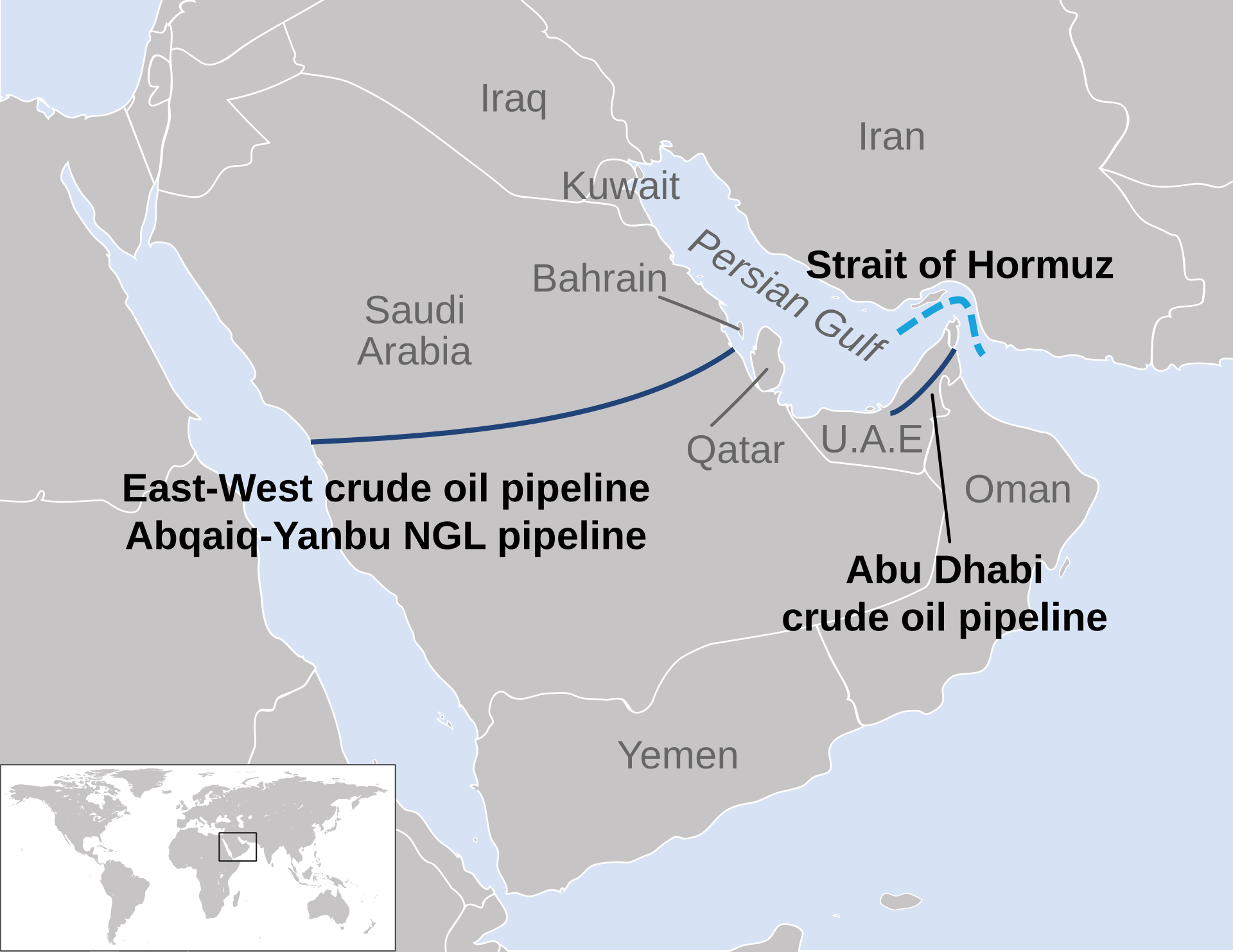
The East-West Crude Oil Pipeline — Petroline, in industry shorthand — was built in 1981 and commissioned in 1982, at the height of the Iran-Iraq War, for precisely the scenario Saudi Arabia now faces: a conflict that makes the Persian Gulf too dangerous for commercial tanker traffic. It runs 1,200 kilometres from the Abqaiq processing complex in the Eastern Province to the port of Yanbu on the Red Sea coast, traversing the full width of the Arabian Peninsula underground, beyond the reach of any conventional military strike short of a ground invasion.
The original design capacity was 5 million barrels per day of crude. After Iranian-backed Houthi drones hit the Abqaiq facility in September 2019 — briefly knocking 5.7 million bpd offline — Aramco invested in converting parallel natural gas liquids lines to carry crude, pushing the emergency ceiling to 7 million bpd. That upgrade, engineered in 2019, was activated at full scale for the first time in March 2026. Aramco CEO Amin Nasser confirmed in early March that the pipeline “would hit its full capacity of 7 million barrels per day in the next couple of days,” and Bloomberg reported on March 28 that the milestone had been reached.
Of the 7 million bpd flowing through the pipeline, approximately 2 million bpd is consumed domestically — feeding refineries in Riyadh, Yanbu, and Jizan, plus power generation and desalination. That leaves an exportable surplus of roughly 5 million bpd of crude, plus an additional 700,000 to 900,000 bpd of refined products from Yanbu’s refinery complex, bringing total Red Sea hydrocarbon exports to approximately 5.7 to 5.9 million bpd at peak. Saudi Arabia’s pre-war export baseline was roughly 6.7 to 7 million bpd — meaning the pipeline covers between 80 and 85 percent of the Kingdom’s export capacity through a route that does not touch the Strait of Hormuz at any point.
Why Can’t Yanbu Actually Load 5 Million Barrels Per Day?
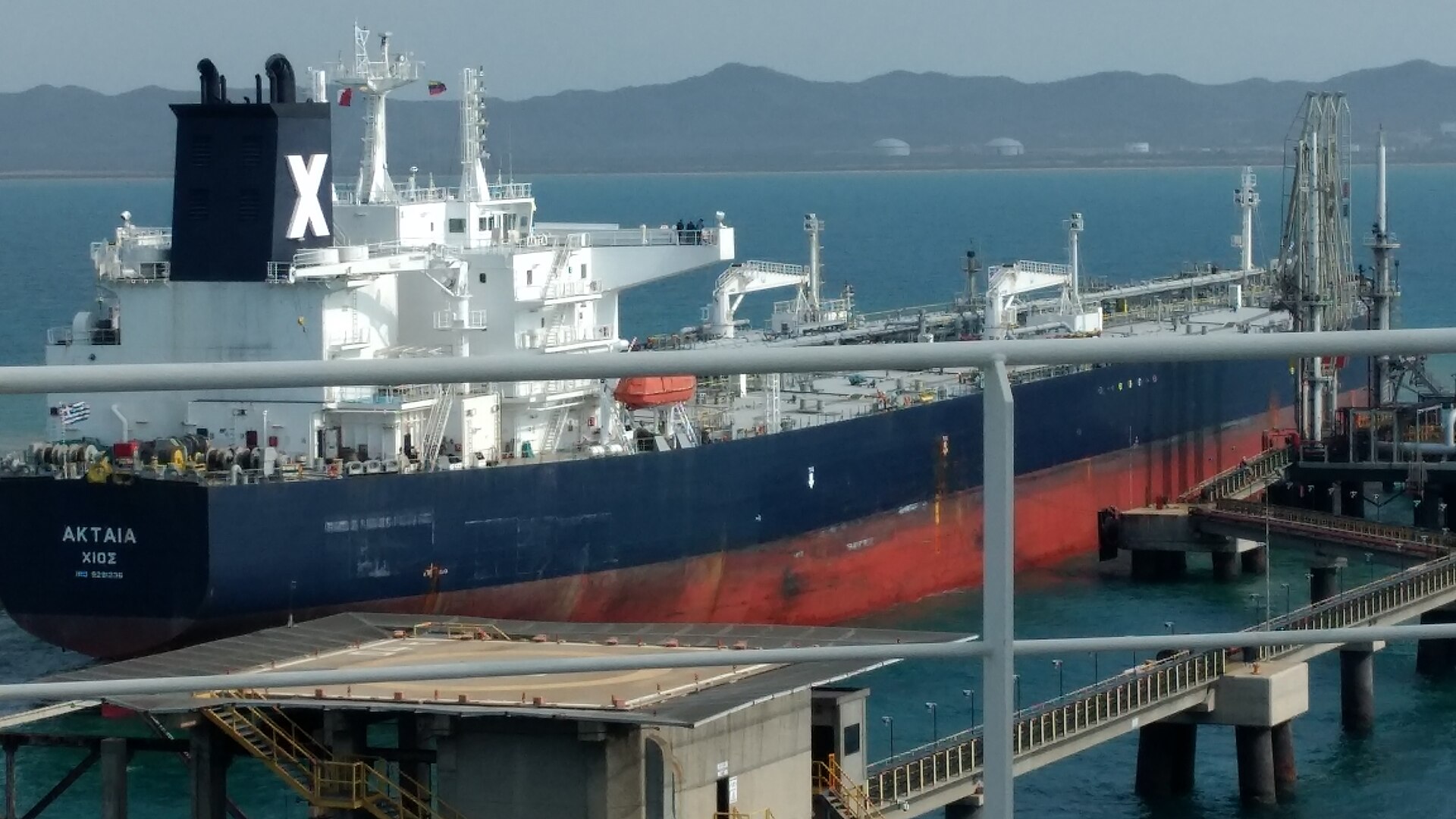
The pipeline’s capacity and the port’s capacity are not the same number, and the gap between them is where the strain shows. Engineering News-Record’s analysis puts Yanbu’s combined nominal loading capacity — across the North and South terminals — at approximately 4.5 million bpd, with an operationally tested rate closer to 4 million bpd and a wartime effective rate of roughly 3 million bpd once berthing friction, security protocols, and scheduling disruptions are factored in. The pipeline can deliver 7 million barrels to the Red Sea coast. The terminals cannot load them onto tankers at the same rate.
The Middle East briefing 3,000+ readers start their day with.
One email. Every weekday morning. Free.
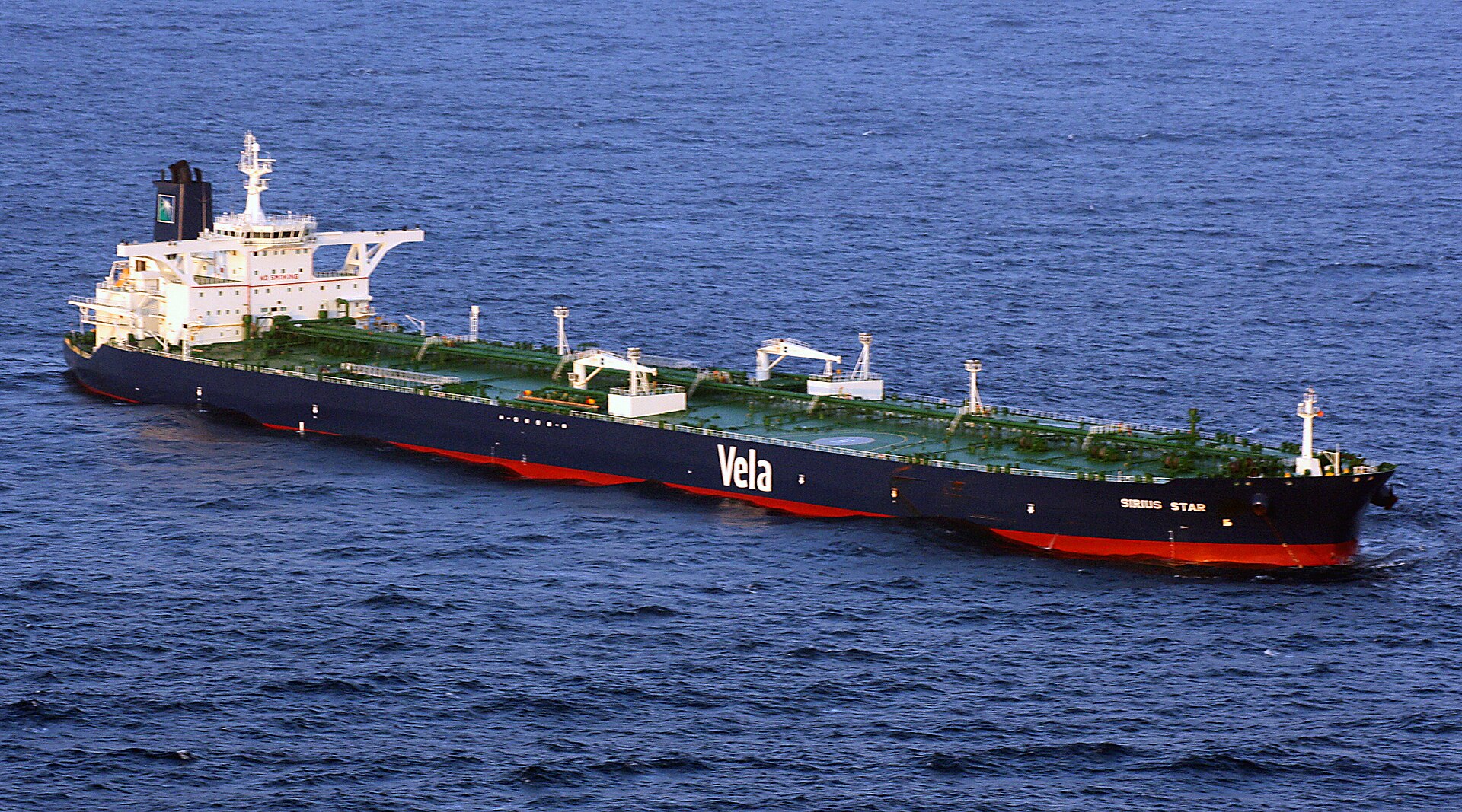
The numbers from Bloomberg’s Julian Lee illustrate the compression. In the five days ending March 24, Yanbu’s actual crude export throughput averaged 4.4 million bpd from both terminals combined — against a target of 5 million bpd — meaning the port had not yet reached even its theoretical ceiling, let alone the pipeline’s. Before the war, Yanbu moved 770,000 to 800,000 bpd; the mid-March surge to approximately 2.9 million bpd represented a greater than 275 percent increase in under three weeks. By late March, monthly VLCC loadings had hit 47, compared with a pre-war average of 11 to 12 in January and February — a fourfold increase in large-vessel traffic that stresses every piece of port infrastructure from pilot boats to storage tanks to the physical number of berths available at any given tide.
Rystad Energy’s Janiv Shah frames the constraint precisely: building additional bypass capacity is “technically possible” but “involves a lot of investment and requires time.” The port of Yanbu was sized for a fraction of its current throughput. Every barrel above the pre-war baseline is being pushed through infrastructure that was not engineered for sustained wartime volumes, and the loading rate has plateaued well below both the pipeline’s delivery capacity and Saudi Arabia’s export ambitions.
The Ceasefire Incentive That Didn’t Materialise
The conventional analytical framework for Hormuz closure assumed a relatively clean sequence: Iran closes the strait, Saudi oil revenues collapse, Riyadh faces fiscal catastrophe, and the Kingdom either pushes Washington toward a ceasefire or negotiates directly with Tehran to reopen the waterway. Every step of that logic depended on Hormuz closure being economically existential for the Saudi state. The pipeline bypass breaks the chain at its first link.
Saudi Arabia’s exports are down, but they are not catastrophically down. Julian Lee’s Bloomberg analysis calculated the shortfall at approximately 2 million bpd below the pre-war baseline — painful, but not the kind of wholesale revenue collapse that forces a government to accept unfavourable terms. When combined with the price effect of the crisis itself — Brent above $109 per barrel as of April 5, and touching $141 on April 2 — the revenue picture is even less dire than the volume numbers suggest. The Kingdom is exporting fewer barrels, but each barrel is worth substantially more, and the net fiscal position is one of resilience rather than emergency.
That fiscal resilience, however, does not extend uniformly across the Saudi economy. Saudi Arabia’s non-oil PMI contraction in March 2026 — the first contraction since the COVID-19 lockdowns of 2020 — reveals the supply chain transmission mechanism the headline oil numbers obscure: export orders at their lowest since the Ukraine shock, supplier delivery times at their worst since June 2020, and input costs rising as Hormuz-dependent freight assumptions unravel.
This is the dynamic that outside observers, particularly those advocating for rapid ceasefire as an assumed Saudi priority, have consistently misread. Riyadh is not desperate to reopen Hormuz on any terms. It is operating — uncomfortably, with real constraints — inside a bypass system that, while degraded from pre-war capacity, provides enough revenue to sustain both the war effort and the domestic economy. The urgency to accept Tehran’s conditions for reopening the strait is measurably lower than it would be without the pipeline, and that asymmetry has shaped Saudi diplomatic positioning since the first week of the conflict.
How Does the Pipeline Explain the OPEC+ Output Hold?
On April 5, OPEC+ eight producers — Saudi Arabia, Russia, Iraq, the UAE, Kuwait, Kazakhstan, Algeria, and Oman — reaffirmed their decision to hold output steady, declining to proceed with a previously planned increase of 206,000 bpd. To analysts working from the assumption that Saudi Arabia needed maximum volume to compensate for Hormuz, this decision appeared contradictory: why would a country struggling to export enough oil voluntarily restrict production?
The pipeline provides the answer. Saudi Arabia cannot physically export its full pre-war volume through Yanbu regardless of OPEC+ quotas — the port bottleneck caps output at roughly 5 million bpd of crude exports even with the pipeline running at full capacity. Adding 206,000 bpd to the production ceiling would not add 206,000 bpd to actual exports; it would add to the backlog of crude with nowhere to go, compounding the approximately 56 million barrels of Saudi oil already trapped on tankers in the Gulf. The output hold is not a sacrifice of potential revenue. It is an acknowledgment of physical constraints that already exist.
Maintaining the output ceiling also serves a price function that directly benefits Riyadh. With Brent elevated above $109, the revenue per barrel compensates for the reduced volume. An OPEC+ increase, even a modest one, would signal to markets that supply constraints are easing — potentially softening the price premium that is currently subsidising Saudi Arabia’s export shortfall. The OPEC+ hold is internally coherent precisely because the pipeline bypass has made volume less important than price for Saudi Arabia’s wartime fiscal balance. What looks like restraint is arithmetic.
Iran’s Counter-Doctrine: If You Can’t Close the Pipe, Hit the Port
Tehran’s operational response to the bypass has been precise and doctrinal. Iran cannot reach the East-West Pipeline itself — 1,200 kilometres of underground steel running through the Saudi interior is not a viable military target without ground forces or a campaign of sustained precision strikes at pump stations deep in denied airspace. But the pipeline has exactly one exit point, and Iran has hit it twice.
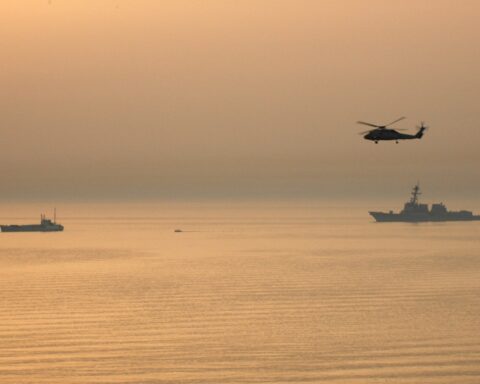
On March 19-20, a Shahed-type one-way attack drone struck the SAMREF refinery at Yanbu — the Saudi Aramco-ExxonMobil joint venture processing 400,000 bpd of Arabian Light crude — while Saudi air defenses, including the Greek-operated PAC-3 battery designated ELDYSA, intercepted two simultaneous ballistic missiles targeting the same complex. Aramco briefly halted crude loadings. Brent surged past $109, hitting an intraday high of $119.50. On April 3, a second strike hit SAMREF again, demonstrating that Iran views the Yanbu node as a repeatable target rather than a one-off escalation.
The pattern extends beyond Yanbu. ENR documented a systematic Iranian campaign against every major Gulf bypass exit point in the war’s first three weeks: Duqm in Oman on March 1 and 3, Fujairah terminal on March 3, the Ruwais refinery on March 10, and Salalah port on March 11. Verisk Maplecroft’s Torbjorn Soltvedt characterised the broader campaign as having “severed a vital artery in global supply chains.” Iran’s doctrine is not to stop the flow — it cannot — but to impose enough friction on the exit infrastructure that the bypass never reaches its theoretical capacity, and to force Saudi Arabia to allocate air defense assets to protect loading terminals that were never designed to operate in a contested environment. The same Oman that Iran struck at Duqm and Salalah is simultaneously the only state co-authoring the diplomatic rules for strait access — Oman and Iran held deputy FM-level talks in Muscat Saturday to draft a joint Hormuz transit protocol.
The Saudi air defense network around Yanbu now includes the Greek ELDYSA battery, Saudi Patriot and THAAD units, and what Lloyd’s List describes as a de facto sovereign maritime corridor extending 200 nautical miles from the port, patrolled by Royal Saudi Naval Forces with satellite-linked AIS monitoring. The defensive perimeter is real and has intercepted multiple inbound threats. But the cost of maintaining it — in interceptor missile expenditure, in the operational tempo required to keep air defense radars continuously active, and in the diplomatic capital spent securing the Greek deployment — is itself a form of attrition that Iran imposes simply by launching cheap drones at irregular intervals.

What Happens If Bab el-Mandeb Closes Too?
The Bab el-Mandeb strait, 29 kilometres wide at its narrowest point, is the southern exit from the Red Sea into the Gulf of Aden and the Indian Ocean. Every barrel of Saudi crude loaded at Yanbu and bound for Asia passes through it. And the Houthis, who control Yemen’s Red Sea coastline, have made their intentions explicit. Deputy Information Minister Mohammed Mansour stated in late March: “Closing the Bab al-Mandeb strait is among our options.” An unnamed Iranian military official told Tasnim News Agency: “Insecurity in other straits, including the Bab al-Mandab Strait and the Red Sea, is one of the options.”
The Houthi arsenal is not theoretical. Over two years of attacks on commercial shipping during the 2023-2025 Red Sea crisis, the group demonstrated Iranian-supplied anti-ship ballistic missiles with ranges exceeding 200 kilometres, sea-skimming cruise missiles, and one-way attack drones capable of hitting vessels anywhere in the southern Red Sea. Former US diplomat Nabeel Khoury characterised recent Houthi strikes as “token participation, not full participation” — a framing that suggests the Bab el-Mandeb closure threat is being held in reserve as a deterrent rather than deployed, which is precisely what makes it dangerous as an escalation tool Iran has not yet spent.
If Bab el-Mandeb closes, the routing consequences are severe. Kpler analyst Panagiotis Krontiras calculated that a Yanbu-to-South Korea voyage currently takes 24 days through the Red Sea and Suez Canal; under a full Bab el-Mandeb closure forcing Cape of Good Hope routing, that extends to 54 days. Tonne-miles triple, fleet availability collapses, and the shift from VLCCs to smaller Suezmaxes for partial-load Suez transits further degrades throughput. Saudi crude would still reach Asian markets — but slower, in smaller parcels, at vastly higher freight costs, and with delivery schedules so extended that refiners would begin drawing down strategic reserves weeks before replacement cargoes arrive.
The two-chokepoint scenario — Hormuz closed from the east, Bab el-Mandeb closed or contested from the south — would not eliminate Saudi exports entirely, but it would compress the effective export rate well below the 5 million bpd target and shatter the price stability that the bypass has partially maintained. It is the scenario in which the pipeline ceases to function as strategic insurance and becomes, instead, a supply line under siege from both ends. For a full analysis of the Bab al-Mandeb vulnerability in Saudi Arabia’s bypass strategy — including Houthi arsenal capabilities, Cape of Good Hope routing costs, and the two-chokepoint fiscal arithmetic — see Saudi Arabia Solved the Wrong Chokepoint: The Yanbu Bypass Ends in Houthi Territory.
The Grade Problem Nobody Is Talking About
There is a less visible constraint embedded in the pipeline bypass that has received almost no coverage outside specialist commodity desks: the East-West Pipeline carries a single grade. BloombergNEF reported in late March that April allocations for Saudi crude “remain constrained by pipeline capacity, with refiners only offered Arab Light grade.” The heavier and sourer grades that constitute a substantial share of Saudi production — Arab Medium, Arab Heavy, and the ultra-heavy grades that feed complex refineries in Asia — cannot move through the pipeline and are functionally stranded.
This matters for two reasons that compound each other. First, the approximately 56 million barrels of Saudi crude trapped on tankers in the Gulf are disproportionately heavy and sour — the grades that Gulf-based refineries in India, South Korea, and Japan are configured to process. Those refiners cannot simply substitute Arab Light from Yanbu for the Arab Heavy they normally receive from Ras Tanura; the refinery configurations, cracking units, and desulphurisation capacity are grade-specific, and switching grades means running below optimal capacity or producing a different slate of refined products. Second, as Global Risk Management’s Arne Lohmann Rasmussen observed, the broader Hormuz closure is “very much a distillate crisis — a jet fuel and diesel crisis, especially in Europe.” The product gap created by the closure of Gulf refineries that turn heavy crude into diesel and jet fuel is not something the East-West Pipeline can address, because the pipeline moves crude, not refined products, and the crude it moves is the lighter grade that produces less of precisely the distillates the world is short on.
India’s position is further complicated by a US sanctions waiver with no structural safeguards. On March 20, OFAC issued General License U — a 30-day instrument permitting transactions on Iranian crude loaded before that date, with no escrow mechanism, no volume cap, and no reporting obligation. On April 4, India confirmed its first Iranian crude purchase since May 2019, absorbing supply that the East-West Pipeline cannot replace in the grades Asian refiners actually need. The competitive pressure on Saudi Arabia’s swing-supplier narrative intensified further on April 6, when Iran began selectively reopening the gas lane for Qatar: two laden Qatari LNG tankers are attempting the first Hormuz gas-cargo exit since February 28, introducing an LNG supply option into markets where the East-West Pipeline can deliver only Arab Light crude — and one more alternative that erodes the premium buyers have been paying Riyadh for Yanbu-route energy.
The bypass, in other words, compensates for the volume of crude Saudi Arabia cannot export through Hormuz, but it does not compensate for the composition of that crude or the refined products that Gulf-coast refineries would have produced from it. Ellen Wald of Transversal Consulting noted that converting NGL lines to crude capacity also means abandoning natural gas liquids export capacity — a distinct cost with its own downstream consequences for the petrochemical sector. The pipeline is a crude lifeline, not a complete replacement for the integrated export system that Hormuz closure destroyed.
| Metric | Pre-War (via Hormuz) | Current (via Yanbu) | Gap |
|---|---|---|---|
| Pipeline throughput | N/A | 7.0 million bpd | — |
| Domestic refinery allocation | ~3.0 million bpd | ~2.0 million bpd (pipeline-fed) | — |
| Crude export volume | ~6.7–7.0 million bpd | ~4.4–5.0 million bpd | ~2.0 million bpd |
| Refined product exports | Included in baseline | 0.7–0.9 million bpd | — |
| Crude grades available | Arab Light, Medium, Heavy | Arab Light only | Medium & Heavy stranded |
| Stranded crude (Gulf tankers) | — | ~56 million barrels | — |
| Port loading tested rate | N/A | ~4.0 million bpd | 1.0 million bpd below target |
| VLCC loadings (monthly) | 11–12 | 47 (March) | +300% |
Sources: Bloomberg/Julian Lee (March 25, 2026); BloombergNEF (March 20, 2026); Fortune/Bloomberg (March 28, 2026); ENR; Seatrade Maritime. All figures reflect the most recent available data as of early April 2026.
Saudi Fiscal Arithmetic at $109 Brent
The IMF pegs Saudi Arabia’s fiscal breakeven at $86.60 per barrel for central government spending; Bloomberg Economics puts the consolidated figure, including Public Investment Fund outlays, at $94. With Brent at $109 on April 5, the Kingdom is generating surplus revenue on every barrel that leaves Yanbu, even though total volume is roughly 2 million bpd below the pre-war baseline. The mathematics of high price and reduced volume are doing something that raw export numbers obscure: they are producing fiscal adequacy at a throughput level the bypass can sustain.
Consider the arithmetic at its simplest. At the pre-war baseline of approximately 6.7 million bpd in crude exports and a pre-crisis Brent of $75, daily crude revenue was roughly $502 million; at the current 4.4 to 5.0 million bpd through Yanbu and $109 Brent, daily crude revenue is approximately $480 to $545 million — a range that overlaps with and potentially exceeds the pre-war figure. Saudi Arabia is, in crude financial terms, not losing money on the crisis, and is, depending on the day’s price and loading rate, roughly breaking even or running ahead. The addition of 700,000 to 900,000 bpd in refined product exports at even higher per-barrel margins compounds the effect.
This is the fiscal foundation beneath the diplomatic posture. Riyadh can afford to negotiate slowly, to reject terms it considers unfavourable, and to calibrate its approach to Washington without the desperation that a genuine revenue crisis would impose. The bypass has not made Saudi Arabia comfortable — the operational strain on Yanbu, the air defense costs, the loss of heavy-grade export revenue, and the stranded tanker fleet are all real — but it has made the Kingdom solvent under conditions that were supposed to produce fiscal collapse — a resilience that depends on the bypass holding, on Brent staying elevated, and on Vision 2030 commitments that were already being scaled back before the war began. The fiscal deterioration began fiscal collapse. The difference between discomfort and collapse is the difference between a country that can choose its terms and one that cannot.
Decoupling or Pressure Valve: How Long Can the Bypass Hold?
The question that determines whether the East-West Pipeline is a genuine strategic asset or a temporary reprieve is one of duration and degradation. ENR’s headline assessment — “Hormuz Bypass Infrastructure Was Sized for a Short Disruption. This Is Not That” — captures the engineering reality. The pipeline’s original design assumption was days-to-weeks of disruption: a tanker war that threatened shipping but never fully closed the strait, a political crisis that temporarily restricted passage, a natural disaster that damaged port infrastructure. Sustained multi-month closure with an active adversary targeting the exit node was outside the design envelope, and the infrastructure is now operating well beyond any scenario its engineers contemplated in 1981.
The physical wear on the system is not yet publicly documented, but the indicators are directional. The pipeline is running at its absolute ceiling — 7 million bpd, the emergency capacity — with no operational margin for maintenance shutdowns, pump station repairs, or the kind of periodic derating that pipeline engineers normally schedule over multi-month periods. Yanbu’s port infrastructure is handling four times its pre-war vessel traffic. Storage tanks that were sized for 800,000 bpd of throughput are cycling at five to six times that rate, which accelerates corrosion, stresses pumping equipment, and compresses the maintenance windows that prevent small problems from becoming large ones.
On the security side, the sustainability question is inseparable from the Iranian targeting pattern. Each SAMREF strike — and particularly the April 3 repeat attack — tests the air defense perimeter, depletes interceptor stocks, and forces Saudi Arabia to maintain a permanent defensive posture around a single industrial complex. If Iran escalates from Shahed drones to more sophisticated cruise missile salvos, or coordinates Houthi Bab el-Mandeb operations with direct strikes on Yanbu, the bypass could degrade from a 5-million-bpd lifeline to something substantially less without any single dramatic failure — just a grinding accumulation of downtime, repair cycles, and loading interruptions that push actual throughput below the level at which Saudi fiscal arithmetic still works.
The pipeline has bought Saudi Arabia time and options that the original crisis framework did not anticipate. Whether it has bought enough of both depends on how long the war lasts, how effectively Iran can attrite the exit infrastructure, and whether Bab el-Mandeb remains a threat rather than a blockade. Aramco’s engineers built an insurance policy in 1981. Forty-five years later, the policy is being tested at its maximum payout, against a claimant that knows exactly where to apply pressure, in a crisis that was never supposed to last this long.
That long-war logic is now embedded in Saudi Arabia’s sovereign wealth architecture. The PIF 2026-2030 strategy, released the same week Hormuz exports fell to half pre-war volumes, cuts capital expenditure by 15% and suspends megaprojects dependent on pre-war freight assumptions — treating the bypass infrastructure not as a temporary fix but as the new normal.
Hormuz Bypass Infrastructure Was Sized for a Short Disruption. This Is Not That.
— Engineering News-Record, March 2026
Frequently Asked Questions
How was the East-West Pipeline capacity expanded from 5 to 7 million bpd?
Aramco converted parallel natural gas liquids (NGL) pipelines — originally used to transport ethane, propane, and butane to petrochemical facilities — to carry crude oil, adding approximately 2 million bpd of emergency capacity. The conversion was engineered beginning in 2019 after the Abqaiq drone strikes but not activated at scale until March 2026. The trade-off, as Ellen Wald of Transversal Consulting noted, is that Saudi Arabia has effectively sacrificed its NGL export capacity for the duration of the bypass operation, reducing feedstock availability for the petrochemical sector, including SABIC’s Yanbu operations and planned downstream expansions under Vision 2030 industrial diversification.
Can other Gulf states replicate the Saudi pipeline bypass?
The UAE operates the Abu Dhabi Crude Oil Pipeline (ADCOP), which moves approximately 1.5 million bpd to the port of Fujairah on the Gulf of Oman, bypassing Hormuz. However, Fujairah was struck by Iranian forces on March 3, 2026, and its location on the Gulf of Oman — while outside the strait itself — remains within range of Iranian naval and aerial assets in a way that Yanbu, on the opposite side of the Arabian Peninsula, is not. Iraq and Kuwait have no comparable bypass infrastructure. Iraq’s proposed Basra-Aqaba pipeline through Jordan has been in planning stages for over a decade without construction. Kuwait is entirely dependent on Hormuz for its approximately 2.5 million bpd of exports, which is one reason Iranian strikes on Kuwaiti infrastructure on April 3 carried such disproportionate weight.
What percentage of global oil trade does the Saudi bypass actually replace?
The Strait of Hormuz carried approximately 20 million bpd of crude and products in 2025. Saudi Arabia’s maximum bypass export capacity of roughly 5 million bpd of crude offsets approximately 25 percent of the strait’s total pre-closure flow. The remaining 75 percent — including Iraqi, Kuwaiti, Emirati, and (pre-sanctions) Iranian volumes — has no bypass route. The pipeline solves the Saudi-specific problem at 70 to 85 percent of pre-war volume; it does nothing for the roughly 10 to 12 million bpd of non-Saudi crude that Hormuz carried, which is why global oil prices remain at crisis levels despite the bypass functioning. The April 4 Iraqi exemption from Iranian Hormuz restrictions — freeing up to three million barrels per day of Iraqi crude — underscores how Iran has converted the strait into a politically selective toll corridor rather than a blanket blockade.
How vulnerable is the pipeline itself to physical attack?
The pipeline runs underground for its entire 1,200-kilometre length across the Saudi interior, making it exceptionally difficult to target from the air. Above-ground pump stations, of which there are approximately a dozen along the route, are the theoretical vulnerability — but they are deep inside Saudi territory, beyond the operational range of Iranian drones launched from Iranian soil (approximately 1,800 km one-way), and would require either a sophisticated cruise missile campaign or proxy sabotage to reach. Iran has not attempted to strike the pipeline itself, focusing instead on the Yanbu exit point, which is both accessible from the Red Sea and operationally more disruptive — shutting down a loading terminal stops exports immediately, whereas damaging a pump station can be compensated by rerouting flow through adjacent stations. That theoretical vulnerability became reality on April 8, when an IRGC drone struck a pump station on the East-West Pipeline on the same day a ceasefire was supposed to restore Hormuz bypass economics — collapsing the pricing logic behind Aramco’s May OSP in a single strike.
Could Saudi Arabia build additional Red Sea port capacity to close the loading gap?
Rystad Energy’s Janiv Shah assessed that expanding Yanbu’s loading infrastructure is “technically possible” but “involves a lot of investment and requires time” — likely 18 to 24 months minimum for additional deepwater berths capable of handling VLCCs, and longer for full storage and pipeline connection infrastructure. Saudi Arabia has reportedly begun engineering assessments for an emergency expansion of the Yanbu South terminal, and there is discussion of activating ancillary loading points at the industrial port of Rabigh, approximately 150 km south of Yanbu, which has existing refinery infrastructure and limited tanker berthing capability. Neither option delivers additional capacity on a timeline relevant to the current conflict. Aramco’s pricing strategy reflects that constraint directly: the record +$19.50/bbl May OSP to Asia — analyzed in depth by House of Saud’s energy desk — was set $20.50 below Bloomberg’s $40 market expectation, a deliberate signal that Riyadh is prioritizing customer retention over revenue maximization as Yanbu becomes the critical export node. Read the full Aramco OSP analysis here. The deeper question — what happens to Aramco if Kharg goes dark entirely and Riyadh must choose between filling the supply gap and becoming an IRGC target — is analyzed in Kharg Goes Dark and Aramco Faces a $612 Million Daily Bet. The bypass arithmetic also illustrates why Brent’s 15-percent ceasefire drop may have overshot: the ceasefire Hormuz throughput figure on April 7 was only 15–20 ships, against a pre-war daily average of 138. What the bypass route does not address, however, is the Bab al-Mandab threat that the bypass route does not address — Houthis control the western exit through which 90 percent of Yanbu crude must pass to reach Asian buyers, with no ceasefire obligation. The April 13 CENTCOM blockade announcement coincided with Iran’s senior foreign policy adviser equating Bab el-Mandeb with Hormuz as a single chokepoint architecture — a declaration whose fiscal consequences for Saudi Arabia are analyzed in The Bypass Was the Hedge. Now the Hedge Is Threatened. The Yanbu ceiling’s effect on Aramco’s Q1 2026 earnings — and why the 2019 IPO structure allows the company to report a 57% profit surge even as the bypass arithmetic leaves the Saudi state $57.86 billion short — is the subject of Aramco’s Q1 2026 War-Price Paradox: 57% Profit Surge, 30% Production Loss, and the IPO Architecture That Separates Them.
The wartime reconfiguration of Saudi Arabia’s export geography — and how MBS has turned the Red Sea coast into the kingdom’s new economic front door, from the Yanbu terminal surge to Oxagon port and the $600 billion in US deals unveiled at the Riyadh investment forum — is examined in War Made the Red Sea Saudi Arabia’s Front Door.