WASHINGTON — President Donald Trump on April 12, 2026, shared a Just the News article on Truth Social advocating a US naval blockade of Iran’s oil exports — including the seizure or destruction of Kharg Island — hours after 21 hours of negotiations in Islamabad ended without agreement. The repost, which cited retired Gen. Jack Keane’s argument that taking Kharg would be “checkmate,” came as Vice President JD Vance told reporters that Iran had failed to make any commitment on nuclear weapons abandonment despite what Washington described as a “quite flexible” US position. The immediate context for that blockade declaration included Russia’s VLCC Arhimeda caught in the blockade zone — a formerly OFAC-sanctioned vessel that had sailed toward Kharg Island on April 9-10, two days before Trump’s Truth Social post, exposing the conflict between Moscow’s UNSC veto posture and its shadow fleet commercial operations.
The signal marks a qualitative shift from the mine-clearing operations CENTCOM began on April 11 — an act of freedom-of-navigation assertion — to the threat of economic blockade, which under UNGA Resolution 3314 and the San Remo Manual constitutes an act of war. For Saudi Arabia, whose territory hosts the US military infrastructure from which any blockade would be enforced, the distinction is not academic. Iran has already struck Prince Sultan Air Base, destroying an E-3G Sentry valued at $500 million and at least one KC-135 tanker, while a senior Gulf official told Fox News that Riyadh “will not allow use of its airspace or bases for any US strike on Iran.” The gap between that declaration and the operational reality on the ground is where Saudi exposure lives.
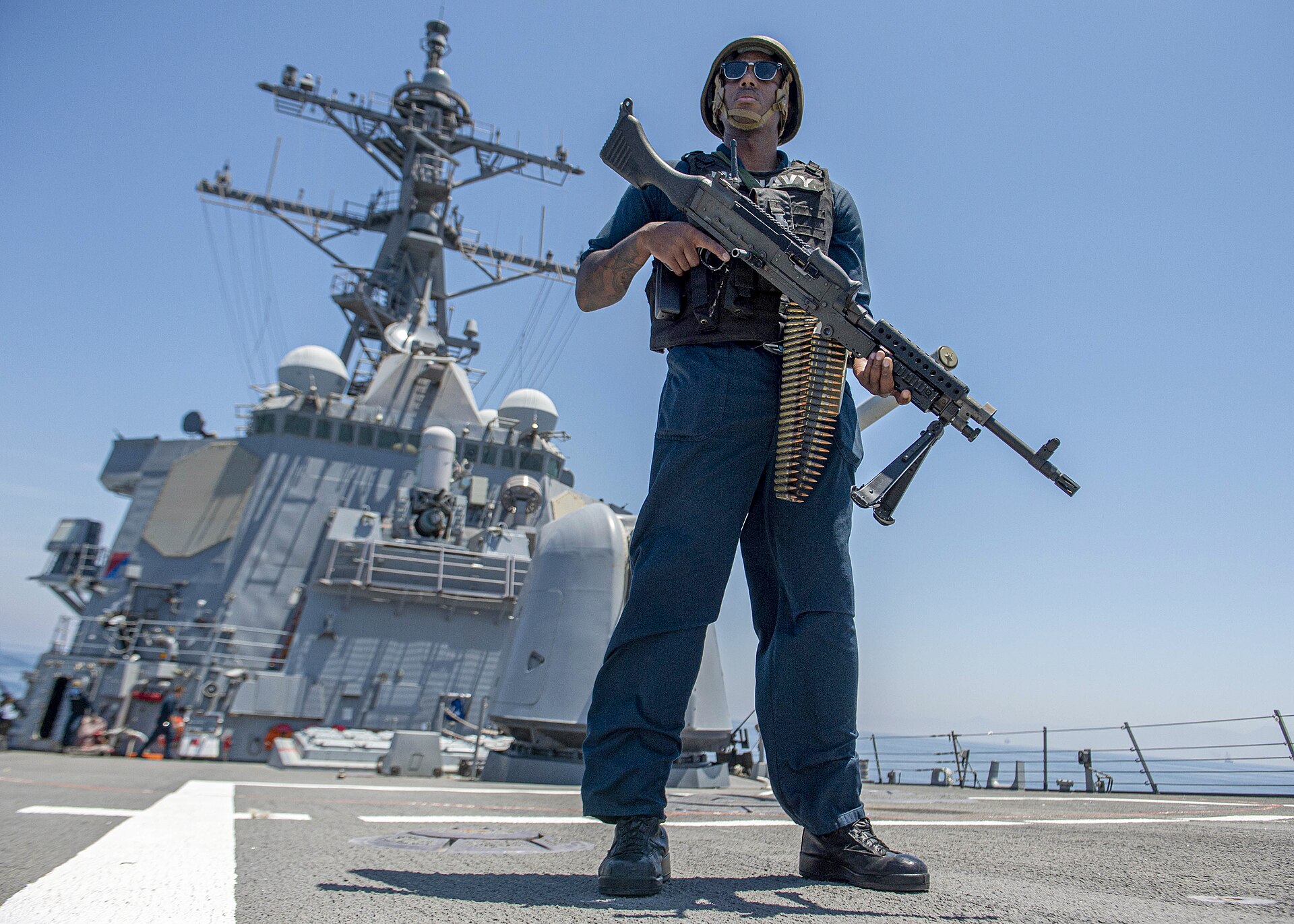
Table of Contents
From Mine-Clearing to Blockade: The Legal Line
On April 11, the guided-missile destroyers USS Frank E. Peterson (DDG-121) and USS Michael Murphy (DDG-112) transited the Strait of Hormuz. CENTCOM framed the operation in defensive terms. Adm. Brad Cooper stated: “Today, we began the process of establishing a new passage, and we will share this safe pathway with the maritime industry soon to encourage the free flow of commerce.”
Today, we began the process of establishing a new passage. We will share this safe pathway with the maritime industry soon to encourage the free flow of commerce.
— Adm. Brad Cooper, CENTCOM
Mine-clearing is a freedom-of-navigation operation — it asserts UNCLOS transit passage rights, a legally defensive posture. A blockade is something else entirely. The San Remo Manual on International Law Applicable to Armed Conflicts at Sea (1994) classifies blockade as an act of economic warfare requiring formal declaration, effective enforcement, and impartial application to all flags. Moving from one to the other transforms the United States from a passage-asserting neutral into a co-belligerent.
The Middle East briefing 3,000+ readers start their day with.
One email. Every weekday morning. Free.
Trump appeared to acknowledge the mine threat on April 11, telling reporters: “We’re sweeping these strait. In addition to that, we’re negotiating.” He said Iran “probably has a couple of mines” but that the US has minesweepers. By April 12, with talks collapsed, the framing shifted. The Just the News article he amplified did not discuss mine-clearing. It discussed choking off Iran’s oil revenue — and cited the 2026 US naval blockade of Venezuela as a proven operational template.
Bloomberg reported on April 11 that its regional intelligence source said the two US destroyers had “turned back” — a claim CENTCOM disputed, insisting the transit was completed. The contradiction remains unresolved.
The Keane Doctrine and the Kharg Island Option
The article Trump reposted centers on proposals by retired Gen. Jack Keane, former Army Vice Chief of Staff, who has outlined two variants of the same strategy. The first: occupy or destroy Kharg Island outright. The second: establish a naval blockade interdicting ships that have loaded at Kharg’s oil terminals.
Taking Kharg Island would be checkmate — the U.S. would own all of their major assets: 50% of their budget, 60% of their revenue, and 80-90% of the distribution points for their oil.
— Retired Gen. Jack Keane, former Army Vice Chief of Staff, Fox News
Keane told PBS NewsHour that the sea blockade option “could be a better option than seizing the island if the goal is to hobble Iran’s oil industry for leverage.” The distinction matters operationally — an island seizure requires ground forces, a blockade requires sustained naval presence — but both cross the same legal threshold.
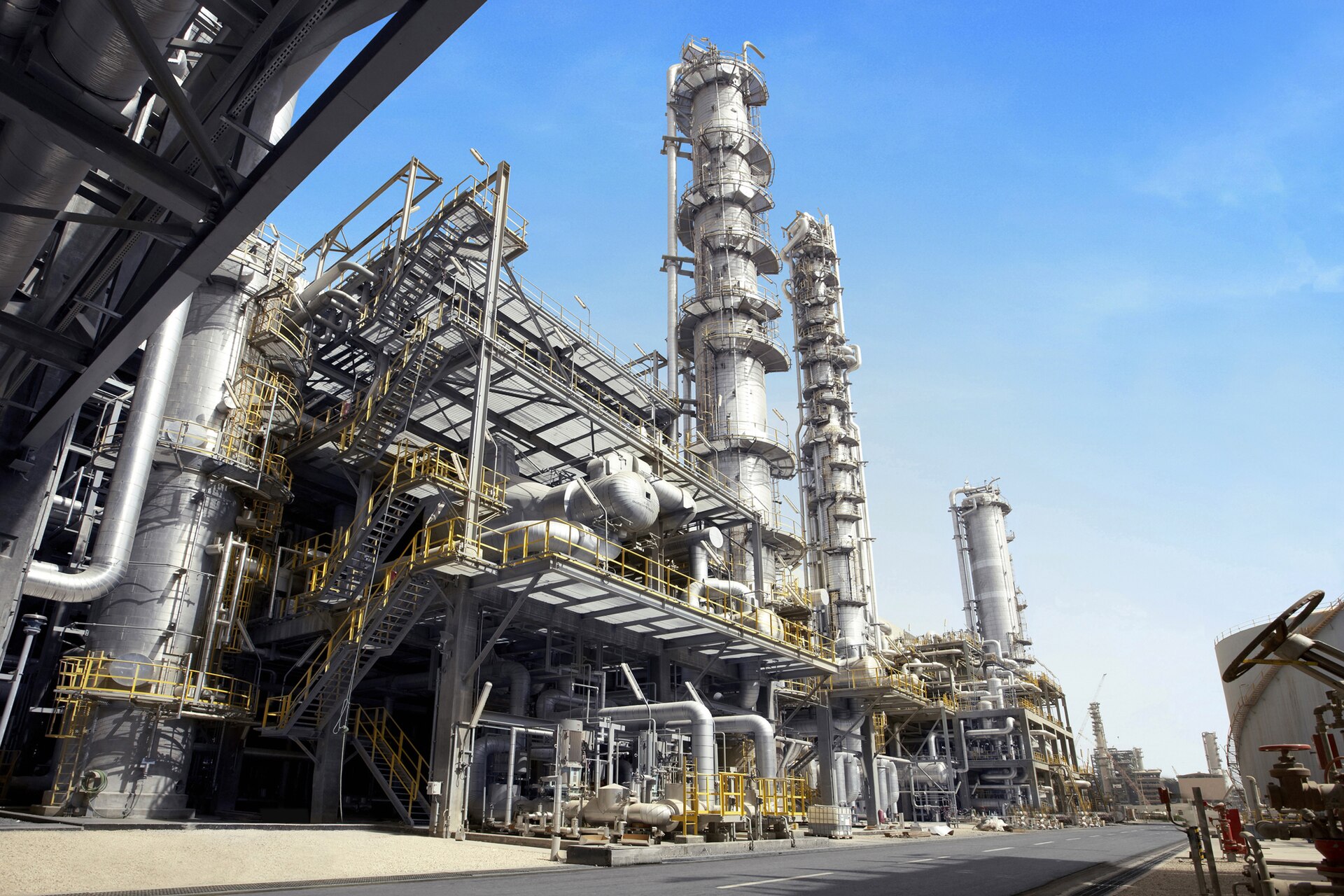
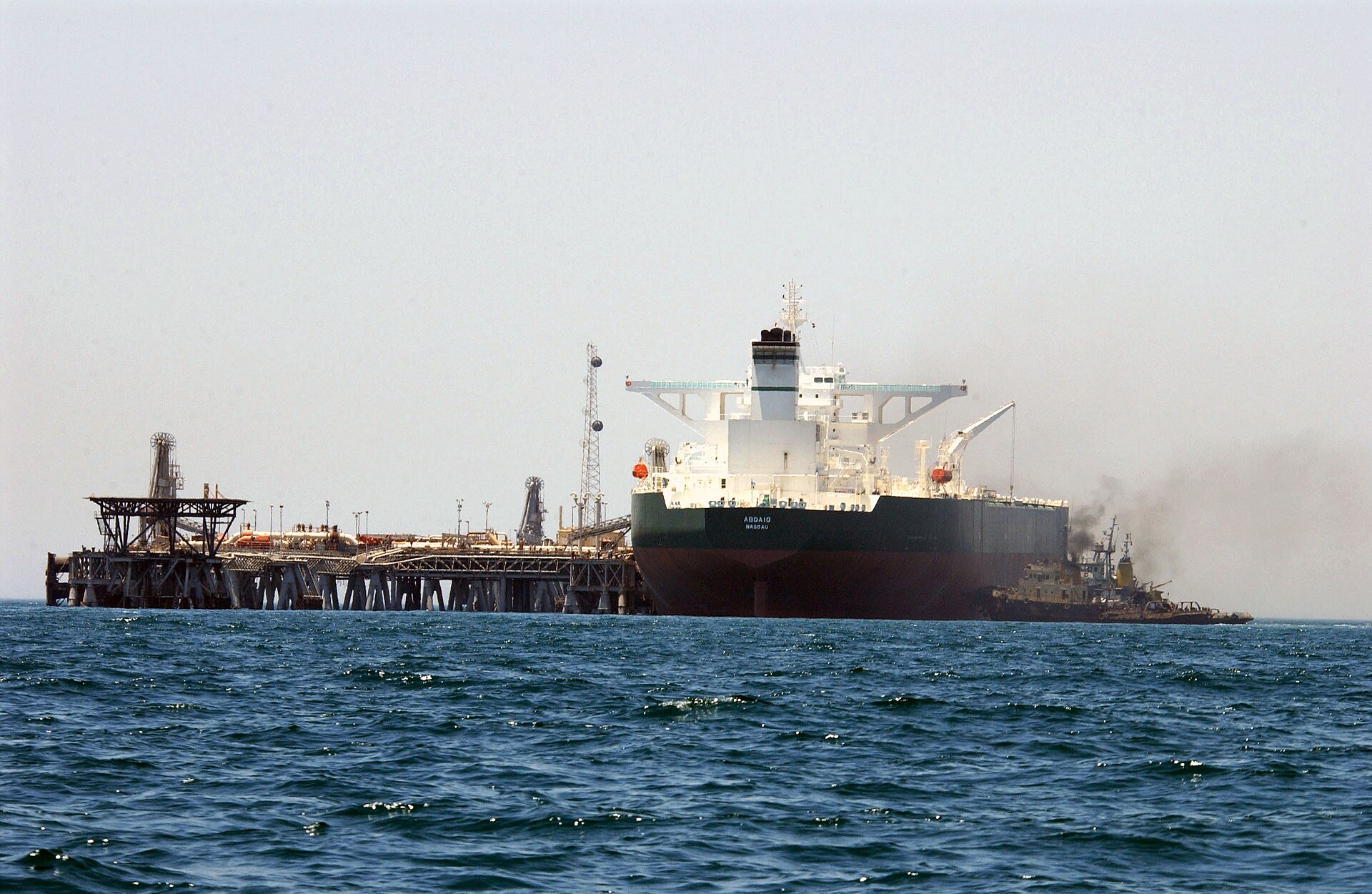
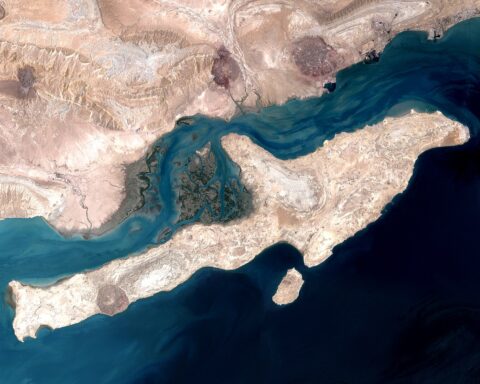
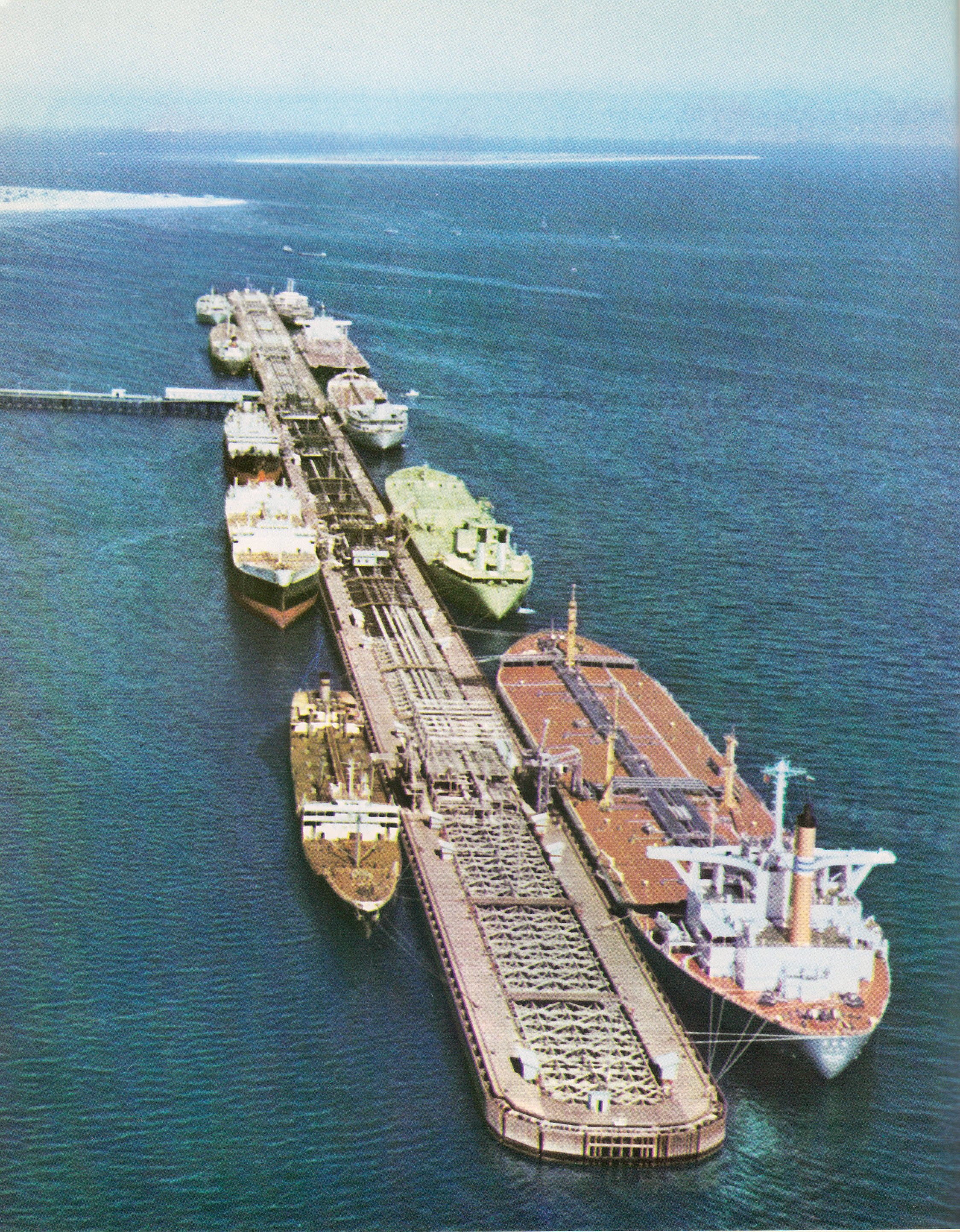
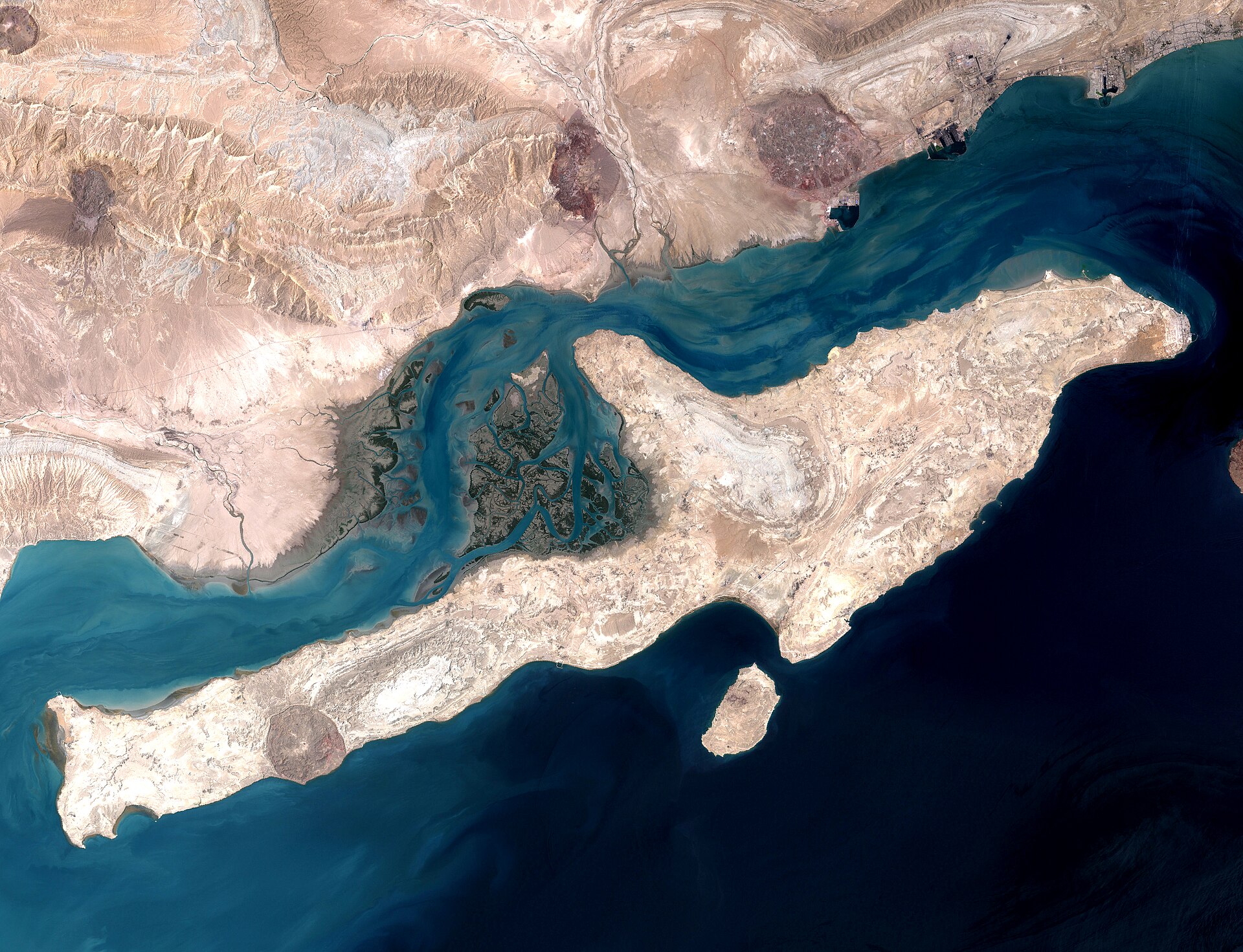
Kharg Island handles over 90 percent of Iran’s crude oil exports, generating roughly $139 million per day in revenue as of March 2026. The US has already struck Kharg twice during the current conflict, targeting military installations while leaving oil terminals intact. TankerTrackers confirmed after the second strike on April 7 that the terminals remained “fully operational.” The Council on Foreign Relations assessed that the decision to spare oil infrastructure reflected a deliberate calculus: preserving it as coercive leverage and as an asset for any successor government.
Bob McNally, founder of Rapidan Energy, told Fortune on April 11 that the US was “getting ready for round 2,” adding: “As we work on Iran’s ability to disrupt Hormuz, Iran’s leverage starts to erode.”
What Does a Blockade Mean Under International Law?
The United States has avoided the word “blockade” in every major naval interdiction operation since 1945 — and for precise legal reasons. During the 1962 Cuban Missile Crisis, President Kennedy renamed the operation a “quarantine” after Secretary of State Dean Rusk testified to Congress that a blockade “would be an act of war.” In 1990, the George H.W. Bush administration used “interdiction” against Iraq for the same reason: both “blockade” and “quarantine” carry legal implications under international law that the US preferred to sidestep.
UNGA Resolution 3314 (1974), the Definition of Aggression, lists blockade among the acts that constitute an “armed attack” — triggering the target state’s right to self-defense under Article 51 of the UN Charter. The San Remo Manual further requires that any blockade be formally declared, effectively enforced, applied impartially to all flags, and must not bar neutral states’ access to their own coasts.
A blockade of Kharg Island — or of Iranian-loaded tankers transiting Hormuz — would fail the impartiality test almost immediately. Chinese vessels have been transiting under IRGC-brokered arrangements since at least April 6, when the LNG carrier Al Daayen passed through at 8.8 knots en route to China under what this publication has described as a Beijing-intermediated corridor. Interdicting Chinese-flagged or Chinese-chartered vessels carrying Iranian crude would constitute an act against a third party with which the US is not at war.
Iran’s Embassy in Japan responded directly on April 12, calling the blockade threat “perhaps a tactical bluff, perhaps not — but it represents neither a breakthrough nor a magic bullet.” The embassy warned it “would disastrously backfire, crippling the Strait of Hormuz traffic, imperiling U.S. forces, sending oil prices skyrocketing, and shattering the global economy.” The oil market’s muted response — Brent closing near $96 rather than spiking — reflects three embedded assumptions about blockade enforcement, diplomatic reversal, and bypass capacity that an analysis of the credibility trap argues are all wrong.
Can Saudi Arabia Survive a US Blockade of Iran?
A US blockade of Iran conducted from Saudi-hosted military infrastructure crosses the legal threshold — under IRGC targeting doctrine — from tolerated host nation to co-belligerent. Seth G. Jones, Harold Brown Chair at CSIS, has identified Abqaiq, Ras Tanura, and Yanbu as Iran’s most likely escalation targets if Saudi Arabia becomes operationally integrated into US economic warfare against Tehran. Jones assessed that Iran’s escalation threshold is “actions that threaten the regime’s survival” — and oil-revenue denial via blockade explicitly meets that standard.
Saudi Arabia’s non-belligerence posture has already been punctured in practice. A senior Gulf official told Fox News that the kingdom “will not allow use of its airspace or bases for any US strike on Iran.” Yet Iran struck Prince Sultan Air Base — the primary US operational hub — regardless. A formal US blockade launched from the same facilities would remove any remaining ambiguity about Saudi Arabia’s role. The structural logic of that ambiguity — why Riyadh has declined to clarify its position even after Trump declared a blockade — is examined in a separate analysis of Saudi Arabia’s silence on the US Hormuz blockade.
The kingdom’s air defense capacity is diminished. Saudi PAC-3 MSE inventory stands at approximately 400 rounds — roughly 86 percent depleted from the pre-war stockpile of 2,800. The Camden, Arkansas production facility manufactures 620 rounds per year. During the first 35 days of the conflict, Saudi forces intercepted 799 drones and 95 ballistic missiles — an average of approximately 25 per day. At that rate, the remaining stockpile covers 16 days.
Saudi upstream oil recovery has been proceeding through the East-West Pipeline to Yanbu, which provides an effective bypass capacity of 5.9 million barrels per day against pre-war Hormuz throughput of 7 to 7.5 million bpd — a structural gap of 1.1 to 1.6 million bpd. An Iranian retaliatory strike on the pipeline’s pumping stations — the IRGC struck one on April 8, hours after the ceasefire nominally began — would eliminate the bypass entirely.
Riyadh’s silence on the blockade signal is not neutrality. It is geometric exposure: the same bases that would serve a US blockade are the first targets in Iran’s response doctrine.
The blockade signal also accelerates a parallel reckoning. The US zero-enrichment demand that collapsed the Islamabad talks ensures Iran remains a permanent threshold nuclear state — and the Islamabad collapse has converted MBS’s seven-year nuclear conditional into an active policy variable, with the weakened 123 agreement now providing the legal architecture for Saudi enrichment that was never available before.
IRGC Escalation Doctrine: What Iran Has Promised
Mona Yacoubian of CSIS describes the IRGC’s strategic logic as “unbridled escalation — horizontal expansion across nations and vertical escalation from military to civilian to energy infrastructure.” The doctrine is triggered by threats to regime survival, and a blockade of Iran’s primary revenue source meets that threshold by design.
The coalition architecture that frames the blockade also reveals the GCC’s internal fault lines. The UAE and Bahrain are the only Gulf states that formally joined the 22-nation US-led Hormuz security coalition; Saudi Arabia stayed out, Kuwait and Qatar abstained, and Oman — Iran’s primary backchannel — actively opposed the framing. Why Saudi Arabia refused coalition membership while the UAE signed on is central to understanding which Gulf state absorbs the diplomatic costs of a blockade, and which preserves the flexibility to broker its end.
We will inflict such damage on the infrastructure of the US and its partners that they will be deprived of the region’s oil and gas for years to come.
— IRGC statement, April 8, 2026, via PressTV
That pre-ceasefire statement, published on April 8 via PressTV and archived by GlobalSecurity.org, targeted not only US military assets but partner-nation energy infrastructure. The IRGC has acted on similar threats throughout the conflict: Kuwait’s KPC headquarters was struck, Bahrain’s Bapco storage facilities were hit, and Saudi Arabia’s SAMREF refinery at Yanbu was attacked on April 3. The pattern is consistent with what Yacoubian described — horizontal expansion across multiple Gulf states.
On April 12, the IRGC Navy declared “full authority to manage the Strait of Hormuz” and warned that any warship transit would be “strictly suppressed.” The declaration came from an organization whose commander, Alireza Tangsiri, was killed on March 30, with no named successor publicly announced. The IRGC Navy is operating with a headless command structure but undiminished operational tempo — a combination that makes calibrated restraint less likely, not more.
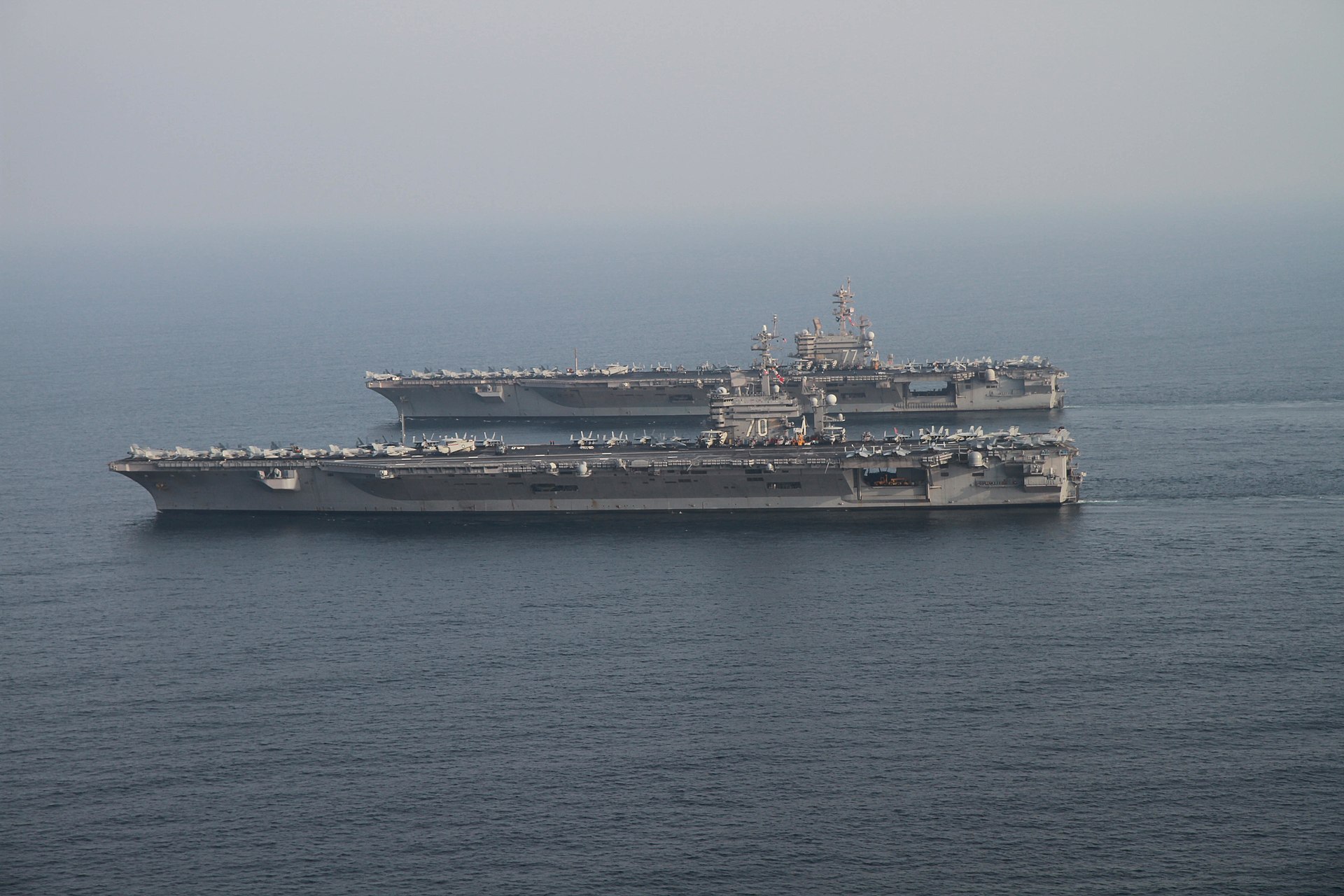
Two US carrier strike groups are deployed in the theater — CSG-3 (USS Carl Vinson) and CSG-12 (USS Abraham Lincoln) — according to US Naval Institute tracking as of April 11. Satellite imagery reviewed by Defence Security Asia showed at least one carrier group had pulled back from its forward Hormuz position following an IRGC drone challenge. The carriers provide the strike capability for a blockade but also represent the highest-value targets Iran could hit to force a US withdrawal — a calculus Tehran has made explicit. The headless command question raised by Tangsiri’s death sharpens that calculus: a force with no named commander and no authorization ceiling has little institutional reason to distinguish between mine-clearance destroyers and blockade vessels.
Background
The Islamabad talks collapsed on April 12. Vice President Vance, who had met directly with Iranian Parliament Speaker Mohammad Bagher Ghalibaf on April 11 — the first face-to-face US-Iran meeting since 1979 — said Washington had been “quite flexible” but that Iran refused to commit to abandoning its nuclear weapons program. The Iranian delegation described negotiations as “conducted in an atmosphere of mistrust” and reiterated demands for the right to enrichment, full sanctions removal, and US troop withdrawal from all regional bases.
The same morning the Islamabad talks failed, the Mombasa B transit that followed — a Liberia-flagged VLCC managed by South Korea’s Sinokor Maritime — completed what is now likely the last low-jeopardy commercial passage through the strait before the blockade took effect.
Trump’s blockade signal via the Keane article followed the Venezuela precedent directly. The Just the News piece cited the 2026 US naval blockade of Venezuela as an operational template — an action the administration undertook without congressional authorization and which remains legally contested.
The ceasefire agreed at Islamabad in early April expires on April 22. No extension mechanism exists. Pakistan, which brokered the original accord, has been functioning as the sole enforcement mechanism — a role that exceeds both its capacity and its leverage over IRGC operational commanders.
Frequently Asked Questions
Has the US formally declared a blockade of Iran?
No. As of April 12, the US has not declared a blockade. CENTCOM’s operational posture remains framed as mine-clearing and freedom-of-navigation enforcement. Trump’s Truth Social repost of the Keane blockade proposal constitutes a signal, not a policy announcement. The San Remo Manual requires formal declaration before a blockade becomes legally operative — and the US has historically avoided using the word “blockade” precisely because of its legal implications, substituting “quarantine” (Cuba 1962) and “interdiction” (Iraq 1990).
How would a blockade differ from the current mine-clearing operations?
Mine-clearing removes obstacles to free transit for all vessels — it is legally a defensive operation asserting UNCLOS passage rights. A blockade selectively denies transit to vessels serving a specific state’s commerce. Under the San Remo Manual, it requires impartial application to all flags, effective enforcement, and formal notification. A blockade of Iranian oil would require the US Navy to stop, board, and potentially seize vessels of multiple nationalities — including Chinese-flagged ships that have been transiting under IRGC-brokered arrangements. CENTCOM currently has two carrier strike groups and at least two destroyers in theater, but sustained blockade enforcement across the 21-mile-wide strait would require additional assets and would expose surface vessels to IRGC anti-ship missile batteries on the Iranian coastline.
What oil price impact would a blockade have?
Brent crude closed at approximately $91 per barrel on April 12, already reflecting post-ceasefire partial recovery from the $109 wartime peak. Kharg Island handles over 90 percent of Iran’s crude exports — roughly 1.5 to 2.0 million barrels per day at current wartime rates, though pre-war capacity exceeded 2.5 million bpd. Kpler estimated the broader Hormuz disruption had already created a 6-million-bpd supply deficit. A formal blockade would signal prolonged disruption, likely pushing Brent above $100 again. Saudi Arabia’s fiscal break-even — estimated by Bloomberg at $108 to $111 per barrel including PIF expenditures — means Riyadh would benefit from the price spike even as it absorbs the physical risk.
Could Iran retaliate against a blockade without striking Saudi Arabia?
Theoretically, Iran could limit retaliation to US naval assets in international waters. In practice, the IRGC’s escalation doctrine — described by CSIS’s Yacoubian as “horizontal expansion across nations” — makes selective targeting unlikely. The IRGC struck bases in Qatar (Al Udeid), Kuwait (Ali Al Salem), the UAE (Al Dhafra), Bahrain (NSA Bahrain), and Saudi Arabia (Prince Sultan Air Base) from the first days of the war, regardless of each host nation’s declared neutrality. The Lavan Island refinery strike by the US on April 12 further compressed the timeline for Iranian retaliation. IRGC targeting doctrine treats US basing infrastructure and host-nation energy assets as a single target set.
What role does Congress play in authorizing a blockade?
Under the War Powers Resolution (1973), the president can deploy military forces for 60 days without congressional authorization but must notify Congress within 48 hours. A blockade — legally an act of war under UNGA Resolution 3314 — would test whether the existing Authorization for Use of Military Force (2001 AUMF, originally targeting al-Qaeda) or the president’s Article II commander-in-chief authority provides sufficient legal basis. The Venezuela blockade proceeded without separate congressional authorization, establishing an executive-branch precedent the administration would likely invoke. Congressional leadership has not publicly addressed the blockade option as of April 12.
While the blockade signal dominated the immediate post-collapse hours, Riyadh had already been building a parallel institutional record: Saudi Arabia’s FM had called Guterres, backed the Arnault envoy appointment, and co-sponsored the vetoed UNSC resolution — a paper trail that positions the Kingdom for any post-war tribunal or diplomatic forum regardless of how the blockade scenario resolves.
The blockade declaration also left unresolved a direct contradiction in US Iran policy: OFAC’s General License U, authorizing Indian refineries to purchase Iranian crude, expires April 19 — seven days after Trump’s blockade order — and was neither renewed nor revoked at the time of the declaration. The Saudi export implications of the blockade — including how Trump’s blockade converts the pipeline into a target for IRGC counter-strikes that now bear higher strategic return than any Hormuz operation — are examined in a separate analysis.