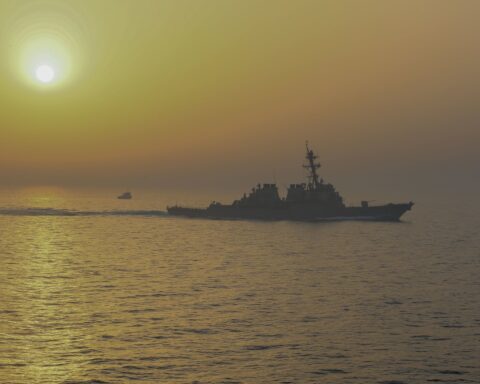
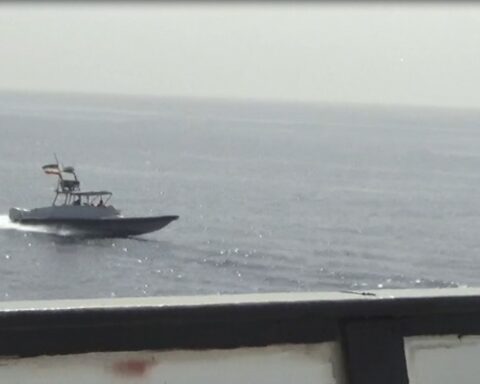
ISLAMABAD — Iran gave the United States 30 minutes to turn its destroyers around — and delivered the ultimatum not over a military radio but through the same Pakistani mediators sitting between JD Vance and Mohammad Bagher Ghalibaf in the first direct US-Iran talks since 1979. The warning, transmitted on April 11 while the USS Frank E. Petersen Jr. and USS Michael Murphy were mid-transit through the Strait of Hormuz, fused Iran’s military threat to its diplomatic channel in a single sentence: “If the ship’s movement continues, it will be targeted within 30 minutes, and the Iran-U.S. negotiations will also be dealt a blow.”
Both destroyers completed the crossing. Three US officials confirmed to the Wall Street Journal that neither ship reversed course. But the warning was never about stopping two guided-missile destroyers — it was about putting Hormuz mine-clearance consent on the Islamabad negotiating table before the Americans could take it off.
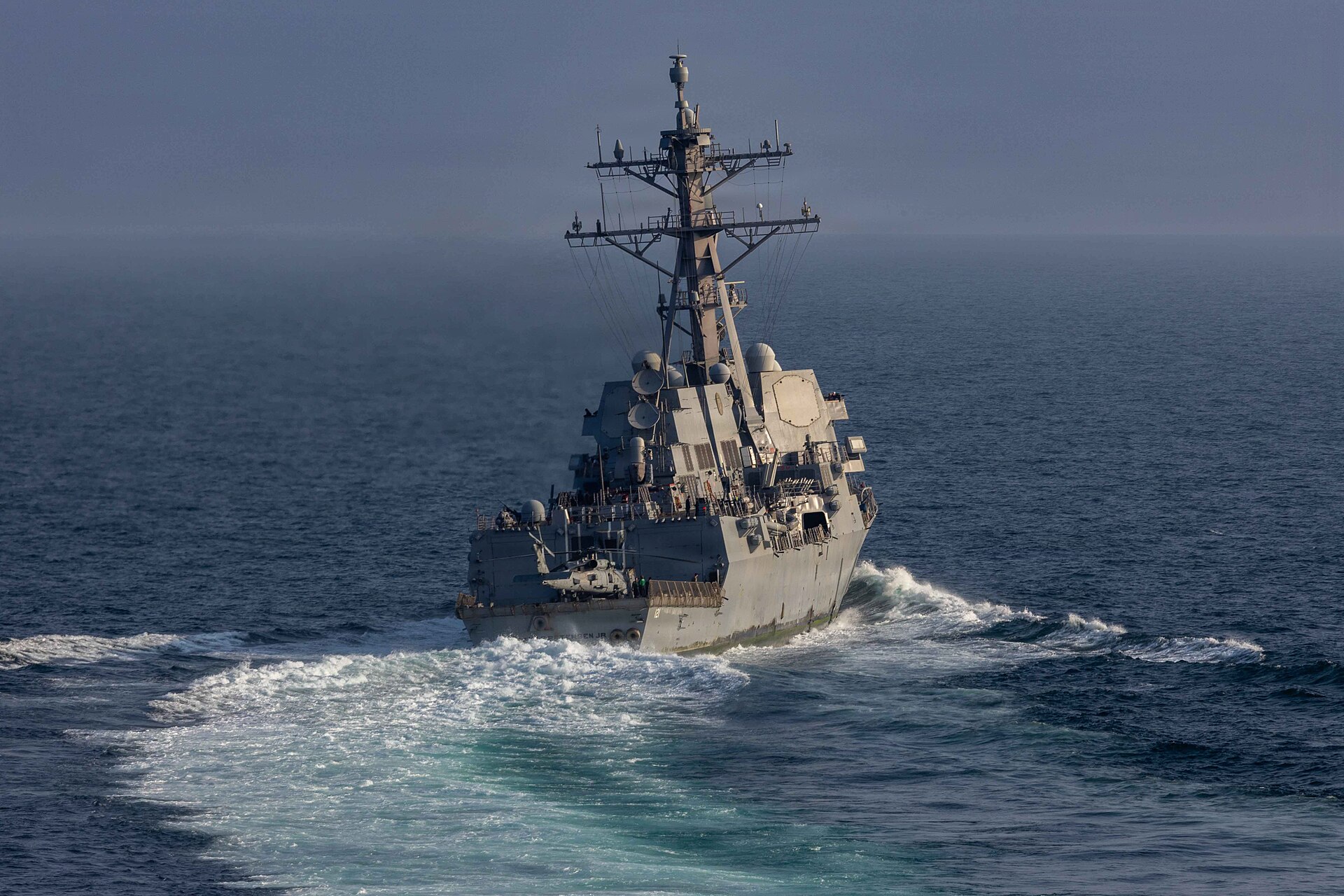
Table of Contents
- Iran Threatened a US Warship Through Its Own Ceasefire Channel
- Two Versions of What Happened in the Strait
- Why the Warning Was Operationally Credible
- Can the US Actually Clear the Mines?
- Trump’s 28 Sunken Boats and the Coercion Problem
- The Islamabad Contradiction
- 1988 and the Four-Day Rule
- Background
- Frequently Asked Questions
Iran Threatened a US Warship Through Its Own Ceasefire Channel
The mechanics matter more than the threat itself. Tasnim News Agency reported that Iran’s negotiating delegation in Islamabad — the same 71-member team Ghalibaf brought to the table — transmitted the warning via Pakistani mediators simultaneously with a direct warning to the approaching vessel. Iran’s Foreign Ministry framed the dual delivery as “vigilance” and “close coordination between Iran’s armed forces and diplomatic apparatus,” according to Türkiye Today. That framing is the tell: Iran wanted Washington to know the warning came from the negotiating room, not a missile battery.
The timing was surgical. CENTCOM Commander Admiral Brad Cooper had announced the transit as a new chapter — “Today, we began the process of establishing a new passage and we will share this safe pathway with the maritime industry soon to encourage the free flow of commerce” — while Vance was physically seated across from Ghalibaf. Iran’s response collapsed the distance between those two events into a single diplomatic-military act. A threat delivered through ceasefire mediators is not a threat to shoot. It is a demand to negotiate before clearing.
Ghalibaf’s only public remark on the talks captured the posture precisely: “We have goodwill. But we do not have trust.” He was speaking about diplomacy. The IRGC was speaking about destroyers. Both were speaking at the same time, in the same building, and that was the point.
Two Versions of What Happened in the Strait
Iran and the United States are telling flatly incompatible stories about April 11 — and the gap between them is itself a data point. Iranian state TV initially claimed no US ships crossed at all, the maximalist position. Hours later, Tasnim refined the narrative: one destroyer approaching from Fujairah “turned back” after the 30-minute warning, while the other completed its transit. A two-stage information architecture — deny everything, then claim a partial victory — that mirrors Iran’s post-ceasefire pattern of asserting IRGC permission over every Hormuz movement.
The Middle East briefing 3,000+ readers start their day with.
One email. Every weekday morning. Free.
The US account leaves no room for that. An unnamed US official told Axios: “This was an operation that focused on freedom of navigation through international waters.” Three additional officials confirmed to the Wall Street Journal that both the Petersen Jr. and the Murphy transited without incident. No ship turned back. No course was altered. The destroyers were guided-missile warships conducting a force-protection transit, not mine-clearance vessels — a distinction that matters because the IRGC’s targeting posture was aimed at a capability the ships did not carry.
What remains unresolved: whether the 30-minute warning reached the US delegation in Islamabad in real time. Tasnim says Pakistan relayed it simultaneously. The US has neither confirmed nor denied. If Vance learned mid-session that Iran was threatening to fire on a US warship while he sat across the table, the Islamabad talks carried a weight that no readout has acknowledged.
Why the Warning Was Operationally Credible
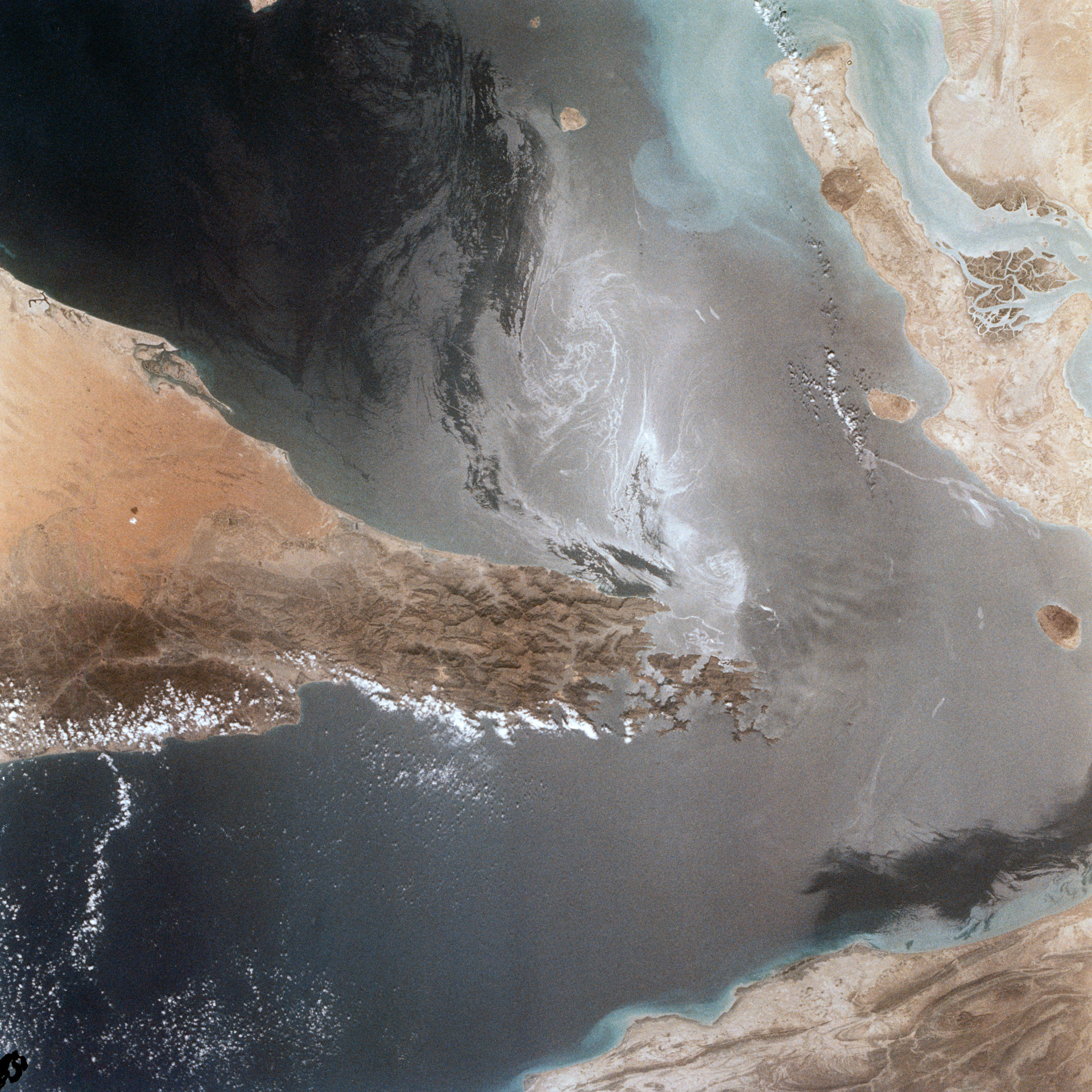
Thirty minutes is not a bluff timeline for Qeshm Island. The IRGC has shore-launched anti-ship cruise missiles deployed along the island’s southern coast — Noor variants with 120 km range, Qader at 300 km, and the supersonic Khalij Fars, a quasi-ballistic weapon based on the Fateh-110 with a 300 km reach, according to Defence Security Asia and WION reporting. A destroyer transiting the standard Traffic Separation Scheme passes within range of all three systems. The Larak-Qeshm corridor where Iran has been redirecting commercial shipping since the IRGC published its own transit framework places vessels under direct fire coverage with no maneuvering room.
The IRGC’s pre-existing doctrine, restated after the ceasefire, holds that vessels transiting without IRGC permission would be “targeted and destroyed.” The 30-minute warning was not improvisation — it was the operational application of standing orders. Iranian FM Araghchi had already established the legal scaffold weeks earlier: “Safe passage through the Strait of Hormuz will be possible via coordination with Iran’s Armed Forces and with due consideration of technical limitations,” he told reporters, a formulation the US interprets as Iran admitting it cannot locate all the mines it planted. US officials told the New York Times that Iran mined the strait “haphazardly” without systematic tracking, and some mines have drifted.
Iran’s 10-point plan, Point 7, institutionalises this consent requirement as a formal treaty condition — any US mine-clearance operation without IRGC coordination constitutes a ceasefire violation under Iran’s own framework. The destroyer transit was, by Tehran’s accounting, an act of war conducted during peace talks.
Can the US Actually Clear the Mines?
The destroyers that crossed on April 11 are the wrong ships for the job that comes next. The Petersen Jr. and Murphy are Arleigh Burke-class guided-missile destroyers — built to shoot, not sweep. The US Navy’s dedicated mine-clearance fleet in the Gulf no longer exists. Four Avenger-class mine countermeasure ships — the USS Devastator, Dextrous, Gladiator, and Sentry — were decommissioned at Bahrain between September 3 and 25, 2025, and shipped to Philadelphia for scrapping, as Emma Salisbury of the Foreign Policy Research Institute documented in her March 2026 report “The Mine Gap: America Forgot How to Sweep the Sea.”
Their replacements are worse than absent — they are present but broken. The Littoral Combat Ship MCM package, carried by the USS Tulsa and USS Santa Barbara, was stationed at Penang, Malaysia as of mid-March, roughly 5,000 km from the strait. Salisbury’s assessment is damning: the LCS mine-hunting sensors fail in “turbid or shallow waters — precisely the conditions found in the Persian Gulf.” Each sortie requires up to six hours of calibration. USNI Proceedings estimated in April 2026 that clearance would take “to late summer at the earliest.” The Washington Institute calculated that up to 16 MCM vessels are required; the US Navy has seven globally. Defense Domain’s estimate: four to six months for full commercial restoration.
Admiral Cooper announced that underwater drones would deploy “in coming days,” and that a safe passage pathway would be shared with the maritime industry. That language — “a new passage,” singular — suggests a narrow swept channel, not the full reopening of standard shipping lanes. Hormuz throughput sits at roughly four ships per day against a pre-war baseline of 140, according to S&P Global data. The gap between a destroyer transit and commercial normalisation is measured in months, not announcements.
Trump’s 28 Sunken Boats and the Coercion Problem
President Trump framed the transit as a gift. “We’re now starting the process of clearing out the Strait of Hormuz as a favor to Countries all over the World, including China, Japan, South Korea, France, Germany, and many others,” he wrote on Truth Social on April 11. He claimed “all 28 of their mine dropper boats are also lying at the bottom of the sea” and reduced Iran’s remaining coercive capacity to a single line: “The only thing they have going is the threat that a ship may ‘bunk’ into one of their sea mines.”
That assessment — Iran’s threat is limited to drifting ordnance — is precisely the framing Iran’s 30-minute warning was designed to contest. The IRGC demonstrated on April 11 that its coercive capacity is not passive (mines that ships might hit) but active (missiles that ships will be hit by). The warning was issued against a warship, not a tanker. If Iran is willing to threaten a guided-missile destroyer mid-transit, the implied posture toward an unescorted VLCC is considerably darker. IISS Senior Fellow Nick Childs captured the asymmetry in a line that predates the current crisis but defines it: “Mines have two warheads. One is a high-explosive warhead, and the other one is a psychological one.”
The 28-boats claim has not been independently verified. What is verified: Iran’s shore-based anti-ship missile batteries on Qeshm are intact, its mine inventory — however haphazardly laid — remains in the water, and its willingness to issue targeting warnings during active negotiations is now a matter of record.
“If the ship’s movement continues, it will be targeted within 30 minutes, and the Iran-U.S. negotiations will also be dealt a blow.”
The Islamabad Contradiction
The structural problem is now visible. The United States is simultaneously forcing the strait open by military transit and trying to close a deal in Islamabad that would reopen it by agreement. Those two tracks ran in parallel on April 11 — and Iran ensured they collided. By routing the military warning through Pakistani ceasefire mediators rather than a naval frequency, Iran forced the Islamabad channel to carry both diplomatic and military traffic. The mediator became the messenger for a kill chain.
This is not new behaviour but it is newly explicit. The Vance-Ghalibaf bilateral was already the most structurally fraught diplomatic meeting since 1979 — Ghalibaf is a former IRGC Aerospace Force commander, Vahidi (the SNSC secretary who actually controls military decisions) was not in the room, and the ceasefire expires around April 21-22 with no extension mechanism. Add a live targeting warning delivered mid-session and the talks are no longer about whether Iran will reopen Hormuz. They are about whether IRGC consent is a precondition for any ship to cross.
That is precisely Iran’s negotiating position, codified in Point 7 of its 10-point plan and operationalised by the 30-minute warning. Aramco has already restricted April crude liftings because tankers cannot safely transit. Brent sat at roughly $95 on April 11, well below Saudi Arabia’s fiscal break-even of $108-111 per barrel. Every day the strait stays functionally closed costs the Gulf states revenue they cannot recover. Iran’s bargaining position rests not on the mines but on the timeline. Clearance takes months. The ceasefire expires in days.

1988 and the Four-Day Rule
On April 14, 1988, the USS Samuel B. Roberts struck an Iranian mine in the Persian Gulf. The blast tore a 15-foot hole in the hull. Four days later, the US Navy launched Operation Praying Mantis — the largest American surface engagement since the Second World War — destroying two Iranian oil platforms and sinking or damaging six Iranian vessels. The mine-to-retaliation cycle took 96 hours.
That precedent sat in the room on April 11, whether anyone named it or not. The Roberts was a frigate on a routine patrol; the Petersen Jr. and Murphy were destroyers on a declared freedom-of-navigation mission through a mined strait, warned in advance by the government that laid the mines. If a mine strikes a US warship now, the retaliation clock starts from a baseline of explicit Iranian forewarning — a legal and political context that makes escalation faster, not slower. The 30-minute warning that Iran framed as restraint is, by the Praying Mantis standard, an acceleration of the consequence chain.
The destroyers made it through. The tankers have not tried. And between those two facts sits every unresolved question of the Islamabad talks — who controls passage, who clears the mines, and whether the IRGC’s consent architecture survives contact with an American minesweeper that does not yet exist in the Gulf.
Background
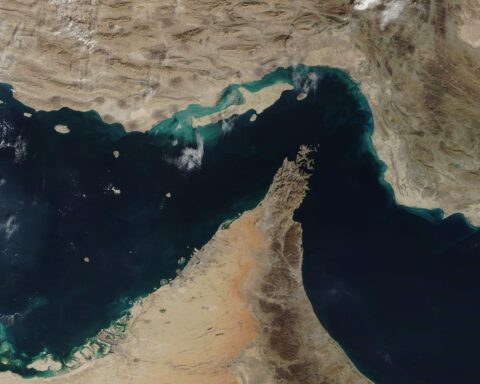
The Strait of Hormuz, a 21-nautical-mile-wide chokepoint between Iran and Oman, carried roughly 21 million barrels of oil per day before the Iran war began in late February 2026. Iranian minelaying — conducted, according to US officials cited by the New York Times, without systematic tracking — reduced commercial transits from 140 ships per day to approximately four. The IRGC subsequently published its own transit framework requiring “coordination” with Iranian armed forces for any passage, a requirement Iran’s 10-point ceasefire plan seeks to codify as international treaty obligation.
Frequently Asked Questions
What weapons could Iran have used against the destroyers?
The IRGC’s Qeshm Island batteries — Noor, Qader, and the supersonic Khalij Fars — cover the full Hormuz transit lane as described above. What the body section does not address is the defensive picture: an Arleigh Burke-class destroyer carries SM-2 and SM-6 interceptors but would face saturation risk from simultaneous shore-based and fast-boat attacks in confined waters, according to CSIS naval analysts. The geometry of the strait removes the maneuvering room that makes Aegis most effective.
Why did the US send destroyers instead of minesweepers?
There are no US minesweepers in the Gulf to send — the Avenger-class fleet was decommissioned in September 2025, and the LCS replacements are in Southeast Asia. The destroyer transit was a political and legal statement asserting freedom of navigation rather than a mine-clearance operation. When sweeping does begin, it will require underwater drones and allied MCM vessels; the UK’s Hunt-class and Japan’s Awaji-class are among the few NATO-interoperable options available to supplement the depleted US inventory.
What happens if a US ship strikes a mine during clearance operations?
The 1988 precedent — USS Roberts, four-day retaliation cycle, Operation Praying Mantis — is covered in the section above. What it does not address is the current force posture: approximately 20,000 US troops in the region (Soufan Center estimate), carrier strike groups, and pre-positioned assets that could execute a retaliatory strike within hours rather than the four days it took in 1988. The legal foundation would also be stronger: Iran has been explicitly warned, its minelaying is documented by US officials, and the ceasefire text does not grant the IRGC a veto over passage through international waters.
Could Iran close Hormuz again after it is cleared?
Re-mining takes hours; clearance takes months. Even if the US establishes a swept channel, Iran retains the shore-based missile batteries, fast-attack craft, and — if Trump’s claim about 28 sunken mine-layers proves incomplete — the capacity to re-seed mines in the same waters. The structural asymmetry between closing and reopening a strait is Iran’s core coercive advantage, which is why Point 7 of its 10-point plan demands permanent IRGC “coordination” authority rather than a one-time reopening agreement.
What is Pakistan’s role in the warning chain?
Pakistan has evolved from ceasefire venue to the sole functioning communication channel between US and Iranian military-diplomatic systems. The 30-minute warning was routed through Pakistani mediators — the same officials facilitating the Vance-Ghalibaf talks — rather than a military hotline or naval radio frequency. This makes Pakistan simultaneously a neutral mediator and a relay node for targeting warnings, a dual role that no ceasefire architecture is designed to sustain. Pakistan’s own constraints include a $5 billion Saudi loan maturing in June 2026 and a September 2025 Saudi Military Defence Agreement that makes it both Iran’s interlocutor and Saudi Arabia’s treaty ally.
| Metric | Figure | Source |
|---|---|---|
| US destroyers transited | 2 (USS Petersen Jr. + USS Murphy) | Axios / CENTCOM |
| Iran warning window | 30 minutes | Tasnim News Agency |
| US MCM ships in Gulf | 0 (4 Avenger-class decommissioned Sept 2025) | FPRI / Salisbury |
| MCM ships needed for clearance | Up to 16 | Washington Institute |
| Estimated clearance timeline | Late summer 2026 at earliest | USNI Proceedings |
| Current Hormuz throughput | ~4 ships/day vs 140 pre-war | S&P Global |
| IRGC Qeshm missile range | 120-300 km (Noor / Khalij Fars) | Defence Security Asia |
| Ceasefire expiry | ~April 21-22, 2026 | Islamabad Accord terms |
| Brent crude (April 11) | ~$95.20/bbl | TradingEconomics |
| Saudi fiscal break-even | $108-111/bbl | Bloomberg (PIF-inclusive) |
The gap between the two destroyers that crossed and the 140 daily transits that have not is measured in every row of that table — months of clearance, zero minesweepers in theatre, and a ceasefire that expires before the first underwater drone enters the water.