TEHRAN — Iran’s five counter-conditions to the US 15-point ceasefire plan, presented on March 25 through Pakistani intermediaries, include a demand that the international community formally recognize Iranian sovereignty over the Strait of Hormuz — a claim that, if accepted, would give Tehran permanent legal authority over the waterway through which 20 million barrels of oil passed daily before the war. The demand, first reported by Press TV and confirmed through diplomatic channels cited by CNN, was not among Iran’s stated positions before the counteroffer, and it arrives eight days before President Trump’s April 6 deadline to resume strikes on Iranian energy infrastructure.
The gap between what Washington is offering — de-escalation, phased sanctions relief, a face-saving exit from a war that has bled Gulf economies since late February — and what Tehran is demanding amounts to a permanent legal reordering of maritime sovereignty in the Persian Gulf. No Gulf state can accept it. Iran’s Foreign Minister Abbas Araqchi confirmed the impasse on March 31: “At present there is no negotiation,” he told Al Jazeera. “Iran seeks an end to the war, not a ceasefire.”
Table of Contents
The Five Conditions
A senior Iranian political-security official laid out the terms through Press TV on March 25. First: a complete halt to all “aggression and assassinations” by the United States and Israel. Second: concrete, enforceable mechanisms guaranteeing the war cannot be reimposed. Third: guaranteed payment of war damages and reparations. Fourth: an end to hostilities across all fronts, including Hezbollah operations in Lebanon and pro-Iranian militia activity in Iraq. Fifth: international recognition that Iran’s authority over the Strait of Hormuz “is and will remain Iran’s natural and legal right, and it constitutes a guarantee for the implementation of the other party’s commitments, and must be recognized.”
The same official added: “Iran will end the war when it decides to do so and when its own conditions are met. No negotiations will be held prior to that.”
Trump’s 15-point plan, delivered through Pakistan, demanded the opposite on the strait: Hormuz reopening under international navigation rules, nuclear program rollback, eventual missile program limits, and the dismantling of Tehran’s proxy militia network, according to Al Jazeera’s March 25 reporting. Tehran called it “maximalist and unreasonable” — a demand for “unconditional surrender.”
Why Is the Hormuz Demand New?
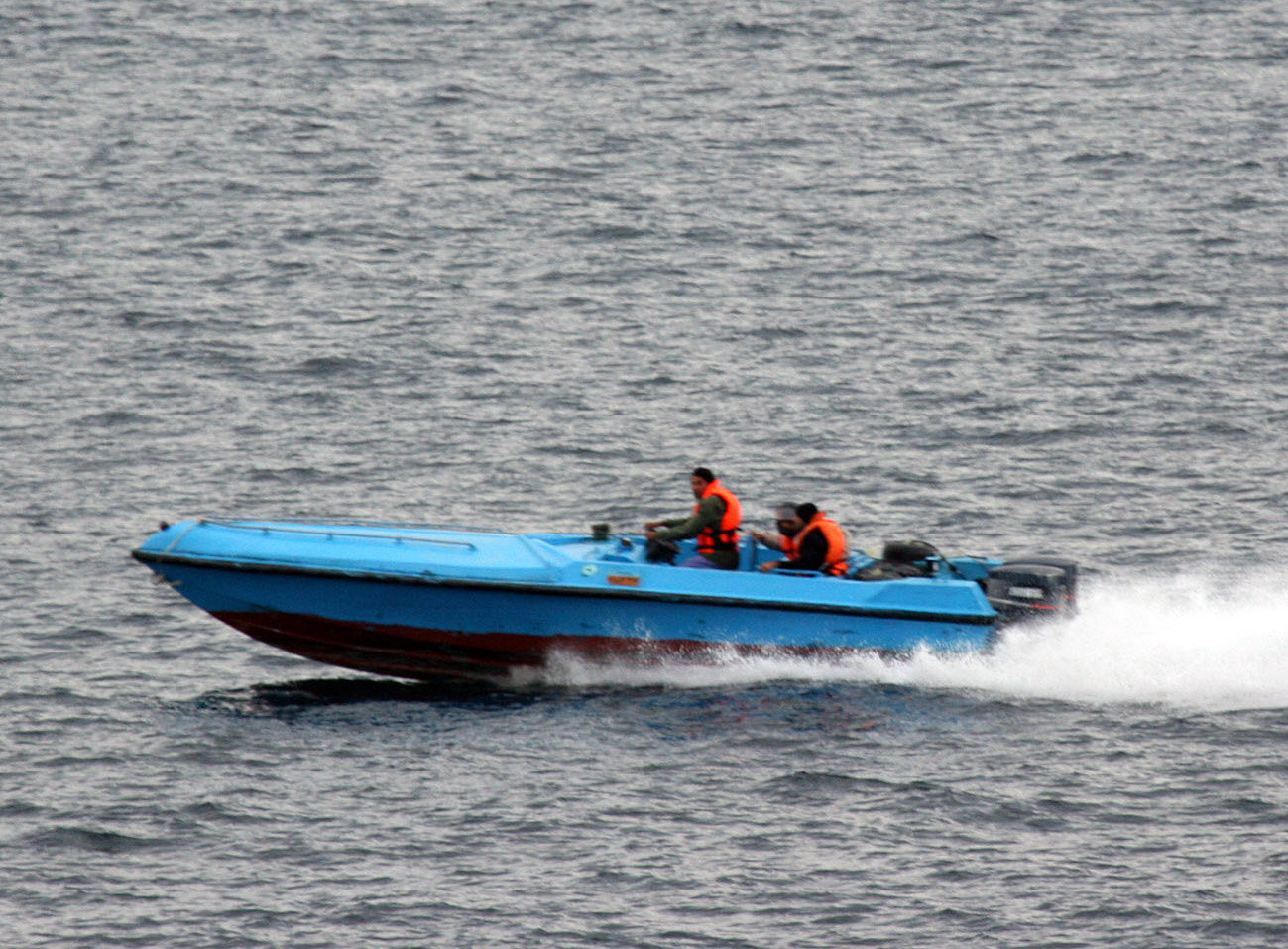
Iran has threatened Hormuz for decades. The IRGC has periodically mined approaches, harassed tankers, and seized commercial vessels. But none of those actions carried a formal legal claim. The demand for international recognition of sovereignty over the strait — inserted as a condition for ending the war — appeared for the first time in the March 25 counteroffer, CNN reported on March 28.
Since February 28, the IRGC has carried out 21 confirmed attacks on merchant shipping, striking at least 24 commercial vessels, according to CNBC. Strait traffic has collapsed by approximately 95% from pre-war levels, according to maritime tracking data cited by CNN. Iran is not asking to control an operating waterway. It is asking to own the wreckage — and to set the terms under which traffic resumes.
Dr. Nafja Sabbah Al-Kuwari, assistant professor of political science at Qatar University, suggested in an Al Jazeera opinion piece on March 31 that the sovereignty and reparations demands represent “an extreme starting position from which concessions can be made.”
What Does International Law Say About Strait Sovereignty?
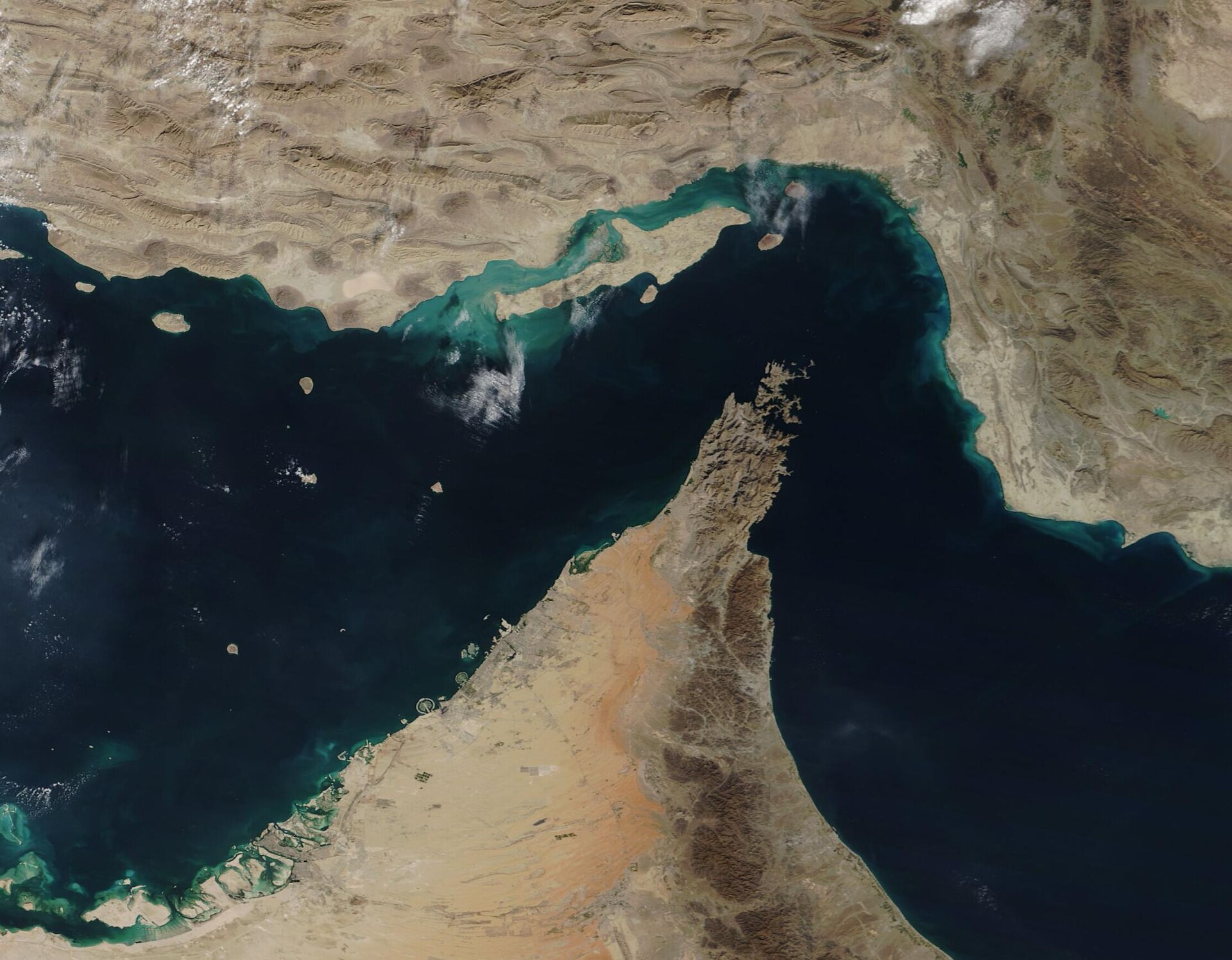
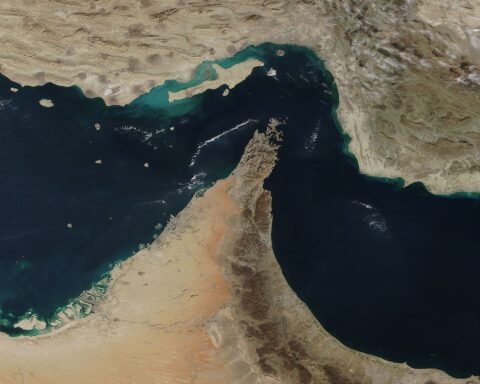
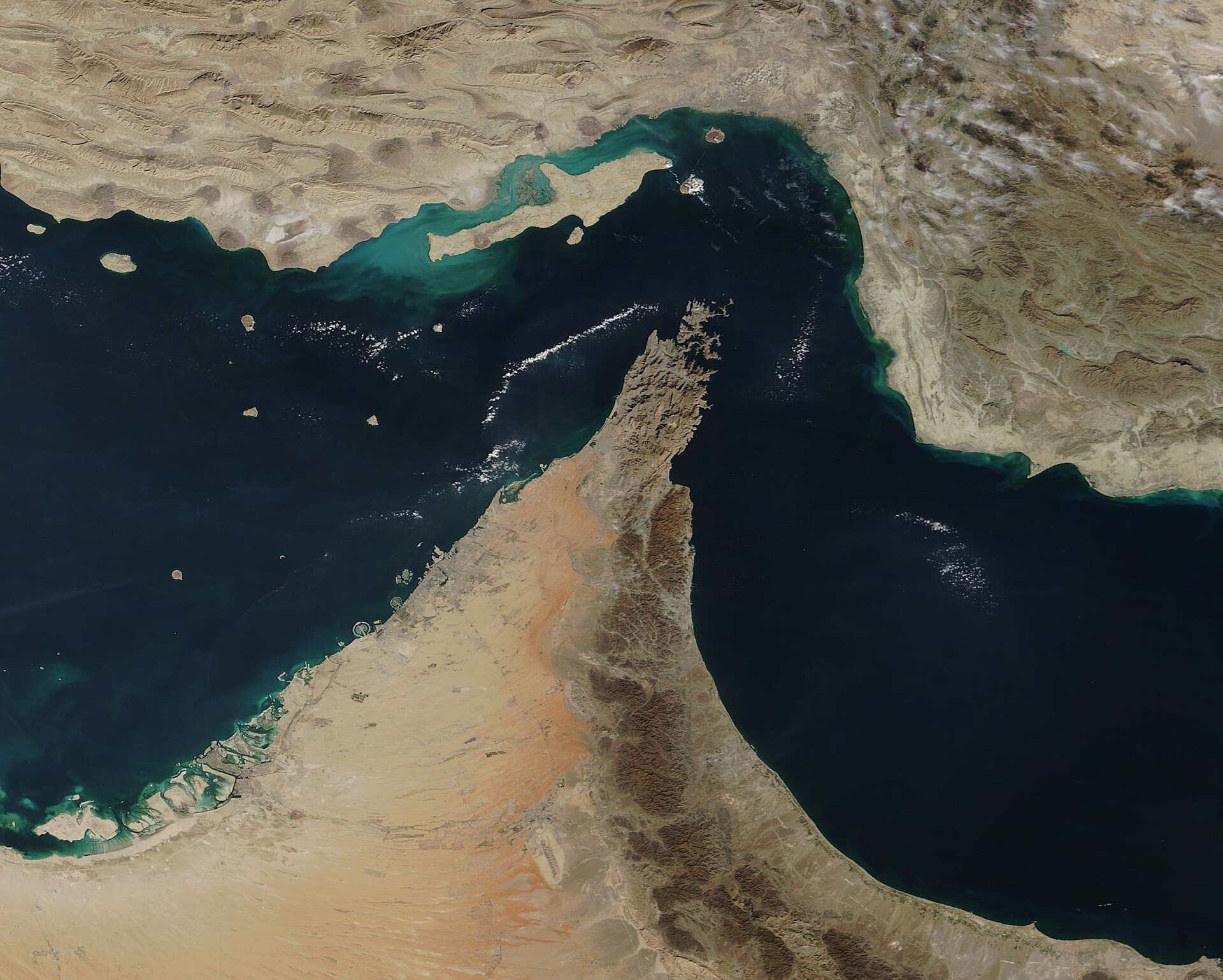
The Strait of Hormuz, at its narrowest point, spans 21 nautical miles. The entire navigable width falls within the overlapping territorial seas of Iran — which extended its claim to 12 nautical miles in 1959 — and Oman’s Musandam Peninsula, which did the same in 1972. Both states hold territorial sovereignty over their respective waters. Neither holds sovereignty over the strait as a navigable whole.
UNCLOS Part III, Articles 37 through 44, established a “transit passage” regime for international straits. All ships hold an explicit right of “continuous and expeditious” passage that cannot be suspended by the coastal state. Article 44 is direct: bordering states “shall not hamper transit passage.” Neither Iran nor the United States has ratified UNCLOS. The transit passage regime is, however, widely treated as customary international law binding on all states. The US Freedom of Navigation program operates on exactly that basis.
Iran’s counter-position dates to a 1993 domestic maritime law maintaining that innocent passage — a more restrictive standard that allows the coastal state to regulate and potentially deny passage — applies in Hormuz rather than transit passage. Virtually every major maritime power rejects this interpretation.
There’s no provision in international law anywhere to set up a toll booth and shake down shipping. This is Iran using the element that they have right now, which is control of the Strait of Hormuz.
— Sal Mercogliano, maritime historian, CNN, March 28, 2026
James Kraska, professor of international maritime law at the US Naval War College, was more precise in his assessment: imposing transit fees “is a violation of the rules of transit passage, and there is no legal basis under international law for a coastal state to charge fees in an international strait like Hormuz.”
There is one historical precedent for transit tolls on an international strait — and it ended in abolition. Denmark imposed fees on ships passing through the Danish Straits from the medieval period through the mid-nineteenth century. Following sustained protests from multiple maritime powers, Denmark agreed to eliminate the Sound Dues in the Copenhagen Convention of 1857. No state has successfully maintained a transit toll on an international strait against the objection of major maritime powers since.
The Toll Booth Is Already Open
On March 27, Iran’s parliament Security Commission approved a plan to impose tolls on ships transiting the strait, BNN Bloomberg reported. The reported fee: $2 million per tanker. At pre-war traffic volumes, that rate would generate roughly $20 million per day from oil tankers alone — approximately $600 million per month. Including LNG carriers, the figure exceeds $800 million monthly, CNN reported on March 28.
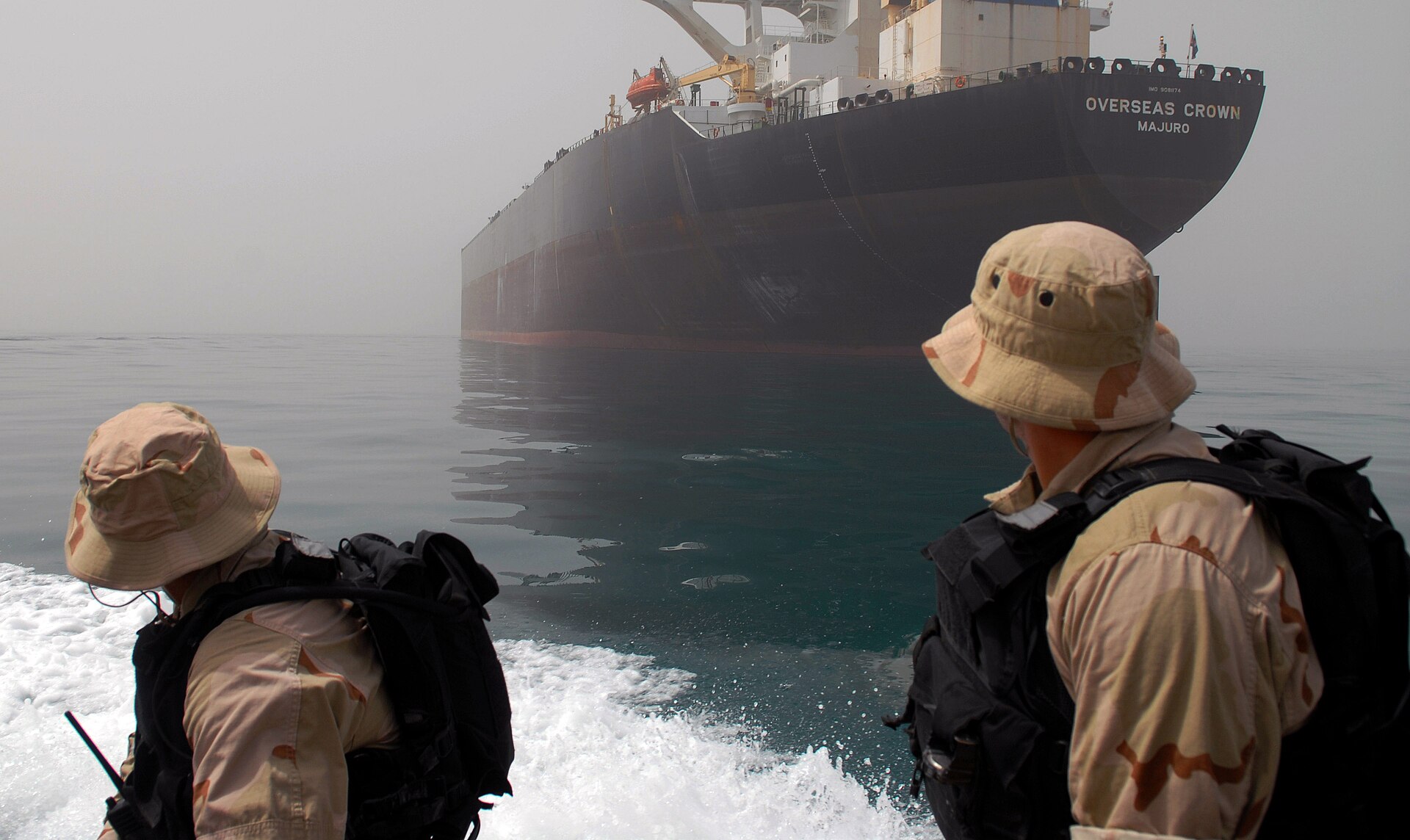
IRGC naval commander Alireza Tangsiri confirmed the enforcement mechanism is already operational. Ships without “legal protocols and lack of permission” are being turned back. At least two vessels have paid transit fees in Chinese yuan, according to reporting from CNBC.
The GCC Secretary General called the fee collection “an aggression and a violation of the United Nations agreement on the law of the sea,” CNN reported on March 28. Jason Chuah, a maritime law professor, told Al Jazeera on March 26 that while the strait’s entire width “consists of the overlapping territorial seas of Iran and Oman,” Iran technically “cannot charge a toll if a ship uses the Omani coastline.”
The Oman Protocol
Oman may not enforce it. On April 2, Iranian Deputy Foreign Minister Kazem Gharibabadi announced that Iran and Oman are “drafting a protocol for Iran and Oman to supervise transit in the Strait of Hormuz,” CNBC reported. The bilateral protocol — if completed — would position the two states whose territorial waters cover the strait’s full width as co-administrators of passage, bypassing the UNCLOS transit passage regime entirely.
A bilateral Iran-Oman agreement would give Tehran a veneer of multilateral legitimacy — two sovereign coastal states managing their own waters — while functionally granting Iran a veto over Gulf maritime traffic. Oman, which has historically maintained diplomatic channels with Tehran even during periods of maximum regional tension, has not publicly rejected the proposal.
On the same day, the United Kingdom convened representatives from more than 40 nations to discuss reopening the strait, Al Jazeera reported on April 2. The United States was not included in the gathering. The two tracks — 41 nations seeking multilateral reopening, Iran and Oman drafting bilateral control — were running simultaneously.
The Bypass Arithmetic
The economic pressure behind Iran’s demand rests on geography. The available bypass infrastructure falls far short of replacing pre-war Hormuz throughput, according to Arab Center DC.
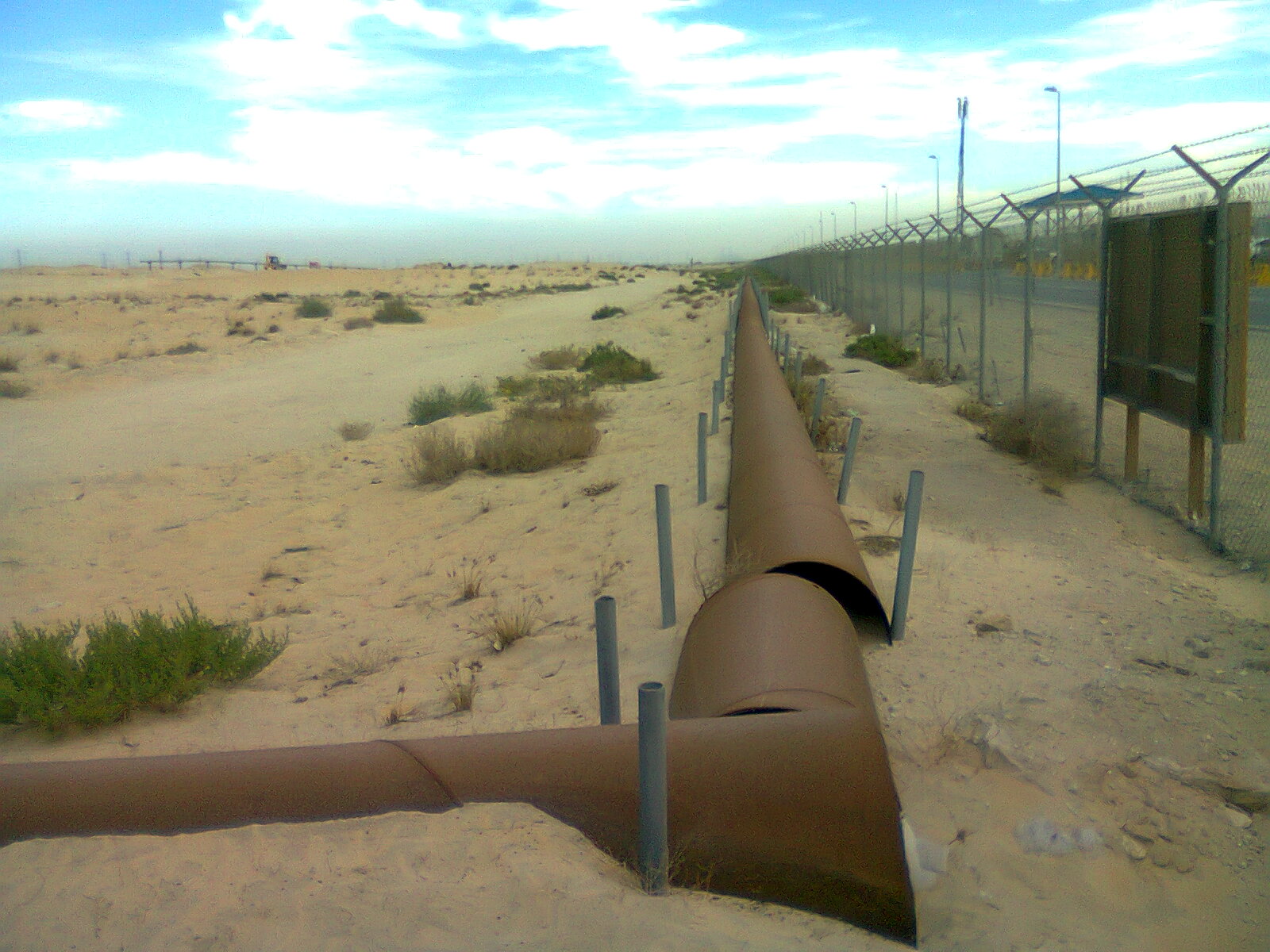
Saudi Arabia’s East-West pipeline has reached 7 million barrels per day capacity, routing crude from eastern fields to the Red Sea port of Yanbu, Fortune reported on March 28. The UAE’s ADCOP pipeline carries 1.5 to 1.8 million barrels per day to the port of Fujairah on the Gulf of Oman, outside the strait. Combined bypass capacity: 8.5 to 8.8 million barrels per day against 20 million in pre-war flow. The net shortage — 11 to 12 million barrels per day — represents the largest supply disruption in oil market history.
Jim Krane, a non-resident fellow at the Arab Center DC, described it on March 27 as “the biggest market disruption in the history of the oil industry.” Saudi Arabia holds approximately 4 million barrels per day of spare production capacity that, with the strait closed, has no export route. It is stranded inside the Gulf.
Qatar’s exposure is worse. The country’s LNG exports have no bypass pipeline and no alternative routing, according to Arab Center DC analysis.
If this goes on for another two months, we’re in a global recession.
— Jim Wicklund, managing director, PPHB energy investment firm, Fortune, March 31, 2026
Bob McNally, a former White House energy advisor and founder of Rapidan Energy Group, framed the stakes in geopolitical rather than economic terms. If Trump disengages without securing the strait, he told Fortune on March 31, “That would be a catastrophic setback for U.S. foreign policy interests that would, in my view, transcend even our defeat in Vietnam.”
Which Conditions Can Be Negotiated — and Which Cannot?
Iran’s first two conditions — a halt to US and Israeli attacks and enforceable mechanisms preventing the war’s resumption — fall within the zone of US-Iran bilateral negotiation. They are difficult but not structurally impossible. Washington has paused strikes on Iranian energy infrastructure through April 6, per Bloomberg’s March 26 reporting, which establishes at minimum the principle of a halt.
The third condition, reparations, is potentially addressable through the release of frozen Iranian assets held in various jurisdictions — a mechanism with precedent in the 2015 nuclear deal’s implementation.
The fourth condition — ending hostilities across all fronts, including Hezbollah in Lebanon and pro-Iranian militias in Iraq — is a non-starter for the United States and Israel. It demands the formal preservation of Iran’s proxy network as a condition of peace. The 15-point plan demands the opposite: dismantlement of that network.
The fifth condition breaks the negotiation entirely. International recognition of Iranian sovereignty over Hormuz would grant Tehran permanent legal authority over roughly 20 percent of global oil transit and the entirety of Qatar’s LNG exports. Saudi Arabia, the UAE, Kuwait, Bahrain, Qatar, and Iraq — every Gulf state whose hydrocarbon exports depend on the strait — would become functionally dependent on Iranian permission to sell their primary commodity. No Gulf government can accept that architecture and survive domestically. Saudi Foreign Minister Prince Faisal bin Farhan has described trust in Iran as “shattered,” according to Arab News reporting in March 2026.
Ellie Geranmayeh wrote in Foreign Affairs on March 27 that “The White House is already making a mistake by tying cease-fire negotiations to a grand bargain.” She added: “It is fantasy to think that Iran will agree to restrict its missile capability during a war in which such weapons have proved to be its main tool of retaliation.”
Trump’s April 6 deadline — 8 PM Eastern Time, per Bloomberg — arrives in four days. Iran’s FM spokesman has called Trump’s claim that Iran requested a ceasefire “false and baseless.” Araqchi stated on March 31 that Iran seeks “an end to the war, not a ceasefire” — a formulation that treats Hormuz sovereignty not as a bargaining chip but as a post-war settlement term.
Frequently Asked Questions
Has any country endorsed Iran’s claim to sovereignty over the Strait of Hormuz?
No country has publicly endorsed the claim. Oman’s engagement in drafting a bilateral supervision protocol with Iran does not constitute recognition of Iranian sovereignty over the strait; it addresses operational co-management of transit. China and Russia, Iran’s closest diplomatic partners, have not commented on the sovereignty demand specifically. The GCC collectively rejected it through its Secretary General’s March 28 statement.
What happens to global energy markets if the strait remains closed past April 6?
Available bypass pipelines — Saudi Arabia’s East-West line and the UAE’s ADCOP route — together carry at most 8.8 million barrels per day, leaving a gap of 11 to 12 million barrels per day against pre-war throughput. Brent crude has already surged past pre-war benchmarks. Jim Wicklund of PPHB told Fortune that two more months of closure would trigger a global recession. Asian economies — Japan, South Korea, India — face the most acute exposure, as they source the majority of their crude imports through Hormuz.
Could the US military reopen the strait by force?
The US Fifth Fleet, based in Bahrain, maintains a permanent presence in the Gulf. A military minesweeping and escort operation is technically feasible but would require sustained engagement against Iranian anti-ship missile batteries, naval mines, fast-attack craft, and coastal defense systems along Iran’s entire southern coastline. The US has not attempted a forced reopening since the war began on February 28, opting instead for the diplomatic track through Pakistan and the 15-point plan. The UK’s April 2 convening of 40-plus nations to discuss reopening — without US participation — suggests London is exploring a multilateral naval framework as an alternative.
Why is Pakistan involved as an intermediary?
Pakistan shares a border with Iran and has historically maintained working relations with both Tehran and Washington. Pakistan’s mediation role emerged after direct US-Iran communication channels broke down in the early weeks of the conflict. Islamabad transmitted the US 15-point plan to Tehran and relayed Iran’s five counter-conditions back to Washington. Pakistan’s ability to sustain this role depends on its neutrality — a position that becomes harder to maintain as both sides’ demands harden.
What is Oman’s strategic interest in the bilateral protocol with Iran?
Oman occupies the southern shore of the strait through its Musandam Peninsula exclave. Muscat has maintained diplomatic relations with Tehran throughout decades of regional confrontation, including during the Iran-Iraq War. A co-management protocol could give Oman revenue from transit fees and a formal role in strait governance — elevating its strategic position relative to larger Gulf neighbors. It could also make Oman indispensable to any future reopening arrangement, a form of strategic weight the small sultanate has rarely possessed.