MANAMA — Iran’s Islamic Revolutionary Guard Corps struck the MSC Ishyka, a Liberian-flagged container ship, with a drone on April 4, claiming the vessel was ablaze in the Strait of Hormuz — except the ship was moored at Khalifa Bin Salman Port in Bahrain, according to MarineTraffic AIS data and the IRGC’s own Sepah News agency. The attack, which came hours before the opening of Donald Trump’s 48-hour authorization window for strikes on Iranian energy infrastructure, marks the first confirmed IRGC targeting of a commercial vessel inside a sovereign Gulf state’s port facilities since the war began on February 28.
The discrepancy between where the IRGC said it struck the Ishyka and where the ship actually sat is not a communications error — it is the story. If the IRGC’s X account claimed “Strait of Hormuz” to frame the operation as routine waterway interdiction, while Sepah News and AIS data placed the vessel at a Bahraini port, the corps has extended its drone-strike envelope from the contested strait into the harbour infrastructure of a US treaty ally. Bahrain hosts the US Fifth Fleet at NSA Bahrain, making any attack on its commercial port territory an act against a state that houses roughly 9,000 American military personnel.
Table of Contents
What Happened to the MSC Ishyka
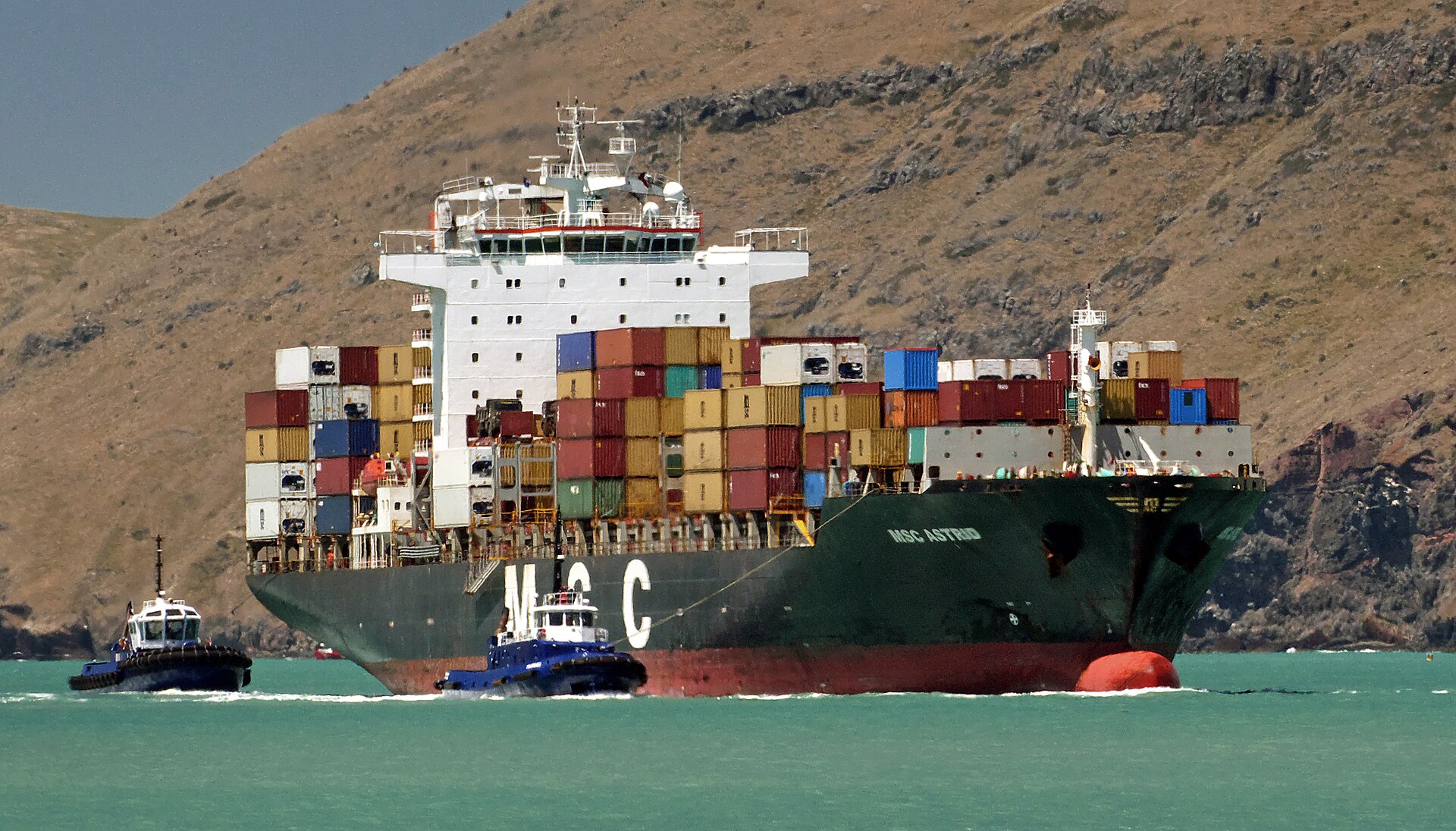
The IRGC Navy Command announced on April 4 that “the MSC Ishika was struck with an unmanned aerial vehicle” and that “the ship was ablaze following the attack,” describing the vessel as “owned by the Israeli regime and flying the flag of a third country,” according to statements carried by PressTV, CGTN, and TASS via Fars News Agency. The MSC Ishyka (IMO 9154206) is a 208-metre container ship built in 1997, deadweight 33,985 DWT, registered to Pasithea Oceanway Ltd and managed by MSC Shipmanagement Ltd under a Liberian flag, per VesselFinder and MarineTraffic records. No independent verification of fire or structural damage had been confirmed by the time of publication, according to Daily Sabah and the Daily Star.
The strike was designated as part of Wave 95 of Operation True Promise 4, the IRGC’s rolling campaign of military operations since the war’s outbreak, and carried the package code-name “Ya Hasan ibn Ali,” according to WANA and IranPress reporting. The Ishyka was not the only target in the salvo — the IRGC simultaneously claimed strikes against US HIMARS positions on Bubiyan Island in Kuwait, a Patriot battery in northern Bahrain, US missile concentrations in the UAE, and Oracle Corporation infrastructure in the UAE, per TASS and IranPress. Whether all those claims are verified is secondary to the signal: the IRGC packaged a commercial shipping attack alongside direct strikes on American military hardware in three separate Gulf states.
Why Did the IRGC Claim Two Different Locations?
The IRGC’s own communications told two different stories about where the Ishyka was hit. The corps’ X (formerly Twitter) account stated the strike occurred in the Strait of Hormuz, while the IRGC’s official Sepah News agency placed the vessel at Khalifa Bin Salman Port in Bahrain, as reported by the Daily Star and Daily Sabah. MarineTraffic AIS data corroborated the Bahraini port location, showing the Ishyka moored rather than transiting the strait. The gap matters because a Hormuz interdiction, while aggressive, falls within the operational pattern the IRGC has maintained across 32 maritime incidents tracked by Windward AI since Operation True Promise 4 began — 22 commercial vessel attacks or near-misses and 10 offshore infrastructure strikes.
A drone strike inside Khalifa Bin Salman Port is a different category of act. Bahrain’s commercial port sits roughly 15 kilometres from NSA Bahrain, headquarters of the US Naval Forces Central Command and the Fifth Fleet, making any IRGC drone operation in the area a provocation against a state whose defence relationship with Washington is codified in a 2022 comprehensive security integration agreement. The IRGC may have claimed “Hormuz” on social media to avoid triggering the specific diplomatic and legal consequences of striking inside a sovereign ally’s harbour, while the Sepah News version — intended for domestic consumption — carried the more operationally impressive claim of reaching a Bahraini port. Either way, the AIS data is unambiguous about where the ship was sitting.
The pattern has a three-day precedent. On April 1, the IRGC struck the Aqua 1, a tanker chartered by QatarEnergy, inside Qatari territorial waters, claiming an Israeli ownership link, as reported by Euronews and Insurance Journal. The operational grammar is now established: attack, assert Israeli connection, disregard the sovereignty of the Gulf state whose waters or port facilities were violated. Bahrain is the second sovereign harbour space breached in four days.
Wave 95 and the Simultaneous Salvo
The IRGC’s decision to package the Ishyka strike with simultaneous claims against US military assets in Kuwait, Bahrain, and the UAE reflects an operational tempo that has not paused even after the killing of IRGC Navy commander Admiral Alireza Tangsiri by an Israeli strike on March 26, as reported by the Times of Israel, Haaretz, and the Foundation for Defense of Democracies. Tangsiri’s deputy, IRGC Navy intelligence chief Behnam Rezaei, was killed in the same strike. Wave 95 arrived nine days later, with the corps operating under whatever command structure survived the decapitation.
Gen. Ali Abdollahi Aliabadi of the Iranian Armed Forces announced on April 4 that Iran’s military doctrine had “changed from defensive to offensive,” per NBC News and RFE/RL, a rhetorical escalation that matches the operational one. The multi-vector salvo is the broadest single wave the IRGC has claimed since February 28 — whether every claimed strike landed is less relevant than the declared intent to operate simultaneously across the entire Gulf littoral.
“If Iran’s fuel and energy infrastructure is attacked, then fuel, energy, information technology systems and desalination infrastructure used by America and the regime in the region will be struck.”
— Col. Ebrahim Zolfaqari, Spokesman, Khatam al-Anbiya Central Headquarters, via NBC News and Euronews, April 2–4, 2026
Col. Zolfaqari’s statement, reported by NBC News and Euronews between April 2 and 4, made the threat architecture explicit: if the US hits Iranian energy, the IRGC will target desalination plants, power grids, and IT systems belonging to American allies across the Gulf. For Saudi Arabia, which has invested billions in desalination capacity to supply drinking water to a population with almost no natural freshwater sources, and whose Bushehr fallout exposure is already a live concern, the threat is not abstract. It is a targeting list.
The 48-Hour Deadline
Donald Trump issued his ultimatum on April 4, the same day as the Ishyka strike, posting that “time is running out — 48 hours before all Hell will reign down on them,” according to Bloomberg, the Washington Times, Al Jazeera, RFE/RL, and CNBC. The deadline — expiring at approximately 8 PM Eastern on April 6 — demanded Iran negotiate or reopen the Strait of Hormuz, and threatened strikes against Iranian power plants, oil wells, and desalination facilities. House of Saud previously reported on the 36-hour decision window that the deadline imposes on Riyadh, which must calculate whether to publicly back Washington’s military escalation or distance itself from strikes that would almost certainly trigger IRGC retaliation against Saudi infrastructure.
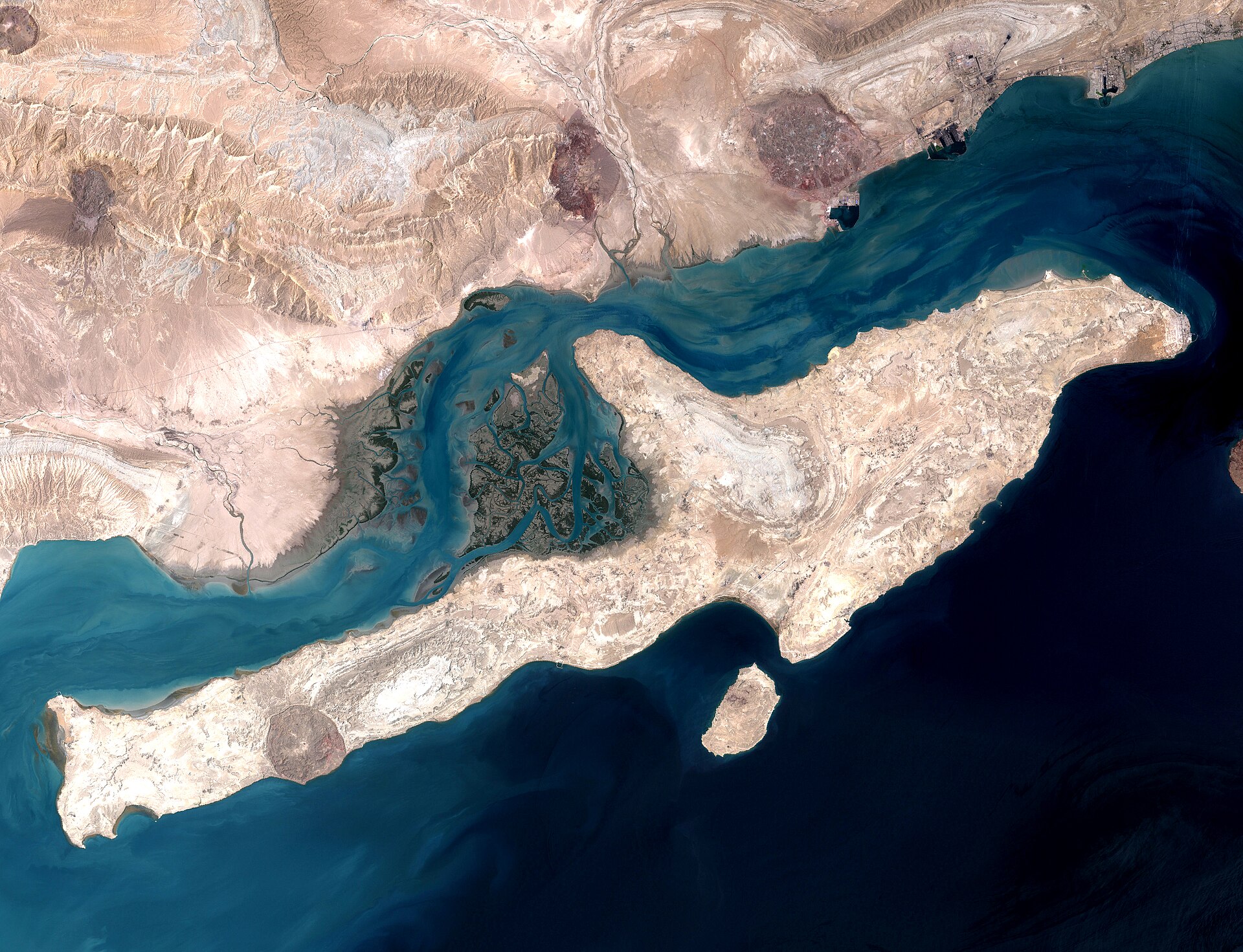
Iran rejected the ultimatum within hours. Gen. Aliabadi called it “a helpless, nervous, unbalanced, and stupid action” and stated that “the simple meaning of this message is that the gates of hell will open for you,” per RFE/RL and NBC News. Parliament Speaker Mohammad-Bagher Ghalibaf went further, warning that “critical infrastructure, energy and oil across the region will be irreversibly destroyed and oil prices will rise for a long time” if Iranian power plants are struck, according to NBC News and RFE/RL. Ghalibaf’s language was deliberately personal, framing the threat not as institutional policy but as national will: “Iranians don’t just talk about defending their country, we bleed for it. We’ve done it before, and we’re ready to do it again. Bring it on,” he said, per NBC News and RFE/RL. Hours before those remarks, Ghalibaf had also published a data post publicly cataloguing what share of global oil, LNG, and food shipments transits Bab el-Mandeb — a post our analysis identifies as Iran’s targeting signal for the dual chokepoint trap now facing Saudi Arabia’s oil exports.
The timing is not coincidental. Aniseh Bassiri Tabrizi, an associate fellow at Chatham House, told NBC News it is “unlikely” Tehran would “cave into the pressure,” attributing the escalation to a “lack of planning and the fact that the Trump administration didn’t foresee the response from the Iranian side.” Ross Harrison, a senior fellow at the Middle East Institute, told the same outlet that Trump faces “limited options to open the strait” and that “military means alone probably would not have the desired effect.” The IRGC’s answer to the 48-hour clock was not silence or negotiation — it was Wave 95, a multi-state salvo that arrived before the deadline’s ink was dry.
Can Diplomacy Recover After April 3?
The ceasefire talks collapsed on April 3, the day before the Ishyka strike, with the Wall Street Journal reporting via Townhall that mediators declared a “dead end” after Iran refused to travel to Islamabad for a proposed round of indirect negotiations. Iran’s stated preconditions — US reparations, full withdrawal from all Middle Eastern bases, and a binding non-aggression guarantee — were described as non-starters by Western diplomats, according to the Times of Israel. The collapse left no active diplomatic channel between Washington and Tehran, and Russia’s attempt to mediate through the Lavrov-Faisal call had produced no tangible framework.
The gap between what Iran demands and what the US would consider offering is not a negotiating position — it is a wall. Full base withdrawal from the Middle East would mean abandoning NSA Bahrain, Al Udeid in Qatar, Camp Arifjan in Kuwait, and the constellation of facilities across the UAE and Oman that constitute the backbone of US Central Command’s forward posture. Reparations would require congressional authorization that does not exist in any conceivable political universe. The preconditions function as a public statement that Iran will not negotiate under the current terms, which means the April 6 deadline will expire into a diplomatic vacuum.
Thirteen American service members have been killed and 365 injured since the war began on February 28, according to RFE/RL and Pentagon data as of April 4. Those numbers, combined with the collapse of talks and the IRGC’s expanding operational reach into Gulf state harbour infrastructure, leave Trump with the choice his own deadline created: strike Iranian energy infrastructure and trigger the retaliatory cascade Ghalibaf and Zolfaqari have promised, or let the deadline pass and absorb the political cost of a bluff called in public.
The Toll Route and Maritime Escalation
The Ishyka strike is one data point in a maritime campaign that has reshaped commercial shipping in the Gulf since February 28. Windward AI maritime intelligence has recorded 32 incidents since Operation True Promise 4 began, and Lloyd’s List tracked 26 ships using the IRGC’s Larak Island corridor since March 13, paying a reported rate of $2 million per vessel, according to USNI News and Al Jazeera reporting from March 26–27. The IRGC toll route requires vessels to submit IMO numbers, crew lists, cargo manifests, and ownership documentation to IRGC intermediaries for clearance, per Al Jazeera’s “Tehran’s toll booth” report from March 26. A Turkish-flagged LPG tanker successfully transited after broadcasting “Muslim-owned, Turkish-operated,” according to the same report.
The economic damage is already structural. The Strait of Hormuz carried roughly 20 million barrels per day before the war — approximately one in five barrels of oil that moves by sea globally, according to the IEA. Gulf producers have lost at least 10 million barrels per day of export capacity since the strait’s effective closure, which the IEA’s March 2026 Oil Market Report called “the largest disruption to energy supply since the 1970s.” Saudi Arabia’s East-West Pipeline reached 7 million barrels per day of capacity by March 28, per Bloomberg via Fortune, but the Yanbu terminal’s realistic wartime throughput is closer to 3 million barrels per day, according to Engineering News-Record — leaving a net export shortfall of 10 to 15 million barrels per day against pre-crisis volumes. Riyadh’s pipeline bypass, which House of Saud examined in detail when Iran struck SAMREF at Yanbu, cannot compensate for what Hormuz carried.
| Metric | Figure | Source |
|---|---|---|
| Pre-war Hormuz flow | ~20 million barrels/day | IEA |
| Gulf export capacity lost | ~10 million barrels/day | IEA March 2026 OMR |
| Saudi East-West Pipeline capacity | 7 million barrels/day | Bloomberg/Fortune |
| Yanbu wartime throughput (realistic) | ~3 million barrels/day | Engineering News-Record |
| Net export shortfall vs. pre-crisis | 10–15 million barrels/day | IEA, ENR estimates |
| Brent crude peak since Feb 28 | $126/barrel | CNBC |
| WTI close, April 2–3 | $111.54/barrel | OilPrice.com, FX Leaders |
| Maritime incidents since Feb 28 | 32 total (22 vessel, 10 infrastructure) | Windward AI |
| Ships using IRGC Larak corridor | 26 since March 13 | Lloyd’s List / USNI News |
| IRGC toll per vessel | $2 million reported | Al Jazeera |
Brent crude peaked at $126 per barrel since the war’s start on February 28, with WTI closing at $111.54 on April 2–3 and trading near $103 as the April 6 deadline approached, according to CNBC, OilPrice.com, and FX Leaders. Every IRGC strike on a commercial vessel tightens the insurance market, raises war-risk premiums, and pushes more shipowners toward the Larak corridor toll — or away from the Gulf entirely. The question for Saudi Arabia’s oil export strategy is whether the IRGC’s willingness to strike inside Bahraini and Qatari port waters means the Yanbu bypass itself could become a target, given Ghalibaf’s explicit threat to destroy “energy and oil across the region.”
Background: From Hormuz to Harbour
The IRGC’s escalation from Hormuz interdiction to sovereign port strikes follows a pattern visible across two decades of Iranian military behaviour during confrontation with the United States. During the Maximum Pressure campaign in July 2019, the IRGC seized the British-flagged tanker Stena Impero in the same week Washington threatened consequences for Iranian tanker operations, according to USNI Proceedings. After the January 2020 killing of Qassem Soleimani, the IRGC struck Al-Asad Air Base within days — not after a cooling period, not after back-channel negotiations, but at the moment of maximum American threat, per the same source. The April 4 salvo follows identical logic: Trump’s deadline opened the window, and the IRGC walked through it.
The operational progression since February 28 has been geographic as much as tactical. The first weeks of Operation True Promise 4 focused on the Strait of Hormuz itself — mining, drone harassment, and boarding operations. By mid-March, the IRGC had established the Larak Island toll corridor, monetising the strait’s closure while maintaining the ability to strike non-compliant vessels.
The April 1 attack on the Aqua 1 inside Qatari territorial waters extended the strike envelope beyond the strait, and the April 4 strike on the Ishyka at a Bahraini port extended it into harbour infrastructure. Each step widens the IRGC’s declared operational area while testing whether the Gulf states or the US Fifth Fleet will respond with more than statements. France killed the UN Hormuz vote in March, no multilateral naval escort framework has materialised, and with 13 American dead and 365 wounded, neither side has moved toward the exit before April 6 forces the issue.
FAQ
What is the MSC Ishyka’s ownership structure, and is there an Israeli connection?
The MSC Ishyka (IMO 9154206) is registered to Pasithea Oceanway Ltd and managed by MSC Shipmanagement Ltd, the ship management arm of Mediterranean Shipping Company, the world’s largest container shipping line by capacity, per VesselFinder and MarineTraffic. The IRGC described the vessel as “owned by the Israeli regime and flying the flag of a third country,” but the Liberian flag registration and Swiss-Italian MSC management chain do not show direct Israeli state ownership in publicly available records. The IRGC has applied the “Israeli-linked” designation broadly since February 28, using it to justify strikes on vessels with tenuous or unverified connections to Israeli commercial interests.
Has Bahrain responded to the attack on a vessel in its port?
As of April 4, 2026, no official Bahraini government statement specifically addressing the Ishyka strike at Khalifa Bin Salman Port had been published in English-language media monitored by international wire services. Bahrain’s position as host of the US Fifth Fleet and NSA Bahrain means any formal acknowledgment of an IRGC drone strike inside its port facilities would carry alliance obligations and escalatory implications that Manama may be calibrating carefully, particularly with Trump’s 48-hour deadline running concurrently.
How does this attack compare to the Aqua 1 strike three days earlier?
The April 1 attack on the Aqua 1, a tanker chartered by QatarEnergy, occurred inside Qatari territorial waters and was reported by Euronews and Insurance Journal. The Ishyka strike at Khalifa Bin Salman Port represents a further escalation in two respects: the vessel was moored at a fixed port facility rather than transiting open water, and Bahrain’s status as a US treaty ally with a resident naval headquarters raises the strategic stakes above those of the Qatari incident. Both attacks share the IRGC’s claimed Israeli-ownership justification and disregard for the sovereignty of the Gulf state in whose waters or port the vessel was located.
What is Operation True Promise 4 and how does it fit Iran’s broader military doctrine?
Operation True Promise 4 is the IRGC’s named campaign of military operations that began with the outbreak of the war on February 28, 2026. The numbering continues Iran’s practice of sequential True Promise operations — the first targeted Israel in April 2024 — with each iteration escalating in scope and stated objectives. Wave 95 on April 4 is the most recent salvo in the campaign and the first to formally span three Gulf states simultaneously. Gen. Aliabadi’s April 4 announcement that Iranian military doctrine had shifted “from defensive to offensive,” per NBC News and RFE/RL, suggests the campaign’s command structure has adapted to absorb the March 26 killing of IRGC Navy commander Admiral Tangsiri and continues to execute at operational tempo.
What happens if Trump’s April 6 deadline expires without Iranian compliance?
Trump’s threat specified strikes against Iranian power plants, oil wells, and desalination facilities, according to Bloomberg, CNBC, and Al Jazeera. Iran’s military leadership has promised symmetric retaliation: Col. Zolfaqari explicitly stated that Gulf desalination plants, energy infrastructure, and IT systems would be targeted in response, per NBC News. Ross Harrison of the Middle East Institute told NBC News that Trump faces “limited options to open the strait” and that military force alone “probably would not have the desired effect,” while Chatham House’s Aniseh Bassiri Tabrizi assessed that Tehran is “unlikely” to yield under pressure. Both sides have made public commitments that are difficult to walk back without domestic political cost.