TEHRAN — Iranian Foreign Minister Abbas Araghchi’s statement on April 4 that “radioactive fallout will end life in GCC capitals, not Tehran” was not a warning. It was a declaration that Iran has identified the geography of a Bushehr radiation release as a strategic asset — one that punishes its Gulf neighbours more than it punishes Iran. Four confirmed strikes on or near Iran’s only operating nuclear power plant have produced no radiation spike, but they have produced something more consequential: a deterrence framework in which Tehran signals it can absorb a contamination event that the Gulf Cooperation Council cannot.
The arithmetic is elementary and merciless. Bushehr sits approximately 281 kilometres from Kuwait City, 301 kilometres from Manama, 408 kilometres from Doha, and 600 kilometres from Dubai. Tehran is 1,200 kilometres to the north-northeast — upwind during April’s prevailing northwesterly shamal. A spent fuel fire or reactor breach would send iodine-131 and cesium-137 southeast across the Persian Gulf toward states that draw the majority of their drinking water from coastal desalination plants drawing directly from the Gulf. Araghchi did not need to spell out this calculus. He trusted the map.
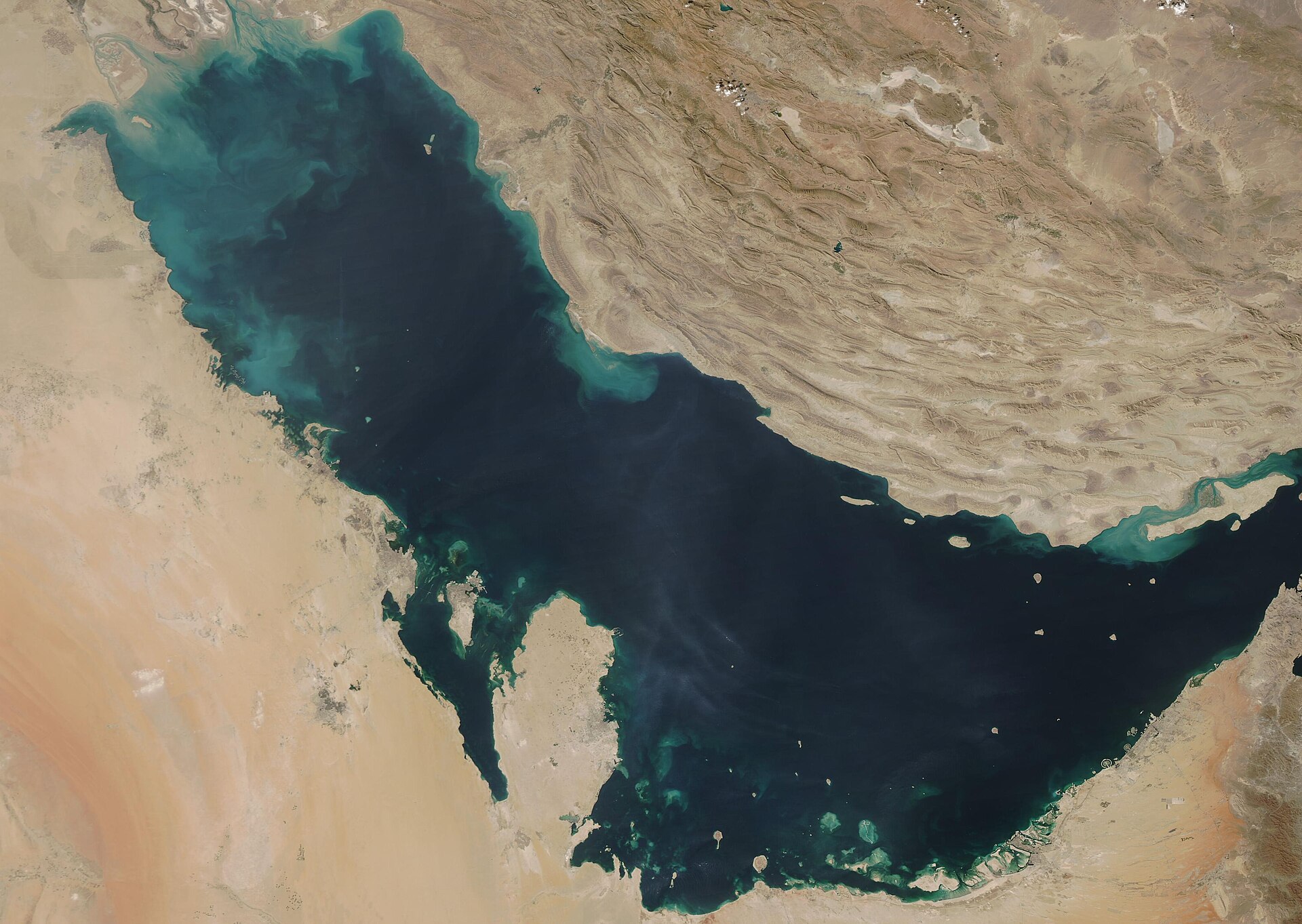
Table of Contents
- What Araghchi Actually Said — and What He Left Unsaid
- Four Strikes and a Doctrine
- Why Does Bushehr’s Geography Favour Iran in a Contamination Scenario?
- The Spent Fuel That Russia Never Took Back
- How Vulnerable Are GCC Desalination Systems to Bushehr Contamination?
- Are GCC States Prepared for a Nuclear Emergency?
- The Russian Evacuation as Strategic Signal
- Why Is Araghchi Invoking Zaporizhzhia?
- Deterrence Without a Weapon
- Frequently Asked Questions
What Araghchi Actually Said — and What He Left Unsaid
The full text of Araghchi’s April 4 post on X read: “Remember the Western outrage about hostilities near Zaporizhzhia Nuclear Power Plant in Ukraine? Israel-US have bombed our Bushehr plant four times now. Radioactive fallout will end life in GCC capitals, not Tehran.” In a second clause, he added: “Attacks on our petrochemicals also convey real objectives.” The statement was carried verbatim by Anadolu Agency, TRT World, and PressTV within hours.
The first sentence invoked Zaporizhzhia — a deliberate choice that placed Iran inside the same international legal and normative architecture the West had deployed against Russia during the Ukraine war. The second sentence — the fallout line — did something no Iranian official had done publicly before: it named the GCC as the primary victim of a Bushehr radiation release and explicitly excluded Tehran from the damage zone. The third sentence, on petrochemical strikes, was directed at Washington, framing the combined military campaign as economic decapitation rather than counterproliferation.
What Araghchi left unsaid was as structured as what he said. He did not threaten to cause a release. He did not say Iran would weaponise the reactor. He did not invoke Iran’s nuclear programme or enrichment capability. The omissions were precise. By confining himself to geography and meteorology — fallout goes there, not here — he constructed a statement that no fact-checker could dispute and no diplomat could easily condemn. The statement was descriptive in form and coercive in function.
PressTV’s own headline — “Iran warns of radioactive catastrophe after 4th attack on Bushehr nuclear plant” — positioned the remark as defensive. But the defensive framing was itself part of the message: Tehran was the party being bombed, Tehran was the party issuing warnings, and if the warnings went unheeded, the consequences would fall on capitals that had not been bombed at all. The asymmetry was the point.
The Middle East briefing 3,000+ readers start their day with.
One email. Every weekday morning. Free.
Four Strikes and a Doctrine
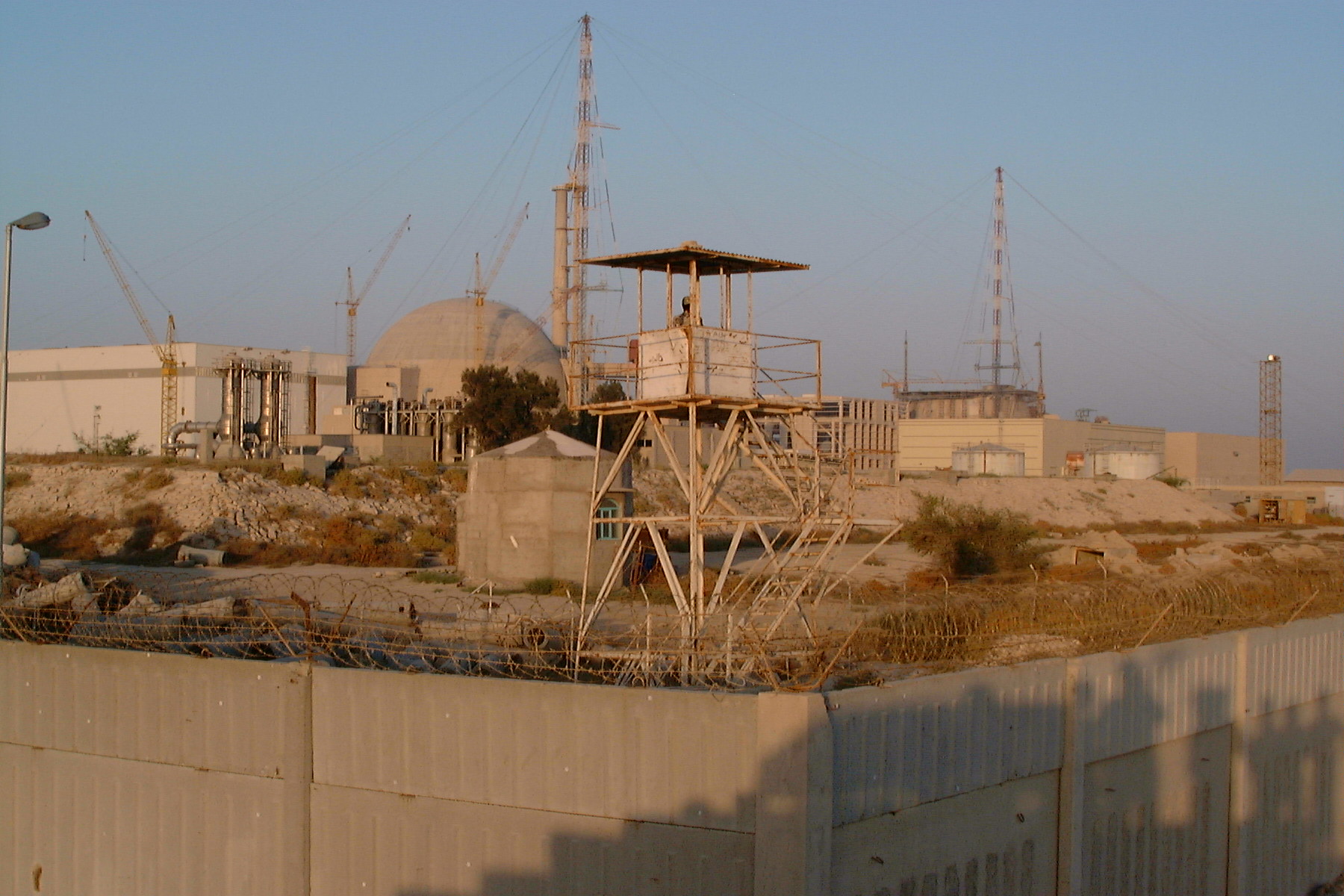
The April 4 strike was the fourth confirmed projectile impact on or near Bushehr’s premises since the war began on February 28, 2026. Previous strikes were recorded on March 17, March 24, and March 27. Following the March 17 strike, the IAEA confirmed that a projectile had struck a structure approximately 350 metres from the reactor building. The April 4 projectile killed one member of the plant’s physical protection staff and damaged an auxiliary building through shockwaves and fragmentation. Iran confirmed to the IAEA that no increase in radiation levels was recorded.
IAEA Director General Rafael Mariano Grossi responded within hours, expressing “deep concern about the reported incident” and stating that nuclear power plants “must never be attacked, noting that auxiliary site buildings may contain vital safety equipment.” He called for “maximum military restraint to avoid risk of a nuclear accident.” The language tracked almost exactly the seven pillars for nuclear safety in conflict zones that Grossi had articulated during the Zaporizhzhia crisis — a framework Iran was now explicitly invoking in its own defence.
Four strikes in five weeks amounts to a pattern, not an accident. Whether the strikes were US, Israeli, or joint operations, the targeting cadence communicated something to Tehran: Bushehr was not off-limits. Iran’s response was not to plead for protection or to invoke treaty obligations alone. It was to reframe the vulnerability as someone else’s problem. Each strike that fails to breach the reactor but lands on its premises reinforces the Iranian message — you are playing with something that will hurt your allies more than it hurts us.
As House of Saud reported on the Russian evacuation following earlier strikes, the plant has become the war’s most dangerous fixed asset. Not because it is Iran’s most valuable military target — it is not — but because its destruction would produce consequences that transcend the belligerents.
Why Does Bushehr’s Geography Favour Iran in a Contamination Scenario?
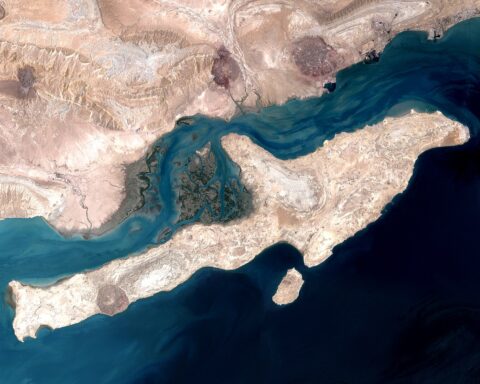
Bushehr Nuclear Power Plant sits on Iran’s southwestern coast, facing the Persian Gulf. The reactor is a VVER-1000 pressurized water unit that has been in commercial operation since 2013. Its location — chosen decades ago for access to Gulf seawater for cooling — places it closer to every GCC capital than to any major Iranian population centre.
| City | Distance from Bushehr (approx.) | Direction from Bushehr | April shamal wind exposure |
|---|---|---|---|
| Kuwait City | 281 km | West-southwest | Downwind |
| Manama, Bahrain | 301 km | South-southwest | Downwind |
| Doha, Qatar | 408 km | South | Downwind |
| Dubai, UAE | 600 km | Southeast | Downwind |
| Riyadh | 700 km | Southwest | Partially downwind |
| Tehran | 1,200 km | North-northeast | Upwind |
In April, the Persian Gulf is dominated by the shamal — a prevailing northwesterly wind system that blows from Iraq and the northern Gulf southeastward toward the Strait of Hormuz. Atmospheric dispersion modelling published in Science and Global Security indicates that at one hour post-release, radioactive materials from a Bushehr breach would disperse in a roughly 25-kilometre radius at altitudes between 450 and 2,700 metres, with the primary plume driven southeast by prevailing winds. A secondary plume would track northeast into Iran’s Fars Province, but the dominant atmospheric transport vector carries contamination directly toward the GCC’s most densely populated coastal zones.
Tehran sits 1,200 kilometres to the north-northeast. In April’s wind regime, it is upwind of Bushehr. A contamination event severe enough to affect Tehran would require either an extraordinary release magnitude or atypical wind conditions. The same event would have already rendered Kuwait City, Manama, and Doha uninhabitable for periods measured in years, not days. Araghchi’s statement — “not Tehran” — is not rhetoric. It is meteorology.
The Spent Fuel That Russia Never Took Back
The contamination risk at Bushehr is not limited to the approximately 70 tonnes of nuclear fuel inside the VVER-1000 reactor core. The more dangerous inventory sits in spent fuel storage on the same premises: approximately 210 tonnes of irradiated fuel assemblies that have accumulated over more than a decade of commercial operation.
Under the original Russia-Iran nuclear cooperation agreement, Rosatom was contractually obligated to repatriate spent fuel to Russia for reprocessing. That repatriation has never occurred. The Bellona Environmental Foundation, a Norwegian nuclear watchdog, confirmed as recently as April 3, 2026, that the full spent fuel inventory remains on-site under IAEA safeguards. The result is a radioactive stockpile substantially larger than what a newly operational plant would hold — and one stored in facilities designed for interim holding, not for surviving military strikes.
The Center for Strategic and International Studies assessed that attacking Bushehr “would pose the greatest contamination risk due to high inventories of radioactive materials in spent fuel.” A direct hit on spent fuel storage could release iodine-131 — a short-half-life isotope that concentrates in the thyroid and poses acute radiation risks — alongside cesium-137, which has a 30-year half-life and contaminates soil and water on generational timescales. The CSIS analysis concluded that such a release could spread “likely throughout Iran and to nearby Gulf states, potentially even compromising desalination infrastructure in Kuwait, Qatar, and the United Arab Emirates.”
The distinction between a reactor breach and a spent fuel fire is not academic. At Fukushima in 2011, the spent fuel pools in Units 1 through 4 held more total radioactivity than the reactor cores. A spent fuel fire — which can occur if cooling is lost and fuel assemblies are exposed to air — produces a sustained release at lower altitude than a reactor explosion, meaning the contamination plume stays closer to ground level and deposits more heavily on nearby terrain and water surfaces. For a coastal facility facing the Persian Gulf, “nearby terrain and water surfaces” means the Gulf itself and everything that draws water from it.
How Vulnerable Are GCC Desalination Systems to Bushehr Contamination?
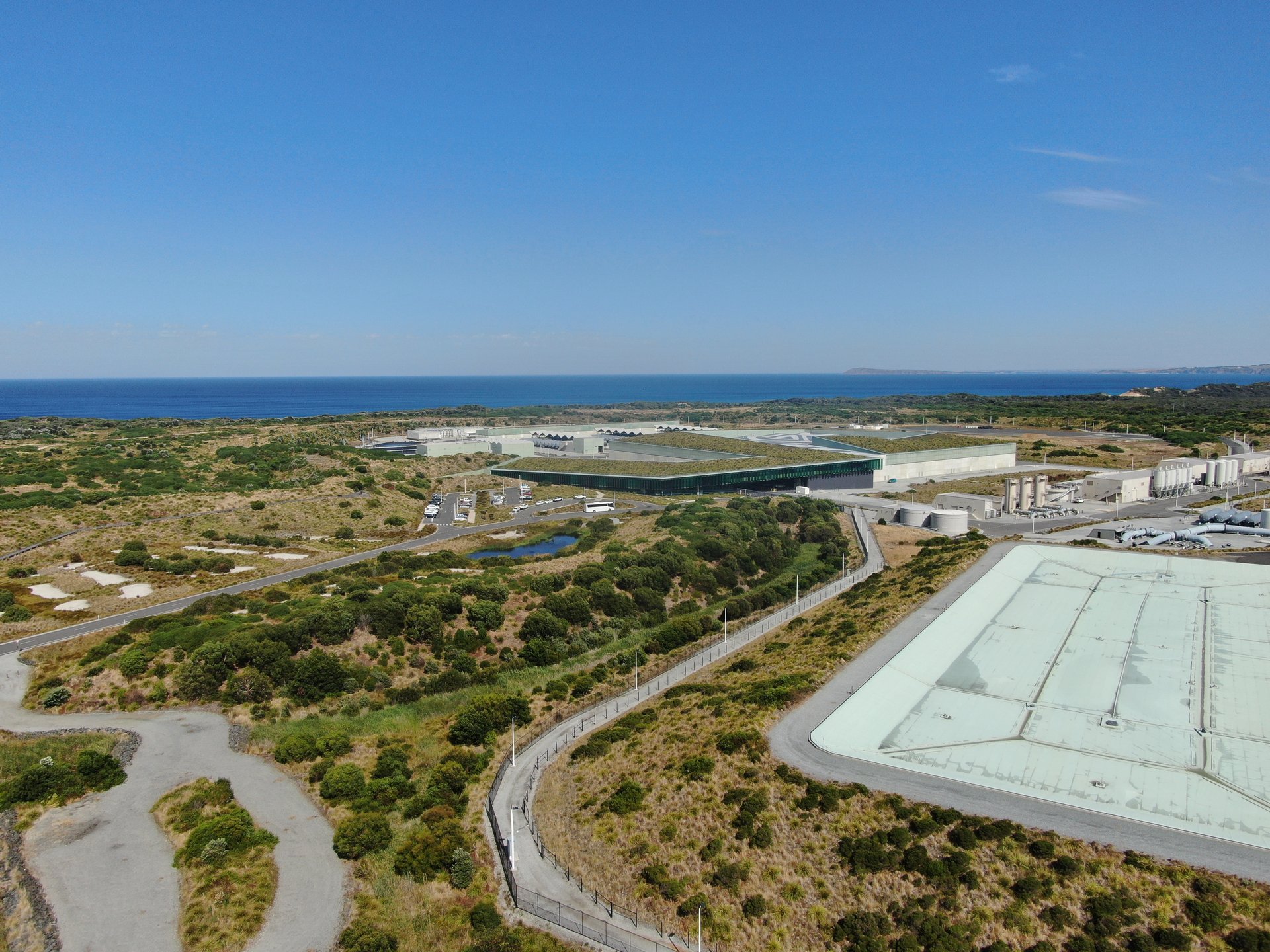
The answer is: existentially. More than 70 percent of Saudi Arabia’s drinking water comes from desalination. Across the GCC, over 400 desalination plants line the Arabian Gulf coast from the UAE’s northern emirates through Qatar, Bahrain, and Kuwait. These plants draw seawater directly from the Gulf through coastal intake systems — the same body of water into which Bushehr’s cooling systems discharge and into which any waterborne contamination would flow.
Research published in MDPI Marine Sciences modelled radionuclide transport following a hypothetical Bushehr accident. The findings showed contamination carried by Gulf currents along the Arabian Peninsula coastline to the Strait of Hormuz, passing directly through the intake zones of desalination facilities that supply water to tens of millions of people. The Gulf is shallow — average depth 50 metres — and semi-enclosed, with a water residence time of three to five years. Contamination that enters the Gulf does not flush quickly. It circulates.
As House of Saud’s analysis of Riyadh’s water vulnerability detailed, the Saudi capital’s dependence on desalinated water piped from Gulf coast facilities means that a contamination event hundreds of kilometres from Riyadh could still compromise the city’s water supply. There is no rapid-deployment alternative. Groundwater reserves in the Arabian Peninsula are fossil aquifers — non-renewable and already stressed by agricultural extraction. Emergency water trucking at the scale required for a city of eight million people is a logistical impossibility sustained beyond days.
The irony is structural: the GCC states’ extraordinary investment in desalination infrastructure — a triumph of engineering over geography — created the very dependency that makes Bushehr contamination an existential threat rather than a manageable emergency. A state that draws its water from rivers and rainfall can survive a nuclear accident by evacuating the immediate fallout zone. A state that draws its water from an enclosed sea facing the contamination source cannot evacuate the sea.
“Radioactive fallout will end life in GCC capitals, not Tehran.”
— Abbas Araghchi, Iranian Foreign Minister, April 4, 2026
Are GCC States Prepared for a Nuclear Emergency?
The short answer is that preparations exist on paper and have been tested in limited exercises, but institutional readiness falls well below what a Bushehr contamination scenario would demand. The longer answer is worse.
Saudi Arabia’s Civil Defense Directorate maintains evacuation and sheltering executive regulations that have not been updated since 2001, according to analysis by Faris Almaari of the Washington Institute. Government bodies included in the National Response Plan for Nuclear and Radiological Emergencies lack training to fulfil their assigned responsibilities. A study of ten hospitals in Riyadh characterised chemical, biological, radiological, and nuclear preparedness as “less than satisfactory.” This is not an obscure academic finding — it describes the emergency medical capacity of a capital city of eight million people located 700 kilometres from an active nuclear target.
The GCC has taken some collective steps. Following earlier Bushehr strike scares, the GCC activated its Emergency Management Centre in Kuwait to “ensure all necessary preventive measures are taken at environmental and radiological levels.” Bahrain prepared 33 emergency shelters and conducted nationwide siren tests. Oman circulated unofficial guidance on shelter-in-place procedures. These are the actions of states that take the threat seriously enough to rehearse responses but have not yet built the institutional depth to execute them under real contamination conditions.
The gap between activation and adequacy is where Araghchi’s deterrence message finds its target. Iran does not need the GCC to be unprepared in an absolute sense — it needs the GCC to know that it is unprepared relative to what a Bushehr release would require. Regulations from 2001. Hospitals rated unsatisfactory. Thirty-three shelters for a kingdom of 35 million. The numbers speak for themselves, and Araghchi is betting that Gulf decision-makers have read them.
The contrast with Iran’s own position is instructive. Iran’s population centres at risk from a Bushehr release — primarily Bushehr city itself (population approximately 250,000) and parts of Fars Province — are smaller, more dispersible, and farther from the reactor than Kuwait City or Manama. Tehran, home to nine million people, is 1,200 kilometres upwind. Iran would suffer localized contamination. The GCC would face a regional water crisis.
The Russian Evacuation as Strategic Signal
On April 4, Rosatom evacuated 198 personnel from Bushehr approximately 20 minutes after the strike — described as the largest single evacuation wave since the war began. Across all evacuation waves since February 28, more than 600 Russian workers have been extracted from the facility. Approximately 50 volunteers remain on-site, maintaining minimum reactor operations.
The evacuation itself sent a layered message. Russia coordinated with the Israeli Defense Forces on the timing, according to the Times of Israel — an arrangement that simultaneously acknowledged Bushehr was in a live-fire zone and established a deconfliction channel that excluded Iran from the conversation about its own nuclear plant. Moscow demanded a truce window to extract its personnel, which it received. The 50 remaining volunteers ensured the reactor stayed operable — and ensured that Araghchi’s deterrence message retained its physical basis.
The earlier Russian evacuation waves had already established that Moscow was treating Bushehr as a zone of genuine danger rather than performative concern. The April 4 extraction — a tempo that suggests pre-positioned transport and rehearsed procedures — confirmed that Rosatom had moved from contingency planning to execution. When the operator of a nuclear plant evacuates at wartime speed, the plant’s neighbours should treat that as the most credible risk assessment available.
For the GCC, the Russian evacuation created an uncomfortable data point. If Russia — which built the reactor, staffed it, and has contractual responsibility for its safety — concluded that on-site risk justified mass evacuation, what does that imply for states 281 to 600 kilometres downwind that have conducted no equivalent preparation? The 50 volunteers who remained were enough to maintain reactor operations but not enough to manage a serious emergency. The skeleton crew is itself a signal: Russia has decided that Bushehr’s continued operation serves strategic purposes, but it has also decided that full staffing is no longer worth the risk.
Why Is Araghchi Invoking Zaporizhzhia?
Araghchi’s opening line — “Remember the Western outrage about hostilities near Zaporizhzhia Nuclear Power Plant in Ukraine?” — was not casual rhetoric. It was a legal and normative trap constructed with deliberate precision.
During the Ukraine war, the United States, European Union, and their allies condemned Russian military operations near the Zaporizhzhia Nuclear Power Plant in the strongest terms. The IAEA deployed inspectors. The UN Security Council debated the issue. Western governments invoked international humanitarian law, the Geneva Conventions’ protections for civilian infrastructure, and the IAEA’s safety framework. The normative infrastructure built around Zaporizhzhia established that military operations threatening a nuclear plant constituted an unacceptable escalation regardless of the stated military objective.
Araghchi appropriated the entire architecture. If striking near Zaporizhzhia was an outrage when Russia did it, then striking Bushehr four times is an outrage when the US and Israel do it. The comparison is uncomfortable precisely because it is structurally sound. Bushehr, like Zaporizhzhia, is a civilian nuclear power plant under IAEA safeguards. Bushehr, unlike Zaporizhzhia, has actually sustained direct projectile hits on its premises and lost a security staff member. Bushehr, unlike Zaporizhzhia, holds over a decade of unrepatriated spent fuel that amplifies the contamination risk by an order of magnitude.
The Western response to Araghchi’s comparison has been silence, which is itself the response he anticipated. Condemning the Bushehr strikes using the same language deployed for Zaporizhzhia would require acknowledging that US and Israeli operations have created equivalent risks. Declining to condemn them validates Araghchi’s charge of hypocrisy. The rhetorical structure was designed with no comfortable exit for its targets.
IAEA Director General Grossi has maintained institutional consistency — his April 4 statement used the same “maximum military restraint” language he employed for Zaporizhzhia. But institutional consistency from the IAEA is not the same as political pressure from Western capitals, and Araghchi’s statement was calibrated to expose that gap.
Deterrence Without a Weapon
The conventional understanding of nuclear deterrence requires a weapon, a delivery system, and the demonstrated willingness to use both. Iran possesses none of these in the traditional sense — it has no declared nuclear warhead, no weaponised delivery platform for a nuclear device, and has maintained (however tenuously) a formal position against nuclear weapons development.
What Araghchi articulated on April 4 was a different form of deterrence entirely. It does not require Iran to build, deploy, or threaten to use a nuclear weapon. It requires only that Iran accept — and signal its acceptance of — the consequences of a contamination event at an existing civilian facility that is being struck by its adversaries. The weapon, in this framework, is not the reactor. The weapon is the geography.
This is not without precedent in strategic thinking, but it is without precedent in public diplomatic communication by a state under active bombardment. Iran is saying, in effect: you are creating the conditions for a catastrophe, and the catastrophe will fall on your allies, not on us. We are not threatening to cause it. We are informing you that we can survive it better than they can. Continue if you wish.
The IRGC’s own positioning adds a harder edge. Ahmad Haqtalab, the IRGC commander responsible for protecting Iran’s nuclear facilities, stated in 2024 that “a reversal of Iran’s nuclear doctrine and policies, including a shift away from previous considerations, is likely and conceivable.” That statement — made before the current war — established on the record that Iran’s nuclear posture was not fixed. Read alongside Araghchi’s April 4 message, it suggests a deliberate good-cop/bad-cop structure: the foreign minister describes the geography of contamination as an inevitable consequence of enemy action; the IRGC commander hints that Iran’s restraint on nuclear matters is a policy choice, not a permanent commitment.
For Saudi Arabia, already navigating the 36-hour decision window before Trump’s April 6 deadline, Araghchi’s deterrence message adds a dimension that no amount of Patriot batteries or THAAD deployments can address. Air defence intercepts missiles. It does not intercept wind.
The petrochemical clause in Araghchi’s statement — “Attacks on our petrochemicals also convey real objectives” — reinforced the deterrence framework by broadening it. Tehran was reading the combined strikes on Bushehr and on Iranian petrochemical facilities not as separate operations but as an integrated economic decapitation campaign. By linking the two publicly, Araghchi signalled that Iran’s response calculus would also be integrated: threats to Iran’s energy infrastructure would be answered by Iran’s willingness to accept risks that threaten the GCC’s energy and water infrastructure. The link was implicit but unmistakable.
The question for Washington, Tel Aviv, and Gulf capitals is whether Araghchi’s statement represents a bluff or a doctrine. The distinction may be less meaningful than it appears. A bluff that is believed produces the same deterrent effect as a genuine commitment. And Araghchi has constructed his message on foundations — geography, meteorology, spent fuel inventory, desalination dependency — that do not require belief in Iranian intentions. They require only belief in physics.
The four strikes on Bushehr have not produced a radiation release. They have produced something that may prove more durable: the public articulation, by a senior Iranian official, that Iran has identified the asymmetry of a potential release and is prepared to deploy that asymmetry as a strategic instrument. The reactor was built by Russia, fuelled by Russia, and staffed by Russians who are now mostly gone. The spent fuel was supposed to go back to Russia and did not. The wind blows southeast. The desalination plants draw from the Gulf. And Iran’s missile capability, even after five weeks of US and Israeli strikes, retains enough launchers to complicate any assumption of clean military outcomes.
None of this means a contamination event is likely or imminent. The reactor’s primary containment has not been breached, and the strikes, however reckless in proximity, have not yet produced the scenario Araghchi described. But deterrence does not operate on what has happened. It operates on what could happen, and on who would suffer most if it did. On that question, Araghchi has provided an answer that the GCC cannot easily dismiss — because it is, on the merits, correct. The radiological dimension carries a specific implication for Hajj 2026: between 750,000 and two million pilgrims will be gathered within 100 kilometers of the Gulf coastline from April 18 onward, and no contingency plan for the first wartime Hajj in Saudi history can be complete without accounting for a scenario the kingdom has no precedent to manage.
Frequently Asked Questions
What type of reactor is at Bushehr and who operates it?
Bushehr houses a VVER-1000 pressurized water reactor designed and constructed by Russia’s Rosatom. The reactor achieved commercial operation in 2013 after decades of construction delays — the project was originally begun by the German firm Siemens/KWU in 1975, abandoned after the 1979 revolution, and restarted by Russia in 1995. The fuel supply chain remains entirely Russian, with low-enriched uranium fuel assemblies fabricated in Russia and shipped to Iran under IAEA safeguards. Iran provides operational staff, but Russian engineers have historically held supervisory roles — roles now largely vacated by the ongoing evacuations.
Could Iran deliberately cause a radiation release at Bushehr?
Technically, the operational staff remaining at Bushehr could disable safety systems, but doing so would constitute an act with no historical precedent — a state deliberately sabotaging its own civilian nuclear facility. The international legal and diplomatic consequences would be catastrophic for Iran. Araghchi’s messaging is calibrated to avoid this implication: his statement framed any potential release as a consequence of US-Israeli strikes, not Iranian action. The deterrent power lies precisely in Iran not being the agent of destruction but being the party that suffers least from destruction caused by others. A deliberate Iranian release would destroy that framing and unify global opinion against Tehran — the opposite of Araghchi’s diplomatic objective.
What is the difference between iodine-131 and cesium-137 contamination?
Iodine-131 has a half-life of approximately eight days and concentrates in the human thyroid gland, posing acute radiation risks including thyroid cancer — particularly dangerous for children and pregnant women. Its short half-life means it decays relatively quickly, but its biological concentration makes it lethal in the immediate aftermath of a release. Cesium-137, with a 30-year half-life, binds to soil and accumulates in water systems, creating long-term contamination zones that can remain hazardous for decades. After Chernobyl, cesium-137 contamination rendered agricultural land in Belarus and Ukraine unusable for a generation. In a Gulf context, cesium-137 entering the shallow, semi-enclosed Persian Gulf — with its three-to-five-year water residence time — would contaminate desalination intake zones for years even after atmospheric deposition ceased.
Has any country previously used a civilian nuclear facility as a deterrent asset?
The Zaporizhzhia precedent during the Russia-Ukraine war is the closest analogue, though the dynamics differed: Russia occupied and held the plant, using its presence as a shield against Ukrainian counterattack. Iran’s approach inverts the logic — it is not occupying a nuclear facility to protect military positions but signalling that an enemy’s strikes on the facility create consequences for third parties. North Korea’s Yongbyon reactor complex has served a broadly similar deterrence function in that its potential for contamination complicated US strike planning during periods of heightened tension in the 1990s and 2000s, though Pyongyang never articulated the geography of fallout as explicitly as Araghchi did on April 4.
What would a GCC water contingency plan require if desalination were compromised?
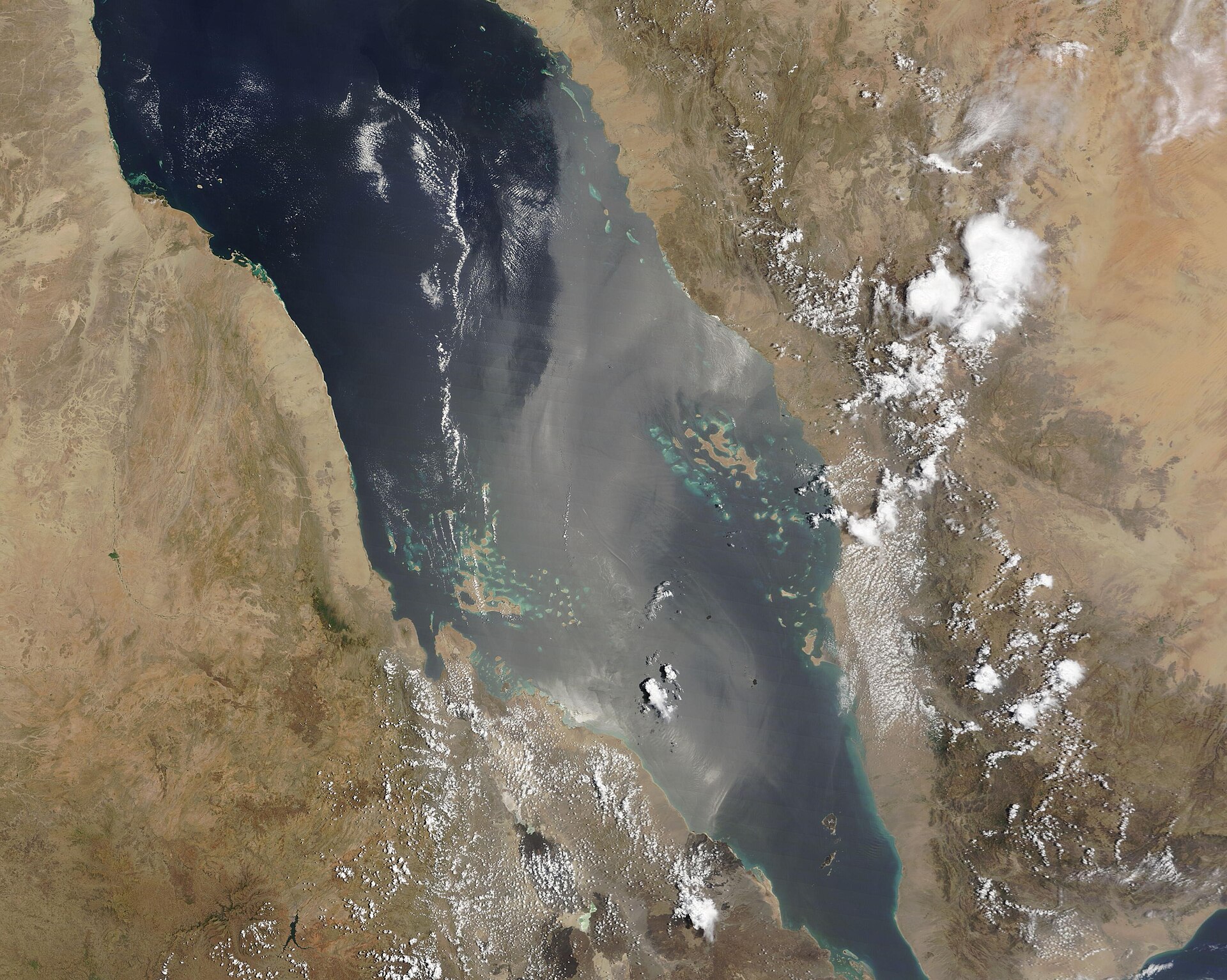
Emergency water supply for the GCC’s combined population of approximately 57 million would require either massive cross-border pipeline deliveries from uncontaminated sources — which do not currently exist at scale — or a seaborne water importation campaign of unprecedented logistics. Saudi Arabia’s Red Sea coast desalination plants (including Yanbu and Jeddah facilities) would be unaffected by Gulf contamination and could partially compensate for eastern coast losses, but the pipeline infrastructure connecting Red Sea plants to eastern population centres, including the industrial Eastern Province, is not built for emergency surge capacity. International emergency water delivery by tanker is feasible for small populations but mathematically inadequate for cities the size of Riyadh, Kuwait City, or Doha sustained over the weeks or months a contamination event would require.