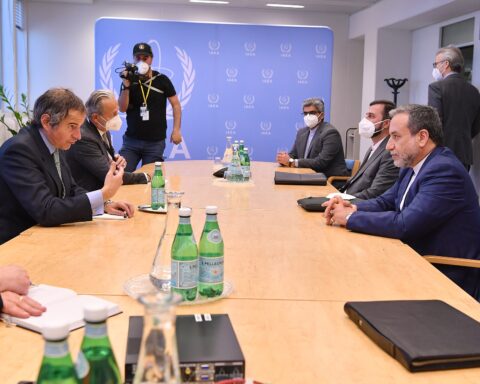
TEHRAN — The IRGC Navy has declared “full authority” over the Strait of Hormuz while Iran’s Foreign Minister Abbas Araghchi negotiates a ceasefire framework in Islamabad — a jurisdictional claim that no diplomatic agreement can override without a separate IRGC command order that currently has no constitutional pathway to be issued. On April 10, the IRGC Navy stated that “the management of the Strait of Hormuz has entered a new phase,” language that tracks with Iran’s 10-point negotiating plan, which demands international recognition of IRGC “coordination” over the strait as a treaty requirement. The declaration is not a bluff or a bargaining posture. It is an operational fact: since late February, every commercial vessel transiting Hormuz has done so under IRGC-administered routing, inside Iranian-claimed waters, after submitting crew manifests and cargo details to IRGC-connected intermediaries. The question is not whether the IRGC controls Hormuz. It does. The question is whether anyone in Tehran has the authority to tell it to stop.
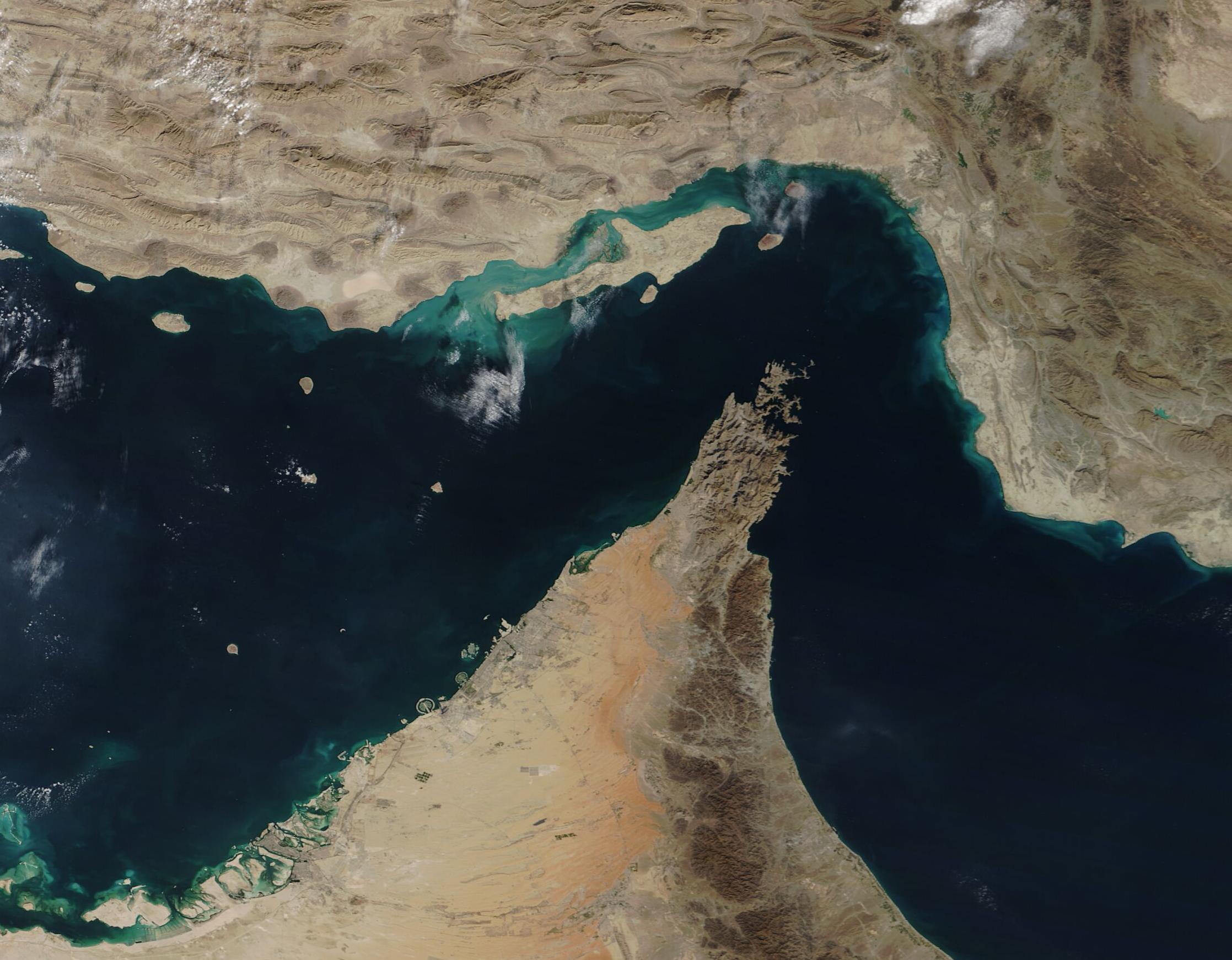
Table of Contents
- The Declaration and Its Timing
- What Does “Full Authority” Mean at the Waterline?
- The Headless Navy: Command After Tangsiri
- Can Araghchi Override the IRGC From Islamabad?
- The Authorization Ceiling: Article 176 and the Frozen Constitution
- CENTCOM’s Mine-Clearance Gambit
- How Many Ships Are Actually Transiting Hormuz?
- Saudi Arabia’s Export Ceiling
- What Would It Take to Reopen Hormuz?
- Frequently Asked Questions
The Declaration and Its Timing
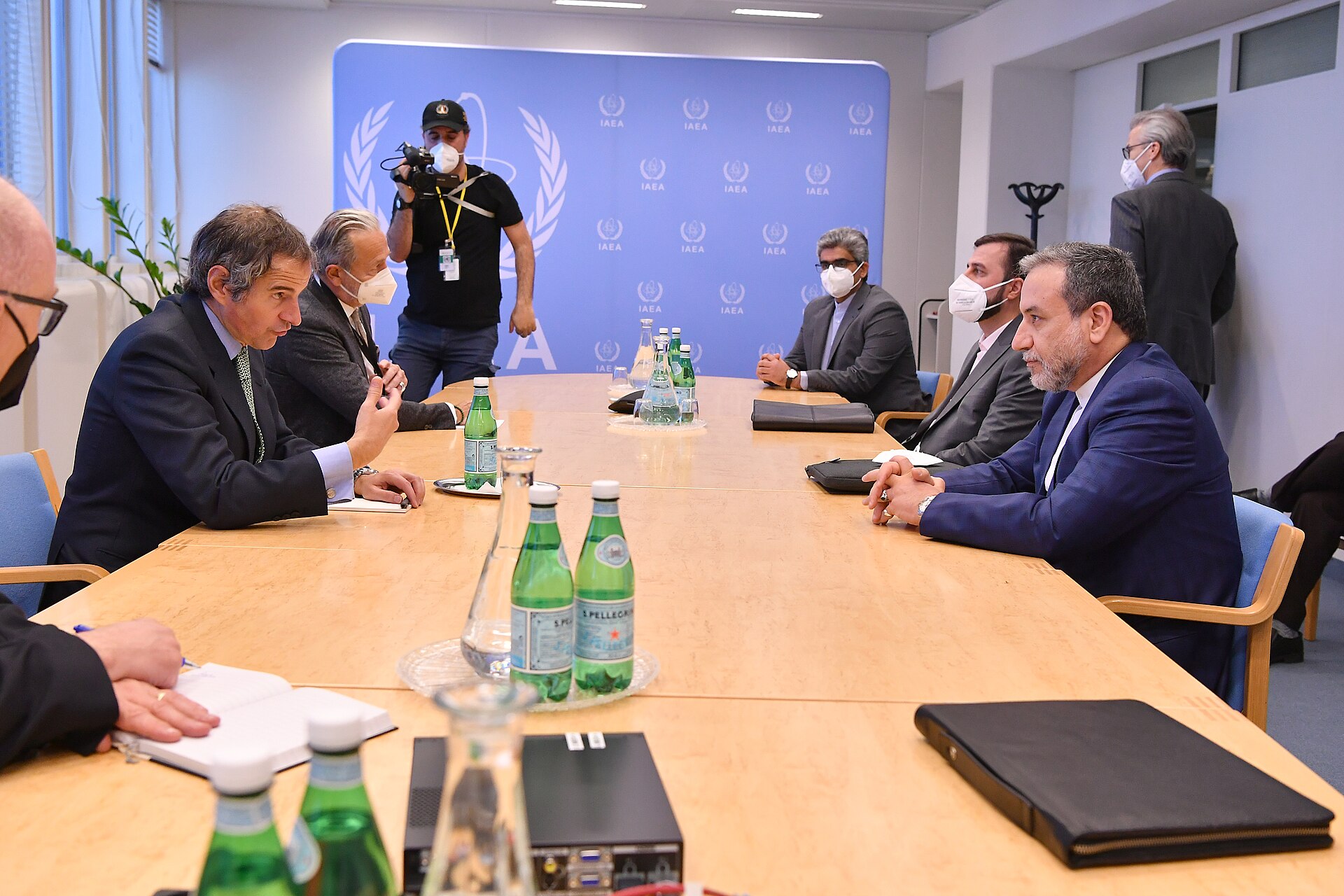
The IRGC Navy’s April 10 statement arrived 21 hours into the Islamabad negotiations between Vice President JD Vance and Iranian Parliament Speaker Mohammad Bagher Ghalibaf — the first direct US-Iran face-to-face talks since 1979. The statement read: “The two days of silence in military battle clearly showed to friends and enemies that the management of the Strait of Hormuz has entered a new phase.” This followed an earlier IRGC Navy declaration on April 5, delivered through the force’s official X account: “The Strait of Hormuz will never return to its previous status, especially for the US and the Zionist regime.”
Ayatollah Mojtaba Khamenei — the Supreme Leader’s son, who has increasingly assumed his father’s public role during the elder Khamenei’s prolonged absence — issued a parallel statement on April 9 describing Iran as having taken “the management of the Strait of Hormuz to a new stage.” The language across all three statements is nearly identical. This is not coincidence. It is coordination between the IRGC Navy and the office closest to supreme leadership authority, executed while the Foreign Ministry negotiates in a different country.
The IRGC was explicit about the ceasefire: the strait “will not be opened to the enemies of this nation through the ridiculous spectacle by the president of the US.” On April 5, the IRGC Navy added that it was “finalizing operational preparations for a new security order in the Persian Gulf, based on the principle that the region’s stability and security must be guaranteed by the littoral states themselves, without the provocative and illegitimate presence of outside forces.”
As of April 12, the Islamabad talks have paused after 21-plus hours. Vance confirmed publicly: “no agreement.” Talks are scheduled to resume Sunday.
What Does “Full Authority” Mean at the Waterline?
The IRGC’s claim is not aspirational. Since February 28, 2026, the IRGC has redirected all commercial shipping from the internationally recognized Traffic Separation Scheme — which routes vessels through Omani territorial waters on the southern side of the strait — northward into a five-nautical-mile corridor between Qeshm and Larak islands. Every transiting vessel now passes through waters Iran claims to administer. The IRGC published a navigational chart on February 28 and has extended it continuously through at least April 9.
The Middle East briefing 3,000+ readers start their day with.
One email. Every weekday morning. Free.
To transit, vessels must provide their IMO number, cargo manifest, crew names, ownership details, and destination to IRGC-connected intermediaries before receiving what the IRGC calls a “route code and escort.” James Kraska, Professor of International Maritime Law at the US Naval War College, has characterized this regime as a violation of transit passage rights under international law, noting there is “no legal basis” for the fee and routing structure. He has described the broader US-Iran standoff over the strait as a “Legal Vortex” — a term that captures the jurisdictional chaos but understates how firmly the IRGC has resolved it in its own favor at the operational level.
On March 24, the IRGC provided its clearest demonstration of administrative control. The container feeder Selen (6,800 dwt) was turned back from the strait for “failure to comply with legal protocols and lack of permission to pass through Strait of Hormuz” — the first formal administrative rejection on record. The IRGC’s statement on the incident: “The passage of any vessel through this waterway requires full coordination with Iran’s maritime authority.”
Iran’s Parliament institutionalized this architecture on March 31, passing a toll law that codifies a fee of approximately $2 million per vessel for Hormuz transit. At pre-war throughput of 138 ships per day, that would generate $276 million daily — though current throughput is a fraction of that figure.
The Headless Navy: Command After Tangsiri
The IRGC Navy is issuing these declarations without a commanding officer. Commodore Alireza Tangsiri, who architected the Hormuz closure strategy, was killed in an Israeli strike at Bandar Abbas on March 26, 2026. The IDF confirmed it also killed IRGC Navy intelligence chief Behnam Rezaei in the same strike. The IRGC did not acknowledge Tangsiri’s death until March 30.
As of April 12, no successor has been publicly named. The commander’s position is listed as vacant. The IRGC’s response to the decapitation was not to pause operations but to claim vindication: “The IRGC Navy’s fighters, in the absence of this brave commander from his command position, have demonstrated through crushing blows and decisive management of the Strait of Hormuz.”
This continuity is by design. The IRGC’s September 2008 reorganization into a decentralized mosaic structure of 31 semi-autonomous corps was explicitly engineered as an anti-decapitation measure. Tactical units can — and do — act without orders from Tehran. The feature that makes the IRGC resilient to targeted killing is the same feature that makes ceasefire compliance structurally unreliable: there is no single officer whose removal or whose order would halt operations across the mosaic.
The “full authority” declarations are being issued by anonymous institutional command. Not a named individual. This makes them diplomatically unrescindable in any conventional sense — there is no counterpart for Araghchi, or Vance, or anyone else to negotiate with at the operational level.
Can Araghchi Override the IRGC From Islamabad?
No. Under Iran’s constitutional structure, the Foreign Ministry has no command authority over the IRGC. The IRGC reports to the Supreme Leader through the Supreme National Security Council, not through the president or the foreign minister. Araghchi can negotiate a framework. He can sign a document. He cannot issue an order that changes what happens in the five-nautical-mile corridor between Qeshm and Larak.
The IRGC has made this hierarchy explicit in the Islamabad process itself. According to the Jerusalem Post, IRGC Commander Ahmad Vahidi demanded that Mohammad Bagher Zolghadr — the SNSC secretary appointed March 24 under IRGC pressure and sanctioned by both the US and EU — be included on the negotiating team. The delegation pushed back, “considering Zolghadr too inexperienced for strategic negotiations.” Vahidi and the IRGC Aerospace Commander also instructed the delegation to refuse to negotiate on Iran’s missile program.
President Pezeshkian has charged IRGC Commanders Vahidi and Abdollahi (IRGC Aerospace Force) with “destroying ceasefire chances.” The accusation is accurate as description but irrelevant as authority. Pezeshkian chairs the SNSC. He does not command the IRGC. And the SNSC’s own ceasefire text — the document that is supposed to guide Iran’s negotiating position — states: “negotiations are continuation of battlefield.”
The Authorization Ceiling: Article 176 and the Frozen Constitution
Under Article 176 of Iran’s Constitution, SNSC decisions require confirmation by the Supreme Leader to take effect. Ayatollah Ali Khamenei has been absent for over 40 days. The Times of London reported a memo describing him as “unconscious in Qom.” His last attributed public statement was in early March.
The constitutional mechanism is frozen. Even if the SNSC — chaired by Pezeshkian, with Ghalibaf, Zolghadr, Vahidi, and Jalili as members — voted unanimously to reverse the IRGC Navy’s operational authority over Hormuz, the decision would require Khamenei’s confirmation. Without it, the decision has no constitutional force.
The authorization ceiling — the structural limit on what any Iranian official below the Supreme Leader can authorize — was already visible in the ceasefire framework, where the IRGC’s decentralized commanders continued operations for hours after the nominal ceasefire began — including the April 8 strike on the East-West Pipeline pumping station. Now the IRGC has formalized the ceiling as doctrine. “Full authority” is not a claim the IRGC is making against the government. It is a claim the IRGC is making because the government cannot constitutionally override it.
| Actor | Constitutional Role | Current Status | Can Reverse IRGC Hormuz Authority? |
|---|---|---|---|
| Supreme Leader Khamenei | Commander-in-Chief; confirms SNSC decisions | Absent 40+ days; reported unconscious | Yes — if available |
| Mojtaba Khamenei | No formal constitutional role | Issuing parallel statements to IRGC | No constitutional authority |
| SNSC (Pezeshkian, chair) | Sets security policy; requires Supreme Leader confirmation | Functional but decisions cannot be confirmed | No — without Khamenei’s ratification |
| Ahmad Vahidi (IRGC C-in-C) | SNSC member; commands IRGC | Active; directing negotiation red lines from Tehran | Could issue stand-down — but won’t |
| IRGC Navy Commander | Commands naval operations in Hormuz | Vacant since March 30 (Tangsiri killed) | Position empty |
| Abbas Araghchi (FM) | Negotiates on behalf of Iran | In Islamabad | No command authority over IRGC |
CENTCOM’s Mine-Clearance Gambit
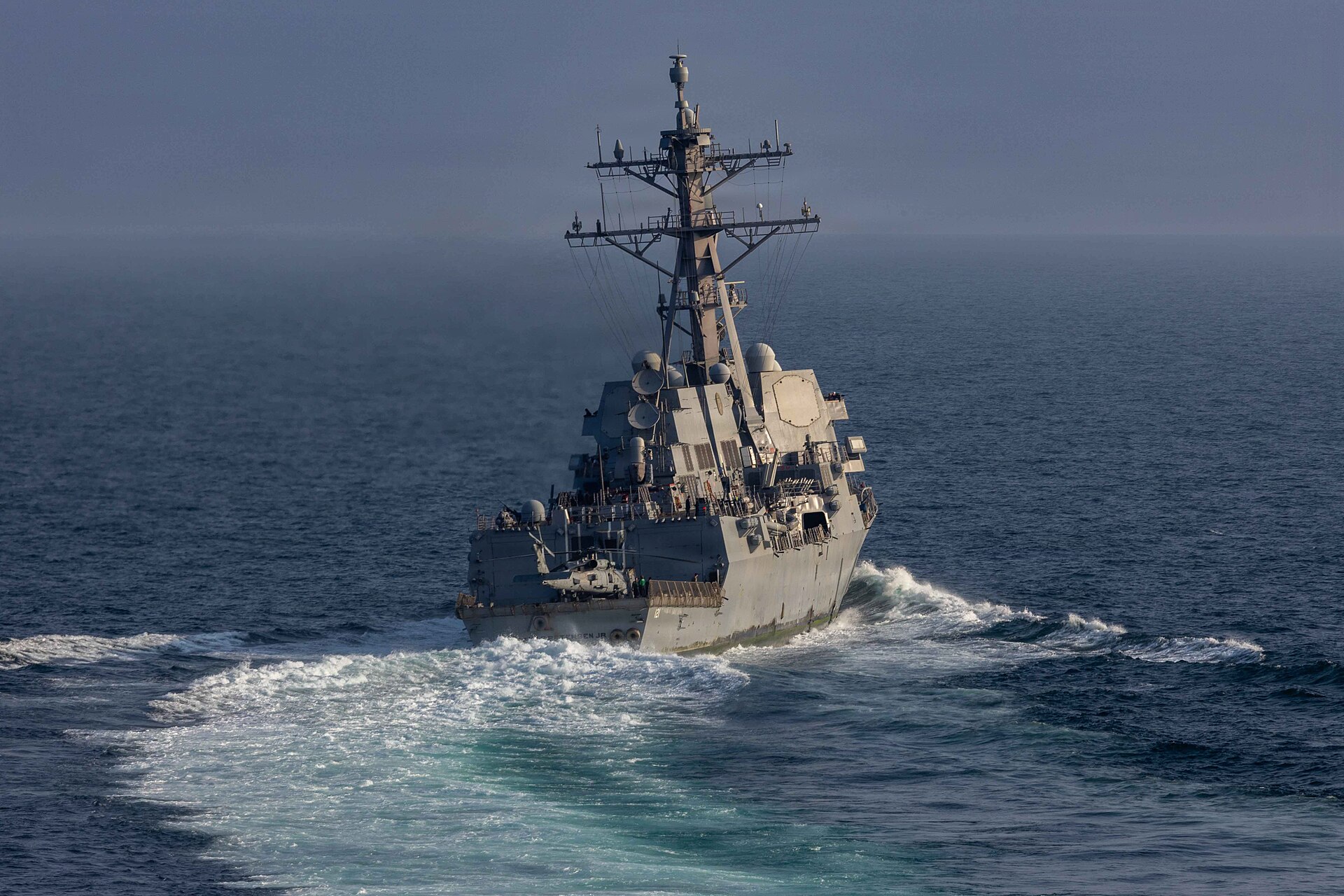
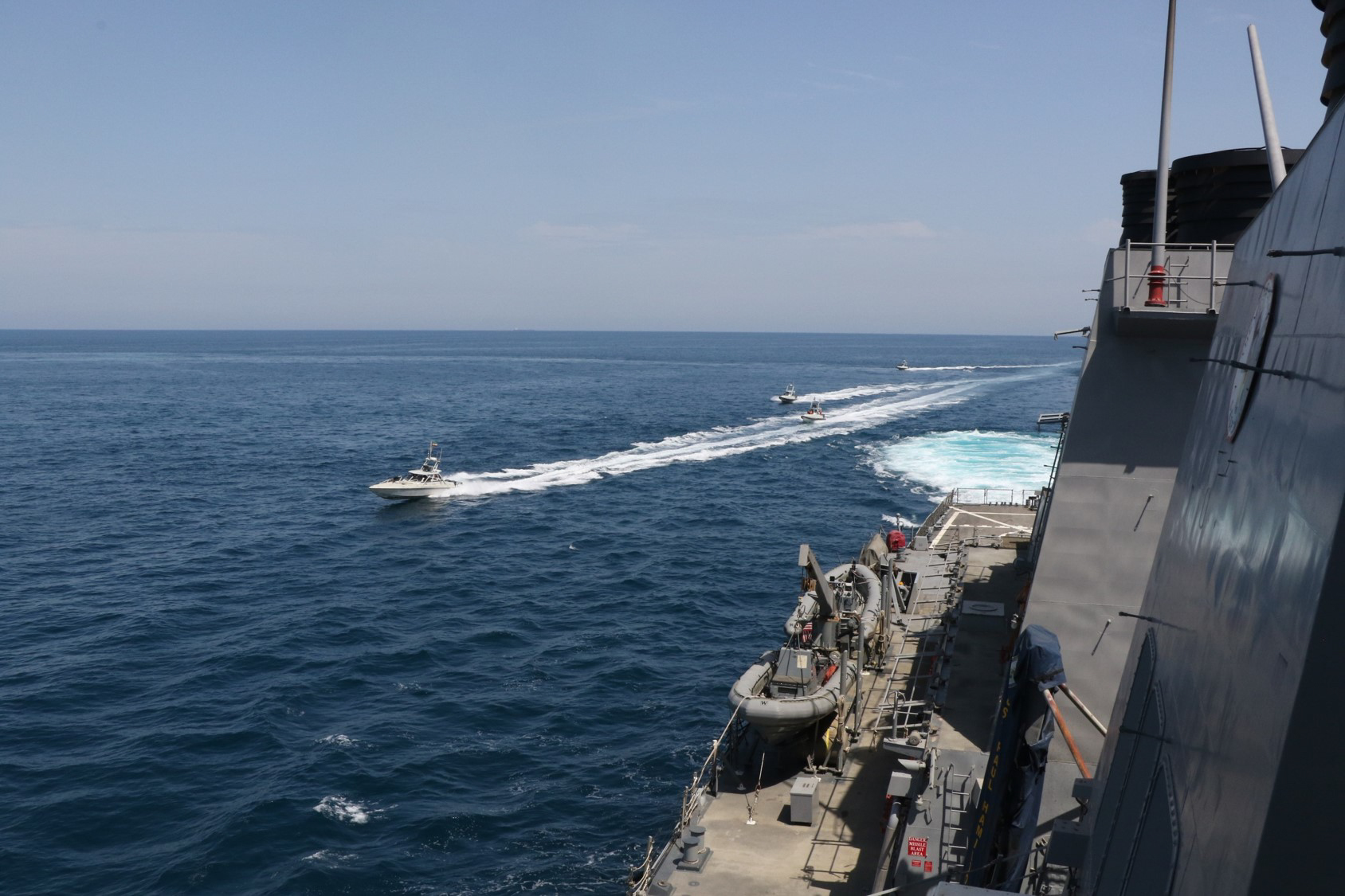
On April 11, two Arleigh Burke-class destroyers — USS Frank E. Petersen Jr. (DDG-121) and USS Michael Murphy (DDG-112) — transited the Strait of Hormuz. CENTCOM described the operation as “setting conditions” for mine clearance. Rear Admiral Brad Cooper stated: “Today, we began the process of establishing a new passage, and we will share this safe pathway with the maritime industry soon to encourage the free flow of commerce.”
The Michael Murphy deliberately activated its Automatic Identification System during the transit — a broadcast that military historian Salvatore Mercogliano of Campbell University characterized as “purposeful.”
The IRGC responded with a radio warning to the destroyers: “This is the last warning. This is the last warning.” The US vessel replied: “Passage in accordance with international law. No challenge is intended to you, and I intend to abide by rules of our government’s ceasefire.” Iranian media reported the destroyers subsequently reversed course. The US has not confirmed or denied this account. For a full operational account of the April 11 transit and its implications for the ceasefire timeline, see CENTCOM’s formal mine-clearance operation.
The Mine Gap
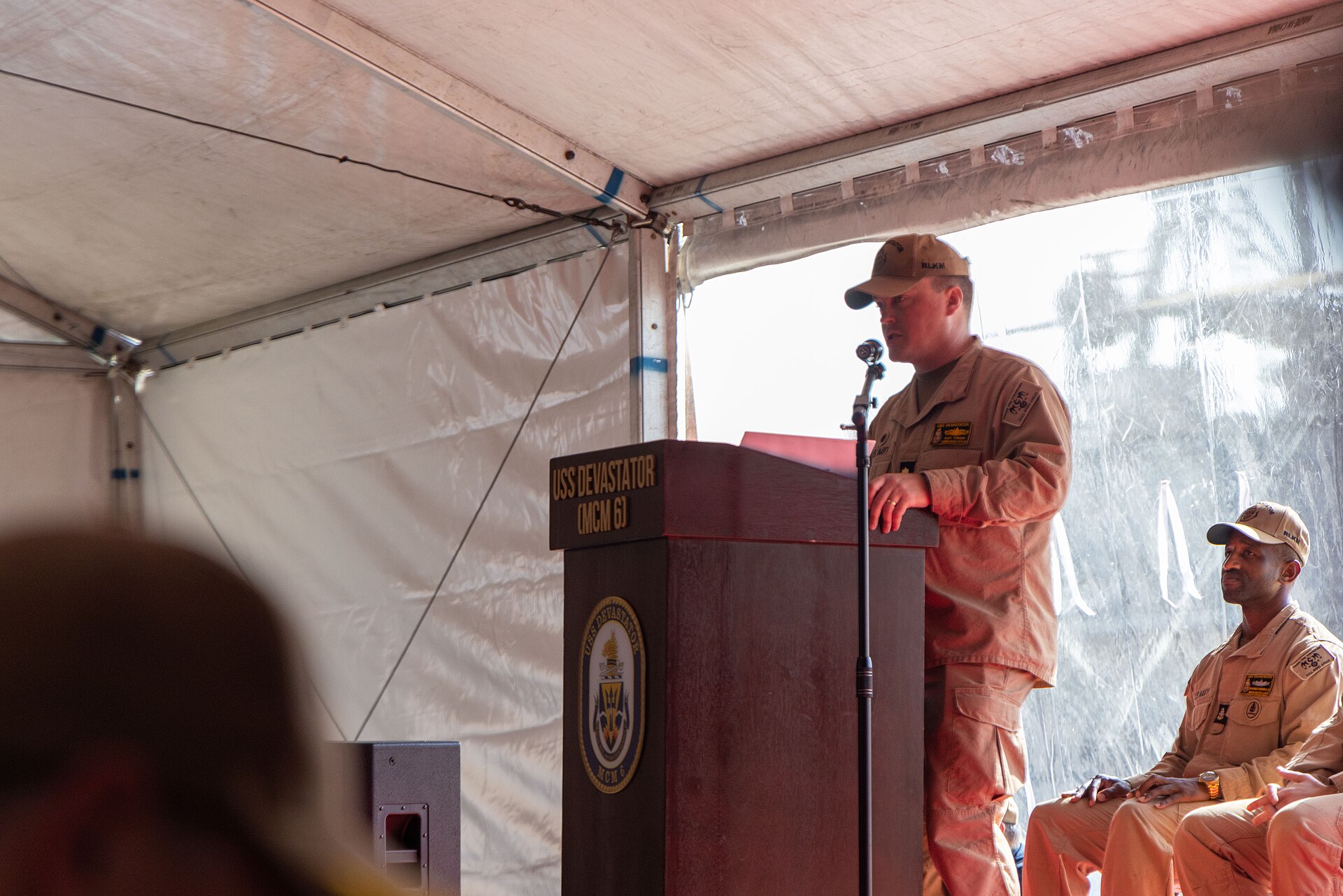
CENTCOM’s mine-clearance ambitions face a hardware deficit. The four Avenger-class mine countermeasures ships that were based in Bahrain — USS Devastator, USS Dextrous, USS Gladiator, and USS Sentry — were decommissioned in September 2025, six months before the war began. The Foreign Policy Research Institute described this as “The Mine Gap” in a March 2026 analysis. Only three Independence-class Littoral Combat Ships with mine countermeasures packages remain in the Fifth Fleet’s area of operations. Four additional Avenger-class ships are committed to the Pacific theater.
Iran’s mine arsenal is estimated at 2,000 to 6,000 weapons, of which “only a few dozen” have been laid so far, according to the FPRI. Using the 1991 Kuwait mine-clearance operation as a benchmark — the most recent large-scale US mine-clearing effort — clearing the approximately 200 square miles of the strait would take an estimated 51 days. That timeline assumes no IRGC interference, no additional mine-laying, and mine countermeasures assets that the US does not currently have in theater.
Cooper’s language — “establishing a new passage” — implicitly concedes the IRGC’s control of the existing one. CENTCOM is not proposing to reopen the pre-war Traffic Separation Scheme. It is proposing to build an alternative route around the IRGC’s administered corridor. The April 11 transit was a survey mission for that alternative. Whether it can be sustained against IRGC opposition — with two destroyers, no dedicated MCM ships, and a mine threat estimated at thousands of weapons — is the gap between the press release and the waterline.
How Many Ships Are Actually Transiting Hormuz?
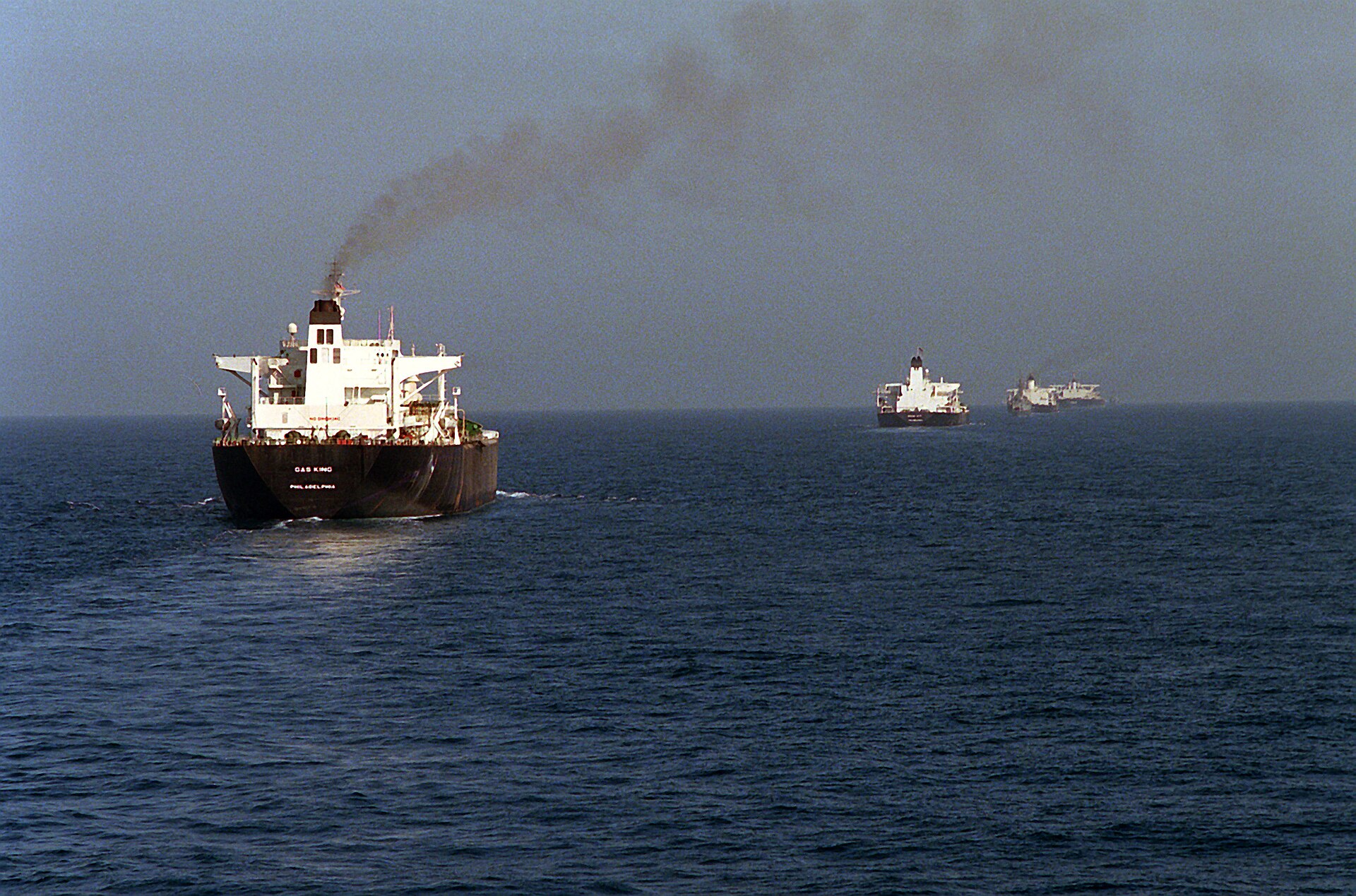
Fifteen to twenty vessels per 24-hour period, according to maritime intelligence firm Windward — down from a pre-war average of 138 ships per day. Approximately 800 vessels remain trapped in the Gulf or awaiting transit clearance. More than 70 empty Very Large Crude Carriers are idling off Singapore, representing a four-week voyage from the loading terminals they cannot reach.
The vessels that are transiting do so under IRGC terms. The April 6 transit of the Qatari LNG carrier Al Daayen — the first laden LNG exit since the war began — was brokered by China, not by Qatar’s direct engagement with Iran. The vessel transited at 8.8 knots toward China after receiving IRGC clearance. A second Qatari carrier, the Rasheeda, pulled back. The IRGC’s selective-permission architecture is functioning: some vessels pass, most do not, and the IRGC decides which is which.
| Metric | Pre-War Baseline | Current (April 12, 2026) |
|---|---|---|
| Daily vessel transits | ~138 ships/day | 15-20 ships/day |
| Oil throughput | ~21 million bpd (EIA) | Fraction of pre-war (est. 2-4M bpd) |
| Routing | Internationally recognized TSS (Omani side) | IRGC-directed 5nm Qeshm-Larak corridor |
| Transit requirements | Standard IMO protocols | IRGC route code, escort, crew/cargo manifests |
| Vessels trapped/waiting | N/A | ~800 vessels |
| VLCCs idling (Singapore) | N/A | 70+ |
| US MCM ships in theater | 4 Avenger-class (Bahrain) | 0 dedicated MCM (decommissioned Sept 2025) |
| Iran mines laid (est.) | N/A | “Only a few dozen” of 2,000-6,000 arsenal (FPRI) |
Saudi Arabia’s Export Ceiling
Saudi Arabia’s East-West Pipeline is pumping at full capacity: 7 million barrels per day to the Red Sea terminal at Yanbu. But Yanbu’s effective export ceiling is approximately 5 million bpd of crude plus 900,000 barrels per day of refined products — roughly 5.9 million bpd total. Pre-war Saudi exports through Hormuz were approximately 7 to 7.5 million bpd. Even with the pipeline maxed, Saudi Arabia is exporting roughly 2 million bpd below its pre-war baseline.
The pipeline itself is not secure. On April 8 — after the ceasefire nominally took effect — the IRGC struck a pumping station on the East-West Pipeline. Brent crude dropped from $109.27 to $91.70, a single-day fall of $17.57, as the market priced in both the ceasefire and the infrastructure vulnerability simultaneously. Aramco’s May Official Selling Price had been set at a record premium of $19.50 per barrel above the benchmark, calculated when Brent was at $109. At $91.70 Brent, the OSP is approximately $17 underwater.
Saudi fiscal break-even ranges from $86.60 per barrel (IMF baseline) to $108-111 per barrel when PIF-inclusive domestic spending is incorporated (Bloomberg Economics). Goldman Sachs projected in December 2025 that the Saudi budget deficit would reach 6.6 percent of GDP in 2026. That projection predated the war.
Aramco has restricted April liftings to Yanbu and Arab Light grades only — the first supply allocation of the war. Saudi bond spreads carry a war premium of 20-30 basis points above pre-war levels, according to Arabian Gulf Business Insight. The 1.3 million bpd of confirmed war-related production losses — 600,000 bpd from facility strikes and 700,000 bpd from East-West Pipeline throughput cuts — are not recoverable while the IRGC administers Hormuz and retains the ability to strike pipeline infrastructure from Iranian territory.
What Would It Take to Reopen Hormuz?
Three conditions must be simultaneously met for any Islamabad agreement to be enforceable at the waterline. None is currently satisfied.
First, Ayatollah Khamenei must recover — or a constitutionally recognized succession must occur — to ratify an SNSC decision reversing the IRGC’s operational authority. The Supreme Leader has been absent for over 40 days. The constitutional confirmation mechanism under Article 176 is inoperative without him.
Second, IRGC Commander Ahmad Vahidi must concur with any reversal. Vahidi has spent the Islamabad process demanding IRGC-aligned representation on the negotiating team and instructing delegates to refuse discussion of Iran’s missile program. His institutional interest runs directly counter to any agreement that would strip the IRGC of its Hormuz administration.
Third, the order must reach and be implemented across the IRGC’s decentralized mosaic of 31 semi-autonomous corps — a command structure currently operating without a Navy commander, which was designed to function without centralized orders, and which continued striking Saudi infrastructure hours after the last ceasefire nominally took effect.
Even a fully signed, SNSC-ratified, Khamenei-confirmed agreement faces the 1988 problem in reverse. On April 14, 1988, the USS Samuel B. Roberts struck an Iranian M-08 mine in the central Persian Gulf. The US responded four days later with Operation Praying Mantis — the largest US Navy surface engagement since the Second World War — destroying two Iranian oil platforms and sinking two Iranian ships. That operation was possible because the US had a functioning mine countermeasures fleet in theater. In 2026, the four Avenger-class MCM ships based in Bahrain had been decommissioned the previous September.
The IRGC’s mine arsenal — with only a few dozen of an estimated 2,000 to 6,000 weapons deployed — does not need to be activated. The threat of deployment, combined with the IRGC’s demonstrated willingness to reject transit requests (the Selen), redirect shipping into administered corridors, and radio warnings to US destroyers (“This is the last warning”), is sufficient to sustain the current regime indefinitely. Commercial shipping follows the path of least risk, not the path of international law.
The 1988 Parallel and Its Limits
Operation Praying Mantis succeeded in 1988 because the mine threat was bounded and the US had the tools to address it. In 2026, the mine threat is an order of magnitude larger, the MCM fleet has been decommissioned, and the IRGC’s administrative control over the strait — route codes, escorts, manifest requirements — represents a layer of authority that mines alone cannot create and that mine clearance alone cannot remove. Sweeping a channel does not sweep a bureaucracy.
Frequently Asked Questions
Has the IRGC Navy officially replaced its commander after Tangsiri’s death?
No. As of April 12, 2026, the IRGC Navy commander position remains vacant following Commodore Alireza Tangsiri’s death in an Israeli strike at Bandar Abbas on March 26. The IRGC Navy intelligence chief, Behnam Rezaei, was killed in the same strike. The IRGC has not publicly named a successor to either position. Operational continuity has been maintained through the IRGC’s mosaic command structure, with declarations issued under anonymous institutional authority rather than a named officer — a pattern consistent with the 2008 decentralization reform that distributed operational autonomy across 31 semi-autonomous corps precisely to survive leadership losses.
What is the Selen incident and why does it matter?
On March 24, 2026, the IRGC turned back the container feeder Selen (6,800 dwt) from the Strait of Hormuz for “failure to comply with legal protocols and lack of permission” — the first documented administrative rejection of a commercial vessel by Iranian forces during this conflict. The incident established a precedent: the IRGC treats Hormuz transit as a permission to be granted or withheld, not a right to be exercised. Tasnim News Agency, which is IRGC-linked, framed the Larak corridor routing instructions as safety guidance to prevent mine accidents — casting the administrative apparatus as a protective measure rather than a sovereignty claim, which complicates legal challenges under UNCLOS transit passage provisions.
Could China broker a broader Hormuz reopening as it did for the Al Daayen LNG transit?
China brokered the April 6 transit of the Qatari LNG carrier Al Daayen, which passed through the strait at 8.8 knots bound for China. Beijing’s interest is structural: CNPC and Sinopec hold contracted offtake of 8 million tonnes per annum from Qatar’s North Field plus 5 percent equity in North Field East, giving China a direct financial interest in LNG flowing. However, a second carrier, the Rasheeda, pulled back even with Chinese involvement. China’s ability to broker individual transits does not translate into systemic reopening — Beijing benefits from selective access that disadvantages its energy competitors while maintaining its relationship with Tehran. The yuan-denominated payment for the Al Daayen transit, processed through Kunlun Bank outside SWIFT, reinforces rather than challenges the IRGC’s fee architecture.
What happens to Saudi Arabia’s Aramco May OSP pricing if Hormuz remains restricted?
Aramco set its May Official Selling Price at a record premium of $19.50 per barrel above the Asia benchmark, calculated when Brent was trading near $109. With Brent at $91.70 as of April 8, the OSP is approximately $17 above the spot price that term-contract buyers actually face — creating what amounts to a forced premium that Asian refiners must absorb or attempt to renegotiate. Bloomberg had expected a $40 premium, making Aramco’s $19.50 relatively restrained, but the gap between the OSP-setting date and the post-ceasefire price collapse has created a structural mismatch. If Hormuz restrictions persist into the June OSP repricing cycle around May 5, Aramco faces a choice between maintaining the premium — and losing term-contract buyers to competitors who can deliver through unrestricted routes — or cutting it and absorbing the fiscal impact at a time when Saudi break-even costs have risen to $108-111 per barrel on a PIF-inclusive basis.
Does UNCLOS require Iran to allow free transit through Hormuz?
UNCLOS Articles 37-44 establish a regime of transit passage through international straits that prohibits coastal states from impeding or suspending passage. Iran, however, has never ratified UNCLOS. Neither has the United States. Neither has Israel. The legal framework that both sides cite as authority has been ratified by neither party to the current confrontation — a fact that Professor James Kraska of the Naval War College has described as part of a “Legal Vortex” in the strait. Iran’s position is further complicated by a historical precedent it has not invoked: the 1857 Treaty of Copenhagen, which abolished Denmark’s Sound Dues on Baltic Sea transit — a multilateral abolition of exactly the kind of strait-transit fee Iran’s Parliament codified on March 31. That precedent was resolved through multilateral negotiation and compensatory payment, not through unilateral declaration or military force.
Iran subsequently formalised Hormuz sovereignty as its first non-negotiable condition in Islamabad, presenting it alongside war reparations, frozen-asset release, and a Lebanon-inclusive regional ceasefire as a package the United States must accept before any deal can close. That pattern of asserting control over Hormuz has extended into active mine-laying during the ceasefire period itself, leaving the US without the mine clearance ships needed to reopen the strait by April 22. The asymmetry of the ceasefire’s expiry has a parallel on Saudi Arabia’s side: Hajj has inverted Saudi deterrence, with 750,000 pilgrims inside the kingdom constraining Riyadh’s escalation options as Iranian forces retain full offensive capacity. That structural gap extends through the ten-day void before April 22, during which no talks are scheduled and no enforcement mechanism exists to constrain IRGC commanders operating under decentralized authority.