
TEHRAN — Iran’s Supreme Leader Mojtaba Khamenei broke a 26-day public silence on the morning of April 7 with a written statement eulogizing the assassinated IRGC intelligence chief Maj. Gen. Majid Khademi — a message of wartime defiance released on the same day that intelligence reports shared with Gulf allies describe him as unconscious, incapacitated, and receiving treatment in Qom. The statement was read by a state television anchor over a still photograph, the same format used for his only other public communication since taking office: zero video, zero audio, zero proof of life in 30 days of war.
That the message exists at all is a political event. That no one can confirm the man behind it is conscious turns a eulogy into something far more volatile — a test of whether Iran’s wartime command structure runs through a leader or around one, at the precise moment Trump’s 8 PM ET deadline arrives and Iran’s own counter-proposal makes the Strait of Hormuz a pre-condition of any ceasefire rather than a deferred negotiating point.
What the Statement Said — and How It Was Delivered
The April 7 statement, posted through the Supreme Leader’s official social media channels and broadcast via state television, eulogized Khademi as one who “spent decades in quiet and devoted service in the fields of security, intelligence and defense” before attaining “the blessing of martyrdom.” It addressed his death not as a loss but as confirmation of a pattern — the continuation of Iran’s war dead as institutional reinforcement rather than institutional damage, according to Tribune India, which published the most complete English-language text.
The central passage — “The unbroken ranks of the combatants and fighters on the path of truth in Islamic Iran, along with the self-sacrificing Armed Forces, form such a towering, deeply rooted front that terrorism and crime cannot even crack their resolve for jihadi ideals” — was directed not at the United States or Israel but inward, at the IRGC intelligence apparatus Khademi led. Khamenei extended condolences specifically to Khademi’s “comrades in the IRGC Intelligence Organisation,” a deliberate institutional address to a chain of command that has lost its second consecutive chief since the war began, as reported by Open The Magazine.
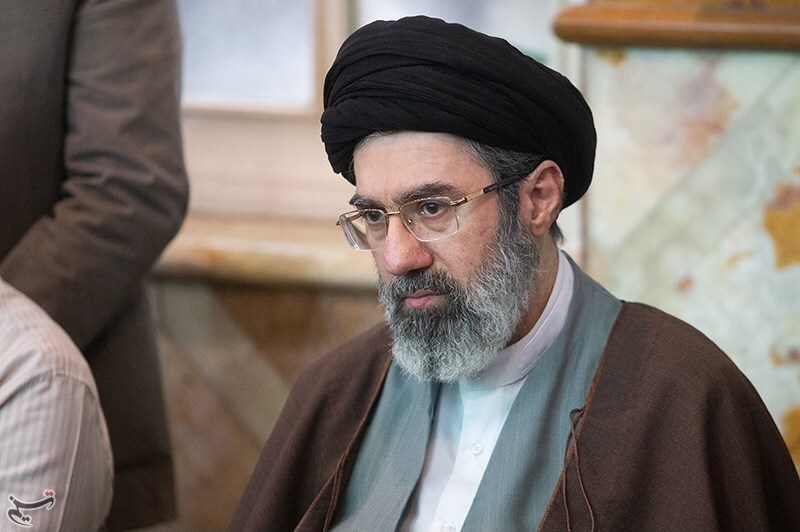
The format was identical to March 12: written text, read aloud by a state broadcaster, still photograph on screen. No video. No audio recording of Khamenei himself. No evidence of physical presence anywhere. Iran International and the Times of Israel both noted the repetition of the format — a consistency that could reflect either a security protocol for a leader under active threat or the mechanical requirements of governing from a hospital bed in Qom.
The Middle East briefing 3,000+ readers start their day with.
One email. Every weekday morning. Free.
Khademi: The Second Intelligence Chief in a Row
Maj. Gen. Majid Khademi was killed in an Israeli precision airstrike on Tehran in the early hours of April 6, the IDF confirmed. He was the head of the IRGC Intelligence Organisation, the body responsible for both foreign covert operations and domestic surveillance of Iranian civilians, and the IDF accused him of advancing terrorist attacks abroad, according to Fox News and the Jerusalem Post. Quds Force special operations commander Asghar Bagheri was killed in the same strike wave.
Khademi succeeded Mohammad Kazemi, who was killed in an earlier Israeli strike in 2025. That makes two consecutive IRGC intelligence chiefs eliminated within approximately a year — a rate of attrition at the top of Iran’s intelligence infrastructure that has no modern precedent in any state’s security services during wartime. The organizational consequence is not merely personnel loss but institutional memory: Khademi was described by Israeli defense officials as one of the few senior IRGC commanders who had survived multiple earlier waves of targeting, according to News24 Online, making his removal a structural blow to Iran’s human intelligence capacity.
Khamenei’s eulogy framed this attrition not as degradation but as evidence of endurance — “a towering, deeply rooted front” that assassination “cannot even crack.” Whether this is a strategic message or a prayer depends on how much of the IRGC Intelligence Organisation’s operational capacity survived the same airstrike that killed its director. HOS reported on April 7 that the IRGC Military Council — not the Supreme Leader’s office — has been overseeing daily executive decisions and directing wartime operations since at least early April.
Who Wrote This? The Proof-of-Life Problem
On the same morning that Khamenei’s April 7 statement circulated through Iranian state media, the Times of Israel published intelligence reporting — sourced to a diplomatic memo based on American and Israeli assessments shared with Gulf allies — stating that Mojtaba Khamenei is being treated in Qom, approximately 140 kilometers south of Tehran, in a “severe” condition. The memo describes him as “unconscious” and “not involved in decision-making,” according to The Week India.
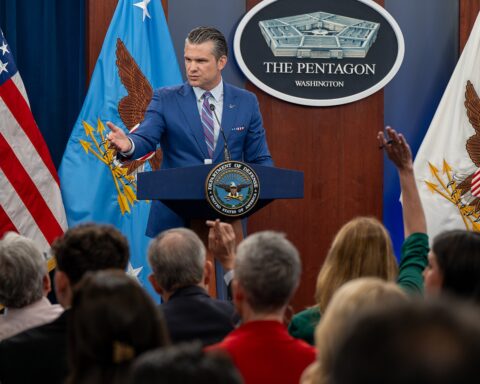
These two narratives — a written statement of wartime defiance and an intelligence assessment that its author is unconscious — are running simultaneously with no mechanism for resolution. Iran has produced no video or audio of Khamenei in any format since his appointment on March 8-9. CIA and Mossad were still searching for proof of life as late as March 21, two weeks after his first written statement, according to Axios. U.S. Defense Secretary Pete Hegseth stated publicly that Mojtaba was “wounded and likely disfigured” in the strike that killed his father, Ali Khamenei.
IRGC-affiliated Fars News Agency introduced its own complication in March by describing Mojtaba as a janbaaz — a term in Iranian usage specifically denoting severe physical injury such as the loss of a limb. The word is not honorific inflation; it is a clinical category within the Islamic Republic’s veteran-classification system, and its use by a regime-adjacent outlet was widely interpreted as an acknowledgment of incapacitation wrapped in martyrdom-honor framing, as noted by the Jerusalem Post.
A knowledgeable Tehran source told The Media Line in March that the first statement “was dictated by the Islamic Revolutionary Guard Corps and released under Khamenei’s own authorship,” with the text “drafted by the IRGC and later rewritten in Mojtaba Khamenei’s style.” That report noted typographical errors and a departure from Iran’s official Solar calendar to the Arabic Hijri lunar calendar — a break from his father’s decades of practice. If the March 12 statement was IRGC-drafted, the April 7 eulogy raises the same question with higher stakes: who is writing Iran’s war posture in the name of a leader whom multiple intelligence services believe is unconscious?
Raz Zimmt, director of the Iran Program at the Institute for National Security Studies in Tel Aviv, offered a carefully hedged assessment: there is “no evidence Mojtaba is not functioning, even if his injury and security concerns make it difficult to fully exercise his authority.” The gap between “functioning” and “fully exercising authority” is, at present, the gap in which Iran’s war is being fought.
Hormuz Moves from Phase 2 to Pre-Condition
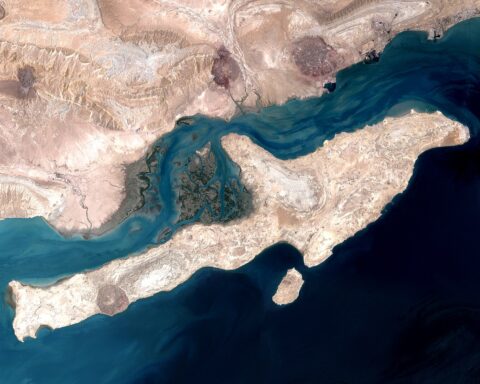
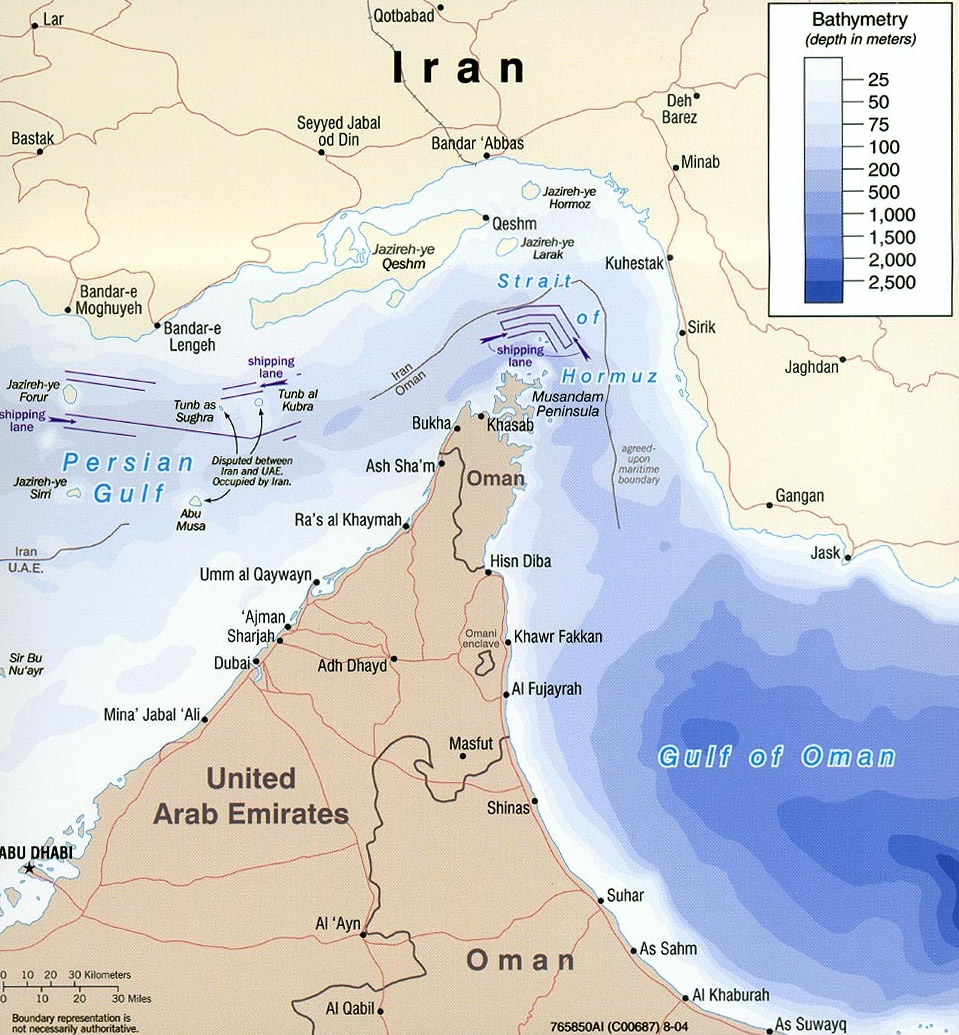
Khamenei’s April 7 statement did not mention the Strait of Hormuz directly. His March 12 inaugural statement did, and the language was unambiguous: “Certainly the lever of blocking the Strait of Hormuz must definitely continue to be used,” he said, according to CBS News and CNBC. That framing — Hormuz as a “lever” — has now been codified into negotiating terms.
Iran’s 10-point counter-proposal, submitted through Pakistan on April 6, demands a “safe passage protocol” for the Strait of Hormuz conditioned on war reparations through what Tehran calls “a new legal regime using a portion of the revenue from transit fees,” according to Al Jazeera and RFE/RL. The Strait will open, Iran’s proposal states, “when all the damage caused by the imposed war is compensated.” This collapses the sequencing logic of the 45-day ceasefire framework that had explicitly deferred Hormuz to Phase 2. Iran has moved it into a pre-condition — meaning there is no Phase 1 without Hormuz, and no Hormuz without reparations.
Iran’s Foreign Ministry spokesman described the American 15-point ceasefire plan as “excessive, unusual and illogical” and said a ceasefire itself “means creating a pause to regroup and commit crimes again,” according to RFE/RL and Al-Monitor. This is not a negotiating posture; it is a rejection of the concept of temporary cessation. Iran’s parliament is simultaneously drafting legislation to make the Hormuz transit toll regime — currently $2 million per ship, with projected annual revenue up to $100 billion — permanent, according to Argus Media and TRT World. The GCC Secretary-General has declared the fee illegal under UNCLOS Article 26.
An adviser to Mojtaba Khamenei warned on April 7 that Iran “views Bab al-Mandab with the same intensity as Hormuz” and can disrupt global trade “with a single signal,” according to Gulf News. This echoes the March 12 statement’s reference to “other fronts in which the enemy has little experience and is highly vulnerable” — language that the Soufan Center’s IntelBrief assessed as a signal of escalation, not negotiation. Khamenei’s earlier Hormuz doctrine, as HOS reported in its analysis of Iran’s franchising strategy, has moved from threat to revenue system to constitutional project.
What Happens at 8 PM ET?
Trump called Iran’s 10-point counter-proposal “significant, but not good enough” and reaffirmed the April 7, 8 PM ET deadline — midnight GMT April 8, or 3:30 AM Tehran time — as final, according to CNBC. In a press conference Monday, he said Iran could be “taken out” in a single night and that this “might” happen Tuesday evening, as CNN reported. The IRGC responded by calling Trump’s threats “baseless.”
The structural problem is not what Trump will do at 8 PM but who on the Iranian side has the authority to accept or reject anything before then. HOS reported on April 6 that Iran’s authorization ceiling — the level at which a binding decision can be made — runs through the Supreme National Security Council, chaired by Ali Akbar Ahmadian with deputy secretary Sadegh Zolghadr (himself under international sanctions), and ultimately to the Supreme Leader. If that Supreme Leader is unconscious in Qom, the authorization ceiling is not low; it does not exist. The IRGC Military Council can direct operations but cannot negotiate a sovereign commitment on Hormuz. President Masoud Pezeshkian has warned privately that Iran’s economy faces “collapse in 3-4 weeks” but has no constitutional authority over military strategy or the Strait.
Trump’s deadline, in other words, requires a response from a decision-making apparatus that multiple intelligence services believe has no functioning head. The April 7 eulogy is the regime’s answer to that vacuum — a piece of paper that asserts continuity without demonstrating it. Iran’s counter-proposal was submitted through Pakistan, not through a direct channel to Washington, and demands reparations before reopening a waterway that is generating the same toll it is promising to suspend — a structure that creates revenue incentives against the very deal it purports to offer.
Background: The Invisible Supreme Leader
Mojtaba Khamenei was appointed Supreme Leader by Iran’s 88-member Assembly of Experts on March 8-9, 2026, following the death of his father, Ali Khamenei, in an Israeli strike. The IRGC orchestrated the vote; Iran International and Euronews reported that Assembly members who objected were threatened. He holds no formal state title, no elected office, and no military rank. Prior to his appointment, his only official designations were Vakil (representative) of the Office of the Supreme Leader from 2008 and seminary instructor in Qom. He never published a work of Islamic jurisprudence, a standard credential for velayat-e faqih — the Guardianship of the Jurist doctrine that provides the constitutional basis for the Supreme Leader’s authority.
The U.S. Treasury Department sanctioned him in November 2019 under Executive Order 13876, specifically because he wielded influence “without ever being elected or appointed to a government position,” according to the Treasury Department’s own press release. He controlled the Basij paramilitary militia from 2009 and his most consequential historical role was coordinating the suppression of the Green Movement protests that year. Multiple Grand Ayatollahs — including Sistani, Vahid Khorasani, and Mousa Shubairi Zanjani — refused to confirm his title as “Ayatollah,” citing his failure to meet the ijtihad standard for the Guardianship of the Jurist, making him the first Supreme Leader without broad clerical recognition, as reported by the National Council of Resistance of Iran and Iran International.
Akbar Ganji, writing in Foreign Affairs, headlined his analysis “How America and Israel Solved Iran’s Succession Problem.” Carnegie Endowment and Foreign Policy analyses frame his appointment as reflecting “regime survival instincts” and a structural shift in which the IRGC has emerged as the core arbiter of power while clerical legitimacy carries less weight.
In 30 days of war, Mojtaba Khamenei has produced two written statements, both read by anchors over still photographs. He has appeared on camera in no format. Iran hit Saudi Arabia, Kuwait, and the UAE in a single barrage window on April 6 under operational authority that traces to the IRGC Military Council, not to his office. The question is no longer whether he is alive — it is whether it matters, structurally, to the war’s trajectory. Al Jazeera published an opinion piece on April 1 arguing that Khamenei’s “rumoured injury or death won’t change Iran’s trajectory.” The April 7 statement is the regime’s own attempt to prove that thesis.
The SNSC statement issued hours later — crediting Khamenei’s “prudent measures” and “guidance” while declaring that “this does not mean the end of the war” — followed precisely this proof-of-life logic: Iran’s ceasefire halt order was designed as a reversibility instrument, not a termination of hostilities, issued in the third person as if by a leader too distant to speak in his own voice.
Frequently Asked Questions
Has any independent journalist or foreign diplomat seen Mojtaba Khamenei in person since his appointment?
No. No foreign diplomat, independent journalist, or verifiable non-regime source has reported a direct meeting with Mojtaba Khamenei since March 8-9, 2026. The Week India reported that even senior Iranian officials have not seen him in person, and that he is being kept in an underground facility outside Tehran. Israel’s i24NEWS quoted sources saying Mojtaba “does not control Iran” and that “most likely, the Revolutionary Guards control the state.” The 30-day absence from any verifiable public interaction is without precedent for an Iranian Supreme Leader during wartime or peacetime.
What is the legal basis for the IRGC Military Council to make sovereign decisions in the Supreme Leader’s absence?
There is none. Iran’s constitution vests sovereign military authority and final decision-making on war and peace exclusively in the Supreme Leader under Article 110. The IRGC Military Council is an operational coordination body, not a constitutional organ, and has no legal standing to negotiate international agreements, commit Iran to ceasefire terms, or alter the Hormuz posture. If Khamenei is genuinely incapacitated, Article 111 of the constitution provides for a three-member interim leadership council — comprising the president, the head of the judiciary, and a jurist from the Guardian Council — but this mechanism has never been invoked, and its activation would amount to a public admission that the Supreme Leader cannot govern.
How does Iran’s $2 million per-ship Hormuz toll compare to other maritime chokepoints?
There is no comparison. No state charges a compulsory transit toll on an international strait in peacetime or wartime. The Suez Canal charges $500,000-$700,000 for a laden VLCC, but the Suez Canal is a constructed waterway under Egyptian sovereign territory — a recognized category under UNCLOS. The Strait of Hormuz is an international strait governed by transit passage rights under UNCLOS Part III, Articles 37-44, which prohibit the levying of charges on ships exercising the right of transit passage. Iran’s toll is, under international law, an assertion of sovereignty over a waterway that the 1982 convention explicitly places beyond unilateral sovereign control. The projected $100 billion in annual revenue, if sustained, would exceed Iran’s entire pre-war oil export revenues.
Could the April 7 statement have been AI-generated?
Iran has previously released what appeared to be an AI-generated video to project Khamenei’s leadership, as multiple outlets reported in March 2026. The written-text format of the April 7 statement provides no biometric verification — no voice pattern, no handwriting, no physical presence. The Media Line’s Tehran source stated in March that the first statement was “drafted by the IRGC and later rewritten in Mojtaba Khamenei’s style,” establishing a precedent for ghostwritten communications released under the Supreme Leader’s name. Whether Khamenei authored, approved, dictated, or was unaware of the April 7 text is not verifiable from the public record.
What is the succession protocol if Mojtaba Khamenei dies?
Under Article 111 of Iran’s constitution, a temporary leadership council takes power until the Assembly of Experts selects a new Supreme Leader. But the Assembly that appointed Mojtaba was itself under IRGC pressure; Iran International reported members were threatened during the March vote. The political crisis would be compounded by the clerical legitimacy deficit: if Grand Ayatollahs Sistani and Khorasani already refused to recognize Mojtaba, there is no obvious successor who would command both IRGC loyalty and clerical authority. The most likely outcome, multiple analysts have assessed, is an acceleration of the structural shift already underway — in which the IRGC Military Council governs Iran as a de facto military junta with or without a Supreme Leader title attached to anyone. That command authority analysis gained a presidential on-record dimension on April 4, when Pezeshkian confronted intelligence directorate chief Taeb and accused IRGC commanders Vahidi and Abdollahi of personally destroying ceasefire chances; the constitutional basis for why the president cannot override them is examined here.