Table of Contents
- What Kuwait Said — and What It Cited
- Wave 95: The Strikes Iran Says Did Not Happen
- Why Did Kuwait Break the GCC Silence?
- Saudi Arabia’s Calculated Non-Attribution
- How Does the IRGC Deny Strikes It Numbered?
- The Islamabad Gap: GCC Exclusion as Structural Grievance
- From Earnest Will to April 10: Kuwait’s Pattern
- FAQ
KUWAIT CITY — Kuwait on April 10 became the first Gulf Cooperation Council state to formally accuse Iran by name for drone strikes carried out after the ceasefire that took effect on April 8, breaking a collective GCC silence that had persisted through six weeks of Iranian bombardment across the Arabian Peninsula.
The accusation, issued by Kuwait’s Ministry of Foreign Affairs, specifically cited attacks on April 9 — one full day after the ceasefire — on “vital facilities” including a Kuwait National Guard installation. It invoked the United Nations Charter’s Article 51 on self-defense and UN Security Council Resolution 2817, characterizing the strikes as “a flagrant violation of Kuwait’s sovereignty and its airspace.” Iran’s Islamic Revolutionary Guard Corps denied any post-ceasefire launches within hours. The IRGC’s own Tasnim News Agency had labeled strikes on Kuwaiti territory as “wave 95” of Operation True Promise 4 — a sequential designation that followed wave 94 with no ceasefire notation, no pause, and no discontinuity.
What Kuwait Said — and What It Cited
Kuwait’s Foreign Minister Sheikh Jarrah Jaber Al-Ahmad Al-Sabah accused Iran of “a systematic pattern of undermining regional stability” while “exploiting chaos and terrorism as tools of influence,” according to the Ministry of Foreign Affairs statement reported by Times Kuwait and the AP wire. The formal language escalated well beyond the factual damage reports Kuwait had issued in previous weeks.
The MFA statement demanded that Iran and its proxies “immediately cease — without conditions or restrictions — all hostile acts” against Kuwait. It classified the attacks as a breach of “international law, humanitarian law, and the UN Charter.” The legal framing was precise: Article 51 of the UN Charter establishes the right of self-defense against armed attack, and its invocation signals that Kuwait reserves — at minimum — the right to respond.
Emir Mishal Al-Ahmad Al-Jaber Al-Sabah supplied the moral framing. The attacks, he said, came from “a neighboring Muslim country which we consider a friend, and to which we did not allow the use of our land, airspace, or waters for any military action against it.” That single sentence — Kuwait prohibited offensive operations from its territory against Iran — eliminates the co-belligerency argument the IRGC has used to justify strikes on other Gulf states hosting American forces.
The cumulative toll gives the statement its weight. Since February 28, Kuwait has intercepted 97 ballistic missiles and 283 drones — 380 total intercepts — according to the Kuwait News Agency. Four Kuwaiti soldiers and seven American soldiers have been killed, 77 Kuwaiti soldiers wounded, six civilians dead, and 38 injured. The targets have included Mina Al-Ahmadi refinery, Ali Al Salem Air Base, Camp Buehring, Kuwait International Airport, Kuwait Petroleum Corporation facilities, and multiple desalination plants.
The Middle East briefing 3,000+ readers start their day with.
One email. Every weekday morning. Free.
Wave 95: The Strikes Iran Says Did Not Happen
The April 8 strikes — the day the ceasefire nominally took effect — saw Kuwait’s air defenses intercept 28 Iranian drones beginning at approximately 08:00 local time, according to Al Jazeera. The targets were Kuwait Petroleum Corporation oil facilities, three power stations, and multiple water desalination plants in the country’s southern infrastructure corridor. Kuwait’s Interior Ministry confirmed “severe material damage.”
The following day, April 9, strikes hit a Kuwait National Guard installation. This was the attack that triggered the formal diplomatic response. The MFA statement released on April 10 specifically referenced “vital facilities” struck on April 9 — meaning the formal accusation covers unambiguously post-ceasefire strikes, not the ceasefire-day wave whose timing is diplomatically contested.
IRGC spokesman Ebrahim Zolfaghari, speaking through Tasnim News Agency and reported by CGTN and Sputnik Africa, labeled the Kuwaiti operations as wave 95 of Operation True Promise 4. His framing was specific: the strikes targeted “equipment depots, satellite communication units, and command headquarters of the US military stationed in Bubiyan Island, Kuwait.” The language served a dual purpose — it acknowledged the strikes while reframing them as anti-American military operations rather than attacks on a sovereign Gulf state.
Wave 94 preceded the ceasefire. Wave 95 followed it. The sequential count proceeded without interruption, without ceasefire annotation, without any operational distinction between pre-ceasefire and post-ceasefire targeting. On April 10, the same IRGC issued a statement via Iranian state media that it “has not carried out any launches toward any country during the ceasefire.”
Why Did Kuwait Break the GCC Silence?
The last GCC joint condemnation was issued on March 26, when Saudi Arabia, the UAE, Bahrain, Qatar, Jordan, and Kuwait issued a collective statement on Iranian strikes. No equivalent joint statement followed Kuwait’s April 10 accusation. Kuwait is acting alone.
Hamad Althunayyan, a political analyst at Kuwait University, told Al Jazeera on April 9 that “the Gulf will leave no stone unturned if Iran continues to take the path of aggression.” He added: “The Gulf expects its interests to be represented, and included, in any deal with Iran.”
That expectation is not being met. The Islamabad talks that opened on April 10 — the first substantive US-Iran engagement since the ceasefire — exclude every GCC state. The GCC Secretary-General had explicitly called for inclusion at an April 2 UN Security Council briefing, demanding that the Council “take all necessary measures to ensure the immediate cessation of Iranian aggressions against the Council states” and stressing “the necessity of involving the GCC states in any negotiations or agreements with the Iranian side — this inclusion is vital to enhancing regional security and stability.”
Kuwait’s formal accusation, arriving the morning Islamabad talks opened, reads as an attempt to force post-ceasefire violations onto the negotiating agenda from outside the room. Nikkie Lyubarsky of the Soufan Center wrote in an April 9 IntelBrief that GCC states “had expressed that they were not consulted about Operation Epic Fury” and were “carrying the brunt of retaliation of a military action they had not launched.” The ceasefire, Lyubarsky noted, “again appears to have been negotiated without any involvement of the Arab Gulf state partners.”
Mohamed Abushahab, the UAE’s Permanent Representative to the United Nations, reinforced the broader GCC position on April 9: “No country should have the power to shut down the arteries of global commerce. The Strait of Hormuz cannot become a bargaining chip for Iran.”
Saudi Arabia’s Calculated Non-Attribution
Saudi Arabia’s East-West Pipeline was struck on April 8 — the same day Kuwait absorbed 28 drones — but Riyadh did not make a parallel formal attribution. The Saudi response, reported by Al Arabiya, came through an anonymous official speaking to the Saudi Press Agency. The statement reported the damage factually. It did not name Iran.
The timing reveals the logic. On April 9, Saudi Foreign Minister Prince Faisal bin Farhan called Iranian Foreign Minister Abbas Araghchi — the first direct FM-level contact between Riyadh and Tehran in approximately 40 days of war, according to The National. The call was framed as discussing “ways to reduce tensions.” A formal public accusation would have been structurally incompatible with the diplomatic opening Saudi Arabia had just initiated.
The asymmetry is now visible. Kuwait, which prohibited offensive operations from its territory and maintained neutrality throughout the war, has formally accused Iran. Saudi Arabia, which absorbed heavier aggregate damage — the kingdom has intercepted 799 drones and 95 missiles since March 3, a combined 894 total — has not. The divergence is not a function of damage severity: Riyadh has a bilateral channel to protect; Kuwait does not.
Hisham Alghannam of the Malcolm H. Kerr Carnegie Middle East Center warned on April 9 that “there is a quiet but palpable concern that President Trump, eager for a quick political victory, could tolerate some Iranian leverage over the strait in exchange for a fragile truce, prioritising optics over Gulf realities.” The suspended tension under Iranian pressure, Alghannam argued, “makes future war more likely over time, while forcing the GCC to live under Iranian strategic pressure indefinitely.”
Saudi Arabia’s silence on attribution, set against Kuwait’s formal accusation, makes the divergence a political fact that every party at the Islamabad table can read.
How Does the IRGC Deny Strikes It Numbered?
The IRGC’s denial rests on a specific rhetorical architecture. The April 10 statement — “has not carried out any launches toward any country during the ceasefire” — hinges on two potential interpretations: either the IRGC defines “during the ceasefire” as beginning at a later point than the ceasefire’s announced start, or it categorizes launches authorized before the ceasefire as outside the ceasefire’s scope even if they struck after it took effect.
The decentralized structure of the IRGC makes the second interpretation operationally plausible. Iran’s “mosaic defense” architecture distributes authority across 31 separate IRGC corps commands. Strike packages authorized before the ceasefire announcement can execute without real-time authorization from Tehran’s political leadership — or from the IRGC’s central command. The Soufan Center noted that IRGC decentralization creates outcomes “Tehran’s political leadership cannot control.”
The Bubiyan Island reframing compounds the evasion. By designating Kuwaiti territory as a site of “US military” infrastructure — “equipment depots, satellite communication units, and command headquarters” — the IRGC constructed a target description that makes the strike an anti-American operation conducted on incidentally Kuwaiti soil. The Emir’s neutrality declaration directly undercuts this: Kuwait did not permit offensive use of its territory against Iran, meaning the IRGC cannot claim it was striking a co-belligerent’s military assets.
The Islamabad Gap: GCC Exclusion as Structural Grievance
The Islamabad talks brought US Vice President JD Vance, Special Envoy Steve Witkoff, and Senior Advisor Jared Kushner to the table opposite Iranian Parliament Speaker Mohammad Bagher Ghalibaf and Foreign Minister Abbas Araghchi. The format is indirect — the US and Iranian delegations are not in the same room. The IRGC has no representative. No GCC state has a formal role.
Saudi Arabia had held a co-guarantor seat during the March 29-30 ceasefire round. It was excluded from Islamabad. Kuwait, Bahrain, the UAE, and Qatar — all of which have absorbed Iranian strikes — are absent. The GCC Secretary-General’s April 2 demand for inclusion went unaddressed.
Ghalibaf arrived at Islamabad declaring three pre-existing ceasefire violations: Israeli strikes on Lebanon, a drone intrusion into Iranian airspace, and US denial of enrichment rights. He made no mention of Gulf state accusations. Kuwait’s formal attribution — issued the same morning — does not appear on the Iranian delegation’s agenda.
The structural gap is that the states absorbing the physical cost of the war have no mechanism to raise post-ceasefire violations within the only diplomatic process underway. Kuwait’s MFA statement, timed to land as Islamabad opened, is an attempt to make the formal record available to parties at the table — without being at the table itself.
From Earnest Will to April 10: Kuwait’s Pattern
Kuwait has been here before. During the Iran-Iraq War’s Tanker War phase (1984-1988), Iran mined Kuwaiti waters and attacked Kuwaiti tankers. Kuwait’s response was not independent military retaliation. It was diplomatic escalation followed by an appeal for external protection. The result was Operation Earnest Will (July 1987 to September 1988), the largest US naval convoy operation since the Second World War, in which 11 Kuwaiti tankers were reflagged as American vessels to secure passage through the Persian Gulf.
Iran mined the MV Bridgeton — a reflagged Kuwaiti supertanker — on the first convoy run. The operation continued for 14 months.
The 2026 pattern echoes the 1987 sequence. Kuwait has absorbed sustained Iranian attacks on its infrastructure, maintained neutrality throughout by refusing to host offensive operations, and made a formal public accusation invoking international law — without retaliating militarily. The implicit next step in the 1987 precedent was a formal request for external military protection — a step Kuwait has not taken in 2026 but which the legal groundwork of an Article 51 invocation would support.
The difference in 2026 is that the United States is already present in the region — approximately 20,000 troops according to the Soufan Center — and is simultaneously negotiating with the power Kuwait has just formally accused. Kuwait’s accusation lands on a table where the accused and Kuwait’s security guarantor are already seated, and where Kuwait itself has no chair.
Frequently Asked Questions
What is UN Security Council Resolution 2817, and what does Kuwait’s invocation mean?
UNSC Resolution 2817, adopted on March 11, 2026, condemned Iran’s attacks on Gulf states — Bahrain, Kuwait, Oman, Qatar, Saudi Arabia, and the UAE — as well as Iran’s interference with maritime trade through the Strait of Hormuz. The resolution passed 13-0 with China and Russia abstaining, and was co-sponsored by 135 countries. Kuwait’s invocation in its April 10 statement frames the Iranian strikes not merely as bilateral aggression but as violations of an existing Security Council framework, strengthening the legal basis for any future Council action — though the China-Russia abstention pattern means a binding Chapter VII response remains constrained.
Has any other GCC state endorsed Kuwait’s April 10 accusation?
No. As of April 10, no GCC state has issued a statement supporting Kuwait’s formal accusation. The UAE’s Mohamed Abushahab made strong statements on April 9 about Hormuz, and Bahrain has separately documented 31 missile and 6 drone intercepts post-ceasefire, but neither has made a formal named attribution equivalent to Kuwait’s. The March 26 joint GCC condemnation remains the last collective statement — predating the ceasefire by 13 days.
What is Bubiyan Island, and why did the IRGC cite it?
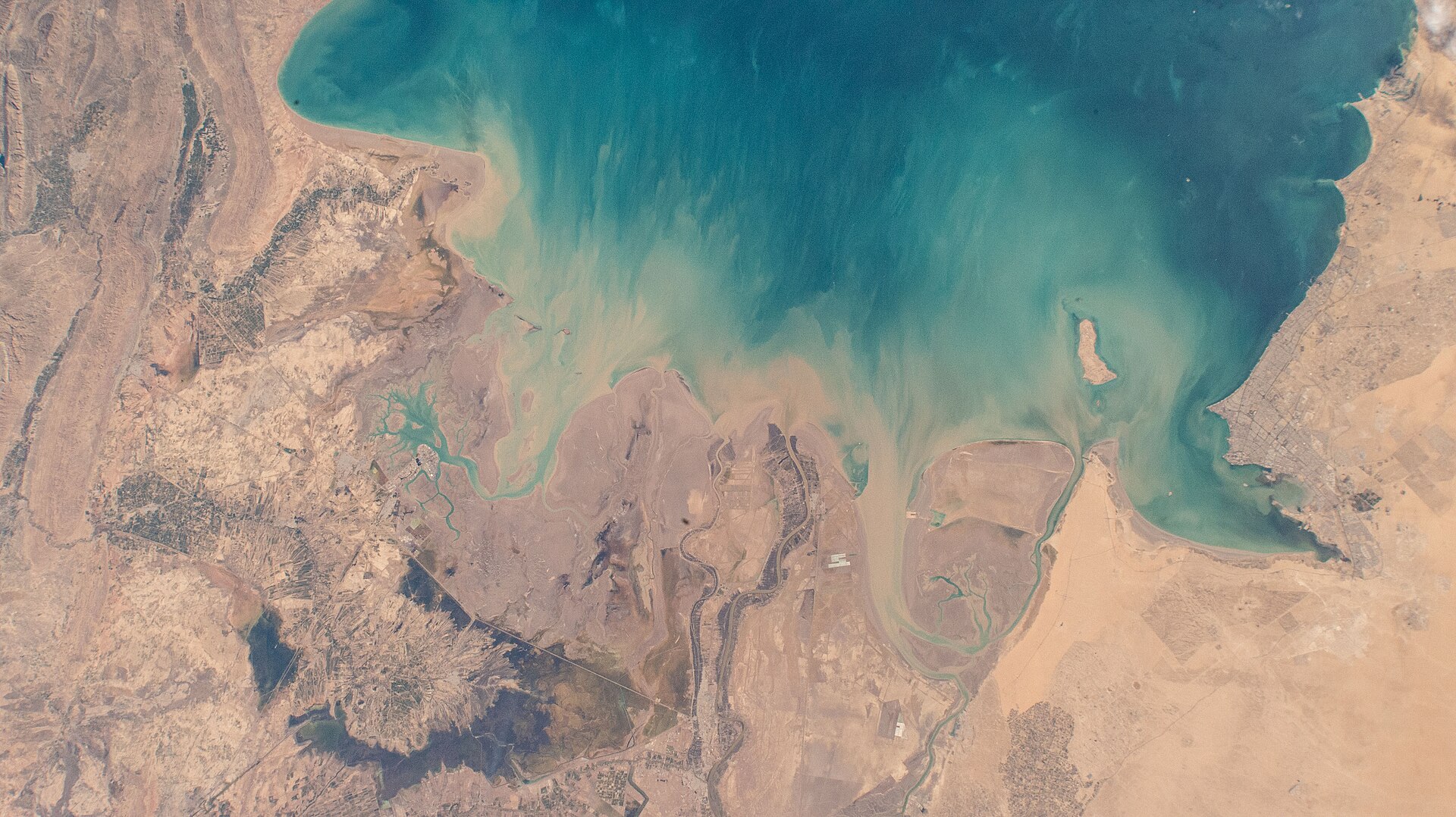
Bubiyan Island is Kuwait’s largest island, located at the head of the Persian Gulf near the Iraqi border. It hosts a Kuwaiti naval base and has a limited US military advisory presence. The IRGC’s specific citation of “US military stationed in Bubiyan Island” as the target of wave 95 serves to recharacterize an attack on Kuwaiti sovereign territory as an anti-American military strike — a distinction that allows the IRGC to deny attacking Kuwait while acknowledging the strikes themselves. Kuwait’s control of the island is uncontested; it was the subject of an Iraqi border dispute resolved by the UN in 1993.
Could Kuwait invoke Article 5 of the GCC Charter to compel a collective response?
The GCC Charter does not contain an Article 5 mutual defense clause equivalent to NATO’s. Article 14 provides for consultation on external threats but does not automatically trigger binding collective military response. The GCC’s Peninsula Shield Force — last activated when Saudi Arabia deployed 1,200 SANG troops across the King Fahd Causeway into Bahrain in 2011 — operates on a voluntary contribution basis. Kuwait’s unilateral accusation reflects the structural reality that the GCC has no automatic collective defense trigger that one member can invoke to bind the others.
What leverage does Kuwait have if the Islamabad talks do not address post-ceasefire Gulf strikes?
Kuwait’s primary options are its strategic geography (it controls northern Gulf shipping approaches), its approximately $900 billion sovereign wealth fund (the Kuwait Investment Authority, by KIA’s own public disclosures), and its longstanding diplomatic relationships with both Washington and regional powers. Kuwait could pursue the case at the International Court of Justice, request a dedicated Security Council session, or — as in 1987 — formally request enhanced American military protection. The Article 51 invocation in the April 10 statement preserves all of these options without committing to any single escalatory path.