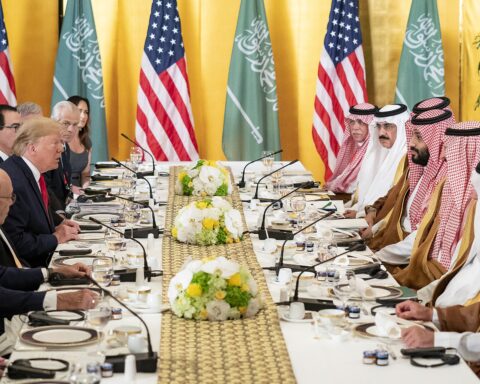
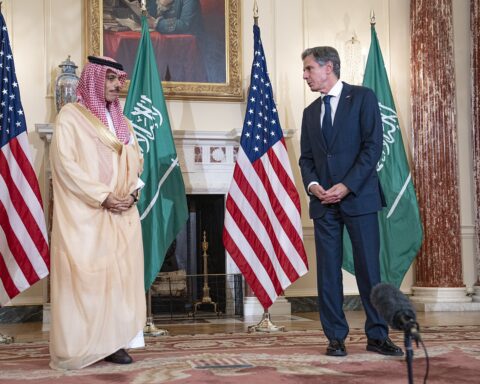
NEW DELHI — Prime Minister Narendra Modi called Saudi Crown Prince Mohammed bin Salman on March 28, 2026 — the second wartime call between the two leaders since the United States and Israel launched strikes on Iran exactly one month ago — with freedom of navigation, energy security, and the safety of 2.7 million Indian nationals in the Kingdom topping the agenda.
The call exposes the most consequential balancing act in the Gulf crisis. India is simultaneously buying discounted oil from Iran, accepting Tehran’s free-passage privilege through the Strait of Hormuz, backing a UN Security Council resolution condemning Iranian attacks, and asking Riyadh to guarantee energy supplies rerouted through the Red Sea. No other major power is attempting to hold all four positions at once — and no other major power has as much to lose if the act collapses.
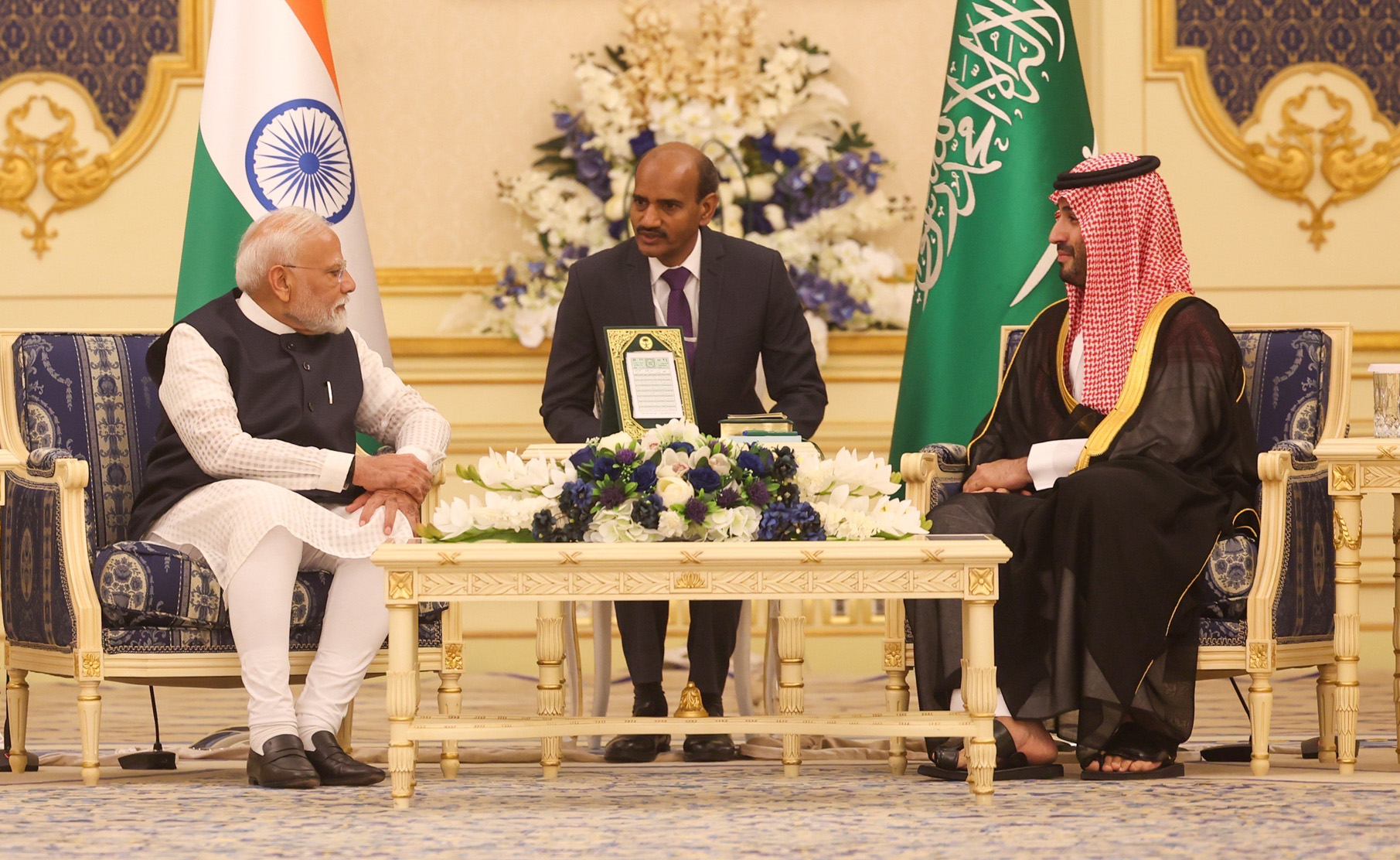
Table of Contents
- What Did Modi and MBS Actually Discuss?
- The Hormuz Paradox: India Benefits from the Blockade It Condemns
- How Dependent Is India on Saudi Oil?
- The 2.7 Million Hostages Neither Side Mentions
- India Voted Against Iran at the UN — Then Kept Buying Its Oil
- The Price Tag of Neutrality
- What Does Tehran Think of India’s Tightrope?
- Frequently Asked Questions
What Did Modi and MBS Actually Discuss?
Modi disclosed the substance of the call on X within hours. “I reiterated India’s condemnation of attacks on regional energy infrastructure,” he wrote. “We agreed on the need to ensure freedom of navigation and keep shipping lines open and secure. Thanked him for his continued support for the welfare of the Indian community in Saudi Arabia.”
Three priorities, listed in that order, reveal New Delhi’s hierarchy of concern. Energy infrastructure comes first — a reference to the sustained strikes on Saudi refining and export facilities that have pushed Brent crude to $112.57 per barrel, up 4.22% on March 27 alone, according to CNBC.
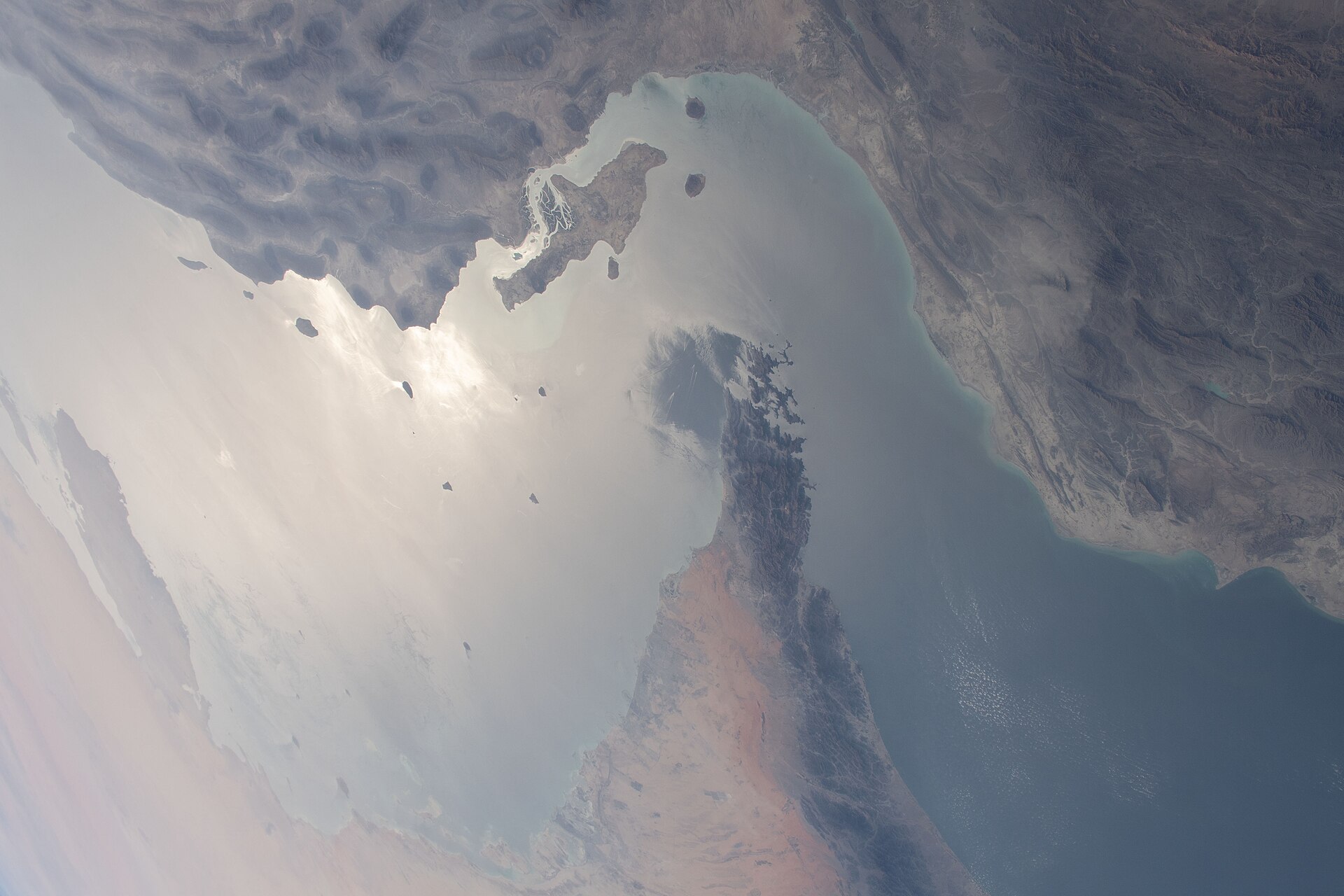
Freedom of navigation comes second — pointed directly at the Strait of Hormuz toll regime that Iran imposed in mid-March. Indian nationals come third, though they represent the largest single vulnerability.
This was the second Modi-MBS call since the war began on February 28. The first came within days of the opening strikes. India has been notably absent from the Pakistan-hosted foreign ministers’ talks and the G7 discussions on the crisis, preferring bilateral channels with each belligerent over multilateral forums where it would be forced to take sides.
The Hormuz Paradox: India Benefits from the Blockade It Condemns
Iran has built a selective chokepoint at the Strait of Hormuz, and India is on the right side of the rope line. The Iranian Foreign Ministry confirmed in mid-March that India, China, Russia, Pakistan, Iraq, Malaysia, and Thailand are granted passage through IRGC-controlled corridors, according to Al Jazeera. Two Indian-flagged LPG tankers crossed the strait safely on March 14, with Indian officials confirming they were “en route to India” without incident, Al Jazeera reported.
The numbers tell the story of what that access means. USNI News tracked just 142 transits through Hormuz between March 1 and March 25, compared with 2,652 in the same period of 2025 — a 94.6% collapse in traffic. Of the 26 vessels that have used Iran’s toll system since March 13, paying approximately $2 million per voyage in Chinese yuan, most fly flags linked to China’s commercial fleet or other countries on Tehran’s “friendly” list.
India’s ships appear to transit without paying the toll, though New Delhi’s Ministry of Shipping has stated that “the Strait of Hormuz is governed by international law, which guarantees freedom of navigation and does not allow any country to impose fees.”
This creates an uncomfortable geometric problem for the Modi-MBS relationship. India benefits from the same blockade that damages Saudi Arabia’s eastern oil exports. Approximately half of India’s crude imports and 60% of its natural gas supplies normally flow through Hormuz, according to India Briefing. With Iran keeping that corridor open for Indian vessels while closing it to US allies, New Delhi receives a competitive advantage that comes directly at Riyadh’s expense.
How Dependent Is India on Saudi Oil?
India is the world’s third-largest oil importer, and Saudi Arabia is its second-largest crude supplier after Iraq. In February 2026, Indian imports of Saudi crude reached an estimated 1.0 to 1.1 million barrels per day — the highest level since November 2019, according to Discovery Alert.
Over fiscal year 2025, bilateral trade stood at $41.87 billion, with petroleum crude accounting for $20.09 billion of India’s imports from the Kingdom, according to data compiled by the India Brand Equity Foundation.
The war has disrupted the mechanics of that supply chain. With the eastern export terminals at Ras Tanura and Dhahran under periodic attack, Saudi Arabia has shifted volumes to Yanbu on the Red Sea coast, where exports now approach 5 million barrels per day with 40 tankers waiting offshore, according to Bloomberg. For India, the rerouting adds transit time and cost — ships from Yanbu must round the Arabian Peninsula rather than crossing the short Gulf-to-Indian-coast route.
The price spike compounds the logistical disruption. Brent crude has risen roughly 60% in a month, crossing $117 per barrel at one point, with Goldman Sachs estimating $14 to $18 per barrel in geopolitical risk premium embedded in the current price, according to CNBC.
India imports approximately 85% of its crude oil. Each $10 per barrel increase raises India’s net oil import bill by $14 to $16 billion annually, according to Business Standard, and widens the current account deficit by 30 to 40 basis points.
| Indicator | Pre-War (Jan 2026) | Current (Late March 2026) | Source |
|---|---|---|---|
| Indian Crude Basket | $63/barrel | $125+/barrel | Business Upturn |
| Brent Crude | ~$70/barrel | $112.57/barrel | CNBC |
| Saudi Crude Imports (India) | ~900,000 BPD | 1.0-1.1M BPD (Feb) | Discovery Alert |
| Hormuz Transits (Mar 1-25) | 2,652 (2025 same period) | 142 | USNI News |
| Indian Rupee vs Dollar | ~87 | Record low 94.79 | Bloomberg |
The 2.7 Million Hostages Neither Side Mentions
The Indian diaspora in Saudi Arabia — approximately 2.7 million people — represents the largest expatriate community in the Kingdom. They work across Saudi construction, healthcare, IT, and oil sectors. Modi’s X post thanked MBS for “continued support for the welfare of the Indian community” — diplomatic language that masks an operational nightmare should the war escalate to the point where civilian life in the Gulf becomes untenable.
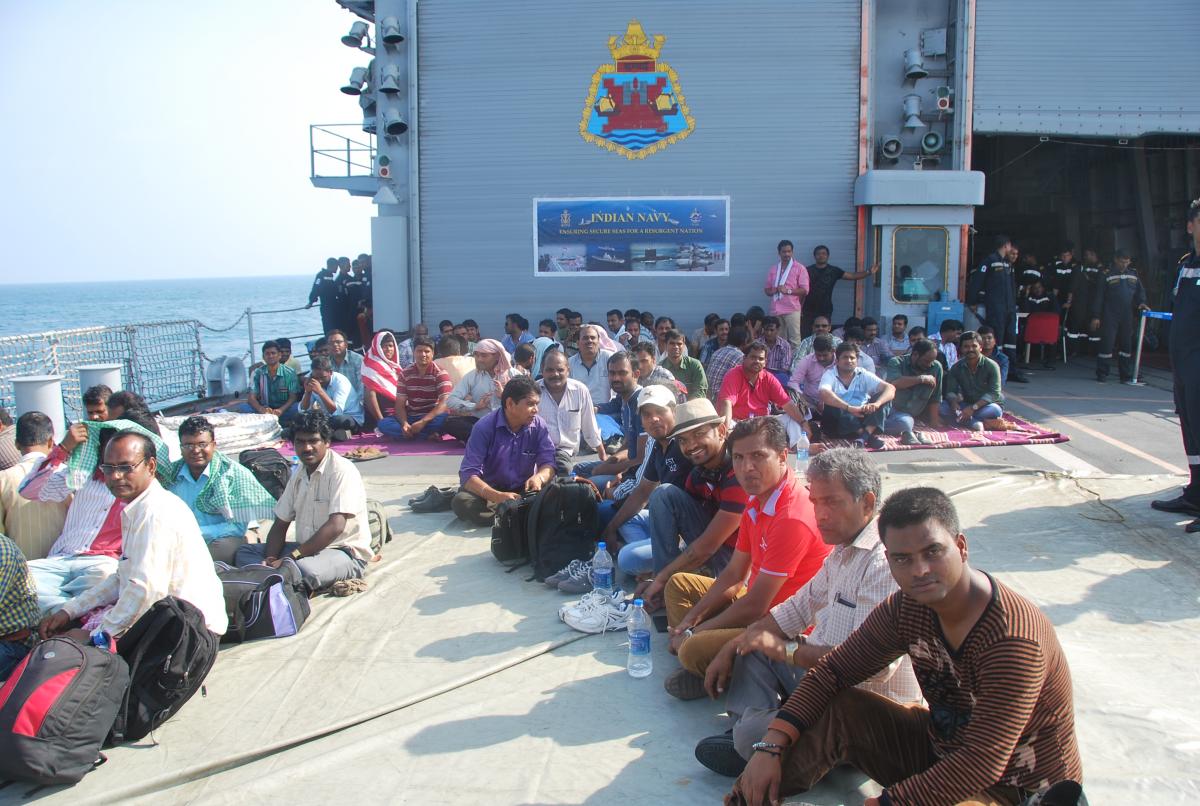
India’s largest modern evacuation was Operation Raahat in 2015, when the Indian Navy, Air Force, and Air India extracted approximately 4,640 Indian citizens from Yemen over 11 days, along with 960 foreign nationals from 41 countries. Evacuating 2.7 million people from Saudi Arabia — roughly 580 times that scale — would be the largest civilian evacuation in modern history. India has no demonstrated capacity for an operation of that magnitude, and neither does anyone else.
The broader Gulf picture is worse. Approximately 10 million Indian nationals live across GCC countries, according to the Tribune India, sending home more than $40 billion annually — roughly a third of India’s total remittance inflows, according to Arab News. As of late March 2026, over 220,000 Indian nationals have already been repatriated from the GCC region, with India clearing 58 special flights on March 4 alone and operating over 2,199 flights that carried 426,000 passengers from the UAE, according to government data cited by VisaHQ and Webindia123.
This diaspora gives Riyadh quiet leverage. India cannot afford to antagonize Saudi Arabia while millions of its citizens depend on Saudi employers, Saudi visas, and Saudi airspace to get home. Conversely, Saudi Arabia cannot afford to lose a labor force that constitutes a structural pillar of Vision 2030’s construction and services boom.
India Voted Against Iran at the UN — Then Kept Buying Its Oil
On March 11, 2026, the UN Security Council adopted Resolution 2817, condemning Iran’s “egregious attacks” on Gulf states and Jordan. The vote was 13 in favor, none against, with two abstentions — China and Russia, according to UN press releases.
India voted in favor. It did not abstain. It did not sit out.
That vote broke with India’s pattern of studied neutrality on Middle Eastern conflicts. During the Russia-Ukraine war, India repeatedly abstained on General Assembly votes condemning Moscow. At the Human Rights Council, India voted against a separate resolution condemning Iran’s domestic crackdown, with former diplomat Nirupama Menon Rao noting that New Delhi argued “the text was selective, politicised, and unlikely to foster constructive engagement.”
The split tells you everything about India’s calculus. At the Security Council, where the US-Saudi-Gulf position commanded near-unanimity and abstention would have been conspicuous, India voted with the coalition. At the Human Rights Council, where the audience was different and the stakes were lower, India sided with Tehran. On the ground, India continues to buy Iranian crude — benefiting from the same sanctions waivers and discounted pricing that characterized its approach to Russian oil after 2022.
Washington appears to be enabling this dual posture. A US sanctions waiver introduced during the war is channeling discounted crude away from China and toward India, according to Iran International, strengthening New Delhi’s energy position while weakening Beijing’s. The Trump administration is essentially paying India to stay neutral — or at least to stay useful.
The Price Tag of Neutrality
India’s balancing act extracts privileges from both sides, but the war is still bleeding the Indian economy. The rupee fell to a record low of 94.79 against the dollar, according to Bloomberg, as Middle East disruptions hammered remittances and energy imports simultaneously.
India’s stock market declined for a fifth consecutive week. The fiscal math has cratered.
The government responded on March 27 by slashing excise duty on petrol to 3 rupees per liter and eliminating diesel excise entirely — down from 10 rupees per liter — according to the Tribune India. The projected annual revenue loss: approximately 1.55 trillion rupees, or roughly $16.4 billion at current exchange rates.
ICRA, the Indian credit rating agency, warned on March 27 that sustained high energy prices could push the fiscal deficit past the government’s 4.5% of GDP target for FY2027, according to Business Today.
The Indian crude basket tells the most brutal story. On January 1, 2026, it averaged $63 per barrel. By March 18, it hit $146.39 — more than doubling in seven weeks, according to Business Upturn.
Even with prices settling slightly since then, the sustained increase threatens to add $56 to $64 billion to India’s net oil import bill if crude averages $110 to $115 through FY2027, according to Business Standard estimates.
Rahul Gandhi, the opposition leader, accused the Modi government of “demolishing” India’s foreign policy structure. “The structure has been demolished,” Gandhi said, arguing that India’s muted early response to the war — New Delhi remained publicly silent for days after the opening strikes — cost diplomatic credibility that no amount of bilateral phone calls can rebuild, as reported by the Christian Science Monitor.
What Does Tehran Think of India’s Tightrope?
Iran has treated India as a useful counterweight to Washington’s isolation campaign. Iranian Foreign Ministry officials confirmed that India, alongside China and Russia, receives transit privileges at Hormuz — a deliberate signal that Tehran rewards non-alignment.
At the Raisina Dialogue in New Delhi, Iran’s Saeed Khatibzadeh accused Washington of deception before the war. “Trump has started a cheesy reality show,” Khatibzadeh said, according to media reports from the conference. “They held talks in Geneva and had aggression against us. They are carpet bombing Iran.”
That Tehran chose India’s premier security forum to deliver that message was not accidental. Iran sees India as a neutral stage — and a potential mediator. Indian Defence News reported in March that Iran has “tapped India as a neutral mediator to defuse Hormuz standoff tensions,” though New Delhi has not publicly accepted that role.
Ali Akbar Velayati, a senior adviser to Iran’s supreme leader, issued a broader warning via IRNA: “Any participation in military aggression against Iran will definitely return to the participants like a boomerang.” India has taken the hint. It has not joined the US-led coalition, has not offered basing rights, and dismissed reports that US naval forces launched attacks from Indian ports, according to Naval Technology.
But the Chabahar question hangs over everything. India invested approximately $120 million in Iran’s Chabahar port, a gateway to Central Asia that bypasses Pakistan. The US declined to extend sanctions waivers for the port beyond April 2026, and India zeroed out its Chabahar budget allocation for FY2027, according to CNBC.
The Chabahar-Zahedan railway, a key component of the International North-South Transport Corridor due for completion in 2026, now faces “indefinite delays.” India has quietly liquidated its financial exposure — but not its strategic interest.
| Relationship | India-Saudi Arabia | India-Iran |
|---|---|---|
| Trade Volume (FY25) | $41.87 billion (IBEF) | ~$2 billion (est.) |
| Oil Imports | 1.0-1.1M BPD (Discovery Alert) | Discounted crude via waivers |
| Diaspora | 2.7 million | Minimal |
| Defense Ties | Joint exercises, $225M Munitions India deal (PIB) | None active |
| UN Voting | Aligned (UNSC 2817 vote) | Protected (UNHRC vote) |
| Hormuz Access | N/A (Saudi ships not transiting) | Free passage granted |
| Port Investment | N/A | $120M in Chabahar (zeroed FY27) |
India’s position is not strategic ambiguity — it is strategic dependency on both sides of a war. Modi can call both Riyadh and Tehran in the same afternoon and get an answer. That makes India either the war’s silent winner or the power with the most to lose if it is ever forced to choose.
The $41.87 billion Saudi trade relationship, the 2.7 million citizens in the Kingdom, and the one-month war balance sheet all argue that the choice, if it comes, has already been made. The phone calls are just the diplomacy of making sure it never has to be spoken aloud.
For MBS, the awkward truth is that India — his country’s largest labor source and a top energy customer — is passively benefiting from the same Iranian aggression he has absorbed without firing back. For Modi, the risk is that neutrality works only as long as both sides tolerate it.
Oman’s defiant neutrality has survived because the sultanate has no ambition to be a great power. India does. And great powers, eventually, get asked to pick.
Frequently Asked Questions
Has India offered to mediate between the US-led coalition and Iran?
India has not publicly accepted a mediation role, though Indian Defence News reported in March 2026 that Iran has approached New Delhi to help defuse Hormuz tensions. India’s External Affairs Ministry has limited its public stance to calling for “dialogue and diplomacy,” and Modi has said he has “personally spoken twice to all major leaders in the region.” India’s mediation credentials rest on its relationships with both sides, but accepting the role would force New Delhi to abandon the strategic ambiguity that currently serves its interests.
How is India organizing the Gulf evacuation logistics?
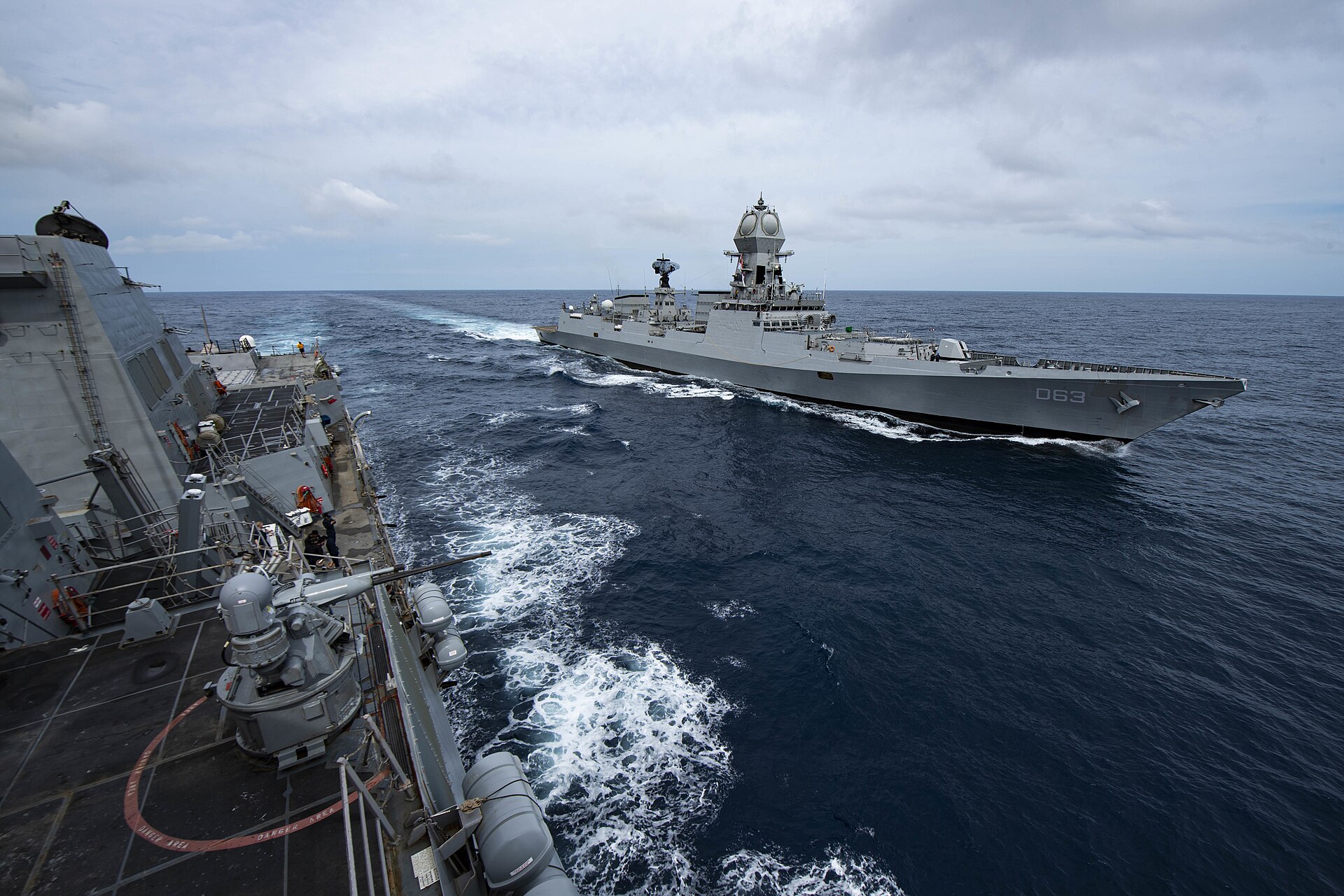
India’s Ministry of External Affairs established a dedicated 24/7 control room and appointed nodal officers in every Gulf embassy to coordinate departures. Air India, IndiGo, and SpiceJet all deployed additional capacity under government direction. The Indian Navy positioned INS Teg and INS Kolkata in the Arabian Sea as contingency platforms, though naval evacuation has not been activated. The bottleneck is not aircraft — it is exit visa processing by Gulf host governments, which controls the pace of departures regardless of Indian airlift capacity.
Could India lose its Hormuz free-passage privilege?
Iran’s free-passage system is discretionary, not guaranteed by any treaty. Tehran grants access to countries it considers non-hostile — a status India maintains by refusing to join the US-led coalition or offer basing rights. If India were to shift toward active support for the coalition, Iran could revoke access immediately. The Indian Navy maintains a presence in the Arabian Sea but has not participated in coalition naval operations, preserving the delicate arrangement.
What is the Sada Tanseeq military exercise between India and Saudi Arabia?
Sada Tanseeq is the first-ever India-Saudi Arabia joint land forces exercise, conducted in Rajasthan. It complements the Al Mohed Al Hindi joint naval exercises, of which two editions have been held. In December 2025, Saudi Chief of General Staff General Fayyad bin Ruwaili visited India — the first such visit — and Munitions India Ltd signed a $225 million defense export agreement at the 2024 World Defense Show. These military ties give the relationship a security dimension that India’s Iran relationship entirely lacks.
Is India’s position in the Iran war similar to its stance on Russia-Ukraine?
The doctrinal playbook — buy discounted energy from the sanctioned state, abstain or split at the UN, maintain back-channel ties with both sides — is identical. The difference is that Russia-Ukraine was a distant war India could observe from a position of comfort. The Iran conflict threatens India’s own citizens, its primary energy corridor, and its fiscal stability simultaneously. India’s non-alignment doctrine was designed for wars that did not touch Indian interests directly — and this one is stress-testing it to a degree Moscow’s invasion of Ukraine never required.