
DUBAI — Iran has begun charging commercial vessels up to $2 million per voyage to transit the Strait of Hormuz, Bloomberg reported on March 24, transforming the world’s most critical maritime chokepoint into a wartime toll road controlled by the Islamic Revolutionary Guard Corps. The ad hoc fee regime, confirmed by an Iranian lawmaker on state television, marks the first time a nation has imposed unilateral transit charges on an international strait in modern maritime history — and Tehran’s parliament is now drafting legislation to make the toll permanent.
The charges carry consequences far beyond shipping invoices. Saudi Arabia, the world’s largest oil exporter, has already lost access to approximately 60 percent of its pre-war export capacity through the Gulf since Iran closed Hormuz on March 2. If codified into law, the toll would enshrine Iranian control over a waterway that carries roughly 20 percent of global oil supply, rewriting the rules of maritime commerce in the Middle East and threatening the energy security of every Gulf producer.
This article was originally published on March 24, 2026 and has been updated on March 28 with the latest developments including the assassination of IRGC Navy Commander Tangsiri, the formalization of Iran’s toll booth system, an expanded list of countries granted safe passage, the G7’s post-war Hormuz pledge, and the Houthi entry into the war.
Table of Contents
- Latest Developments (March 25–28)
- What Is Iran Charging Ships to Transit the Strait of Hormuz?
- IRGC Turns Back Containership as Permit System Emerges
- Iran’s Parliament Moves to Formalize the Toll Into Law
- Which Countries Are Paying Iran for Hormuz Access?
- Does International Law Allow Iran to Charge Shipping Fees?
- Saudi Arabia and Gulf Producers Face Existential Threat
- Hormuz Shipping Has Collapsed by 95 Percent Since the War Began
- What the Toll Means for Oil Prices and Global Trade
- Frequently Asked Questions
Latest Developments (March 25–28)
In the four days since this article was first published, the Strait of Hormuz toll has evolved from an improvised shakedown into a structured sovereign regime — and the man who built it has been killed.
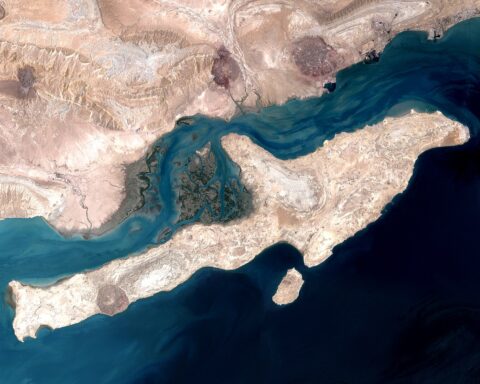
Iran’s IRGC has formalized the toll into a documented clearance process. Ship operators now contact IRGC intermediaries, submit vessel documentation including IMO number, cargo manifest, crew names, ownership details, and final destination. If approved, the vessel receives a clearance code and route instructions. During transit, ships must respond to VHF radio checks with their code and accept an IRGC escort boat through Iranian territorial waters between Qeshm and Larak islands. At least two vessels have settled their fees in Chinese yuan, according to Foreign Policy, citing Lloyd’s List Intelligence. CIPS transaction volumes — China’s cross-border payment system — spiked to their highest levels of the year in March, per the Atlantic Council.
On March 26, Israel killed the architect of the blockade. An airstrike on Bandar Abbas at approximately 3 AM local time eliminated Rear Admiral Alireza Tangsiri, commander of the IRGC Navy since 2018, along with intelligence chief Commodore Behnam Rezaei and the rest of the IRGC Navy’s senior leadership. Israeli Defense Minister Israel Katz stated: “The man who was directly responsible for the terrorist operation of mining and blocking the Strait of Hormuz to shipping was blown up and eliminated.” A US admiral subsequently told IRGC naval personnel to “abandon your posts or die.” The Maritime Executive assessed that without Rezaei’s targeting intelligence, “the IRGC Navy is rendered largely ineffective” — though the toll system itself, now bureaucratized, may outlast its creator.
The Middle East briefing 3,000+ readers start their day with.
One email. Every weekday morning. Free.
Also on March 26, Trump extended his pause on strikes against Iranian energy infrastructure by 10 days to April 6. Iran rejected the American 15-point peace framework — delivered via Pakistan as mediator — and presented its own five-point counterproposal demanding reparations, sovereignty recognition over the strait, and an immediate end to all military operations across all fronts including allied resistance groups.
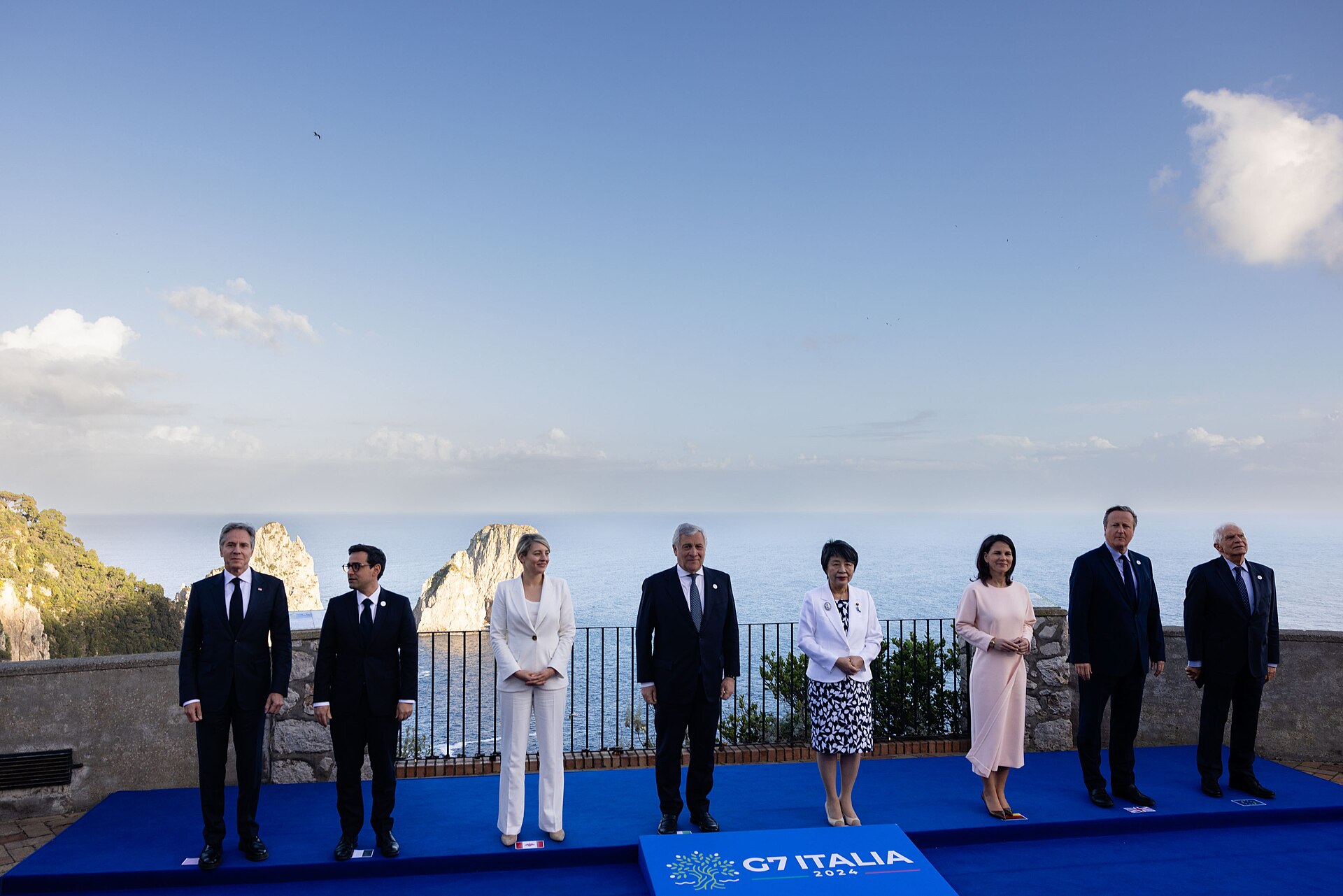
On March 27, the G7 pledged to secure freedom of navigation through the Strait of Hormuz — but only after the war ends. More than 30 nations signed a statement expressing readiness to contribute to a post-war naval mission in a “strictly defensive posture.” Secretary of State Marco Rubio acknowledged: “The first few tankers that go through the straits after this operation is over are going to want an escort from somebody, or they’re not going to be able to get insurance.” No ship numbers, deployment timelines, or force composition were committed. Saudi FM Prince Faisal bin Farhan ran a five-bilateral offensive at the summit, but left France with expressions of support rather than escort commitments.
On March 28, Yemen’s Houthis entered the war by firing ballistic missiles at Israel, triggering air raid sirens across the Negev. The escalation raises the prospect of a two-chokepoint crisis: if Houthis resume targeting commercial shipping in the Red Sea — as they did during Israel’s war on Gaza — the Bab el-Mandeb strait would join Hormuz as a second contested passage. Brent crude surged to $112.57 per barrel on the news, the highest since July 2022, as the revenue paradox facing Saudi oil deepened.
What Is Iran Charging Ships to Transit the Strait of Hormuz?
Iran is demanding payments of as much as $2 million per voyage from commercial vessels seeking passage through the Strait of Hormuz, according to Bloomberg, citing people familiar with the matter. The fees are being collected by the IRGC Navy, which has controlled access to the strait since declaring it closed to enemy shipping on March 2. At least two payments have been settled in Chinese yuan, according to Lloyd’s List Intelligence, though some vessels — including Indian LPG carriers — appear to have received free passage as a diplomatic concession. India’s privileged access to the strait has become a central tension in the Modi-MBS diplomatic balancing act, as New Delhi benefits from a blockade that damages Saudi oil exports.
Lloyd’s List has tracked 26 ships using the IRGC’s pre-approved corridor in the two weeks since March 13, with the majority Greek-owned but others Indian, Pakistani, Chinese, and Syrian-flagged. An additional eight large vessels operated with their AIS transponders switched off during transit, according to Al Jazeera, suggesting the true volume may be higher than tracking data indicates.
Iranian lawmaker Alaeddin Boroujerdi confirmed the toll on state broadcaster IRIB, stating that “collecting $2 million as transit fees from some vessels crossing the strait reflects Iran’s strength.” He added that “now, because war has costs, naturally we must do this and take transit fees from ships passing through the Strait of Hormuz.” A second lawmaker, Mohammadreza Rezaei Kouchi, told Fortune that “Parliament is pursuing a plan to formally codify Iran’s sovereignty, control and oversight over the Strait of Hormuz, while also creating a source of revenue through the collection of fees.”
Tehran subsequently formalized its control over the waterway by notifying the United Nations and the International Maritime Organization that only vessels Iran deems non-hostile may transit the strait, establishing conditions that shipping analysts described as unprecedented in modern maritime law.
Greek shipowner Giorgos Prokopiou, through his company Dynacom Tankers, has emerged as the most prolific commercial operator through the blockade. Three Dynacom supertankers — the Smyrni, Shenlong, and Marathi — have transited the strait since March 1, each carrying approximately one million barrels of Saudi crude from Ras Tanura to Asian buyers. The Marathi, a 900-foot Malta-flagged vessel, was spotted near India’s Sikka port on March 27 after its third Hormuz crossing. It is not publicly known whether Dynacom paid the IRGC toll or secured separate terms.
IRGC Turns Back Containership as Permit System Emerges
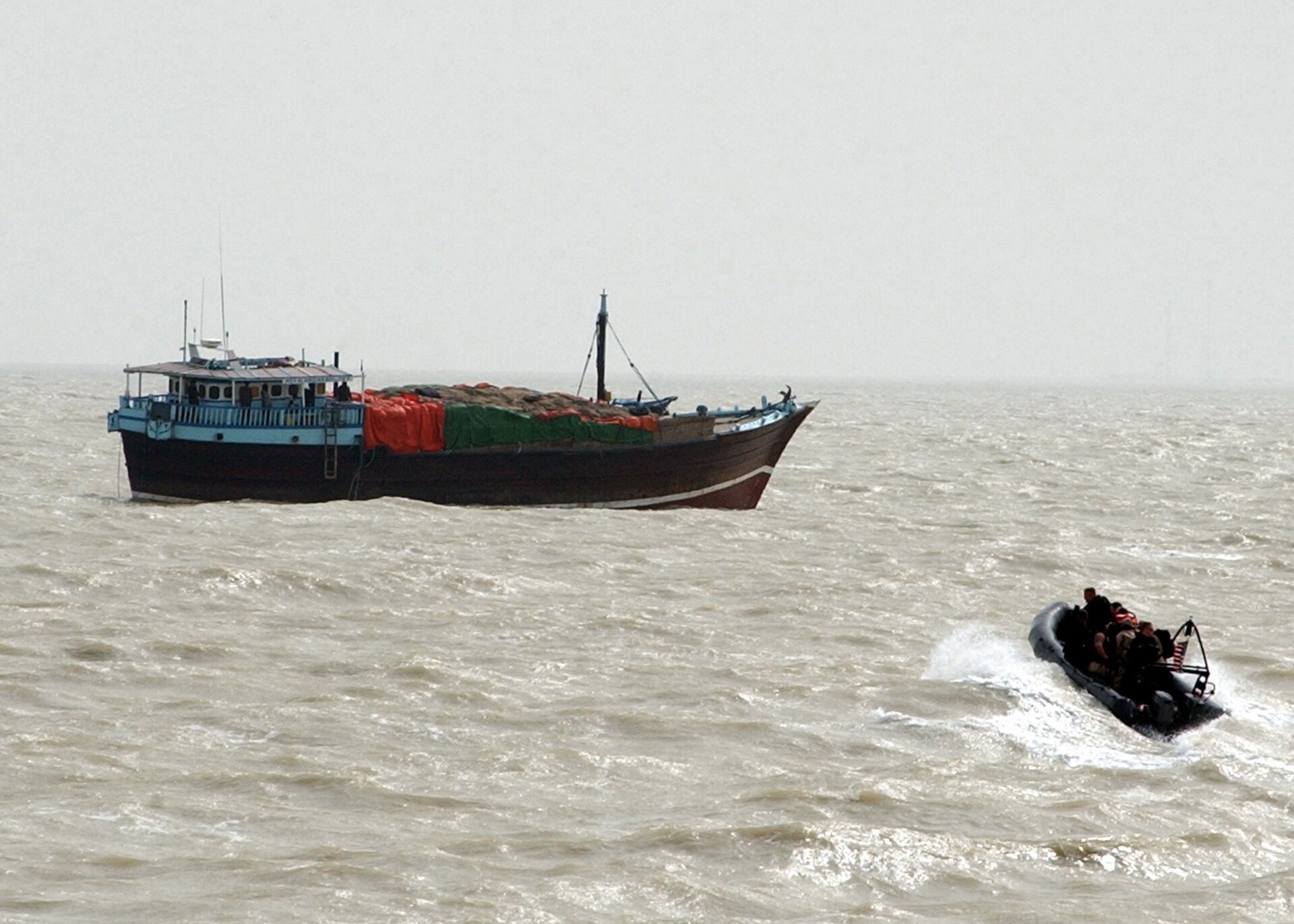
The toll regime became visible on March 24 when the IRGC Navy turned back a containership attempting to pass through the strait without authorization. The St. Kitts and Nevis-flagged container ship Selen, sailing from the United Arab Emirates toward Pakistan, was forced to reverse course at the entrance to the waterway after what the IRGC described as “failure to comply with legal protocols and lack of a permit,” gCaptain reported.
The incident underscored a shift in Iranian enforcement from a blanket closure to what Tehran now calls a “selective blockade.” Iranian Foreign Minister Abbas Araghchi has stated that “for other countries, ships can pass through the strait,” while the waterway remains closed to nations Iran considers hostile — a category that includes the United States, Israel, the United Kingdom, and increasingly the Gulf Arab states that have aligned with Washington since the war began on February 28.
The selective approach builds on an existing financial blockade that predates Iran’s naval enforcement. As a separate analysis of the insurance market’s role in sealing the strait demonstrates, the withdrawal of war risk coverage by major P&I clubs within days of the war’s outbreak achieved the commercial closure that Iran’s navy could not.
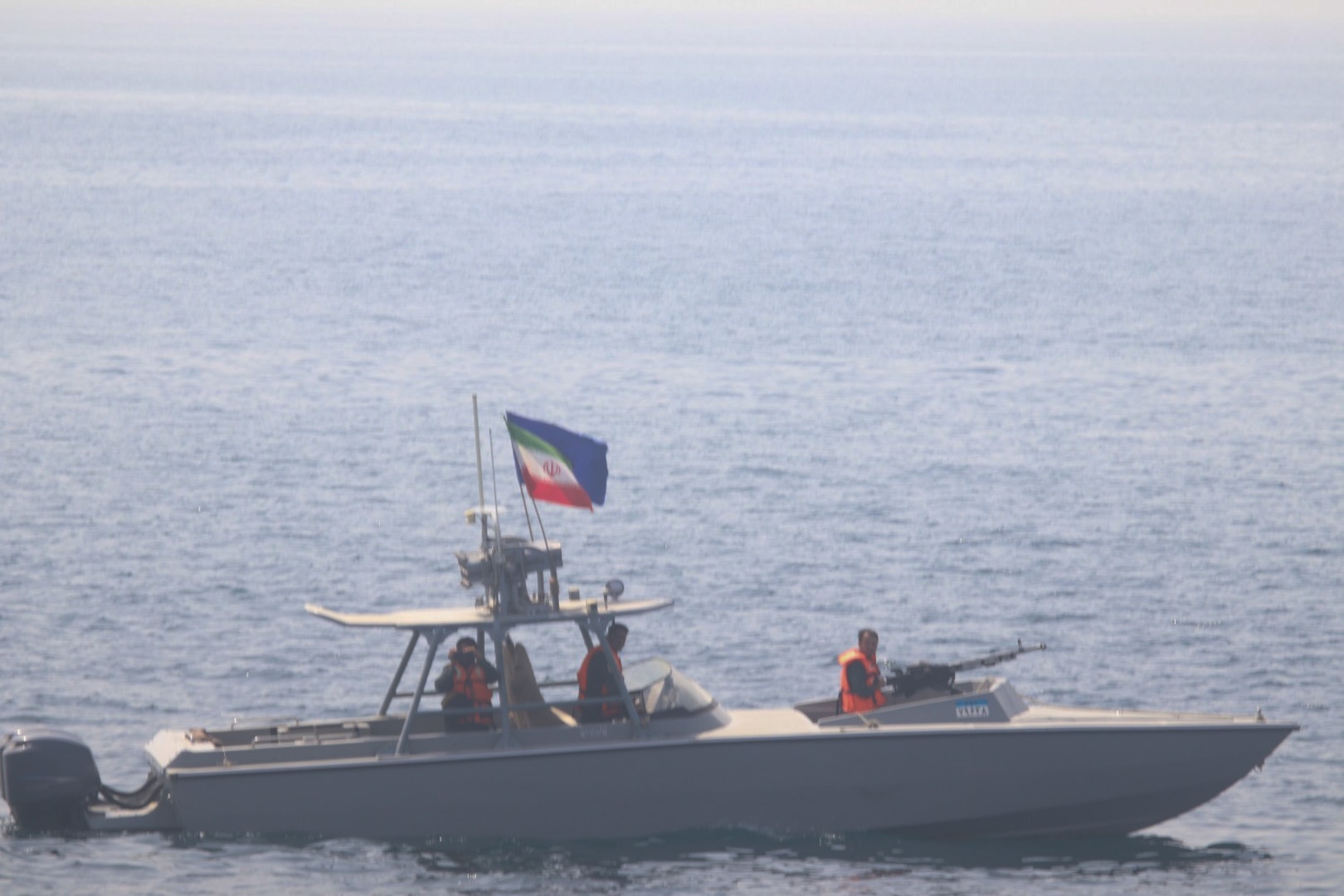
Ships hoping to use the pre-approved corridor must now communicate extensive details — IMO number, cargo manifest, crew names, ownership, and destination — to IRGC-connected intermediaries in advance of transit. Upon clearance, vessels receive a code and route instructions through a 20-mile corridor between Qeshm and Larak islands near Bandar Abbas, under IRGC escort. The requirement amounts to a registration system that gives the IRGC veto power over every commercial movement through the strait, a level of control that no single nation has exercised over Hormuz in the waterway’s modern history.
Iran’s Parliament Moves to Formalize the Toll Into Law
While the $2 million fee is currently being demanded on a case-by-case basis, Tehran is moving to make it permanent. Iran’s parliament, the Majlis, is actively reviewing a legislative bill that would require all nations using the Strait of Hormuz for the transport of oil, liquefied natural gas, food, and other commodities to pay tolls and taxes to the Iranian government, Maritime Gateway reported.
The Majlis Civil Affairs Committee is finalizing the bill, which would recognize Tehran’s “sovereignty, dominance and supervision” in the strait while establishing a legal framework for systematic fee collection. Lawmaker Somayeh Rafiei confirmed that parliament was advancing the proposal, which frames the levy as compensation for Iran providing security along the shipping route. As of March 27, the bill’s legal team was preparing a final draft for a parliamentary vote expected the following week, according to Bloomberg.
Iran’s Acting President Mohammad Mokhber has publicly endorsed the concept. In a statement reported by Iran International, Mokhber said one of the most important opportunities created by the war was the possibility of reshaping Iran’s role in the strait, stating that “after the imposed war, by defining a new regime for the Strait of Hormuz, Iran will move from being under sanctions to a powerful position in the region and the world.”
The ambition is explicit: Iran wants to convert a temporary wartime measure into a permanent source of revenue and geopolitical leverage. For Arab oil producers in the Gulf, that prospect is existential. Even an informal toll raises issues of sovereignty, precedent, and the potential weaponization of a vital trade route for their energy exports, according to analysts tracking the OPEC fractures caused by the conflict.
Which Countries Are Paying Iran for Hormuz Access?
Iran’s Foreign Minister Abbas Araghchi formally announced on March 26 that five nations have been granted safe passage: China, Russia, India, Iraq, and Pakistan. Additional countries — including Malaysia, Thailand, South Korea, and Egypt — have secured transit through bilateral negotiations or have had vessels pass without incident, according to Al Jazeera. Turkey obtained permission for one vessel after its owner used an Iranian port, though Transport Minister Uraloglu acknowledged “fifteen ships with Turkish owners were there” and only one had been cleared.
India has emerged as the most publicly resistant to the toll. New Delhi dispatched four liquefied petroleum gas carriers through the strait in late March, and the Indian government has stated that international laws guarantee freedom of navigation through the waterway. India’s shipping ministry rejected reports of any levy, insisting that “no one can charge a fee for use of the channel,” according to NewKerala. Indian LPG tankers are understood to have received free passage as a diplomatic measure, according to Foreign Policy.
Japan was granted safe passage through the strait on March 21, when Iranian Foreign Minister Araghchi announced that Japanese ships would be allowed to transit. The concession came after weeks of diplomatic pressure from Tokyo, which imports approximately 90 percent of its crude oil through Hormuz and had been among the hardest-hit economies since the blockade began.
China, which imported roughly 1.5 million barrels per day of Iranian crude before the war, appears to have secured the most favorable terms. Chinese-flagged vessels have been transiting Hormuz with minimal disruption since the selective blockade began. The Panama-flagged, Chinese-owned tanker Bright Gold transited the strait on March 23 carrying approximately 40,000 tonnes of methanol bound for China, according to Caixin Global — one of the first Chinese-linked commercial vessels to use the IRGC corridor openly.
The emerging two-tier system divides the world’s shipping nations into those willing to negotiate with Iran and those locked out entirely. For Saudi Arabia — whose oil exports must either pass through Hormuz or rely on its Red Sea port at Yanbu, where the East-West Pipeline has now reached its full 7-million-barrel-per-day capacity — the toll represents a strategic catastrophe that no amount of money can solve, because Tehran has classified the Kingdom as an enemy.
| Country | Status | Date Confirmed | Notes |
|---|---|---|---|
| China | Granted | ~Mar 26 | Most favorable terms; yuan payments |
| Russia | Granted | ~Mar 26 | Formal announcement by FM Araghchi |
| India | Granted (free) | Mar 15 | Rejects toll; LPG tankers passed free |
| Iraq | Granted | ~Mar 26 | Diplomatic ties with Tehran |
| Pakistan | Granted | Mar 16 | Mediating ceasefire talks |
| Japan | Granted (offer) | Mar 21 | After diplomatic pressure; 75% oil via Hormuz |
| Malaysia | Granted | ~Mar 26 | After talks with President Pezeshkian |
| Thailand | Granted | ~Mar 26 | After talks with Iran’s ambassador |
| Turkey | Partial | ~Mar 16 | 1 of 15 Turkish-owned vessels cleared |
| South Korea | Reported | ~Mar 26 | Vessels allowed; terms unclear |
| Saudi Arabia | Blocked | — | Classified as enemy combatant |
| UAE | Blocked | — | Classified as enemy combatant |
| United States | Blocked | — | Classified as enemy combatant |
| Israel | Blocked | — | Classified as enemy combatant |
Does International Law Allow Iran to Charge Shipping Fees?
The toll faces significant legal obstacles under the United Nations Convention on the Law of the Sea. UNCLOS, which 168 states have ratified, enshrines the principle of “transit passage” through international straits. Article 44 states that countries bordering such straits “shall not hamper transit passage,” and the right cannot be suspended for any reason, according to a Lawfare analysis published in March 2026.
Iran, however, signed UNCLOS in 1982 but never ratified it — a distinction that sits at the center of Tehran’s legal argument. By not ratifying the treaty, Iran contends it is not bound by its provisions, including the transit passage regime that prevents bordering states from charging tolls or restricting access to international straits.
Legal scholars are divided on the argument’s validity. The European Journal of International Law published an analysis noting that many provisions of UNCLOS are considered customary international law, binding on all nations regardless of ratification. Transit passage through international straits falls into this category, according to the Just Security analysis, meaning Iran may be violating international norms even without being a formal party to the treaty.
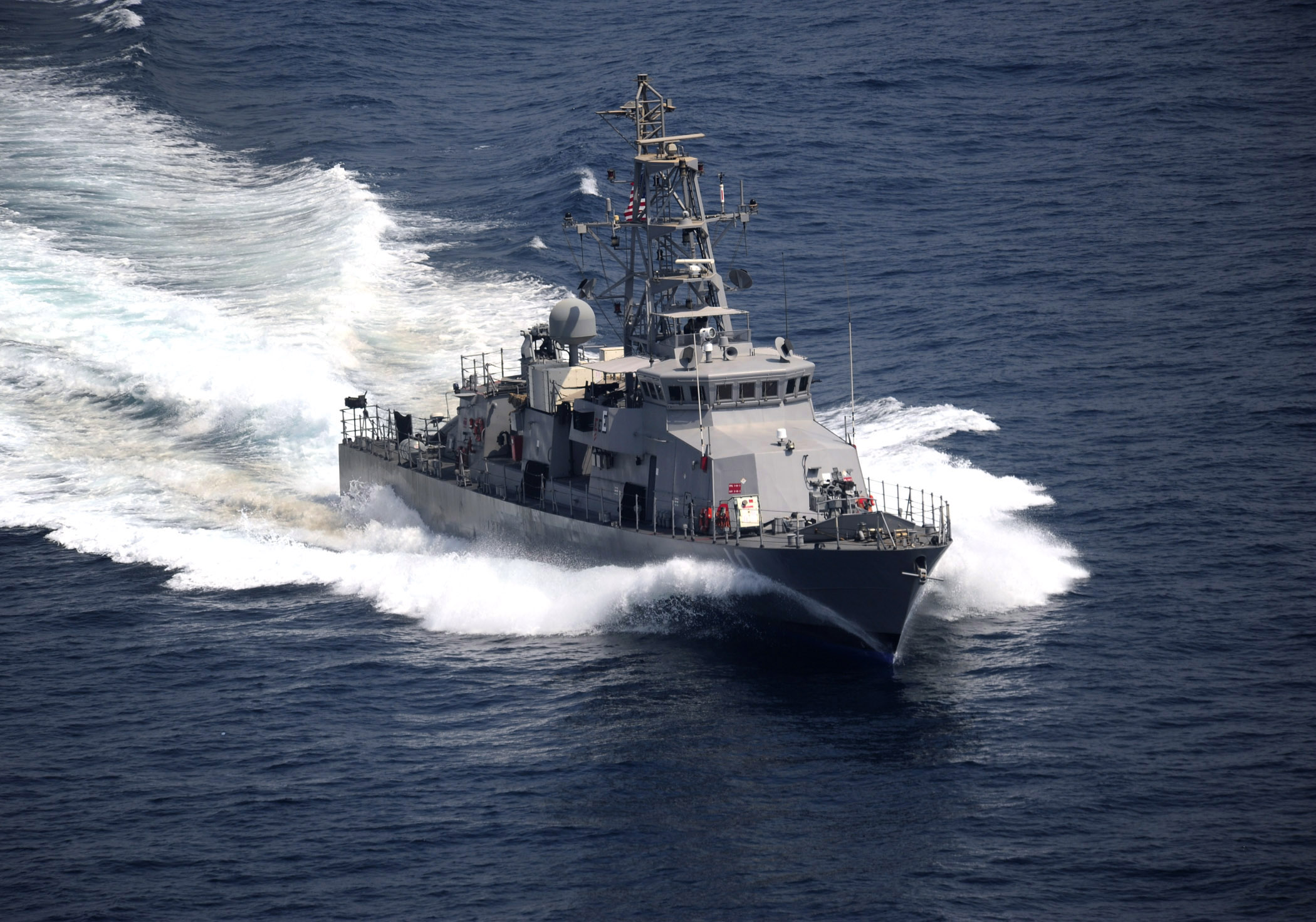
The practical reality is that legal arguments carry little weight when backed by the IRGC’s fast-attack boats, anti-ship missiles, and sea mines. Iran has demonstrated the military capability to enforce its toll regime, and the international community has so far been unable to reopen the strait by force. The US Fifth Fleet, Royal Navy, and coalition partners have maintained a naval presence in the region, but commercial shipping through Hormuz has collapsed regardless. The G7’s March 27 pledge to secure the strait with a multinational naval force was limited to the post-war period — an acknowledgment that no Western government is prepared to challenge Iran’s control while hostilities continue.
Saudi Arabia and Gulf Producers Face Existential Threat
For Saudi Arabia, the toll is not a question of cost but of access. Tehran has classified the Kingdom as an enemy combatant, meaning Saudi-flagged or Saudi-bound vessels are excluded from the transit regime entirely. This has forced Aramco to redirect export operations to Yanbu on the Red Sea coast — a port that handles a fraction of the capacity that flowed through the Gulf before March 2.
Aramco has cut oil supply to Asian customers for a second consecutive month, according to Bloomberg, as the Hormuz blockade eliminated the Eastern Province export terminals at Ras Tanura and Jubail from operational use. By March 27, Aramco had shut down four supergiant offshore oil fields as Gulf rigs went dark. The Kingdom’s east-west pipeline, the Petroline, can move approximately 5 million barrels per day to Yanbu, but this falls short of the 7.5 million barrels per day that Saudi Arabia was exporting before the conflict.
The United Arab Emirates, Kuwait, Bahrain, and Qatar face similar constraints. All four nations export the majority of their hydrocarbons through Gulf terminals that depend on Hormuz access. Iran’s selective blockade has created a situation in which Asian importers can receive Iranian and potentially Russian crude through the strait, while Gulf Arab producers are shut out of their own export routes. The toll regime’s persistence now raises existential questions for the April 5 OPEC+ meeting, where Saudi Arabia must decide whether to flood the market or hold cartel discipline as global SPR reserves run dry.
| Country | Pre-War Exports via Hormuz (bpd) | Current Status | Alternative Route |
|---|---|---|---|
| Saudi Arabia | 5.5 million | Blocked — classified as enemy | Yanbu (Red Sea) — limited capacity |
| UAE | 2.8 million | Blocked — classified as enemy | Fujairah (damaged) — limited |
| Kuwait | 1.7 million | Blocked — classified as enemy | None |
| Qatar | 1.3 million (LNG equivalent) | Blocked — classified as enemy | None |
| Iraq | 3.3 million | Granted safe passage | Turkey pipeline (limited) |
The disparity is stark. Iraq, which maintains diplomatic ties with Tehran, has secured transit access, while Saudi Arabia — the world’s largest oil exporter — remains locked out. The energy crises cascading through Asia and the developing world are a direct consequence of this asymmetry. The IMO now estimates approximately 2,000 vessels are stranded in the Persian Gulf, with roughly 20,000 seafarers unable to leave their ships. Human Rights Watch described the deliberate targeting of civilian shipping as “apparent war crimes” in a March 23 assessment.
Hormuz Shipping Has Collapsed by 95 Percent Since the War Began
The scale of the disruption is unprecedented. From March 1 to March 25, commercial vessels made just 142 crossings through the Strait of Hormuz — a 94.6 percent decrease from the 2,652 transits recorded in the same period in 2025, according to Lloyd’s List Intelligence. Before the war, the strait handled approximately 110 transits per day, carrying 21 million barrels of oil and significant volumes of LNG, petrochemicals, and containerized goods. The entire month’s disrupted traffic equals roughly one normal day.
The collapse began on March 2, when a senior IRGC official confirmed that the strait was closed and threatened any ship that attempted to pass. Insurance underwriters immediately suspended war-risk coverage for Hormuz transits, and major shipping companies including Maersk, MSC, and CMA CGM rerouted vessels around the Cape of Good Hope, adding 10 to 14 days and an estimated $500,000 to $1 million per voyage.
The number of transits has increased slightly since mid-March as Iran transitions from a blanket closure to the toll-based selective blockade. On March 24, six vessels transited openly with AIS transponders active. But this still represents a fraction of normal traffic. The ships making the crossing are predominantly from nations that have secured bilateral deals with Tehran or are operating under informal arrangements with the IRGC.
| Period | Daily Average Transits | Compared to Peacetime | Notes |
|---|---|---|---|
| Pre-war (Feb 2026) | ~110 | Baseline | Normal operations |
| March 1-7 | 3-5 | Down 96% | Near-total closure |
| March 8-14 | 2-4 | Down 97% | Insurance suspended; IRGC corridor begins |
| March 15-23 | 6-10 | Down 92% | Selective blockade; toll system emerges |
| March 24-28 | 4-8 | Down 94% | Formalized toll; no new ship attacks since Mar 19 |
The oil market has responded accordingly. Brent crude surpassed $100 per barrel on March 8, crashed briefly to $100 on March 23 after President Trump hailed “very good and productive conversations” with Iran — before Iran’s foreign ministry denied any dialogue and prices rebounded. By March 28, Brent had climbed to $112.57 per barrel following the Houthi missile launch at Israel and hardening positions on both sides. The surge has exceeded every previous conflict-driven price spike in modern history, including the 1973 Arab oil embargo and the 1990 Iraqi invasion of Kuwait.
What the Toll Means for Oil Prices and Global Trade
If Iran succeeds in formalizing the Hormuz toll, the implications extend far beyond the current conflict. A permanent fee on strait transit would create a new cost layer for every barrel of oil, every LNG cargo, and every container ship that passes through the waterway. Even a fraction of the current $2 million per-voyage charge, applied systematically, would add billions of dollars annually to global energy costs.
Shipping analysts at major brokerages have already warned that the “war premium” on Gulf oil will persist long after the last missile falls. War risk insurance premiums have surged above 5 percent of vessel value per transit — up from 0.25 to 0.5 percent before the war — according to Lloyd’s of London, and underwriters are unlikely to reduce premiums even if the strait nominally reopens under Iranian toll control.
The toll also introduces a geopolitical sorting mechanism. Nations that maintain friendly relations with Iran gain cheaper access to Gulf energy, while those aligned with Washington face either permanent exclusion or punitive fees. This creates incentives for energy-importing nations — particularly in Asia and Africa — to maintain neutrality in the conflict or tilt toward Tehran, fracturing the coalition that the United States has tried to build against Iran.
The International Energy Agency warned on March 23 that the Gulf energy crisis already surpasses the 1970s oil shocks in severity. IEA Chief Fatih Birol confirmed that 40 or more energy assets across nine countries have been “severely or very severely damaged,” with Rystad Energy estimating the repair bill at $25 billion over five years. Shipping companies face a grim calculation: pay Iran’s fee, reroute around the Cape of Good Hope at an additional cost of $500,000 to $1 million per voyage and 10 to 14 extra days at sea, or anchor indefinitely and wait for a resolution that may never come.
For Saudi Arabia, the strategic calculus is straightforward. Every day that Hormuz remains under Iranian control is a day that the Kingdom’s energy infrastructure depreciates in value. The Trump administration’s offer to “share” the strait with Iran was rejected by Tehran, and Iran’s five-point counterproposal demands reparations, sovereignty recognition over Hormuz, and a comprehensive ceasefire across all fronts before any talks can begin. The toll may be illegal under international law, but unless the world’s navies are prepared to enforce that law, Iran’s IRGC holds the gate — even after the man who built the blockade has been killed.
Frequently Asked Questions
How much is Iran charging ships to transit the Strait of Hormuz?
Iran is demanding payments of up to $2 million per voyage from commercial vessels seeking passage through the Strait of Hormuz, according to Bloomberg. At least two payments have been settled in Chinese yuan, per Lloyd’s List Intelligence. Not all transiting vessels face the same charge — Indian LPG carriers appear to have received free passage as a diplomatic concession, while terms vary based on bilateral agreements between Iran and individual nations.
Is Iran allowed to charge tolls on the Strait of Hormuz under international law?
The United Nations Convention on the Law of the Sea, ratified by 168 states, prohibits bordering nations from hampering transit passage through international straits. However, Iran signed UNCLOS in 1982 but never ratified it, forming the basis of Tehran’s argument that it is not bound by the treaty’s provisions. Legal scholars note that transit passage rights are widely considered customary international law, binding on all nations regardless of ratification status. On March 27, the G7 pledged to secure Hormuz with a multinational naval force — but only after the war ends.
Which countries have secured transit access through the Strait of Hormuz?
As of March 28, Iran’s Foreign Minister Araghchi has formally granted safe passage to China, Russia, India, Iraq, and Pakistan. Additional countries with confirmed transits include Japan, Malaysia, Thailand, South Korea, and Egypt. Turkey has secured access for one of fifteen vessels with Turkish owners. Saudi Arabia, the UAE, the United States, Israel, and the United Kingdom remain blocked as “enemy combatants.”
How has the Hormuz closure affected Saudi Arabia’s oil exports?
Saudi Arabia has lost access to its primary Gulf export terminals at Ras Tanura and Jubail, forcing Aramco to redirect shipments through the Red Sea port of Yanbu. By March 27, Aramco had shut down four supergiant offshore oil fields as Gulf rigs went dark. The east-west Petroline pipeline can move approximately 5 million barrels per day, but this falls short of the Kingdom’s pre-war export capacity of 7.5 million barrels per day. Aramco has cut oil supply to Asian customers for a second consecutive month.
Could the Hormuz toll become permanent?
Iran’s parliament is finalizing legislation that would formalize transit fees on all nations using the strait for oil, LNG, food, and commodity shipments. The bill, being prepared by the Majlis Civil Affairs Committee, would recognize Tehran’s “sovereignty, dominance and supervision” over the waterway. A parliamentary vote was expected in late March or early April 2026. If enacted, it would represent the first permanent sovereign charge on an international strait in modern maritime history.
Who was IRGC Navy Commander Tangsiri and why was he killed?
Rear Admiral Alireza Tangsiri commanded the IRGC Navy since August 2018 and was directly responsible for the mining and closure of the Strait of Hormuz. Israel killed Tangsiri, intelligence chief Commodore Behnam Rezaei, and other senior IRGC Navy leaders in an airstrike on Bandar Abbas on March 26. Israeli Defense Minister Katz described Tangsiri as “the man directly responsible for the terrorist operation of mining and blocking the Strait of Hormuz.” Maritime analysts assessed that the loss of Rezaei’s intelligence network may degrade the IRGC Navy’s operational capability, though the bureaucratized toll system is expected to continue functioning.