
RIYADH — Mohammed bin Salman has absorbed approximately 600 Iranian drone and missile strikes since February 28, watched four Aramco supergiant oil fields go dark, and granted the United States access to King Fahd Air Base — yet Saudi Arabia has not fired a single offensive shot at Iran. The question dominating every chancellery from Washington to Tehran is straightforward: what would it actually take for MBS to cross the line from non-belligerent host to co-belligerent?
The answer is less binary than the debate suggests. One month into the war, the forces pulling Saudi Arabia toward formal entry — American pressure, escalating Iranian strikes, Houthi re-entry from the south, and the sheer weight of 600 attacks on sovereign territory — are powerful. But so are the forces restraining it: a $475 billion foreign reserve cushion that war would hemorrhage, a Vision 2030 program already bleeding foreign investment, an Iranian deterrence calculus that has actually reduced strikes on the Kingdom because Riyadh has not retaliated, and the cold mathematics of a conflict where $35,000 Shahed drones drain $4 million interceptors. What follows maps both sides of the ledger, identifies the specific trigger conditions that would force MBS’s hand, and makes the case that the crown prince’s ambiguity is not indecision — it is the strategy itself.
Table of Contents
- The Forces Pulling Saudi Arabia Toward War
- What Is Trump Asking Saudi Arabia to Do?
- Why MBS Has Absorbed 600 Strikes Without Retaliating
- What Would Force Saudi Arabia Into the War?
- How Does the Houthi Threat Change the Calculus?
- Can Vision 2030 Survive Saudi Arabia Entering the War?
- Is Iran Misreading Saudi Restraint as Weakness?
- Ambiguity as Strategy — Not Indecision
- Frequently Asked Questions
The Forces Pulling Saudi Arabia Toward War
The case for Saudi entry into the conflict is not hypothetical. It is built on concrete escalatory steps that Riyadh has already taken, each one narrowing the space between armed non-belligerence and active co-belligerency.
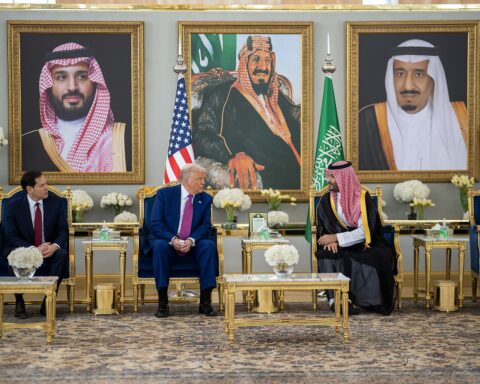
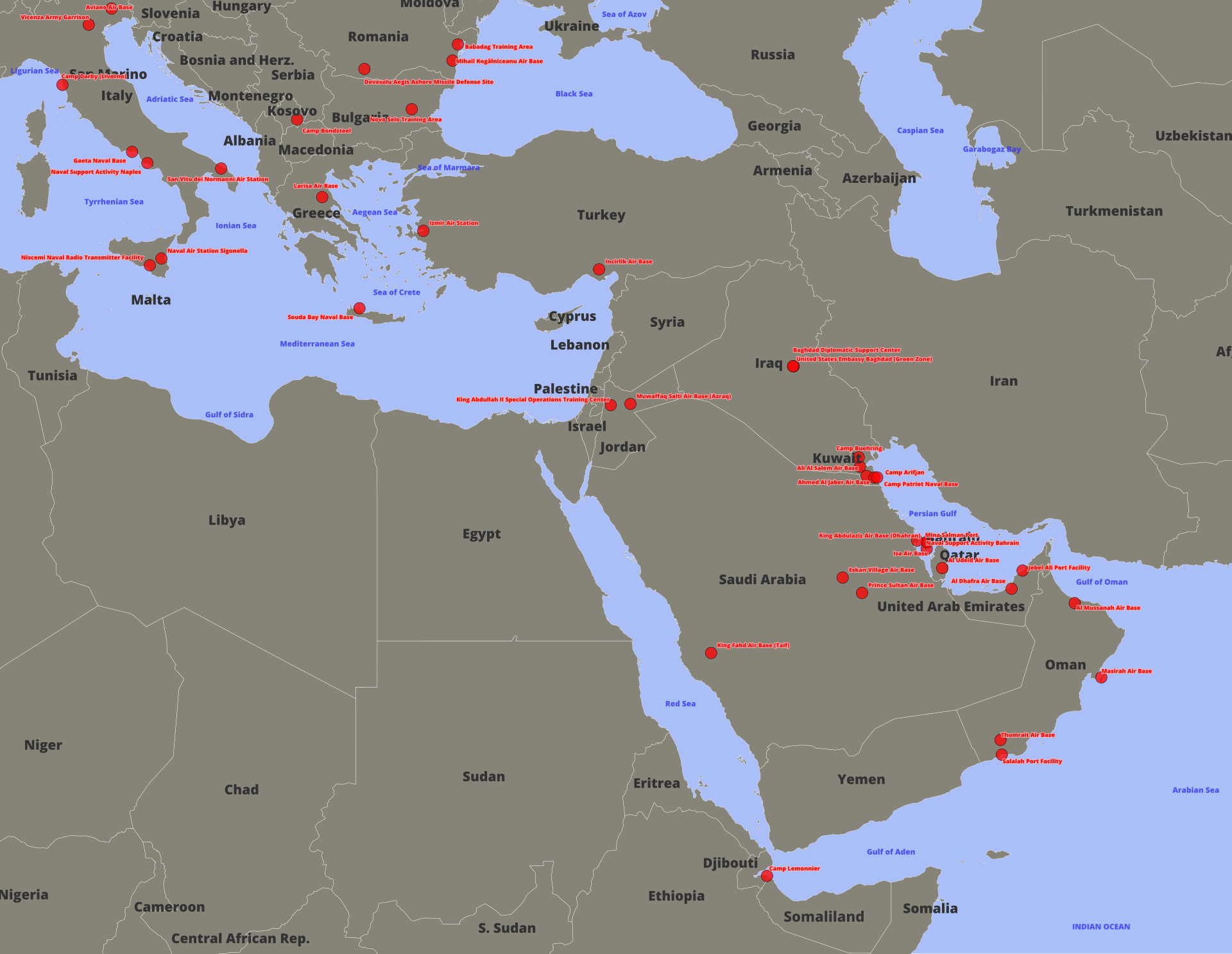
On March 20, Saudi Arabia agreed to open King Fahd Air Base in Taif to American combat operations, according to the Wall Street Journal. The base sits roughly 1,200 kilometres from the Iranian border, placing it beyond the effective range of most Iranian ballistic missiles — a geographic advantage that Prince Sultan Air Base, located closer to Riyadh, does not share. The decision reversed the Kingdom’s earlier insistence that its facilities not be used as staging grounds for strikes on Iran.
The following day, Riyadh expelled Iran’s military attache and four embassy staff, giving them 24 hours to leave, citing “repeated Iranian attacks” on Saudi territory. On March 25, Saudi Arabia joined five other Arab nations — the UAE, Kuwait, Bahrain, Qatar, and Jordan — in a joint statement invoking Article 51 of the UN Charter, the legal basis for self-defense under international law. The statement affirmed “the full and inherent right to self-defense” and the right “to take all necessary measures to safeguard their sovereignty, security, and stability.”
That language stops short of a declaration of war. But invoking Article 51 establishes the legal scaffolding for one.
The Middle East briefing 3,000+ readers start their day with.
One email. Every weekday morning. Free.
The physical toll is mounting. Approximately 600 drone and missile strikes have hit Saudi territory since February 28, according to tallies compiled from Saudi Civil Defense statements and Western intelligence briefings. On March 27, Iran struck Prince Sultan Air Base with ballistic missiles, wounding ten American service members — two seriously — and damaging AWACS surveillance aircraft and E-3 Sentry planes, according to the Washington Post. Five US refueling planes had already been struck at the same base in earlier attacks.
The New York Times reported that MBS has been speaking regularly with Trump and privately urging regime change in Tehran, conveying advice previously given by King Abdullah: to “cut off the head of the snake.” The crown prince advocated for American ground troops to seize Iranian energy infrastructure, the Times reported — a position far more aggressive than Saudi Arabia’s public posture of “always supporting a peaceful resolution.” Trump subsequently echoed that ambition publicly, telling the Financial Times his “preference would be to take the oil” and raising the prospect of seizing Kharg Island — though the move would threaten Saudi market share as much as it would punish Iran.
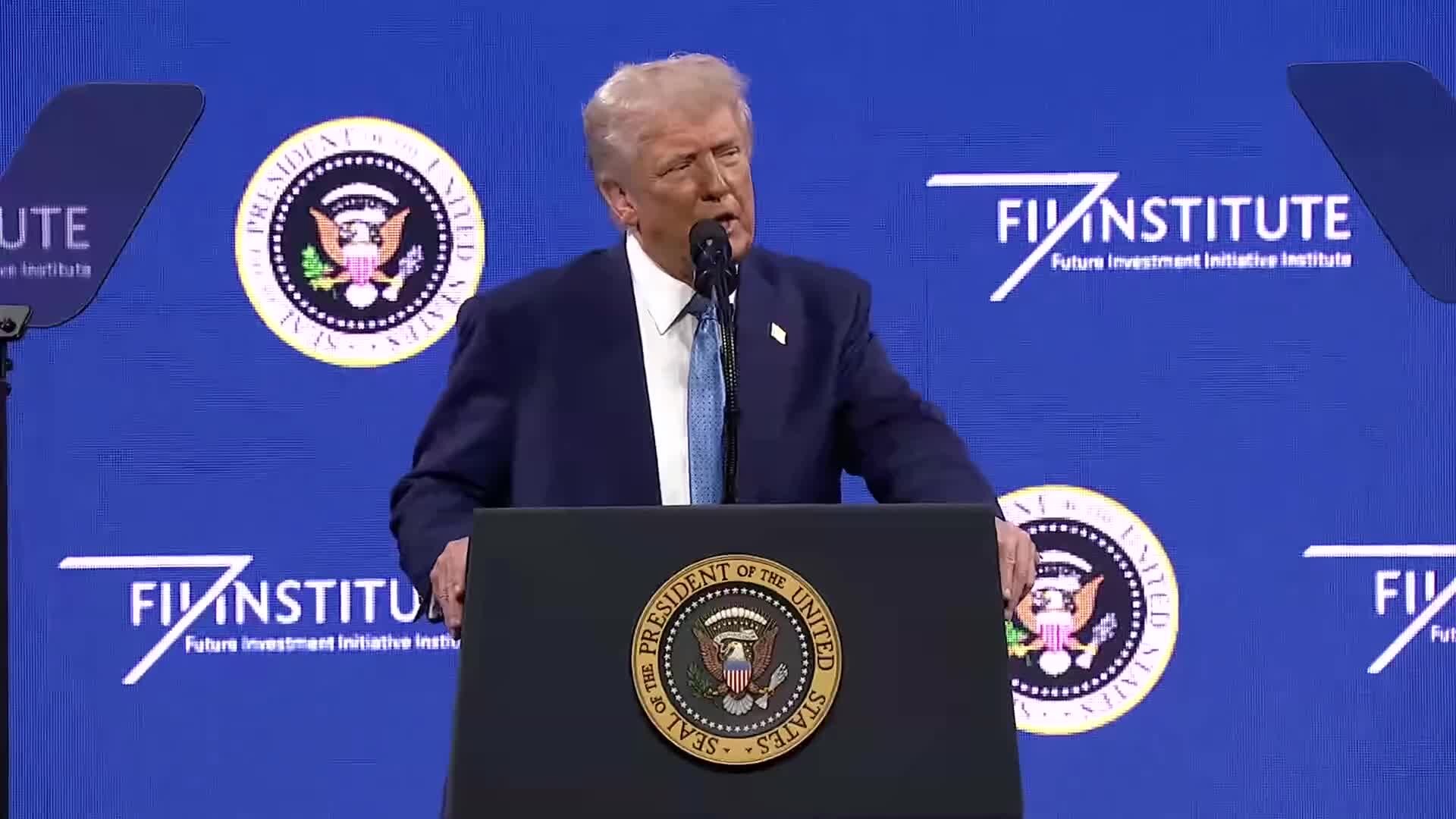
The private alignment MBS sought with Washington came at a devastating public cost. Days after the Times report, Trump stood at the FII PRIORITY summit in Miami and told the Saudi-funded audience that MBS was “kissing my ass” — converting the crown prince’s wartime deference into a public assertion of American dominance that made the patron-client dynamic impossible to deny.
What Is Trump Asking Saudi Arabia to Do?
President Trump is pressing Saudi Arabia on two fronts simultaneously: military participation in the Iran campaign and diplomatic normalization with Israel through the Abraham Accords. The linkage is the core of a grand bargain — join the anti-Iran coalition, normalize with Israel, and receive American security guarantees, nuclear cooperation, and defense technology in return.
On March 27, speaking at the Future Investment Initiative Priority summit in Miami — a conference linked to Saudi Arabia’s Public Investment Fund — Trump publicly called on Riyadh to join the Accords, arguing the war was reshaping the Middle East in ways that made normalization inevitable, Bloomberg reported.
Steven A. Cook, the Eni Enrico Mattei Senior Fellow for Middle East and Africa Studies at the Council on Foreign Relations, argued on March 26 that Gulf leaders “did not want the war” but now “need Trump to oust the Iranian regime to ensure it can no longer pose a threat,” because “stopping short of that would be existential to the Gulf states’ development model.”
Trump is also reportedly weighing deployment of up to 10,000 additional troops to the Middle East, according to Fox News. Washington is preparing to expand its military footprint across the Gulf at the same time it is asking Saudi Arabia to expand its own. The implicit message: American blood is already being shed on Saudi soil, and reciprocity has limits. On March 28, Vance went further, declaring the U.S. would stay “a little while longer” to neuter Iran — an open-ended commitment that transforms Saudi territory into America’s forward operating base for an undefined duration.
CNN reported on March 26 that Saudi Arabia wants Tehran’s cruise and ballistic missile capabilities “degraded as much as possible” before any ceasefire. A regional official familiar with the Saudi position told CNN that the Kingdom’s primary war aim is not territorial but capability-focused: ensure Iran cannot rebuild the arsenal that has struck the Kingdom since February 28. The UAE holds a parallel position, with officials telling CNN it would be “difficult” for the region to continue living with an Iranian missile and drone program.
This creates an uncomfortable dependency. Saudi Arabia needs the war to continue long enough to degrade Iranian capabilities — but needs someone else to fight it.
Why MBS Has Absorbed 600 Strikes Without Retaliating
Saudi Arabia’s restraint is not passivity. It is a calculated position that generates at least four strategic advantages that would evaporate the moment Riyadh launched an offensive strike.
The first is financial. Saudi foreign reserves reached a six-year high of $475 billion in early 2026. A Saudi military strike on Iran would trigger immediate capital flight, crash the Tadawul stock exchange, widen sovereign credit default swap spreads, and potentially destabilize the riyal-dollar peg, according to analysis from the Middle East Council on Global Affairs. The economic fallout would dwarf the physical damage from Iranian drones that Saudi air defenses are intercepting at rates exceeding 85-90 percent, according to the International Institute for Strategic Studies.
The second is legal. By remaining a victim of aggression rather than a belligerent, Saudi Arabia is building a reparations case against Iran under international law. The UN Security Council condemned Iran’s attacks on Gulf states in a near-unanimous vote on March 11, and the six-nation Article 51 statement on March 25 further entrenches the Kingdom’s legal standing. Analysts at the Middle East Council on Global Affairs estimate the reparations case could exceed $200 billion if the Kingdom maintains its non-belligerent posture through the end of hostilities.
The third is deterrence. The Jerusalem Post reported that Iran has reduced strikes on Saudi Arabia specifically because the Kingdom has not retaliated. Iranian officials believe, according to the report, that “the Saudis are on edge” and that continued large-scale attacks could push Saudi Arabia to take a step it has so far avoided. In other words, Saudi restraint is producing a form of reverse deterrence: Iran fears provoking the response it cannot absorb.
The fourth is diplomatic. Saudi Arabia’s posture of armed non-belligerence has earned near-universal international sympathy. Riyadh is suffering, not causing suffering. That framing gives MBS leverage with every interlocutor — from Trump, who needs Saudi cooperation, to European capitals, which admire restraint, to Beijing, which brokered the now-collapsed Saudi-Iranian detente in March 2023.
James Mattis, the former US Secretary of Defense, captured the broader strategic stalemate in blunt terms: “Neither side has the ability to move the other side.” Entering a war of attrition carries enormous costs with no clear path to decisive victory for either belligerent.
What Would Force Saudi Arabia Into the War?
Three specific trigger conditions would make Saudi entry unavoidable, regardless of the strategic advantages of restraint: a strike on desalination infrastructure that threatens water supply to millions, a mass-casualty attack on Saudi civilians, or a formal American ultimatum conditioning the defense umbrella on Saudi belligerency. Each represents a threshold where the cost of inaction exceeds the cost of action.
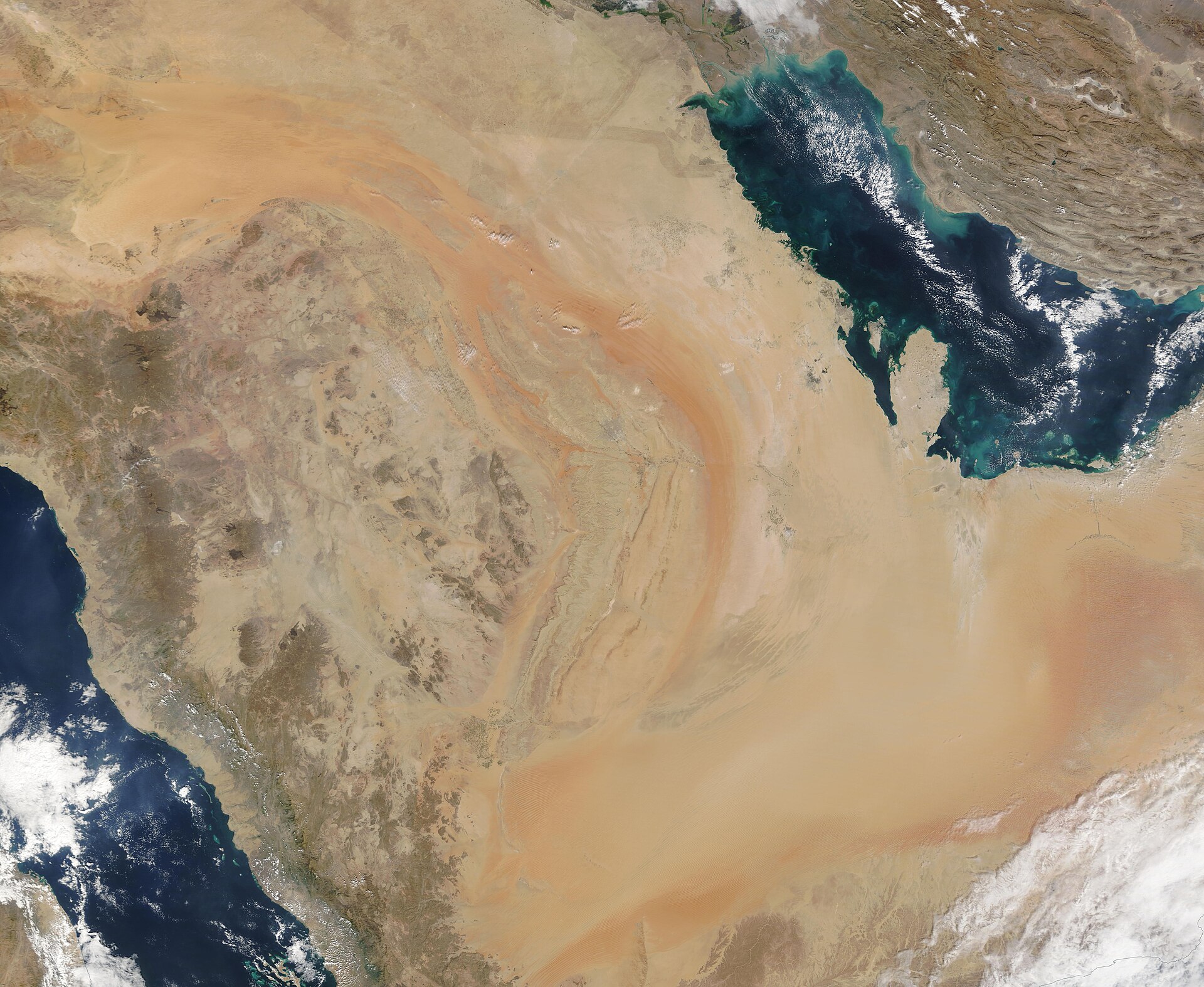
The first and most dangerous trigger is a strike on Saudi desalination infrastructure. Saudi Arabia gets 70 percent of its freshwater from 56 coastal desalination plants, according to the Atlantic Council. Four of the six largest complexes sit on the Persian Gulf coast along a 200-kilometre stretch from Dammam to Ras Al-Khair, supplying water to approximately 12 million people. A successful strike on Ras Al-Khair alone would cut supply to 7 million, the Atlantic Council estimated.
Michael Christopher Low, director of the Middle East Center at the University of Utah, told Inside Climate News that the Iran war “has erased previous red lines about attacking energy infrastructure, civilian infrastructure, and then the final red line of attacking desalination infrastructure.” Desalination plants take 12 to 36 months to repair after significant damage, but human survival without water is measured in days. A deliberate, systematic attack on Saudi water infrastructure would constitute a humanitarian red line that no government could absorb without response.
The second trigger is an escalation that kills large numbers of Saudi civilians. The strikes so far have produced casualties — Iran’s attacks across the Gulf have killed more than 25 people and injured more than 200, according to CNN, with the UAE suffering the heaviest toll. But Saudi Arabia has not yet experienced a single catastrophic mass-casualty event on the scale of a missile striking a populated urban area during daylight hours.
A strike on a Riyadh shopping center, a Jeddah airport, or a Dammam residential district that kills dozens or hundreds of Saudi civilians would transform public opinion overnight. The IRGC’s March 29 ultimatum threatening American university campuses across the Gulf extends the target list to institutions hosting thousands of students from GCC nations alongside Americans. MBS’s authority rests partly on the social contract that the state provides security. A mass-casualty event would test that contract to breaking point.
The third trigger is a formal American request backed by consequences. Trump has pressured, cajoled, and publicly urged Saudi participation. But he has not yet conditioned American security guarantees on Saudi belligerency. If Washington made the implicit threat explicit — enter the war or lose the defense umbrella — MBS would face a choice between two existential risks, and the Iranian threat is more immediate than the American one.
How Does the Houthi Threat Change the Calculus?
The Houthis transformed the strategic picture on March 28 by launching a missile barrage targeting Israeli military sites, according to Brigadier-General Yahya Saree, the Houthi military spokesman. The strikes signaled the opening of a potential second front — one that threatens Saudi Arabia from the south while Iran presses from the north and east.
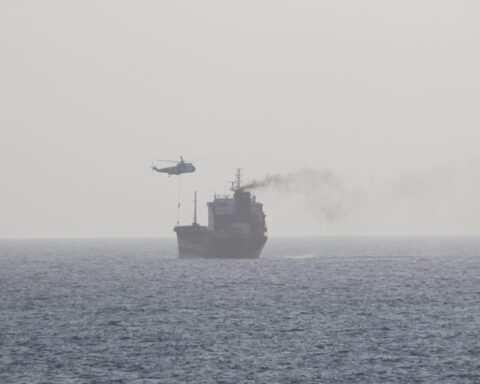
The geography is unforgiving. If the Houthis close the Bab al-Mandab Strait — a chokepoint through which an estimated 6 to 7 million barrels of oil per day transit — they would cut Saudi Arabia’s last viable export route. The Strait of Hormuz is already functionally closed, with daily transits collapsing from approximately 120 to roughly 5. A simultaneous blockade of both Bab al-Mandab and Hormuz would eliminate Saudi Arabia’s ability to export oil to Asian and European markets, according to Al Jazeera.
RFE/RL reported that the Houthis have not yet fully committed to the war but have repeatedly stated their “fingers are on the trigger” and that their entry is “only a matter of time.” The Stimson Center noted that the Houthis face their own strategic dilemma: joining Iran’s war risks inviting a Saudi or American counterattack on Yemen, but abandoning Iran risks losing Tehran’s patronage permanently.
For Saudi Arabia, the Houthi dimension introduces a threat that restraint cannot address. Defensive air defense systems protect against incoming missiles and drones. They do not reopen maritime chokepoints. If Bab al-Mandab closes, Saudi Arabia’s Yanbu port — a major oil processing and export terminal on the Red Sea that was supposed to provide a Hormuz bypass — becomes useless. The Kingdom would need offensive naval and air operations to reopen the strait, which would constitute formal entry into the conflict.
The Houthi threat also complicates the GCC’s collective defense architecture — or, more accurately, its absence. Six GCC armies operate with zero meaningful integration, incompatible weapons systems, differing rules of engagement, and no unified command structure. A two-front war against Iran and the Houthis would expose every fracture in Gulf collective security simultaneously.
Can Vision 2030 Survive Saudi Arabia Entering the War?
Vision 2030 is already bleeding from the war without Saudi Arabia having fired a shot. FDI inflows have declined an estimated 60-70 percent, more than 5,000 American employees have departed, and luxury hotel bookings dropped 45 percent in the first two weeks of March. Formal belligerency would accelerate every one of these trends.
Several European and American investment funds halted new capital deployment into Saudi projects within the first two weeks of the conflict, according to analysis compiled by Arabian Gulf Business Insight. The tourism sector has been hit equally hard, according to The Middle East Insider. The Public Investment Fund cut spending 15 percent and pivoted toward AI investments at the FII Priority summit in Miami — an event held in the United States rather than Riyadh, itself an acknowledgment that the Kingdom is not currently a destination international investors want to visit.
Saudi Arabia’s fiscal position was already strained before the first Iranian drone crossed the Gulf. The Kingdom posted a $25.3 billion deficit in Q4 2025 — the worst quarterly shortfall in five years, according to Saudi Ministry of Finance data. The fiscal breakeven oil price sits between $87 and $108 per barrel depending on the estimate. Brent crude peaked at $126 per barrel after the war began and currently trades around $115, providing a temporary revenue cushion. But four Aramco supergiant fields are shut down, Gulf oil production is down 10 million barrels per day, and the revenue from elevated prices accrues primarily to producers outside the conflict zone — the United States, Norway, Brazil, Guyana.
Non-oil sectors now constitute approximately 56 percent of Saudi Arabia’s 4.7 trillion riyal GDP, according to the General Authority for Statistics. That diversification — the core achievement of Vision 2030 — depends on foreign capital, foreign talent, and foreign confidence, all of which formal belligerency would undermine more severely than the current drone campaign. The IRGC’s 29 March strikes on aluminium smelters in Abu Dhabi and Bahrain demonstrated that Iran now treats the Gulf’s diversified industrial base as a target category, threatening the very non-oil assets Vision 2030 was built to create.
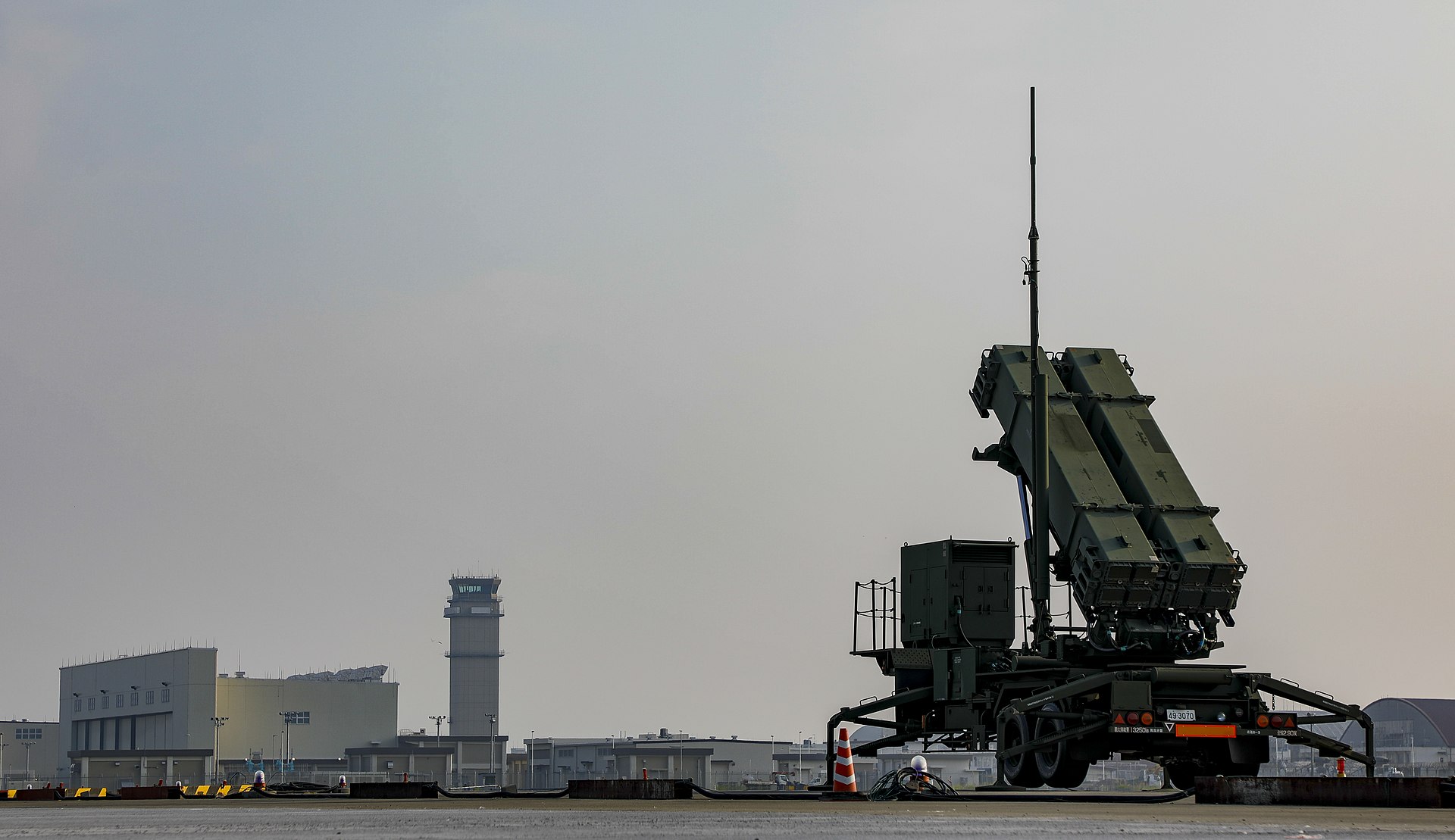
The cost calculus extends beyond economics. Saudi Arabia’s 2026 defense budget is approximately $78-80 billion, representing 7.3 percent of GDP. But the Heritage Foundation warned that high-end interceptors would be “exhausted within days of sustained combat.” Each Patriot interceptor costs approximately $4 million; each Iranian Shahed drone costs approximately $35,000. The cost asymmetry is 114-to-1. Formal entry into an offensive war would not reduce the interceptor drain — it would accelerate it, as Iran would drop whatever restraint it has shown toward Saudi targets. The full scope of the multinational air defense shield and its depletion timeline underscores why Riyadh treats every interceptor as a strategic asset that restraint preserves.
Is Iran Misreading Saudi Restraint as Weakness?
Tehran reads Saudi restraint as weakness, but this is a miscalculation that could prove catastrophic. Iran has lost 70 percent of its ballistic missile launchers, sustained more than 3,100 documented deaths, and faces a strike pace of 300-500 American targets per day — yet its leadership has rejected negotiations, issued maximalist demands, and behaved as though time favors the regime.
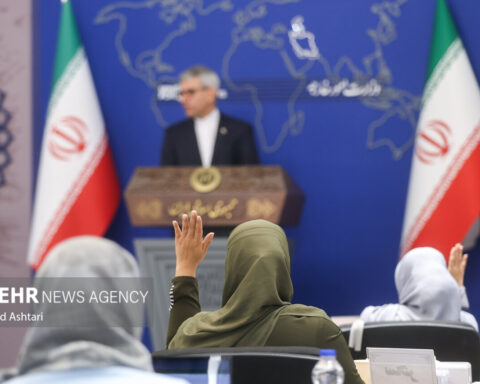
Iranian Foreign Minister Abbas Araghchi declared on March 25: “No negotiations have happened with the enemy until now, and we do not plan on any negotiations.” Iran rejected Trump’s 15-point peace plan and issued five counter-conditions that include international recognition of Iranian sovereignty over the Strait of Hormuz, war reparations, an end to attacks on Hezbollah and Iraqi proxies, and mechanisms to prevent future aggression, according to NPR. Iran’s parliament is drafting legislation to codify a Hormuz toll regime, projecting $100 billion in annual revenue.
These demands reveal an Iranian leadership that believes time is on its side. But the demands also reveal a misreading of the Gulf position. CNN reported that Saudi Arabia’s patience for Iranian attacks “is not unlimited,” quoting a source familiar with the Saudi decision who said entry is “only a matter of time.” The Article 51 statement was not diplomatic theater — it was legal preparation.
Iran’s five conditions are, in their totality, a demand for regional hegemony dressed as peace terms. Recognition of Hormuz sovereignty would give Tehran permanent leverage over 20 percent of global oil transit. War reparations would reward aggression. Protection of proxy networks would preserve the architecture of Iranian regional power projection. No Saudi leader — and no American president — can accept these terms.
The deeper Iranian miscalculation concerns the damage Tehran has already sustained. CSIS documented the missile launcher losses by Day 16 of the campaign, and the American strike pace has degraded Iranian military capacity at a rate that may prove irreversible. Of the documented deaths, 1,354 are civilians, according to tallies tracked by Al Jazeera. Mojtaba Khamenei’s emerging grip on the IRGC reflects not strength but the organizational scramble of a regime whose command structure was decapitated on February 28.
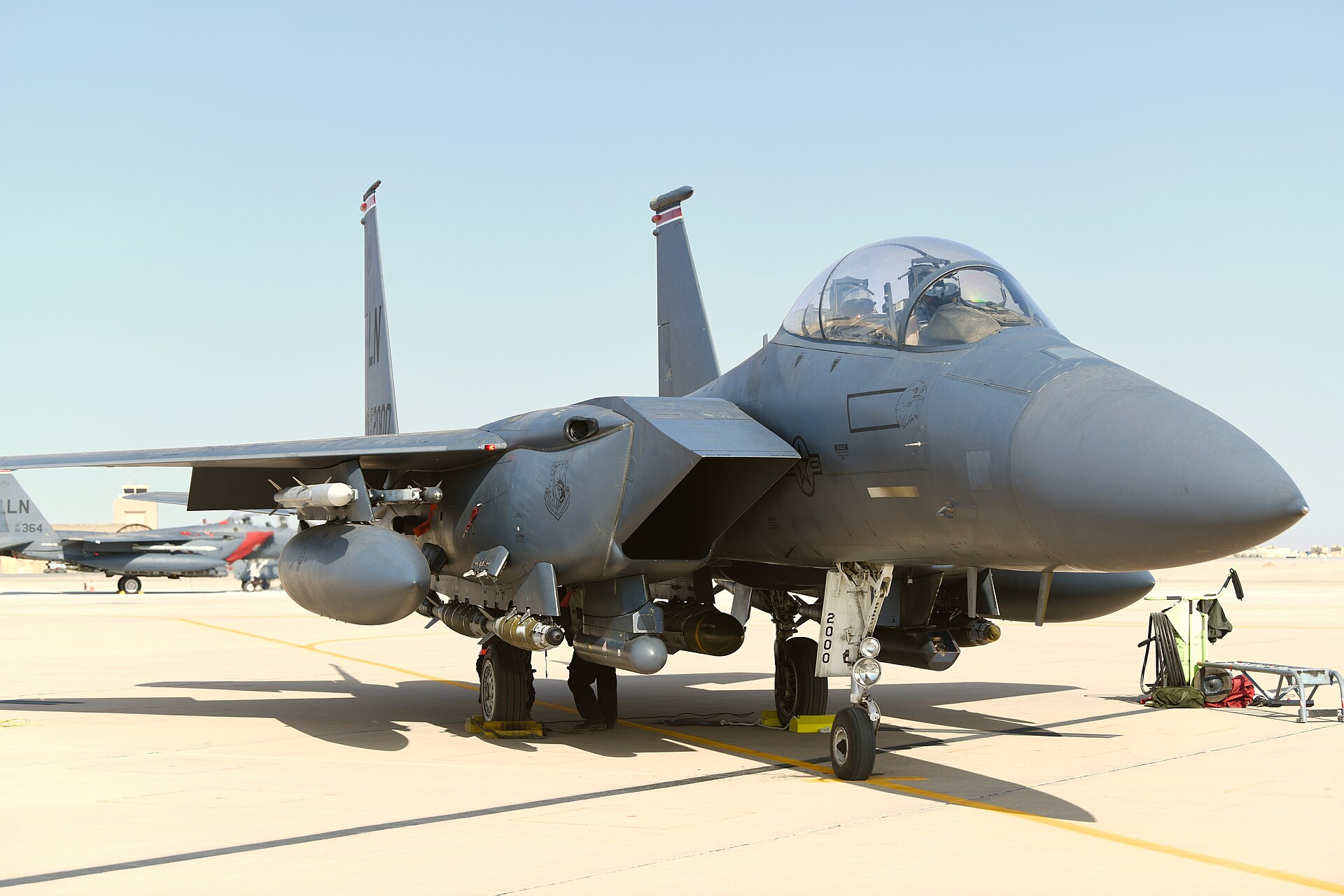
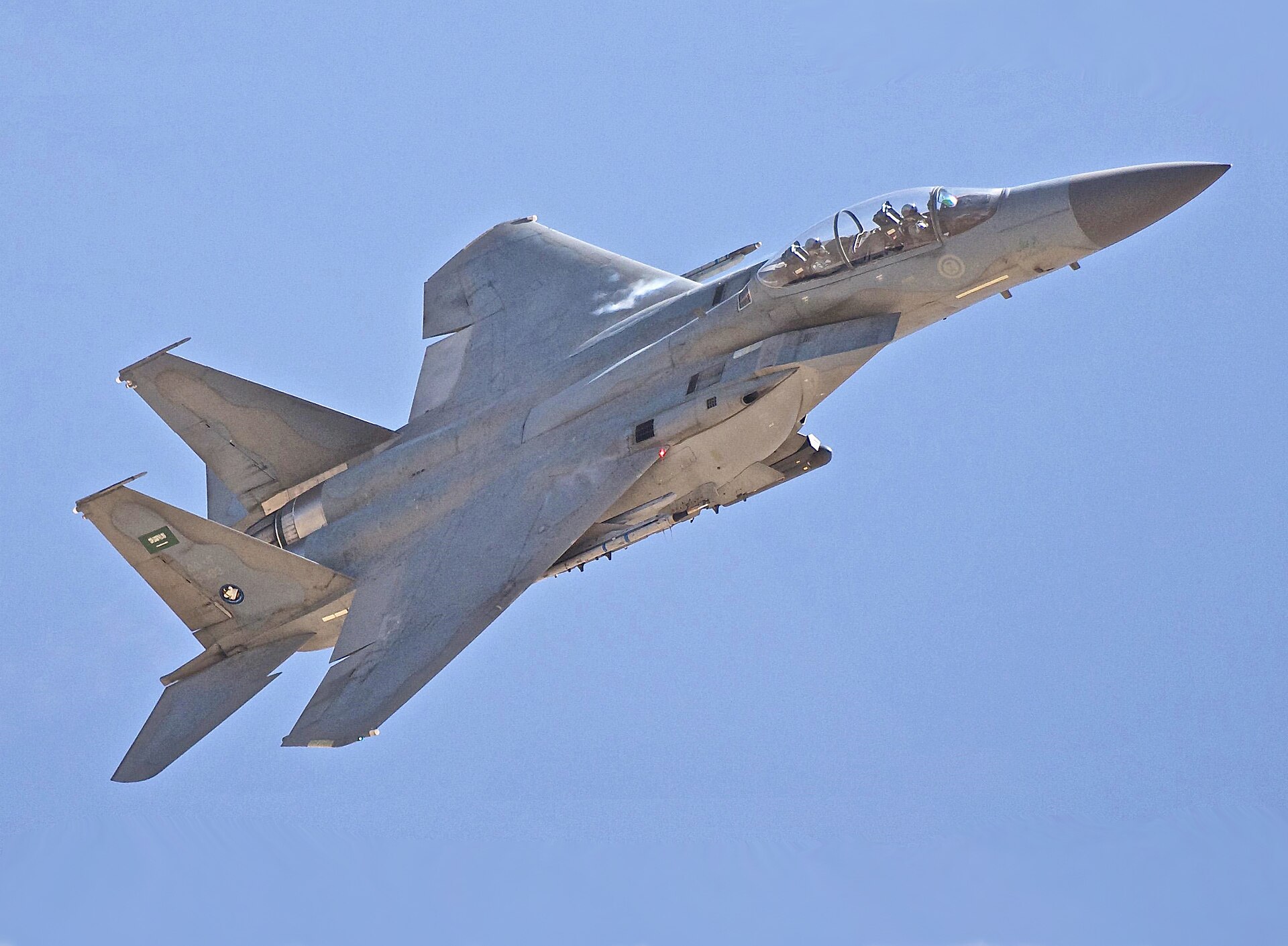
Saudi restraint is not an indication that Riyadh lacks capability. The Kingdom fields one of the most expensive militaries in the world. It possesses F-15SA strike fighters capable of reaching Iranian territory, cruise missiles, and a defense establishment that Prince Khalid bin Salman has been quietly modernizing through meetings with French, Swedish, and Pakistani counterparts. The World Defense Show 2026 produced 60 deals worth approximately $8.8 billion. Saudi Arabia can fight. It has chosen not to. That calculus is evolving: Ukraine’s first Gulf defense deal with Saudi Arabia now deploys 200 counter-drone specialists who bring combat-tested Shahed interception techniques the Kingdom cannot source from any Western partner.
Ambiguity as Strategy — Not Indecision
The conventional framing of Saudi Arabia’s position — will MBS enter the war or won’t he? — misunderstands what is happening. Ambiguity is not a failure to decide. It is the decision.
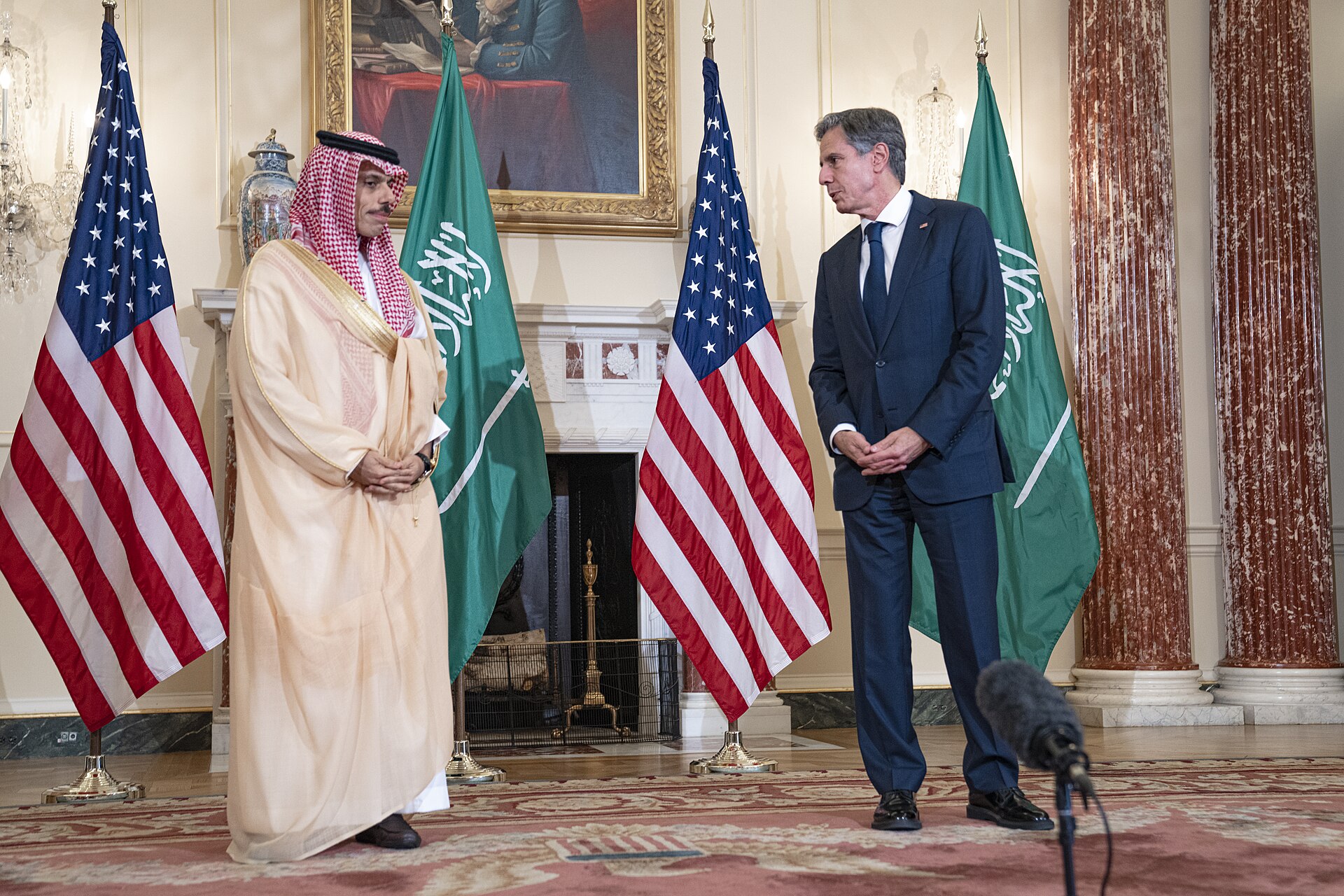
Consider what strategic ambiguity has achieved in 28 days. Saudi Arabia has secured American basing commitments without American demands for reciprocal combat. It has built an international legal case for self-defense without triggering the retaliatory escalation that formal belligerency would invite. It has watched the majority of Iran’s ballistic missile launchers get destroyed by someone else’s air force. It has maintained diplomatic channels through intermediaries while publicly condemning Iranian aggression — most recently through Prince Faisal’s five bilateral meetings at the G7 in France, which secured condemnation of Iran but no wartime naval commitments. It has kept foreign reserves intact, the riyal-dollar peg stable, and the Tadawul functioning — impaired, but functioning.
The CSIS assessment captured the complexity: “For Saudi Arabia, the Iran war is unsettling and unprecedented,” with leadership “simultaneously trying to protect its own economic and societal transformation, navigate its relationship with an unpredictable U.S. president, and manage living near a country that will likely remain its principal antagonist.”
That triple mandate — protect Vision 2030, manage Trump, outlast Iran — cannot be achieved through belligerency. It can only be achieved through the precise calibration of threat and restraint that MBS has practiced for the past month. The one-month war balance sheet for Saudi Arabia reveals the full cost-benefit accounting of that restraint across military, economic, and diplomatic dimensions.
The historical parallel is not 2019, when Saudi Arabia absorbed the Abqaiq-Khurais drone strike without retaliating. The parallel is Turkey in the early years of World War II — a nation surrounded by belligerents, allied to one side, absorbing pressure to enter, extracting concessions from its position of armed neutrality, and ultimately entering only when the outcome was already decided. Turkey declared war on Germany in February 1945, three months before surrender, and was rewarded with a founding seat at the United Nations. MBS may be running the same play.
The danger in this strategy is that the trigger conditions outlined above are not entirely within Saudi control. MBS can choose restraint. He cannot choose whether Iran strikes a desalination plant, whether a Houthi missile kills Saudi civilians, or whether Trump makes an ultimatum he cannot refuse. The crown prince is not playing a game of chess. He is playing a game of chess on a board where the pieces occasionally move themselves.
The April 6 Hormuz deadline — the date by which Trump has demanded Iran reopen the strait — will test the strategy’s durability. The Gulf has nine days to determine whether ambiguity can survive the next escalation cycle. If it cannot, the forces pulling Riyadh toward war will converge, and MBS will face a decision that no amount of strategic patience can defer.
Frequently Asked Questions
Has Saudi Arabia formally declared war on Iran?
No. As of March 28, 2026, Saudi Arabia has not declared war, has not launched offensive strikes against Iranian territory, and has not formally joined the US-Israeli military coalition. Riyadh’s position is classified as armed non-belligerence — active defense of its own airspace and territory combined with logistical and basing support for American operations. The distinction matters under international law because it preserves Saudi Arabia’s ability to pursue reparations claims and shapes Iran’s own targeting decisions.
What is Saudi Arabia’s official position on the Iran war?
The Saudi government stated that “the Kingdom of Saudi Arabia has always supported a peaceful resolution to this conflict.” Simultaneously, the foreign ministry affirmed Saudi Arabia’s “full right to take all necessary measures to safeguard its security” and joined the March 25 six-nation statement invoking Article 51 self-defense rights. Saudi Arabia also hosted a consultative ministerial meeting of Arab and Islamic foreign ministers on March 19 in Riyadh, using its convening power to shape the diplomatic response without leading the military one. Pakistan has served as an intermediary, delivering Trump’s 15-point peace plan to Tehran on Riyadh’s behalf.
Could Saudi Arabia fight Iran without US support?
Saudi Arabia possesses significant offensive capability but has never conducted an independent strategic air campaign against a peer adversary. The Yemen campaign, conducted alongside the UAE from 2015 to 2023, exposed significant gaps in intelligence fusion, targeting accuracy, and logistical sustainment. A unilateral offensive against Iran would require capabilities — aerial refueling depth, battle damage assessment networks, suppression of enemy air defenses — that Saudi Arabia possesses in limited quantities and has never tested at scale.
What role is Prince Khalid bin Salman playing in the crisis?
Prince Khalid bin Salman, the Saudi defense minister and MBS’s younger brother, has conducted an intensive round of bilateral defense diplomacy since the war began. He met French Armed Forces Minister Sebastien Lecornu and Swedish defense counterparts on March 25-26, and Pakistani Army Chief Asim Munir on March 7. His meetings signal that Saudi Arabia is diversifying its defense supplier base and deepening interoperability with non-American partners — a hedge against the possibility that American support proves conditional or temporary.
What happens to Saudi Arabia if both Hormuz and Bab al-Mandab close?
A simultaneous closure of both maritime chokepoints would eliminate Saudi Arabia’s ability to export crude oil by sea. The East-West Pipeline connecting the Gulf coast to Yanbu on the Red Sea can carry approximately 5 million barrels per day, but Yanbu itself becomes vulnerable if Houthis control Bab al-Mandab. Saudi Arabia has invested in a rail corridor to Jordan and alternative pipeline routes, but none can replace the volume lost from maritime blockade. The Kingdom would face a revenue crisis that no fiscal reserve, however large, could sustain indefinitely — making this scenario the single most likely trigger for Saudi military action.