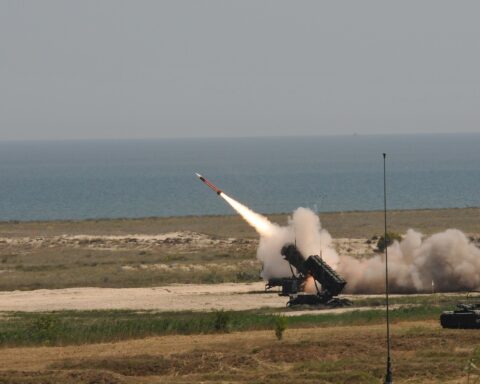
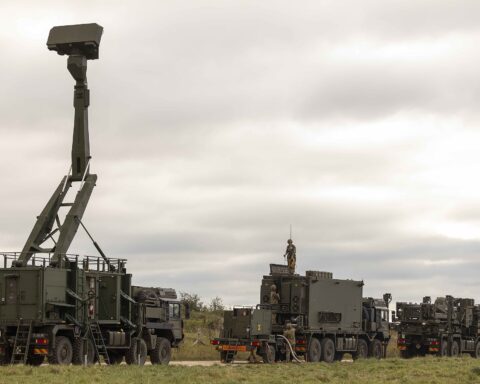
WASHINGTON — Three overlapping US defense contracts worth more than $7 billion will triple PAC-3 MSE interceptor production — but not until 2028 at the earliest. Saudi Arabia’s roughly 400 remaining rounds, drawn down 86 percent across 38 days of combat, constitute the sole active PAC-3 MSE inventory in the Gulf theater through at minimum mid-2027, a period that includes three discrete security windows no industrial mobilization can cover: the ceasefire expiry on April 21, the War Powers vote on April 29, and the Hajj pilgrimage peak on May 25–26.
The arithmetic is not ambiguous. Camden, Arkansas — the only PAC-3 MSE final assembly line on earth — produced 620 interceptors in 2025 for all global customers combined. Saudi Arabia’s January 2026 Foreign Military Sales notification alone requests 730 rounds, or more than 14 months of that entire output. The Navy’s new FY2027 budget requests another 405 rounds for Arleigh Burke destroyers. Germany, Japan, the Netherlands, and Ukraine are all drawing from the same production pool. What Washington announced this week is a mobilization for the next war. The current one is structurally uncovered.
Table of Contents
- The Three-Contract Complex
- What Is an Undefinitized Contract Action and Why Does It Matter?
- Camden’s Math: 620 Rounds for the Whole World
- How Fast Can the US Replenish Saudi Arabia’s PAC-3 Stockpile?
- The Navy’s 405-Round Claim on the Same Production Line
- Which Security Windows Fall Before Any Delivery?
- The Cost-Exchange Problem Iran Already Solved
- Can South Korea or Legacy Systems Fill the Gap?
- Congress Votes April 29 Without the Replenishment Math
- Frequently Asked Questions
The Three-Contract Complex
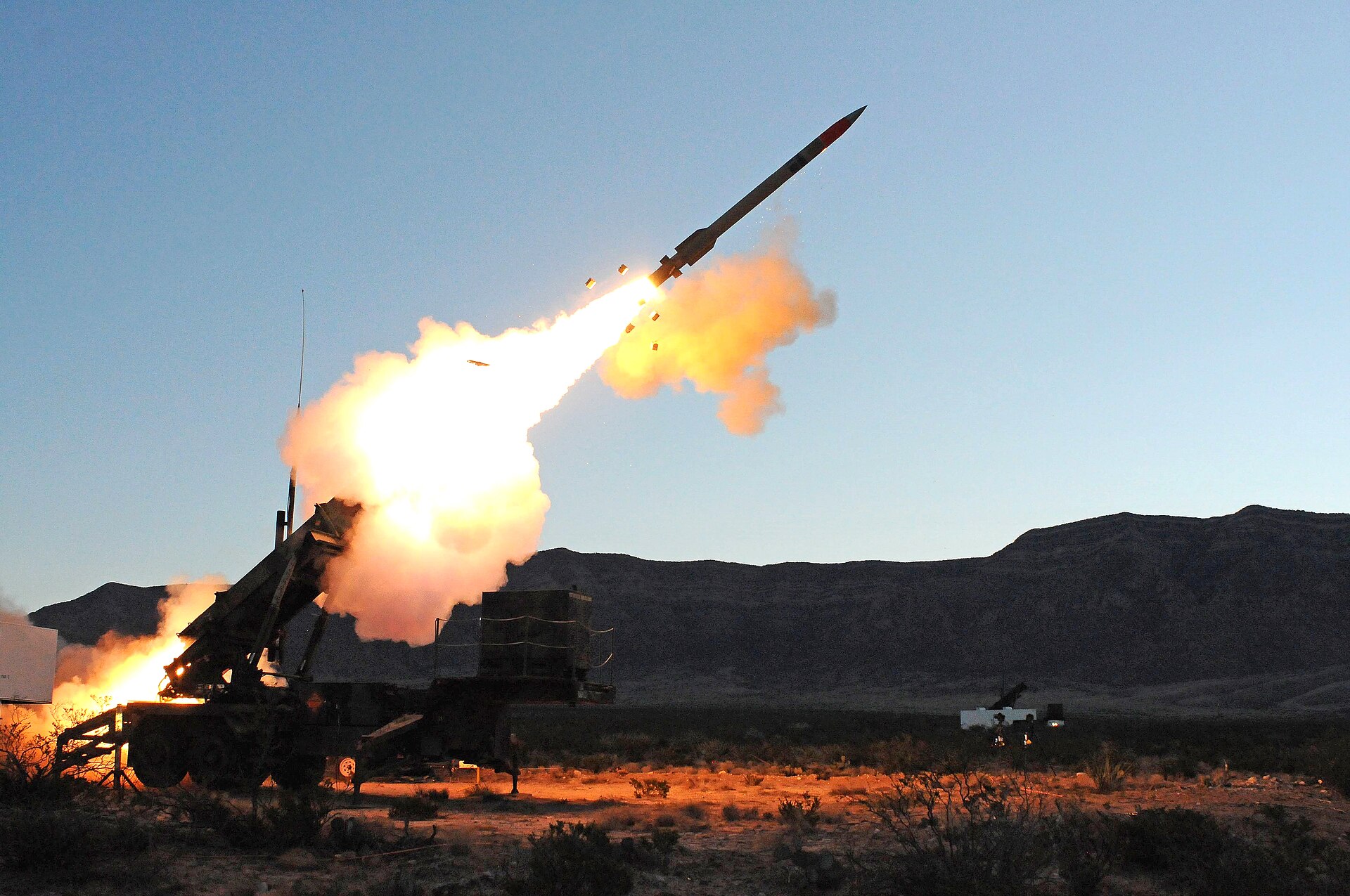
On October 14, 2025, Boeing secured a $2.7 billion contract to produce more than 3,000 active radar seekers — the guidance component of each PAC-3 MSE — at a rate of up to 750 per year through 2030. On April 1, 2026, the Department of War, Boeing, and Lockheed Martin signed a seven-year framework agreement to triple overall interceptor output, with final terms to be negotiated “later in 2026.” On April 10, 2026, Lockheed Martin received a $4.76 billion Army contract running through June 30, 2030.
Tim Cahill, president of Lockheed Martin Missiles and Fire Control, described the April 10 contract as answering “the nation’s call with urgency.” Michael Duffey, Under Secretary of War for Acquisition, framed the effort as “moving beyond the old model” and building “a true Arsenal of Freedom.” Boeing vice president Bob Ciesla said the framework “paves the way for us to scale rapidly to deliver increasingly sophisticated seekers.”
The language of urgency is consistent across all three announcements. So is the delivery timeline: 2028 through 2030. No contract specifies a single interceptor arriving in 2026 or 2027. Boeing invested more than $200 million since 2024 in a 35,000-square-foot Huntsville, Alabama facility expansion — construction that reflects the physical reality of what tripling output requires.
| Contract | Value | Date | Scope | Delivery Window |
|---|---|---|---|---|
| Boeing seeker contract | $2.7B | Oct 14, 2025 | 3,000+ seekers, up to 750/yr | Through 2030 |
| DoW/Boeing/Lockheed framework | TBD | Apr 1, 2026 | Triple output, 2,000/yr target | By end-2030 |
| Lockheed Martin Army contract | $4.76B | Apr 10, 2026 | UCA for accelerated production | Through Jun 30, 2030 |
| Saudi FMS notification ($9B) | $9B (notified) | Jan 30, 2026 | 730 PAC-3 MSE rounds | No delivery date set |
What Is an Undefinitized Contract Action and Why Does It Matter?
An undefinitized contract action authorizes a contractor to begin work before final price, schedule, and delivery terms are locked in. Lockheed Martin’s own press release describes the $4.76 billion award as “a UCA to enable accelerated production,” with an “initial contract award expected in final FY2026 Congressional appropriations.” In plain terms: Lockheed can hire workers and order materials, but no year-by-year delivery schedule exists.
The Middle East briefing 3,000+ readers start their day with.
One email. Every weekday morning. Free.
The financial structure reinforces this reading. Of the $4.76 billion, only $264.96 million was obligated from FY2026 Army missile procurement appropriations. The remaining $4.496 billion — 94 percent of the contract’s value — flows through Foreign Military Sales accounts. Those FMS funds are not US Army money; they represent orders placed by allied governments, each with its own negotiation timeline, end-use agreements, and congressional notification requirements. Saudi Arabia’s $9 billion FMS case notified January 30 is by far the largest single order in that pool, but its 730 rounds must compete with German, Japanese, Dutch, and other allied procurement requests for production slots.
A UCA is a starting pistol, not a delivery receipt. The gap between authorization and arrival is where the risk lives.
Camden’s Math: 620 Rounds for the Whole World
Camden, Arkansas has been Lockheed Martin’s missile production center since 1979, with more than 700,000 missiles of various types assembled there. The PAC-3 MSE line produced fewer than 300 interceptors per year in 2021. Output rose to approximately 500 in 2024 and reached 620 in 2025 — a 60 percent increase over two years, achieved through a new 85,000-square-foot AUR III facility and a workforce now exceeding 4,000.
The seven-year ramp targets 2,000 interceptors per year by the end of 2030. That trajectory — from 620 to 2,000 — requires more than tripling capacity across supply chains that extend to 15 US manufacturing locations. Boeing’s seeker facility in Huntsville, which delivered 650 to 700 seekers in 2025 (a 30 percent year-on-year increase), must reach 750 per year under its current contract before the framework agreement’s further expansion takes effect.
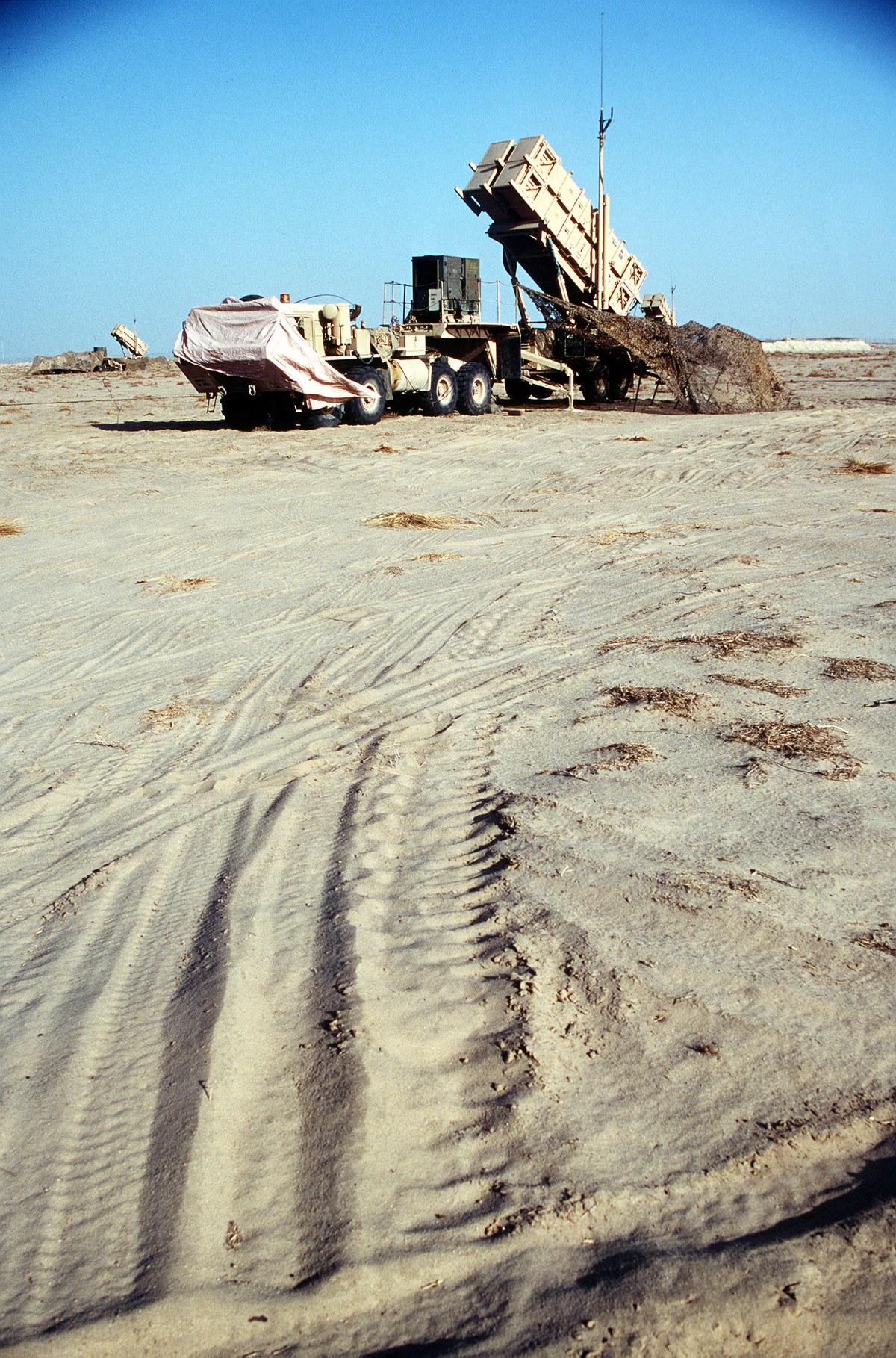
Set against demand, these numbers describe a queue, not a pipeline. Saudi Arabia’s 730-round FMS request equals 14 months of Camden’s entire 2025 global output — output that must also serve the US Army, the US Navy’s new Patriot-integration program, and every other allied customer. The first 16 days of Gulf combat consumed approximately 402 PAC-3 MSE rounds, the equivalent of nearly eight months of Camden’s annual production. At the current 620-round annual rate, replacing the 2,400 rounds Saudi Arabia has expended — with zero rounds allocated to any other customer — would take nearly four years.
How Fast Can the US Replenish Saudi Arabia’s PAC-3 Stockpile?
Not before mid-2027, and likely later. The binding constraint is not money — Saudi Arabia has a $9 billion FMS notification approved and funded. The constraint is physical production capacity and competing demand. Camden’s 620 annual rounds serve all customers worldwide. The US Army’s own FY2027 budget requests 2,798 PAC-3 MSE interceptors. The Navy requests 405. Combined, the FY2027 requirement is 3,200 missiles worth approximately $14 billion — more than five times Camden’s current annual output.
Presidential Drawdown Authority under Section 506 of the Foreign Assistance Act carries a $200 million wartime ceiling, sufficient for roughly 50 PAC-3 MSE rounds at $3.9 million each. Poland refused a Patriot battery transfer on March 31. The $16.5 billion emergency arms package authorized in the war’s first weeks went to the UAE, Kuwait, and Jordan — not Saudi Arabia.
You can’t replace those kinds of missiles overnight. It would take years.
Kelly Grieco, Senior Fellow, Stimson Center
Mark Cancian, senior adviser at CSIS, framed the problem in terms that extend beyond the Gulf: “The major risk is not that we’re going to run out for this war, but that the inventories are inadequate for a possible conflict with China.” The remark, made on March 27, identifies the deeper strategic competition for production slots — the Indo-Pacific deterrence mission and the Gulf defense mission now draw from a single industrial base with a single final assembly line.
| Category | Rounds | Share of 2025 Output (620/yr) |
|---|---|---|
| Saudi Arabia FMS request (Jan 2026) | 730 | 118% |
| US Army FY2027 request | 2,798 | 451% |
| US Navy FY2027 request | 405 | 65% |
| Combined FY2027 demand (Army + Navy) | 3,200 | 516% |
| Ukraine monthly requirement | ~60/month (720/yr) | 116% |
| Saudi combat expenditure (38 days) | ~2,400 | 387% |
The Navy’s 405-Round Claim on the Same Production Line
The US Navy’s FY2027 Presidential Budget Request, submitted April 3, 2026, includes 405 PAC-3 MSE interceptors for integration into Arleigh Burke-class guided missile destroyers — a program that creates an entirely new customer for the same production line. At roughly $1.7 billion, the Navy’s request alone represents 65 percent of Camden’s current annual capacity.
This demand has received minimal attention outside specialist defense media. Naval News covered the request; mainstream reporting on the PAC-3 production expansion has not connected the Navy’s claim to the FMS queue. The institutional significance is straightforward: the Navy has never previously procured PAC-3 MSE, and its entry into the customer pool permanently increases baseline demand against which all FMS deliveries must compete. Prior to this budget cycle, the Army was the sole US service procuring PAC-3 MSE. The Navy’s integration of the interceptor into the Aegis combat system aboard Arleigh Burke destroyers means that fleet air defense and Gulf ground-based air defense are now competing for identical production slots.
Even if the production ramp hits its intermediate milestone — roughly 1,000 to 1,200 rounds by 2028 — the combined US military request alone exceeds plausible output by a factor of two or more before a single FMS round ships to Riyadh, Berlin, or Tokyo. The FY2026 congressional appropriation authorized procurement of 341 PAC-3 MSE interceptors total, fewer than the Gulf war consumed in its first two weeks. Production authorization and production capacity are different things, separated by supply chains, facility construction, and workforce training that no amount of contract language accelerates past physical limits.
Which Security Windows Fall Before Any Delivery?
Three distinct security deadlines converge between mid-April and late May 2026. None falls within any plausible delivery window for new PAC-3 MSE interceptors.
The ceasefire, brokered through the Islamabad Accord framework, expires on April 21–22. Iran’s 50 percent remaining arsenal and the IRGC’s declared posture — “all restraint removed,” per Zolfaqari’s April 7 statement — define the threat environment should the ceasefire collapse. Saudi Arabia’s approximately 400 remaining PAC-3 MSE rounds would face the same saturation-attack doctrine that consumed 2,400 rounds in 38 days. At the pre-ceasefire average depletion rate of roughly 63 rounds per day, 400 rounds cover fewer than seven days of sustained combat.
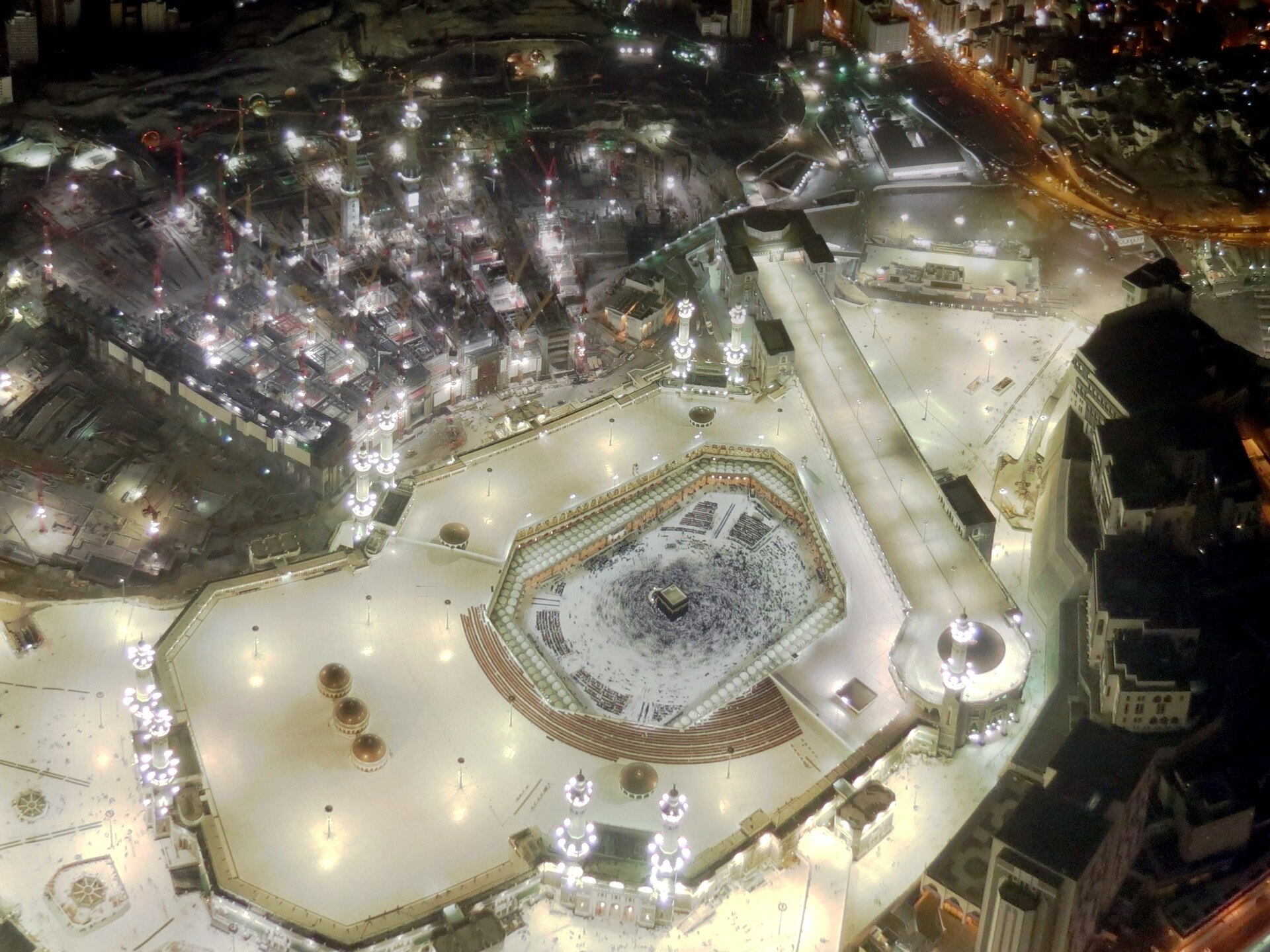
The Hajj security window opens April 18, when the Umrah cordon seals and the first international pilgrim cohorts arrive. Pakistan’s 119,000 pilgrims arrive April 18; Indonesia’s 221,000 depart April 22. Peak occupancy falls May 25–26. The intersection of 400 interceptors and 1.8 million pilgrims creates a force-protection calculus with no precedent in Saudi defense planning. The Kingdom cannot allocate interceptors to both Aramco infrastructure and holy-site defense at current inventory levels.
The War Powers vote, approaching April 29, is the third window. Congress rejected War Powers resolutions on March 4, with the Senate voting 47–53 and the House following the same day. Sen. Mark Kelly, a member of the Senate Armed Services Committee, warned in March: “If they have more offensive assets than we have defensive, we get into trouble here possibly really quickly if our magazine depth goes to zero.” No congressional floor debate has addressed the replenishment timeline or the gap between authorized procurement and physical delivery. Members will cast votes on the continuation of military operations in a theater where the defending force’s primary interceptor stockpile stands at roughly 14 percent of its pre-war level — a fact absent from the public record of either chamber’s proceedings.
The Cost-Exchange Problem Iran Already Solved
Iran’s drone-and-missile strategy is built on a cost-exchange ratio that industrial mobilization does not alter. A Shahed-136 drone costs between $20,000 and $50,000 to produce. A PAC-3 MSE interceptor costs $3.9 million. The exchange ratio ranges from 78-to-1 to 195-to-1 in Iran’s favor. CSIS analyst Bondar has described this as the IRGC’s “cost-imposition logic” — a doctrine designed not to defeat air defenses outright but to exhaust them financially and physically.
Iran produces approximately 10,000 drones per month, according to Western intelligence estimates — 120,000 per year against Camden’s 620 interceptors, a production ratio of 194-to-1. Even at the 2030 target of 2,000 interceptors per year, the ratio would remain 60-to-1. Tripling PAC-3 output changes the absolute number of interceptors available; it does not change the structural arithmetic that makes saturation attacks economically rational for Tehran. The IRGC does not need to defeat Patriot batteries. It needs to empty them — and the cost-exchange ratio means that every salvo Tehran launches imposes an asymmetric financial and logistical burden on the defender that no production ramp erases.
The question is which clock will run first.
Mohammed Soliman, Senior Fellow, Middle East Institute
Shalom Lipner of the Atlantic Council described the dynamic in March as “a race of attrition between the two sides to see who can get over the finish line before the other.” That race, as measured by production economics, favors the side whose units cost less by two orders of magnitude. The Stimson Center’s Grieco put it more bluntly: “The Department of Defense is really good, but magic is still not one of its capabilities.”
Can South Korea or Legacy Systems Fill the Gap?
Two alternatives exist on paper. Neither closes the 2026–2028 gap.
Saudi Arabia signed a $3.2 billion contract with South Korea’s LIG Nex1 in November 2023 for 10 Cheongung-II medium-range air defense batteries. The system achieved a 29-of-30 intercept rate in its UAE combat debut — a strong performance record. Production capacity is estimated at 80 to 100 interceptors per year. Earliest deliveries are projected for late 2026, and initial operational capability requires months of integration, crew training, and C2 networking with existing Saudi air defense architecture. Ten batteries supplement but do not substitute for the Patriot/THAAD backbone that covers strategic infrastructure across a country the size of Western Europe.
Legacy PAC-2 interceptors represent the other option — and the one already in use. US-operated Patriot batteries in Qatar have been firing PAC-2 missiles manufactured around 2000, systems nominally past their 10- to 15-year service life. PAC-2’s engagement envelope is narrower than MSE’s by design: shorter range, lower altitude ceiling, and no hit-to-kill capability against ballistic missile targets. The M903 launcher holds 16 PAC-2 rounds versus 12 MSE, providing volume but not capability equivalence.
THAAD — the upper-tier system designed for ballistic missile defense above the Patriot envelope — faces its own depletion crisis. Lockheed Martin announced a framework on January 29, 2026 to quadruple THAAD interceptor production from 96 to 400 per year, another multi-year ramp with no deliveries specified for 2026. CSIS’s Cancian assessed: “THAAD is probably the worst. We didn’t have a large inventory to begin with, and between what we shot last year and what we’ve shot so far this year, we may have shot half the inventory.” Saudi Arabia’s THAAD radar was destroyed by Iran early in the conflict, compounding the system-level degradation. The loss of THAAD radar coverage forces Patriot batteries to engage ballistic missiles that would otherwise have been intercepted at higher altitudes and greater distances — increasing PAC-3 MSE expenditure per engagement and accelerating the very stockpile depletion that the production ramp is designed to address.
Congress Votes April 29 Without the Replenishment Math
The War Powers vote approaching April 29 will determine whether US military operations in the Gulf continue under existing authorization. The March 4 votes — 47–53 in the Senate, a similar margin in the House — suggest the resolution will again fail to reach the threshold required to compel withdrawal. But the debate surrounding that vote has not engaged the production-timeline question at any point in public floor proceedings.
Congress authorized FY2026 procurement of 341 PAC-3 MSE interceptors — fewer than the monthly Gulf consumption rate at the war’s peak intensity. The $4.76 billion contract announced April 10 runs primarily through FMS accounts, meaning congressional oversight applies at the notification stage (which occurred January 30 for the Saudi case) rather than at the delivery stage. No mechanism in current legislative procedure requires the Department of War to report delivery timelines against allied stockpile levels.
Ukraine’s President Zelenskyy noted the competing demand in March: “So far, the deliveries we were counting on have not decreased. But if prolonged combat operations continue in the Middle East, it will certainly affect supply.” Ukraine requires an estimated 60 or more PAC-3 MSE rounds monthly. The Gulf war expended more interceptors in its first five days than Ukraine received across the entire four-year Russian invasion — approximately 600 advanced Patriot interceptors total. Two wars are now drawing from one production line, and neither theater’s requirements are declining.
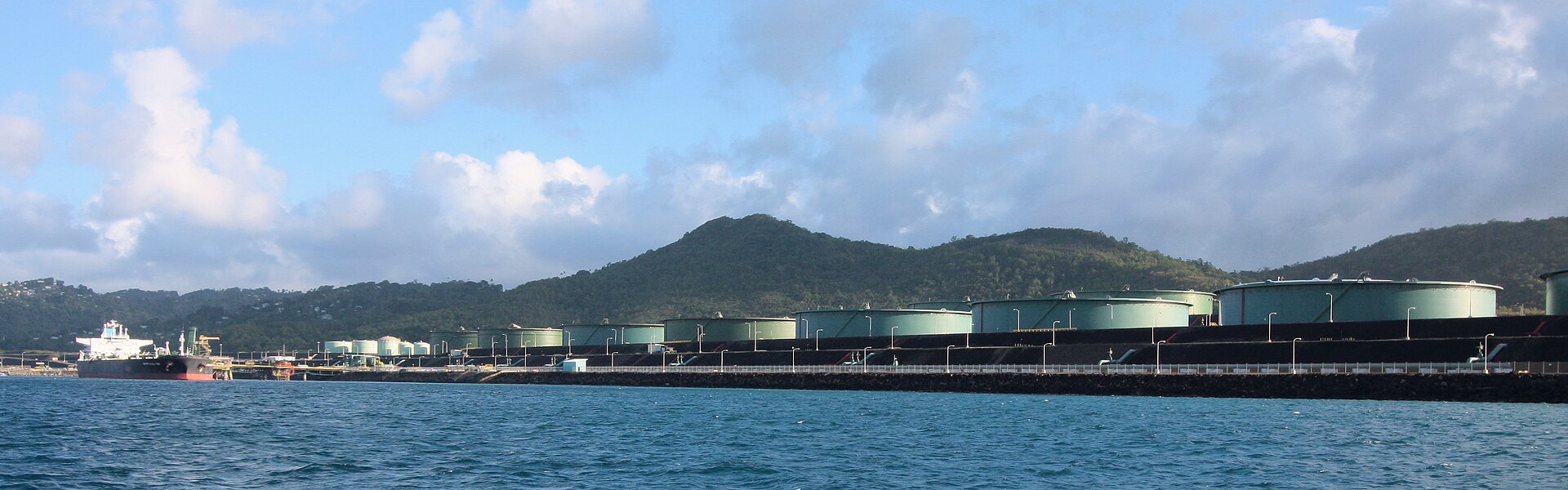
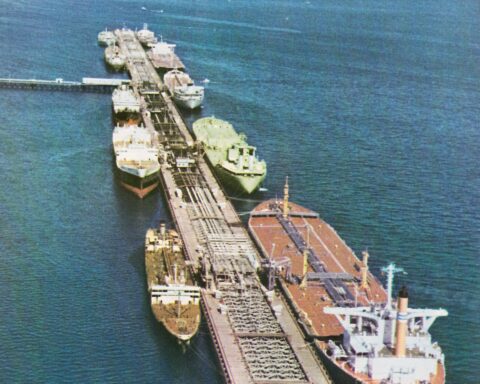
The 1.3 million barrels per day of Saudi production capacity damaged or offline since February 28 provides the economic context for the defense-industrial question. Protecting what remains of Saudi export infrastructure — Ras Tanura, Yanbu, the East-West Pipeline — is not an abstract force-planning exercise. It is the immediate operational requirement that 400 PAC-3 MSE rounds must cover until an industrial mobilization designed for 2028 begins to deliver.
| Window | Date | Risk Factor | PAC-3 MSE Available |
|---|---|---|---|
| Ceasefire expiry | Apr 21–22 | Iran 50% arsenal intact; IRGC “all restraint removed” posture | ~400 rounds |
| War Powers vote | Apr 29 | No floor debate on replenishment timeline | ~400 rounds |
| Hajj peak | May 25–26 | 1.8M+ pilgrims; dual infrastructure/holy-site defense requirement | ~400 rounds (minus any interim expenditure) |
Frequently Asked Questions
How many PAC-3 MSE interceptors has Saudi Arabia fired since the war began?
Approximately 2,400 across 38 days of combat, from an estimated pre-war stockpile of 2,800. The first 16 days alone consumed roughly 402 rounds — a rate that exceeded eight months of Camden’s entire 2025 global production. The 799 drone and 95 missile intercepts publicly reported through April 7 represent confirmed kills; actual expenditure is higher because multiple interceptors are often fired per engagement and some rounds are expended on targets that are not successfully intercepted.
Why can’t the US simply divert interceptors from European allies to Saudi Arabia?
Diplomatic and legal barriers are as binding as production constraints. Poland explicitly refused a Patriot battery transfer on March 31, 2026, citing its own eastern-flank threat environment. Germany, Japan, and the Netherlands each hold production-slot reservations in the FMS queue and face domestic political constraints against diversion. The Presidential Drawdown Authority ceiling of $200 million permits transfer of roughly 50 rounds without congressional action — approximately three days of combat supply at pre-ceasefire expenditure rates. European NATO members face their own stockpile anxieties amid Russia’s continued war in Ukraine, making voluntary transfers politically untenable for any allied government.
What is the PAC-3 MSE’s kill chain vulnerability against drone swarms?
PAC-3 MSE was designed as a hit-to-kill interceptor against ballistic missiles and aircraft, not mass-produced drones. Each engagement requires dedicated radar tracking, fire-control computation, and a $3.9 million interceptor. Against a Shahed-136 swarm — where Iran launches dozens of drones in a single salvo — the system functions as designed but at ruinous cost efficiency. The US Army is developing directed-energy and high-powered microwave systems (such as the Indirect Fire Protection Capability program) to address the low-cost drone threat, but none are deployed in the Gulf theater and none have completed operational testing. The interim solution is layered defense using cheaper effectors — Coyote Block 3 counter-UAS missiles at approximately $100,000 each — but Saudi procurement of these systems has not been publicly notified.
Could Saudi Arabia produce PAC-3 MSE domestically under license?
No near-term pathway exists. PAC-3 MSE contains ITAR-controlled (International Traffic in Arms Regulations) components including the active radar seeker, guidance software, and propulsion system. No technology-transfer agreement for MSE final assembly has been negotiated with any country. Saudi Arabia’s SAMI (Saudi Arabian Military Industries) has localization agreements for other platforms but none covering Patriot interceptors. South Korea’s Cheongung-II, by contrast, was specifically selected in part because LIG Nex1 offered technology transfer and potential future co-production — an arrangement the US has not extended for PAC-3 to any ally.
What happens to Saudi air defense if the ceasefire collapses and no resupply arrives?
At pre-ceasefire depletion rates, 400 PAC-3 MSE rounds would be exhausted within approximately six to seven days of sustained combat. Saudi Arabia would then depend on a combination of Cheongung-II batteries (if delivered and operational by that point), legacy PAC-2 interceptors with reduced capability, any remaining THAAD rounds (stockpile undisclosed but assessed as severely depleted), and point-defense systems such as Oerlikon Skyshield and Shahine. None of these systems match the MSE’s engagement envelope against medium-range ballistic missiles. The practical consequence would be a forced triage — choosing which infrastructure to defend and accepting undefended exposure elsewhere across a territory spanning 2.15 million square kilometers.