WASHINGTON — The War Powers Resolution gives the president 60 days to wage war without Congressional authorization. President Trump filed his notification on March 2, 2026 — two days after Operation Epic Fury began — which means the constitutional clock expires on or around April 29. The ceasefire expires April 22. Between those two dates sits the crisis corridor that no delegation at the Islamabad talks is negotiating, and it threatens to collapse Saudi Arabia’s air defense from the inside — not by Iranian missile, but by American statute.
US troops physically operate Patriot PAC-3 batteries on Saudi soil. A War Powers withdrawal — even a partial, symbolic drawdown — would strip the engagement crews from a system that Saudi Arabia cannot independently staff at current operational tempo. With roughly 400 interceptor rounds remaining from a pre-war stockpile of 2,800, and a $9 billion missile sale approved in January still undelivered, Congress is the fourth actor at the table that no one in Islamabad has seated. The legal architecture of the April 29 deadline, the structural dependency it exposes in Saudi air defense, the precedents that suggest the administration will try to bypass it, and what happens to Saudi Arabia if those maneuvers fail are all converging on the same week.
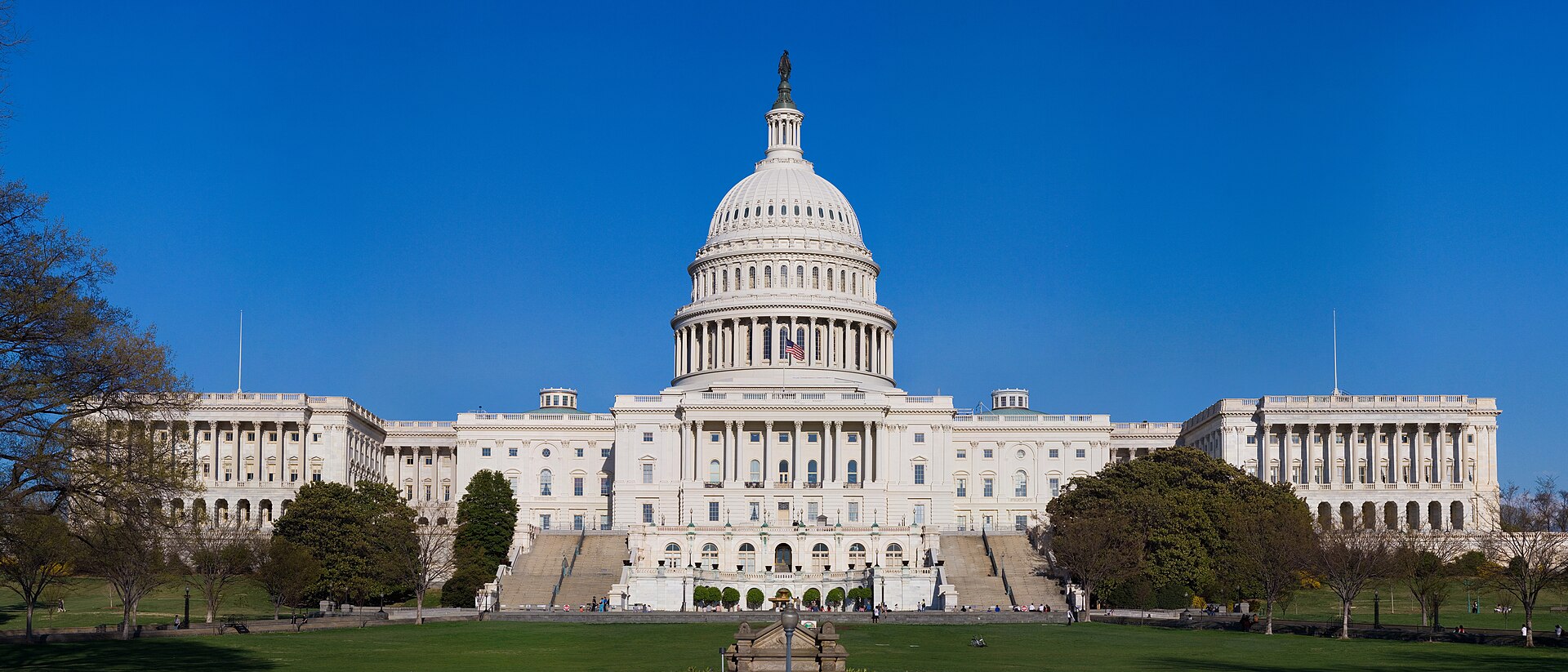
Table of Contents
- How Does the War Powers Clock Work — and When Does It Expire?
- The April 22–29 Crisis Corridor
- Why Has Congress Failed to Stop the War Three Times?
- The PAC-3 Dependency: 90 Soldiers Saudi Arabia Cannot Replace
- How Will the Administration Try to Bypass April 29?
- Does Iran Know the Clock Is Running?
- Saudi Arabia Hosts the War but Has No Vote on Its Duration
- What Happens to Hajj If US Forces Begin Withdrawing?
- The Precedents That Don’t Apply
- The Week No One Is Negotiating
- Frequently Asked Questions
How Does the War Powers Clock Work — and When Does It Expire?
The War Powers Resolution of 1973 requires the president to withdraw US forces from hostilities within 60 days of notifying Congress unless legislators vote to authorize continued operations. Trump submitted his War Powers notification on March 2, 2026. Sixty days from that date falls on or around April 29. An additional 30-day extension is available under 50 U.S.C. §1544(b) if the president certifies in writing that continued military presence is required for the safe withdrawal of forces — which would push the outer limit to approximately May 29.
These dates matter not in the abstract but because of what sits between them. The ceasefire announced April 8 expires approximately April 22. The first Hajj pilgrims arrive April 18. Congress returns from a two-week recess on April 14. Each date interacts with every other. A ceasefire collapse on April 22 would thrust US forces back into active hostilities exactly seven days before the legal authority for those hostilities expires. The 30-day safety extension is designed for withdrawal logistics, not for resuming combat operations — an administration invoking it while simultaneously escalating would face an unprecedented legal challenge.
The clock has a documented grey area that past administrations have exploited: the WPR does not explicitly state whether a pause in hostilities stops or resets the 60-day countdown. The Obama administration argued in Libya that the clock was irrelevant because US involvement was “limited” and command had been transferred to NATO. The Trump administration has not yet articulated its legal theory for what happens to the clock during the ceasefire. Defense Secretary Pete Hegseth offered the closest signal on April 8, telling reporters: “We’ll be hanging around. We’re not going anywhere.” He also noted that CENTCOM “used less than 10% of America’s total combat power” — language that could be repurposed to argue operations never constituted full “hostilities” under the WPR.
The April 22–29 Crisis Corridor
The seven days between April 22 and April 29 contain a structural trap that neither the Islamabad negotiators nor Congressional leadership has publicly acknowledged. If the ceasefire holds through April 22, the administration gains a plausible argument that hostilities have ceased and the WPR clock is moot. If the ceasefire collapses on April 22 — and the Pakistan-brokered framework lacks any enforcement mechanism capable of preventing that — US forces re-enter active combat with seven days of legal authority remaining.
The Middle East briefing 3,000+ readers start their day with.
One email. Every weekday morning. Free.
The calendar compounds the problem. Congress returns from recess on April 14, giving legislators 15 days before the deadline. But the procedural machinery of authorization moves slowly. The most recent Senate vote on a War Powers resolution consumed three weeks from introduction to floor vote. A new Authorization for the Use of Military Force would require committee markup, floor debate in both chambers, and a conference process — none of which can be completed in 15 days unless leadership suspends regular order. Senate Minority Leader Chuck Schumer has pledged to push a new WPR restricting Iran operations when Congress reconvenes, according to the South China Morning Post, which means the first legislative action upon return may be an attempt to constrain operations, not authorize them.
The administration’s real insurance policy is not legal argument but fiscal leverage. The Pentagon has requested $200 billion in supplemental appropriations for the Iran war, according to the Washington Post. Brian Finucane, Senior Adviser at the International Crisis Group and a former attorney in the State Department’s Office of the Legal Adviser, has argued that the administration intends to use sufficiently specific appropriations language to constitute de facto congressional authorization — bypassing the 60-day termination requirement entirely. This was the Obama administration’s fallback position during Libya in 2011. The vulnerability, Finucane notes, is that with 47 Senate votes already favoring termination of force, opponents have “a real chance of defeating a supplemental appropriations bill” that requires 60 votes to overcome a filibuster.
Why Has Congress Failed to Stop the War Three Times?
Three separate War Powers resolutions have failed on party-line votes. The Senate tally on the most recent attempt, March 24, was 47 in favor of withdrawing forces, 53 against. Only two senators crossed party lines: Rand Paul of Kentucky, the sole Republican to vote yes on all three resolutions, and John Fetterman of Pennsylvania, the sole Democrat to vote no. In the House, H.Con.Res.38 — introduced by Republican Thomas Massie of Kentucky and Democrat Ro Khanna of California — was blocked 219-212 on March 5.
These numbers reveal an important asymmetry. The 47-53 Senate margin is enough to sustain a filibuster against the $200 billion supplemental appropriation, but it falls 20 votes short of the 67 needed to override a presidential veto. Even if Congress passed a resolution directing withdrawal, Trump would veto it — exactly as he vetoed the Yemen War Powers resolution in April 2019. The Senate failed to override that veto, and there is no evidence of a two-thirds majority in either chamber today. The Massie-Khanna coalition in the House fell seven votes short of a simple majority. The war opponents have enough votes to block funding but not enough to compel withdrawal.
The political texture beneath the numbers matters more than the totals. Senator Susan Collins of Maine — who voted against the WPR resolutions — stated publicly that “if the military hostilities last 60 days or more, congressional approval is completely required under the War Powers Act.” Senator John Curtis of Utah, another Republican who voted to sustain the president’s authority, published an op-ed in the Deseret News on April 1 declaring: “I will not support ongoing military action beyond a 60-day window without congressional approval.” Curtis drew the Vietnam precedent explicitly: “35 advisers in 1950 escalated to 500,000 troops and 60,000 deaths without a declaration of war.” Senator Lisa Murkowski of Alaska offered a softer formulation: “The president needs to build the case, and the Congress needs to demand that he and his administration address just that.”
These statements do not change vote tallies, but they reveal conditional support eroding. Collins, Curtis, and Murkowski all voted to sustain presidential war-making authority. All three issued public warnings that their support has a shelf life tied to the 60-day clock. If the administration fails to secure an AUMF or appropriations-based authorization before April 29, it risks watching that conditional support flip — not to a veto-proof majority, but to a bipartisan narrative that the president is operating outside the law. James Lindsay, the Mary and David Boies Distinguished Senior Fellow at the Council on Foreign Relations, documents how the Senate Majority Leader argued Trump’s action was “consistent with what previous administrations have done” — pointing to Libya 2011 as the enabling precedent. That argument ages poorly after day 60.
The PAC-3 Dependency: 90 Soldiers Saudi Arabia Cannot Replace
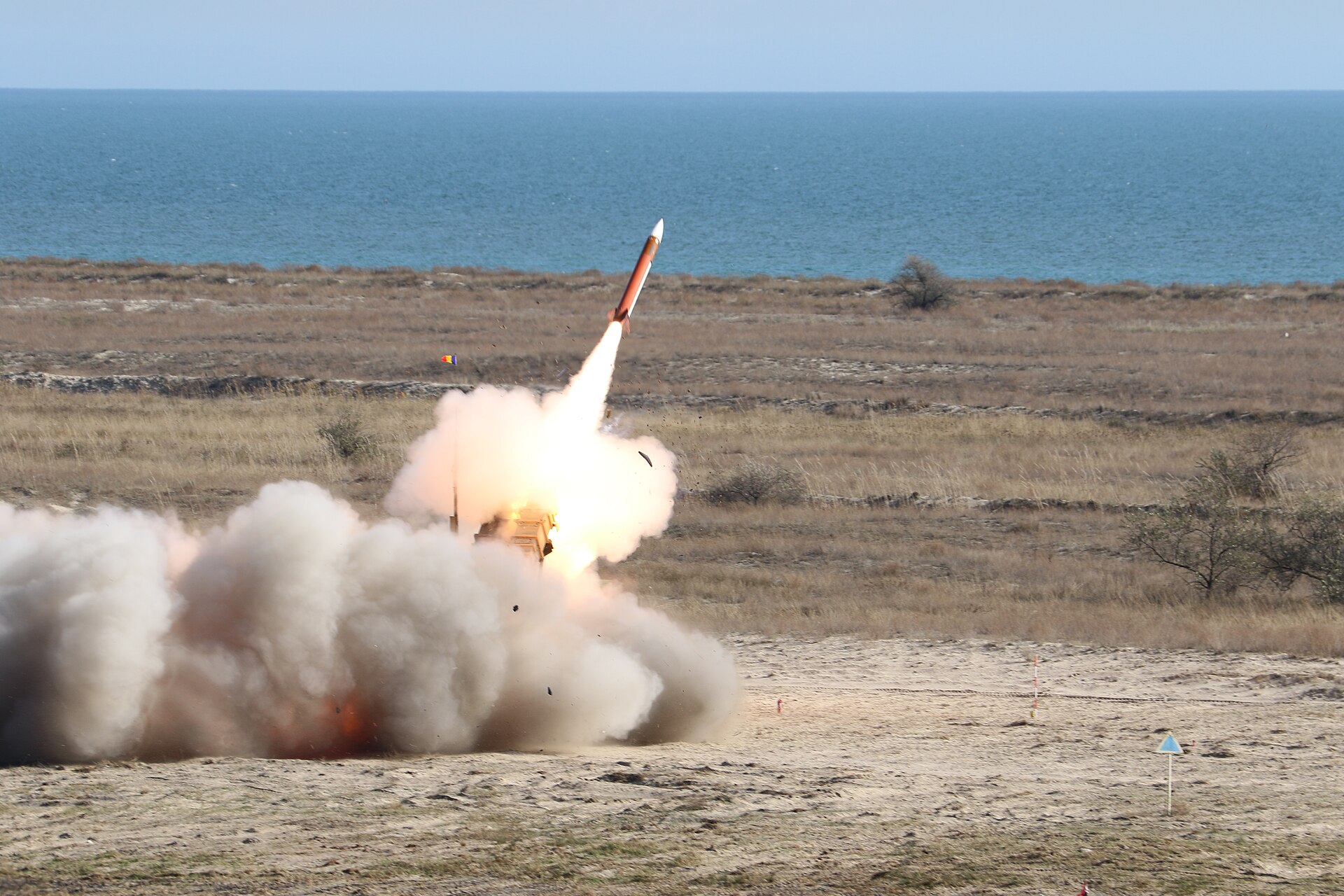
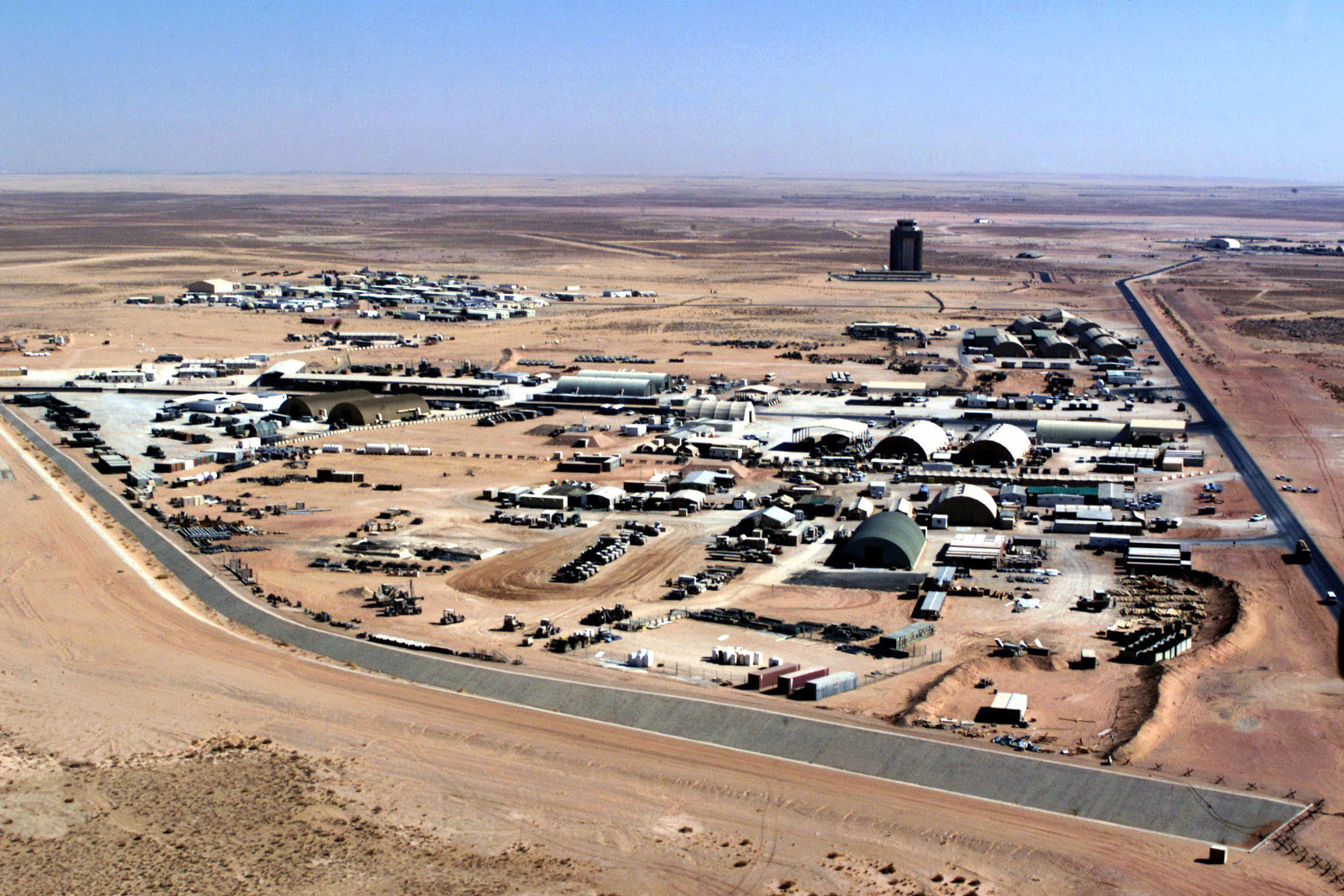
One Patriot battery requires approximately 90 soldiers to operate at full capacity, according to the CSIS Missile Threat tracker. The active engagement control station — the nerve center that tracks, discriminates, and fires — requires three personnel during firing operations: a tactical control officer, a tactical control assistant, and a communications operator. US crews fill these roles at Prince Sultan Air Base, where between 2,000 and 3,000 American troops are stationed. The base was struck on March 28 by at least six ballistic missiles and 29 drones; at least 15 US troops were wounded. US-operated and Saudi-operated Patriot systems provide overlapping coverage — meaning an American withdrawal does not merely remove one battery but tears a hole in the integrated defense architecture.
The stockpile mathematics make the dependency worse. Saudi Arabia’s PAC-3 MSE inventory has fallen from approximately 2,800 rounds pre-war to roughly 400 — an 86% depletion rate across 38 days of sustained IRGC barrages. The cumulative intercept count from March 3 through April 7 stands at 894 — 799 drones and 95 ballistic missiles, according to Saudi defense tallies tracked by House of Saud. The Lockheed Martin production line in Camden, Alabama manufactures 620 PAC-3 MSE rounds per year. At current depletion rates, full replenishment would require more than three years of dedicated production with zero diversions to other buyers.
The $9 billion sale of 730 PAC-3 MSE missiles approved by the US in January 2026 has not been delivered. The $16.5 billion emergency arms transfer that has been delivered went to the UAE, Kuwait, and Jordan — not to Saudi Arabia. There is no replenishment path before either the ceasefire expiry on April 22 or the War Powers deadline of April 29. A WPR-mandated withdrawal — even a partial one framed as a force protection measure — would pull the engagement crews from a system burning through its final interceptors at a rate the production base cannot match.
The post-ceasefire violation data shows why the batteries cannot simply be turned off. On April 8 alone — the first day of the ceasefire — Qatar intercepted seven ballistic missiles and multiple drones. The UAE faced 17 ballistic missiles and 35 drones, with the Habshan gas complex catching fire. Kuwait sustained extensive damage to oil facilities, power stations, and desalination plants. Saudi Arabia took a drone strike on the East-West Pipeline. Bahrain reported two citizens wounded. The SNSC statement accompanying the ceasefire declared that “negotiations are continuation of battlefield” — language that signals institutional intent to resume operations, not to end them.
How Will the Administration Try to Bypass April 29?
The administration has at least four legal pathways to continue operations past the 60-day mark, each with distinct vulnerabilities. The precedents are remarkably clear because every administration since 1973 has faced this problem and none has ever fully complied with the WPR’s withdrawal mandate.
The appropriations bypass
The executive branch’s longstanding position holds that sufficiently specific appropriations can constitute de facto congressional authorization, bypassing the 60-day termination requirement. The $200 billion supplemental request is the vehicle. If Congress passes it with language that references Iran operations specifically, the administration will treat it as authorization. The vulnerability: 47 Senate votes for withdrawal means Democrats can filibuster the supplemental, which requires 60 votes to advance. As Finucane argues, opponents have a genuine chance of defeating the bill on these terms.
The “not hostilities” argument
In Libya 2011, the Obama administration argued that US air operations did not constitute “hostilities” under the WPR because the US had transferred lead command to NATO and American involvement was “limited.” Hegseth’s statement that CENTCOM “used less than 10% of America’s total combat power” is a pre-positioned version of this argument. With 50,000 US troops across the Middle East theater, the administration could argue that the bulk of forces are in a “support and deterrence” posture rather than active hostilities. The vulnerability: 15 US troops wounded at Prince Sultan Air Base makes the “not hostilities” claim legally absurd to a degree that even Libya did not approach. Scott Anderson, a fellow in governance studies at the Brookings Institution and former senior State Department attorney, notes that the risk of judicial scrutiny increases beyond day 90.
The training exception
Section 4(a)(2) of the WPR exempts deployments “which relate solely to supply, replacement, repair, or training of such forces” from the clock trigger. A reclassification of US PAC-3 crews as “training and advisory” personnel — present to train Saudi operators, not to engage in combat — would place them outside the WPR framework entirely. This mirrors the legal fiction used for US special operations forces in dozens of countries. The vulnerability: the reclassification would require US troops to physically step away from engagement control stations and hand them to Saudi crews. Whether Saudi Arabia has sufficient trained personnel to assume that role on a compressed timeline is the question the administration would prefer not to answer publicly.
The 30-day extension
The simplest path: invoke 50 U.S.C. §1544(b), certifying in writing that the 30-day extension is required for safe withdrawal of forces. This pushes the deadline to approximately May 29 and buys time for the supplemental appropriation to move through Congress. The vulnerability: the extension is designed for withdrawal, not for continued combat. Using it as a bridge to sustained operations invites the legal challenge that every administration has so far avoided by never letting the clock expire.
| Bypass Mechanism | Legal Basis | Precedent | Key Vulnerability |
|---|---|---|---|
| Supplemental appropriations as authorization | Executive branch interpretation of WPR §8(a)(1) | Obama administration fallback position, Libya 2011 | 47 Senate votes can filibuster (needs 60 to pass) |
| “Not hostilities” redefinition | WPR §4(a) — narrow definition of “hostilities” | Obama/Libya 2011 (US role “limited” after NATO handoff) | 15 US troops wounded at Prince Sultan AB |
| Training/advisory reclassification | WPR §4(a)(2) exemption | US SOF deployments in 80+ countries | Requires US crews to vacate engagement stations |
| 30-day safety extension | 50 U.S.C. §1544(b) | Never formally invoked (no president has let clock expire) | Designed for withdrawal, not continued combat |
The most likely outcome is a combination: invoke the 30-day extension while pushing the supplemental through Congress, with the “not hostilities” argument held in reserve as a fallback legal theory. Jack Goldsmith of Harvard Law has described how the Founders’ vision that only Congress declares war has collapsed to a system where one person decides. The WPR was supposed to be the corrective. In practice, as the CFR’s Lindsay documents, it has become an obstacle to be managed rather than a constraint to be honored. The question for Saudi Arabia is what happens if the management fails.
Does Iran Know the Clock Is Running?
Iranian state media and officials have not been found explicitly citing the War Powers clock as a strategic asset. But the structural reality does not require explicit acknowledgment. Iran arrived at the April 10 Islamabad talks declaring three ceasefire violations before negotiations began. The IRGC is not in the Iranian delegation. Foreign Minister Araghchi and Parliament Speaker Ghalibaf are presenting conditions — including recognition of Iranian sovereignty over the Strait of Hormuz as a Phase 2 prerequisite — that structurally defer any final agreement past April 29.
The SNSC’s statement that “negotiations are continuation of battlefield” acquires a specific operational meaning in the context of the WPR deadline. Every day the talks continue without resolution is a day closer to April 29. An advisor to Ghalibaf declared on April 7 that Iran had “won the war” and gave Trump “20 hours to submit,” according to Al Jazeera. That bravado aside, Iran’s negotiating posture — a 10-point plan with Phase 2 prerequisites that cannot be resolved in 19 days — functions as a clock-running strategy whether or not it was designed as one. Point 7 of Iran’s plan demands IRGC “coordination” over Hormuz as a treaty requirement. Point 8 demands US base withdrawal from all regional bases. Point 10 demands UNSC codification. None of these can be negotiated, agreed, and ratified before April 29.
The deeper problem is that Iran’s delay strategy runs into the same corridor that endangers Saudi Arabia. A ceasefire collapse on April 22 followed by a War Powers deadline on April 29 would force a rapid sequence: either Congress authorizes continued force (unlikely given the vote tallies), the administration bypasses the clock (legally strained), or US forces begin some form of drawdown (catastrophic for Saudi air defense). Iran does not need to fire another missile to achieve degradation of Saudi defenses. It needs only to wait.
Saudi Arabia Hosts the War but Has No Vote on Its Duration
Saudi Arabia holds no formal seat at the Islamabad negotiations, despite hosting the US forces whose legal status is now at issue. The Saudi foreign minister had a co-guarantor role during the March 29-30 sessions but was excluded from the April 10 bilateral format. The kingdom cannot vote in Congress, cannot file an amicus brief in a War Powers dispute, and has no treaty mechanism to compel the United States to maintain forces on its soil. The January 2026 Saudi-US defense cooperation agreement is an executive arrangement, not a Senate-ratified treaty — meaning it carries no force of law that would override a WPR withdrawal mandate.
The structural dependency this creates is without precedent in the Saudi-American security relationship. During the 1991 Gulf War, a congressional authorization (the Iraq Resolution) preceded major combat operations. During the 2003 Iraq invasion, a separate authorization existed. During the 2019 Yemen crisis, when Congress passed a WPR directing withdrawal of US support for the Saudi-led coalition, the forces in question were advisory — not operating integrated air defense systems that Saudi Arabia relied on for territorial survival. The current configuration, where US troops physically man the firing stations of Saudi Arabia’s last-line missile defense while Congress debates whether those troops have legal authority to be there, has no parallel.
Senator Todd Young of Indiana warned that limiting “the President’s military options at this critical moment” endangered national security. He was arguing against the WPR resolution, but the logic applies symmetrically: Saudi Arabia’s national security is now contingent on an American domestic political process over which Riyadh has no influence. The ceasefire that Saudi Arabia helped construct may be bankrupting it economically, but a War Powers withdrawal would bankrupt it militarily. These are not sequential risks. They run concurrently, on overlapping timelines, into the same April corridor.
What Happens to Hajj If US Forces Begin Withdrawing?
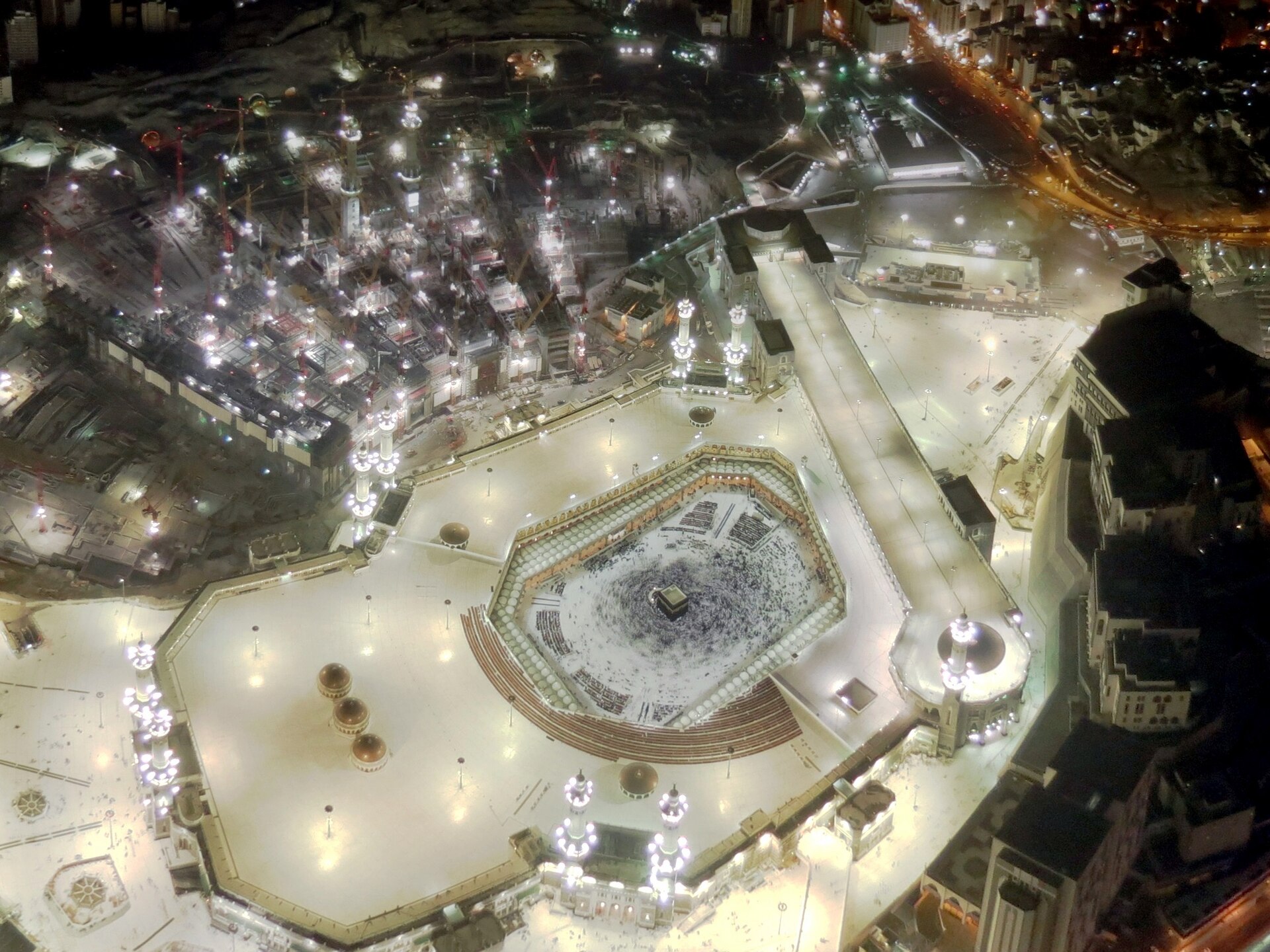
The first Hajj pilgrims arrive April 18 — 11 days before the War Powers deadline. Pakistan alone is sending 119,000 pilgrims arriving that date. Indonesia’s 221,000-strong contingent begins departures on April 22 — the same day the ceasefire expires. Hajj peak falls on May 25-26, with approximately 1.8 million pilgrims concentrated in Mecca and the surrounding holy sites. The April 18 cordon that seals the Umrah permit zone and opens Hajj arrivals falls in the dead center of the crisis corridor.
PAC-3 stockpiles cannot be replenished before May. The Camden production line’s 620 rounds per year translates to roughly 52 per month. Even if every round produced were diverted exclusively to Saudi Arabia — which would require zeroing out deliveries to every other Patriot operator including the US military itself — Saudi stockpiles would rise from 400 to approximately 452 by Hajj peak. That is enough for one sustained barrage of the kind the IRGC delivered on March 28 (six ballistic missiles and 29 drones in a single salvo against Prince Sultan alone). It is not enough for two.
The Custodian of the Two Holy Mosques title is not ceremonial. It is the theological foundation of Saudi domestic legitimacy and the monarchy’s core claim to leadership of the Islamic world. The 1987 Hajj massacre — in which 402 people died, predominantly Iranian pilgrims — led to an 87% quota reduction for Iranian pilgrims and a three-year diplomatic rupture. That crisis unfolded in an era when Saudi air defenses were not under active assault. A scenario in which pilgrims are arriving while interceptor stocks are at 14% of pre-war levels, the ceasefire has expired, and the legal basis for US air defense crews is evaporating represents a convergence of vulnerabilities that the kingdom has never faced.
The administration likely recognizes this convergence, which is why the 30-day safety extension exists as the path of least resistance. Certifying that US forces require 30 additional days for safe withdrawal pushes the hard deadline to May 29 — three days after Hajj peak. Whether that certification would survive legal challenge is a question no court has ever answered, because no president has ever let the WPR clock expire and then invoked the extension while maintaining combat-ready posture. Every legal theory the administration holds in reserve was developed for smaller stakes. The current stakes are 1.8 million pilgrims under a depleted missile shield operated in part by troops whose legal authority to be there is measured in weeks.
The Precedents That Don’t Apply
Every War Powers crisis in American history ended one of three ways: Congress authorized force, Congress tried to stop it and failed, or the operations ended before the clock expired. None of those precedents maps cleanly onto the current situation because none involved a dependent ally whose territorial defense architecture was physically operated by the US forces in question.
In Kosovo in 1999, Clinton exceeded the 60-day clock with no congressional authorization. The House voted down a resolution authorizing force, yet operations continued. The federal courts declined to adjudicate when members of Congress sued in Campbell v. Clinton. But Kosovo involved NATO air operations over the Balkans — the consequence of a US withdrawal would have been a degradation of the bombing campaign, not the collapse of an allied nation’s air defense during an active missile war. In Libya in 2011, the Obama administration simply declared that US involvement did not constitute “hostilities” because NATO had assumed command and US operations were “limited.” Congress protested but did nothing. Libya, too, involved no dependent ally whose survival hinged on US operators remaining at their stations.
The Yemen precedent of 2019 is the closest analogue and the most revealing. Congress passed S.J.Res.7 directing removal of US forces supporting the Saudi-led coalition. Trump vetoed it on April 16, 2019. The Senate failed to override. The lesson for 2026 is double-edged: the veto power protects the executive from congressional constraint, but only if the president wants to sustain operations. The 47-53 Senate vote and the 219-212 House vote both suggest that an override remains impossible. But the WPR clock creates a constraint the veto cannot reach — it requires affirmative congressional action to extend authority, and the absence of that action is itself the trigger for withdrawal.
Scott Anderson of Brookings notes that the 60-90 day threshold is “a more immediate constraint” than constitutional limits on executive war-making, and argues the risk of judicial scrutiny increases beyond day 90. No court has ever enforced the WPR against a sitting president. But no president has ever tested it against a backdrop of 50,000 deployed troops, 15 wounded at a named base, and a dependent ally facing an active missile threat during its holiest religious observance. The legal fiction that sustains executive war-making — that courts will not intervene and Congress will not act — relies on both institutions remaining passive. Collins, Curtis, and Murkowski have publicly signaled that their passivity has an expiration date. That date is April 29.
The Week No One Is Negotiating
The Islamabad talks opened April 10 with Iran presenting conditions that cannot be met in 19 days and the United States negotiating a ceasefire extension that may become irrelevant if the War Powers clock dictates a drawdown. The structural misalignment is comprehensive. Iran’s Phase 2 prerequisites — Hormuz sovereignty recognition, US base withdrawal, UNSC codification — are designed to outlast not just the ceasefire but the legal authority for US combat operations. Pakistan, the ceasefire’s sole enforcement mechanism, has no capacity to adjudicate American constitutional law. And Saudi Arabia, the country most affected by every outcome, has neither a seat at the table nor a vote in Congress.
The April 22-29 corridor is the week the war’s legal architecture meets its military architecture. The ceasefire expires, the Hajj cordon is in place, PAC-3 stocks are at 14%, and Congress faces a binary that every previous Congress has avoided: authorize indefinite war with Iran or allow the 60-day clock to force a withdrawal that degrades Saudi air defense during peak vulnerability. The $200 billion supplemental is the administration’s preferred exit from that binary — a fiscal authorization that avoids the political toxicity of a formal AUMF vote. But 47 Senate votes is enough to filibuster it, and the April 14 return from recess leaves exactly 15 days for a body that typically takes three weeks to move a resolution to the floor.
Senator Curtis wrote that 35 advisers in 1950 escalated to 500,000 troops and 60,000 deaths without a declaration of war. The War Powers Resolution was written to prevent that escalation from happening again. Fifty-three years later, 50,000 US troops are engaged in combat across the Middle East under a notification filed two days after hostilities began, defended by an administration arguing it used less than 10% of total combat power, while the country that hosts the most consequential US air defense deployment has no mechanism to ensure those troops remain. The clock the Founders built into the Constitution reaches zero on April 29. What happens on April 30 depends on which institution — the presidency, the Congress, or the courts — blinks first. None of them will be looking at Riyadh when they decide.
Frequently Asked Questions
Can the president legally ignore the War Powers Resolution deadline?
Technically, yes — every president since Nixon has contested the WPR’s constitutionality, and no court has ever enforced the 60-day limit. The Department of Justice’s Office of Legal Counsel has issued opinions arguing the WPR unconstitutionally infringes on the commander-in-chief power. However, outright defiance carries political costs that legal memos cannot neutralize: members of the president’s own party, including Collins, Curtis, and Murkowski, have publicly stated their support for operations is contingent on the 60-day framework. Ignoring the clock risks fracturing the Republican Senate majority on subsequent votes, including the critical $200 billion supplemental.
Has Saudi Arabia ever operated Patriot batteries without US personnel?
Saudi Arabia has operated its own Patriot batteries since acquiring the system in the early 1990s, and Saudi crews were credited with intercepts during the 2019 Houthi drone and missile campaign. However, the current war’s operational tempo exceeds anything the Saudi military has independently managed. The 894 intercepts over 38 days represent a sustained rate of roughly 24 per day — a pace that requires continuous crew rotation, maintenance cycles, and real-time intelligence integration that US personnel currently provide. The Royal Saudi Air Defense Forces have trained extensively on Patriot, but transitioning to fully independent operations during active barrages, with 86% of the interceptor stockpile already expended, is a qualitatively different challenge than peacetime readiness.
Could the ceasefire reset the War Powers clock to zero?
The WPR is silent on whether a ceasefire pauses, resets, or has no effect on the 60-day clock. Legal scholars are divided. The Congressional Research Service has noted that the legislative history suggests the clock was intended to run continuously from the initial introduction into hostilities. The administration could argue that a genuine cessation of hostilities ends the triggering condition entirely — meaning a new 60-day clock would start only if hostilities resume. This argument has never been tested in court or formally accepted by Congress, and it would require the administration to concede that the original clock was triggered (something the “not hostilities” argument is designed to avoid).
What role does the War Powers deadline play in Iran’s negotiating strategy?
Iran’s 10-point plan at Islamabad includes demands — Hormuz sovereignty recognition, US regional base withdrawal, UNSC codification — that cannot be negotiated in any timeframe shorter than months. Whether this reflects deliberate clock-running or maximalist positioning is impossible to distinguish from outside the Iranian delegation. The practical effect is identical: every day without agreement brings April 29 closer. Iran’s structural advantage is that it benefits from the deadline without needing to acknowledge it — the domestic American legal constraint does the work regardless of whether Tehran factors it into its strategy. The IRGC’s absence from the delegation suggests that the military apparatus most capable of resuming hostilities after April 22 is not bound by whatever the diplomats agree to.
What happens to the $9 billion PAC-3 sale if US forces withdraw?
The January 2026 approval of 730 PAC-3 MSE missiles to Saudi Arabia is a government-to-government Foreign Military Sale administered by the Defense Security Cooperation Agency. A WPR-mandated withdrawal of US forces does not automatically cancel an FMS agreement — the legal authorities are separate. However, delivery timelines are governed by Lockheed Martin’s Camden production schedule (620 rounds per year), and the missiles approved in January were not scheduled for immediate delivery. A withdrawal that removes US training and integration personnel from Saudi Arabia would complicate the technical handoff even if the sale proceeds. The more immediate risk is political: a Congress that refuses to authorize continued military operations may also refuse to appropriate funds for the FMS, or may attach conditions to future arms sales that effectively delay delivery further.