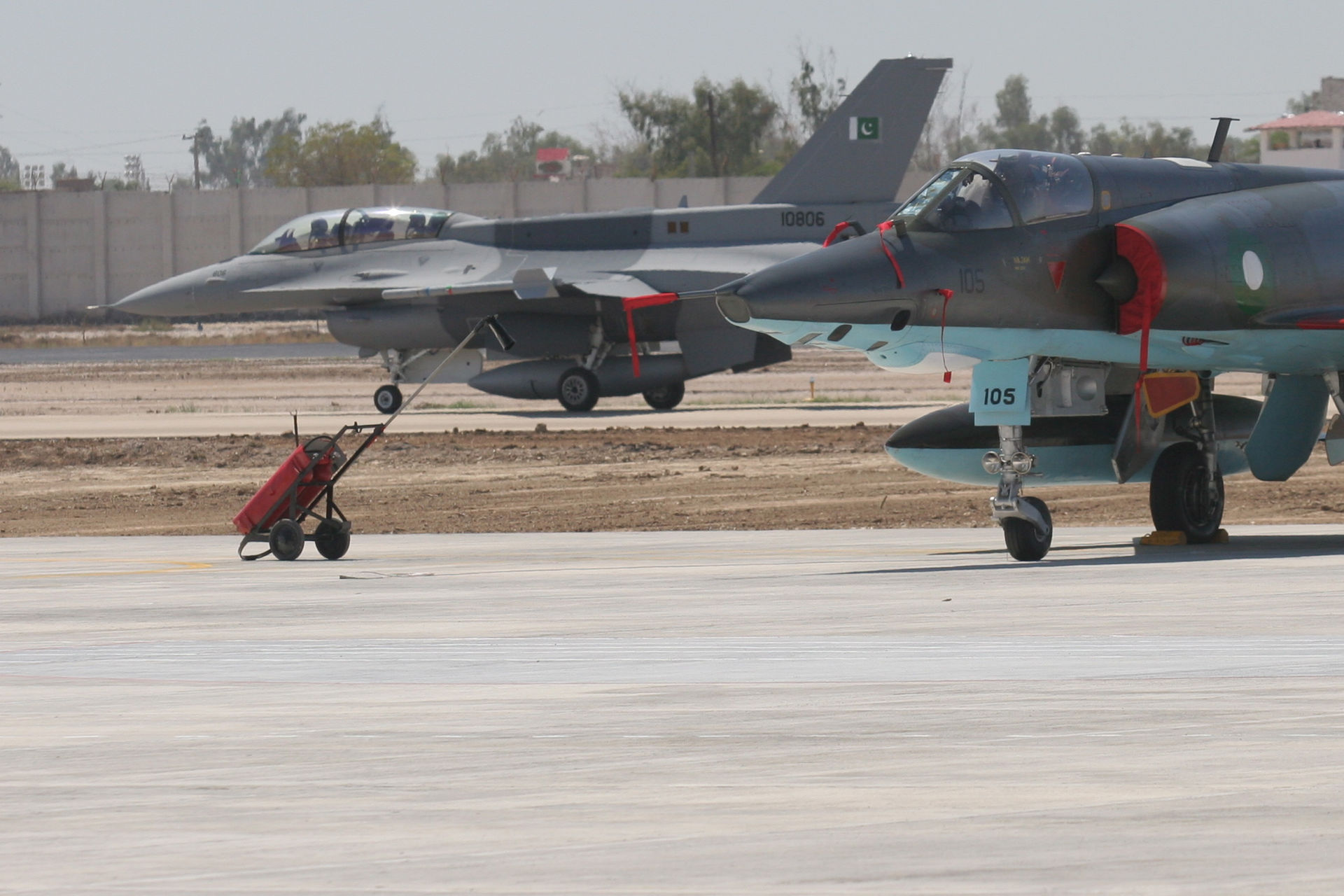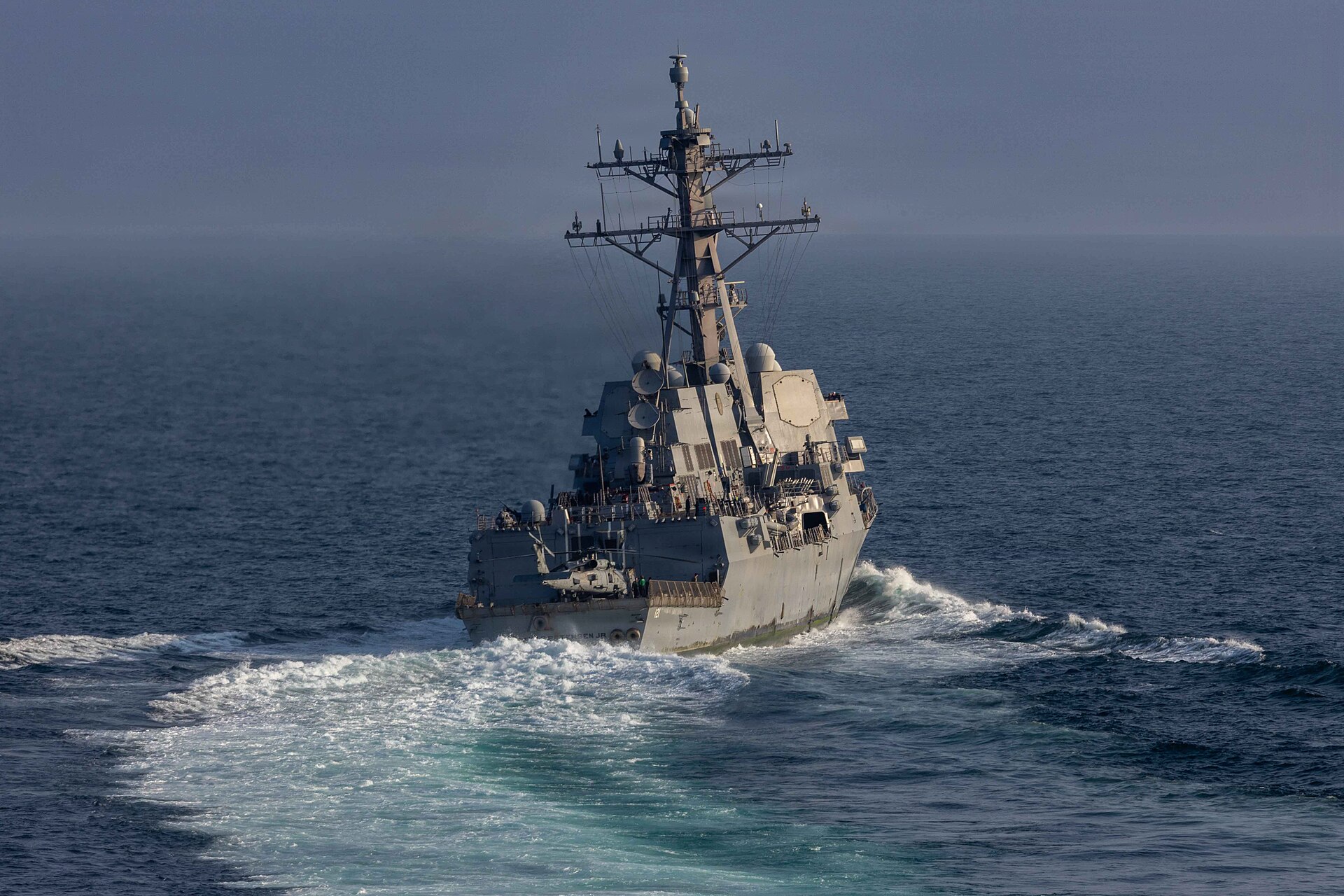

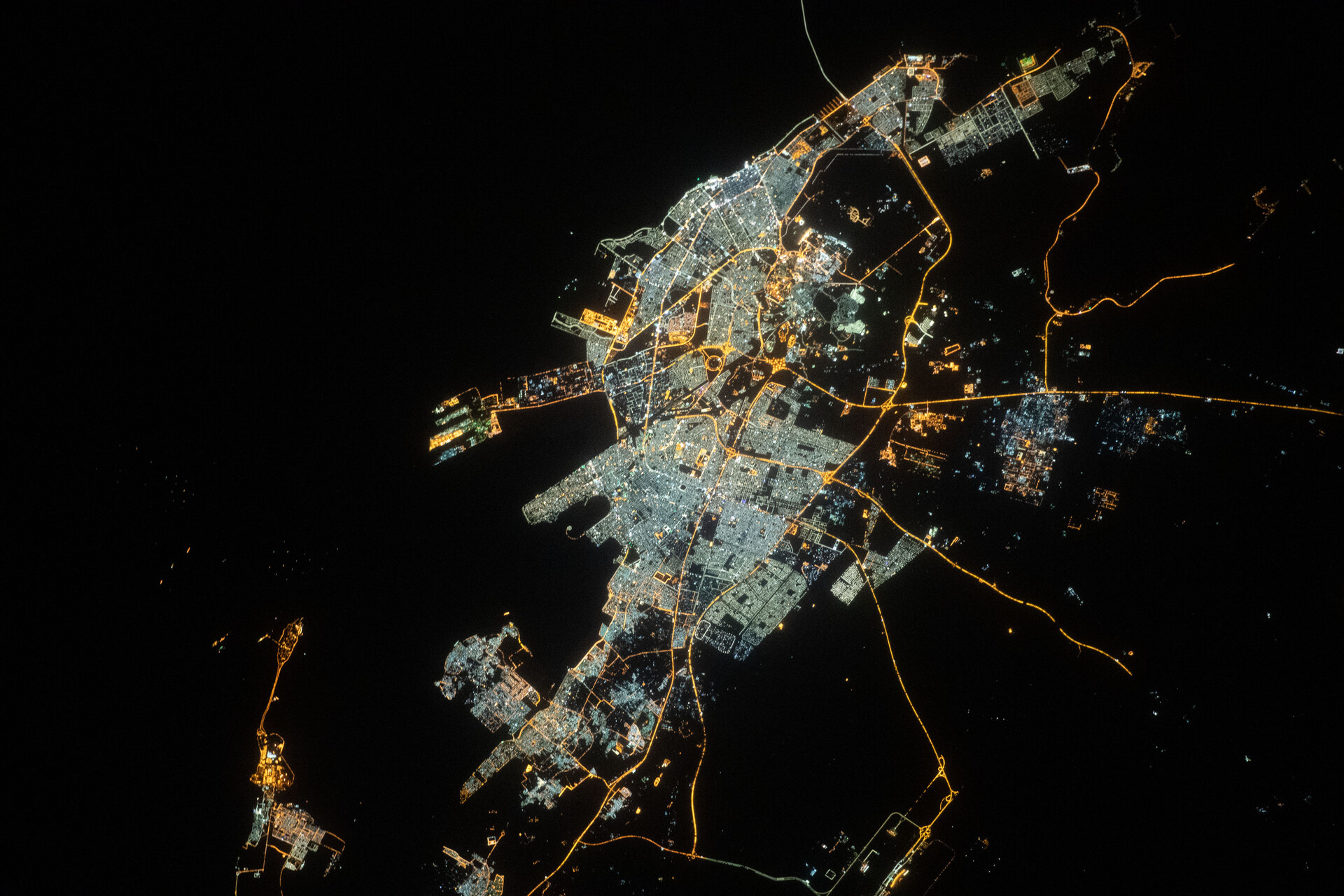
ISLAMABAD — Saudi Arabia and Qatar jointly pledged $5 billion to Pakistan on April 12, the morning after the first direct US-Iran talks since 1979 collapsed without a deal in Islamabad. The payment was not a reward for mediation. It was the purchase price for a military deployment that had already begun — 13,000 Pakistani troops and up to 18 fighter jets arriving at King Abdulaziz Air Base in Saudi Arabia’s Eastern Province on April 11, the same day Iranian negotiators checked into the Serena Hotel across town. The ceasefire that Pakistan was supposed to broker may never have been the product Riyadh was buying.
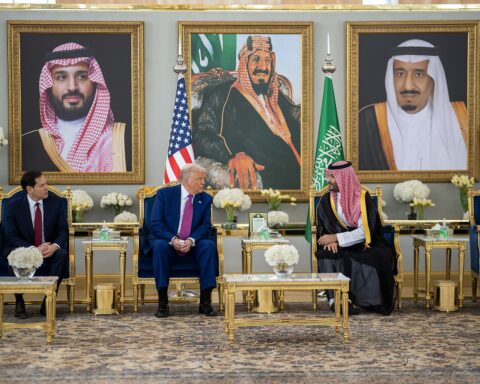
The joint Saudi-Qatari structure of the payment is the detail that repays attention. These two states agree on almost nothing in this war. Qatar is an LNG exporter whose North Field production is bottlenecked by the Hormuz closure, generating immediate economic pressure to reopen the strait. Saudi Arabia, with the East-West Pipeline routing crude to Yanbu on the Red Sea coast, has more room to manoeuvre. Qatar hosts Al Udeid Air Base and has spent the war preserving back-channel access to Tehran. Saudi Arabia is the primary Iranian target. When states with these divergent interests issue a joint financial instrument to a third country, the relevant question is not the amount. It is what they purchased together that neither could purchase alone.
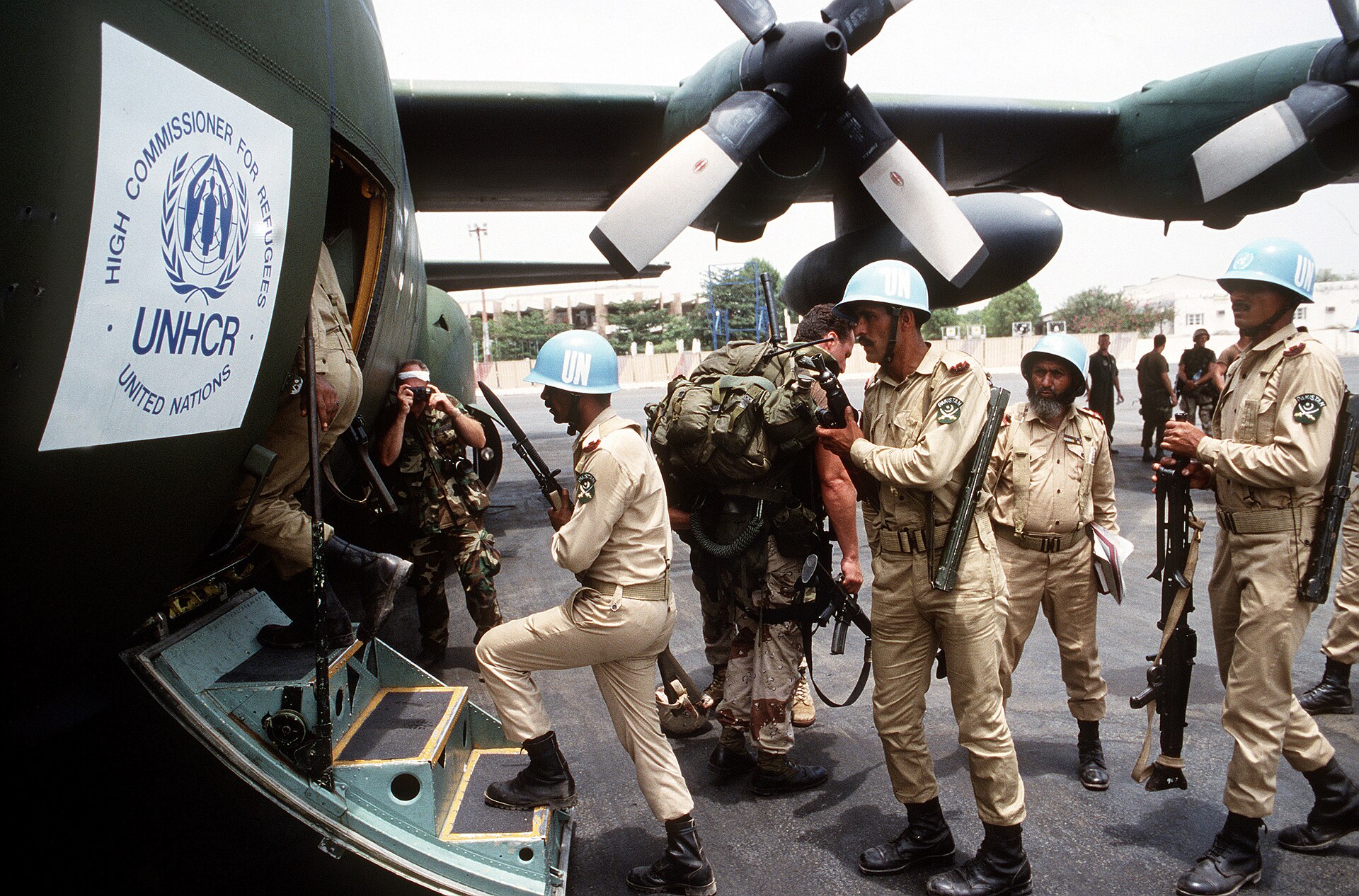
Table of Contents
- The Timeline That Explains Itself
- What Did Saudi Arabia and Qatar Buy for $5 Billion?
- How Can Pakistan Mediate a War It Has Joined?
- Why Did Qatar Co-Sign a Saudi Defence Subsidy?
- Pakistan’s Debt-for-Defence Architecture
- Was the Ceasefire’s Failure an Acceptable Outcome for Riyadh?
- Iran’s Silence and the Protecting Power Trap
- Frequently Asked Questions
The Timeline That Explains Itself
The sequencing requires no commentary. On September 17, 2025, Saudi Crown Prince Mohammed bin Salman and Pakistani Army Chief General Asim Munir signed the Saudi-Pakistan Mutual Defence Agreement at Al-Yamamah Palace in Riyadh. The core language: “any aggression against either country shall be considered an aggression against both.” The Belfer Center at Harvard, in its assessment that autumn, called the SMDA “political solidarity rather than unconditional war guarantee.” The distinction seemed academic at the time.
It stopped being academic on February 28, 2026, when Iran’s first strikes hit Saudi territory. Pakistan’s initial response was diplomatic rather than military. Foreign Minister Ishaq Dar personally warned Iranian leaders that Islamabad was bound by SMDA obligations. He secured Iranian assurances that Saudi territory would not be targeted again. Those assurances were violated within days.
In late March, Pakistan sent missile interceptors to Saudi Arabia — the first materiel transfer under the SMDA. Indian media reported, and Islamabad denied, that Saudi Arabia had threatened to demand immediate repayment of its $6 billion financial exposure after Pakistan initially failed to activate the agreement’s military provisions following Iranian strikes on Saudi oil infrastructure. The denial was notable for what it did not deny: that such a demand was within Saudi Arabia’s power to make.
On April 8, Pakistan announced it would host US-Iran talks — the diplomatic role. On April 11, Pakistani troops and fighter jets landed in the Eastern Province — the military role. The same day, Araghchi’s negotiating team arrived in Islamabad. On April 12, Vance departed without a deal, telling CBS News: “We have not reached an agreement… they have chosen not to accept our terms.” Hours later, the $5 billion Saudi-Qatari pledge was announced following a meeting between Saudi Finance Minister Mohammed al-Jadaan and Pakistani Prime Minister Shehbaz Sharif, Foreign Minister Dar, and General Munir.
The Middle East briefing 3,000+ readers start their day with.
One email. Every weekday morning. Free.
Munir was in the room for the financial meeting. He had been in the room for the defence deployment. He had been the architect of the Islamabad talks. Pakistan’s 27th Constitutional Amendment, passed in 2025, consolidated foreign policy and security diplomacy under the military chief’s authority. The ceasefire, the deployment, and the payment all ran through a single office.
What Did Saudi Arabia and Qatar Buy for $5 Billion?
The payment addressed a specific Saudi problem with a deadline attached. The ceasefire, brokered loosely through the Islamabad Accord framework, expires on April 22. It contains no extension mechanism. The Soufan Center has assessed that there is no legal or procedural path to renew it without a new agreement — and no new agreement is forthcoming after April 12’s collapse. Saudi Arabia needed, before that expiry, a forward military presence that was neither American nor Israeli. American forces carry domestic political costs that Trump has shown limited appetite to absorb. Israeli cooperation, even indirect, is politically impossible for Riyadh across the Arab world.
Pakistan fills that gap. It is a nuclear-armed Muslim-majority state with a professional military of 650,000 active personnel. It has trained 8,000 to 10,000 Saudi military personnel through Pakistani instructors, a relationship dating to the 1960s. Saudi officers educated at Pakistani staff colleges, Pakistani advisers embedded in Saudi units — the institutional ligaments predate the SMDA by decades. What the agreement formalized was not a new relationship but the terms under which an existing one could be activated in wartime.
But activation requires a solvent Pakistan. And Pakistan is not solvent on its own terms. Its foreign exchange reserves hover near $10 billion. Its annual external debt servicing exceeds $20 billion. In April 2026 alone, Pakistan faced $4.8 billion in external repayments, including $3.5 billion owed to the UAE by month’s end. The IMF’s current $7 billion programme requires Saudi Arabia, China, and the UAE to maintain their deposits at the State Bank of Pakistan as a condition of programme compliance. Saudi Arabia has rolled over its $3 billion deposit annually since 2021 at approximately 4 per cent interest. Total Saudi financial exposure to Pakistan stands at roughly $6 billion.
The $5 billion payment was not generosity. It was the settlement of an account that Pakistan’s military deployment had already drawn against. Imtiaz Gul, an Islamabad-based security analyst, told Al Jazeera that the initial fighter jet deployment — “three jets won’t make much of a difference militarily” — was “messaging Tehran to be flexible.” The 13,000 troops that followed were not messaging. They were infrastructure.
How Can Pakistan Mediate a War It Has Joined?
Pakistan has served as Iran’s protecting power in the United States since April 1980, when Tehran severed diplomatic relations with Washington. Iranian interests in the US capital are handled through the Iranian Interests Section of the Pakistani Embassy — a formal diplomatic arrangement that assumes, and requires, Pakistani neutrality toward Iran. This role has been operative, continuously, for 46 years.
The SMDA mandates collective defence against aggression on Saudi territory. It has been operative since September 2025. Both were simultaneously in effect on April 11, when Pakistani troops landed in the Eastern Province and Iranian diplomats landed in Islamabad.
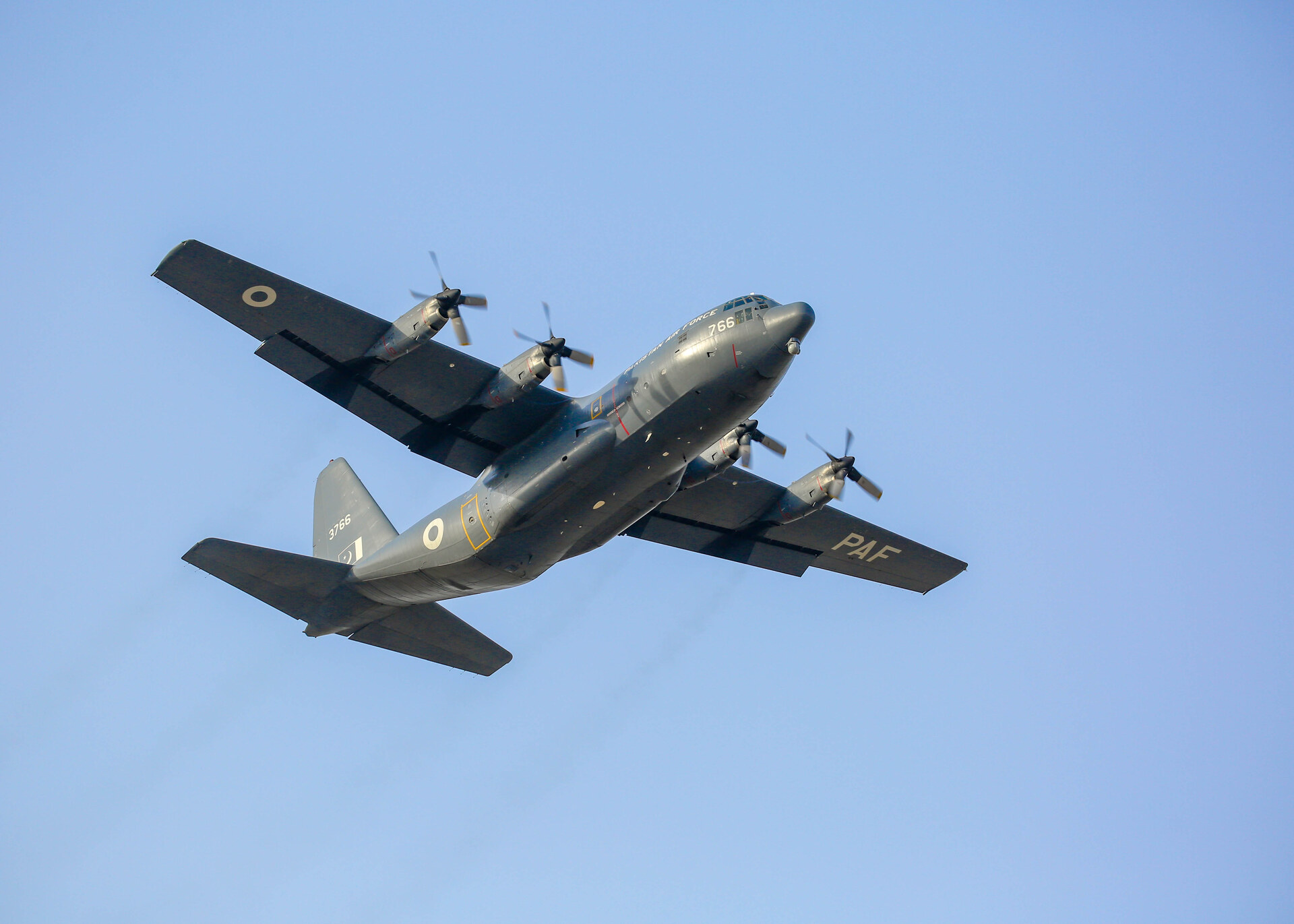
Michael Kugelman, the Atlantic Council’s resident senior fellow for South Asia, described the dynamic to Al Jazeera: “Pakistan signalling to Iran that if Iran is not willing to make concessions… there is a chance that Pakistan could move closer to Saudi Arabia.” The framing — “could move closer” — understates what had already happened. The troops were already in the Eastern Province. The signal had been sent by C-130, not by diplomatic cable.
Samina Yasmeen at the University of Western Australia identifies General Munir’s “cordial relationship” with President Trump and Pakistan’s positioning within a “tripartite quasi-alliance” of the US, Saudi Arabia, and Pakistan as central to Islamabad’s mediation credibility. The word “quasi” is doing considerable work in that formulation. A state that has deployed 13,000 troops to one belligerent’s territory while hosting the other belligerent’s negotiators is not a quasi-ally. It is an ally performing neutrality.
An unnamed Islamabad-based security analyst, also speaking to Al Jazeera, offered the official framing: Pakistan’s deployment “was not a military escalation, but an attempt to communicate Pakistan’s commitments to Iran, underlining that Pakistan has obligations under the mutual strategic agreement it has with Riyadh.” The sentence contains its own refutation. Communicating military commitments to one party while mediating between that party and its adversary is, by any diplomatic standard, a compromised position. Iran’s decision not to say so publicly is a separate calculation — and a revealing one.
Why Did Qatar Co-Sign a Saudi Defence Subsidy?
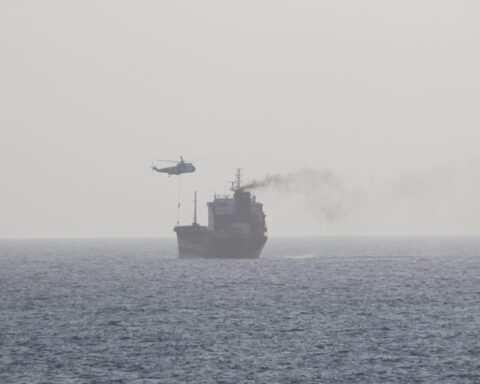
Qatar’s participation is the element that resists easy explanation. The 2017 blockade — in which Saudi Arabia, the UAE, Bahrain, and Egypt severed diplomatic, trade, and travel ties with Doha for three and a half years — was resolved in January 2021, but the underlying tensions have not disappeared. Qatar’s regional posture throughout this war has been distinct from Riyadh’s: Doha has maintained communication with Tehran, facilitated through Chinese intermediaries the Al Daayen LNG tanker transit through Hormuz in early April, and positioned itself as a diplomatic channel rather than a military participant.
Qatar’s LNG economics create different incentives from Saudi Arabia’s oil economics. North Field production — the world’s largest natural gas field, shared with Iran’s South Pars — is effectively landlocked by the Hormuz closure. Qatar’s 77 million tonnes per annum of LNG capacity requires tanker access through the strait. The Al Daayen transit, brokered through Beijing with an IRGC fee of $2 million per vessel, demonstrated that passage was possible but only on Iranian terms. Saudi Arabia, routing 5.9 million barrels per day through the East-West Pipeline to Yanbu, faces a gap of 1.1 to 1.6 million barrels per day against pre-war Hormuz throughput — a constraint, but not an existential one.
So why would Qatar subsidize Pakistan’s deployment to Saudi Arabia’s Eastern Province? One reading: Doha concluded that a Pakistan militarily anchored to the Gulf security architecture reduces Qatar’s own direct exposure. If Pakistan is the forward buffer — the state whose troops are positioned between Iranian missile ranges and Gulf oil infrastructure — then Qatar’s Al Udeid base and its own territory are one step removed from the front line. The $5 billion is, on this reading, an insurance premium against the day when Iran’s targeting calculus expands beyond Saudi Arabia.
Turkey’s involvement suggests the architecture is scaling. The Jerusalem Post reported in April that Ankara is in “advanced talks” to join the Saudi-Pakistan mutual defence pact — a framework that commentators have begun calling a “Muslim NATO,” though the comparison flatters its current institutional depth. If Turkey joins, Qatar’s financial contribution to Pakistan’s deployment begins to look less like a one-off subsidy and more like a founding investment in a multilateral security structure that does not depend on Washington.
That independence from Washington is the thread connecting Saudi and Qatari interests. Both states watched the United States withdraw from Afghanistan in 2021. Both have observed Trump’s transactional approach to Gulf security — the explicit framing of American military presence as a service to be billed. A Pakistani military deployment that is funded by Gulf capital and answerable to Gulf command structures offers something the American security guarantee does not: permanence without conditions.
Pakistan’s Debt-for-Defence Architecture
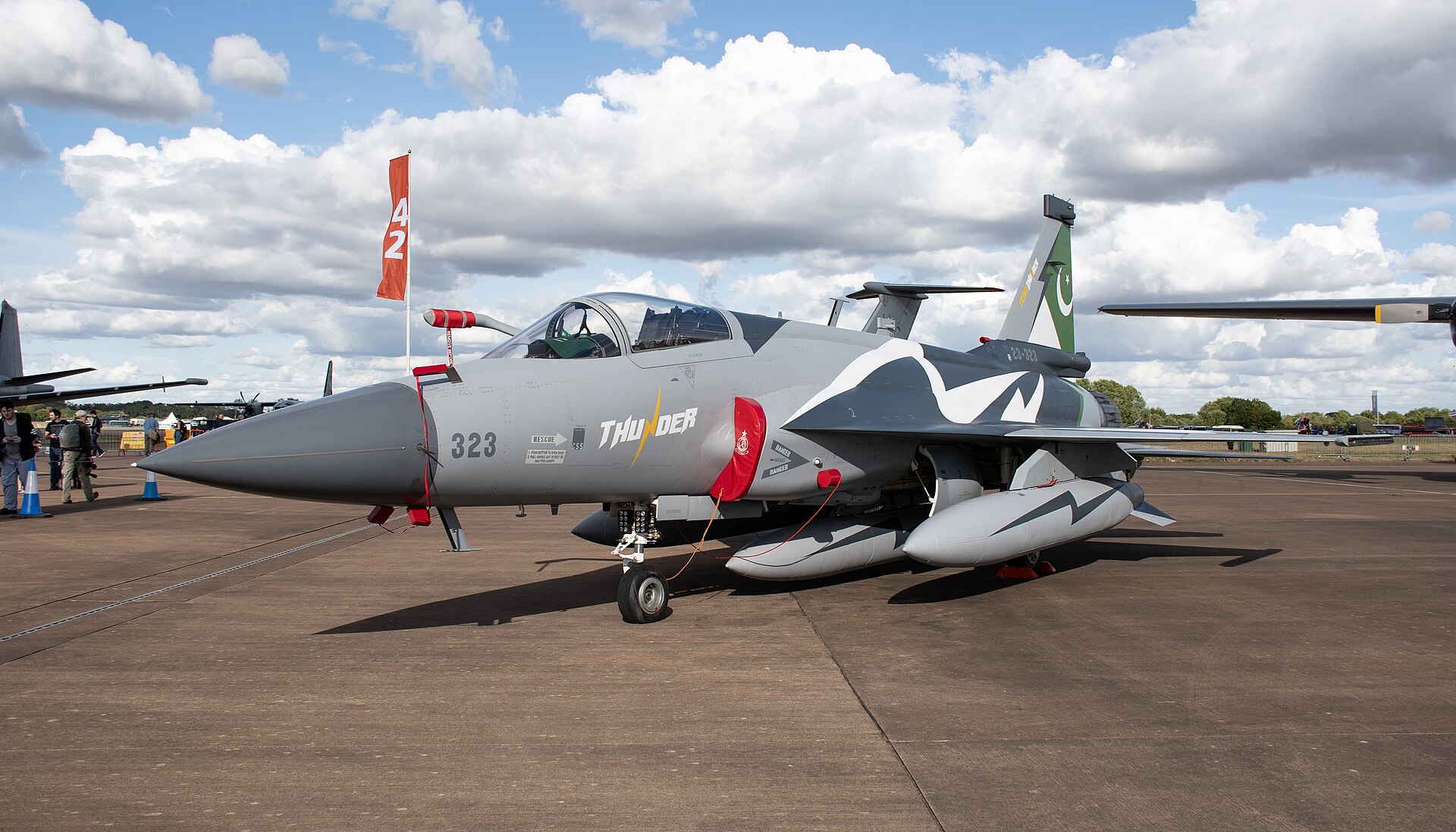
The financial mechanics deserve close attention. Pakistan proposed converting $2 billion of Saudi loan exposure into deliveries of JF-17 Thunder fighter jets — a weapons-for-debt swap that collapses the distinction between Pakistan’s military exports and its sovereign debt management into a single transaction. The JF-17, co-produced with China’s Chengdu Aircraft Corporation, is Pakistan’s primary export fighter. Its unit cost runs between $25 million and $35 million depending on the block variant, placing the implied delivery between 57 and 80 aircraft against the $2 billion figure — though no delivery schedule has been publicly confirmed.
The swap makes explicit what has been implicit in Saudi-Pakistani relations for decades. Pakistan’s military capacity is a tradeable asset in the financial negotiation between the two states. The SMDA is not an innovation on the historical relationship — it is its formalization and upward scaling.
| Item | Amount | Source / Context |
|---|---|---|
| Saudi-Qatari joint pledge (April 12) | $5.0 billion | Daily Pakistan, April 12, 2026 |
| Saudi rolling deposit at State Bank of Pakistan | $3.0 billion | Dawn; renewed annually since 2021 at ~4% |
| Total Saudi financial exposure to Pakistan | ~$6.0 billion | Business Standard; includes deposit + bilateral loans |
| Pakistan external repayments due April 2026 | $4.8 billion | TaxToday.pk; includes $3.5B UAE payment |
| Pakistan FX reserves | ~$10.0 billion | Express Tribune; State Bank data |
| Pakistan annual external debt servicing | $20+ billion | Dawn; IMF programme documents |
| IMF programme size | $7.0 billion | Requires Saudi/China/UAE deposit maintenance |
| Proposed JF-17 debt-for-defence swap | $2.0 billion | TaxToday.pk; jet deliveries offset Saudi loans |
| Pakistan troop deployment to Eastern Province | ~13,000 troops + 10-18 jets | Outlook India, Arab News, Al Jazeera |
| Historical Saudi military personnel trained by Pakistan | 8,000-10,000 | CSIS; Belfer Center |
The table reveals a circular structure. Saudi Arabia deposits $3 billion at Pakistan’s central bank. The IMF requires the deposit to remain in place for its programme to continue. Pakistan’s IMF compliance requires Saudi forbearance. Saudi forbearance requires Pakistani military cooperation. Pakistani military cooperation requires financial solvency. Financial solvency requires the Saudi deposit. The $5 billion breaks the circle — or, more precisely, it extends the circle’s radius, buying time for the deployment to harden into a permanent arrangement.
With $4.8 billion in April repayments falling due against $10 billion in reserves, Pakistan’s import cover stood at the minimum the IMF considers adequate. The $5 billion pledge, if disbursed on schedule, restores that buffer. It also eliminates the financial hold that the UAE, owed $3.5 billion by month’s end, held over Islamabad. Saudi Arabia, in settling Pakistan’s April obligations, reduced a rival Gulf state’s claim on Pakistani policy.
Was the Ceasefire’s Failure an Acceptable Outcome for Riyadh?
The conventional narrative treats the Islamabad talks’ collapse as a setback for all parties. Vance’s departure without a deal was framed, in most Western coverage, as a failure of diplomacy. Al Jazeera called Pakistan an “indispensable honest broker.” Bloomberg credited Islamabad with demonstrating a “central role in global politics.” Time magazine ran “Pakistan Eyes an Unlikely Rebrand as Peace Broker.” The financial dimension — $5 billion arriving the morning the talks failed — received less analytical attention.
Consider the counterfactual. If the Islamabad talks had produced a ceasefire extension, Iran would have gained time to reconstitute military assets without conceding on Hormuz sovereignty or its nuclear programme — the two issues Araghchi identified as unresolved. Saudi Arabia would have gained a temporary halt to strikes on its territory but no permanent security guarantee. Pakistan’s troop deployment, justified by active hostilities, would have lost its rationale. The SMDA would have remained in its pre-activation state: a paper agreement without deployed forces.
The talks’ failure preserves the conditions under which Pakistan’s military presence in the Eastern Province is both justified and necessary. The ceasefire expires April 22. No extension mechanism exists. Iran’s FM Araghchi stated that disagreement remained on “two or three key issues” and that contacts would continue — diplomatic language for indefinite stalemate. The 13,000 Pakistani troops are not going home.
Kugelman’s assessment — that Pakistan “achieved one of its biggest diplomatic wins in years” — is accurate, but the win was not the one being described. Pakistan did not broker a ceasefire. It converted a mediation role into a permanent military deployment backed by $5 billion in Gulf financing, institutional integration with Saudi defence infrastructure, and a debt-for-weapons pipeline that aligns Islamabad’s fiscal survival with Riyadh’s security needs. The diplomatic win was the deployment, not the talks. For analysis of the JF-17 equipment choice, the Eastern Province geography, and what Iran’s silence actually signals, see Pakistan Sends 13,000 Troops to Saudi Arabia’s Eastern Province While Brokering Iran Ceasefire.
Iran’s Silence and the Protecting Power Trap
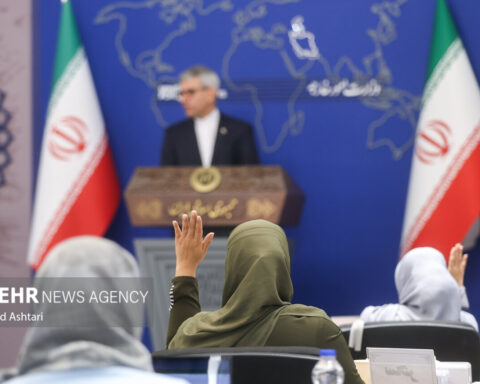
Iran did not publicly accuse Pakistan of partiality during or after the talks. Iranian state media — IRIB, Tasnim, Fars News — framed the collapse as “US intransigence,” focusing on Washington’s demand that Tehran commit to not developing nuclear weapons. Pakistan’s simultaneous hosting of negotiations and deployment of troops to its adversary’s territory went unmentioned in Iranian official commentary.
The silence is not indifference. It is structural constraint. Pakistan has served as Iran’s protecting power in Washington since April 1980 — the only diplomatic channel Tehran has maintained with the United States across four and a half decades. The Iranian Interests Section operates out of the Pakistani Embassy. Iranian citizens in the US requiring consular services go through Pakistani diplomatic staff. If Iran publicly ruptures with Islamabad over the SMDA deployment, it loses access to the one institutional link that connects it to the American government outside of crisis negotiations.
This is the bind that the $5 billion payment tightens. Pakistan is now simultaneously Iran’s diplomatic representative in Washington and Saudi Arabia’s military partner in the Eastern Province. Iran cannot protest the second role without jeopardizing the first. And the first role gives Pakistan a form of coercive hold over Iran that no other state possesses: the ability to degrade Iran’s already minimal diplomatic access to the United States simply by withdrawing cooperation from the Interests Section arrangement.
Araghchi’s post-talks statement was careful. He did not mention Pakistan’s deployment. He did not mention the $5 billion. He noted that “a number of points” had been agreed and that contacts would continue. The restraint was not diplomatic grace. It was the sound of a state that cannot afford to name what it sees.
The Islamabad talks’ collapse leaves Iran in a deteriorating position across every axis. The ceasefire expires in ten days. The IRGC’s declaration of “full authority” over Hormuz is operationally real but diplomatically corrosive — every day the strait remains functionally closed, the coalition of states with economic motivation to act against Iran expands. Vance’s characterization of the US offer as a “final” one may be posturing, but the Pakistani deployment is not. Those troops represent a fact on the ground that no subsequent round of diplomacy can undo without a separate negotiation — one in which Saudi Arabia, not Iran, holds the terms.
Pakistan’s dual role — protecting power and deployed ally — is, in diplomatic history, without precedent. Switzerland served as the US protecting power in Iran after 1980 while maintaining strict neutrality. Pakistan has abandoned the neutrality while retaining the role. The arrangement persists because Iran has no alternative and Pakistan has no incentive to relinquish either function. The protecting power status gives Islamabad continuous visibility into Iranian diplomatic positioning; the military deployment gives Islamabad value to Riyadh that diplomatic skill alone cannot replicate. Both functions will outlast whatever ceasefire eventually emerges — and both grow more entrenched with each day the war continues.
Frequently Asked Questions
What is the Saudi-Pakistan Mutual Defence Agreement (SMDA)?
The SMDA was signed on September 17, 2025, at Al-Yamamah Palace in Riyadh by Crown Prince Mohammed bin Salman and Pakistani Army Chief General Asim Munir. Its core provision states that “any aggression against either country shall be considered an aggression against both.” A Saudi official described it at signing as “a comprehensive defensive agreement that encompasses all military means.” The Belfer Center assessed it as “political solidarity rather than unconditional war guarantee,” with nuclear umbrella provisions remaining “speculative.” The agreement built on decades of Saudi-Pakistani military cooperation but marked the first formal mutual defence commitment between the two states.
How much does Saudi Arabia hold in financial exposure over Pakistan?
Saudi Arabia’s direct financial exposure includes the $3 billion rolling deposit at the State Bank of Pakistan, bilateral loans bringing the total to approximately $6 billion, and — following the April 12 pledge — an additional $5 billion in committed support jointly with Qatar. Beyond direct exposure, Saudi Arabia holds structural power through the IMF’s $7 billion programme for Pakistan, which requires Riyadh to maintain its central bank deposit as a programme condition. Saudi Arabia can, in effect, trigger a Pakistani balance-of-payments crisis by withdrawing a single deposit. The reported threat to do so in late March, denied by Islamabad, demonstrated that both sides understood this arithmetic.
Has Pakistan deployed troops to Saudi Arabia before?
Pakistani military personnel have been present in Saudi Arabia in various capacities since the 1960s, primarily as trainers and advisers. During the 1991 Gulf War, Pakistan deployed approximately 5,000 troops to Saudi Arabia as part of the coalition against Iraq. The current deployment of 13,000 troops and up to 18 fighter jets is the largest Pakistani military presence on Saudi soil since that conflict and the first under a formal mutual defence treaty. Pakistan also maintains a separate military advisory relationship with Saudi Arabia that has trained an estimated 8,000 to 10,000 Saudi military personnel over the decades, concentrated in armoured and artillery units.
Why has Iran not publicly objected to Pakistan’s dual role?
Iran’s diplomatic options are constrained by Pakistan’s role as its protecting power in Washington — a function that has operated continuously since April 1980, when Tehran severed relations with the United States. The Iranian Interests Section of the Pakistani Embassy is Iran’s sole institutional link to the US government outside of ad hoc crisis negotiations. Iranian state media’s decision to attribute the Islamabad talks’ failure to “US intransigence” rather than Pakistani partiality reflects a calculation that maintaining the Washington channel is worth more than winning a public argument about mediator neutrality. Iran and Pakistan also share a 959-kilometre border across Balochistan, where both states face separatist insurgencies — a shared security interest that predates and will outlast the current Gulf conflict.
What happens when the ceasefire expires on April 22?
The ceasefire contains no extension mechanism. The Soufan Center has assessed that renewal requires a new agreement, and the collapse of the Islamabad talks on April 12 leaves no active negotiating framework. Iran’s FM Araghchi said contacts would “continue,” but no date, venue, or format has been announced. Pakistan’s 13,000 troops in the Eastern Province are positioned for a post-ceasefire environment. Turkey’s reported interest in joining the SMDA framework suggests the Gulf states are planning for a security architecture that assumes extended hostilities rather than diplomatic resolution. The April 22 expiry date coincides with the opening of Hajj pilgrim arrivals — Indonesia’s 221,000 pilgrims begin departing that day — creating a secondary pressure point around the security of Islam’s holiest sites during active conflict.