
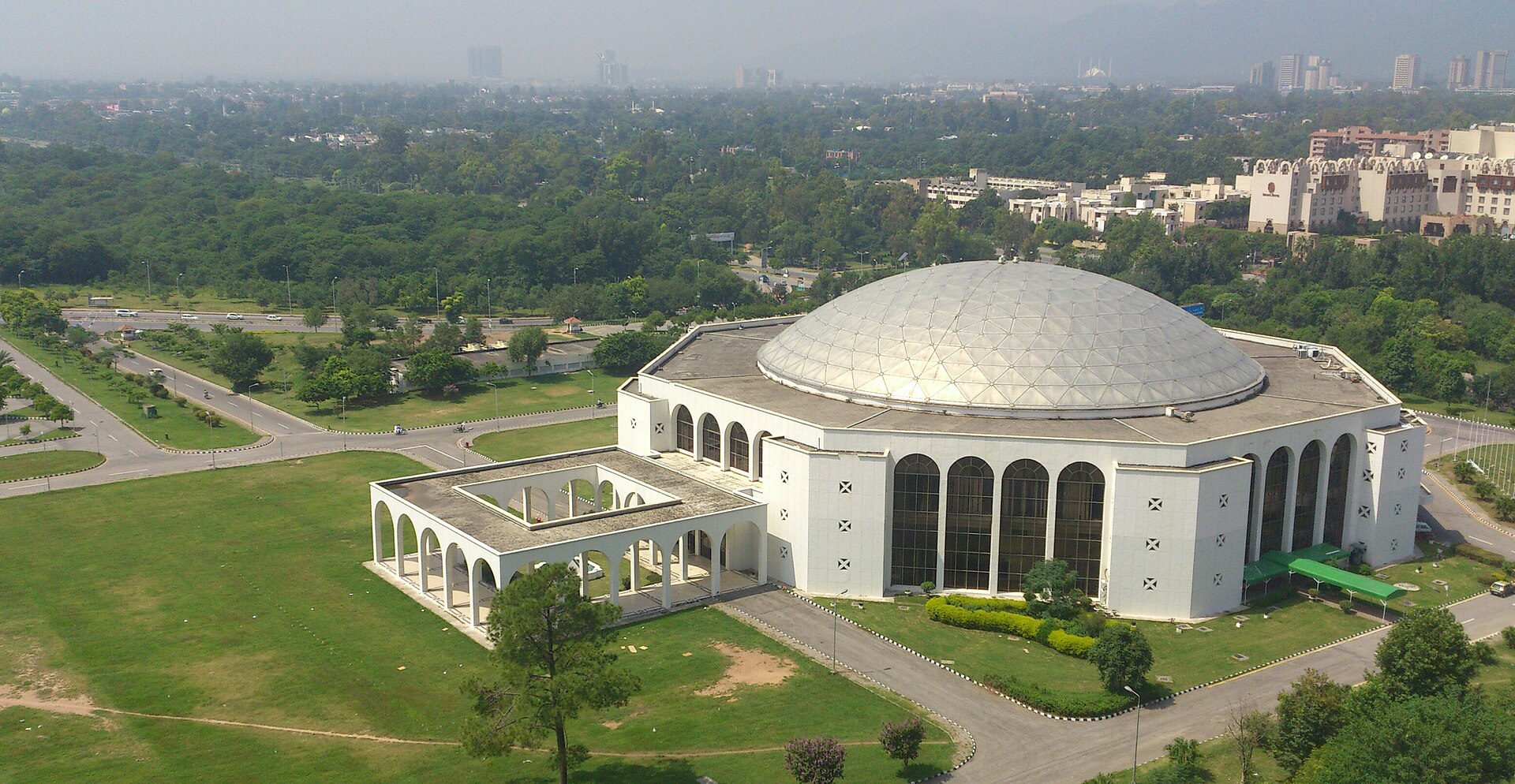
ISLAMABAD — Vice President JD Vance stood at a lectern inside the Serena Hotel on Saturday, spoke for four minutes, declared the United States had made its “final and best offer” to Iran, and left — while the American experts who had spent 21 hours negotiating the details of that offer stayed behind in the same building, still talking. Iran responded within hours by publishing four non-negotiable conditions — full sovereignty over the Strait of Hormuz, war reparations, unconditional release of frozen assets, and a region-wide ceasefire that includes Lebanon — each one a demand that the United States cannot grant without dismantling a piece of the security architecture that holds Saudi Arabia together.
The talks in Islamabad’s fortified Red Zone, the first direct US-Iran negotiations since 1979, produced no agreement, no framework, and no timeline — only a gap between Washington’s demand that Iran never build a nuclear weapon and Tehran’s demand for validation that its 40-day war was a legitimate act of self-defence deserving compensation. Saudi Arabia, which sat at the table as co-guarantor during the March 29-30 round, was excluded from this bilateral entirely — left to coordinate through a phone call between FM Prince Faisal and Pakistani counterpart Ishaq Dar on April 9, three days before Vance’s departure rewrote the terms of a conflict Riyadh is paying for but cannot negotiate.
Table of Contents
The Four-Minute Finale and the 21-Hour Gap
Vance’s press conference was a study in controlled brevity — “We leave here with a very simple proposal, a method of understanding that is our final and best offer, we will see if the Iranians accept it” — delivered with the cadence of a man who had already booked his flight. He added, with a flatness that read as either confidence or exhaustion, “I think that’s bad news for Iran much more than it’s bad news for the United States of America.” Pakistani officials, speaking to reporters in the hours that followed, described the atmosphere across 21 hours of talks as “largely positive” and “cordial,” language that diplomats use when nothing has collapsed but nothing has been signed either, with a “persistent stalemate on Hormuz sovereignty” acknowledged as the gravitational centre of failure.
The core US demand was narrow and explicit: what Vance called “an affirmative commitment that they will not seek a nuclear weapon and they will not seek the tools that would enable them to quickly achieve one.” Iran’s response, broadcast through IRIB and amplified by Parliament Speaker Ghalibaf, was that US demands were “unreasonable” because Washington had already broken three of Iran’s 10 ceasefire conditions before talks began. The Arms Control Association, in an April 2026 assessment, noted that “US negotiators were ill-prepared for serious nuclear talks with Iran,” a verdict that casts Vance’s “best and final” framing as a ceiling imposed not by strategic choice but by the limits of what the American team had been authorised to offer.
The Oman Observer reported on April 12 that talks were expected “to enter into a third round,” and expert-level working groups remained in session Sunday — suggesting Vance’s departure was theatre calibrated for a domestic audience rather than an ultimatum for Tehran. The JCPOA precedent is instructive: in 2015, Secretary Kerry declared deadlines three separate times before the final deal was signed, each departure staged to apply pressure, each return acknowledged as inevitable. But what makes this round different from Geneva or Vienna is that the country absorbing the consequences of stalemate — Saudi Arabia — is excluded from talks that will determine its export capacity, its air defence posture, and the security of its holiest sites.
What Does Iran Mean by Hormuz Sovereignty?
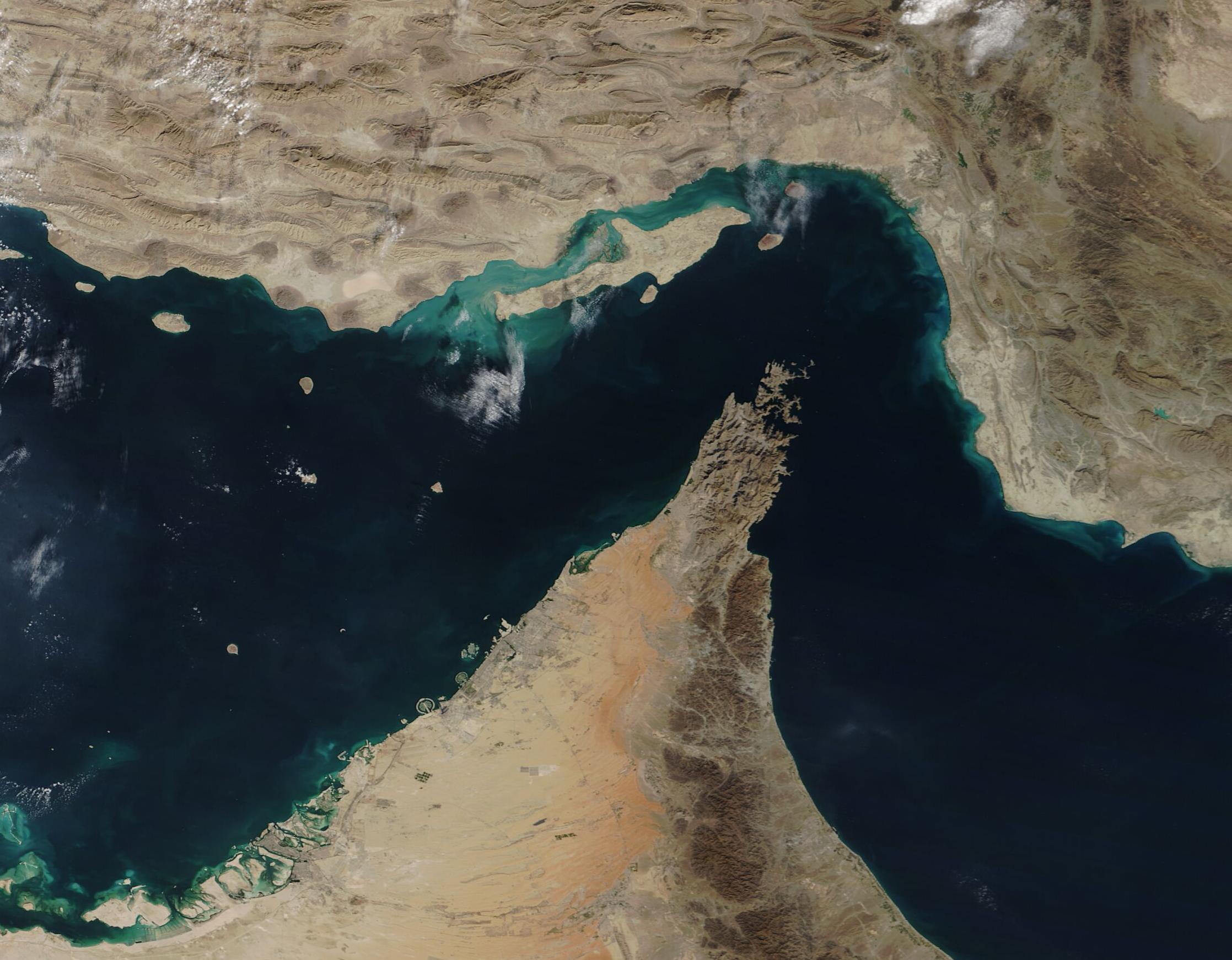
Iran’s first and most consequential condition is “full sovereignty over the Strait of Hormuz,” and what Tehran means by sovereignty is not abstract. As Foreign Minister Araghchi articulated it, safe passage “will be possible via coordination with Iran’s Armed Forces and with due consideration of technical limitations” — a formulation that converts an international waterway into an administered corridor requiring Iranian permission, Iranian scheduling, and Iranian fees. Iran’s Parliament passed toll legislation on March 31, and Tehran has sought legal status analogous to Turkey’s Montreux Convention powers over the Bosphorus — a comparison Mark Nevitt of Just Security dismantled, noting that Iran’s regime violates three UNCLOS articles including the transit passage guarantee under Article 37 and the toll prohibition under Article 26, and that no Montreux-equivalent status can exist without a treaty Iran has never negotiated.
The Middle East briefing 3,000+ readers start their day with.
One email. Every weekday morning. Free.
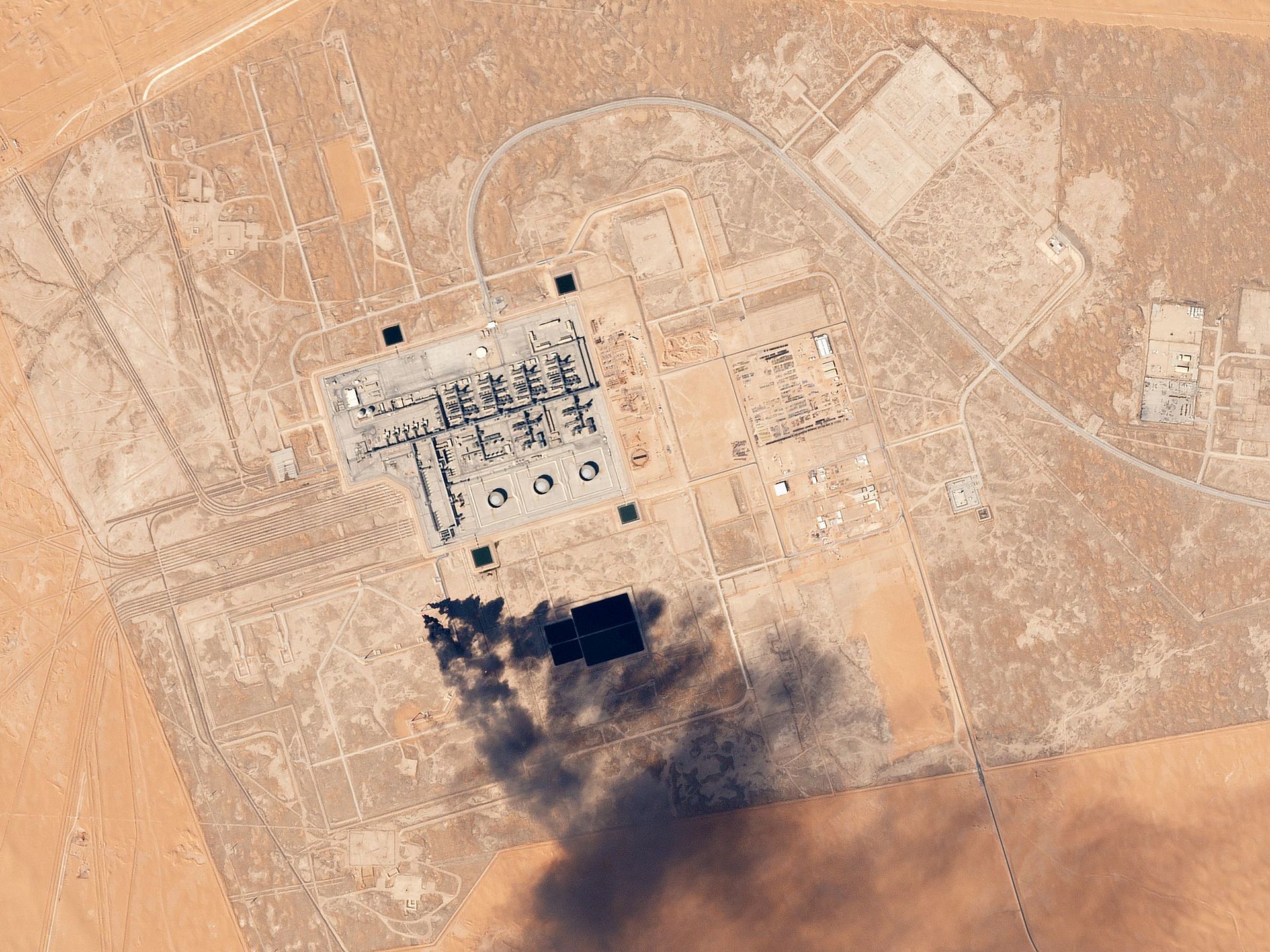
For Saudi Arabia, Hormuz sovereignty is a production ceiling. Before the war, 5.5 million bpd of Saudi crude moved through the strait, and the IRGC Navy’s declaration of “full authority to manage the Strait” on April 5 and April 10 — issued while Araghchi was in Islamabad — has compressed traffic from 138 ships per day to roughly 15-20, according to Windward tracking data. The East-West Pipeline to Yanbu has a maximum capacity of 7 million bpd but is currently moving approximately 5 million bpd to Yanbu after IRGC strikes on April 8 — covering roughly 35 percent of total pre-war Hormuz throughput globally, a structural gap no pipeline expansion can close within the timeline of this war. If Iran’s sovereignty claim is ratified by a US-backed agreement, Riyadh’s export capacity becomes permanently subject to IRGC scheduling, and the $1-per-barrel toll Tehran has proposed — approximately $2 million per VLCC — would function as a reconstruction tax paid disproportionately by Gulf exporters.
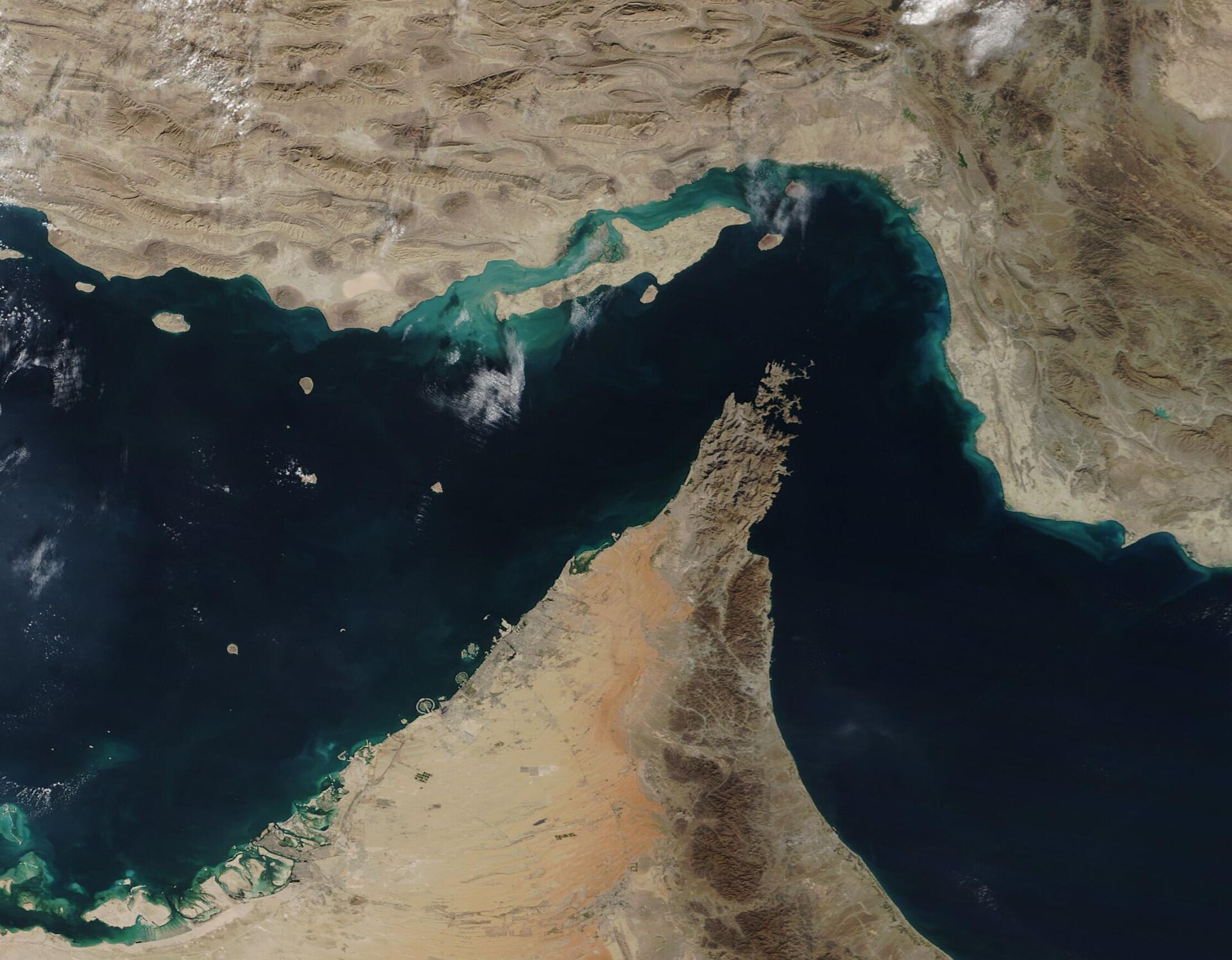
Andreas Krieg of King’s College London framed the dynamic precisely: “Iran believes it is in a much better bargaining situation than they were prior to the war.” The strait is the proof — not because Iran has won militarily, but because even after CENTCOM destroyers transited Hormuz on April 11, prompting an IRGC “last warning” radio call, Saudi oil still cannot move freely through the waterway that carries a third of the world’s seaborne crude. Trita Parsi of the Quincy Institute put the military context bluntly: Trump’s “failed use of force has blunted the credibility of American military threats,” a judgment that Hormuz traffic data confirms daily.
Reparations and Frozen Assets: The Cost-Imposition Payoff
Iran’s second and third conditions — war reparations and unconditional release of frozen assets — operate as a paired mechanism, and understanding them separately is to miss their combined effect on Saudi Arabia’s security architecture. The reparations demand, articulated most bluntly not by a diplomat but by a member of the Khamenei family, carries the weight of a threat masquerading as a legal claim: “We will seek compensation for the war through any possible means,” the statement read, carried by the Soufan Center on March 12. “If they refuse, we will take from their assets as much as we deem necessary, or we will destroy their assets.”
Al Arabiya reported on April 10 that Iran calculated its war losses at $145 billion across 40 days — a figure exceeding Kuwait’s entire annual GDP, serving as the baseline for a reparations demand no framework in Islamabad has attempted to quantify. The demand validates what analysts call Iran’s “cost-imposition doctrine”: every drone, missile, and mine deployed against Gulf infrastructure was an investment with an expected financial return. Saudi Arabia intercepted 894 threats between March 3 and April 7, depleting its PAC-3 stockpile by 86 percent at an implied cost of $3.49 billion, and absorbed 1.3 million bpd in production damage. If reparations are agreed in any form, the precedent establishes that attacking Gulf states is not just militarily viable but financially profitable.
The frozen assets condition operates on a different axis but arrives at the same destination. Iran’s globally frozen assets are estimated at $100-120 billion, and CNN reported on April 11 that movement toward partial unfreezing of approximately $6 billion was under discussion — a figure a senior US official immediately denied to CBS News, illustrating the internal disagreement within the American delegation about what “best and final” actually includes. Every prior unfreezing — the 1981 Algiers Accords ($11 billion), the 2014 interim deal ($4.2 billion), the 2015 JCPOA (over $100 billion in theory) — involved a reciprocal Iranian concession, but Iran’s current demand specifies “unconditional,” a word that would remove the financial grip underpinning US security guarantees to Saudi Arabia without requiring Tehran to concede anything in return.
Lack of trust is the biggest obstacle…both Washington and Tehran are trying to demonstrate that they ‘won’ by making maximalist demands.
Sahar Khan, independent analyst, to Al Jazeera
The paired logic is this: reparations validate the cost of the war Iran waged against Saudi Arabia, and asset unfreezing funds the next phase of the IRGC’s regional posture. Neither condition requires Iran to stop doing anything it is currently doing, and both convert Saudi Arabia’s wartime losses into permanent structural concessions ratified by the country that is supposed to be guaranteeing Riyadh’s security.
Why Lebanon Is Saudi Arabia’s Structural Trap?
Iran’s fourth condition — a “durable ceasefire across the entire West Asia region including Lebanon” — is the one Saudi Arabia needs most and can demand least, a structural trap built from the geometry of the conflict itself. Pakistan’s Prime Minister Shehbaz Sharif stated publicly that the ceasefire “includes Lebanon”; Trump, Netanyahu, and Vance have each explicitly stated it does not. Araghchi, threading the needle with characteristic precision, warned that Tehran could abandon the ceasefire entirely if Israeli strikes on Lebanon continued, framing the choice as binary: Washington must “choose between a ceasefire or continued war via Israel.”
Trita Parsi of the Quincy Institute articulated the bind: “It will be very difficult for the Iranians to agree to a ceasefire on their own for themselves, while leaving Lebanon exposed.” Hezbollah is Iran’s most expensive regional asset, and any agreement that leaves it under Israeli military pressure while freezing Iran’s operations hands Tel Aviv a strategic gain Tehran has spent 40 years preventing. Netanyahu’s uranium ultimatum, issued in parallel with the Islamabad talks, further compressed the space by tying Israeli restraint to an enrichment threshold Iran has already crossed.
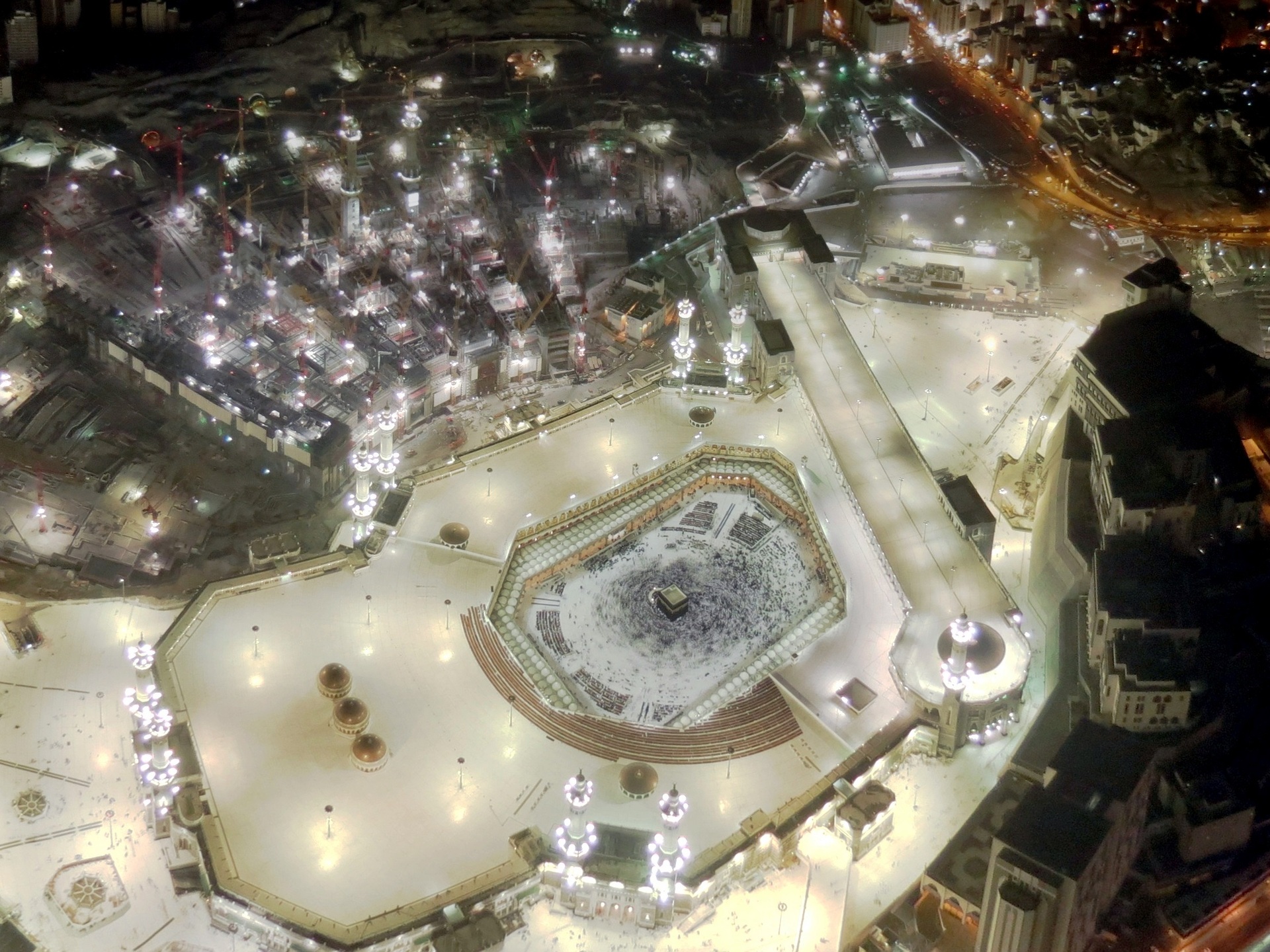
For Saudi Arabia, Lebanon’s inclusion in the ceasefire is not about Hezbollah — it is about Hajj. The ceasefire expires approximately April 22, four days after the first wave of Hajj pilgrims begins arriving on April 18, when Pakistan’s 119,000 pilgrims start their journey and the Umrah cordon seals around Mecca. Indonesia’s 221,000 pilgrims — the largest national contingent — depart on April 22 itself, the day the ceasefire lapses. There is no extension mechanism; the Soufan Center has confirmed that the Islamabad framework contains no provision for renewal, making the April 22 date not a deadline but a cliff. If Iran walks away from the ceasefire over Lebanon, the resumption of hostilities coincides precisely with the moment Saudi Arabia’s security apparatus must protect millions of pilgrims in open terrain — pilgrims arriving through airspace that Bahrain closed on February 28 and has not reopened, through airports within range of the IRGC’s remaining missile inventory, under an air defence umbrella that has 400 interceptors left.
MBS cannot publicly demand Lebanon’s inclusion — doing so would align Riyadh with Tehran against Washington and Tel Aviv, a diplomatic impossibility — but the kingdom’s physical security depends on it. Every hour the Islamabad talks spend on nuclear commitments rather than ceasefire scope is an hour closer to a cliff with no mechanism to pull back from.
The Man Not in the Room
The most consequential fact about the Islamabad talks may be the absence of IRGC commander Ali Akbar Vahidi, who demanded that IRGC-backed Ebrahim Zolghadr — himself under US and EU sanctions — join the Iranian negotiating team and that Iran’s missile programme be taken off the table entirely, conditions that Araghchi and Ghalibaf resisted but could not overrule. The Jerusalem Post reported on April 11 that Vahidi’s absence was a boycott, not a concession — a signal that whatever the 71-member delegation agreed to in the Serena Hotel, the IRGC’s operational commanders had not authorised it and were not bound by it.
Ali Vaez of the International Crisis Group told Anadolu Agency that “the upgraded seniority in each delegation is a signal that they both mean business,” but added that senior Iranian figures “remain deeply mistrustful of the US” and it was “too soon to know whether and how much the past few weeks have shifted Tehran’s thinking.” The seniority upgrade does not resolve the authorization ceiling: Khamenei has been absent approximately 43 days, with the Times of London reporting a memo describing him as “unconscious in Qom,” and the constitutional mechanism for confirming or replacing his authority remains unresolved. IRGC spokesman Ebrahim Zolfaqari then offered the military establishment’s clearest statement of intent.
People like us can never get along with people like you…No one like us will make a deal with you. Not now. Not ever.
Ebrahim Zolfaqari, IRGC spokesperson, to Al Jazeera
Robert Pinfold of King’s College London described the result with the directness the moment requires: “All sides seem to have basically agreed to disagree and have kicked a lot of their disagreements into the long grass.” The long grass, in this case, is a 10-day window before the ceasefire expires — during which Vance’s “best and final offer” must survive the judgment of a man who was not in the room, operating under the authority of a supreme leader who may not be conscious, commanding forces whose spokesman has publicly declared that no deal is possible. Saudi Arabia, excluded from the talks, 86 percent through its air defence stockpile, with the first Hajj pilgrims six days from arrival, has no mechanism to change any of it.
Background
The Islamabad talks represent the second round of direct US-Iran engagement since the war began on February 28, 2026, when IRGC strikes across the Gulf triggered the most sustained aerial bombardment of energy infrastructure since the 1980-88 Iran-Iraq War. The first round stalled at 14 hours on April 10-11, with Vance and Ghalibaf meeting face-to-face for the first time — the highest-level direct US-Iran contact since the 1979 revolution. Pakistan, which brokered the venue and provided security through its military intelligence apparatus, has evolved from neutral host to the ceasefire’s sole enforcement mechanism, a role complicated by the $5 billion Saudi loan maturing in June 2026 and the September 2025 Saudi-Pakistan Mutual Defence Agreement that makes Islamabad simultaneously Iran’s interlocutor and Saudi Arabia’s treaty ally. As Vance’s talks reached their final hours, Pakistan made the dual posture concrete: Saudi Arabia confirmed that approximately 13,000 Pakistani ground troops had deployed to King Abdulaziz Air Base in the Eastern Province — inside Iran’s demonstrated missile strike envelope — on the same calendar day as the Islamabad ceasefire talks.
Saudi Arabia has absorbed the war’s heaviest economic toll, including an 89 percent drop in Hormuz traffic from pre-war levels. Brent crude, which spiked above $109 per barrel in early April, has since fallen to the low $90s on ceasefire expectations — uncomfortably close to Saudi Arabia’s fiscal breakeven of $108-111 per barrel when PIF expenditure is included.
Frequently Asked Questions
What happens if no deal is reached by April 22?
The ceasefire expires with no built-in extension mechanism, according to the Soufan Center. April 22 coincides with the departure of Indonesia’s 221,000 Hajj pilgrims and falls four days after the Umrah cordon seals around Mecca. A resumption of hostilities would force Saudi Arabia to defend pilgrim routes with a PAC-3 stockpile at roughly 14 percent of pre-war levels, while the Camden, Arkansas factory produces replacements at 620 per year — meaning full replenishment would take nearly four years. A deeper analysis of why Hajj constrains Saudi escalation options — and why the deterrence runs against the Custodian, not against Iran — examines the zero-pilgrim asymmetry that gives Tehran passive leverage over Riyadh’s military calendar.
Why is Hormuz sovereignty Iran’s top condition?
Hormuz carries approximately 20 million barrels per day of crude in peacetime — roughly 20 percent of global consumption — and Iran’s coastline controls the narrowest navigable channel. By demanding sovereignty rather than safe passage, Iran seeks to convert a wartime blockade into permanent legal status: the right to charge transit fees ($1 per barrel, yielding an estimated $1.5-3.9 billion per month per Amir Handjani of the Quincy Institute), deny passage to hostile-state vessels, and require coordination with IRGC naval forces. Granting it would require the United States to abandon its own Freedom of Navigation programme — the legal foundation of American naval operations worldwide.
Can the ceasefire be extended without a formal deal?
The Pakistan-brokered framework contains no renewal clause. A de facto extension would require either a new agreement — which faces the authorization ceiling posed by Vahidi’s absence and Khamenei’s incapacitation — or a unilateral Iranian decision to maintain the halt, which IRGC commanders have shown no inclination to support. The Oman Observer’s April 12 report that talks would “enter into a third round” suggests channels remain open, but the gap between working groups in Islamabad and field commanders who have declared they will “never” deal with the US remains the defining obstacle.
What was happening inside Tehran as those talks faltered became clearer after the collapse: Pezeshkian named Vahidi and Abdollahi directly in a confrontation with former IRGC intelligence chief Hossein Taeb on April 4 — putting Iran’s internal fracture on the record at the same moment Vance was presenting his final offer in Islamabad.