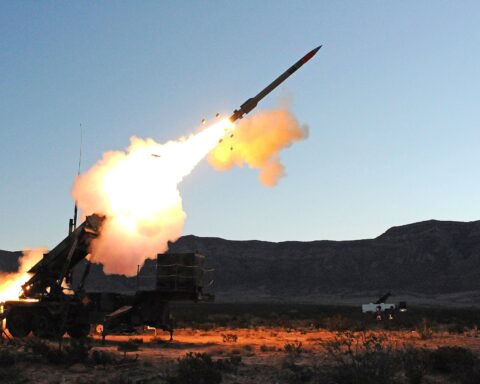
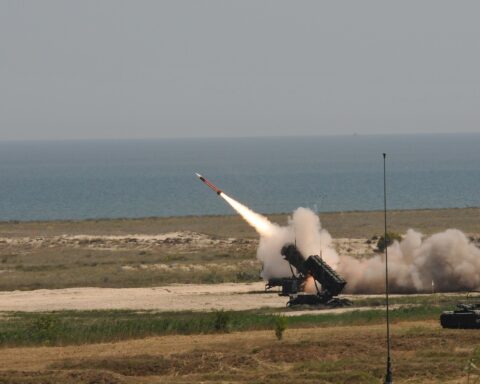
ISLAMABAD — Pakistan has deployed approximately 13,000 ground troops and up to 18 fighter jets to King Abdulaziz Air Base in Dhahran, Saudi Arabia’s Eastern Province, placing a divisional-strength force within 40 kilometres of the Ras Tanura oil terminal that Iran’s Islamic Revolutionary Guard Corps has already struck. The deployment, confirmed April 11 by Saudi Arabia’s Ministry of Defence and reported by Al Jazeera and The National, marks the first operational invocation of the Saudi-Pakistani Strategic Mutual Defence Agreement signed in September 2025 — and it happened on the same day that ceasefire talks in Islamabad collapsed without a deal.
Pakistan is now simultaneously the largest foreign military reinforcement on Saudi soil since the 1991 Gulf War and the only country still mediating between Riyadh and Tehran. Army Chief General Asim Munir, who controls both roles under the 27th Constitutional Amendment passed last November, authorized the deployment and runs the mediation. The structural conflict of interest is not a side effect — it is the architecture.
What Pakistan actually sent to Dhahran
The April 11 confirmation gave the deployment formal public status, but the buildup began well before the announcement. Approximately 10,000 Pakistani troops were already pre-positioned in the Eastern Province, according to Outlook India, with the incremental surge adding roughly 3,000 additional personnel and the air contingent. The total force — around 13,000 ground troops plus 10 to 18 fighter jets — matches the scale of Pakistan’s deployment announcement and represents the largest Pakistani expeditionary force since the 1991 Gulf War, when Islamabad sent a comparable number to defend Saudi Arabia against Iraqi Scud missile attacks.
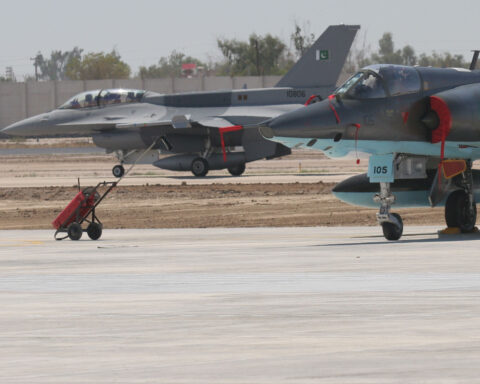
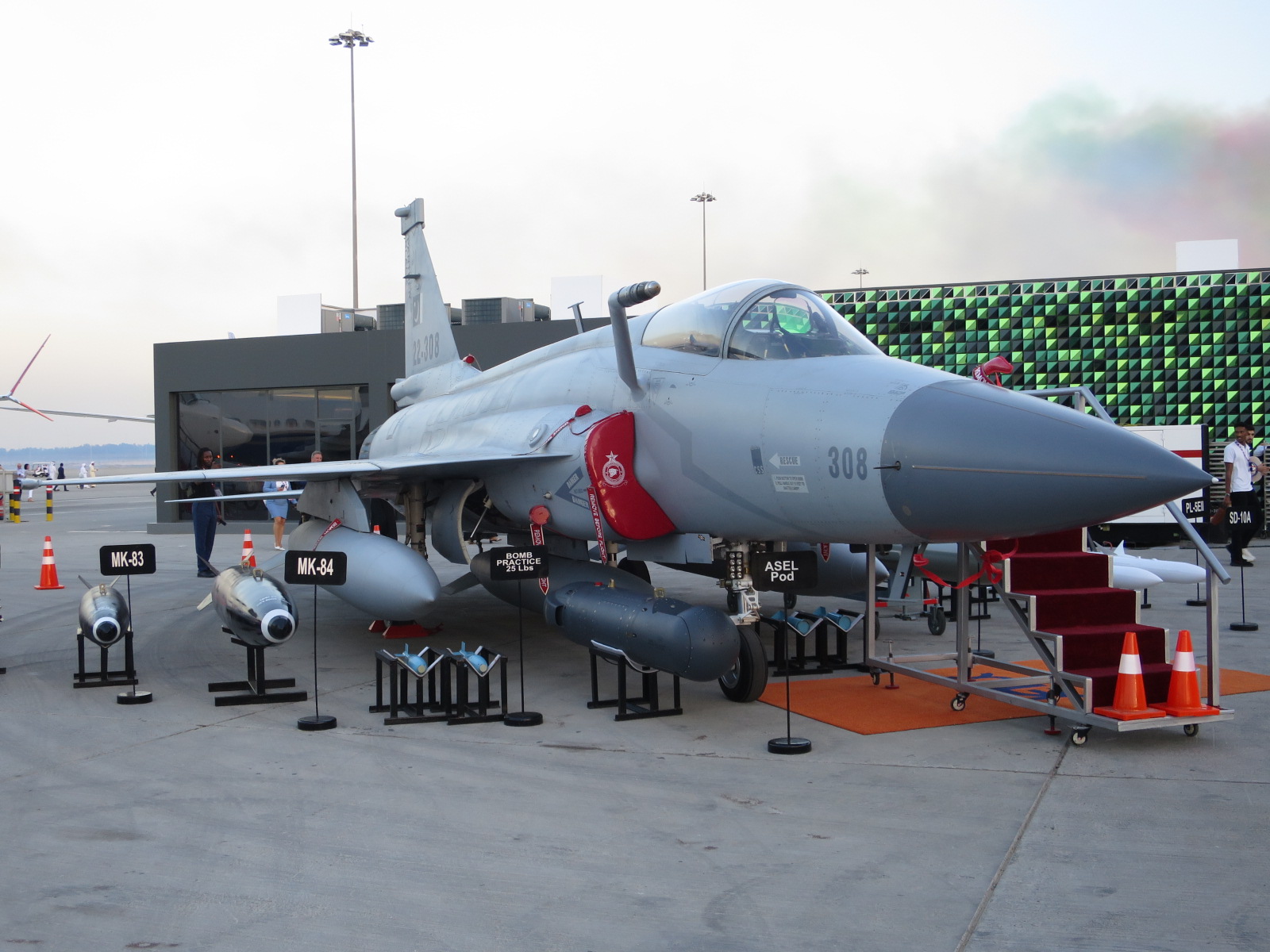
The air component draws from two sources. Several F-16 Block 52 fighters were already in Saudi Arabia as part of the “Spears of Victory 2026” bilateral exercise that began before the war and remained in place. Pakistan then added JF-17 Thunder Block III jets — a Sino-Pakistani co-production that carries no American export restrictions — bringing the total air contingent to between 10 and 18 aircraft, according to Defence Security Asia and Jane’s. The official Saudi MoD statement described the mission mandate in defensive language: “strengthen military cooperation, improve operational readiness.” Pakistani officials echoed the framing, calling the deployment “solely for Saudi Arabia’s defence.”
The defensive label matters politically because Pakistan’s Defence Minister Khawaja Asif had earlier in the crisis “ruled out military participation in any campaign against Iran.” The deployment threads that needle by positioning Pakistani forces as a shield rather than a sword. But a divisional-strength force with fourth-generation fighters is not a tripwire. It is a combat formation, and its placement in the most heavily targeted province in the war makes the defensive framing difficult to sustain if the ceasefire collapses after its April 22 expiry.
The Middle East briefing 3,000+ readers start their day with.
One email. Every weekday morning. Free.
Why King Abdulaziz Air Base matters
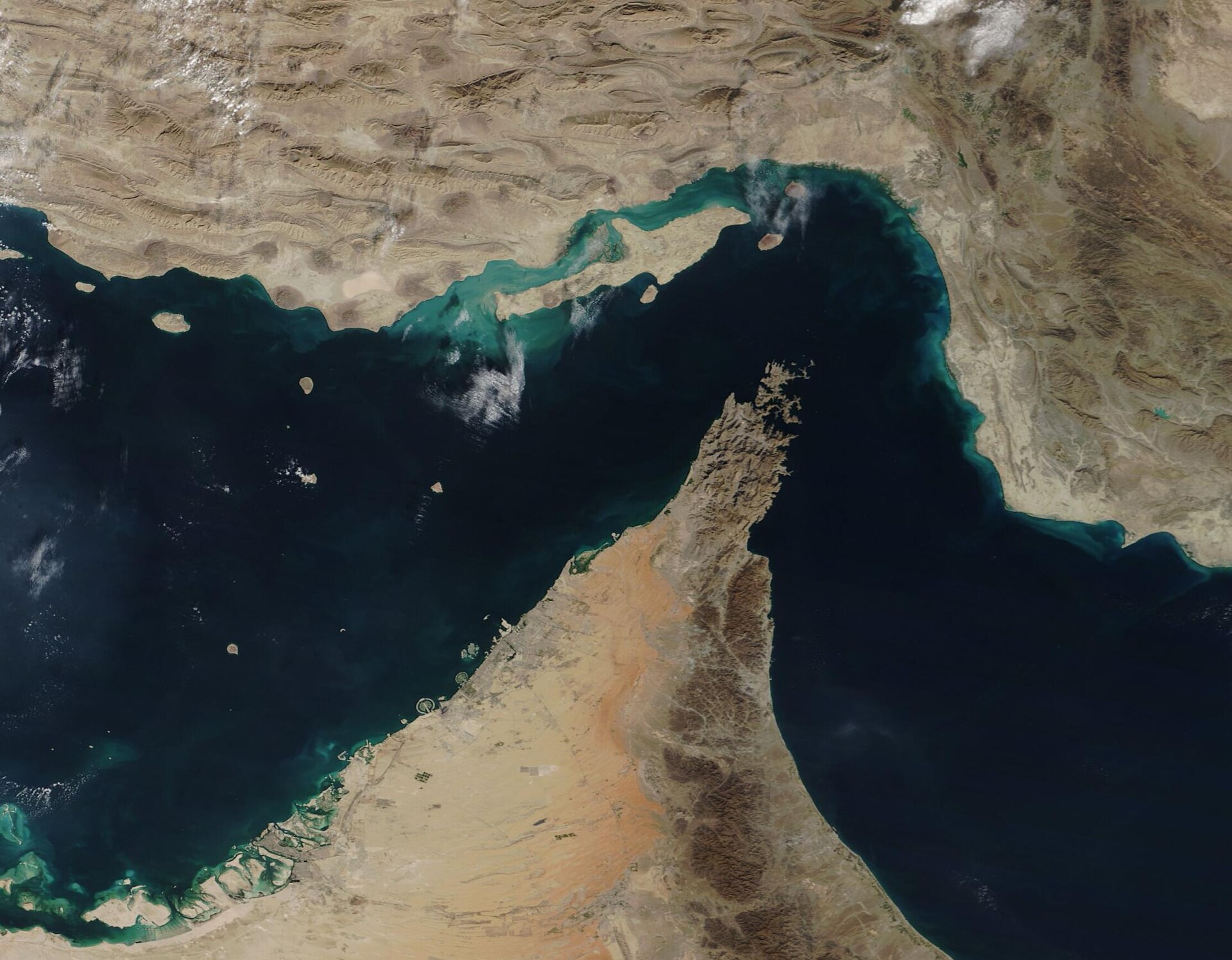
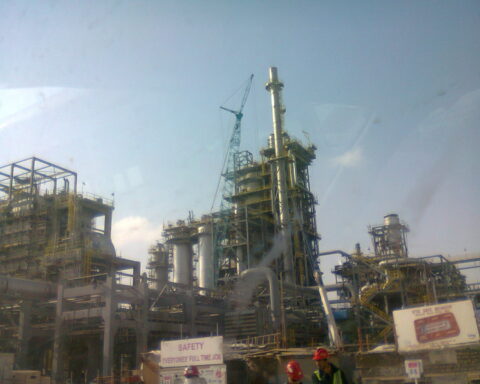
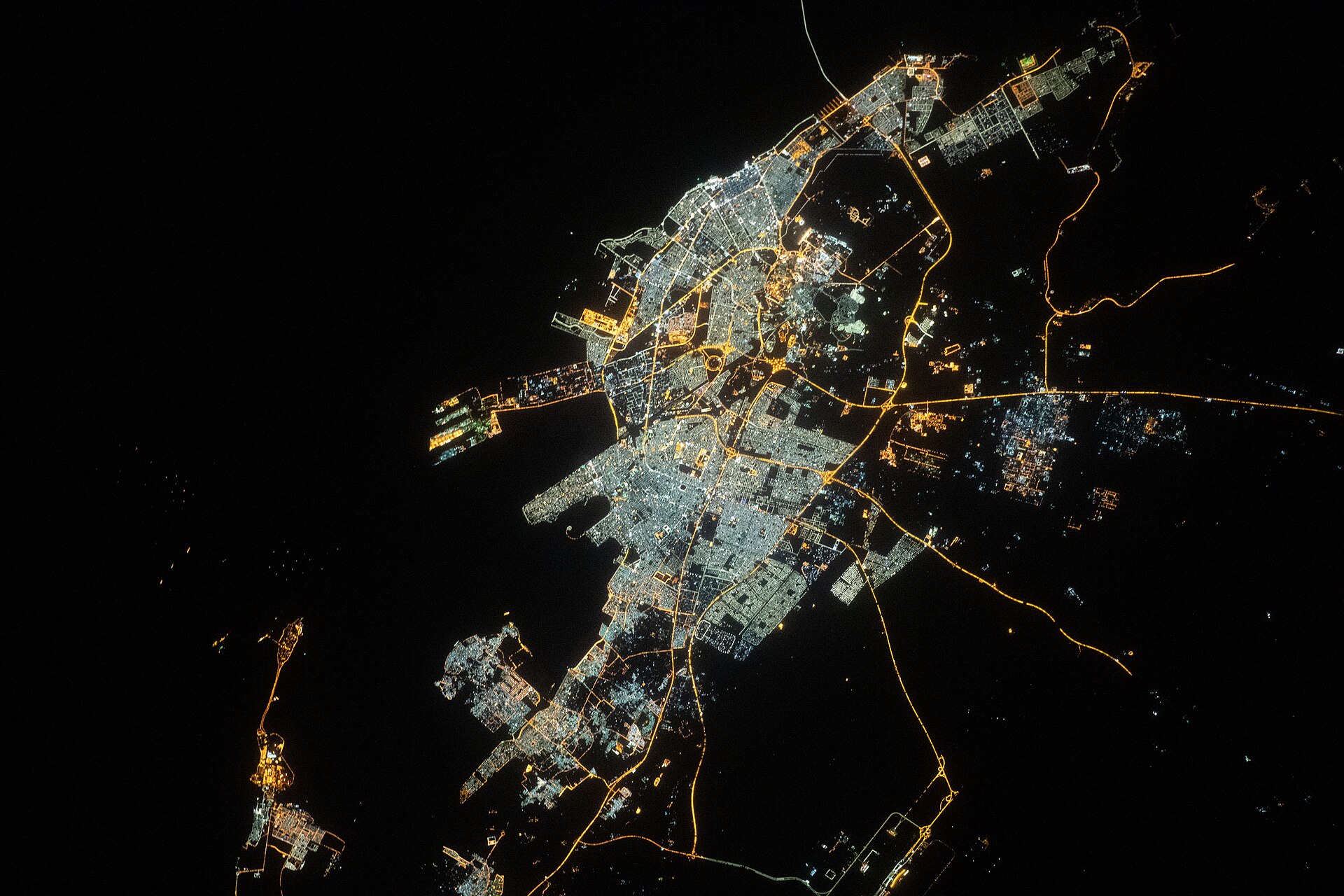
The choice of base is not incidental. King Abdulaziz Air Base sits 7 kilometres from Aramco’s global headquarters, 40 kilometres from the Ras Tanura export terminal, 60 kilometres from the Abqaiq processing facility, and 75 kilometres from the Jubail industrial complex. Every major target the IRGC has struck or attempted to strike in the Eastern Province falls within a one-hour ground response radius of the Pakistani deployment. Ras Tanura was hit on March 2, the opening day of the war. Jubail’s SABIC facility caught fire from intercepted missile debris on April 7. Abqaiq, already the target of the 2019 drone attack that briefly halved Saudi output, remains the single most consequential processing node in global oil infrastructure.
Pakistani forces at Dhahran are not guarding a border. They are embedded in the operational geography of Saudi Arabia’s energy corridor, the same corridor whose partial disruption has already pushed Brent crude above $90 a barrel and forced Aramco to reroute exports through the East-West Pipeline to Yanbu at the Red Sea. The IRGC’s declaration of “full authority” over the Strait of Hormuz has made the Eastern Province both the front line of the kinetic war and the economic centre of gravity for Saudi Arabia’s survival calculus. Pakistan’s troops are now physically positioned at the intersection of those two realities.
The JF-17 choice and what it signals
The decision to deploy JF-17 Block III fighters alongside the F-16s is a deliberate equipment choice with diplomatic implications. The JF-17 is co-produced by Pakistan Aeronautical Complex and China’s Chengdu Aircraft Corporation, meaning its supply chain, spare parts, and weapons systems sit entirely outside the US export-control regime. The Block III variant carries the KLJ-7A active electronically scanned array radar with a detection range of 170 to 180 kilometres and is armed with PL-15E beyond-visual-range missiles capable of engagements at 145 to 180 kilometres. Neither system requires American approval for deployment, maintenance, or ammunition resupply.
The F-16 Block 52, by contrast, operates under strict US Foreign Military Sales end-use monitoring. Washington must approve any combat employment, any transfer of the aircraft to a third party, and any use of American-origin munitions. By sending JF-17s alongside F-16s, Pakistan has given itself an air-defence capability in the Eastern Province that it can employ without calling the State Department. Imtiaz Gul, a security analyst in Islamabad, told Al Jazeera that the JF-17 contingent of “three jets won’t make much of a difference militarily,” but characterised the overall deployment as “messaging Tehran to be flexible in these talks, but also it is underlining to them that Pakistan has obligations under the mutual strategic agreement it has with Riyadh.” The JF-17 count may be modest, but the type selection tells Tehran and Washington different things: Tehran hears that Pakistan can fight without American permission, and Washington hears that Pakistan has options beyond the F-16 dependency that has defined the bilateral defence relationship for four decades.
Can Pakistan broker a ceasefire while defending one side?
The structural contradiction at the centre of Pakistan’s position is not subtle, and nobody involved is pretending otherwise. On April 11, the same day the deployment was confirmed, Vice President JD Vance left Islamabad without a ceasefire deal after his face-to-face meeting with Iranian Speaker Ghalibaf produced no breakthrough. Foreign Minister Ishaq Dar then called on both sides to maintain the existing ceasefire, which expires April 22. Dar had earlier told Iranian leaders directly: “We have a defence pact with Saudi Arabia, and the whole world knows about it.”
Michael Kugelman, the South Asia Fellow at the Atlantic Council, characterised the dual posture as a “risky gambit,” telling Al Jazeera that Pakistan is “signalling to Iran that if Iran is not willing to make concessions, Pakistan could move closer to Saudi Arabia.” The gambit’s risk lies in its asymmetry. Pakistan’s military commitment to Saudi Arabia is visible, contractual, and escalating. Its mediating role depends entirely on Iranian willingness to treat Islamabad as neutral ground, a willingness that 13,000 troops in Dhahran does nothing to reinforce. Umer Karim of the King Faisal Center put it more bluntly, saying Pakistan made a “miscalculation” and “never expected to find itself caught between Tehran and Riyadh.”
The earlier analysis of Pakistan as the ceasefire’s sole enforcement mechanism identified the problem in institutional terms: Pakistan became the enforcer overnight on April 8-9 when Army Chief Munir served as the phone relay between the parties. But an enforcer embedded in one belligerent’s defensive perimeter is not an enforcer in any recognisable diplomatic sense. It is a co-belligerent with a mediation portfolio, and those two functions corrode each other. The $5 billion Saudi-Qatari financial package disbursed on the same day as the deployment confirmation — covering $4.8 billion in Pakistani obligations that Islamabad cannot self-fund — adds a financial dependency layer that makes the mediator label even harder to sustain.
Why Iran has said nothing
Tehran’s public silence on the deployment is the most informative signal in the episode. Iran has not formally objected. Iran’s Ambassador to Pakistan, Alireza Enayati, offered only an indirect framing weeks earlier: “We appreciate what we have repeatedly heard from Saudi Arabia — that it does not allow its airspace, waters, or territory to be used against the Islamic Republic of Iran.” That statement was made before 13,000 troops arrived, but its logic still serves Tehran’s interests. As long as Iran can publicly claim that Saudi Arabia has promised its territory will not be used for offensive operations against the Islamic Republic, Iran can treat the Pakistani deployment as a Saudi internal matter rather than a casus belli.
The calculation is straightforward. Iran’s IRGC hardliners under Vahidi and Zolghadr have already refused to negotiate through Islamabad in any substantive way — the authorization ceiling problem that has defined the talks since they began. But Islamabad remains the only physical venue where any US-Iran contact has occurred in 47 years. Confronting Pakistan over the deployment would destroy that channel entirely, and Tehran has no replacement. The Doha track is dead. The Oman track produced a Hormuz transit protocol but no ceasefire architecture. Islamabad, compromised as it is, remains the only table still standing.
Iran’s pressure tools against Pakistan are substantial but slow-acting. The Zainabiyoun Brigade, a Pakistan-origin Shia militia trained by the IRGC, gives Tehran an asymmetric tool inside Pakistani territory. Pakistan’s population of roughly 250 million includes 15 to 20 per cent Shia citizens, a constituency that has produced domestic unrest at each escalatory moment in the conflict. Amir Rana of the Pakistan Institute of Peace Studies warned that “Iran has significant influence over Shia organisations in Pakistan. And then you have Balochistan, which is already a highly volatile area. If there is any confrontation, the fallout for Pakistan would be severe.” The 900-kilometre Pakistan-Iran border through Balochistan is already a source of chronic instability, and Tehran does not need to make public statements to apply pressure along it.
One general, two mandates
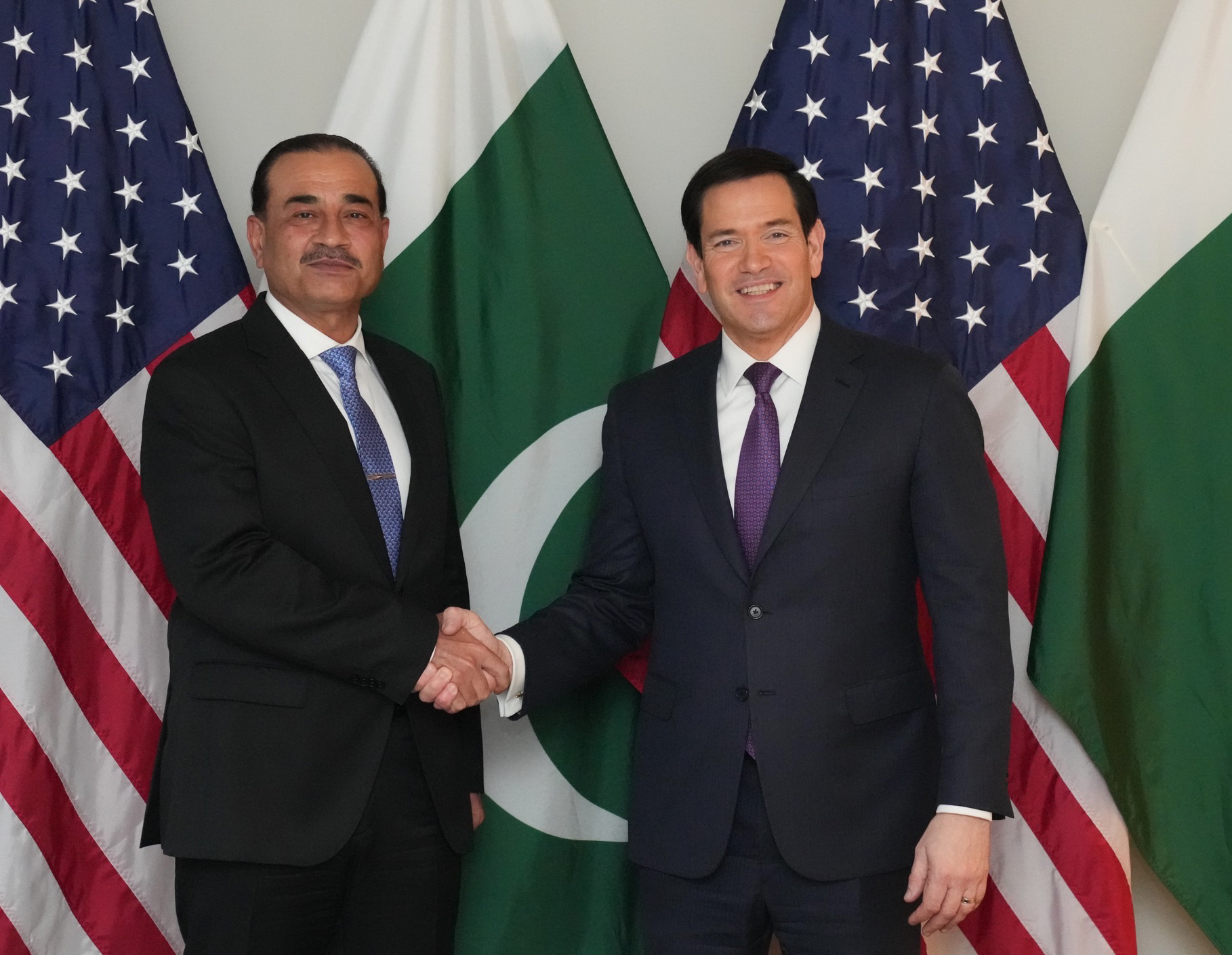
The 27th Constitutional Amendment, passed on November 13, 2025, concentrated decision-making authority in the office of the Army Chief to a degree without precedent in Pakistan’s civil-military history. General Asim Munir now holds lifetime immunity, requires a two-thirds parliamentary majority for removal, and exercises de facto control over both foreign policy and military deployments. The amendment eliminated the mechanism that allowed Pakistan’s parliament to reject Saudi Arabia’s 2015 request for troops to fight in Yemen — a unanimous vote that reflected genuine civil-military deliberation. That deliberation no longer exists as a constitutional constraint.
Munir authorised the Eastern Province deployment. Munir runs the ceasefire mediation. Munir personally brokered the April 8-9 back-channel between Saudi and Iranian interlocutors that produced the existing ceasefire. And Munir’s military budget depends in part on the $5 billion financial package that Saudi Arabia and Qatar disbursed on the day the deployment went public. The concentration is not a conspiracy theory. It is the constitutional architecture that the 27th Amendment created, and every party to the conflict understands it. When Ghalibaf sat across from Vance in Islamabad, the host country’s head of mediation had 13,000 of his own troops defending the other side’s oil infrastructure 3,000 kilometres away.
The 1991 precedent is instructive precisely because of its differences. Pakistan deployed a comparable force to Saudi Arabia during the Gulf War, but in 1991 Pakistan was not mediating between Iraq and the coalition. It was a participant on one side, and that role was understood clearly by all parties. The current arrangement asks Pakistan to be both participant and referee, and the 27th Amendment ensures that one person decides where the line between those roles falls. The 2.5 million Pakistani workers in Saudi Arabia whose remittances underpin Pakistan’s foreign-exchange position, according to the State Bank of Pakistan, the $5 billion in fresh financing, and the SMDA’s mutual-defence clause — which states, per the agreement text as cited by Dawn, that “any aggression against either country shall be considered an aggression against both” — all point in one direction. The mediation portfolio is the anomaly. The military alignment is the structure.
Frequently asked questions
How many Pakistani troops are in Saudi Arabia?
Approximately 13,000 ground troops plus 10 to 18 fighter jets, according to Saudi MoD statements and reporting by Al Jazeera, The National, and Defence Security Asia. Around 10,000 were pre-positioned before the April 11 confirmation, with roughly 3,000 additional personnel and the air contingent arriving as an incremental surge.
What aircraft did Pakistan deploy?
JF-17 Thunder Block III jets, a Sino-Pakistani co-production equipped with KLJ-7A AESA radar and PL-15E beyond-visual-range missiles, alongside F-16 Block 52 fighters that were already in Saudi Arabia for the Spears of Victory 2026 exercise. The JF-17s operate outside US export controls, giving Pakistan operational flexibility without American approval requirements.
Is the deployment offensive or defensive?
Both Saudi and Pakistani officials describe the mission as defensive, aimed at “strengthening military cooperation” and “improving operational readiness.” Pakistan’s Defence Minister Khawaja Asif earlier ruled out military participation in any campaign against Iran. However, the force is positioned in the most heavily targeted province of the war, and the SMDA’s mutual-defence clause could be invoked to justify expanded operations if the ceasefire collapses.
Has Iran objected to the deployment?
No. Iran has not issued a formal public objection. Tehran’s silence likely reflects a calculation that confronting Pakistan would destroy the only remaining diplomatic channel through which US-Iran contact has occurred. Iran’s Ambassador to Pakistan earlier acknowledged Saudi assurances that its territory would not be used against the Islamic Republic, providing Tehran with a face-saving framework.
What is the SMDA?
The Strategic Mutual Defence Agreement, signed on September 17, 2025, commits Pakistan and Saudi Arabia to treat an attack on either country as an attack on both. The April 11 deployment represents the first operational invocation of this pact. The agreement was negotiated under General Munir’s authority and does not require parliamentary ratification under the 27th Constitutional Amendment.