DHAHRAN — Pakistani fighter jets landed at King Abdulaziz Air Base on Friday, parking combat aircraft seven kilometres from Saudi Aramco’s global headquarters in the middle of an active shooting war — and on the same day that Pakistan was hosting Iran’s ceasefire delegation in Islamabad. The country that brokered the ceasefire is now co-defending the oil infrastructure the ceasefire was supposed to protect.
The deployment, announced by Saudi Arabia’s Ministry of Defense, places JF-17 Thunder jets and support aircraft at the Royal Saudi Air Force’s primary Eastern Province installation under the Strategic Mutual Defence Agreement signed last September. It is the first operational activation of that pact, and it turns Pakistan from the war’s diplomatic host into a physical co-defender of the oil infrastructure Iran has spent six weeks trying to destroy.
Table of Contents
What Landed at King Abdulaziz
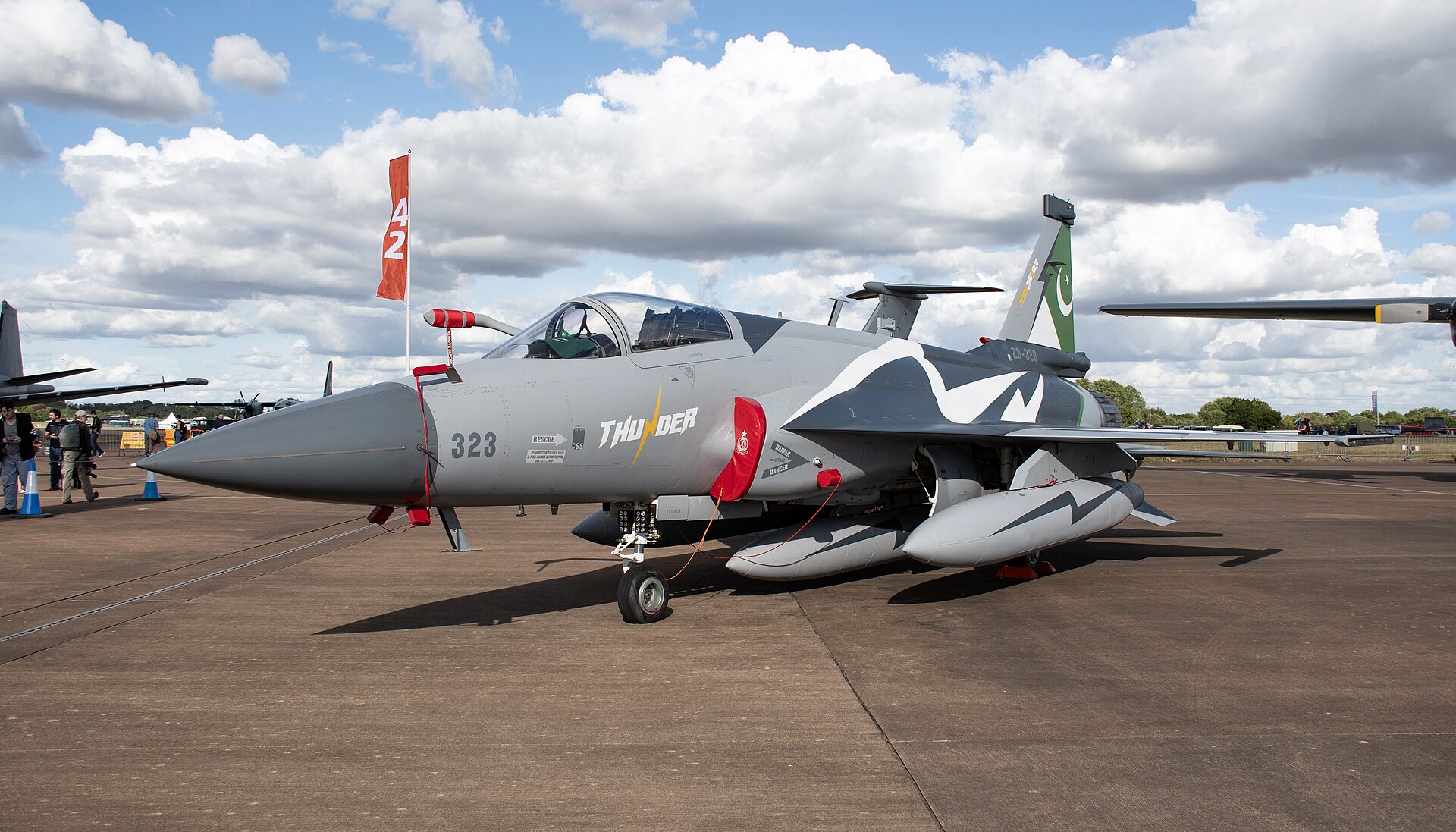
The Saudi MoD confirmed that “fighter and support aircraft belonging to the Pakistan Air Force” arrived at King Abdulaziz Air Base in Dhahran on April 11, with a mandate to enhance “joint military coordination and operational readiness” between the two armed forces. Fortune identified the aircraft as JF-17 jets. The precise number was not officially disclosed, though an unnamed source cited by Al Jazeera suggested the initial contingent was small — “three jets won’t make much of a difference militarily” — pointing to a forward detachment rather than a full squadron deployment.
The JF-17 Block III, jointly developed by Pakistan and China’s Chengdu Aircraft Corporation, is not the airframe most Western defence analysts would associate with Gulf air superiority. But it carries capabilities that matter in this context: an active electronically scanned array radar, Chinese PL-15E beyond-visual-range missiles with an engagement envelope exceeding 145 kilometres, and a combat radius of roughly 900 kilometres on internal fuel — enough to cover the entire Eastern Province littoral and most of the Persian Gulf from Dhahran, according to Pakistan Aeronautical Complex specifications. Pakistan showcased the Block III at the World Defense Show in Riyadh earlier this year as part of an export campaign targeting thirteen countries, which means the Saudis have already seen the aircraft’s spec sheet at close range.
Saudi Defence Minister Prince Khalid bin Salman framed the arrival in the broadest possible terms. “Saudi Arabia and Pakistan stand united against the aggressor,” he posted, “always and forever.” The language was not accidental — “the aggressor” requires no translation for an Iranian audience already watching the Islamabad talks with deep suspicion about Pakistan’s neutrality.
Why Dhahran, and Why Now
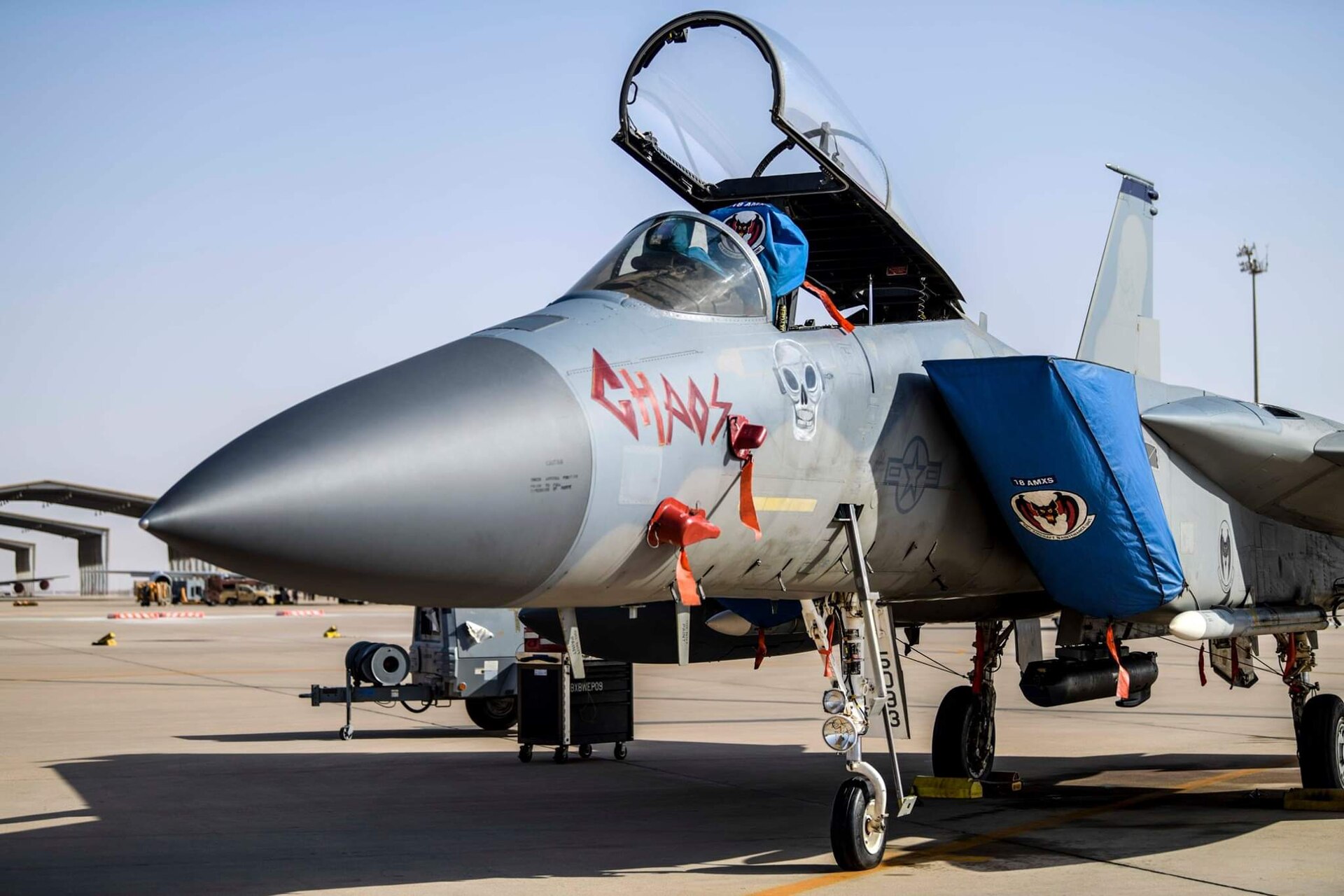
King Abdulaziz Air Base sits at the operational heart of everything Iran has been trying to hit since the war began on February 28. Ras Tanura, the world’s largest oil export terminal and an Iranian strike target since March 2, lies roughly sixty kilometres to the north. The base itself hosts RSAF 3 Wing, including No. 13 Squadron’s F-15C/D Eagles and No. 75 and 83 Squadrons’ Tornado IDS aircraft, and has been at the centre of the Eastern Province’s air defence architecture since the war’s first day.
The Middle East briefing 3,000+ readers start their day with.
One email. Every weekday morning. Free.
The timing is equally loaded. Saudi forces have intercepted 894 Iranian projectiles since March 3 — 799 drones and 95 ballistic missiles — according to cumulative Saudi Defence Ministry tallies, but the PAC-3 MSE interceptor stockpile that kept those numbers possible is approximately 86 percent depleted, with roughly 400 rounds remaining. Lockheed Martin’s $4.76 billion contract signed on April 10 won’t deliver new interceptors for eighteen to twenty-four months. Any additional combat aircraft that can intercept drones or provide close air support for point defence is, in the language of military logistics, a gap-filler — and the Saudis need gap-fillers now, not in 2028.
The financial architecture behind the deployment arrived in Islamabad twenty-four hours before the jets did. Saudi Finance Minister Mohammed bin Abdullah al-Jadaan met Prime Minister Shehbaz Sharif, Deputy Prime Minister Ishaq Dar, and Field Marshal Asim Munir on April 10, confirming what Pakistan Today described as “full financial support” — including a request for $5 billion in fresh loans and a five-year extension of the $1.2 billion annual oil financing facility set to expire this month (ProPakistani). The jets took off for Dhahran the next morning, a sequence that no analyst in either capital pretended was coincidental.
How Can Pakistan Host Iran’s Talks and Defend Saudi Arabia at the Same Time?
The short answer is that Field Marshal Munir believes the two roles reinforce each other rather than contradict, and his constitutional position means nobody in Pakistan’s civilian government can overrule that judgment. The April 11 deployment landed while JD Vance, Steve Witkoff, and Jared Kushner were in Islamabad for the first direct US-Iran talks since 1979, with Iran’s seventy-one-member delegation led by Parliament Speaker Mohammad-Bagher Ghalibaf and Foreign Minister Abbas Araghchi sitting in the same city. Pakistan was simultaneously the war’s mediator and one of its co-belligerents — a dual posture that Imtiaz Gul, the Islamabad-based security analyst, told Al Jazeera was deliberate messaging.
“It’s messaging Tehran to be flexible in these talks, but also it is underlining to them that Pakistan has obligations” under the defence pact.
Imtiaz Gul, Islamabad-based security analyst, to Al Jazeera, April 11, 2026
Michael Kugelman, the Atlantic Council’s resident senior fellow for South Asia, read the deployment as a conditional threat rather than a fixed commitment. “This is Pakistan signalling to Iran that if Iran is not willing to make the types of concessions that lead to a deal and the conflict resumes and escalates, there is a chance that Pakistan could move itself closer to Saudi Arabia,” he told Al Jazeera. The deployment, in this reading, is an instrument of the talks rather than a contradiction of them — leverage dressed in squadron markings.
But leverage is a dangerous thing to park on a runway inside a declared Iranian target envelope. Tehran’s Tasnim News Agency has repeatedly stated that Iran would strike Saudi Aramco facilities in retaliation for US-launched attacks from Gulf bases, and King Abdulaziz has hosted American aircraft in every Gulf deployment since 1990. Pakistani pilots now operate within the same threat radius that has produced 894 Iranian strike attempts in forty-three days, which means Islamabad’s “messaging” comes with the physical risk that an Iranian missile could kill a Pakistani servicemember on Saudi soil — a scenario that would collapse the mediator role in a single warhead.
The Defence Pact That Made This Possible
The Strategic Mutual Defence Agreement, signed at Al-Yamamah Palace on September 17, 2025, by Crown Prince Mohammed bin Salman and Prime Minister Sharif, contains a central clause that reads like a South Asian echo of NATO’s Article 5: “any aggression against either country shall be considered an aggression against both.” The full text has never been publicly released. Pakistan’s Defence Minister Khawaja Asif said at the signing that “what we have, and the capabilities we possess, will be made available under this agreement” — a formulation broad enough to include Pakistan’s nuclear arsenal, which is exactly how Ali Shihabi, the Saudi royal court commentator, interpreted it when he told the Middle East Council on Global Affairs that the SMDA “puts you under [Pakistan’s] nuclear umbrella in case of an attack.”
Not everyone reads the pact that aggressively. The Belfer Center for Science and International Affairs at Harvard assessed the agreement as “primarily a political signal of solidarity and strategic cooperation, rather than an unconditional war guarantee,” while Chatham House noted that it “sets a precedent for extended deterrence” by a nuclear-armed state outside the NPT — a framing that acknowledges the nuclear dimension without confirming the trigger mechanism. The April 11 deployment suggests the truth sits somewhere between: not a full war guarantee, but far more than a political signal, with combat aircraft now operationally deployed in the war zone.
The deployment’s legal pathway ran through Field Marshal Munir’s office, not through parliament. Pakistan’s 27th Constitutional Amendment, passed in November 2025, created the post of Chief of Defence Forces with authority over all military branches, insulated from civilian political removal — a two-thirds parliamentary majority is required to remove the CDF, compared with a simple majority for the prime minister (Chatham House). Munir, who has functioned as the ceasefire’s primary operational relay between the US, Saudi, and Iranian delegations, does not require a cabinet vote for security decisions, which means the deployment was authorised by the same officer who is managing the peace process.
How Does This Compare to Pakistan’s 1982 Saudi Deployment?
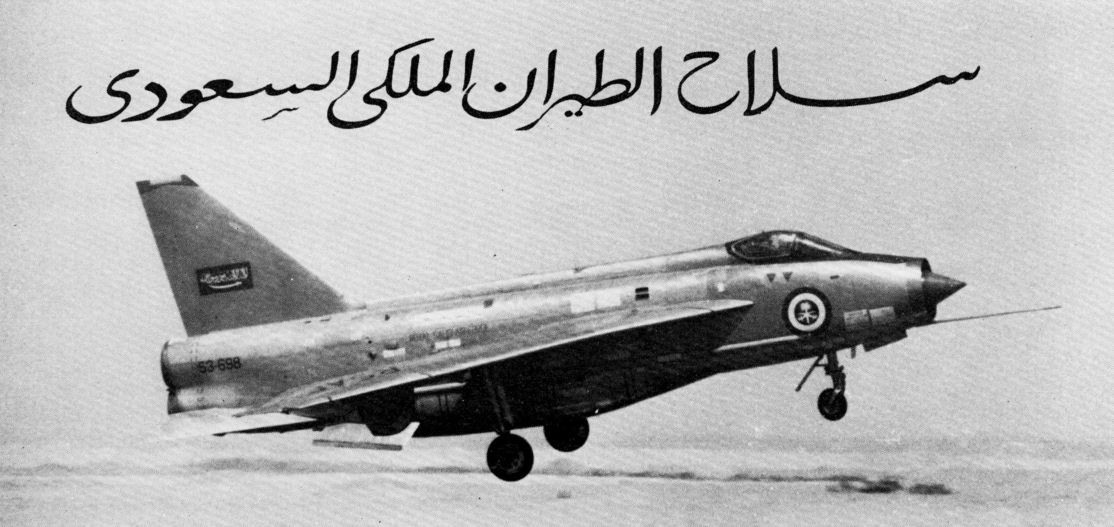
Pakistan has sent troops to Saudi Arabia before — the comparison has been made in every wire story filed since Friday morning — but the differences are more instructive than the similarities. Under a December 14, 1982 protocol, the 12th Khalid bin Walid Armoured Brigade, comprising 7,000 troops including 350 officers under Brigadier Mehboob Alam, was airlifted to Tabuk in the northwestern desert, roughly 1,200 kilometres from the nearest oil infrastructure and separated from any active front by the entire width of the Kingdom. The brigade remained for five years, rotating through twenty thousand personnel by 1987 before withdrawal just months ahead of Iraq’s invasion of Kuwait. Through the 1970s and 1980s, Pakistani troop strength in the Kingdom reached fifteen thousand at various points, and PAF pilots flew RSAF English Electric Lightnings to repel South Yemeni incursions as early as 1969.
The April 2026 deployment inverts nearly every parameter of that arrangement. The 1982 force was ground armour positioned in a rear-area desert garrison during peacetime, 1,200 kilometres from the nearest oil terminal; the 2026 force is combat aviation positioned at the Eastern Province’s primary air base during an active shooting war in which Iran has struck the province hundreds of times. Tabuk was far from anything Iran could reach in 1982, but Dhahran is seven kilometres from the target Iran has hit most often in 2026 — and the JF-17s at King Abdulaziz are close enough to Ras Tanura that their pilots could drive there for lunch.
Retired Pakistani Brigadier General Feroz Khan, now at the Naval Postgraduate School in Monterey, captured the tightrope in comments to the Middle East Council on Global Affairs: Pakistan “will need to be very, very careful not to rattle its geopolitical sweet spot with China, Iran, Saudi Arabia and the U.S.” That sweet spot has never been narrower, with Chinese-made missiles on Pakistani jets defending Saudi oil terminals that China depends on, while Iran’s ceasefire delegation sits in Pakistan’s capital and Washington’s vice president sleeps in an Islamabad hotel guarded by Pakistani security.
Tehran’s Calculated Silence
As of filing, Iran had issued no formal condemnation of the deployment — a silence that analysts in both Islamabad and Tehran read as deliberate restraint calibrated to avoid jeopardising Araghchi’s negotiating position at the Islamabad talks. The Iranian foreign ministry has a well-documented pattern of delaying reactions to Pakistani defence moves until after the immediate diplomatic moment passes, and Ghalibaf landed in Islamabad already carrying a grievance list — “two of the measures mutually agreed upon between the parties have yet to be implemented: a ceasefire in Lebanon and the release of Iran’s blocked assets,” he told reporters — that left limited bandwidth for a parallel confrontation with Islamabad over basing rights.
But the silence has limits. When Foreign Minister Dar invoked the SMDA on March 3, telling Iran’s leadership directly to “take care of our pact with Saudi Arabia,” Tehran sought and received Pakistani assurances that Saudi territory would not serve as a launch platform for attacks on Iran. Iran’s own ten-point ceasefire plan includes Point 8, demanding US base withdrawal “from all regional bases” — and Pakistan’s jets now sit at a base that has hosted American aircraft in every Gulf contingency since Desert Shield. Iranian President Pezeshkian, who welcomed the SMDA at the UN General Assembly in September 2025 as part of a “comprehensive regional security system,” is discovering what that system looks like when it deploys combat aircraft to the province his armed forces have been bombarding for forty-three days.
The operational question — whether Pakistani pilots would engage Iranian targets, or whether the JF-17s are restricted to defensive combat air patrols — remains unanswered, and Islamabad’s studied ambiguity on the point is itself a form of leverage. Pakistan has already parked tankers at a Saudi air base, a logistical footprint that suggests the deployment may expand beyond a symbolic forward detachment. The ceasefire expires on April 22, and Ghalibaf’s opening demands in Islamabad — Lebanon inclusion, frozen assets — are preconditions that neither the US nor Israel has shown any willingness to meet.
If the talks collapse and the shooting resumes, Pakistani pilots at Dhahran will be sitting inside the most-targeted airspace in the Gulf, wearing the uniform of the country that was supposed to broker the peace. Field Marshal Munir’s bet is that having them there makes collapse less likely. The last forty-three days of this war suggest that the bets people make in the Gulf rarely pay out the way they expect.
FAQ
What type of aircraft did Pakistan deploy to Saudi Arabia?
The Pakistan Air Force sent JF-17 Thunder Block III jets, jointly developed with China’s Chengdu Aircraft Corporation, to King Abdulaziz Air Base in Dhahran. The aircraft costs roughly $25–32 million per unit — a fraction of the F-15’s price tag — and was showcased at the World Defense Show in Riyadh earlier this year as part of an export campaign targeting thirteen countries, making the Saudi deployment simultaneously a military operation and a live-fire product demonstration.
Has Pakistan deployed military forces to Saudi Arabia before?
Yes, but the April 2026 deployment differs fundamentally from historical precedent. The largest prior presence was the 12th Khalid bin Walid Armoured Brigade at Tabuk from 1982 to 1987, peaking at 7,000 troops stationed in a rear-area desert garrison during peacetime. Pakistani troop presence across the Kingdom reached fifteen thousand at various points in the 1970s-80s. The Tabuk deployment was ground forces positioned 1,200 kilometres from any oil infrastructure; the Dhahran deployment is combat aviation seven kilometres from Aramco’s headquarters during an active war.
Does the SMDA obligate Pakistan to fight Iran?
The pact’s central clause treats aggression against either party as aggression against both, but the trigger mechanism and escalation ladder have never been publicly defined. The Belfer Center assessed it as a political signal rather than an unconditional war guarantee, while Chatham House called it a precedent for extended deterrence by a nuclear-armed state outside the NPT. The deployment itself — operational but limited in scale — suggests Islamabad is calibrating its commitment incrementally, using each escalation step as a pressure point in the ceasefire talks it is simultaneously hosting rather than committing to full-spectrum belligerency.
What financial arrangements accompanied the deployment?
Saudi Finance Minister Mohammed al-Jadaan visited Islamabad on April 10, one day before the jets arrived, confirming “full financial support” for Pakistan. Islamabad is seeking at least $5 billion in fresh loans and a five-year extension of its $1.2 billion annual Saudi oil financing facility, which expires this month. Pakistan faces approximately $5 billion in external debt repayments imminently, and the timing — financial assurance one day, combat aircraft the next — makes the transactional architecture of the SMDA’s operational activation difficult to miss.
Why has Iran not publicly condemned the deployment?
Tehran’s silence appears calculated to avoid disrupting the Islamabad ceasefire talks, where Ghalibaf and Araghchi are leading a seventy-one-member delegation. Iran’s foreign ministry has historically delayed reactions to Pakistani defence moves until after the immediate diplomatic window closes. Ghalibaf arrived in Islamabad with existing demands — a Lebanon ceasefire and release of frozen Iranian assets — that consumed his public bandwidth, and an open confrontation with Pakistan over basing would risk alienating the only regional power willing to serve simultaneously as Iran’s diplomatic host and interlocutor with Washington.