TEHRAN — Iranian President Masoud Pezeshkian has publicly accused IRGC commanders Ahmad Vahidi and Ali Abdollahi of “acting unilaterally” and destroying any remaining chance of a ceasefire, in what two sources close to the presidential office described as a deliberate attempt to transfer political ownership of the war’s continuation to the Revolutionary Guards. The accusation, delivered during a confrontation with former IRGC intelligence chief Hossein Taeb on April 4, marks the first time a sitting Iranian president has named specific military commanders as responsible for a diplomatic collapse — but the move may have made the peace it was meant to force harder to achieve.
By putting Vahidi and Abdollahi on the record as the men who wrecked the Islamabad talks, Pezeshkian created a political trap that closes on both sides. Any ceasefire deal Vahidi now authorises will be read — by hardliners inside the IRGC, by the Supreme Leader’s office, by the commanders beneath him — as capitulation to civilian pressure, a concession extracted under public humiliation rather than strategic calculation. The accusation gave the one man who must sign off on any agreement a face-saving reason to refuse every agreement, and it did so on the record, in front of a figure wired directly into Khamenei’s inner circle, at a moment when 21-hour negotiations in Islamabad were already buckling under the weight of mutual distrust.
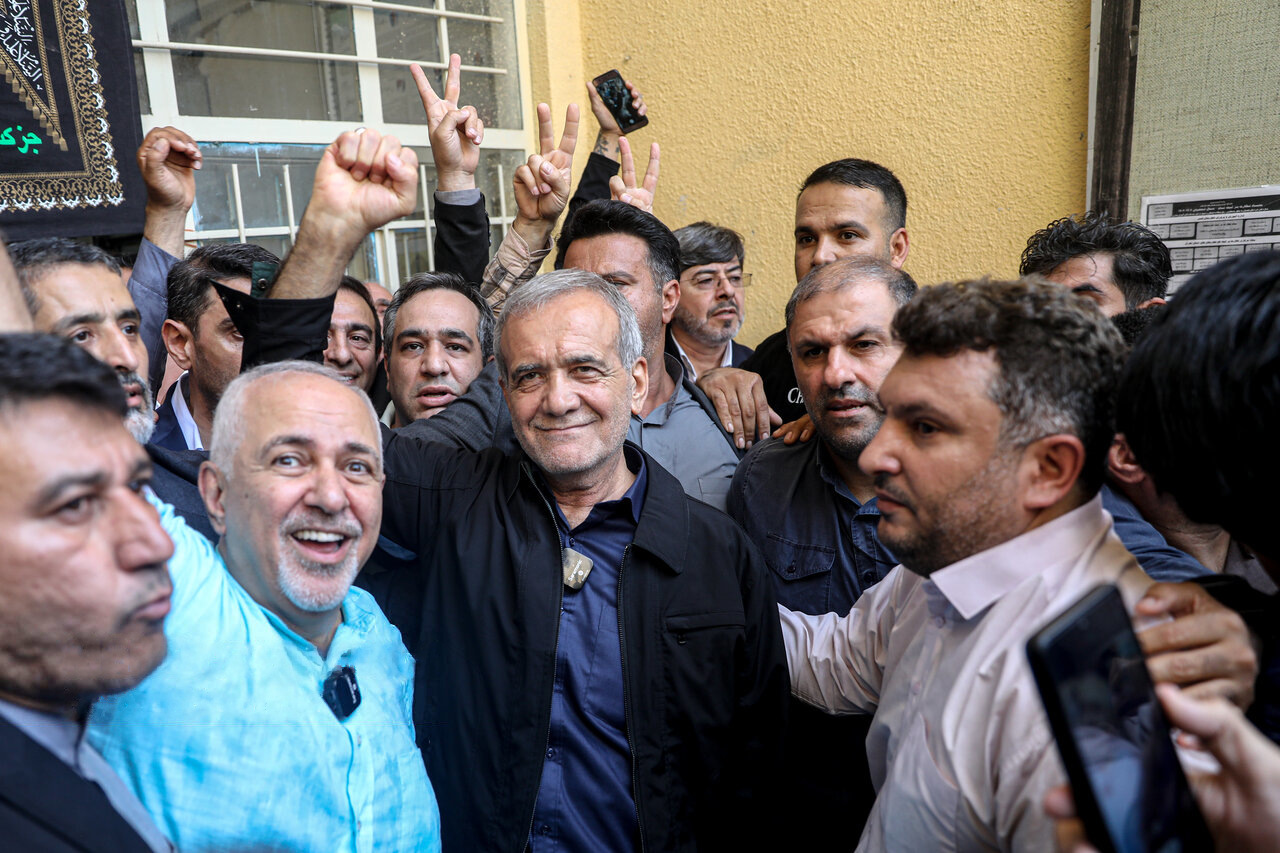
Table of Contents
- What Pezeshkian Said and Why He Said It to Taeb
- Who Are Vahidi and Abdollahi — and Why Both Names Matter
- Why Does a Public Accusation Make Peace Harder?
- The Islamabad Talks Were Already Collapsing Before He Spoke
- Can Pezeshkian Actually Remove IRGC Commanders?
- The Economic Clock Pezeshkian Cannot Stop
- What Comes Next
What Pezeshkian Said and Why He Said It to Taeb
According to Iran International, citing two sources close to the presidential office, Pezeshkian confronted Hossein Taeb on April 4 in what was described as “a tense and highly charged exchange.” He told Taeb that Vahidi and Abdollahi were “acting unilaterally and driving escalation through attacks on regional countries,” that their policies “had destroyed any remaining chance of a ceasefire,” and that the two commanders were steering Iran toward “a huge catastrophe.” The confrontation was not a spontaneous eruption of frustration — it was the third escalation in seven days, following a public warning on March 28 that the economy would collapse within three to four weeks and a direct confrontation with Vahidi himself on March 29 in which Pezeshkian demanded that “executive and operational control” return to the civilian government.
The choice of interlocutor reveals the strategy. Taeb is not in operational command of anything — he was removed as IRGC Intelligence Organisation chief in 2022 and now occupies a role closer to the Supreme Leader’s advisory network. Pezeshkian did not go through the Supreme National Security Council, where IRGC-aligned secretary Ali Akbar Ahmadian sits, nor through the formal chain of command that runs from the Supreme Leader’s office through to the IRGC’s operational hierarchy. He went through a back-channel to Khamenei’s inner circle, using Taeb as a messenger who could carry the accusation to the one office that actually has the constitutional authority to act on it. The message was not really for Taeb, and it was not really for Vahidi — it was for whoever is making decisions inside the Supreme Leader’s compound while Khamenei himself remains absent from public view for over 39 days.
The escalation from March 29 to April 4 matters in itself. On March 29, Pezeshkian confronted Vahidi directly and demanded civilian control be restored — a demand Vahidi rejected, countering that Iran’s failures “stemmed from the government’s failure to implement structural reforms before the current war began,” according to the Jerusalem Post, citing Iran International. Six days later, Pezeshkian escalated by naming both Vahidi and Abdollahi to a figure outside the operational chain — shifting from a private demand to a political accusation routed through the Supreme Leader’s network. That shift, from confrontation to denunciation, changed the character of the dispute from an internal bureaucratic fight to a public fracture with its own political gravity.
Who Are Vahidi and Abdollahi — and Why Both Names Matter
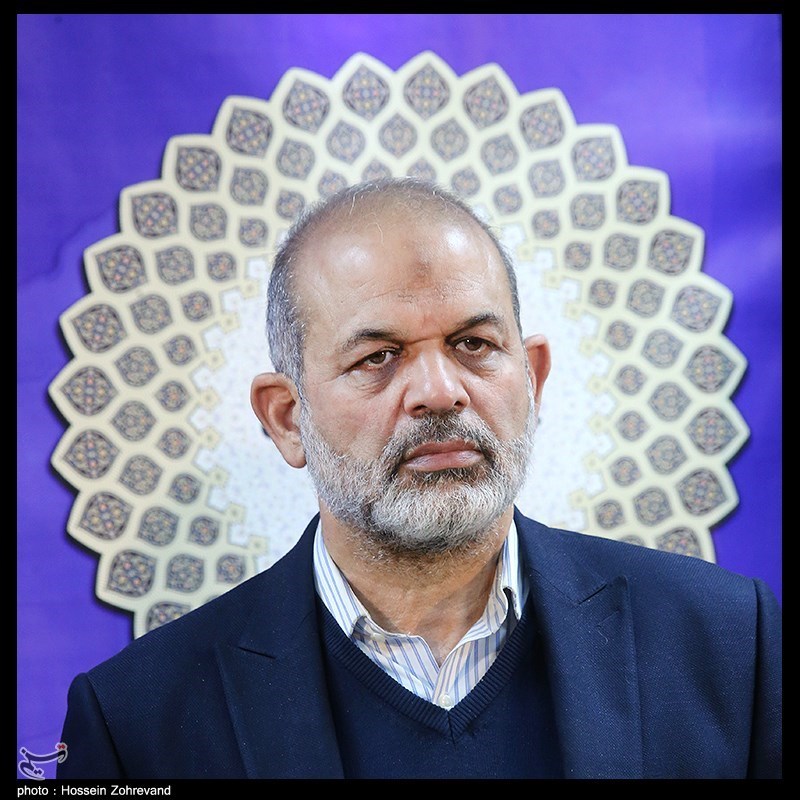
Ahmad Vahidi has been IRGC Commander-in-Chief since March 1, 2026, elevated to the role after a series of command losses that gutted Iran’s senior military leadership in the war’s opening weeks. His background is Quds Force — he commanded it from 1988 to 1997 — and he carries an Interpol Red Notice for the 1994 AMIA bombing in Buenos Aires that killed 85 people, as reported by Al Jazeera on March 6. He is not a man who arrived at this command expecting to negotiate, and his entire career trajectory suggests he views the civilian government’s diplomatic efforts as interference in a military campaign he believes the IRGC can still manage on its own terms. When Pezeshkian demanded operational control on March 29, Vahidi did not equivocate — he told the president that the government’s own failures had created the mess, and that the IRGC’s approach was the only viable path.
The Middle East briefing 3,000+ readers start their day with.
One email. Every weekday morning. Free.
Ali Abdollahi is less well known internationally but arguably more operationally important at this specific moment. He commands Khatam al-Anbiya Central Headquarters — Iran’s joint war room, the command node that plans and coordinates IRGC and Army strikes across the region. He is the third KCHQ commander in under a year, according to Asharq al-Awsat, after his predecessors Rashid and Shadmani were both killed in Israeli strikes, with Abdollahi appointed on September 5, 2025. He has been under OFAC sanctions since January 2020. By naming Abdollahi alongside Vahidi, Pezeshkian was not just accusing the IRGC’s political leadership of sabotaging diplomacy — he was accusing the operational-planning level, the officers who decide which targets get struck and when, of driving escalation through their day-to-day warfighting decisions. The accusation reached all the way down into the war room itself.
Nicole Grajewski at the Carnegie Endowment’s Nuclear Policy Program captured the structural reality in a March 2026 assessment: “President Pezeshkian appears to play a much more limited role” in the war’s conduct, while “the most visible influence” belongs to “IRGC security establishment figures.” Pezeshkian’s accusation was, in effect, a public confirmation of what analysts had been saying for weeks — that he is a president without power over the institution prosecuting the war in his country’s name.
Why Does a Public Accusation Make Peace Harder?
The logic of Pezeshkian’s move was straightforward: by naming the generals responsible for diplomatic collapse, he intended to create political pressure on the IRGC to either fall into line or accept accountability for the consequences. Ali Vaez, the International Crisis Group’s Iran Project Director, described the broader pattern in an ICG podcast on April 11 — civilian leaders remain “sidelined while the IRGC eventually prevails.” Pezeshkian was trying to break that pattern by making the sidelining visible and assigning it a cost.
But political accusations inside authoritarian systems operate differently than they do in democratic ones. Vahidi’s constituency is not the Iranian public — it is the IRGC officer corps, the Supreme Leader’s office, and the hardline establishment that has spent four decades building the Revolutionary Guards into a state within a state. Within that constituency, being publicly attacked by a reformist president is not a liability — it is a credential. Pezeshkian’s accusation made Vahidi the man who stood up to civilian interference in a military campaign, who refused to let a president with no military experience dictate operational decisions during wartime. The accusation did not weaken Vahidi’s position within the IRGC; it may have strengthened it.
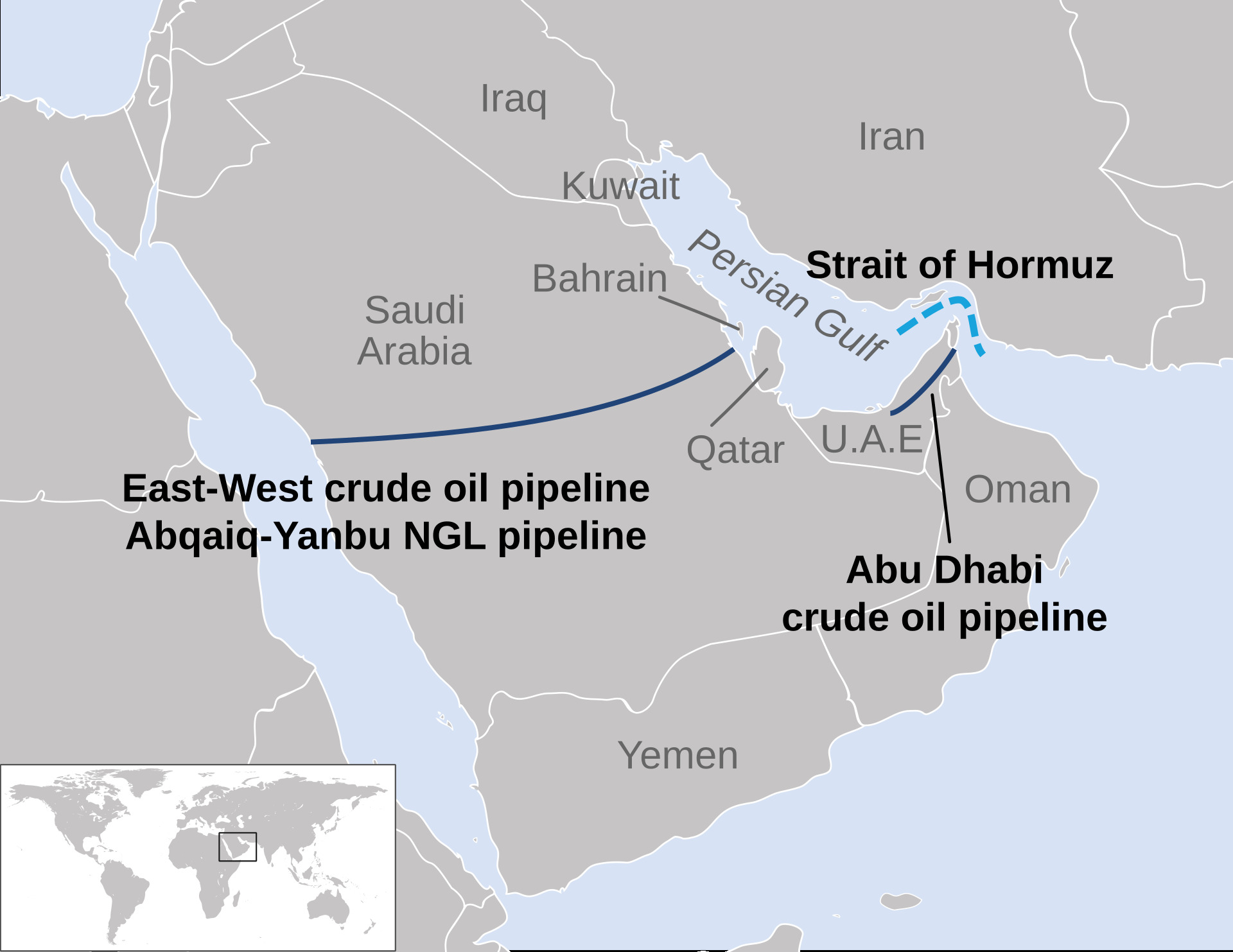
The deeper problem is one of face. Any ceasefire agreement requires Vahidi’s non-sabotage at a minimum, and more likely his active cooperation in restraining IRGC units across the region — units that have already demonstrated, through the IRGC Navy’s unilateral “full authority” declaration over the Strait of Hormuz and the East-West Pipeline strike on April 8 (hours after the ceasefire’s nominal start), that they operate with considerable autonomy from any central command. If Vahidi now agrees to a deal, every hardline newspaper in Tehran, every IRGC-linked Telegram channel, every Basij commander in every province will frame it as the general who broke under Pezeshkian’s pressure. In a system where perceived weakness can be career-ending or worse, that framing is a powerful incentive to refuse.
Pezeshkian wanted to make it politically costly for the IRGC to continue the war; what he may have done instead is make it personally costly for Vahidi to end it.
The Islamabad Talks Were Already Collapsing Before He Spoke
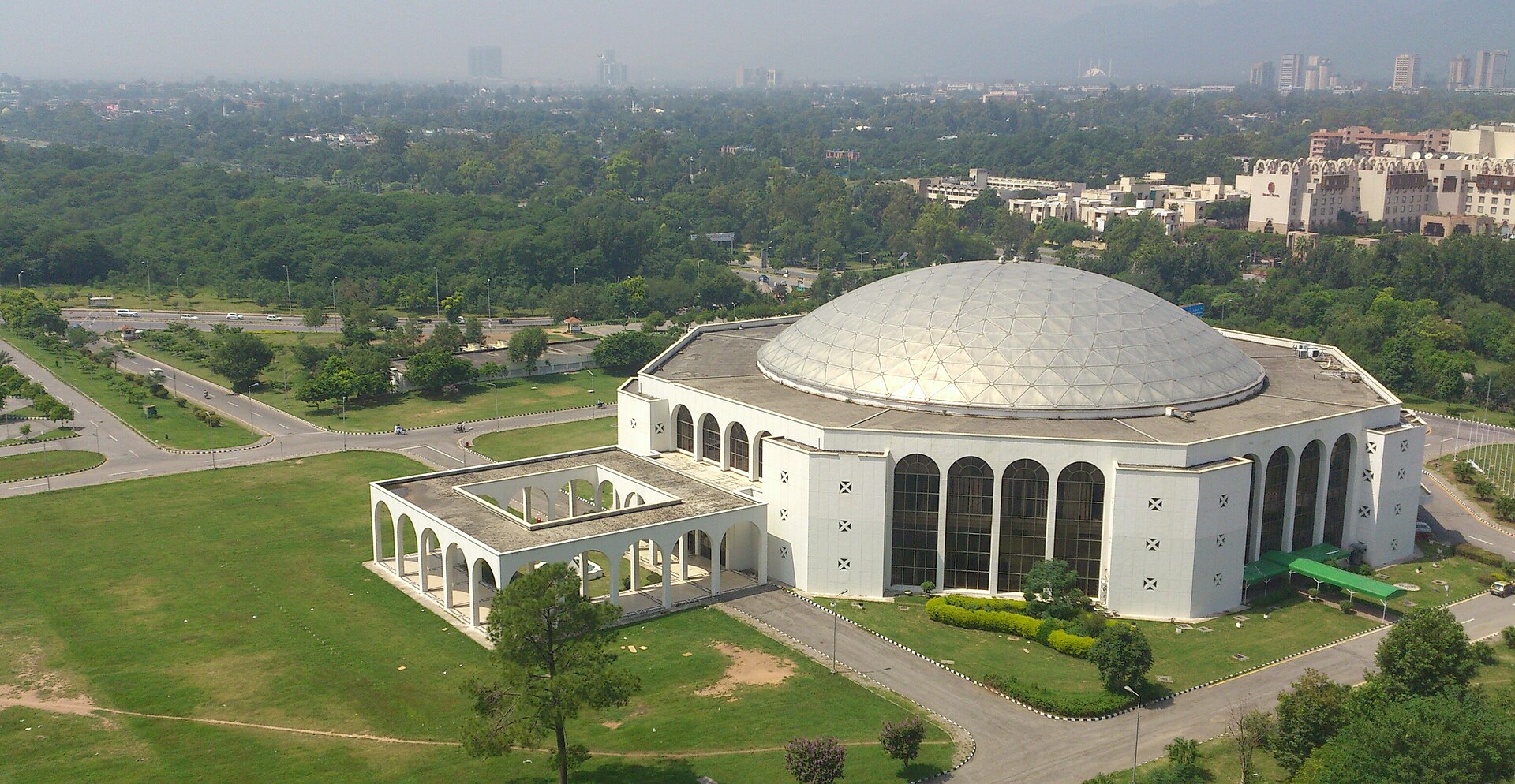
The 21-hour negotiations in Islamabad on April 11-12, where Vice President JD Vance led the American side and Foreign Minister Abbas Araghchi represented Iran, were operating under structural constraints that no presidential accusation could have overcome. Vance told reporters, as cited by NPR and CNBC on April 12, that “we need to see an affirmative commitment that they will not seek a nuclear weapon, and they will not seek the tools that would enable them to quickly achieve a nuclear weapon.” Araghchi, speaking before the talks began on April 11, said Iran had “entered the negotiations with complete distrust” and that any agreement “goes through stopping the war,” according to Voice of Emirates. The two sides were not disagreeing about terms — they were disagreeing about what the talks were even for.
Behind those public positions, the IRGC had already worked to constrain Araghchi’s room to manoeuvre. According to the Jerusalem Post, citing Iran International, Vahidi pushed on April 10 to include Mohammad Reza Zolghadr — the SNSC secretary who is himself under both US and EU sanctions — on the negotiating team, a demand the delegation refused. Vahidi also insisted that the delegation refuse to discuss Iran’s missile programme under any circumstances. Al Jazeera’s Ali Hashem had already identified the structural problem on March 25: “whoever is sitting at the negotiation table will have to get Zolghadr’s approval before anything passes.” Even if Araghchi had reached an agreement, the ratification pipeline runs through three IRGC-controlled gates — Zolghadr’s SNSC endorsement, Mojtaba Khamenei’s Article 176 ratification, and Vahidi’s operational compliance. All three are held by men with no political incentive to cooperate.
The state-aligned Tasnim news agency’s framing of the collapse was revealing in what it omitted. Its correspondent reported on April 12 that “due to what is described as US overreach and ambitions, the two sides have so far failed to reach an agreement.” There was no mention of Pezeshkian’s accusations, no acknowledgment of internal divisions, no reference to Vahidi’s pre-talks intervention — just the standard narrative of American aggression against Iranian sovereignty. PressTV ran a similar line. The IRGC’s media apparatus treated the collapse as externally caused, which is precisely the narrative Pezeshkian’s accusation was meant to disrupt but could not, because the outlets that might amplify it inside Iran are either shut down or broadcasting from exile.
Can Pezeshkian Actually Remove IRGC Commanders?
The short answer, written into Article 110 of Iran’s constitution, is no. The Supreme Leader alone commands the armed forces, appoints and dismisses the IRGC’s commander-in-chief, and holds final authority over the security establishment’s senior personnel. Pezeshkian has no mechanism — legal, constitutional, or institutional — to remove Vahidi, discipline Abdollahi, or restructure the chain of command that runs from Khamenei’s office through the SNSC to the IRGC’s operational hierarchy. His accusation carries no formal legal consequence, and every figure in Iran’s power structure knows it.
This is not a new problem, but it has never been tested quite this publicly. When President Mohammad Khatami faced IRGC threats during the 1999 student protests, he deferred to Khamenei rather than confront specific commanders — a political retreat that preserved his presidency at the cost of his reformist agenda. When Mahmoud Ahmadinejad refused to accept his cabinet for 11 days in 2011 over a dispute about the intelligence minister, the standoff ended with Ahmadinejad backing down, not with the IRGC’s position changing. Hashemi Rafsanjani’s attempts in the 1990s to downsize the IRGC met institutional resistance that was never personalised — it remained a bureaucratic fight, not a named-commander confrontation. Pezeshkian has gone further than any of his predecessors in naming the individuals responsible, but he has done so with the same constitutional tools they had, which is to say almost none.
The absence is the absence of Khamenei himself. With the Supreme Leader still unseen in public — the Times of London reported a memo suggesting he was “unconscious in Qom” — the one office that could actually act on Pezeshkian’s accusations is either vacant or incapacitated. Mojtaba Khamenei, the Supreme Leader’s son, is reported to be handling some functions of the office, but his authority to dismiss an IRGC commander-in-chief during wartime is constitutionally untested and politically explosive. Pezeshkian’s message to Taeb may have been aimed at an office that cannot currently receive it.
The Economic Clock Pezeshkian Cannot Stop
Pezeshkian’s March 28 warning that the economy would collapse “in three to four weeks” was not rhetoric — it was a description of conditions that were already partially materialised. The Jerusalem Post, citing Iranian economic data, reported food prices more than 50 percent above pre-war levels, with over 40 percent of the population below the poverty line. Government employees had gone unpaid for three months, ATMs were running empty, and Atalayar reported bank failures spreading through the financial system alongside the rial’s continued collapse. The economic case for a ceasefire is not a future projection — it is a present emergency, and it is the only pressure Pezeshkian holds that the IRGC cannot simply override through operational command.
But the IRGC’s relationship to Iran’s economy is not one of dependence on its stability — it is one of extraction from its dysfunction. The Guards’ economic empire, estimated at 30 to 40 percent of GDP by Atalayar’s Arístegui analysis in April, thrives on sanctions evasion, black-market currency exchanges, smuggling networks, and the kind of economic opacity that wartime conditions only deepen. The IRGC does not need the formal banking system to function, does not need government salaries to be paid, and does not need the rial to stabilise. Its institutional incentives run in the opposite direction — perpetual conflict justifies perpetual emergency powers, perpetual emergency powers justify economic control, and economic control generates the revenue that keeps the Guards’ parallel state functioning regardless of what happens to the civilian economy beneath it.
Pezeshkian is betting that the economic pain will become politically unsustainable for the IRGC — that food riots, bank collapses, and unpaid soldiers will eventually force even Vahidi to accept a deal. The IRGC is betting that they can outlast the pressure, that the civilian government will break before the Guards do, and that Pezeshkian’s public accusations will be remembered as the desperate gestures of a president who never understood where power actually lives in the Islamic Republic.
What Comes Next
The ceasefire announced on April 8 expires on April 22 — ten days from now — with no extension mechanism identified by any party. Vahidi has already demonstrated, through the East-West Pipeline strike on April 8 and the post-ceasefire drone and missile attacks intercepted by Kuwait and Bahrain, that IRGC units will continue operations regardless of what is agreed in Islamabad or anywhere else. Araghchi will return to whatever remains of the diplomatic process carrying Pezeshkian’s accusation as both a mandate and a burden — a mandate because his president has publicly said the IRGC is the problem, a burden because the IRGC knows it and will act accordingly.
Whether Pezeshkian’s accusation was the first move in a longer campaign to constrain the IRGC — one that would require Khamenei’s office, or whoever now occupies it, to choose sides — depends on what happens inside the Supreme Leader’s compound in Qom, and on that question no one outside a very small circle has reliable information.
What is clear is that on April 4, Masoud Pezeshkian told a man connected to Khamenei’s inner circle that two named IRGC commanders had destroyed Iran’s chance at peace, and that twelve days later the war continues, the commanders remain in place, and the Islamabad talks have produced nothing except a Tasnim headline blaming America. The accusation was unprecedented, and it changed nothing — or rather, it changed one thing: it made it clear, on the record and for history, exactly who Pezeshkian believes is responsible for what comes next.
“Whoever is sitting at the negotiation table will have to get Zolghadr’s approval before anything passes.”
— Ali Hashem, Al Jazeera, March 25, 2026
Frequently Asked Questions
What is Khatam al-Anbiya Central Headquarters?
KCHQ is Iran’s joint war room responsible for planning and coordinating military operations across the IRGC and regular Army. Originally established as the IRGC’s construction and engineering conglomerate, the Central Headquarters evolved into the command node that synchronises strikes on regional targets. Ali Abdollahi’s appointment as its third commander in under a year — after both predecessors were killed in Israeli strikes — reflects both the position’s operational importance and its extraordinary danger. Pezeshkian’s decision to name Abdollahi specifically signals that his accusation extends beyond political leadership to the officers making daily targeting decisions.
Has the IRGC responded to Pezeshkian’s accusations?
Not directly. Vahidi’s only recorded response came after the March 29 confrontation, when he told Pezeshkian that failures “stemmed from the government’s failure to implement structural reforms before the current war began,” according to the Jerusalem Post citing Iran International. State-aligned media including Tasnim and PressTV have not acknowledged the April 4 accusations at all, instead attributing the Islamabad collapse entirely to “US overreach and ambitions.” The silence is itself a statement — by not responding, the IRGC avoids elevating the accusation to the level of a dispute that requires resolution.
Why did Pezeshkian confront Taeb rather than going through the SNSC?
The Supreme National Security Council is constitutionally the body responsible for coordinating security policy, but its secretary, Ali Akbar Ahmadian, is himself a former IRGC Navy commander, and the SNSC’s operational secretary Mohammad Reza Zolghadr — whom Vahidi tried to insert into the Islamabad delegation — is under both US and EU sanctions. Going through the SNSC would have meant routing an accusation against the IRGC through an institution the IRGC effectively controls. Taeb, as a figure connected to the Supreme Leader’s advisory network rather than the operational chain, offered a channel that bypassed the IRGC’s institutional gatekeepers entirely.
What is the Interpol Red Notice against Vahidi?
Interpol issued a Red Notice for Ahmad Vahidi in connection with the July 18, 1994 bombing of the AMIA Jewish community centre in Buenos Aires, Argentina, which killed 85 people and injured hundreds. Argentine prosecutors identified Vahidi, then a senior IRGC Quds Force commander, as one of several Iranian officials who planned and ordered the attack. Iran has consistently denied involvement and refused extradition requests. The Red Notice remains active and effectively bars Vahidi from travelling to any Interpol member state, though this has not prevented his rise to IRGC Commander-in-Chief.
What happens if the April 22 ceasefire deadline passes without extension?
No party has identified an extension mechanism for the ceasefire framework, according to the Soufan Center’s assessment. The April 22 expiration coincides with the opening of Hajj arrival and the sealing of the Umrah cordon around Mecca — meaning the ceasefire’s collapse would occur just as hundreds of thousands of pilgrims, including 119,000 from Pakistan (the ceasefire’s primary mediator) and 221,000 from Indonesia, are arriving in or transiting through Saudi Arabia. The IRGC has already demonstrated willingness to strike Saudi infrastructure during nominal ceasefire periods, and without a formal extension, April 22 removes even the diplomatic fiction of restraint.