
Al Hamra is one of Jeddah’s most distinguished coastal districts, a neighbourhood where vintage Red Sea villas sit alongside modern glass towers, and where the Corniche promenade delivers some of the city’s finest sunset views. Stretching across 5.5 square kilometres of prime waterfront real estate between the Jeddah Corniche to the west and Palestine Street to the east, Al Hamra has evolved from a quiet residential enclave into a destination that rewards travellers with sea-view cafes, landmark mosques, world-class seafood, and direct sightlines to the tallest fountain on Earth. Whether you are exploring Saudi Arabia for the first time or deepening a relationship with Jeddah’s many layers, Al Hamra offers a distinctive blend of heritage charm and contemporary coastal living that few other neighbourhoods can match.
Best Time to Visit: November to February (cooler temperatures, 21–29°C)
Getting There: 20 minutes from King Abdulaziz International Airport via the Corniche Road; taxis and ride-hailing apps (Uber, Careem) widely available
Visa Required: Yes — tourist e-visa available online
Budget: SAR 300–800 / day ($80–$215 USD) covering mid-range dining, transport, and activities
Must-See: King Fahd’s Fountain at night, Al-Rahmah Floating Mosque, Corniche sunset walk
Avoid: Visiting in July–August when temperatures regularly exceed 40°C and humidity is oppressive
Why Visit Al Hamra
Al Hamra occupies a privileged position in Jeddah’s geography. Bounded by the upscale Al Shati district to the north and Al Andalus to the south, it wraps around one of the most scenic stretches of the 30-kilometre Jeddah Corniche. The district’s name — Arabic for “the red” — recalls the colour of the earth and coral stone that once dominated the coastline before modern development arrived.
What makes Al Hamra compelling for visitors rather than just residents is the concentration of landmarks within walking distance of each other. King Fahd’s Fountain — the world’s tallest, shooting water 312 metres into the Red Sea sky — sits just offshore. The Al-Rahmah Mosque appears to float on the water at high tide. Tahlia Street, Jeddah’s original luxury retail corridor, terminates in the Al Hamra district at the site of a historic desalination plant that gave the street its name. And the Corniche itself offers a flat, palm-lined promenade ideal for evening walks, family picnics, and people-watching as Jeddah comes alive after dark.
Al Hamra is also a practical base. Several international-standard hotels operate in the district, public transport links are improving, and you are within 15 minutes of Jeddah’s Al-Balad historic district, the UNESCO World Heritage site that anchors the city’s cultural identity.
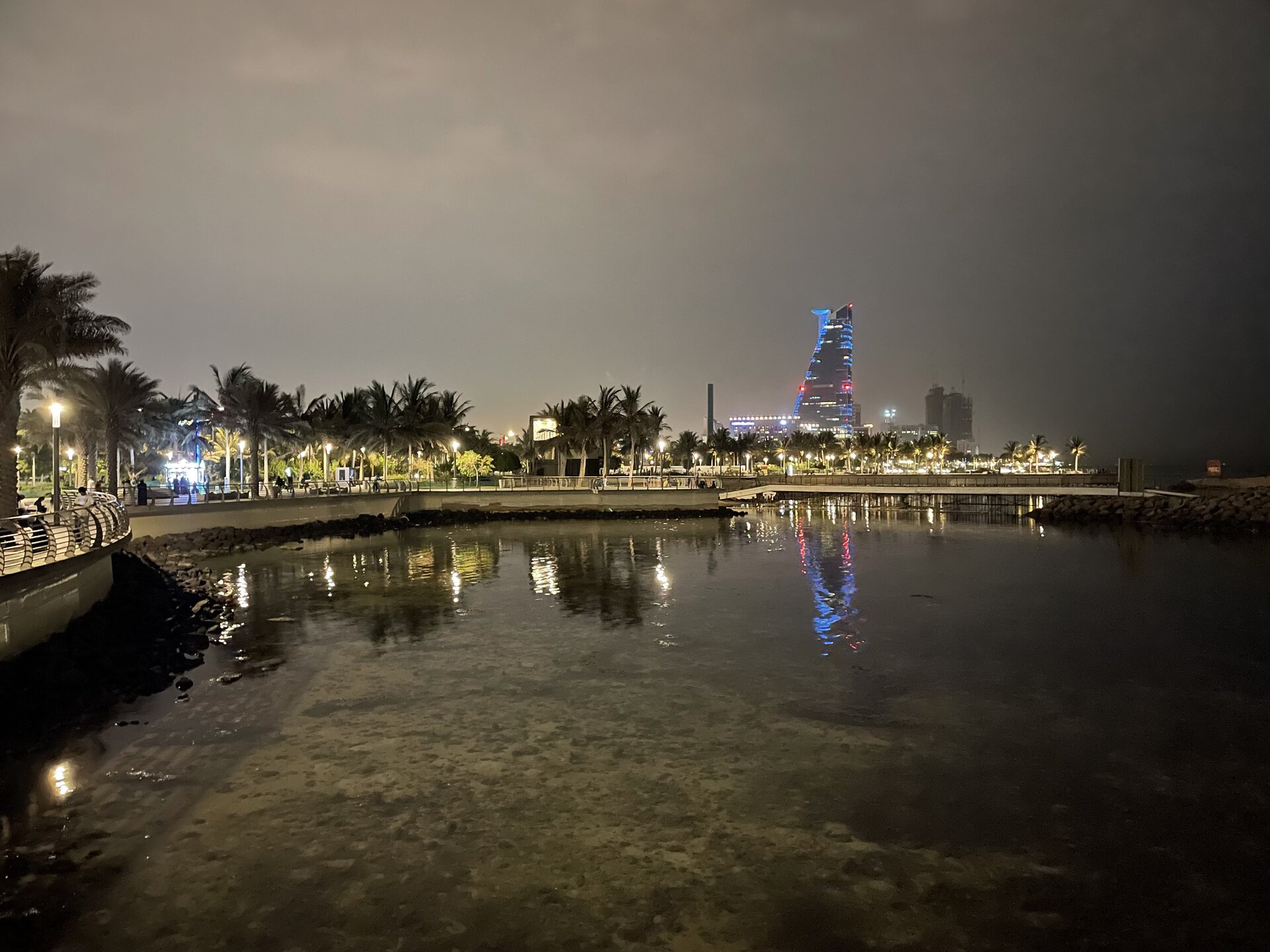
Top Attractions in Al Hamra
King Fahd’s Fountain
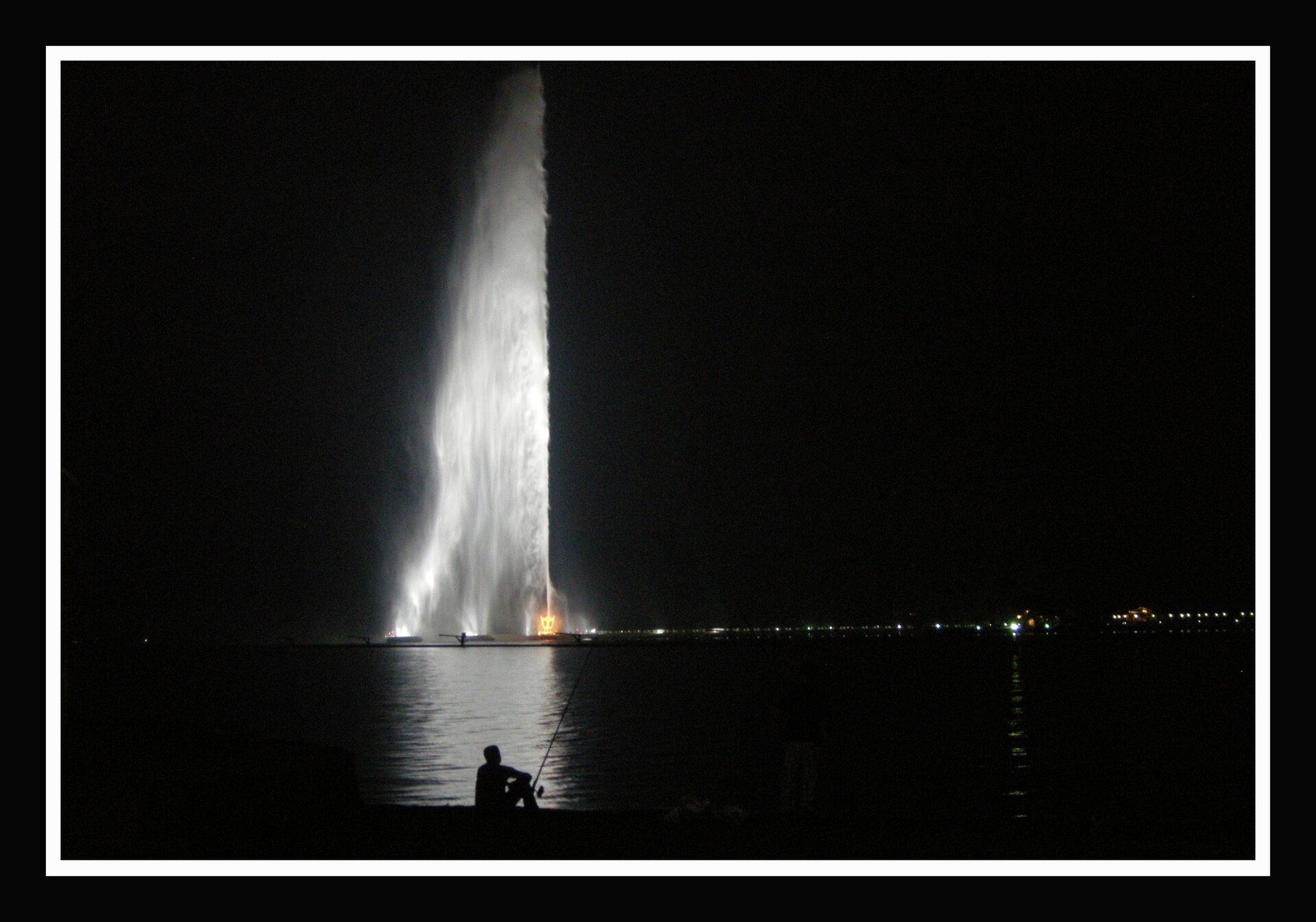
Commissioned by King Fahd bin Abdulaziz and inaugurated in 1985, this is not merely the tallest fountain in Saudi Arabia — it holds the Guinness World Record as the tallest fountain anywhere on Earth. Water is ejected at speeds reaching 375 km/h, rising to a maximum height of 312 metres (1,024 feet) from its base in the Red Sea. The base platform is designed in the shape of a traditional mabkhara (incense burner), a nod to Arabian culture.
The fountain operates 24 hours a day and is free to view from anywhere along the Corniche. However, the experience transforms after dark, when more than 500 high-powered LEDs illuminate the water column in shifting colours against the black sky. The best vantage points are along the Al Hamra Corniche between the Radisson Blu Hotel and Twina Seafood restaurant, where you can photograph the fountain with the Corniche promenade in the foreground.
Practical tip: The fountain is most dramatic on calm, windless evenings when the plume rises straight. On windy nights, the spray drifts and the water column appears shorter. No tickets are required — simply walk to the Corniche and look offshore.
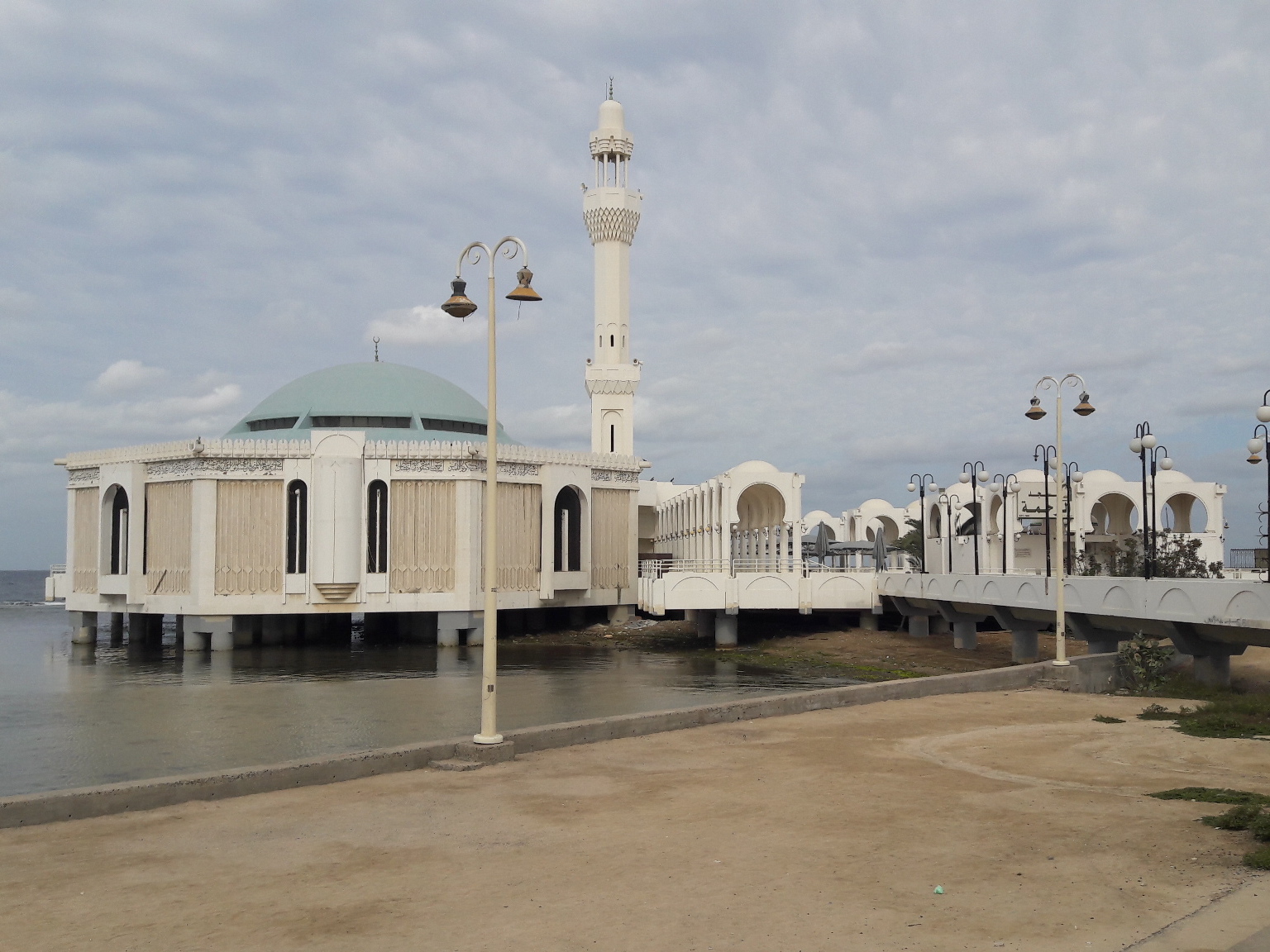
Al-Rahmah Mosque (The Floating Mosque)
Built in 1985 on the northern tip of the Jeddah Corniche, Al-Rahmah Mosque is one of the most photographed landmarks in Saudi Arabia. The mosque sits on pillars above the Red Sea, connected to the shore by a covered walkway, and at high tide it genuinely appears to float on the water. Its main dome is flanked by 52 outer domes, 23 external umbrellas, and 56 windows designed in traditional Islamic geometric patterns. The interior covers 2,400 square metres.
The mosque is open to all visitors seven days a week, free of charge. Non-Muslims should visit outside of prayer times and dress modestly — women should cover their hair, and both men and women should wear clothing that covers shoulders and legs. Early morning and late afternoon offer the best light for photography, and high tide is essential if you want to capture the famous “floating” effect.
Al Hamra Corniche Promenade
The Al Hamra section of the Jeddah Corniche is arguably the most pleasant stretch of the city’s 30-kilometre waterfront for walking. The paved promenade runs along the Red Sea with open lawns, children’s play areas, shaded benches, and food kiosks at regular intervals. On weekday evenings and throughout the weekend, families spread picnic blankets on the grass while joggers and cyclists use the dedicated path.
Sunset is the best time to walk the Al Hamra Corniche. Temperatures drop, the sky turns amber over the Red Sea, and King Fahd’s Fountain begins its illuminated evening show. The stretch between the floating mosque and Twina restaurant — roughly two kilometres — makes for a comfortable 30-minute stroll at an easy pace.
Al Tayebat International City Museum
Located in the nearby Al Faisaliyyah district, Al Tayebat International City is one of the most impressive private museums in Saudi Arabia. Its 18 wings house more than 60,000 historically significant artefacts, including ancient manuscripts, traditional Hejazi clothing, Islamic calligraphy, and a detailed replica of the Kaaba. The building itself is a work of architecture — constructed in the traditional Hejazi coral-stone style with wooden rawashin (screened balconies) that echo the historic buildings of Al-Balad.
The museum is open Saturday to Thursday, typically from 10:00 AM to 1:00 PM and again from 10:00 PM to 1:00 AM (hours may vary; confirm directly before visiting). Closed on Fridays. Admission is SAR 50 for adults and SAR 25 for children. Allow at least two hours to explore properly — three if you are interested in the manuscript collection.
Fakieh Aquarium
Saudi Arabia’s only public aquarium sits on the Corniche in the neighbouring Ash Shati district, a short drive or taxi ride from Al Hamra. Fakieh Aquarium showcases more than 200 marine species from the Red Sea and beyond, including sharks, sea turtles, and coral reef fish. The facility also hosts a popular dolphin show.
Hours: Daily, 10:00 AM – 11:00 PM.
Tickets: SAR 64 for adults, SAR 52 for children (ages 2+). Children under 2 enter free. Family packs available from SAR 229 (SAR 255 on weekends).
Dolphin shows: Weekdays at 7:30 PM; Thursdays and Fridays at 7:30 PM and 9:30 PM. No shows on Sundays.
Where to Eat and Drink in Al Hamra
Al Hamra’s dining scene is anchored by its Corniche seafood restaurants and the cafe culture that has flourished along Palestine Street and the side roads feeding into Tahlia Street. Prices range from street-food affordable to high-end splurge.
Twina Seafood — Corniche Al Hamra
Twina is the standout seafood experience in the district. Located directly on the Corniche, the restaurant operates its own fish market where you select your catch — najil (grouper), tarabani, sharifi, hamour, lobster, crab, and shrimp are all common — and staff weigh, charge, and cook it to your specification. The left-hand family dining area offers the best sea views. Expect to pay around SAR 200+ per person for a full seafood meal. Reservations are recommended on weekends.
Nino Restaurant
For a break from Arabic and seafood cuisine, Nino brings authentic Italian flavours to Al Hamra. The restaurant is well-regarded for its pasta and wood-fired dishes, served in a polished dining room that feels transplanted from Milan. A solid option for date nights or business dinners.
Cafes Worth Visiting
Atelier La Vie: A speciality coffee house in the heart of Al Hamra, known for sourcing 100% Arabica beans and training baristas to extract consistent quality. The name references the ideal brewing temperature. Open late, making it a solid post-dinner coffee stop.
Culture Cafe: Positioned on Al Kurnaysh Road in the Al Hamra district, this cafe pairs Red Sea views with saffron cake, frappuccinos, burgers, and traditional Arabic coffee. The outdoor terrace is the draw — request a table facing the water.
Talent Cafe: Located on Palestine Street, Talent Cafe features a large, stylish room with floor-to-ceiling windows overlooking the King Fahd Foundation and the beach. A favourite with Jeddah’s younger professional crowd.
Coffee note: Jeddah’s third-wave coffee scene has exploded in recent years. If you want to explore beyond Al Hamra, look for Brew 92 and Meraki Artisan — both are among the best speciality roasters in the Kingdom.
Shopping: Tahlia Street and Palestine Street
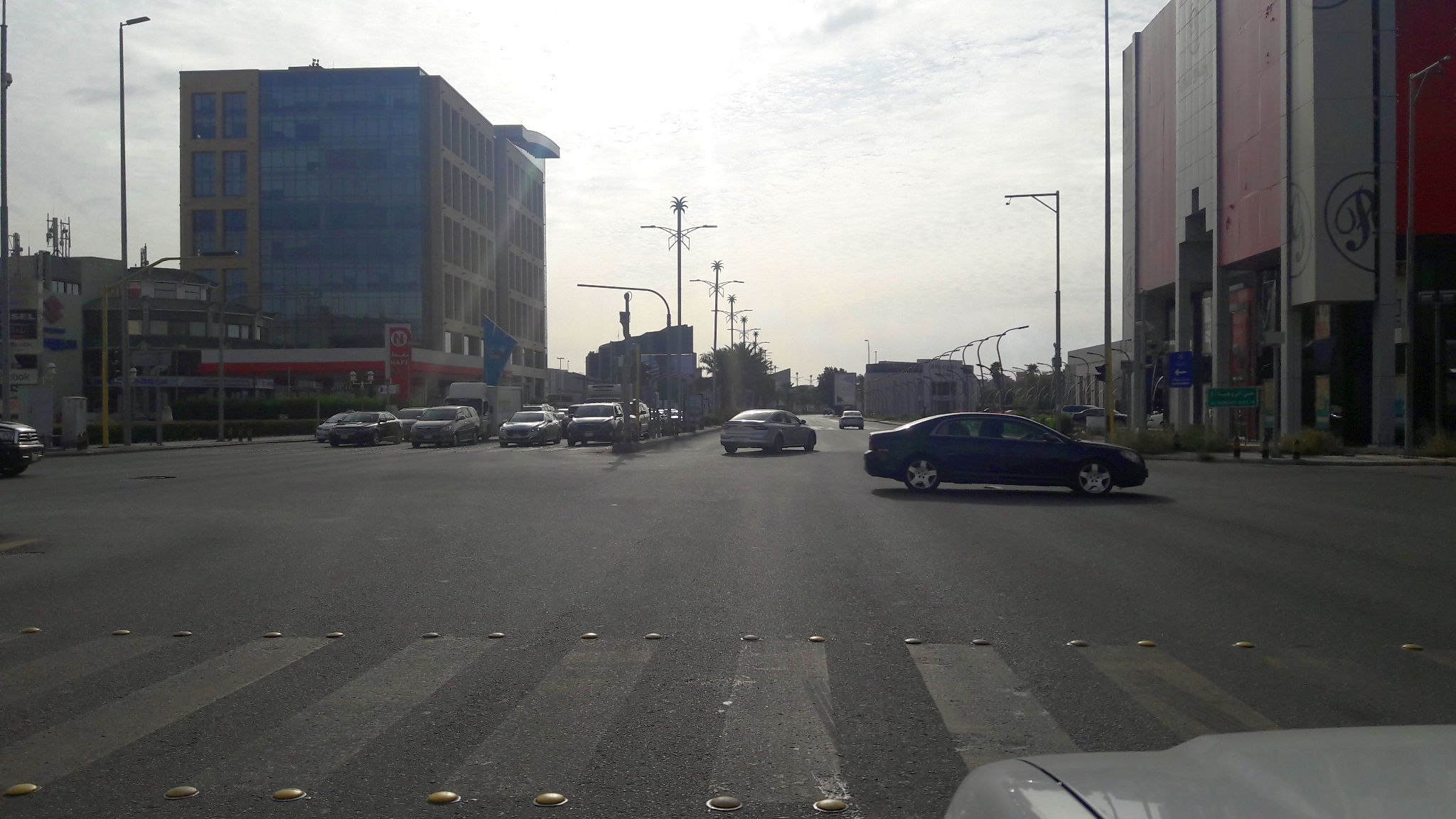
Tahlia Street
Tahlia Street (officially Prince Mohammed bin Abdulaziz Street) is Jeddah’s premier commercial artery, and its northern terminus sits in the Al Hamra district at the site of a former desalination plant — the “tahliyah” (desalination) facility whose distinctive ship-shaped building gave the street its popular name. In the 1970s and 1980s, Tahlia Street emerged as the city’s luxury shopping destination, and it retains that character today with upscale boutiques, international brand stores, high-end restaurants, and trendy cafes lining both sides.
For visitors, Tahlia Street is best experienced on foot in the evening. The wide pavements are pedestrian-friendly, and the concentration of dining options means you can browse, eat, and people-watch in a single circuit. Al Hamra Mall, managed by Cenomi Centers, sits nearby and offers a curated mix of restaurants and retail under one roof.
Palestine Street
Running along Al Hamra’s eastern boundary, Palestine Street serves as the district’s commercial backbone. Less polished than Tahlia Street but more authentic, Palestine Street is where local life plays out — phone repair shops, tailors, grocery stores, perfumeries, and small restaurants serving shawarma, foul, and Arabic coffee. If you want to understand how Jeddawis actually live rather than how they curate their weekend, Palestine Street is where to walk.
Where to Stay in Al Hamra
Al Hamra has a handful of well-positioned hotels that offer sea views and proximity to the Corniche, Tahlia Street, and Al-Balad.
Radisson Blu Hotel, Jeddah Al Hamra
Located on Al Iskendariyyah Street, the Radisson Blu is the district’s most prominent international hotel. Facilities include a fitness and wellness centre, five equipped meeting rooms, and multiple dining options — Al Multaqa Restaurant serves international cuisine with Arabic influences, while Delik Restaurant specialises in Turkish and Mediterranean fare with Corniche views. Request a sea-view room for the best experience. Check-in is at 3:00 PM; check-out at 12:00 PM.
Al Hamra Hotel (Managed by Pullman)
A well-known property in the district, the Al Hamra Hotel caters to both business and leisure travellers. Its location on Tahlia Street provides immediate access to shopping and dining. The hotel has been a landmark in the neighbourhood for decades.
Residential Options
For longer stays, Al Hamra is home to several serviced apartment complexes and gated residential compounds. Al Hamra Village is particularly popular with expatriates, featuring parks, sports facilities, and a coastal setting. Monthly furnished rentals typically start from SAR 6,000–10,000 for a one-bedroom apartment, though luxury villas on the seafront command significantly higher rents. If you plan to stay for a week or more, serviced apartments offer better value than hotels.
Accommodation tip: For a wider selection of hotels across the city, see our Saudi Arabia Hotels Guide, which covers booking strategies, price comparisons, and seasonal deals.
Getting To and Around Al Hamra
From King Abdulaziz International Airport
Al Hamra is approximately 20 kilometres (25–35 minutes by car depending on traffic) from Jeddah’s King Abdulaziz International Airport. Options include:
- Uber / Careem: SAR 40–70 one way. Both apps work reliably in Jeddah. Careem (now owned by Uber) often has slightly lower prices.
- Airport taxi: Metered taxis from the arrivals hall. Expect SAR 60–90.
- Hotel transfer: Most Al Hamra hotels offer airport pickup for SAR 100–150.
- Al-Balad Historic District: Just 15 minutes south, Jeddah’s UNESCO-listed old town is a labyrinth of coral-stone houses, wooden rawashin balconies, and centuries-old souks. See our Jeddah Al-Balad guide for full details.
- Taif: A 90-minute drive into the Hejaz mountains, Taif offers cooler temperatures, rose gardens, and historic Ottoman architecture. Best as a full-day excursion.
- Thuwal and KAUST: The King Abdullah University of Science and Technology campus, 80 km north, sits on a pristine Red Sea coastline with some of the best snorkelling accessible from Jeddah.
- Mecca: Only 80 km east, though non-Muslims cannot enter the Haram area. Muslim visitors planning Hajj or Umrah will find Al Hamra a feasible (if unconventional) base.
- Jeddah Travel Guide 2026 — The complete guide to Saudi Arabia’s Red Sea gateway
- Jeddah Al-Balad — Explore the UNESCO-listed historic heart of Jeddah
- Jeddah Corniche — Walking the 30-kilometre Red Sea waterfront
- Saudi Arabia Hotels Guide — The best hotels, resorts, and deals across the Kingdom
- Hajj 2026 Guide — Everything you need to know about pilgrimage to Mecca
- Saudi Arabia Travel Guide 2026 — The complete guide to visiting the Kingdom
- Saudi Arabia Visa Guide — Every visa type explained
Getting Around the District
Al Hamra is walkable along the Corniche and within the Tahlia Street corridor. For trips to other parts of Jeddah — Al-Balad, the Islamic Port area, or South Jeddah — ride-hailing is the most practical option. Jeddah’s public bus network is expanding but still limited in coverage and frequency.
If you plan to explore beyond the city — day trips to Mecca (non-Muslims cannot enter the Haram area), Taif in the mountains, or up the coast — renting a car is advisable. International rental agencies operate from the airport and several locations on Tahlia Street.
Visa Requirements
Most visitors to Saudi Arabia will need a tourist e-visa, which can be obtained online in minutes for citizens of 49 eligible countries. The visa costs SAR 535 (approximately $142 USD) including medical insurance and permits a stay of up to 90 days. For full details on eligibility, application process, and visa types, see our Saudi Arabia Visa Guide.
Best Time to Visit Al Hamra
Jeddah sits on the Red Sea coast in the Hejaz region and has a hot desert climate moderated by coastal humidity. The best months to visit are November through February, when daytime temperatures range from 21°C to 29°C (70–84°F) and evenings are pleasant enough to walk the Corniche comfortably.
| Season | Months | Temperature | Verdict |
|---|---|---|---|
| Winter (Best) | Nov–Feb | 21–29°C (70–84°F) | Ideal for outdoor exploration, Corniche walks, and dining al fresco |
| Shoulder | Mar–May, Sep–Oct | 25–35°C (77–95°F) | Manageable with early-morning and evening activities; avoid midday |
| Summer (Avoid) | Jun–Aug | 36–42°C (97–108°F) | Extreme heat and high humidity; outdoor activity is uncomfortable |
Jeddah receives only about 83 mm of rainfall annually, so rain is almost never a factor. However, humidity can be high year-round, particularly in summer. Winter evenings occasionally dip below 20°C, so a light jacket is worth packing if you plan to spend time on the Corniche after sunset.
Practical Tips for Visiting Al Hamra
Dress Code
Saudi Arabia has relaxed its dress code for tourists in recent years, but modest clothing is still expected in public. In practice, this means covering shoulders and knees. Women are no longer required to wear an abaya in public, though some choose to out of respect. At mosques like Al-Rahmah, women must cover their hair and wear loose-fitting clothing that covers arms and legs.
Money and Payments
The Saudi Riyal (SAR) is pegged to the US Dollar at approximately 3.75 SAR to 1 USD. Credit and debit cards (Visa, Mastercard) are accepted almost everywhere in Al Hamra, including small cafes and food stalls. ATMs are abundant along Tahlia Street and Palestine Street. Tipping is not obligatory but appreciated — 10–15% at restaurants is standard if no service charge is included.
Language
Arabic is the official language. English is widely spoken in hotels, upscale restaurants, and by younger Saudis, but less so in local shops and street-level establishments along Palestine Street. Learning basic Arabic greetings — marhaba (hello), shukran (thank you), bikam (how much?) — will be appreciated.
Safety
Al Hamra is one of the safest neighbourhoods in Jeddah. Crime rates are low, and the Corniche is well-lit and patrolled in the evening. Standard travel precautions apply — don’t leave valuables unattended on the beach, and be aware of traffic when crossing the Corniche Road.
Photography
Photography is generally welcome in public spaces, along the Corniche, and at landmarks like King Fahd’s Fountain. Always ask permission before photographing people, particularly women and families. Photography inside mosques may be restricted during prayer times.
Day Trips from Al Hamra
Al Hamra’s central Jeddah location makes it a convenient base for exploring beyond the city:
A Brief History of Al Hamra
Al Hamra’s story is inseparable from Jeddah’s transformation from a walled port town into Saudi Arabia’s commercial capital. For centuries, Jeddah’s urban core was confined to the old city — today’s Al-Balad — surrounded by walls and gates. When the walls came down in the 1940s, the city expanded rapidly north and west toward the sea.
Al Hamra emerged in the 1960s and 1970s as one of Jeddah’s first planned residential districts outside the old core. Wealthy merchant families built seafront villas, and the area attracted diplomatic residences and consulates. The construction of the Corniche in the 1970s and 1980s cemented Al Hamra’s status as a prestige address, and King Fahd’s Fountain (inaugurated in 1985) turned the district’s waterfront into a national landmark.
The name “Tahlia” for the street that anchors the district’s commercial life derives from the water desalination (tahliyah) facility that once stood at its northern end. The plant’s distinctive ship-shaped building became a local landmark, and residents adopted “Tahlia Street” as the popular name — which eventually became the official one. Today, the desalination plant is gone, but the name endures as a reminder of Al Hamra’s evolution from functional infrastructure to refined urban living.
Al Hamra for Families
Al Hamra is one of Jeddah’s most family-friendly districts. The Corniche promenade has dedicated children’s play areas, open lawns for picnics, and flat, stroller-accessible paths. Fakieh Aquarium offers a half-day activity with its dolphin shows and marine exhibits. The district’s gated residential compounds — including the well-known Al Hamra Village — feature swimming pools, tennis courts, and children’s playgrounds that are often accessible to hotel guests.
For dining with children, Twina Seafood’s fish-market format is engaging for kids who want to pick their own fish, and the Corniche food kiosks offer affordable casual options. The Corniche itself is essentially a giant open-air playground after sunset, when Jeddah’s families come out in force.