
Al Balad is where Jeddah began. This UNESCO World Heritage district — inscribed in 2014 as “Historic Jeddah, the Gate to Makkah” — covers roughly 2.5 square kilometres of coral-stone tower houses, carved wooden balconies, and alleyways that have funnelled Hajj pilgrims toward Mecca for over a thousand years. If you are building a wider Jeddah travel itinerary, this self-guided walking tour through Al Balad’s historic core is the single most rewarding half-day you can spend in the city. The route below covers seven stops in roughly three hours, moving from the old city gate at Bab Makkah through the merchant quarter to the oldest mosques in the Hijaz — all on foot, all free to enter.
Best Time to Visit: October to March; start early morning or late afternoon to avoid midday heat
Getting There: Taxi or Careem from any Jeddah hotel (20 min from King Abdulaziz Airport); alight at Bab Makkah
Visa Required: Yes — tourist e-visa
Budget: $0–15 USD (district is free; optional museum entry SAR 20–80)
Must-See: Nassif House, Al-Shafi’i Mosque, Souq Al Alawi
Avoid: Visiting between 11 AM and 3 PM in summer — temperatures exceed 40°C with extreme humidity
Why Walk Al Balad
Most of Saudi Arabia’s tourist infrastructure is new. Al Balad is not. The district contains more than 650 historic buildings, many dating to the 16th century, and over 36 historical mosques. The architecture is unlike anything else in the Arabian Peninsula: tower houses built from coral limestone quarried from Red Sea reefs, bonded with purified clay mortar, and crowned with rawasheen — intricately carved wooden bay windows that project from upper floors to catch the northwest breeze and cool interiors without mechanical ventilation.
UNESCO recognised Al Balad under three criteria: as a crossroads of Red Sea and Indian Ocean trade (Criterion ii), as the only surviving urban ensemble of the Red Sea cultural world (Criterion iv), and for its direct association with the Hajj pilgrimage (Criterion vi). The roshan tower house typology — no courtyards, decorated facades, ground-floor commerce, upper rooms rented to pilgrims — exists nowhere else in the Arab world.
Under Vision 2030, the Al Balad Development Company (created by the Public Investment Fund in 2023) is restoring more than 600 buildings and developing the district into a mixed-use heritage destination with boutique hotels, galleries, and a reconnected waterfront. Three historic houses — Jokhdar House, Al-Rayyis House, and Kedwan House — were converted into luxury hotels in 2024. The district is mid-transformation: scaffolding shares space with centuries-old stonework, and that tension between preservation and reinvention is part of the experience.
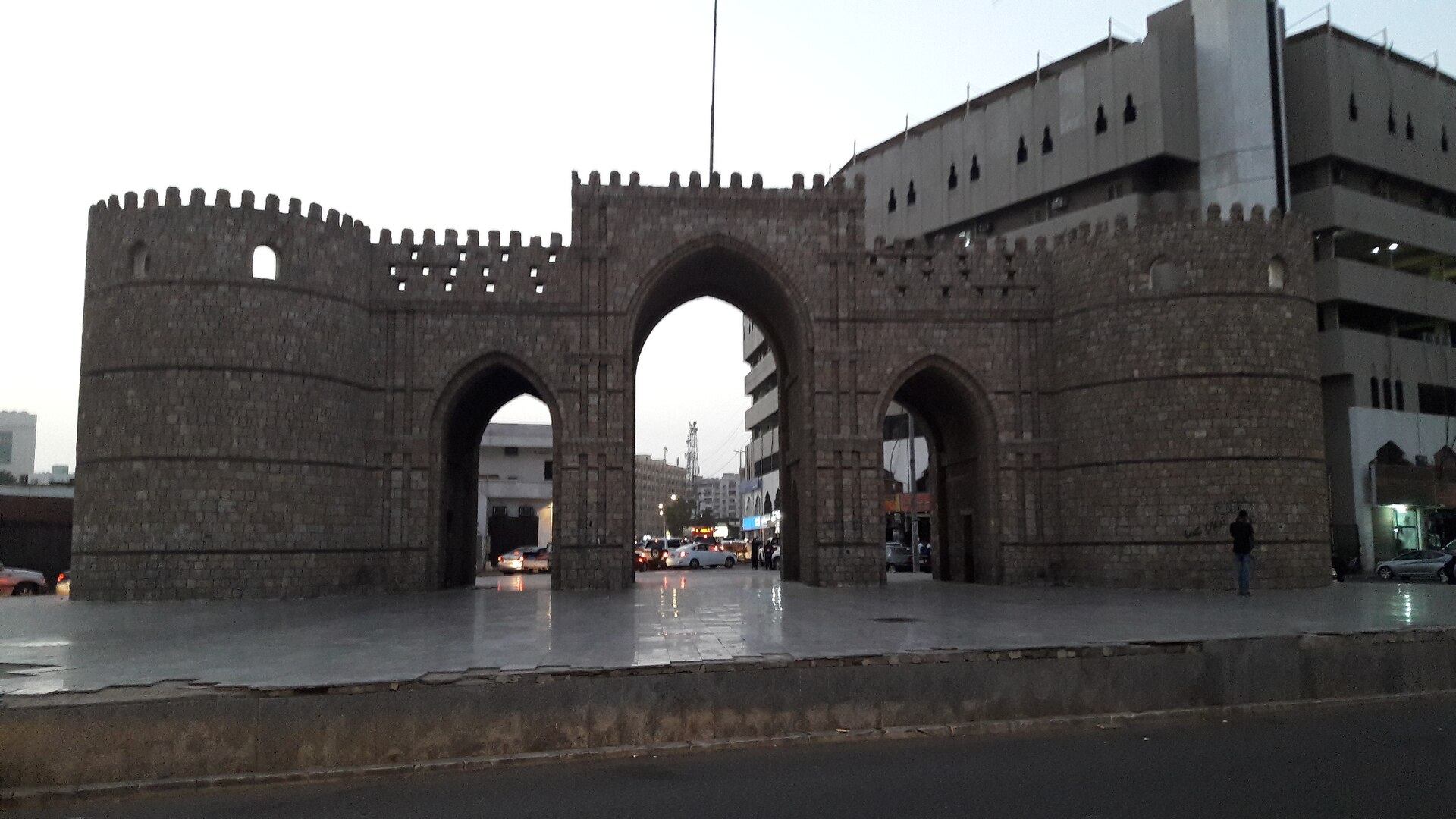
Stop 1: Bab Makkah — The Pilgrims’ Gate
Begin at Bab Makkah on the eastern edge of Al Balad. This reconstructed limestone-and-coral gateway is the most recognisable of the city’s surviving gates and the point where, for centuries, pilgrims arriving by sea at Jeddah’s port began the overland journey to Mecca.
The original city wall was built in 1509 on orders of the Mamluk Sultan Qansuh al-Ghuri, commissioned to his commander Hussein al-Kurdi, to defend Jeddah’s port against Portuguese warships operating in the Red Sea. The fortifications originally had eight gates: Bab Makkah, Bab al-Madinah, Bab Shareef, Bab al-Sabbah, Bab al-Maghariba, Bab Suraif, Bab al-Nafe’a, and a later gate added by King Abdulaziz. The walls between the gates were demolished in 1947 to allow the city to expand, but several gates — including Bab Makkah — still stand.
Stand at the gate and look west into the district. The narrow street ahead is Souq Al Alawi, Al Balad’s commercial spine. That is your path forward.
Stop 2: Souq Al Alawi — The Merchant Artery
Walk west from Bab Makkah into Souq Al Alawi, the main commercial street running through the heart of Al Balad. This market has operated continuously for centuries and remains a working souq — not a museum reconstruction.
The stalls sell oud (agarwood incense), loose spices, traditional textiles, perfume oils, antiques, and Hijazi clothing. The sensory experience is immediate: charcoal braziers heating oud chips, stacks of frankincense, baskets of dried lime and turmeric. Prices are negotiable. Most vendors speak some English.
What to Eat at Souq Al Alawi
Small breakfast shops open from 5 AM along the souq. The essential order is foul — slow-cooked fava bean stew — served with tamees, a tandoori flatbread baked fresh against the inside of a clay oven. This is the definitive Jeddah breakfast, and it costs under SAR 15.
The other Al Balad staple is sobia, a cold drink made from fermented barley, brown bread, cinnamon, sugar, and cardamom. It is unique to the Hijaz region and available from street vendors throughout the district. Order it iced.
For a more substantial meal, Sammak Al-Basli — established in 1949 in the heart of Al Balad — has served seafood from the same location for over 75 years, with spice blends passed down through three generations.
Stop 3: Nassif House — Where the Kingdom Changed Hands
Halfway along Souq Al Alawi, you will reach Nassif House (Bait Nassif), the most historically significant building in Al Balad. Built between 1872 and 1881 for Omar Nasseef Effendi, a wealthy merchant and governor of Jeddah, this coral-limestone tower house spans approximately 900 square metres across four floors with around 40 rooms.
The building’s national significance dates to December 1925, when King Abdulaziz Ibn Saud entered Jeddah after a prolonged siege and took up residence in Nassif House. It served as his royal quarters during early visits to the city — the house where the modern Saudi state consolidated its hold on the Hijaz.
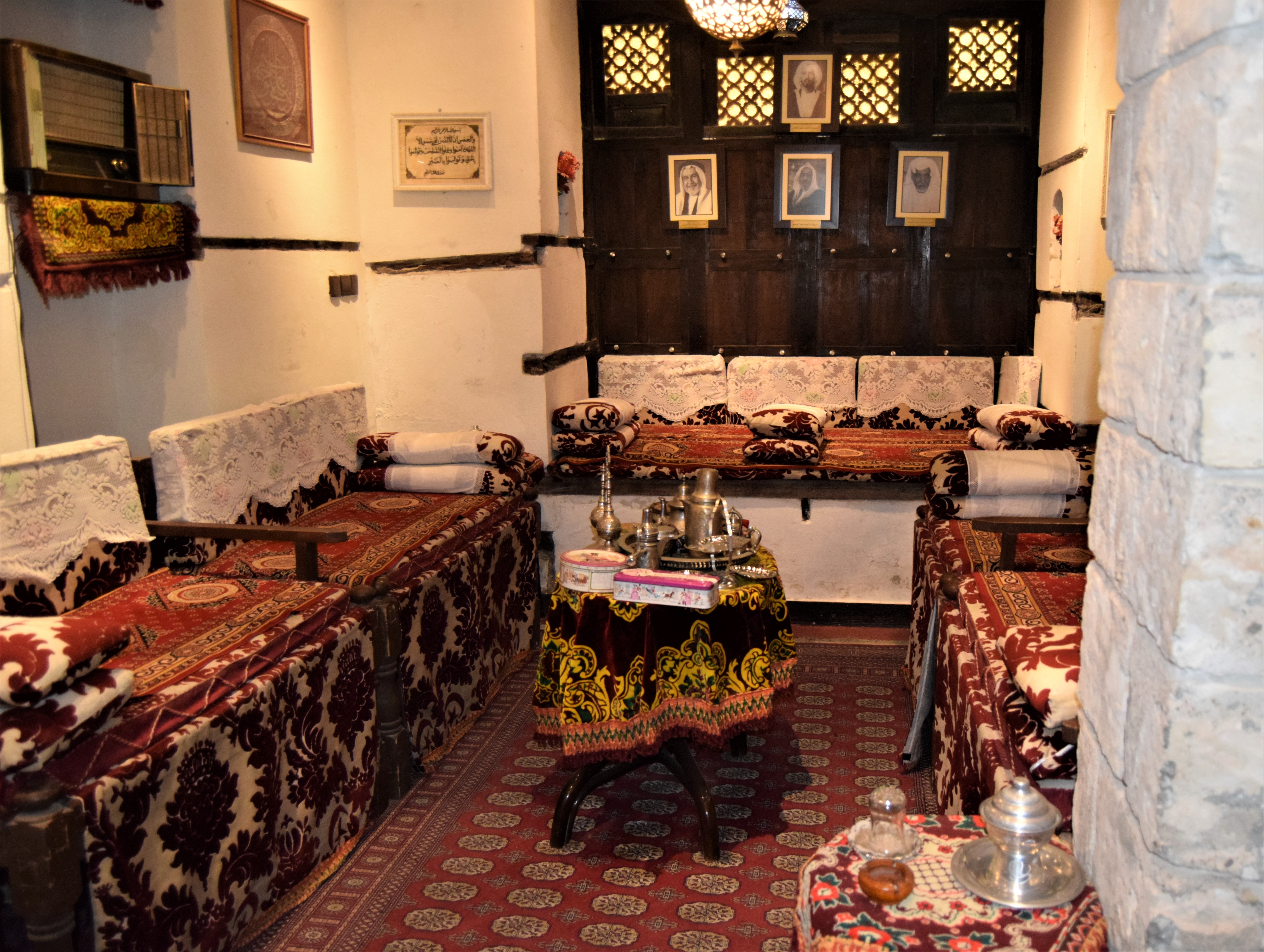
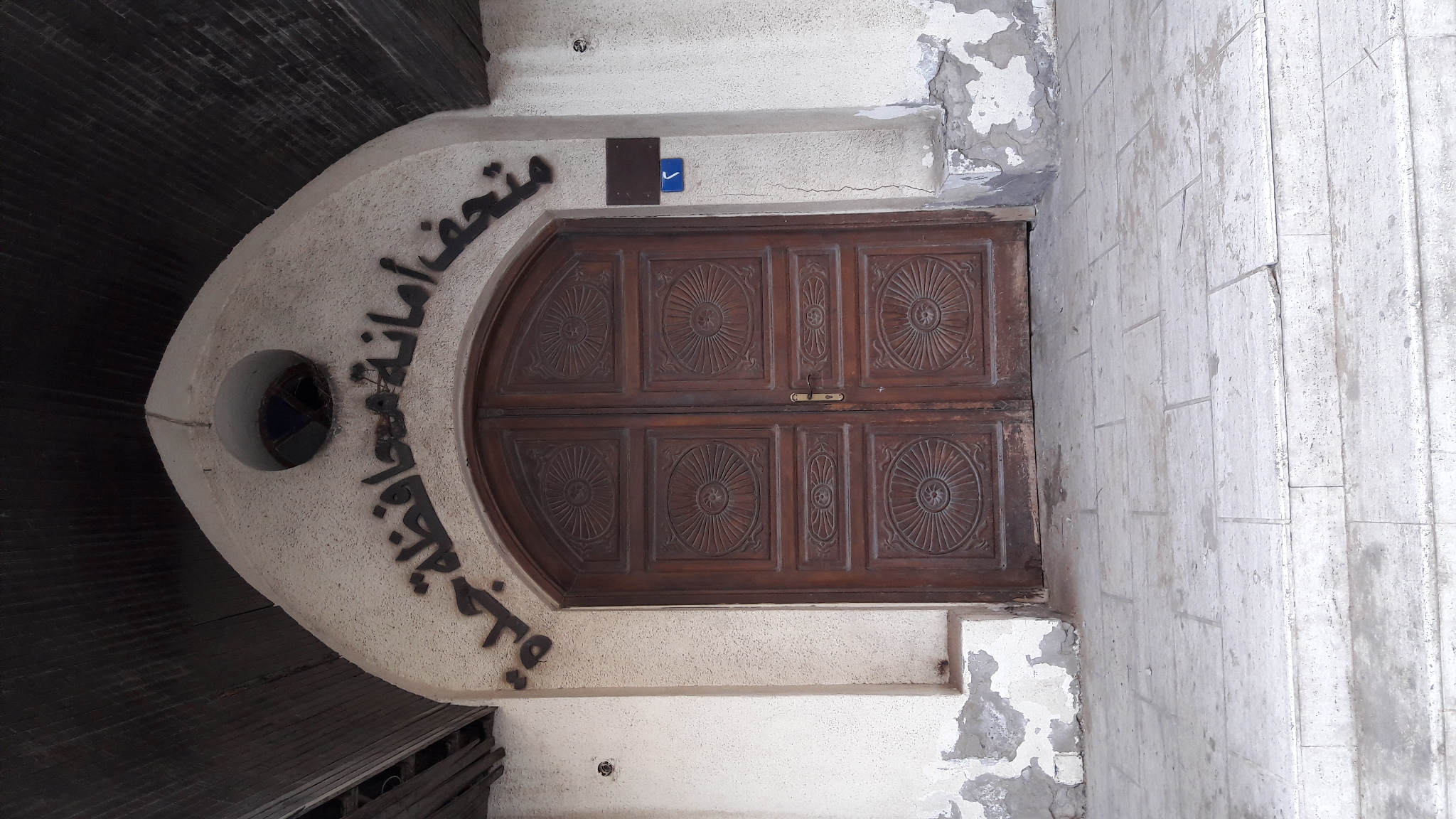
Since 2009, Nassif House has operated as a museum and cultural centre. The interior preserves the original layout of a Hijazi merchant household: reception rooms on the upper floors, service areas below, and the distinctive wooden rawasheen providing cross-ventilation and filtered light. The house is open Monday to Saturday. Guided tours are sometimes available — ask at the entrance.
Stop 4: The Coral-Stone Architecture
Between Nassif House and the mosque quarter, slow down and look up. The buildings surrounding you represent a construction technique found nowhere else: walls built from coral limestone quarried directly from Red Sea reefs. The blocks are lightweight but structurally strong, and the porous coral provides natural thermal insulation — keeping interiors cool in Jeddah’s brutal summers without any mechanical system.
The mortar binding the blocks is purified clay sourced from nearby lake beds, which also served as waterproofing. Structural bracing uses teak wood imported from India — a physical record of the Indian Ocean trade networks that sustained this port city.
Reading the Rawasheen
The most distinctive feature of Al Balad architecture is the rawasheen (singular: roshan) — the elaborately carved wooden bay windows and enclosed balconies that project from upper floors. Made from wood imported from India or Southeast Asia and carved by specialist craftsmen, these structures served four simultaneous functions:
- Ventilation: The lattice screens captured the prevailing northwest wind, channelling cooled air into interior rooms
- Privacy: Residents — particularly women — could observe street life below without being seen from outside
- Space: The projecting bays added usable floor area to upper storeys without expanding the building’s footprint at ground level
- Status: The intricacy of the carving and the quality of the imported wood signalled the wealth of the household
- Jeddah Corniche — the 30-kilometre Red Sea waterfront promenade, a short walk or taxi ride from Al Balad’s western edge
- Al Tayebat International City Museum — 600 rooms across 12 buildings housing 60,000+ artefacts of Saudi and Middle Eastern heritage. Entry SAR 80. Allow 2–4 hours. Open 8 AM–12 PM and 5–9 PM, closed Fridays.
- Al Rahma Mosque — the Floating Mosque on the Corniche, open to all visitors including non-Muslims outside prayer times
- King Fahd Fountain — best viewed after sunset when 500+ spotlights illuminate the 312-metre water column
- Jeddah Travel Guide — The complete guide to Saudi Arabia’s Red Sea port city
- Jeddah Corniche Guide — Walking the 30-kilometre Red Sea waterfront promenade
- Al Balad Heritage District — Overview of Jeddah’s UNESCO World Heritage quarter
- Hajj 2026 Guide — Planning your pilgrimage through Jeddah to Mecca
- Saudi Arabia Hotels Guide — Where to stay across the Kingdom
- Saudi Arabia Visa Guide — Every visa type explained
No two roshan facades are identical. The geometric and floral patterns carved into the screens vary from house to house, making each building a one-of-a-kind composition. This is the architectural feature that earned Al Balad its UNESCO inscription — the only surviving concentration of this typology in the world.
Stop 5: Al-Shafi’i Mosque — The Oldest in Jeddah
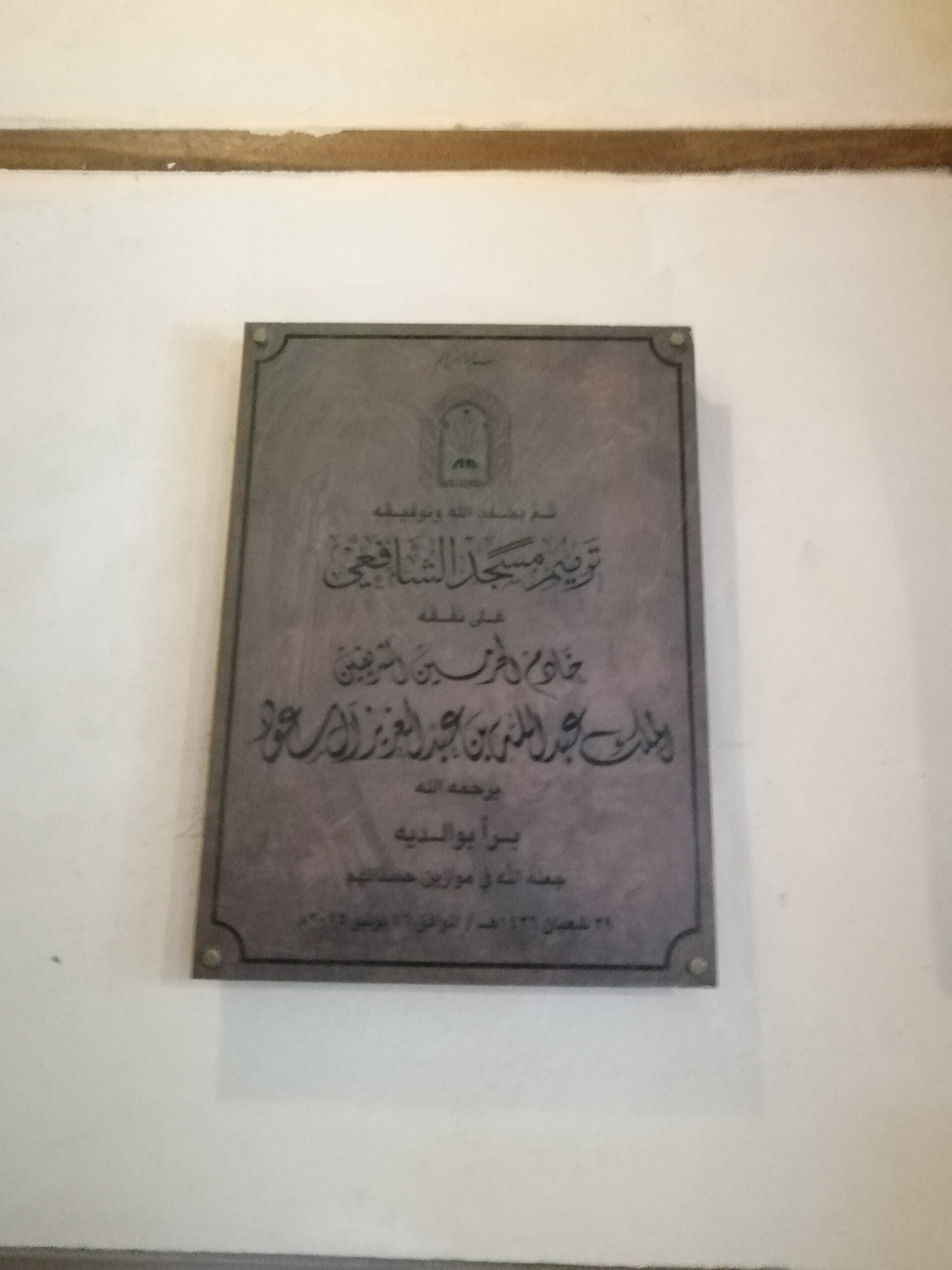
From the merchant quarter, navigate south into the narrow lanes toward Al-Shafi’i Mosque, the oldest mosque in Jeddah. The most reliably documented construction date is 1250 CE, when it was built by King al-Muzaffar Sulayman of Yemen (Ayyubid dynasty), who followed the Shafi’i school of Islamic jurisprudence. Some historians argue the original structure dates to the era of Caliph Uthman ibn Affan in the mid-7th century, though this remains debated.
The mosque’s minaret is believed to be the oldest in the Hijaz region. The main structure was rebuilt in 1539 by an Indian merchant named Khawaja Muhammad Ali — another trace of the cross-ocean networks that shaped Al Balad. The mosque remains an active place of worship. Non-Muslim visitors should observe from outside during prayer times; between prayers, respectful visitors may enter (remove shoes, dress modestly, women cover hair).
Stop 6: Othman ibn Affan Mosque — 1,400 Years of History Underfoot
A short walk from Al-Shafi’i brings you to the Othman ibn Affan Mosque, one of the oldest mosques in the Islamic world. Archaeological excavations by the Jeddah Historic District Programme have confirmed seven distinct architectural phases spanning the Umayyad, Abbasid, and Mamluk eras to the present — placing the earliest construction at approximately 654 CE (33 AH).
Beneath the mosque’s floors, archaeologists discovered a sophisticated 800-year-old water distribution system and rare ebony columns in the mihrab. Thousands of artefacts were recovered during the excavation, including Chinese porcelain — both white and blue — dating to the 17th century, physical evidence of the maritime trade that connected Jeddah to East Asia.
The excavation findings are among the most significant archaeological discoveries in Saudi Arabia’s recent history. The mosque itself is modest in scale but extraordinary in depth — you are standing on fourteen centuries of continuously occupied sacred ground.
Stop 7: The Western Edge and the Old Port
Complete the route by walking west toward the Red Sea waterfront. This was once the port where pilgrims disembarked before walking through Bab Makkah — the journey you have just retraced in reverse.
The Al Balad Development Company’s masterplan includes reconnecting the historic district to its original waterfront with a marina and mixed-use development. As of 2026, construction is ongoing, but the western edge of Al Balad already offers views across the Jeddah Corniche and the Red Sea beyond.
From here, you can continue north along the waterfront to reach the Corniche promenade, the King Fahd Fountain (at 312 metres, the world’s tallest), or the Al Rahma Mosque — commonly called the Floating Mosque — which sits on stilts over the Red Sea and appears to hover above the water at high tide.
Practical Information
Getting to Al Balad
From the airport: King Abdulaziz International Airport is approximately 20 km north of Al Balad. A taxi or Careem ride takes 20–30 minutes depending on traffic and costs SAR 50–80. Uber also operates in Jeddah.
By bus: SAPTCO operates public bus routes with 72 stations across Jeddah, running 5:30 AM to 10:30 PM. Route 7/7A connects to the city centre and Al Balad area.
On arrival: Ask your driver to drop you at Bab Makkah. The district is entirely walkable — the entire inscribed area is roughly 2.5 square kilometres — but wear comfortable shoes. The streets are uneven, cobbled, and narrow.
You will need a Saudi tourist e-visa to enter the country. The application is online and typically processed within minutes.
When to Go
The best months are October through March, when daytime temperatures sit between 22°C and 28°C. January is peak tourism season. From May to September, temperatures regularly exceed 40°C with oppressive humidity, making extended outdoor walking uncomfortable.
Within the day, the best windows are early morning (6–9 AM) for photography and cooler temperatures, or late afternoon into evening (4 PM onward) for the full souq atmosphere — shops reopen after the midday break, and the alleyways come alive under lantern light after sunset.
Budget at least three hours for this walking route. A full half-day allows time to linger in the souq, eat, and explore side alleys.
What to Wear
Modest clothing covering shoulders and knees is expected for both men and women. Abayas are not mandatory for foreign women (since 2019 reforms), but loose, full-length clothing is recommended — practically as well as culturally, since lightweight long sleeves protect against sun exposure in the open lanes. At mosques, women should cover their hair with a headscarf. Comfortable closed-toe walking shoes are essential — the cobblestones are uneven.
Photography
Al Balad is one of the most photogenic places in Saudi Arabia, and there are no general restrictions on outdoor photography. The interplay of light through the rawasheen lattice screens creates dramatic shadow patterns, especially in early morning and late afternoon. Ask permission before photographing people, particularly in traditional areas. Inside mosques, ask before using a camera.
Guided Tours
Self-guided walking is straightforward — the district is compact and the landmarks are well-signed. However, guided tours (SAR 150–300, bookable through GetYourGuide or local operators) provide access to interior courtyards and private houses that independent visitors cannot enter, plus historical context that enriches each stop significantly. If you have the budget, a guide is worth it for a first visit.
Nearby Attractions
If you are spending a full day in the area, combine Al Balad with:
For accommodation options near the historic district, several of the newly restored heritage houses in Al Balad now operate as boutique hotels, placing you within walking distance of every stop on this route.
Where to Stay
The three heritage houses restored and converted in 2024 — Jokhdar House, Al-Rayyis House, and Kedwan House — offer the most atmospheric accommodation. For larger international hotels, the Jeddah Hilton and Rosewood Jeddah are both within 10 minutes by taxi. Budget travellers will find options along Al Madinah Road, a short Careem ride from Bab Makkah.
The Vision 2030 Transformation
Al Balad is in the middle of the largest heritage restoration project in the Middle East. The Al Balad Development Company, backed by the Public Investment Fund, is developing approximately 2.5 million square metres of the district with a total investment portfolio of $3.6 billion running through 2038.
The plans include 9,300 residential units, over 3,300 hotel rooms across luxury to mid-scale categories, and 1.3 million square metres of commercial and office space, distributed across 20 connected mixed-use clusters. The vision is to transform Al Balad from a visited district into a lived-in neighbourhood — heritage buildings housing working restaurants, studios, shops, and hotels rather than sitting empty behind restoration barriers.
For visitors in 2026, this means two things: parts of the district are behind construction fencing (routes may require short detours), and the experience of visiting a UNESCO site mid-transformation is itself historically interesting. You are seeing Al Balad at a pivot point between centuries of organic decline and a state-backed reinvention that will reshape the district permanently.
This walking tour is part of the broader Saudi Arabia travel experience — a country that is simultaneously building futuristic megaprojects and restoring its oldest heritage. Al Balad sits at the intersection of both impulses. If you are considering Hajj or Umrah in 2026, Jeddah remains the traditional gateway city, and Al Balad is where that gateway story began.