
Money questions are among the most practical things to sort out before any trip, and Saudi Arabia is no exception. Whether you are flying into Riyadh for a week of sightseeing, heading to Jeddah for the Formula 1 Grand Prix, or making pilgrimage to the holy cities, this guide covers everything you need to know about the Saudi Riyal — from the fixed exchange rate and which banknotes you will handle, to ATM fees, card acceptance, tipping norms, and the new tourist VAT refund scheme. Think of it as the money chapter of your wider Saudi Arabia travel plan: read it once before you pack, bookmark it for the trip, and you will avoid every common currency trap tourists fall into.
Currency: Saudi Riyal (SAR). Symbol: ر.س or the new calligraphic sign approved in 2025
Exchange Rate: Fixed peg of 3.75 SAR = 1 USD (since 1986)
Visa Required: Yes — tourist e-visa for most nationalities
Best Way to Pay: Contactless Visa/Mastercard or Apple Pay — accepted almost everywhere
ATM Tip: Saudi banks rarely charge a local ATM fee; your home bank is the one to watch
Avoid: Dynamic Currency Conversion (DCC) at ATMs — always choose SAR when prompted
The Saudi Riyal: A Crash Course
The Saudi Riyal (international code SAR) is the sole legal tender of the Kingdom of Saudi Arabia. One riyal is subdivided into 100 halalas, though halala coins are increasingly rare in everyday transactions since most prices are rounded to the nearest riyal. The abbreviation you will see on price tags and receipts is either SR or the Arabic letters ر.س.
In February 2025, King Salman approved an official currency symbol for the riyal — a calligraphic design derived from the Arabic letters of the word “riyal.” Saudi Arabia became the first Arab nation to adopt a dedicated currency symbol. The new sign was encoded in Unicode 17.0 (September 2025) at code point U+20C1 and is gradually appearing on receipts, apps, and signage across the Kingdom, though you will still see SR and ر.س everywhere.

The Dollar Peg: Why It Matters for Travellers
Since June 1986, the Saudi Riyal has been pegged to the US dollar at a fixed rate of 3.75 SAR per 1 USD. The Saudi Central Bank (SAMA) maintains this peg through its substantial foreign exchange reserves, and there is no serious prospect of it changing. For travellers, this means:
- If you hold US dollars, your exchange rate is essentially locked in. One hundred dollars will always yield 375 riyals at the official rate (minus any margin the exchange house or ATM takes).
- If you hold euros, pounds, or other currencies, your effective rate against the riyal moves with your currency’s strength against the dollar. A strong pound or euro means cheaper Saudi prices for you; a weak one means the opposite.
- No black market or parallel rate exists. The peg is rock-solid, backed by SAMA reserves exceeding $430 billion. Anyone offering you a “better rate” on the street is running a scam.
- 1 SAR and 2 SAR — bimetallic coins, the most common
- 50 halalas (half a riyal)
- 25 halalas, 10 halalas, 5 halalas, 1 halala — rarely seen in practice
- Saudi banks generally do not charge a local ATM fee for foreign card withdrawals. This is a pleasant surprise compared with many travel destinations.
- Your home bank’s fees are the main cost. Typical charges: a flat fee of $2–5 per withdrawal plus a 1.5–3% currency conversion markup.
- ATMs dispense 50 SAR and 100 SAR notes. If you need smaller bills (for taxis, tips, or market stalls), break a 100 at a supermarket or hotel reception early in your trip.
- Major ATM networks: mada (the national payment network), Visa, and Mastercard are all widely supported.
- Withdrawal limits: Typically 3,000–5,000 SAR per transaction ($800–$1,333). Your home bank may impose a lower daily limit.
- Tahweel Al Rajhi — Al Rajhi Bank’s dedicated exchange and remittance centres, found in every city
- Enjaz Banking Services — Bank Albilad’s exchange arm
- Al Enmaa Exchange
- Alamoudi Exchange
- Riyadh: The Al Bathaa district has the highest concentration of money changers. If you are staying in the Olaya district, you will also find exchange houses inside major malls.
- Jeddah: Al Balad (the old town) and the streets around the major souqs have many exchange offices. There are also exchanges on Tahlia Street and inside Jeddah’s major malls.
- Mecca and Medina: Exchange houses cluster around the mosques and pilgrim districts. Rates here can be slightly worse than in Riyadh or Jeddah due to captive demand during Hajj and Umrah seasons.
- Rates are typically 3–10% worse than city-centre exchange houses.
- Fine for exchanging a small amount (200–300 SAR) to cover your taxi and first meal.
- Never exchange large sums here. Wait until you reach the city.
- Tap-to-pay with your phone or watch works at malls, restaurants, chain cafes, supermarkets, and ride-hailing apps (Uber and Careem both support in-app card payment).
- Smaller independent shops, market stalls, and street food vendors may still be cash-only, especially in older commercial areas.
- Wise: Converts at the mid-market rate with a small transparent fee (typically 0.35–0.6%). The physical card works at any Visa terminal and at ATMs. Add the card to Apple Wallet or Google Wallet for contactless payments.
- Revolut: Supports both Visa and Mastercard variants. Free currency exchange up to monthly limits on Standard plans; unlimited on paid plans. Works with Apple Pay and Google Pay in Saudi Arabia.
- Traditional souqs and markets — especially at Al Balad in Jeddah or the old souqs in Riyadh’s Al Bathaa district
- Tips — always given in cash (see the tipping section below)
- Small independent restaurants and street food stalls
- Rural areas and smaller towns outside major cities
- Petrol station shops (the fuel pumps accept cards, but the attached mini-marts sometimes do not)
- Porters/bellhops: 5–10 SAR per bag (lean toward 10 SAR at luxury properties or for heavy luggage)
- Housekeeping: 10–15 SAR per night, left on the desk or a visible surface each morning
- Concierge: 10–20 SAR for specific help (booking a restaurant, arranging transport)
- Non-resident tourists and GCC nationals aged 18 or older
- Minimum total purchase of 500 SAR ($133) across qualifying transactions
- Purchases must be for personal use, unused, and exported from Saudi Arabia within 90 days
- At the store: Present your passport before paying. The retailer will link the transaction to your document number and issue a “Tourist Tax Refund Invoice.”
- At the airport: Before departure, locate a Global Blue self-verification kiosk to submit your refund request and validate your tax-free forms.
- Receive your refund: Cash refunds up to 5,000 SAR per person per day; larger amounts are credited to your card within three business days.
- Hotel stays and accommodation
- Food and beverages consumed in Saudi Arabia
- Fuel and transport services
- Medical services
- Any goods used or consumed within the country
- Short city breaks (3–5 days): Arrive with $100–200 in cash. Exchange at the airport for immediate taxi fare, then withdraw from ATMs as needed.
- Longer trips (1–2 weeks): Bring $200–400. Rely primarily on cards and top up cash from ATMs every few days.
- Hajj or Umrah: Pilgrims may want more cash on hand (1,000–2,000 SAR) because the areas around the mosques in Mecca and Medina have many small vendors who prefer cash. See our Umrah guide for first-timers for a complete cost breakdown.
- Tahweel Al Rajhi — Al Rajhi Bank’s dedicated remittance centres, with branches in every neighbourhood. Competitive rates for popular corridors (India, Pakistan, Philippines, Egypt, Bangladesh).
- Enjaz — Bank Albilad’s remittance arm.
- Western Union and MoneyGram — available through bank branches and licensed agents.
- Wise (formerly TransferWise) — offers mid-market rate transfers from Saudi bank accounts to over 80 countries. Best for large sums.
- STC Pay — Saudi Arabia’s leading digital wallet, now offering international transfers. Requires a Saudi phone number and local SIM card.
- Use hotel safes for passports and excess cash.
- Avoid displaying large amounts of cash in crowded areas, particularly during Hajj and Umrah.
- Be wary of unlicensed money changers offering suspiciously good rates — stick to licensed exchange houses and bank ATMs.
- Counterfeit notes are rare but not unknown. Familiarise yourself with the security features of the sixth-series banknotes: watermarks (portrait of King Salman), colour-shifting ink, raised print, and embedded security threads.
- Saudi Arabia Travel Guide 2026 — The complete guide to visiting the Kingdom
- ATMs and Banking in Saudi Arabia — Detailed breakdown of fees, limits, and which cards work best
- Saudi Arabia Shopping Guide — Best malls, souks, and what to buy
- Saudi Customs and Etiquette — What not to do, from dress code to social norms
- Saudi Entry Requirements — Documents, health requirements, and customs declarations
- Saudi Arabia Visa Guide — Every visa type explained
Practical implication: Because the peg is fixed, there is no advantage to “timing” your exchange. Convert when convenient, not when you think the rate might improve — it will not.
Current Exchange Rates
The table below shows approximate rates for major currencies as of April 2026. Remember that the SAR/USD rate is fixed; all other rates fluctuate daily.
| Currency | 1 Unit Buys (SAR) | 1 SAR Buys |
|---|---|---|
| US Dollar (USD) | 3.75 SAR | $0.267 |
| Euro (EUR) | ~4.10 SAR | ~€0.244 |
| British Pound (GBP) | ~4.85 SAR | ~£0.206 |
| Indian Rupee (INR) | ~0.044 SAR | ~₹22.7 |
| Pakistani Rupee (PKR) | ~0.013 SAR | ~PKR 75 |
| Philippine Peso (PHP) | ~0.066 SAR | ~₱15.1 |
| Egyptian Pound (EGP) | ~0.074 SAR | ~EGP 13.5 |
| Australian Dollar (AUD) | ~2.40 SAR | ~A$0.417 |
Rates are approximate mid-market rates and will vary slightly depending on the exchange method you use. Check Wise or X-Rates for live conversions.
Saudi Banknotes and Coins
Saudi Arabia’s current banknotes belong to the sixth series, issued in December 2016, and feature a portrait of King Salman bin Abdulaziz Al Saud on all denominations except the 500-riyal note, which carries the portrait of the Kingdom’s founder, King Abdulaziz (Ibn Saud).
Banknotes in Circulation
| Denomination | Colour | Key Image | Notes |
|---|---|---|---|
| 5 SAR | Violet | Shaybah oil refinery, desert flowers | Available in both paper and polymer versions |
| 10 SAR | Brown | Murabba Palace, King Abdullah Financial District | Common for small purchases |
| 50 SAR | Green | Dome of the Rock, Al-Aqsa Mosque | Mid-range note |
| 100 SAR | Red | Green Dome of the Prophet’s Mosque, Medina | Most dispensed by ATMs |
| 500 SAR | Blue | The Ka’aba, Masjid al-Haram | Large-value note; some shops may struggle to make change |
Commemorative notes of 20 SAR (marking the G20 Saudi presidency in 2020) and 200 SAR (marking the 5th anniversary of Saudi Vision 2030 in 2021) also circulate, though you will encounter them less frequently.
Coins in Circulation
The sixth series replaced the 1-riyal banknote with coins. You may encounter:
Reality check: In daily life, you will handle banknotes almost exclusively. Coins are rare outside of change from supermarkets and petrol stations. Most merchants round to the nearest riyal. If you receive coins, do not worry about hoarding small halala denominations — you will not need them.
How to Get the Best Exchange Rate
There are four main ways to obtain Saudi Riyals. Each comes with trade-offs in convenience, cost, and exchange rate. Here is how they compare.
1. ATMs in Saudi Arabia (Recommended for Most Travellers)
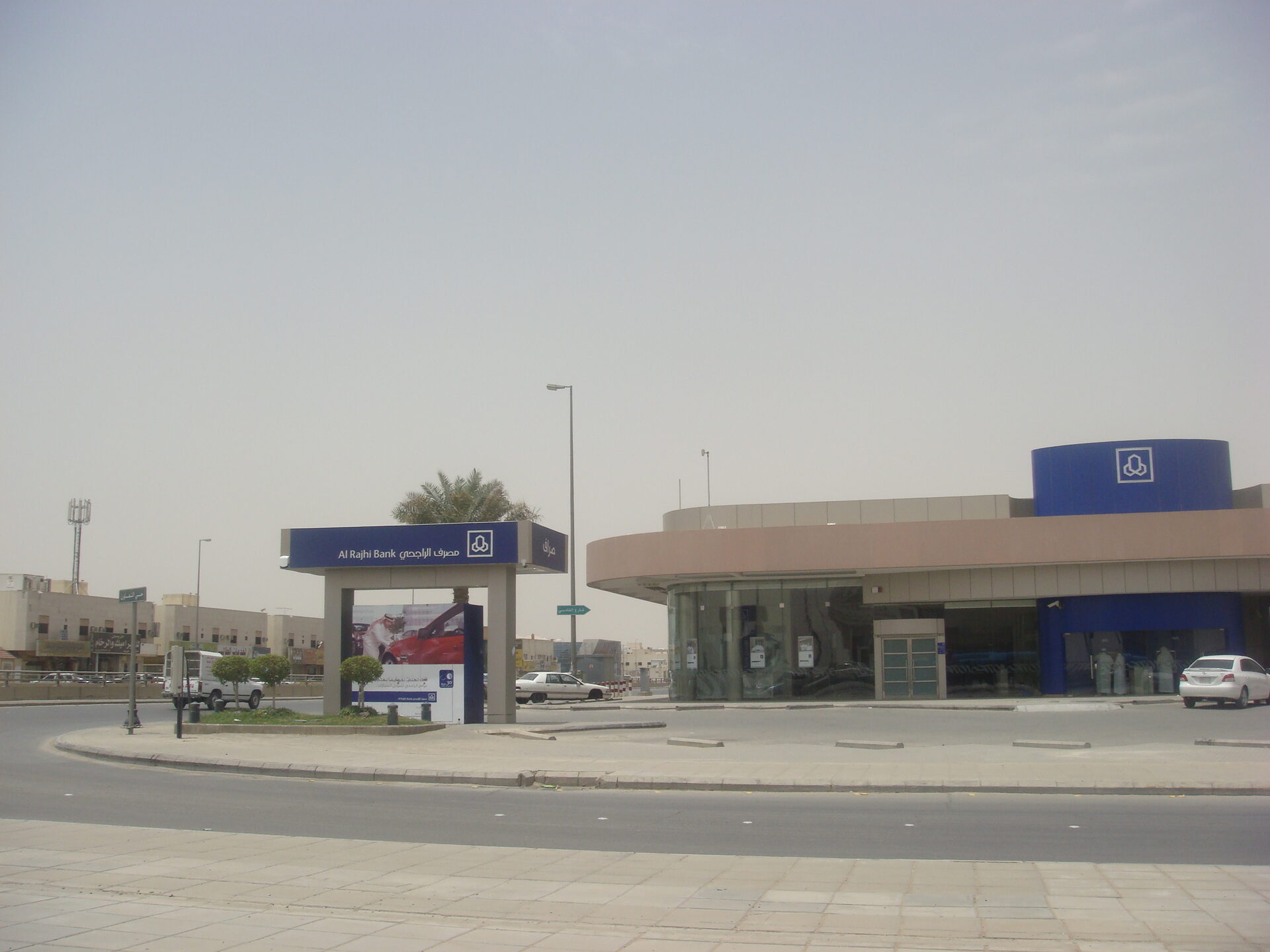
Using your debit card at a Saudi ATM is generally the most convenient and cost-effective way to get cash. Key points:
You will find ATMs from Al Rajhi Bank, Saudi National Bank (SNB), Riyad Bank, Bank AlJazira, and Bank Albilad on almost every commercial street, inside malls, at airports, and near mosques. Al Rajhi Bank has the largest network, with over 5,000 ATMs across the Kingdom.
Warning — Decline Dynamic Currency Conversion (DCC): If the ATM asks whether you want to be charged in your home currency or in SAR, always choose SAR. Selecting your home currency triggers DCC, which lets the ATM operator set the exchange rate — typically 5–10% worse than what your bank would offer. This is the single most expensive trap for tourists at Saudi ATMs.
2. Licensed Exchange Houses (Best Rates for Cash)
If you are exchanging physical cash (dollars, euros, pounds), licensed exchange houses — known locally as sarrafa — typically offer better rates and lower margins than banks or airport counters. Major chains include:
Where to find them:
Tip: You will need your passport to exchange money at a licensed exchange house. Keep it accessible. All transactions are recorded under Saudi anti-money-laundering regulations supervised by SAMA.
3. Airport Exchange Counters (Worst Rates, Last Resort)
Every major Saudi airport — King Khalid (Riyadh), King Abdulaziz (Jeddah), King Fahd (Dammam), and Prince Mohammad bin Abdulaziz (Madinah) — has exchange counters in the arrivals hall. Convenience comes at a price:
4. Exchanging Before You Leave Home (Usually Poor Value)
Banks and exchange bureaux in Europe, North America, and Asia typically offer poor rates for Saudi Riyals because it is not a heavily traded retail currency outside the Gulf. Unless you want the comfort of arriving with some cash in hand, skip this and use a Saudi ATM or exchange house instead.
Cards, Contactless Payments, and Digital Wallets
Saudi Arabia has undergone a rapid digital payments transformation. As of late 2025, 79% of retail transactions were cashless — exceeding the Kingdom’s Vision 2030 target of 70%. For tourists, this means you can pay by card almost everywhere.
Visa and Mastercard
Visa and Mastercard are accepted at virtually all hotels, restaurants, shopping malls, supermarkets, petrol stations, and chain retailers. Saudi regulations now require every registered business — including small shops — to have a POS (point-of-sale) terminal.
American Express is accepted at upscale hotels and some larger retailers, but coverage is patchier. If Amex is your primary card, bring a Visa or Mastercard as backup.
Contactless and Mobile Payments
Apple Pay, Google Pay, and Samsung Pay all work in Saudi Arabia. The mada network (Saudi Arabia’s domestic payment scheme) powers most terminals, and these are NFC-enabled. In practice:
Travel Cards: Wise and Revolut
Multi-currency travel cards from Wise and Revolut work well in Saudi Arabia and can save you significant money on exchange rate margins:
Tip for UK and European travellers: A Wise or Revolut card will typically save you 2–4% compared with a standard high-street bank debit card on every transaction. Load SAR directly if your card supports it, or let the card convert at the mid-market rate from GBP or EUR.
Where Cash Is Still King
Despite the digital revolution, carry some cash for:
A good rule of thumb: carry 200–500 SAR in cash ($53–$133) at all times, and pay by card wherever possible. You will use less cash than you expect. For a deeper dive into banking practicalities and fee-avoidance strategies, see our companion guide on ATMs and banking in Saudi Arabia.
How Much Does Saudi Arabia Cost? A Budget Breakdown
Saudi Arabia is a mid-range destination — cheaper than the UAE or Qatar, but not a backpacker bargain. Here is what to expect in daily spending terms.
| Category | Budget Traveller | Mid-Range | Luxury |
|---|---|---|---|
| Accommodation | 150–250 SAR ($40–67) | 350–700 SAR ($93–187) | 1,500+ SAR ($400+) |
| Food (3 meals) | 60–100 SAR ($16–27) | 150–300 SAR ($40–80) | 500+ SAR ($133+) |
| Transport | 30–60 SAR ($8–16) | 80–200 SAR ($21–53) | 300+ SAR ($80+) |
| Activities | 0–50 SAR ($0–13) | 100–250 SAR ($27–67) | 500+ SAR ($133+) |
| Daily Total | 240–460 SAR ($64–123) | 680–1,450 SAR ($181–387) | 2,800+ SAR ($747+) |
These figures are for one person per day. A couple sharing a hotel room and taxi rides can reduce per-person costs significantly. Pilgrims visiting during Hajj or Umrah should expect higher accommodation costs in Mecca and Medina, especially during peak seasons. Check our Saudi Arabia hotels guide for detailed accommodation pricing across cities.
Tipping in Saudi Arabia
Tipping is appreciated but not obligatory in Saudi Arabia. Here is what is expected in different settings:
Restaurants
Some restaurants add a 10–15% service charge directly to the bill. If you see this charge listed, no additional tip is expected, though rounding up by 5–10 SAR for excellent service is a kind gesture. For restaurants without a service charge, leave 10–15% of the bill in cash on the table.
Hotels
Hotels are where tipping is most consistently expected:
Taxis and Ride-Hailing
For Uber and Careem rides, tipping is optional and handled through the app. For traditional taxis, round up by 2–5 SAR on short city rides, or add 5–10% for longer trips or airport transfers.
Guides and Drivers
For private tour guides (common at Hegra, Elephant Rock in AlUla, or desert safari outings), 50–100 SAR per person is appropriate for a full-day experience.
Cultural note: Always tip in Saudi Riyals, not foreign currency. When handing cash to someone, use your right hand or both hands — using only the left hand is considered impolite. A 20–25% tip, while generous, is excessive by Saudi standards and can create uncomfortable situations. For more on Saudi social norms, see our customs and etiquette guide.
The Tourist VAT Refund Scheme
Saudi Arabia launched its VAT refund programme for tourists in April 2025, allowing eligible visitors to reclaim the 15% VAT on qualifying purchases. Here is how it works:
Who Qualifies
How to Claim
What Is Not Covered
The VAT refund does not apply to:
Tip: If you plan a significant shopping trip — whether at the malls and souqs or in the gold souqs of Jeddah and Riyadh — the 15% refund is substantial. On a 2,000 SAR purchase, that is 300 SAR ($80) back. Keep your receipts and ask the retailer to process the tax-free invoice before you pay.
How Much Cash Should You Carry?
There is no legal limit on bringing foreign currency into Saudi Arabia, but you must declare amounts exceeding 60,000 SAR (approximately $16,000 USD) or its equivalent in any currency. Failure to declare can result in confiscation. For full details on what you need to declare at customs, see our Saudi Arabia entry requirements guide.
For practical purposes:
Sending Money and Remittances
Saudi Arabia is one of the world’s largest remittance-sending countries, with millions of expatriate workers sending money home regularly. If you are working in or visiting Saudi Arabia and need to transfer money internationally, your options include:
Common Currency Mistakes to Avoid
Experienced travellers and first-timers alike fall into these traps. Avoid them and you will save real money:
1. Accepting Dynamic Currency Conversion
When an ATM or POS terminal offers to charge you in your home currency, it is offering DCC — and it is offering a bad deal. The markup is typically 5–10%. Always choose to be charged in Saudi Riyals (SAR).
2. Exchanging Large Sums at the Airport
Airport exchange counters mark up rates by 3–10%. Change only what you need for a taxi and a snack (100–200 SAR), then exchange or withdraw in the city.
3. Exchanging Money at Home Before Departure
High-street banks and airport bureaux in the UK, US, and Europe typically offer terrible rates for Saudi Riyals. You will get significantly more riyals per dollar, euro, or pound in Saudi Arabia itself.
4. Forgetting About Your Bank’s Foreign Transaction Fees
Many standard bank debit cards charge 2.5–3% on foreign transactions plus a flat ATM fee. If you travel frequently, invest in a Wise, Revolut, or Monzo card — or check whether your bank offers a fee-free travel card. The savings add up fast over a two-week trip.
5. Trying to Bargain With Cards in Souqs
In traditional markets, haggling is part of the culture. But sellers are far more willing to negotiate on price when you are paying cash. If you plan to shop in the old souqs of Al Balad or at desert camp stalls, bring cash.
6. Carrying Only Large Notes
ATMs dispense 100 SAR and 50 SAR notes. Small shops, taxi drivers, and market vendors often cannot break a 500 SAR note. Break large bills at supermarkets or hotels early in the day.
Practical Information for Specific Traveller Types
For Pilgrims (Hajj and Umrah)
Mecca and Medina have abundant exchange houses and ATMs, but during peak Hajj season (June 2026) expect long queues at exchange counters near the mosques. Best practice: exchange or withdraw cash before arriving in the holy cities. Riyadh, Jeddah, or Madinah airport are better options. The streets around the Haram in Mecca have many small vendors who deal cash-only — budget 300–500 SAR in cash per day for food, transport, and small purchases during Hajj.
For Business Travellers
Business hotels, conference venues, and corporate restaurants in Riyadh’s Olaya district and Diplomatic Quarter accept cards universally. A Visa or Mastercard corporate card is all you need. Keep a small amount of cash (200 SAR) for tips and taxis only.
For Families
If you are travelling with children, most theme parks and family attractions accept cards. Carry extra cash (300–500 SAR) for ice cream vendors, arcade games, souvenir shops, and the inevitable “can I have that?” moments at markets. The water parks typically use cashless wristband systems once inside.
For Pakistani and South Asian Travellers
If you are arriving from Pakistan, India, or Bangladesh, note that Pakistani travellers should exchange currency in Saudi Arabia (not at home) for significantly better rates. The Pakistani rupee, Indian rupee, and Bangladeshi taka are all readily exchanged at Saudi exchange houses, particularly at Tahweel Al Rajhi and Enjaz centres.
Safety and Security
Saudi Arabia has extremely low rates of pickpocketing and theft compared with most tourist destinations. That said, standard precautions apply:
For a broader look at personal security while visiting, see our Saudi Arabia safety guide for tourists.
Quick Reference: Currency Conversion Cheat Sheet
For quick mental maths when shopping, use these approximate USD equivalents (based on the 3.75 peg):
| SAR | USD | Typical Purchase |
|---|---|---|
| 5 SAR | $1.33 | Bottle of water |
| 10 SAR | $2.67 | Arabic coffee and dates at a cafe |
| 25 SAR | $6.67 | Shawarma or falafel meal |
| 50 SAR | $13.33 | Mid-range restaurant main course |
| 100 SAR | $26.67 | Taxi across a major city |
| 200 SAR | $53.33 | Museum entry for a family |
| 500 SAR | $133.33 | Budget hotel room for one night |
| 1,000 SAR | $266.67 | Full-day desert safari tour |
Easy formula: To convert SAR to USD, divide by 3.75. For a quick estimate, divide by 4 (which underestimates by about 6%, giving you a conservative number). So 100 SAR ÷ 4 = $25 (actual: $26.67). Good enough for market haggling.
Getting Your Visa Sorted
Before you can spend a single riyal, you need to get into the country. Citizens of over 60 countries can obtain a tourist e-visa online before departure or a visa on arrival at Saudi airports. The e-visa costs approximately 535 SAR ($142) including mandatory health insurance. Check our complete Saudi Arabia visa guide for eligibility, application steps, and the latest updates on the e-visa process and visa-on-arrival nationalities.