
Saudi Arabia is home to some of the most significant mosques on earth — from the two holiest sites in Islam to centuries-old prayer halls built from mudbrick in desert oases. Whether you are a Muslim planning a Hajj or Umrah pilgrimage, or a non-Muslim visitor exploring the Kingdom’s rich Islamic heritage during a wider Saudi Arabia trip, understanding mosque etiquette is essential. Getting it right shows respect for the faith and the community, and it ensures your visit is welcomed rather than awkward. This guide covers everything you need to know — from dress code and shoe removal to photography rules, prayer-time awareness, and which mosques across the country are open to non-Muslim visitors.
Best Time to Visit: Between prayer times (check a local prayer app); mornings are quietest
Getting There: Mosques are found in every Saudi city and town — many are within walking distance of hotels
Visa Required: Yes — tourist e-visa (Hajj and Umrah require specific visa types)
Budget: Free entry to all mosques
Must-See: Masjid al-Haram (Mecca, Muslims only), Masjid al-Nabawi (Medina, Muslims only), Al Rajhi Grand Mosque (Riyadh)
Avoid: Arriving during active prayer if you are a non-Muslim visitor; wearing shorts or sleeveless tops
Why Mosque Etiquette Matters
A mosque (masjid in Arabic, meaning “place of prostration”) is not a tourist attraction — it is a house of worship. The five daily prayers structure the rhythm of life across Saudi Arabia, and mosques are the spiritual heart of every community. Even in Riyadh’s glass-tower financial district, you will hear the adhan (call to prayer) five times a day, and shops and restaurants close briefly during each prayer time.
For visitors, the rules are straightforward, but they are taken seriously. Disrespecting mosque etiquette can cause genuine offence, and in the case of restricted areas like Mecca, violating access rules carries legal consequences including fines and deportation. The good news: Saudi Arabians are overwhelmingly welcoming to visitors who make even a basic effort to show respect.
The Five Daily Prayers — Understanding the Rhythm
Every mosque in Saudi Arabia follows the same five daily prayer schedule, though exact times shift throughout the year based on the position of the sun. Understanding these times is critical for any visitor, because many businesses close briefly during prayer and mosques become active worship spaces.
| Prayer | Arabic Name | Approximate Time | Duration |
|---|---|---|---|
| Dawn | Fajr | 4:30–5:30 AM (varies seasonally) | ~15 minutes |
| Midday | Dhuhr | 12:00–12:30 PM | ~20 minutes |
| Afternoon | Asr | 3:15–3:50 PM | ~15 minutes |
| Sunset | Maghrib | 5:45–6:45 PM (varies seasonally) | ~10 minutes |
| Night | Isha | 7:15–8:15 PM | ~15 minutes |
Practical tip: Download the Muslim Pro or Athan app on your phone to get exact daily prayer times for your location in Saudi Arabia. Times change by a few minutes each day. Shops and restaurants typically close for 20–30 minutes at each prayer time, so planning your schedule around these breaks will save frustration.
If you are visiting a mosque, the best time to arrive is between prayers — ideally mid-morning (after Fajr and Dhuhr) or mid-afternoon (between Asr and Maghrib). During active prayer, the mosque is being used for its primary purpose, and non-praying visitors should avoid entering.
Dress Code for Mosque Visits
Dress code is the single most important practical consideration when visiting any mosque in Saudi Arabia. The rules are stricter than general Saudi public dress expectations, and they apply to everyone — Muslim and non-Muslim, male and female. For a full breakdown of what to wear across the country, see our Saudi Arabia dress code guide.
For Women
- Headscarf (hijab): Mandatory inside every mosque. Your hair must be fully covered — not just loosely draped. A large scarf or pashmina works well. Many larger mosques provide loaners at the entrance.
- Arms and legs: Covered to the wrists and ankles. No short sleeves, no cropped trousers, no above-ankle skirts.
- Loose-fitting clothing: Tight clothing is inappropriate. An abaya (the full-length black robe traditionally worn in Saudi Arabia) is not required outside of Mecca and Medina’s holy precincts, but wearing one is always appreciated and eliminates any doubt.
- Feet: Socks are recommended since you will remove your shoes.
- No perfume: Strong fragrances are considered inappropriate in mosques, as they may distract worshippers.
- Long trousers: Mandatory. No shorts of any kind, even below the knee.
- Sleeves: Shoulders must be covered. Short sleeves are acceptable; sleeveless tops are not.
- No bright or loud patterns: While not a strict rule, conservative colours and plain fabrics are appropriate.
- Feet: Clean socks are advisable since shoes are removed.
- Ask a mosque attendant or imam before taking any photos.
- Never photograph worshippers without explicit permission.
- Exterior photography is generally acceptable everywhere.
- Interior photography between prayers is sometimes allowed — always ask.
- Never use flash photography inside a mosque.
- Men’s prayer area: Usually the main hall, accessed through the main entrance.
- Women’s prayer area: Typically a separate section — sometimes a mezzanine level, a curtained area at the back, or an entirely separate room. Women’s entrances are often at the side or rear of the building.
- Mixed-gender visitor groups: If visiting as a mixed group, you will need to separate at the entrance. Agree on a meeting point outside the mosque beforehand.
- Do not eat, drink, or smoke in public during daylight hours. This applies everywhere in Saudi Arabia during Ramadan — not just mosques. Non-Muslims must observe this rule in all public spaces, though eating in private (hotel rooms, screened restaurant areas) is permitted.
- Mosques are busier than usual. Evening prayers during Ramadan can fill even the largest mosques to capacity. If you want to visit a mosque during Ramadan, the quietest time is mid-morning (after Fajr and before Dhuhr).
- Iftar hospitality: Many mosques distribute free iftar meals (the meal that breaks the fast at sunset). Visitors — including non-Muslims — are often welcome to join. This is one of the most generous and memorable cultural experiences in Saudi Arabia.
- Heightened sensitivity: People who are fasting can be tired and more easily irritated, particularly in the late afternoon. Be extra considerate with noise levels and behaviour.
- For Muslim visitors: Friday prayers are a powerful communal experience. Arrive early (at least 30–45 minutes before the prayer) to find a spot. The khutbah is delivered in Arabic.
- For non-Muslim visitors: Avoid visiting mosques during Friday midday prayers (approximately 12:00–1:30 PM). The entire experience is focused worship, and the mosque will be packed. Visit on any other day or at a different time on Friday.
- Businesses close: Expect most shops and restaurants to close for a longer period on Friday afternoons.
- Walking in with shoes on: It happens — especially at mosques where the carpet begins right at the entrance. Watch what others do and look for the shoe rack.
- Taking photos during prayer: Even if the mosque allows photography, never take photos while worshippers are actively praying.
- Pointing feet toward the qibla: When sitting, tuck your legs beneath you or sit cross-legged. Extending your legs with feet pointing toward the mihrab wall is offensive.
- Touching the Quran without permission: Copies of the Quran placed in mosques are for worshippers. Non-Muslims should not handle them unless specifically invited to do so by a guide or imam.
- Entering restricted areas: At larger mosques, certain areas (such as the imam’s quarters, library, or madrasah rooms) are not open to visitors. Respect ropes, closed doors, and signs.
- Visiting Mecca as a non-Muslim: This bears repeating because the consequences are serious. The entire city of Mecca — not just the Grand Mosque — is completely closed to non-Muslims, with road checkpoints enforcing the restriction.
- Carry a headscarf in your bag: Even if you are not planning to visit a mosque, having a scarf available means you can step inside any mosque you encounter without worrying about dress code. This applies to both men and women — a scarf can cover bare arms in a pinch.
- Wear socks: Mosque carpets are cleaned regularly, but the feeling of walking barefoot on shared carpet is not for everyone. Socks solve this.
- Bring a bag for your shoes: A plastic bag keeps your shoes together and prevents accidental swaps at busy mosques.
- Visit with a local guide: Several tour companies in Riyadh and Jeddah offer cultural mosque tours led by knowledgeable locals. This is the best way to learn about Islamic architecture, history, and practice while ensuring you do not accidentally break any rules.
- Respect prayer times for scheduling: Plan your mosque visits between prayers. If you hear the adhan (call to prayer) while inside, move to the edges and wait quietly until prayer concludes.
- Hydrate beforehand: Eating and drinking inside a mosque is not appropriate. In Saudi Arabia’s heat, make sure you have had water before entering.
- Hajj 2026 Guide — Dates, registration, costs and everything you need to know
- Saudi Arabia Dress Code — What to wear across the Kingdom as a tourist
- Non-Muslim Travel in Saudi Arabia — What’s allowed, what to expect, and where you can go
- Travelling During Ramadan — A non-Muslim’s guide to the holy month
- Islamic Heritage Sites of Jeddah — Mosques, history and a walking tour of the old city
- Islamic Heritage Sites of Riyadh — Mosques, madrasas and meaning in the capital
- Saudi Arabia Travel Guide 2026 — The complete guide to visiting the Kingdom
- Saudi Arabia Visa Guide — Every visa type explained
For Men
What if you arrive underdressed? Many major mosques — particularly those in Riyadh and Jeddah that receive tourist visitors — keep a supply of abayas, headscarves, and even loose trousers for visitors to borrow at the entrance. Do not count on this at smaller neighbourhood mosques. It is always better to come prepared.
Entering a Mosque — Step by Step
1. Remove Your Shoes
This is universal and non-negotiable. Before stepping onto the carpeted prayer area, remove your shoes. Most mosques have shoe racks or shelves near the entrance. At busy mosques, consider carrying a plastic bag to keep your shoes with you — this prevents them from being accidentally taken by another visitor.
2. Enter with Your Right Foot
Islamic tradition holds that you should enter a mosque right foot first and leave left foot first. While no one will stop you if you forget, it is a sign of awareness and respect.
3. Silence Your Phone
Set your phone to silent mode before entering. A ringing phone during prayer is deeply disruptive. Better yet, keep your phone in your pocket or bag entirely.
4. Speak Quietly
Mosques are spaces of contemplation. Whisper if you need to speak. Never use a normal conversational voice inside a mosque, even between prayers.
5. Do Not Walk in Front of Someone Praying
If worshippers are praying — standing, bowing, or prostrating — never walk directly in front of them. Walk behind or around them. Cutting across someone’s prayer line is considered extremely disrespectful in Islam.
6. Find an Appropriate Place to Sit
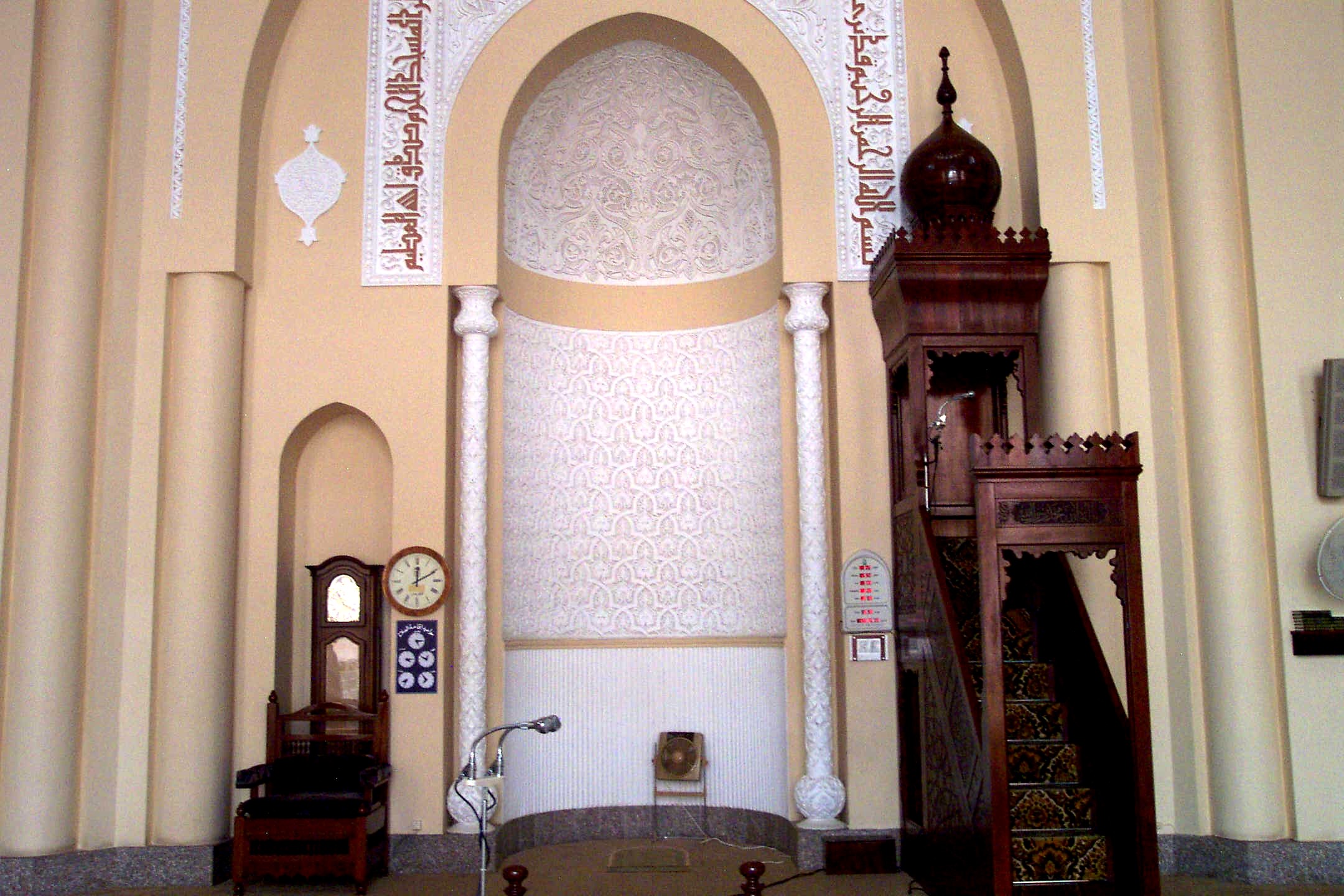
If you are observing rather than praying, sit quietly along the walls or at the back. Do not stand in the middle of the prayer hall watching. Sit cross-legged on the carpet — avoid pointing your feet toward the qibla (the wall facing Mecca, usually marked by the mihrab niche).
Photography and Phone Rules
Photography rules vary significantly by mosque, and they have become stricter in recent years.
The Two Holy Mosques: Complete Ban
As of 2026, the Saudi Ministry of Hajj and Umrah has implemented a full ban on photography and video recording inside Masjid al-Haram in Mecca and Masjid al-Nabawi in Medina. Mobile phones, professional cameras, and all recording equipment are prohibited within these mosques. This ban is actively enforced, particularly during Hajj season.
Other Mosques: Ask First
At other mosques across Saudi Arabia, photography policies vary. Some larger mosques with guided tours (such as the Al Rajhi Grand Mosque in Riyadh) may permit photography in designated areas. At most neighbourhood mosques, photography during prayer is never acceptable. The safest approach:
Gender Separation in Mosques
All mosques in Saudi Arabia maintain separate prayer areas for men and women. This is a fundamental aspect of Islamic worship, not a restriction placed on visitors.
For female travellers: The women’s section at smaller mosques can sometimes be locked when not in use for prayer. If you find the women’s entrance closed, it does not mean you are unwelcome — ask at the main entrance, and someone will usually direct you or open the area. For more advice on navigating Saudi Arabia as a woman, see our solo female travel guide.
Visiting Mosques During Ramadan
Ramadan transforms the mosque experience in Saudi Arabia. Mosques come alive at night with Tarawih prayers (extended evening prayers unique to Ramadan), and the atmosphere is electric — particularly at the two Holy Mosques. For a full guide to travelling during the holy month, see our Ramadan travel guide.
Key Etiquette During Ramadan
Can Non-Muslims Visit Mosques in Saudi Arabia?
This is one of the most common questions travellers ask. The answer depends entirely on which mosque — and which city — you are visiting. For a deeper dive into all access rules, see our non-Muslim travel guide.
Mecca: Entirely Closed to Non-Muslims
The entire city of Mecca, not just Masjid al-Haram, is off-limits to non-Muslims. This is a religious law rooted in the Quran and enforced by checkpoints on all roads entering the city. Attempting to enter as a non-Muslim can result in detention, fines, and deportation. There are no exceptions, no guided tours, and no special permits.
Medina: Partially Open
Since 2021, non-Muslims have been permitted to visit most of Medina. However, the area immediately surrounding the Prophet’s Mosque (Masjid al-Nabawi) remains restricted to Muslims only. The boundary is clearly marked with signs, fencing, and security personnel. Outside that zone, non-Muslim visitors can explore the rest of the city freely.
Jeddah: Four Mosques Officially Open
Jeddah has officially designated four mosques as open to non-Muslim visitors: Al-Rahma Mosque (the famous “floating mosque” built on pillars over the Red Sea, constructed in 1985), King Fahd Mosque, King Saud Mosque, and Al-Taqwa Mosque. These mosques welcome visitors outside of prayer times. The Islamic heritage sites of Jeddah include several of these.
Riyadh: Al Rajhi Grand Mosque and Others
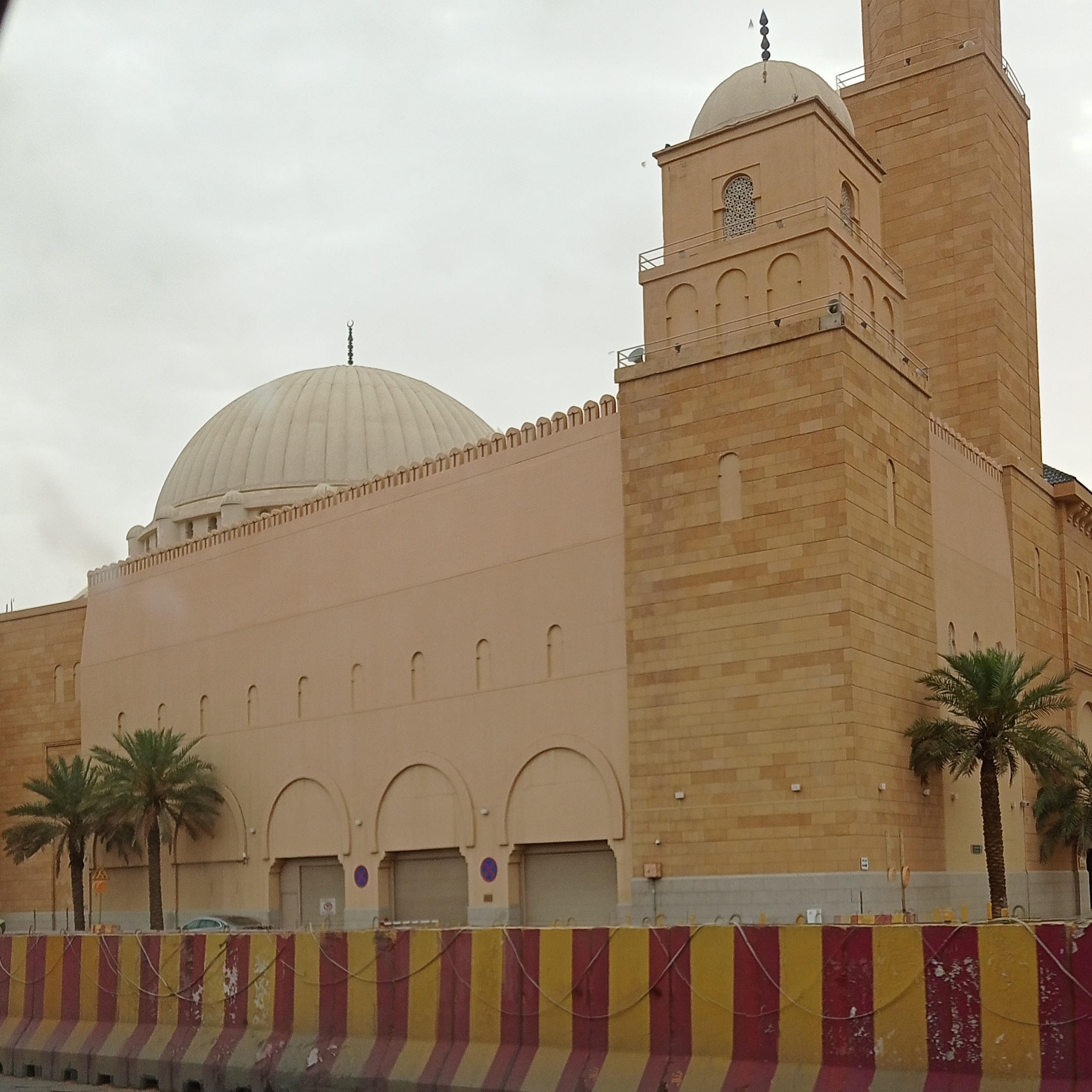
The Al Rajhi Grand Mosque, one of the largest mosques in Saudi Arabia after the two Holy Mosques, is open to visitors of all faiths and offers free guided tours. Several other Riyadh mosques welcome respectful visitors — see our guide to Islamic heritage sites of Riyadh for specific locations.
Eastern Province: Jawatha Mosque
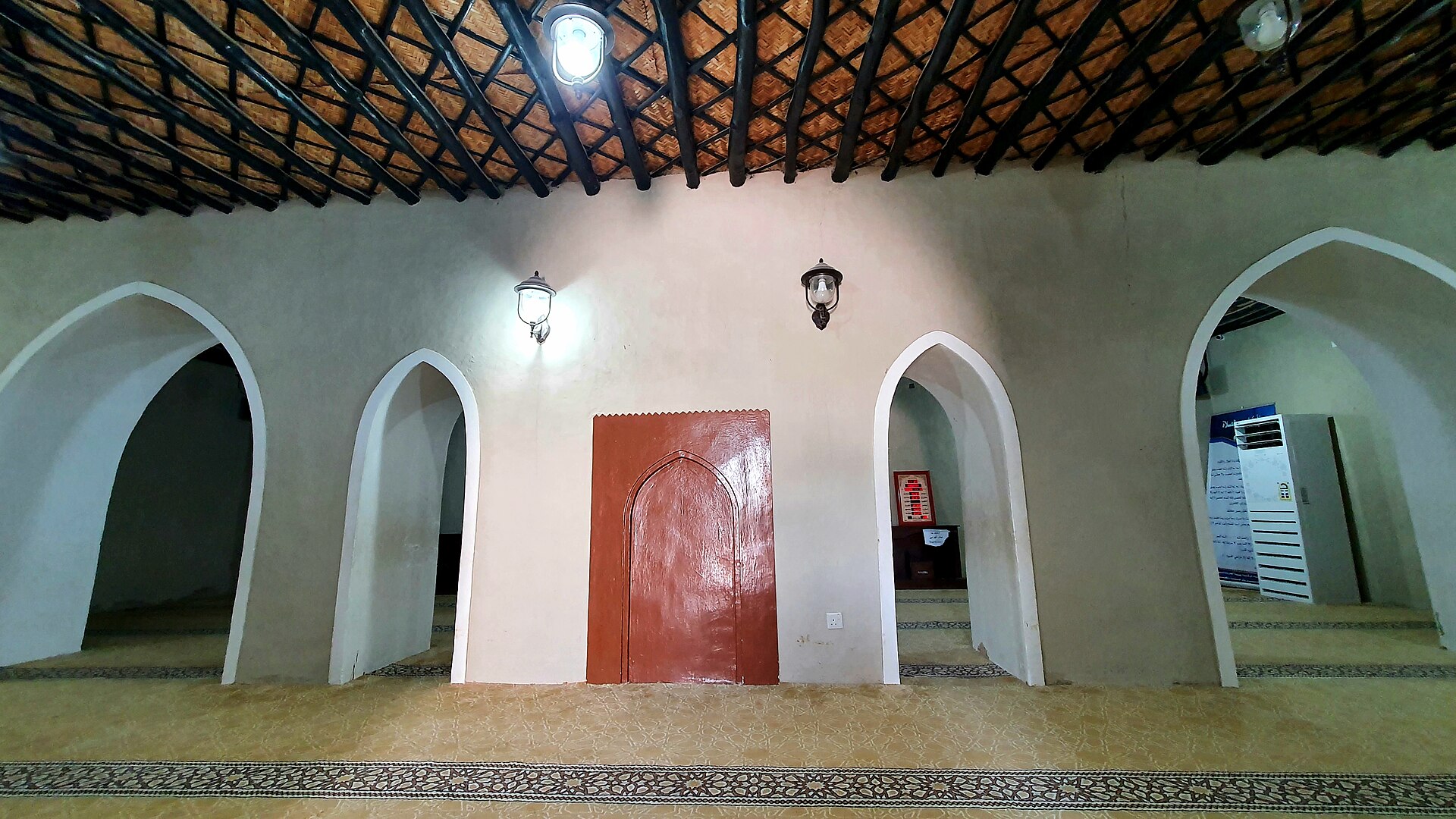
The Jawatha Mosque in Al-Ahsa, believed to be the first mosque built in eastern Arabia (dating to approximately 628 CE), is open to visitors. This historically significant site — where the second Friday congregation prayer in Islam was held — was restored by the Saudi Commission for Tourism and National Heritage in 2007.
General rule: Outside of Mecca and the restricted zone around the Prophet’s Mosque in Medina, most mosques in Saudi Arabia will allow respectful non-Muslim visitors to enter outside of prayer times. If you are unsure, simply ask at the entrance. The worst that can happen is a polite refusal.
Understanding Wudu (Ablution)
Every mosque in Saudi Arabia has wudu (ablution) facilities — taps and washing areas where Muslims ritually cleanse before prayer. Wudu is a prerequisite for the five daily prayers and involves washing the hands, mouth, nostrils, face, arms to the elbows, wiping the head and ears, and washing the feet to the ankles, in a specific order.
As a non-Muslim visitor, you do not need to perform wudu. However, understanding what is happening in the ablution area helps you navigate mosque layout — these areas are always near the entrance and are often gender-separated. Do not use the wudu taps for casual hand-washing or drinking water.
Friday Prayers — A Special Case
Friday (Jumu’ah) is the most important congregational prayer of the week. The Dhuhr prayer is replaced by a special, longer service that includes a sermon (khutbah) delivered by the imam. Mosques fill to capacity and often overflow onto surrounding streets.
Notable Mosques Worth Visiting
Saudi Arabia’s mosque architecture spans 1,400 years — from mudbrick desert fortifications to soaring contemporary designs. These are some of the most architecturally and historically significant mosques that visitors can experience.
Al Rajhi Grand Mosque, Riyadh
Opened in 2004, this is one of the largest mosques in Saudi Arabia and a model for integrated mosque facilities across the Middle East. It offers free guided tours that cover the mosque’s history, architecture, and community role. Located on the East Ring Road in Riyadh.
King Saud Mosque, Jeddah
Designed by the renowned architect Abdel-Wahed El-Wakil and completed in 1987, King Saud Mosque is the largest mosque in Jeddah. Its layout is inspired by Persian four-iwan designs, with a largest dome spanning 20 metres and reaching 42 metres in height. The 60-metre minaret echoes the style of the Mosque-Madrassa of Sultan Hassan in Cairo.
Al-Rahma Mosque (The Floating Mosque), Jeddah
Built in 1985 on pillars submerged in the Red Sea, Al-Rahma Mosque appears to float on the water at high tide. It is one of Jeddah’s most photographed landmarks and is officially open to non-Muslim visitors. No entry fee.
Jawatha Mosque, Al-Ahsa
One of the oldest mosques in the world, Jawatha Mosque dates to approximately 628 CE and was built by the Bani Abd al-Qays tribe. It hosted the second Friday congregation prayer in Islam. The restored mudbrick structure, with its fortress-like rounded crenellations, sits about 12 km northeast of Hofuf in the Eastern Province.
Quba Mosque, Medina
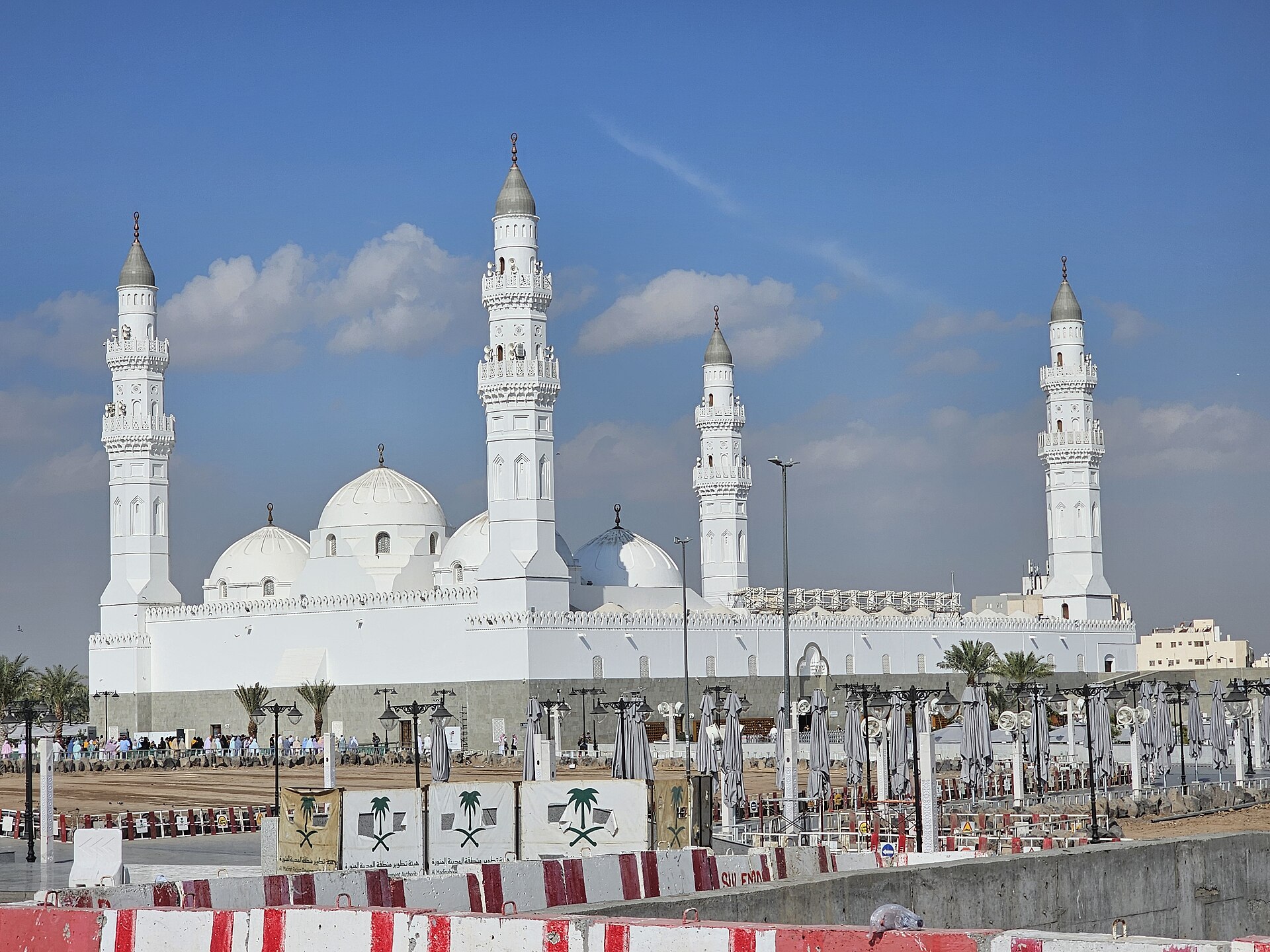
The first mosque ever built in Islamic history, Quba Mosque in Medina holds immense spiritual significance. The current structure is a modern rebuild, but the site has been in continuous use since the Prophet Muhammad’s migration from Mecca in 622 CE. Note: the mosque is within Medina’s restricted zone and accessible to Muslims only.
For a comprehensive list of sacred sites beyond mosques, including companion graves and historical locations, see our Ziyarat guide.
Common Mistakes Visitors Make
Even well-meaning visitors sometimes get things wrong. Here are the most common mistakes and how to avoid them:
Practical Tips for Mosque Visits
For Hajj and Umrah pilgrims: Mosque etiquette is just one part of a much larger set of rituals and requirements. See our comprehensive Umrah guide and Hajj 2026 guide for complete step-by-step instructions covering ihram, tawaf, sa’i, and all other rites.