
Saudi Arabia is the birthplace of Islam, and the rhythm of daily life here is shaped by the five prayers (salawat) that punctuate every 24 hours. For tourists, understanding how prayer times work is not optional — it is the single most practical piece of cultural knowledge you can carry. Prayer times affect when shops open and close, when restaurants serve food, when museums pause admissions, and how the entire atmosphere of a city shifts five times a day. Whether you are planning a wider trip across Saudi Arabia or just spending a weekend in Riyadh, this guide explains everything you need to know — from what happens when the adhan sounds to how recent reforms have changed the rules for businesses.
Number of Daily Prayers: Five — Fajr (dawn), Dhuhr (noon), Asr (afternoon), Maghrib (sunset), Isha (night)
Duration of Each Closure: 15–30 minutes (where businesses still close)
Do All Shops Still Close? No — since 2021, businesses are permitted to stay open, though many still close voluntarily
Visa Required: Yes — tourist e-visa available
Best App: Muslim Pro or Athan by IslamicFinder (free, iOS & Android)
Avoid: Playing loud music near mosques during prayer, or showing visible frustration when a business pauses for salah
The Five Daily Prayers Explained
Islam prescribes five obligatory prayers each day. The times are not fixed by the clock — they are determined by the position of the sun, which means they shift by a few minutes every day and vary significantly between summer and winter. Here is what each prayer means for your travel plans.
Fajr — The Pre-Dawn Prayer
Fajr begins at the first light of true dawn, before the sun rises. In Riyadh, this falls around 4:25 AM in April and as early as 3:50 AM in June. In winter months, it shifts to around 5:15 AM. For most tourists, Fajr has little practical impact — you will likely be asleep. However, you will hear the adhan (call to prayer) broadcast from mosque loudspeakers, and it can be loud enough to wake light sleepers, particularly in older city neighbourhoods where mosques are closely spaced. If you are a light sleeper, request a hotel room that does not directly face a mosque, or bring earplugs.
Dhuhr — The Noon Prayer
Dhuhr is the midday prayer, typically falling between 11:50 AM and 12:30 PM depending on the season and your location in the Kingdom. This is one of the prayers most likely to affect tourists, as it coincides with lunchtime and peak shopping hours. In areas where businesses still close, expect a pause of 15–30 minutes. Restaurants may stop seating new guests, and shop shutters may come down. On Fridays, the Dhuhr prayer is replaced by the extended Jummah (Friday congregational prayer), which typically lasts 45–60 minutes and causes a noticeably longer disruption.
Asr — The Afternoon Prayer
Asr falls in the mid-to-late afternoon, typically between 3:00 PM and 3:45 PM. This prayer coincides with what many visitors consider prime sightseeing and shopping time. In practice, its impact is similar to Dhuhr — a brief pause in areas where businesses still observe the traditional closure.
Maghrib — The Sunset Prayer
Maghrib begins immediately at sunset and is the shortest window between prayers — it typically lasts only about 20 minutes before the next prayer becomes due. In Riyadh, Maghrib falls around 6:10 PM in April, 6:45 PM in midsummer, and 5:15 PM in midwinter. This prayer marks the moment when Muslims who are fasting during Ramadan break their fast (iftar), making it the most culturally significant prayer of the day during the holy month.
Isha — The Night Prayer
Isha is the final prayer of the day, beginning when the red glow of twilight has disappeared from the western sky. It usually falls between 7:30 PM and 8:15 PM depending on the season. By this time, the evening social scene in Saudi Arabia is just getting started — restaurants and cafes are filling up, and malls are at their busiest. Isha has the least practical impact on tourists because the evening economy is well underway.
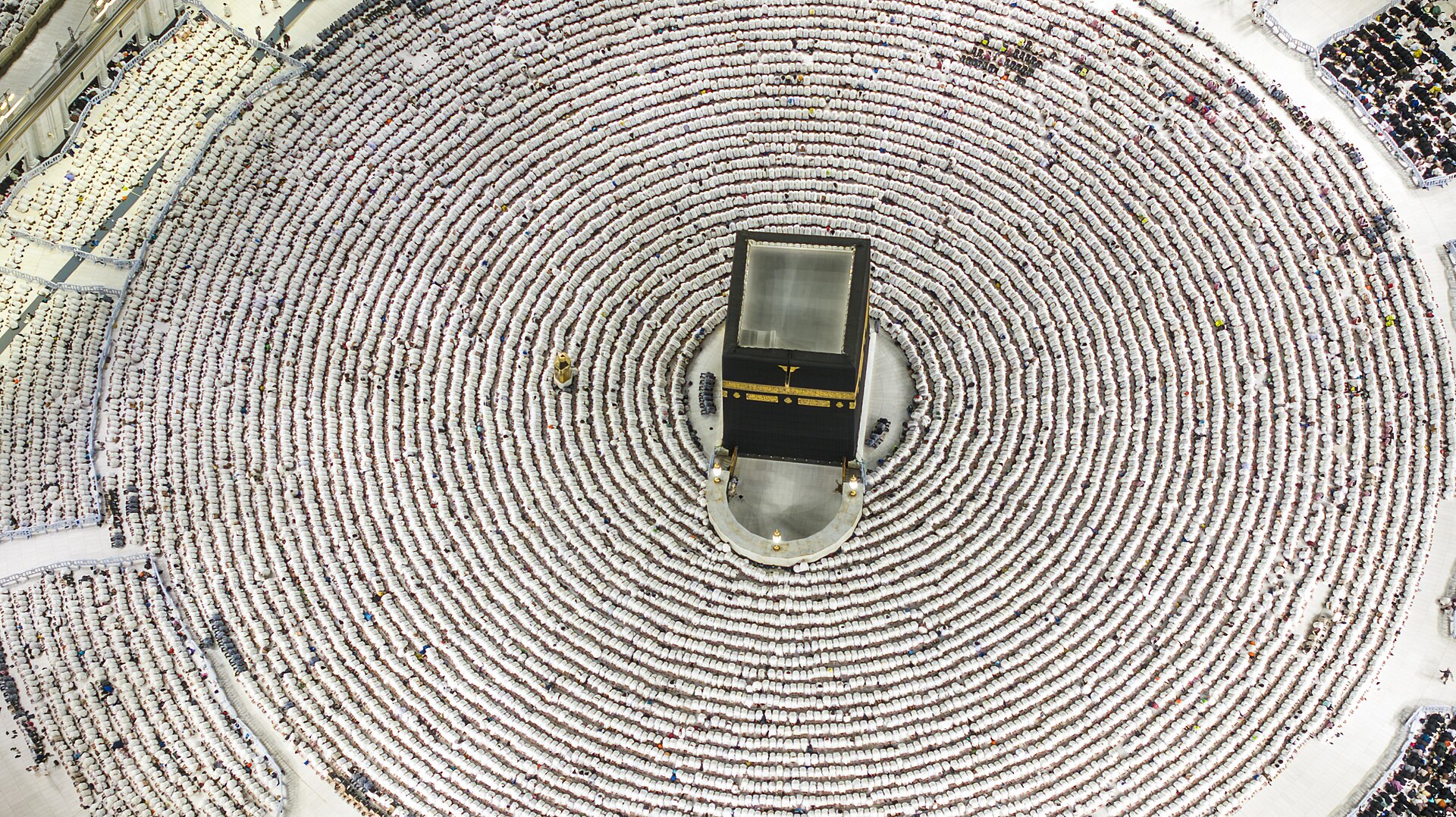
Approximate Prayer Times by Season
The following table gives approximate prayer times for Riyadh across the year. Times vary by 10–20 minutes for Jeddah (slightly later) and Dammam (slightly earlier) due to their longitude positions. Always check an app or website for exact daily times.
| Prayer | January (Winter) | April (Spring) | July (Summer) | October (Autumn) |
|---|---|---|---|---|
| Fajr | 5:15 AM | 4:25 AM | 3:50 AM | 4:20 AM |
| Dhuhr | 12:10 PM | 11:55 AM | 12:10 PM | 11:40 AM |
| Asr | 3:05 PM | 3:20 PM | 3:40 PM | 3:00 PM |
| Maghrib | 5:15 PM | 6:10 PM | 6:45 PM | 5:30 PM |
| Isha | 6:45 PM | 7:40 PM | 8:15 PM | 7:00 PM |
Tip: Download the Muslim Pro or Athan by IslamicFinder app on your phone before arriving in Saudi Arabia. Both are free, available on iOS and Android, and use GPS to give you precise daily prayer times for your exact location. Even if you are not Muslim, these apps are the best way to plan your day around potential business closures.
Do Shops and Restaurants Still Close for Prayer?
This is the question every tourist asks — and the answer is more nuanced than a simple yes or no.
The Old Rule: Mandatory Closure
For over 30 years, Saudi Arabia was the only country in the Muslim world that required all commercial establishments to close during every daily prayer. When the adhan sounded, shop shutters came down, restaurant staff asked diners to wait, petrol stations stopped serving, and even pharmacies locked their doors. The religious police (mutawwa) enforced compliance, and fines were issued to businesses that remained open. This practice was deeply embedded in daily life and caught many visitors off guard.
The 2021 Reform: Businesses May Stay Open
In 2021, the Federation of Saudi Chambers issued a circular confirming that commercial and economic activities may continue during prayer times. This was part of Crown Prince Mohammed bin Salman’s wider Vision 2030 modernisation programme, which aims to make Saudi Arabia more welcoming to international tourists and investors. The religious police no longer have enforcement authority, and no fines are issued for staying open.
What Actually Happens in Practice (2026)
The reform means businesses can stay open, but many still choose to close — particularly smaller, family-owned shops, traditional souks, and businesses in conservative areas. Here is what to expect in different settings:
| Venue Type | Likely to Close? | Notes |
|---|---|---|
| Large shopping malls | No | Major malls in Riyadh, Jeddah, and Dammam generally stay open. Individual stores inside may close briefly. |
| International restaurant chains | No | Most continue serving, though some may dim lights or lower music during the adhan. |
| Hotel restaurants | No | Hotels catering to international guests do not close for prayer. |
| Supermarkets and hypermarkets | Rarely | Large chains like Panda, Carrefour, and Tamimi stay open. |
| Traditional souks | Yes | Most souk vendors still close. Expect 20–30 minutes of shuttered stalls. |
| Small independent shops | Often | Neighbourhood grocers, barbers, and small retailers commonly close. |
| Pharmacies | Sometimes | Chain pharmacies increasingly stay open; independents often close. |
| Petrol stations | No | Pumps remain operational, though the convenience shop may close. |
| Museums and attractions | Varies | Government museums typically stay open; some private attractions may pause entry. |
Practical tip: If you are browsing a souk or traditional market, keep an eye on the clock as prayer time approaches. Vendors may ask you to step outside before pulling shutters down. You will not be locked in — but you may find yourself standing in an empty corridor for 20 minutes.
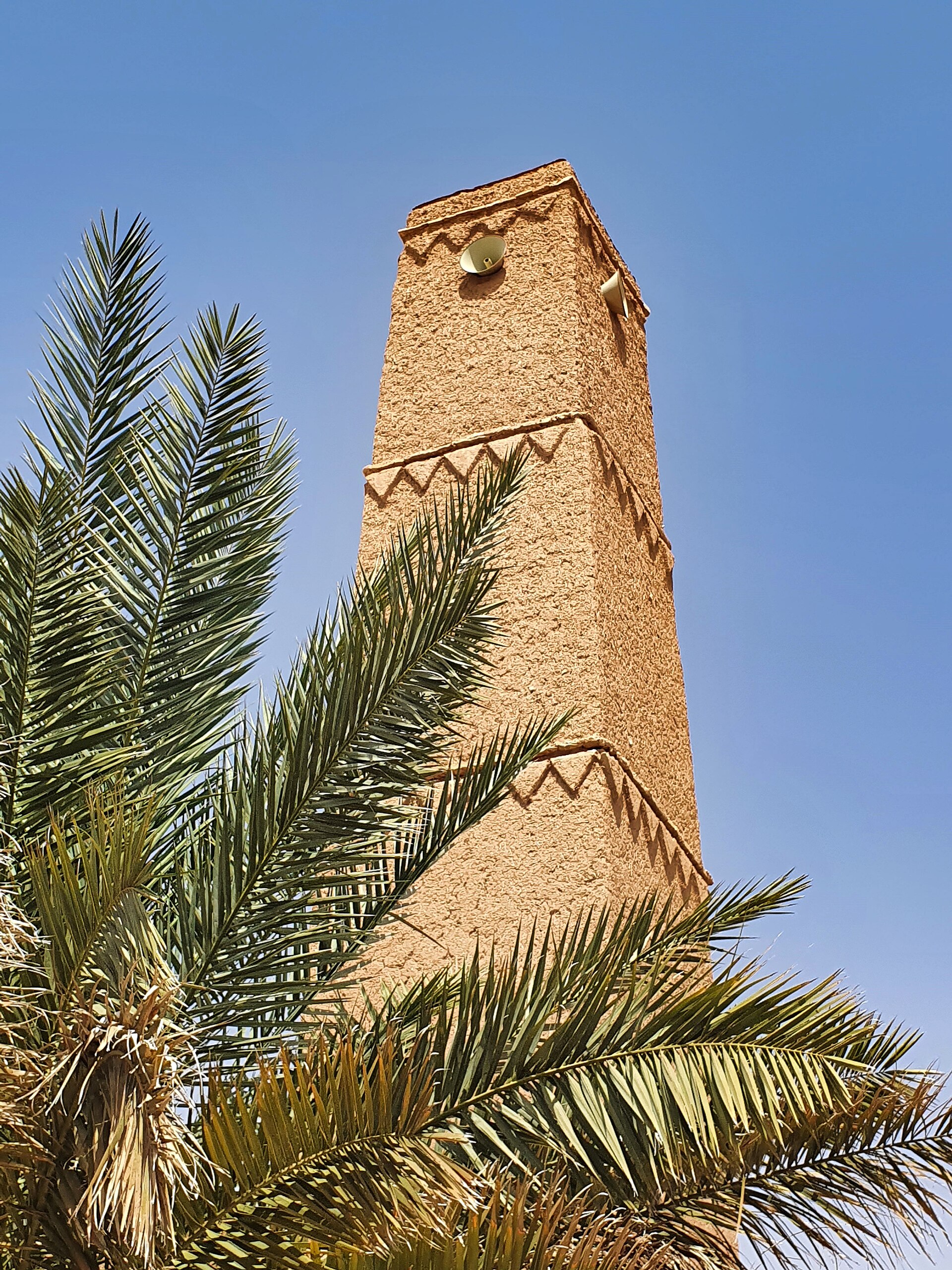
The Adhan: What You Will Hear
The adhan (call to prayer) is the melodic Arabic chant broadcast from mosque loudspeakers five times a day. In Saudi cities, where mosques are spaced only a few hundred metres apart, the adhan creates a layered soundscape as multiple mosques call simultaneously, each slightly out of sync. It is one of the most distinctive sensory experiences of visiting the Kingdom.
The adhan lasts approximately 3–5 minutes. It begins with Allahu Akbar (God is greatest), repeated four times, and proceeds through a series of phrases affirming Islamic belief and calling the faithful to prayer. The Fajr adhan includes the additional line As-salatu khayrun min an-nawm (prayer is better than sleep).
What Tourists Should Do During the Adhan
- You do not need to do anything specific. Non-Muslims are not expected to pray. Simply continue what you are doing — but quietly.
- Lower your voice and avoid loud conversation, laughing, or shouting near mosques.
- Pause music or audio if you are playing anything on a speaker. Saudis routinely mute car radios and TV sets during the adhan.
- Do not photograph people praying without their explicit permission.
- Stay clear of mosque entrances. Worshippers will be filing in, and you should not block the path.
- If you are in a restaurant or cafe, continue eating. The reform means you are not expected to stop, but lowering your voice is courteous.
- Duration: Jummah includes a sermon (khutbah) followed by two rak’ahs of prayer. The entire event lasts 45–60 minutes, typically from around 12:00 PM to 1:00 PM.
- Traffic: Roads around mosques become heavily congested before and after Jummah. Cars double-park and streets may be partially blocked. Avoid driving near large mosques during this window.
- Closures: Even businesses that stay open during regular prayers are more likely to close for Jummah. Expect traditional markets, smaller restaurants, and government offices to be shut from approximately 11:30 AM to 1:30 PM on Fridays.
- The Saudi weekend: Friday and Saturday are the official weekend in Saudi Arabia (changed from Thursday–Friday in 2013). Many itinerary plans should account for reduced Friday morning hours at attractions.
- No public eating, drinking, or smoking during daylight. This applies to everyone — Muslim and non-Muslim. Fines of up to SAR 500 (approximately USD 133) can be issued, though first-time tourist violations typically receive a warning.
- Restaurant hours change dramatically. Street-level restaurants and cafes close during daylight fasting hours (roughly 5:00 AM to 6:20 PM). Hotel restaurants serving non-Muslim guests may remain open, but often behind screens or in designated areas — confirm with your hotel before travelling.
- Government offices reduce hours to approximately 9:00 AM–2:00 PM.
- Malls and souks shift to evening hours. Many open late (after Maghrib) and stay open until 1:00–2:00 AM.
- Domestic flights are reduced by approximately 20% on carriers like Saudia and Flynas.
- Learn to recognise the adhan. After a day or two, you will naturally start anticipating prayer times — this awareness shows cultural sensitivity.
- Be patient. If a shop closes while you are browsing, wait quietly. It will reopen within 15–30 minutes.
- Accept it as part of the experience. The pause that prayer brings is not an inconvenience — it is a window into a way of life that has shaped this region for 1,400 years.
- Dress modestly near mosques, covering shoulders and knees. Women do not need to wear an abaya in most of Saudi Arabia, but respectful clothing near places of worship is expected.
- Use the pause productively. Prayer time is an excellent moment to check your photos, review your itinerary, or simply sit with an Arabic coffee.
- Play music or audio from speakers when the adhan is sounding. This is considered deeply disrespectful.
- Stare at or photograph people praying — in mosques, on prayer mats in parks, or in dedicated airport prayer rooms.
- Express frustration at prayer-time closures. Saudis will notice, and it will affect how they perceive you as a guest in their country.
- Walk between a person and their prayer direction (qibla — toward Mecca) while they are praying. Pass behind them if you need to move.
- Assume everywhere closes. The reform is real, and many venues — particularly those catering to tourists — now stay open.
- Airports: Every Saudi airport has dedicated prayer rooms on every level, clearly signed in Arabic and English. They are separated by gender.
- Shopping malls: Large malls have prayer rooms on every floor, typically near the restrooms. When the adhan sounds, you will see people heading toward these rooms.
- Hotels: Most hotels have a prayer room or indicate the qibla direction (toward Mecca) with an arrow on the ceiling or a sticker inside a desk drawer.
- Rest stops: Highway rest areas and petrol stations along routes like the Riyadh–Jeddah highway have prayer areas with ablution facilities.
- Tourist attractions: Sites like Diriyah, the National Museum in Riyadh, and most heritage sites have designated prayer areas.
- Saudi Arabia Travel Guide 2026 — The complete guide to visiting the Kingdom
- Mosque Etiquette in Saudi Arabia — Dress codes, behaviour rules, and which mosques welcome visitors
- Non-Muslim Travel in Saudi Arabia — What is allowed, what to expect, and how to navigate cultural differences
- Saudi Arabia Shopping Guide — Best malls, souks, and what to buy across the Kingdom
- Saudi Arabia Itinerary: 7, 10, and 14-Day Plans — Structured travel plans for every trip length
- Saudi Arabia Visa Guide — Every visa type explained
Friday Prayers: The Biggest Disruption of the Week
Friday (Yawm al-Jumu’ah) is the Islamic holy day, and the noon prayer is replaced by the Jummah congregational prayer, which is obligatory for Muslim men. This is the most impactful prayer of the week for tourists.
How Friday Prayers Affect Your Plans
Tip: Plan indoor activities, a late hotel breakfast, or pool time for Friday mornings. Most shops, malls, and restaurants are fully open by 1:30–2:00 PM on Fridays.
Planning Your Day Around Prayer Times
Even with the relaxed rules, building prayer-time awareness into your daily itinerary will save you frustration. Here is a practical framework for structuring your day.
Morning (After Fajr Until Dhuhr)
The morning window between roughly 6:00 AM and 11:45 AM is the longest uninterrupted stretch of the day. Use this time for outdoor activities — hiking, desert excursions, heritage site visits, or any attraction that opens early. Most museums open at 8:00 or 9:00 AM and stay open through Dhuhr in major cities.
Midday (Dhuhr to Asr)
The window between Dhuhr and Asr (roughly 12:00 PM to 3:00 PM) is your second major block. This is also the hottest part of the day from April to October, so it is natural to spend this time indoors — shopping in an air-conditioned mall, visiting an indoor museum, or having lunch. Large malls and chain restaurants serve continuously through this period.
Afternoon (Asr to Maghrib)
The late-afternoon window between Asr and Maghrib (roughly 3:30 PM to 6:00 PM) is when many Saudis run errands and socialise. Streets get busier, and this is a popular time for café culture. If you are visiting a souk, aim to arrive after Asr prayer ends rather than before it begins.
Evening (Maghrib to Isha and Beyond)
Saudi Arabia comes alive after Maghrib. The evening is the social heart of the day, especially from October to March when temperatures are pleasant. Restaurants, entertainment venues, and malls are at peak activity from roughly 7:00 PM to midnight — and often later. Isha prayer at around 7:30–8:15 PM causes minimal disruption in urban commercial areas.
Prayer Times During Ramadan
Ramadan amplifies everything about the prayer-time experience. The holy month of fasting (the ninth month of the Islamic lunar calendar) brings additional restrictions, altered schedules, and a transformed atmosphere across the Kingdom.
Ramadan 2026 Dates
Ramadan 2026 began on Wednesday 18 February and ended on Thursday 19 March, with Eid al-Fitr celebrated from 20 March. In 2027, Ramadan is expected to fall approximately 10–11 days earlier due to the lunar calendar. Always check the exact dates before booking, as they depend on moon sightings and may shift by a day.
How Ramadan Affects Tourists
The Iftar Experience
The moment of Maghrib during Ramadan is extraordinary. The iftar (breaking of the fast) transforms streets that were quiet all day into bustling scenes of communal eating. Many mosques and community organisations set up free iftar tents for anyone — including tourists. Hotels and restaurants offer lavish iftar buffets, often priced between SAR 150–400 (USD 40–107) per person. Attending a public iftar is one of the most memorable cultural experiences available to visitors.
Planning advice: If you visit during Ramadan, eat a substantial breakfast in your hotel before dawn, carry water to drink discreetly in private, and schedule your sightseeing for late afternoon and evening when the city comes alive after iftar.
Eid Holidays and Prayer
The two major Islamic holidays — Eid al-Fitr (end of Ramadan) and Eid al-Adha (during the Hajj season) — each bring a distinctive prayer and a four-day public holiday.
Eid al-Fitr 2026
Celebrated from approximately 20 March, marking the end of Ramadan. The Eid prayer takes place in the morning, typically around 6:00–6:30 AM, in large open-air prayer grounds (musalla) and mosques. After the prayer, the festive mood takes over — families gather, children receive gifts, and restaurants serve special menus. For tourists, the first day of Eid may see some closures, but from the second day onward, the Kingdom is in full celebration mode with extended mall hours and special events.
Eid al-Adha 2026
Expected around 27 May 2026, following the Day of Arafah (26 May). This is the larger of the two Eids and coincides with the Hajj pilgrimage. The Eid prayer follows the same morning pattern. Families sacrifice an animal (traditionally a sheep) and distribute the meat. Tourist areas in Riyadh, Jeddah, and AlUla remain fully operational, though domestic travel is extremely busy — book flights and hotels well in advance.
Non-Muslim Visitors and Mosques
As a non-Muslim visitor, you cannot enter mosques to pray, but a growing number of Saudi mosques are opening their doors for cultural visits. Understanding the boundaries is important.
Can Non-Muslims Enter Mosques?
Historically, non-Muslims were not permitted inside mosques in Saudi Arabia. This is changing as part of the Kingdom’s cultural openness programme. Select mosques — particularly historical ones — now offer guided visits for non-Muslim tourists outside of prayer times. The mosque etiquette guide covers dress codes, behaviour expectations, and which mosques are accessible.
Mecca and Medina Restrictions
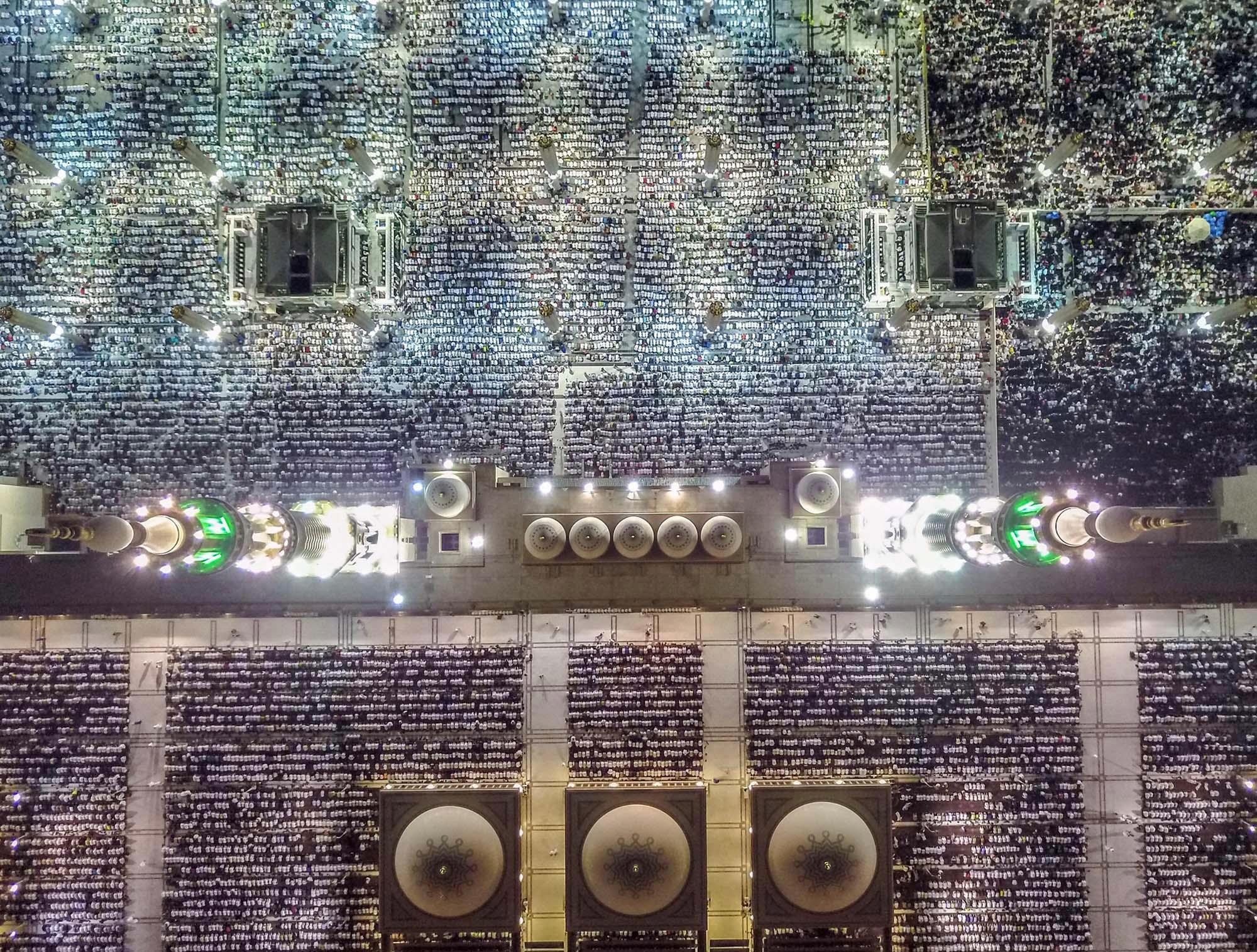
The entire city of Mecca is closed to non-Muslims. Checkpoints on every road into the city verify religious identity, and non-Muslims who attempt entry face deportation. Medina was opened to non-Muslim visitors in 2023 — you may visit the city and its markets, but you cannot enter the Prophet’s Mosque compound itself. Clear green boundary markers indicate the restricted zone around the mosque.
Respectful Behaviour: The Unwritten Rules
Saudi Arabia has liberalised many rules under Vision 2030, but respectful behaviour around prayer remains deeply valued. These are the cultural expectations that no guidebook reform can change.
Do
Do Not
Prayer Rooms in Public Spaces
Saudi Arabia has prayer rooms (musalla) in virtually every public space. Even as a non-Muslim tourist, knowing where they are helps you navigate around them respectfully.
Prayer Times and Transport
Flights
Saudi airlines do not interrupt flights for prayer. Cabin crew may make an announcement of prayer times, and some aircraft have a qibla indicator on the in-flight entertainment screen, but service continues normally at altitude.
Trains
The Haramain High-Speed Railway (Mecca–Medina via Jeddah) and the SAR north–south line run on fixed schedules that do not pause for prayer. Stations have prayer rooms, and you may see passengers praying in corners of waiting halls — simply walk around them.
Ride-Hailing and Taxis
Uber and Careem operate continuously through prayer times. Your driver may pull over briefly if he needs to pray, which is his right. If this happens, wait patiently — it will take no more than 10–15 minutes. Some drivers pray in their car using a small prayer mat.
Driving
If you are driving a rental car, be aware that traffic patterns shift around prayer times. Roads near mosques become congested as worshippers park. In smaller towns, the streets may empty almost entirely during prayer, only to fill again within 20 minutes.
Prayer Times by City: What Tourists Should Know
Riyadh
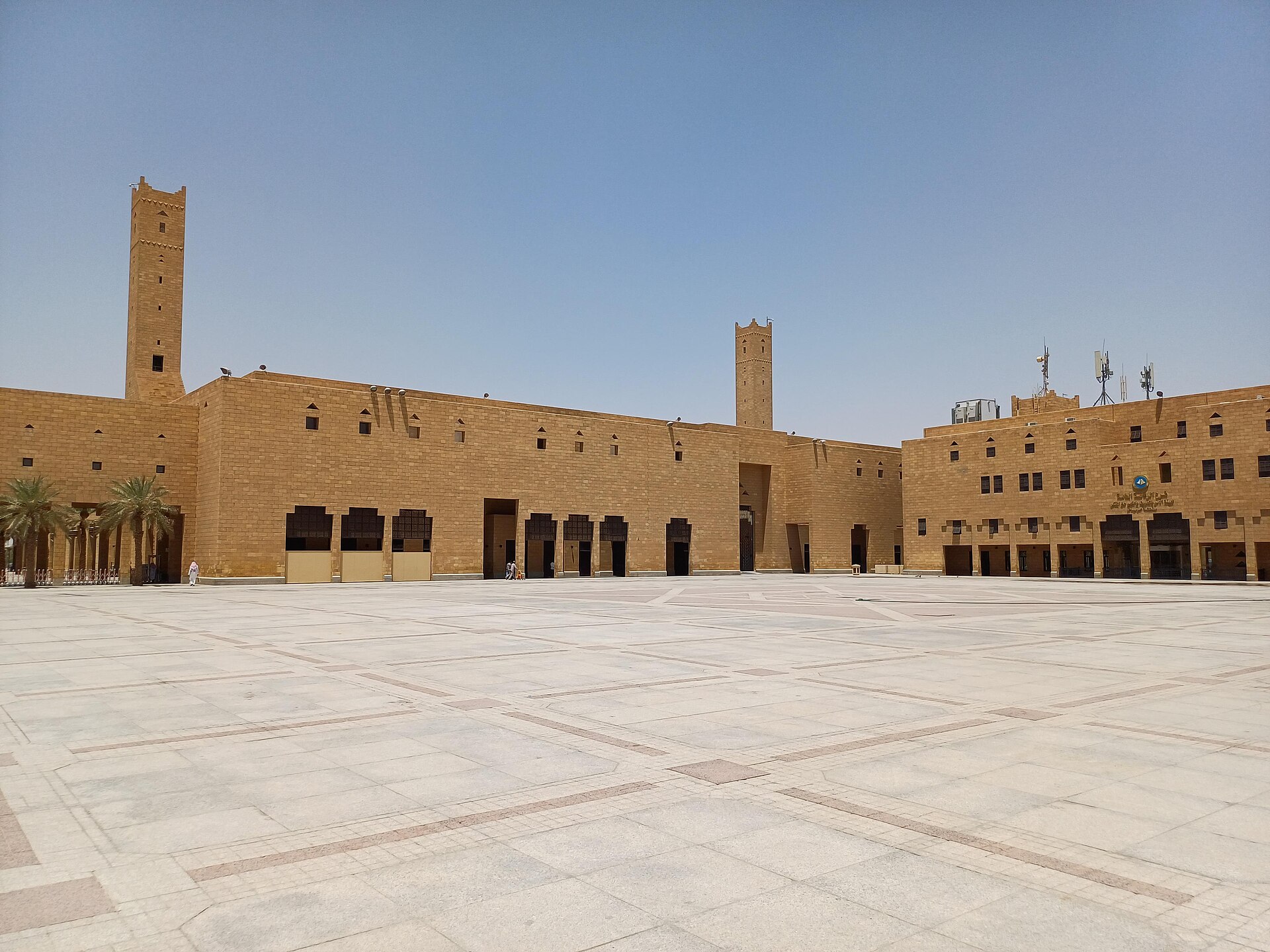
The capital has modernised fastest. Large malls, restaurants, and attractions in areas like the Diplomatic Quarter, Olaya Street, and King Abdullah Financial District generally stay open through prayer. Traditional areas like Diriyah and souks in the old city centre still observe closures. The Imam Turki bin Abdullah Mosque at Deera Square is one of the city’s most prominent, and its adhan is a landmark moment in the central business district.
Jeddah
Jeddah has always been cosmopolitan. The Corniche area, Tahlia Street, and Red Sea Mall stay open during prayer. The historic Al-Balad district, with its UNESCO-listed coral stone buildings, still follows traditional closure patterns — but this adds to the authentic atmosphere.
Dammam and Al Khobar
The Eastern Province cities have large expat populations and are among the most relaxed regarding prayer-time closures. International restaurants and malls rarely close.
AlUla
As a major tourist destination, AlUla and its heritage sites (Hegra, Elephant Rock, Dadan) operate on fixed schedules that do not pause for prayer. The small town centre, however, follows traditional patterns.
Abha and the Highlands
The Asir region is more conservative, and prayer-time closures are more strictly observed in local shops and markets. Plan accordingly, especially if visiting highland villages.
Useful Apps and Resources
| Resource | Platform | What It Does |
|---|---|---|
| Muslim Pro | iOS, Android | GPS-based prayer times, adhan alerts, qibla compass. Over 170 million downloads worldwide. |
| Athan by IslamicFinder | iOS, Android | Accurate prayer times using Umm al-Qura calculation method (the Saudi standard). Mosque locator feature. |
| Visit Saudi app | iOS, Android | Official Saudi tourism app with event listings, attraction hours, and general travel guidance. |
| IslamicFinder.org | Website | Web-based prayer timetables for any Saudi city. Useful for pre-trip planning. |
Key Dates and Religious Events for 2026
Beyond the daily prayers, these religious events affect business hours and travel logistics across Saudi Arabia:
| Event | 2026 Date (Approximate) | Duration | Impact on Tourists |
|---|---|---|---|
| Ramadan | 18 Feb – 19 Mar | 29–30 days | No public eating/drinking during daylight. Altered business hours. Festive evenings. |
| Eid al-Fitr | ~20 March | 4-day holiday | Celebratory atmosphere. Some first-day closures. Heavy domestic travel. |
| Day of Arafah | ~26 May | 1 day | Many Muslims fast. Mecca region extremely crowded with Hajj pilgrims. |
| Eid al-Adha | ~27 May | 4-day holiday | Major holiday. Book flights and hotels far in advance. Festive street atmosphere. |
| Hajj Season | ~25–30 May | 5–6 days | Mecca and Medina at capacity. Jeddah airport very busy. Other cities unaffected. |
Common Questions About Prayer Times and Travel
Do I need to pray as a tourist?
No. Non-Muslims are not expected to pray. You are only expected to be respectful during prayer times — keep noise down, avoid blocking mosque entrances, and do not eat or drink publicly during Ramadan daylight hours.
Will I get in trouble for eating during prayer time?
Outside of Ramadan, no. Eating and drinking during regular prayer times is fine — restaurants that stay open will serve you. During Ramadan, do not eat, drink, or smoke in public during daylight fasting hours.
How do I know when prayer time is?
You will hear it. The adhan is broadcast from loudspeakers on every mosque, and mosques are everywhere in Saudi cities. For advance planning, use the Muslim Pro or Athan app.
What if I am stuck outside when shops close?
This is less common than it used to be, but if it happens, simply wait. Most closures last 15–30 minutes. Find a bench, check your phone, or watch the world pause around you — it is part of the Saudi experience.
Can I visit a mosque as a non-Muslim?
Some mosques now welcome non-Muslim visitors for cultural tours outside of prayer times. Check with your hotel or the mosque etiquette guide for specific locations and booking requirements.
Is Saudi Arabia stricter about prayer than other Muslim countries?
Historically, yes — Saudi Arabia was the only Muslim-majority country that mandated business closures during all five daily prayers. The 2021 reform brought Saudi Arabia more in line with other countries like the UAE, Jordan, and Turkey, where businesses stay open during prayer.