
Saudi Arabia has more rideable desert than any country on earth, and the Kingdom’s tourism push under Vision 2030 has turned that raw geography into an accessible adventure industry. Whether you want to ride a quad bike across the iron-red dunes south of Riyadh, take a guided UTV through the sandstone canyons of AlUla, or bash through the Great Nafud in a Toyota Land Cruiser, this guide covers every location, operator, cost, and safety consideration you need. It sits alongside our broader Saudi Arabia desert safari guide, which covers the full spectrum of desert experiences — from overnight Bedouin camps to multi-day Empty Quarter expeditions.
The infrastructure has matured rapidly. Licensed operators now run structured tours out of Riyadh, Jeddah, AlUla, and the Eastern Province, with standardised safety gear, trained guides, and proper booking systems accessible through international platforms. The wild, unguided free-for-all of a decade ago has given way to something safer and, paradoxically, more accessible — visitors no longer need a local contact to get onto the dunes.
Best Time to Visit: October to March (comfortable desert temperatures of 14–28°C)
Getting There: Fly into Riyadh (nearest dunes 55 km), Jeddah, or AlUla; operators provide hotel pickup
Visa Required: Yes — tourist e-visa (90 days, multiple entry)
Budget: SAR 100–400/hour for standalone rental; SAR 250–800 for guided packages ($27–$213)
Must-See: Riyadh Red Sand Dunes, AlUla UTV buggy tours, Half Moon Bay dune corridor
Avoid: Riding solo without a guide in remote dunes; midday rides between April and September
Why Saudi Arabia for Quad Biking and Dune Bashing?
The arithmetic is straightforward. Saudi Arabia contains roughly 2.3 million square kilometres of land, and desert covers the vast majority of it. The dunes are some of the tallest and most technically varied on the planet: the Red Sand formations near Al Muzahmiyya reach heights of 20 to 30 metres, the Great Nafud stretches across 65,000 square kilometres, and the Empty Quarter — the Rub’ al Khali — is the largest contiguous sand desert on earth at approximately 650,000 square kilometres. No other country offers this range of terrain in a single visa.
Compared to the neighbouring Gulf states, Saudi Arabia delivers better value and less commercialisation. A full dune bashing experience in Riyadh — with pickup, 4×4 bashing, quad bikes, sandboarding, and a desert camp dinner — runs SAR 380 per person (around $101) from established operators. In Dubai, the equivalent package costs roughly 50 per cent more. The Saudi dunes are also bigger: the Red Sand formations dwarf anything available on the UAE coast, and the remoteness of the Nafud and Empty Quarter terrains is simply unavailable in the smaller Gulf states.
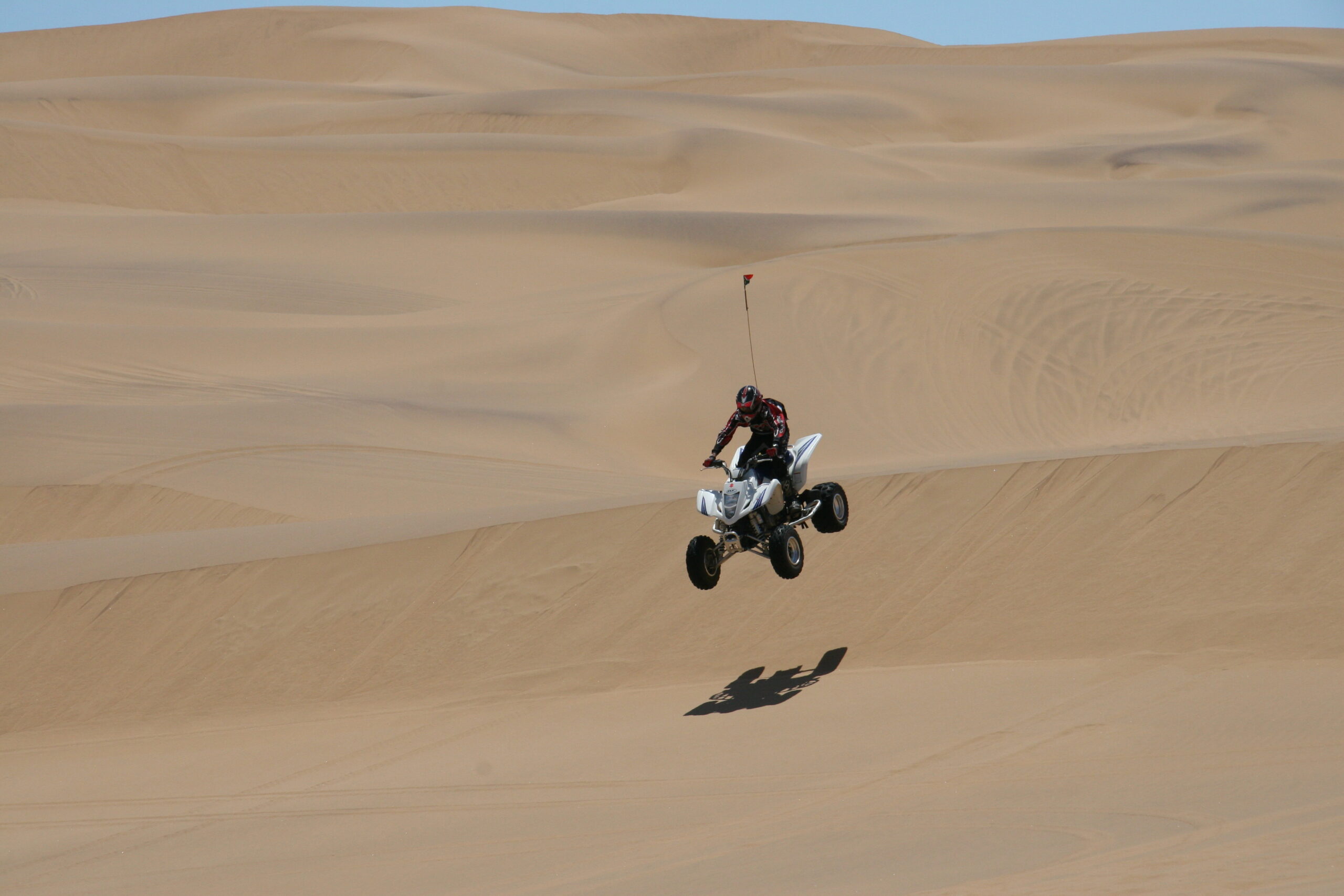
Best Regions for Quad Biking
Riyadh Red Sands (Al Muzahmiyya)
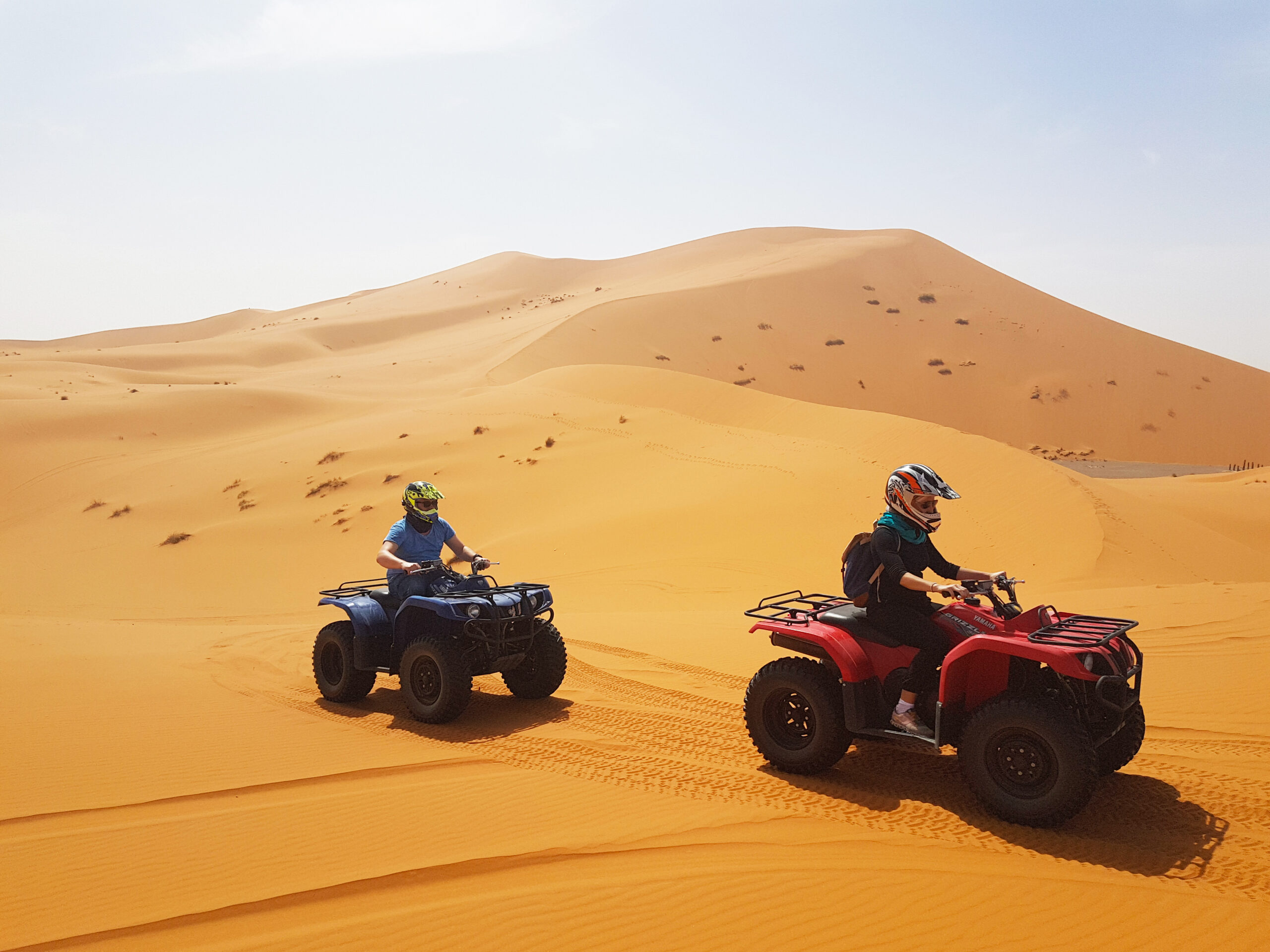
The Red Sands — locally known as Rimal al-Hamra — begin approximately 55 kilometres south-west of central Riyadh, near the town of Al Muzahmiyya. The iron-rich sand gives the dunes their distinctive terracotta colouring, and the formations here are steep, well-spaced, and varied enough to interest both beginners and experienced riders. This is the most popular and most accessible quad biking corridor in the Kingdom.
The dunes are tall enough for genuine challenge — faces of 20 to 30 metres are common — but the base terrain between peaks is broad and forgiving enough that beginners rarely get into difficulty on guided rides. The Khurais highway provides easy access from central Riyadh, and the area is close enough to permit afternoon departures timed with sunset. Most Riyadh-based operators use this corridor as their primary riding ground, and the concentration of camps here means there is competition on price and service quality. If you are visiting Riyadh on a short trip, this is where to go.
Thumamah Desert
Located approximately 45 to 70 kilometres north of Riyadh, the Thumamah Desert offers a complementary alternative to the Red Sands. The terrain here mixes sandy roads, rocky outcrops, and organised desert camps. The dunes are generally lower than those at the Red Sands but offer a wider variety of surface types. Search for “Thumamah National Park” or “Red Sand Dunes Riyadh” in your mapping app — the area is well-signed from the main highway. Quad bike rentals here start from SAR 50 for a 100cc bike, rising to SAR 300 for a 450cc machine. There is no entrance fee to the open desert itself; activity charges are separate.
Dirab
South-west of the capital, Dirab offers a quieter alternative to the Red Sands. The terrain includes a seasonal waterfall and surrounding scrub that gives it a softer, more scenic character. The trails here attract fewer crowds, making it a good option for families or riders who want a more relaxed experience without the intensity of the larger dune fields. It is particularly suitable for beginners.
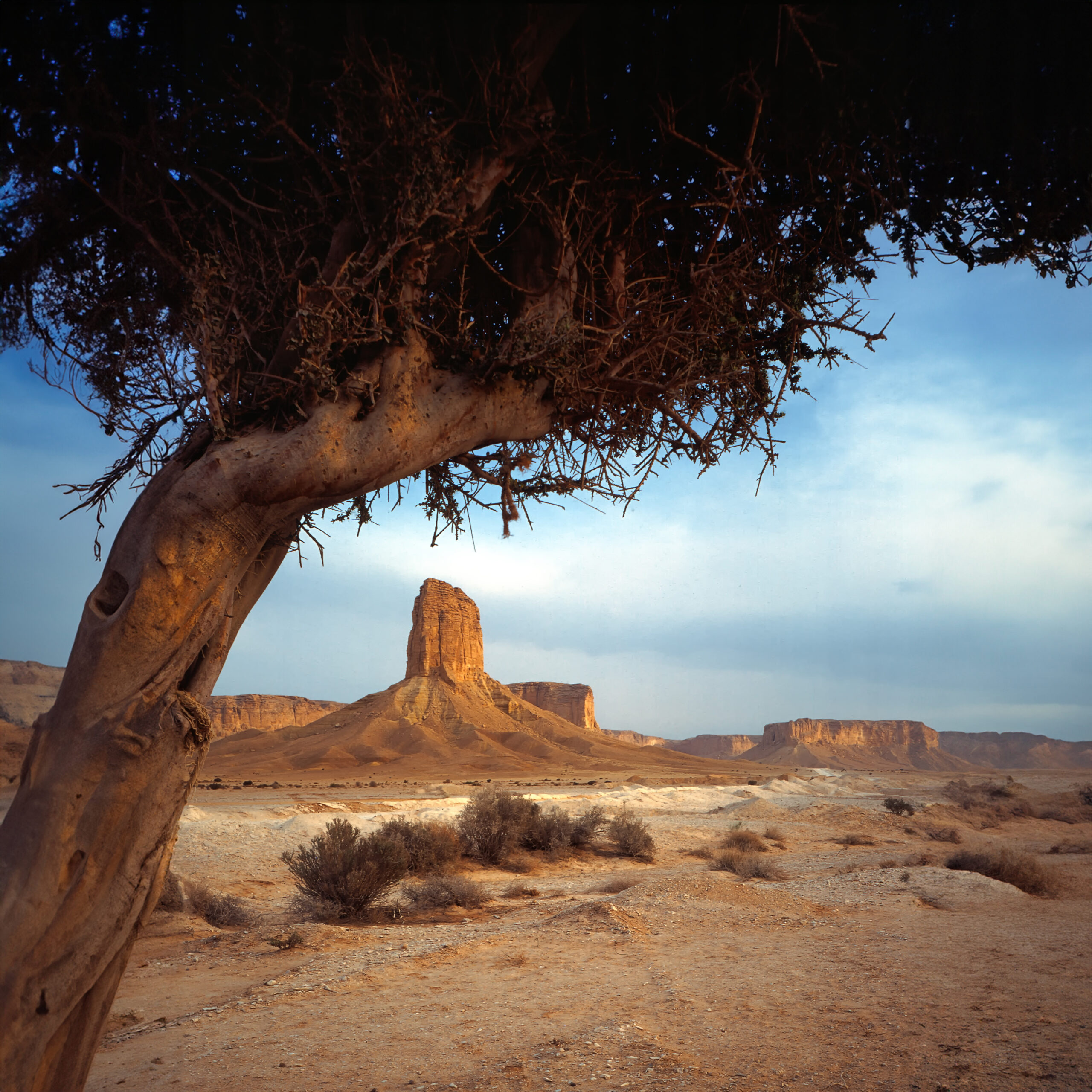
AlUla and the Hejaz Highlands
AlUla is to quad biking what Petra is to walking — technically a universal activity, but the setting is so extraordinary that it becomes something else entirely. The terrain here is not pure sand: it is a mixture of canyon, wadi floor, and open dune field, framed by vertical sandstone columns carved by millions of years of erosion. The Royal Commission for AlUla (RCU) has invested heavily in adventure tourism infrastructure, and the UTV buggy experience that operates here is among the most polished desert adventure products in the Middle East.
Tours in AlUla typically use Polaris RZR four-seater UTVs rather than solo quad bikes, with a trained guide driving while guests experience the terrain from a roll-cage-protected cabin. This is a deliberate choice: the AlUla terrain is complex enough that self-guided riding without extensive experience is genuinely hazardous. The route takes in dune formations, canyon approaches, and viewpoints over the Wadi al-Qura. Each tour lasts approximately one hour and includes a full safety briefing, helmets, goggles, and unlimited cold water. If you are planning a wider AlUla visit, pair the buggy tour with the archaeological sites at Hegra, Elephant Rock, and Dadan.
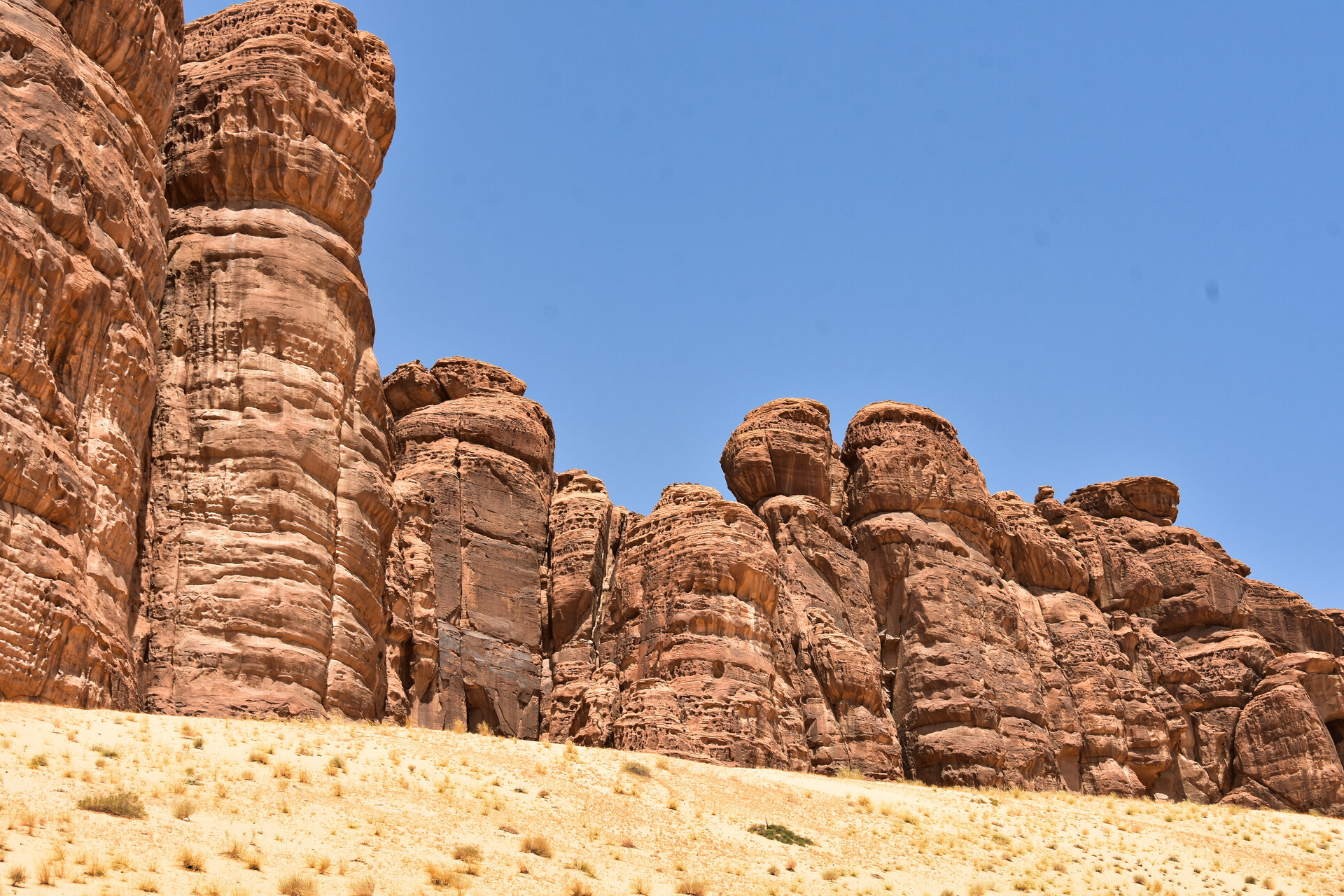
The Great Nafud Desert (Hail Region)
The Great Nafud is a 65,000 square-kilometre sand sea in the northern Nejd, centred roughly on the Hail region. It is considerably less visited than Riyadh’s Red Sands and has almost none of the commercial infrastructure found closer to the capital — which is precisely its appeal. The dune morphology differs: formations tend to be broader-based crescents rather than steep slip faces, and the interiors of individual dune fields feel genuinely remote.
Organised quad biking in the Nafud operates mainly as part of multi-day desert camping expeditions rather than half-day tourist packages. This is terrain for people who want the unpackaged version. Come in winter (November to February) when daytime temperatures are consistently manageable and the night sky is a secondary attraction that justifies the journey alone.
Half Moon Bay (Eastern Province)
Near Al Khobar in the Eastern Province, the sand dune corridor beside Half Moon Bay offers a different setting: dunes meeting the coast. The roughly 15-kilometre stretch includes quad bike rentals, dune buggy hire, and camel rides alongside beach activities. The surrounding desert landscape offers dune bashing opportunities with steep sandy inclines that draw both casual tourists and local enthusiasts. If you are visiting Dammam or Al Khobar, Half Moon Bay is the nearest quality dune riding terrain.
Jeddah Desert
Jeddah’s desert riding options are more limited than Riyadh’s — the terrain around the Red Sea coast is less dramatic than the central desert — but operators run Bedouin-style desert safari packages with quad bikes, typically departing early morning (7:00 AM to 11:00 AM) and including sandboarding, sand skiing, and camel riding alongside the quad session. The experience is more atmospheric than technical. Private desert safaris with quad bikes are bookable through GetYourGuide and TripAdvisor-listed operators with hotel pickup from anywhere in Jeddah.
The Empty Quarter (Rub’ al Khali)
The Empty Quarter is the ultimate frontier. At 650,000 square kilometres, this is the largest contiguous sand desert on earth, with dunes reaching heights above 250 metres. Access typically requires a domestic flight to the southern city of Sharurah or the Najran region, and dune bashing here forms part of multi-day expeditions rather than day trips. Permits from the National Commission for Wildlife Conservation and Development may be required for some areas, most easily arranged through experienced tour operators. The best window is November to March; outside this period, daytime temperatures are extreme.
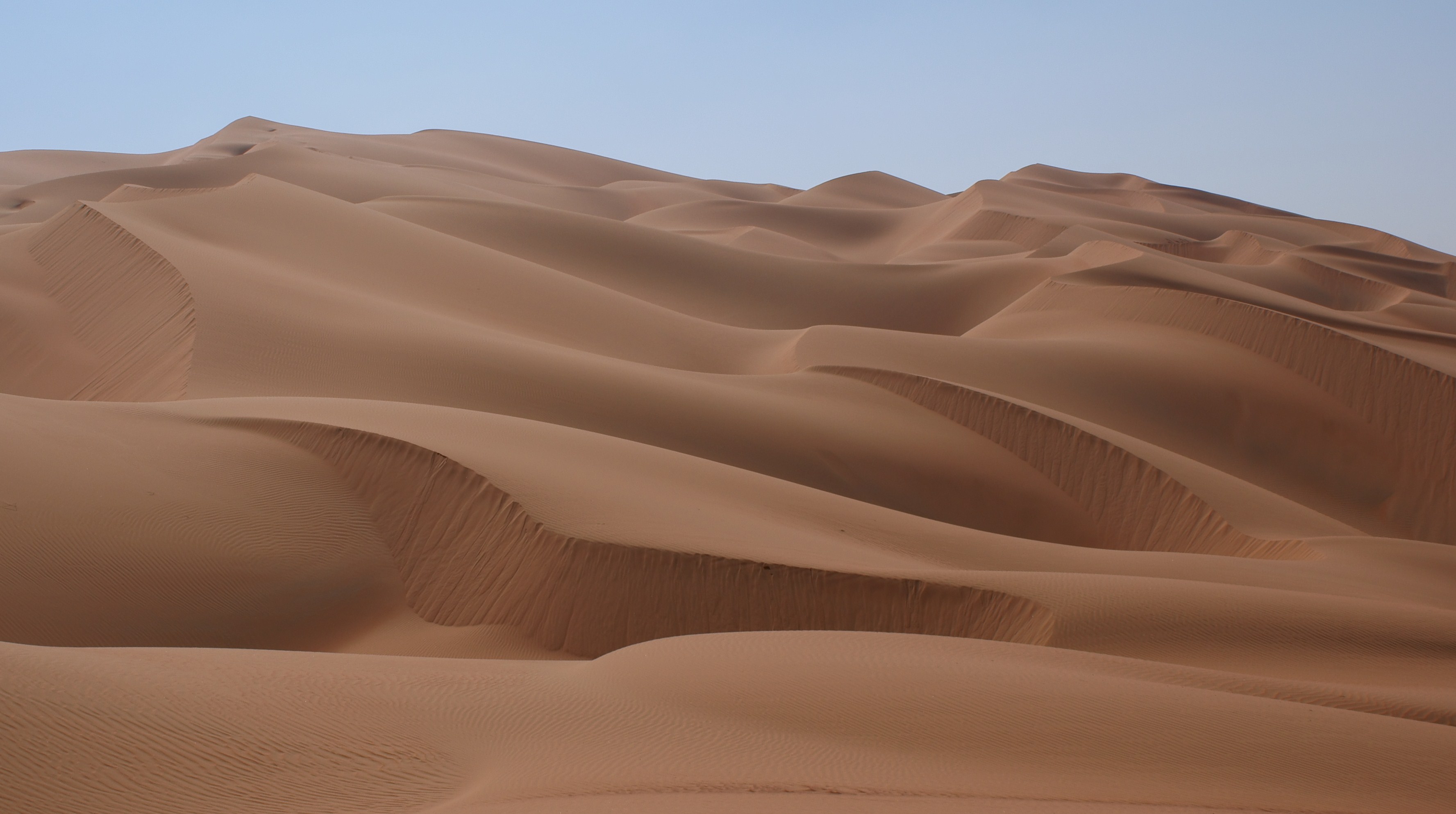
Tabuk Desert
The north-western corner of Saudi Arabia, anchored by Tabuk city, offers a landscape transition zone where red and pink granite mountains give way to open desert. The terrain is more varied than either the Red Sands or the Nafud — you ride across mixed substrate, not pure sand, which means more traction and different technical challenges. Tabuk is still building its organised quad biking infrastructure compared to Riyadh and AlUla, but operators are active and the area is increasingly connected to international tourism through the NEOM project and the growing Red Sea coast scene.
Operators: Who to Book With
Riyadh Operators
Abdullah ATV / Viator-listed Desert Tours. The operator most consistently recommended for quad biking around the Riyadh Red Sands. Tours use Suzuki Z250 quad bikes, include helmets, provide round-trip transport in air-conditioned 4x4s from central Riyadh, and open with a proper safety briefing. Minimum age: 16. Pricing starts from approximately $95 per person for a standalone quad bike session. Bookable through Viator and other international platforms.
Desert Safari Riyadh. A licensed operator running both standalone quad tours and extended eight-hour programmes that include quad bike access alongside sand skiing, dinner, and overnight camp facilities. The full programme is priced at SAR 380 per person (discounted from SAR 450). The camp is located 55 minutes east of Riyadh. Guests assemble at Ghurnata Mall by 1:30 PM, return around 9:30 PM. Available September to March, with approximately 40 spots per departure.
Keshta Desert Safari. A newer operator running Red Sand Dunes safari packages that include quad biking, camel rides, and sandboarding. Recent reviews on GetYourGuide praise the quality of guides and the dramatic colour of the sand. Pickup from central Riyadh hotels; free cancellation up to 24 hours before departure.
Saudi Safari Tours. Established in 2010, Saudi Safari is a licensed tourism agency and one of the longer-running desert operators in the Kingdom. Their packages combine quad bikes (ATVs) with camel riding at a desert camp. Available through their own website and through Viator. Mixed reviews — positive feedback on organisation and atmosphere; occasional complaints about transport logistics. Worth checking recent reviews before booking.
My Saudi Tours. Runs quad biking tours in both Riyadh and Jeddah with experienced instructors on-site. The Riyadh tour includes a one-hour quad ride followed by additional desert activities. Suitable for all experience levels.
AlUla Operators
Top Trip / Experience AlUla. The primary operators for UTV buggy tours in AlUla, using high-performance Polaris RZR buggies with professional guides, advanced safety features, and curated routes through the canyon and dune terrain. Each four-seater buggy accommodates up to three guests with a professional driver. Pricing starts from SAR 206 per person for a shared one-hour tour; private options are considerably higher. Bookable through the official AlUla tourism website (experiencealula.com) and through platforms like TripsDiscovery.
Husaak Adventures. The leading adventure tour operator in the Gulf region, founded in 2013 in Oman, and the only operator in the region to hold ISO certification for safety management. Husaak launched in AlUla in 2020 and welcomed over 5,000 visitors within the first five months. They operate The Outpost AlUla and The Outpost Tanomah (Asir region), offering 4×4 safaris, UTV tours, mountain biking, and guided desert experiences. Contact via WhatsApp at +966 50 139 6942 or through husaak.com.
ROAM Experiences. A private and luxury tour provider running buggy adventures in AlUla with high-end Polaris RZR ATVs. Their tours are aimed at the premium end of the market, with private guide service and curated itineraries through the most dramatic canyon terrain. Bookable at experiencesbyroam.com.
Eastern Province Operators
Quad biking around Half Moon Bay near Al Khobar is available through local rental operators along the beachfront strip. The roughly 15-kilometre stretch includes multiple vendors offering quad bikes, dune buggies, and camel rides. Prices are generally lower than in Riyadh — expect SAR 100-200 per hour for a standard quad — but the infrastructure is less formalised. Book through your hotel or through GetYourGuide for operators with verified reviews.
Jeddah Operators
My Saudi Tours runs a dedicated quad biking tour in Jeddah with early-morning departures (7:00 AM to 11:00 AM) and pickup from Jeddah hotels, malls, port, or airport. The tour includes a one-hour quad ride, sandboarding, and sand skiing. Jeddah Desert Safari and Saudi Safari also operate in the Jeddah region with Bedouin-style camp experiences. Reviews are mixed — check recent feedback on TripAdvisor and GetYourGuide before committing.
What to Expect: The Experience on the Ground
A typical Riyadh-based quad biking package runs as follows. Your operator collects you from your hotel in Riyadh around 2 to 3 PM in an air-conditioned 4×4. The drive to the Red Sands takes 45 to 60 minutes. On arrival at the desert camp, you receive a 15-minute safety briefing covering throttle control, braking technique on steep descents, body positioning, and emergency procedures. Helmets, goggles, and gloves are fitted.
Beginner riders typically do one or two circuit laps of the dune field with a guide riding ahead to set the pace and point out hazards. Intermediate and experienced riders get more latitude to explore. The riding session runs for 30 to 60 minutes depending on the package. For combo tours, this is followed by dune bashing in a 4×4 — a fundamentally different experience, passively exhilarating where quad biking is actively demanding — and then the quieter pleasures of sandboarding and a camel ride as the light changes.
Sunset in the desert is not a minor detail. Operators time departures to ensure the riding peak coincides with the hour when the dunes turn deep orange and the shadows lengthen. Staying for the immediate post-sunset period — when the sky cycles from pink to purple and the temperature drops sharply — is the part many visitors say they remember longest.
Insider tip: If your package includes a desert camp dinner, request the traditional Saudi Arabian picnic with dates, Arabic coffee, and grilled meats. The combination of desert sunset, warm sand, and good food is one of the most distinctive experiences available to tourists in the Kingdom. Some operators also arrange stargazing sessions after dark — the light pollution is minimal once you are an hour from Riyadh.
Dune Bashing vs Quad Biking: What Is the Difference?
The two activities are complementary but fundamentally different, and the best desert packages include both.
Quad biking puts you in direct control of a small all-terrain vehicle. You manage the throttle, braking, and steering yourself, navigating dune faces with your own skill and judgment. The experience is physically demanding — you will use your core muscles and arms to maintain balance on uneven terrain — and the sense of exposure is high. You feel the sand, the heat, and the gradient directly. Most operators use 250cc to 450cc ATVs from Suzuki or Yamaha.
Dune bashing is a passenger experience. A skilled driver navigates a 4×4 vehicle — typically a Toyota Land Cruiser or Nissan Patrol with deflated tyres and a roll cage — at speed across dune crests, climbing steep sand faces and sliding sideways down slip faces. The signature moves include high-speed crest approaches where the vehicle briefly leaves the sand, and controlled sideways drifts down 30-degree slopes. You are strapped in with a seatbelt and experience the ride from inside the cabin. It is raw, visceral, and requires no skill from you — only a tolerance for adrenaline and a moderate stomach.
| Factor | Quad Biking | Dune Bashing (4×4) |
|---|---|---|
| Control | You drive | Professional driver |
| Physical demand | Moderate to high | Low (passenger) |
| Minimum age | Typically 16+ | Often no minimum (child seats available) |
| Duration | 30–60 minutes riding | 20–45 minutes per session |
| Experience needed | Brief training sufficient | None |
| Best for | Active adventurers | Families, first-timers, thrill seekers |
| Typical cost | SAR 100–400/hr | Usually included in combo packages |
For the full rundown on the 4×4 side of things, see our dedicated dune bashing guide and 4×4 off-road touring guide.
What Does It Cost?
Quad biking and dune bashing in Saudi Arabia sits across a clear price spectrum. All prices are in Saudi Riyal (SAR); $1 USD = approximately SAR 3.75.
| Package Type | Price Range (SAR) | Price Range (USD) | Includes |
|---|---|---|---|
| Standalone hourly quad rental (direct to operator) | 100–400/hour | $27–$107 | Bike, helmet; varies by engine size (100cc–450cc) |
| Guided half-day package | 250–400 | $67–$107 | Quad bikes, transport, safety gear, refreshments |
| Full-day combo (4–8 hours) | 380–800 | $101–$213 | Quad + dune bashing + sandboarding + camel ride + dinner |
| AlUla UTV guided tour (1 hour) | From 206 | From $55 | Shared Polaris RZR, professional driver, safety gear, water |
| AlUla private buggy experience | 650+ | $173+ | Private vehicle, premium route, guide |
| Multi-day desert expedition (Nafud/Empty Quarter) | 2,000–5,000+ | $533–$1,333+ | Camping, meals, 4×4, quad bikes, guide crew |
Group bookings typically attract discounts of 10 to 20 per cent. Most operators offer free cancellation up to 24 hours before departure. International booking platforms (Viator, GetYourGuide, Peek) carry many of these tours with transparent pricing in USD and the convenience of verified reviews — useful for first-time visitors who want assurance before committing.
Budget tip: Booking directly with a local operator rather than through an international platform saves roughly 15 to 20 per cent, but you lose third-party cancellation protection. For a first visit, the platform premium is worth it. For repeat visitors who have identified an operator they trust, go direct.
Best Time to Go
The desert riding season in Saudi Arabia is defined entirely by heat. The optimal window runs from October to March, with the peak months being November to February.
- November to February: Ideal conditions. Daytime temperatures average 14–22°C in Riyadh, rising to 28°C maximum. Evening temperatures drop to 8–12°C. The sand is firm and grippy in the mornings, softer in the afternoons. This is peak season for operators — book in advance, particularly for AlUla where capacity is limited.
- October and March: Shoulder season. Temperatures reach 28–32°C at midday but mornings and late afternoons are comfortable. Early-morning and sunset tours work well. Fewer crowds than peak months.
- April to September: Extreme heat. Daytime temperatures in the central desert routinely exceed 40°C, with recorded peaks of 47°C in Riyadh during summer. All reputable operators schedule rides for early morning (before 9 AM) or late afternoon (after 4 PM) during this period. Some operators suspend tours entirely in July and August. If you must ride in summer, take a pre-dawn or post-sunset slot and carry substantially more water than you think you need.
In the Empty Quarter, conditions are more extreme: daytime heat is savage even in shoulder months, but winter nights can drop near freezing. Multi-day expeditions are strictly a November-to-March activity.
Safety: What You Need to Know
The desert is not inherently dangerous to quad bikers who ride with proper preparation and a competent guide, but it is completely unforgiving of complacency.
Never Ride Solo in Remote Terrain
The single most important rule. Not because quad biking itself is more dangerous than other forms of off-road riding, but because the consequences of a breakdown, injury, or navigation error in the desert are magnified enormously by the absence of other people. Mobile signal is often absent beyond the Red Sands corridor, distances are vast, and dehydration can become serious within hours. All reputable operators run guided convoy formats with a sweep vehicle for precisely this reason.
Mandatory Gear
Every licensed operator in Saudi Arabia mandates helmets and provides them. Goggles and gloves are also standard. Beyond what is supplied, riders should wear:
- Long-sleeved, breathable clothing — protects against sunburn at speed and sand abrasion in a spill
- Long trousers — the ATV engine gets very hot and exposed legs risk burns
- Closed-toe shoes — sandals or flip-flops are a flat refusal from safety-conscious operators
- Sunscreen (SPF 50+) — desert UV intensity is severe, and wind from riding strips applied sunscreen faster than you expect
- A buff or face covering — fine sand at speed is abrasive on exposed skin
Heat and Hydration
Between April and September, daytime temperatures in the Saudi desert routinely exceed 40°C. All reputable operators schedule rides for early morning or late afternoon during these months. The October to March window is the comfortable riding season across the board. Carry at least 1.5 litres of water per person for a standard half-day tour, more if riding in shoulder months. Dehydration symptoms — headache, dizziness, confusion — escalate rapidly in desert conditions.
Respect Marked Zones
In the vicinity of established desert camps, riding zones are marked — either physically or verbally communicated by guides. These markings bound terrain that has been assessed for conditions: soft sand patches, hidden rock, and slope gradients that exceed safe parameters for casual riders. Experienced riders who want to push beyond standard zones should communicate this to their operator in advance and accept that some areas are non-negotiable regardless of skill level.
Age, Fitness, and Licence Requirements
Most operators set the minimum age at 16 years for solo quad riding. Several operators in AlUla permit younger riders (11+) on guided UTV tours where an adult professional drives. There is typically no formal upper age limit, but operators may require a declaration of physical fitness. A valid driving licence is generally not required for guided ATV rides in Saudi Arabia, though some operators request sight of one as a standard verification measure. Participants should expect to sign a liability waiver acknowledging the inherent risks.
For families: Dune bashing in a 4×4 is the better choice if you have children under 16. Most operators accommodate child passengers in the vehicle. For teenagers 16 and up, quad biking is available with parental consent at most operators. AlUla UTV tours accept riders as young as 11 since the guide handles all driving.
What to Bring
Beyond the safety gear that your operator supplies, pack the following for a desert quad biking or dune bashing experience:
- Water: Minimum 1.5 litres per person. More in summer months.
- Sunscreen and sunglasses: Desert UV is intense and relentless.
- Camera or phone with lanyard: You will want photos, but loose phones disappear into sand dunes permanently. A wrist strap or neck lanyard is essential.
- Light jacket or hoodie: Desert temperatures drop sharply after sunset, particularly in winter months. The shift from 25°C to 10°C within two hours is common.
- Cash (SAR): Some local operators at Thumamah and Half Moon Bay accept cash only. ATM access is limited in desert areas.
- Charger or power bank: Multi-hour desert excursions with heavy camera use will drain a phone battery before return.
Booking: Practical Logistics
Most visitors arrive at quad biking through Riyadh’s Red Sands, and the logistics are straightforward.
International platforms — Viator and GetYourGuide carry the widest range of verified tours — offer hotel pickup from central Riyadh, all-inclusive packages, and transparent cancellation policies. These are the safest option for first-time visitors. Recent reviews from early 2026 on GetYourGuide describe experiences as “a must-do in Riyadh” with praise for safe driving, diverse activities, and good food at the desert camps.
Direct booking with local operators is cheaper by 15 to 20 per cent but requires more direct communication (typically WhatsApp) and carries no third-party cancellation protection. For repeat visitors who have identified a trusted operator, this is the better value option.
For AlUla, booking through the Visit Saudi website or through an established regional operator like Husaak, ROAM Experiences, or Top Trip is advisable. AlUla tourism operates under the Royal Commission for AlUla (RCU), which has set quality standards that active operators must meet. Arrive by domestic flight — Riyadh to AlUla direct is 1 hour 40 minutes on Saudia or flynas.
Before booking any tour, confirm the following:
- Which specific dune area is used
- Whether transport from your hotel is included
- The duration of actual riding time versus briefing, travel, and camp time
- The minimum group size (some operators cancel small-group bookings if minimums are not met)
- The cancellation policy — most reputable operators offer 24-hour free cancellation
- Whether the package includes refreshments or a desert camp meal
Combining Quad Biking With Other Activities
The best way to experience the Saudi desert is not to compartmentalise it into single-activity bookings. Most established operators offer combination packages that move you through several modes in a single afternoon, and the contrast is part of the experience.
- Quad biking + dune bashing + sandboarding + camel ride: The classic four-activity combo. SAR 380–800 per person for 4–8 hours. Available from most Riyadh Red Sands operators.
- Quad biking + desert camp dinner: The evening variant, typically including sunset riding, traditional Saudi food, Arabic coffee, and (in winter) a campfire. SAR 350–600 per person.
- AlUla UTV + Hegra + Elephant Rock: A full day in AlUla combining the buggy adventure with the UNESCO World Heritage archaeological sites. Book the buggy tour separately or through a full-day AlUla package.
- Desert camping + quad biking: Overnight in the desert with morning and evening riding sessions. Available in the Nafud and through specialist operators in the Red Sands. SAR 800–1,500 per person.
- Horse riding + quad biking: Some operators offer both modes in a single package, giving you the contrast between the oldest and one of the newest forms of desert transport.
Visa and Entry Requirements
Most nationalities access Saudi Arabia via the online tourist e-visa, which covers 90 days and permits multiple entries. The Saudi Arabia visa guide covers the full application process, eligible nationalities, fees, and common pitfalls. Processing is typically 24 to 72 hours. The e-visa is valid for adventure tourism activities including desert quad biking — there is no additional permit or licence required to participate in a guided ATV tour in the Kingdom. For the Empty Quarter, check with your tour operator about any additional permits required for specific areas.
Explore More Saudi Arabia Travel Guides
- Saudi Arabia Desert Safari Guide — Complete guide to dune bashing, camping, and the Empty Quarter
- Dune Bashing in Saudi Arabia — The best deserts and tour operators for 4×4 dune bashing
- Sandboarding in Saudi Arabia — Best dunes and operators for sand sports
- 4×4 Off-Roading in Saudi Arabia — Best tracks and what to drive
- Camel Trekking in Saudi Arabia — Best routes and operators for desert treks
- Hail Region Travel Guide — Gateway to the Great Nafud desert
- Saudi Arabia Visa Guide 2026 — Every visa type explained