
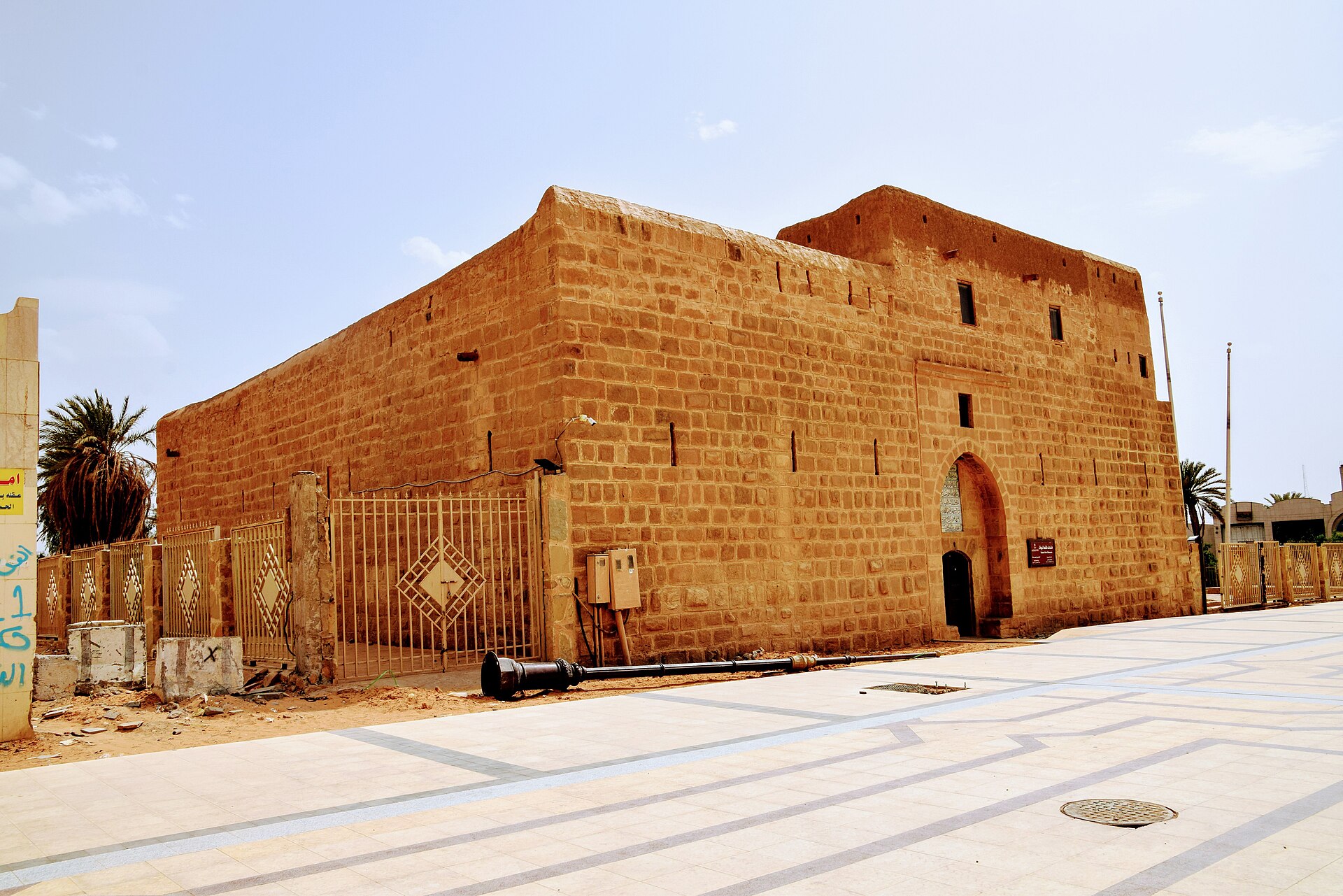
Tabuk Castle is the single most important Ottoman monument in northwestern Saudi Arabia and the starting point for any heritage tour of the city. Built in 1559 as a fortified waystation on the Damascus-to-Medina pilgrimage road, the castle anchors a cluster of Ottoman-era landmarks — the Hejaz Railway station, Hajj route forts, and the Mosque of Repentance — that together tell a four-century story of empire, faith, and trade. If you are planning a wider Tabuk travel itinerary, this guide covers everything you need to visit the castle and its surrounding heritage sites, from opening hours and ticket prices to the historical context that makes each stop worth your time.
Best Time to Visit: October to March (mild desert winter, daytime highs of 18–24 °C)
Getting There: Tabuk Regional Airport (TUU) receives daily flights from Riyadh, Jeddah, and Dammam; the castle is a 15-minute drive from the airport in central Tabuk
Visa Required: Yes — tourist e-visa available online
Budget: USD 50–120 per day (budget to mid-range; castle entry is free or SAR 50 depending on season)
Must-See: Tabuk Castle museum, Hejaz Railway Station, Mosque of Repentance
Avoid: Visiting in July or August, when Tabuk temperatures regularly exceed 40 °C
A Brief History of Tabuk Castle
The site where Tabuk Castle now stands has been significant since at least 630 CE, when the Prophet Muhammad led the Expedition of Tabuk — a force of roughly 30,000 men — northward from Medina to confront reports of a Byzantine mobilisation. Although no battle took place, the campaign secured strategic alliances with the rulers of Aylah (modern Aqaba), Jarba, and Adhruh, and established Tabuk as a permanent military and administrative waypoint.
The castle itself was built by the Ottoman Empire in 1559 to protect the water station at Ain al-Sukkar, a perennial spring that had been watering travellers for centuries. Positioned on the Darb al-Hijaz — the Syrian pilgrimage route connecting Damascus to Medina — the fort served a dual purpose: sheltering Hajj caravans numbering thousands of pilgrims each year, and garrisoning soldiers to defend the route against Bedouin raids.
Restorations Through the Centuries
Inscriptions and archival records document at least four major restoration campaigns. Sultan Mehmed IV (r. 1648–1687) ordered repairs that included decorative ceramic tiles flanking the main entrance — fragments of which survive today. Sultan Abdülmecid I commissioned a comprehensive renovation in 1844, leaving a commemorative inscription in the mosque’s mihrab that is still legible. After the end of Ottoman rule, the Saudi government restored the castle in 1950, and a more thorough programme by the Ministry of Education’s Antiquities and Museums Agency followed in 1992. Each campaign preserved the original two-storey mudbrick-and-stone layout while reinforcing walls and drainage.
What to See Inside Tabuk Castle
The castle is compact — you can walk the entire structure in 45 minutes to an hour — but dense with content. The two-storey complex is organised around an open central courtyard, and each room has been converted into a themed museum gallery.
Ground-Floor Mosque
Immediately inside the entrance, the ground-floor mosque preserves the 1844 Abdülmecid mihrab inscription. This small prayer hall was where Ottoman soldiers and pilgrims performed daily prayers before continuing south toward Medina. The arched ceiling and thick stone walls keep the interior noticeably cool, even in summer.
Museum Galleries
Several rooms house artefacts from the Ottoman period, including ceramics, coins, weaponry, and calligraphic panels. Detailed signage in Arabic and English covers the history of Tabuk, its connection to the Prophet Muhammad’s expedition, and accounts from famous travellers including Ibn Battuta (who passed through in the 14th century) and Evliya Çelebi (the 17th-century Ottoman explorer). A timeline wall traces the pilgrimage route from Damascus to Medina, marking each waystation.
Watchtowers and Second-Floor Mosque
A stone stairway leads to the upper level, where a second open-air mosque offered a sheltered prayer space with views across the surrounding desert. The corner watchtowers provided sightlines in every direction — crucial for spotting approaching caravans or raiding parties. From the top, you can see the modern city of Tabuk radiating outward from the castle, a striking visual contrast between Ottoman stone and contemporary urban sprawl.
Visiting Tabuk Castle: Practical Information
Tabuk Castle sits in the heart of the city, on King Faisal Road, within walking distance of hotels, restaurants, and the central souq. It is one of the most accessible heritage sites in Saudi Arabia.
| Detail | Information |
|---|---|
| Address | King Faisal Road, central Tabuk |
| Opening hours | 7:00 AM – 8:00 PM (weekdays); reduced hours on weekends — check locally |
| Closure | Closes briefly during sunset prayer (Maghrib) |
| Entry fee | Free on some days; SAR 50 (approx. USD 13) on others — verify at the gate |
| Time needed | 45 minutes to 1 hour |
| Guided tours | Available on request at the entrance |
| Accessibility | Ground floor is step-free; upper level requires stairs |
Tip: Arrive early in the morning during summer months. By mid-afternoon, even the stone-walled interior can feel oppressive in July and August heat. The castle is also beautifully lit after dark if you prefer an evening visit when the temperature drops.
The Hejaz Railway Station and Museum
A ten-minute drive north of Tabuk Castle, the Hejaz Railway Station is the second essential stop on any Ottoman heritage tour. Construction of the Hejaz Railway began in 1900 under Sultan Abdülhamid II, funded partly by donations from Muslims worldwide, and took eight years to complete. The 1,300-kilometre line from Damascus to Medina was intended to ease the Hajj journey, cutting travel time from weeks by camel caravan to days by rail.
Tabuk’s station was one of the most important along the route, serving as a major resupply and maintenance point. The line operated until 1920, when T.E. Lawrence and Arab Revolt forces sabotaged sections of the track during the First World War. The railway was never fully restored south of Amman.
What to See at the Hejaz Railway Station
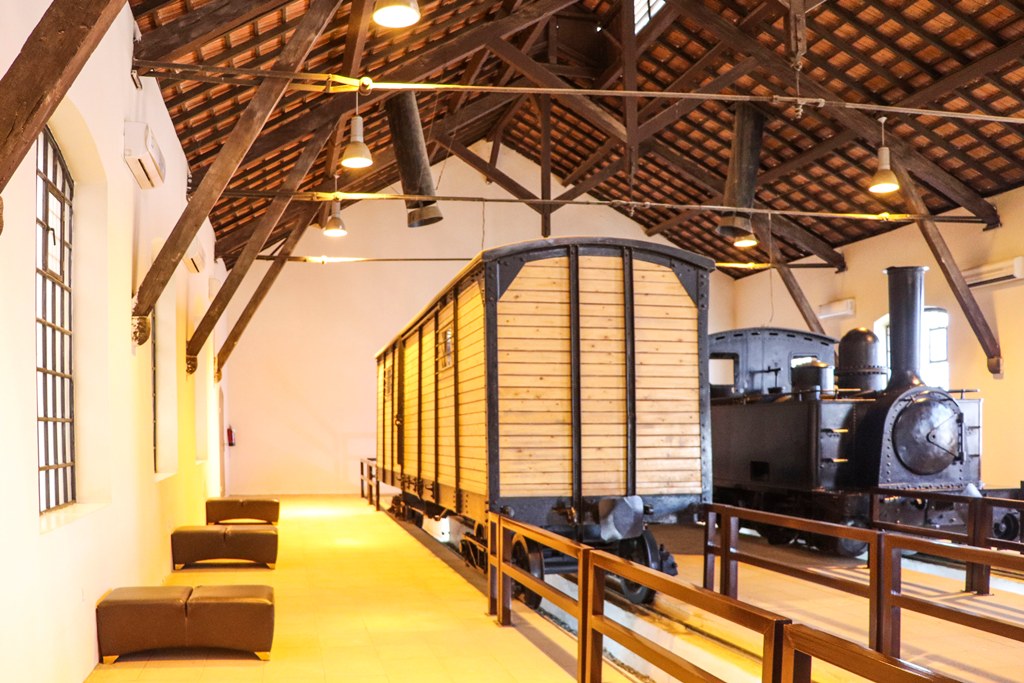
The complex covers roughly 80,000 square metres and includes 13 recently refurbished buildings. Highlights include:
- Locomotive hall: A restored Ottoman-era steam locomotive and several freight cars, displayed under cover with explanatory panels describing the engineering challenges of desert rail.
- Workshop building: Tools, spare parts, and equipment from the early 1900s, showing how maintenance crews kept the line running in extreme heat.
- Handicrafts centre: A working space where local artisans demonstrate traditional Tabuk crafts, including weaving and metalwork.
- Photographic archive: Large-format reproductions of historical photographs from the railway’s construction period, including images of track-laying near Tabuk in 1906.
- Al-Muazzam Fort: Roughly 100 kilometres south of Tabuk on the old Hajj road, this fort retains its walls, internal courtyard, and a well that still holds water. It was one of the largest waystations on the route.
- Hadiya Fort: A smaller garrison fort between Tabuk and Al-Muazzam, partially restored, with visible Ottoman-period inscriptions above the entrance.
- Bir Ibn Hermas: An ancient well site between Tabuk and the Jordanian border, historically the last water stop before the border crossing into the Levant.
- Hilton Garden Inn Tabuk: A reliable mid-range option close to the city centre, with rooms from around SAR 350 (USD 93) per night.
- DoubleTree by Hilton Tabuk: The city’s main international-brand hotel, popular with business travellers, centrally located.
- Budget guesthouses: Several locally run guesthouses near the souq offer clean rooms from SAR 150–200 (USD 40–53) per night.
- Tabuk Travel Guide — The complete guide to Saudi Arabia’s northwest gateway city
- Wadi Disah, Tabuk — Hiking Saudi Arabia’s Grand Canyon of sandstone cliffs and palm groves
- Tabuk Region Guide — Desert canyons, Red Sea coast, and heritage across the province
- NEOM Travel Guide — What you can actually visit at Saudi Arabia’s giga-project
- Saudi Arabia Travel Guide 2026 — The complete guide to visiting the Kingdom
- Saudi Arabia Visa Guide — Every visa type explained
The Hejaz Railway has been on the UNESCO Tentative World Heritage List since 2015, nominated jointly by Saudi Arabia. If you have explored other historical rail heritage in the Kingdom, the Tabuk station is among the best preserved. The railway also connects thematically to the wider Tabuk region, where sections of track, embankments, and minor stations survive in the desert north of the city.
Ottoman Hajj Route Forts
Beyond the castle and railway, the Tabuk region preserves a chain of Ottoman-era forts built to protect pilgrims along the Damascus-to-Medina road. These forts — locally called qal’at al-Hajj — were spaced roughly a day’s camel ride apart, each enclosing a well, a small mosque, and barracks for a garrison of Ottoman soldiers.
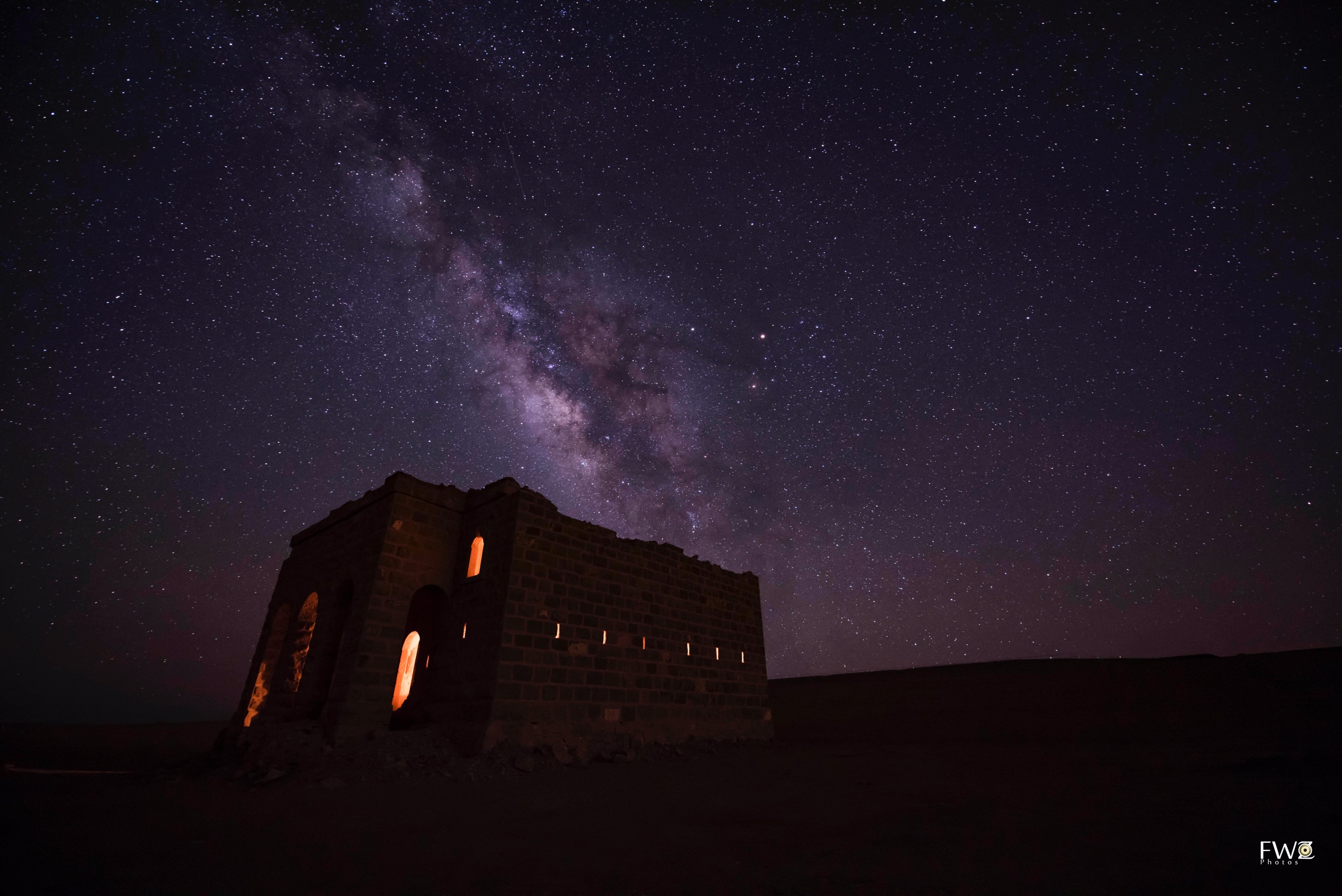
Several of these forts are accessible as day trips from Tabuk:
Planning note: These forts are remote and accessed via desert tracks. A 4WD vehicle is essential. If you are combining a fort excursion with canyon hiking, the Wadi Disah guide covers route logistics in the same province.
The Mosque of Repentance (Masjid al-Tawbah)
Roughly five kilometres west of Tabuk Castle, the Mosque of Repentance marks the site where the Prophet Muhammad led prayers during the Expedition of Tabuk in 630 CE. The name “Repentance” references the Quranic account (Surah At-Tawbah) of those who stayed behind and later repented for not joining the expedition.
The current white-and-beige structure dates to a reconstruction completed during King Faisal’s reign in the 1960s and was further renovated under King Fahd. It is a functioning mosque, open for daily prayers. Non-Muslim visitors may view the exterior and courtyard but should check locally regarding interior access.
The mosque is a meaningful stop for visitors interested in the early Islamic history of Tabuk — it connects the city’s narrative directly to the Prophet’s era, centuries before the Ottomans arrived. Paired with the castle and railway station, it completes a chronological arc from the 7th century to the early 20th century.
Ain al-Sukkar: The Ancient Spring
Adjacent to Tabuk Castle, the spring of Ain al-Sukkar is mentioned in early Islamic sources as the watering point used by the Prophet Muhammad’s army during the Tabuk expedition. The spring still flows today and historically irrigated the date palm groves that made Tabuk a viable settlement in an otherwise arid landscape.
Channels first dug during the Abbasid Caliphate (8th–13th centuries) directed the spring water to surrounding farms — a system that functioned for centuries. The spring area has been landscaped as a small park and can be visited in combination with the castle in under 15 minutes.
Planning Your Ottoman Heritage Itinerary
A thorough tour of Tabuk’s Ottoman heritage sites takes a full day. Here is a suggested itinerary:
| Time | Site | Duration |
|---|---|---|
| 8:00 AM | Tabuk Castle and Ain al-Sukkar spring | 1 hour |
| 9:15 AM | Hejaz Railway Station and Museum | 1–1.5 hours |
| 11:00 AM | Mosque of Repentance (exterior visit and grounds) | 30 minutes |
| 12:00 PM | Lunch in central Tabuk (traditional Saudi restaurants near the souq) | 1 hour |
| 1:30 PM | Drive to Al-Muazzam Fort or another Hajj route fort (optional; 4WD required) | 3–4 hours round trip |
Getting to Tabuk
By air: Tabuk Regional Airport (TUU) handles daily flights from Riyadh (1 hour 45 minutes), Jeddah (1 hour 30 minutes), and Dammam (2 hours). Saudia and flynas are the main carriers. The airport is 15 minutes from the city centre by taxi.
By road: Tabuk is 1,350 kilometres from Riyadh and 700 kilometres from Medina via well-maintained highways. The drive from Medina takes roughly 6 hours and passes through dramatic volcanic landscapes (the Harrat). If you are exploring NEOM, Tabuk is the nearest major city, roughly two hours south by car.
Visa: All visitors to Saudi Arabia need a tourist e-visa, which can be obtained online in minutes. Citizens of 49 countries are eligible. The e-visa is valid for one year with multiple entries.
Where to Stay in Tabuk
Tabuk has a growing range of accommodation. For heritage-focused visits, stay centrally to be within walking distance of the castle. For a comprehensive rundown of accommodation options across Saudi Arabia, see the Saudi Arabia hotels guide.
Combining Heritage with Tabuk’s Natural Landscapes
Tabuk Province is not only about Ottoman history. The same trip that takes you to the castle and railway station can extend into some of Saudi Arabia’s most dramatic scenery. Wadi Disah, a 15-kilometre sandstone canyon with towering red cliffs and spring-fed palm groves, is roughly 2.5 hours south of Tabuk. NEOM and The Line lie two hours to the west, where billions of dollars of infrastructure investment is reshaping the Red Sea coast.
For hikers, the Tabuk highlands offer trails through volcanic terrain with views toward the Gulf of Aqaba — check the Saudi Arabia hiking guide for route details. The best time to visit for both heritage and outdoor activities is October through March, when temperatures are comfortable for walking.