
The Line is the centrepiece of NEOM, Saudi Arabia’s $500 billion megaproject in the northwest corner of the Kingdom. Announced in January 2021 by Crown Prince Mohammed bin Salman, it was pitched as nothing less than a revolution in how humans live: a 170-kilometre mirrored city, 500 metres tall, with zero cars and zero carbon emissions. As of April 2026, The Line’s construction is suspended, only 2.4 kilometres of foundations exist, and no opening date is confirmed. This guide — part of our Saudi Arabia travel coverage — gives you the full picture: what The Line actually is, how far it got, what went wrong, and what it means for anyone planning to visit the NEOM region.
Best Time to Visit the NEOM Region: October to March (cooler months, 18–28°C)
Getting There: NEOM Bay Airport (NUM) — direct flights from Riyadh, Jeddah, and Dubai
Visa Required: Yes — tourist e-visa available for 63 nationalities
Budget: $150–400/day (NEOM region is limited in budget options)
Must-See Nearby: Wadi Disah canyon, Tabuk Castle, Gulf of Aqaba coastline
Avoid: Travelling specifically to see The Line — there is nothing for visitors to see at the construction site
What Is The Line?
The Line is a planned linear city within the NEOM development zone in Tabuk Province, Saudi Arabia. The concept is radical: two parallel buildings, each 500 metres tall, clad entirely in mirrored glass, running in a straight line for 170 kilometres from the Red Sea coast near the Gulf of Aqaba inland toward the city of Tabuk. Between the two mirror walls lies a sheltered open-air corridor, 200 metres wide, that contains parks, plazas, and a vertical layering of urban life.
The design calls for three distinct layers. The surface level is exclusively for pedestrians — there are no roads and no cars. Below ground, a second layer houses infrastructure including water, power, and waste management. A third, deeper layer contains a high-speed rail system intended to transport residents from one end of The Line to the other in 20 minutes. Every resident, NEOM claims, would live within a five-minute walk of all daily essentials.
At full build-out, The Line was projected to house nine million people on a footprint of just 34 square kilometres — a population density that would exceed Manhattan several times over, compressed into a form never attempted in human history.
The Line by the Numbers
| Specification | Detail |
|---|---|
| Planned length | 170 km (110 miles) |
| Height | 500 m (1,640 ft) — taller than the Empire State Building |
| Width | 200 m (660 ft) |
| Planned population (full) | 9 million residents |
| Revised 2030 target | Fewer than 300,000 residents |
| Footprint | 34 sq km |
| Estimated cost | $500 billion+ |
| First phase cost | $320 billion (estimated) |
| Announcement date | 10 January 2021 |
| Construction start | April 2022 |
| Construction suspended | 16 September 2025 |
| Foundation work completed | ~2.4 km |
| Foundation piles drilled | ~6,000 |
| PIF write-down | $8 billion |
Where Is The Line?
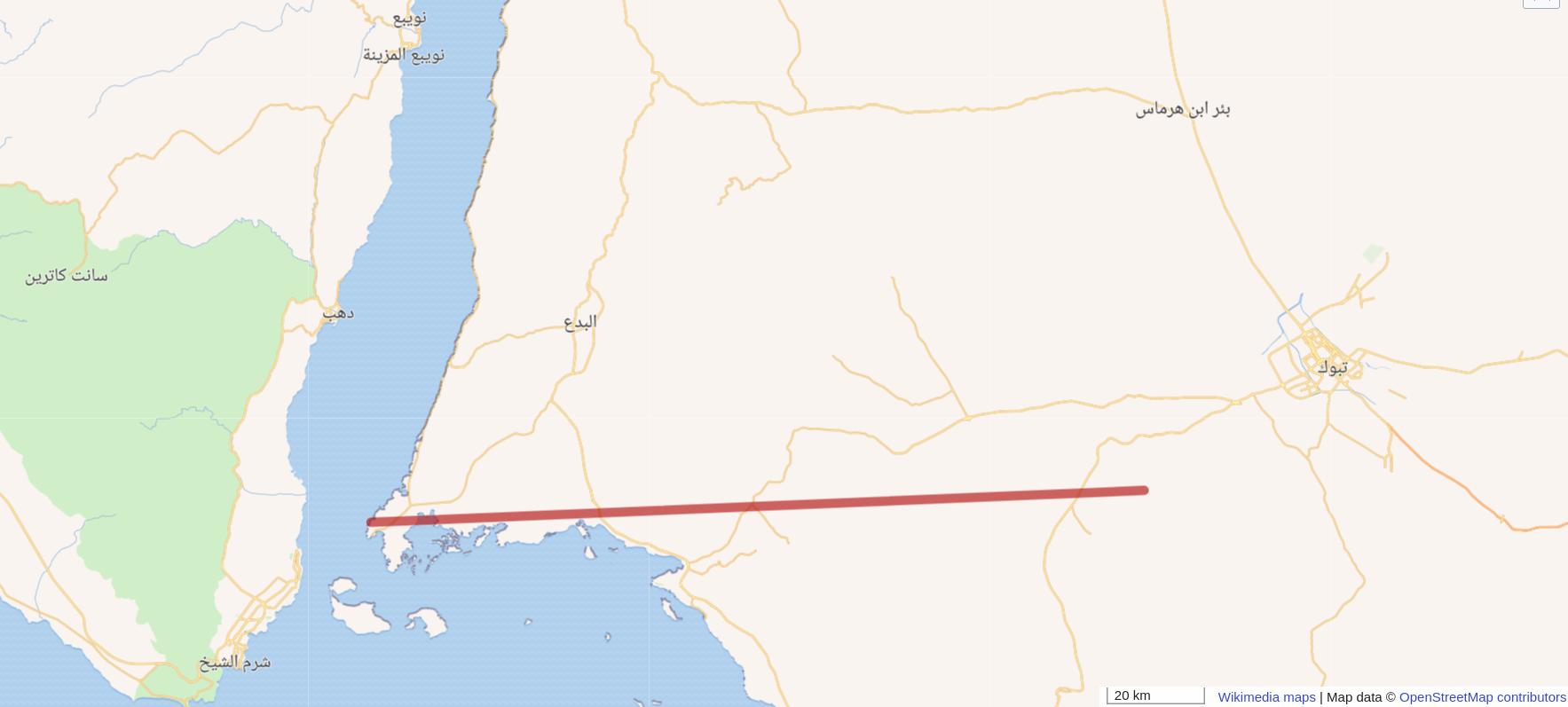
The Line sits within the NEOM development zone, which covers 26,500 square kilometres of Tabuk Province in northwest Saudi Arabia. The western end begins near the Red Sea coast, close to the town of Sharma and the Gulf of Aqaba. The planned route then runs northeast in a straight line toward the city of Tabuk, which lies roughly 140 kilometres inland.
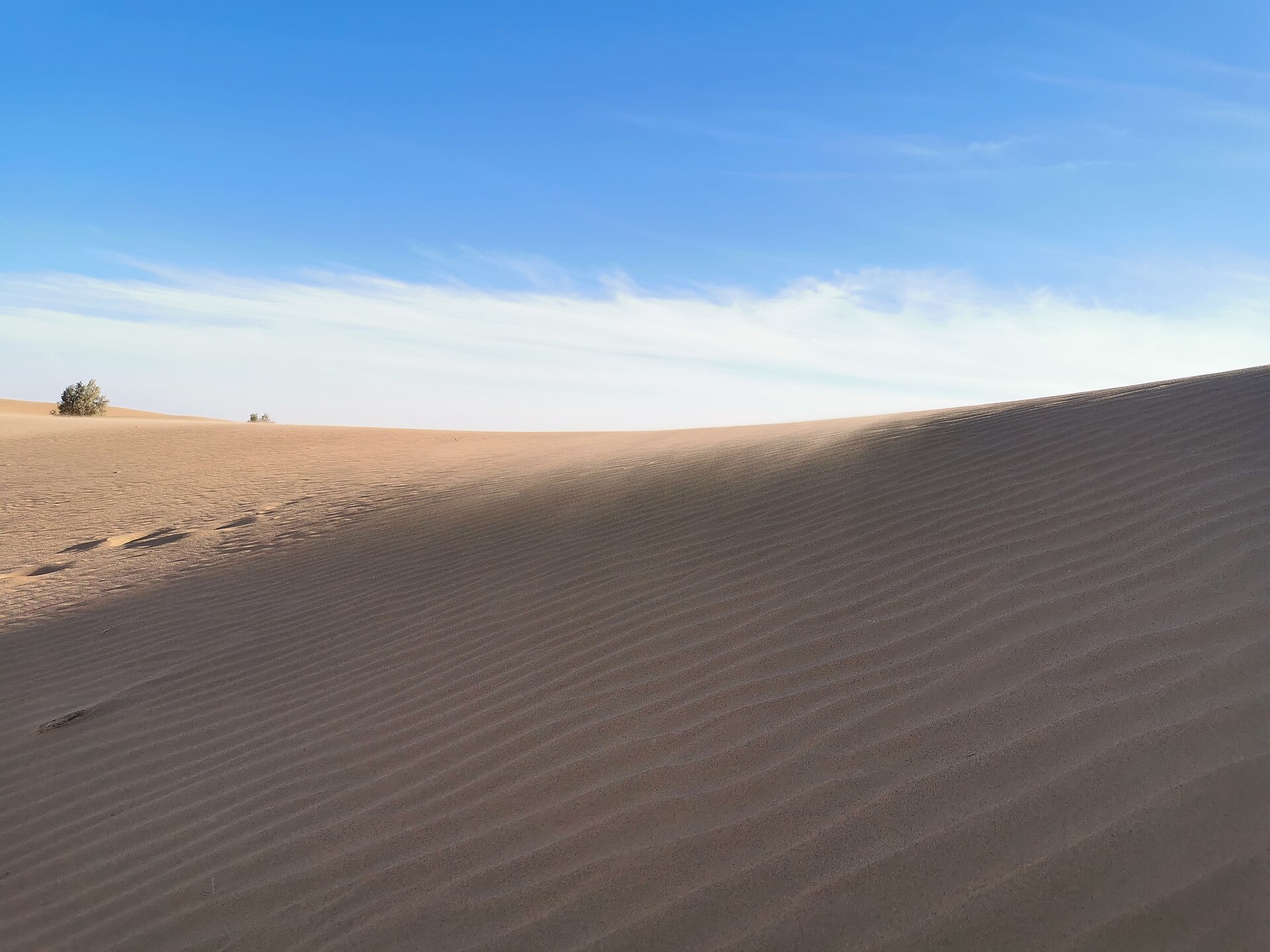
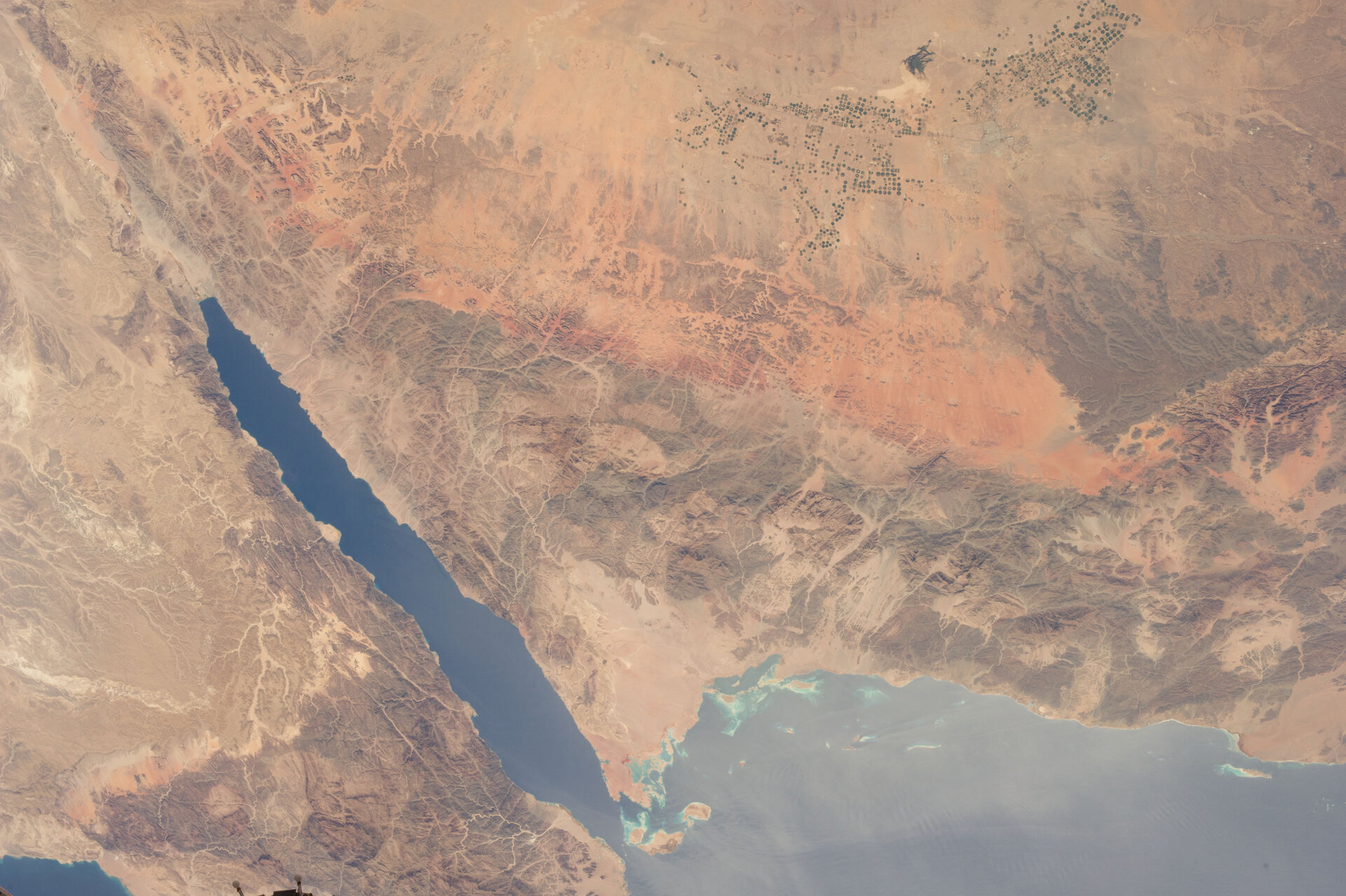
The geographic setting is dramatic. To the west, the Gulf of Aqaba separates Saudi Arabia from Egypt’s Sinai Peninsula — Sharm el-Sheikh is visible across the water. To the north lies Jordan. The terrain is arid desert punctuated by sandstone mountains and wadis, with coastal areas offering access to the Red Sea’s coral reefs.
The nearest airport is NEOM Bay Airport (NUM), located at the coastal town of Sharma. From there, the construction site is not accessible to the public. For broader exploration of the region, Tabuk serves as the main gateway city.
How The Line Was Designed
The concept originated with American architecture firm Morphosis, led by Pritzker Prize-winning architect Thom Mayne. Mayne’s team developed the initial vision of the linear mirrored city, and the project quickly expanded to involve a constellation of international architecture studios including Pei Cobb Freed & Partners, HOK, OMA, Adjaye Associates, Coop Himmelb(l)au, UNStudio, Studio Fuksas, Tom Wiscombe Architecture, and Oyler Wu Collaborative.
The design philosophy centres on what NEOM calls “zero gravity urbanism” — stacking urban functions vertically rather than spreading them horizontally. The mirrored exterior was intended to reflect the surrounding desert and mountains, making The Line appear almost invisible against the landscape from a distance. The interior face, by contrast, would feature terraced gardens, public spaces, and a microclimate moderated by the corridor between the two structures.
Worth knowing: Morphosis formally departed The Line project before construction was suspended. Several other firms, including Coop Himmelb(l)au and Adjaye Associates, also withdrew, citing various concerns.
Construction Timeline: From Announcement to Suspension
2021: The Announcement
Crown Prince Mohammed bin Salman unveiled The Line on 10 January 2021 as a cornerstone of Saudi Vision 2030. The initial announcement described a city of one million residents, with zero cars and zero carbon emissions, to be operational by 2030. The project was positioned as proof that Saudi Arabia could build the future, funded by the Public Investment Fund (PIF), the kingdom’s sovereign wealth fund.
2022: Construction Begins
Ground-breaking commenced in April 2022. Workers began drilling massive foundation piles — some 2.5 to 3 metres in diameter, described by engineers as among the largest in the world. At peak activity, more than 120 piles were being installed weekly across a two-kilometre stretch of desert. The workforce swelled to tens of thousands, drawn primarily from South Asia.
2023–2024: Scaling Back
By mid-2023, reports began surfacing that the project was being dramatically scaled back. Internal documents, first reported by Bloomberg and later leaked to the Wall Street Journal, revealed the full 170-kilometre vision had been quietly shelved. The initial phase was reduced from 20 residential modules across 16 kilometres to just three modules. The 2030 population target was slashed from 1.5 million to fewer than 300,000 — an 80% reduction.
The reasons were financial. Oil prices had softened below the levels Saudi Arabia’s budget required. The PIF’s investment portfolio had underperformed. And the combined cost of Vision 2030’s portfolio of megaprojects — NEOM, The Red Sea, Qiddiya, Diriyah Gate, and others — had exceeded the kingdom’s capacity to fund them simultaneously.
2025: Construction Suspended
On 16 September 2025, PIF governor Yasir Al Rumayyan formally suspended construction on The Line pending a strategic review. At that point, approximately 2.4 kilometres of foundation work had been completed — just 1.4% of the planned 170-kilometre length. No above-ground superstructure had been built. The mirrored cladding that defines The Line’s visual identity existed only in renders.
The PIF wrote down $8 billion from the project. The workforce was cut by roughly 35%, with over a thousand employees relocated from the remote construction site to Riyadh.
Where Things Stand in April 2026
As of April 2026, construction has not resumed. The strategic review initiated in September 2025 remains ongoing, and NEOM has not announced a timeline for restarting work on The Line. Leaked internal documents projected that the full 170-kilometre vision could take until 2080 to complete — more than half a century from now.
There has been discussion within NEOM about repurposing the existing foundations. One proposal, reported by multiple outlets, would convert part of The Line’s infrastructure into an artificial intelligence data centre, capitalising on Saudi Arabia’s push into AI rather than attempting to build the world’s largest residential structure.
Honest assessment: The Line as originally envisioned — a 170-kilometre mirrored megacity for nine million people — is unlikely to be built in anything resembling its announced form. A smaller version, perhaps a few kilometres, may eventually materialise in the 2030s, but this depends entirely on oil prices, PIF investment returns, and political will.
The Broader NEOM Ecosystem
The Line is just one component of NEOM, which encompasses multiple developments across 26,500 square kilometres. Understanding the wider project helps put The Line in context — and helps travellers identify what they might actually be able to visit in the NEOM region.
Sindalah Island
Sindalah is a luxury island resort in the Red Sea, off NEOM’s coast. Billed as Saudi Arabia’s answer to Monaco, it features an 86-berth superyacht marina, 413 hotel rooms, 333 serviced apartments, and exclusive villas. A VIP launch event in October 2024 attracted 65 superyachts and celebrities including Alicia Keys. However, as of early 2026, the resort has not yet opened to the general public, despite consuming an estimated $4 billion — roughly triple its original budget. Operational phases for paying guests are expected in 2026.
Trojena
Trojena is a mountain tourism destination planned for NEOM’s higher elevations. It was originally selected to host the 2029 Asian Winter Games, but in February 2026, the event was officially relocated to Almaty, Kazakhstan, after NEOM acknowledged it could not complete the facilities in time. The project envisions 36 kilometres of ski slopes (requiring artificial snow in the desert climate), over 3,600 hotel rooms, and 2,200 residences. Construction continues but faces significant delays.
Oxagon
Oxagon is NEOM’s planned industrial and port city, featuring what was announced as the world’s largest floating structure. Intended as a clean energy manufacturing hub, it remains in early development stages.
Other NEOM Destinations
NEOM’s master plan also includes luxury resort developments such as Epicon (a coastal resort with 120 hotel rooms and 45 beachfront villas), Siranna (a hexagonal luxury hotel on the Gulf of Aqaba with 65 rooms), Utamo (an arts and entertainment venue built into a mountainside), and Zardun (an OMA-designed sanctuary resort spanning four square kilometres). Most remain in planning or early construction phases.
Can You Visit The Line?
No. As of April 2026, there is nothing for tourists to see at The Line. The construction site is closed to the public, there are no completed structures, and the foundations that exist are in a restricted area. Do not travel to Saudi Arabia expecting to see The Line — you will see a fenced-off stretch of desert.
For a comprehensive overview of what is actually accessible in the NEOM zone, see our NEOM Visitor Guide, which covers the limited experiences currently available.
When Will The Line Open to Visitors?
There is no confirmed opening date. Before the September 2025 suspension, NEOM had loosely targeted having habitable sections ready by 2030. That timeline is no longer credible. A realistic assessment, based on available reporting:
- 2026–2028: Strategic review continues. No construction on The Line expected. Sindalah Island may become NEOM’s first publicly accessible destination.
- Late 2020s–early 2030s: If construction restarts, a small habitable segment (perhaps 2–5 km) could be completed, likely serving as a technology showcase rather than a functioning city.
- 2030s and beyond: Any meaningful expansion depends on oil revenues, PIF performance, and whether the project survives in its current form or is fundamentally redesigned.
- NEOM and The Line Travel Guide 2026 — What you can actually visit in the NEOM zone today
- Tabuk Travel Guide — Gateway to NEOM, Wadi Disah, and northwest Saudi Arabia
- NEOM Visitor Guide — Practical information for tourists in the NEOM region
- Saudi Arabia Red Sea Coast — Diving, beaches, and coral reefs along the western shore
- Saudi Arabia Travel Guide 2026 — The complete guide to visiting the Kingdom
- Saudi Arabia Visa Guide — Every visa type explained
How to Get to the NEOM Region
While you cannot visit The Line itself, the NEOM region in Tabuk Province is accessible and offers genuine attractions for travellers.
By Air
NEOM Bay Airport (NUM) at Sharma is the closest airport. Four airlines currently serve it: Saudia, Flyadeal, flydubai, and Qatar Airways. The busiest route is Riyadh to NEOM (approximately 6 flights per week), with flight times of around two hours. Jeddah to NEOM takes roughly 1.5 hours. flydubai connects NEOM to Dubai. See our flights guide for booking tips and airline comparisons.
Tabuk Regional Airport (TUU) is the alternative, located about 140 km from the NEOM coast. It has more frequent domestic connections and may be easier to reach from other Saudi cities.
By Road
Tabuk city is connected to the rest of Saudi Arabia by well-maintained highways. It sits roughly 700 km northwest of Medina and 1,200 km from Riyadh. A rental car is essential for exploring the surrounding region, as public transport is minimal outside the cities.
Visa Requirements
All international visitors need a visa. The Saudi tourist e-visa is available to citizens of 63 countries and can be obtained online in minutes. It costs approximately 480 SAR (around $128) and is valid for one year with multiple entries of up to 90 days each.
What You Can Do in the NEOM Region Now
The northwest corner of Saudi Arabia is one of the Kingdom’s most spectacular but least-visited regions. While The Line is off-limits, the surrounding area repays the journey. For the full picture, see our dedicated NEOM and The Line Travel Guide and Tabuk Travel Guide.
Wadi Disah
Often called the “Grand Canyon of Saudi Arabia,” Wadi Disah is a sandstone gorge roughly 15 kilometres long, flanked by towering red cliffs. Located about 80 km south of Tabuk, it features palm groves, seasonal streams, and Nabataean archaeological remains. It is one of the most photogenic landscapes in the entire Kingdom.
Gulf of Aqaba Coast
The coast between Sharma and Haql offers pristine beaches, crystal-clear water, and some of the best diving and snorkelling in the Red Sea. The coral reefs here are largely unexplored compared to those further south, and the underwater visibility is exceptional.
Tabuk Castle
This Ottoman-era fortress in central Tabuk dates to 1559 and is associated with the Prophet Muhammad’s expedition to Tabuk in 630 CE. It has been extensively restored and houses a small museum covering the region’s history.
Ain Sukna Hot Springs
Natural hot springs near Tabuk, popular with locals. The mineral-rich water maintains a temperature of around 50°C and has been used for bathing for centuries.
Practical Information
When to Go
The NEOM region and Tabuk Province share a desert climate with extreme summers. The best time to visit is October through March, when daytime temperatures range from 18–28°C. Winter nights can drop to 5°C or below, especially inland — pack layers. Summer temperatures regularly exceed 40°C and make outdoor exploration inadvisable.
Where to Stay
Accommodation options in the NEOM region are currently very limited. Tabuk city offers the widest selection, including mid-range chains and budget hotels. Along the coast at Sharma and Haql, options are sparse — a few guesthouses and camping. For hotel recommendations across Saudi Arabia, see our accommodation guide. If Sindalah Island opens as planned, it will add ultra-luxury options to the area.
Budget
Expect to spend $150–250 per day for mid-range travel (hotel, car rental, meals). Budget travellers camping and self-catering could manage on $80–100 per day. Luxury options, when Sindalah opens, will start at $500+ per night for hotel rooms alone.
Safety
The Tabuk region is safe for tourists. Standard Saudi Arabia travel precautions apply — see our safety guide for details. The NEOM construction zone is restricted, and attempting to enter without authorisation is not advised.
The Human Cost: What Travellers Should Know
Any honest guide to The Line must acknowledge the serious human rights concerns that have surrounded its construction. A 79-page report by Human Rights Watch, published in December 2024, documented widespread abuses against migrant workers, including exorbitant recruitment fees, wage theft, 16-hour work days, inadequate heat protections, and uninvestigated worker deaths.
Additionally, members of the local Howeitat tribe were forcibly displaced from their ancestral lands to make way for the project. Saudi courts sentenced several tribe members to death for resisting eviction, with others receiving prison terms of 15 to 50 years.
These issues are not unique to The Line — they reflect broader systemic problems with labour rights in Gulf construction — but the scale of NEOM has amplified scrutiny. Travellers should be aware of this context when deciding how to engage with NEOM-related tourism.
Should You Plan a Trip Around The Line?
Not yet — and possibly not for a long time. The Line as a tourist destination does not exist in 2026. There are no structures to visit, no observation points, and no visitor centres. Planning a trip to Saudi Arabia specifically to see The Line would result in disappointment.
However, the broader NEOM region and Tabuk Province are genuinely worth visiting for their natural beauty: the Red Sea coast, Wadi Disah, and the rugged mountain terrain. If you build a Saudi Arabia itinerary that includes the northwest, you will find authentic landscapes and minimal tourist crowds — just don’t expect any mirrored megastructures on the horizon.
For now, The Line remains one of the most ambitious ideas in urban history — and one of the most cautionary tales about the distance between architectural vision and built reality.