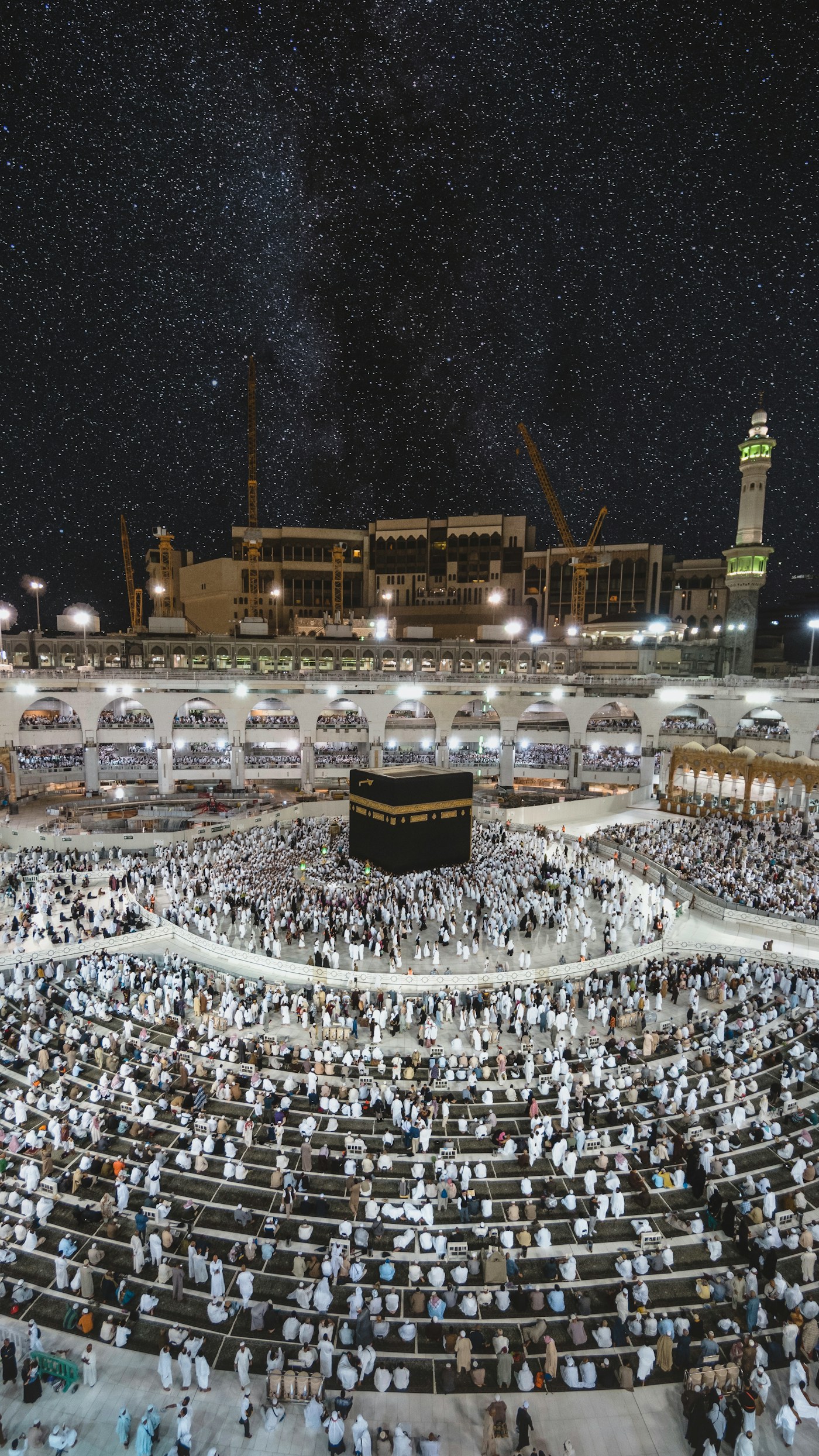

Umrah — the “lesser pilgrimage” — draws millions of Muslims to Mecca every year to circle the Kaaba, walk between Safa and Marwa, and renew their spiritual connection. Unlike Hajj, Umrah can be performed at any time of year, takes just a few hours of ritual, and has no quota cap. Saudi Arabia welcomed over 13.5 million Umrah pilgrims in 2024 and is targeting 30 million annually by 2030 under Vision 2030. Whether you are a first-time Umrah pilgrim or returning for your second or third visit, this guide covers everything: the rituals step by step, visa requirements, costs, what to pack, where to stay, and how to make the most of your journey.
- What Is Umrah?
- Who Can Perform Umrah?
- Best Time to Perform Umrah
- Umrah Visa and Entry Requirements
- How Much Does Umrah Cost?
- Umrah Rituals Step by Step
- What to Pack for Umrah
- Getting to Mecca
- Where to Stay in Mecca
- Visiting Medina Before or After Umrah
- Health, Safety and Practical Tips
- Common Mistakes to Avoid
- Women’s Umrah Guide
- Combining Umrah with Tourism
- Complete Guide to Umrah: All Pages
- First-Timer’s Complete Umrah Walkthrough
- Detailed Umrah Cost Breakdown
- Umrah Packing List
- Mecca City Guide
- Medina City Guide
What Is Umrah?
Umrah is an Islamic pilgrimage to Mecca that can be undertaken at any time of the year, unlike Hajj which is confined to the month of Dhul Hijjah. The word “Umrah” derives from the Arabic root meaning “to visit a populated place.” It consists of four core rituals — entering the state of Ihram, performing Tawaf (circling the Kaaba seven times), completing Sa’i (walking seven times between the hills of Safa and Marwa), and shaving or trimming the hair (Halq or Taqsir). The entire ritual sequence can be completed in two to four hours, though most pilgrims spend one to three days in Mecca to perform their rites at a comfortable pace.
Umrah vs Hajj: Key Differences
While both are pilgrimages to the Holy City of Mecca, the differences are significant. Hajj is the Fifth Pillar of Islam — obligatory once in a lifetime for every Muslim who is physically, mentally, and financially able. It takes place only during the 8th to 12th of Dhul Hijjah each year and involves additional rituals including standing at Arafat, staying overnight at Muzdalifah, stoning the Jamarat at Mina, and animal sacrifice. Hajj is limited by national quotas to roughly two million pilgrims per year. For a full breakdown of the Hajj pilgrimage, see our Hajj 2026 guide.
Umrah, by contrast, has no fixed dates, no national quotas, and no cap on the number of times it can be performed. Scholarly opinion varies on whether Umrah is obligatory: the Shafi’i and Hanbali schools consider it mandatory once in a lifetime, while the Hanafi and Maliki schools classify it as Sunnah mu’akkadah — strongly recommended but not required. Regardless of scholarly classification, the spiritual reward is immense. The Prophet Muhammad (peace be upon him) said: “An Umrah is an expiation for the sins committed between it and the next Umrah” (Sahih al-Bukhari and Sahih Muslim).
Types of Umrah
There are two main types. Umrah al-Mufradah is a standalone Umrah performed independently at any time outside of Hajj season. Umrah al-Tamattu is performed in conjunction with Hajj — the pilgrim enters Ihram for Umrah, completes it, exits Ihram, then re-enters Ihram for Hajj during the designated days. Most people reading this guide will be performing Umrah al-Mufradah.
Who Can Perform Umrah?
Any Muslim can perform Umrah provided they meet the basic conditions: they must be Muslim (non-Muslims are not permitted to enter Mecca), have reached the age of puberty (though children can perform Umrah with parents, with the reward accruing to the parent), be of sound mind, and be physically and financially capable of making the journey. There is no upper age limit, though pilgrims over 65 should take extra health precautions and may want to consider wheelchair-assisted Tawaf, which is available at Masjid al-Haram.
Mahram Requirements
Historically, women under 45 were required to travel with a Mahram — a male relative such as a husband, father, brother, or son. Saudi Arabia relaxed this rule in 2021: women aged 18 and over can now perform Umrah without a Mahram, provided they travel in a group or have registered on the Nusuk app with proper documentation. Women aged 45 and over have been able to travel independently for Umrah for several years. This change has significantly increased the number of female pilgrims travelling independently. For women-specific guidance, see the women’s Umrah section below.
Best Time to Perform Umrah
Because Umrah can be performed year-round, timing is a matter of personal preference, budget, and spiritual goals. Each season brings distinct advantages and trade-offs.
Ramadan: The Most Rewarding Time
Performing Umrah during Ramadan carries the highest spiritual reward. The Prophet (peace be upon him) said: “An Umrah in Ramadan is equal to Hajj with me” (Sahih al-Bukhari). This makes Ramadan the busiest period for Umrah — Masjid al-Haram reaches its maximum capacity of over two million worshippers on the 27th night (Laylat al-Qadr). Hotel prices near the Haram spike to three to five times their off-peak rates. The last ten nights of Ramadan are the most crowded and expensive period of the entire Umrah calendar. In 2026, Ramadan falls approximately from late February to late March (depending on moon sighting).
Off-Peak Months: Best Value
The quietest and most affordable months for Umrah are typically January, February (before Ramadan), and the months between the end of Hajj season and the start of Ramadan. During these windows, hotel rates near the Haram can drop by 50 to 70 percent compared to peak season. Crowds are manageable — Tawaf that takes 90 minutes during Ramadan may take only 30 to 45 minutes off-peak. If your primary goal is a contemplative, unhurried spiritual experience, these shoulder months are ideal.
Weather Considerations
Mecca sits in a desert valley and temperatures are intense. Summer months (June through September) regularly exceed 45°C (113°F), making outdoor portions of the pilgrimage physically demanding. The marble floors of the Haram courtyard can become dangerously hot underfoot during midday. Winter months (November through February) are far more comfortable, with daytime temperatures around 25 to 30°C (77 to 86°F). Spring and autumn offer a reasonable middle ground. If you are elderly, have health conditions, or are travelling with children, avoiding the summer heat is strongly recommended.
Crowd Calendar Summary
Lowest crowds: January, early February, June to August (hot but quiet), October.
Moderate crowds: March (pre-Ramadan), November, December.
Highest crowds: Ramadan (especially last 10 nights), Dhul Hijjah (Hajj season), school holiday periods (varies by country).
Umrah Visa and Entry Requirements
Saudi Arabia has dramatically simplified Umrah entry requirements in recent years. For a comprehensive walkthrough of every visa type, see our dedicated Umrah visa guide and our broader Saudi Arabia visa guide.
Visa Options for Umrah
Saudi eVisa (Tourism Visa): Citizens of over 60 eligible countries can apply for a Saudi eVisa online at visa.visitsaudi.com. This multi-entry visa costs SAR 535 (approximately USD 142) including insurance, is valid for one year, and permits stays of up to 90 days per visit. It explicitly permits Umrah performance. This is now the most popular route for pilgrims from eligible countries — no need for a separate Umrah visa.
Umrah Visa: Pilgrims from countries not eligible for the eVisa can apply for a dedicated Umrah visa through the Nusuk platform (nusuk.sa) or through licensed Umrah travel agencies in their home country. This visa is typically free of charge or carries a nominal processing fee, and is valid for 90 days.
Transit Visa: Travellers with a layover of 96 hours or less at Saudi airports can obtain a free Stopover Visa, which also permits Umrah.
The Nusuk App
Nusuk is the Saudi Ministry of Hajj and Umrah’s official digital platform. Every Umrah pilgrim — regardless of visa type — should register on Nusuk before travelling. The app allows you to book your Umrah permit (required for entry to Masjid al-Haram), schedule prayer times at the Haram, and access digital services during your stay. Download it from the Apple App Store or Google Play Store and complete registration before departure.
Vaccination Requirements
Saudi Arabia requires all Umrah pilgrims to have a valid meningococcal meningitis (ACWY) vaccination, administered no more than five years and no less than ten days before arrival. Pilgrims arriving from countries in the African meningitis belt must show proof of vaccination at the port of entry. A seasonal influenza vaccination is strongly recommended, especially for elderly pilgrims and those with chronic conditions. Yellow fever vaccination is mandatory for travellers from endemic countries. COVID-19 vaccination requirements have been fully lifted as of 2023, but having an up-to-date vaccination record is still advisable.
Other Entry Requirements
Your passport must be valid for at least six months from the date of entry. Women travelling without a Mahram must be 18 or older. Children must be accompanied by a parent or legal guardian with appropriate documentation. Travel insurance is included in the eVisa fee but should be arranged separately for Umrah visa holders — comprehensive coverage including medical evacuation is strongly recommended.
How Much Does Umrah Cost?
Umrah costs vary enormously depending on your country of origin, timing, accommodation choices, and whether you book independently or through a package. For a full cost breakdown with country-specific estimates, see our detailed Umrah costs guide. Below is a general framework.
Budget Umrah (USD 1,500 – 2,500 per person)
A budget Umrah means flying economy class (book early for the best fares), staying in a 2 to 3-star hotel 10 to 15 minutes’ walk from the Haram, eating at affordable local restaurants and street food stalls, and handling all logistics independently. Budget pilgrims typically stay five to seven nights total between Mecca and Medina. Off-peak timing is essential for keeping costs low — a hotel room that costs SAR 200 per night in January may cost SAR 800 or more during Ramadan.
Mid-Range Umrah (USD 3,000 – 5,000 per person)
Mid-range pilgrims stay in 4-star hotels within a five to ten minute walk of the Haram, fly on reputable carriers with reasonable baggage allowances, and may book through a licensed Umrah travel agency that handles transfers, hotel bookings, and ziyarat (religious site visits). This bracket offers a comfortable balance of convenience and affordability. Expect to spend seven to ten nights.
Luxury Umrah (USD 7,000 – 15,000+ per person)
Luxury packages feature 5-star hotels with direct Haram views — properties like the Raffles Makkah Palace, Swissôtel Al Maqam, Fairmont Makkah Clock Royal Tower, and Conrad Makkah. Some suites offer private balconies overlooking the Kaaba. Add private transfers, VIP Tawaf assistance (wheelchair-assisted upper floors with less crowding), business or first-class flights, and guided ziyarat tours. During peak Ramadan, a Haram-view suite can exceed SAR 10,000 per night.
Cost Breakdown by Category
Flights: USD 300 to 2,000+ depending on origin and class. South Asian pilgrims (the largest demographic) typically pay USD 400 to 800 for economy returns. European and North American pilgrims can expect USD 600 to 1,200.
Visa: SAR 535 (USD 142) for eVisa; free to nominal for Umrah visa.
Accommodation (Mecca, per night): SAR 150 to 400 budget; SAR 500 to 1,200 mid-range; SAR 1,500 to 10,000+ luxury.
Accommodation (Medina, per night): Generally 20 to 40 percent cheaper than equivalent Mecca hotels.
Food (per day): SAR 50 to 100 budget (local restaurants); SAR 150 to 300 mid-range; SAR 400+ fine dining.
Local transport: SAR 100 to 200 for Jeddah-Mecca transfer (bus/shared van); SAR 250 to 400 private car. Haramain High-Speed Railway: SAR 150 to 300 (Medina to Mecca via Jeddah).
Miscellaneous: Ihram clothing SAR 30 to 150; Zamzam water containers SAR 10 to 30; phone SIM card SAR 50 to 100.
Umrah Rituals Step by Step
Umrah consists of four essential rituals performed in sequence. Understanding each step before you arrive will make the experience smoother and more spiritually focused. For a detailed first-timer walkthrough with common questions answered, see our Umrah first-timer guide.
Step 1: Ihram — Entering the Sacred State
Ihram is both a physical garment and a spiritual state of consecration. Before crossing the designated Miqat boundary — the geographic line beyond which Ihram is required — you must make your intention (niyyah) for Umrah and put on the Ihram garments.
For men: Two unstitched white cloths. The izar wraps around the waist to cover the lower body; the rida drapes over the left shoulder and under the right arm. No underwear, socks, or head coverings. Unscented sandals or flip-flops that expose the ankles and tops of the feet.
For women: Any modest clothing that covers the entire body except the face and hands. There is no specific colour requirement, though many women choose white or neutral colours. The face must remain uncovered (no niqab) during Ihram, though a loose cloth may be draped forward from the head if it does not touch the face. Gloves are not permitted.
Ihram prohibitions: Once in the state of Ihram, you may not cut hair or nails, wear perfume or scented products, engage in sexual relations, hunt or kill animals (except dangerous ones), argue or fight, or — for men — cover the head or wear stitched clothing. Violating these prohibitions may require a fidyah (compensation), usually an animal sacrifice or feeding the poor.
Miqat points: There are five designated Miqat boundaries. Pilgrims flying into Jeddah typically enter Ihram before boarding their flight or on the plane as it passes the Miqat. The pilot usually announces the Miqat point. If driving from Jeddah, the nearest Miqat is Al-Juhfah (also known as Rabigh), about 180 km north of Mecca. Pilgrims from Medina enter Ihram at Dhul Hulayfah (Abyar Ali), the furthest Miqat from Mecca at about 450 km. Those coming from the east (Riyadh, Dammam) use Qarn al-Manazil (Al-Sayl al-Kabeer). From Yemen, the Miqat is Yalamlam. From Iraq and beyond, it is Dhat Irq.
The Talbiyah: Once in Ihram, you begin reciting the Talbiyah continuously: “Labbayk Allahumma labbayk, labbayk la shareeka laka labbayk. Innal hamda wan ni’mata laka wal mulk, la shareeka lak” (“Here I am, O Allah, here I am. Here I am, You have no partner, here I am. Verily all praise, grace, and sovereignty belong to You. You have no partner”). Men recite it loudly; women in a low voice. Continue reciting until you begin Tawaf.
Step 2: Tawaf — Circling the Kaaba
Upon arriving at Masjid al-Haram, you perform Tawaf by circling the Kaaba seven times in an anti-clockwise direction. Each circuit begins and ends at the Black Stone (Hajar al-Aswad), marked by a green light on the wall of the mosque.
Before starting: Ensure you are in a state of wudu (ablution). Men should perform idtiba — exposing the right shoulder by passing the upper Ihram cloth under the right arm and over the left shoulder. Face the Black Stone, raise your right hand toward it, and say “Bismillahi Allahu Akbar”.
During Tawaf: Walk at a normal pace. In the first three circuits, men are recommended to perform raml — walking briskly with short steps and moving the shoulders. In circuits four through seven, walk at a normal pace. There are no mandatory supplications during Tawaf — you may make any dua (personal prayer) or recite Quran. However, when passing between the Yemeni Corner (Rukn al-Yamani) and the Black Stone, it is recommended to recite: “Rabbana atina fid-dunya hasanah wa fil-akhirati hasanah wa qina adhab an-nar” (“Our Lord, give us good in this world and good in the Hereafter, and protect us from the punishment of the Fire”).
Kissing or touching the Black Stone: If you can reach it without pushing or harming others, touch or kiss the Black Stone. If the crowd is too dense — as it usually is — simply point toward it with your right hand from a distance and say “Allahu Akbar.” The spiritual reward is the same.
After Tawaf: Pray two rak’ahs behind Maqam Ibrahim (the Station of Abraham) if possible, or anywhere in the mosque if the area is crowded. Then drink Zamzam water, available from coolers throughout the mosque.
Tawaf typically takes 30 to 60 minutes during quiet periods and up to 90 minutes to two hours during peak times. The upper floors and rooftop of the expanded Haram offer more space but involve longer circuits. Wheelchair and electric scooter paths are available on designated floors.
Step 3: Sa’i — Walking Between Safa and Marwa
After Tawaf, proceed to the hill of Safa to begin Sa’i. This ritual commemorates Hajar (Hagar), the wife of Prophet Ibrahim (Abraham), who ran seven times between the two hills searching for water for her infant son Ismail — until the spring of Zamzam miraculously appeared beneath his feet.
Procedure: Climb Safa (or reach the marked area on the ground floor), face the Kaaba, and make dua. Then walk toward Marwa — this is one lap. Walk back to Safa — this is the second lap. Continue until you have completed seven laps, ending at Marwa. Between the two green fluorescent markers (visible on the walls), men should jog lightly (sa’y); women walk at their normal pace throughout.
The Sa’i corridor is enclosed and air-conditioned within the Masjid al-Haram complex. It is approximately 450 metres one way, so the total walking distance is about 3.15 kilometres. Sa’i takes 30 to 60 minutes depending on crowd levels. The upper level is less congested. Wheelchair access and motorised cart services are available.
Step 4: Halq or Taqsir — Shaving or Trimming the Hair
The final ritual is cutting the hair, which symbolises renewal and the completion of Umrah. Men can choose between Halq (completely shaving the head) or Taqsir (trimming at least one inch of hair from all over the head). Halq carries greater reward according to most scholars. Women trim approximately one inch (a fingertip’s length) from the ends of their hair — women do not shave their heads.
Licensed barbers are available outside Masjid al-Haram and throughout Mecca, typically charging SAR 10 to 30. Many pilgrims carry small scissors to trim their own hair at Marwa immediately after completing Sa’i.
Once this step is completed, you exit the state of Ihram. All Ihram prohibitions are lifted. Your Umrah is complete — Umrah Maqboolah, may Allah accept it.
What to Pack for Umrah
Packing smart makes a significant difference to your comfort during Umrah. For a printable checklist with quantities and brand recommendations, see our full Umrah packing list. Here are the essentials.
Documents
Passport (valid for at least six months), printed and digital copies of your visa, hotel booking confirmations, flight itineraries, vaccination certificates (especially meningitis ACWY), travel insurance documents, and a photocopy of your passport stored separately from the original. Register your Nusuk app profile before departure.
Ihram Clothing
Men should bring at least two sets of Ihram cloths — one to wear and one as backup in case the first set gets soiled. Choose high-quality, non-transparent cotton or microfibre that stays in place. Ihram belts with pockets are invaluable for carrying your phone and cash. Women should pack loose-fitting, modest clothing in breathable fabrics. Several outfit changes are wise given the heat.
Footwear
Comfortable, well-broken-in sandals or flip-flops are essential. You will walk extensively on marble floors. Men’s footwear during Ihram must expose the ankles and top of the feet. Bring a second pair as backup. Many pilgrims also pack a shoe bag — you will remove footwear before entering the mosque, and a bag makes it easy to carry them inside rather than risk losing them at the door.
Health and Comfort
Unscented soap, shampoo, and deodorant (no fragrance during Ihram), sunscreen, a refillable water bottle, electrolyte sachets, blister plasters, any prescription medications in their original packaging, a basic first-aid kit, a face mask (crowds can spread respiratory infections), hand sanitiser, and a small prayer rug if you prefer your own.
Electronics and Practical Items
Phone with Nusuk app installed, portable power bank (you will be out all day), universal power adapter (Saudi Arabia uses Type G plugs, 220V), a money belt or neck pouch for valuables, a lightweight backpack or crossbody bag, and a small Quran or dua book.
Getting to Mecca
Most international pilgrims arrive via one of two airports: King Abdulaziz International Airport (KAIA) in Jeddah, about 80 km from Mecca, or Prince Mohammad bin Abdulaziz International Airport in Medina, about 420 km from Mecca. A smaller number fly into Taif Regional Airport, 90 km from Mecca.
From Jeddah
Haramain High-Speed Railway (HHR): The fastest and most comfortable option. The train runs from Jeddah’s Sulaymaniyah station (connected to the airport by shuttle) to Mecca’s Al-Rusayfah station. Journey time is approximately 25 to 30 minutes. Tickets cost SAR 75 to 150 depending on class. Trains run frequently, with increased services during Umrah peak periods. Book via the SAR (Saudi Arabia Railways) app.
SAPTCO Bus: Saudi Arabia’s national bus carrier operates frequent services from Jeddah to Mecca. The journey takes 60 to 90 minutes depending on traffic. Tickets cost SAR 25 to 50. The main Jeddah bus station is on the Makkah Road.
Taxi and Rideshare: Private taxis from Jeddah airport to Mecca cost SAR 200 to 350. Uber and Careem operate in both cities. Journey time is 60 to 90 minutes depending on traffic, which can be extremely heavy during peak Umrah periods — allow extra time.
From Medina
Haramain High-Speed Railway: The train connects Medina to Mecca via Jeddah. Total journey time from Medina to Mecca is approximately two hours. This is the recommended option — comfortable, reliable, and avoids the five-hour road journey. Tickets cost SAR 150 to 300 depending on class and availability.
SAPTCO Bus: Direct buses from Medina to Mecca take approximately five to six hours. Costs around SAR 80 to 120.
Private car: Hired cars or taxis for the Medina-Mecca run cost SAR 500 to 800 one way. The route passes through the Miqat at Dhul Hulayfah where you must stop to enter Ihram if you haven’t already.
Important: Non-Muslims Cannot Enter Mecca
Non-Muslim taxi drivers and companions cannot enter the Haram zone of Mecca. If you are being driven by a non-Muslim driver, the handover point is at the checkpoints on the outskirts of the city. Plan accordingly.
Where to Stay in Mecca
Accommodation in Mecca is centred on proximity to Masjid al-Haram. The closer your hotel, the higher the price — but also the greater the convenience, especially for elderly pilgrims or those performing multiple prayers at the Haram. For a comprehensive look at the city, see our Mecca city guide and our Mecca for Muslims guide.
Tier 1: Haram-Adjacent (Under 200 Metres)
Hotels in the Jabal Omar and Abraj Al-Bait complexes sit directly next to the Haram. The Fairmont Makkah Clock Royal Tower, Swissôtel Al Maqam Makkah, Raffles Makkah Palace, Conrad Makkah, Hilton Suites Makkah, and Makkah Clock Royal Tower are all within a two to five minute walk of the Haram gates. These properties command premium rates — SAR 1,500 to 10,000+ per night depending on the season and room type. Haram-view rooms are the most expensive and book out months in advance for Ramadan.
Tier 2: Central Mecca (200 Metres to 1 Kilometre)
A wider ring of 3 to 4-star hotels offers solid value. Properties along Ibrahim Al-Khalil Street and King Abdul Aziz Road are typically 5 to 15 minutes’ walk from the Haram. Expect to pay SAR 400 to 1,200 per night. Many provide shuttle services to the Haram. This zone represents the best balance of price and convenience for most pilgrims.
Tier 3: Greater Mecca (1 Kilometre+)
Hotels in the Aziziyah, Shisha, and Al-Awali districts are further out but significantly cheaper — SAR 150 to 400 per night. Free shuttle buses to the Haram are common. The trade-off is a 15 to 30 minute journey each way, which can extend to 45 minutes or more during peak times. Budget pilgrims and large families often choose this zone.
Booking Tips
Book as early as possible — six to twelve months ahead for Ramadan, two to three months for off-peak. Compare prices on Booking.com, Almosafer, and direct hotel websites. Many Saudi Umrah travel agencies bundle flights, hotels, and transfers at competitive rates. Check cancellation policies carefully. Verify the exact walking distance to the Haram using Google Maps, not the hotel’s claimed distance.
Visiting Medina Before or After Umrah
While visiting Medina is not part of the Umrah rituals, the vast majority of pilgrims include it in their trip. The Prophet’s Mosque (Masjid al-Nabawi) is the second holiest mosque in Islam, and praying there carries immense reward — one prayer in Masjid al-Nabawi is equivalent to one thousand prayers elsewhere (except Masjid al-Haram, where one prayer equals one hundred thousand).
Before or After Umrah?
There is no religious requirement to visit Medina before or after Umrah — both are valid. However, many pilgrims prefer to visit Medina first and then travel to Mecca for Umrah, entering Ihram at the Dhul Hulayfah Miqat as they leave Medina. This has a practical advantage: you arrive in Mecca already in Ihram and can proceed directly to perform Umrah. The Haramain train makes this route seamless.
Others prefer to complete Umrah in Mecca first and then travel to Medina in regular clothing, without the restrictions of Ihram. Either approach is perfectly acceptable.
Key Sites in Medina
Masjid al-Nabawi (The Prophet’s Mosque): Visit the Prophet’s Mosque for prayers, visit the Rawdah (the area between the Prophet’s pulpit and his tomb, considered a garden of Paradise), and send salutations at the tomb of the Prophet Muhammad and his companions Abu Bakr and Umar. The Rawdah is accessible by appointment via the Nusuk app — book in advance as slots fill quickly.
Quba Mosque: The first mosque ever built in Islam, located about 5 km south of Masjid al-Nabawi. The Prophet said that praying two rak’ahs in Quba Mosque is equivalent to performing an Umrah.
Masjid al-Qiblatayn: The “Mosque of the Two Qiblas,” where the revelation came directing Muslims to change their prayer direction from Jerusalem to Mecca.
Uhud Mountain and Martyrs’ Cemetery: The site of the Battle of Uhud (625 CE), where 70 companions of the Prophet, including his uncle Hamza, were martyred.
Al-Baqi Cemetery: Adjacent to Masjid al-Nabawi, this is the resting place of many of the Prophet’s family members and companions.
Most pilgrims spend two to four nights in Medina. Hotels near Masjid al-Nabawi are generally 20 to 40 percent cheaper than equivalent-quality hotels in Mecca.
Health, Safety and Practical Tips
Umrah is physically demanding — you will walk long distances, often in heat, in large crowds. Proper preparation makes a significant difference. Review Saudi mosque etiquette before visiting the holy sites.
Heat and Hydration
Dehydration is the single most common health issue among Umrah pilgrims. Drink at least three to four litres of water daily. Carry a refillable water bottle — Zamzam water coolers are available throughout the Haram and surrounding areas, but you will need water during transit and outdoor walks. Electrolyte sachets or oral rehydration salts are essential, especially during summer months. Avoid prolonged outdoor exposure during the midday heat (11 AM to 3 PM).
Crowd Safety
Masjid al-Haram can host over two million worshippers simultaneously. During Tawaf, move with the flow of the crowd — never against it. If you feel crushed, raise your arms to create breathing space. Keep children close and consider child-leash wristbands for toddlers. Avoid the ground-floor Black Stone area during peak times if you are elderly, have mobility issues, or are with children — the upper floors are safer and less congested. Establish a meeting point with your group in case you get separated, and ensure everyone has a charged phone.
Medical Facilities
Saudi Arabia has invested heavily in pilgrim healthcare. There are multiple hospitals and clinics near Masjid al-Haram, including the Ajyad Emergency Hospital and King Abdullah Medical City. First aid stations are positioned throughout the Haram complex. Emergency services are free for pilgrims. Carry a card with your hotel address, blood type, allergies, and emergency contacts in Arabic and English.
Money and SIM Cards
The Saudi Riyal (SAR) is pegged to the US Dollar at approximately 3.75 SAR to 1 USD. ATMs are widely available near the Haram and in hotel lobbies. Credit and debit cards (Visa and Mastercard) are accepted at most hotels, restaurants, and larger shops. Smaller vendors and barbers typically require cash. Purchase a local SIM card from STC, Mobily, or Zain at the airport — data packages of 10 to 20 GB cost SAR 50 to 100 and last 30 days. Reliable mobile data is essential for the Nusuk app and navigation.
Food and Dining
Mecca offers abundant dining options ranging from international fast-food chains to traditional Arabic restaurants. The streets around the Haram are lined with restaurants serving biriyani, shawarma, grilled meats, and freshly baked bread at all hours. Al Baik — Saudi Arabia’s beloved fried chicken chain — has multiple branches near the Haram and is a pilgrim institution. Hotel buffets are convenient but expensive. For a more authentic and affordable experience, explore the restaurants on Ibrahim Al-Khalil Street and the surrounding lanes.
Common Mistakes to Avoid
Even well-prepared pilgrims can stumble on common pitfalls. Here are the most frequent mistakes and how to avoid them.
1. Forgetting to enter Ihram before the Miqat. If you fly past the Miqat without entering Ihram, you must return to the Miqat boundary or offer a dam (animal sacrifice). Set an alarm, listen for the pilot announcement, and change into Ihram before boarding if unsure.
2. Using scented products in Ihram. This is a surprisingly common error. Many everyday products — soap, shampoo, deodorant, lip balm, hand cream — contain fragrance. Switch to unscented alternatives before entering Ihram and keep them in a separate toiletry bag.
3. Pushing toward the Black Stone. The area around the Black Stone is extremely congested. Attempting to push through to kiss or touch it can cause injury to yourself and others. Pointing from a distance carries the same spiritual reward.
4. Losing count of Tawaf circuits or Sa’i laps. Use a digital counter app on your phone or a simple handheld tally counter. If genuinely unsure, take the lower number (e.g., if unsure whether you have done five or six circuits, count it as five and do two more).
5. Not breaking in footwear. New sandals cause blisters. Wear your Umrah footwear for at least two weeks before travel to break them in. Carry blister plasters.
6. Overpacking. You will not need formal clothing, excessive electronics, or heavy bags. Pack light — you will likely purchase items in Mecca (Ihram cloths, prayer beads, gifts) and need luggage space for the return. Check our Umrah packing list for a streamlined approach.
7. Not registering on Nusuk. The Nusuk app is now essential for Umrah permits, Haram entry scheduling, and Rawdah booking in Medina. Register and familiarise yourself with the app before departure.
8. Ignoring health precautions. Pilgrims frequently underestimate the physical demands. Start a walking routine weeks before travel, especially if you are not regularly active. Stay hydrated, rest when needed, and do not push through exhaustion.
9. Booking hotels too far from the Haram. That SAR 150 per night hotel in Aziziyah sounds like a bargain — until you factor in the 30-minute taxi ride each way, multiple times per day. For short stays (under five nights), a more central hotel often provides better overall value.
10. Not making dua during the rituals. Umrah can feel overwhelming in the moment — crowds, heat, logistics. Many pilgrims finish and realise they forgot to make personal supplications. Prepare a dua list before travelling, written on a card or saved on your phone, with prayers for yourself, your family, and the Ummah.
Women’s Umrah Guide
Women make up a substantial and growing proportion of Umrah pilgrims. Saudi Arabia’s 2021 reforms — allowing women 18 and over to perform Umrah without a Mahram — have been transformative. Here is what women need to know.
Ihram Clothing for Women
Unlike men, women do not wear specific white garments for Ihram. Women may wear any modest clothing in any colour, covering the entire body except the face and hands. The face must remain uncovered — niqab is not worn during Ihram (a loose cloth may be draped from the forehead to shade the face, as long as it does not touch the skin of the face). Gloves are not permitted. Most women choose loose-fitting abayas in white or neutral colours for ease and comfort.
Menstruation During Umrah
If a woman begins menstruation before completing Umrah, she should enter or remain in the state of Ihram but postpone Tawaf until her period ends and she has performed ghusl (ritual bath). She may perform Sa’i without Tawaf according to the Hanbali school, though the majority opinion is to wait until purification is complete before performing both. If she is on a tight schedule, she should consult a scholar — some authorities permit Tawaf with menstruation in cases of genuine necessity (such as a non-changeable flight), based on a narration of Aisha (may Allah be pleased with her).
Practical Tips for Women
Safety: The Haram and surrounding areas are generally very safe. However, maintain awareness of your belongings in crowds. A crossbody bag worn under your abaya is more secure than a handbag.
Prayer areas: Masjid al-Haram has designated women’s prayer sections, though the entire mosque is open to women. The Rawdah in Medina has separate women’s visiting hours — book through the Nusuk app.
Facilities: Clean restrooms and wudu (ablution) areas for women are available throughout both Harams. Female medical staff are available at the Haram health stations.
Solo travel: Women travelling alone should inform their hotel of their solo status for security purposes, keep their hotel’s address card on their person, and share their itinerary with family at home. Saudi Arabia is generally very safe for women travellers, and the pilgrim areas are heavily monitored with security and CCTV.
Combining Umrah with Tourism
Saudi Arabia’s expanding tourism infrastructure means that Umrah pilgrims can easily extend their trip to explore the Kingdom. The eVisa permits tourism alongside Umrah, and the Haramain train connects the key cities efficiently.
Jeddah Extension (1–3 Days)
Jeddah is the natural gateway city for Umrah. Spend a day or two exploring the UNESCO-listed Al-Balad historic district with its coral-stone houses and carved wooden balconies (rawasheen), walk the Jeddah Corniche, visit the King Fahd Fountain, and sample the city’s thriving food scene — particularly its seafood restaurants along the coast. Jeddah’s hotels are significantly cheaper than Mecca’s, making it a good base before or after Umrah.
Medina Extension (2–4 Days)
Beyond the religious sites, Medina offers a calmer, more contemplative atmosphere than Mecca. Visit Quba Mosque, explore the dates market (Medina is famous for Ajwa dates), and take a day trip to the ancient oasis of Khaybar or the scenic Uhud mountain area. The Medina guide covers all the sites in detail.
Taif Day Trip
Taif, perched at 1,800 metres in the Hejaz Mountains just 90 km from Mecca, offers a cool escape from the lowland heat. Known for its rose farms (visit during the annual rose harvest in March/April), honey production, and fruit orchards. Al-Shafa and Al-Hada mountain roads offer stunning views. Taif is accessible as a day trip from Mecca by car.
Further Afield
With a Saudi eVisa, your options extend across the Kingdom. Riyadh, the capital, is a short flight away. The ancient Nabataean city of Hegra in AlUla is a UNESCO World Heritage Site increasingly popular with international visitors. The mountainous Asir region around Abha offers cool climate, terraced villages, and dramatic landscapes. See our broader Saudi Arabia travel resources for detailed guides to each destination.
Complete Guide to Umrah: All Pages
Getting Started
- Umrah First-Timer Guide — Complete walkthrough for your first Umrah, from intention to completion
- Umrah Visa Guide — Every visa option explained, including the eVisa and Nusuk registration
- Saudi Arabia Visa Guide — Comprehensive guide to all Saudi visa types
- Umrah Costs — Detailed budget breakdown by category and travel style
- Umrah Packing List — Printable checklist of everything you need to bring
The Holy Cities
- Mecca City Guide — Everything you need to know about the Holy City
- Mecca for Muslims — Spiritual guide to maximising your time in Mecca
- Masjid al-Haram Guide — Navigating the Grand Mosque, floor plans, and prayer tips
- Medina City Guide — The Prophet’s city, from Masjid al-Nabawi to day trips
- Medina Visitor’s Guide — Practical guide to visiting Medina
- Masjid al-Nabawi Guide — The Prophet’s Mosque, the Rawdah, and visiting etiquette
- Prophet’s Mosque Guide — History, layout, and prayer guide for Masjid al-Nabawi
Etiquette and Practicalities
- Saudi Mosque Etiquette — What to wear, how to behave, and cultural norms at Saudi mosques
Related Pilgrimages
- Hajj 2026 Guide — The complete guide to the Fifth Pillar, from rituals to logistics
Gateway Cities
- Jeddah City Guide — Gateway to the Haramain, with Al-Balad, dining, and beaches