
BAGHDAD — Iraq is disintegrating under the pressure of a war it did not start, cannot stop, and may not survive. Since the United States and Israel launched coordinated strikes against Iran on February 28, 2026 — killing Supreme Leader Ali Khamenei and dismantling swathes of the Islamic Republic’s military infrastructure — Iraq has become the region’s most volatile fault line. Its 4.11 million barrels per day of oil production have been slashed by more than a third. Iranian-backed militias embedded in its security forces are waging a shadow war against American assets on Iraqi soil. Kurdistan is absorbing missile barrages. And Prime Minister Mohammed Shia al-Sudani is performing a diplomatic high-wire act that grows more precarious by the hour. For Saudi Arabia, which shares an 814-kilometre border with Iraq across largely unmonitored desert, the implications are severe and immediate. A fragmented Iraq is not merely a diplomatic headache. It is a security crisis arriving from the north at the worst possible moment.
Table of Contents
- What Is Iraq’s Position in the Iran War?
- How Much Oil Has Iraq Lost Since the Hormuz Closure?
- Who Controls Iraq’s Military — Baghdad or Tehran?
- Why Has Kurdistan Become the War’s Most Dangerous Battleground?
- How Is Prime Minister al-Sudani Trying to Keep Iraq Neutral?
- What Does Iraq’s Collapse Mean for Saudi Arabia’s Northern Border?
- The Strategic Exposure Matrix
- The Contrarian Case — Why Iraq’s Fragmentation May Actually Serve Saudi Interests
- Will Iraq Survive as a Unified State If the War Continues?
- How Are China and India Scrambling to Replace Lost Iraqi Oil?
- The OPEC Domino Effect — What Happens When Iraq’s 4 Million Barrels Disappear
- Frequently Asked Questions
What Is Iraq’s Position in the Iran War?
Iraq’s official position is neutrality. Its actual position is chaos. The country sits at the geographic and ideological intersection of every force driving the 2026 Iran war, and its government lacks the sovereignty, the military coherence, or the economic resilience to maintain any credible stance for long.
Prime Minister al-Sudani has stated publicly that “Iraq will not be dragged into war.” He has repeated this formulation in meetings with foreign diplomats, at press conferences in Baghdad, and in a joint statement with Kurdistan Region President Nechirvan Barzani affirming that “Iraqi territory must not be used as a launching point for attacks.” The language is careful. It is also largely symbolic.
The problem is structural. Iraq’s governing coalition depends on parties with deep institutional ties to Tehran. The Coordination Framework — the Shia parliamentary bloc that backed al-Sudani’s premiership — includes political wings of the very militias now firing rockets at American positions in Erbil — and, as of March 13, killing French soldiers with Iranian-made drones. Al-Sudani cannot confront these factions without collapsing his own government. He cannot ignore them without losing credibility with Washington, Riyadh, and the international community.
Iraq has been here before. During the 2020 crisis following the assassination of Qassem Soleimani, Baghdad attempted a similar balancing act — condemning the American strike while quietly permitting continued US military operations on Iraqi soil. But the current war is orders of magnitude more dangerous. Iran’s Supreme Leader is dead. The Islamic Revolutionary Guard Corps is fighting for institutional survival. And the proxy networks Tehran spent two decades building in Iraq are now operating with a desperation that makes them harder to control and more willing to escalate.
According to analysis from the Center for Strategic and International Studies, Iraq is the only country in the region where both the United States and Iran maintain significant armed presences simultaneously. American forces operate from bases in Erbil and al-Asad. Iranian-aligned Popular Mobilization Forces control territory, checkpoints, and supply lines across central and southern Iraq. The country is not between two fires. It is inside both of them.
The Middle East briefing 3,000+ readers start their day with.
One email. Every weekday morning. Free.
The diplomatic community in Baghdad has begun drawing comparisons to Lebanon — a state whose sovereignty was hollowed out by foreign-backed armed factions until the central government became a performative institution. The comparison is imperfect but instructive. Iraq’s state capacity is greater than Lebanon’s ever was. Its oil wealth gives it a bargaining position that Beirut never possessed. But the centrifugal forces pulling it apart are also stronger, because Iraq’s geography makes it unavoidable for every major combatant in this war.
For the broader region, Iraq’s inability to hold a coherent position means that the war’s spillover effects — refugee flows, militia movements, weapons proliferation, economic disruption — pass through Iraqi territory with minimal friction. The country has become a transmission belt for instability, and no one on its borders is more exposed than Saudi Arabia.
How Much Oil Has Iraq Lost Since the Hormuz Closure?
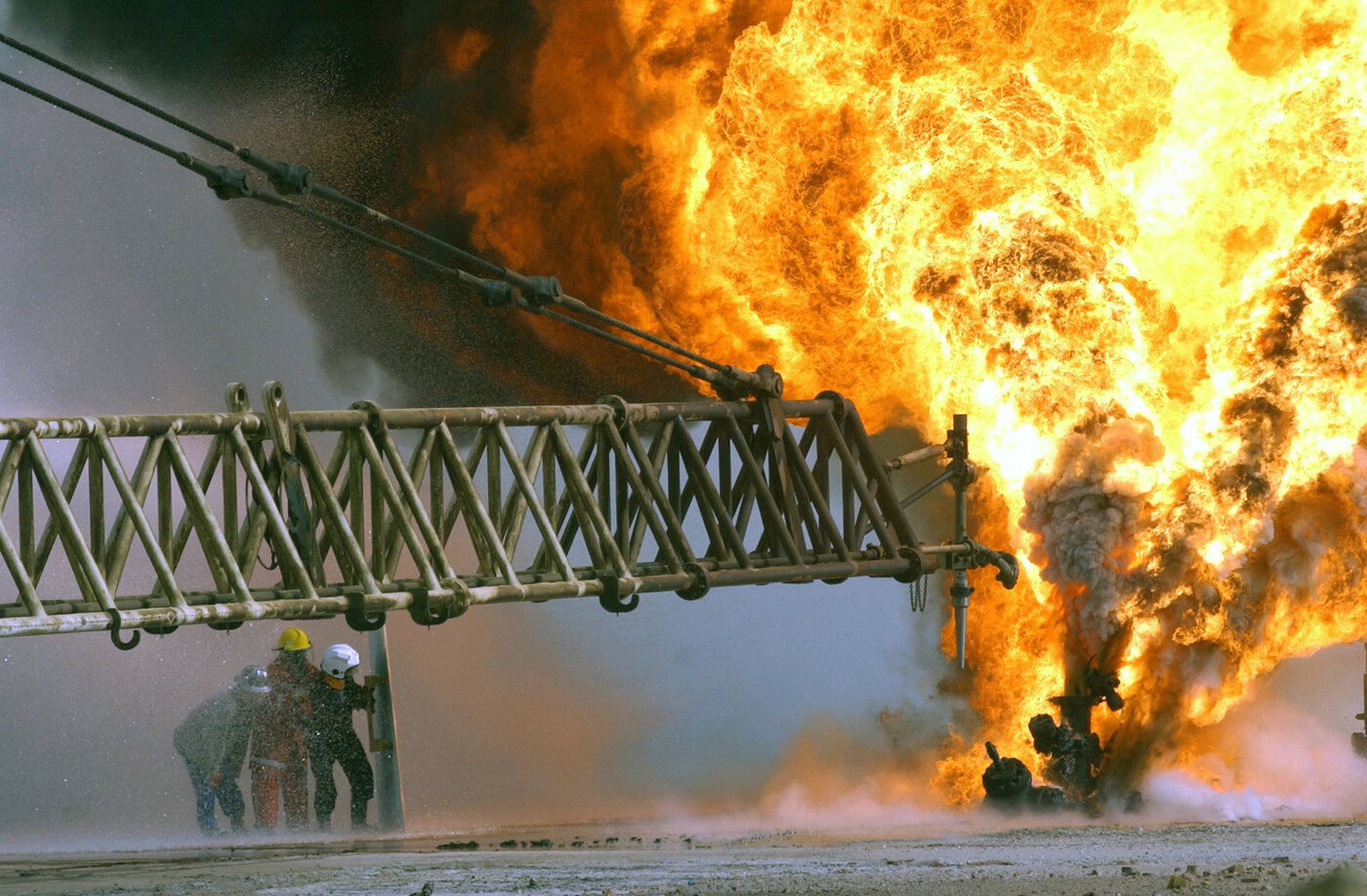
The numbers are staggering. Before the war began on February 28, Iraq was producing approximately 4.11 million barrels per day. Its nameplate capacity — the theoretical maximum its fields could sustain — stood at roughly 5.5 million barrels per day. Within the first week of hostilities, Iraq was forced to cut 1.5 million barrels per day from production. The reason was simple and devastating: there was nowhere to send it.
Iraq’s export infrastructure is overwhelmingly oriented toward the Persian Gulf. Of its total crude exports, 3.3 million barrels per day were loaded from terminals near Basra and shipped through the Strait of Hormuz. When tanker traffic through Hormuz dropped to near zero following Iranian retaliatory strikes on Gulf shipping lanes and the deployment of naval mines, Iraq’s primary export artery was severed.
The Rumaila oilfield — the nation’s largest, accounting for 36 percent of total Iraqi output — was among the first to shut down. Rumaila’s production had nowhere to go. Storage facilities at Basra reached full capacity within days. No tankers were loading. The field’s operators, led by BP in a technical service contract with Iraq’s South Oil Company, began the complex and costly process of shutting in wells. Restarting them will take weeks, possibly months, depending on reservoir conditions and the duration of the closure.
Insurance costs for any vessels attempting to transit the Gulf surged by approximately 200 percent, according to Lloyd’s of London market data reported by Bloomberg. Even if tankers were willing to make the run, the economics became prohibitive. War-risk premiums alone added millions of dollars per voyage. VLCC day rates hit an all-time record of $423,736, reflecting both the danger premium and the sudden scarcity of available tonnage as vessels fled the Gulf theater.
Iraq does have a northern export route — the Kirkuk-Ceyhan pipeline running through Turkey to the Mediterranean. But this line has been intermittently operational for years due to disputes between Baghdad, the Kurdistan Regional Government, and Ankara. Even at full capacity, it can handle only about 500,000 barrels per day, a fraction of what the southern terminals were moving. And the pipeline’s route through Kurdistan makes it vulnerable to the very strikes now hitting that region.
The fiscal impact on Baghdad is catastrophic. Oil revenues account for more than 90 percent of Iraq’s government income. The International Monetary Fund estimated Iraq’s break-even oil price at approximately $70 per barrel for the 2026 fiscal year. While Brent crude has surged above $90, Iraq cannot sell the oil it is not producing. Revenue is collapsing even as global prices rise — a cruel paradox that underscores the difference between price and access.
Reuters reported that Iraq’s finance ministry began emergency consultations with the Central Bank of Iraq within 72 hours of the Hormuz closure to discuss drawdowns from foreign reserves, estimated at $112 billion before the war. Those reserves provide a buffer, but not an indefinite one. If the blockage persists beyond two months, Iraq will face hard choices about public sector salaries, fuel subsidies, and the payments that keep the country’s fragile social contract intact.
The downstream effects on Asia are equally severe. Seventy-two percent of Iraq’s crude exports go to Asian buyers. China alone was importing 1.1 million barrels per day of Iraqi crude. India was taking 900,000 barrels per day. Those contracts are now force-majeured or suspended. The loss of Iraqi supply, combined with the simultaneous loss of Iranian and Kuwaiti barrels, has created the most acute energy supply shock since the 1973 Arab oil embargo.
Who Controls Iraq’s Military — Baghdad or Tehran?
The honest answer is: it depends on which unit you are asking about. Iraq’s security architecture is a layered, contradictory system in which formal command structures coexist with parallel chains of authority that run through Tehran. Understanding this dual structure is essential to understanding why Iraq cannot enforce its own neutrality.
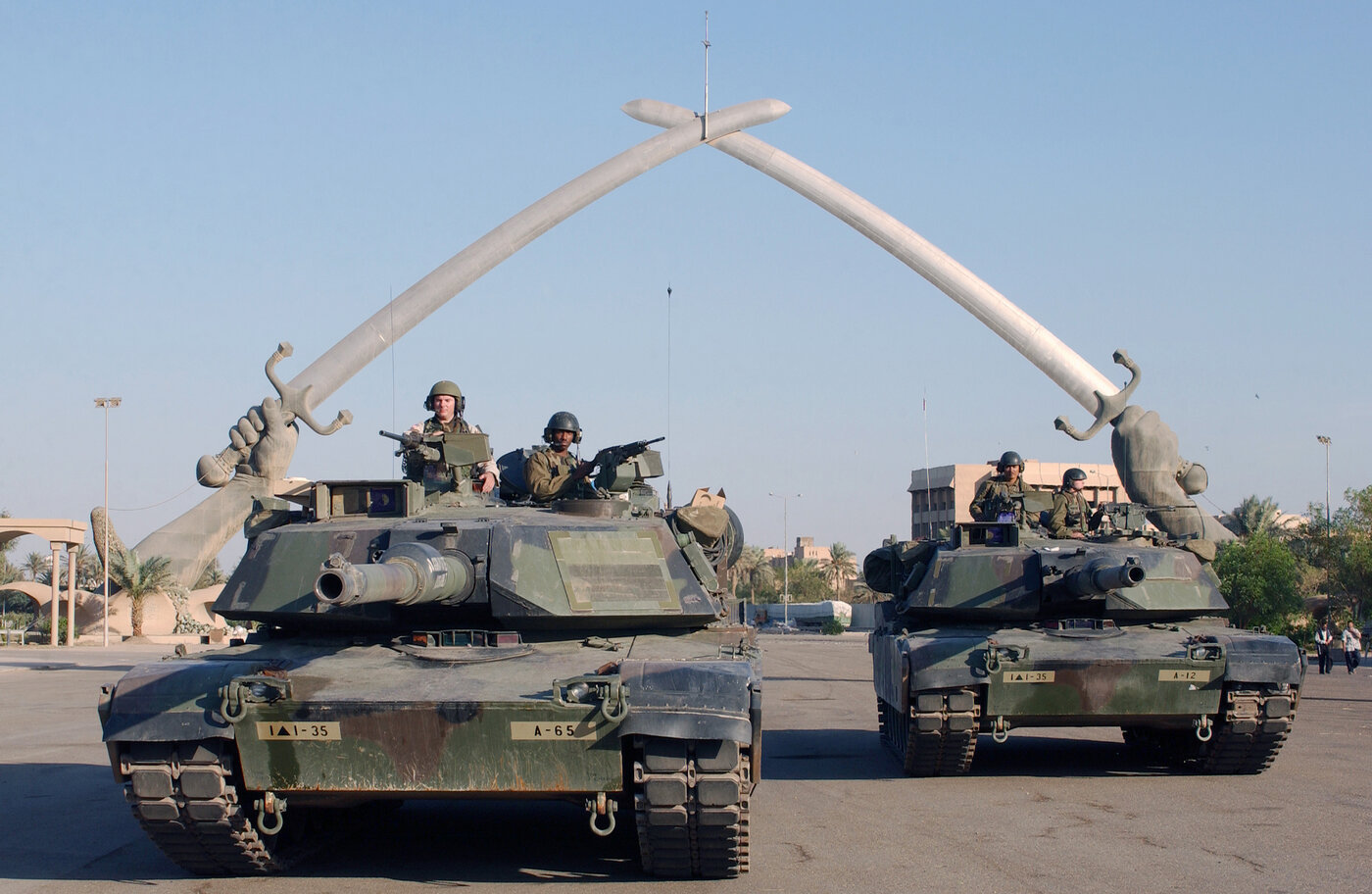
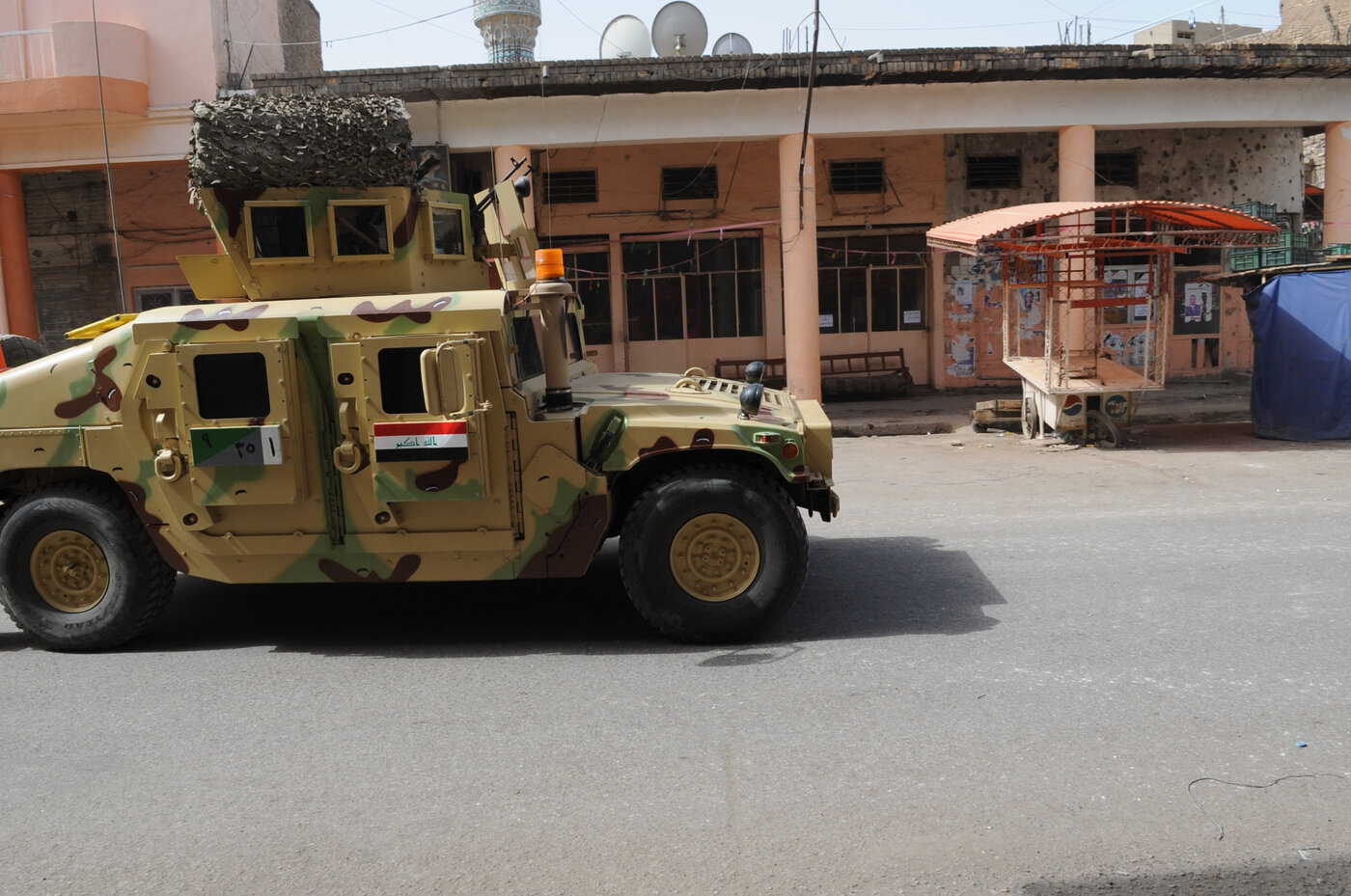
The Iraqi Armed Forces — the regular army, air force, and navy — nominally report to the prime minister through the Ministry of Defense. These forces were rebuilt after 2003 with American training, equipment, and doctrine. They are the units that Western governments recognize and support. In conventional terms, they are reasonably capable. Iraq’s army fields approximately 200,000 active personnel. It possesses American-supplied M1A1 Abrams tanks, F-16 fighter jets, and a range of armored vehicles.
But alongside this conventional force sits the Popular Mobilization Forces, known in Arabic as al-Hashd al-Shaabi. The PMF was formally established in 2014 as an umbrella for predominantly Shia militias mobilized to fight the Islamic State. After ISIS’s territorial defeat, the PMF was not disbanded. It was institutionalized. A 2016 law incorporated the PMF into Iraq’s security forces, granting its fighters government salaries, pensions, and — critically — legal immunity. The PMF’s total strength is estimated at 150,000 to 200,000 fighters, making it comparable in size to the regular army.
The most powerful PMF factions do not answer to Baghdad in any meaningful operational sense. Kataib Hezbollah, designated a terrorist organization by the United States, maintains direct communication channels with Iran’s Islamic Revolutionary Guard Corps. Asaib Ahl al-Haq, led by Qais al-Khazali, has thousands of fighters and a political party with seats in parliament. Harakat Hezbollah al-Nujaba has deployed fighters to Syria in support of the Assad regime at Iran’s direction. Saraya Awliya al-Dam, a newer faction, has claimed responsibility for attacks on American positions.
These groups collectively constitute what US Central Command has termed the “Islamic Resistance in Iraq” — a branding exercise that allows the factions to claim attacks under a unified banner while maintaining plausible deniability for their individual organizations. Since the war began, the Islamic Resistance in Iraq has claimed at least 23 drone strikes on American assets in Erbil alone.
Iraq’s military is not one army with one chain of command. It is two armies with two loyalties sharing one country. The prime minister commands one of them. Tehran commands the other.
— Former senior US military adviser to Iraqi security forces, speaking to the Brookings Institution, March 2026
The implications for Iraq’s stated neutrality are obvious. Al-Sudani can order the regular army to stand down. He cannot order Kataib Hezbollah to do the same. When Iran’s proxy network decides to launch rockets at American bases or Saudi-linked targets, the Iraqi government can condemn the attacks. It cannot prevent them. This is not a failure of political will. It is a structural incapacity built into Iraq’s post-2003 security architecture.
The Brookings Institution’s Iraq analyst Ranj Alaaldin has described this arrangement as “shared sovereignty” — a polite term for a situation in which the Iraqi state exercises authority only where Iran’s proxies choose to let it. In peacetime, this arrangement produces a tense but manageable equilibrium. In wartime, it makes Iraq a live firing range where the government watches from the sidelines.
For Saudi Arabia’s military planners, this means that Iraqi government assurances about controlling its territory carry limited weight. The forces most likely to threaten Saudi interests — missile-armed, drone-capable, ideologically motivated militias — are precisely the forces that Baghdad does not control.
Why Has Kurdistan Become the War’s Most Dangerous Battleground?
The Kurdistan Region of Iraq has absorbed more kinetic violence from the Iran war than any other part of the country. More than 110 missile and drone attacks have struck Kurdish territory since hostilities began. The attacks come from two directions and serve two different strategic purposes, making Kurdistan a uniquely dangerous crossfire zone.
From the Iranian side, the IRGC and its successor command structures have launched ballistic missiles and suicide drones at targets in Erbil and Sulaymaniyah. Iran’s stated justification is the presence of Israeli intelligence operatives and Iranian Kurdish opposition groups in the Kurdistan Region. The real target in most cases is American military infrastructure. The US maintains significant assets at Erbil International Airport and the nearby Harir air base. These facilities have served as staging points for American operations in the region for more than two decades.
From the Iraqi interior, the Islamic Resistance in Iraq — the umbrella banner for Iranian-backed PMF factions — has launched its own drone campaign against American positions in Kurdistan. At least 23 drone strikes have been claimed against US assets in Erbil. These attacks use Iranian-designed one-way attack drones, variants of the Shahed and Ababil platforms that have become ubiquitous in conflicts from Ukraine to Yemen.
The Kurdistan Regional Government finds itself in an impossible position. It hosts American forces whose presence provides security guarantees and political weight that Erbil considers essential to its semi-autonomous status. But that same American presence makes Kurdistan a primary target for Iranian retaliation. President Barzani’s agreement with al-Sudani that Iraqi territory should not serve as a launchpad for attacks was directed partly at the PMF factions launching from Iraqi soil and partly at reassuring Tehran that Kurdistan itself was not an offensive platform.
The humanitarian toll is mounting. Civilian casualties from missile strikes on Erbil’s urban areas have been reported by the United Nations Assistance Mission for Iraq, though precise figures remain contested. Displacement is accelerating. The Kurdistan Region, which already hosts approximately one million internally displaced persons from the ISIS era, is now generating new displacement as residents flee areas near military installations.
The economic damage compounds Kurdistan’s vulnerability. The region’s independent oil sector, which once produced approximately 450,000 barrels per day, was already hobbled by a legal dispute with Baghdad and a shutdown of the Kirkuk-Ceyhan pipeline. The war has eliminated any prospect of restarting those exports in the near term. Kurdistan’s government, which depends on a combination of its own oil revenue and budget transfers from Baghdad, is facing a fiscal crisis within a fiscal crisis.
CSIS analyst Bilal Wahab has noted that Kurdistan’s security situation reveals the limits of Iraqi federalism under wartime stress. The Peshmerga — Kurdistan’s military forces — are capable light infantry, but they lack the air defense systems needed to counter Iranian ballistic missiles. Baghdad’s air defenses, such as they are, do not extend meaningful coverage to Kurdish territory. And the US Patriot batteries stationed in the region, while effective, cannot intercept every incoming threat in a sustained barrage environment.
For the broader war, Kurdistan’s exposure matters because it demonstrates that the conflict cannot be contained to the Iran-US axis. Every missile that hits Erbil risks killing Kurdish civilians, damaging civilian infrastructure, and deepening the fractures within Iraq that make the country ungovernable. Kurdistan’s leaders have privately communicated to Western diplomats that continued bombardment at this scale could force them to reconsider their hosting of American forces — a development that would fundamentally alter the military geometry of the entire conflict.
How Is Prime Minister al-Sudani Trying to Keep Iraq Neutral?
Mohammed Shia al-Sudani is attempting to navigate the most dangerous geopolitical crisis any Iraqi leader has faced since the 2003 American invasion. His strategy, such as it is, rests on three pillars: rhetorical neutrality, selective engagement with both sides, and a desperate appeal to Iraq’s economic indispensability as a reason for all parties to leave it alone.
The rhetorical component is the most visible. Al-Sudani’s repeated insistence that “Iraq will not be dragged into war” has become a mantra of his public communications. The phrase is calibrated to reassure multiple audiences simultaneously. It tells Washington that Iraq will not become an active belligerent against American forces. It tells Tehran that Iraq will not join the American-led coalition. It tells Iraq’s own fractured population that the government is working to keep the country out of the crossfire.
The selective engagement is more complex. Al-Sudani has maintained communication channels with both Washington and Tehran throughout the crisis. He dispatched envoys to Iran in the war’s first days, reportedly offering Iraqi mediation services and urging restraint. Simultaneously, he has avoided publicly condemning the American strikes that killed Khamenei, a diplomatic omission that infuriated Tehran’s hardliners but preserved Iraq’s relationship with the US.
The joint statement with Kurdistan’s President Barzani — affirming that Iraqi territory must not be used as a launching point for attacks — was a carefully constructed document. It allowed both leaders to signal opposition to militia attacks on American positions without explicitly naming the PMF factions responsible. The statement was widely interpreted in Baghdad as a message directed at Kataib Hezbollah and its allies, delivered in language oblique enough to avoid a direct confrontation.
Al-Sudani has also leaned on Iraq’s economic weight. As the holder of the world’s fifth-largest proven oil reserves, Iraq has argued — through diplomatic channels and in public statements — that destabilizing its oil production serves no one’s interests. This argument carries weight with Asian buyers, particularly China and India, who depend heavily on Iraqi crude. It carries less weight with the armed factions on both sides who view oil infrastructure as a tool of coercion rather than a reason for restraint.
The limits of al-Sudani’s approach are becoming apparent. He cannot control the PMF factions that continue launching attacks from Iraqi soil. He cannot prevent Iranian missiles from striking Iraqi territory. He cannot restart oil exports through a strait that is effectively closed. And he cannot maintain fiscal stability in a country where government revenue has collapsed.
Iraqi political analyst Sajad Jiyad, writing for the Century Foundation, has described al-Sudani’s position as “neutrality by incapacity” — a condition in which the government’s inability to project power in any direction is rebranded as a deliberate policy choice. The characterization is harsh but not inaccurate. Al-Sudani’s government is neutral in the same way a man standing in the middle of a highway is neutral about traffic. The preference is real. The capacity to enforce it is not.
The backchannel diplomacy between Saudi Arabia and Iran, which has reportedly used Iraqi intermediaries at several points, represents one of the few areas where al-Sudani’s balancing act has produced tangible results. Iraq’s relationships with both sides make it a plausible conduit for communications that neither Riyadh nor Tehran can conduct directly. Whether this diplomatic utility is enough to protect Iraq from the war’s worst consequences remains an open question.
What Does Iraq’s Collapse Mean for Saudi Arabia’s Northern Border?
Saudi Arabia shares 814 kilometres of border with Iraq. Much of it runs through the Arabian Desert — flat, sparsely populated terrain with limited surveillance infrastructure and a long history of smuggling, tribal movement, and militant infiltration. For most of the past decade, this border was a secondary concern for Saudi security planners, who focused their attention on the Yemeni frontier to the south and the maritime threat from Iran across the Gulf. The 2026 war has changed that calculus overnight.
The threat is not a conventional Iraqi military invasion. Iraq’s regular armed forces have neither the capability nor the intent to attack Saudi Arabia. The threat is asymmetric — the movement of Iranian-backed militia fighters, weapons systems, and drone platforms through Iraqi territory toward the Saudi border. It is precisely the kind of threat that Saudi Arabia’s expensive conventional military is least well-equipped to counter.
Consider the geography. The Iraqi-Saudi border runs from the Kuwaiti tripoint in the east to the Jordanian tripoint in the west. The eastern section passes near Basra province, where PMF factions maintain significant force concentrations. The central section traverses Anbar province, which has been a corridor for militant movement since the early days of the Iraq insurgency. The western section approaches areas where remnants of the Islamic State still conduct sporadic operations.
Saudi Arabia invested heavily in border security after the rise of ISIS in 2014. The Northern Border Barrier — a multi-layered system of fences, sensors, and surveillance towers — was constructed along much of the Iraqi frontier. But the barrier was designed to stop infiltration by small groups of fighters and smugglers. It was not designed to counter drone swarms, long-range rockets, or the kind of sophisticated standoff weapons that Iranian-backed militias now possess.
The Saudi air defense network, built around American Patriot and THAAD systems, provides coverage against ballistic missile threats. But the system’s effectiveness against low-flying cruise missiles and small drones — the weapons most likely to be launched from Iraqi territory — is uneven. The September 2019 attacks on the Abqaiq and Khurais oil facilities demonstrated that Saudi air defenses had significant gaps against low-altitude, terrain-following threats. Those gaps have been partially addressed but not eliminated.
The drone strike on the US Embassy in Riyadh on March 3, while claimed by the Houthis, raised immediate questions about potential launch points in southern Iraq. The forensic analysis of the attack is ongoing, but intelligence officials speaking to Reuters noted that the flight paths of certain incoming munitions were “consistent with a northern trajectory” — a diplomatic way of saying they may have originated from Iraqi territory rather than Yemen.
That threat materialized dramatically on 17 March when five drones and rockets struck the US Embassy compound in Baghdad’s Green Zone in what Iraqi security officials described as the most intense militia assault since the war began, with one drone penetrating the compound’s perimeter.
Crown Prince Mohammed bin Salman is acutely aware of the northern border threat. Saudi Arabia’s shift from cautious neutrality to an anti-Iran posture following the embassy attack was driven in part by the realization that maintaining distance from the conflict would not protect the Kingdom from its consequences. If Iranian-backed militias can strike the Saudi capital from Iraqi soil, neutrality offers no security benefit.
The military response has been visible. Saudi Arabia has redeployed ground forces toward the northern border, including units previously stationed in the southern provinces. National Guard units — traditionally responsible for internal security and border patrol — have been placed on heightened alert along the entire Iraqi frontier. The Royal Saudi Air Force has increased surveillance flights along the border zone, using both manned reconnaissance aircraft and MQ-9 Reaper drones.
But the fundamental problem remains. Saudi Arabia cannot secure a 814-kilometre border against asymmetric threats emanating from a country whose government does not control its own armed factions. The only lasting solution is either the defeat of the Iranian proxy network in Iraq — which would require a military campaign far beyond anything currently contemplated — or a diplomatic settlement that constrains militia activity. Neither outcome is imminent.
The Strategic Exposure Matrix
Assessing Iraq’s risk to Saudi Arabia requires moving beyond narrative analysis to a structured evaluation of specific threat vectors. The following matrix scores each dimension of Iraqi instability on a scale of 1 (low exposure) to 10 (critical exposure), based on current conditions as of early March 2026. The aggregate score provides a composite measure of Saudi Arabia’s strategic vulnerability to Iraqi fragmentation.
| Threat Vector | Description | Severity (1-10) | Likelihood (1-10) | Saudi Exposure Score |
|---|---|---|---|---|
| Militia Cross-Border Attack | Iranian-backed PMF factions launch drones or rockets from Iraqi territory toward Saudi targets | 9 | 7 | 63 |
| Oil Export Collapse Contagion | Iraq’s production shutdown deepens OPEC+ coordination problems, complicating Saudi output strategy | 7 | 9 | 63 |
| Refugee and Displacement Flows | Mass displacement from southern Iraq and Kurdistan pushes populations toward Saudi and Kuwaiti borders | 6 | 6 | 36 |
| Weapons Proliferation | Advanced Iranian weapons systems (anti-ship missiles, drones, MANPADs) leak from Iraqi militia stockpiles into broader regional black market | 8 | 7 | 56 |
| State Collapse / Partition | Iraq fragments into autonomous zones, creating ungoverned spaces on Saudi border | 10 | 4 | 40 |
| ISIS Resurgence | Security vacuum from militia redeployment to anti-US operations allows Islamic State remnants to reconstitute in Anbar province | 8 | 5 | 40 |
| Diplomatic Spillover | Iraq’s inability to maintain neutrality forces Saudi Arabia into costly diplomatic or military commitments | 6 | 8 | 48 |
| Water and Environmental Crisis | War damage to Shatt al-Arab waterway and Basra infrastructure triggers humanitarian emergency with cross-border implications | 5 | 6 | 30 |
Reading the Matrix
The exposure score is calculated by multiplying severity by likelihood, producing a range of 1 to 100. Scores above 50 indicate critical exposure requiring active mitigation. Scores between 30 and 50 indicate significant exposure requiring monitoring and contingency planning. Scores below 30 indicate manageable risk.
Two threat vectors score at 63 — the maximum in this assessment. Militia cross-border attack scores highest on severity because a successful strike on Saudi infrastructure from Iraqi territory would fundamentally alter the war’s scope and potentially trigger direct Saudi military action in Iraq. The likelihood score of 7 reflects the fact that PMF factions have the capability and motivation but may be constrained by residual Iranian command-and-control discipline and by the deterrent effect of American air power in the region.
Oil export collapse contagion scores equally high because it is already happening. Iraq’s 1.5-million-barrel production cut removes supply from a market that was already tight before the war. Saudi Arabia faces a strategic dilemma: it can increase its own production to compensate, earning windfall revenue but potentially undermining the OPEC+ framework it has spent years building. Or it can maintain discipline, allowing prices to spike further and risking political backlash from consuming nations — including the United States.
The weapons proliferation vector at 56 deserves particular attention. Iran has spent years transferring advanced weapons systems to its Iraqi proxies, including precision-guided munitions, medium-range ballistic missiles, and sophisticated drone platforms. In the chaos of war, command-and-control over these systems weakens. The risk that advanced weapons leak to non-state actors beyond Iran’s proxy network — including groups hostile to Saudi Arabia — is substantial and growing.
The state collapse scenario, while scoring lower on likelihood at 4, carries the highest possible severity rating. A partitioned Iraq would mean that the Saudi border faces not a weak central government but potentially an Iranian-dominated statelet in the south — a permanent forward operating base for Tehran’s regional ambitions, situated directly adjacent to Saudi territory and Kuwait.
The Contrarian Case — Why Iraq’s Fragmentation May Actually Serve Saudi Interests
The prevailing analysis frames Iraqi instability as a categorical threat to Saudi Arabia. There is a dissenting view, held by a minority of regional strategists, that argues the opposite: a fragmented Iraq may paradoxically advance Saudi strategic interests in the medium term. The argument is uncomfortable but demands examination.
The core logic runs as follows. A unified Iraq under heavy Iranian influence is a worse outcome for Riyadh than a fragmented Iraq in which Iranian influence is diluted across competing power centers. If Iraq holds together as a single state, its government will inevitably be dominated by the Shia majority and its associated political-militia complex. That means a unified Iraq will, in most scenarios, be an Iranian-leaning state on Saudi Arabia’s border. Fragmentation disrupts this dynamic.
Consider the three principal fragments. A Sunni-dominated western region centered on Anbar province would be a natural partner for Saudi Arabia, sharing sectarian, tribal, and economic ties with the Kingdom’s northern population. Saudi Arabia has historically maintained relationships with Sunni tribal leaders in western Iraq, relationships that date back decades and intensified during the anti-ISIS campaign. A semi-autonomous Sunni region would likely look to Riyadh rather than Tehran for patronage, investment, and security support.
An independent or highly autonomous Kurdistan would be broadly pro-Western and economically oriented toward Turkey and the Mediterranean rather than the Persian Gulf. Kurdistan has no sectarian alignment with Iran’s Shia project. Its political leadership has maintained warm relations with Riyadh. An independent Kurdistan, while not a Saudi client state, would be a net positive for Saudi regional interests by further weakening the territorial coherence of Iranian influence.
Only the Shia-dominated south — encompassing Basra, the shrine cities of Najaf and Karbala, and Baghdad itself — would remain firmly in Iran’s orbit. But a rump southern Iraqi state would command fewer resources, less territory, and less strategic depth than a unified Iraq under similar Iranian influence.
Michael Knights of the Washington Institute for Near East Policy has noted that “the decentralization of Iraqi security forces, while problematic in the short term, creates firebreaks against the unified projection of Iranian power through Iraqi state institutions.” This observation supports the contrarian argument without endorsing it — fragmentation imposes costs on Iran by forcing it to manage multiple relationships rather than controlling a single central government.
There is historical precedent for this logic. Saudi Arabia’s own regional strategy has frequently favored divided neighbors over unified ones. The Kingdom was comfortable with a weak, fragmented Yemen for decades before the Houthi takeover of Sanaa disrupted the equilibrium. The preference for manageable fragmentation over threatening unity is deeply embedded in Saudi strategic culture.
The counterarguments are equally serious. Fragmentation creates ungoverned spaces. It displaces populations. It proliferates weapons. And it is unpredictable. The same chaos that dilutes Iranian influence also creates opportunities for non-state actors — including the Islamic State — to reconstitute in the vacuum. Saudi Arabia’s experience with ISIS demonstrated that ungoverned spaces in Iraq generate threats that do not respect borders.
The contrarian case also assumes that Saudi Arabia has the capacity and willingness to invest in building relationships with Sunni Iraqi entities — a policy that would require sustained diplomatic engagement, financial commitments, and a tolerance for the messy, factional politics of western Iraq. Whether Riyadh’s post-war strategic planners are prepared for that level of engagement remains to be seen.
The honest assessment is that fragmentation is a double-edged phenomenon. It reduces certain threats while amplifying others. The net effect depends on variables — the duration of the war, the disposition of American forces, the degree of Iranian proxy control, the behavior of Turkey — that are currently unknowable. Framing Iraqi fragmentation as an opportunity requires acknowledging the very real risks that accompany it.
Will Iraq Survive as a Unified State If the War Continues?
Iraq has survived as a unified state through the Iran-Iraq War, the Gulf War, the 2003 invasion, the ISIS onslaught, and two decades of chronic governance failure. Its resilience should not be underestimated. But neither should the severity of the current challenge, which is qualitatively different from previous crises in ways that make the survival of the unitary state genuinely uncertain.
The key difference is simultaneity. Previous crises struck one dimension of Iraqi statehood at a time. The Iran-Iraq War was devastating but did not challenge the state’s internal cohesion. The ISIS crisis threatened territorial integrity but did not collapse the economy. The 2003 invasion destroyed the government but left the country’s geographic coherence intact under occupation authority. The 2026 war attacks every pillar simultaneously: economic viability, territorial control, military cohesion, political legitimacy, and diplomatic sovereignty.
The economic dimension is the most immediately dangerous. A state that cannot pay its employees does not remain a state for long. Iraq’s public sector employs approximately 4.5 million people, including security forces. These salaries, pensions, and social transfers constitute the primary mechanism through which the central government maintains loyalty and legitimacy across the country’s diverse population. When oil revenue collapses, the ability to make these payments collapses with it.
Iraq’s foreign reserves provide a temporary buffer. But reserves are finite, and the political pressure to maintain spending is infinite. If al-Sudani’s government is forced to cut salaries or delay payments, the social contract frays. In the Sunni-majority provinces, where grievances against the Shia-dominated central government already run deep, fiscal austerity could trigger the kind of popular unrest that preceded ISIS’s takeover of Mosul in 2014.
The territorial dimension is equally precarious. Kurdistan already operates as a semi-independent entity with its own military, foreign policy, and — when the pipeline is working — its own oil exports. The war has further loosened Baghdad’s practical authority over the Kurdish region by demonstrating that the central government cannot protect Kurdistan from Iranian strikes or from PMF provocations. Each missile that hits Erbil without an effective Iraqi government response weakens the case for Kurdish participation in the Iraqi state.
In the south, the PMF’s dominance creates a different kind of fragmentation — not secession but institutional capture. Southern Iraq’s governance is increasingly conducted through militia-linked political parties, militia-controlled economic networks, and militia-administered social services. The central government’s writ runs through these provinces on paper. In practice, power flows through channels that Tehran influences more than Baghdad does.
The International Crisis Group warned in a February 2026 pre-war assessment that Iraq’s political system was “one major external shock away from a legitimacy crisis that could accelerate centrifugal pressures beyond the system’s capacity to manage.” That external shock has now arrived. The question is no longer whether Iraq faces centrifugal pressures but whether any force — internal or external — has the capacity and the interest to hold it together.
The United States, historically the primary external guarantor of Iraqi unity, is consumed by the war with Iran and has limited bandwidth for Iraqi state-building. Iran, the other major external influence, benefits from a weak central government and has little incentive to strengthen it. Turkey watches Kurdistan’s potential independence with alarm but lacks influence over Baghdad. And Saudi Arabia, for all its interest in Iraqi stability, has not historically invested the diplomatic capital necessary to influence Iraq’s internal trajectory.
Iraq will probably not formally partition during this war. The institutional inertia of statehood, combined with the absence of any organized secessionist movement in the Arab provinces, makes formal dissolution unlikely in the near term. But the de facto fragmentation — the widening gap between the state’s nominal sovereignty and its actual authority — is accelerating. And for Saudi Arabia’s purposes, a de facto fragmented Iraq is nearly as problematic as a formally partitioned one.
How Are China and India Scrambling to Replace Lost Iraqi Oil?
China and India, the two largest consumers of Iraqi crude, face an energy emergency that dwarfs anything in their modern economic histories. Together, they were importing approximately 2 million barrels per day from Iraq — 1.1 million to China, 900,000 to India. Those barrels have effectively vanished from the market. The scramble to replace them is reshaping global energy trade flows in real time.
China’s response has been characteristically aggressive. State-owned oil companies — Sinopec, CNPC, and CNOOC — have activated emergency procurement protocols, according to reporting by Bloomberg. Chinese buyers have approached every available alternative supplier: Saudi Arabia, the UAE, Brazil, West Africa, and Russia. But available supply is limited. The war has simultaneously removed Iranian, Iraqi, and Kuwaiti barrels from the market. Kuwait shut its oil production entirely after Iranian retaliatory strikes hit port infrastructure. The total supply loss from the Gulf exceeds 6 million barrels per day.
Beijing has drawn down its Strategic Petroleum Reserve, estimated at approximately 950 million barrels before the crisis. Chinese state media reported “routine adjustments” to reserve levels — language that confirms withdrawals while downplaying their emergency nature. Analysts at Energy Aspects estimate that China’s SPR drawdowns have averaged 1.5 million barrels per day since the war began, a rate that would deplete meaningful reserve capacity within months if sustained.
India’s situation is even more precarious. With strategic reserves of only approximately 39 days of import cover, India lacks China’s buffer capacity. The Modi government has imposed emergency rationing measures on diesel and cooking fuel. Indian refineries, many of which are configured specifically for the medium-sour crude grades produced by Iraq and the Gulf states, cannot easily switch to alternative grades without expensive and time-consuming modifications.
The pricing implications are extraordinary. Brent crude has surged above $90 per barrel, and some forward curves are pricing contracts above $100 for summer 2026 delivery. Asian spot premiums for available cargoes have reached historic levels. The premium for immediate-delivery barrels over dated Brent — a measure of physical market tightness — has blown out to levels not seen since the 1990 Iraqi invasion of Kuwait.
Both nations have explored unconventional supply routes. China has reportedly increased imports of Russian crude via the Power of Siberia pipeline and the Eastern Siberia-Pacific Ocean pipeline, pushing volumes above contracted levels. India has ramped up purchases from Russia’s Sakhalin and Varandey terminals, though logistical constraints limit how much additional Russian crude can reach Indian refineries in the near term.
The competition for non-Gulf barrels is also intensifying with European buyers, who face their own supply anxieties even though Europe’s direct dependence on Gulf crude is lower than Asia’s. The result is a global bidding war for every available cargo, pushing freight rates, insurance costs, and commodity prices to levels that threaten economic stability in importing nations.
For Iraq, the Asian scramble underscores a painful irony. Iraq’s oil is desperately needed by the world’s largest consumers. The demand exists. The reserves exist. The production capacity exists. What does not exist is a way to move the oil from southern Iraq to the ships that would carry it to Asia. The Strait of Hormuz blockage has turned Iraq’s greatest asset into a stranded resource, and every day the blockage continues costs Baghdad approximately $300 million in lost revenue at current prices.
The OPEC Domino Effect — What Happens When Iraq’s 4 Million Barrels Disappear
The OPEC+ framework was already under strain before the first bomb fell on Iran. The cartel’s April 2026 agreement to increase output by 206,000 barrels per day — a modest easing of the production cuts that had been in place since late 2022 — was supposed to signal confidence in market stability and supply management. The war has made that agreement irrelevant.
Iraq’s 4.11 million barrels per day of pre-war production represented approximately 12 percent of total OPEC output. Its forced production cut of 1.5 million barrels per day, combined with Kuwait’s complete shutdown and Iran’s war-related disruptions, has removed an estimated 6 million or more barrels per day from the global market. This is not a supply adjustment. It is a supply catastrophe.
The OPEC+ mechanism was designed to manage marginal changes in supply and demand — cuts of a few hundred thousand barrels here, increases of a few hundred thousand there. It was not designed to absorb the simultaneous loss of three member states’ production. The framework has no protocol for wartime disruptions at this scale, and the political dynamics within the cartel are fracturing along the same fault lines as the war itself.
Saudi Arabia, as OPEC’s de facto leader, faces a defining choice. The Kingdom holds approximately 2 to 3 million barrels per day of spare production capacity — the largest cushion in the cartel. Deploying that capacity would ease global prices, earn Riyadh enormous goodwill from consuming nations (particularly the United States), and generate record revenue at current price levels. But it would also signal the effective collapse of OPEC+ output discipline, undermine the cartel’s long-term pricing power, and potentially antagonize Russia, which benefits from elevated prices to fund its own war in Ukraine.
The UAE, which holds the second-largest spare capacity in OPEC at approximately 1 million barrels per day, is pushing for the right to increase production. Abu Dhabi has invested heavily in expanding its production capacity precisely for moments like this, and Emirati officials have privately argued that failing to deploy spare capacity during a genuine supply crisis would undermine OPEC’s credibility with consuming nations permanently.
OPEC was built to manage markets. It was not built to manage wars. When three of your members cannot produce at the same time, the organizational architecture ceases to function as designed.
— Helima Croft, head of global commodity strategy, RBC Capital Markets, March 2026
The smaller OPEC members — Algeria, Nigeria, Libya, Congo — lack the spare capacity to make a meaningful difference. Their combined potential increase is measured in the tens of thousands of barrels per day, a rounding error against a 6-million-barrel deficit. The non-OPEC members of OPEC+, particularly Russia and Kazakhstan, have their own constraints. Russian production is already at high levels due to war financing needs. Kazakh output is limited by pipeline capacity through Russia.
The domino effects extend beyond supply and price. OPEC’s credibility as a market-management institution is at stake. If the cartel cannot coordinate a response to the largest supply disruption in its history, consuming nations will accelerate the energy transition not just for climate reasons but for security reasons. The lesson of 2026, for importers, is that dependence on Gulf oil is an existential vulnerability. That lesson will drive policy for decades, regardless of how the current crisis resolves.
For Iraq specifically, the OPEC dynamics create an additional problem. When the war ends — whenever that may be — Iraq will need to restart production and reclaim its market share. But if Saudi Arabia and the UAE have filled the gap by then, Iraq’s re-entry into the market will create a surplus that depresses prices. Baghdad will face a choice between pumping at full capacity into a weak market or accepting production quotas that limit its revenue recovery. Neither option supports the massive reconstruction spending that post-war Iraq will require.
The April 2026 OPEC+ increase of 206,000 barrels per day now looks like a footnote — a decision made in a world that no longer exists. The cartel’s next moves will be determined not by market models but by the war’s trajectory, and that trajectory is beyond anyone’s control, including OPEC’s most powerful members.
Frequently Asked Questions
Has Iraq officially declared neutrality in the Iran war?
Iraq has not issued a formal declaration of neutrality in the legal sense. Prime Minister al-Sudani has repeatedly stated that Iraq will not be dragged into the conflict, and he issued a joint statement with Kurdistan President Barzani that Iraqi territory should not serve as a launchpad for attacks. However, Iranian-backed militias operating from Iraqi soil continue to strike American targets, undermining Baghdad’s claims of non-involvement.
How much of Iraq’s oil revenue has been lost since the war began?
Iraq was earning approximately $300 million per day in oil revenue before the war, based on pre-conflict production levels and pricing. The forced shutdown of 1.5 million barrels per day of production and the complete halt of exports through the Hormuz Strait have cut this revenue to a fraction of pre-war levels. The exact loss depends on how much crude Iraq can move through the northern Kirkuk-Ceyhan pipeline, but total lost revenue is estimated at over $2 billion in the first week alone.
Could Iranian-backed militias in Iraq launch attacks on Saudi Arabia?
The capability exists. Iranian-backed PMF factions, including Kataib Hezbollah and Asaib Ahl al-Haq, possess drone and rocket systems with ranges sufficient to reach Saudi territory from southern Iraq. Whether they would do so depends on Iranian strategic calculations and the degree of command-and-control Tehran maintains over these groups during wartime. The risk is elevated and growing as the conflict intensifies.
What is the Kirkuk-Ceyhan pipeline and can it replace lost Hormuz exports?
The Kirkuk-Ceyhan pipeline runs from northern Iraq through Turkey to the Mediterranean port of Ceyhan. At maximum capacity it can transport approximately 500,000 barrels per day. This is a fraction of the 3.3 million barrels per day that was flowing through the Gulf export terminals. The pipeline has also been subject to intermittent shutdowns due to disputes between Baghdad, the Kurdistan Regional Government, and Ankara, making it an unreliable alternative even at full capacity.
Is there a risk that ISIS could exploit the chaos in Iraq?
Security analysts at CSIS and the International Crisis Group have identified ISIS reconstitution as a material risk during the current conflict. The redeployment of PMF forces from counter-ISIS duties in Anbar and Diyala provinces to anti-American operations creates security vacuums that Islamic State remnants could exploit. ISIS sleeper cells remain active in western and central Iraq, and the group’s operational cadence has increased since the war began, according to Iraqi intelligence reporting cited by Reuters.
How does Iraq’s crisis affect global oil prices?
The removal of Iraqi supply from global markets, combined with the loss of Iranian and Kuwaiti production, has contributed to Brent crude surging above $90 per barrel. Iraq’s 4.11 million barrels per day of pre-war production represented roughly 4 percent of global supply. The simultaneous loss of multiple Gulf producers has created the most severe supply shock since the 1973 embargo, with prices expected to remain elevated as long as the Strait of Hormuz remains effectively closed to commercial tanker traffic.
What role is Iraq playing in Saudi-Iran backchannel diplomacy?
Iraq has historically served as a conduit for Saudi-Iranian communications, and this role has reportedly continued during the current conflict. Al-Sudani’s government maintains relationships with both Washington and Tehran that make it a plausible intermediary. Iraqi officials have been involved in passing messages between Riyadh and Tehran, though the substance and progress of these communications remain closely guarded. Iraq’s utility as a diplomatic channel is one of the few assets protecting it from the war’s worst consequences.