
RIYADH — Ukraine will send its first groups of military counter-drone experts to Saudi Arabia and other Gulf states next week, President Volodymyr Zelenskyy announced on Saturday, in a move that could reshape the air defense equation across the Persian Gulf as Iranian Shahed drones continue to strike critical infrastructure from Riyadh to Bahrain. The deployment follows a direct phone call between Zelenskyy and Saudi Crown Prince Mohammed bin Salman on March 7, during which the Ukrainian leader offered Kyiv’s hard-won expertise in countering the same Iranian-made drones that have battered Ukrainian cities since 2022.
The announcement marks an extraordinary pivot in the global arms landscape. A country fighting its own war of survival is now exporting its most valuable wartime innovation — low-cost drone interception — to the richest nations on earth. For Saudi Arabia, which has spent tens of billions of dollars on American and European air defense systems, the prospect of Ukrainian interceptor drones costing as little as $1,000 each offers a potential solution to what military analysts describe as the most expensive air defense crisis in history.
Table of Contents
- What Did Zelenskyy and MBS Discuss on the Phone Call?
- Ukraine Deploys Counter-Drone Teams Across the Gulf
- Why Are Iranian Shahed Drones So Difficult to Stop?
- What Makes Ukraine the World Leader in Counter-Drone Warfare?
- The Interceptor Drones Gulf States Want to Buy
- How Much Does It Cost to Shoot Down a Shahed?
- The Wartime Export Ban Complicating the Deal
- Pentagon and Gulf States Explore Joint Procurement
- What Ukraine Gets in Return
- Frequently Asked Questions
What Did Zelenskyy and MBS Discuss on the Phone Call?
Ukrainian President Zelenskyy spoke with Crown Prince Mohammed bin Salman on Saturday, March 7, to discuss what the Ukrainian leader described as “the security situation in the Middle East and the Gulf region — the existing challenges and countering threats from the Iranian regime,” according to a post by Zelenskyy on X. The call represented the most direct engagement between Kyiv and Riyadh since the Iran war began on February 28.
Zelenskyy offered Ukraine’s counter-drone capabilities to the Kingdom during the conversation, telling MBS that “Ukrainians have been fighting against Shahed drones for years now, and everyone recognises that no other country in the world has this kind of experience. We are ready to help,” Al Jazeera reported. The Saudi side acknowledged the offer but did not immediately comment publicly on whether the Kingdom had accepted, according to two European officials briefed on the call.
The Zelenskyy-MBS conversation was one of at least seven calls the Ukrainian president made to Gulf leaders within a 48-hour window. Zelenskyy confirmed he also spoke with the leaders of the United Arab Emirates, Qatar, Bahrain, Jordan, and Kuwait, offering similar counter-drone assistance to each, Bloomberg reported on March 7. The coordinated diplomatic push underscored Kyiv’s determination to position Ukraine as an indispensable partner in the Gulf’s most pressing security crisis.
Saudi Arabia has been fighting a three-front war since Iranian strikes began targeting the Kingdom’s military installations, oil infrastructure, and population centers. The Crown Prince’s willingness to take Zelenskyy’s call — a leader with whom Riyadh has maintained a careful diplomatic distance since Russia’s 2022 invasion of Ukraine — signaled the severity of the drone threat facing the Kingdom.
The Middle East briefing 3,000+ readers start their day with.
One email. Every weekday morning. Free.
Ukraine Deploys Counter-Drone Teams Across the Gulf
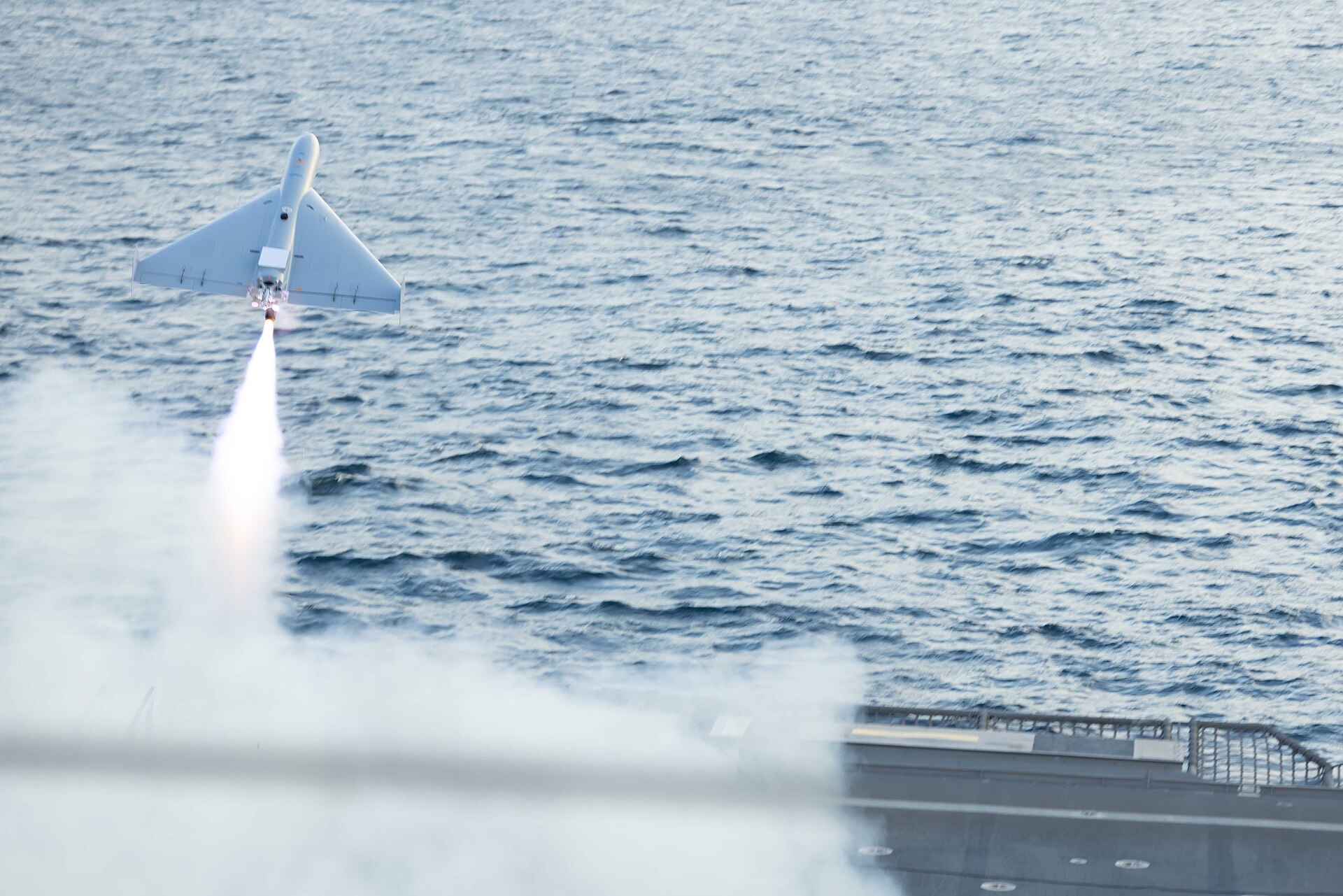
Zelenskyy announced on March 8 that Ukraine would dispatch its first group of military specialists to the Middle East the following week, confirming that the offer had moved beyond diplomacy into operational planning. “They are going with the capabilities to assist right away,” Zelenskyy stated, according to Ukraine Today.
The deployment will include multiple teams of Ukrainian counter-drone specialists with direct operational experience intercepting Shahed-type drones in combat conditions, according to three people familiar with the plans. The Ukrainian teams will join British RAF Typhoon and F-35 pilots already shooting down Iranian drones over Gulf airspace. The teams will advise local defense forces on detection, tracking, and interception techniques that Ukraine developed and refined over four years of defending against Russian drone barrages, The Hill reported on March 8.
Britain has already deployed counter-drone specialists trained alongside Ukrainian forces to the Middle East, establishing a precedent for the knowledge transfer now being offered directly by Kyiv. Washington has complemented these efforts by deploying 10,000 AI-powered Merops interceptor drones developed by the Eric Schmidt-backed Project Eagle, fielding an American counter-drone solution alongside Ukrainian expertise, PBS News reported. The UK teams arrived in the Gulf within days of the first Iranian drone strikes on March 1, according to the British Ministry of Defence.
The Ukrainian experts are expected to deploy to Saudi Arabia, the UAE, Bahrain, Qatar, and Kuwait, though the exact locations remain classified for operational security reasons, according to a senior Ukrainian defense official speaking to CNN on condition of anonymity. The teams will work alongside existing air defense units rather than operating independently, the official added.
Why Are Iranian Shahed Drones So Difficult to Stop?
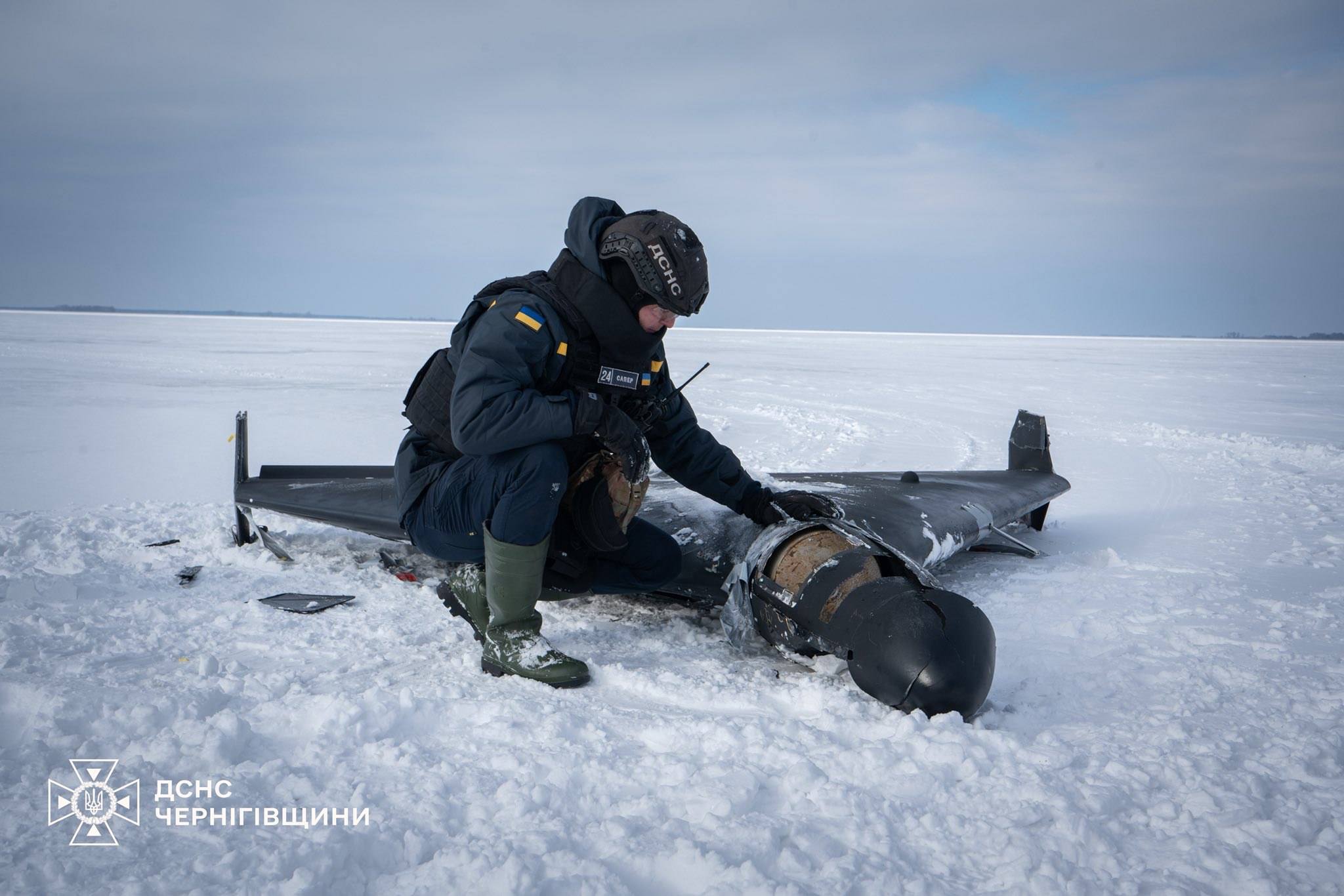
The Shahed-136 and its variants represent a category of weapon that traditional air defense systems were never designed to counter. Costing between $20,000 and $50,000 each, the delta-wing, propeller-driven drones fly at low altitudes — typically between 60 and 300 meters — at speeds of approximately 185 kilometers per hour, according to Jane’s Defence Weekly. Their small radar cross-section makes them difficult for conventional radar systems to distinguish from birds, weather formations, or ground clutter.
Iran possesses tens of thousands of Shahed drones stored in underground production facilities across the country, according to the U.S. Defense Intelligence Agency. Since the war began on February 28, Tehran has launched waves of these one-way attack drones at Gulf states hosting American military assets, targeting airfields, oil infrastructure, desalination plants, and population centers.
The scale of the drone campaign has been staggering. As of March 5, Gulf nations had detected more than 1,072 Iranian drones, according to Al Jazeera: the UAE intercepted 1,001, Bahrain destroyed 123, Qatar intercepted 24 of 39 detected, and Kuwait monitored 384 additional drone signatures. Saudi Arabia’s Ministry of Defense reported intercepting 15 drones in a single engagement near Riyadh’s diplomatic quarter, while simultaneously destroying two ballistic missiles targeting Prince Sultan Air Base in Al-Kharj and six drones heading for the Shaybah oilfield.
The tactical problem, Pentagon officials have acknowledged, is volume. Iran can afford to launch dozens of drones simultaneously because each costs less than a new car, while the interceptors used to shoot them down cost hundreds of thousands to millions of dollars each. U.S. Defense Secretary Pete Hegseth acknowledged the challenge publicly, stating: “This does not mean we can stop everything, but we ensured that the maximum possible defense and maximum possible force protection was set up.”
What Makes Ukraine the World Leader in Counter-Drone Warfare?
No other country has faced the scale of drone attacks that Ukraine has endured since Russia began using Iranian Shahed-136 drones — renamed Geran-2 and later Geran-3 — in late 2022. In 2025 alone, Moscow deployed approximately 54,000 Shahed-type drones against Ukrainian targets, according to the Ukrainian Air Force. Over a single winter, Russia launched more than 19,000 attack drones at Ukrainian cities and infrastructure.
This sustained bombardment forced Ukraine’s defense industry to innovate at extraordinary speed. The country developed, tested, and began mass-producing low-cost interceptor drones within months — systems specifically designed to destroy Shaheds without requiring million-dollar missiles. Skyfall, one of Ukraine’s leading counter-drone manufacturers, told Al Jazeera: “We’ve been dealing with this problem for more than four years already. We know all the types of Shaheds that Russia deploys.”
Ukraine’s counter-drone ecosystem extends beyond hardware. The country has developed integrated detection networks, acoustic sensors, mobile radar units, visual identification protocols, and swarm-intercept tactics that no laboratory or training range could replicate. “The interceptor drones are parts of the defense strategy of every country, and it has to be implemented right now. Not only the drones, but the whole ecosystem,” a Skyfall spokesperson told Al Jazeera on March 6.
The expertise being offered to Saudi Arabia and other Gulf states includes this entire operational framework — not just the physical interceptor drones, but the detection protocols, engagement algorithms, and tactical doctrine that Ukrainian forces have refined through thousands of real-world engagements. This knowledge package is what distinguishes Ukraine’s offer from purely commercial defense sales.
The Interceptor Drones Gulf States Want to Buy
Three Ukrainian weapons producers have received repeated requests from the United States and Gulf countries — including Saudi Arabia, the UAE, Bahrain, and Qatar — for domestically produced interceptor drones, according to Al Jazeera, citing the manufacturers directly. The systems in highest demand represent a new class of weapon: drone-versus-drone interceptors designed to destroy incoming Shaheds at a fraction of the cost of conventional missiles.
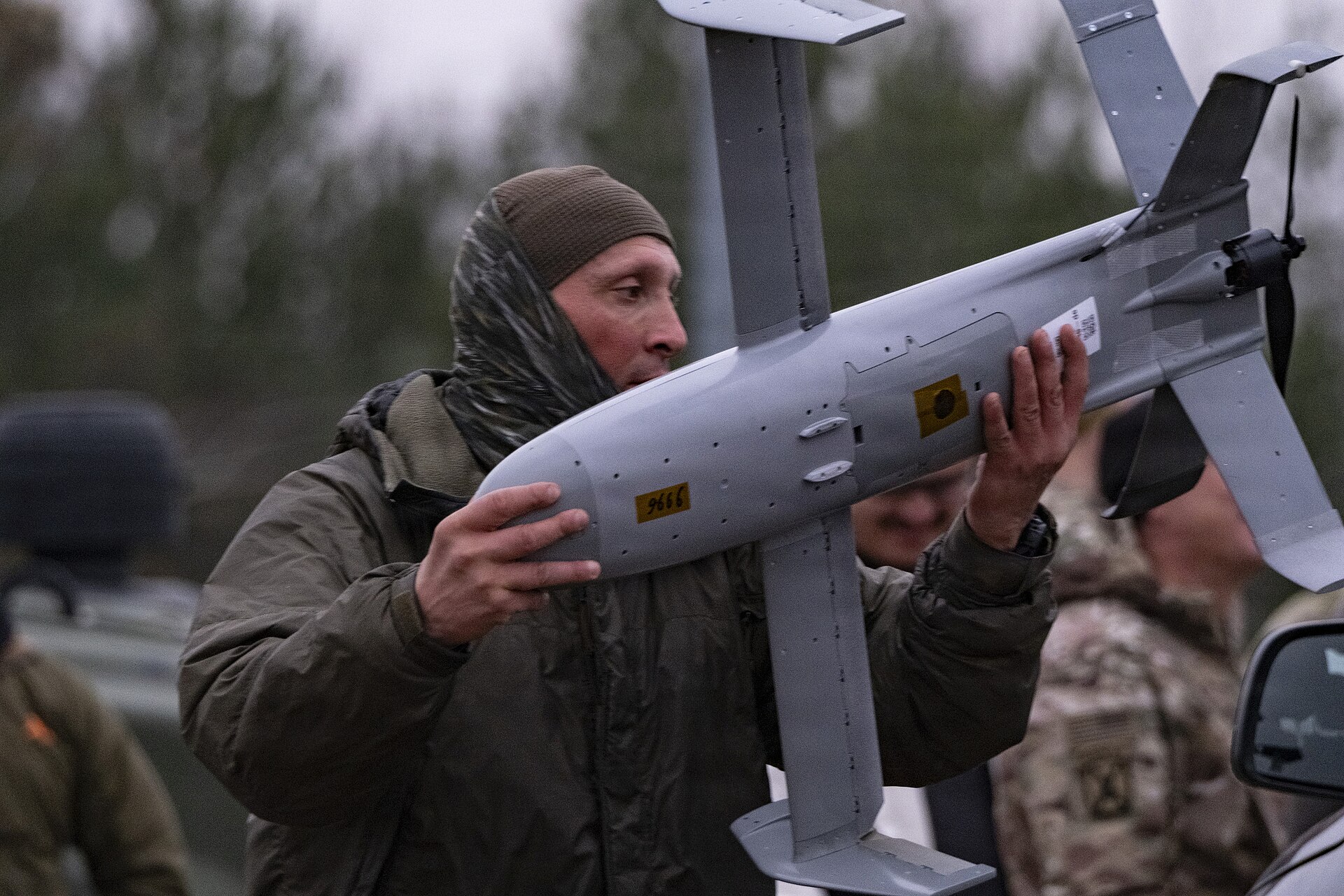
The Skyfall P1-SUN interceptor travels at speeds up to 310 kilometers per hour (190 miles per hour) and functions as a kamikaze drone armed with a small warhead, programmed to collide with fixed-wing targets such as the Shahed-136. The entire body, antenna, wings, and payload compartment are 3D printed, enabling rapid mass production at costs as low as $1,000 to $2,000 per unit, according to the manufacturer.
The Wild Hornets engineering group has developed the Sting interceptor, which tracks and either collides with or detonates near incoming drones at speeds up to 250 kilometers per hour. Each unit costs several thousand dollars — a fraction of conventional alternatives, The Defense News reported.
A separate system drawing significant interest is the Merops, developed by Perennial Autonomy and backed by former Google CEO Eric Schmidt. The truck-mounted system uses artificial intelligence to navigate when satellite and electronic communications are jammed, identifying and closing in on drones that traditional radar systems miss. The Merops was deployed to NATO nations Poland and Romania in November 2025 and is now being sent to Middle Eastern locations, including areas without U.S. forces present, according to PBS News.
| System | Developer | Type | Speed (km/h) | Approx. Cost | Status |
|---|---|---|---|---|---|
| P1-SUN | Skyfall (Ukraine) | Kamikaze interceptor | 310 | $1,000–$2,000 | Mass production |
| Sting | Wild Hornets (Ukraine) | Proximity detonation | 250 | Several thousand | Operational |
| Merops/Surveyor | Perennial Autonomy (US/Ukraine) | AI-guided intercept | N/A | Classified | Deployed to NATO, heading to Gulf |
| LUCAS | U.S. Navy (reverse-engineered Shahed) | One-way attack drone | 185 | Classified | Testing phase |
How Much Does It Cost to Shoot Down a Shahed?
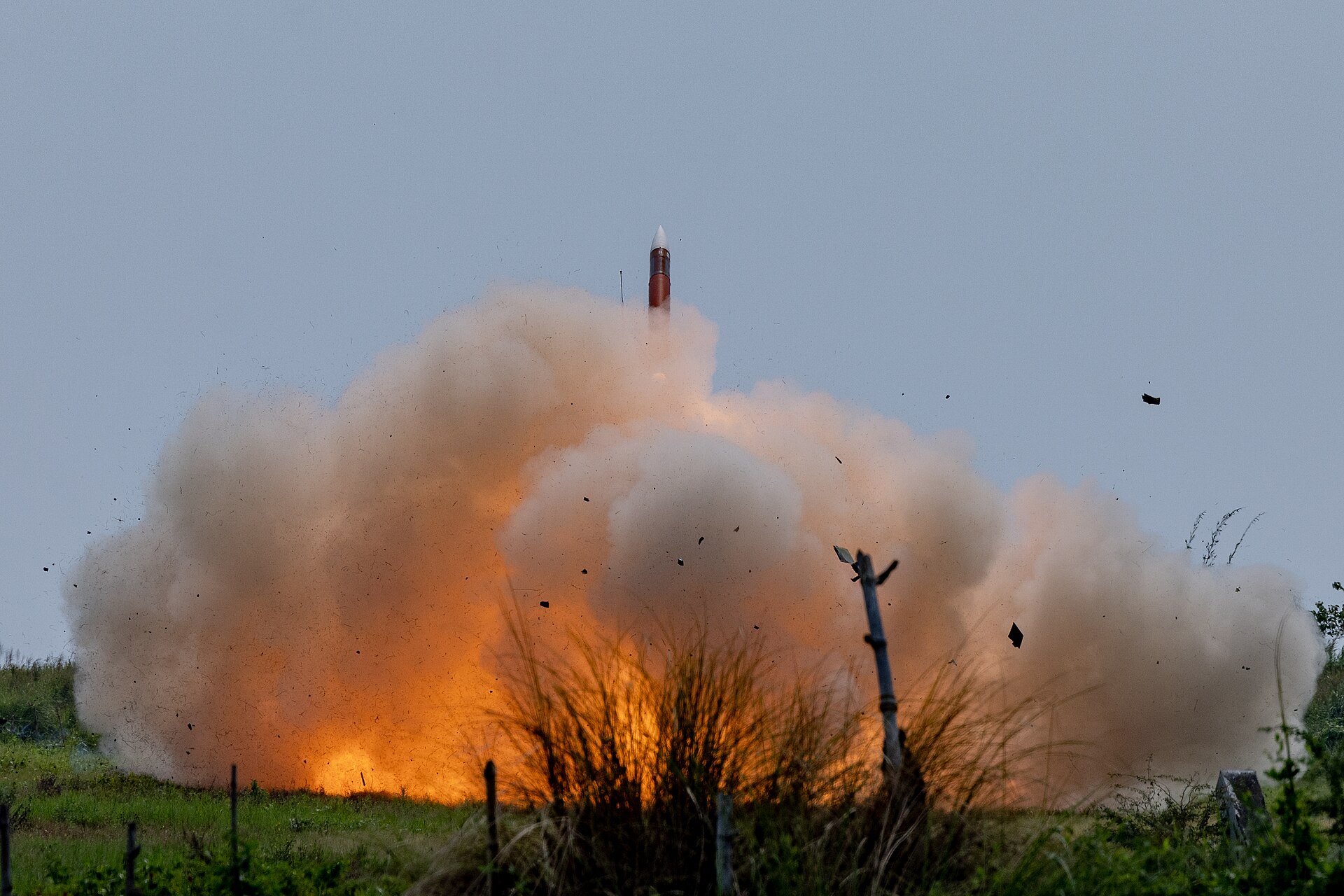
The financial mathematics of the current air defense crisis are stark. An Iranian Shahed-136 costs between $20,000 and $50,000 to produce. A PAC-3 interceptor missile fired from a Patriot battery — the primary system Gulf states use against the drone threat — costs between $3 million and $13.5 million per round, depending on the variant and procurement arrangement, according to the U.S. Congressional Budget Office. Every successful interception represents a cost ratio of at least 60-to-1 in Iran’s favor.
Representative Jim Himes, the ranking member of the U.S. House Intelligence Committee, summarized the dilemma: “It’s really, really expensive to take down a cheap drone.” The cost asymmetry means that even wealthy Gulf states cannot sustain the current interception rate indefinitely without exhausting either their missile stocks or their budgets. Saudi Arabia’s defense arsenal, while among the most expensive in the world, was designed for conventional threats — not for absorbing thousands of expendable drones.
Ukrainian interceptor drones upend this calculus. At $1,000 to $2,000 per unit, a Skyfall P1-SUN costs roughly the same as a Shahed-136 costs Iran to produce. The economic equation shifts from a 60-to-1 disadvantage to approximate parity — or even advantage, given that Ukraine’s 3D-printed drones can be manufactured faster than Iran can assemble Shaheds in its underground facilities.
| Interception Method | Cost Per Shot | Cost Ratio vs. Shahed ($30,000) | Availability |
|---|---|---|---|
| PAC-3 MSE (Patriot) | $4,000,000+ | 133:1 (defender disadvantage) | Limited stocks |
| THAAD interceptor | $13,500,000 | 450:1 (defender disadvantage) | Very limited stocks |
| Evolved Sea Sparrow (ESSM) | $2,100,000 | 70:1 (defender disadvantage) | Moderate stocks |
| Skyfall P1-SUN (Ukraine) | $1,000–$2,000 | 1:15 (defender advantage) | Mass production capable |
| Wild Hornets Sting | ~$5,000 | 1:6 (defender advantage) | Operational |
The Wartime Export Ban Complicating the Deal
A significant obstacle stands between Gulf interest and Ukrainian delivery. Ukraine’s wartime legislation restricts the export of military equipment while the country remains under active attack, according to the Washington Times, which reported on March 7 that Ukrainian low-cost drone interceptors have drawn strong interest from both the Pentagon and Gulf states, but a wartime ban blocks direct sales.
Ukrainian officials have indicated that “export permission would be required even if drones are produced outside Ukraine under licensed manufacturing agreements,” according to The Defense News, citing senior figures in Ukraine’s defense procurement establishment. The restriction reflects Kyiv’s concern that exporting interceptors could deplete stocks needed to defend Ukrainian cities against continuing Russian drone barrages.
Zelenskyy has signaled flexibility, however. “We are ready to sell the volume that our forces do not use,” he stated on March 8, suggesting a framework under which surplus production capacity could be directed toward Gulf buyers without compromising Ukraine’s domestic defense, Ukraine Today reported. The formula would require calibrating production levels against Ukraine’s own requirements — a moving target given that Russia launched 54,000 Shahed-type drones at Ukraine in 2025.
An alternative pathway involves knowledge transfer rather than hardware export. The deployment of Ukrainian counter-drone experts to the Gulf could enable Gulf states to establish local production of similar interceptor systems, bypassing the export ban entirely. Saudi Arabia’s wartime defense industry has already demonstrated an ability to scale production rapidly under crisis conditions.
Pentagon and Gulf States Explore Joint Procurement
The United States has entered the equation as a potential intermediary. President Trump indicated willingness to accept counter-drone assistance from any country when questioned about Zelenskyy’s offer, and Zelenskyy confirmed receiving “specific U.S. requests” for Middle East drone support, according to Al Jazeera.
The Pentagon is separately exploring procurement of Ukrainian-origin interceptor drones through U.S. defense acquisition channels, which could sidestep the wartime export ban. The Merops system, while developed with American investment including from former Google CEO Eric Schmidt, incorporates technology and operational doctrine derived from Ukraine’s counter-drone experience, PBS News reported. The system is already being deployed to Middle Eastern locations.
Gulf states have made “repeated requests” for Ukrainian domestically produced interceptor drones, according to three Ukrainian weapons producers speaking to Al Jazeera. The manufacturers confirmed interest from Saudi Arabia, the UAE, Bahrain, Qatar, and Kuwait — every major Gulf state currently under Iranian drone attack.
The joint procurement model could function through the U.S. Foreign Military Sales (FMS) program, which would allow Ukrainian-designed systems to be manufactured in the United States or a third country and sold to Gulf allies through established defense cooperation frameworks. This approach would satisfy Ukraine’s export restrictions, meet Gulf states’ urgent operational needs, and strengthen Washington’s position as the region’s primary security partner — a role that has come under strain as American embassy staff evacuate from the Kingdom.
What Ukraine Gets in Return
Zelenskyy’s diplomatic offensive across the Gulf is not altruism. By offering counter-drone expertise, Ukraine is pursuing at least three strategic objectives that extend well beyond the immediate Iran crisis.
The most pressing goal is access to expensive Western defense systems that Ukraine cannot afford to purchase outright. Zelenskyy’s offer to help Gulf states counter Shaheds is explicitly linked to Ukraine’s own need for the Patriot and THAAD batteries that Gulf states possess in large numbers. Ukraine requires these systems to defend against Russian ballistic missiles, which its domestically produced interceptor drones cannot address. By trading cheap, effective counter-drone capability for access to advanced missile defense technology, Kyiv is proposing a defense barter that could benefit both sides.
The second objective is diplomatic leverage. Saudi Arabia has maintained a careful neutrality on the Russia-Ukraine conflict, declining to sanction Moscow and continuing oil market coordination through OPEC+. Zelenskyy’s call with MBS — a leader who had previously avoided direct engagement on counter-drone issues — suggests that the Iran war has created an opening that did not exist before. The crisis has made Ukraine’s wartime expertise directly relevant to Saudi security in a way that no previous diplomatic outreach could achieve.
Third, Ukraine is positioning its defense industry for the post-war period. By demonstrating the effectiveness of Ukrainian counter-drone systems in a second theater of operations, Kyiv is building a customer base and a reputation that will generate defense export revenue for decades. Saudi Arabia’s defense partnerships with countries like Pakistan demonstrate that wartime cooperation often evolves into long-term procurement relationships.
Ukrainians have been fighting against Shahed drones for years now, and everyone recognises that no other country in the world has this kind of experience. We are ready to help.
President Volodymyr Zelenskyy, March 7, 2026
Frequently Asked Questions
When will Ukrainian counter-drone experts arrive in Saudi Arabia?
President Zelenskyy announced on March 8, 2026, that the first group of Ukrainian military specialists would deploy to the Middle East the following week, arriving approximately March 15-16. The teams include personnel with direct experience intercepting Shahed-type drones in combat conditions during Russia’s four-year aerial campaign against Ukraine. Exact locations remain classified for operational security reasons.
How much do Ukrainian interceptor drones cost compared to Patriot missiles?
Ukrainian interceptor drones such as the Skyfall P1-SUN cost between $1,000 and $2,000 per unit. A PAC-3 Patriot interceptor missile costs between $3 million and $13.5 million. This means a single Patriot round costs the equivalent of 1,500 to 13,500 Ukrainian interceptor drones. The cost disparity has made conventional air defense systems economically unsustainable against mass drone attacks.
Can Ukraine export its counter-drone technology to the Gulf?
Direct export is complicated by Ukraine’s wartime legislation, which restricts military equipment sales while the country remains under attack. However, Zelenskyy has signaled flexibility, offering to sell surplus production, and the Pentagon is exploring procurement through U.S. defense channels. Knowledge transfer through deployed experts could also enable Gulf states to establish local production of similar systems. Since this article was published, those diplomatic efforts have borne fruit — Zelenskyy and MBS have moved beyond expert deployment to a landmark Saudi-Ukraine arms deal covering interceptor missiles, kamikaze drones, and electronic warfare systems that Washington cannot deliver fast enough.
How many Shahed drones has Iran launched at Gulf states?
As of March 5, 2026, Gulf nations had detected more than 1,072 Iranian Shahed-type drones according to Al Jazeera, with the UAE alone intercepting over 1,000. Iran possesses tens of thousands of Shaheds in underground production facilities, according to the U.S. Defense Intelligence Agency, and the daily launch rate has remained consistent since the war began on February 28.
Which Gulf leaders has Zelenskyy contacted about counter-drone assistance?
Zelenskyy confirmed speaking with Saudi Crown Prince Mohammed bin Salman, plus the leaders of the United Arab Emirates, Qatar, Bahrain, Jordan, and Kuwait within a 48-hour window between March 6-8, 2026. All conversations focused on countering Iranian drone threats, and Zelenskyy offered each country access to Ukraine’s counter-drone expertise and technology. The breadth of outreach reflects the region-wide nature of Iran’s drone campaign.