
RIYADH — The Iran war has cost the United States between $12 billion and $16.5 billion in its first seventeen days, according to competing estimates from the White House and the Center for Strategic and International Studies, burning through munitions at a rate that has forced the Pentagon to request a $50 billion emergency supplemental budget from Congress. The war’s staggering price tag — approximately $1 billion per day — is not merely a fiscal problem. It is reshaping the geopolitical architecture of the Middle East, and the principal beneficiary is a man who never fired a shot: Mohammed bin Salman.
While Washington hemorrhages money on Tomahawk missiles and carrier operations, while NATO allies refuse to contribute a single warship — a dynamic that deepened when Trump warned NATO of a “very bad future” over Hormuz inaction, while Iran spends $70 million on drones to force $2 billion in interceptor expenditures, the Crown Prince of Saudi Arabia sits at the intersection of every diplomatic channel, every oil pipeline, and every defense contract that matters. The financial arithmetic of this conflict has handed MBS the strongest negotiating position any Saudi leader has held since the 1973 oil embargo — and he knows exactly what to do with it.
Table of Contents
- How Much Does the Iran War Cost?
- The Billion-Dollar-a-Day Burn Rate
- Why Is Iran’s War So Cheap and America’s So Expensive?
- What Has Saudi Arabia Spent on Air Defense?
- The Allied Burden-Sharing Collapse
- Can Any Country Replace Saudi Arabia’s Strategic Position?
- The War Affordability Index
- MBS’s Leverage Playbook
- What Will Saudi Arabia Demand When the War Ends?
- The 1987 Precedent Nobody in Washington Wants to Remember
- What Does the Iran War Mean for Global Oil Markets?
- The Trillion-Dollar Pledge That Now Has Conditions
- Frequently Asked Questions
How Much Does the Iran War Cost?
The United States has spent between $12 billion and $16.5 billion on Operation Epic Fury in its first seventeen days, depending on which estimate one trusts. The White House figure — $12 billion, cited by National Economic Council Director Kevin Hassett on CBS’s Face the Nation on March 15 — captures only direct military expenditures and deliberately excludes the long-term costs of carrier deployments, personnel, and munitions replacement. The CSIS figure of $16.5 billion by Day 12 includes broader operational costs but still understates the true burden, omitting classified programs and allied support.
The discrepancy matters. When the Pentagon briefed senators in a classified session during the war’s first week, it disclosed that the opening six days had cost $11.3 billion, according to NBC News — a figure that implied a daily burn rate of $1.88 billion during the high-intensity opening phase. CSIS separately estimated the first 100 hours of combat at $3.7 billion, with munitions replacement alone running at $5.6 billion per the Washington Post’s reporting of Pentagon estimates. A real-time cost tracker maintained by WarCosts.org calculated the war at $21,800 per second — a number designed to shock, but one grounded in Pentagon procurement data and operational tempo.
The true cost will be far higher. The Pentagon has assembled a $50 billion supplemental budget request to Congress to replace expended Tomahawk and Patriot missiles, THAAD interceptors, and damaged equipment. That figure does not include the economic cost of the Hormuz closure, estimated by Goldman Sachs at between $330 billion and $2.2 trillion in global GDP losses depending on duration.
The Billion-Dollar-a-Day Burn Rate
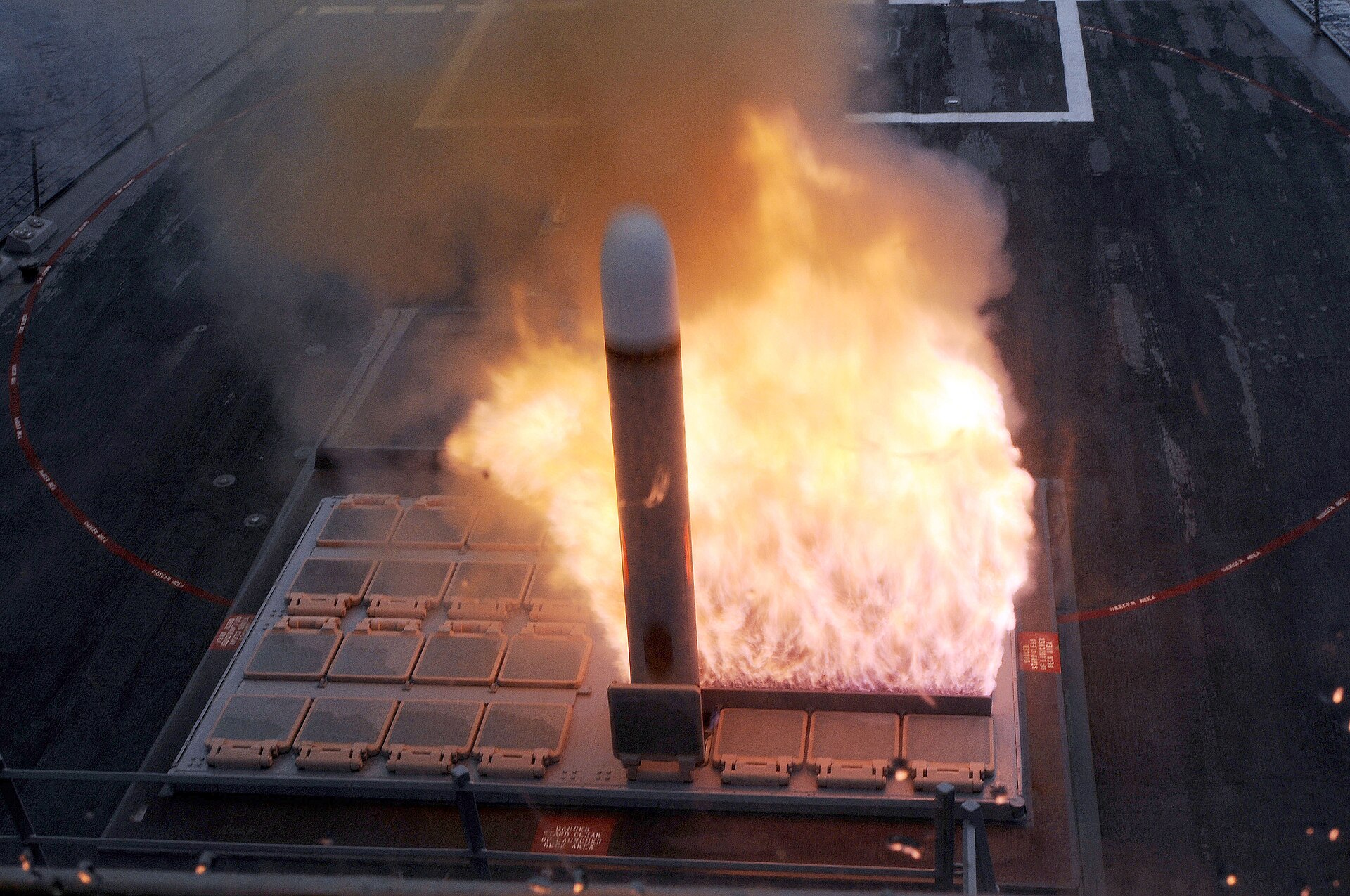
The daily cost of the Iran war varies dramatically depending on operational tempo. During the opening phase — when the United States and Israel launched simultaneous strikes on Iranian nuclear facilities, military bases, and command infrastructure — the burn rate exceeded $1.8 billion per day. As the campaign transitioned from standoff weapons to cheaper precision munitions, the rate fell to approximately $900 million per day according to CSIS, though this figure excludes the extraordinary expense of maintaining two carrier strike groups in theater.
The Middle East briefing 3,000+ readers start their day with.
One email. Every weekday morning. Free.
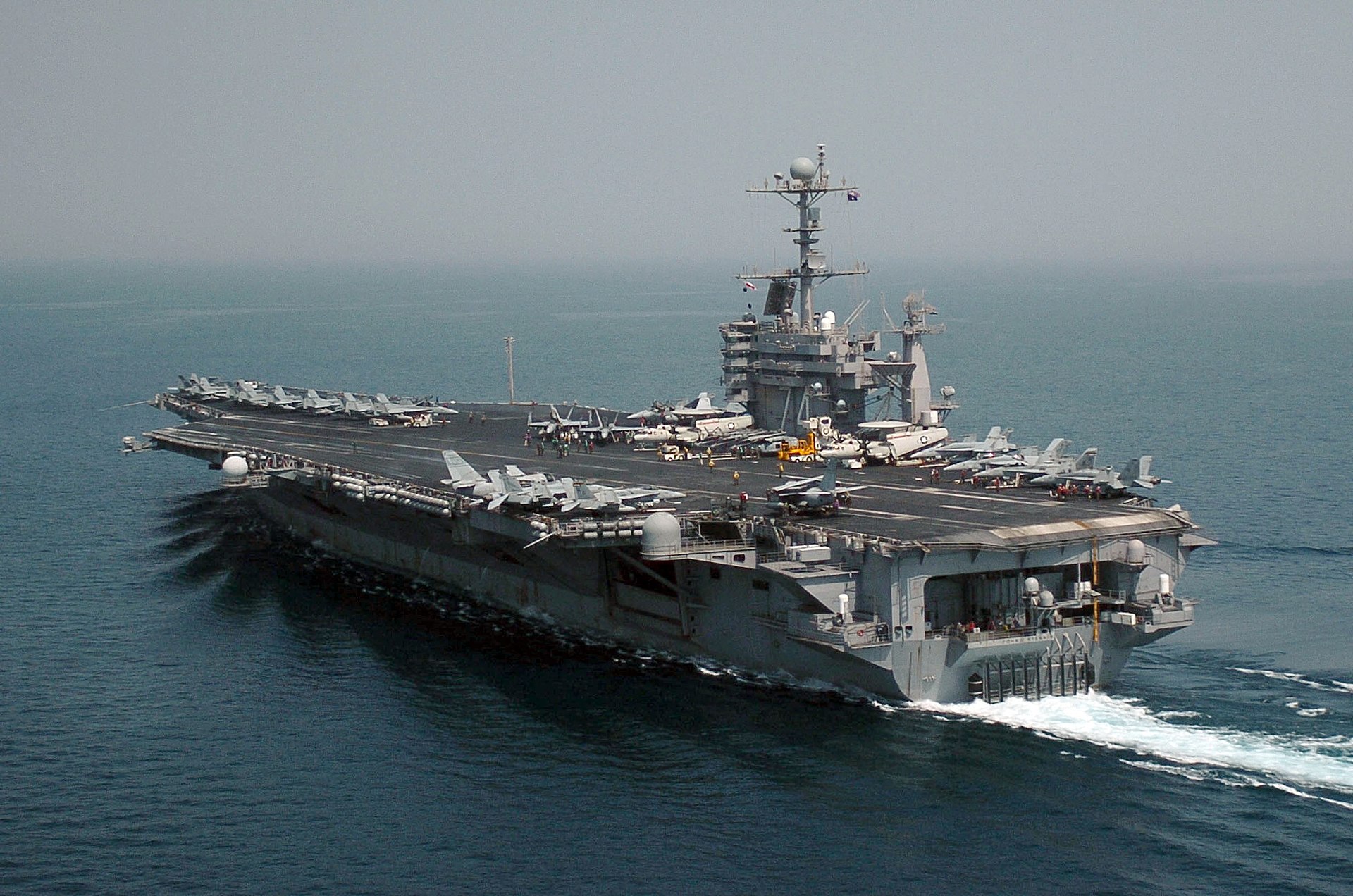
Each component of the war carries its own price tag. A single Nimitz-class carrier strike group costs approximately $6.5 million per day to operate, according to NewsNation’s analysis of Pentagon data. With both the USS Abraham Lincoln in the Arabian Sea and the USS Gerald R. Ford in the Red Sea — the most significant two-carrier posture since the 2003 Iraq invasion — naval operations alone run $13 million daily before a single missile is launched.
| Asset | Daily Cost | Notes |
|---|---|---|
| Carrier Strike Group (x2) | $13 million | USS Lincoln + USS Ford |
| Tomahawk missile (each) | $3.6 million | 400+ launched in first week |
| PAC-3 MSE interceptor (each) | $4 million | $2.4B used in 5 days |
| SM-3 Block IIA interceptor (each) | $36 million | Ship-launched vs. ballistic missiles |
| THAAD interceptor (each) | $12-15 million | 96 produced per year globally |
| JDAM precision bomb (each) | $80,000 | Transition weapon post-air defense degradation |
The transition from Tomahawks ($3.6 million each) to JDAMs ($80,000 each) marked a critical inflection point. CENTCOM commander General Caine announced on March 4 that US forces had reached a “point of munitions transition,” shifting from expensive standoff weapons to cheaper precision munitions now that Iranian air defenses had been degraded. The shift reduced daily expenditure but highlighted a more troubling problem: the United States had exhausted a significant portion of its standoff munitions inventory in less than a week.
Lockheed Martin produced approximately 620 PAC-3 MSE missiles in all of 2025. The Pentagon consumed that many interceptors defending Gulf allies in under two weeks. A framework deal to triple PAC-3 production to 2,000 missiles annually and scale THAAD production from 96 to 400 per year has been signed, but those production targets remain years away from realization, according to the Defense Security Monitor.
Why Is Iran’s War So Cheap and America’s So Expensive?
Iran has spent approximately $70 million on drone warfare to force the United States and its Gulf allies to expend more than $2 billion in interceptors — a cost exchange ratio of roughly 28:1 in Tehran’s favor. Each Shahed-136 drone costs an estimated $35,000 to produce according to CSIS, while the PAC-3 MSE missiles used to destroy them cost $4 million apiece. Analysts have described this as “using Ferraris to intercept e-bikes.”
The asymmetry extends beyond drones. Iran’s ballistic missiles cost between $500,000 and $2 million each, while the SM-3 Block IIA interceptors used to defeat them cost $36 million — an 18:1 cost exchange ratio that makes every Iranian missile launch a strategic victory regardless of whether it reaches its target, according to analysis published in the Globe and Mail. Iran launched more than 2,000 drones by Day 12 of the conflict, per US officials, at a total expenditure of roughly $70 million. The interceptors used against those drones cost thirty times as much.
Iran funds its war effort through Chinese oil purchases. Nearly all Iranian petroleum exports flow to China — approximately 1.6 million barrels per day — representing roughly 90 percent of Iran’s oil exports, denominated in renminbi through small Chinese banks, according to the Atlantic Council. A shadow fleet of tankers operates without transponders, rebranding Iranian crude as Malaysian or Middle Eastern origin once it reaches China’s “teapot” independent refineries. Despite being bombed, sanctioned, and blockaded, Iran maintains a revenue stream sufficient to sustain its asymmetric campaign indefinitely.
The strategic logic is devastatingly simple: expend drones early to drain adversary interceptor stockpiles, then preserve ballistic missiles for the long haul. Every $35,000 drone that forces a $4 million response shortens the clock on Western air defense sustainability. Iran’s military doctrine treats the drone swarm not as a delivery system but as a financial weapon — a conclusion reached independently by both the Carnegie Endowment for International Peace and the International Institute for Strategic Studies.
What Has Saudi Arabia Spent on Air Defense?
Saudi Arabia has spent an estimated $1.5 billion to $2.4 billion on interceptor missiles during the first eleven days of the war, based on Saudi Defence Ministry firing rates and Pentagon unit-cost data. The Kingdom operates six Patriot battalions with 108 M902 launchers and activated its first THAAD battery in July 2025 under a 2017 procurement deal. On March 13 alone, Saudi forces intercepted 51 drones in a single day. By March 16, the defence ministry reported intercepting more than 60 drones since midnight — the highest single-day total of the conflict. Khalid bin Salman’s wartime management of the defense ministry has become the central test of whether Saudi Arabia’s military modernisation programme can deliver under fire.
The interceptor expenditure, while enormous, represents only a fraction of Saudi Arabia’s total war costs. Wood Mackenzie estimates Saudi Arabia has lost $4.5 billion in oil revenue since the war began, as production cuts and Hormuz disruption prevented crude from reaching international markets. The Kingdom cut approximately 2 million barrels per day after Iran targeted the Safaniya and Zuluf offshore fields, reducing production from 10.882 million bpd in February to approximately 8 million bpd in early March, according to GlobalSecurity and WION.
THAAD replenishment poses a particular challenge. At the current global production rate of 96 THAAD interceptors per year, replacing Saudi Arabia’s contracted allocation of 360 interceptors would require nearly four years of dedicated production — assuming no other customer receives a single missile. The Pentagon’s plan to scale THAAD output to 400 per year remains aspirational, with Lockheed Martin’s production lines already operating under wartime surge orders that have not yet materialized.
Since February 28, Riyadh has signed, accelerated, or activated arms agreements with at least seven nations — the United States, China, South Korea, Turkey, Ukraine, the United Kingdom, and France — spending an estimated $20 billion in Q1 2026 alone on defense procurement. The diversification reflects a hard lesson: dependence on a single supplier creates vulnerabilities that no amount of money can offset when production lines cannot match wartime consumption rates.
| Category | Estimated Cost | Source |
|---|---|---|
| Interceptor missiles expended | $1.5-2.4 billion | Saudi MOD / CBO unit costs |
| Oil revenue losses | $4.5 billion | Wood Mackenzie |
| Infrastructure damage | TBD (billions) | Saudi Civil Defense |
| Emergency defense procurement | ~$20 billion (Q1) | Multiple defense contracts |
| Economic disruption (GDP impact) | -3% projected | Goldman Sachs |
Goldman Sachs projects that if the Strait of Hormuz remains closed through April, Saudi Arabia could face a GDP contraction of 3 percent — less severe than Qatar’s projected 14 percent decline but still economically significant for a nation that entered the conflict with $475 billion in foreign reserves, a six-year high according to Arab News. Across the GCC, the economic damage has already surpassed the worst of the Covid-19 pandemic, with the pipeline divide between Saudi Arabia and its landlocked neighbours creating a two-tier Gulf economy that did not exist three weeks ago. The reserves provide a substantial buffer, but they also represent the opportunity cost of a war Saudi Arabia never wanted.
The Allied Burden-Sharing Collapse
Every major US ally has refused to share the financial or military burden of the Iran war. The rejection has been comprehensive, public, and deeply damaging to the transatlantic alliance.
Germany was the most emphatic. “This war has nothing to do with NATO. It is not NATO’s war,” a German government spokesperson stated on March 16. German Foreign Minister Johann Wadephul reinforced the message: “I do not see a role for NATO members in the Strait of Hormuz.” The position mirrors Germany’s refusal to join the 2003 Iraq invasion and reflects a broader European consensus that the United States started a war without consulting its allies and cannot now demand they help finish it.
Japan’s Prime Minister Sanae Takaichi called any maritime security operation “extremely difficult legally,” while Defense Minister Shinjiro Koizumi told parliament that Tokyo is “not at the moment considering issuing a maritime security operation.” Australia’s Transport Minister Catherine King was blunter: “We won’t be sending a ship to the Strait of Hormuz.”
The United Kingdom positioned itself carefully but ultimately declined. Prime Minister Keir Starmer told Bloomberg: “We will not be drawn into the wider war. Our priority is always the national interest.” British officials instead explored deploying unmanned drone minehunters rather than warships — a symbolic contribution that avoids the political risk of military engagement.
Only France offered a substantive military response, with President Macron announcing a “purely defensive” warship escort mission to shepherd merchant vessels through the Strait of Hormuz. The French Navy pledged approximately a dozen vessels, including a carrier strike group. But Macron’s framing was deliberate: France would escort, not fight. The French Ministry of Foreign Affairs clarified that France’s posture “has not changed: defensive it is.”
“It’s only appropriate that people who are the beneficiaries of the Strait will help to make sure that nothing bad happens there.”Donald Trump, demanding allied contributions to Hormuz operations, March 2026
Trump’s response to the rejections was characteristically pointed. He warned NATO faces a “very bad future” if allies fail to assist, and told the Financial Times that “The UK might be considered the number one ally… and when I asked for them to come, they didn’t want to come.” The burden-sharing failure leaves the United States absorbing the entire $16.5 billion tab alone — and creates a political dynamic in Washington that makes Saudi Arabia’s financial contributions proportionally more important.
Can Any Country Replace Saudi Arabia’s Strategic Position?
No country can replicate what Saudi Arabia offers the United States and the global economy simultaneously. The Kingdom is the only major oil producer capable of bypassing the Strait of Hormuz through its East-West Pipeline, the only Gulf state maintaining diplomatic channels to both Tehran and Washington, and the single largest foreign customer for American defense equipment. This combination of energy, diplomatic, and financial leverage is historically unprecedented.
The East-West Pipeline — a 750-mile conduit from Abqaiq on the Gulf coast to Yanbu on the Red Sea — provides the only operational bypass of the Hormuz chokepoint. With a post-2019 upgrade capacity of 7 million barrels per day and realistic wartime throughput of approximately 3 million bpd according to energy consultancy Vortexa, the pipeline cannot replace the 20 million barrels that typically transit Hormuz daily. But it can mitigate the worst of the supply shock — and only Saudi Arabia controls it.
By mid-March 2026, Saudi exports through the Red Sea averaged 2.2 to 2.5 million bpd, with Aramco working to maximize capacity. “Saudi Arabia is the only state capable of partially replacing Hormuz-dependent supply,” an analysis published by Engineering News-Record concluded. The Yanbu pipeline “could help to partially offset the nearly 20 million barrels per day that typically transit through the Strait.”

Prince Faisal bin Farhan Al Saud, the Saudi Foreign Minister, has held calls with his Iranian, American, Russian, and Chinese counterparts since the war began, positioning Riyadh as one of the few actors with communication channels to all parties. Bloomberg reported on March 6 that Saudi officials deployed their backchannel to Iran “with increased urgency to ease tensions and keep the conflict from worsening.” No other nation — not Oman, not Qatar, not Turkey — commands the same breadth of diplomatic access combined with the financial weight to make promises credible.
The defense relationship amplifies Saudi leverage further. The $142 billion arms deal signed during Trump’s May 2025 visit to Riyadh — described by the White House as the “largest defense cooperation agreement in history” — covers air force modernization, missile defense, maritime security, and border protection. The November 2025 supplemental added 48 F-35 fighter jets, a civilian nuclear cooperation agreement, and a $5 billion Aerospace and Defense Technology Fund. These contracts bind the US defense industrial base to Saudi Arabia for decades.
The War Affordability Index
The financial sustainability of any war depends not on total wealth but on the ratio between daily expenditure and the capacity to sustain it. A framework for comparing the four principal parties to the Iran conflict — the United States, Iran, Saudi Arabia, and other Gulf states — reveals a counterintuitive conclusion: the wealthiest participants face the most severe affordability constraints.
| Factor | United States | Iran | Saudi Arabia | Other Gulf States |
|---|---|---|---|---|
| Daily burn rate | $900M-$1.8B | ~$15-30M | $200-350M | $100-200M |
| Reserve depth | Deep (federal debt capacity) | Moderate ($120B reserves) | Strong ($475B reserves) | Variable (UAE strong, others weak) |
| Cost exchange ratio | Highly unfavorable (28:1) | Highly favorable (1:28) | Unfavorable (similar to US) | Unfavorable |
| Political tolerance | Low (election year pressure) | High (wartime nationalism) | Moderate (no democratic accountability) | Low (small populations, visible damage) |
| Replenishment capacity | Strong (domestic production) | Moderate (Russia/China supply) | Weak (import-dependent) | Very weak |
| Revenue during conflict | Declining (fiscal deficit widens) | Maintained ($1.6M bpd to China) | Severely reduced (Hormuz closure) | Severely reduced |
The index reveals three dynamics that conventional analysis overlooks. First, Iran’s asymmetric cost structure means it can sustain operations for years at $15-30 million per day while its adversaries burn through billions. Tehran’s Shahed drone program functions as a financial weapon as much as a military one — every $35,000 drone that forces a $4 million response accelerates the exhaustion of allied interceptor stockpiles.
Second, the United States faces a political affordability constraint that transcends its fiscal capacity. Federal debt can absorb $50 billion in supplemental spending, but a $16 billion war with no clear end state, no allied support, and rising gasoline prices in an election year creates political unsustainability long before fiscal unsustainability. The Pentagon’s $50 billion supplemental request will face congressional resistance from both parties — deficit hawks who oppose the spending and anti-war legislators who oppose the mission.
Third, Saudi Arabia occupies a paradoxical position. It has the reserves ($475 billion) to sustain its current expenditure for years, but its revenue base is cratering as oil exports through Hormuz remain blocked. The longer the war continues, the more Saudi Arabia’s financial position weakens — creating an incentive for MBS to broker a resolution on terms favorable to Riyadh before the reserves deplete. The Kingdom’s affordability clock is running, but it is running slower than Washington’s political clock.
MBS’s Leverage Playbook
Mohammed bin Salman entered the Iran war from a position of deliberate restraint. Saudi Arabia absorbed Iranian drone strikes on the Ras Tanura refinery (March 2), attacks on the CIA station in Riyadh (March 3), and waves of 50 or more drones targeting the Eastern Province — without launching a single offensive operation against Tehran. The strategy, informally described in Riyadh’s strategic community as the “Abqaiq Doctrine” after the 2019 attack on Saudi oil infrastructure, holds that Saudi Arabia gains more from being the responsible, restrained power than from being an active belligerent.
The restraint is strategic, not passive. “Saudi Arabia is not building a military to fight a war,” an IISS analysis concluded. “It is building a military to ensure it never has to fight one alone again.” The Gulf International Forum reinforced the point: “The restraint exhibited by Riyadh and Abu Dhabi is a deliberate strategic choice rather than a failure of military capability, as Gulf nations possess highly funded militaries equipped with advanced offensive hardware, with Saudi Arabia maintaining the Middle East’s highest-funded military apparatus with an estimated defense budget of approximately $80 billion.”
Bernard Haykel, Professor of Near Eastern Studies at Princeton University, told Bloomberg that MBS is “very wary and worried about what Iran can do and did not want the war.” Haykel added a dimension that Western analysts frequently overlook: unlike Israel, which views Iran’s collapse as a strategic victory, Saudi Arabia views it as “a demographic nightmare.” A failed state with 92 million people on the Gulf’s doorstep would create refugee flows, terrorism risks, and instability that would threaten Saudi security for decades.
“If you end up with a failed state with 92 million people, you could end up with a catastrophic situation.”Bernard Haykel, Princeton University, Bloomberg interview, March 2026
The leverage this position creates is multidirectional. To Washington, MBS offers financial contribution ($1 trillion investment pledge), military basing (Prince Sultan Air Base, King Abdulaziz Air Base), and diplomatic mediation with Tehran. To Tehran, he offers a potential off-ramp — Saudi Arabia has condemned Israeli strikes on Iranian soil and maintained the backchannel even as Iranian drones hit Saudi cities. To Europe, he offers oil through the Yanbu pipeline. To China, he offers continued crude supply and a stabilizing influence on a war that threatens Beijing’s energy security. The credibility of that multidirectional offer rests on a paradox: MBS invested three years in the rapprochement with Tehran before reversing Saudi Arabia’s Iran policy over the course of nine deliberate months, and it is precisely that record of engagement that now gives his confrontation posture diplomatic weight.
Simon Mabon of Lancaster University noted that his “academic and civil society contacts in Saudi Arabia expressed deep scepticism of the idea that Saudi Arabia had pushed the US to bomb Iran” — underscoring that MBS’s position as a reluctant participant enhances rather than diminishes his credibility as a mediator. The Crown Prince is building a post-war order in which Saudi Arabia’s relevance to every stakeholder makes it the indispensable interlocutor.
What Will Saudi Arabia Demand When the War Ends?
Saudi Arabia’s post-war demand list, assembled from multiple expert analyses and diplomatic signals, includes at least five strategic objectives that the war has made achievable for the first time. Each demand carries a price tag for Washington, and each represents leverage that MBS has accumulated through seventeen days of restraint and financial endurance.
The first demand is a formal US-Saudi mutual defense treaty, modeled on the 1960 US-Japan security pact. This would be the first bilateral US defense treaty in the Middle East, committing Washington to defend the Kingdom against external aggression. The INSS (Institute for National Security Studies) and the Quincy Institute have both analyzed the implications, with the Quincy Institute warning that such a pact would fundamentally alter the US security posture in the Gulf and constrain future administrations’ freedom of action.
The second demand is civilian nuclear technology with enrichment rights. The November 2025 civil nuclear cooperation agreement provides the foundation, but the contentious question of domestic uranium enrichment remains unresolved. The Arms Control Association warned in March 2026 that the proposed deal would “loosen nonproliferation vows.” MBS has been unambiguous about his intentions: in September 2023, he stated publicly that “if Iran acquires a nuclear weapon, we have to get one.” With Iran’s nuclear program now in ruins following US-Israeli strikes, the urgency has diminished — but so has Washington’s leverage to impose restrictions.
The third demand is accelerated F-35 deliveries and advanced weapons systems. Trump approved the sale of 48 F-35 fighter jets to Saudi Arabia in November 2025, but production timelines stretch years into the future. MBS wants expedited delivery, front-of-line priority over other customers, and the integration of Saudi industry into F-35 supply chains through offset agreements.
The fourth demand involves the post-war security architecture of the Gulf. Saudi Arabia wants a permanent multilateral security framework that reduces dependence on bilateral US commitments. This could take the form of a Gulf NATO, a formalized version of the Peninsula Shield Force, or a series of bilateral defense pacts with European powers — particularly France, which has already demonstrated willingness to deploy naval forces in the region.
The fifth demand is a resolution to the Palestinian question as the price of Israeli normalization. Riyadh has made clear that normalization with Israel requires a Palestinian state along 1967 borders with East Jerusalem as capital. Iran’s relative weakness has paradoxically reduced the urgency for normalization — MBS can now extract US concessions without offering the normalization currency that Washington and Tel Aviv have sought for years.
The 1987 Precedent Nobody in Washington Wants to Remember
The structural parallel between the 2026 Iran war and the 1987-88 Tanker War is uncomfortably precise. In 1987, Kuwait requested US naval protection for its tankers after Iran began attacking Gulf shipping during the Iran-Iraq War. Kuwait played its hand brilliantly: it threatened to accept a Soviet reflagging offer, alarming Washington enough to commit to Operation Earnest Will — the largest naval convoy operation since World War II, deploying more than 30 warships to the Gulf for fourteen months.
The 2026 parallel is obvious. Then as now, a Gulf state faced Iranian aggression while relying on the US security umbrella. Then as now, the United States bore the military cost while Gulf states provided the basing. Then as now, the war disrupted global oil markets and forced emergency responses from consumer nations.
But one difference towers over all the similarities: in 1987, Gulf states were petitioners for protection. In 2026, Saudi Arabia enters negotiations from a position of unprecedented economic and diplomatic strength. The Kingdom holds $475 billion in foreign reserves. It controls the only operational pipeline bypass of the Strait of Hormuz. It maintains diplomatic channels to Tehran that Washington lacks. It has pledged $1 trillion in US investment. And it has demonstrated the strategic patience to absorb Iranian attacks without retaliating — a discipline that Kuwait in 1987 neither possessed nor needed.
The leverage dynamic has inverted. In 1987, the United States chose to protect Gulf shipping because it served American Cold War interests. In 2026, the United States needs Mohammed bin Salman — for oil stability, for financial contribution, for diplomatic mediation, and for the continued viability of the royal family’s alliance with Washington. The price of that need will be denominated in defense treaties, nuclear technology, and strategic concessions that would have been unthinkable before February 28.
What Does the Iran War Mean for Global Oil Markets?
The Iran war has triggered the largest supply disruption in the history of global oil markets. Crude and oil product flows through the Strait of Hormuz plunged from approximately 20 million barrels per day to a trickle, according to the International Energy Agency’s March 2026 Oil Market Report. Brent crude surged from roughly $70 to over $110 per barrel within days of the war’s outbreak, briefly touching $120 before settling in a volatile range above $100.
The IEA responded with the largest release of emergency oil stockpiles in history — 400 million barrels of crude from strategic petroleum reserves across member nations. But as Al Jazeera’s economic analysis noted on March 15, “strategic oil release may calm markets but cannot fix Hormuz disruption.” Strategic reserves address a temporary shortfall; they cannot substitute for the permanent loss of a shipping lane that carries one-fifth of the world’s daily oil consumption.
OPEC+ attempted to compensate with a production increase of 206,000 barrels per day starting in April — a tepid response that reflects the physical impossibility of rapidly replacing Hormuz-dependent supply. Saudi Arabia had ramped production to 10.882 million bpd in February, an 8 percent increase from January, in what appeared to be a preemptive buildup ahead of the conflict. But even at maximum output, the East-West Pipeline to Yanbu can deliver only a fraction of pre-war export volumes.
The paradox for Saudi Arabia is acute. Higher oil prices should benefit the Kingdom’s revenues, but Riyadh cannot capitalize on those prices because its primary export route — the Persian Gulf — is blocked. The Yanbu bypass provides partial relief, but at 2.2-2.5 million bpd in wartime throughput, it delivers less than half of Saudi Arabia’s pre-war export capacity. The Kingdom is simultaneously the world’s most important oil producer and one of the war’s most significant economic casualties.
| Indicator | Pre-War | Current | Change |
|---|---|---|---|
| Brent crude ($/barrel) | $70 | $100-110 | +43-57% |
| Hormuz daily flow (million bpd) | 20 | ~0.5 | -97.5% |
| Saudi production (million bpd) | 10.882 | ~8.0 | -26.5% |
| Saudi Red Sea exports (million bpd) | ~0.5 | 2.2-2.5 | +340-400% |
| IEA strategic reserve release (million barrels) | 0 | 400 | Record release |
| Global GDP at risk ($ trillion) | — | $0.33-2.2T | — |
The Trillion-Dollar Pledge That Now Has Conditions
When Crown Prince Mohammed bin Salman walked into the White House on November 18, 2025, with a near-doubling of Saudi Arabia’s investment commitment — from $600 billion to $1 trillion — the pledge was received as a gesture of allied goodwill. Three months later, it looks like something else entirely: a down payment on leverage.
The $1 trillion figure, cobbled from government procurement, private-sector deals, PIF portfolio investments in US-listed assets, and defense contracts across a decade or longer, was always aspirational. The Peterson Institute for International Economics noted that such pledges historically materialize at a fraction of their announced value. Trump’s 2017 Saudi arms deal, announced at $110 billion, produced only $34.6 billion in foreign military sales over eight years — a 31 percent materialization rate.
But the war has transformed the pledge’s political significance. With NATO allies refusing to contribute financially, with Congress facing a $50 billion supplemental request, and with the US electorate watching gasoline prices rise, Saudi investment in American defense manufacturing, AI infrastructure, and energy projects carries disproportionate weight. DataVolt’s $20 billion commitment to US AI data centers, AMD and Humain’s $10 billion for 500 megawatts of AI compute capacity, and the $5 billion Aerospace and Defense Technology Fund are no longer routine commercial deals — they are political instruments that buy MBS goodwill in Washington at a moment when goodwill translates directly into policy concessions.
The civilian nuclear cooperation agreement signed in November 2025 — described as a “decades-long, multi-billion-dollar nuclear energy partnership” — takes on new significance in a post-war context where Iran’s nuclear program has been destroyed. Saudi Arabia no longer faces the immediate threat that justified enrichment restrictions. The argument for limiting Saudi nuclear ambitions rests on nonproliferation principles that Washington is increasingly willing to sacrifice for strategic partnerships. The Arms Control Association’s March 2026 warning that the deal would “loosen nonproliferation vows” may prove less a caution than a forecast.
The pledge’s conditions are never stated publicly, but they are legible in every diplomatic communication from Riyadh: deliver the F-35s, finalize the defense treaty, permit nuclear enrichment, and resolve Palestine. Each condition was negotiable before the war. Each is becoming non-negotiable as the war’s costs mount and Saudi Arabia’s indispensability grows.
That indispensability has since crystallized into something more concrete. A full accounting of how MBS already won the peace shows that the Crown Prince’s wartime leverage has translated into a US defense pact, nuclear concessions, a structurally weakened Iran, and an energy market he controls — the post-war order, assembled before the war is over.
Frequently Asked Questions
How much has the United States spent on the Iran war so far?
The White House cited $12 billion as of March 15, 2026, while CSIS estimated $16.5 billion by Day 12. The Pentagon’s briefing to Congress disclosed $11.3 billion for the first six days alone. A $50 billion supplemental budget request has been assembled to replace expended munitions including Tomahawk missiles ($3.6 million each) and PAC-3 interceptors ($4 million each).
Why are allies refusing to help the United States in the Strait of Hormuz?
Germany has stated “this is not NATO’s war,” Japan cited legal constraints, Australia declined outright, and the UK said it would not be “drawn into the wider war.” Only France has offered a military contribution, framing it as a “purely defensive” escort mission for merchant ships. The rejections reflect a consensus that the United States initiated the conflict unilaterally and bears primary responsibility for its consequences.
How does the war benefit Mohammed bin Salman’s negotiating position?
MBS controls the only operational pipeline bypass of the Strait of Hormuz, maintains diplomatic channels to both Tehran and Washington, has pledged $1 trillion in US investment, and has demonstrated strategic restraint by not retaliating against Iranian attacks. This combination of energy, financial, diplomatic, and military leverage makes Saudi Arabia indispensable to the war’s resolution and gives MBS unprecedented bargaining power over defense treaties, nuclear technology, and post-war security arrangements.
What is the cost exchange ratio between Iran’s drones and Western interceptors?
Iran’s Shahed-136 drones cost approximately $35,000 each, while the PAC-3 MSE missiles used to intercept them cost $4 million — a 28:1 cost ratio favoring Iran. For ballistic missiles intercepted by SM-3 Block IIA missiles ($36 million each), the ratio reaches 18:1. Iran has spent roughly $70 million on 2,000 drones while forcing adversaries to expend over $2 billion in interceptors, according to CSIS and the Globe and Mail.
What will Saudi Arabia demand in post-war negotiations?
Expert analyses from INSS, the Quincy Institute, Brookings, and the Arms Control Association suggest Saudi Arabia will seek a formal US-Saudi mutual defense treaty, civilian nuclear technology with enrichment rights, accelerated F-35 deliveries, a permanent Gulf security architecture, and a Palestinian state as the price of Israeli normalization. The war has made each of these demands more achievable by increasing Saudi Arabia’s strategic leverage.
How does the 2026 war compare to the 1987 Tanker War?
Both conflicts involve Iranian aggression against Gulf shipping and US military protection of Gulf allies. In 1987, Operation Earnest Will deployed 30-plus warships for fourteen months to escort Kuwaiti tankers. The critical difference is leverage: in 1987, Gulf states were petitioners for protection, while in 2026, Saudi Arabia negotiates from a position of economic and diplomatic strength, holding $475 billion in reserves, the Yanbu pipeline bypass, and diplomatic backchannels to all parties.