
DUBAI — Iran’s threat to completely seal the Strait of Hormuz if the United States strikes its power grid represents the most dangerous miscalculation of the 2026 war. For twenty-three days, Tehran executed a selective blockade that was, by any strategic measure, brilliant — allowing friendly nations to pass while choking Western-linked shipping. That restraint divided the international community, kept China and India sympathetic, and imposed enormous economic costs on Iran’s enemies without triggering a unified military response. The threat to abandon selectivity and impose total closure would undo every strategic advantage Iran has gained since February 28, while accelerating the one outcome Tehran cannot survive: the starvation of its own ninety-three million citizens.
The distinction between a selective and a total blockade is not semantic. It is the difference between a war Iran can endure and one it cannot. Twenty million barrels of oil transited Hormuz daily before the conflict began, according to U.S. Energy Information Administration data, representing roughly 20 percent of global petroleum consumption. Iran’s selective approach reduced that traffic by approximately 70 percent, according to Bloomberg shipping data, while still allowing vessels flagged to Pakistan, India, China, and a growing list of non-Western nations to pass. Total closure would halt the remaining 30 percent — including the ships carrying the corn, soybeans, wheat, and refined fuel that Iran itself requires to function as a state.
Washington has struggled to counter Iran’s maritime stranglehold. On 23 March, Trump shifted from threats to diplomacy, offering to share control of the Strait of Hormuz with Iran — a proposal Tehran dismissed as American retreat.
Table of Contents
- Why Has Iran Threatened to Close Hormuz Completely?
- From Selective Blockade to Total Closure — A Strategic Miscalculation
- How Does Iran Depend on the Strait of Hormuz?
- The Hormuz Escalation Matrix
- What Did the 1980s Tanker War Teach Iran About Closing Hormuz?
- China and India Hold the Key to the Blockade
- Can the US Navy Reopen Hormuz by Force?
- Why Total Closure Would Unite the World Against Iran
- Saudi Arabia Grows Stronger With Every Iranian Escalation
- The Blockade’s Expiry Date
- What Happens When Trump’s Ultimatum Expires?
- Frequently Asked Questions
Why Has Iran Threatened to Close Hormuz Completely?
Iran’s military command declared on March 22 that it would “completely close” the Strait of Hormuz if the United States follows through on President Trump’s ultimatum to strike Iranian power plants, according to CNN and CBS News. The threat represents a direct response to Trump’s demand, issued on March 21, that Iran fully reopen the strait within 48 hours or face the destruction of its electrical grid. Iran’s leadership framed the counter-threat as proportional deterrence: if Washington escalates to civilian infrastructure, Tehran will escalate to total economic warfare.
The logic, from Tehran’s perspective, follows a coherent if desperate calculus. Iran’s power grid sustains hospitals, water treatment facilities, and food distribution networks for a population already under severe wartime stress. Striking it would impose catastrophic humanitarian consequences that Iran’s leadership views as crossing a red line beyond even the killing of the supreme leader. The threat of total Hormuz closure is intended to make the cost of that escalation prohibitive — not just for the United States, but for every oil-importing nation on earth.
Yet the threat contains a fatal paradox. Iran’s selective blockade succeeded precisely because it avoided triggering the kind of universal response that total closure would provoke. By allowing some oil to flow, Iran maintained enough ambiguity to prevent a decisive international coalition from forming. A complete shutdown removes that ambiguity and replaces it with a binary choice for every nation: accept the closure or join a military campaign to break it.
The Middle East briefing 3,000+ readers start their day with.
One email. Every weekday morning. Free.
From Selective Blockade to Total Closure — A Strategic Miscalculation
The selective blockade that Iran implemented beginning March 5, 2026, may rank as the most strategically effective maritime operation since the 1962 Cuban Missile Crisis naval quarantine. By restricting passage to Western-linked vessels while permitting transit for ships flagged to countries maintaining diplomatic relations with Tehran, Iran achieved something it had threatened for four decades without ever executing: functional control over the world’s most important oil chokepoint.
The numbers reveal the scale of that achievement. Fewer than 100 commercial ships crossed the Strait of Hormuz between March 1 and March 18, according to Bloomberg’s analysis of AIS vessel tracking data. Before the war, approximately 80 vessels transited daily. The IRGC’s warnings, combined with mine-laying operations and attacks on at least 21 commercial vessels confirmed by UK Maritime Trade Operations, created an insurance crisis that accomplished what no military force could: stopping global shipping through an act of collective risk assessment rather than physical force.
Iran achieved what it threatened for forty years not through force of arms but through the insurance mechanism — making the risk of transit commercially unacceptable.
CSIS analysis, March 2026
The selective approach exploited a fundamental vulnerability in international maritime law and commercial shipping economics. Lloyd’s of London and other marine insurers classified the Gulf as an active war zone, pushing war risk premiums above 10 percent of vessel value — effectively pricing most commercial traffic out of the strait without Iran firing a single shot at many of the vessels that stopped transiting. The genius of selectivity lay in its calibration: enough disruption to impose massive economic costs, enough passage to prevent a unified military response.
Total closure would abandon every one of these advantages. It would transform an asymmetric triumph into a conventional military challenge that Iran is structurally incapable of winning. The US Navy’s Fifth Fleet, reinforced since February 28 by two additional carrier strike groups, possesses the firepower to clear mines, destroy coastal batteries, and escort convoys through a 54-kilometre-wide waterway. What the Fifth Fleet cannot do against a selective blockade — engage in combat operations against vessels that Iran claims are exercising freedom of navigation rights — it can do decisively against a declared total closure: treat every Iranian military asset in the strait as a hostile combatant.
How Does Iran Depend on the Strait of Hormuz?
Iran’s dependence on the Strait of Hormuz for its own survival is the central paradox of its blockade strategy. Roughly 85 to 90 percent of Iran’s bulk agricultural commodity imports pass through Gulf ports, primarily Bandar Abbas and Imam Khomeini, according to the International Food Policy Research Institute. A total closure would seal these ports as effectively as it seals Gulf Arab export terminals.
The numbers are stark. Iran imports between 7 and 9 million tonnes of corn and 2 to 3 million tonnes of soybeans annually, according to data compiled by the Washington Institute for Near East Policy. The country is 89 percent import-dependent for corn, a foundational input for its poultry and livestock industries. Total grain imports exceeded 16.5 million tonnes in 2025, according to Iran’s Ports and Maritime Organization — roughly half wheat and half barley, corn, and rice. The vast majority arrives by sea through the strait Iran is threatening to close completely.
| Commodity | Annual Volume | Import Dependency | Primary Port | Primary Supplier |
|---|---|---|---|---|
| Corn | 7-9 million tonnes | 89% | Imam Khomeini | Brazil |
| Soybeans | 2-3 million tonnes | ~95% | Imam Khomeini | Brazil, Argentina |
| Wheat | ~8 million tonnes | ~30% | Bandar Abbas | Russia, Kazakhstan |
| Barley | 2-3 million tonnes | ~60% | Bandar Abbas | Australia, EU |
| Rice | 1-1.5 million tonnes | ~40% | Bandar Abbas | India, Thailand |
| Refined fuel | Variable | ~15% | Multiple | Various |
Iran’s only non-Gulf deepwater port, Chabahar on the Gulf of Oman, offers a theoretical bypass — but one that collapses under the weight of logistics. The Indian-backed facility handles a fraction of Bandar Abbas’s throughput, and its inland rail connections remain incomplete. The Al Habtoor Research Centre’s March 2026 analysis concluded that Chabahar’s berth depths and logistics infrastructure are “insufficient to serve more than a fraction of national requirements,” estimating that redirecting even 20 percent of Iran’s Gulf imports through Chabahar would create backlogs measured in months.
The pharmaceutical supply chain presents an equally acute vulnerability. Iran manufactures roughly 97 percent of its medicines domestically, but it imports approximately 60 percent of active pharmaceutical ingredients by value, much of it through maritime channels. A total Hormuz closure would begin to create drug shortages within weeks — precisely the kind of humanitarian crisis that would erode whatever domestic support remains for the war.
The Hormuz Escalation Matrix
The distinction between levels of Hormuz disruption is not merely academic. Each step on the escalation ladder carries fundamentally different strategic consequences for Iran, and the progression from the current selective blockade to total closure represents a qualitative shift in risk that Tehran’s military planners appear to have underestimated.
Analysis of the war’s first twenty-three days reveals five distinct levels of Hormuz disruption, each with measurable strategic costs and benefits for Iran. At every level above the current selective blockade, Iran’s strategic position deteriorates rather than strengthens.
| Level | Description | Iran’s Strategic Gain | Iran’s Strategic Cost | Oil Price Impact | Coalition Risk |
|---|---|---|---|---|---|
| 1. Threat Only | Pre-war status: verbal threats, naval exercises | Deterrence without cost | None | $0-5/bbl premium | None |
| 2. Insurance Disruption | Mine-laying, vessel harassment, war risk zone | Massive economic impact via market mechanism | Minimal — plausible deniability | $10-20/bbl | Low |
| 3. Selective Blockade (CURRENT) | Western ships blocked; friendly nations pass | Maximum leverage: divides international community | Moderate — own imports at risk | $20-40/bbl | Medium — coalition divided |
| 4. Near-Total Closure | Only pre-vetted ships under IRGC escort pass | Diminishing — fewer allies willing to participate | High — own food/fuel imports severely constrained | $40-60/bbl | High — China/India shift to opposition |
| 5. Total Closure (THREATENED) | No commercial traffic permitted | Negligible — world united in opposition | Catastrophic — own population faces starvation | $60-100+/bbl | Near-certain multinational naval operation |
The matrix reveals a consistent pattern: Iran’s strategic leverage peaks at Level 3 and declines sharply at every subsequent step. The selective blockade maximises pressure on Western economies while maintaining the diplomatic cover provided by Chinese, Indian, and Pakistani engagement. Total closure eliminates that cover and replaces diplomatic ambiguity with military certainty.
The critical inflection point lies between Levels 3 and 4. At Level 3, the international community is divided: China benefits from preferential access, India negotiates bilaterally with Tehran, and European nations debate whether to send warships. At Level 4 and beyond, these divisions collapse. A nation that cannot feed its own population while simultaneously preventing others from feeding theirs loses the moral and diplomatic positioning that made the selective blockade so effective.
The price impact column further illustrates the diminishing returns. The jump from Level 2 to Level 3 produced the largest proportional increase in oil prices — Brent crude surging from approximately $80 to a peak of $126 per barrel, according to commodity trading data. The jump from Level 3 to Level 5 would likely push prices above $150, but at that point, the damage to Iran’s own economy and society would exceed any strategic benefit.
What Did the 1980s Tanker War Teach Iran About Closing Hormuz?
Iran’s last serious attempt to disrupt Hormuz shipping ended with the destruction of half its operational navy in a single afternoon. Operation Praying Mantis, launched by the United States on April 18, 1988, destroyed or sank two Iranian oil platforms, two frigates, a fast-attack craft, several armed boats, and two fighter jets, according to U.S. Naval History and Heritage Command records. It remains the largest American surface naval engagement since the Second World War.
The operation was triggered by a single incident: the mining of USS Samuel B. Roberts on April 14, 1988, during Operation Earnest Will — the U.S.-led effort to protect reflagged Kuwaiti oil tankers from Iranian attacks during the Iran-Iraq War. The American response was swift, devastating, and delivered a strategic lesson that Iran’s military planners have cited for nearly four decades: closing or disrupting the strait invites a disproportionate military response that Iran’s conventional forces cannot withstand.
The 1988 precedent shaped Iran’s strategic doctrine in a specific way: Hormuz was to be threatened, never closed. The threat itself — the perpetual possibility of closure — served as a far more effective deterrent than closure itself could ever be. A sealed strait invites military action; an open but threatened strait paralyses decision-making. Iran’s Revolutionary Guard commanders understood this distinction for decades. The 2026 selective blockade demonstrated that understanding at its most sophisticated, using insurance markets and risk perception rather than raw naval force to achieve functional closure without formal closure.
The threat to move to total closure abandons this doctrine entirely. A declared total blockade would place Iran’s naval forces in the same position they occupied in April 1988: openly hostile to international shipping in a confined waterway where American naval superiority is overwhelming. The U.S. Navy’s mine countermeasures force, augmented since 2024 with unmanned surface vessels capable of autonomous mine detection, could clear Iranian mines faster than Iran could lay them. The $100 billion that Gulf states invested in defence would finally be deployed against the threat it was purchased to defeat.
A classified CIA assessment, subsequently declassified, revealed that Iran agreed to the 1988 ceasefire in the Iran-Iraq War partly because its leadership believed Operation Praying Mantis was coordinated with an Iraqi ground offensive — suggesting a two-front war that Iran could not sustain. Today, with American, British, French, and a growing coalition of regional forces operating in and around the Gulf, the two-front problem has multiplied into a dozen-front problem.
China and India Hold the Key to the Blockade
The selective blockade’s greatest strategic achievement was not choking Western oil supplies — it was securing Chinese and Indian acquiescence. Beijing and New Delhi, the world’s first and third-largest oil importers respectively, entered direct negotiations with Tehran for guaranteed passage through Iranian territorial waters, according to Al Jazeera and Lloyd’s List reporting. At least nine vessels flagged to Pakistan, India, and China successfully transited a “safe corridor” through Iranian waters by mid-March, with one tanker reportedly paying $2 million for the privilege.
This arrangement served Iran’s interests on multiple levels. It maintained a flow of revenue through transit fees. It kept China — Iran’s most important geopolitical patron and the swing vote at the UN Security Council — invested in the blockade’s continuation rather than its destruction. And it created a template for a post-war maritime order in which Iran exercises de facto authority over strait passage, a goal that Tehran has pursued since the Islamic Revolution.
Total closure would shatter this arrangement instantly. China imports approximately 10.5 million barrels of oil per day, according to 2025 customs data, with roughly 40 percent transiting the Strait of Hormuz. The selective blockade allowed most of this traffic to continue. Total closure would halt it entirely, threatening the energy security of the world’s second-largest economy at a moment when Beijing is already managing the economic fallout of the fourth great oil shock.
| Country | Total Oil Imports (mb/d) | Hormuz Share (%) | Selective Blockade Impact | Total Closure Impact |
|---|---|---|---|---|
| China | 10.5 | ~40% | Manageable — safe passage negotiated | Catastrophic — 4.2 mb/d at risk |
| India | 4.8 | ~55% | Strained — some vessels permitted | Catastrophic — 2.6 mb/d at risk |
| Japan | 2.5 | ~75% | Severe — safe passage granted Mar 21 | Catastrophic — 1.9 mb/d at risk |
| South Korea | 2.8 | ~70% | Severe — limited transit | Catastrophic — 2.0 mb/d at risk |
| EU (combined) | 9.5 | ~15% | Moderate — alternative suppliers | Severe — 1.4 mb/d at risk |
India’s position mirrors China’s in scale if not in diplomatic alignment. New Delhi has maintained a careful neutrality throughout the conflict, refusing to condemn either Iran or the US-Israeli coalition, according to Indian Ministry of External Affairs statements. The selective blockade accommodated this neutrality; total closure would force India to choose sides. With approximately 55 percent of India’s oil imports transiting Hormuz, that choice would almost certainly fall against Iran.
Japan’s March 21 safe passage agreement — in which Tehran explicitly guaranteed transit for Japanese-flagged vessels — illustrates the sophisticated diplomacy that selective blockade enables and total closure destroys. Tokyo, a close American ally that hosts US military installations critical to Indo-Pacific security, negotiated directly with Tehran to secure its energy imports. This arrangement humiliated Washington and demonstrated that Iran could fracture the Western alliance without firing a shot. Trump’s $20 billion Gulf insurance plan failed to move a single tanker partly because Iran’s selective approach created bilateral solutions that bypassed American-led frameworks.
Can the US Navy Reopen Hormuz by Force?
The US Navy possesses the capability to clear the Strait of Hormuz of Iranian military assets within a matter of days — a fact that both Tehran and Washington understand, which is precisely why the selective blockade avoided creating the conditions for such an operation. A total closure declaration would remove the legal and diplomatic obstacles that currently prevent the Fifth Fleet from treating the strait as a combat zone.
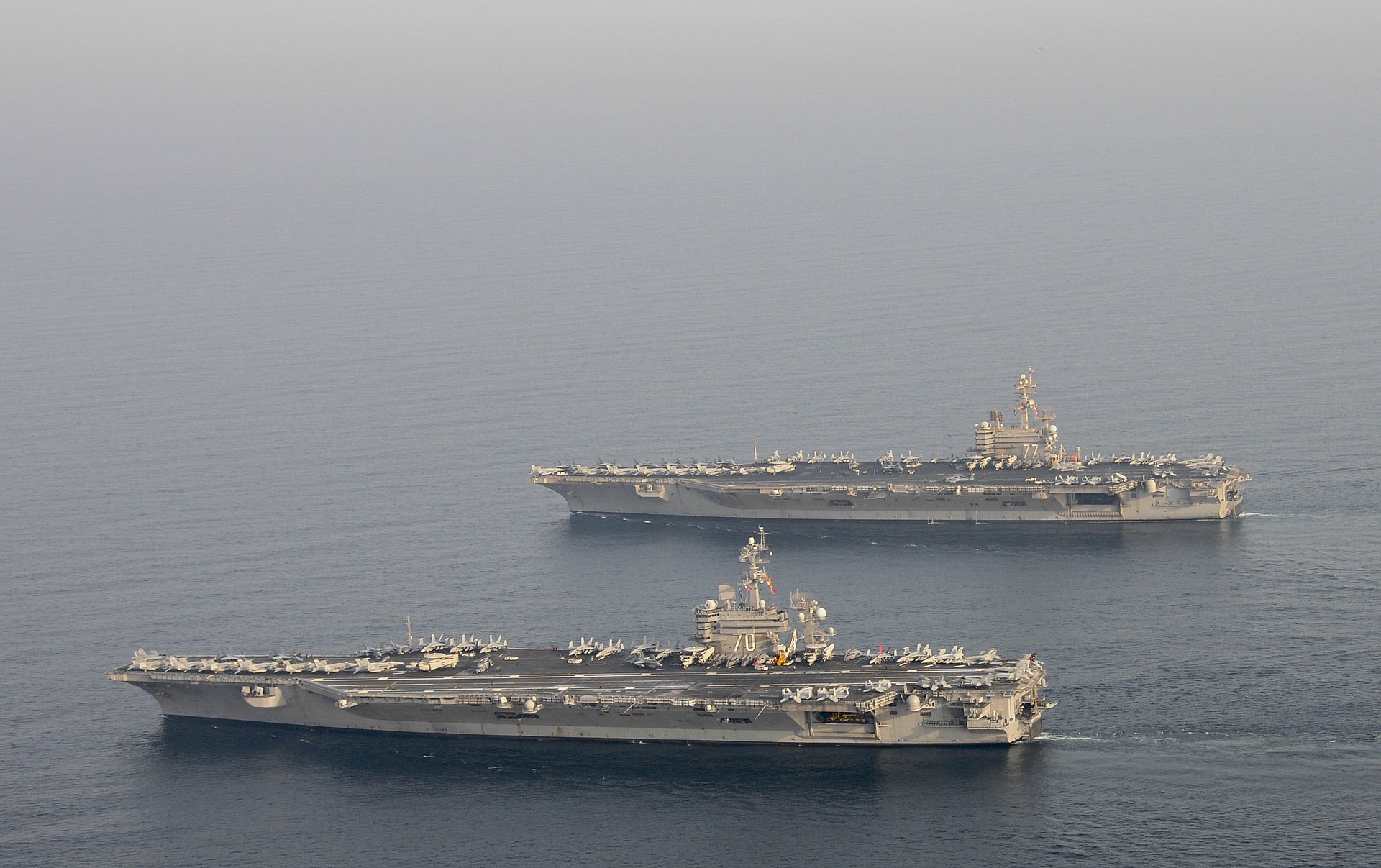
The US naval presence in the Gulf region as of March 22 includes at least three carrier strike groups — the USS Gerald R. Ford, USS Abraham Lincoln, and USS George Washington — along with an amphibious ready group and more than 150 combat aircraft, according to CENTCOM operational summaries. This force is augmented by British, French, and Australian warships operating under Operation Maritime Shield, the multinational convoy escort mission established on March 10.
The mine threat represents Iran’s most potent Hormuz weapon. The IRGC is believed to have deployed several hundred mines in and around the strait since early March, according to US intelligence assessments cited by the Wall Street Journal. Clearing these mines under combat conditions would take weeks, not days. However, the US Navy’s mine countermeasures force — comprising Avenger-class mine countermeasures ships, MH-53E Sea Dragon helicopters, and an expanding fleet of unmanned underwater vehicles — has trained for exactly this scenario for thirty years.
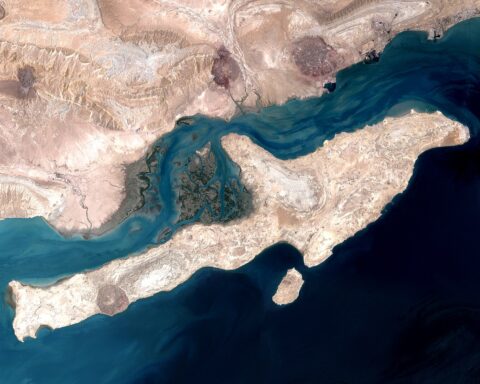
Iran’s coastal anti-ship missile batteries, positioned on the Iranian shore and on islands including Abu Musa, Greater Tunb, and Lesser Tunb, present a more persistent threat. These batteries, armed with Chinese-derived C-802 and domestically produced Noor and Qader missiles, can target vessels transiting the strait’s narrowest 54-kilometre passage. However, American and Israeli air campaigns have already degraded a significant portion of Iran’s air defence network, and the coastal batteries would face sustained suppression from carrier-based aircraft and Tomahawk cruise missiles.
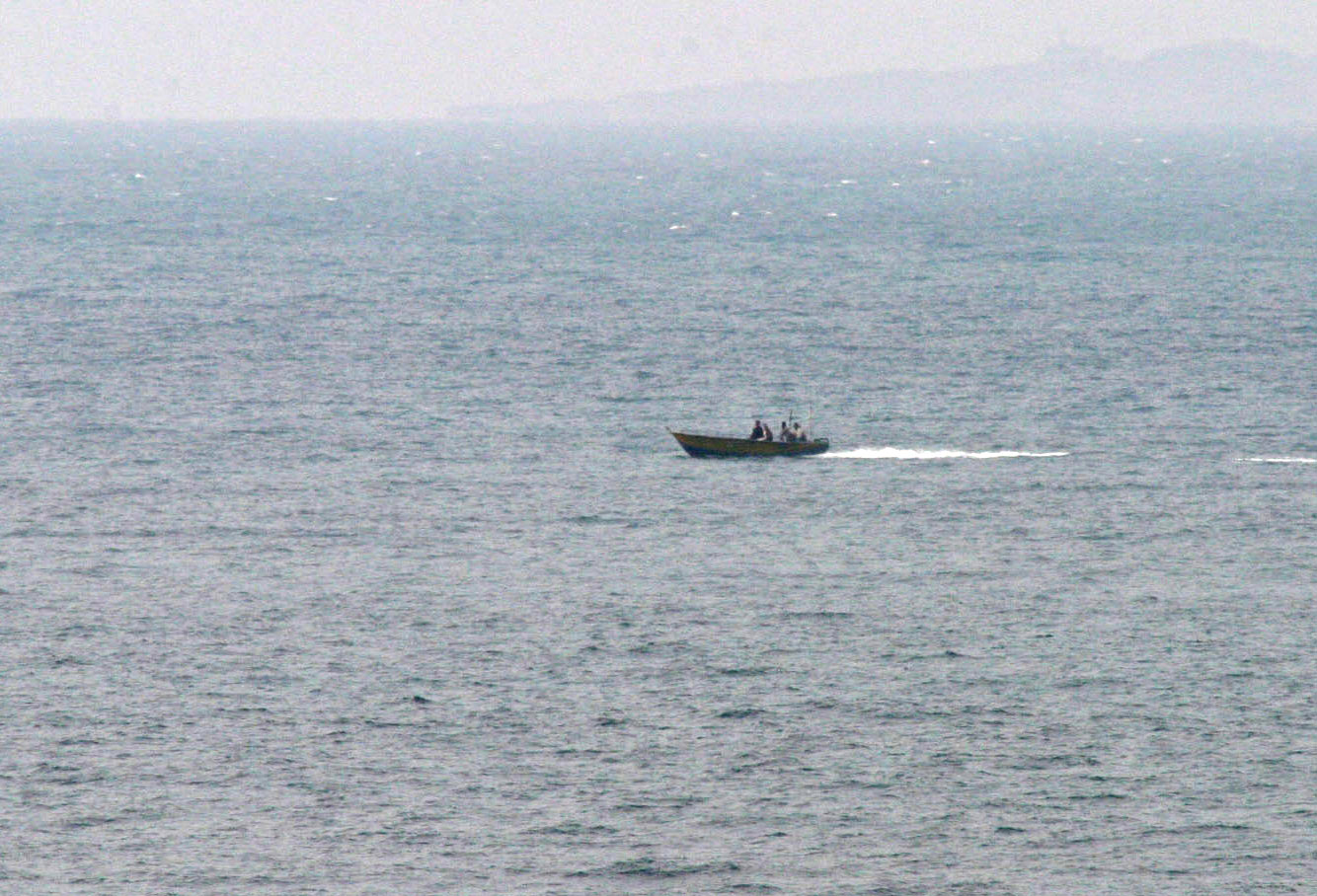
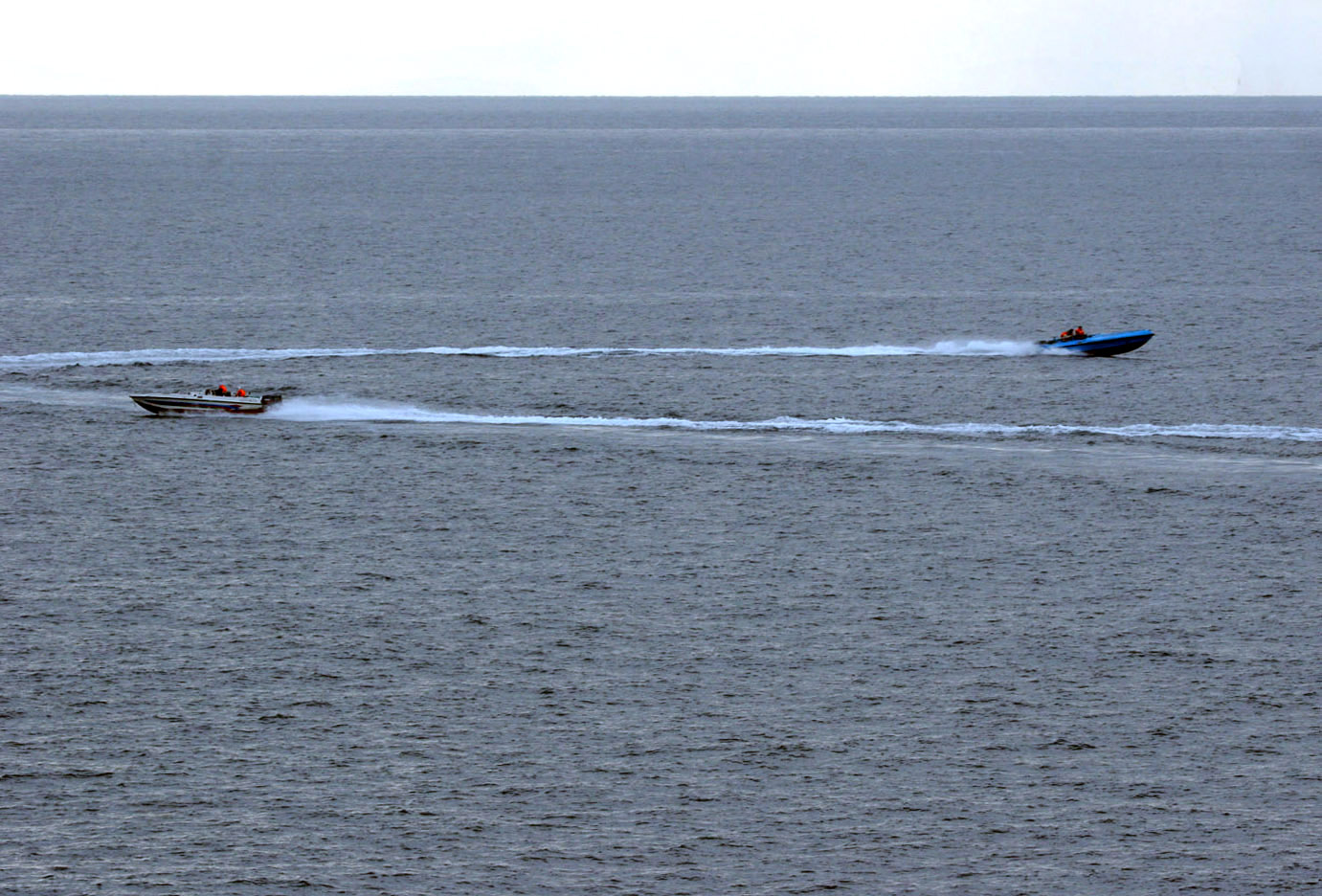
The IRGC’s fast attack craft — hundreds of armed speedboats designed to swarm conventional warships — posed the most difficult targeting challenge in peacetime exercises. In the current conflict, A-10 Warthog ground-attack aircraft and Apache attack helicopters have already been deployed to hunt Iranian boats across the strait, and the introduction of AI-guided autonomous drones has further tilted the asymmetric balance against Iran’s small-boat tactics.
Why Total Closure Would Unite the World Against Iran
The selective blockade divided the world. Total closure would unite it. This is not a theoretical distinction — the diplomatic record of the past twenty-three days demonstrates that every Iranian escalation has narrowed Tehran’s circle of supporters while expanding the coalition arrayed against it.
When Iran first disrupted Hormuz traffic in early March through mine-laying and vessel harassment (Level 2 on the Escalation Matrix), the international response was fragmented. China called for “restraint by all parties.” India refused to assign blame. Russia offered to mediate. The UN Security Council failed to pass a resolution condemning any party. This fragmentation was Iran’s greatest strategic asset — a divided international community cannot organise an effective military response.
The shift to selective blockade (Level 3) began to erode this fragmentation. The G7 issued a joint statement on March 8 demanding freedom of navigation in the strait, though it stopped short of authorising military action. The EU convened an emergency energy meeting on March 16 as oil prices pushed past $106. NATO’s North Atlantic Council discussed invoking Article 5, though Turkey vetoed the proposal, according to diplomatic sources cited by Reuters.
At Level 4 (near-total closure), the diplomatic fractures would close rapidly. China, which has maintained back-channel communications with Tehran throughout the conflict according to Bloomberg, would face an impossible choice between its relationship with Iran and its own energy security. Beijing’s likely response — joining or at least tacitly supporting a multinational naval operation — would represent a diplomatic catastrophe for Iran that no military gain could offset.
At Level 5 (total closure), the coalition against Iran would encompass virtually every major power, including nations currently providing diplomatic cover. The last time a single state attempted to close an international waterway, Egypt’s 1967 closure of the Strait of Tiran, the result was the Six-Day War. The parallel is inexact — Egypt’s closure was directed at a single nation (Israel) rather than global commerce — but the principle holds: declared closures of international waterways invite overwhelming military responses because they threaten the economic security of too many nations to permit diplomatic resolution.
The ACLED conflict data project, in its March 2026 special issue, documented that Iran’s war strategy of “horizontal escalation” — expanding the geographic scope of the conflict to 14 countries — has progressively isolated Tehran rather than strengthening its position. Each new country attacked, each new target set expanded, has generated another opponent rather than another ally. Total Hormuz closure would represent the ultimate horizontal escalation: an attack not on any single nation but on the global economic system itself.
Saudi Arabia Grows Stronger With Every Iranian Escalation
The paradox of Iran’s escalation strategy, as viewed from Riyadh, is that each Iranian threat strengthens Saudi Arabia’s strategic position rather than weakening it. The Kingdom has absorbed hundreds of drone and missile strikes since February 28 without retaliating with offensive military force — a posture of strategic patience that has earned it diplomatic capital, military assistance, and economic guarantees that would have been unthinkable before the war.
Consider the diplomatic trajectory. Before the war, Saudi Arabia’s primary security relationship was bilateral — overwhelmingly with the United States. Three weeks of Iranian attacks have produced a multilateral security architecture that Riyadh has sought for decades. The March 19 meeting of Turkish, Saudi, Egyptian, and Pakistani foreign ministers in Riyadh produced the framework for a security pact that excludes the United States — a development that would have been diplomatically impossible without Iran’s decision to attack all six GCC states simultaneously.
The arms pipeline has accelerated correspondingly. The Rubio-authorised $16 billion emergency arms package, bypassing Congressional approval, has delivered Patriot interceptors, THAAD batteries, and F-35 sustainment packages at a pace that peacetime procurement processes would have taken years to achieve. Saudi Arabia signed a $5 billion agreement with China to manufacture combat drones domestically — a deal facilitated by Iran’s attacks on Chinese-linked shipping, which eliminated Beijing’s objections to arming the Kingdom.
Crown Prince Mohammed bin Salman‘s dual-track strategy — absorbing Iranian attacks while dispatching dealmakers to the FII Priority Summit in Miami — has positioned the Kingdom as both a victim worthy of international support and a stable investment destination capable of functioning under fire. The Miami summit, with President Trump as guest of honour, signals to global capital that Saudi Arabia’s economic agenda survives the war intact.
Total Hormuz closure would further amplify these advantages. It would force the international community to confront the reality that the only alternative oil export route from the Gulf runs through Saudi Arabia’s Red Sea port of Yanbu — making the Kingdom’s infrastructure indispensable to global energy security in a way that no amount of peacetime diplomacy could achieve. The March 20 drone strike on the Yanbu-adjacent SAMREF refinery demonstrated the vulnerability but also the strategic centrality of this bypass route.
The Blockade’s Expiry Date
Every blockade carries an inherent expiry date — the point at which the costs to the blockading power exceed the costs imposed on its targets. For Iran’s selective Hormuz blockade, that date is approaching faster than Tehran’s war planners anticipated, and a shift to total closure would accelerate its arrival dramatically.
The food dimension alone imposes a hard timeline. Iran’s poultry industry, which provides the primary animal protein source for the population, depends almost entirely on imported corn and soybeans. Feed grain inventories at Iranian processing facilities typically hold 45 to 60 days of supply, according to agricultural trade analysts at Rabobank. The blockade has now persisted for 23 days. If imports remain disrupted through mid-April, Iran faces a cascade of poultry farm closures, meat price spikes, and public anger that the regime’s subsidised distribution system cannot absorb.
The financial dimension is equally constraining. Iran’s oil export revenue — its primary source of hard currency — has collapsed alongside its ability to load tankers at Kharg Island and other Gulf terminals. The Goreh-Jask pipeline, which bypasses Hormuz to reach Iran’s sole Gulf of Oman export terminal, handles fewer than 70,000 barrels per day according to EIA data — a fraction of Iran’s pre-war export capacity of approximately 1.5 million barrels per day. The currency implications are already visible: the Iranian rial has depreciated by more than 30 percent against the dollar on the unofficial market since the war began, according to foreign exchange tracking services.
| Constraint | Current Status (Day 23) | Critical Threshold | Total Closure Impact |
|---|---|---|---|
| Feed grain reserves | Depleting — 22-37 days remaining | 45-60 day total supply | Accelerated depletion — no resupply possible |
| Pharmaceutical inputs | Adequate — 60-90 day stocks | 90 days | No resupply — shortages by June |
| Oil export revenue | ~90% reduction from pre-war | $0 by May if blockade persists | $0 immediately — no loading at any port |
| Currency stability | 30%+ depreciation | Hyperinflation threshold | Currency collapse within weeks |
| Domestic political support | Eroding — internet blackout limits dissent | Food price riots (historic trigger) | Accelerated erosion — regime legitimacy crisis |
The regime has one mechanism for extending the blockade’s shelf life: the internet blackout imposed on Iran’s population since the war’s first week. By cutting off domestic access to independent information, Tehran has limited the public’s awareness of the blockade’s true costs and prevented the coordination of protest movements that might challenge the war’s continuation. But information blackouts are leaky instruments — and a population that discovers simultaneously that its government caused a food shortage by blocking its own supply routes will react with the fury that has toppled Iranian governments before.
What Happens When Trump’s Ultimatum Expires?
President Trump’s demand that Iran fully reopen the Strait of Hormuz within 48 hours — issued on March 21, with a deadline falling on the evening of March 23 — has created a binary crisis point that the war’s previous three weeks of incremental escalation deliberately avoided. The ultimatum narrows the decision space for both sides in ways that make miscalculation more likely and compromise more difficult.
Three scenarios emerge from the deadline’s expiry, each with distinct implications for the blockade and for Saudi Arabia’s defence posture.
Complicating the picture further, Iran issued five contradictory statements on whether Hormuz is actually open or closed, with its foreign minister claiming the strait was never shut while its military threatened complete closure.
In the first scenario, Trump strikes Iran’s power grid and Iran carries out its threat of total Hormuz closure. This is the maximum escalation pathway — and the one that would most rapidly trigger the multinational naval operation to break the blockade. Brent crude would likely spike above $150 per barrel within hours, according to Goldman Sachs energy analysts. The humanitarian consequences for Iran’s 93 million citizens — without electricity, without food imports, without functioning hospitals — would generate a crisis that the regime might not survive. This scenario is a strategic catastrophe for Iran, which is precisely why Tehran’s threat to pursue it functions as deterrence rather than declared policy.
In the second scenario, Trump delays or modifies the ultimatum while maintaining military pressure short of power grid strikes. This is the path that Trump’s own advisors reportedly favour, according to CNN reporting that cited Pentagon officials uncomfortable with the humanitarian implications of grid attacks. A modified approach might target specific power substations linked to military installations rather than the civilian grid, giving Trump the appearance of following through while avoiding the escalation trigger for total closure.
In the third scenario — the most likely, based on the pattern of the war’s first three weeks — both sides step back from the brink through indirect channels. Trump claims credit for Iranian “concessions” that were already in progress (the selective blockade’s gradual loosening as more nations negotiate safe passage). Iran claims its threat deterred the power grid attack. The selective blockade continues, with incremental modifications, while both sides search for a face-saving path toward negotiation.
Saudi Arabia’s interest lies unambiguously in the third scenario. The strain on Saudi air defences from Iraqi militia attacks and Iranian drone barrages makes any further escalation a direct threat to the Kingdom’s infrastructure and population. Riyadh’s diplomats have communicated this position privately to Washington, according to Arab News, while publicly maintaining support for the American military campaign.
The deeper strategic question transcends any individual deadline. Iran’s blockade, whether selective or total, carries an inherent expiry date set by economics, food security, and domestic politics rather than by military force or diplomatic ultimatums. The blockade will end not because any fleet breaks it or any negotiator resolves it, but because Iran cannot sustain it without destroying itself in the process. The question is whether Tehran’s leadership recognises this reality before the consequences become irreversible — or whether the war’s logic of escalation drives both sides past the point where rational calculation applies.
Frequently Asked Questions
What is the difference between Iran’s selective blockade and total closure of Hormuz?
Iran’s selective blockade, implemented since March 5, 2026, restricts passage to Western-allied vessels while permitting ships from countries like China, India, Pakistan, and Japan to transit through Iranian territorial waters. Total closure would halt all commercial traffic regardless of flag state, including vessels carrying Iran’s own food and fuel imports through Gulf ports that handle 85 to 90 percent of the country’s bulk agricultural commodities.
Why would total Hormuz closure hurt Iran more than the selective blockade?
Iran imports between 7 and 9 million tonnes of corn and 2 to 3 million tonnes of soybeans annually through Gulf ports, with 89 percent import dependency on corn alone. Total closure would seal these ports as effectively as it seals Gulf Arab export terminals, creating food shortages within weeks. The selective blockade allows these imports to continue while disrupting Iran’s adversaries — total closure eliminates that advantage.
Can the US Navy reopen the Strait of Hormuz by force?
The US Navy possesses the capability to clear Iranian mines, suppress coastal missile batteries, and escort convoys through the 54-kilometre-wide strait. Three carrier strike groups, more than 150 combat aircraft, and multinational mine countermeasures forces are currently deployed in the region. The selective blockade’s legal ambiguity prevents this response; a declared total closure would provide the legal and diplomatic justification for a decisive naval operation.
How does the 1988 Operation Praying Mantis precedent apply to the current crisis?
Operation Praying Mantis destroyed approximately half of Iran’s operational navy in a single day in April 1988, the largest US surface naval engagement since World War Two. The operation demonstrated that Iran’s conventional naval forces cannot withstand a direct American military response in the confined waters of the Persian Gulf — a lesson that shaped forty years of Iranian doctrine emphasising the threat of closure rather than closure itself.
What would happen to oil prices if Iran completely closed the Strait of Hormuz?
Approximately 20 million barrels per day transited Hormuz before the war, representing roughly 20 percent of global petroleum consumption, according to EIA data. The selective blockade pushed Brent crude from approximately $80 to a peak of $126 per barrel. Goldman Sachs energy analysts estimate that total closure would spike prices above $150 per barrel, with potential to reach $180 to $200 if the closure persisted beyond two weeks.
Why has China supported Iran’s selective blockade?
China benefits from the selective blockade because it has negotiated safe passage for Chinese-flagged vessels, giving Beijing preferential access to Gulf oil and LNG at a time when Western-linked shipping is disrupted. This arrangement allows China to import approximately 4.2 million barrels per day through Hormuz while competitors face supply constraints. Total closure would eliminate this advantage and force China to oppose Iran at the UN Security Council.