
TEHRAN — On May 24, a senior White House official told CBS News that Iran had provided “assurances — verbal and in writing — that any subsequent permanent deal will include the ‘disposal’ of all enriched uranium, higher and lower levels.” On the same day, in the same timezone, Iran’s Supreme National Security Council secretariat stated that enriched nuclear material “will not be transferred to any country” and that negotiations with the United States “are not centered on such a matter.” One of these statements describes a document that does not exist. The other describes a document that the person denying it helped draft. Saudi Arabia, excluded from all five rounds of US-Iran negotiations and from the Track 2 nuclear framework entirely, has no independent channel to determine which government is lying about what is written on the paper that governs Riyadh’s fiscal recovery timeline — because Riyadh has never seen the paper. That exclusion extends into the calendar itself: the Saudi Arabia five-day Eid diplomatic blackout means the kingdom cannot respond publicly to either version of the uranium assurances until June 1 — giving whichever government holds the truer document eight uncontested days to set the narrative.
The question is not who is bluffing. The question is which domestic political system can sustain a public contradiction of its own written commitments longer: a Supreme Leader whose directive that uranium “must stay in Iran” was issued after whatever document the White House claims to possess, or a White House whose own president told Sean Hannity three weeks earlier that retrieving the uranium is “not necessary except public relations.” Saudi Arabia’s $33.5 billion first-quarter deficit — 194 percent of its full-year target — compounds at $700 million per day of Hormuz closure while these two governments argue about whether a piece of paper says what the other says it says.
Table of Contents
- What Did the White House Claim About Iranian Uranium?
- Tehran’s Simultaneous Denial
- Why Can’t Both Versions Be True?
- The Verification Blackout Since February 28
- Down-Blending Inside Iran Is Not Disposal
- How Did Trump’s Own Red Line Collapse?
- The Domestic Political Asymmetry No Negotiation Can Bridge
- What Can Saudi Arabia Verify About the Nuclear Text?
- Frequently Asked Questions
What Did the White House Claim About Iranian Uranium?
The senior White House official’s statement to CBS News on May 24 was specific in a way that unnamed-official briefings rarely are: Iran gave assurances “verbal and in writing” that any subsequent permanent deal will include the “disposal” of all enriched uranium at both higher and lower levels. The word “disposal” was placed in quotation marks by the official — suggesting it was drawn from the text itself, not paraphrased — and the framing of “any subsequent permanent deal” implied the assurance lives in the current preliminary framework, binding the parties to a commitment they must honour in the next stage of negotiation.
This was not the first time the administration made such a claim. On April 16, Trump himself told reporters that Iran had “agreed to give us back the nuclear dust” — a formulation that suggests physical transfer of material to the United States, which no version of any circulating draft supports. The Axios 14-point MOU framework, reported across five rounds of negotiations stretching 106 days, uses the phrase “negotiate over” suspension of enrichment and “removal of its stockpile” — and the distinction between committing to negotiate over removal and committing to removal is the distance between a framework and a concession.
What matters for the structural analysis is the escalation pattern: Trump’s April claim was unsourced and vague (“nuclear dust”), the May 24 briefing was sourced to a senior official and specific (“verbal and in writing,” “disposal,” “all enriched uranium”). The administration moved from an offhand presidential remark to a formal background briefing with textual citations in five weeks, which is either evidence that real progress occurred or evidence that the political need to demonstrate progress intensified as the Sunday deadline approached without a signing.
Tehran’s Simultaneous Denial
Iran’s denial was not a single statement but a coordinated institutional response across multiple organs of state, delivered within hours of the CBS report. Fars News Agency — which operates under IRGC editorial direction — stated that “Iran has made no commitments in this agreement regarding handing over nuclear stockpiles, removing equipment, closing facilities, or even pledging not to build a nuclear bomb.” Tasnim News Agency, also IRGC-affiliated, issued a separate denial. The Deputy for Foreign Policy at the SNSC Secretariat — the body that actually conducts nuclear policy under Khamenei’s supervision — stated publicly that enriched material “will not be transferred to any country” and that officials “have no intention” of such transfer, adding that negotiations with the US “are not centered on such a matter.”
The Middle East briefing 3,000+ readers start their day with.
One email. Every weekday morning. Free.
The SNSC statement is the one that carries constitutional weight. In Iran’s system, the SNSC is the body empowered to make binding national security commitments; the foreign ministry negotiates, but the SNSC ratifies. When the SNSC secretariat says the negotiations are “not centered on such a matter,” it is not offering a diplomatic hedge — it is asserting that the subject the White House claims is covered in writing does not exist as a subject of discussion. This is an epistemological claim, not a bargaining position. The CBS-Tasnim contradiction reported on May 24 was the first public manifestation of this pattern; what has emerged since is not merely a disagreement about terms but a disagreement about whether the conversation happened at all. That institutional posture hardened further on Arafah Day, when the SNSC secretary personally declared no retreat on enrichment or Hormuz — examined in Iran’s SNSC rejection of external verification.
President Pezeshkian reinforced the hierarchy on the same day: “Iran makes no decision without the Leader’s permission.” This is not boilerplate. It is a public statement that whatever any negotiator may have said or signed in Rome or Muscat or Islamabad, nothing is binding until Khamenei approves it — and Khamenei’s most recent directive, reported by Haaretz on May 21 citing Iranian sources, is that the uranium “must stay in Iran.”
Why Can’t Both Versions Be True?
Both versions cannot simultaneously be true because they make mutually exclusive factual claims about the content of the same document. The White House says a written text exists in which Iran commits to “disposal” — a word that implies removal from Iranian sovereign territory. The SNSC says no such commitment exists and that the subject is not even under discussion. These are not different interpretations of ambiguous language; they are contradictory claims about what words appear on a page.
There are three possible resolutions, and none of them is benign for the deal’s viability. First: the White House is overstating what the text says — reading “negotiate over removal” (the Axios formulation) as equivalent to “assurances of disposal,” which it is not. Second: Iran’s negotiating team made commitments in the framework text that the SNSC has now publicly repudiated, meaning the Supreme Leader’s office has overruled its own negotiators after the fact. Third: two separate texts are in circulation — one presented to Washington, one retained by Tehran — and neither side is lying about what is on the paper they are holding. The Bloomberg report of May 10, which described Iran offering HEU transfer to a third country with a return clause, suggests something like the second or third scenario: Iran’s own most forthcoming proposal preserved reversibility, which is incompatible with “disposal.”
The JCPOA precedent is instructive here. The 2015 deal included confidential IAEA-Iran side arrangements — the so-called “Roadmap Agreement” — whose contents were contemporaneously disputed in public by the very parties who signed them. Congressional Republicans demanded disclosure; Iran insisted the documents were bilateral with the IAEA and not subject to Congressional review. The template for this exact contradiction — governments publicly disagreeing about the content of documents they jointly produced — was established seven years before the current framework was drafted.
The Verification Blackout Since February 28
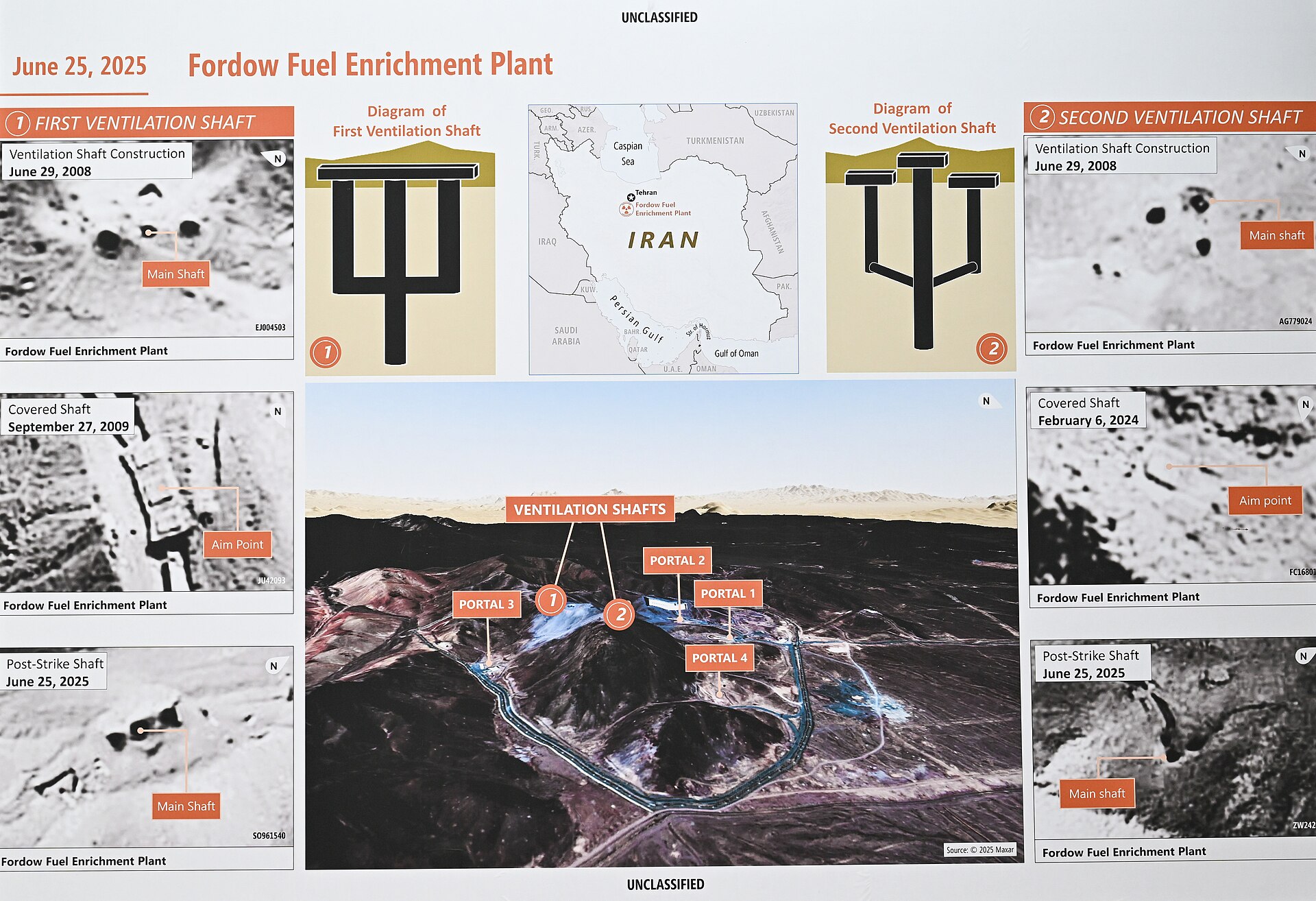
Even if the text said what the White House claims it says, there is no mechanism to verify compliance. Iran terminated all IAEA inspector access on February 28, 2026 — cameras disabled, seals removed from all declared nuclear facilities. The last independently verified stockpile figure is 440.9 kilograms of uranium enriched to 60 percent U-235, reported by IAEA inspectors prior to the February 28, 2026 access termination. As of today, no international body can confirm whether that material still exists in its reported form, whether it has been further enriched, dispersed across undeclared sites, or down-blended. The IAEA does not know where the material is.
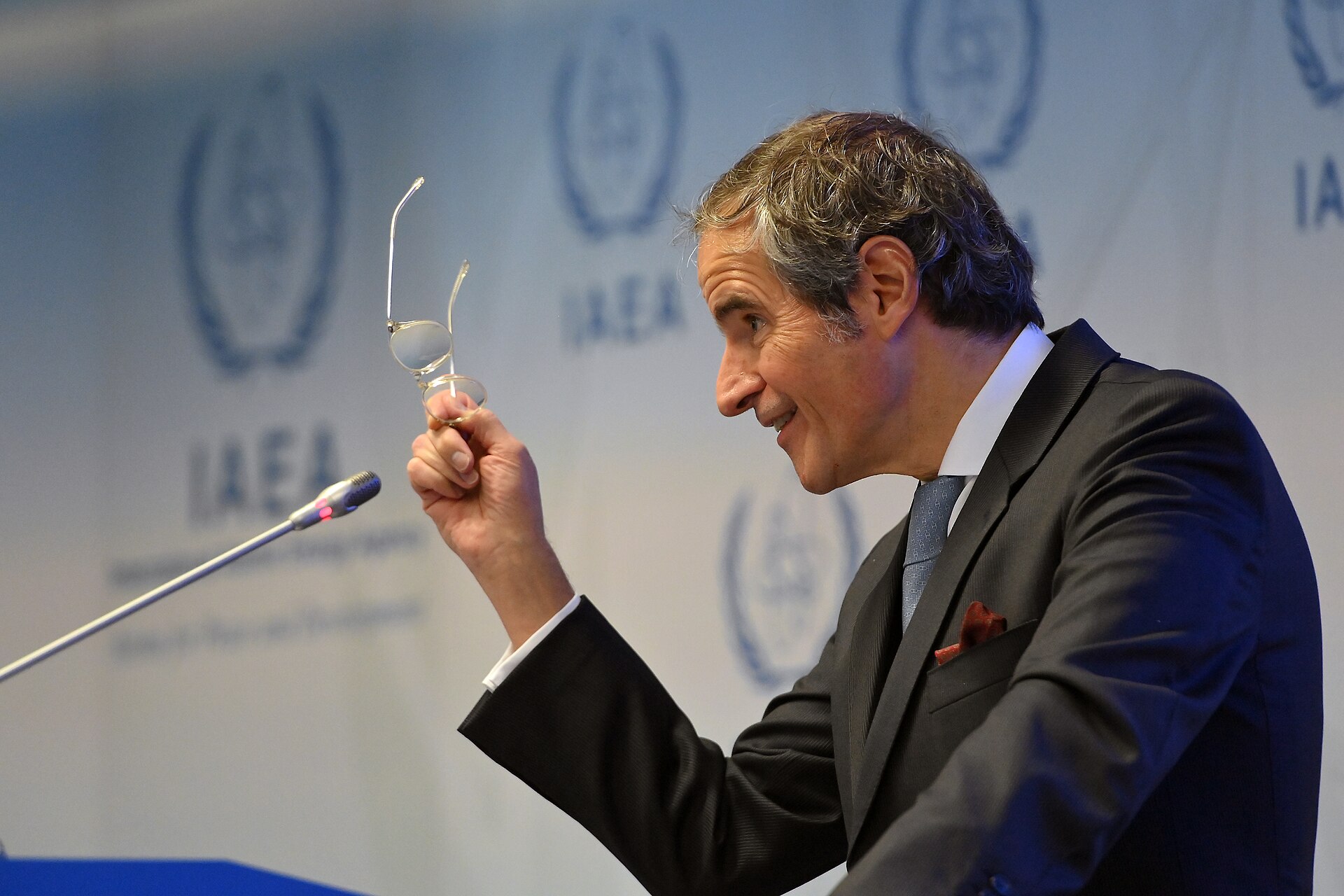
IAEA Director General Rafael Grossi stated the consequence plainly in April: “Without verification, any agreement is not an agreement, but rather an illusion of agreement or a promise that you don’t know whether it will be kept.” The Arms Control Association’s assessment is equally direct — any nuclear agreement “must clearly articulate the IAEA’s role in monitoring and verifying HEU removal or down-blending processes” and monitoring “should require detailed understandings and timelines to prevent Iran from exploiting loopholes.” No such understandings exist. No timeline for IAEA re-entry appears in any leaked framework document. The Track 2 nuclear process — a 30-day negotiation window that begins only after the preliminary deal is signed — is where verification arrangements would theoretically be negotiated, but that process has not started because the preliminary deal has not been signed.
The 440.9-kilogram figure deserves particular attention because of what it represents in weapons-potential terms. The separative work required to further enrich this stockpile from 60 percent to weapons-grade 90 percent is approximately 564 SWU — roughly one percent of the 55,330 SWU already committed to produce the existing material. Iran has completed 99 percent of the enrichment work needed for seven to ten nuclear warheads. The material sitting in facilities the IAEA cannot access is, in breakout terms, two to four weeks from weapons-grade. “Disposal” of this material is not a housekeeping detail appended to a ceasefire — it is the single most consequential proliferation commitment any state has made since Libya in 2003, and Libya’s author was subsequently overthrown with Western military support, a precedent Tehran cites openly and often.
Down-Blending Inside Iran Is Not Disposal
Iran’s own preferred mechanism — stated publicly by Foreign Minister Araghchi on CBS Face the Nation in March — is to “dilute those enriched material, or down-blend them, as they say, into lower percentage.” Down-blending reduces the enrichment level of existing material (from 60 percent back to under 5 percent, for instance) while keeping the material on Iranian soil, in Iranian facilities, under Iranian sovereign control. It preserves the centrifuge infrastructure, the technical workforce, the institutional knowledge, and — because down-blending is reversible — the latent capacity to re-enrich at any future date.
“Disposal” implies something categorically different: removal of the material from Iran entirely, whether to a third country, an international fuel bank, or — as Trump’s “give us back the nuclear dust” formulation implied — to the United States itself. The gap between these two concepts is not semantic. Down-blending inside Iran means Iran retains the fuel, the facilities, and the option to reconstitute; disposal means Iran loses all three. The Arms Control Association notes that down-blended material could be “stored in Iran, sold to a third-party country, or possibly stored at the international fuel bank in Kazakhstan” — and if the first option is what Iran has agreed to, the White House is lying about what “disposal” means in the text. If the third option is what the text says, Iran’s SNSC is lying about what Iran committed to.
Russia’s position compounds the confusion. Kremlin spokesman Dmitry Peskov confirmed in April that Moscow is “ready to provide such services” — meaning Russia would accept transfer of Iranian HEU for storage or down-blending on Russian soil. But Peskov added that the offer “is not currently on the negotiating table” and Washington has shown “no interest” in the Russian option. Washington explicitly rejected Tehran’s offer to transfer enriched uranium to Russia; the US insists on alternative disposition mechanisms. So Iran’s most forthcoming public proposal (transfer with a return clause) has been rejected, Russia’s standing offer has been ignored, and the White House claims Iran has agreed in writing to something more far-reaching than anything either Iran or Russia says is under discussion.
How Did Trump’s Own Red Line Collapse?
The timeline of the president’s own statements traces a complete reversal in approximately four weeks. On April 16, Trump told reporters that Iran had “agreed to give us back the nuclear dust” — framing HEU retrieval as an accomplished fact, a done deal, something Iran had already conceded. By mid-May, in a Hannity interview approximately May 14, the same president said retrieving the uranium is “not necessary except public relations.” The shift from “they agreed to give it back” to “we don’t actually need it back” is not a refinement of negotiating strategy — it is the abandonment of a stated red line by the person who drew it.
The senior White House official’s May 24 briefing — claiming written assurances of “disposal” — appears to represent a third position: Iran committed on paper to disposal in a future permanent deal, but the current framework does not require it. This is the language of deferral, not the language of achievement, and it is incompatible with Trump’s April 16 claim that Iran had already agreed. The broader pattern of “largely negotiated” language functions the same way — it claims credit for a commitment that exists only as an obligation to negotiate further, not as a binding concession.
The collapse matters because it establishes the US domestic political constraint that mirrors Iran’s. If Trump publicly abandoned his own “nuclear dust” demand within four weeks, there is no credible enforcement mechanism for any “written assurance” about disposal in a future deal. The assurance — even if it exists exactly as the White House describes it — is a commitment to commit, made by a president who already demonstrated he will reverse his own commitments when political convenience requires it. Khamenei’s directive that HEU must stay in Iran, issued May 21, was timed precisely to the window after Trump’s reversal and before the Sunday deadline — a signal that Tehran noticed the American retreat and priced it in.
The Domestic Political Asymmetry No Negotiation Can Bridge
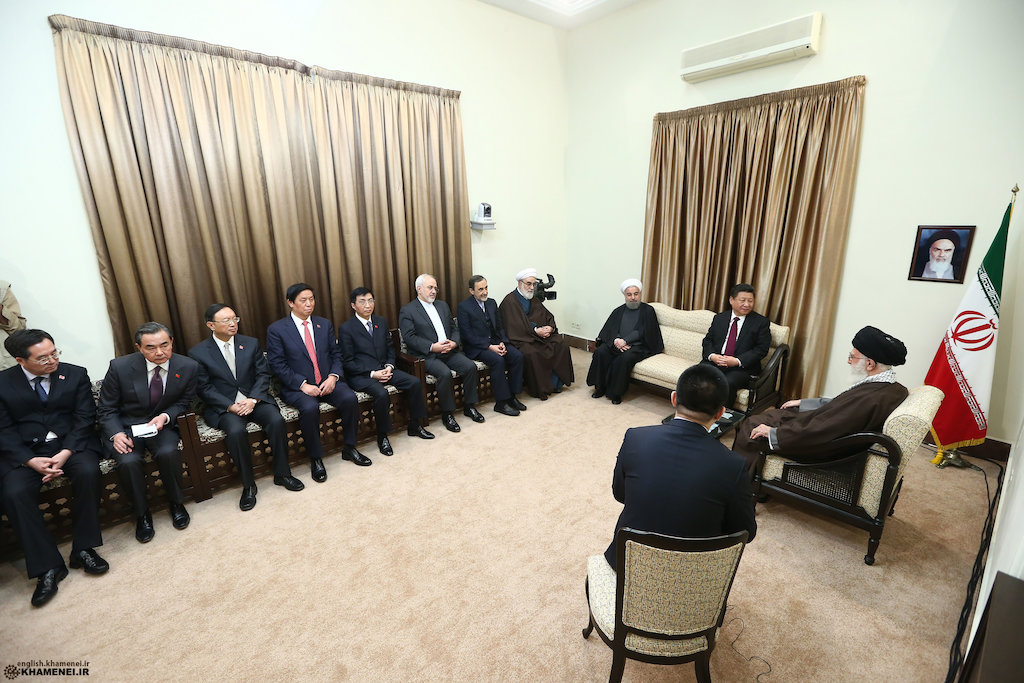
For the deal to close on terms the White House has described publicly, one government must contradict what it committed to in writing — and then sustain that contradiction against domestic political opposition. The asymmetry lies in the structure of each system’s capacity to absorb contradiction. In Iran, Khamenei’s word is constitutionally supreme; the SNSC operates under his direct supervision; the president himself states publicly that “Iran makes no decision without the Leader’s permission.” If Khamenei says uranium stays in Iran, the entire negotiating apparatus is bound by that directive regardless of what any framework text says. An Iranian negotiator who signed a document promising disposal without Khamenei’s explicit authorization signed a document that is, in Iranian constitutional terms, void. That approval chain now runs through the courier network through which Iran’s Supreme Leader can be reached — a physical relay with multi-day latency to an undisclosed location that US intelligence has not pinpointed.
In the United States, the White House can brief journalists that written assurances exist, and those briefings carry political weight — but they carry zero legal weight until a treaty is ratified by the Senate or an executive agreement is formally concluded. A background briefing to CBS News is not an executive agreement. Fifty-two senators and 177 House members have already demanded zero-enrichment terms; Republican senators Wicker, Pompeo, and Tillis are on record opposing any deal that does not include complete denuclearization. The domestic political cost of admitting that “disposal” means “down-blending inside Iran under Iranian sovereign control” would be immediate and severe for any administration — but particularly for one that claimed Iran had agreed to “give us back the nuclear dust.”
The structural question is which system blinks first. Iran’s advantage is that Khamenei does not face elections, does not brief journalists on background, and does not need to reconcile public statements with private commitments because his public statements are the commitments. Trump’s disadvantage is that he has now made three mutually incompatible public claims — Iran agreed to return the uranium (April), it’s not necessary to get it back (May 14), and Iran gave written assurances of disposal (May 24, via official). The SNSC has made one claim, consistently: no commitment on transfer was made. The asymmetry of patience that governs the broader deal timeline governs the nuclear text as well — Iran can wait for the contradiction to resolve because time costs Tehran nothing it wasn’t already paying, while every week of delay costs Saudi Arabia $4.9 billion in lost Hormuz revenue.
What Can Saudi Arabia Verify About the Nuclear Text?
Nothing. Saudi Arabia has been excluded from all five rounds of US-Iran direct negotiations — from Muscat to Rome, 106 days, no deal — and from the Track 2 nuclear framework where HEU disposition would be determined. The Carnegie Endowment’s assessment, published in April 2026 by Leber and Worby, is unambiguous: “The GCC has no seat at the table.” The Atlantic Council’s Alter described Gulf states as “largely sidelined.” The Arab Center in Washington concluded that “neither outcome lies within [Saudi Arabia’s] power to determine.” Riyadh has no bilateral channel to either Washington or Tehran through which it could request a copy of the disputed text, demand clarification of the “disposal” versus “down-blending” distinction, or establish independent verification of what was actually committed.
The asymmetry has a specific structural dimension that compounds the exclusion. The US-Saudi 123 agreement, signed in the same negotiating window, grants Saudi Arabia an enrichment pathway that does not require IAEA Additional Protocol adherence or comprehensive safeguards — while Washington simultaneously demands Iran surrender enrichment entirely. Iran can read the Saudi 123 agreement; it is a matter of public record and Congressional notification. Saudi Arabia cannot read the Iran nuclear document — the text whose content two governments are publicly contradicting each other about. The information asymmetry is total: Iran knows what nuclear rights Saudi Arabia has been granted, but Saudi Arabia does not know what nuclear constraints Iran has or has not accepted.
What Saudi Arabia actually gets from the Iran deal depends entirely on which version of the HEU text is operative — and Riyadh has no mechanism to determine which version that is. If the White House version is correct and disposal is committed to in writing, Saudi Arabia’s security environment improves measurably once implementation begins. If the SNSC version is correct and disposal was never discussed, then the deal Riyadh is waiting for — the deal whose signing would trigger Hormuz reopening and fiscal recovery — contains no nuclear constraint on Iran at all, and Saudi Arabia has been waiting for a ceasefire dressed as a disarmament framework. Saudi Arabia waits twice: once for the deal to be signed, and again for the Track 2 nuclear text that may never contain what Washington claims the preliminary text already says.
The mine-clearance clause pattern established in the broader framework — where sovereignty-affecting provisions are negotiated without Saudi input — repeats in the nuclear domain at a scale that dwarfs any conventional military concession. A mine-clearance timeline affects Red Sea shipping for months. An HEU disposition commitment — or the absence of one — affects the Gulf security architecture for decades.
“Without verification, any agreement is not an agreement, but rather an illusion of agreement or a promise that you don’t know whether it will be kept.”
— Rafael Grossi, IAEA Director General, April 2026
| Date | Source | Claim |
|---|---|---|
| April 16, 2026 | Trump (public statement) | Iran “agreed to give us back the nuclear dust” |
| ~May 14, 2026 | Trump (Hannity interview) | Retrieving uranium “not necessary except public relations” |
| May 21, 2026 | Khamenei (via Haaretz/Iranian sources) | Directive: enriched uranium “must stay in Iran” |
| May 24, 2026 | Senior White House official (CBS) | “Verbal and in writing” assurances of “disposal” of all enriched uranium |
| May 24, 2026 | Fars News Agency | “No commitments” on stockpiles, removal, or nuclear pledges |
| May 24, 2026 | SNSC Secretariat Deputy | Material “will not be transferred to any country” — not the subject of talks |
| May 24, 2026 | Reuters (senior Iranian source) | “Has not agreed to hand over” HEU; nuclear “not part of preliminary agreement” |
| Metric | Figure | Source |
|---|---|---|
| Stockpile at 60% enrichment | 440.9 kg | Last IAEA verification report before Feb 28, 2026 access termination |
| Weapons potential | 7-10 warheads | Arms control analyses; Grossi (IAEA) general statements |
| Breakout time to 90% | 2-4 weeks (enrichment only) | ISIS analysis, Sep 2025 |
| SWU to reach 60% | 55,330 | Center for Arms Control and Non-Proliferation |
| Additional SWU from 60% to 90% | ~564 | Center for Arms Control and Non-Proliferation |
| Enrichment work already completed | ~99% | Derived (55,330 / 55,894) |
| Last IAEA access | February 28, 2026 | IAEA Board report, March 2026 |
| Current verified stockpile figure | Unknown | No access since Feb 28 |
Frequently Asked Questions
What is the difference between Iran’s down-blending offer and the “disposal” the White House claims was agreed?
Down-blending reduces enrichment levels — from 60 percent to below 5 percent — while keeping the material on Iranian soil in Iranian facilities. Disposal implies permanent removal from Iran. Araghchi publicly offered down-blending on CBS in March 2026; Iran simultaneously rejected transfer to Russia (Washington’s position) and proposed transfer with a return clause (which Washington rejected). The gap is sovereignty over the material itself: down-blending preserves Iran’s claim, disposal extinguishes it.
Could the contradiction reflect ambiguous drafting rather than outright deception?
Possibly — and the JCPOA precedent suggests this is the most likely explanation. The 2015 deal contained side arrangements whose contents the parties publicly disputed even after signing. The current framework may use language like “negotiate in good faith toward disposition” that Washington reads as a commitment to disposal and Tehran reads as a commitment to discuss the matter further. Axios’s formulation — “negotiate over removal” — supports this reading. Constructive ambiguity allows both sides to claim their domestic narrative is supported by the text.
Why does the IAEA verification blackout matter if both sides claim a deal exists?
Because the last verified stockpile baseline is now outdated. Iran has operated advanced centrifuges without monitoring for 87 days of active conflict. The material may have been further enriched, dispersed, or weaponized — and no inspection mechanism exists to establish a baseline for any future “disposal” commitment. You cannot verify disposal of material whose current location, quantity, and enrichment level are unknown. Any agreement built on the last known stockpile figure is an agreement built on an assumption.
What precedent exists for a state publicly denying commitments it made in a signed framework?
North Korea’s 2005 Six-Party Joint Statement is the closest analogue: Pyongyang committed to “abandoning all nuclear weapons and existing nuclear programs” while simultaneously maintaining that its peaceful nuclear activities were not covered. The contradiction persisted for more than three years until the framework collapsed entirely in 2009. The Libya 2003 disarmament — often cited as the model — succeeded precisely because Gaddafi’s commitments were unambiguous and immediately verifiable. The current US-Iran dispute combines the ambiguity of the Six-Party model with the verification impossibility created by Iran’s IAEA expulsion.
Can Saudi Arabia gain access to the disputed nuclear text through its 123 agreement relationship with Washington?
No. The 123 agreement governs bilateral US-Saudi civilian nuclear cooperation; it creates no entitlement to US intelligence or diplomatic reporting on third-party negotiations. Congressional notification requirements for the 123 agreement are separate from any Iran deal disclosure obligations. Saudi Arabia’s only pathway to the text would be through direct US executive-branch disclosure — which has not occurred — or through Pakistan’s mediation role under the SMDA, which creates its own conflict of interest since Pakistan is treaty-bound to defend Saudi Arabia while mediating between parties whose deal may harm Saudi interests.
Austria’s Directorate for State Protection and Intelligence assessed that day the same enrichment programme Washington and Tehran are negotiating over is “well advanced” for weapons acquisition — not enrichment management. The DSN finding that Iran’s ballistic missiles are configured to carry nuclear warheads reframes the disposal-versus-down-blending distinction: if the programme’s intent is weapons acquisition rather than energy leverage, the assurance gap is structural, not textual. That distinction is examined in Austria’s intelligence assessment and what it means for the deal’s enrichment logic.