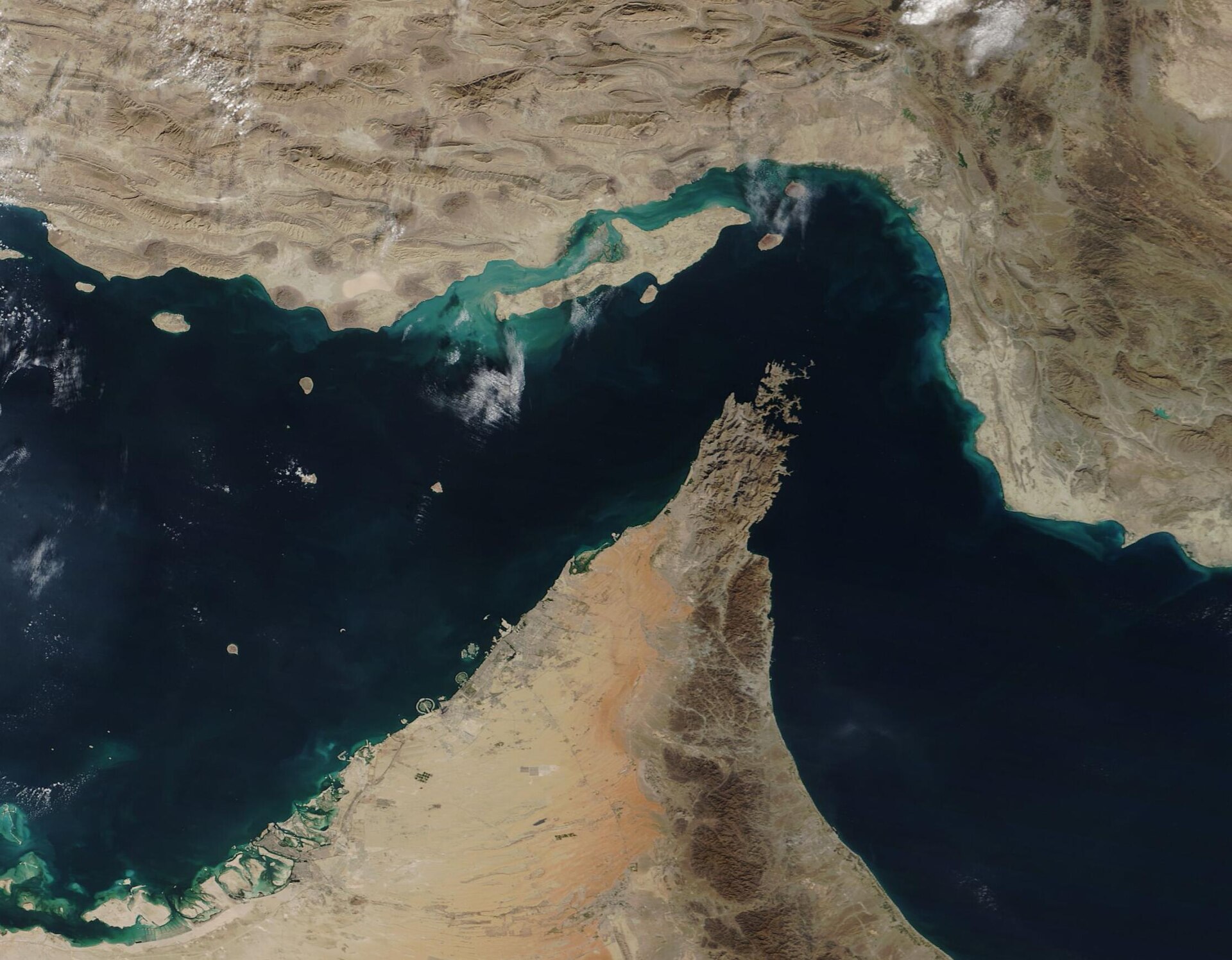
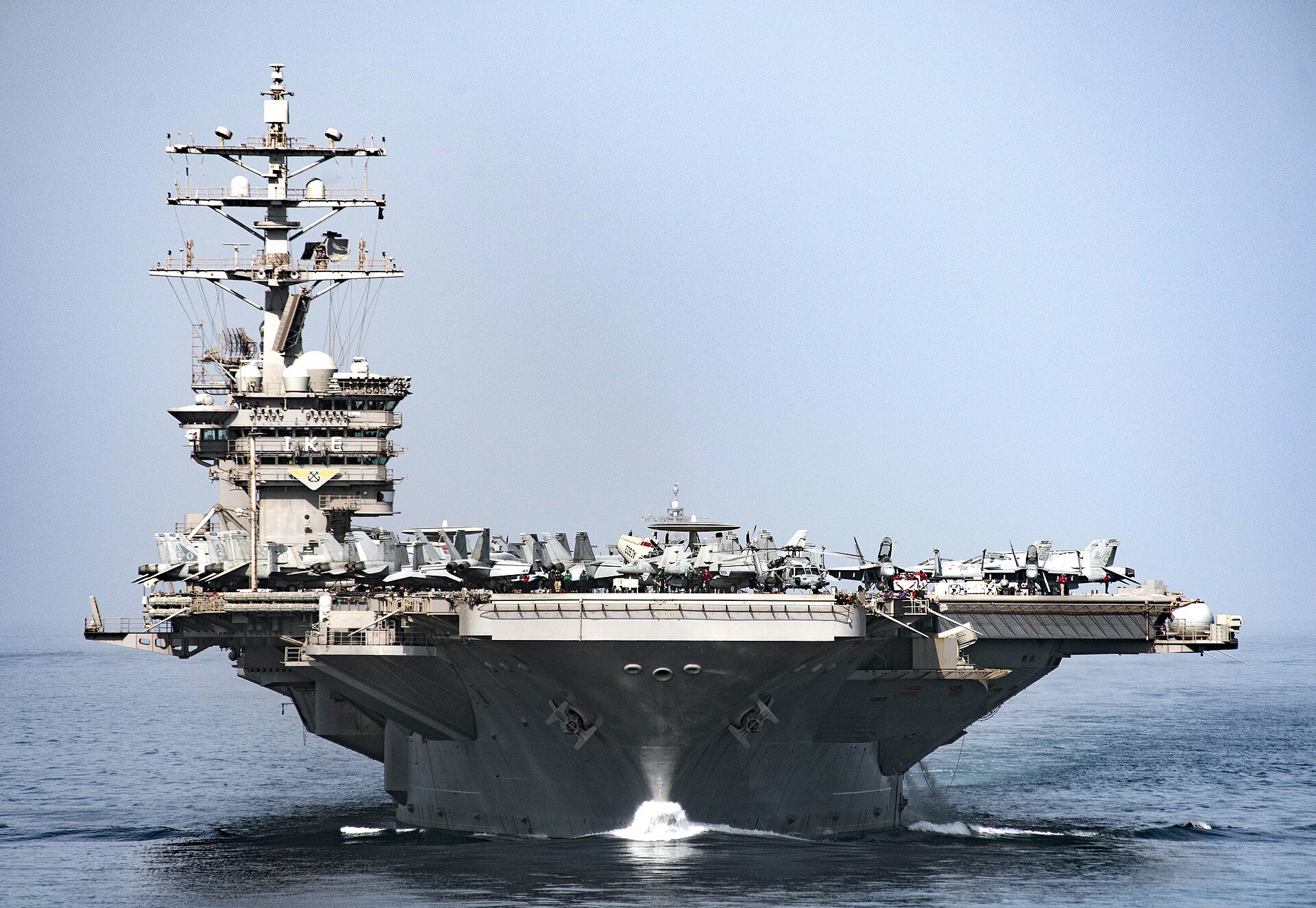
WASHINGTON — The largest American naval deployment to the Persian Gulf since 1991 is not leaving, and the reason should alarm Riyadh far more than it reassures it. Axios reported on May 24 that US forces mobilized during the Iran crisis will remain in theater throughout the 60-day ceasefire window, withdrawing only if a final deal is reached — a condition that depends entirely on Iran’s willingness to negotiate away its enrichment capacity in a Track 2 process that Foreign Minister Araghchi has called “non-negotiable” and that Supreme Leader Khamenei has forbidden his officials to concede. Three carrier strike groups, more than 20 warships, and 15,000 service members now sit in the Gulf not as a Saudi security guarantee but as collateral held against an Iranian nuclear concession that nobody in Tehran with the authority to grant it has shown any inclination to consider. Saudi Arabia opened its airbases to these forces, lobbied for their deployment, and now confronts a problem it cannot talk about in public: it cannot celebrate American military presence without advertising dependence on Washington, and it cannot question that presence without admitting that a deal it was excluded from negotiating across five rounds is not working. That asymmetry — between Washington’s patience and the fiscal cost of that patience for Riyadh — is the structural condition the kingdom cannot resolve.
Table of Contents
- What Does the 60-Day Withdrawal Condition Actually Require?
- Three Carrier Strike Groups and No Exit Date
- Why Is US Military Presence Leverage for Iran Rather Than Security for Saudi Arabia?
- Track 2 and the Withdrawal Trigger No One in Tehran Has Agreed To
- How Did Saudi Arabia End Up Hosting Forces It Cannot Publicly Welcome?
- When Earnest Will Ended and Why 2026 Won’t End the Same Way
- What Happens to US Forces If Track 2 Nuclear Talks Collapse?
- The Silence That Reveals the Trap
- Frequently Asked Questions
What Does the 60-Day Withdrawal Condition Actually Require?
The Axios exclusive establishes a condition structure with no precedent in US-Gulf military relations: American forces mobilized in recent months “would stay in the region during the 60-day period and only withdraw if a final deal is reached,” a US official said, adding that the arrangement could collapse early “if the US believes Iran is not serious about nuclear negotiations,” at which point “US forces would be able to restore the blockade or resume military action.” The condition is binary — forces leave when a comprehensive deal is complete, or forces stay and the confrontation resumes — with no provision for partial progress, reduced posture, or managed drawdown.
What separates this from every previous American deployment in the Gulf is the nature of the exit trigger. Operation Earnest Will ended in 1988 when UNSC Resolution 598 produced an Iran-Iraq ceasefire, a withdrawal condition that Washington and the Security Council controlled. The 2003 departure from Prince Sultan Air Base was a unilateral Pentagon decision driven by domestic politics and CENTCOM’s relocation to Al-Udeid, Qatar. In 2026, the exit condition is Iranian nuclear compliance in a Track 2 process that hasn’t begun, covers issues that the Arms Control Association noted in April 2026 were “not a priority” during Round 1 of talks, and runs on a timeline no official in any capital has been able to specify.
The Carnegie Endowment observed in May 2026 that “the administration cannot credibly offer meaningful sanctions relief” — the primary incentive that would make Iranian compliance rational — a structural deficit that makes the 60-day window more likely to expire without resolution than to produce the final deal that American service members are now in the Gulf to enforce. Washington has made the departure of its own forces contingent on the outcome of a negotiation whose key incentive structure it cannot deliver, in a process Saudi Arabia does not participate in and cannot influence.
Three Carrier Strike Groups and No Exit Date
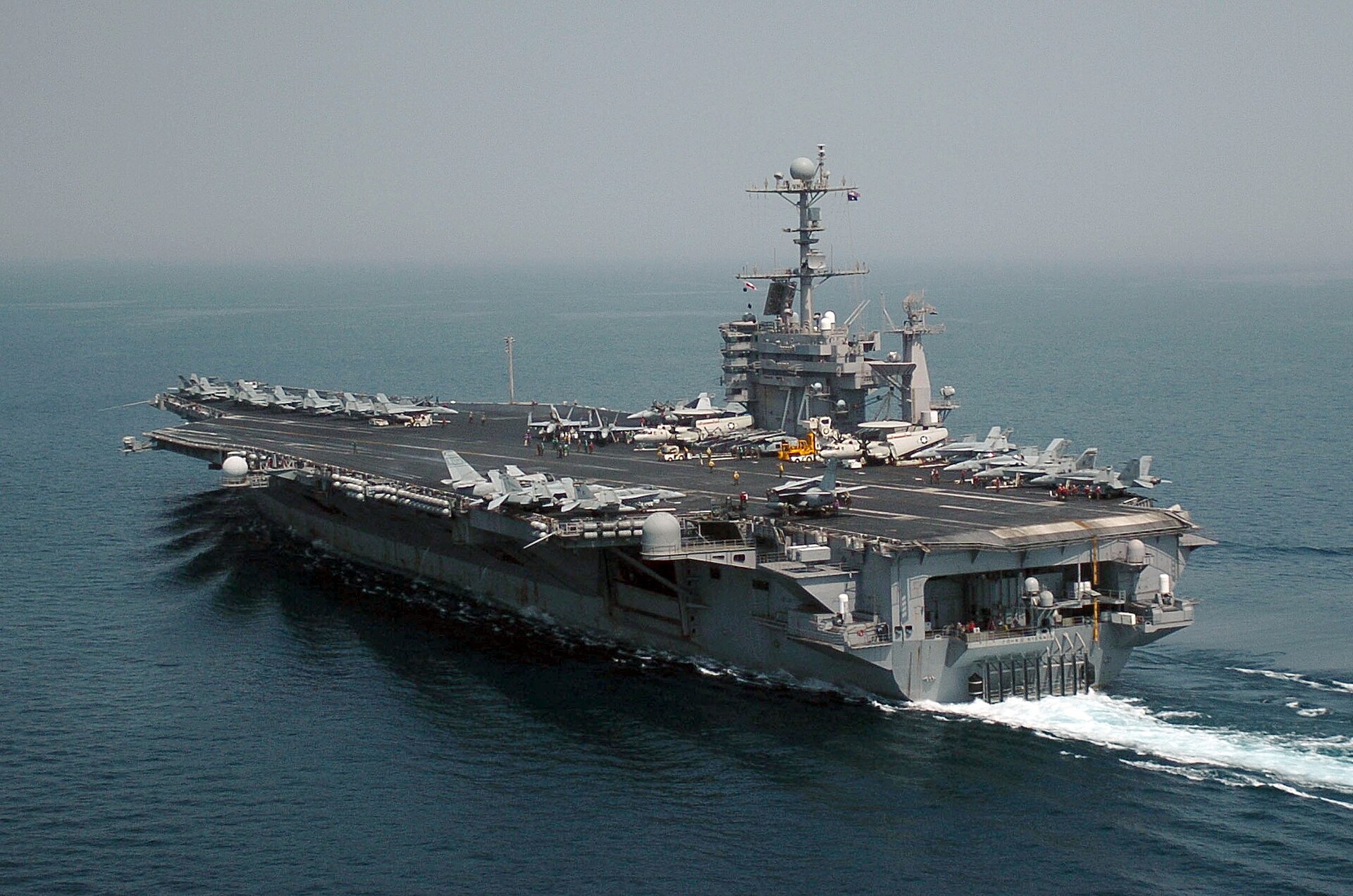
The scale of the deployment deserves specification because it calibrates what the 60-day window puts at stake. As of May 11, more than 20 US Navy warships were operating in the Gulf theater, centered on three carrier strike groups — USS Abraham Lincoln (CSG-3), USS Gerald R. Ford (CSG-12), and USS George H.W. Bush (CSG-10) — with over 15,000 service members assigned to Project Freedom, 5,000 Marines and Sailors aboard the Boxer Amphibious Ready Group, and more than 100 land- and sea-based aircraft providing multi-domain coverage.
The Middle East briefing 3,000+ readers start their day with.
One email. Every weekday morning. Free.
This is the largest sustained American naval presence in the Persian Gulf since Operation Desert Storm, built to enforce a blockade that has reduced Hormuz transits from 95 per day to approximately 2 — a 98% collapse in commercial traffic through the world’s most critical energy chokepoint. The deployment was designed for coercion, and the Axios framework now repurposes it as a holding force whose departure date is determined not by the Pentagon or by Riyadh but by the pace of an Iranian nuclear negotiation that hasn’t started.
The deployment’s geography compounds the political cost. King Fahd Air Base at Taif — reopened to American forces in March 2026, reversing two decades of Saudi refusal after the PSAB withdrawal — sits roughly 1,200 kilometers from the Iranian border, beyond the effective range of most Iranian ballistic missiles but close enough to Saudi population centers to be continuously visible. Every day the ceasefire holds without Track 2 progress, the deployment costs Washington money and Tehran nothing, while Saudi Arabia absorbs the political exposure of hosting forces it cannot influence and Iran — the adversary this force was built to coerce — treats the entire deployment as confirmation that its leverage is working.
Why Is US Military Presence Leverage for Iran Rather Than Security for Saudi Arabia?
Under the Axios framework, US forces withdraw only when Iran completes nuclear concessions in Track 2 talks. Since Iran has pre-rejected the enrichment conditions Track 2 requires — Araghchi declaring them “non-negotiable,” Khamenei ordering HEU retained on Iranian soil — continued American military presence becomes a marker of deal fragility rather than Saudi protection.
The conventional reading of US forward deployment is deterrence: American forces protect Gulf allies from Iranian aggression. The 2026 framework subverts this entirely, because US forces are in the Gulf to blockade Iran, not to shield Riyadh, and their continued presence after the ceasefire begins is explicitly tied to the fragility of a deal that most analysts believe cannot be completed within 60 days. Araghchi’s declaration at the UN Conference on Disarmament — “zero enrichment can never be accepted by us” — and his characterization of enrichment rights as “inherent, non-negotiable, and legally binding” are not negotiating positions but public commitments made in formal diplomatic settings that no Iranian official can walk back without Khamenei’s explicit authorization.
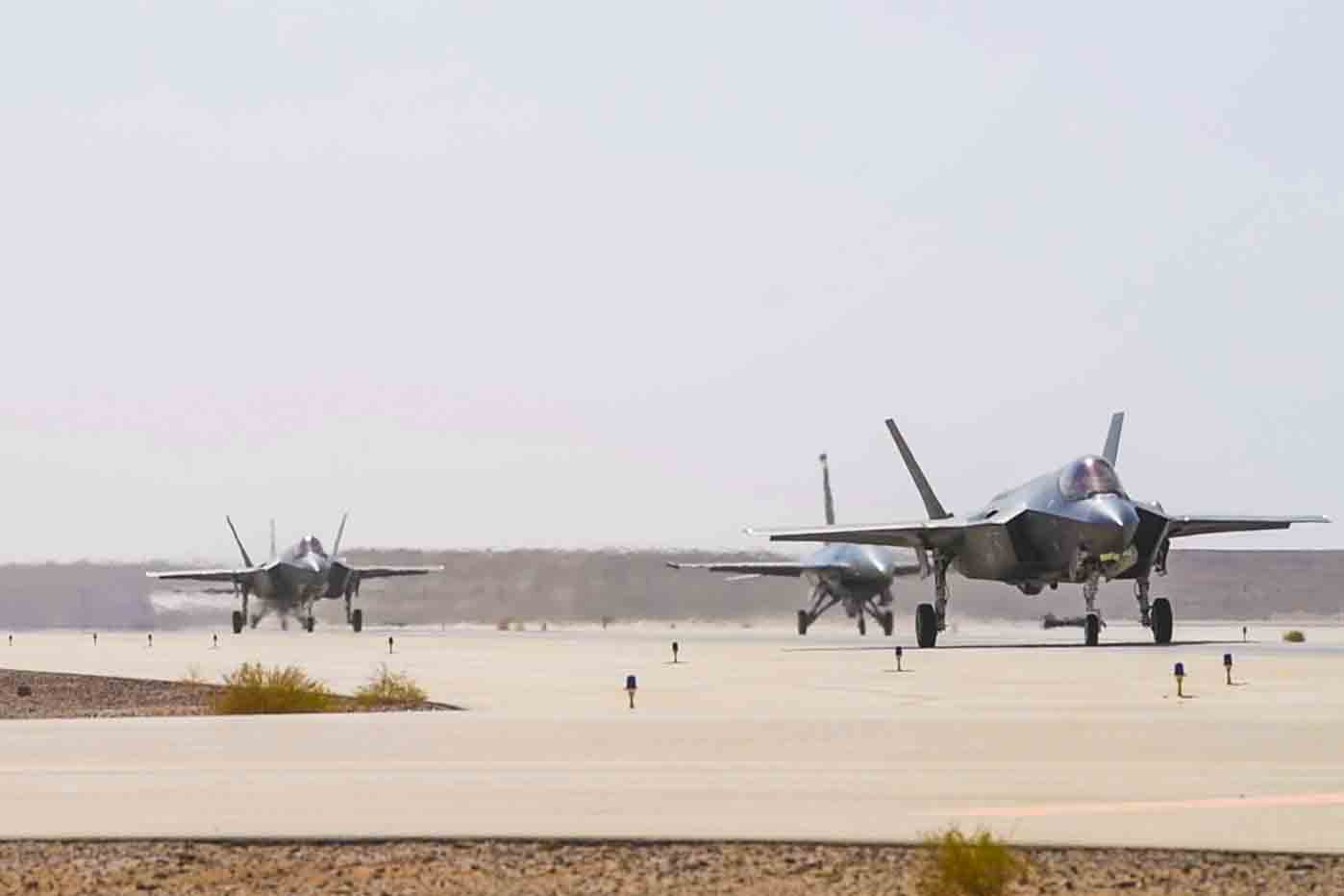
The Chatham House assessment published in March 2026 captures the inversion with unusual bluntness. Neil Quilliam and Kristian Alexander concluded that “for the Gulf, US military bases may have become a liability, not a source of security,” adding that “Gulf states did not choose this war — indeed, the US ignored their calls to avoid it.” The US military presence that Saudi Arabia cultivated as a deterrent has been converted by the Axios condition structure into something closer to an enforcement garrison whose departure requires Tehran’s cooperation — with Riyadh unable to influence the process and unable to escape the optics of hosting it.
Iran’s own public posture sharpens the problem considerably. Tehran’s May 19 peace proposal demanded “the exit of US forces from areas close to Iran” as a condition for any agreement, and Iranian state media claimed the US had accepted a 10-point plan including “withdrawing all US forces from all bases in the region” — a claim Trump called “workable as a basis on which to negotiate.” Araghchi was more contemptuous: “Their military deployment in the region does not scare us,” he told Al Jazeera, calling the buildup “unnecessary and unhelpful.” If the presence of three carrier strike groups genuinely does not modify Iranian behavior on enrichment, then the Axios framework’s entire withdrawal logic is circular: forces stay because the deal is unfinished, and their staying cannot accelerate the only process that would finish it — the Track 2 nuclear negotiation that begins 30 days after a signing that hasn’t happened.
Track 2 and the Withdrawal Trigger No One in Tehran Has Agreed To
The Track 2 nuclear window is scheduled to open 30 days after the ceasefire framework is signed, and it is supposed to resolve the issues that make the deal incomplete: enrichment levels, HEU disposition, facility constraints, and verification architecture. The moratorium gap alone is disqualifying — Iran has offered five years, the Axios MOU framework specifies 12 to 15, Congressional demands run to 20 years, and 52 senators plus 177 House members have insisted on zero enrichment as a baseline. Khamenei’s directive that approximately 440 kilograms of uranium enriched to 60% must remain on Iranian soil has been neither softened nor reinterpreted by any official at any level since it was issued.
The Carnegie Endowment’s May 2026 assessment identified the structural problem precisely: Tehran “appears to be pushing the enrichment issue down the negotiations agenda, recognizing that the gap between the two sides may be too wide for a solution.” This is rational Iranian strategy, not intransigence for its own sake. If the ceasefire framework delivers Stage 1 benefits to Iran — Hormuz toll-free passage, initial sanctions waivers — before any nuclear performance is required, then Track 2 becomes a process Iran has every incentive to enter and none to complete, because the MOU’s two-stage sequencing awards Iran its most valuable concessions before demanding its most painful ones. The operational specifics of that exchange — particularly what Phase 1 actually requires Iran to deliver in exchange for sanctions relief, and which state bears the consequences if delivery fails — expose Saudi Arabia’s structural exclusion in concrete operational terms.
The longer Track 2 runs without resolution, the longer Iran retains its enrichment capacity, its HEU stockpile, and the PGSA toll architecture that the ceasefire suspended but did not dissolve — and the longer American forces remain in the Gulf, consuming resources and generating political friction with host nations. The 2015 JCPOA reached Implementation Day on January 16, 2016, with simultaneous performance: Iran shipped out enriched uranium, the IAEA verified, and sanctions lifted the same day. The 2026 framework inverts that design, making US military presence the only remaining enforcement mechanism for a Track 2 process whose substance has not been agreed, whose timeline has not been set, and whose core demand Iran’s supreme leader has publicly ordered his negotiators to refuse — leaving Saudi Arabia to host the enforcement apparatus for a requirement that may never be met.
How Did Saudi Arabia End Up Hosting Forces It Cannot Publicly Welcome?
The Axios withdrawal framework does not merely leave Saudi Arabia out of the exit negotiation — it makes the Kingdom’s basing decision, in retrospect, an unconditional grant. King Fahd Air Base is open, American forces are present, and the only question the Kingdom cannot answer publicly is what it receives in exchange for hosting troops whose departure Tehran controls and Riyadh cannot schedule.
The sequence of basing decisions reveals how the Kingdom’s crisis responses compounded rather than resolved its strategic exposure. The 2003 PSAB withdrawal — announced April 29, completed by August 26, less than four months — happened because Saudi Arabia simultaneously wanted American protection and wanted it invisible, a tension CENTCOM resolved by relocating to Al-Udeid and that Riyadh spent two decades pretending it had managed. King Fahd’s reopening in March 2026 proved the pretense was always fragile: under existential threat, the Kingdom reversed its position in weeks.
The PSAB block episode of May 4-8 demonstrated that the underlying tension remains acute. Saudi Arabia restricted CENTCOM air operations for four days; the Wall Street Journal reported the restoration of access under terms that remain undisclosed; and the Saudi government first denied then confirmed the episode through Al-Hadath, using language about “offensive operations” scope that echoed Secretary Hegseth’s own May 7 characterization of the mission as “defensive in nature, focused in scope.” The undisclosed terms of that restoration and the evidence of a second Trump-MBS phone call that preceded it exposed the Kingdom’s sensitivity to even the appearance of subordination, at the very moment its security depends entirely on American forces it cannot publicly welcome and cannot privately control.
Foreign Policy’s March 2026 analysis identified the endgame Gulf states will pursue: “conditionality — a restructured framework in which continued hosting depends on consultation, shared defensive obligations, and clearer mechanisms for distributing the costs of retaliation.” But the Axios withdrawal framework renders conditionality unachievable, because the departure trigger is in Iran’s hands, not Washington’s — and Saudi Arabia cannot extract basing concessions from an ally whose own force posture is determined by a third party’s nuclear decisions, a structural arrangement without precedent in the modern history of US-Gulf military cooperation. On Arafah Day, Mojtaba Khamenei’s first doctrine statement as Supreme Leader named that arrangement directly, accusing the nations providing that territory of serving as shields for American aggression — a formal written accusation that the Kingdom’s hosting decision cannot answer.
When Earnest Will Ended and Why 2026 Won’t End the Same Way
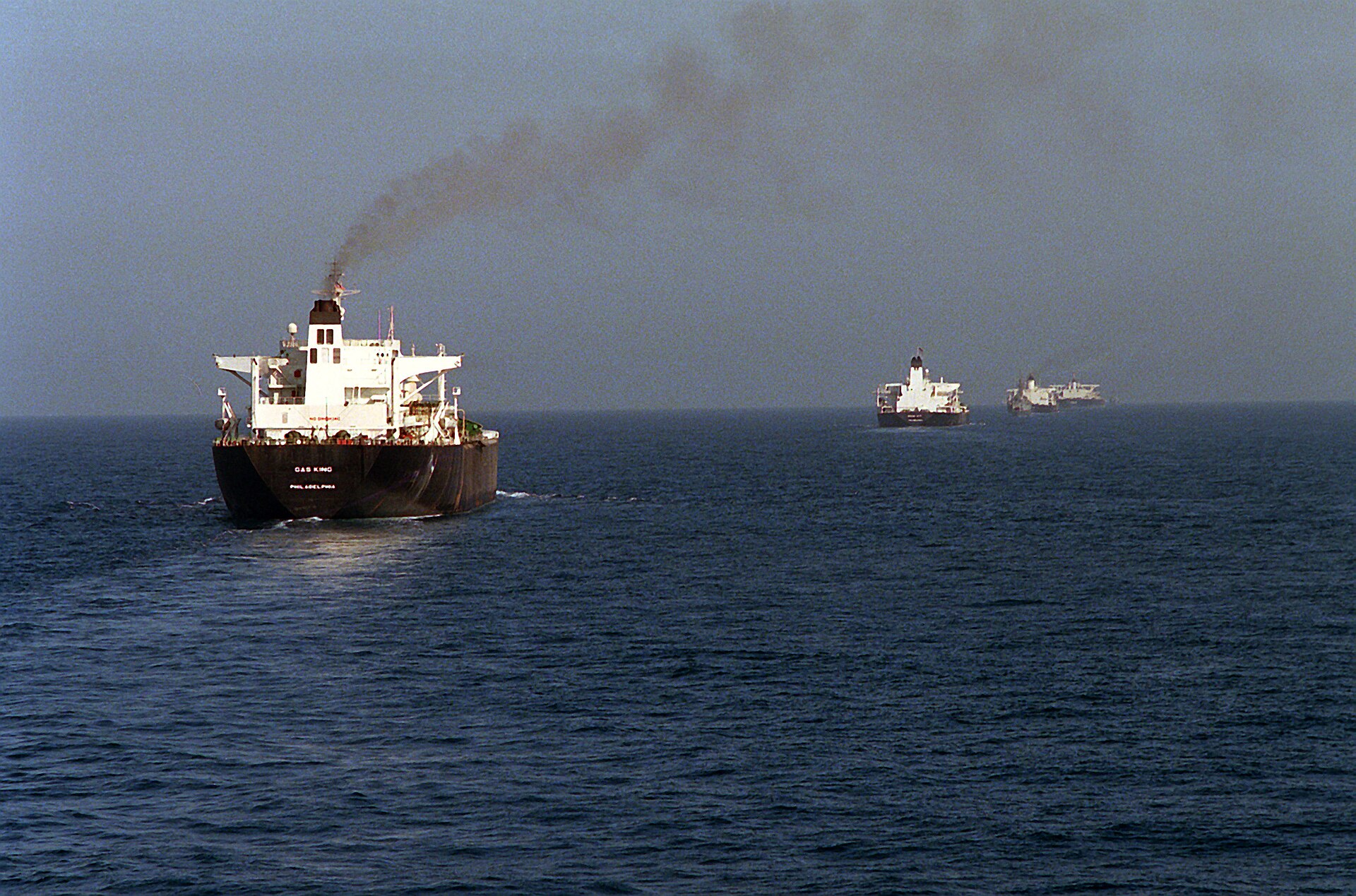
Operation Earnest Will, the 1987-1988 US naval mission to protect Kuwaiti tanker traffic through Hormuz, is the comparison most frequently invoked by officials seeking precedent for the current deployment. At its peak, Earnest Will deployed roughly 30 warships and succeeded in deterring Iranian attacks on reflagged tankers — a mission that ended when UNSC Resolution 598 achieved a ceasefire in the Iran-Iraq War. The comparison is structurally misleading in ways that the Axios withdrawal condition makes impossible to ignore.
The critical distinction is jurisdictional. In 1987, Iran harassed Gulf shipping operationally — mining lanes, firing Silkworm missiles at tankers — but made no formal legal claim to sovereign authority over Strait of Hormuz passage. The 2026 PGSA is categorically different: a 12-article domestic statute enacted through Iran’s parliamentary process, imposing a $2 million per-vessel toll and asserting Iranian jurisdiction over commercial transit, with exemptions for Russia, China, India, Iraq, and Pakistan that map precisely onto the UNSC veto holders who blocked the April 7 resolution Saudi Arabia co-sponsored. Earnest Will addressed an operational threat that vanished when the Iran-Iraq War ended; the 2026 deployment confronts a juridical claim that survives any ceasefire, because the PGSA was suspended by executive order under the MOU but remains Iranian domestic law.
| Deployment | Peak Force | Duration | Exit Trigger | Saudi Role | Who Controlled Exit |
|---|---|---|---|---|---|
| Earnest Will (1987-88) | ~30 warships | ~13 months | Iran-Iraq ceasefire (UNSC 598) | Passive beneficiary | Washington / UNSC |
| PSAB (1991-2003) | 5,000 troops, up to 200 aircraft | 12 years | US unilateral decision | Host state (silent partner) | Washington |
| Project Freedom (2026-) | 20+ warships, 3 CSGs, 15,000+ troops | Ongoing (60-day window) | Final Iran nuclear deal | Host state (excluded from talks) | Tehran (via Track 2 compliance) |
The withdrawal trigger diverges just as fundamentally. Earnest Will ended because the underlying conflict ended, and Washington controlled the force reduction timeline entirely. The 2026 framework decouples the departure condition from the maritime crisis the deployment was built to address: even if Hormuz reopens and commercial transits resume, American forces remain until Track 2 produces a final deal, and the PGSA statute remains intact as Iranian law — ready to be reactivated if negotiations collapse, raising the question of what 15,000 American troops do when the framework they were kept in theater to enforce runs out of time.
What Happens to US Forces If Track 2 Nuclear Talks Collapse?
The Axios framework offers only two outcomes: a completed final deal that triggers US withdrawal, or a collapse determination — made unilaterally by Washington — that authorizes forces to “restore the blockade or resume military action.” No mechanism exists for extending Track 2, freezing force levels at a reduced posture, or allowing Saudi Arabia to request that troops remain in a purely defensive capacity after the ceasefire expires.
The absence of a middle ground matters for Saudi Arabia because the Kingdom has spent the entire crisis constructing a public narrative of alignment with Washington — from the $142 billion Strategic Defense Agreement signed on May 13 to Mohammed bin Salman’s multi-leader phone calls urging a deal. That arms agreement, the largest in US-Saudi history, contains no basing conditionality language, meaning the weapons and basing tracks are entirely decoupled. Saudi Arabia cannot leverage its arms purchases to prevent a withdrawal that the Axios framework awards to Iran upon nuclear compliance, and it cannot use the relationship to keep forces in theater if Washington decides Tehran isn’t serious.
The Middle East Council on Global Affairs framed the broader shift in terms that apply with particular force here: “Gulf states that host US forces are moving from deference to conditionality, demanding the alliance be restructured to reflect that the risk these states absorb by hosting is no longer matched by the protection they receive in return.” Under the Axios framework, the protection Saudi Arabia receives is not protection at all — it is the byproduct of an enforcement operation directed at Iran, and its continuation depends on Iran’s willingness to comply with conditions Riyadh had no part in setting. Aramco CEO Amin Nasser’s warning that markets would not normalize until 2027 without a Hormuz reopening within weeks adds the fiscal dimension: every day the 60-day window ticks without Track 2 progress pushes the Kingdom’s Q1 deficit of $33.5 billion — already at 194% of its full-year target — deeper into territory that no Saudi official has publicly acknowledged.
The Silence That Reveals the Trap
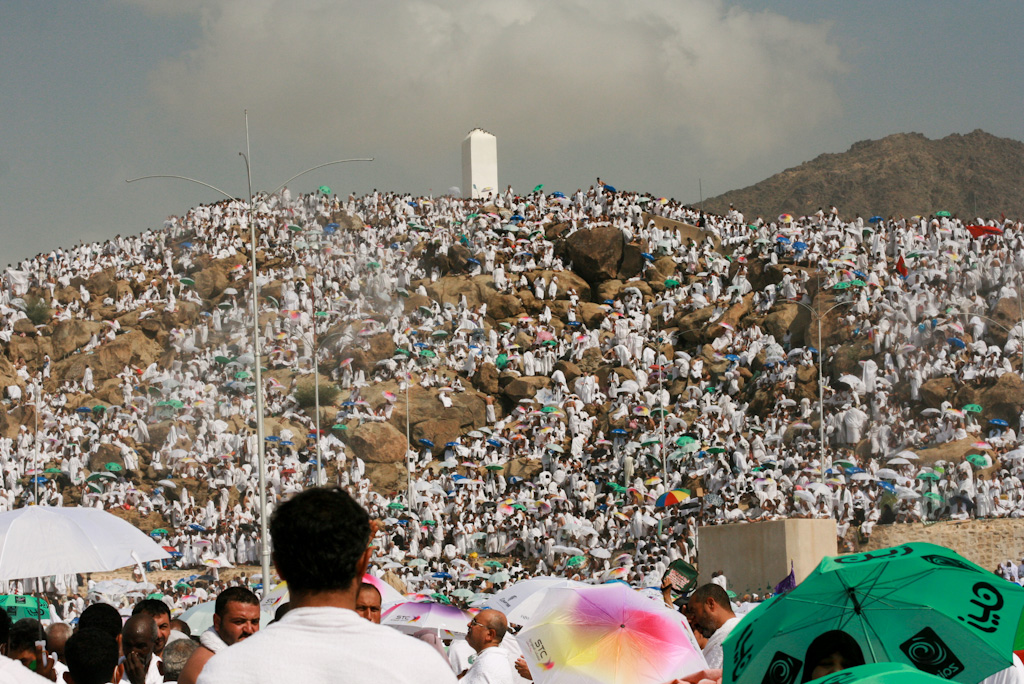
Saudi Arabia has issued no official statement on the Axios withdrawal condition, no MOFA response to the basing implications of the 60-day framework, and no public acknowledgment that the continued presence of American forces on its soil is now determined by the pace of Iranian nuclear negotiations in which the Kingdom plays no role. The Hajj calendar provides cover — Tarwiyah Day fell on May 24-25, the Day of Arafah on May 26, Eid al-Adha on May 27 — creating a liturgical window during which geopolitical statements would be inappropriate. But the silence predates Hajj, and it extends to the question on which Saudi Arabia’s entire post-crisis security architecture depends: what happens to the forces it invited when the deal those forces are guarding fails?
The 2003 precedent offers a pointed answer: American forces leave fast. The announcement-to-completion timeline for the PSAB withdrawal was under four months, the decision was made unilaterally by Washington, and Saudi Arabia’s input on timing was negligible. Al-Arabiya’s publication of what it called the “final draft” of the US-Iran deal — conspicuously omitting the nuclear provisions present in the Axios 14-point MOU — and its retraction and republication within 24 hours suggest the Kingdom’s own media apparatus is struggling to find language for a situation that resists comfortable framing.
The complications extend well beyond the nuclear file. The Lebanon clause that Netanyahu raised with Trump on May 24 — requiring the war to end “throughout the region, including in Lebanon” — introduces another external veto into a framework already dependent on Iranian nuclear compliance for the withdrawal trigger to activate. Hezbollah is not a signatory to any existing ceasefire, UNSC Resolution 1701’s disarmament provisions have gone unimplemented for 20 years, and Israel-Lebanon direct talks on a parallel track are entirely uncoordinated with the MOU process that governs when American forces leave the Gulf.
Five rounds of talks, zero Saudi participation, a withdrawal condition that converts American military presence from a strategic asset into evidence of deal fragility, and an enrichment gap between Washington and Tehran that no amount of carrier-based airpower can close — this is what the Chatham House analysts meant when they concluded that US bases had become liabilities rather than guarantees. The Stimson Center’s assessment that “even if Iran were constrained, Riyadh appears intent on mastering the fuel cycle with Washington’s help” points to the deeper problem: the 123 agreement that permits Saudi enrichment, signed in the same diplomatic season as the MOU demanding Iranian restraint, creates an asymmetry that Tehran will exploit in every Track 2 session — if Track 2 ever begins. Whether American forces are still in the Gulf when that exploitation starts is a question 15,000 service members will learn the answer to from Tehran, not from Riyadh.
Frequently Asked Questions
Has the US ever withdrawn forces from Saudi Arabia before?
Yes, and the precedent is instructive for both its speed and its unilateralism. The 2003 PSAB withdrawal relocated the 363rd Air Expeditionary Wing — which at peak included up to 200 aircraft and 10,000 personnel — to Al-Udeid Air Base in Qatar in under four months. Rumsfeld attributed the move to “changed regional dynamics,” but the operational driver was that US basing at PSAB had become a recruitment tool for al-Qaeda, with Osama bin Laden citing the American military footprint in Saudi Arabia as a primary grievance. The 2026 basing arrangement at King Fahd Air Base reproduces the same underlying tension — wanting American protection without its visibility — under conditions of far greater constraint, because the departure trigger is no longer Washington’s to control.
Could Saudi Arabia ask US forces to leave before the 60-day window expires?
Sovereign basing agreements give host nations the legal authority to request departure, but exercising that authority would carry consequences Saudi Arabia is unlikely to accept in the current environment. Requesting US withdrawal mid-ceasefire would signal to Tehran that the Gulf’s most powerful Arab state has abandoned the deal framework, to Washington that Riyadh is an unreliable basing partner, and to global oil markets that the Hormuz crisis lacks the military backstop preventing a return to the $200-per-barrel worst-case scenario Wood Mackenzie has modeled. The PSAB block of May 4-8 showed willingness to restrict operations at the margins — briefly limiting offensive sorties — but a full withdrawal request would be categorically different, and the $142 billion arms agreement’s silence on basing conditionality means Saudi Arabia has no contractual leverage over departure terms.
What is the PGSA and why does it survive a ceasefire?
The Persian Gulf Security Authority, operational since May 18, is a 12-article domestic statute that passed through Iran’s parliamentary committee on April 21 and awaits full Majlis ratification, imposing a $2 million per-vessel toll on Hormuz transit with exemptions for Russia, China, India, Iraq, and Pakistan. Under the MOU framework, the PGSA was suspended by executive order but not legislatively dissolved, which means the statutory architecture remains intact as Iranian domestic law and can be reactivated without a new parliamentary vote if the ceasefire collapses. Iran’s Tasnim news agency framed the toll revenue structure as permanent regardless of deal outcome, and the IMO LEG 113 condemnation of the PGSA was non-binding — leaving no international legal mechanism currently capable of compelling Iran to repeal the statute.
How does the 2026 deployment compare in scale to Desert Shield/Storm?
The current deployment is the largest US naval presence in the Persian Gulf since 1991, but the force architecture differs fundamentally from Desert Shield/Storm. That operation involved over 500,000 US troops, massive ground force deployment under UN Security Council authorization, and a defined territorial objective in liberating Kuwait; Project Freedom’s 15,000-plus service members and three carrier strike groups constitute a naval-dominant force optimized for blockade enforcement and precision strike, not ground warfare or territorial liberation. The more instructive comparison may be the sustained PSAB presence from 1991 to 2003, when the US maintained a permanent but politically delicate footprint that Saudi Arabia tolerated rather than celebrated — a dynamic the 2026 arrangement has reproduced under conditions where Iran holds far greater counter-leverage through the PGSA toll architecture and the Track 2 nuclear process that determines when American forces go home.
The latest development in that sustained presence came on Arafah Day, May 26, when CENTCOM conducted self-defence strikes against Iranian military and nuclear-linked infrastructure around Bandar Abbas — the most significant US kinetic action since the war began, taken without informing Riyadh. See: CENTCOM Struck Iran on Arafah Day — Saudi Arabia Wasn’t Warned.