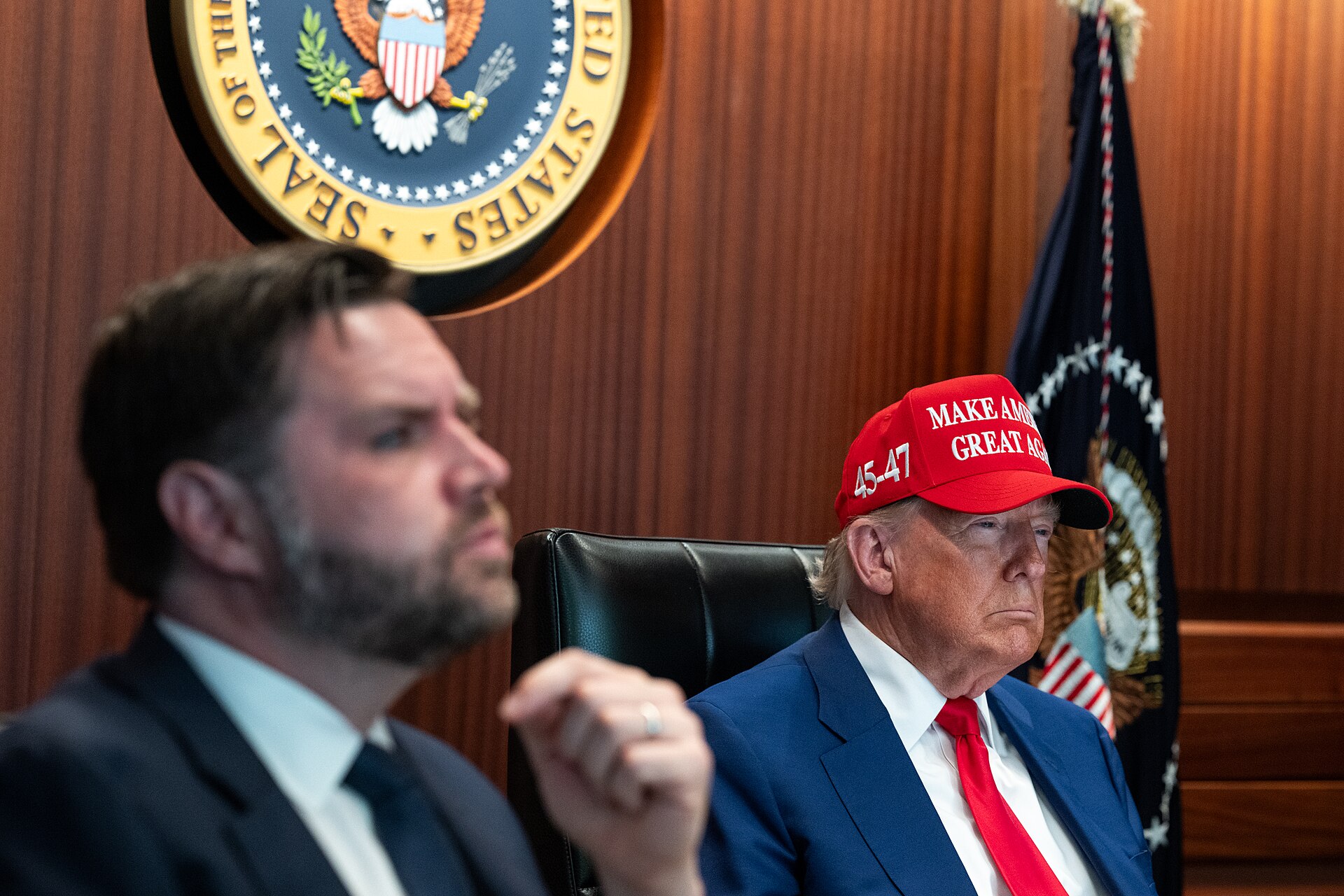

WASHINGTON — President Donald Trump on Sunday ordered the Pentagon to postpone all military strikes against Iran’s power plants and energy infrastructure for five days, citing what he described as “very good and productive conversations” with Tehran aimed at a “complete and total resolution” of the war. The announcement, made via Truth Social on the morning of March 23, 2026, immediately sent oil prices tumbling as much as 14 percent and injected the first note of diplomatic possibility into a conflict now entering its fourth week. Tehran swiftly denied that any talks had taken place, calling Trump’s statement an attempt to “buy time” for further military operations.
The five-day pause represents the most significant de-escalation signal since the United States and Israel launched Operation Epic Fury against Iran on February 28. Yet the contradictory accounts from Washington and Tehran — one claiming progress, the other denying contact — underscore the fragility of a moment that could tip toward either a ceasefire framework or the most devastating phase of the war yet. For Saudi Arabia, which has absorbed weeks of Iranian drone and missile strikes while maintaining its policy of military restraint, the next 120 hours will test whether diplomacy can succeed where 24 days of bombing have not.
Hours after announcing the pause, Trump went further — proposing that the United States and Iran jointly control the Strait of Hormuz, a suggestion that drew immediate mockery from Tehran and raised alarm across Gulf capitals.
Table of Contents
- What Did Trump Announce?
- Who Is Mediating Between Washington and Tehran?
- Tehran Denies Any Dialogue With Washington
- Oil Markets Plunge on Pause Announcement
- What Does the Pause Mean for Saudi Arabia?
- The Strait of Hormuz Standoff Continues
- Gulf States Weigh the Diplomatic Window
- What Happens When the Five Days Expire?
-
The tensions deepened on Day 25, when Iran struck five countries simultaneously just hours after Trump claimed talks were progressing, casting further doubt on whether the five-day pause would lead to any diplomatic breakthrough.
Frequently Asked Questions
What Did Trump Announce?
Trump instructed the Department of Defense to “postpone any and all military strikes against Iranian power plants and energy infrastructure for a five-day period, subject to the success of the ongoing meetings and discussions.” The announcement came less than 24 hours after the president’s 48-hour ultimatum to Iran to fully reopen the Strait of Hormuz had expired without compliance.
The president’s Truth Social post, published shortly before 9 a.m. Eastern time, stated that the United States and Iran “have had, over the last two days, very good and productive conversations regarding a complete and total resolution of our hostilities in the Middle East.” Trump added that negotiations would continue through the five-day window, though he did not specify the format, location, or participants of any talks.
The Middle East briefing 3,000+ readers start their day with.
One email. Every weekday morning. Free.
The shift was dramatic. On Saturday, Trump had threatened to destroy Iran’s entire power grid if Tehran did not open the Strait of Hormuz within 48 hours. Iranian officials responded by vowing to “completely close” the waterway and target electricity infrastructure across Israel and the Gulf states if their power plants were struck. The mutual escalation had rattled global markets, with Asian stocks plunging and oil topping $114 per barrel on Friday.
White House officials told reporters that the pause applied only to strikes on energy infrastructure. Other military operations against Iranian military targets, including ongoing strikes on missile launch sites, air defense installations, and naval assets, would continue during the five-day period, according to Pentagon spokesperson Maj. Gen. Patrick Ryder.

Who Is Mediating Between Washington and Tehran?
Despite Trump’s claim of direct conversations, multiple sources described the diplomatic channel as indirect, with three countries serving as intermediaries between Washington and Tehran. Turkey, Egypt, and Pakistan have been passing messages between White House envoy Steve Witkoff and Iranian Foreign Minister Abbas Araghchi over the past 48 hours, according to officials briefed on the exchanges reported by Axios and CNN.
The foreign ministers of all three mediating countries held separate telephone conversations with both Witkoff and Araghchi between Friday and Sunday, according to a U.S. source cited by NBC News. Turkish Foreign Minister Hakan Fidan, who has previously facilitated negotiations between Washington and Tehran, spoke with Araghchi at least twice during the weekend, Axios reported.
Witkoff, a real estate executive and longtime Trump associate who serves as the president’s special envoy, has been the primary U.S. negotiator. Jared Kushner, Trump’s son-in-law and senior adviser, has also been involved in discussions about a potential diplomatic framework, according to an earlier Axios report from March 21 that described the White House “game-planning for potential Iran peace talks.”
The choice of mediators reflects the geography of the conflict. Turkey, a NATO member that absorbed three Iranian missiles earlier in the war, maintains working relations with both Washington and Tehran. Egypt, the Arab world’s most populous nation, has the diplomatic infrastructure and regional weight to serve as a neutral venue. Pakistan, which recently deployed troops to Saudi Arabia under a bilateral defense agreement, has its own back channel to Tehran through a shared border and longstanding intelligence ties.
Notably absent from the mediating trio are Oman and Qatar — the two Gulf states that have historically served as intermediaries between Washington and Tehran. Qatar expelled Iranian military attachés after the Ras Laffan LNG terminal was struck by Iranian missiles on March 19, effectively ending its ability to serve as a neutral broker. Oman has maintained its neutrality but has been consumed with managing the humanitarian consequences of Iranian drone strikes that hit Salalah port on March 12.
Tehran Denies Any Dialogue With Washington
Iran’s Foreign Ministry issued a formal statement within hours of Trump’s announcement rejecting the characterization of any diplomatic contact. “There is no dialogue between Iran and the United States, whether direct or indirect,” the statement read, according to Iran’s state news agency IRNA. “The American president’s statements are part of efforts to reduce energy prices and buy time for the implementation of his military plans.”
The ministry acknowledged that “initiatives from regional countries to reduce tensions” were ongoing but insisted that “our response to all of them is clear: we are not the party that started this war, and all these requests should be referred to Washington.” A senior Iranian security official, quoted by state media on Telegram, said direct or indirect talks had not taken place between Tehran and the Trump administration, the Associated Press reported.
The denial followed a pattern established since the war began on February 28. Iranian Foreign Minister Araghchi told NBC News on March 15 that Iran sees “no reason” to seek a ceasefire and rejected any negotiations while military strikes continued. On March 18, Araghchi was quoted by Time magazine saying “the United States must be held accountable” and that Tehran would “continue fighting for the sake of our people.”
Analysts at the Carnegie Endowment for International Peace noted that the gap between Trump’s claims and Tehran’s denials may itself be deliberate. “Both sides have incentives to present the pause differently to their domestic audiences,” wrote Karim Sadjadpour in a March 23 post. “Trump needs to show he is a dealmaker. Iran’s leadership cannot be seen as capitulating to the country bombing them.” The reality, multiple diplomats told Reuters, is likely somewhere between the two positions: structured message-passing through intermediaries that falls short of formal negotiations but goes beyond mere posturing. The New York Times subsequently reported that the United States had delivered a 15-point plan to Tehran through Pakistan, demanding the shutdown of three nuclear sites and strict limits on ballistic missiles in exchange for full sanctions relief.
The gap between words and weapons defines the current phase of the conflict. A detailed analysis of Iran’s dual-track strategy of firing ballistic missiles at Riyadh on the same day it pursued diplomatic channels reveals that Tehran’s simultaneous escalation and engagement is not contradictory but calculated — a coercion-negotiation framework designed to strengthen its bargaining position before any ceasefire talks begin.
Oil Markets Plunge on Pause Announcement
Financial markets responded immediately to the prospect of de-escalation. Brent crude futures fell as much as 14 percent within minutes of Trump’s post, sliding to $96 per barrel before partially recovering to $105.09 — still down more than 6 percent from Friday’s close above $112, according to Bloomberg. West Texas Intermediate dropped nearly 6 percent to $92.29 per barrel. U.S. stock futures rallied, and the dollar weakened against major currencies. By the end of the trading session, oil prices crashed 13 percent in the biggest single-day drop since the war began, as markets priced in the possibility that the pause could lead to a broader de-escalation.
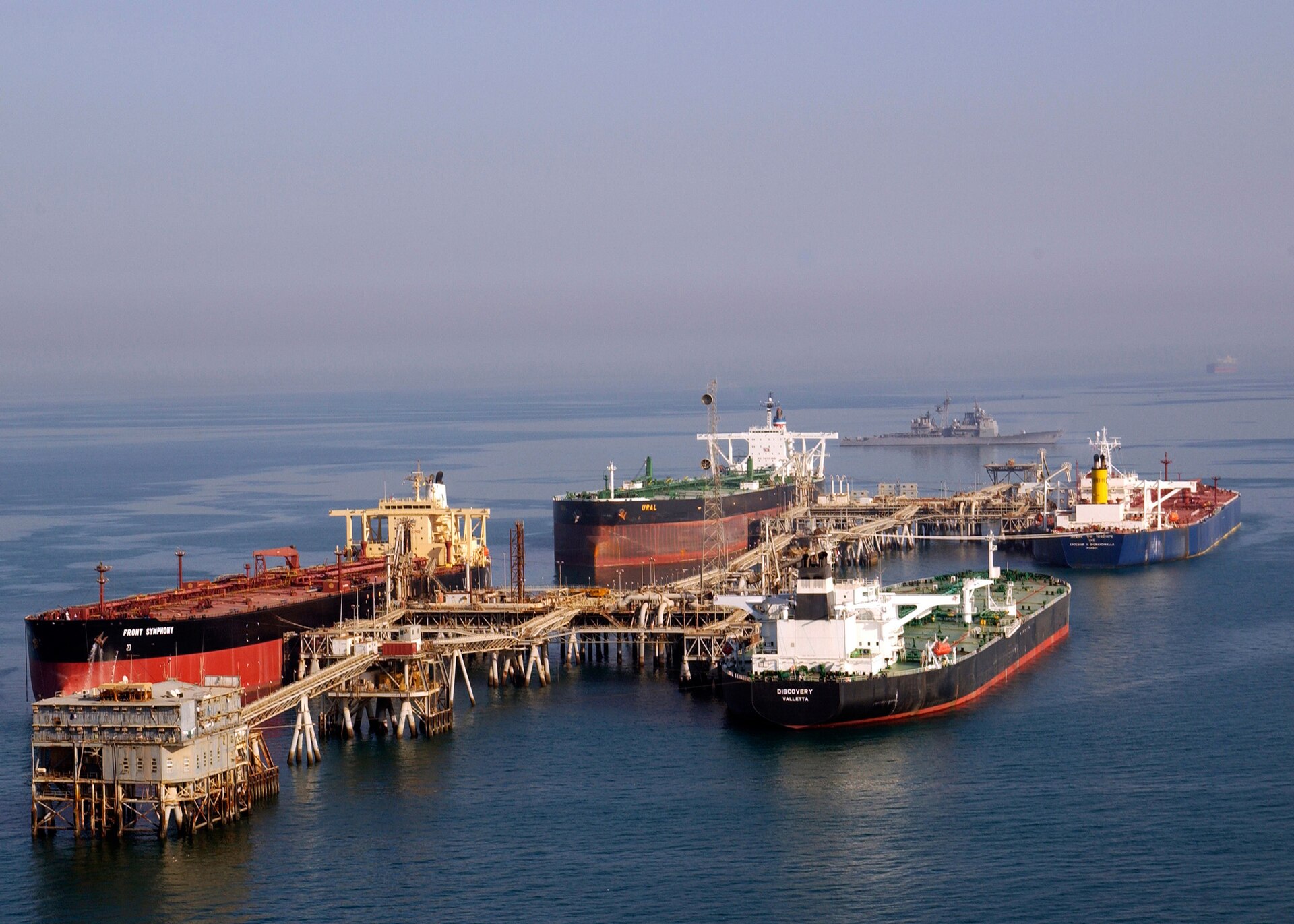
The scale of the price swing reflected how deeply the conflict had distorted energy markets. The OPEC reference basket averaged $107.41 per barrel in March, up from $67.90 in February — a 58 percent increase driven almost entirely by the Hormuz closure. The International Energy Agency said on Monday that the disruption to global oil supply from the Strait of Hormuz shutdown now exceeds the loss caused by the 1973 and 1979 oil shocks, making it the largest supply disruption in the history of the global oil market, CNBC reported.
Saudi Aramco’s chief executive pulled out of the CERAWeek energy conference in Houston due to the conflict, Reuters reported on March 22, underscoring how the war has disrupted normal business operations across the energy sector. Aramco has been rerouting crude through its East-West pipeline to the Red Sea port of Yanbu, but the pipeline’s effective throughput capacity of approximately 4.5 million barrels per day at Yanbu’s loading terminals falls far short of the roughly 7 million barrels per day Saudi Arabia exported through the Gulf before the conflict.
Energy traders remained cautious about the durability of the price decline. “A five-day pause is not a ceasefire, and even if talks produce a framework, reopening Hormuz and de-mining the waterway will take weeks,” Giovanni Staunovo, an analyst at UBS, told Bloomberg. Insurance premiums for tankers transiting the Gulf remained at wartime levels despite the oil price drop.
The market moves may have been anticipated by informed actors. Ten anonymous wallets on the prediction market platform Polymarket placed $160,000 in ceasefire bets before Trump’s announcement became public, fuelling insider trading concerns.
What Does the Pause Mean for Saudi Arabia?
Saudi Arabia has not issued a public response to Trump’s five-day pause. The Kingdom’s position is complicated by the fact that Iranian attacks on Saudi territory continued even as Trump made his announcement. The Saudi Ministry of Defense reported on Sunday that it detected two incoming ballistic missiles targeting Riyadh Province, one of which was intercepted and the other fell in an uninhabited area. Saudi forces also intercepted several Iranian drones over the country’s eastern region overnight, Reuters reported.
Crown Prince Mohammed bin Salman has privately urged Trump to “keep hitting the Iranians hard,” according to White House officials cited by the New York Times. The crown prince and UAE President Mohammed bin Zayed discussed their shared stance during a call on March 22 amid mounting questions over whether Gulf states would shift from defensive restraint to active military participation in the conflict.
Saudi Arabia took its most significant diplomatic step against Tehran on March 21, when the Foreign Ministry declared Iran’s military attaché and four embassy staff persona non grata and ordered them to leave the Kingdom within 24 hours. The expulsion followed what Riyadh described as “repeated Iranian attacks” on Saudi territory, with the foreign ministry statement warning that continued strikes would have “serious consequences for relations at present and in the future.” The move made Saudi Arabia the second Gulf state to expel Iranian diplomats after Qatar took similar action the previous week.
| Date/Time | Event | Source |
|---|---|---|
| March 22, morning | Trump gives Iran 48-hour ultimatum to reopen Hormuz | Truth Social, Reuters |
| March 22, afternoon | Iran threatens to “completely close” Hormuz and target Gulf power plants | IRNA, Al Jazeera |
| March 22, evening | Saudi Arabia intercepts 3 ballistic missiles over Riyadh | Saudi MoD |
| March 22-23, overnight | Saudi forces down 15 drones over eastern and northern regions | Saudi MoD, Reuters |
| March 23, morning | Trump announces 5-day pause on energy strikes | Truth Social, Axios |
| March 23, midday | Iran denies any talks with Washington | IRNA, AP |
| March 23, afternoon | Brent crude falls 14% before partially recovering | Bloomberg |
The Trump administration has been “very supportive” of Saudi Arabia’s defense, approving requests to restock Patriot missile interceptors and clearing third-party transfers that allow allies to send U.S.-made weapons from their own stockpiles to the Kingdom, according to officials cited by ABC News. A $9 billion Patriot missile sale was approved in January, and a $3 billion F-15 sustainment package followed in February.
The Strait of Hormuz Standoff Continues
The five-day diplomatic window has not altered the physical reality in the Strait of Hormuz. Approximately 20 million barrels per day of oil — roughly one-fifth of global consumption — normally transits the 21-mile-wide waterway connecting the Persian Gulf to the Gulf of Oman. Since early March, Iran’s Islamic Revolutionary Guard Corps Navy has demanded that all vessels seek permission to transit and has threatened to attack ships linked to the United States, Israel, or their allies.
Only a handful of cargo ships and oil tankers have made it through the strait since the threats took effect, according to shipping data cited by Bloomberg. Iran has simultaneously claimed that Hormuz remains open while its military commanders threaten complete closure — a contradiction that has left commercial shipping operators unwilling to risk their vessels and crews.
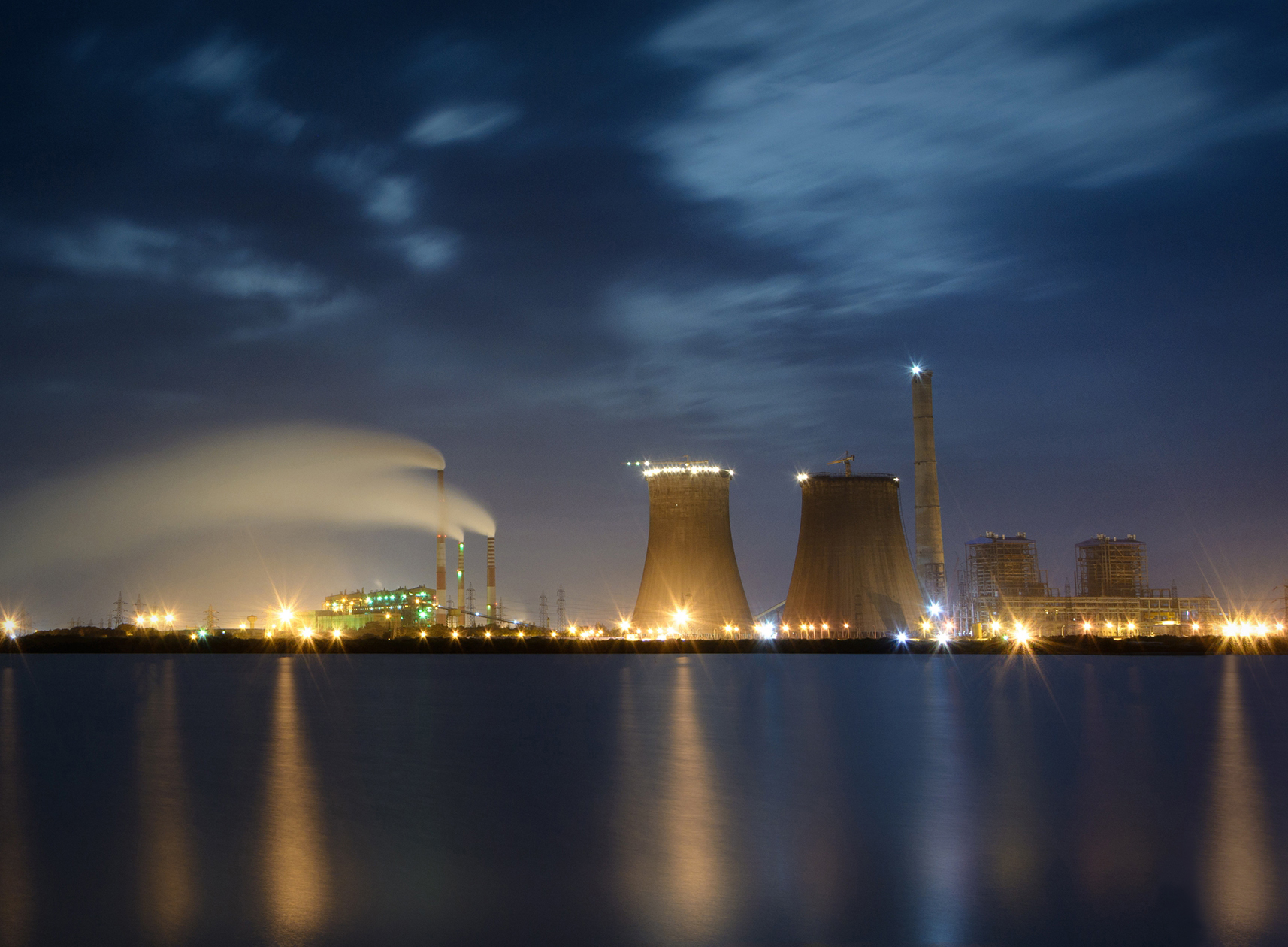
Trump’s threat to strike Iran’s power grid was intended as the ultimate pressure point: destroy the electricity supply for 90 million Iranians unless Tehran reopens the strait. Iran responded by threatening to destroy desalination plants and electricity infrastructure across the Gulf states — facilities that provide both power and drinking water to desert nations with few natural freshwater sources. The mutual hostage-taking dynamic is what makes the energy infrastructure threats so dangerous and, paradoxically, what may have created space for the pause.
The IEA estimated on March 23 that more than 40 energy assets across the region have been damaged or destroyed since the war began, including oil terminals, refineries, natural gas processing plants, and pipeline infrastructure. Qatar shut down its liquefied natural gas exports — representing roughly 20 percent of the global LNG market — after Iranian drones targeted facilities at Ras Laffan.
Gulf States Weigh the Diplomatic Window
The five-day pause has forced Gulf states to confront a question they have avoided since the war began: do they want a ceasefire, or do they want Iran’s military capabilities permanently degraded?
A CNBC analysis published on March 19 described the Gulf monarchies’ patience with Iranian strikes as “wearing thin,” with Saudi Foreign Minister Prince Faisal bin Farhan Al Saud warning that tolerance of attacks on his country and neighboring states was “limited.” Gulf states — particularly the UAE, Saudi Arabia, Bahrain, and Qatar — want to ensure that Iran emerges from the war with its military power sufficiently degraded to cease posing a threat, the Times of Israel reported, citing diplomatic sources.
The Carnegie Endowment described the Gulf governments as being “in a real bind diplomatically.” Supporting a ceasefire risks leaving Iran’s military intact to threaten them again. But entering the war directly risks Trump “declaring victory” and withdrawing, leaving them fighting a neighbor with an army of proxies and a history of grudges.
A Foreign Policy analysis published on March 20 argued that Gulf states would pursue “strategic continuity” regardless of the war’s outcome — maintaining their U.S. military partnerships while hedging with diplomatic channels to Beijing and Moscow. The IISS published an assessment of Gulf states’ offensive options against Iran on March 23, noting that Saudi Arabia, the UAE, and Bahrain possess combined air forces capable of conducting sustained strikes on Iranian targets but lack the political appetite for a war of choice.
What Happens When the Five Days Expire?
The pause expires on Friday, March 28. Three scenarios dominate the thinking of diplomats and military analysts tracking the conflict.
In the first scenario, the intermediary channel produces a preliminary ceasefire framework — likely involving a mutual de-escalation of strikes on energy infrastructure, a gradual reopening of the Strait of Hormuz under international naval escort, and a timeline for broader negotiations. This outcome would require Iran to make concessions that its leadership has publicly rejected, but the economic pressure of continued war — Iran’s oil exports have collapsed along with those of its Gulf neighbors — may create private flexibility.
In the second scenario, the five-day window expires without an agreement, and Trump orders strikes on Iran’s power grid. This would mark the most devastating phase of the conflict, plunging 90 million Iranians into darkness and almost certainly triggering retaliatory strikes on Gulf desalination plants and electricity infrastructure. The humanitarian consequences on both sides would be severe.
In the third scenario — considered most likely by several analysts cited by the Financial Times — Trump extends the pause for another period while negotiations continue. This “rolling pause” would reduce the immediate risk of energy infrastructure strikes while maintaining the threat as leverage. It would also buy time for diplomatic efforts without requiring either side to make formal concessions.
The five-day pause feeds into a broader timeline. Trump has set April 9 as the target date for ending the war, a deadline driven more by political symbolism than diplomatic conditions on the ground.
For Riyadh, all three scenarios carry risk. A ceasefire that leaves Iran’s missile and drone arsenal intact would mean the Kingdom continues to face the same threats that have struck its oil infrastructure, airports, and capital over the past three weeks. An escalation to power grid strikes would almost certainly provoke Iranian retaliation against Saudi desalination plants. And a rolling pause would extend the period of economic disruption without resolving the underlying conflict.
Both sides have incentives to present the pause differently to their domestic audiences. Trump needs to show he is a dealmaker. Iran’s leadership cannot be seen as capitulating to the country bombing them.
Karim Sadjadpour, Carnegie Endowment for International Peace, March 23, 2026
The broader Iran war has already inflicted damage that will take years to repair, regardless of when or how it ends. Energy infrastructure across the Gulf has been struck repeatedly. Commercial shipping through the world’s most important oil chokepoint has been halted. The cost to the global economy, according to Goldman Sachs estimates cited in March, already exceeds the economic impact of the COVID-19 pandemic on the Gulf region. Whether Trump’s five-day pause leads to a genuine diplomatic off-ramp or merely delays the next escalation will be determined not in Washington or Tehran, but in the back-channel conversations happening through Ankara, Cairo, and Islamabad.
On March 26, Trump extended the pause by an additional ten days at Iran’s request, pushing the deadline to April 6 as ceasefire negotiations continued to stall.
Frequently Asked Questions
Why did Trump delay strikes on Iran’s energy infrastructure?
Trump said he ordered the five-day pause after “very good and productive conversations” with Iran about ending the war. White House officials said Turkey, Egypt, and Pakistan have been serving as intermediaries between U.S. envoy Steve Witkoff and Iranian Foreign Minister Abbas Araghchi. The pause applies only to energy and power plant strikes — other military operations against Iranian targets continue.
Has Iran confirmed talks with the United States?
Iran’s Foreign Ministry denied any dialogue with Washington, calling Trump’s claims an effort to “reduce energy prices and buy time.” The ministry acknowledged regional de-escalation efforts but insisted they do not involve communication between Tehran and the Trump administration. Analysts believe structured message-passing through intermediaries is occurring, even if both sides characterize it differently.
How did oil prices react to the pause announcement?
Brent crude fell as much as 14 percent to $96 per barrel before partially recovering to approximately $105 — still down over 6 percent from Friday’s close. West Texas Intermediate dropped to $92.29 per barrel. The price swing reflected the market’s extreme sensitivity to any signal of de-escalation in a conflict that has disrupted approximately 20 million barrels per day of oil transit through the Strait of Hormuz.
What does the pause mean for Saudi Arabia?
Saudi Arabia has not publicly responded to the pause. Iranian attacks on Saudi territory continued on Sunday, with ballistic missiles targeting Riyadh and drones intercepted over the eastern region. Crown Prince Mohammed bin Salman has privately urged Trump to maintain military pressure on Iran. The Kingdom expelled Iranian diplomats on March 21, signaling a hardening position.
What happens if the five-day window expires without a deal?
If no diplomatic progress is made by March 28, Trump could order strikes on Iran’s power grid — a move that would plunge 90 million Iranians into darkness and likely trigger retaliatory strikes on Gulf electricity and desalination infrastructure. Analysts consider an extension of the pause or a “rolling deadline” the most probable outcome, allowing continued negotiations without formal concessions from either side. Pakistan has emerged as the most likely host for any face-to-face meeting, with mediating countries pushing to convene talks in Islamabad this week.
Yet the greater risk may not be the expiration of the deadline but its success. If Trump’s diplomacy produces a framework agreement, Saudi Arabia could find a poorly structured peace deal more dangerous than the war itself.