
RIYADH — The United States now has more than 50,000 troops deployed across the Middle East, two aircraft carrier strike groups patrolling the Arabian Sea, and a Crown Prince in Riyadh who reportedly wants them to march into Iran. None of it is enough. Invading the Islamic Republic would require a force three to six times larger than the one currently in the Gulf, supply lines stretching across some of the most hostile terrain on the planet, and a political commitment that no American president since Franklin Roosevelt has been willing to make. The ground war that Mohammed bin Salman is pushing for is not just risky — it is, by every serious military assessment, functionally impossible with the forces available.
Twenty-six days of air strikes have destroyed an estimated 82,000 structures across Iran, degraded its nuclear infrastructure, and killed at least three senior IRGC commanders. Yet Iran continues to fire drones at Saudi oil facilities, launch ballistic missiles at Riyadh, and hold the Strait of Hormuz hostage. The air campaign has reached the limits of what it can achieve alone. The question consuming Washington, Riyadh, and every defence ministry from London to Canberra is whether ground forces can finish what bombs cannot — and the honest answer, backed by geography, logistics, and the hard arithmetic of modern warfare, is almost certainly no.
Table of Contents
- How Many Troops Would It Take to Invade Iran?
- Why Iran Is the Hardest Invasion Target on Earth
- The Iraq Comparison Trap
- What Did the Iran-Iraq War Teach About Ground Campaigns?
- Is a Limited Strike on Kharg Island Possible?
- The Invasion Feasibility Matrix
- What Role Would Saudi Arabia Play in a Ground War?
- How Would Iran Fight a Ground Invasion?
- Can America Fight Iran and Deter China at the Same Time?
- Who Would Join a Coalition to Invade Iran?
- The Three-Trillion-Dollar Invoice
- Why MBS Wants Ground Troops Even If Invasion Is Impossible
- What Would Victory in Iran Even Look Like?
- The Logistics Nightmare Nobody Is Discussing
- Frequently Asked Questions
How Many Troops Would It Take to Invade Iran?
A full-scale ground invasion of Iran would require between 500,000 and 1.6 million troops, according to estimates by military planners and defence analysts who have studied the problem for decades. The lower figure assumes a lightning campaign targeting Iran’s western lowlands and coastal strip without attempting to hold the interior. The higher figure reflects the standard counterinsurgency ratio of 20 security personnel per 1,000 civilians — a benchmark developed from the US experience in Iraq and Afghanistan. Applied to Iran’s population of approximately 88 million, that formula produces a requirement for 1,760,000 troops, which exceeds the entire US active-duty military of roughly 1.3 million.
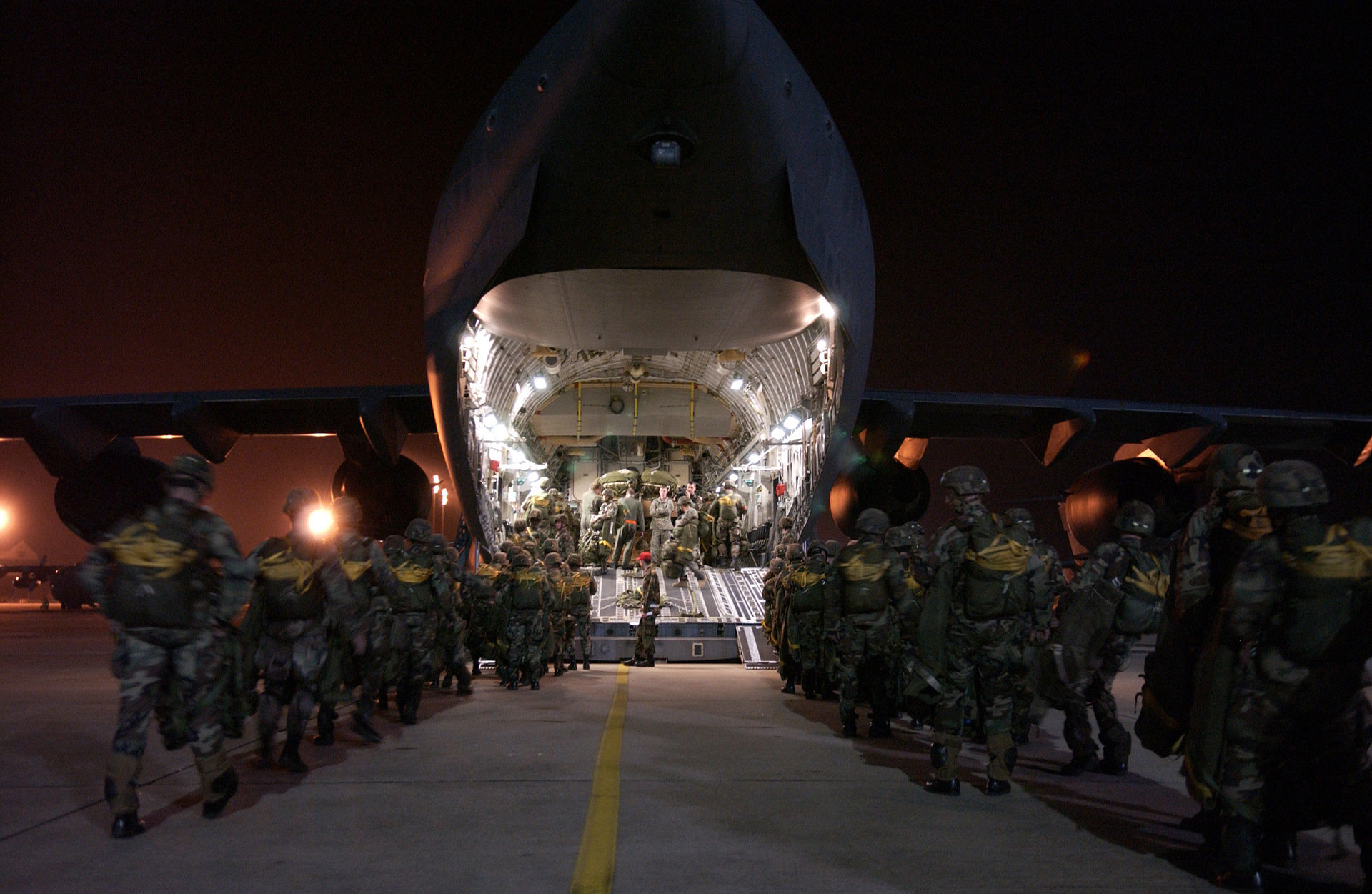
The forces currently deployed to the Middle East are nowhere close. According to US Central Command, approximately 50,000 American service members are now in the region, including two Marine Expeditionary Units, elements of the 82nd Airborne Division, and substantial naval and air assets. The 82nd Airborne alone is sending approximately 1,000 paratroopers, according to CNN, while the 31st and 11th Marine Expeditionary Units are transiting toward the Persian Gulf aboard the USS Tripoli and USS Boxer amphibious ready groups. Combined, these ground-capable forces total roughly 3,600 combat troops — a force suited for discrete, time-limited operations, not a sustained ground campaign.
Ruben Stewart, senior fellow for land warfare at the International Institute for Strategic Studies, told Al Jazeera that the deployment was “consistent with discrete, time-limited operations, not a sustained ground campaign.” He noted that the 2003 invasion of Iraq required approximately 170,000 troops for a country one-quarter the size of Iran, and that comparison understates the difficulty because Iraq’s terrain was predominantly flat desert. Iran’s interior is a fortress of mountain ranges that has repelled invaders for three millennia.
| Scenario | Troops Required | Currently Deployed | Shortfall |
|---|---|---|---|
| Coastal/limited (Khuzestan + coast) | 250,000-400,000 | ~50,000 | 200,000-350,000 |
| Western Iran campaign | 500,000-700,000 | ~50,000 | 450,000-650,000 |
| Full invasion and regime change | 800,000-1,200,000 | ~50,000 | 750,000-1,150,000 |
| Invasion + occupation (COIN ratio) | 1,760,000 | ~50,000 | 1,710,000 |
Even the most optimistic scenario — a limited coastal operation — would require five times the current deployment. A full-scale invasion would need a mobilisation not seen since the Second World War.
The Middle East briefing 3,000+ readers start their day with.
One email. Every weekday morning. Free.
Why Iran Is the Hardest Invasion Target on Earth
Iran’s geography is a natural fortress that has defeated invaders since the armies of Alexander the Great struggled through its mountain passes in 330 BC. The country spans 1,648,195 square kilometres — roughly the combined area of France, Germany, Spain, and the United Kingdom. Two massive mountain chains, the Zagros and the Alborz, form a crescent of high ground that shields the Iranian plateau from every direction of approach.
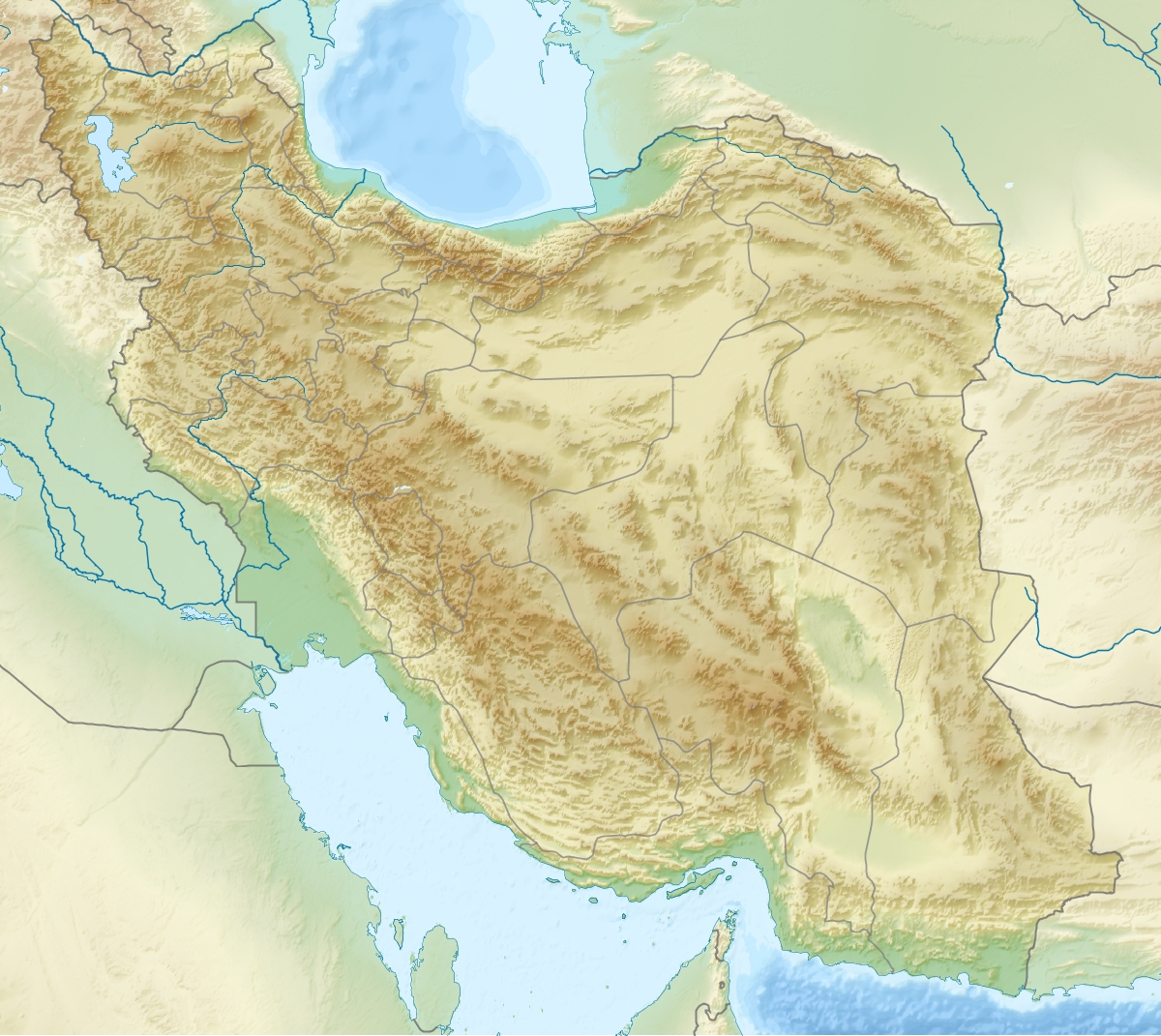
The Zagros Mountains extend roughly 1,500 kilometres from the Turkish border in the northwest to the Strait of Hormuz in the southeast, with peaks reaching 4,409 metres at Zard-Kuh. A force advancing from Iraq or Kuwait would need to cross successive ridgelines, each offering defenders natural kill zones. The passes between them, described by the US Naval Institute’s Proceedings as “needle-eye” bottlenecks, are few, narrow, and easily blocked at both ends. During the Iran-Iraq War, Iraqi armoured divisions advanced rapidly across the flat Khuzestan plain but stalled the moment they reached the Zagros foothills.
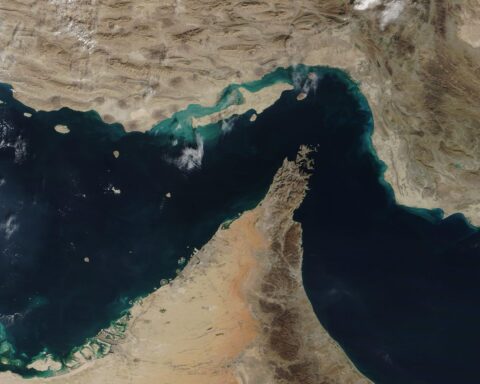
From the south, any amphibious approach faces a narrow coastal strip backed immediately by mountains. The littoral between the Persian Gulf shore and the first Zagros ridgeline is, in many places, less than 30 kilometres wide — barely enough room to establish a beachhead before running into defended high ground. From the east, the terrain is equally forbidding: the Dasht-e Kavir and Dasht-e Lut deserts present 300,000 square kilometres of salt flats, sand dunes, and volcanic formations that make overland movement logistically nightmarish.
Foreign Policy magazine, in a March 2026 analysis titled “Iran’s Biggest Wartime Advantage Is Geography,” concluded that the country’s terrain “creates natural defensive barriers that would complicate a large-scale ground invasion to a degree not seen in any American military campaign since the Pacific island-hopping of World War II.” The difference is that those islands measured in hectares. Iran measures in the hundreds of thousands of square kilometres.
The Iraq Comparison Trap
Pentagon planners and media commentators routinely compare a potential Iran invasion to the 2003 Iraq campaign. The comparison is seductive because Iraq is Iran’s neighbour, the US military staged from the same Gulf bases, and the invasion succeeded in toppling Baghdad in 21 days. It is also profoundly misleading.
| Factor | Iraq (2003) | Iran (2026) |
|---|---|---|
| Land area | 438,317 km² | 1,648,195 km² (3.8x larger) |
| Population at time of conflict | ~25 million | ~88 million (3.5x larger) |
| Active military personnel | ~375,000 | ~610,000 (1.6x more) |
| Reserve/paramilitary forces | ~650,000 | ~350,000 regular + millions of Basij |
| Terrain | Predominantly flat desert | Mountain ranges, plateau, desert |
| Invasion force used | ~170,000 troops | ~50,000 currently deployed |
| Invasion duration to capital | 21 days | Months to years (estimated) |
| Subsequent occupation | 8+ years, 4,000+ US dead | Indefinite, casualties unknown |
| Cost | $2+ trillion (Brown University) | $3-5 trillion (CSIS estimate) |
Iraq in 2003 had been hollowed out by a decade of sanctions, two previous wars, and a military that was largely demoralised. Entire Republican Guard divisions surrendered without fighting. Iranian forces face a different calculus: the IRGC’s ideological commitment, a population that has shown willingness to absorb enormous casualties during the Iran-Iraq War, and a government that has spent four decades preparing its terrain for exactly this scenario. Iran’s tunnel networks, according to the New Lines Institute, are “expansive” and designed specifically to compensate for weaknesses in air defence and airpower — meaning they are built to survive the kind of aerial bombardment that preceded ground operations in Iraq.
The occupation phase presents an even starker comparison. The United States peaked at approximately 166,000 troops in Iraq during the 2007 surge, according to the Council on Foreign Relations, and still could not pacify the country. Iraq’s population was 25 million. Iran’s is 88 million. The counterinsurgency arithmetic alone suggests that occupying Iran would require more soldiers than the US military possesses.
The force calculus shifted again on March 27, when the Wall Street Journal reported that the Pentagon was considering deploying 10,000 additional ground troops to the region, with options including the seizure of Kharg Island and clearing Iran’s coastline to reopen the Strait of Hormuz.
What Did the Iran-Iraq War Teach About Ground Campaigns?
The Iran-Iraq War of 1980-1988 remains the most relevant modern case study for ground operations in Iranian territory, and its lessons are uniformly discouraging for any would-be invader. Iraq launched its invasion on 22 September 1980 with six divisions advancing on three fronts along a 435-mile arc. Initial progress was swift across the flat Khuzestan plain, where Iraqi forces captured key cities including Khorramshahr after a brutal 34-day siege. Then the terrain changed.
On the central front, Iraqi mechanised divisions advanced through Mehran and pushed toward the Zagros foothills before stalling completely. On the northern front, forces that overran the border garrison at Qasr-e Shirin managed just 25 miles of penetration before the mountains stopped them. As Williamson Murray and Kevin Woods documented in their analysis of captured Iraqi records, the invading troops were “badly led and lacking in offensive spirit” — but even well-led forces would have struggled against terrain that funnelled armour into kill zones and gave defenders the high ground.
Iran’s response offers a second lesson. Despite the chaos of the post-revolution military purges — which had eliminated much of Iran’s officer corps — the country mobilised millions of volunteers through the Basij militia and fought Iraq to a standstill within two years. By 1982, Iran had recaptured virtually all its lost territory. The Zagros foothills proved to be the decisive terrain feature: Iraqi forces that entered the mountains either retreated or were destroyed.
The war ultimately killed between 500,000 and 1.5 million people on both sides, according to Britannica, and ended in a stalemate after eight years. Iraq used chemical weapons extensively and still could not break through Iran’s mountain defences. A modern invader would face the same geography with the added complication that Iran has spent the intervening decades building tunnels, fortifying mountain passes, and developing asymmetric capabilities specifically designed to offset conventional military superiority.
Is a Limited Strike on Kharg Island Possible?
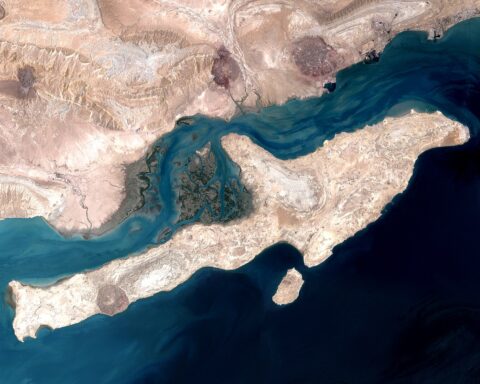
If a full-scale invasion is out of the question, the most frequently discussed alternative is a limited amphibious operation to seize Kharg Island — Iran’s primary oil export terminal, through which approximately 90 percent of the country’s crude oil has historically flowed. Capturing Kharg would give the United States a devastating economic lever while avoiding the nightmare of fighting across the Iranian mainland.
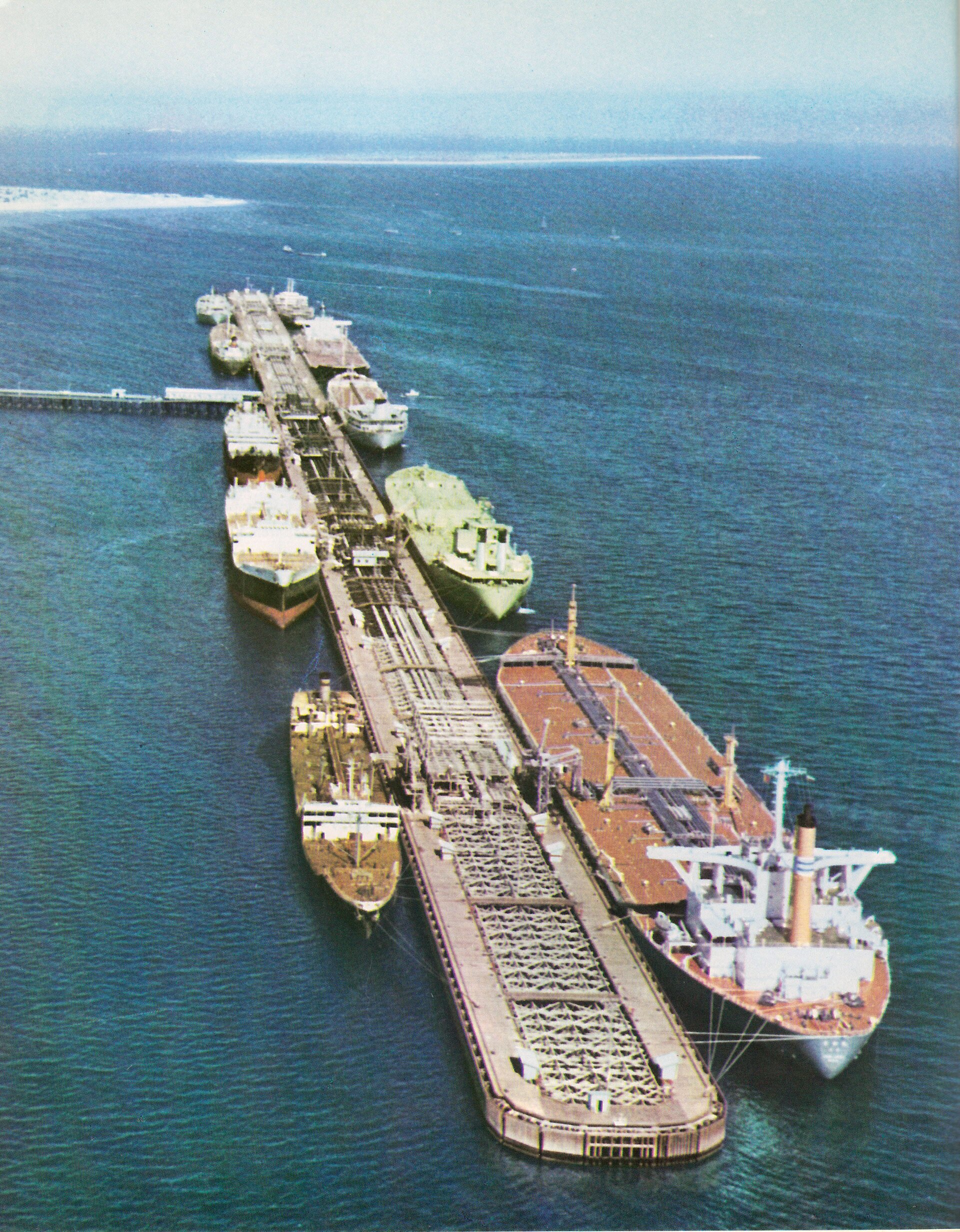
The scenario has genuine military logic. Kharg Island sits approximately 25 kilometres off the Iranian coast in the northern Persian Gulf, connected to the mainland by an undersea pipeline. It is small enough — roughly 20 square kilometres — to be seized by a Marine Expeditionary Unit with air and naval support. Defence Security Asia reported in March 2026 that Pentagon planners were actively examining a Kharg Island seizure as part of a broader strategy to break Iran’s economic leverage.
The problems begin after the landing. Iran has fortified the approaches to Kharg with anti-ship missiles, naval mines, and fast attack craft. The island sits within range of Iranian shore-based missiles launched from Bushehr province, barely 50 kilometres away. A garrison on Kharg would face continuous bombardment. Resupplying it would require maintaining a naval corridor through waters that Iran has already demonstrated it can threaten — the same waters where tanker insurance rates have reached record levels and commercial shipping has effectively ceased.
Historically, Iraq attempted to neutralise Kharg Island during the Iran-Iraq War through repeated air strikes between 1984 and 1988. Despite hundreds of bombing runs, Iran maintained export operations by rerouting crude to shuttle tankers at Larak Island further south. A modern seizure would need to be permanent and defensible — a far more demanding proposition than aerial bombing.
A Kharg operation would also risk a dramatic Iranian escalation. Tehran has repeatedly signalled that any ground incursion onto Iranian sovereign territory — even an offshore island — would cross a red line that triggers maximum retaliation. That retaliation would almost certainly target Saudi and Gulf infrastructure, making Riyadh’s enthusiasm for ground operations particularly paradoxical.
The Invasion Feasibility Matrix
Five distinct ground operation scenarios have been discussed in Pentagon planning circles and defence publications since the war began. Each carries different force requirements, timelines, and risk profiles. Analysing them side by side reveals why military planners remain deeply sceptical of any ground campaign.
| Scenario | Force Required | Terrain Challenge | Timeline | Achievable with Current Forces? | Risk to Gulf States |
|---|---|---|---|---|---|
| Kharg Island seizure | 5,000-15,000 | Low (island) | Days to seize, indefinite to hold | Possible but risky | Very High — Iran retaliates against oil infrastructure |
| Hormuz strait clearance | 10,000-30,000 | Moderate (coastal/naval) | Weeks to months | Possible with augmentation | High — mining and missile response |
| Khuzestan incursion (oil-rich lowlands) | 150,000-300,000 | Moderate (plains, then mountains) | Months | No — 3-6x more troops needed | Extreme — full Iranian retaliation |
| Western Iran campaign (to Tehran) | 500,000-800,000 | Extreme (Zagros crossing) | 6-18 months | No — requires full mobilisation | Extreme — regional war |
| Full invasion and occupation | 1,000,000+ | Extreme | Years | No — exceeds total US military | Catastrophic |
The matrix reveals a narrow band of possibility. Only two scenarios — Kharg Island and Hormuz clearance — fall within the range of what current deployments could theoretically support. Both carry severe escalation risks for Gulf states, particularly Saudi Arabia and the UAE, which sit within range of Iranian ballistic missiles and drone swarms. The three larger scenarios would require a national mobilisation of a kind not seen since 1945, legislative authorisation that Congress is unlikely to grant, and a willingness to accept casualties that the American public has not shown since Vietnam.
The matrix also exposes a structural contradiction in MBS’s reported position. Every scenario that might actually end the war — the larger operations — would expose Saudi Arabia to precisely the devastation that the Kingdom’s own military cannot prevent. Every scenario that current forces could attempt — the limited operations — would not end the war and might intensify Iranian strikes on Saudi targets.
What Role Would Saudi Arabia Play in a Ground War?
Crown Prince Mohammed bin Salman’s reported push for American ground troops in Iran raises a question that Riyadh has largely avoided answering: what would Saudi forces themselves contribute to a ground campaign? The Royal Saudi Armed Forces number approximately 227,000 active-duty personnel with a defence budget of roughly $75-80 billion — the fifth-largest military expenditure in the world, according to SIPRI. On paper, the Kingdom fields an imposing military machine. In practice, Saudi Arabia has never successfully conducted an independent large-scale ground operation.
The Yemen campaign, which began in 2015, exposed critical weaknesses in the Saudi military’s ability to project ground power. After more than a decade of fighting, Saudi-led coalition forces never achieved their primary objective of dislodging Houthi forces from Sanaa. The campaign was heavily dependent on foreign technical support, contracted logistics, and Western intelligence. Analysts at the Center for Strategic and International Studies noted that Saudi ground forces struggled with basic combined-arms operations throughout the conflict.
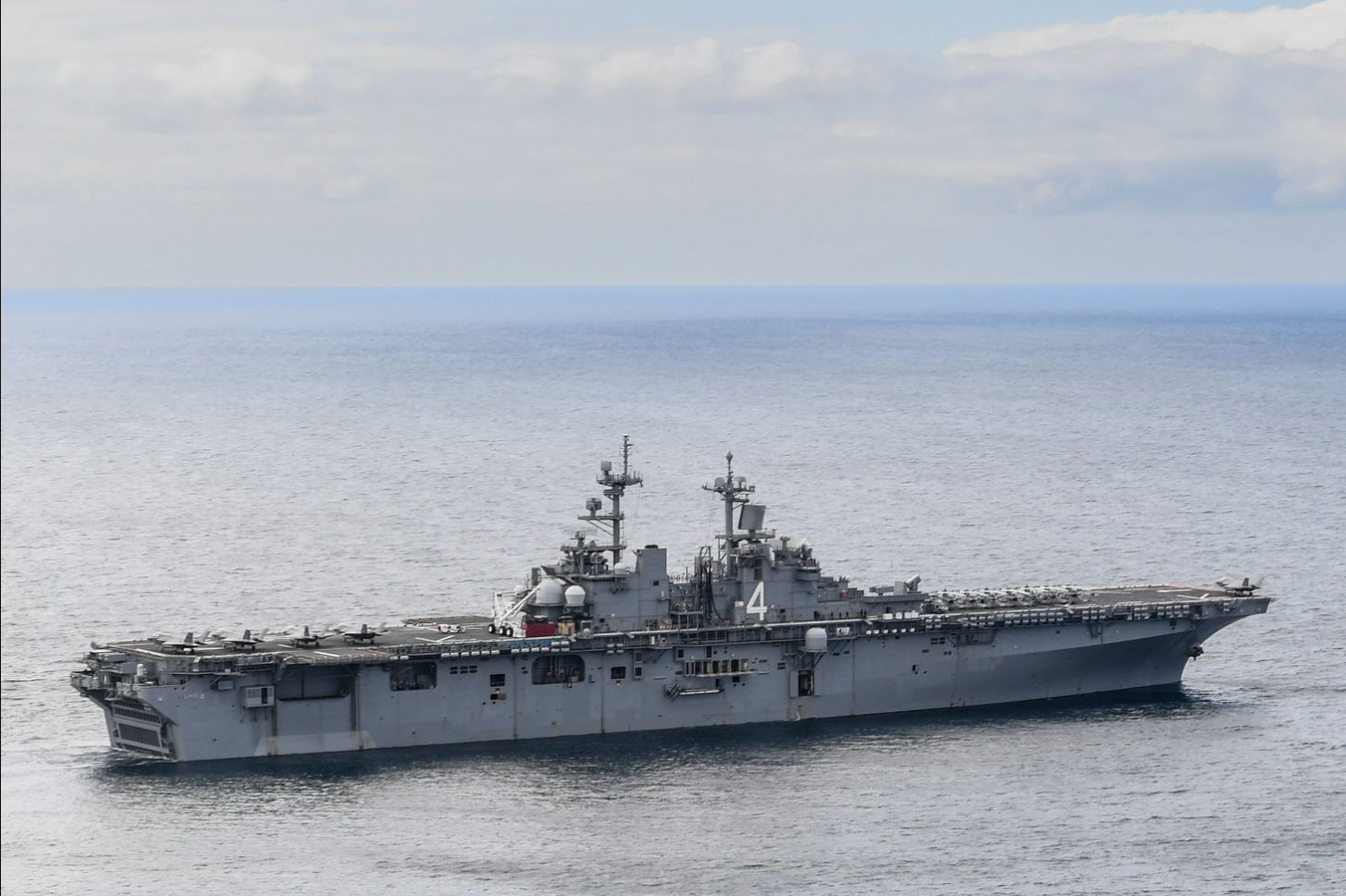
The most likely Saudi contribution to any ground campaign would not be combat troops but rather basing, logistics, and overflight rights — precisely what Riyadh has already begun providing by opening King Fahd Air Base to US forces. Saudi Arabia’s primary military value in this conflict lies not in its army but in its geography: the Kingdom offers forward operating bases, pre-positioned equipment, deep-water ports, and aerial refuelling infrastructure that any American operation in the Gulf would depend upon.
This creates a dangerous asymmetry. Saudi Arabia provides the staging ground for operations against Iran but lacks the military capability to defend itself against the retaliation those operations would provoke. The Kingdom’s air defence network — a mix of Patriot, THAAD, and Shahine systems — has performed well against drones and ballistic missiles during the current conflict, intercepting dozens of threats daily. But air defence is a wasting asset. Every interceptor fired costs between $3 million and $12 million, while the Iranian drones they destroy cost between $20,000 and $50,000. The mathematics of attrition favour the attacker. A four-week assessment of Saudi military performance suggests that defensive capability has exceeded expectations, though offensive gaps remain critical.
How Would Iran Fight a Ground Invasion?
Iran has spent forty years preparing for exactly the scenario now under discussion. The Islamic Revolutionary Guard Corps, which operates parallel to the regular armed forces, has built an asymmetric warfare doctrine designed to inflict maximum casualties on a technologically superior invader while avoiding the kind of conventional pitched battles that American forces are designed to win.
The IRGC’s ground strategy rests on four pillars. The first is tunnel networks. Iran began constructing military tunnels in the 1980s during the Iran-Iraq War and has expanded them continuously since. The New Lines Institute assessment of Iran’s conventional military capabilities describes these networks as “expansive” and specifically designed to “compensate somewhat for Iran’s weaknesses in air defense and airpower.” Iranian forces can move troops, ammunition, and missile launchers through underground corridors invisible to overhead surveillance, emerging to strike and then disappearing back into the mountains. The tunnel complexes at Natanz and Fordow, designed to protect nuclear centrifuges from bunker-buster bombs, offer a glimpse of the scale — Fordow is buried under 80 metres of granite in the Zagros Mountains.
The second pillar is the Basij militia. This volunteer force, formally part of the IRGC structure, can mobilise millions of fighters in wartime. During the Iran-Iraq War, Basij volunteers were deployed in human wave attacks that, while tactically crude, absorbed enormous amounts of Iraqi ammunition and fighting capacity. A modern Basij mobilisation would operate differently — as a guerrilla and intelligence network rather than a conventional force — but its potential scale is staggering. Iranian officials have claimed the ability to mobilise up to 20 million Basij members, though Western analysts consider 1-3 million a more realistic figure for effective combatants.
The third pillar is the anti-ship missile and naval mine arsenal that has already demonstrated its effectiveness during the current conflict. Any amphibious approach to Iran’s coast would transit waters saturated with Chinese-designed C-802 anti-ship missiles, North Korean-derived fast attack craft, and thousands of naval mines. The Royal Navy’s assessment, according to reporting by the Financial Times, is that clearing the Persian Gulf of mines alone would take 6-12 months — and that timeline assumes Iran stops laying new ones.
The fourth pillar is strategic depth through proxy activation. Iran’s network of allied militias — in Iraq, Lebanon, Yemen, Syria, and Bahrain — would be fully mobilised in the event of a ground invasion, opening multiple fronts simultaneously. Iraqi Shia militias have already struck US bases 21 times in a single 24-hour period during the air campaign alone. A ground invasion would transform Iraq’s militia landscape from a harassment threat into a full insurgency targeting the very supply lines that any Iran campaign would depend upon.
Taken together, these capabilities suggest that an invading force would face not a single army defending defined positions but a distributed, multi-layered resistance operating from mountains, tunnels, cities, and across multiple countries simultaneously. The US military’s overwhelming advantage in precision-guided munitions, stealth aircraft, and satellite intelligence would be partially offset by an enemy that fights underground, moves through civilian populations, and uses geographic depth to absorb punishment and counterattack.
Can America Fight Iran and Deter China at the Same Time?
The single most consequential constraint on a ground campaign in Iran is not terrain, logistics, or even domestic politics — it is the Pacific. Every battalion deployed to the Persian Gulf is a battalion unavailable for the Taiwan contingency, and the Pentagon has spent two decades designing a force structure around the assumption that the Indo-Pacific is the priority theatre.
The redeployment of the 31st Marine Expeditionary Unit from Sasebo, Japan, to the Gulf is a case study in the trade-off. The 31st MEU is one of only two permanently forward-deployed Marine units in the Pacific. Its departure, along with the USS Tripoli amphibious ready group, has created what defence analysts describe as a gap in the US military’s ability to rapidly respond to a crisis in the Taiwan Strait or on the Korean Peninsula. The global arms race triggered by the Iran conflict has further strained American military capacity, with allies from Japan to Australia expressing private concern about force posture in the Indo-Pacific.
A sustained ground campaign in Iran — even a limited one — would require the kind of force commitment that locked the US military into Iraq for eight years and Afghanistan for twenty. During the Iraq surge of 2007, 166,000 American troops in the Middle East meant fewer resources available for every other theatre. An Iran ground war would demand multiples of that force level while Beijing watches, calculates, and potentially concludes that the window for action on Taiwan has widened.
Michael O’Hanlon of the Brookings Institution has argued that the Iran war already represents the most significant diversion of American military attention from the Pacific since 2003. A ground campaign would transform that diversion into a strategic vacancy. The US military is designed to fight one major war while deterring in another theatre. It is not designed to fight two major wars simultaneously — and Iran, by any measure, would qualify as a major war.
Who Would Join a Coalition to Invade Iran?
The 2003 Iraq invasion was conducted by a “coalition of the willing” that included 49 countries, though the overwhelming majority of combat forces came from the United States and the United Kingdom. Building a comparable coalition for an Iran ground campaign would be significantly harder, and the diplomatic groundwork has barely begun.
The United Kingdom, America’s most reliable military partner, has deployed air defence missiles to Saudi Arabia, Kuwait, and Bahrain and offered to lead a mine-clearing coalition in the Strait of Hormuz. But British ground forces are stretched thin after years of defence cuts. The British Army’s total strength has fallen below 73,000 — its smallest since the Napoleonic Wars. Committing a meaningful ground contingent to Iran would require mobilising reserves and, almost certainly, reintroducing conscription, which no British government has contemplated since 1960.
France has deepened defence cooperation with Saudi Arabia during the crisis, with Defence Minister Catherine Vautrin meeting Prince Khalid bin Salman in Riyadh in March 2026. But French military doctrine since the Algerian War has been wary of large-scale ground commitments in the Middle East. President Macron’s stated position emphasises European strategic autonomy rather than subordination to American-led campaigns.
Gulf Cooperation Council states — the countries with the most direct stake in the outcome — present a mixed picture. Bahrain has been the most hawkish, pushing a UN Security Council resolution authorising force to reopen Hormuz. The UAE has taken preparatory steps including closing Iranian institutions in Dubai and freezing Iranian assets. But neither Bahrain nor the UAE possesses ground forces capable of contributing meaningfully to an invasion of a country Iran’s size. Kuwait, which has absorbed direct Iranian attacks, is focused on defending its own territory. Oman and Qatar have maintained their traditional neutrality, with Oman serving as a diplomatic back-channel.
The most significant potential coalition partner is one that few are discussing publicly: Israel. The Israeli Defense Forces have been conducting the air campaign against Iran jointly with the United States since February 28. Israel possesses one of the most capable militaries in the Middle East, with extensive experience in combined-arms operations and urban warfare. However, Israeli ground forces entering Iranian territory would transform the conflict from an air campaign into a civilisational confrontation in the eyes of much of the Muslim world. The emerging Saudi-Israeli security alignment has been conducted through deliberate ambiguity; overt Israeli participation in a ground invasion would shatter that ambiguity and potentially destabilise every Arab government that has maintained quiet cooperation.
The coalition arithmetic, in summary, produces a force far short of what is needed. The United States would provide the vast majority of ground combat power, with token contributions from allied nations and logistical support from Gulf states. This is not a recipe for a campaign requiring half a million to a million troops. It is a recipe for another Iraq — American forces doing the fighting, American taxpayers paying the bill, and American veterans bearing the consequences for decades afterward.
The Three-Trillion-Dollar Invoice
The financial cost of invading Iran would dwarf any military operation in American history. Brown University’s Costs of War Project calculated the total cost of the Iraq and Afghanistan wars at approximately $8 trillion, including long-term veterans’ care and interest on war borrowing. Iran, with a population 3.5 times larger than Iraq’s and terrain several orders of magnitude more difficult, would generate costs on a comparable or greater scale.
The Center for Strategic and International Studies estimated in a pre-war analysis that a full-scale ground campaign against Iran could cost between $3 trillion and $5 trillion over the first five years, depending on the scope of operations and the duration of any subsequent occupation. These figures do not include the economic damage from sustained disruption to Gulf oil flows — disruption that a ground invasion would intensify, not resolve, at least in the near term.
For Saudi Arabia, the financial calculus is equally sobering. The Kingdom’s foreign reserves, managed by the Saudi Arabian Monetary Authority, stood at approximately $440 billion before the war began. Monthly war-related costs — including air defence interceptor replenishment, infrastructure repair, lost oil revenue from Hormuz closure, and emergency spending — are consuming an estimated $15-25 billion per month, according to estimates by Gulf economists cited by Bloomberg. A protracted ground war that intensifies Iranian strikes on Saudi infrastructure could burn through those reserves within two to three years.
The opportunity cost is equally significant. Every dollar spent on war is a dollar not spent on Vision 2030. The Public Investment Fund has already scaled back NEOM and pivoted toward grain and food security purchases. A multi-year ground campaign in Iran would effectively freeze Saudi Arabia’s economic transformation for a generation.
Why MBS Wants Ground Troops Even If Invasion Is Impossible
The most important question about Crown Prince Mohammed bin Salman’s reported push for ground troops may not be whether he genuinely believes invasion is feasible. It may be what he actually wants the pressure to achieve.
Three strategic objectives emerge from the pattern of Saudi diplomatic behaviour since the war began. First, MBS wants to ensure that the United States does not negotiate a ceasefire that leaves Iran’s military capabilities intact. The 15-point plan that Washington sent to Tehran through Pakistan addresses some Saudi concerns — nuclear dismantlement, missile limits, end of proxy support — but Riyadh has no guarantee those terms will survive negotiation. Pushing for ground troops raises the ceiling of American ambition, making it harder for Trump to settle for a deal that leaves Iran capable of threatening Saudi Arabia in five years.
Second, the Crown Prince wants to bind America more tightly to Gulf security. The more deeply committed American forces become — the more bases they use, the more troops they deploy, the more they integrate with Saudi military systems — the harder it becomes for a future president to disengage. The ground troops push is, in this reading, less about actually invading Iran than about making the US-Saudi military relationship irreversible.
Third, MBS may be signalling to Tehran that Saudi restraint has limits. The Kingdom has absorbed hundreds of drone and missile attacks without retaliating directly. That restraint has been interpreted by some Iranian strategists as weakness. By publicly advocating for the most extreme military option, MBS changes the calculus: if Iran continues to strike Saudi targets, the Crown Prince has already positioned himself as the leader willing to authorise an escalation that would be catastrophic for both sides.
This interpretation suggests that the ground troops debate is not really about military planning at all. It is about leverage — diplomatic, strategic, and psychological. The threat of invasion is more useful than an actual invasion, which is convenient because an actual invasion is beyond the capacity of the forces available.
The force being deployed is consistent with discrete, time-limited operations, not a sustained ground campaign.
Ruben Stewart, International Institute for Strategic Studies, March 2026
What Would Victory in Iran Even Look Like?
The most sobering aspect of the ground invasion debate is the absence of a coherent definition of victory. The air campaign has clear objectives: destroy nuclear facilities, degrade military infrastructure, compel reopening of Hormuz. A ground campaign’s objectives are far murkier.
Regime change — the explicit goal that the New York Times reported MBS has advocated — raises the spectre of Iraq circa 2003. The toppling of Saddam Hussein took three weeks; the consequences lasted two decades. Iran’s government is more deeply embedded in its society than Hussein’s was. The IRGC controls an estimated 25-30 percent of the Iranian economy, according to research by the Foundation for Defense of Democracies. Removing the regime would require dismantling an economic and security apparatus that employs millions of people, creating precisely the conditions that fuelled the insurgency in post-invasion Iraq.
A more limited objective — seizing Iran’s coastline and oil infrastructure to deny the regime revenue — faces the same sustainability problem as the Kharg Island scenario writ large. Holding a strip of territory against a hostile population of 88 million, with mountain ranges providing cover for guerrilla operations, would consume enormous resources indefinitely. The Soviet Union learned this lesson in Afghanistan with a population of 15 million. The United States learned it again in the same country with a population of 38 million.
Iran’s population is larger than both combined. And unlike Afghanistan’s fractured tribal society, Iran has a strong national identity, a functioning state apparatus, and a history of unified resistance to foreign invasion that dates back millennia. The 1953 coup, which the CIA orchestrated against Mohammad Mosaddegh, required no troops but still produced blowback that shaped the next seventy years of US-Iran relations. A full-scale invasion would generate consequences measured not in decades but in generations.
The Logistics Nightmare Nobody Is Discussing
Even if the troop numbers could be assembled and the political will summoned, the logistics of moving a ground force into Iran from Gulf bases present challenges that dwarf anything attempted since the Second World War. The 2003 Iraq invasion benefited from Kuwait — a flat, friendly territory directly adjacent to Iraq with pre-positioned equipment depots, deep-water ports, and a government that had spent a decade preparing to host exactly this operation.
An Iran campaign would lack every one of those advantages. The most direct land route from Saudi Arabia or Kuwait into Iran runs through southern Iraq — a country whose government has declared force majeure on foreign oil operations and whose Shia militias have attacked US bases 21 times in a single 24-hour period during the current conflict. Moving supply convoys through Iraqi territory would require either Iraqi government cooperation (unlikely given Baghdad’s equivocal position) or a parallel campaign to secure the supply route (which would demand yet more troops).
The alternative — amphibious assault from the Persian Gulf — faces the bottleneck problem. The Gulf’s narrow waters, already choked with mines and patrolled by Iranian fast attack craft and anti-ship missiles, would need to be cleared before troop transports could approach the Iranian coast. The Royal Navy’s proposed mine-clearing coalition has yet to deploy, and even optimistic timelines suggest months of clearance operations before amphibious landings could be attempted safely.
Supply chains present a further complication. A division-sized force in contact requires approximately 600 tonnes of supplies per day — fuel, ammunition, food, water, medical equipment, spare parts. For a 300,000-strong force, daily supply requirements would exceed 50,000 tonnes. Delivering that volume through contested waters and over mountain passes, while Iranian drones and missiles target supply depots, would strain US military logistics to breaking point. The 2003 Iraq invasion nearly stalled when overextended supply lines forced a 10-day operational pause, and that campaign covered flat terrain against a demoralised enemy. An Iran campaign would face mountainous terrain against a motivated defender with decades of preparation.
| Factor | Iraq 2003 | Iran (Hypothetical) |
|---|---|---|
| Staging area | Kuwait (flat, friendly, prepared) | Gulf states (some access) + contested waters |
| Land route | Direct from Kuwait, flat desert | Through Iraq (hostile) or amphibious approach |
| Supply line length to capital | ~550 km (Kuwait to Baghdad) | ~1,200+ km (Gulf coast to Tehran) |
| Terrain along supply route | Flat desert, paved highways | Mountain passes, limited roads |
| Enemy interdiction of supply lines | Limited guerrilla attacks | Drones, missiles, tunnel-based ambushes |
| Pre-positioned equipment | Extensive (12 years of preparation) | Minimal (conflict began 26 days ago) |
| Host nation logistics support | Full Kuwaiti cooperation | Partial (Saudi bases, no land corridor) |
The distance from the Persian Gulf coast to Tehran is approximately 1,200 kilometres, more than twice the distance from Kuwait to Baghdad. Every additional kilometre of supply line in mountain terrain multiplies the vulnerability to interdiction. Napoleon’s maxim that an army marches on its stomach has never been more relevant — and the stomach of a modern mechanised army demands far more than bread.
Frequently Asked Questions
How many US troops are currently deployed near Iran?
US Central Command confirmed in late March 2026 that approximately 50,000 American service members are deployed across the Middle East, including naval personnel aboard two carrier strike groups, Marine Expeditionary Units aboard the USS Tripoli and USS Boxer, and elements of the 82nd Airborne Division. The ground-capable combat force totals roughly 3,600 troops — less than 1 percent of what a full-scale invasion would require according to defence analysts.
Could the United States invade Iran with 50,000 troops?
Military experts overwhelmingly agree that 50,000 troops are insufficient for any operation beyond limited, time-bound strikes on specific targets such as Kharg Island or Hormuz clearance operations. The International Institute for Strategic Studies has assessed that the current deployment is designed for “discrete, time-limited operations.” A full invasion of Iran, which is nearly four times larger than Iraq, would require between 500,000 and 1.6 million troops depending on the scope of operations.
Why does MBS want American ground troops in Iran?
The New York Times reported in March 2026 that Crown Prince Mohammed bin Salman has pushed President Trump to commit ground forces to Iran, with regime change as the objective. Analysts interpret this as a multi-layered strategy: to prevent a premature ceasefire that leaves Iran’s military intact, to deepen the US-Saudi military alliance, and to signal to Tehran that Saudi restraint has limits. Whether MBS genuinely believes invasion is feasible or is using the demand as diplomatic leverage remains debated among regional analysts.
What is the Kharg Island scenario?
Kharg Island is Iran’s primary oil export terminal, handling approximately 90 percent of its crude exports. Pentagon planners have reportedly studied seizing the island — which measures roughly 20 square kilometres — as a limited ground operation that could deny Iran oil revenue without requiring a full-scale invasion. The operation is theoretically achievable with a Marine Expeditionary Unit, but holding the island against continuous Iranian missile and drone attacks from the nearby mainland would be extremely costly and would likely trigger severe Iranian retaliation against Gulf state infrastructure.
How does Iran’s terrain compare to Iraq’s for military operations?
Iran’s terrain is dramatically more challenging than Iraq’s. Iraq is predominantly flat desert with modern highway infrastructure, while Iran features two major mountain ranges — the Zagros (1,500 km long, peaks to 4,409 metres) and the Alborz — plus vast central deserts. The Zagros Mountains stopped the Iraqi invasion in 1980 despite Iraq using six full divisions. Military historians consider Iran among the most defensible territories in the world, with natural mountain pass chokepoints that have repelled invaders from Alexander the Great to Saddam Hussein.