
Saudi Arabia and Nigeria share deep ties rooted in faith, trade, and a growing appetite for travel. Every year, tens of thousands of Nigerians make the journey to the Kingdom — for Hajj and Umrah, for business, and increasingly, for tourism. With Saudi Arabia opening its doors wider under Vision 2030, Nigerian travellers now have more reasons than ever to visit. This guide, part of our comprehensive Saudi Arabia travel guide, covers everything a Nigerian citizen needs to know: from the visa process and flight options to budgeting in Naira, finding familiar food, and making the most of the Kingdom’s ancient and modern attractions.
Best Time to Visit: October to March (cooler weather; Hajj dates vary by Islamic calendar)
Getting There: Direct flights from Lagos and Kano to Jeddah; connections via Addis Ababa, Istanbul, or Cairo to Riyadh
Visa Required: Yes — embassy visa or e-visa with valid US/UK/Schengen visa
Budget: $80–$200 per day (mid-range), flights from $500–$950 return
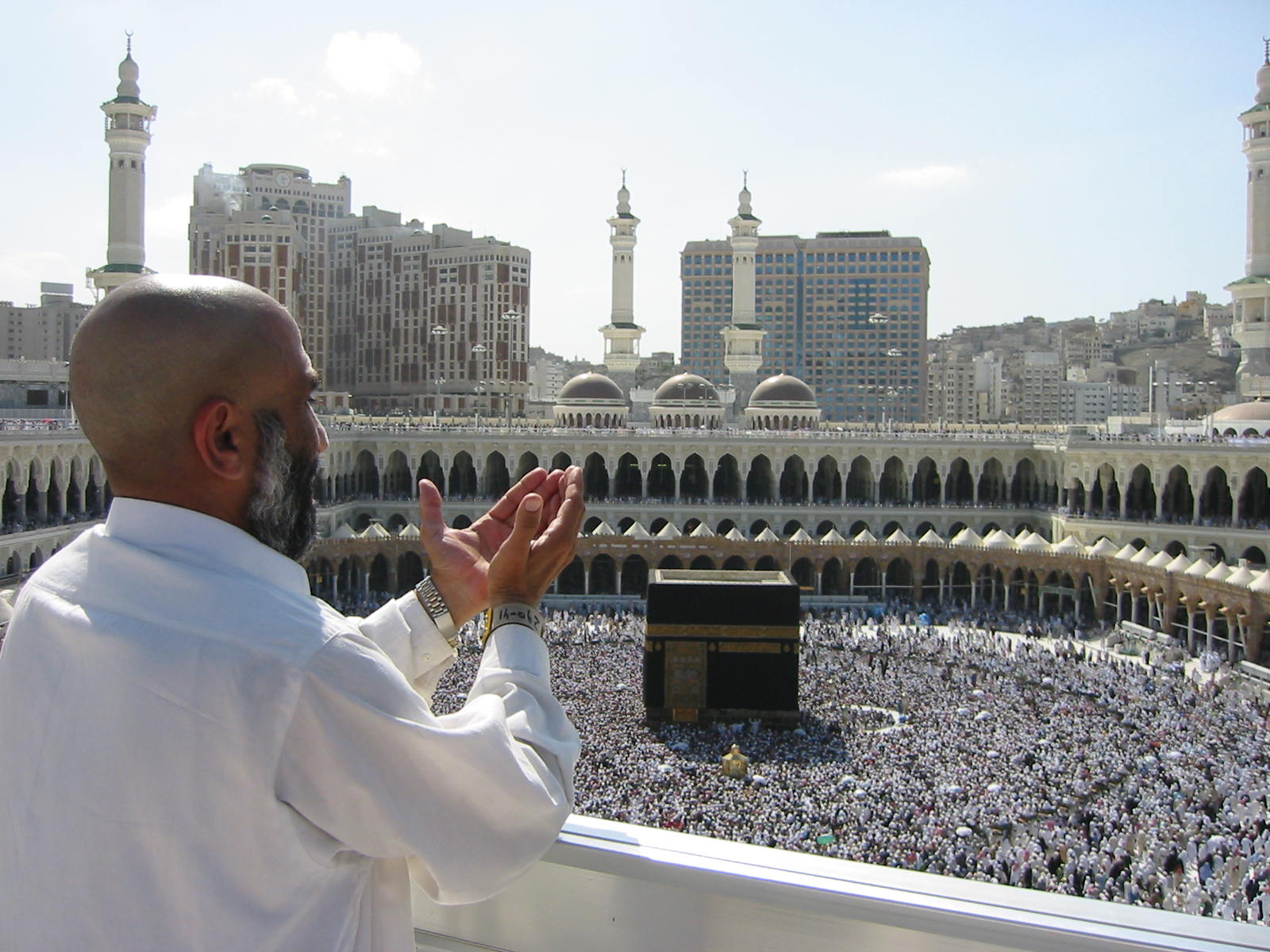
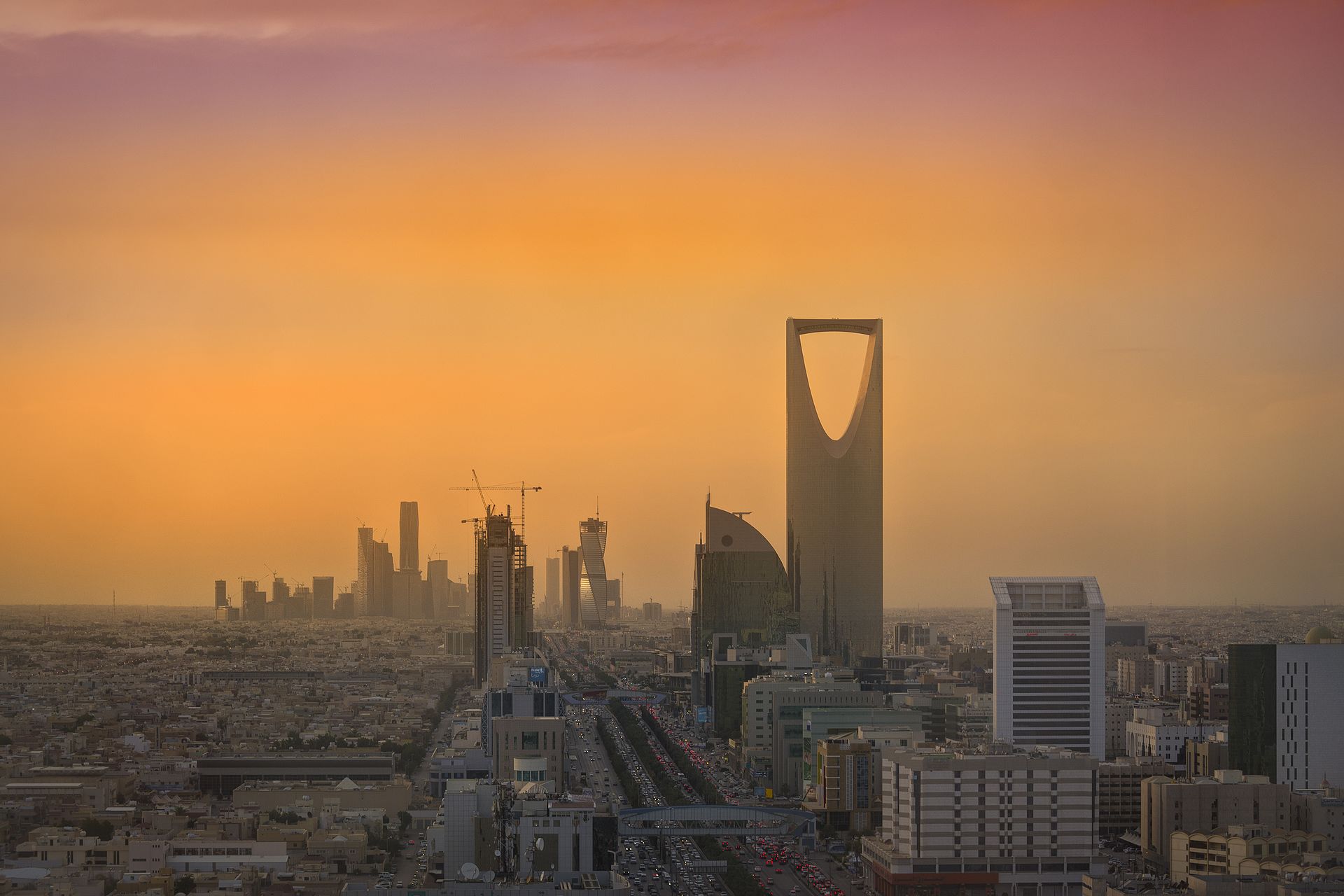
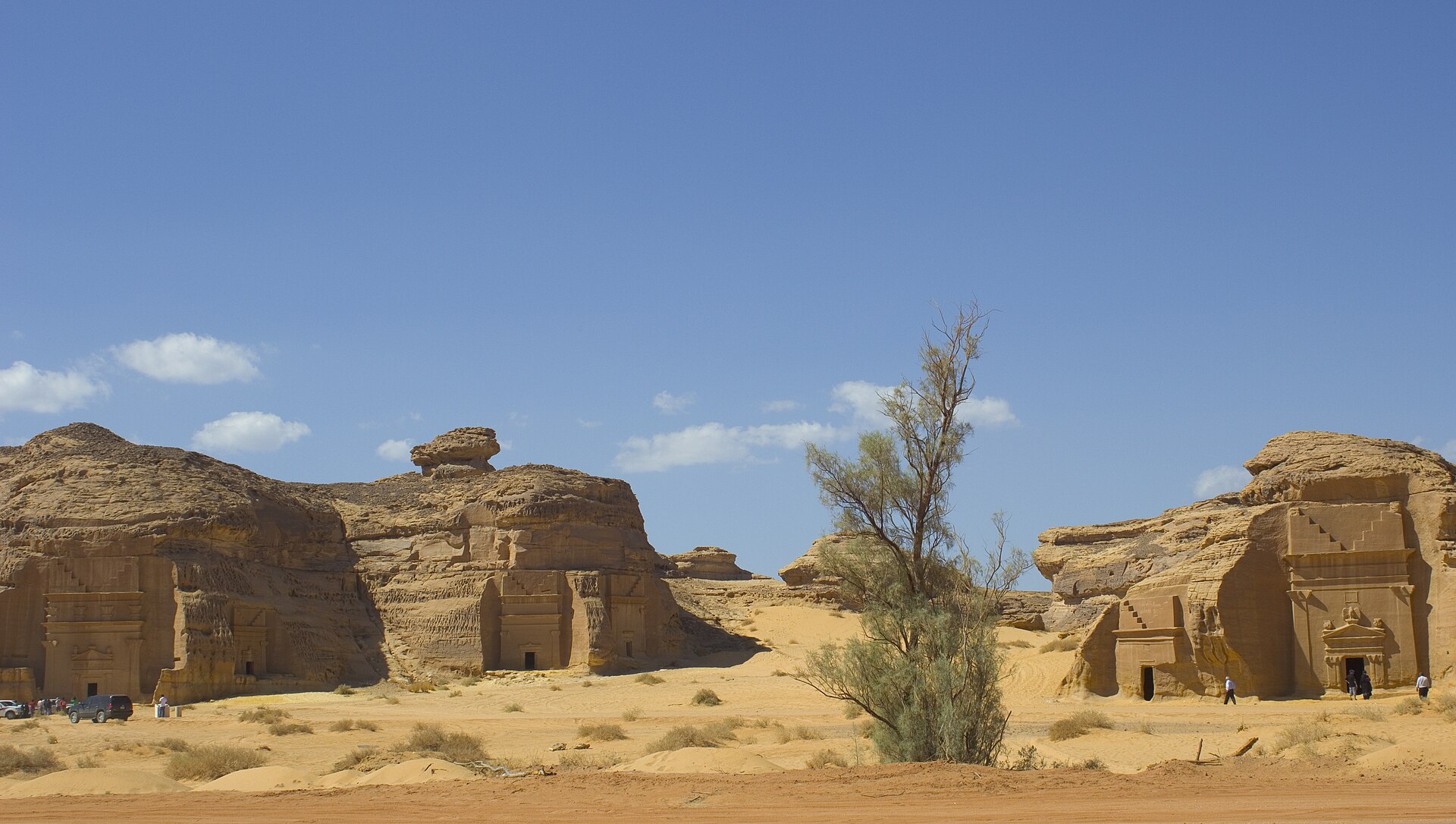
Must-See: Masjid al-Haram (Mecca), Riyadh’s Kingdom Tower, Hegra in AlUla
Avoid: Travelling without a valid Yellow Fever certificate — you will be denied entry
Visa Requirements for Nigerian Citizens
The visa is the single most important step for any Nigerian planning a trip to Saudi Arabia. Unlike citizens of 66 countries who can apply for an instant e-visa online, Nigerian passport holders must go through a more involved process. Here is exactly what you need and how to get it.
Tourist Visa (Embassy Route)
Since February 2025, Saudi Arabia has restricted Nigerian citizens to single-entry tourist visas valid for 30 days. The previous one-year, multiple-entry tourist visa is no longer available for Nigerian nationals. This change affects 14 countries including Nigeria, Pakistan, Bangladesh, Egypt, and India.
To apply, you must use an authorised travel agency — the Saudi embassy in Abuja does not accept walk-in tourist visa applications. Processing takes 7 to 15 working days. You will need:
- A valid Nigerian passport with at least six months’ validity beyond your travel date and two blank pages
- A completed visa application form
- Passport-sized photographs (white background, no head covering unless religious)
- Proof of accommodation (hotel booking or invitation letter)
- Return flight itinerary
- Proof of funds (bank statement covering the last three months)
- A valid Yellow Fever vaccination certificate (International Certificate of Vaccination / Yellow Card)
- Apply for an e-visa online at visa.visitsaudi.com, or
- Receive a visa on arrival (SAR 480 / approximately $128) when flying Saudia or Flynas airlines
- Meningitis ACWY vaccine: Required for Hajj and Umrah pilgrims, administered no more than three years and no less than 10 days before arrival
- COVID-19: As of 2026, Saudi Arabia no longer requires COVID vaccination or testing for entry, though requirements can change — check before departure
- Travel insurance: Strongly recommended. Saudi healthcare is excellent but expensive for foreigners without coverage. See our Saudi Arabia travel insurance guide
- Book 2–3 months ahead: Prices rise sharply closer to departure, especially during Hajj and Umrah seasons
- Compare on Skyscanner, Kayak, and Google Flights: Then book directly with the airline for better rebooking flexibility
- Consider Ethiopian Airlines via Addis Ababa: Often the most affordable option with good connections from Lagos, Abuja, and Kano
- Avoid Hajj season (May–June 2026): Flights are most expensive during this period unless you are performing Hajj
- Fly Saudia or Flynas: If you hold a US/UK/Schengen visa, flying these carriers qualifies you for visa-on-arrival, saving time and paperwork
- Exchange before you leave: Buy Saudi Riyals or US Dollars from licensed Bureau de Change operators in Lagos, Abuja, or Kano. Rates at the airport in Nigeria are typically worse.
- Use ATMs in Saudi Arabia: Widely available. Your Nigerian bank card (Visa or Mastercard) will work, but check international withdrawal fees with your bank. Most ATMs dispense SAR 100, 200, and 500 notes.
- Card payments: Saudi Arabia is increasingly cashless. Apple Pay, Google Pay, and contactless payments are common at malls, restaurants, and hotels. Carry some cash for taxis, smaller shops, and tips.
- Avoid exchanging at hotel desks: Rates are always unfavourable. Use official exchange offices or ATMs.
- Kingdom Tower: The iconic skyscraper with a sky bridge offering panoramic views
- Masmak Fortress: The mud-brick citadel where King Abdulaziz launched the unification of Saudi Arabia in 1902
- Edge of the World (Jebel Fihrayn): A dramatic cliff edge overlooking an endless desert valley — one of Saudi’s most photographed natural wonders
- Diriyah: A UNESCO World Heritage Site and the birthplace of the Saudi state, undergoing a massive restoration
- Riyadh Season: An annual entertainment festival (October–March) with concerts, food events, and international acts
- Al-Balad: The UNESCO-listed historic quarter, with coral-stone merchant houses and narrow alleyways dating back centuries
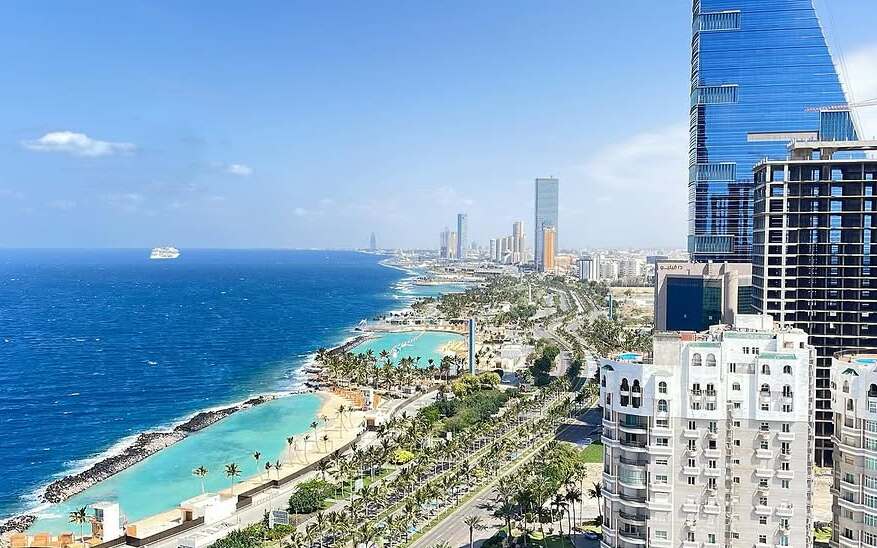
- Jeddah Corniche: A 30-kilometre waterfront promenade with public art, cafes, and Red Sea views
- King Fahad Fountain: The world’s tallest fountain, shooting water 312 metres into the air
- Floating Mosque (Al-Rahma Mosque): Built over the Red Sea, this mosque appears to float at high tide
- Women: The abaya is no longer legally required for tourists, but modest, loose-fitting clothing covering arms, shoulders, and knees is expected. In Mecca and Medina, dress conservatively — many Nigerian women find it easiest to wear an abaya for convenience
- Men: Avoid sleeveless shirts, shorts above the knee, and tight-fitting clothing in public. Smart casual is the norm in malls and restaurants
- Greetings: “As-salamu alaykum” is universally appreciated. Handshakes between the same gender are common; avoid initiating handshakes with the opposite gender
- Photography: Always ask permission before photographing people, especially women. Do not photograph government or military buildings
- Alcohol: Completely banned. There are no exceptions for tourists
- Public behaviour: Public displays of affection are not acceptable, even between married couples
- Pointing: Pointing directly at someone with your finger is considered rude. Use an open hand or gesture with your chin
- Jeddah: The Karantina neighbourhood has local Nigerian food vendors. African food shops can be found in Al-Safa 1 and Bawadi (behind Jafali). Matam Thamaneen near Jeddah Airport is a well-known African restaurant
- Riyadh: African Lounge and several Nigerian food delivery services operate in the city. Search social media for “Nigerian food Riyadh” to find home-based caterers — many Nigerian residents cook and sell food
- Delivery apps: HungerStation and Jahez cover African restaurants in major cities
- Kabsa: Spiced rice with meat (lamb or chicken) — Saudi Arabia’s national dish, similar in concept to jollof rice
- Mandi: Slow-cooked meat over fragrant rice, tender and aromatic
- Shawarma: Ubiquitous and affordable — a quick meal for around 10–20 SAR
- Kunafa: A sweet pastry with cheese, soaked in sugar syrup — perfect after-dinner treat
- Fresh dates: Saudi Arabia produces some of the world’s finest dates. Buy them at every opportunity
- Saudia: The national carrier with the largest domestic network
- Flynas: Budget carrier with competitive fares, often starting from 150–200 SAR one-way
- Flyadeal: Another low-cost option for domestic routes
- Furnished apartments: Common in Jeddah and Riyadh, often cheaper than hotels for stays longer than a week. Platforms like Booking.com and Airbnb list options from 150–300 SAR/night
- Hotel apartments: Self-catering options popular with Nigerian families. Look in areas like Al-Aziziyah (Mecca), Al-Madinah Road (Jeddah), and Olaya (Riyadh)
- Police: 999
- Ambulance: 997
- Fire: 998
- Traffic accidents: 993
- Nigerian Embassy in Riyadh: +966 11 482 1550
- Lightweight, modest clothing: Loose cotton or linen. Avoid dark colours in summer (temperatures exceed 45°C)
- Comfortable walking shoes: Essential for Haram visits, souq exploration, and city walking
- Sunscreen and sunglasses: UV exposure is intense year-round
- Power adapter: Saudi Arabia uses Type G plugs (same as the UK). Nigerian travellers using Type G plugs will not need an adapter; those with Type D plugs will
- Ihram clothing: If performing Umrah or Hajj, bring or buy ihram garments (widely available in Jeddah and Mecca)
- Medications: Bring enough prescription medication for your trip with a doctor’s letter. Some common Nigerian over-the-counter medicines may require a prescription in Saudi Arabia
- Yellow Card: Carry your original vaccination certificate at all times — photocopies are not accepted
- Social media groups: Facebook groups like “Nigerians in Saudi Arabia” and “Naija in Jeddah” are active sources of advice, food recommendations, and local tips
- Nigerian food vendors: As mentioned above, Nigerian home-based caterers advertise on Instagram and WhatsApp in major cities
- Mosques and gathering places: Friday prayers at major mosques are a natural meeting point for the Nigerian community
- Dates: Ajwa, Sukkari, and Safawi dates make perfect gifts. Buy in bulk from markets in Medina or Riyadh for the best prices
- Zamzam water: Pilgrims typically bring Zamzam water home. Current rules allow up to 5 litres per person in checked luggage
- Oud and perfume: Saudi Arabia is famous for oud (agarwood) perfume oils. Al-Haramain and Abdul Samad Al Qurashi are popular local brands
- Prayer mats and Islamic items: Widely available and often beautifully crafted
- Gold and jewellery: The Gold Souq in Jeddah and Riyadh offers 18K and 21K gold at competitive prices
- Abaya and thobe: High-quality garments make popular gifts
- Travelling without a Yellow Card: You will be turned away at the gate or on arrival. No exceptions
- Not having enough cash: While card payments are common, you will encounter places that are cash-only, especially in souqs and for taxis
- Ignoring prayer times: Do not plan important activities (restaurant reservations, shopping) during prayer windows
- Under-estimating distances: Saudi Arabia is enormous. Riyadh to AlUla is a 12-hour drive. Fly between regions
- Exchanging money at hotels: Always use official exchange offices or ATMs for better rates
- Packing too heavily: You will want to buy things in Saudi Arabia. Leave luggage space for shopping
- Neglecting travel insurance: A hospital visit without insurance can cost thousands of Riyals
- Saudi Arabia Travel Guide 2026 — The complete guide to visiting the Kingdom
- Saudi Arabia for Pakistani Travellers — Visa, flights, and cultural tips for Pakistani visitors
- Saudi Arabia for Indonesian Tourists — Muslim-friendly complete guide for Indonesian travellers
- Saudi Arabia for Muslim Travellers — The complete faith-based travel guide
- Hajj 2026 Guide — Everything you need for the pilgrimage
- Saudi Arabia Visa Guide — Every visa type explained
For full details on all visa types, costs, and processing steps, see our dedicated Saudi Arabia Visa Guide.
The US/UK/Schengen Shortcut
If you hold a valid and previously used visa from the United States, United Kingdom, or a Schengen-area country, you may qualify for a faster route. You can either:
Important: Visa-on-arrival is at the discretion of the immigration officer and is not guaranteed, particularly during Hajj season (typically April to mid-June) when tourist visas are temporarily suspended. Always have a backup plan.
Hajj and Umrah Visas
Hajj and Umrah visas follow a completely separate process managed by the National Hajj Commission of Nigeria (NAHCON). For the 2026 Hajj season, NAHCON set fares between ₦7.58 million and ₦7.99 million depending on your departure zone (Maiduguri/Yola, Northern, or Southern). Saudi Arabia reduced Nigeria’s Hajj quota for 2026, and NAHCON adopted a first-come, first-served allocation policy rather than distributing slots to states. For more on the pilgrimage experience, see our Hajj 2026 Guide.
Health Requirements — The Yellow Card Is Non-Negotiable
Saudi Arabia requires all travellers from Nigeria to present a valid Yellow Fever vaccination certificate upon arrival. This applies to everyone over nine months old, regardless of visa type. You must be vaccinated at least 10 days before your departure date.
Get your vaccination at any approved centre in Nigeria. The Yellow Card (International Certificate of Vaccination or Prophylaxis) is now valid for life — you no longer need boosters. For the 2026 Hajj, NAHCON reduced the Yellow Card fee from ₦5,000 to ₦2,000.
Warning: Any traveller who fails to produce a valid Yellow Card may be denied entry, quarantined, or subjected to further medical evaluation. Do not risk it. Get vaccinated well in advance.
Other Health Precautions
Flights from Nigeria to Saudi Arabia
Several airlines connect Nigeria to Saudi Arabia, with routes from Lagos, Abuja, and Kano. Here are your main options:
Key Routes and Airlines
| Route | Airlines | Flight Time | Approx. Cost (Return) |
|---|---|---|---|
| Lagos (LOS) → Jeddah (JED) | Saudia, Turkish Airlines, EgyptAir | 6–14 hours (direct or 1 stop) | $576–$950 |
| Lagos (LOS) → Riyadh (RUH) | Qatar Airways, Ethiopian Airlines, Flynas | 8–14 hours (1 stop) | $487–$900 |
| Kano (KAN) → Jeddah (JED) | Saudia, Air Peace | 6–9 hours | $500–$850 |
| Abuja (ABV) → Jeddah (JED) | Ethiopian Airlines, Turkish Airlines | 9–15 hours (1 stop) | $550–$900 |
Booking Tips for Cheaper Flights
Tip: Arrive at the airport at least 3 hours before departure for international flights. Nigerian airports can have long check-in and security queues, especially during peak Hajj travel periods.
Money, Currency, and Budgeting
The Saudi Riyal and the Naira
The Saudi Riyal (SAR) is pegged to the US Dollar at a fixed rate of SAR 3.75 = $1. As of April 2026, 1 SAR equals approximately ₦367, though this fluctuates with the Naira’s exchange rate against the Dollar.
Over the first quarter of 2026, the SAR/NGN rate has moved between ₦355 and ₦386, so check the rate close to your travel date.
How to Handle Money
Daily Budget Estimates
| Budget Level | Daily Cost (SAR) | Daily Cost (₦) | What It Covers |
|---|---|---|---|
| Budget | 200–350 SAR | ₦73,000–₦128,000 | Shared room, street food, public transport |
| Mid-range | 400–700 SAR | ₦147,000–₦257,000 | 3-star hotel, restaurant meals, Uber/taxi |
| Comfort | 800–1,500 SAR | ₦294,000–₦550,000 | 4-5 star hotel, guided tours, car rental |
Where to Go — Best Destinations for Nigerian Travellers
Saudi Arabia is far more than Mecca and Medina. Whether you are combining a pilgrimage with tourism or visiting purely for leisure, these destinations offer something exceptional. For a full breakdown of routes and timing, see our Saudi Arabia itinerary planner.
Mecca — The Holiest City
For Muslim Nigerians, Mecca needs no introduction. It is the destination of a lifetime. Note: Only Muslims may enter Mecca. Beyond performing Hajj or Umrah at Masjid al-Haram, take time to visit the Abraj Al-Bait clock tower complex, the Museum of the Two Holy Mosques, and the Cave of Hira on Jabal al-Nour. For a detailed walkthrough of the holy city, see our Mecca city guide for Muslim travellers.
Medina — The Prophet’s City
Many Nigerian pilgrims combine their trip with a visit to Medina, home of the Prophet’s Mosque (Masjid al-Nabawi). The mosque is open to all visitors, though non-Muslims cannot enter certain areas. Medina’s slower pace and date palm gardens offer a peaceful contrast to Mecca’s intensity.
Riyadh — The Capital
Riyadh is Saudi Arabia’s political and business hub, and it is transforming rapidly. Key experiences include:
See our full Riyadh travel guide for neighbourhood breakdowns, restaurant picks, and day trip ideas.
Jeddah — Gateway to the Red Sea
Jeddah is where most Nigerian travellers first land, particularly those heading to Mecca. But the city deserves more than a transit stop:
Explore further with our Jeddah travel guide.
AlUla — Saudi Arabia’s Ancient Wonder
AlUla is the Kingdom’s most spectacular archaeological destination. Hegra (Mada’in Salih), Saudi Arabia’s first UNESCO World Heritage Site, features over 100 Nabatean tombs carved into sandstone cliffs — a sister city to Petra in Jordan. Add Elephant Rock, the ancient kingdom of Dadan, and AlUla’s dramatic desert landscapes and you have a destination unlike anywhere else on Earth. See our AlUla travel guide for how to get there and what to see.
Cultural Etiquette — What Nigerian Travellers Should Know
Nigeria and Saudi Arabia share an Islamic cultural foundation, which gives Nigerian Muslims a head start on understanding Saudi customs. However, there are important differences to be aware of.
Dress Code
Ramadan Etiquette
If you visit during Ramadan, eating, drinking, and smoking in public between sunrise and sunset is illegal and can result in detention or deportation. Most restaurants close during daylight hours but open for iftar (sunset meal). For the full picture, read our guide to travelling Saudi Arabia during Ramadan.
Prayer Times
Saudi Arabia observes five daily prayers, during which shops, restaurants, and businesses may close for 20–30 minutes. Plan around prayer times, especially at smaller establishments. Malls and large stores in Riyadh and Jeddah increasingly stay open during prayers, but this is not universal. Our prayer times and travel guide has practical tips.
Social Norms
Hospitality
Saudi hospitality is legendary. If offered Arabic coffee (qahwa) and dates, accept graciously — this is a sign of welcome. Nigerians, who share a strong culture of hospitality, will find this familiar and natural.
Finding Nigerian Food in Saudi Arabia
Good news: all food in Saudi Arabia is halal, so Nigerian Muslim travellers never need to worry about dietary compliance. However, finding familiar Nigerian dishes takes a bit of effort.
Where to Find Nigerian and African Food
Saudi Food Worth Trying
Saudi cuisine will feel accessible to Nigerian palates. Try:
For a deep dive into Saudi dining, see our Saudi Arabia food and dining guide.
Getting Around Saudi Arabia
Domestic Flights
Saudi Arabia is vast — Riyadh to Jeddah is over 900 km. Domestic flights are frequent and affordable:
Ride-Hailing and Taxis
Uber and Careem (now owned by Uber) operate across all major Saudi cities. They are safe, reliable, and usually the best option for getting around. Fares are reasonable — a 20-minute ride in Riyadh typically costs 15–30 SAR.
Riyadh Metro
Riyadh’s new metro system is now operational with six lines connecting major landmarks, business districts, and transport hubs. A single journey costs 4–7 SAR. For visitors, it is an efficient way to reach destinations like Diriyah, the National Museum, and KAFD.
Car Rental
If you plan to explore beyond the cities — especially for day trips to the Edge of the World from Riyadh or drives along the Red Sea coast — renting a car is practical. An international driving permit is recommended. See our Saudi Arabia car rental guide for details.
SIM Cards and Staying Connected
Staying in touch is straightforward. Three major mobile operators sell tourist SIM cards at airports and city stores:
| Provider | Plan | Data | Minutes | Validity | Cost (SAR) |
|---|---|---|---|---|---|
| STC (Sawa Visitor) | Visitor 35 | 5 GB | 60 min | 14 days | 40 |
| Mobily | Visitors 50 | 20 GB | 120 min | 14 days | 58 |
| Zain | Visitor 60 | 20 GB | 150 min | 14 days | 60 |
| Zain | Visitor 120 | 55 GB | 350 min | 28 days | 120 |
You will need your passport to register a SIM card. All three providers have kiosks at Jeddah (JED) and Riyadh (RUH) airports, usually in the arrivals hall. eSIM is also supported by STC, Mobily, and Zain if your phone is compatible.
Tip: WhatsApp calling works in Saudi Arabia without restriction. Video calls via WhatsApp, FaceTime, and Zoom also work, which was not always the case — VoIP restrictions were lifted in recent years.
Accommodation Tips for Nigerian Travellers
Saudi Arabia has accommodation for every budget, from pilgrim hostels near Masjid al-Haram to five-star palaces in Riyadh. For a comprehensive breakdown, see our Saudi Arabia hotels guide.
Near the Haram (Mecca)
Hotels within walking distance of Masjid al-Haram range from 300 SAR to 3,000+ SAR per night depending on proximity and star rating. During Hajj season, prices can triple. Book early — ideally 3–6 months in advance for Hajj-period stays.
Budget Options
Safety and Practical Concerns
Is Saudi Arabia Safe for Nigerians?
Yes. Saudi Arabia has one of the lowest crime rates in the world. Violent crime against tourists is extremely rare. Nigerian travellers — who are accustomed to exercising street-smartness — will find the Kingdom refreshingly safe. Women can walk alone at night in major cities without concern.
Racial Sensitivity
Saudi Arabia is an increasingly diverse country, particularly in Jeddah and the western region, which has a long history of African communities. While isolated incidents of racial insensitivity can occur anywhere, the overwhelming experience of African travellers in Saudi Arabia is one of courtesy and respect, especially in contexts of shared faith.
Emergency Numbers
What to Pack
Pack for heat, modesty, and comfort:
Best Time to Visit
Saudi Arabia is hot. The best months for tourism are October to March, when temperatures in Riyadh drop to a pleasant 15–25°C and Jeddah sits at 20–30°C. Summer (June–September) brings extreme heat, with inland temperatures regularly exceeding 45°C.
For Hajj, the timing is fixed by the Islamic calendar. Hajj 2026 falls in late May to early June. Umrah can be performed year-round except during the Hajj period itself, when tourist and Umrah visas are temporarily suspended.
If your primary goal is tourism rather than pilgrimage, aim for November to February for the most comfortable weather, plus access to events like Riyadh Season and AlUla’s cultural festivals.
Nigerian Community in Saudi Arabia
Saudi Arabia is home to a significant Nigerian diaspora community, particularly in Jeddah, Riyadh, and Mecca. Many Nigerians work in the Kingdom in fields ranging from healthcare and engineering to commerce and education. This community can be a valuable resource for travellers:
Shopping — What to Bring Home
Saudi Arabia offers excellent shopping, from luxury malls to traditional souqs. Popular items for Nigerian travellers to bring home include: