
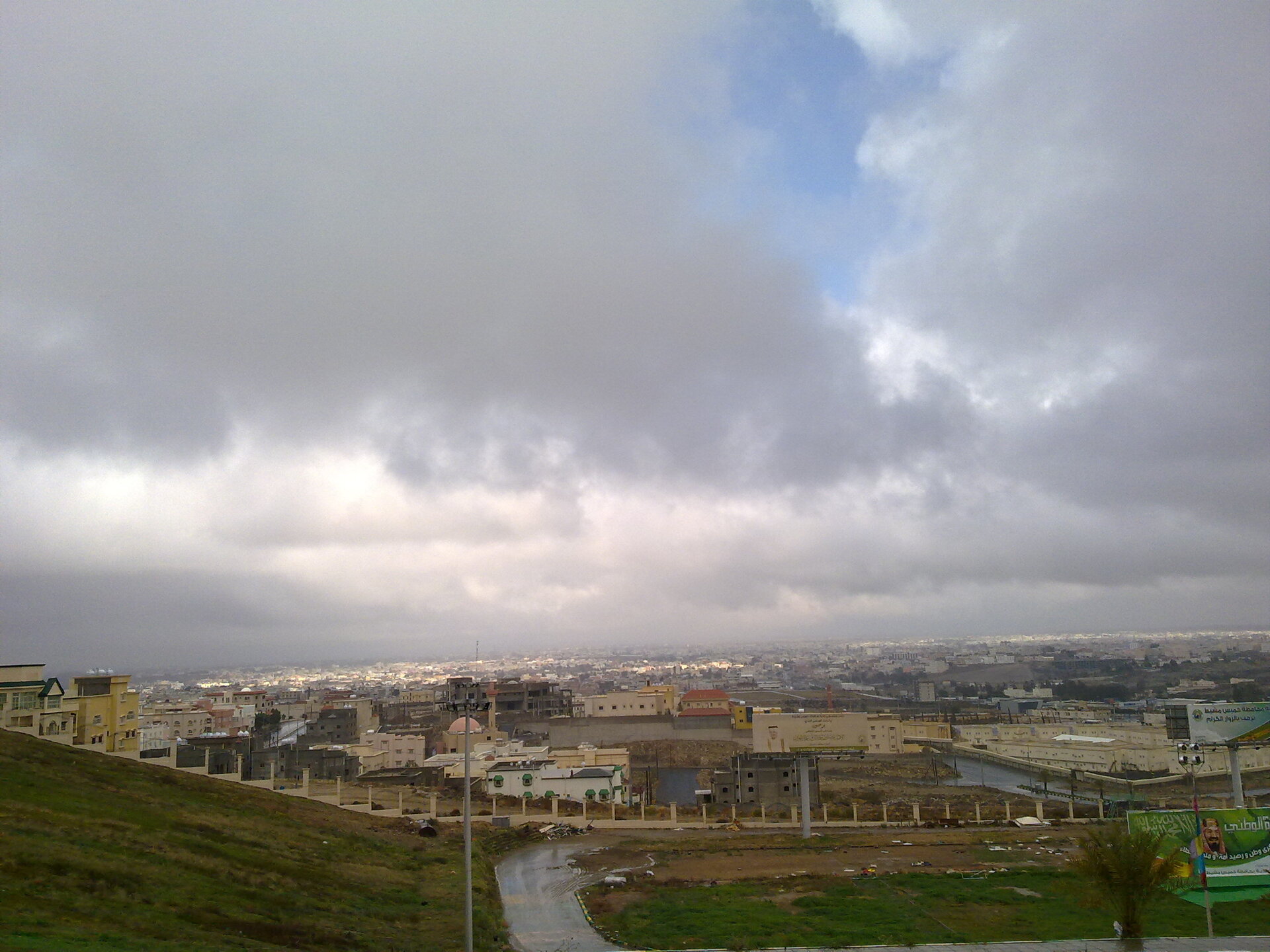
Khamis Mushait is the largest city in Saudi Arabia’s Asir Province and one of the most underrated destinations in the Kingdom. Sitting at 2,066 metres above sea level on the Sarawat mountain plateau, this city of more than a million people offers cool highland weather, a rich tribal heritage, and easy access to every major attraction in the Asir highlands. If you are planning a trip to the southwest using our Abha and Asir travel guide, Khamis Mushait is almost certainly where you will sleep, eat, and begin your day trips — it has more hotels, more restaurants, and more shopping than its better-known neighbour Abha, which sits just 25 kilometres to the west. This guide covers everything you need to know: how to get here, where to stay, what to see in the city itself, and which day trips to build into your itinerary as part of a broader Saudi Arabia travel guide experience.
Best Time to Visit: February to April and September to November (mild highland weather, 20–28°C daytime)
Getting There: Fly into Abha International Airport (AHB), 25 km away; 20–25 minutes by taxi or Uber
Visa Required: Yes — tourist e-visa available for 63 nationalities
Budget: $50–$120 USD per day (mid-range hotel, meals, local transport)
Must-See: Bin Hamsan Heritage Village, Al Habala hanging village, Khamis Mushait Boulevard
Avoid: Driving between Abha and Khamis Mushait during heavy fog — visibility can drop to near zero on winter mornings
Why Visit Khamis Mushait?
Most travellers heading to the Asir highlands fixate on Abha — the provincial capital and the city that appears on every “top destinations in Saudi Arabia” list. But Khamis Mushait is where the Asir region actually lives. It is the commercial, residential, and military centre of the southwest, with a metropolitan population exceeding 1.3 million. Where Abha offers mountain lookouts and art villages, Khamis Mushait offers the buzz of a working Saudi city: busy souqs, family-packed malls, a heritage quarter with more than 1,200 archaeological artefacts, and a boulevard district that comes alive after dark.
The city’s name reveals its origins. “Khamis” means Thursday in Arabic, and the city grew around the Thursday market of the Mushait clan — a weekly gathering point for the Shahran tribe and surrounding highland communities. That market tradition survives today in the city’s sprawling souqs, where silver jewellery, aromatic spices, local honey, and handwoven textiles still change hands much as they have for centuries.
For travellers, the practical advantage is clear: Khamis Mushait has the widest range of hotels at every price point, from five-star properties like Bayat Hotel to budget apartment hotels starting around SAR 150 per night. It is also the closest major city to Abha International Airport, making it the natural base for exploring the entire Asir region.
Getting to Khamis Mushait
By Air
Abha International Airport (IATA: AHB) is the gateway to the Asir highlands. The airport sits roughly 25 kilometres from central Khamis Mushait — a drive of 20 to 25 minutes in normal conditions. Three domestic carriers operate frequent services:
- Saudia — multiple daily flights from Riyadh (King Khalid International) and Jeddah (King Abdulaziz International)
- Flynas — budget-friendly options from Riyadh, Jeddah, and Dammam
- Flyadeal — low-cost services connecting Abha to Riyadh and Jeddah
- Bayat Hotel Khamis Mushait — The city’s premier five-star property, centrally located with an indoor pool, sauna, two restaurants, and a full-service spa. Rates from SAR 500–800/night.
- Mercure Khamis Mushait — Accor-managed hotel with an all-day dining restaurant offering buffet breakfast and a la carte lunch and dinner. Reliable international-standard rooms. Rates from SAR 400–600/night.
- Qasr Al Sahab — A spa-focused hotel with a full-service spa, restaurant, two coffee shops, and 24-hour room service. Rates from SAR 450–700/night.
- Nivel Hotel — Family-friendly hotel with an indoor pool, waterslide, and sauna. Good value for families travelling with children. Rates from SAR 250–400/night.
- Royal Boutique Hotel — Central location near Prince Sultan bin Abdul Aziz Stadium. Clean, modern rooms. Rates from SAR 200–350/night.
- Khamis Souq — The descendant of the original Thursday market, selling spices, dried herbs, incense, and local honey. Asir honey is particularly prized and commands premium prices.
- Silver Souq — Specialising in traditional Asiri silver jewellery, including the heavy bridal pieces and ornate belts that are distinctive to the region.
- Spice Souq — Fragrant stalls piled with cardamom, saffron, dried roses, and the spice blends used in local Asiri cuisine.
- Asdaf Mall — The city’s biggest shopping centre, with a range of fashion retailers, home goods stores, a food court, children’s play areas, and international dining chains. Located centrally and popular with families on weekends.
- Khamis Mall — A mid-size mall with a mix of local and international brands.
- Hazaz Mall — Smaller but well-maintained, with a selection of shops and cafes.
- Madhbi — Chicken marinated in a blend of highland spices, then roasted over hot stones. The stones give the meat a distinctive smoky flavour that no oven can replicate. Local markets sell it fresh each morning, often served with fragrant rice.
- Madeenah — A slow-cooked lamb stew with a spice mix unique to the Asir region, served with flatbread and rice. Rich, warming, and deeply flavoured.
- Aseeda — A thick wheat porridge often served as a communal dish, drizzled with ghee and honey. A staple of Asiri hospitality.
- Gurayyibah — Traditional shortbread cookies dusted in powdered sugar, served alongside coffee.
- Asiri coffee — Spiced with cardamom and sometimes saffron, lighter in colour and flavour than the dark Arabic coffee of Riyadh. Served in small cups with dates in family-run cafes where locals gather around sand-heated coffee pots.
- Shayzar Palace Restaurant — One of the city’s best-regarded spots for authentic Saudi cuisine, located in the Nozha district. Family sections available.
- Al Sannarah — A premier dining destination focusing on traditional Saudi dishes prepared with local ingredients.
- Turkish House Restaurant — Well-reviewed spot for Turkish cuisine, offering a change of pace from the local fare.
- Boulevard restaurants — The Khamis Mushait Boulevard strip along Prince Sultan Road has a growing cluster of cafes and restaurants, from grilled-meat specialists to international fast-casual chains.
- Budget traveller: SAR 200–350/day (USD 50–95) — apartment hotel, local restaurants, public transport/ride-hailing
- Mid-range traveller: SAR 400–600/day (USD 105–160) — three- or four-star hotel, mix of dining, day trip with rental car
- Comfortable traveller: SAR 700+/day (USD 185+) — five-star hotel, fine dining, private day trip hire
- Abha and Asir Travel Guide — The complete guide to Saudi Arabia’s mountain escape, including Al Soudah and the Asir highlands
- Al Baha Guide — Saudi Arabia’s green highland hidden gem, north of Asir along the Sarawat escarpment
- Jizan Travel Guide — The tropical Red Sea coast south of Asir, gateway to the Farasan Islands
- Najran Travel Guide — Ancient history on the Yemen border, with mud-brick forts and pre-Islamic rock art
- Taif Travel Guide — Saudi Arabia’s City of Roses, another highland retreat north of Asir
- Saudi Arabia Travel Guide 2026 — The complete guide to visiting the Kingdom
- Saudi Arabia Visa Guide — Every visa type explained
Flight time from Riyadh is approximately 1 hour 40 minutes; from Jeddah, about 1 hour 15 minutes. International visitors will need to connect through Riyadh or Jeddah — check our flights to Saudi Arabia guide for route options and booking tips.
Tip: Book Abha flights well in advance during the summer season (June–September), when Saudis from the lowlands flock to the cool highlands. Prices can double and flights sell out weeks ahead.
By Road
Khamis Mushait is connected to the national highway network via Route 15 (the Taif–Abha highway) and Route 10 (east toward Wadi Al Dawasir and eventually Riyadh). Driving distances from major cities:
| Origin | Distance | Driving Time | Route |
|---|---|---|---|
| Riyadh | ~950 km | 9–10 hours | Route 10 via Wadi Al Dawasir |
| Jeddah | ~750 km | 7–8 hours | Route 15 via Taif and Al Baha |
| Taif | ~520 km | 5–6 hours | Route 15 south through the highlands |
| Jizan | ~220 km | 2.5–3 hours | Route 5 south |
| Najran | ~280 km | 3–3.5 hours | Route 177 east then south |
The drive from Taif through Al Baha is one of the most scenic road trips in Saudi Arabia, winding along the Sarawat escarpment with views stretching to the Red Sea coastal plain. Consider renting a car — our Saudi Arabia car rental guide has everything you need. From the airport to Khamis Mushait city centre, a taxi costs approximately SAR 90–120 (USD 25–30), or you can use Uber or Careem, both of which operate in the Abha–Khamis Mushait metropolitan area.
Airport Transfers and Local Transport
Within Khamis Mushait, ride-hailing apps are the easiest way to move around. Uber and Careem both have good driver availability. There is no public bus or metro system. For day trips to Abha, Al Habala, or Al Soudah, a rental car gives the most flexibility, though taxis can be hired for the day at negotiable rates (expect SAR 300–500 for a full-day hire including waiting time).
When to Visit Khamis Mushait
Khamis Mushait’s highland elevation gives it a climate that is dramatically cooler than the rest of Saudi Arabia. This is not the scorching desert heat most visitors expect — average summer highs peak at around 32°C in June, while winter mornings can drop to 5–10°C. The city receives around 428 mm of rainfall annually, mostly concentrated in March and April.
| Season | Months | Daytime Temp | Notes |
|---|---|---|---|
| Spring | Feb–Apr | 20–26°C | Best overall — wildflowers, clear skies, pleasant hiking weather |
| Summer | May–Aug | 28–32°C | Peak Saudi tourism — cool by Kingdom standards; book early |
| Autumn | Sep–Nov | 22–28°C | Excellent — dry, sunny, uncrowded |
| Winter | Dec–Jan | 15–21°C | Cold mornings, fog common; pack warm layers |
Check our best time to visit Saudi Arabia guide for month-by-month conditions across the Kingdom.
Warning: Fog is a serious driving hazard in winter. The Abha–Khamis Mushait highway can be blanketed in dense fog from early morning until mid-morning, reducing visibility to a few metres. Drive slowly and use fog lights.
Where to Stay in Khamis Mushait
Khamis Mushait has significantly more hotel inventory than Abha, ranging from international chains to serviced apartments. Most accommodation is concentrated along King Abdulaziz Road and around the Boulevard district.
Upscale Hotels
Mid-Range Options
Budget and Apartments
Serviced apartment hotels are abundant throughout the city and are the best value for longer stays or families. Expect to pay SAR 150–250/night for a clean one-bedroom apartment with kitchenette. The Aber Khamis Mushait is a popular budget option with solid TripAdvisor reviews.
Things to Do in Khamis Mushait
Bin Hamsan Heritage Village
The single most important cultural site within the city limits. Bin Hamsan Heritage Village is spread across 13,000 square metres and houses an archaeological museum displaying more than 1,200 artefacts — pottery, agricultural tools, weapons, ancient documents, traditional jewellery, folk clothing, and herbal medicine items from across the Asir region. The village’s centrepiece is a restored fortress built in the traditional multi-storey Asiri architectural style, rising four storeys with painted geometric facades that are characteristic of the region. Allow 1–2 hours for a thorough visit.
Khamis Mushait Boulevard
Located along Prince Sultan Road, the Boulevard is the city’s modern entertainment heart. Stone-paved walkways, sophisticated lighting, and well-designed shop fronts create a pleasant evening atmosphere. The highlight is a dancing fountain synchronised to live music, with water columns performing beneath coloured lights while visitors gather at surrounding cafes and restaurants. It is particularly lively on Thursday and Friday evenings (the Saudi weekend). This is the best spot in the city for an after-dinner stroll.
The Thursday Market Tradition
Khamis Mushait’s original Thursday market may have evolved, but the souq culture remains strong. The city has several traditional markets worth exploring:
Shopping Malls
For modern retail, Khamis Mushait has several large malls:
Mosques and Religious Sites
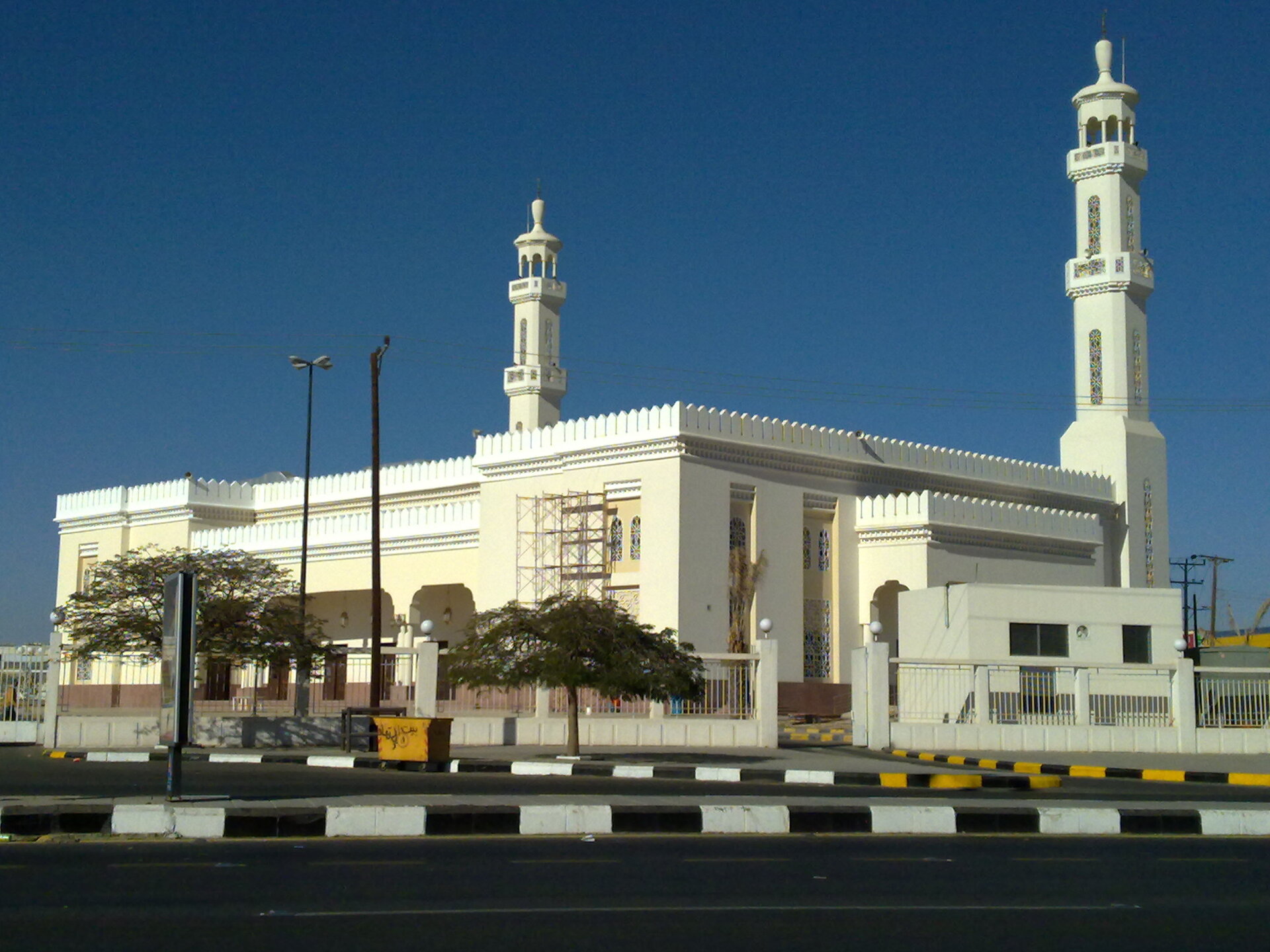
The Custodian of the Two Holy Mosques Mosque (Jami Khadim Al Haramain) is the city’s most prominent mosque, an elegant white structure with twin minarets visible from across the city. Non-Muslim visitors should admire it from the outside. For travellers interested in Islamic heritage, our Hajj 2026 guide covers the pilgrimage sites further north.
Khamis Mushait Municipal Park
A green oasis within the city, the municipal park is popular with families for evening picnics and walks. The park features landscaped gardens, children’s playgrounds, and shaded walkways. It is an especially pleasant retreat during the spring months when temperatures are ideal.
Asiri Food and Dining
Khamis Mushait is the best place in the Asir region to experience the distinctive cuisine of the Saudi southwest. Asiri food differs markedly from the kabsa and mandi traditions of central and eastern Saudi Arabia — it draws on highland ingredients, stone-cooking techniques, and a spice palette that reflects centuries of trade across the Sarawat mountains.
Dishes You Must Try
For a comprehensive overview of Saudi cuisine, see our Saudi Arabia food and dining guide.
Where to Eat
Budget diners can find decent restaurants off King Abdulaziz Road serving mezze platters, grilled meats, and fresh salads for around SAR 50–70 per person including tea and dessert.
Day Trips from Khamis Mushait
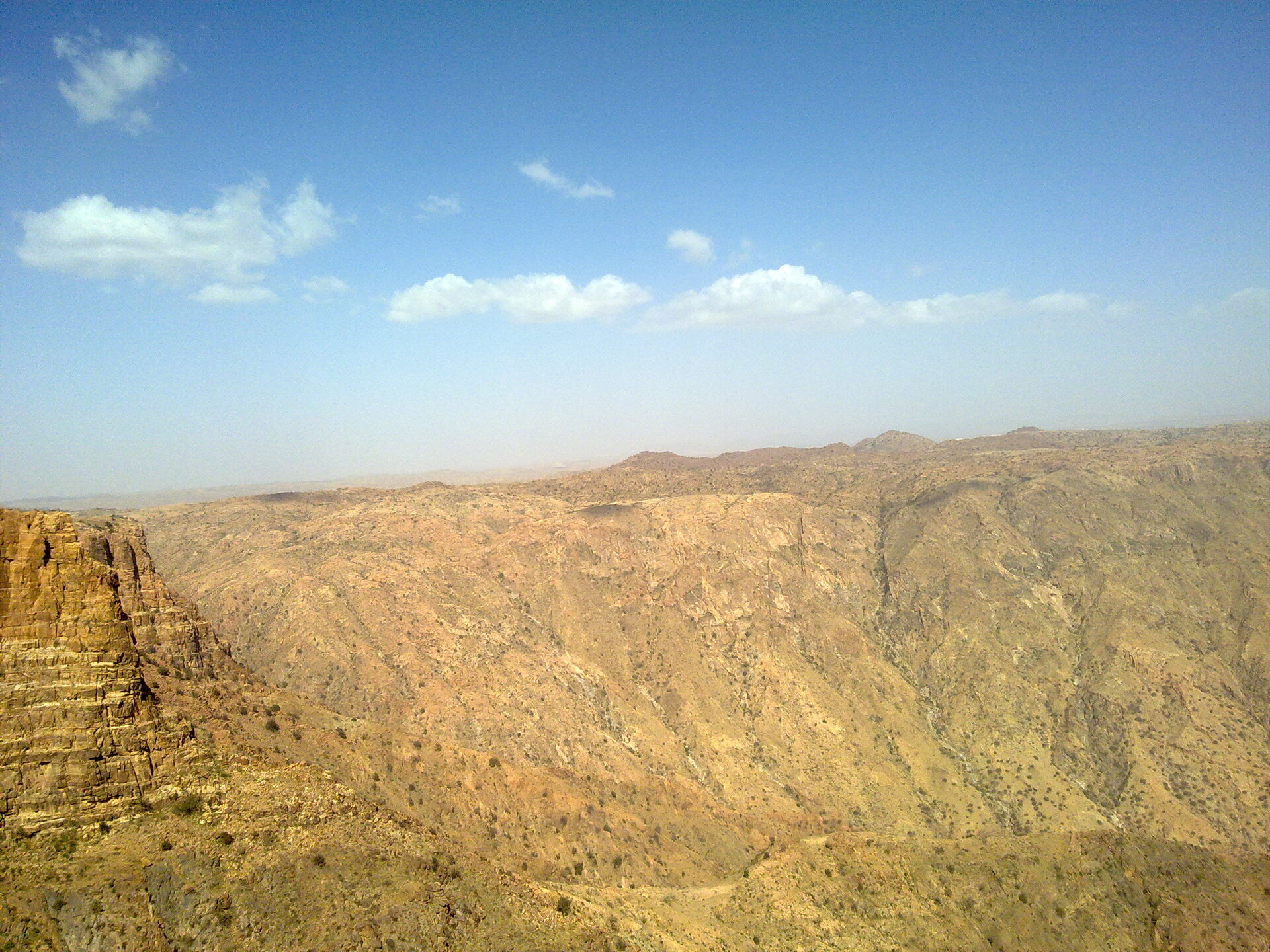
Khamis Mushait’s central location in the Asir highlands makes it an ideal base for day trips. Every major Asir attraction is within a one- to three-hour drive.
Abha (25 km — 30 minutes)
The provincial capital is the obvious first day trip. Key stops include Al Muftaha Arts Village (a cluster of artist studios and galleries built in traditional Asiri style), the colourful painted houses of the old quarter, and the Abha Palace Hotel viewpoint for panoramic mountain views. The two cities are so close that many visitors shuttle between them daily. See our full Abha and Asir travel guide for detailed coverage.
Al Habala Hanging Village (50 km — 40 minutes)
One of the most dramatic sites in all of Saudi Arabia. Al Habala (“the rope”) was a village perched on cliff ledges so steep that residents used ropes as their only connection to the plateau above. The village has been relocated, but the site is now accessible via a cable car that descends into the valley, offering jaw-dropping views of sheer cliff faces and the deep Sarawat valleys below. Cable car tickets cost SAR 70 per person. Operating hours are typically 9:00 AM to 5:00 PM, but confirm locally as schedules change seasonally.
Al Soudah and Jebel Sawda (45 km — 40 minutes)
Jebel Sawda rises to approximately 3,015 metres — the highest point in Saudi Arabia. The Al Soudah area around the peak offers cool juniper forests, walking paths, and a cable car with spectacular views of the escarpment dropping away to the coastal plain. The main hiking trail covers approximately 14.5 kilometres with over 1,000 metres of elevation gain and takes six to seven hours to complete — it is the most serious hike in the Kingdom. For trail details, see our Saudi Arabia hiking guide.
Rijal Almaa Heritage Village (120 km — 1.5 hours)
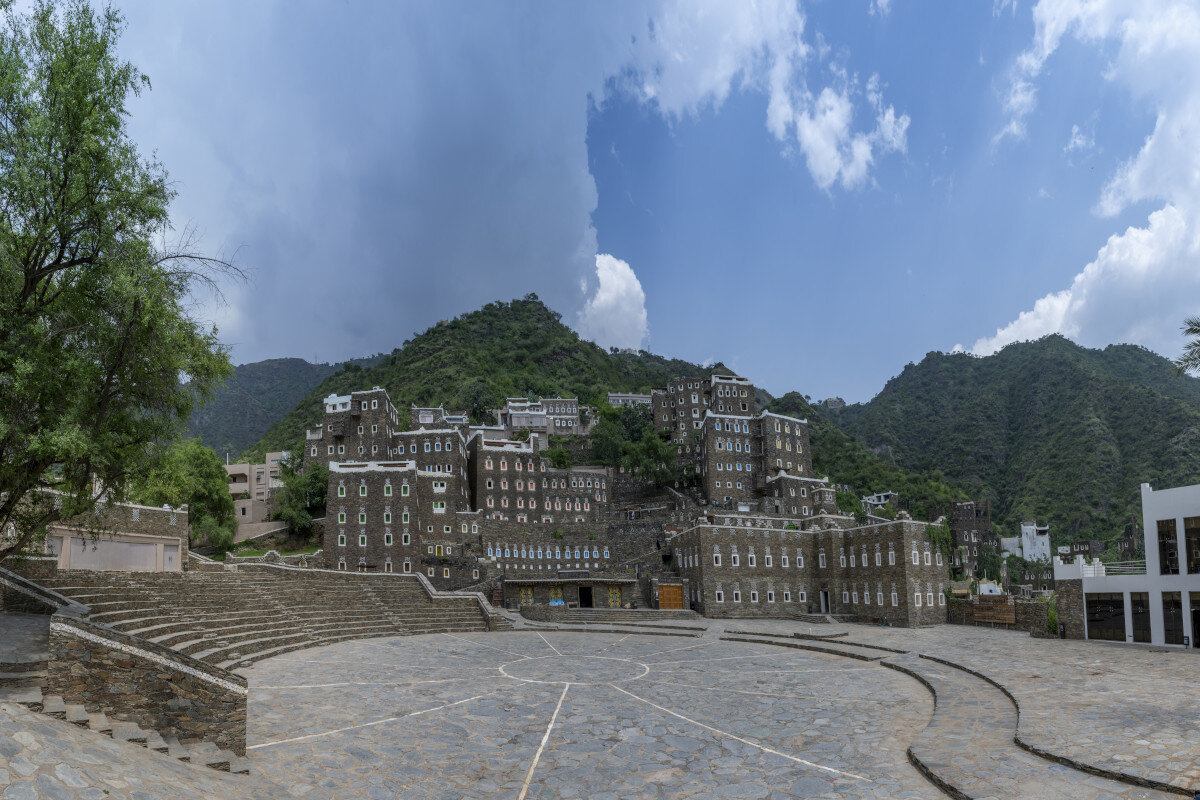
A stunning fortified village built into a mountainside, Rijal Almaa features multi-storey stone towers with coloured quartz windows and painted facades that have earned it a spot on the Saudi Arabia UNESCO tentative list. The village museum displays traditional costumes, weapons, and household items. The drive from Khamis Mushait descends the escarpment on a winding mountain road — spectacular scenery but demanding driving.
Tanomah and Al Namas (80–130 km — 1–1.5 hours north)
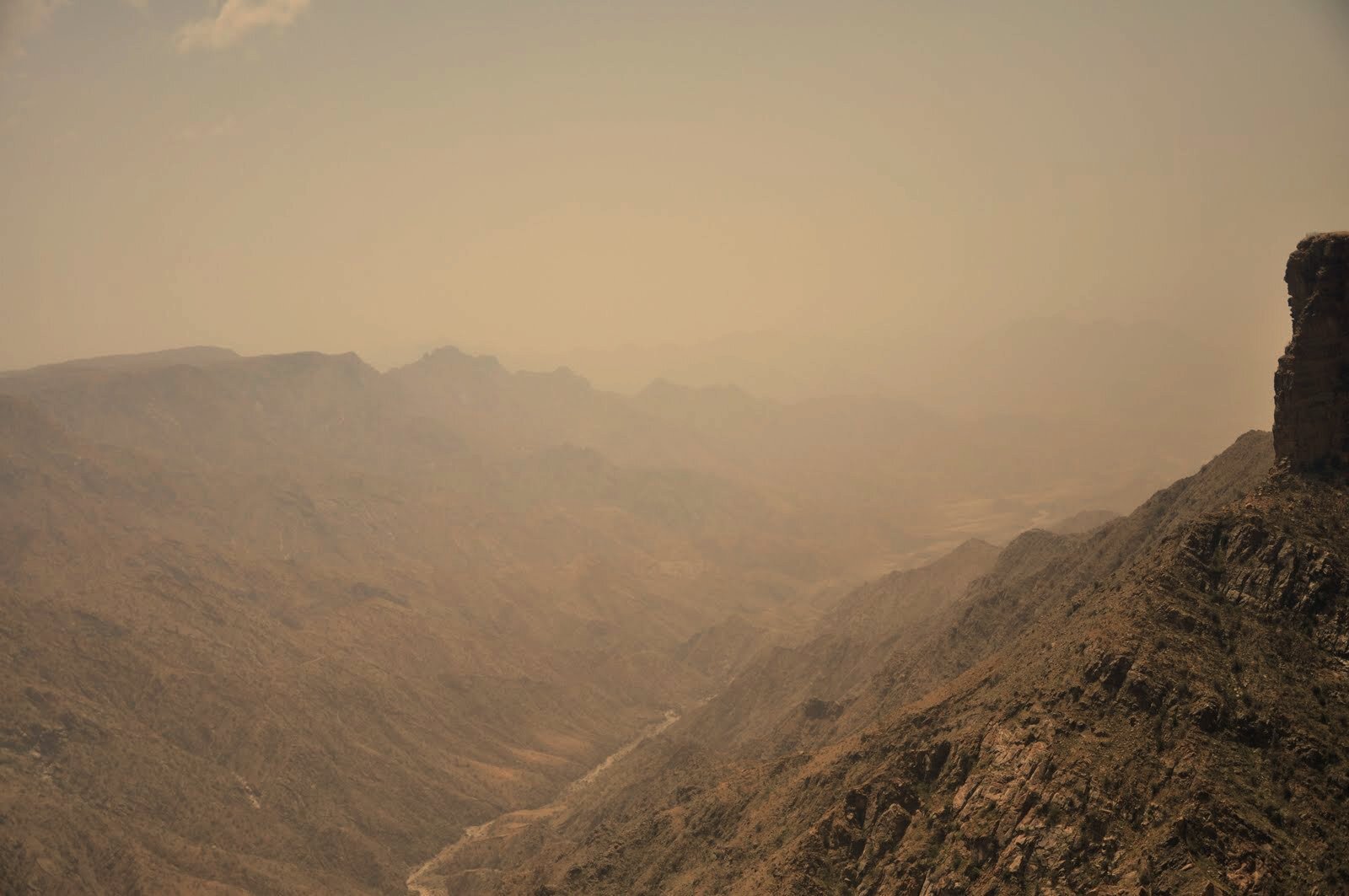
Heading north along the Sarawat escarpment, the small towns of Tanomah and Al Namas offer juniper forests, mountain viewpoints, and a quieter alternative to the Abha–Khamis Mushait corridor. Tanomah’s Al Shallal waterfall park and forest trails make for a refreshing half-day excursion. This route connects onward to Al Baha for those continuing north.
Jizan and the Red Sea Coast (220 km — 2.5 hours)
For a dramatic change of scenery, drive south to Jizan on the Red Sea coast. The road descends from over 2,000 metres to sea level, passing through tropical lowlands with mango orchards and banana plantations. Jizan’s Farasan Islands offer some of the best diving and snorkelling in the Red Sea — see our Saudi Arabia diving guide for more.
Najran (280 km — 3 hours)
The ancient city near the Yemen border has a mud-brick fortress (Al Aan Palace), pre-Islamic rock art at Bir Hima (a UNESCO World Heritage Site), and a traditional souq. A long day trip or better as an overnight — see our Najran travel guide.
History and Heritage
Khamis Mushait’s history stretches back centuries as a tribal trading centre for the Shahran and surrounding highland clans. The city’s name preserves this market heritage — “Khamis” (Thursday) was the day the Mushait clan held its weekly market, drawing traders from across the Sarawat highlands.
The city’s modern transformation began in 1930, when the Asir Province was incorporated into the Kingdom of Saudi Arabia under King Abdulaziz. But the real catalyst for growth was military: the establishment of King Khalid Air Base to the south of the city brought rapid expansion, infrastructure investment, and a surge in population. The base, established in 1960 and expanded through the 1970s and 1980s, played a significant role during the 1991 Gulf War, when USAF F-117 stealth fighters launched from here on missions over Iraq.
Until the 1970s, Khamis Mushait was a small town of fewer than 50,000 people. The combination of military investment, highway construction, and the broader Saudi development boom transformed it into the major city it is today, with a metropolitan population exceeding 1.3 million. Despite this growth, the city has preserved its heritage through sites like Bin Hamsan Village and the traditional souqs, and the distinctive Asiri architectural style — stone towers with painted geometric facades — can still be seen in the older neighbourhoods.
Practical Information
Visa and Entry
International visitors need a visa to enter Saudi Arabia. The Saudi tourist e-visa is available to citizens of 63 countries and can be obtained online in minutes. It is valid for one year with multiple entries, allowing stays of up to 90 days per visit. GCC nationals do not need a visa.
Money and Costs
The Saudi Riyal (SAR) is pegged to the US dollar at approximately SAR 3.75 = USD 1. Khamis Mushait is affordable by Saudi standards:
See our full Saudi Arabia cost guide for Kingdom-wide budget planning.
Connectivity
4G/5G coverage is strong throughout the city and across the major highways. Pick up a local SIM or eSIM at Abha airport — our Saudi Arabia SIM card and eSIM guide covers the best options from STC, Mobily, and Zain.
Safety
Khamis Mushait is a safe city for travellers. The main risks are road-related — mountain fog in winter and occasional reckless driving on the inter-city highways. Our Saudi Arabia safety guide covers common concerns.
What to Pack
Khamis Mushait’s altitude means cooler temperatures than most of Saudi Arabia. Pack layers: a light jacket or fleece for evenings (essential in winter), comfortable walking shoes for souq browsing and heritage village visits, and sun protection for daytime. If you plan to hike at Jebel Sawda, bring proper trail shoes and a windbreaker.